

Parp mutations protect from mitochondrial toxicity in Alzheimer’s disease
Open accessThe DOI matches its Crossref record; 43 of the 43 references it cites were found in a registry or an index.
Abstract
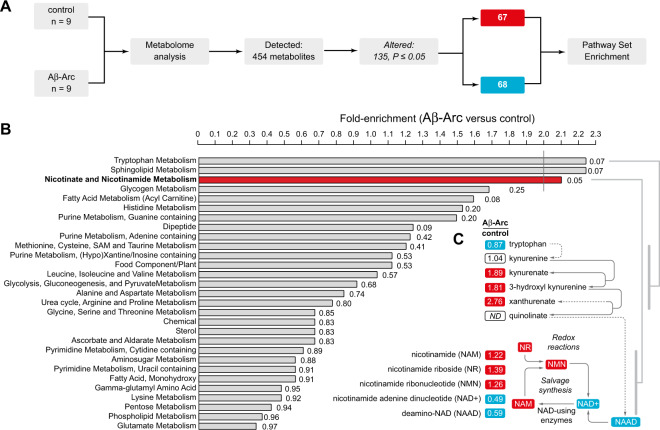
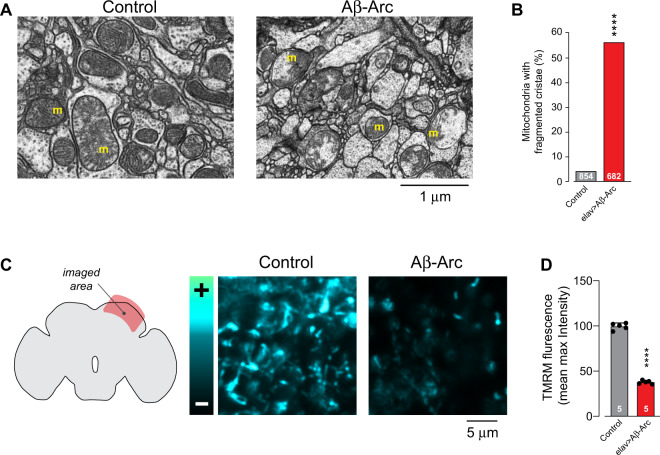
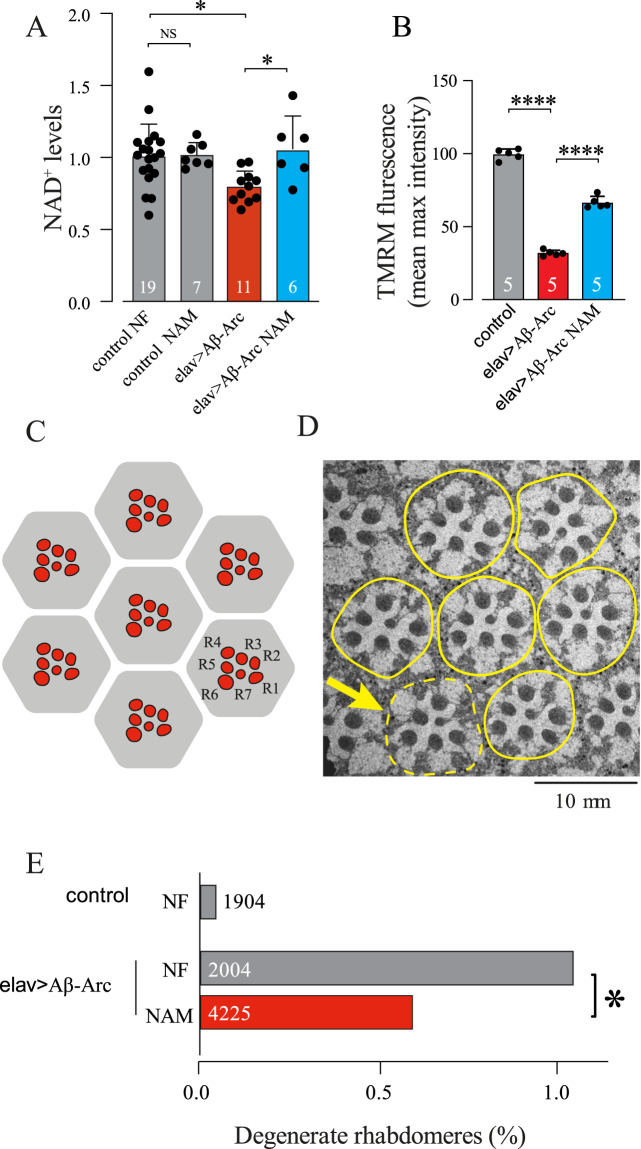
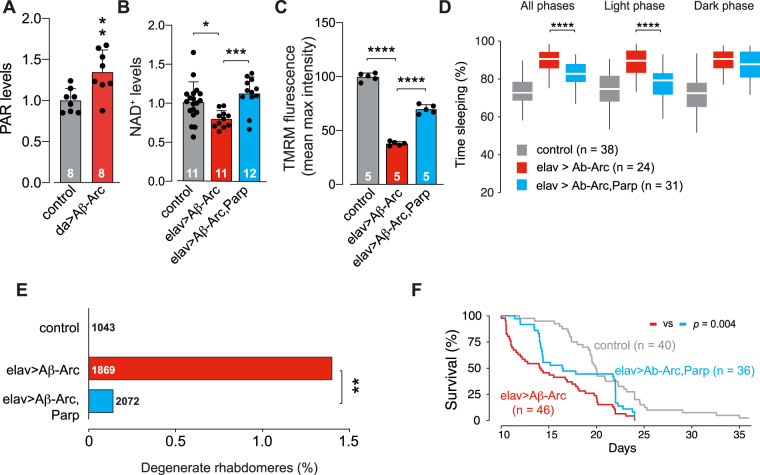
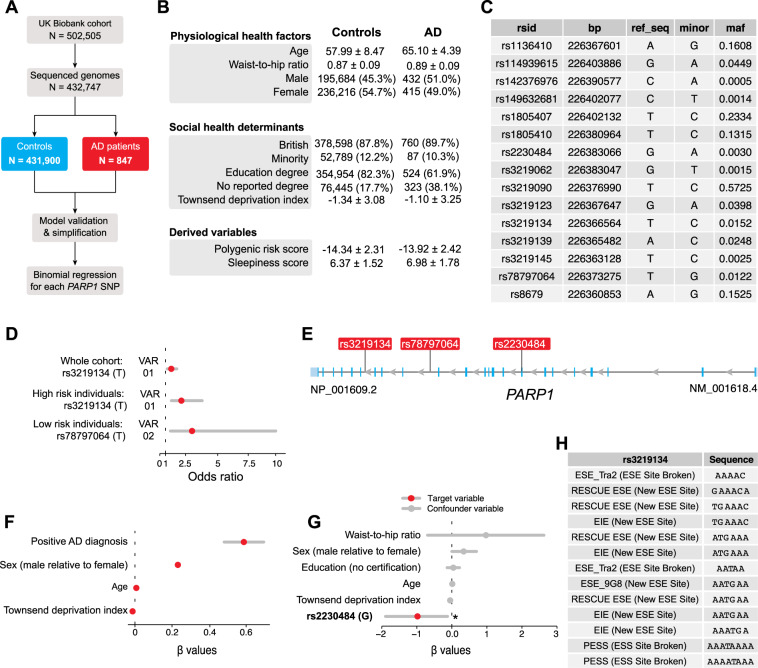
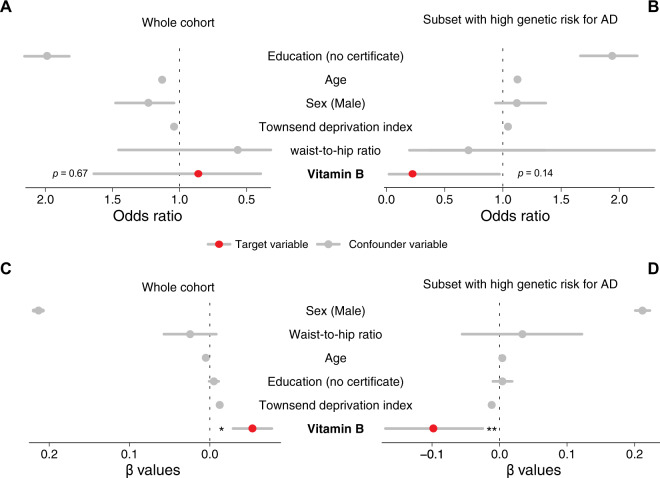
Alzheimer’s disease is the most common age-related neurodegenerative disorder. Familial forms of Alzheimer’s disease associated with the accumulation of a toxic form of amyloid-β (Aβ) peptides are linked to mitochondrial impairment. The coenzyme nicotinamide adenine dinucleotide (NAD+) is essential for both mitochondrial bioenergetics and nuclear DNA repair through NAD+-consuming poly (ADP-ribose) polymerases (PARPs). Here we analysed the metabolomic changes in flies overexpressing Aβ and showed a decrease of metabolites associated with nicotinate and nicotinamide metabolism, which is critical for mitochondrial function in neurons. We show that increasing the bioavailability of NAD+ protects against Aβ toxicity. Pharmacological supplementation using NAM, a form of vitamin B that acts as a precursor for NAD+ or a genetic mutation of PARP rescues mitochondrial defects, protects neurons against degeneration and reduces behavioural impairments in a fly model of Alzheimer’s disease. Next, we looked at links between PARP polymorphisms and vitamin B intake in patients with Alzheimer’s disease. We show that polymorphisms in the human PARP1 gene or the intake of vitamin B are associated with a decrease in the risk and severity of Alzheimer’s disease. We suggest that enhancing the availability of NAD+ by either vitamin B supplements or the inhibition of NAD+-dependent enzymes such as PARPs are potential therapies for Alzheimer’s disease.
Overview
The claims and statistics of this paper haven’t been checked yet.
Free: it reads the open-access text and checks the first 5 claims that cite a source we can check. Create a free account to check every claim.
Integrity signals
Registry
Cites
Statistics
Figures
Verification
Claims the paper makes
The claims and statistics of this paper haven’t been checked yet.
Free: it reads the open-access text and checks the first 5 claims that cite a source we can check. Create a free account to check every claim.
Claims other papers make about this one
Each is checked against this paper’s own text: does it say what the citing paper says it does?
The source backs part of the claim, not all of it — or backs it for a different population, condition or comparison.
In the citing paper
“Supplementation with the NAD+ precursor NAM rescues mitochondrial defects and behavioural impairments in AD models410 but suppresses dopaminergic neurodegeneration in a Drosophila PD model.411”
From Antiageing strategy for neurodegenerative diseases: from mechanisms to clinical advances (2025) · cites this paper as [410]
Experimental — accuracy not yet measuredIn the citing paper
“Three studies were drawn from an adolescent population aged 12–18 years, potentially introducing heterogeneity when compared to the student population [46,47,48].”
From Concussion Disrupts Sleep in Adolescents: A Systematic Review and Meta-Analysis (2025) · cites this paper as [47]
Self-check
Percentages, sums and reported differences re-computed from the paper’s own numbers.
The self-check needs the paper’s full text.
Citations
Cites
Modern Applied Statistics with S
Venables, W. N., & Ripley, B. D. (2002) · Statistics and Computing · doi:10.1007/978-0-387-21706-2 · Cited by 24,305
The Amyloid Hypothesis of Alzheimer’s Disease: Progress and Problems on the Road to Therapeutics
Hardy, J., & Selkoe, D. J. (2002) · Science · doi:10.1126/science.1072994 · Cited by 13,864
Amyloid oligomers exacerbate tau pathology in a mouse model of tauopathy
Selenica, M.-L. B., Brownlow, M., Jimenez, J. P., Lee, D. C., Pena, G., Dickey, C. A., Gordon, M. N., & Morgan, D. (2013) · Neurodegenerative Diseases · doi:10.1159/000337230 · Cited by 10,359
The UK Biobank resource with deep phenotyping and genomic data
Bycroft, C., Freeman, C., Petkova, D., Band, G., Elliott, L. T., Sharp, K., Motyer, A., Vukcevic, D., Delaneau, O., O’Connell, J., et al. (2018) · Nature · doi:10.1038/s41586-018-0579-z · Cited by 8,876
The amyloid hypothesis of Alzheimer's disease at 25 years
Selkoe, D. J., & Hardy, J. (2016) · EMBO Molecular Medicine · doi:10.15252/emmm.201606210 · Cited by 6,164
Alzheimer Disease Genetics Consortium (ADGC), Kunkle, B. W., The European Alzheimer’s Disease Initiative (EADI), Cohorts for Heart and Aging Research in Genomic Epidemiology Consortium (CHARGE), Genetic and Environmental Risk in AD/Defining Genetic, P. A. E. R. F. A. D. C. (., Grenier-Boley, B., Sims, R., Bis, J. C., Damotte, V., Naj, A. C., et al. (2019) · Nature Genetics · doi:10.1038/s41588-019-0358-2 · Cited by 2,946
The molecular pathology of Alzheimer's disease
Selkoe, D. J. (1991) · Neuron · doi:10.1016/0896-6273(91)90052-2 · Cited by 2,708
Human Splicing Finder: an online bioinformatics tool to predict splicing signals
Desmet, F.-O., Hamroun, D., Lalande, M., Collod-Béroud, G., Claustres, M., & Béroud, C. (2009) · Nucleic Acids Research · doi:10.1093/nar/gkp215 · Cited by 2,512
Jansen, I. E., Savage, J. E., Watanabe, K., Bryois, J., Williams, D. M., Steinberg, S., Sealock, J., Karlsson, I. K., Hägg, S., Athanasiu, L., et al. (2019) · Nature Genetics · doi:10.1038/s41588-018-0311-9 · Cited by 2,277
Using MetaboAnalyst 4.0 for Comprehensive and Integrative Metabolomics Data Analysis
Chong, J., Wishart, D. S., & Xia, J. (2019) · Current Protocols in Bioinformatics · doi:10.1002/cpbi.86 · Cited by 2,166
Cited by
Antiageing strategy for neurodegenerative diseases: from mechanisms to clinical advances
Jiang, Q., Liu, J., Huang, S., Wang, X.-Y., Chen, X., Liu, G.-H., Ye, K., Song, W., Masters, C. L., Wang, J., et al. (2025) · Signal Transduction and Targeted Therapy · doi:10.1038/s41392-025-02145-7 · Cited by 165
“125 Supplementation with the NAD + precursor NAM rescues mitochondrial defects and behavioural impairments in AD models 410 but suppresses dopaminergic neurodegeneration in a Drosophila PD model.”
Xu, X., Sun, B., & Zhao, C. (2023) · Neurobiology of Disease · doi:10.1016/j.nbd.2023.106314 · Cited by 74
Liu, Y., Guttman, L. C., Dawson, V. L., & Dawson, T. M. (2024) · Biochemical Pharmacology · doi:10.1016/j.bcp.2024.116174 · Cited by 73
Chiu, L., Huang, D.-Y., & Lin, W. (2022) · Cellular and Molecular Life Sciences · doi:10.1007/s00018-022-04138-z · Cited by 48
Poly (ADP-ribose) polymerase 1 and neurodegenerative diseases: past, present, and future
Hu, M.-L., Pan, Y.-R., Yong, Y.-Y., Liu, Y., Yu, L., Qin, D.-L., Qiao, G., Law, B. Y.-K., Wu, J.-M., Zhou, X.-G., et al. (2023) · Ageing Research Reviews · doi:10.1016/j.arr.2023.102078 · Cited by 44
Regulation of Biomolecular Condensates by Poly(ADP-ribose)
Rhine, K., Odeh, H. M., Shorter, J., & Myong, S. (2023) · Chemical Reviews · doi:10.1021/acs.chemrev.2c00851 · Cited by 42
Targeting NAD Metabolism for the Therapy of Age-Related Neurodegenerative Diseases
Li, F., Wu, C., & Wang, G. (2023) · Neuroscience Bulletin · doi:10.1007/s12264-023-01072-3 · Cited by 39
“Furthermore, in human patients, certain PARP polymorphisms have been associated with reduced risk and severity of AD [66].”
BackgroundHan, G., Zhen, W., Dai, Y., Yu, H., Li, D., & Ma, T. (2022) · Frontiers in Aging Neuroscience · doi:10.3389/fnagi.2022.873929 · Cited by 31
Zhou, X., Rong, R., Liang, G., Wu, Y., Xu, C., Xiao, H., Ji, D., & Xia, X. (2024) · Advanced Science · doi:10.1002/advs.202407043 · Cited by 29
Fontana, P., Buch-Larsen, S. C., Suyari, O., Smith, R., Suskiewicz, M. J., Schützenhofer, K., Ariza, A., Rack, J. G. M., Nielsen, M. L., & Ahel, I. (2023) · Nature Communications · doi:10.1038/s41467-023-38793-y · Cited by 30
“Moreover, manipulation of d Parp or d Parg gene expression levels led to altered phenotypes in fl y models of neurodegenerative diseases such as Parkinson ’ s disease 42,43 , Alzheimer ’ s disease 44 , and amyotrophic lateral sclerosis 45 .”
Mitochondrial defects: An emerging theranostic avenue towards Alzheimer's associated dysregulations
Mani, S., Swargiary, G., Singh, M., Agarwal, S., Dey, A., Ojha, S. K., & Jha, N. K. (2021) · Life Sciences · doi:10.1016/j.lfs.2021.119985 · Cited by 26
Diverse pathways to neuronal necroptosis in Alzheimer's disease
Jayaraman, A., & Reynolds, R. (2022) · European Journal of Neuroscience · doi:10.1111/ejn.15662 · Cited by 23
“…Aβ (1–42) with an Arctic mutation (Aβ-Arc) in neurons, dietary supplementation of vitamin B3 (NAD+ precursor) or mutations in Parp-1 that resulted in a reduction in the catalytic activity of PARP-1 (NAD+ consuming enzyme), restored mitochondrial function and neuronal health (Yu et al., 2021).”
BackgroundMousavi, H., Rimaz, M., & Zeynizadeh, B. (2024) · ACS Chemical Neuroscience · doi:10.1021/acschemneuro.4c00055 · Cited by 22
Mitochondrial One-Carbon Metabolism and Alzheimer’s Disease
Yu, Y., & Martins, L. M. (2024) · International Journal of Molecular Sciences · doi:10.3390/ijms25126302 · Cited by 20
“NAD + levels are also decreased in animal models of AD [12,99,100].”
BackgroundInfluentialSelf-citationRanganathan, R., Sapozhnikov, G., Wang, N., Li, S., & Song, Y. (2023) · Translational Medicine of Aging · doi:10.1016/j.tma.2023.06.004 · Cited by 15
Wilson, E. L., Yu, Y., Leal, N. S., Woodward, J. A., Patikas, N., Morris, J. L., Field, S. F., Plumbly, W., Paupe, V., Chowdhury, S. R., et al. (2024) · Cell Death and Disease · doi:10.1038/s41419-024-06568-y · Cited by 15
Self-citationNicotinamide Adenine Dinucleotide (NAD + )-Dependent Signaling in Neurological Disorders
Bresque, M., Esteve, D., Pehar, M., & Vargas, M. R. (2023) · Antioxidants and Redox Signaling · doi:10.1089/ars.2023.0241 · Cited by 13
“A recent study has reported that genetic variants of PARP may alter the risk and severity of AD (Yu et al., 2021).”
Potential Therapeutic Interventions Targeting NAD+ Metabolism for ALS
Lundt, S., & Ding, S. (2024) · Cells · doi:10.3390/cells13171509 · Cited by 12
“For AD in particular, mutations to PARP1 were found to be associated with altered risk for developing AD in humans [59].”
BackgroundEnhancing Mitochondrial One-Carbon Metabolism Is Neuroprotective in Alzheimer’s Disease Models
Yu, Y., Chen, C. Z., Celardo, I., Tan, B. W. Z., Hurcomb, J. D., Leal, N. S., Popovic, R., Loh, S. H. Y., & Martins, L. M. (2024) · Cell Death & Disease · doi:10.1038/s41419-024-07179-3 · Cited by 10
Self-citationZheng, N., Cao, R.-L., Liu, D., Liu, P., Zhao, X., Zhang, S.-X., Huang, M., Zheng, Z., Chen, G., & Zou, L. (2025) · Free Radical Biology and Medicine · doi:10.1016/j.freeradbiomed.2025.01.014 · Cited by 10
Xu, L., Ma, Y., Ji, Y., Ma, Y., Wang, Y., Zhao, X., & Ge, S. (2023) · Experimental Gerontology · doi:10.1016/j.exger.2023.112320 · Cited by 9
“In Alz-heimer's disease, β -amyloid could trigger oxidative stress which could lead to the upregulation of PARP1 expression (Yu et al., 2021).”
Autophagy–NAD+ axis: emerging insights into neuronal homeostasis and neurodegenerative diseases
Koçak, G., Dimas, M. M., Silva, L., Silva-Amaral, D., Sun, C., Cruddas, S., Barrett, T. G., Martins‐de‐Souza, D., Cunha‐Neto, E., Brocardo, P. S., et al. (2025) · Frontiers in Molecular Biosciences · doi:10.3389/fmolb.2025.1695486 · Cited by 8
Preparation of Viable Human Neurites for Neurobiological and Neurodegeneration Studies
Brüll, M., Geese, N., Celardo, I., Laumann, M., & Leist, M. (2024) · Cells · doi:10.3390/cells13030242 · Cited by 8
“Two important NAD + -depleting enzymes activated upon neurite/neuronal damage are SARM1 and PARP [22,78–80].”
BackgroundSelf-citationUpregulation of Tribbles decreases body weight and increases sleep duration
Popovic, R., Yu, Y., Leal, N. S., Fedele, G., Loh, S. H. Y., & Martins, L. M. (2023) · Disease Models & Mechanisms · doi:10.1242/dmm.049942 · Cited by 9
“To determine whether any SNPs in TRIB1-3 identified in our cohort influenced sleep duration or WHR (analyses performed for Figs 4 and 7B), we used previously described workflows (Yu et al., 2021).”
Self-citationRoles and therapeutic potential of PARP-1 in neurodegenerative diseases
Liu, C., Lai, F., Zhang, T., Mao, K., Wan, H., & He, Y. T. (2025) · Biochemical Pharmacology · doi:10.1016/j.bcp.2025.117373 · Cited by 8
Jhaldiyal, A., Kumari, M., Guttman, L. C., Tripathi, T., Khan, M. R., Wang, J., Biswas, D., Pasupuleti, A., Aggarwal, A., Pandya, S., et al. (2026) · Proceedings of the National Academy of Sciences · doi:10.1073/pnas.2525028123 · Cited by 8
Wan, H., Wei, J.-P., Wang, Y., Ge, L., Hu, Q., Li, Y., Zhou, B., & Zeng, X. (2025) · Chemico-Biological Interactions · doi:10.1016/j.cbi.2025.111693 · Cited by 5
Links between Sleep Apnoea and Insomnia in a British Cohort
Yu, Y. (2023) · Clocks & Sleep · doi:10.3390/clockssleep5030036 · Cited by 6
Self-citationGene Self-Expressive Networks as a Generalization-Aware Tool to Model Gene Regulatory Networks
Peignier, S., & Calevro, F. (2023) · Biomolecules · doi:10.3390/biom13030526 · Cited by 6
“Community Hs|12 Alzheimer (-) Control (+) Community Hs|13 Alzheimer (+) Control (−) TF (ψ) deg+(ψ) Alzheimer Link TF (ψ) deg+(ψ) Alzheimer Link XRCC6 52 [77] YWHAB 63 [78,79] HINT1 34 [80] BTN3A3 31 [81] RBMX 30 PARP14 21 [82] HNRNPK 30 [83] TRIM25 20 [84] CPEB1 27 [85] STAT1 20 [86] NCL 18 [87] CGGBP1 19 [88] SRA1 17…”
Decoding NAD+ Metabolism in COVID-19: Implications for Immune Modulation and Therapy
Song, S., Gan, J., Long, Q., Gao, Z., & Zheng, Y. (2024) · Vaccines · doi:10.3390/vaccines13010001 · Cited by 4
Increased nucleotide metabolism alleviates Alzheimer’s disease pathology
Yu, Y., Miller, M. B., Huang, A. Y., Tan, B. W. Z., Celardo, I., Leal, N. S., Loh, S. H. Y., & Martins, L. M. (2025) · Cell Death and Disease · doi:10.1038/s41419-025-08066-1 · Cited by 4
“Taken together, these results support our use of a fl y AD model [7] and show that PARP1 expression is increased in AD at both the mRNA and protein level.”
InfluentialSelf-citationStrategies for translating proteomics discoveries into drug discovery for dementia
Halder, A., & Drummond, E. (2023) · Neural Regeneration Research · doi:10.4103/1673-5374.373681 · Cited by 4
Puthanveetil, P. (2023) · Biomolecules · doi:10.3390/biom13020374 · Cited by 3
Concussion Disrupts Sleep in Adolescents: A Systematic Review and Meta-Analysis
Noordeen, S., Wang, P., Strazda, A. E., Arany, E. S., Ergisi, M., Yeo, L. J., Popovic, R., Mahendran, A., Khawaja, M., Grover, K., et al. (2025) · Clocks & Sleep · doi:10.3390/clockssleep7030046 · Cited by 2
“Our results have several implications for the wider healthcare community, given the relevance of sleep to brain health [57–59].”
Self-citationNAD + ‒circadian rhythm coupling in dementia
Zhang, S., Lee, J., Pan, J., Enger, R., Hrubos‐Strøm, H., Musiek, E. S., Fang, E. F., & Le, W. (2026) · Alzheimer s & Dementia · doi:10.1002/alz.71360 · Cited by 2
Zhang, Y., Chen, Z., Ye, A., Chen, P., Wu, A., Andriniaina, E. A., You, L., & Xiao, D. (2024) · Analytica Chimica Acta · doi:10.1016/j.aca.2024.343074 · Cited by 2
BTN2A1 and BTN3A1 as Novel Coeliac Disease Risk Loci: An In Silico Analysis
Hoang, K. N. L., Evans, S. C., Willis, T. W., Davies, K., Kockelbergh, H., Silcock, L., Piechocki, K., Fowler, A., & Soilleux, E. J. (2025) · International Journal of Molecular Sciences · doi:10.3390/ijms262110697 · Cited by 2
Huang, C., Xiao, H., Yang, Y., Luo, J., Lai, Y., Liu, S., Mao, K., Chen, J., & Wang, L. (2025) · Frontiers in Aging Neuroscience · doi:10.3389/fnagi.2025.1575204 · Cited by 1
Targeting PAAN/MIF nuclease activity in parthanatos-associated brain diseases
Guttman, L. C., Liu, Y., Liu, M., Dawson, V. L., & Dawson, T. M. (2025) · Advances in pharmacology · doi:10.1016/bs.apha.2024.12.001 · Cited by 1
Topotecan and Irinotecan as potential inhibitors of PARP-1
Bao, Y., & Yu, Y. (2023) · Highlights in Science Engineering and Technology · doi:10.54097/hset.v45i.7582
Self-citationA Drosophila model of prion disease and its metabolic changes in the brain
Wang, D., Sun, Z., Wen, P., Zhao, M., He, Y., Gou, F., Wang, J., Fan, Q., Li, X., Ma, T., et al. (2025) · Animal Models and Experimental Medicine · doi:10.1002/ame2.70048
Targeting Poly (ADP‐Ribose) Polymerase‐1 for the Treatment of Neurodegenerative Diseases
Polk, S., Rassaeikashuk, M., Thilagavathi, R., & Selvam, C. (2025) · Chemical Biology & Drug Design · doi:10.1111/cbdd.70189
“Research has shown that this polymorphism is associated with various health outcomes, including a reduced risk of certain cancers like breast cancer and potentially influencing the severity of AD (Yu et al. 2021).”
Wang, N., Yan, T., Sun, H., & Guo, W. (2026) · Journal of Translational Medicine · doi:10.1186/s12967-026-08120-2
“While elevated intraocular pressure (IOP) is a primary risk factor, glaucoma shares critical neurodegenerative mechanisms with AD and PD, including neuroinflammation, oxidative stress, and excitotoxicity [7–11].”
PARG activity is required for cell death by parthanatosPreprint
de Moura, R. D., Kopel, B., de Mattos, P. D., Valente, P. F., Santos, A. C., do Nascimento, R. T., Prado, F. M., de Medeiros, M. H. G., Setúbal, J. C., de Souza-Pinto, N. C., et al. (2026) · bioRxiv (Cold Spring Harbor Laboratory) · doi:10.64898/2026.05.12.724507
Qiu, X., Liu, Z., Wang, L., Yuan, Y., Tan, J., Han, Y., Li, Z., Meng, Y., Wang, W. J., & Tan, Y. (2026) · Experimental Gerontology · doi:10.1016/j.exger.2026.113216
Kim, H., Hwang, E., & Kim, S. (2026) · Journal of Molecular Medicine · doi:10.1007/s00109-026-02726-1
“Photoreceptor degeneration occurs in both JNCL and AD models, and PARP1 inhibition alleviates Aβ-induced photoreceptor degeneration in Drosophila [ 20 – 22 ].”
Lee, J. J., Song, J.-W., Kim, H. J., In, J. H., Park, J., Park, J., & Lee, S. (2026) · Journal of Microbiology and Biotechnology · doi:10.4014/jmb.2607.07020
Biomaterials Targeting Mitochondrial NAD + Metabolism for Tissue Regeneration
Ma, X., Li, M., Ren, T., Li, Y., Zhu, Y., Wang, Y., & Han, L. (2026) · Advanced Healthcare Materials · doi:10.1002/adhm.71902
Metadata
- Authors
- Yu, Y., Fedele, G., Celardo, I., Loh, S. H. Y., & Martins, L. M.
- Affiliations
- University of Cambridge (GB)
- Corresponding author
- Loh, Samantha H. Y.
- Martins, L. Miguel
- Venue
- Cell Death & Disease
- Published
- 2021-06-25
- Volume
- 12
- Issue
- 7
- Pages
- 651-651
- ISSN
- 2041-4889 (ISSN-L)
- PMC
- PMC8233423
- OpenAlex
- W3174624813
- Cited by
- 46
- References
- 42
- Citations by year
- 2026: 6 · 2025: 12 · 2024: 10 · 2023: 14 · 2022: 3 · 2021: 1
- FWCI
- 4.40
- Type
- journal article
- Language
- en
- Update notices
- correction (2021-07-20)
- Open access
- gold
- doi.org
- Licence
- cc-by
- creativecommons.org/licenses/by/4.0 (tdm)
- creativecommons.org/licenses/by/4.0 (vor)
- Locations
- Cell Death and Disease (publishedVersion, cc-by)
- PubMed Central (publishedVersion, cc-by)
- PubMed (publishedVersion)
- Apollo (University of Cambridge) (submittedVersion, cc-by)
- DOAJ (DOAJ: Directory of Open Access Journals) (submittedVersion, cc-by-sa)
- Archive of Doctoral Theses and Digital Collections (University of Calabria) (submittedVersion)
- Apollo
- Apollo (cc-by)
- Funders
- RCUK | Medical Research Council (MC_UU_00025/3 (RG94521))
- Topics
- Life Sciences › Neuroscience › Cellular and Molecular Neuroscience › Alzheimer's disease research and treatments
- Health Sciences › Medicine › Geriatrics and Gerontology › Sirtuins and Resveratrol in Medicine
- Health Sciences › Medicine › Psychiatry and Mental health › Dementia and Cognitive Impairment Research
- Keywords
- Alzheimer's disease, amyloid-beta toxicity, PARP1, NAD+, nicotinate and nicotinamide metabolism, mitochondrial dysfunction, Drosophila model, neurodegeneration, genetic polymorphism, neuroprotection
- MeSH terms
- Poly (ADP-Ribose) Polymerase-1, Alzheimer Disease, Animals, Behavior, Animal, Disease Models, Animal, Drosophila melanogaster, Humans, Mitochondria, Motor Activity, Mutation, NAD, Nerve Degeneration, Neurons, Niacinamide, Amyloid beta-Peptides, Polymorphism, Single Nucleotide, Drosophila Proteins, Animals, Genetically Modified, Metabolomics, Metabolome
About these checks
Registry, retraction, Cites and statistics results are computed, not judged, with one exception: a printed reference that no index lists is read once by a model before it counts as a citation error. Claims are extracted by a model and kept only when their quote appears verbatim in the text; each cited source is then checked, with a model’s help, for whether it says what the claim relies on. Those verdicts can be wrong — read the claim’s quote and the cited source before relying on one.
Statistics and arithmetic are recomputed, not judged.
Confidence bands are shown only for fields calibrated on our annotated test set. None is calibrated yet, so no band is shown.
What counts as a claim ›How we measure confidence ›How we check this ›
Are you an author, or do you see a problem with this page? Request a review
Data sources
Bibliographic data: Semantic Scholar, OpenAlex, Crossref.
Contains information from the Semantic Scholar Academic Graph Datasets, made available under the ODC Attribution License (ODC-BY 1.0).
Semantic Scholar’s data is described in: Kinney, R., et al. (2023). The Semantic Scholar Open Data Platform. arXiv:2301.10140.
