

The DOI matches its Crossref record; 229 of the 229 references it cites were found in a registry or an index.
Crosstalk between G-quadruplex and ROS
Open accessAbstract
The excessive production of reactive oxygen species (ROS) can lead to single nucleic acid base damage, DNA strand breakage, inter- and intra-strand cross-linking of nucleic acids, and protein-DNA cross-linking involved in the pathogenesis of cancer, neurodegenerative diseases, and aging. G-quadruplex (G4) is a stacked nucleic acid structure that is ubiquitous across regulatory regions of multiple genes. Abnormal formation and destruction of G4s due to multiple factors, including cations, helicases, transcription factors (TFs), G4-binding proteins, and epigenetic modifications, affect gene replication, transcription, translation, and epigenetic regulation. Due to the lower redox potential of G-rich sequences and unique structural characteristics, G4s are highly susceptible to oxidative damage. Additionally, the formation, stability, and biological regulatory role of G4s are affected by ROS. G4s are involved in regulating gene transcription, translation, and telomere length maintenance, and are therefore key players in age-related degeneration. Furthermore, G4s also mediate the antioxidant process by forming stress granules and activating Nrf2, which is suggestive of their involvement in developing ROS-related diseases. In this review, we have summarized the crosstalk between ROS and G4s, and the possible regulatory mechanisms through which G4s play roles in aging and age-related diseases.
Overview
The claims and statistics of this paper haven’t been checked yet.
Run the check — free, no account needed. It reads the open-access text and checks the sources it cites.
Integrity signals
Registry
Cites
Statistics
Figures
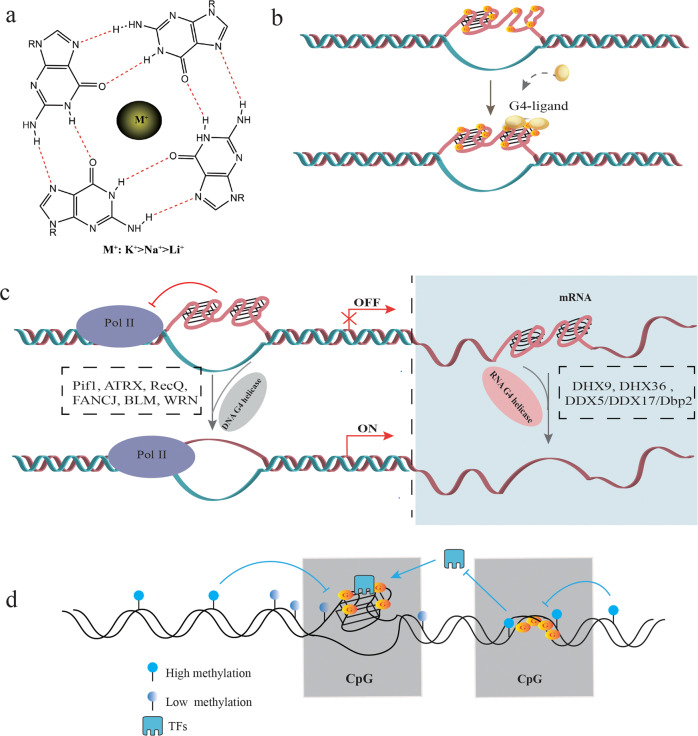
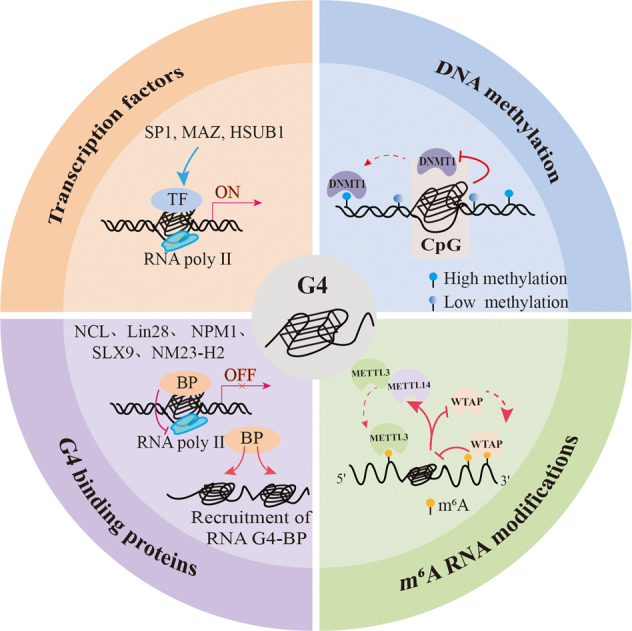
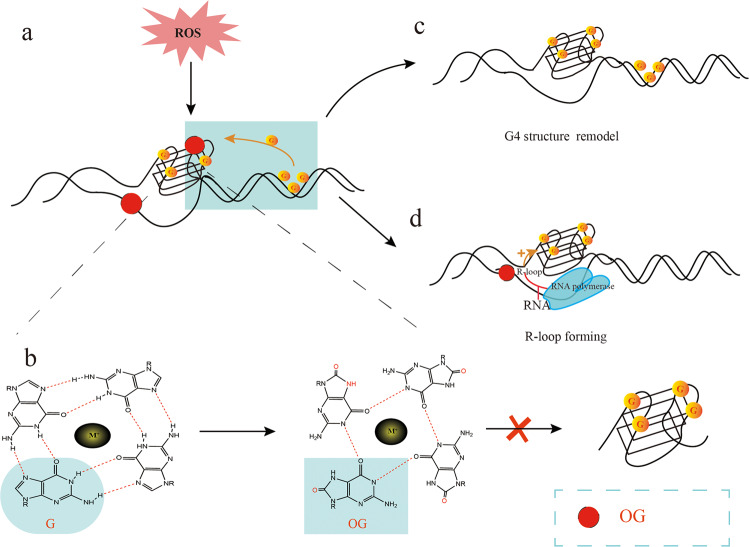
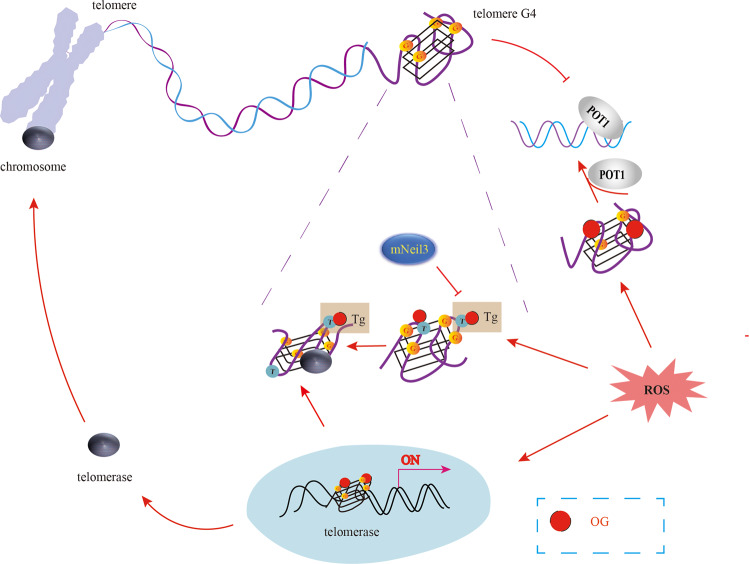
Verification
Claims the paper makes
The claims and statistics of this paper haven’t been checked yet.
Run the check — free, no account needed. It reads the open-access text and checks the sources it cites.
Claims other papers make about this one
Each is checked against this paper’s own text: does it say what the citing paper says it does?
The source backs part of the claim, not all of it — or backs it for a different population, condition or comparison.
In the citing paper
“Furthermore, G4s are highly susceptible to oxidative damage, as G-rich sequences have a low redox-potential and thus can act as ROS-sinks (84).”
From G-quadruplex-mediated genomic instability drives SNVs in cancer (2024) · cites this paper as [84]
Experimental — accuracy not yet measured
Self-check
Percentages, sums and reported differences re-computed from the paper’s own numbers.
The self-check needs the paper’s full text.
Citations
Cites
Items 201–229 of 229
Fedeles, B. I. (2017) · Proceedings of the National Academy of Sciences · doi:10.1073/pnas.1701244114 · Cited by 25 · cited 3×
“G4-sequencing has further revealed that G4s are highly enriched in the promoters and TSSs of human and mouse genes [35].”
BackgroundUbiquitin-mediated DNA damage response is synthetic lethal with G-quadruplex stabilizer CX-5461
Masud, T., Soong, C., Xu, H., Biele, J., Bjornson, S., McKinney, S. E., & Aparicio, S. A. J. R. (2021) · Scientific Reports · doi:10.1038/s41598-021-88988-w · Cited by 24
A new Co(III)–hypocrellin B complex with enhanced photonuclease activity
Sun, Y., Hou, Y., Zhou, Q., Chen, J., Zhang, B., & Wang, X. (2011) · Journal of Inorganic Biochemistry · doi:10.1016/j.jinorgbio.2011.03.021 · Cited by 23 · cited 6×
“Thus, G4 ligands are promising photosensitizers for targeted PDT. Cell Death and Disease (2023) 14:37”
BackgroundInfluentialSelf-citationTetracationic porphyrin derivatives against human breast cancer
Gamelas, S. R. D., Moura, N. M. M., Habraken, Y., Piette, J. G., Neves, M. G. P. M. S., & Faustino, M. A. F. (2021) · Journal of Photochemistry and Photobiology B Biology · doi:10.1016/j.jphotobiol.2021.112258 · Cited by 22
Waller, Z. A. E., Howell, L. A., Macdonald, C., O'Connell, M. A., & Searcey, M. (2014) · Biochemical and Biophysical Research Communications · doi:10.1016/j.bbrc.2014.03.117 · Cited by 20 · cited 12×
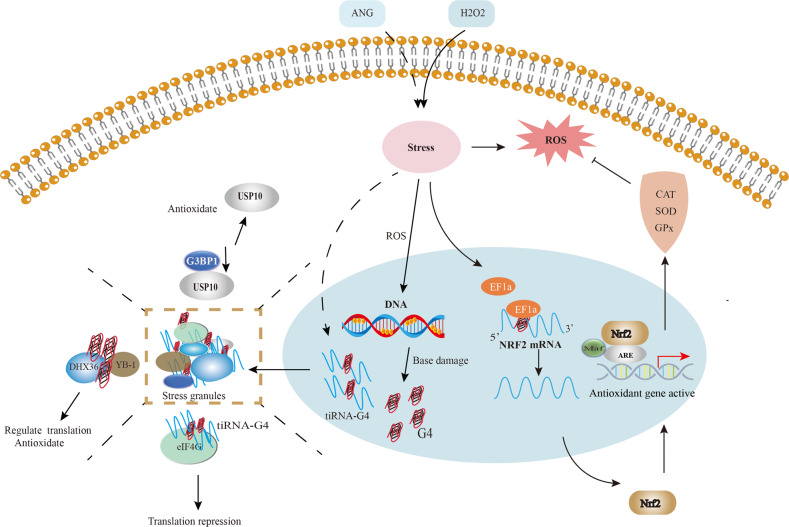
“Furthermore, G4s also mediate the antioxidant process by forming stress granules and activating Nrf2, which is suggestive of their involvement in developing ROS-related diseases.”
BackgroundInfluentialZhu, L., Shi, S., Yang, L., Zhang, M., Liu, K., & Zhang, L. (2016) · RSC Advances · doi:10.1039/c5ra24964c · Cited by 20 · cited 2×
“Other study showed that TMPipEOPP selectively binds to telomeric DNA G4 and helps to cleave the DNA chain upon photo-irradiation through ROS production, resulting in cancer cell death [179].”
BackgroundCX-3543 Promotes Cell Apoptosis through Downregulation of CCAT1 in Colon Cancer Cells
Yao, Y., Xu, B., & Zhang, Y. (2018) · BioMed Research International · doi:10.1155/2018/9701957 · Cited by 20
Chen, H.-H., Chang, H.-H., Chang, J., Tang, Y.-C., Cheng, Y.-C., Lin, L.-M., Cheng, S.-Y., Huang, C.-H., Sun, M.-W., Chen, C.-T., et al. (2017) · Free Radical Biology and Medicine · doi:10.1016/j.freeradbiomed.2017.10.375 · Cited by 20
Wang, S., Wu, Y., Wang, X., Kuang, G., Zhang, Q., Lin, S., Liu, H., Tan, J., Huang, Z., & Ou, T. (2017) · Journal of Medicinal Chemistry · doi:10.1021/acs.jmedchem.6b01444 · Cited by 19
Shi, T., Wang, M., Li, H., Wang, M., Luo, X., Huang, Y., Wang, H., Nie, Z., & Yao, S. (2018) · Scientific Reports · doi:10.1038/s41598-018-23902-5 · Cited by 19
The Interactions of H2TMPyP, Analogues and Its Metal Complexes with DNA G-Quadruplexes—An Overview
Ramos, C. I. V., Monteiro, A. R., Moura, N. M. M., Faustino, M. A. F., Trindade, T., & Neves, M. G. P. M. S. (2021) · Biomolecules · doi:10.3390/biom11101404 · Cited by 19
Telomerase activity in response to mild oxidative stress
López‐Díazguerrero, N. E., Pérez‐Figueroa, G. E., Martínez‐Garduño, C. M., Alarcón‐Aguilar, A., Luna‐López, A., Gutiérrez‐Ruíz, M. C., & Königsberg, M. (2011) · Cell Biology International · doi:10.1042/cbi20110308 · Cited by 18 · cited 1×
“For example, mild ROS elevation in tumor cells activates telomerase, accelerates telomere elongation, and promotes tumor cell proliferation [118].”
BackgroundCinque, G., Ferino, A., Pedersen, E. B., & Xodo, L. E. (2020) · International Journal of Molecular Sciences · doi:10.3390/ijms21176237 · Cited by 18 · cited 1×
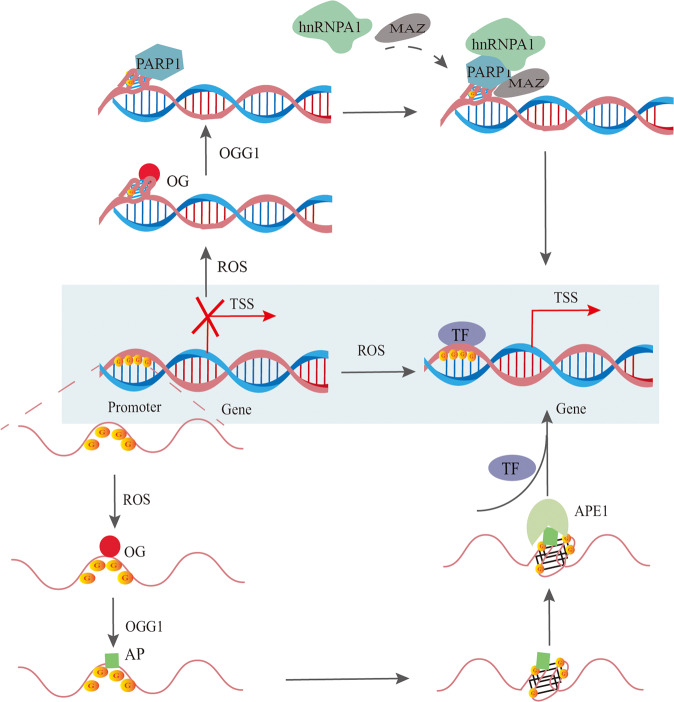
“The same team also found that H2O2 recruits poly [ADP-ribose] polymerase 1 (PARP-1) to KRAS promoter region, wherein it binds to local G4 structures, undergoes auto PARylation and activates KRAS transcription by recruiting MAZ and hnRNPA1 [132, 133] (Fig.”
BackgroundChen, J., Jin, X., Mei, Y., Shen, Z., Zhu, J., Shi, H., Wang, M., Zheng, X., & Liang, G. (2021) · Cell Proliferation · doi:10.1111/cpr.13101 · Cited by 17
Self-citationHuang, X., Sheu, G., Chang, K., Huang, Y., Hung, P., & Tsai, N. (2020) · Molecules · doi:10.3390/molecules25235639 · Cited by 16
Chen, J., Jin, X., Shen, Z., Mei, Y., Zhu, J., Zhang, X., Liang, G., & Zheng, X. (2021) · Medical Oncology · doi:10.1007/s12032-021-01505-x · Cited by 16 · cited 10×
“A recent study showed that poly-G4-TMPyP4 complexes generate high levels of singlet oxygen at cancer lesions in response to UV irradiation and promote apoptosis of tumor cells [176].”
BackgroundInfluentialSelf-citationBidula, S. M. (2021) · Cytokine · doi:10.1016/j.cyto.2021.155493 · Cited by 16 · cited 2×
“Computational predictions indicated that TFs are strongly enriched in the G4 motifs of promoters across genomes of multiple species, and dozens of these TFs appear to be conserved [60, 63].”
BackgroundKumarasamy, V. M., & Sun, D. (2017) · International Journal of Oncology · doi:10.3892/ijo.2017.3994 · Cited by 15
KRAS Promoter G-Quadruplexes from Sequences of Different Length: A Physicochemical Study
D’Aria, F., Pagano, B., Petraccone, L., & Giancola, C. (2021) · International Journal of Molecular Sciences · doi:10.3390/ijms22010448 · Cited by 15
Miclot, T., Corbier, C., Terenzi, A., Hognon, C., Grandemange, S., Barone, G., & Monari, A. (2021) · Chemistry - A European Journal · doi:10.1002/chem.202100993 · Cited by 15
AKT1 is positively regulated by G-quadruplexes in its promoter and 3′-UTR
Zhang, L., Yan, T., Wang, W., Wu, Q., Li, G., Li, D., Stovall, D. B., Wang, Y., Li, Y., & Sui, G. (2021) · Biochemical and Biophysical Research Communications · doi:10.1016/j.bbrc.2021.05.029 · Cited by 14 · cited 12×
“Furthermore, G4s also mediate the antioxidant process by forming stress granules and activating Nrf2, which is suggestive of their involvement in developing ROS-related diseases.”
BackgroundInfluentialHERC2 inactivation abrogates nucleolar localization of RecQ helicases BLM and WRN
Zhu, M., Wu, W., Togashi, Y., Liang, W., Miyoshi, Y., & Ohta, T. (2021) · Scientific Reports · doi:10.1038/s41598-020-79715-y · Cited by 14
Hognon, C., Gebus, A., Barone, G., & Monari, A. (2019) · Antioxidants · doi:10.3390/antiox8090337 · Cited by 13 · cited 1×
“Finally, the oxidation of some guanine bases can be compensated by surrounding guanine bases to maintain the stability of G4 [96].”
BackgroundYadav, V., Thakur, R. K., Eckloff, B., Baral, A., Singh, A., Halder, R., Kumar, A., Alam, M. P., Kundu, T., Pandita, R., et al. (2014) · Nucleic Acids Research · doi:10.1093/nar/gku596 · Cited by 12
Iwasaki, Y., Ookuro, Y., Iida, K., Nagasawa, K., & Yoshida, W. (2022) · Biochemical and Biophysical Research Communications · doi:10.1016/j.bbrc.2022.01.123 · Cited by 12
Muturi, E., Meng, F., Liu, H., Jiang, M., Wei, H., & Yang, H. (2021) · Frontiers in Microbiology · doi:10.3389/fmicb.2021.798431 · Cited by 11
Wang, M., Cai, E., Fujiwara, N., Fones, L., Brown, E., Yanagawa, Y., & Cave, J. W. (2017) · Journal of Neuroscience · doi:10.1523/jneurosci.1363-16.2017 · Cited by 9
Tang, J., Wu, J., Zhu, R., Wang, Z., Zhao, C., Tang, P., Xie, W., Wang, D., & Liang, L. (2020) · The Analyst · doi:10.1039/d0an01930e · Cited by 9
Yan, C., Xu, J., Yao, B., Yang, L., Li, Y., Liu, G., & Chen, W. (2021) · Talanta · doi:10.1016/j.talanta.2021.122821 · Cited by 6
Research works printed but not linked: 5
- Neeley W, Essigmann J. Mechanisms of formation, genotoxicity, and mutation of guanine oxidation products. Chem Res Toxicol. 2006;19:491–505. · DOI · Paper page
- von Zglinicki T. Oxidative stress shortens telomeres. Trends Biochem Sci. 2002;27:339–44. · DOI · Paper page
- Frenkel KJP. therapeutics Carcinog-mediated Oxid formation Oxid DNA damage. 1992;53:127–66.
- Chen H, Long H, Cui X, Zhou J, Xu M, Yuan G. Exploring the formation and recognition of an important G-quadruplex in a HIF1alpha promoter and its transcriptional inhibition by a benzo[c]phenanthridine derivative. J Am Chem Soc. 2014;136:2583–91. · DOI
- Marie-Paule TF, Carolina C, Lionel G, Christian B, Patrizia A, Jean-Louis M, et al. Selective recognition of G-quadruplex telomeric DNA by a bis(quinacridine) macrocycle. JACS 2003;125:4732–40. · DOI
Cited by
Sorted by citations
Deiana, M., Castán, J. M. A., Josse, P., Kahsay, A. G., Sánchez, D. P., Morice, K., Gillet, N., Ravindranath, R., Patel, A. K., Sengupta, P., et al. (2023) · Nucleic Acids Research · doi:10.1093/nar/gkad365 · Cited by 67
“In addition, guanine has the lowest redox potential among the four DNA bases and runs of guanines render these sequences e v en more prone to oxidation ( 51 , 108 ) providing opportunities to maximize DNA damage by using G4-specific PSs.”
Epithelial–mesenchymal plasticity in kidney fibrosis
Hadpech, S., & Thongboonkerd, V. (2023) · genesis · doi:10.1002/dvg.23529 · Cited by 62
“ROS also acts as a secondary messenger in cellular signaling pathways (Ming et al., 2022; Wu et al., 2023).”
BackgroundG-quadruplexes and associated proteins in aging and Alzheimer’s disease
Kumar, M. J. V., Morales, R., & Tsvetkov, A. S. (2023) · Frontiers in Aging · doi:10.3389/fragi.2023.1164057 · Cited by 34
“The oxidative DNA damage is increased in genes that are rich in G-rich sequences and have the propensity to form G4-DNA motifs (Brosh and Bohr, 2007; Bielskute et al., 2021; Wu et al., 2023).”
BackgroundMultifunctional Cerium Oxide Nanozyme for Synergistic Dry Eye Disease Therapy
Zou, H., Hong, Y., Xu, B., Wang, M., Xie, H., Wang, Y., & Lin, Q. (2024) · ACS Applied Materials & Interfaces · doi:10.1021/acsami.4c07390 · Cited by 30
Luo, T., Yang, S., Zhao, T., Zhu, H., Chen, C., Shi, X., Chen, D., Wang, K., Jiang, K., Xu, D., et al. (2023) · Cell Death and Disease · doi:10.1038/s41419-023-05913-x · Cited by 32
Metadata
- Authors
- Wu, S., Jiang, L., Lei, L., Fu, C., Huang, J., Hu, Y., Dong, Y., Chen, J., & Zeng, Q.
- Affiliations
- Central South University (CN)
- Corresponding author
- Chen, Jing
- Zeng, Qinghai
- Venue
- Cell Death & Disease
- Published
- 2023-01-18
- Volume
- 14
- Issue
- 1
- Pages
- 37-37
- ISSN
- 2041-4889 (ISSN-L)
- PMC
- PMC9849334
- OpenAlex
- W4317234399
- Cited by
- 69
- References
- 229
- Citations by year
- 2026: 17 · 2025: 28 · 2024: 14 · 2023: 10
- FWCI
- 1.82
- Type
- journal article
- Language
- en
- Open access
- gold
- doi.org
- Locations
- Cell Death and Disease (publishedVersion, cc-by)
- PubMed Central (publishedVersion, cc-by)
- PubMed (publishedVersion)
- DOAJ (DOAJ: Directory of Open Access Journals) (submittedVersion, cc-by-sa)
- Funders
- National Natural Science Foundation of China (82103704, 82073420, 82073421, No. 82103704, 82003326, YX202007)
- Central South University (YX202007)
- Xiangya Hospital, Central South University
- Topics
- Life Sciences › Biochemistry, Genetics and Molecular Biology › Molecular Biology › DNA and Nucleic Acid Chemistry
- Life Sciences › Biochemistry, Genetics and Molecular Biology › Cell Biology › Telomeres, Telomerase, and Senescence
- Life Sciences › Biochemistry, Genetics and Molecular Biology › Clinical Biochemistry › Advanced Glycation End Products research
- Keywords
- G-quadruplex, reactive oxygen species, oxidative DNA damage, G-rich sequences, stress granules, Nrf2, aging, age-related diseases, transcriptional regulation, telomere maintenance, epigenetic regulation, redox potential
- MeSH terms
- DNA, Regulatory Sequences, Nucleic Acid, Reactive Oxygen Species, Epigenesis, Genetic, G-Quadruplexes
About these checks
Registry, retraction, Cites and statistics results are computed, not judged, with one exception: a printed reference that no index lists is read once by a model before it counts as a citation error. Claims are extracted by a model and kept only when their quote appears verbatim in the text; each cited source is then checked, with a model’s help, for whether it says what the claim relies on. Those verdicts can be wrong — read the claim’s quote and the cited source before relying on one.
Statistics and arithmetic are recomputed, not judged.
Confidence bands are shown only for fields calibrated on our annotated test set. None is calibrated yet, so no band is shown.
What counts as a claim ›How we measure confidence ›How we check this ›
Are you an author, or do you see a problem with this page? Request a review
