

Tunnelling nanotubes between neuronal and microglial cells allow bi-directional transfer of α-Synuclein and mitochondria
Open accessThe DOI matches its Crossref record; 52 of the 52 references it cites were found in a registry or an index.
Abstract
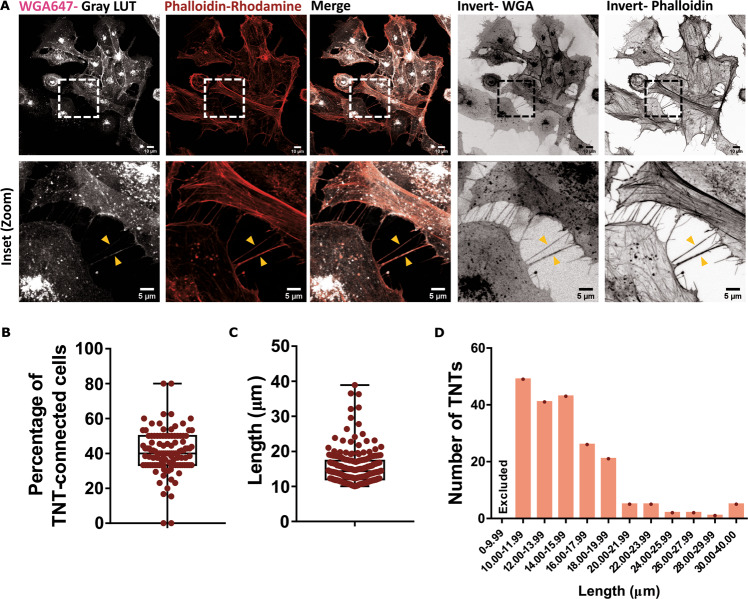
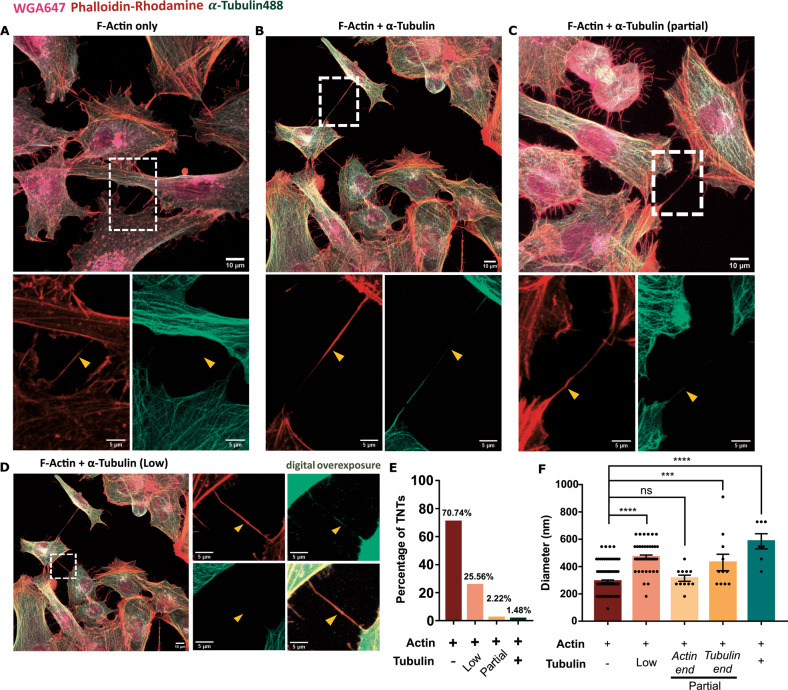
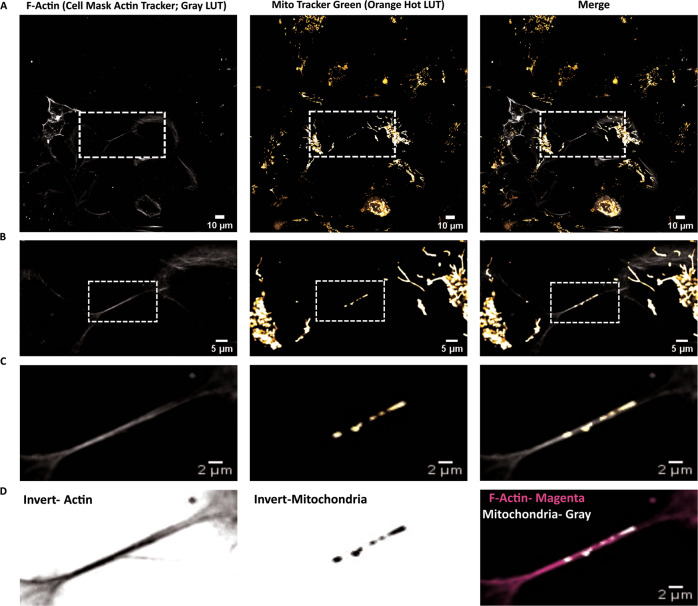
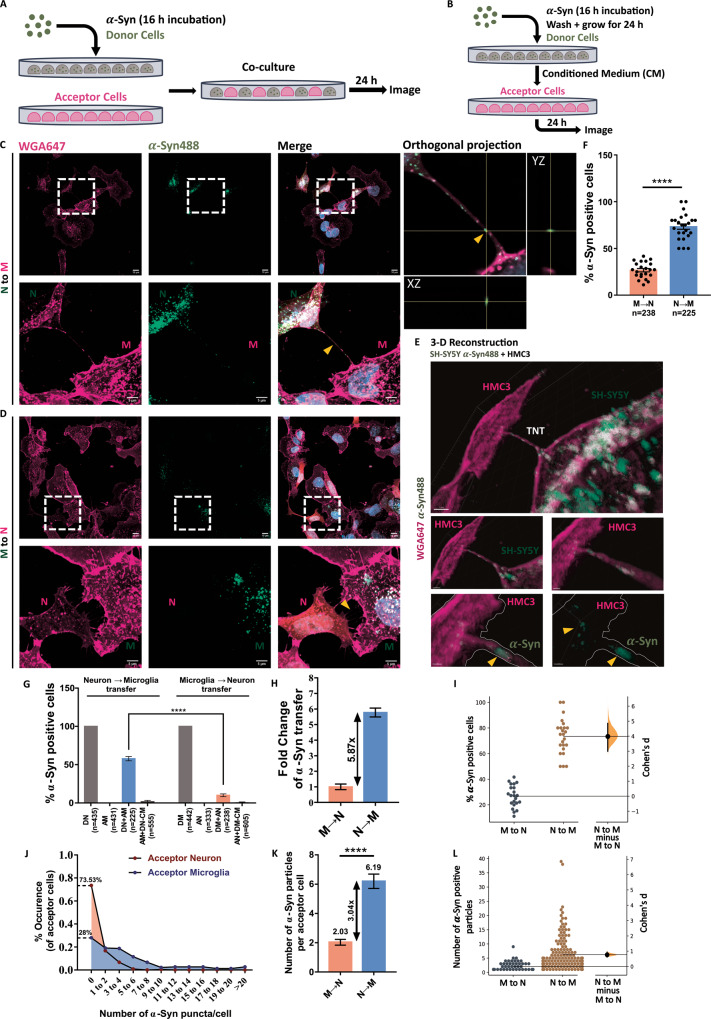
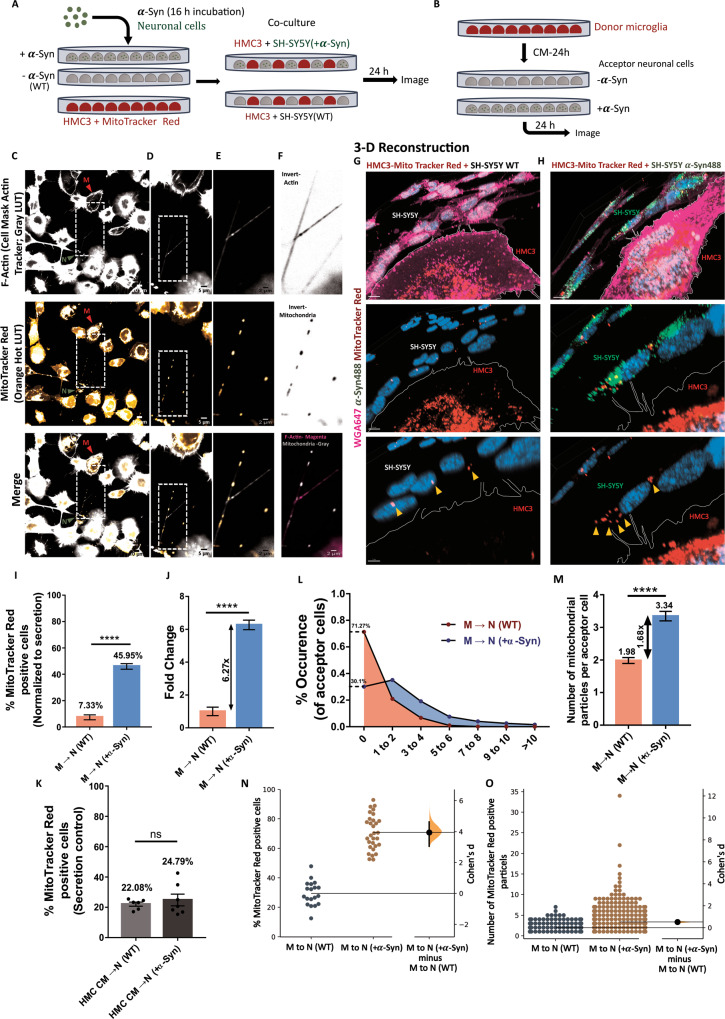
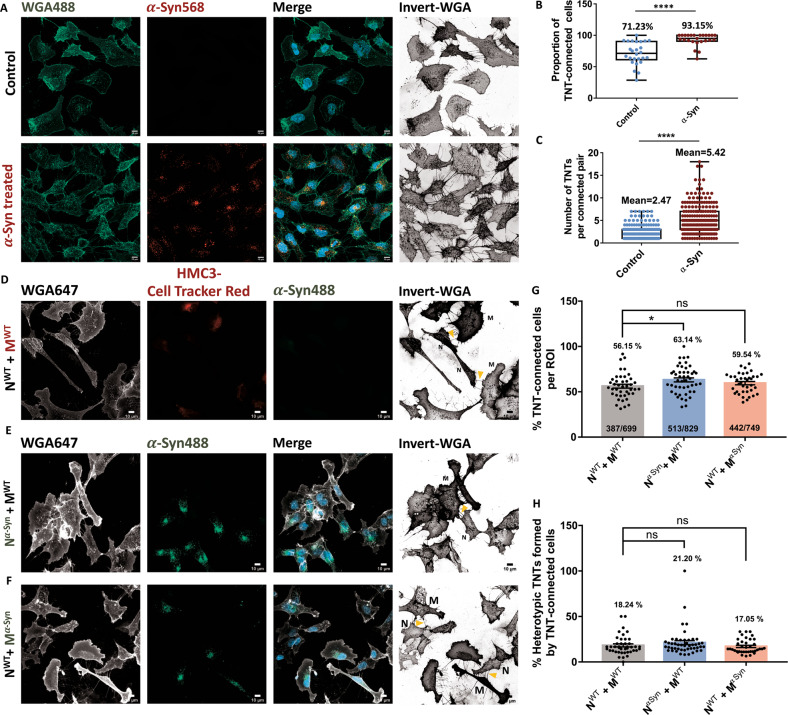
Tunnelling Nanotubes (TNTs) facilitate contact-mediated intercellular communication over long distances. Material transfer via TNTs can range from ions and intracellular organelles to protein aggregates and pathogens. Prion-like toxic protein aggregates accumulating in several neurodegenerative pathologies, such as Alzheimer’s, Parkinson’s, and Huntington’s diseases, have been shown to spread via TNTs not only between neurons, but also between neurons-astrocytes, and neurons-pericytes, indicating the importance of TNTs in mediating neuron–glia interactions. TNT-like structures were also reported between microglia, however, their roles in neuron-microglia interaction remain elusive. In this work, we quantitatively characterise microglial TNTs and their cytoskeletal composition, and demonstrate that TNTs form between human neuronal and microglial cells. We show that α-Synuclein (α-Syn) aggregates increase the global TNT-mediated connectivity between cells, along with the number of TNT connections per cell pair. Homotypic TNTs formed between microglial cells, and heterotypic TNTs between neuronal and microglial cells are furthermore shown to be functional, allowing movement of both α-Syn and mitochondria. Quantitative analysis shows that α-Syn aggregates are transferred predominantly from neuronal to microglial cells, possibly as a mechanism to relieve the burden of accumulated aggregates. By contrast, microglia transfer mitochondria preferably to α-Syn burdened neuronal cells over the healthy ones, likely as a potential rescue mechanism. Besides describing novel TNT-mediated communication between neuronal and microglial cells, this work allows us to better understand the cellular mechanisms of spreading neurodegenerative diseases, shedding light on the role of microglia.
Overview
The claims and statistics of this paper haven’t been checked yet.
Free: it reads the open-access text and checks the first 5 claims that cite a source we can check. Create a free account to check every claim.
Integrity signals
Registry
Cites
Statistics
Figures
Verification
Claims the paper makes
The claims and statistics of this paper haven’t been checked yet.
Free: it reads the open-access text and checks the first 5 claims that cite a source we can check. Create a free account to check every claim.
Claims other papers make about this one
Each is checked against this paper’s own text: does it say what the citing paper says it does?
The source backs part of the claim, not all of it — or backs it for a different population, condition or comparison.
In the citing paper
“In PD, a primary cell can get overloaded with α-syn and then use TNTs to dispose of the excess protein, which then gets spread to other cells [118].”
From The Impact of Neurotoxin Proteins Trafficked by Primary Cilia and Extracellular Vesicles in Neurodegenerative Diseases (2025) · cites this paper as [118]
Experimental — accuracy not yet measured
Self-check
Percentages, sums and reported differences re-computed from the paper’s own numbers.
The self-check needs the paper’s full text.
Citations
Cites
Neuropathological stageing of Alzheimer-related changes.
Braak, H., & Braak, E. (1991) · Acta Neuropathologica · doi:10.1007/bf00308809 · Cited by 16,123 · cited 1×
“In later stages, the pathology spreads and α -Syn deposition has been observed in different other regions of the brain, implicating the propagative nature of these aggregates in a “ prion-like ” mechanism [7 – 9].”
Protein aggregation and neurodegenerative disease
Ross, C. A., & Poirier, M. A. (2004) · Nature Medicine · doi:10.1038/nm1066 · Cited by 3,454
Nanotubular Highways for Intercellular Organelle Transport
Rustom, A., Saffrich, R., Markovic, I., Walther, P., & Gerdes, H.-H. (2004) · Science · doi:10.1126/science.1093133 · Cited by 2,038
Li, J.-Y., Englund, E., Holton, J. L., Soulet, D., Hagell, P., Lees, A. J., Lashley, T., Quinn, N. P., Rehncrona, S., Björklund, A., et al. (2008) · Nature Medicine · doi:10.1038/nm1746 · Cited by 1,845 · cited 1×
“In later stages, the pathology spreads and α -Syn deposition has been observed in different other regions of the brain, implicating the propagative nature of these aggregates in a “ prion-like ” mechanism [7 – 9].”
Moving beyond P values: data analysis with estimation graphics
Ho, J., Tumkaya, T., Aryal, S., Choi, H., & Claridge-Chang, A. (2019) · Nature Methods · doi:10.1038/s41592-019-0470-3 · Cited by 1,758 · cited 1×
“To determine the effect sizes and calculate Cohen ’ s d, Bland-Altmann plots were plotted with the estimation statistics online tool (www.estimationstats.com; [37]).”
Lewy body–like pathology in long-term embryonic nigral transplants in Parkinson's disease
Kordower, J. H., Chu, Y., Hauser, R. A., Freeman, T. B., & Olanow, C. W. (2008) · Nature Medicine · doi:10.1038/nm1747 · Cited by 1,722
Microglia in neurodegeneration
Hickman, S., Izzy, S., Sen, P., Morsett, L., & El Khoury, J. (2018) · Nature Neuroscience · doi:10.1038/s41593-018-0242-x · Cited by 1,710
Inflammation in Neurodegenerative Disease—A Double-Edged Sword
Wyss-Coray, T., & Mucke, L. (2002) · Neuron · doi:10.1016/s0896-6273(02)00794-8 · Cited by 1,235
Autophagy and Neurodegeneration: Pathogenic Mechanisms and Therapeutic Opportunities
Menzies, F. M., Fleming, A., Caricasole, A., Bento, C. F., Andrews, S. P., Ashkenazi, A., Füllgrabe, J., Jackson, A., Jimenez Sanchez, M., Karabiyik, C., et al. (2017) · Neuron · doi:10.1016/j.neuron.2017.01.022 · Cited by 1,134
Neuroinflammation Induces Neurodegeneration.
Kempuraj, D., Thangavel, R., Natteru, P., Selvakumar, G. P., Saeed, D., Zahoor, H., Zaheer, S., Iyer, S. S., & Zaheer, A. (2016) · PubMed · Cited by 891
Kim, C., Ho, D.-H., Suk, J.-E., You, S., Michael, S., Kang, J., Joong Lee, S., Masliah, E., Hwang, D., Lee, H.-J., et al. (2013) · Nature Communications · doi:10.1038/ncomms2534 · Cited by 856
Prions hijack tunnelling nanotubes for intercellular spread
Gousset, K., Schiff, E., Langevin, C., Marijanovic, Z., Caputo, A., Browman, D. T., Chenouard, N., de Chaumont, F., Martino, A., Enninga, J., et al. (2009) · Nature Cell Biology · doi:10.1038/ncb1841 · Cited by 615
Self-citationMicroglia clear neuron-released α-synuclein via selective autophagy and prevent neurodegeneration
Choi, I., Zhang, Y., Seegobin, S. P., Pruvost, M., Wang, Q., Purtell, K., Zhang, B., & Yue, Z. (2020) · Nature Communications · doi:10.1038/s41467-020-15119-w · Cited by 608
Transfer of mitochondria via tunneling nanotubes rescues apoptotic PC12 cells
Wang, X., & Gerdes, H.-H. (2015) · Cell Death & Differentiation · doi:10.1038/cdd.2014.211 · Cited by 527
Önfelt, B., Nedvetzki, S., Benninger, R. K. P., Purbhoo, M. A., Sowinski, S., Hume, A. N., Seabra, M. C., Neil, M. A. A., French, P. M. W., & Davis, D. M. (2006) · The Journal of Immunology · doi:10.4049/jimmunol.177.12.8476 · Cited by 492
Synuclein activates microglia in a model of Parkinson's disease
Su, X., Maguire-Zeiss, K. A., Giuliano, R., Prifti, L., Venkatesh, K., & Federoff, H. J. (2008) · Neurobiology of Aging · doi:10.1016/j.neurobiolaging.2007.04.006 · Cited by 474
Tunneling-nanotube development in astrocytes depends on p53 activation
Wang, Y., Cui, J., Sun, X., & Zhang, Y. (2011) · Cell Death & Differentiation · doi:10.1038/cdd.2010.147 · Cited by 417 · cited 1×
“Amyloido-genic proteins such as prions [23], amyloid β [24], tau [25], mHTT [26], and α -Syn [27] have been reported to use TNTs as a route for spreading from one cell to another in in vitro co-cultures and in brain slices.”
Croisier, E., Moran, L. B., Dexter, D. T., Pearce, R. K., & Graeber, M. B. (2005) · Journal of Neuroinflammation · doi:10.1186/1742-2094-2-14 · Cited by 414
Tunneling nanotubes spread fibrillar α-synuclein by intercellular trafficking of lysosomes
Abounit, S., Bousset, L., Loria, F., Zhu, S., de Chaumont, F., Pieri, L., Olivo‐Marin, J., Melki, R., & Zurzolo, C. (2016) · The EMBO Journal · doi:10.15252/embj.201593411 · Cited by 414
Self-citationWiring through tunneling nanotubes--from electrical signals to organelle transfer
Abounit, S., & Zurzolo, C. (2012) · Journal of Cell Science · doi:10.1242/jcs.083279 · Cited by 386 · cited 1×
“Functionally, TNTs are able to transfer cargoes of different kinds between the connected cells, like Ca 2 + signals, messenger-and micro-RNAs, organelles such as lysosomes and mitochondria, pathogens, apoptotic signals, and ND-protein aggregates [21, 22].”
Self-citationScheiblich, H., Dansokho, C., Mercan, D., Schmidt, S. V., Bousset, L., Wischhof, L., Eikens, F., Odainic, A., Spitzer, J., Griep, A., et al. (2021) · Cell · doi:10.1016/j.cell.2021.09.007 · Cited by 360
Human Astrocytes Transfer Aggregated Alpha-Synuclein via Tunneling Nanotubes
Rostami, J., Holmqvist, S., Lindström, V., Sigvardson, J., Westermark, G. T., Ingelsson, M., Bergström, J., Roybon, L., & Erlandsson, A. (2017) · The Journal of Neuroscience · doi:10.1523/jneurosci.0983-17.2017 · Cited by 339 · cited 1×
“…to move to an uninfected neuronal cell and initiate aggregate seeding [28]. α -Syn fi brils can also propagate between neurons and astrocytes [29, 30], as well as neurons and pericytes [31] via TNTs. Recently, an elegant work using mouse primary microglia, human monocyte-derived microglia-like…”
Seeded Aggregation and Toxicity of α-Synuclein and Tau
Nonaka, T., Watanabe, S. T., Iwatsubo, T., & Hasegawa, M. (2010) · Journal of Biological Chemistry · doi:10.1074/jbc.m110.148460 · Cited by 333 · cited 1×
“Preformed fi brils were prepared as described previously [35].”
Self-citationIntercellular transfer mediated by tunneling nanotubes
Gerdes, H.-H., & Carvalho, R. N. (2008) · Current Opinion in Cell Biology · doi:10.1016/j.ceb.2008.03.005 · Cited by 314 · cited 1×
“However, when α -Syn-loaded microglia were the donor cells and naïve neuronal cells were acceptors (Fig.”
Eugenin, E. A., Gaskill, P. J., & Berman, J. W. (2009) · Cellular Immunology · doi:10.1016/j.cellimm.2008.08.005 · Cited by 304
Loria, F., Vargas, J. Y., Bousset, L., Syan, S., Salles, A., Melki, R., & Zurzolo, C. (2017) · Acta Neuropathologica · doi:10.1007/s00401-017-1746-2 · Cited by 289
Self-citationJang, A., Lee, H., Suk, J., Jung, J., Kim, K., & Lee, S. (2010) · Journal of Neurochemistry · doi:10.1111/j.1471-4159.2010.06695.x · Cited by 281 · cited 1×
“A mechanism of disease propagation is via the release of α -Syn aggregates by neurons, which eventually binds to, and is engulfed by, surrounding neurons [10 – 13].”
Correlative cryo-electron microscopy reveals the structure of TNTs in neuronal cells
Sartori-Rupp, A., Cordero Cervantes, D., Pepe, A., Gousset, K., Delage, E., Corroyer-Dulmont, S., Schmitt, C., Krijnse-Locker, J., & Zurzolo, C. (2019) · Nature Communications · doi:10.1038/s41467-018-08178-7 · Cited by 272
Self-citationThe human microglial HMC3 cell line: where do we stand? A systematic literature review
Dello Russo, C., Cappoli, N., Coletta, I., Mezzogori, D., Paciello, F., Pozzoli, G., Navarra, P., & Battaglia, A. (2018) · Journal of Neuroinflammation · doi:10.1186/s12974-018-1288-0 · Cited by 265 · cited 2×
“Human microglial clone 3 (HMC3) cell line [34], a kind gift from Dr Aleksandra Deczkowska, Institut Pasteur, was grown in DMEM media (Sigma-Aldrich, D6429), supplemented with 10% FCS and 1% Penicillin-Streptomycin.”
Initiation and propagation of α-synuclein aggregation in the nervous system
Hijaz, B. A., & Volpicelli-Daley, L. A. (2020) · Molecular Neurodegeneration · doi:10.1186/s13024-020-00368-6 · Cited by 262 · cited 1×
“A mechanism of disease propagation is via the release of α -Syn aggregates by neurons, which eventually binds to, and is engulfed by, surrounding neurons [10 – 13].”
Fyn kinase regulates misfolded α-synuclein uptake and NLRP3 inflammasome activation in microglia
Panicker, N., Sarkar, S., Harischandra, D. S., Neal, M., Kam, T.-I., Jin, H., Saminathan, H., Langley, M., Charli, A., Samidurai, M., et al. (2019) · Journal of Experimental Medicine · doi:10.1084/jem.20182191 · Cited by 254
Transfer of polyglutamine aggregates in neuronal cells occurs in tunneling nanotubes
Costanzo, M., Abounit, S., Marzo, L., Danckaert, A., Chamoun, Z., Roux, P., & Zurzolo, C. (2013) · Journal of Cell Science · doi:10.1242/jcs.126086 · Cited by 210 · cited 1×
“Amyloido-genic proteins such as prions [23], amyloid β [24], tau [25], mHTT [26], and α -Syn [27] have been reported to use TNTs as a route for spreading from one cell to another in in vitro co-cultures and in brain slices.”
Self-citationTunneling nanotubes, an emerging intercellular communication route in development
Gerdes, H.-H., Rustom, A., & Wang, X. (2013) · Mechanisms of Development · doi:10.1016/j.mod.2012.11.006 · Cited by 208
Abounit, S., Wu, J. W., Duff, K., Victoria, G. S., & Zurzolo, C. (2016) · Prion · doi:10.1080/19336896.2016.1223003 · Cited by 206
Self-citationProteostasis and neurodegeneration: The roles of proteasomal degradation and autophagy
Tanaka, K., & Matsuda, N. (2014) · Biochimica et Biophysica Acta (BBA) - Molecular Cell Research · doi:10.1016/j.bbamcr.2013.03.012 · Cited by 191 · cited 1×
“Although cells have different quality control mechanisms in place to clear misfolded proteins, such as the ubiquitin-proteasome system (UPS), and autophagy, continuous generation of aggregates renders these processes ineffective in maintaining proteos-tasis [2, 3].”
Tunneling nanotubes: Reshaping connectivity
Zurzolo, C. (2021) · Current Opinion in Cell Biology · doi:10.1016/j.ceb.2021.03.003 · Cited by 186 · cited 1×
“Towards this, in this study we used human neuroblastoma cell line SH-SY5Y, a well-established in vitro model to study TNTs under different (patho) physiological conditions [25, 33, 44].”
Self-citationPeering into tunneling nanotubes—The path forward
Cordero Cervantes, D., & Zurzolo, C. (2021) · The EMBO Journal · doi:10.15252/embj.2020105789 · Cited by 176
Self-citationMultifaceted Roles of Tunneling Nanotubes in Intercellular Communication
Marzo, L., Gousset, K., & Zurzolo, C. (2012) · Frontiers in Physiology · doi:10.3389/fphys.2012.00072 · Cited by 169
Self-citationAssessment of α-Synuclein Secretion in Mouse and Human Brain Parenchyma
Emmanouilidou, E., Elenis, D., Papasilekas, T., Stranjalis, G., Gerozissis, K., Ioannou, P. C., & Vekrellis, K. (2011) · PLoS ONE · doi:10.1371/journal.pone.0022225 · Cited by 163
Dieriks, B. V., Park, T. I.-H., Fourie, C., Faull, R. L. M., Dragunow, M., & Curtis, M. A. (2017) · Scientific Reports · doi:10.1038/srep42984 · Cited by 158
The Ways of Actin: Why Tunneling Nanotubes Are Unique Cell Protrusions
Ljubojević, N., Henderson, J. M., & Zurzolo, C. (2020) · Trends in Cell Biology · doi:10.1016/j.tcb.2020.11.008 · Cited by 158 · cited 1×
“4A), and normalising it to secretion-mediated transfer (Fig.”
Self-citationExtracellular α-synuclein levels are regulated by neuronal activity
Yamada, K., & Iwatsubo, T. (2018) · Molecular Neurodegeneration · doi:10.1186/s13024-018-0241-0 · Cited by 148
Souriant, S., Balboa, L., Dupont, M., Pingris, K., Kviatcovsky, D., Cougoule, C., Lastrucci, C., Bah, A., Gasser, R., Poincloux, R., et al. (2019) · Cell Reports · doi:10.1016/j.celrep.2019.02.091 · Cited by 134
Dilsizoglu Senol, A., Samarani, M., Syan, S., Guardia, C. M., Nonaka, T., Liv, N., Latour-Lambert, P., Hasegawa, M., Klumperman, J., Bonifacino, J. S., et al. (2021) · PLOS Biology · doi:10.1371/journal.pbio.3001287 · Cited by 134
Self-citationIdentification and Characterization of Tunneling Nanotubes for Intercellular Trafficking
Abounit, S., Delage, E., & Zurzolo, C. (2015) · Current Protocols in Cell Biology · doi:10.1002/0471143030.cb1210s67 · Cited by 104
Self-citationFcγRIIB mediates the inhibitory effect of aggregated α-synuclein on microglial phagocytosis
Choi, Y. R., Kang, S.-J., Kim, J.-M., Lee, S.-J., Jou, I., Joe, E.-H., & Park, S. M. (2015) · Neurobiology of Disease · doi:10.1016/j.nbd.2015.08.025 · Cited by 91 · cited 1×
“…neurons, neighbouring astrocytes and microglia express cell-surface receptors that recognise α -Syn as a ligand, such as toll-like receptor 2 (TLR2), Fyn kinase and scavenger receptor CD36, and Fc γ RIIB, that drives an NLRP3 in fl ammasome-driven proin fl ammatory signalling cascade [14 – 18].”
Fate and propagation of endogenously formed Tau aggregates in neuronal cells
Chastagner, P., Loria, F., Vargas, J. Y., Tois, J., I Diamond, M., Okafo, G., Brou, C., & Zurzolo, C. (2020) · EMBO Molecular Medicine · doi:10.15252/emmm.202012025 · Cited by 80 · cited 2×
“Amyloido-genic proteins such as prions [23], amyloid β [24], tau [25], mHTT [26], and α -Syn [27] have been reported to use TNTs as a route for spreading from one cell to another in in vitro co-cultures and in brain slices.”
Self-citationZaccard, C. R., Watkins, S. C., Kaliński, P., Fecek, R. J., Yates, A. L., Salter, R. D., Ayyavoo, V., Rinaldo, C. R., & Mailliard, R. B. (2014) · The Journal of Immunology · doi:10.4049/jimmunol.1401832 · Cited by 78
Role of pericytes in blood–brain barrier preservation during ischemia through tunneling nanotubes
Pisani, F., Castagnola, V., Simone, L., Loiacono, F., Svelto, M., & Benfenati, F. (2022) · Cell Death and Disease · doi:10.1038/s41419-022-05025-y · Cited by 78
Tunnelling nanotube formation is driven by Eps8/IRSp53‐dependent linear actin polymerization
Henderson, J. M., Ljubojević, N., Belian, S., Chaze, T., Castaneda, D., Battistella, A., Gianetto, Q. G., Matondo, M., Descroix, S., Bassereau, P. M., et al. (2023) · The EMBO Journal · doi:10.15252/embj.2023113761 · Cited by 59
Self-citationEffect of tolytoxin on tunneling nanotube formation and function
Dilsizoglu Senol, A., Pepe, A., Grudina, C., Sassoon, N., Reiko, U., Bousset, L., Melki, R., Piel, J., Gugger, M., & Zurzolo, C. (2019) · Scientific Reports · doi:10.1038/s41598-019-42161-6 · Cited by 56 · cited 3×
“4C, F, G, S2A, upper panels).”
Self-citationHenderson, J. M., Ljubojević, N., Chaze, T., et al. (2022) · bioRxiv (Cold Spring Harbor Laboratory) · doi:10.1101/2022.08.24.504515 · Cited by 8
Cited by
Scheiblich, H., Eikens, F., Wischhof, L., Opitz, S., Jüngling, K., Cserép, C., Schmidt, S. V., Lambertz, J., Bellande, T., Pósfai, B., et al. (2024) · Neuron · doi:10.1016/j.neuron.2024.06.029 · Cited by 207
The immune system in Parkinson's disease: what we know so far
Roodveldt, C., Bernardino, L. I., Çakmak, Ö. Ö., Dragić, M., Fladmark, K. E., Ertan, S., Aktaş, B., Pita, C., Ciglar, L., Garraux, G., et al. (2024) · Brain · doi:10.1093/brain/awae177 · Cited by 174
“…astrocytes-astrocytes, microglia-microglia, astrocytes-microglia and neuron–microglia communication via tunnelling nanotube mechanisms, 134,135,173,185 in addition to neuron–astrocyte intercellular crosstalk, 133 were shown in cells and organotypic brain slices to enable distribution of α -syn…”
BackgroundInflammatory aspects of Alzheimer’s disease
Lucena, P. B., & Heneka, M. T. (2024) · Acta Neuropathologica · doi:10.1007/s00401-024-02790-2 · Cited by 166
“…serve as a mobile carrier for the propagation of protein aggregates with several mechanisms proposed, including heparan sulfate proteo-glycans (HSPGs)-mediated endocytosis, exosome fusion, receptor-mediated endocytosis, phagocytosis, and, more recently, tunneling nanotubes (TNTs) [38, 237].”
Clinical relevance of extracellular vesicles in cancer — therapeutic and diagnostic potential
Greening, D. W., Xu, R., Rai, A., Suwakulsiri, W., Chen, M., & Simpson, R. J. (2025) · Nature Reviews Clinical Oncology · doi:10.1038/s41571-025-01074-2 · Cited by 144
Focusing on mitochondria in the brain: from biology to therapeutics
Song, N., Mei, S., Wang, X.-X., Hu, G., & Lu, M. (2024) · Translational Neurodegeneration · doi:10.1186/s40035-024-00409-w · Cited by 119
“Multiple lines of evidence suggest the presence of inter-cellular mitochondrial transfer in the brain, which not only advance our understanding of disease progression, but also provide theoretical foundations for therapeutic strategies of brain diseases [125, 363, 364].”
Background
Metadata
- Authors
- Chakraborty, R., Nonaka, T., Hasegawa, M., & Zurzolo, C.
- Affiliations
- Centre National de la Recherche Scientifique (FR)
- Tokyo Metropolitan Institute of Medical Science (JP)
- Corresponding author
- Zurzolo, Chiara
- Venue
- Cell Death & Disease
- Published
- 2023-05-18
- Volume
- 14
- Issue
- 5
- Pages
- 329-329
- ISSN
- 2041-4889 (ISSN-L)
- PMC
- PMC10195781
- OpenAlex
- W4377094874
- Semantic Scholar
- 834227a817e2228a500d280a7ad508c6402cfd0e
- Cited by
- 190
- References
- 51
- Citations by year
- 2026: 64 · 2025: 59 · 2024: 58 · 2023: 7
- FWCI
- 19.38
- Type
- journal article
- Language
- en
- Open access
- gold
- doi.org
- Licence
- cc-by
- creativecommons.org/licenses/by/4.0 (tdm)
- creativecommons.org/licenses/by/4.0 (vor)
- Locations
- Cell Death and Disease (publishedVersion, cc-by)
- PubMed Central (publishedVersion, cc-by)
- PubMed (publishedVersion)
- HAL (submittedVersion, cc-by)
- DOAJ (DOAJ: Directory of Open Access Journals) (submittedVersion, cc-by-sa)
- Funders
- Agence Nationale de la Recherche (ANR-20-CE13-0032-01)
- Fondation pour la Recherche Médicale (FRM - EQU202103012630)
- Association France Parkinson (Soutien de l’Association France Parkinson 2021)
- Don Explore AD
- Pasteur-Paris University International Doctoral Program
- Topics
- Life Sciences › Neuroscience › Neurology › Neuroinflammation and Neurodegeneration Mechanisms
- Life Sciences › Biochemistry, Genetics and Molecular Biology › Molecular Biology › Extracellular vesicles in disease
- Health Sciences › Medicine › Clinical Neurology › Parkinson's Disease Mechanisms and Treatments
- Keywords
- tunneling nanotubes, microglia, neurons, alpha-synuclein, mitochondrial transfer, intercellular communication, microglia-neuron interaction, Parkinson's disease
- MeSH terms
- Cell Communication, Humans, Mitochondria, Neurons, Microglia, Cell Membrane Structures, Nanotubes, alpha-Synuclein, Protein Aggregates
About these checks
Registry, retraction, Cites and statistics results are computed, not judged, with one exception: a printed reference that no index lists is read once by a model before it counts as a citation error. Claims are extracted by a model and kept only when their quote appears verbatim in the text; each cited source is then checked, with a model’s help, for whether it says what the claim relies on. Those verdicts can be wrong — read the claim’s quote and the cited source before relying on one.
Statistics and arithmetic are recomputed, not judged.
Confidence bands are shown only for fields calibrated on our annotated test set. None is calibrated yet, so no band is shown.
What counts as a claim ›How we measure confidence ›How we check this ›
Are you an author, or do you see a problem with this page? Request a review
Data sources
Bibliographic data: Semantic Scholar, OpenAlex, Crossref.
Contains information from the Semantic Scholar Academic Graph Datasets, made available under the ODC Attribution License (ODC-BY 1.0).
Semantic Scholar’s data is described in: Kinney, R., et al. (2023). The Semantic Scholar Open Data Platform. arXiv:2301.10140.
