

CHEK2 knockout is a therapeutic target for TP53-mutated hepatocellular carcinoma
Open accessThe DOI matches its Crossref record; 53 of the 54 references it cites were found in a registry or an index.
Abstract
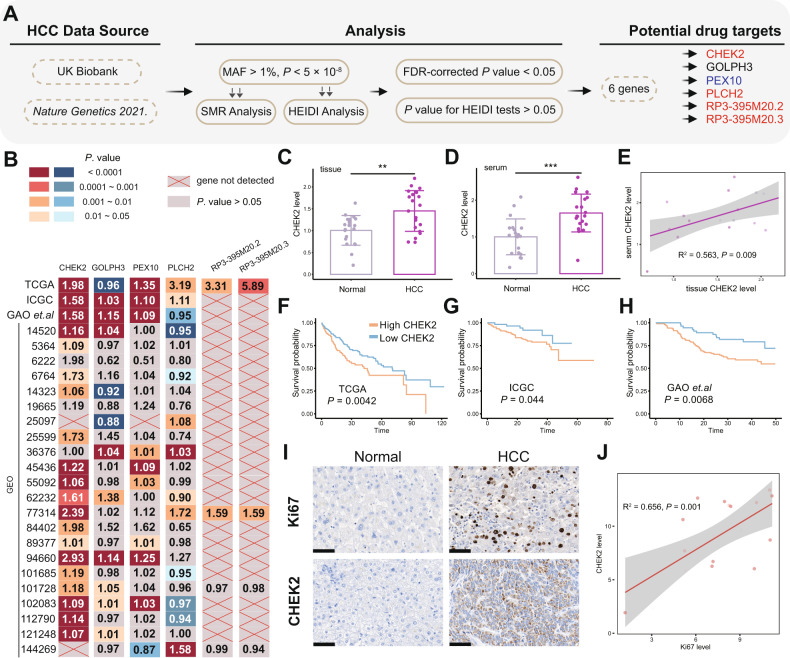
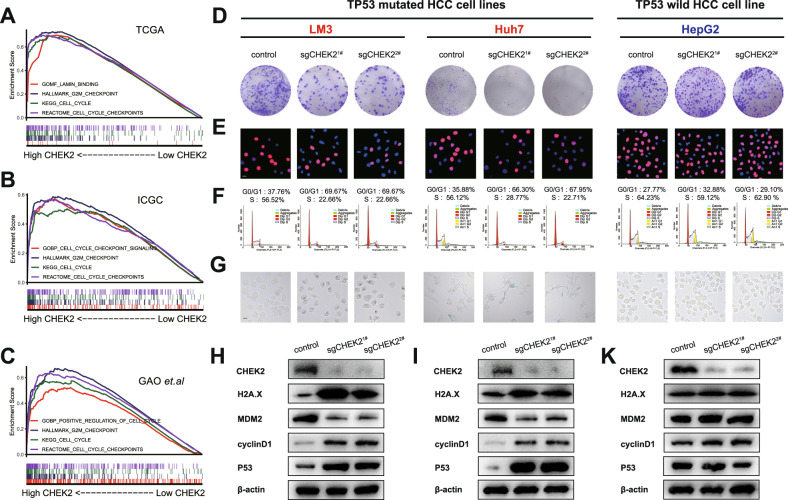
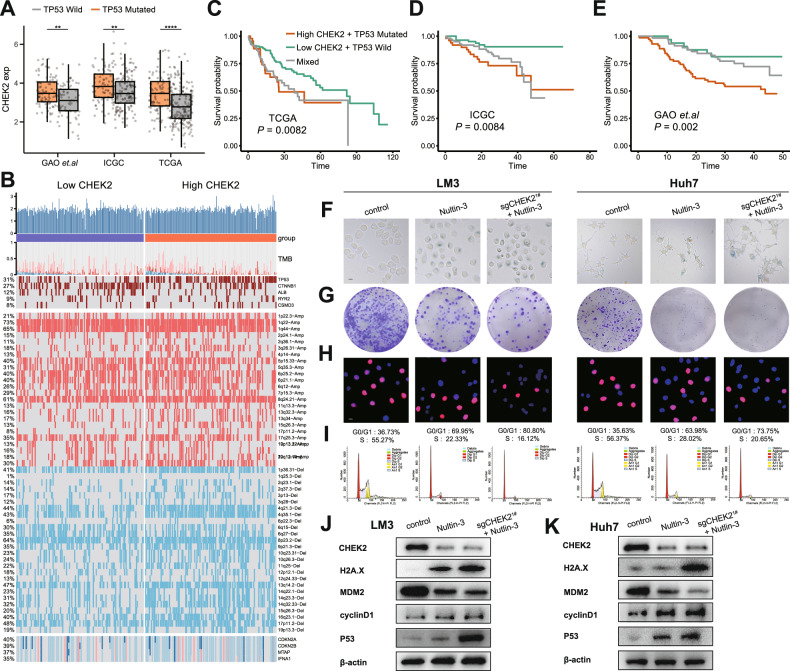
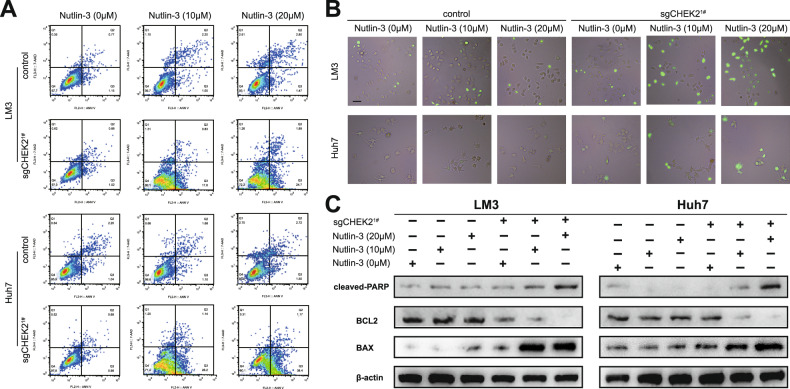
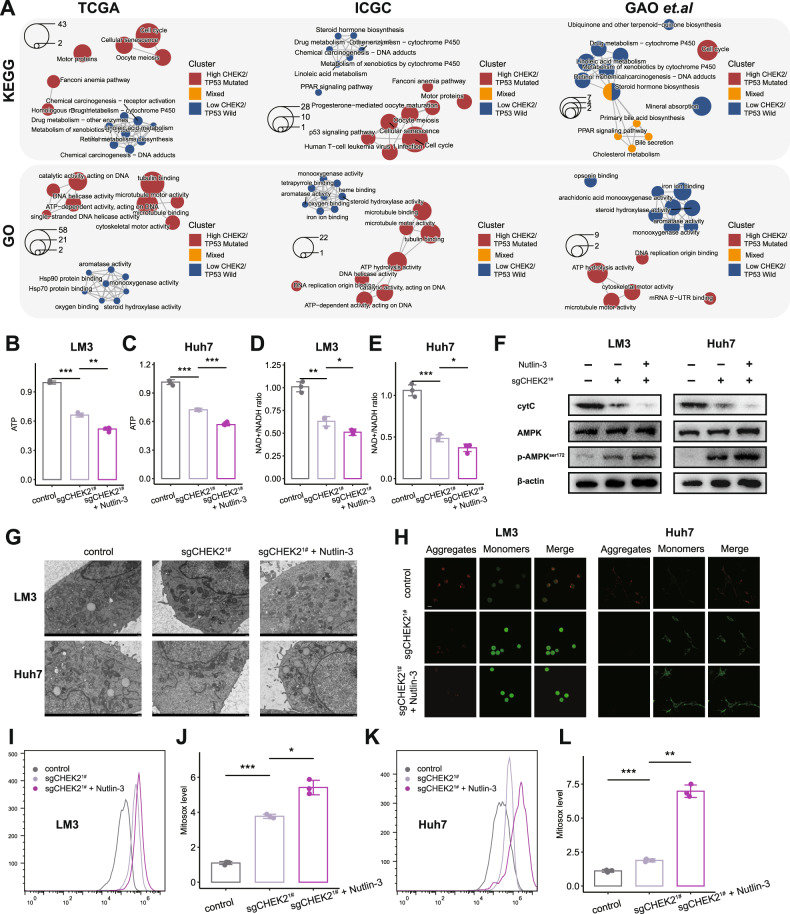
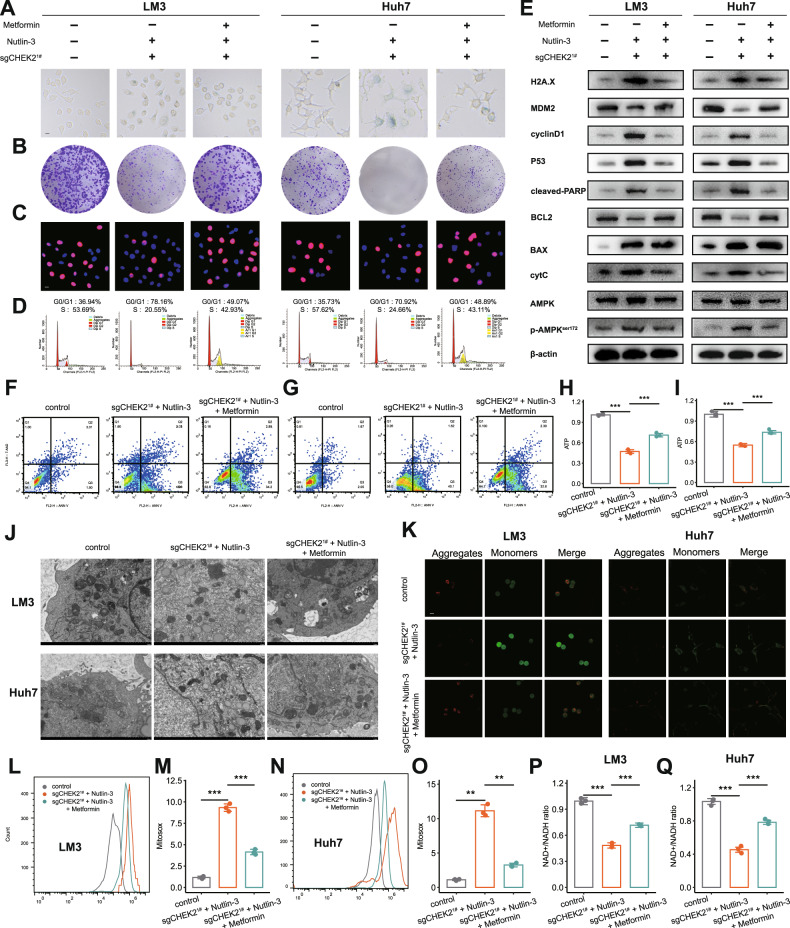
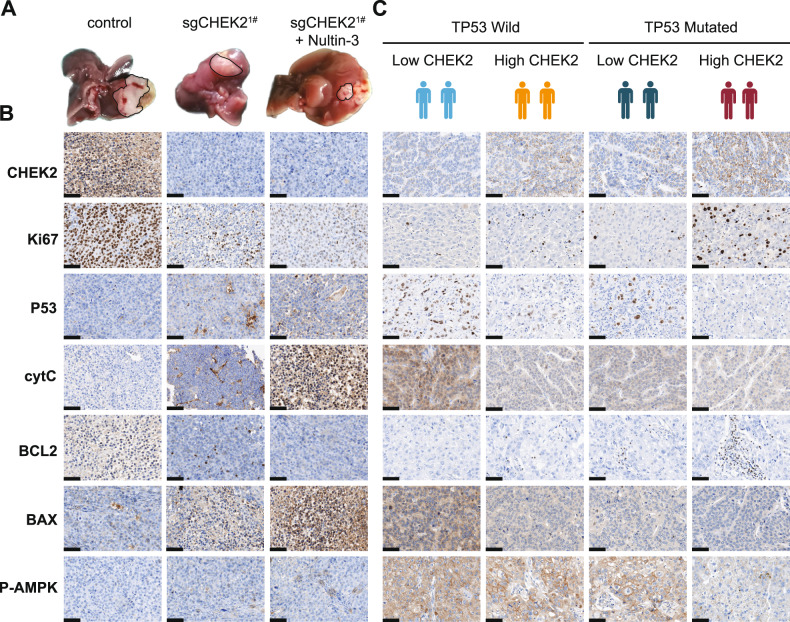
Currently, there is still a lack of novel and effective drug targets to improve the prognosis of hepatocellular carcinoma (HCC). Additionally, the role of CHEK2 in HCC has not been reported yet. The eQTLgen database and two HCC Genome-Wide Association Study (GWAS) datasets (ieu-b-4953, ICD10 C22.0) were used to find the drug target: CHEK2. Next, Colony, Edu, β-gal, and cell cycle analysis were facilitated to evaluate the role of CHEK2 knockout in HCC. In addition, Nultin-3 was added to evaluate the apoptosis of TP53-mutated HCC cells with CHEK2 knockout. Furthermore, MitoSox, electron microscopy, mitochondrial ATP, and NADH+/NADH levels were assessed in the CHEK2 knockout HCC cells with or without Metformin. Finally, cell-derived tumor xenograft was used to evaluate the role of CHEK2 knockout in vivo. We initially identified a potential drug target, CHEK2, through GWAS data analysis. Furthermore, we observed a significant upregulation of CHEK2 expression in HCC, which was found to be correlated with a poor prognosis. Subsequently, the results indicated that knocking out CHEK2 selectively affects the proliferation, cell cycle, senescence, and apoptosis of TP53-mutant HCC cells. Additionally, the introduction of Nultin-3 further intensified the functional impact on TP53-mutant cells. Then ClusterProfiler results showed high CHEK2 and TP53 mutation group was positively enriched in the mitochondrial ATP pathway. Then we used MitoSox, electron microscopy, mitochondrial ATP, and NADH + /NADH assay and found knockout of CHECK could induce the ATP pathway to inhibit the growth of HCC. Our research introduces a novel drug target for TP53-mutant HCC cells via mitochondrial ATP, addressing the limitation of Nultin-3 as a standalone treatment that does not induce tumor cell death.
Overview
The claims and statistics of this paper haven’t been checked yet.
Free: it reads the open-access text and checks the first 5 claims that cite a source we can check. Create a free account to check every claim.
Integrity signals
Registry
Cites
Statistics
Figures
Verification
Claims the paper makes
The claims and statistics of this paper haven’t been checked yet.
Free: it reads the open-access text and checks the first 5 claims that cite a source we can check. Create a free account to check every claim.
Claims other papers make about this one
Each is checked against this paper’s own text: does it say what the citing paper says it does?
In the citing paper
“The confluence of mutagenic stress and impaired detoxification triggers oncogene activation and tumor-suppressor silencing, culminating in the malignant evolution to HCC [117].”
From Constructing biomimetic microenvironments for liver regeneration (2025) · doi:10.1186/s12951-025-03729-9 · cites this paper as [117]
Self-check
Percentages, sums and reported differences re-computed from the paper’s own numbers.
The self-check needs the paper’s full text.
Citations
Cites
Sung, H., Ferlay, J., Siegel, R. L., Laversanne, M., Soerjomataram, I., Jemal, A., & Bray, F. (2021) · CA: A Cancer Journal for Clinicians · doi:10.3322/caac.21660 · Cited by 108,699
KEGG: Kyoto Encyclopedia of Genes and Genomes
Kanehisa, M. (2000) · Nucleic Acids Research · doi:10.1093/nar/28.1.27 · Cited by 37,077
KEGG: Kyoto Encyclopedia of Genes and Genomes
Ogata, H., Goto, S., Sato, K., Fujibuchi, W., Bono, H., & Kanehisa, M. (1999) · Nucleic Acids Research · doi:10.1093/nar/27.1.29 · Cited by 31,232 · cited 1×
“Cloned sgRNA sequences used are as follows: sgCHEK2 1# : AAGGGCCCATAATC GAGCCC; sgCHEK2 2# : CTGCCCCCTGGGCTCGATTA.”
MethodHallmarks of Cancer: New Dimensions
Hanahan, D. (2022) · Cancer Discovery · doi:10.1158/2159-8290.cd-21-1059 · Cited by 9,887 · cited 1×
“Cloned sgRNA sequences used are as follows: sgCHEK2 1# : AAGGGCCCATAATC GAGCCC; sgCHEK2 2# : CTGCCCCCTGGGCTCGATTA.”
MethodThe Reactome pathway Knowledgebase
Fabregat, A., Sidiropoulos, K., Garapati, P., Gillespie, M., Hausmann, K., Haw, R., Jassal, B., Jupe, S., Korninger, F., McKay, S., et al. (2016) · Nucleic Acids Research · doi:10.1093/nar/gkv1351 · Cited by 5,605
Mermel, C. H., Schumacher, S. E., Hill, B., Meyerson, M. L., Beroukhim, R., & Getz, G. (2011) · Genome Biology · doi:10.1186/gb-2011-12-4-r41 · Cited by 3,550
Review The Cancer Genome Atlas (TCGA): an immeasurable source of knowledge
Tomczak, K., Czerwińska, P., & Wiznerowicz, M. (2015) · Współczesna Onkologia · doi:10.5114/wo.2014.47136 · Cited by 3,492 · cited 1×
“For each HCC patient, an HCC specimen, a matched normal specimen, and a fresh plasma sample before surgery were collected and analyzed.”
MethodFerroptosis as a p53-mediated activity during tumour suppression
Jiang, L., Kon, N., Li, T., Wang, S.-J., Su, T., Hibshoosh, H., Baer, R., & Gu, W. (2015) · Nature · doi:10.1038/nature14344 · Cited by 3,398 · cited 13×
“Moreover, for investigating the clinical indices of CHEK2 in HCC, we selected TCGA, ICGC, and GAO et al. cohorts and we found higher CHEK2 group predicted poor overall survival rates than the lower CHEK2 group (Fig.”
BackgroundMethodInfluentialIntegration of summary data from GWAS and eQTL studies predicts complex trait gene targets
Zhu, Z., Zhang, F., Hu, H., Bakshi, A., Robinson, M. R., Powell, J. E., Montgomery, G. W., Goddard, M. E., Wray, N. R., Visscher, P. M., et al. (2016) · Nature Genetics · doi:10.1038/ng.3538 · Cited by 3,352 · cited 1×
“…Genome Consortium (ICGC), GAO et al cohorts [41, 42], as well as 22 Gene Expression Omnibus database (GEO) datasets (GSE5364, GSE6222, GSE6764, GSE14323, GSE14520, GSE19665, GSE25097, GSE25599, GSE36376, GSE45436, GSE55092, GSE62232, GSE77314, GSE84402, GSE89377, GSE64990, GSE101685, GSE101728,…”
Self-citationMendelian Randomization as an Approach to Assess Causality Using Observational Data
Sekula, P., Del Greco M, F., Pattaro, C., & Köttgen, A. (2016) · Journal of the American Society of Nephrology · doi:10.1681/asn.2016010098 · Cited by 2,351 · cited 1×
“In MR studies, confounding bias can be minimized since genetic variations are inherently randomized at birth, ensuring that they are not in fl uenced by external factors and reducing the possibility of reverse causation as genetic variants are determined before disease development [5].”
BackgroundThe reactome pathway knowledgebase
Jassal, B., Matthews, L., Viteri, G., Gong, C., Lorente, P., Fabregat, A., Sidiropoulos, K., Cook, J., Gillespie, M., Haw, R., et al. (2019) · Nucleic Acids Research · doi:10.1093/nar/gkz1031 · Cited by 2,159
Immunotherapies for hepatocellular carcinoma
Llovet, J. M., Castet, F., Heikenwalder, M., Maini, M. K., Mazzaferro, V., Pinato, D. J., Pikarsky, E., Zhu, A. X., & Finn, R. S. (2022) · Nature Reviews Clinical Oncology · doi:10.1038/s41571-021-00573-2 · Cited by 1,843 · cited 1×
“The UK Biobank dataset (ID: ieu-b-4953), encompassing 372,184 European samples and 6,304,034 SNPs, was obtained from the website (https://gwas.mrcieu.ac.uk/datasets/ieu-b-4953/).”
BackgroundEpidemiology and Management of Hepatocellular Carcinoma
Kulik, L., & El-Serag, H. B. (2019) · Gastroenterology · doi:10.1053/j.gastro.2018.08.065 · Cited by 1,735 · cited 1×
“The study utilized publicly available data from a comprehensive genome-wide association study on blood expression, which can be found at the page (https://eqtlgen.org/cis-eqtls.html).”
MethodHariton, E., & Locascio, J. J. (2018) · BJOG: An International Journal of Obstetrics & Gynaecology · doi:10.1111/1471-0528.15199 · Cited by 1,604
Integrated Proteogenomic Characterization of HBV-Related Hepatocellular Carcinoma
Gao, Q., Zhu, H., Dong, L., Shi, W., Chen, R., Song, Z., Huang, C., Li, J., Dong, X., Zhou, Y., et al. (2019) · Cell · doi:10.1016/j.cell.2019.08.052 · Cited by 1,096
Fukuoka, S., Hara, H., Takahashi, N., Kojima, T., Kawazoe, A., Asayama, M., Yoshii, T., Kotani, D., Tamura, H., Mikamoto, Y., et al. (2020) · Journal of Clinical Oncology · doi:10.1200/jco.19.03296 · Cited by 890 · cited 1×
“Additionally, data from Jiang et al. (ID: ICD10 C22.”
MethodA generalized linear mixed model association tool for biobank-scale data
Jiang, L., Zheng, Z., Fang, H., & Yang, J. (2021) · Nature Genetics · doi:10.1038/s41588-021-00954-4 · Cited by 706 · cited 1×
“Associations with a P-value less than 0.05 in the HEIDI test were considered likely to be in fl uenced by pleiotropy and thus excluded from further analysis.”
BackgroundInfluentialBirney, E. (2021) · Cold Spring Harbor Perspectives in Medicine · doi:10.1101/cshperspect.a041302 · Cited by 650
The International Cancer Genome Consortium Data Portal
Zhang, J., Bajari, R., Andric, D., Gerthoffert, F., Lepsa, A., Nahal-Bose, H., Stein, L. D., & Ferretti, V. (2019) · Nature Biotechnology · doi:10.1038/s41587-019-0055-9 · Cited by 613 · cited 1×
“For each HCC patient, an HCC specimen, a matched normal specimen, and a fresh plasma sample before surgery were collected and analyzed.”
MethodIncreased demand for NAD(+) relative to ATP drives aerobic glycolysis
Luengo, A., Li, Z., Gui, D. Y., Sullivan, L. B., Zagorulya, M., Do, B. T., Ferreira, R., Naamati, A., Ali, A., Lewis, C. A., et al. (2021) · Molecular Cell · doi:10.1016/j.molcel.2020.12.012 · Cited by 547
The role of mitochondrial dysfunction in cardiovascular disease: a brief review
Chistiakov, D. A., Shkurat, T. P., Melnichenko, A. A., Grechko, A. V., & Orekhov, A. N. (2018) · Annals of Medicine · doi:10.1080/07853890.2017.1417631 · Cited by 495
The biology of Hepatocellular carcinoma: implications for genomic and immune therapies
Khemlina, G., Ikeda, S., & Kurzrock, R. (2017) · Molecular Cancer · doi:10.1186/s12943-017-0712-x · Cited by 464 · cited 1×
“All included studies have received approval from their respective ethical review committees.”
BackgroundMitochondria, Bioenergetics and Apoptosis in Cancer
Burke, P. J. (2017) · Trends in Cancer · doi:10.1016/j.trecan.2017.10.006 · Cited by 432 · cited 1×
“All included studies have received approval from their respective ethical review committees.”
BackgroundInducing and exploiting vulnerabilities for the treatment of liver cancer
Wang, C., Vegna, S., Jin, H., Benedict, B., Lieftink, C., Ramirez, C., de Oliveira, R. L., Morris, B., Gadiot, J., Wang, W., et al. (2019) · Nature · doi:10.1038/s41586-019-1607-3 · Cited by 427 · cited 1×
“All included studies have received approval from their respective ethical review committees.”
BackgroundXian, H., Liu, Y., Rundberg Nilsson, A., Gatchalian, R., Crother, T. R., Tourtellotte, W. G., Zhang, Y., Aleman-Muench, G. R., Lewis, G., Chen, W., et al. (2021) · Immunity · doi:10.1016/j.immuni.2021.05.004 · Cited by 407
Development and validation of a TP53-associated immune prognostic model for hepatocellular carcinoma
Long, J., Wang, A., Bai, Y., Lin, J., Yang, X., Wang, D., Yang, X., Jiang, Y., & Zhao, H. (2019) · EBioMedicine · doi:10.1016/j.ebiom.2019.03.022 · Cited by 380 · cited 1×
“All included studies have received approval from their respective ethical review committees.”
BackgroundLi, R., Xin, T., Li, D., Wang, C., Zhu, H., & Zhou, H. (2018) · Redox Biology · doi:10.1016/j.redox.2018.07.011 · Cited by 352 · cited 1×
“All included studies have received approval from their respective ethical review committees.”
BackgroundMOVICS : an R package for multi-omics integration and visualization in cancer subtyping
Lu, X., Meng, J., Zhou, Y., Jiang, L., & Yan, F. (2021) · Bioinformatics · doi:10.1093/bioinformatics/btaa1018 · Cited by 236
The single-cell eQTLGen consortium
van der Wijst, M., de Vries, D., Groot, H., Trynka, G., Hon, C., Bonder, M., Stegle, O., Nawijn, M., Idaghdour, Y., van der Harst, P., et al. (2020) · eLife · doi:10.7554/elife.52155 · Cited by 218 · cited 1×
“The eQTLgen database serves as a large-scale research resource for studying the association between genetic regulatory loci known as expression quantitative trait loci (eQTL) and transcriptome expression in the human genome [3].”
BackgroundCHEK2 Germline Variants in Cancer Predisposition: Stalemate Rather than Checkmate
Stolarova, L., Kleiblova, P., Janatova, M., Soukupova, J., Zemankova, P., Macurek, L., & Kleibl, Z. (2020) · Cells · doi:10.3390/cells9122675 · Cited by 190
multiGSEA: a GSEA-based pathway enrichment analysis for multi-omics data
(2020) · doi:10.1186/s12859-020-03910-x · Cited by 170 · cited 1×
“Stable expression cell lines were successfully generated.”
Ikeda, M., Shimizu, S., Sato, T., Morimoto, M., Kojima, Y., Inaba, Y., Hagihara, A., Kudo, M., Nakamori, S., Kaneko, S., et al. (2016) · Annals of Oncology · doi:10.1093/annonc/mdw323 · Cited by 167 · cited 1×
“While drugs like sorafenib and lenvatinib have shown some success in improving patient prognosis, multicenter studies have revealed their limited impact on long-term survival due to treatment resistance and side effects [2].”
BackgroundAssociation of lipid-lowering drugs with COVID-19 outcomes from a Mendelian randomization study
Huang, W., Xiao, J., Ji, J., & Chen, L. (2021) · eLife · doi:10.7554/elife.73873 · Cited by 158
Structure of an AMPK complex in an inactive, ATP-bound state
Yan, Y., Mukherjee, S., Harikumar, K. G., Strutzenberg, T. S., Zhou, X. E., Suino-Powell, K., Xu, T.-H., Sheldon, R. D., Lamp, J., Brunzelle, J. S., et al. (2021) · Science · doi:10.1126/science.abe7565 · Cited by 111
Targeting the p53-MDM2 pathway for neuroblastoma therapy: Rays of hope
Zafar, A., Wang, W., Liu, G., Xian, W., McKeon, F., Zhou, J., & Zhang, R. (2021) · Cancer Letters · doi:10.1016/j.canlet.2020.09.023 · Cited by 108 · cited 1×
“All included studies have received approval from their respective ethical review committees.”
BackgroundBychkovsky, B., Ağaoğlu, N. B., Horton, C., Zhou, J., Yussuf, A., Hemyari, P., Richardson, M. E., Young, C. C., LaDuca, H., McGuinness, D. L., et al. (2022) · JAMA Oncology · doi:10.1001/jamaoncol.2022.4071 · Cited by 98 · cited 1×
“Mutations in the CHEK2 gene have been found to be correlate with various cancers, particularly hereditary cancers like breast and colorectal cancer [11, 12].”
BackgroundLv, C., Huang, Y., Wang, Q., Wang, C., Hu, H., Zhang, H., Lu, D., Jiang, H., Shen, R., Zhang, W., et al. (2022) · Cell chemical biology · doi:10.1016/j.chembiol.2023.02.003 · Cited by 95
Yuan, S., Wang, L., Zhang, H., Xu, F., Zhou, X., Yu, L., Sun, J., Chen, J., Ying, H., Xu, X., et al. (2023) · eBioMedicine · doi:10.1016/j.ebiom.2023.104488 · Cited by 72
TP53 R249S mutation in hepatic organoids captures the predisposing cancer risk
Lam, Y. K., Yu, J. J., Huang, H., Ding, X., Wong, A. M., Leung, H. H. W., Chan, A. W. H., Ng, K. K. K., Xu, M., Wang, X., et al. (2022) · Hepatology · doi:10.1002/hep.32802 · Cited by 71 · cited 1×
“All included studies have received approval from their respective ethical review committees.”
BackgroundMitochondrial metabolism and energy sensing in tumor progression
Iommarini, L., Ghelli, A. M., Gasparre, G., & Porcelli, A. M. (2017) · Biochimica et Biophysica Acta (BBA) - Bioenergetics · doi:10.1016/j.bbabio.2017.02.006 · Cited by 64 · cited 1×
“All included studies have received approval from their respective ethical review committees.”
BackgroundCHEK2 variants: linking functional impact to cancer risk
Boonen, R. A. C. M., Vreeswijk, M. P. G., & van Attikum, H. (2022) · Trends in Cancer · doi:10.1016/j.trecan.2022.04.009 · Cited by 49
MCCC2 promotes HCC development by supporting leucine oncogenic function
Chen, Y., Zhang, X., Xu, C., Zhou, D., Chen, J., Liu, Z.-X., Sun, Y., Huang, W. M., & Qu, L. (2021) · Cancer Cell International · doi:10.1186/s12935-020-01722-w · Cited by 40 · cited 1×
“Paraf fi n-embedded slides were incubated with the antibodies mentioned above.”
MethodSelf-citationPrognostic Significance of CHEK2 Mutation in Progression of Breast Cancer
Ansari, N., Shahrabi, S., Khosravi, A., Shirzad, R., & Rezaeean, H. (2019) · Laboratory Medicine · doi:10.1093/labmed/lmz009 · Cited by 37
Senescent cells and SASP in cancer microenvironment: New approaches in cancer therapy
Özdemir, A., Demir, Y. D. Ş., Yeşilyurt, Z. E., & Ark, M. (2022) · Advances in protein chemistry and structural biology · doi:10.1016/bs.apcsb.2022.10.002 · Cited by 37 · cited 1×
“All included studies have received approval from their respective ethical review committees.”
BackgroundScinderin promotes fusion of electron transport chain dysfunctional muscle stem cells with myofibers
Wang, X., Shelton, S. D., Bordieanu, B., Frank, A. R., Yi, Y., Venigalla, S. S. K., Gu, Z., Lesner, N. P., Glogauer, M., Chandel, N. S., et al. (2022) · Nature Aging · doi:10.1038/s43587-021-00164-x · Cited by 29
Characterization of drug-induced human mitochondrial ADP/ATP carrier inhibition
Baron, S. J., King, M. S., Kunji, E. R. S., & Schirris, T. J. J. (2021) · Theranostics · doi:10.7150/thno.54936 · Cited by 25
KRT17 Promotes the Activation of HSCs via EMT in Liver Fibrosis
Chen, J., Ge, S.-J., Feng, H.-J., Wu, S.-Z., Ji, R., Huang, W.-R., Huang, W., & Lu, C.-H. (2021) · Journal of Clinical and Translational Hepatology · doi:10.14218/jcth.2021.00101 · Cited by 23 · cited 1×
“Transfected cells were seeded in culture dishes and incubated for 24 h. Subsequently, after removing the culture media, cells were grown in 4 ml of DMEM supplemented with 5% FBS until visible cell colonies formed.”
MethodComprehensive analysis and ACMG‐based classification of CHEK2 variants in hereditary cancer patients
Vargas‐Parra, G., Valle, J. D., Rofes, P., Gausachs, M., Stradella, A., Moreno-Cabrera, J. M., Velasco, À., Tornero, E., Menéndez, M., Muñoz, X., et al. (2020) · Human Mutation · doi:10.1002/humu.24110 · Cited by 20
Daglish, S., Fennell, E. M. J., & Graves, L. M. (2023) · Biomedicines · doi:10.3390/biomedicines11061598 · Cited by 20
Pavlovica, K., Irmejs, A., Nõukas, M., Palover, M., Kals, M., Tõnisson, N., Metspalu, A., Gronwald, J., Lubiński, J., Mūrmane, D., et al. (2022) · European Journal of Medical Genetics · doi:10.1016/j.ejmg.2022.104477 · Cited by 15 · cited 1×
“Speci fi cally, mutations in the CHEK2 gene can result in the loss or impairment of protein function, affecting DNA repair and cell cycle regulation mechanisms, thereby increasing the individual ’ s risk of developing cancer [13].”
BackgroundSmid, M., Schmidt, M. K., der Smissen, W. J. C. P., Ruigrok-Ritstier, K., Schreurs, M. A. C., Cornelissen, S., Garcia, A. M., Broeks, A., Timmermans, A. M., Trapman-Jansen, A., et al. (2023) · Breast Cancer Research · doi:10.1186/s13058-023-01653-0 · Cited by 12
Javadi, S., Li, Y., Sheng, J., Zhao, L., Fu, Y., Wang, D., & Zhao, X. (2022) · BMC Medicine · doi:10.1186/s12916-022-02370-9 · Cited by 7
CHEK2 SNPs predict better prognosis in HBV-related hepatocellular carcinoma patients.
Wu, H., Huang, X., Xiang, R., Wu, M., Guo, X. G., Li, Q., & Luo, X. (2018) · PubMed Central · Cited by 1
Cited by
Wang, Z., Lin, X., Shi, Y., Yan, H., Shang, Y., & Ren, H. (2026) · Biomedical Technology · doi:10.1016/j.bmt.2025.100131 · Cited by 22
Self-citationConstructing biomimetic microenvironments for liver regeneration
(2025) · doi:10.1186/s12951-025-03729-9 · Cited by 11
“The confluence of mutagenic stress and impaired detoxification triggers oncogene activation and tumor-suppressor silencing, culminating in the malignant evolution to HCC [117].”
Self-citationCharacterization of a pleomorphic rhabdomyosarcoma cell line
Stickler, S., Lang, C., Rieche, M., Eggerstorfer, M.-T., HOHENEGGER, M., Hochmair, M. J., & Hamilton, G. (2025) · Scientific Reports · doi:10.1038/s41598-025-87027-2 · Cited by 3
Shafee Ur Rehman, S. K. (2025) · International Journal of Biosciences (IJB) · doi:10.12692/ijb/27.1.142-155 · Cited by 1
Driver-associated transcriptional rewiring reveals conditional genetic vulnerabilities in cancerPreprint
Geraghty, S., Boyer, J. A., Fazel-Zarandi, M., Arzouni, N., Ryseck, R.-P., McBride, M. J., Parsons, L. R., Rabinowitz, J. D., & Singh, M. (2024) · bioRxiv (Cold Spring Harbor Laboratory) · doi:10.1101/2024.11.20.624509
Metadata
- Authors
- Chen, Y., Zhu, Z., Wu, X., Li, H., Guan, W., & Ren, H.
- Affiliations
- Nanjing Drum Tower Hospital (CN)
- Corresponding author
- Li, Hui
- Guan, Wenxian
- Ren, Haozhen
- Venue
- Cell Death Discovery
- Published
- 2024-01-19
- Volume
- 10
- Issue
- 1
- Pages
- 37-37
- ISSN
- 2058-7716 (ISSN-L)
- PMC
- PMC10799024
- OpenAlex
- W4391022989
- Semantic Scholar
- 0d29db5a5fb585d10cb95efc080357f6a4577f37
- Cited by
- 6
- References
- 54
- Citations by year
- 2026: 2 · 2025: 3 · 2024: 1
- FWCI
- 1.03
- Type
- journal article
- Language
- en
- Open access
- gold
- doi.org
- Licence
- cc-by
- creativecommons.org/licenses/by/4.0 (tdm)
- creativecommons.org/licenses/by/4.0 (vor)
- Locations
- Cell Death Discovery (publishedVersion, cc-by)
- PubMed Central (publishedVersion, cc-by)
- PubMed (publishedVersion)
- DOAJ (DOAJ: Directory of Open Access Journals) (submittedVersion, cc-by-sa)
- Funders
- National Natural Science Foundation of China (82270646)
- Topics
- Health Sciences › Medicine › Oncology › Cancer-related Molecular Pathways
- Health Sciences › Medicine › Hepatology › Hepatocellular Carcinoma Treatment and Prognosis
- Life Sciences › Biochemistry, Genetics and Molecular Biology › Molecular Biology › Metabolism, Diabetes, and Cancer
- Keywords
- CHEK2, hepatocellular carcinoma, TP53 mutation, therapeutic target, apoptosis, cellular senescence, cell cycle, metformin, tumor xenografts, prognosis
About these checks
Registry, retraction, Cites and statistics results are computed, not judged, with one exception: a printed reference that no index lists is read once by a model before it counts as a citation error. Claims are extracted by a model and kept only when their quote appears verbatim in the text; each cited source is then checked, with a model’s help, for whether it says what the claim relies on. Those verdicts can be wrong — read the claim’s quote and the cited source before relying on one.
Statistics and arithmetic are recomputed, not judged.
Confidence bands are shown only for fields calibrated on our annotated test set. None is calibrated yet, so no band is shown.
What counts as a claim ›How we measure confidence ›How we check this ›
Are you an author, or do you see a problem with this page? Request a review
Data sources
Bibliographic data: Semantic Scholar, OpenAlex, Crossref.
Contains information from the Semantic Scholar Academic Graph Datasets, made available under the ODC Attribution License (ODC-BY 1.0).
Semantic Scholar’s data is described in: Kinney, R., et al. (2023). The Semantic Scholar Open Data Platform. arXiv:2301.10140.
