

Homotypic clustering of L1 and B1/Alu repeats compartmentalizes the 3D genome
Open accessThe DOI matches its Crossref record; 131 of the 131 references it cites were found in a registry or an index.
Abstract
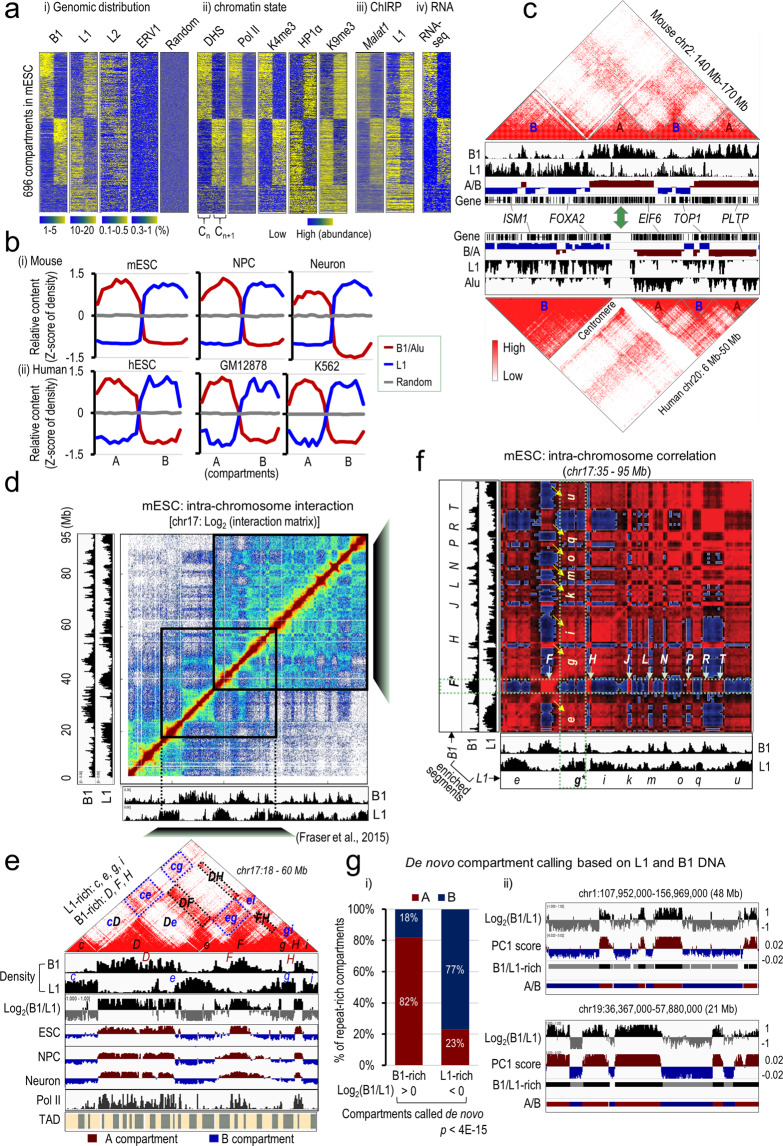
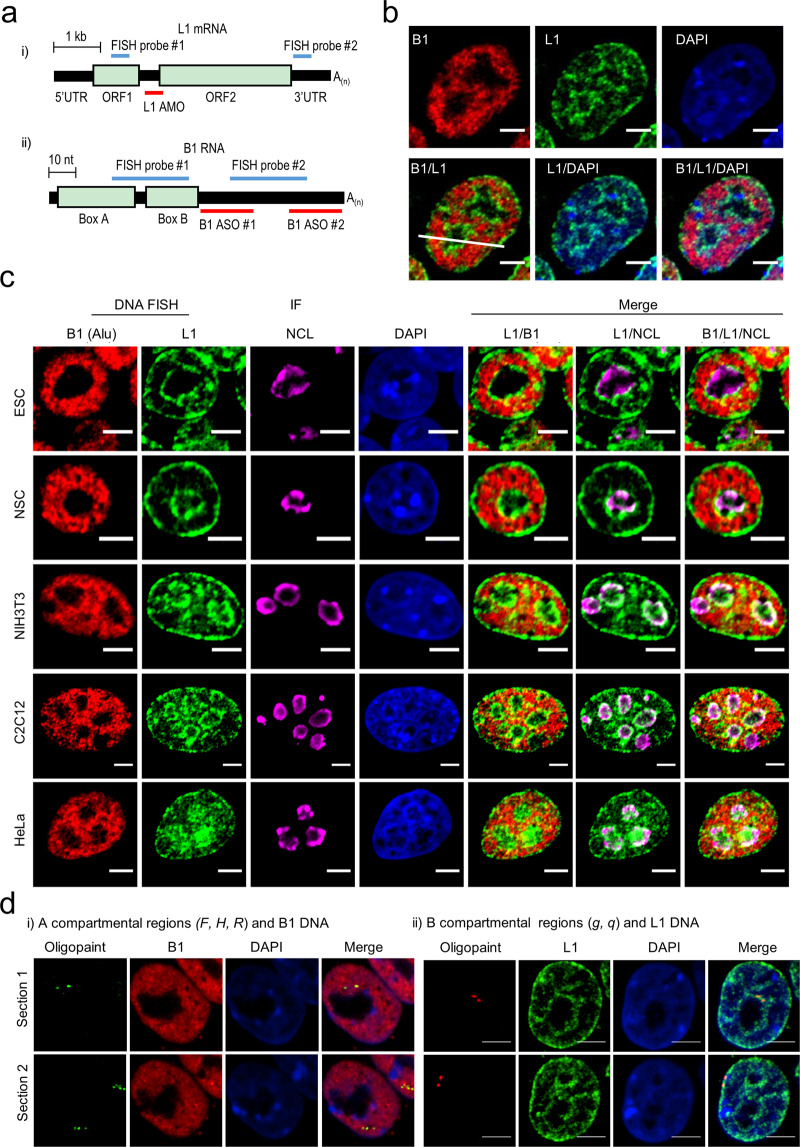
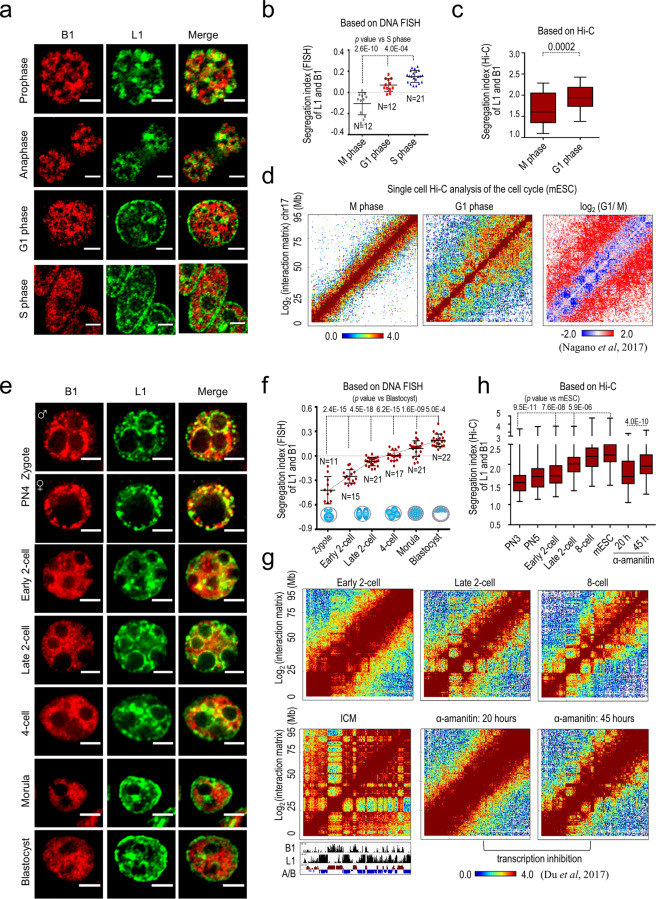
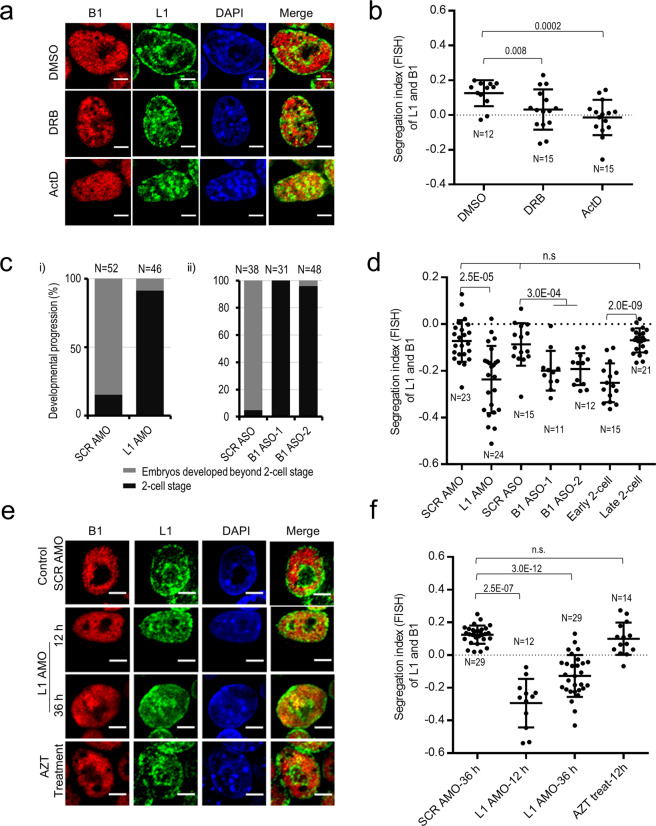
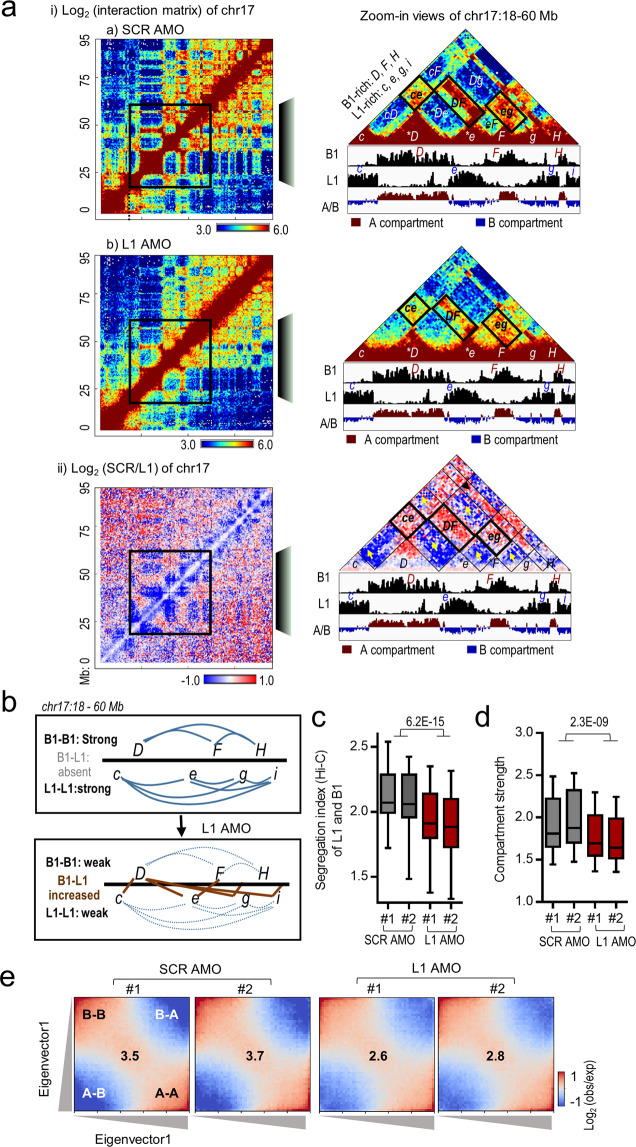
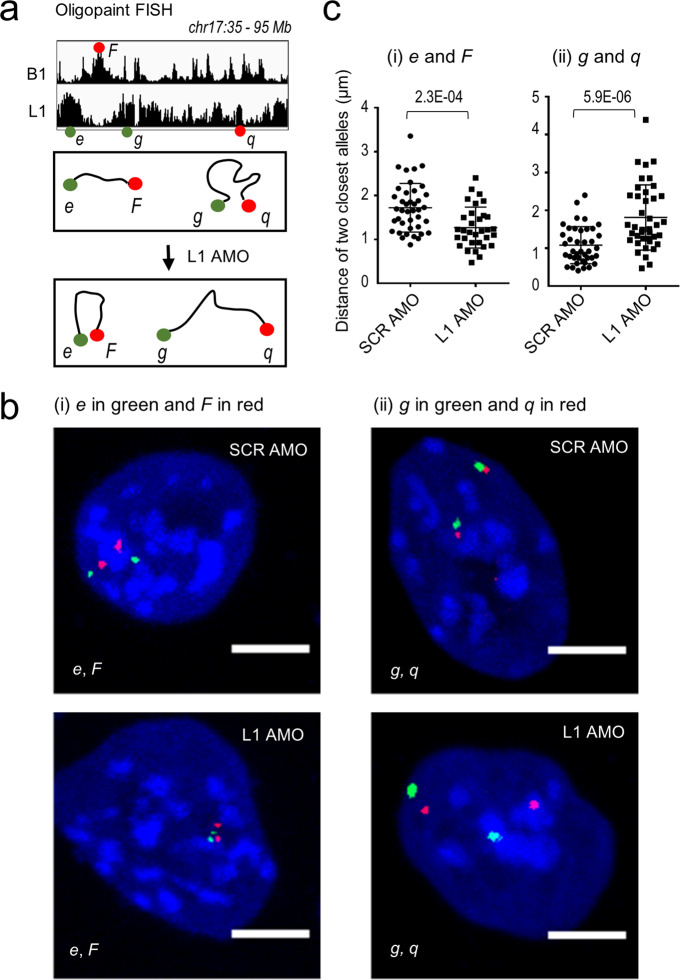
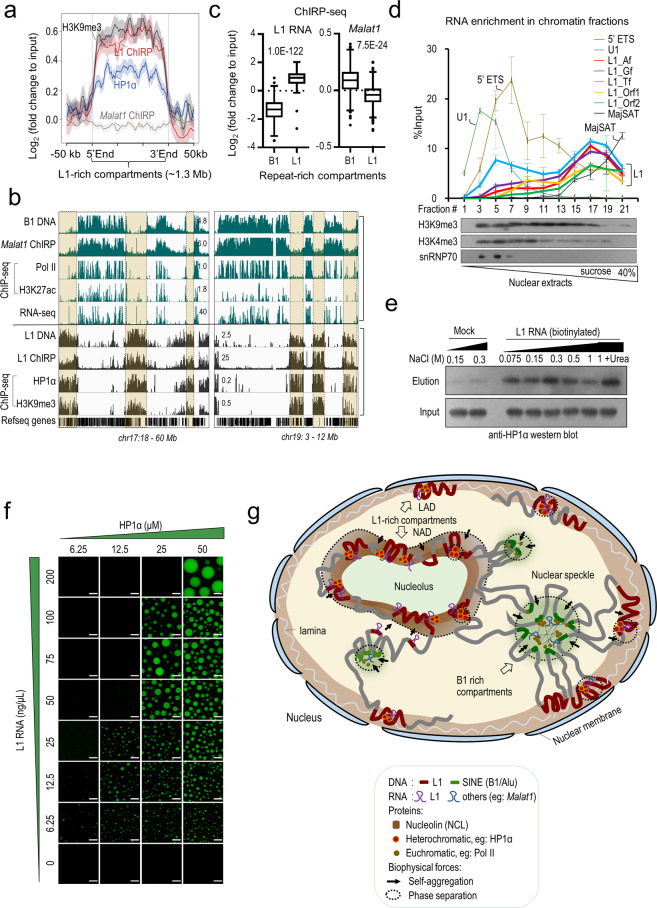
Organization of the genome into euchromatin and heterochromatin appears to be evolutionarily conserved and relatively stable during lineage differentiation. In an effort to unravel the basic principle underlying genome folding, here we focus on the genome itself and report a fundamental role for L1 (LINE1 or LINE-1) and B1/Alu retrotransposons, the most abundant subclasses of repetitive sequences, in chromatin compartmentalization. We find that homotypic clustering of L1 and B1/Alu demarcates the genome into grossly exclusive domains, and characterizes and predicts Hi-C compartments. Spatial segregation of L1-rich sequences in the nuclear and nucleolar peripheries and B1/Alu-rich sequences in the nuclear interior is conserved in mouse and human cells and occurs dynamically during the cell cycle. In addition, de novo establishment of L1 and B1 nuclear segregation is coincident with the formation of higher-order chromatin structures during early embryogenesis and appears to be critically regulated by L1 and B1 transcripts. Importantly, depletion of L1 transcripts in embryonic stem cells drastically weakens homotypic repeat contacts and compartmental strength, and disrupts the nuclear segregation of L1- or B1-rich chromosomal sequences at genome-wide and individual sites. Mechanistically, nuclear co-localization and liquid droplet formation of L1 repeat DNA and RNA with heterochromatin protein HP1α suggest a phase-separation mechanism by which L1 promotes heterochromatin compartmentalization. Taken together, we propose a genetically encoded model in which L1 and B1/Alu repeats blueprint chromatin macrostructure. Our model explains the robustness of genome folding into a common conserved core, on which dynamic gene regulation is overlaid across cells.
Overview
The claims and statistics of this paper haven’t been checked yet.
Free: it reads the open-access text and checks the first 5 claims that cite a source we can check. Create a free account to check every claim.
Integrity signals
Registry
Cites
Statistics
Figures
Verification
Claims the paper makes
The claims and statistics of this paper haven’t been checked yet.
Free: it reads the open-access text and checks the first 5 claims that cite a source we can check. Create a free account to check every claim.
Claims other papers make about this one
Each is checked against this paper’s own text: does it say what the citing paper says it does?
The check wasn’t confident either way, so it gives no verdict — never disputed.
In the citing paper
“Previous studies suggest an inverse correlation between repetitive sequence expression and cell cycle progression14,15 and a positive correlation with immune responses16,17.”
From Multi-omics analysis identifies glioblastoma dependency on H3K9me3 methyltransferase activity (2025) · cites this paper as [14]
Experimental — accuracy not yet measured
Self-check
Percentages, sums and reported differences re-computed from the paper’s own numbers.
The self-check needs the paper’s full text.
Citations
Cites
Initial sequencing and analysis of the human genome
International Human Genome Sequencing Consortium, Whitehead Institute for Biomedical Research, C. F. G. R., Lander, E. S., Linton, L. M., Birren, B., Nusbaum, C., Zody, M. C., Baldwin, J., Devon, K., Dewar, K., et al. (2001) · Nature · doi:10.1038/35057062 · Cited by 24,216 · cited 1×
“3 million copies) of mouse and human genomes.(64,65) L1 and B1/Alu have distinct nucleotide compositions and sequence lengths.”
A 3D Map of the Human Genome at Kilobase Resolution Reveals Principles of Chromatin Looping
Rao, S. S. P., Huntley, M. H., Durand, N. C., Stamenova, E. K., Bochkov, I. D., Robinson, J. T., Sanborn, A. L., Machol, I., Omer, A. D., Lander, E. S., et al. (2014) · Cell · doi:10.1016/j.cell.2014.11.021 · Cited by 9,212 · cited 2×
“We then performed a quantitative sequence analysis of annotated A/B compartments in six distinct mouse and human cell types.(20,72) All cells exhibit consistently high levels of SINE repeats (including B1, B2, B4 in mouse and Alu in human) in the A compartments and L1 repeats (including truncated or intact, and evolut…”
BackgroundMethodComprehensive Mapping of Long-Range Interactions Reveals Folding Principles of the Human Genome
Lieberman-Aiden, E., van Berkum, N. L., Williams, L., Imakaev, M., Ragoczy, T., Telling, A., Amit, I., Lajoie, B. R., Sabo, P. J., Dorschner, M. O., et al. (2009) · Science · doi:10.1126/science.1181369 · Cited by 8,898
Initial sequencing and comparative analysis of the mouse genome
Mouse Genome Sequencing Consortium (2002) · Nature · doi:10.1038/nature01262 · Cited by 7,187
Topological domains in mammalian genomes identified by analysis of chromatin interactions
Dixon, J. R., Selvaraj, S., Yue, F., Kim, A., Li, Y., Shen, Y., Hu, M., Liu, J. S., & Ren, B. (2012) · Nature · doi:10.1038/nature11082 · Cited by 6,829 · cited 2×
“In comparison, we find ERV retrotransposons to be randomly distributed, which is consistent with a previous report by the Ren group that no genome-wide enrichment of ERVs was found at TAD boundary.(13) Recently, the Ren group reported that transcriptionally active HERV-H repeats, a subclass of ERVs, demarcate TADs in…”
BackgroundResultCapturing Chromosome Conformation
Dekker, J., Rippe, K., Dekker, M., & Kleckner, N. (2002) · Science · doi:10.1126/science.1067799 · Cited by 3,652
HiC-Pro: an optimized and flexible pipeline for Hi-C data processing.
Servant, N., Varoquaux, N., Lajoie, B. R., Viara, E., Chen, C.-J., Vert, J.-P., Heard, E., Dekker, J., & Barillot, E. (2015) · Genome Biology · doi:10.1186/s13059-015-0831-x · Cited by 2,565 · cited 1×
“7) as described.(128) A and B compartments(6) and compartmentalization strength(23,34,94) were identified as described previously.”
BackgroundPhase transitions in the assembly of multivalent signalling proteins
Li, P., Banjade, S., Cheng, H.-C., Kim, S., Chen, B., Guo, L., Llaguno, M., Hollingsworth, J. V., King, D. S., Banani, S. F., et al. (2012) · Nature · doi:10.1038/nature10879 · Cited by 2,550
Self-citationSelfish DNA: the ultimate parasite
Orgel, L. E., & Crick, F. H. C. (1980) · Nature · doi:10.1038/284604a0 · Cited by 2,156
Domain organization of human chromosomes revealed by mapping of nuclear lamina interactions
Guelen, L., Pagie, L., Brasset, E., Meuleman, W., Faza, M. B., Talhout, W., Eussen, B. H., de Klein, A., Wessels, L., de Laat, W., et al. (2008) · Nature · doi:10.1038/nature06947 · Cited by 1,953
Research works printed but not linked: 1
- Annunziato AT DNA packaging: nucleosomes and chromatin Nature Educ. 2008 1 26
Cited by
Long non-coding RNAs: definitions, functions, challenges and recommendations
Mattick, J. S., Amaral, P. P., Carninci, P., Carpenter, S., Chang, H. Y., Chen, L.-L., Chen, R., Dean, C., Dinger, M. E., Fitzgerald, K. A., et al. (2023) · Nature Reviews Molecular Cell Biology · doi:10.1038/s41580-022-00566-8 · Cited by 2,356
Endogenous Retroelements and the Viral Mimicry Response in Cancer Therapy and Cellular Homeostasis
Chen, R., Ishak, C. A., & De Carvalho, D. D. (2021) · Cancer Discovery · doi:10.1158/2159-8290.cd-21-0506 · Cited by 205
Zygotic genome activation by the totipotency pioneer factor Nr5a2
Gassler, J., Kobayashi, W., Gáspár, I., Ruangroengkulrith, S., Mohanan, A., Hernández, L. G., Kravchenko, P., Kümmecke, M., Lalic, A., Rifel, N., et al. (2022) · Science · doi:10.1126/science.abn7478 · Cited by 169
Single-cell nuclear architecture across cell types in the mouse brain
Takei, Y., Zheng, S., Yun, J., Shah, S., Pierson, N., White, J., Schindler, S., Tischbirek, C. H., Yuan, G.-C., & Cai, L. (2021) · Science · doi:10.1126/science.abj1966 · Cited by 118
Transposable elements in mammalian chromatin organization
Lawson, H. A., Liang, Y., & Wang, T. (2023) · Nature Reviews Genetics · doi:10.1038/s41576-023-00609-6 · Cited by 144
Self-citationNuclear speckles – a driving force in gene expression
Faber, G. P., Nadav-Eliyahu, S., & Shav‐Tal, Y. (2022) · Journal of Cell Science · doi:10.1242/jcs.259594 · Cited by 125
Belmont, A. S. (2021) · Cold Spring Harbor Perspectives in Biology · doi:10.1101/cshperspect.a041268 · Cited by 116
Large-scale chromatin reorganization reactivates placenta-specific genes that drive cellular aging
Liu, Z., Ji, Q., Ren, J., Yan, P., Wu, Z., Wang, S., Sun, L., Wang, Z., Li, J., Sun, G., et al. (2022) · Developmental Cell · doi:10.1016/j.devcel.2022.05.004 · Cited by 109
Self-citationLINE-1 transcription activates long-range gene expression
Li, X., Bie, L., Wang, Y., Hong, Y., Zhou, Z., Fan, Y., Yan, X., Tao, Y., Huang, C., Zhang, Y., et al. (2024) · Nature Genetics · doi:10.1038/s41588-024-01789-5 · Cited by 98
Self-citationRNA polymerase II clusters form in line with surface condensation on regulatory chromatin
Pancholi, A., Klingberg, T., Zhang, W., Prizak, R., Mamontova, I., Noa, A., Sobucki, M., Kobitski, A. Y., Nienhaus, G. U., Zaburdaev, V., et al. (2021) · Molecular Systems Biology · doi:10.15252/msb.202110272 · Cited by 93
“…an RNA-mediated role of elongation in unfolding of macromolecular assemblies is also in line with previous work implicating RNA in the unfolding of chromatin regions harboring transcribed genes (Nozawa et al, 2017; Michieletto & Gilbert, 2019; Yin et al, 2020; Hilbert et al, 2021; Lu et al, 2021).”
ResultYu, H., Sun, Z., Tan, T., Pan, H., Zhao, J., Zhang, L., Chen, J., Lei, A., Zhu, Y., Chen, L., et al. (2021) · Nature Communications · doi:10.1038/s41467-021-26576-2 · Cited by 84
Self-citationBRD2 compartmentalizes the accessible genome
Xie, L., Dong, P., Qi, Y., Hsieh, T.-H. S., English, B. P., Jung, S., Chen, X., Marzio, M. D., Casellas, R. C., Chang, H. Y., et al. (2022) · Nature Genetics · doi:10.1038/s41588-022-01044-9 · Cited by 75
“pAG-Tn5 was ordered from EpiCypher (15-1017).”
NR5A2 connects zygotic genome activation to the first lineage segregation in totipotent embryos
Lai, F.-N., Li, L., Hu, X., Liu, B., Zhu, Z., Liu, L., Fan, Q., Tian, H., Xu, K., Lu, X., et al. (2023) · Cell Research · doi:10.1038/s41422-023-00887-z · Cited by 64
Self-citationEmergence of replication timing during early mammalian development
Nakatani, T., Schauer, T., Altamirano‐Pacheco, L., Klein, K. N., Ettinger, A. W., Pal, M., Gilbert, D. M., & Torres‐Padilla, M. (2023) · Nature · doi:10.1038/s41586-023-06872-1 · Cited by 72
“The genetic constitution of mammalian A and B compartments is largely demarcated by repetitive elements 41,42 , which are expressed in the mouse embryo 43,44 .”
Bauer, M., Vidal, E., Zorita, E. V., Üresin, N., Pinter, S. F., Filion, G. J. P., & Payer, B. (2021) · Nature Communications · doi:10.1038/s41467-021-23610-1 · Cited by 65
Spatial Features and Functional Implications of Plant 3D Genome Organization
Domb, K., Wang, N., Hummel, G., & Liu, C. (2022) · Annual Review of Plant Biology · doi:10.1146/annurev-arplant-102720-022810 · Cited by 66
(2022) · Nucleic Acids Research · doi:10.1093/nar/gkac146 · Cited by 44
“Repetitive elements (REs), such as LINEs and LTRs, are sealed in LADs and are highly decorated with the heterochromatin mark H3K9me3 (Supplementary Figure S3G) (106,107).”
BackgroundSelf-citationYu, C., Lei, X., Chen, F., Mao, S., Lv, L., Liu, H., Hu, X., Wang, R., Shen, L., Zhang, N., et al. (2022) · Nature Communications · doi:10.1038/s41467-022-31197-4 · Cited by 56
Self-citationEpigenetic plasticity safeguards heterochromatin configuration in mammals
Fukuda, K., Shimi, T., Shimura, C., Ono, T., Suzuki, T., Onoue, K., Okayama, S., Miura, H., Hiratani, I., Ikeda, K., et al. (2023) · Nucleic Acids Research · doi:10.1093/nar/gkad387 · Cited by 52
“…B compartment are largely maintained, indicating the presence of H3K9 and H3K27 methylation pathway-independent mechanism(s) for B compartment formation; PRC1 ( 56 ), RNAs ( 61 , 62 ), histone acety-la tion ( 63 ), replica tion timing (RT) ( 8 ) and the nuclear lamina ( 39 , 64 ) may be involved.”
Retrotransposons as Drivers of Mammalian Brain Evolution
Ferrari, R., Grandi, N., Tramontano, E., & Dieci, G. (2021) · Life · doi:10.3390/life11050376 · Cited by 50
“At a large scale within nuclei, chromosomes segregate into regions of preferential long-range interactions that form two mutually excluded types of chromatin, referred to as “A” and “B” compartments [125], the formation of which has been recently linked to homotypic clustering of L1 and B1/Alu, respectively [126].”
BackgroundNative functions of short tandem repeats
Wright, S. E., & Todd, P. K. (2023) · eLife · doi:10.7554/elife.84043 · Cited by 51
Conserved chromatin and repetitive patterns reveal slow genome evolution in frogs
Bredeson, J. V., Mudd, A. B., Medina-Ruiz, S., Mitros, T., Smith, O. K., Miller, K. E., Lyons, J. B., Batra, S. S., Park, J., Berkoff, K. C., et al. (2024) · Nature Communications · doi:10.1038/s41467-023-43012-9 · Cited by 55
Li, J., Wang, X., Shi, L., Liu, B., Sheng, Z., Chang, S., Cai, X., & Shan, G. (2023) · Advanced Science · doi:10.1002/advs.202305902 · Cited by 63
Chang, L., Deng, E.-Z., Wang, J., Zhou, W., Ao, J., Liu, R., Su, D., & Fan, X. (2023) · Clinical and Translational Medicine · doi:10.1002/ctm2.1351 · Cited by 41
Self-citationNuclear RNA homeostasis promotes systems-level coordination of cell fate and senescence
Han, X., Xing, L., Hong, Y., Zhang, X., Hao, B., Lu, J. Y., Huang, M., Wang, Z., Ma, S., Zhan, G., et al. (2024) · Cell stem cell · doi:10.1016/j.stem.2024.03.015 · Cited by 42
Self-citationRegulation and function of transposable elements in cancer genomes
Lee, M., Ahmad, S. F., & Xu, J. (2024) · Cellular and Molecular Life Sciences · doi:10.1007/s00018-024-05195-2 · Cited by 37
“Even more complex, non-coding functions of TE RNAs have also been identified in various biological contexts [50, 90–92], yet their implications in cancer have yet to be elucidated.”
BackgroundKick-starting the zygotic genome: licensors, specifiers, and beyond
Zou, Z., Wang, Q., Wu, X., Schultz, R. M., & Xie, W. (2024) · EMBO Reports · doi:10.1038/s44319-024-00223-5 · Cited by 39
“B1 elements in mouse and Alu elements in human are the most prevalent retrotransposons of Short Interspersed Nuclear Elements (SINEs), covering 3-11% of mouse and human genomes (Lu et al, 2021a).”
Self-citationLINE1 and PRC2 control nucleolar organization and repression of the 8C state in human ESCs
Zhang, J., Ataei, L., Mittal, K., Wu, L. L., Caldwell, L., Huynh, L., Sarajideen, S., Tse, K. Y., Simon, M.-M., Mazid, M. A., et al. (2024) · Developmental Cell · doi:10.1016/j.devcel.2024.09.024 · Cited by 35
Self-citationChromatin accessibility landscape of mouse early embryos revealed by single-cell NanoATAC-seq2
Li, M., Jiang, Z., Xu, X., Wu, X., Liu, Y., Chen, K., Liao, Y., Li, W., Wang, X., Guo, Y., et al. (2025) · Science · doi:10.1126/science.adp4319 · Cited by 36
Self-citationGoronzy, I. N., Quinodoz, S. A., Jachowicz, J. W., Ollikainen, N., Bhat, P., & Guttman, M. (2022) · Cell Reports · doi:10.1016/j.celrep.2022.111730 · Cited by 32
Epigenome dynamics in early mammalian embryogenesis
Burton, A., & Torres‐Padilla, M. (2025) · Nature Reviews Genetics · doi:10.1038/s41576-025-00831-4 · Cited by 47
“These compartments are also demarcated by a genetic signature, with SINE-B1 elements being more abundant in A compartments and LINE-1 elements being more abundant in B compartments 156 .”
Ing‐Simmons, E., Rigau, M., & Vaquerizas, J. M. (2022) · Current Opinion in Cell Biology · doi:10.1016/j.ceb.2021.12.004 · Cited by 35
Identification of LINE retrotransposons and long non-coding RNAs expressed in the octopus brain
Petrosino, G., Ponte, G., Volpe, M., Zarrella, I., Ansaloni, F., Langella, C., Cristina, G. D., Finaurini, S., Russo, M. T., Basu, S., et al. (2022) · BMC Biology · doi:10.1186/s12915-022-01303-5 · Cited by 33
Zhou, X., Xu, Y., Ren, S., Yang, N., Sun, Y., Yang, Q., Zhang, Y., Cai, H., Deng, W., Chen, J., et al. (2023) · Proceedings of the National Academy of Sciences · doi:10.1073/pnas.2216206120 · Cited by 31
“While TE has been confirmed to participate in maintaining chromosome architecture and genomic stability (15, 16), aberrant expression of TEs has emerged as a potential risk factor for a variety of diseases, including cancers, neurological diseases, autoimmune and inflammatory disorders (17, 18),…”
Self-citationEvolution and function of chromatin domains across the tree of life
Szalay, M.-F., Majchrzycka, B., Jerković, I., Cavalli, G., & Ibrahim, D. M. (2024) · Nature Structural & Molecular Biology · doi:10.1038/s41594-024-01427-y · Cited by 33
“Although the plant genome is highly organized, specific differences from animal genome organization likely reflect different biochemical characteristics, as exemplified by the absence of CTCF in plants and characteristic distributions of repetitive elements in different genomes.”
Liu, Y., Ma, G., Gao, Z.-H., Li, J., Wang, J., Zhu, X., Ma, R., Yang, J., Zhou, Y., Hu, K., et al. (2022) · Nucleic Acids Research · doi:10.1093/nar/gkac153 · Cited by 35
“In the GCR cells, the chromatin accessibility of the CTCF binding sites was decreased, indicating that the binding between CTCF and chromosomal DNAs was blocked and the formation of TAD was impaired, which is consistent to recently reported that L1 and Alu repeats blueprint the chromatin macrostructure and TAD (59).”
Self-citationStructure and dynamics of nuclear A/B compartments and subcompartments
Oji, A., Choubani, L., Miura, H., & Hiratani, I. (2024) · Current Opinion in Cell Biology · doi:10.1016/j.ceb.2024.102406 · Cited by 31
Advances in understanding LINE-1 regulation and function in the human genome
Li, X., & Liu, N. (2025) · Trends in Genetics · doi:10.1016/j.tig.2025.04.011 · Cited by 37
Abdulla, A. Z., Vaillant, C., & Jost, D. (2022) · Nucleic Acids Research · doi:10.1093/nar/gkac702 · Cited by 30
“Co-opted TEs play a crucial regulatory role in various nuclear processes, in particular in gene regulation during development (135,136) as well as in 3D genome organisation (137).”
Noncoding RNA-chromatin association: Functions and mechanisms
Yin, Y., & Shen, X. (2023) · Fundamental Research · doi:10.1016/j.fmre.2023.03.006 · Cited by 31
“Notably, two types of repeat elements, SINE B1 and LINE1, are enriched in A and B compartments, respectively, demarcating the genome into grossly exclusive domains that are conserved across different cell types and species [ 90 , 110 ].”
BackgroundSelf-citationThree-dimensional genome organization via triplex-forming RNAs
Farabella, I., Stefano, M. D., Soler-Vila, P., Marti-Marimon, M., & Martí-Renom, M. A. (2021) · Nature Structural & Molecular Biology · doi:10.1038/s41594-021-00678-3 · Cited by 29
Genome folding principles uncovered in condensin-depleted mitotic chromosomes
Zhao, H., Lin, Y., Lin, E., Liu, F., Shu, L., Jing, D., Wang, B., Wang, M., Shan, F., Zhang, L., et al. (2024) · Nature Genetics · doi:10.1038/s41588-024-01759-x · Cited by 25
“It is also worth mentioning that RNA has been previously shown to mediate chromatin compartmentalization in interphase cells 27,28 .”
Self-citationWang, Z., Yu, J., Zhu, W., Hong, X., Xu, Z., Mao, S., Huang, L., Han, P., He, C., Song, C., et al. (2024) · Molecular Cancer · doi:10.1186/s12943-024-02187-5 · Cited by 31
“…elements (LINEs) are associated with late replication regions that have high AT content [157], and recruit chromosomes into gene-poor regions [159], as evidenced by the positive correlation between LINEs and large-sized eccDNAs derived from spermatozoa, and their negative association with…”
Building the genome architecture during the maternal to zygotic transition
Zhang, Y., & Xie, W. (2021) · Current Opinion in Genetics & Development · doi:10.1016/j.gde.2021.11.002 · Cited by 27
Self-citationSAFB restricts contact domain boundaries associated with L1 chimeric transcription
Hong, Y., Bie, L., Zhang, T., Yan, X., Jin, G., Chen, Z., Wang, Y., Li, X., Pei, G., Zhang, Y., et al. (2024) · Molecular Cell · doi:10.1016/j.molcel.2024.03.021 · Cited by 28
Self-citationTransposable elements as instructors of the immune system
Schmidleithner, L., Stüve, P., & Feuerer, M. (2025) · Nature reviews. Immunology · doi:10.1038/s41577-025-01172-3 · Cited by 36
“LINE-1 has traditionally been considered to be a regulatory DNA element that mediates heterochromatin formation and gene silencing 114–116 , but these data suggest it has additional roles in gene regulation.”
Hsu, P., Yu, S., Tsai, Y., Chang, J.-Y., Tsai, L., Ye, C.-H., Song, N.-Y., Yau, L.-C., & Lin, S. (2021) · Journal of Biomedical Science · doi:10.1186/s12929-021-00754-2 · Cited by 26
Rise and SINE: roles of transcription factors and retrotransposons in zygotic genome activation
Kravchenko, P., & Tachibana, K.-E. K. (2024) · Nature Reviews Molecular Cell Biology · doi:10.1038/s41580-024-00772-6 · Cited by 25
MATR3‐antisense LINE1 RNA meshwork scaffolds higher‐order chromatin organization
Zhang, Y., Cao, X. D., Gao, Z., Ma, X., Wang, Q., Xu, X., Cai, X., Zhang, Y., Zhang, Z., Wei, G., et al. (2023) · EMBO Reports · doi:10.15252/embr.202357550 · Cited by 22
In silico discovery of repetitive elements as key sequence determinants of 3D genome folding
Gunsalus, L. M., Keiser, M. J., & Pollard, K. S. (2023) · Cell Genomics · doi:10.1016/j.xgen.2023.100410 · Cited by 22
“44,45 Finally, repetitive elements collectively account for a large amount of total nuclear transcription.”
BackgroundLong interspersed nuclear element 1 and B1/Alu repeats blueprint genome compartmentalization
Li, S., & Shen, X. (2023) · Current Opinion in Genetics & Development · doi:10.1016/j.gde.2023.102049 · Cited by 24
Self-citationVukić, M., Chouaref, J., Chiara, V. D., Dogan, S., Ratner, F., Hogenboom, J. Z. M., Epp, T. A., Chawengsaksophak, K., Vonk, K. K. D., Breukel, C., et al. (2024) · Science Advances · doi:10.1126/sciadv.adk3384 · Cited by 20
Integrative studies of 3D genome organization and chromatin structure
Stefano, M. D., & Cavalli, G. (2022) · Current Opinion in Structural Biology · doi:10.1016/j.sbi.2022.102493 · Cited by 25
Sun, H., Lu, X., & Zou, L. (2023) · Computational and Structural Biotechnology Journal · doi:10.1016/j.csbj.2023.04.012 · Cited by 17
Transcriptional machinery as an architect of genome structure
Fursova, N. A., & Larson, D. R. (2024) · Current Opinion in Structural Biology · doi:10.1016/j.sbi.2024.102920 · Cited by 18
A hypothetical model of trans-acting R-loops-mediated promoter-enhancer interactions by Alu elements
Bai, X., Li, F., & Zhang, Z. (2021) · Journal of genetics and genomics/Journal of Genetics and Genomics · doi:10.1016/j.jgg.2021.07.005 · Cited by 19
Wu, F., Liufu, Z., Liu, Y., Guo, L., Wu, J., Cao, S., Qin, Y., Guo, N., Fu, Y., Liu, H., et al. (2022) · Cell Reports · doi:10.1016/j.celrep.2022.111791 · Cited by 18
RNA gradients: Shapers of 3D genome architecture
Bouwman, B. A. M., Crosetto, N., & Bienko, M. (2022) · Current Opinion in Cell Biology · doi:10.1016/j.ceb.2021.12.001 · Cited by 17
LINE-1 RNA triggers matrix formation in bone cells via a PKR-mediated inflammatory response
Mangiavacchi, A., Morelli, G., Reppe, S., Saera-Vila, A., Liu, P., Eggerschwiler, B., Zhang, H., Bensaddek, D., Casanova, E. A., Medina‐Gómez, C., et al. (2024) · The EMBO Journal · doi:10.1038/s44318-024-00143-z · Cited by 18
“Indeed, aside from their role in the nucleus (Della Valle et al, 2022; Jachowicz et al, 2017; Lu et al, 2021; Percharde et al, 2018), TEs represent a major source of endogenous dsRNA whose role in triggering in fl ammatory and innate immune responses in various physiological processes has…”
BackgroundSelf-citationMouse retrotransposons: sequence structure, evolutionary age, genomic distribution and function
Kawase, M., & Ichiyanagi, K. (2023) · Genes & Genetic Systems · doi:10.1266/ggs.23-00221 · Cited by 18
Disrupting Mechanisms that Regulate Genomic Repeat Elements to Combat Cancer and Drug Resistance
Kermi, C., Lau, L., Shahmirzadi, A. A., & Classon, M. (2022) · Frontiers in Cell and Developmental Biology · doi:10.3389/fcell.2022.826461 · Cited by 16
“In the almost 100 years since these discoveries, many studies have shown that mechanisms maintaining telomere repeat length are crucial for the stability of genomes and the preservation of human health and longevity (Lu et al., 2021).”
BackgroundQuan, H., Tian, H., Liu, S., Xue, Y., Zhang, Y., Xie, W., & Gao, Y. Q. (2021) · Cells · doi:10.3390/cells10102521 · Cited by 14
“It was reported that L1 and B1 became gradually segregated during early embryonic development [43].”
BackgroundSelf-citationMicrohomology-mediated circular DNA formation from oligonucleosomal fragments during spermatogenesis
Hu, J., Zhang, Z., Xiao, S. J., Cao, Y., Chen, Y., Weng, J., Jiang, H., Li, W., Chen, J., & Liu, C. (2023) · eLife · doi:10.7554/elife.87115 · Cited by 14
Self-citationYe, Y., Zhang, S., Gao, L., Zhu, Y., & Zhang, J. (2023) · Advanced Science · doi:10.1002/advs.202205162 · Cited by 15
“380 Firstly, all genomic regions (Hetero-Positions, DamID-Positions, AP2-Repressor381 Positions) with low accessibility and unfavorably forming boundaries are enriched by 382 L1 elements, which tend to occupy gene-poor, heterochromatic B compartments that 383 interact with lamina-associated domains in previous studies…”
InfluentialSelf-citationGenome folding and zygotic genome activation in mammalian preimplantation embryos
Bondarieva, A., & Tachibana, K.-E. K. (2024) · Current Opinion in Genetics & Development · doi:10.1016/j.gde.2024.102268 · Cited by 16
The dynamic genomes of Hydra and the anciently active repeat complement of animal chromosomes
Kon‐Nanjo, K., Kon, T., Koubková-Yu, T. C.-T., Rodriguez‐Terrones, D., Falcon, F., Martínez, D. E., Steele, R. E., Tanaka, E. M., Holstein, T. W., & Simakov, O. (2025) · Genome biology · doi:10.1186/s13059-025-03653-z · Cited by 18
TAD cliques predict key features of chromatin organization
Ali, T. M. L., Brunet, A., Collas, P., & Paulsen, J. (2021) · BMC Genomics · doi:10.1186/s12864-021-07815-8 · Cited by 13
“Intriguingly, this work shows homotypic clustering of LINE and SINE elements in the periphery and center of the nucleus, respectively, and points to transcription of some of these elements as a critical factor in establishing genome compartmentalization during embryogenesis [31].”
BackgroundInfluentialNew insights into the functional role of retrotransposon dynamics in mammalian somatic cells
Mangiavacchi, A., Liu, P., Valle, F. D., & Orlando, V. (2021) · Cellular and Molecular Life Sciences · doi:10.1007/s00018-021-03851-5 · Cited by 18
“Intriguingly, one recent study highlights a novel mechanism where L1 DNA and RNA induce HP1α phase separation promoting heterochromatin compartmentalization [109].”
BackgroundOsipovich, A. B., Dudek, K. D., Trinh, L. T., Kim, L. H., Shrestha, S., Cartailler, J., & Magnuson, M. A. (2023) · PLoS Genetics · doi:10.1371/journal.pgen.1010729 · Cited by 16
Single-cell nascent transcription reveals sparse genome usage and plasticity
Ma, S., Hong, Y., Chen, J., Xu, J., & Shen, X. (2025) · Cell · doi:10.1016/j.cell.2025.09.003 · Cited by 14
Self-citationProfiling and characterization of constitutive chromatin-enriched RNAs
Shen, W., Zhang, Y., Shi, M., Ye, B., Yin, M., Li, P., Shi, S., Jin, Y., Zhang, Z., Zhang, M. Q., et al. (2022) · iScience · doi:10.1016/j.isci.2022.105349 · Cited by 13
Self-citationAtaei, L., Zhang, J., Monis, S., Giemza, K., Mittal, K., Yang, J., Shimomura, M., McStay, B., Wilson, M. D., & Ramalho‐Santos, M. (2024) · Genes & Development · doi:10.1101/gad.351979.124 · Cited by 15
“LINE1 is of interest because of the enrichment of LINE1 loci in nucleolar-associated domains in mouse ESCs and the essential role of LINE1 RNA in early mouse development (Jachowicz et al. 2017; Percharde et al. 2018; Lu et al. 2020, 2021).”
Self-citationQu, Z., Batz, Z. A., Singh, N., Marchal, C., & Swaroop, A. (2023) · Cell Reports · doi:10.1016/j.celrep.2023.113543 · Cited by 12
“LINEs and SINEs are implicated in altering chromatin structures, affecting transcription, and even regulating embryonic development 70,71 ; therefore, TAD cliques may help regulate retinal development by interacting with these repetitive elements.”
BackgroundZhou, B., Hu, P., Liu, G., Chang, Z., Dong, Z., Li, Z., Yin, Y., Tian, Z., Han, G., Wang, W., et al. (2024) · Nature Communications · doi:10.1038/s41467-024-50529-0 · Cited by 14
“Previous studies have shown that TEs were enriched in compartment B 41 .”
Self-citationGizzi, A. M. C. (2021) · Frontiers in Genetics · doi:10.3389/fgene.2021.780822 · Cited by 14
“Recently, the role of homotypic repetitive elements and their RNA products has also been suggested as a mechanism of chromatin organization (Lu et al., 2021).”
BackgroundRecent Bioinformatic Progress to Identify Epigenetic Changes Associated to Transposable Elements
Lerat, E. (2022) · Frontiers in Genetics · doi:10.3389/fgene.2022.891194 · Cited by 13
Single-cell 3D genome structure reveals distinct human pluripotent states
Li, N., Jin, K., Liu, B., Yang, M., Shi, P., Heng, D., Wang, J., & Liu, L. (2024) · Genome biology · doi:10.1186/s13059-024-03268-w · Cited by 10
“DNA FISH of LINE1 and Alu was performed by using a previously described protocol [28], with minor modification.”
BackgroundMethodInfluentialTransposable elements in health and disease: Molecular basis and clinical implications
Hong, Y., & Liu, N. (2025) · Chinese Medical Journal · doi:10.1097/cm9.0000000000003775 · Cited by 17
“[64] Both L1 RNA and DNA can trigger phase separation of heterochromatin protein 1 α , promoting heterochromatin compartmentalization and silencing of L1-enriched genomic regions.”
Self-citationMadsen‐Østerbye, J., Bellanger, A., Galigniana, N. M., & Collas, P. (2022) · Frontiers in Cell and Developmental Biology · doi:10.3389/fcell.2022.913458 · Cited by 10
“Their epigenetic states are also well characterized, and fl uorescence in situ hybridization techniques allow their visualization in nuclei (Lu et al., 2021).”
BackgroundResultConserved chromatin and repetitive patterns reveal slow genome evolution in frogsPreprint
Bredeson, J. V., Mudd, A. B., Medina-Ruiz, S., Mitros, T., Smith, O. K., Miller, K. E., Lyons, J. B., Batra, S. S., Park, J., Berkoff, K. C., et al. (2021) · bioRxiv (Cold Spring Harbor Laboratory) · doi:10.1101/2021.10.18.464293 · Cited by 10
Mangoni, D., Mazzetti, A., Ansaloni, F., Simi, A., Tartaglia, G. G., Pandolfini, L., Gustincich, S., & Sanges, R. (2024) · BioEssays · doi:10.1002/bies.202400125 · Cited by 11
Strand asymmetries across genomic processes
Moeckel, C. M., Zaravinos, A., & Georgakopoulos‐Soares, I. (2023) · Computational and Structural Biotechnology Journal · doi:10.1016/j.csbj.2023.03.007 · Cited by 15
Onoguchi, M., Zeng, C., Matsumaru, A., & Hamada, M. (2021) · NAR Genomics and Bioinformatics · doi:10.1093/nargab/lqab055 · Cited by 10
Multi-omics analysis identifies glioblastoma dependency on H3K9me3 methyltransferase activity
Xie, Q., Du, Y., Ghosh, S., Rajendran, S., Cohen-Gadol, A. A., Baizabal, J.-M., Nephew, K. P., Han, L., & Shen, J. (2025) · NPJ Precision Oncology · doi:10.1038/s41698-025-00829-5 · Cited by 10
“Previous studies suggest an inverse correlation between repetitive sequence expression and cell cycle progression 14,15 and a positive correlation with immune responses 16,17 .”
Wang, Y., Chen, Y., Gao, J., Xie, H., Guo, Y., Yang, J., Liu, J., Chen, Z., Li, Q., Li, M., et al. (2024) · Cell Discovery · doi:10.1038/s41421-023-00638-9 · Cited by 10
Emerging roles for the nucleolus in development and stem cells
Leeke, B. J., Staffhorst, I., & Percharde, M. (2025) · Development · doi:10.1242/dev.204696 · Cited by 9
Self-citationLu, J., Li, W., & Tang, F. (2025) · Nature Structural & Molecular Biology · doi:10.1038/s41594-025-01604-7 · Cited by 10
“…mechanisms in local chromatin involving the intrinsic homotypic sequences in TEs and proteins such as HP1α in heterochromatin or BRD2 in euchromatin may be also required for the formation of refined A/B compartments as reported in large-scale conventional A/B compartments 47,48,76 .”
Self-citationChen, F., Li, X., Feng, X. M., Gao, T., Zhang, W., Cheng, Z., Zhao, X., Chen, R., & Lu, X. (2022) · Stem Cells · doi:10.1093/stmcls/sxac067 · Cited by 8
Emerging regulatory mechanisms of noncoding RNAs in topologically associating domains
Yeo, S. J., Chen, Y., Fullwood, M. J., & Tergaonkar, V. (2023) · Trends in Genetics · doi:10.1016/j.tig.2022.12.003 · Cited by 8
Bridging multiple dimensions: roles of transposable elements in higher-order genome regulation
Sharif, J., Koseki, H., & Parrish, N. F. (2023) · Current Opinion in Genetics & Development · doi:10.1016/j.gde.2023.102035 · Cited by 10
The Molecular Impacts of Retrotransposons in Development and Diseases
Tam, P. L. F., & Leung, D. (2023) · International Journal of Molecular Sciences · doi:10.3390/ijms242216418 · Cited by 12
“In this context, L1 and B1/Alu transcriptions are critical for nuclear segregation [75].”
BackgroundA critical role for X-chromosome architecture in mammalian X-chromosome dosage compensation
Dror, I., Tan, T., & Plath, K. (2024) · Current Opinion in Genetics & Development · doi:10.1016/j.gde.2024.102235 · Cited by 10
Dynamic chromatin architectures provide insights into the genetics of cattle myogenesis
Cheng, J., Cao, X., Wang, X., Wang, J., Yue, B., Sun, W., Huang, Y., Lan, X., Ren, G., Lei, C., et al. (2023) · Journal of Animal Science and Biotechnology/Journal of animal science and biotechnology · doi:10.1186/s40104-023-00855-y · Cited by 8
Recombination of repeat elements generates somatic complexity in human genomesPreprint
Pascarella, G., Hashimoto, K., Busch, A., Luginbühl, J., Parr, C., Hon, C.-C., Yip, W. H., Abe, K., Kratz, A., Bonetti, A., et al. (2020) · bioRxiv (Cold Spring Harbor Laboratory) · doi:10.1101/2020.07.02.163816 · Cited by 11
“Recent data has also shown that L1 and Alu sequences are involved in the organization of A and B compartments in human and mouse genomes, and that the segregation of L1 and Alu elements in defined nuclear compartments instructs genome folding during embryogenesis (Lu et al., 2021).”
BackgroundSolberg, T., Kobayashi‐Ishihara, M., & Siomi, H. (2024) · Annals of the New York Academy of Sciences · doi:10.1111/nyas.15260 · Cited by 9
Mapping the nuclear landscape with multiplexed super-resolution fluorescence microscopy
Rahman, F., Augoustides, V., Tyler, E., Daugird, T. A., Arthur, C., & Legant, W. R. (2025) · Nature Communications · doi:10.1038/s41467-025-61358-0 · Cited by 15
Kejnovský, E., & Jedlička, P. (2022) · BioEssays · doi:10.1002/bies.202100242 · Cited by 9
“nificantly contribute to the 3D genome structure which is exemplified by (i) heterochromatin compartmentalization by homotypic clusters of TEs;[4] (ii) TEs as insulator boundaries between TADs (topologically associated domains;[5,6] and/or (iii) TEs involvement in long-range chromosomal interplays.”
BackgroundInfluentialGenome-Directed Cell Nucleus Assembly
Razin, S. V., & Ulianov, S. V. (2022) · Biology · doi:10.3390/biology11050708 · Cited by 8
“Recently, LINE transcription in embryonic stem cells has been shown to be essential for the formation of lamina-associated domains (LADs) [29,30].”
BackgroundLexa, M., Čechová, M., Nguyen, S. H., Jedlička, P., Tokan, V., Kubát, Z., Hobza, R., & Kejnovský, E. (2022) · Bioinformatics · doi:10.1093/bioinformatics/btac442 · Cited by 7
Shi, Z., Xu, J., Niu, L., Shen, W., Yan, S., Tan, Y., Quan, X., Cheung, E. C. W., Huang, K., Chen, Y., et al. (2023) · Cell Reports · doi:10.1016/j.celrep.2023.112151 · Cited by 7
Metadata
- Authors
- Lu, J. Y., Chang, L., Li, T., Wang, T., Yin, Y., Zhan, G., Han, X., Zhang, K., Tao, Y., Percharde, M., Wang, L., Peng, Q., Yan, P., Zhang, H., Bi, X., Shao, W., Hong, Y., Wu, Z., Ma, R., Wang, P., Li, W., Zhang, J., Chang, Z., Hou, Y., Zhu, B., Ramalho-Santos, M., Li, P., Xie, W., Na, J., Sun, Y., & Shen, X.
- Affiliations
- Center for Life Sciences (CN)
- Peking University (CN)
- MRC London Institute of Medical Sciences (GB)
- Chinese Academy of Sciences (CN)
- Corresponding author
- Sun, Yujie
- Shen, Xiaohua
- ORCID
- Venue
- Cell Research
- Published
- 2021-01-29
- Volume
- 31
- Issue
- 6
- Pages
- 613-630
- ISSN
- 1001-0602 (ISSN-L)
- 1748-7838
- PMC
- PMC8169921
- OpenAlex
- W3125962248
- Cited by
- 205
- References
- 129
- Citations by year
- 2026: 24 · 2025: 37 · 2024: 43 · 2023: 40 · 2022: 37 · 2021: 23
- FWCI
- 11.32
- Type
- journal article
- Language
- en
- Open access
- hybrid
- doi.org
- Licence
- cc-by
- creativecommons.org/licenses/by/4.0 (tdm)
- creativecommons.org/licenses/by/4.0 (vor)
- Locations
- Cell Research (publishedVersion, cc-by)
- PubMed Central (publishedVersion, cc-by)
- PubMed (publishedVersion)
- Greater South Information System
- Funders
- National Natural Science Foundation of China (31630095, 31471219, 21573013, 21825401)
- Center for Life Sciences (Tsinghua University)
- Topics
- Life Sciences › Biochemistry, Genetics and Molecular Biology › Molecular Biology › Genomics and Chromatin Dynamics
- Life Sciences › Biochemistry, Genetics and Molecular Biology › Genetics › Chromosomal and Genetic Variations
- Life Sciences › Biochemistry, Genetics and Molecular Biology › Molecular Biology › Nuclear Structure and Function
- Keywords
- LINE-1 retrotransposons, Alu elements, 3D genome organization, chromatin compartmentalization, heterochromatin, euchromatin, nucleolus, nuclear compartmentalization, embryonic stem cells, HP1α, phase separation, droplets, genome folding, cell cycle
- MeSH terms
- Animals, Repetitive Sequences, Nucleic Acid, RNA, Cluster Analysis, Retroelements, Long Interspersed Nucleotide Elements, Mice
About these checks
Registry, retraction, Cites and statistics results are computed, not judged, with one exception: a printed reference that no index lists is read once by a model before it counts as a citation error. Claims are extracted by a model and kept only when their quote appears verbatim in the text; each cited source is then checked, with a model’s help, for whether it says what the claim relies on. Those verdicts can be wrong — read the claim’s quote and the cited source before relying on one.
Statistics and arithmetic are recomputed, not judged.
Confidence bands are shown only for fields calibrated on our annotated test set. None is calibrated yet, so no band is shown.
What counts as a claim ›How we measure confidence ›How we check this ›
Are you an author, or do you see a problem with this page? Request a review
Data sources
Bibliographic data: Semantic Scholar, OpenAlex, Crossref.
Contains information from the Semantic Scholar Academic Graph Datasets, made available under the ODC Attribution License (ODC-BY 1.0).
Semantic Scholar’s data is described in: Kinney, R., et al. (2023). The Semantic Scholar Open Data Platform. arXiv:2301.10140.
