

Homotypic clustering of L1 and B1/Alu repeats compartmentalizes the 3D genome
Open accessThe DOI matches its Crossref record; 131 of the 131 references it cites were found in a registry or an index.
Abstract
Organization of the genome into euchromatin and heterochromatin appears to be evolutionarily conserved and relatively stable during lineage differentiation. In an effort to unravel the basic principle underlying genome folding, here we focus on the genome itself and report a fundamental role for L1 (LINE1 or LINE-1) and B1/Alu retrotransposons, the most abundant subclasses of repetitive sequences, in chromatin compartmentalization. We find that homotypic clustering of L1 and B1/Alu demarcates the genome into grossly exclusive domains, and characterizes and predicts Hi-C compartments. Spatial segregation of L1-rich sequences in the nuclear and nucleolar peripheries and B1/Alu-rich sequences in the nuclear interior is conserved in mouse and human cells and occurs dynamically during the cell cycle. In addition, de novo establishment of L1 and B1 nuclear segregation is coincident with the formation of higher-order chromatin structures during early embryogenesis and appears to be critically regulated by L1 and B1 transcripts. Importantly, depletion of L1 transcripts in embryonic stem cells drastically weakens homotypic repeat contacts and compartmental strength, and disrupts the nuclear segregation of L1- or B1-rich chromosomal sequences at genome-wide and individual sites. Mechanistically, nuclear co-localization and liquid droplet formation of L1 repeat DNA and RNA with heterochromatin protein HP1α suggest a phase-separation mechanism by which L1 promotes heterochromatin compartmentalization. Taken together, we propose a genetically encoded model in which L1 and B1/Alu repeats blueprint chromatin macrostructure. Our model explains the robustness of genome folding into a common conserved core, on which dynamic gene regulation is overlaid across cells.
Overview
The claims and statistics of this paper haven’t been checked yet.
Free: it reads the open-access text and checks the first 5 claims that cite a source we can check. Create a free account to check every claim.
Integrity signals
Registry
Cites
Statistics
Figures
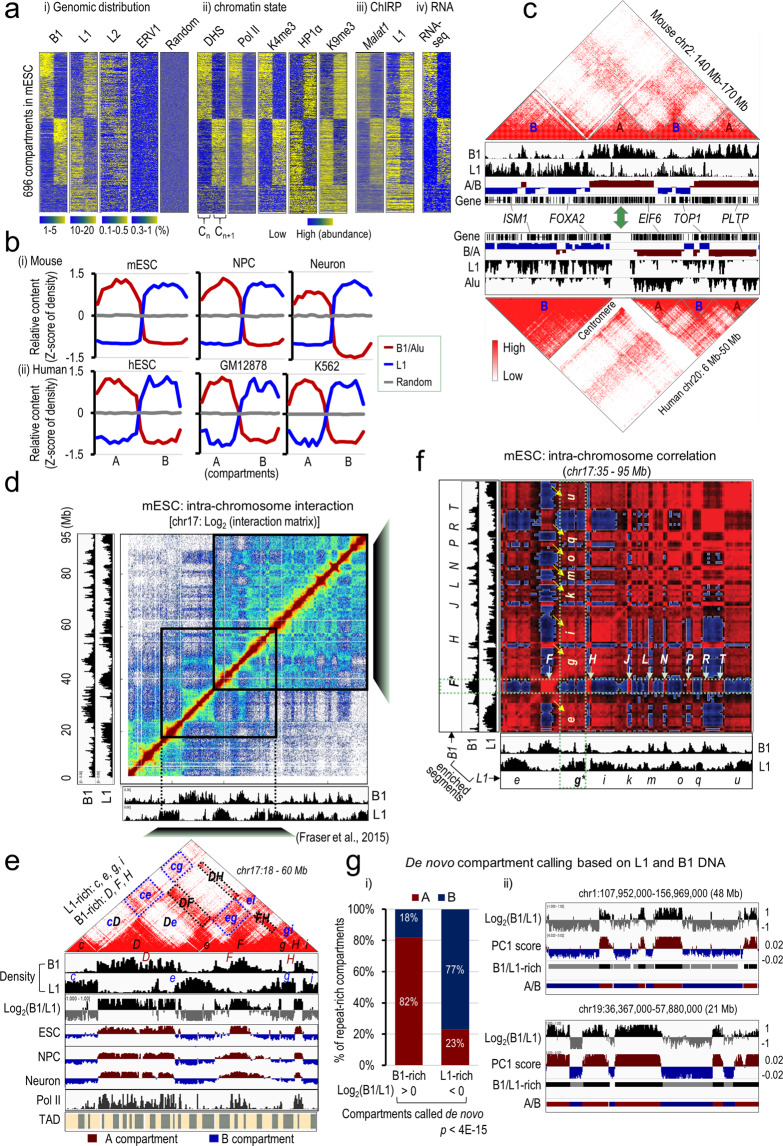
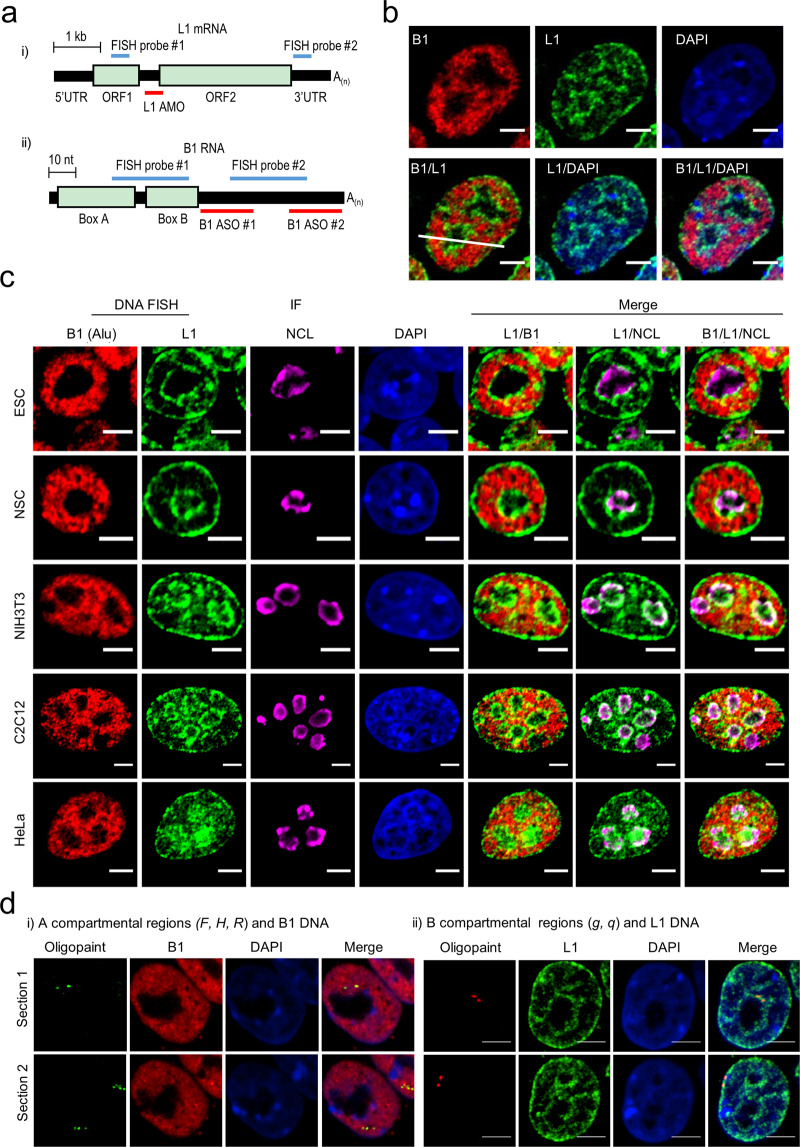
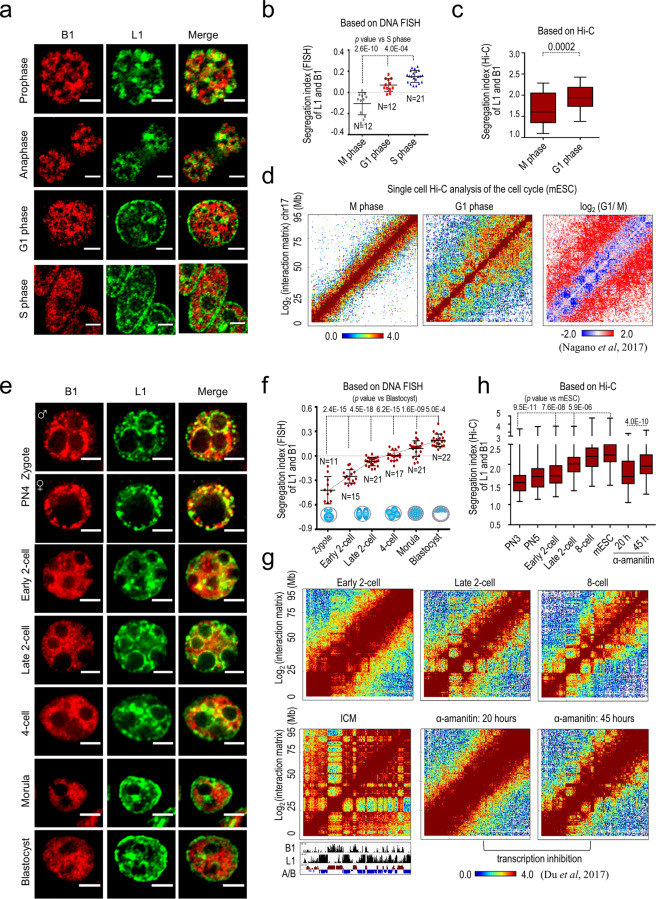
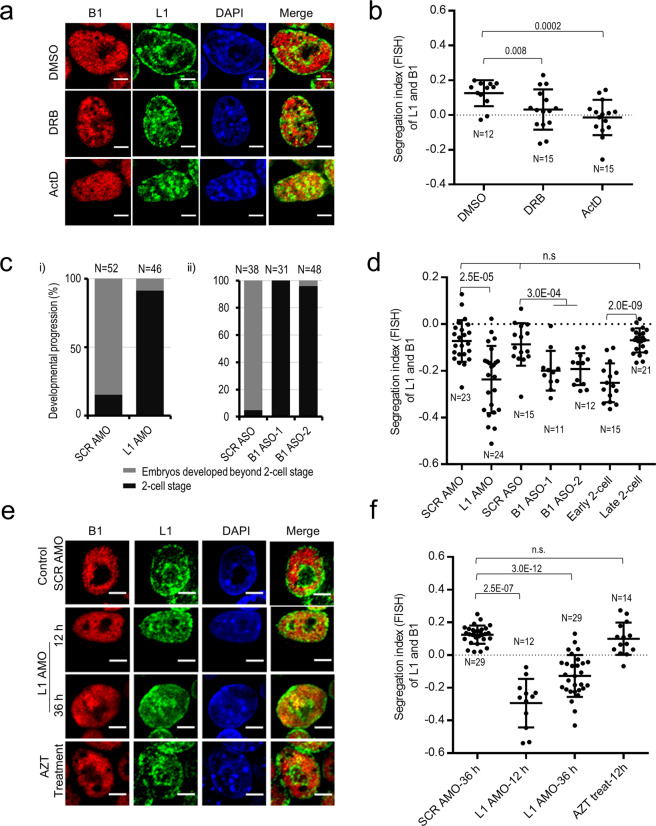
Verification
Claims the paper makes
The claims and statistics of this paper haven’t been checked yet.
Free: it reads the open-access text and checks the first 5 claims that cite a source we can check. Create a free account to check every claim.
Claims other papers make about this one
Each is checked against this paper’s own text: does it say what the citing paper says it does?
The check wasn’t confident either way, so it gives no verdict — never disputed.
In the citing paper
“Previous studies suggest an inverse correlation between repetitive sequence expression and cell cycle progression14,15 and a positive correlation with immune responses16,17.”
From Multi-omics analysis identifies glioblastoma dependency on H3K9me3 methyltransferase activity (2025) · cites this paper as [14]
Experimental — accuracy not yet measured
Self-check
Percentages, sums and reported differences re-computed from the paper’s own numbers.
The self-check needs the paper’s full text.
Citations
Cites
Initial sequencing and analysis of the human genome
International Human Genome Sequencing Consortium, Whitehead Institute for Biomedical Research, C. F. G. R., Lander, E. S., Linton, L. M., Birren, B., Nusbaum, C., Zody, M. C., Baldwin, J., Devon, K., Dewar, K., et al. (2001) · Nature · doi:10.1038/35057062 · Cited by 24,216 · cited 1×
“3 million copies) of mouse and human genomes.(64,65) L1 and B1/Alu have distinct nucleotide compositions and sequence lengths.”
A 3D Map of the Human Genome at Kilobase Resolution Reveals Principles of Chromatin Looping
Rao, S. S. P., Huntley, M. H., Durand, N. C., Stamenova, E. K., Bochkov, I. D., Robinson, J. T., Sanborn, A. L., Machol, I., Omer, A. D., Lander, E. S., et al. (2014) · Cell · doi:10.1016/j.cell.2014.11.021 · Cited by 9,212 · cited 2×
“We then performed a quantitative sequence analysis of annotated A/B compartments in six distinct mouse and human cell types.(20,72) All cells exhibit consistently high levels of SINE repeats (including B1, B2, B4 in mouse and Alu in human) in the A compartments and L1 repeats (including truncated or intact, and evolut…”
BackgroundMethodComprehensive Mapping of Long-Range Interactions Reveals Folding Principles of the Human Genome
Lieberman-Aiden, E., van Berkum, N. L., Williams, L., Imakaev, M., Ragoczy, T., Telling, A., Amit, I., Lajoie, B. R., Sabo, P. J., Dorschner, M. O., et al. (2009) · Science · doi:10.1126/science.1181369 · Cited by 8,898
Initial sequencing and comparative analysis of the mouse genome
Mouse Genome Sequencing Consortium (2002) · Nature · doi:10.1038/nature01262 · Cited by 7,187
Topological domains in mammalian genomes identified by analysis of chromatin interactions
Dixon, J. R., Selvaraj, S., Yue, F., Kim, A., Li, Y., Shen, Y., Hu, M., Liu, J. S., & Ren, B. (2012) · Nature · doi:10.1038/nature11082 · Cited by 6,829 · cited 2×
“In comparison, we find ERV retrotransposons to be randomly distributed, which is consistent with a previous report by the Ren group that no genome-wide enrichment of ERVs was found at TAD boundary.(13) Recently, the Ren group reported that transcriptionally active HERV-H repeats, a subclass of ERVs, demarcate TADs in…”
BackgroundResultCapturing Chromosome Conformation
Dekker, J., Rippe, K., Dekker, M., & Kleckner, N. (2002) · Science · doi:10.1126/science.1067799 · Cited by 3,652
HiC-Pro: an optimized and flexible pipeline for Hi-C data processing.
Servant, N., Varoquaux, N., Lajoie, B. R., Viara, E., Chen, C.-J., Vert, J.-P., Heard, E., Dekker, J., & Barillot, E. (2015) · Genome Biology · doi:10.1186/s13059-015-0831-x · Cited by 2,565 · cited 1×
“7) as described.(128) A and B compartments(6) and compartmentalization strength(23,34,94) were identified as described previously.”
BackgroundPhase transitions in the assembly of multivalent signalling proteins
Li, P., Banjade, S., Cheng, H.-C., Kim, S., Chen, B., Guo, L., Llaguno, M., Hollingsworth, J. V., King, D. S., Banani, S. F., et al. (2012) · Nature · doi:10.1038/nature10879 · Cited by 2,550
Self-citationSelfish DNA: the ultimate parasite
Orgel, L. E., & Crick, F. H. C. (1980) · Nature · doi:10.1038/284604a0 · Cited by 2,156
Domain organization of human chromosomes revealed by mapping of nuclear lamina interactions
Guelen, L., Pagie, L., Brasset, E., Meuleman, W., Faza, M. B., Talhout, W., Eussen, B. H., de Klein, A., Wessels, L., de Laat, W., et al. (2008) · Nature · doi:10.1038/nature06947 · Cited by 1,953
Cohesin Loss Eliminates All Loop Domains
Rao, S. S. P., Huang, S.-C., Glenn St Hilaire, B., Engreitz, J. M., Perez, E. M., Kieffer-Kwon, K.-R., Sanborn, A. L., Johnstone, S. E., Bascom, G. D., Bochkov, I. D., et al. (2017) · Cell · doi:10.1016/j.cell.2017.09.026 · Cited by 1,883 · cited 1×
“S10b–i), which is consistent with the Hi-C results reported previously.(22,23,95)”
ResultPhase separation drives heterochromatin domain formation
Strom, A. R., Emelyanov, A. V., Mir, M., Fyodorov, D. V., Darzacq, X., & Karpen, G. H. (2017) · Nature · doi:10.1038/nature22989 · Cited by 1,807
Nora, E. P., Goloborodko, A., Valton, A.-L., Gibcus, J. H., Uebersohn, A., Abdennur, N., Dekker, J., Mirny, L. A., & Bruneau, B. G. (2017) · Cell · doi:10.1016/j.cell.2017.05.004 · Cited by 1,709 · cited 1×
“S10b–i), which is consistent with the Hi-C results reported previously.(22,23,95)”
ResultLiquid droplet formation by HP1α suggests a role for phase separation in heterochromatin
Larson, A. G., Elnatan, D., Keenen, M. M., Trnka, M. J., Johnston, J. B., Burlingame, A. L., Agard, D. A., Redding, S., & Narlikar, G. J. (2017) · Nature · doi:10.1038/nature22822 · Cited by 1,694
Chromatin architecture reorganization during stem cell differentiation
Dixon, J. R., Jung, I., Selvaraj, S., Shen, Y., Antosiewicz-Bourget, J. E., Lee, A. Y., Ye, Z., Kim, A., Rajagopal, N., Xie, W., et al. (2015) · Nature · doi:10.1038/nature14222 · Cited by 1,646
Self-citationTwo independent modes of chromatin organization revealed by cohesin removal
Schwarzer, W., Abdennur, N., Goloborodko, A., Pekowska, A., Fudenberg, G., Loe-Mie, Y., Fonseca, N. A., Huber, W., Haering, C. H., Mirny, L., et al. (2017) · Nature · doi:10.1038/nature24281 · Cited by 1,196
Organization and function of the 3D genome
Bonev, B., & Cavalli, G. (2016) · Nature Reviews Genetics · doi:10.1038/nrg.2016.112 · Cited by 1,174
Organizational principles of 3D genome architecture
Rowley, M. J., & Corces, V. G. (2018) · Nature Reviews Genetics · doi:10.1038/s41576-018-0060-8 · Cited by 1,171
The Xist lncRNA interacts directly with SHARP to silence transcription through HDAC3
McHugh, C. A., Chen, C.-K., Chow, A., Surka, C. F., Tran, C., McDonel, P., Pandya-Jones, A., Blanco, M., Burghard, C., Moradian, A., et al. (2015) · Nature · doi:10.1038/nature14443 · Cited by 1,159
Lamina-Associated Domains: Links with Chromosome Architecture, Heterochromatin, and Gene Repression
van Steensel, B., & Belmont, A. S. (2017) · Cell · doi:10.1016/j.cell.2017.04.022 · Cited by 1,140
Repetitive Elements May Comprise Over Two-Thirds of the Human Genome
de Koning, A. P. J., Gu, W., Castoe, T. A., Batzer, M. A., & Pollock, D. D. (2011) · PLoS Genetics · doi:10.1371/journal.pgen.1002384 · Cited by 1,112 · cited 1×
“Repetitive elements comprise more than half of human and mouse genomes.(50,51) Once regarded as genomic parasites,(52) retrotransposons have been recently implicated in playing active roles in re-wiring the genome and gene expression programs in diverse biological processes.”
BackgroundExploring the three-dimensional organization of genomes: Interpreting chromatin interaction data
Dekker, J., Marti-Renom, M. A., & Mirny, L. A. (2013) · Nature Reviews Genetics · doi:10.1038/nrg3454 · Cited by 1,068
Molecular Maps of the Reorganization of Genome-Nuclear Lamina Interactions during Differentiation
Peric-Hupkes, D., Meuleman, W., Pagie, L., Bruggeman, S. W. M., Solovei, I., Brugman, W., Gräf, S., Flicek, P., Kerkhoven, R. M., van Lohuizen, M., et al. (2010) · Molecular Cell · doi:10.1016/j.molcel.2010.03.016 · Cited by 1,050 · cited 1×
“The localization of L1 surrounding the nucleus and nucleolus is consistent with sequencingbased analysis of nucleolus- and lamina-associated domains (NADs and LADs), in which L1-rich sequences are sequestered.(61,69,76,77) In addition, to further confirm nuclear colocalization of L1-rich sequences in B compartments an…”
MethodRegulatory evolution of innate immunity through co-option of endogenous retroviruses
Chuong, E. B., Elde, N. C., & Feschotte, C. (2016) · Science · doi:10.1126/science.aad5497 · Cited by 1,008
Organization of the mitotic chromosome
Naumova, N., Imakaev, M., Fudenberg, G., Zhan, Y., Lajoie, B. R., Mirny, L. A., & Dekker, J. (2013) · Science · doi:10.1126/science.1236083 · Cited by 976 · cited 2×
“To provide molecular evidence for the segregation of repeats during the cell cycle, we analyzed the published Hi-C data from cell-cycle synchronized mESCs and HeLa cells.(78,79) In both cell types, G1-phase cells exhibit a classic plaid pattern of hierarchical interactions, with enriched and depleted interaction block…”
MethodResultSuper-resolution chromatin tracing reveals domains and cooperative interactions in single cells
Bintu, B., Mateo, L. J., Su, J.-H., Sinnott-Armstrong, N. A., Parker, M., Kinrot, S., Yamaya, K., Boettiger, A. N., & Zhuang, X. (2018) · Science · doi:10.1126/science.aau1783 · Cited by 976
Imaging dynamic and selective low-complexity domain interactions that control gene transcription
Chong, S., Dugast-Darzacq, C., Liu, Z., Dong, P., Dailey, G. M., Cattoglio, C., Heckert, A., Banala, S., Lavis, L., Darzacq, X., et al. (2018) · Science · doi:10.1126/science.aar2555 · Cited by 966 · cited 2×
“There does not appear to be cross-talk between different transcription factors; instead, they interact among themselves to form concentrated hubs on synthetic lacO DNA arrays in cells.(110) In addition, different biophysical properties of phase-separated L1 or B1 subdomains, for example chromatin compactness, may furt…”
BackgroundHigher-Order Inter-chromosomal Hubs Shape 3D Genome Organization in the Nucleus
Quinodoz, S. A., Ollikainen, N., Tabak, B., Palla, A., Schmidt, J. M., Detmar, E., Lai, M. M., Shishkin, A. A., Bhat, P., Takei, Y., et al. (2018) · Cell · doi:10.1016/j.cell.2018.05.024 · Cited by 892 · cited 1×
“Third, chromatin compartmentalization may be further reinforced and stabilized through the attachment of repeat DNA sequences to subnuclear structures such as the nucleolus and nuclear speckles.(109) Evidence to support this notion includes our observation that L1 repeats are preferentially localized at the nuclear an…”
BackgroundControl of cell identity genes occurs in insulated neighborhoods in mammalian chromosomes
Dowen, J. M., Fan, Z. P., Hnisz, D., Ren, G., Abraham, B. J., Zhang, L. N., Weintraub, A. S., Schuijers, J., Lee, T. I., Zhao, K., et al. (2014) · Cell · doi:10.1016/j.cell.2014.09.030 · Cited by 884
Super-resolution imaging reveals distinct chromatin folding for different epigenetic states
Boettiger, A. N., Bintu, B., Moffitt, J. R., Wang, S., Beliveau, B. J., Fudenberg, G., Imakaev, M., Mirny, L. A., Wu, C.-T., & Zhuang, X. (2016) · Nature · doi:10.1038/nature16496 · Cited by 875
A compendium of chromatin contact maps reveals spatially active regions in the human genome
Schmitt, A. D., Hu, M., Jung, I., Xu, Z., Qiu, Y., Tan, C. L., Li, Y., Lin, S., Lin, Y., Barr, C. L., et al. (2016) · Cell Reports · doi:10.1016/j.celrep.2016.10.061 · Cited by 866 · cited 1×
“We further analyzed the published datasets of higher-order chromatin interactions in 21 primary human tissues and cell lines.(17) On the basis of the PC1 values of a principal components analysis on the Hi-C correlation matrix reported by Schmitt et al.”
MethodWutz, G., Várnai, C., Nagasaka, K., Cisneros, D. A., Stocsits, R. R., Tang, W., Schoenfelder, S., Jessberger, G., Muhar, M., Hossain, M. J., et al. (2017) · The EMBO Journal · doi:10.15252/embj.201798004 · Cited by 864
Three-Dimensional Maps of All Chromosomes in Human Male Fibroblast Nuclei and Prometaphase Rosettes
Bolzer, A., Kreth, G., Solovei, I., Koehler, D., Saracoglu, K., Fauth, C., Müller, S., Eils, R., Cremer, C., Speicher, M. R., et al. (2005) · PLoS Biology · doi:10.1371/journal.pbio.0030157 · Cited by 837
3D structures of individual mammalian genomes studied by single-cell Hi-C
Stevens, T. J., Lando, D., Basu, S., Atkinson, L. P., Cao, Y., Lee, S. F., Leeb, M., Wohlfahrt, K. J., Boucher, W., O’Shaughnessy-Kirwan, A., et al. (2017) · Nature · doi:10.1038/nature21429 · Cited by 832
Chromatin Domains: The Unit of Chromosome Organization
Dixon, J. R., Gorkin, D. U., & Ren, B. (2016) · Molecular Cell · doi:10.1016/j.molcel.2016.05.018 · Cited by 811
Cell-cycle dynamics of chromosomal organization at single-cell resolution
Nagano, T., Lubling, Y., Várnai, C., Dudley, C., Leung, W., Baran, Y., Mendelson Cohen, N., Wingett, S., Fraser, P., & Tanay, A. (2017) · Nature · doi:10.1038/nature23001 · Cited by 794 · cited 2×
“To provide molecular evidence for the segregation of repeats during the cell cycle, we analyzed the published Hi-C data from cell-cycle synchronized mESCs and HeLa cells.(78,79) In both cell types, G1-phase cells exhibit a classic plaid pattern of hierarchical interactions, with enriched and depleted interaction block…”
MethodResultThe cohesin release factor WAPL restricts chromatin loop extension
Haarhuis, J. H. I., van der Weide, R. H., Blomen, V. A., Yáñez-Cuna, J. O., Amendola, M., van Ruiten, M. S., Krijger, P. H. L., Teunissen, H., Medema, R. H., van Steensel, B., et al. (2017) · Cell · doi:10.1016/j.cell.2017.04.013 · Cited by 793
Nuclear Architecture of Rod Photoreceptor Cells Adapts to Vision in Mammalian Evolution
Solovei, I., Kreysing, M., Lanctôt, C., Kösem, S., Peichl, L., Cremer, T., Guck, J., & Joffe, B. (2009) · Cell · doi:10.1016/j.cell.2009.01.052 · Cited by 790
Single-nucleus Hi-C reveals unique chromatin reorganization at oocyte-to-zygote transition
Flyamer, I. M., Gassler, J., Imakaev, M., Brandão, H. B., Ulianov, S. V., Abdennur, N., Razin, S. V., Mirny, L. A., & Tachibana-Konwalski, K. (2017) · Nature · doi:10.1038/nature21711 · Cited by 753
The Hierarchy of the 3D Genome
Gibcus, J. H., & Dekker, J. (2013) · Molecular Cell · doi:10.1016/j.molcel.2013.02.011 · Cited by 705
CTCF mediates long-range chromatin looping and local histone modification in the β-globin locus
Splinter, E., Heath, H., Kooren, J., Palstra, R.-J., Klous, P., Grosveld, F., Galjart, N., & de Laat, W. (2006) · Genes & Development · doi:10.1101/gad.399506 · Cited by 677
Deininger, P. (2011) · Genome Biology · doi:10.1186/gb-2011-12-12-236 · Cited by 651
Maison, C., Bailly, D., Peters, A. H. F. M., Quivy, J.-P., Roche, D., Taddei, A., Lachner, M., Jenuwein, T., & Almouzni, G. (2002) · Nature Genetics · doi:10.1038/ng843 · Cited by 651
Intrinsic retroviral reactivation in human preimplantation embryos and pluripotent cells
Grow, E. J., Flynn, R. A., Chavez, S. L., Bayless, N. L., Wossidlo, M., Wesche, D. J., Martin, L., Ware, C. B., Blish, C. A., Chang, H. Y., et al. (2015) · Nature · doi:10.1038/nature14308 · Cited by 647
Heterochromatin drives compartmentalization of inverted and conventional nuclei
Falk, M., Feodorova, Y., Naumova, N., Imakaev, M., Lajoie, B. R., Leonhardt, H., Joffe, B., Dekker, J., Fudenberg, G., Solovei, I., et al. (2019) · Nature · doi:10.1038/s41586-019-1275-3 · Cited by 646 · cited 3×
“Together with the Solovei group, they further proposed that interactions between heterochromatic regions, rather than euchromatic contacts and lamina-heterochromatin interactions, are crucial for compartmentalization of the genome in both inverted and conventional nuclei.(29,34) However, what was unknown in their mode…”
BackgroundSpatial organization of chromatin domains and compartments in single chromosomes
Wang, S., Su, J.-H., Beliveau, B. J., Bintu, B., Moffitt, J. R., Wu, C.-T., & Zhuang, X. (2016) · Science · doi:10.1126/science.aaf8084 · Cited by 627
Chromatin organization by an interplay of loop extrusion and compartmental segregation
Nuebler, J., Fudenberg, G., Imakaev, M., Abdennur, N., & Mirny, L. A. (2018) · Proceedings of the National Academy of Sciences · doi:10.1073/pnas.1717730115 · Cited by 626 · cited 3×
“Together with the Solovei group, they further proposed that interactions between heterochromatic regions, rather than euchromatic contacts and lamina-heterochromatin interactions, are crucial for compartmentalization of the genome in both inverted and conventional nuclei.(29,34) However, what was unknown in their mode…”
BackgroundEvolution of the mammalian transcription factor binding repertoire via transposable elements
Bourque, G., Leong, B., Vega, V. B., Chen, X., Lee, Y. L., Srinivasan, K. G., Chew, J.-L., Ruan, Y., Wei, C.-L., Ng, H. H., et al. (2008) · Genome Research · doi:10.1101/gr.080663.108 · Cited by 589
The fractal globule as a model of chromatin architecture in the cell
Mirny, L. A. (2011) · Chromosome Research · doi:10.1007/s10577-010-9177-0 · Cited by 576
Transposable Elements: An Abundant and Natural Source of Regulatory Sequences for Host Genes
Rebollo, R., Romanish, M. T., & Mager, D. L. (2012) · Annual Review of Genetics · doi:10.1146/annurev-genet-110711-155621 · Cited by 574
Human genome organization: Alu, LINES, and the molecular structure of metaphase chromosome bands
Korenberg, J. R., & Rykowski, M. C. (1988) · Cell · doi:10.1016/0092-8674(88)90159-6 · Cited by 557 · cited 1×
“Analysis of metaphase chromosome banding showed roughly inverse distributions of L1 and Alu elements in chromosomal regions with distinct biochemical properties.(45,67,68) Initial studies suggested that Alu/B1 elements appear to be enriched in generich, euchromatic A compartments, whereas L1 elements tend to be enrich…”
BackgroundEvolutionarily Conserved Principles Predict 3D Chromatin Organization
Rowley, M. J., Nichols, M. H., Lyu, X., Ando-Kuri, M., Rivera, I. S. M., Hermetz, K., Wang, P., Ruan, Y., & Corces, V. G. (2017) · Molecular Cell · doi:10.1016/j.molcel.2017.07.022 · Cited by 555
Self-citationA LINE1-Nucleolin Partnership Regulates Early Development and ESC Identity
Percharde, M., Lin, C.-J., Yin, Y., Guan, J., Peixoto, G. A., Bulut-Karslioglu, A., Biechele, S., Huang, B., Shen, X., & Ramalho-Santos, M. (2018) · Cell · doi:10.1016/j.cell.2018.05.043 · Cited by 555 · cited 3×
“In contrast, increases of 2-cell-like cells and G2/M-arrested cells occur in small populations, from 2% to 9% and from 13% to 31%, respectively.(87) In addition, cells in M phase show a drastically different staining pattern of L1 and B1 from cells in S phase (Fig.”
BackgroundMethodSelf-citationAllelic reprogramming of 3D chromatin architecture during early mammalian development
Du, Z., Zheng, H., Huang, B., Ma, R., Wu, J., Zhang, X., He, J., Xiang, Y., Wang, Q., Li, Y., et al. (2017) · Nature · doi:10.1038/nature23263 · Cited by 527 · cited 1×
“It was reported that inhibition of Pol II by α-amanitin caused embryonic arrest at the late 2-cell stage,(83) yet the higher-order chromatin structure could still be established.(80,81) However, compared to the control groups, we found that α-amanitintreated embryos exhibited significantly lower L1/B1 segregation inde…”
BackgroundSelf-citationKe, Y., Xu, Y., Chen, X., Feng, S., Liu, Z., Sun, Y., Yao, X., Li, F., Zhu, W., Gao, L., et al. (2017) · Cell · doi:10.1016/j.cell.2017.06.029 · Cited by 522 · cited 1×
“It was reported that inhibition of Pol II by α-amanitin caused embryonic arrest at the late 2-cell stage,(83) yet the higher-order chromatin structure could still be established.(80,81) However, compared to the control groups, we found that α-amanitintreated embryos exhibited significantly lower L1/B1 segregation inde…”
BackgroundSelf-citationTranscription factor trapping by RNA in gene regulatory elements
Sigova, A. A., Abraham, B. J., Ji, X., Molinie, B., Hannett, N. M., Guo, Y. E., Jangi, M., Giallourakis, C. C., Sharp, P. A., & Young, R. A. (2015) · Science · doi:10.1126/science.aad3346 · Cited by 492
Meuleman, W., Peric-Hupkes, D., Kind, J., Beaudry, J.-B., Pagie, L., Kellis, M., Reinders, M., Wessels, L., & van Steensel, B. (2013) · Genome Research · doi:10.1101/gr.141028.112 · Cited by 462 · cited 1×
“The localization of L1 surrounding the nucleus and nucleolus is consistent with sequencingbased analysis of nucleolus- and lamina-associated domains (NADs and LADs), in which L1-rich sequences are sequestered.(61,69,76,77) In addition, to further confirm nuclear colocalization of L1-rich sequences in B compartments an…”
MethodModeling epigenome folding: formation and dynamics of topologically associated chromatin domains
Jost, D., Carrivain, P., Cavalli, G., & Vaillant, C. (2014) · Nucleic Acids Research · doi:10.1093/nar/gku698 · Cited by 453
Primate-specific endogenous retrovirus-driven transcription defines naive-like stem cells
Wang, J., Xie, G., Singh, M., Ghanbarian, A. T., Raskó, T., Szvetnik, A., Cai, H., Besser, D., Prigione, A., Fuchs, N. V., et al. (2014) · Nature · doi:10.1038/nature13804 · Cited by 448
DNA Sequence-Dependent Compartmentalization and Silencing of Chromatin at the Nuclear Lamina
Zullo, J. M., Demarco, I. A., Piqué-Regi, R., Gaffney, D. J., Epstein, C. B., Spooner, C. J., Luperchio, T. R., Bernstein, B. E., Pritchard, J. K., Reddy, K. L., et al. (2012) · Cell · doi:10.1016/j.cell.2012.04.035 · Cited by 448
smiFISH and FISH-quant – a flexible single RNA detection approach with super-resolution capability
Tsanov, N., Samacoits, A., Chouaib, R., Traboulsi, A.-M., Gostan, T., Weber, C., Zimmer, C., Zibara, K., Walter, T., Peter, M., et al. (2016) · Nucleic Acids Research · doi:10.1093/nar/gkw784 · Cited by 447
Bhatt, D. M., Pandya-Jones, A., Tong, A.-J., Barozzi, I., Lissner, M. M., Natoli, G., Black, D. L., & Smale, S. T. (2012) · Cell · doi:10.1016/j.cell.2012.05.043 · Cited by 446 · cited 1×
“For heterochromatin fractionation, sucrose gradient centrifugation of mESC nuclear extracts was performed as previously reported with modifications.(125,126) For embryonic microinjection, ASO (5 μM) and AMO (1mM) was injected into PN3 zygotes on a Leica DMI3000B microscope equipped with a Leica micromanipulator.”
MethodSTUDIES ON THE GROSS STRUCTURE, CROSS-LINKAGES, AND TERMINAL SEQUENCES IN RIBONUCLEASE
Anfinsen, C. B., Redfield, R. R., Choate, W. L., Page, J., & Carroll, W. R. (1954) · Journal of Biological Chemistry · doi:10.1016/s0021-9258(18)71260-x · Cited by 431 · cited 1×
“As discovered by Anfinsen in the late 1950s, the amino acid sequence of a protein determines its structure and function.(121,122) Analogously, we propose that the primary DNA sequences, particularly L1 and B1/Alu elements, dictate how the genome folds and functions.”
BackgroundLynch, V. J., Leclerc, R. D., May, G., & Wagner, G. P. (2011) · Nature Genetics · doi:10.1038/ng.917 · Cited by 427
Jumonji Modulates Polycomb Activity and Self-Renewal versus Differentiation of Stem Cells
Shen, X., Kim, W., Fujiwara, Y., Simon, M. D., Liu, Y., Mysliwiec, M. R., Yuan, G.-C., Lee, Y., & Orkin, S. H. (2009) · Cell · doi:10.1016/j.cell.2009.12.003 · Cited by 424
Self-citationJachowicz, J. W., Bing, X., Pontabry, J., Bošković, A., Rando, O. J., & Torres-Padilla, M.-E. (2017) · Nature Genetics · doi:10.1038/ng.3945 · Cited by 412
The Role of Chromosome Domains in Shaping the Functional Genome
Sexton, T., & Cavalli, G. (2015) · Cell · doi:10.1016/j.cell.2015.02.040 · Cited by 405 · cited 1×
“S2f), consistent with the findings that TADs are smaller, structural units of compartments.(73,74) L1 and B1 compositions within a TAD also exhibit strong anti-correlations (Pearson correlation coefficient < −0.”
ResultThe formation and stabilization of protein structure
Anfinsen, C. B. (1972) · Biochemical Journal · doi:10.1042/bj1280737 · Cited by 400 · cited 1×
“As discovered by Anfinsen in the late 1950s, the amino acid sequence of a protein determines its structure and function.(121,122) Analogously, we propose that the primary DNA sequences, particularly L1 and B1/Alu elements, dictate how the genome folds and functions.”
BackgroundUsing and Understanding RepeatMasker
Tempel, S. (2012) · Methods in Molecular Biology · doi:10.1007/978-1-61779-603-6_2 · Cited by 399 · cited 1×
“MATERIALS AND METHODS Genomic analysis of repeat sequences The reference catalog of repetitive elements was built from RepeatMasker annotations.(123) We used the 10-kb bin in all repeat analyses unless otherwise indicated.”
MethodThe depletion attraction: an underappreciated force driving cellular organization
Marenduzzo, D., Finan, K., & Cook, P. R. (2006) · The Journal of Cell Biology · doi:10.1083/jcb.200609066 · Cited by 389 · cited 1×
“On the other hand, in the presence of substantial concentrations of macromolecules in a crowded milieu of living cells, even non-specific interactions may contribute considerably to total free energy that drives the phase separation of heterochromatic domains.(104) Together, these results implicate L1 RNA and DNA in t…”
BackgroundInitial Genomics of the Human Nucleolus
Németh, A., Conesa, A., Santoyo-Lopez, J., Medina, I., Montaner, D., Péterfia, B., Solovei, I., Cremer, T., Dopazo, J., & Längst, G. (2010) · PLoS Genetics · doi:10.1371/journal.pgen.1000889 · Cited by 382 · cited 1×
“The localization of L1 surrounding the nucleus and nucleolus is consistent with sequencingbased analysis of nucleolus- and lamina-associated domains (NADs and LADs), in which L1-rich sequences are sequestered.(61,69,76,77) In addition, to further confirm nuclear colocalization of L1-rich sequences in B compartments an…”
MethodA mechanism of cohesin‐dependent loop extrusion organizes zygotic genome architecture
Gassler, J., Brandão, H. B., Imakaev, M., Flyamer, I. M., Ladstätter, S., Bickmore, W. A., Peters, J., Mirny, L. A., & Tachibana, K. (2017) · The EMBO Journal · doi:10.15252/embj.201798083 · Cited by 380
Zhang, Y., Li, T., Preissl, S., Amaral, M. L., Grinstein, J. D., Farah, E. N., Destici, E., Qiu, Y., Hu, R., Lee, A. Y., et al. (2019) · Nature Genetics · doi:10.1038/s41588-019-0479-7 · Cited by 376 · cited 1×
“Recently, the Ren group reported that transcriptionally active HERV-H repeats, a subclass of ERVs, demarcate TADs in human hESCs.(119,120) In fact, among > 1000 HERV-H repeats in human, < 50 show detectable expression in hESCs and only ~20 have a TAD boundary structure as indicated by directionality index.”
BackgroundSelf-citationWang, L., Gao, Y., Zheng, X., Liu, C., Dong, S., Li, R., Zhang, G., Wei, Y., Qu, H., Li, Y., et al. (2019) · Molecular Cell · doi:10.1016/j.molcel.2019.08.019 · Cited by 369 · cited 2×
“We purified the recombinant human HP1α protein as previously described.(38) In phase separation assays, recombinant HP1α with DNA or RNA fragments for L1, 8× B1, or 8× SCR were incubated at 4 °C overnight.”
BackgroundMethodSelf-citationFraser, J., Ferrai, C., Chiariello, A. M., Schueler, M., Rito, T., Laudanno, G., Barbieri, M., Moore, B. L., Kraemer, D. C., Aitken, S., et al. (2015) · Molecular Systems Biology · doi:10.15252/msb.20156492 · Cited by 368 · cited 2×
“We then performed a quantitative sequence analysis of annotated A/B compartments in six distinct mouse and human cell types.(20,72) All cells exhibit consistently high levels of SINE repeats (including B1, B2, B4 in mouse and Alu in human) in the A compartments and L1 repeats (including truncated or intact, and evolut…”
MethodStadhouders, R., Vidal, E., Serra, F., Di Stefano, B., Le Dily, F., Quilez, J., Gomez, A., Collombet, S., Berenguer, C., Cuartero, Y., et al. (2018) · Nature Genetics · doi:10.1038/s41588-017-0030-7 · Cited by 364
Selective silencing of euchromatic L1s revealed by genome-wide screens for L1 regulators
Liu, N., Lee, C. H., Swigut, T., Grow, E., Gu, B., Bassik, M. C., & Wysocka, J. (2018) · Nature · doi:10.1038/nature25179 · Cited by 355
Sequences enriched in Alu repeats drive nuclear localization of long RNAs in human cells
Lubelsky, Y., & Ulitsky, I. (2018) · Nature · doi:10.1038/nature25757 · Cited by 339
LINE-1 Activity in Facultative Heterochromatin Formation during X Chromosome Inactivation
Chow, J. C., Ciaudo, C., Fazzari, M. J., Mise, N., Servant, N., Glass, J. L., Attreed, M., Avner, P., Wutz, A., Barillot, E., et al. (2010) · Cell · doi:10.1016/j.cell.2010.04.042 · Cited by 330 · cited 2×
“Studies of X chromosome inactivation revealed different roles for silenced and actively transcribed L1s in regulating heterochromatin formation induced by Xist.(103) Silent L1 repeats participate in the assembly of a heterochromatic compartment, whereas transient transcription of certain young L1s facilitates local pr…”
BackgroundCoordinated methyl and RNA binding is required for heterochromatin localization of mammalian HP1 α
Muchardt, C., Guillemé, M., Seeler, J., Trouche, D., Dejean, A., & Yaniv, M. (2002) · EMBO reports · doi:10.1093/embo-reports/kvf194 · Cited by 324
Probst, A. V., Okamoto, I., Casanova, M., El Marjou, F., Le Baccon, P., & Almouzni, G. (2010) · Developmental Cell · doi:10.1016/j.devcel.2010.09.002 · Cited by 323 · cited 1×
“Transcription of satellite repeats precedes chromocenter formation and their transcripts help to recruit SUV39H to centromeric DNA sequences.(107,108) Indepth investigation of the expression, function and mechanism of L1 RNA could be a subject of future studies.”
BackgroundA Brief History of the Status of Transposable Elements: From Junk DNA to Major Players in Evolution
Biémont, C. (2010) · Genetics · doi:10.1534/genetics.110.124180 · Cited by 282
Fadloun, A., Le Gras, S., Jost, B., Ziegler-Birling, C., Takahashi, H., Gorab, E., Carninci, P., & Torres-Padilla, M.-E. (2013) · Nature Structural & Molecular Biology · doi:10.1038/nsmb.2495 · Cited by 259
CTCF mediates long-range chromatin looping and local histone modification in the beta-globin locus
Splinter, E., Heath, H., Kooren, J., Palstra, R.-J., Klous, P., Grosveld, F., Galjart, N., & de Laat, W. (2007) · Blood Cells, Molecules, and Diseases · doi:10.1016/j.bcmd.2006.10.131 · Cited by 243 · cited 1×
“TADs are thought to be formed by active extrusion of chromatin loops by the ring-shaped cohesin complex, which co-localizes with the insulator protein CTCF at the boundaries and anchor regions of contact domains and loops.(20,21) Depletion of CTCF disrupted TAD boundaries but failed to impact compartmentalization, whe…”
BackgroundLamins Organize the Global Three-Dimensional Genome from the Nuclear Periphery
Zheng, X., Hu, J., Yue, S., Kristiani, L., Kim, M., Sauria, M., Taylor, J., Kim, Y., & Zheng, Y. (2018) · Molecular Cell · doi:10.1016/j.molcel.2018.05.017 · Cited by 243
Chromatin loops in gene regulation
Kadauke, S., & Blobel, G. A. (2009) · Biochimica et Biophysica Acta (BBA) - Gene Regulatory Mechanisms · doi:10.1016/j.bbagrm.2008.07.002 · Cited by 238 · cited 1×
“At a finer scale, TADs are divided into smaller loop domains, in which distal regulatory elements such as enhancers come into direct contact with their target genes via chromatin loops.(14) Intriguingly, most A/B compartments and TADs are relatively stable in different mouse and human cell types (Supplementary informa…”
BackgroundTaylor, M. S., LaCava, J., Mita, P., Molloy, K. R., Huang, C. R. L., Li, D., Adney, E. M., Jiang, H., Burns, K. H., Chait, B. T., et al. (2013) · Cell · doi:10.1016/j.cell.2013.10.021 · Cited by 237 · cited 1×
“0 million copies) of the genome in mouse and human, respectively.(63) B1 in mouse and its closely related, primate-specific Alu elements in human are the most abundant subclass of SINEs, constituting 3%–11% (0.”
BackgroundPolak, P., & Domany, E. (2006) · BMC Genomics · doi:10.1186/1471-2164-7-133 · Cited by 237
Centrosomes are autocatalytic droplets of pericentriolar material organized by centrioles
Zwicker, D., Decker, M., Jaensch, S., Hyman, A. A., & Jülicher, F. (2014) · Proceedings of the National Academy of Sciences · doi:10.1073/pnas.1404855111 · Cited by 228
Replication timing and transcriptional control: beyond cause and effect — part III
Rivera-Mulia, J. C., & Gilbert, D. M. (2016) · Current Opinion in Cell Biology · doi:10.1016/j.ceb.2016.03.022 · Cited by 212
SUMOylation promotes de novo targeting of HP1α to pericentric heterochromatin
Maison, C., Bailly, D., Roche, D., de Oca, R. M., Probst, A. V., Vassias, I., Dingli, F., Lombard, B., Loew, D., Quivy, J.-P., et al. (2011) · Nature Genetics · doi:10.1038/ng.765 · Cited by 211 · cited 6×
“These observations argue against a secondary effect due to changes in mESC state upon depletion of L1 RNA.”
ResultInfluentialGenomic and Proteomic Resolution of Heterochromatin and Its Restriction of Alternate Fate Genes
Becker, J. S., McCarthy, R. L., Sidoli, S., Donahue, G., Kaeding, K. E., He, Z., Lin, S., Garcia, B. A., & Zaret, K. S. (2017) · Molecular Cell · doi:10.1016/j.molcel.2017.11.030 · Cited by 210 · cited 1×
“For heterochromatin fractionation, sucrose gradient centrifugation of mESC nuclear extracts was performed as previously reported with modifications.(125,126) For embryonic microinjection, ASO (5 μM) and AMO (1mM) was injected into PN3 zygotes on a Leica DMI3000B microscope equipped with a Leica micromanipulator.”
MethodA chromosome folding intermediate at the condensin-to-cohesin transition during telophase
Abramo, K., Valton, A.-L., Venev, S. V., Ozadam, H., Fox, A. N., & Dekker, J. (2019) · Nature Cell Biology · doi:10.1038/s41556-019-0406-2 · Cited by 209 · cited 1×
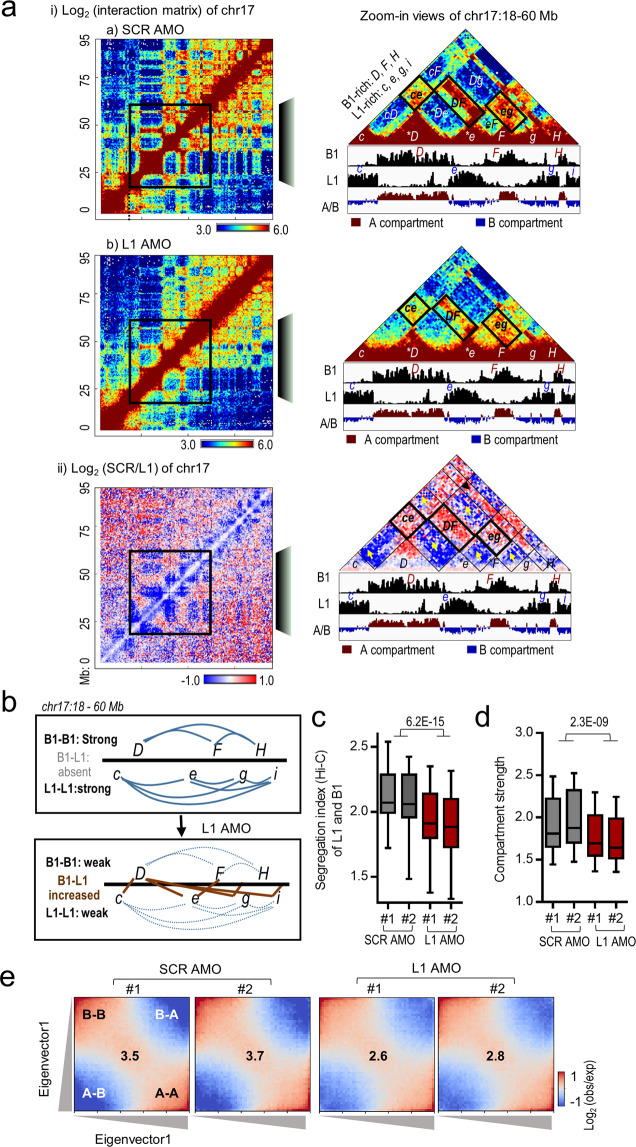
“on the ratio of homotypic (A–A and B–B) to heterotypic (A–B or B–A) compartmental interactions.(34,94) Saddle plots of compartmental interactions show obvious decreases in homotypic B–B and A–A interactions and increases in aberrant A–B interactions upon L1 AMO (Fig.”
BackgroundCoaching from the sidelines: the nuclear periphery in genome regulation
Buchwalter, A., Kaneshiro, J. M., & Hetzer, M. W. (2019) · Nature Reviews Genetics · doi:10.1038/s41576-018-0063-5 · Cited by 206 · cited 1×
“The euchromatic A compartment adopts a central position, whereas the heterochromatic B compartment moves towards the nuclear periphery and nucleolar regions.(11) This nuclear organization appears to be conserved from ciliates to humans and has been maintained in eukaryotes over 500 million years of evolution.”
BackgroundNucleation by rRNA Dictates the Precision of Nucleolus Assembly
Falahati, H., Pelham-Webb, B., Blythe, S., & Wieschaus, E. (2016) · Current Biology · doi:10.1016/j.cub.2015.11.065 · Cited by 192 · cited 1×
“An autonomous model for DNA sequence-dependent nuclear organization has been well demonstrated by the self-assembly of tandem repeat sequences such as ribosomal DNA (rDNA) and satellite repeats, which promotes high-order assemblages of the nucleolus and pericentromeric domains, respectively.(111,112) Although differen…”
BackgroundHow to rule the nucleus: divide et impera
Solovei, I., Thanisch, K., & Feodorova, Y. (2016) · Current Opinion in Cell Biology · doi:10.1016/j.ceb.2016.02.014 · Cited by 191 · cited 1×
“This nuclear organization appears to be conserved from ciliates to humans and has been maintained in eukaryotes over 500 million years of evolution.(12) Within compartments at the kilobase-tomegabase scale, chromatin is organized in topologically associated domains (TADs), which serve as functional platforms for physi…”
BackgroundCohesin Disrupts Polycomb-Dependent Chromosome Interactions in Embryonic Stem Cells
Rhodes, J. D. P., Feldmann, A., Hernández-Rodríguez, B., Díaz, N., Brown, J. M., Fursova, N. A., Blackledge, N. P., Prathapan, P., Dobrinic, P., Huseyin, M. K., et al. (2020) · Cell Reports · doi:10.1016/j.celrep.2019.12.057 · Cited by 187 · cited 1×
“S10b–i), which is consistent with the Hi-C results reported previously.(22,23,95)”
ResultPopulation-based 3D genome structure analysis reveals driving forces in spatial genome organization
Tjong, H., Li, W., Kalhor, R., Dai, C., Hao, S., Gong, K., Zhou, Y., Li, H., Zhou, X. J., Le Gros, M. A., et al. (2016) · Proceedings of the National Academy of Sciences · doi:10.1073/pnas.1512577113 · Cited by 185 · cited 1×
“An autonomous model for DNA sequence-dependent nuclear organization has been well demonstrated by the self-assembly of tandem repeat sequences such as ribosomal DNA (rDNA) and satellite repeats, which promotes high-order assemblages of the nucleolus and pericentromeric domains, respectively.(111,112) Although differen…”
BackgroundSelf-citationDurruthy-Durruthy, J., Sebastiano, V., Wossidlo, M., Cepeda, D., Cui, J., Grow, E. J., Davila, J., Mall, M., Wong, W. H., Wysocka, J., et al. (2016) · Nature Genetics · doi:10.1038/ng.3449 · Cited by 181
Velazquez Camacho, O., Galan, C., Swist-Rosowska, K., Ching, R., Gamalinda, M., Karabiber, F., De La Rosa-Velazquez, I., Engist, B., Koschorz, B., Shukeir, N., et al. (2017) · eLife · doi:10.7554/elife.25293 · Cited by 181 · cited 1×
“Transcription of satellite repeats precedes chromocenter formation and their transcripts help to recruit SUV39H to centromeric DNA sequences.(107,108) Indepth investigation of the expression, function and mechanism of L1 RNA could be a subject of future studies.”
BackgroundPredicting three-dimensional genome structure from transcriptional activity
Cook, P. R. (2002) · Nature Genetics · doi:10.1038/ng1102-347 · Cited by 167
HP1Swi6 Mediates the Recognition and Destruction of Heterochromatic RNA Transcripts
Valsecchi, C. I. K., Adaixo, R., Stunnenberg, R., Woolcock, K., Hiller, S., & Bühler, M. (2012) · Molecular Cell · doi:10.1016/j.molcel.2012.05.009 · Cited by 167
The first murine zygotic transcription is promiscuous and uncoupled from splicing and 3′ processing
Abe, K., Yamamoto, R., Franke, V., Cao, M., Suzuki, Y., Suzuki, M. G., Vlahovicek, K., Svoboda, P., Schultz, R. M., & Aoki, F. (2015) · The EMBO Journal · doi:10.15252/embj.201490648 · Cited by 166
Genomic Repeats Categorize Genes with Distinct Functions for Orchestrated Regulation
Lu, J. Y., Shao, W., Chang, L., Yin, Y., Li, T., Zhang, H., Hong, Y., Percharde, M., Guo, L., Wu, Z., et al. (2020) · Cell Reports · doi:10.1016/j.celrep.2020.02.048 · Cited by 156 · cited 10×
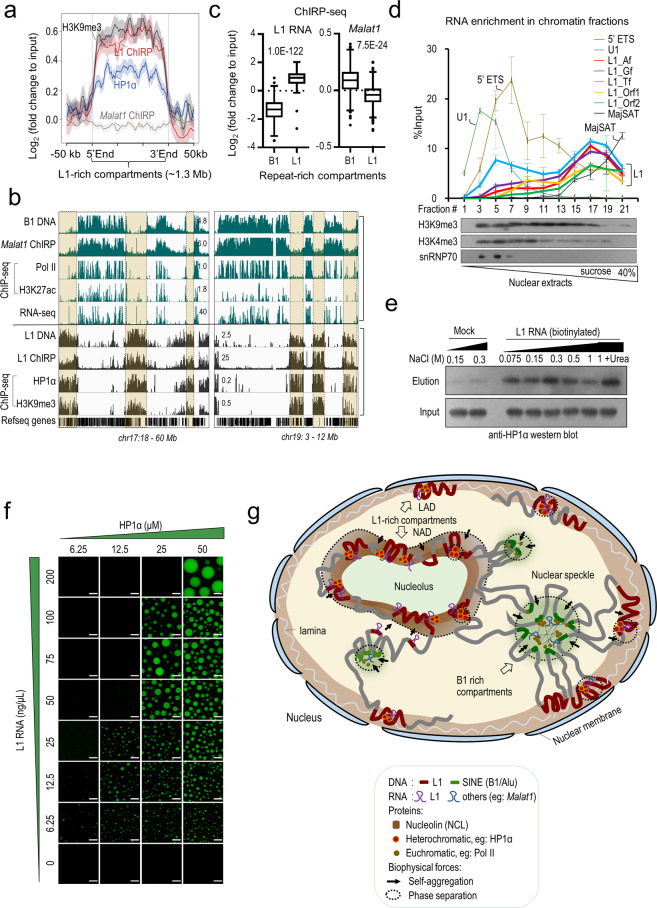
“Previously, we performed chromatin isolation by L1 RNA purification followed by sequencing (ChIRP-seq).(61) L1 RNA is significantly enriched in L1 DNA-associated compartments with high levels of H3K9me3 and HP1α signals, but is depleted in B1-associated compartments (Fig.”
BackgroundMethodInfluentialSelf-citationSultana, T., van Essen, D., Siol, O., Bailly-Bechet, M., Philippe, C., Zine El Aabidine, A., Pioger, L., Nigumann, P., Saccani, S., Andrau, J.-C., et al. (2019) · Molecular Cell · doi:10.1016/j.molcel.2019.02.036 · Cited by 154 · cited 2×
“This suggests that purifying selection, rather than biased insertions, reshapes the genomic distributions of L1 and Alu/B1 post their integration.(61,115,117,118) We speculate that the genetic marking of compartments with distinct activity is so important that during evolution it has imposed selective pressures on the…”
BackgroundGene expression during preimplantation mouse development.
Rothstein, J. L., Johnson, D., DeLoia, J. A., Skowronski, J., Solter, D., & Knowles, B. (1992) · Genes & Development · doi:10.1101/gad.6.7.1190 · Cited by 150
Liquid chromatin Hi-C characterizes compartment-dependent chromatin interaction dynamics
Belaghzal, H., Borrman, T., Stephens, A. D., Lafontaine, D. L., Venev, S. V., Weng, Z., Marko, J. F., & Dekker, J. (2021) · Nature Genetics · doi:10.1038/s41588-021-00784-4 · Cited by 140
Duplication, coclustering, and selection of human Alu retrotransposons
Jurka, J., Kohany, O., Pavlíček, A., Kapitonov, V. V., & Jurka, M. V. (2004) · Proceedings of the National Academy of Sciences · doi:10.1073/pnas.0308084100 · Cited by 135 · cited 1×
“L1 elements are 6–7 kb long and AT-rich, while Alu elements are ~300 bp long and rich in G and C nucleotides.(66) Analysis of metaphase chromosome banding showed roughly inverse distributions of L1 and Alu elements in chromosomal regions with distinct biochemical properties.”
BackgroundAdenosine-to-inosine RNA editing meets cancer
Dominissini, D., Moshitch-Moshkovitz, S., Amariglio, N., & Rechavi, G. (2011) · Carcinogenesis · doi:10.1093/carcin/bgr124 · Cited by 130
Genome-wide de novo L1 Retrotransposition Connects Endonuclease Activity with Replication
Flasch, D. A., Macia, Á., Sánchez, L., Ljungman, M., Heras, S. R., García-Pérez, J. L., Wilson, T. E., & Moran, J. V. (2019) · Cell · doi:10.1016/j.cell.2019.02.050 · Cited by 127 · cited 1×
“In addition, it has been reported that the landscape of endogenous L1 elements differs significantly from that of new L1 retrotransposon insertions, which broadly target all regions of the human genome, being insensitive to chromatin state.(115,116) This suggests that purifying selection, rather than biased insertions…”
BackgroundAmendola, M., & van Steensel, B. (2015) · EMBO Reports · doi:10.15252/embr.201439789 · Cited by 122
Chang, L., Li, M., Shao, S., Li, C., Ai, S., Xue, B., Hou, Y., Zhang, Y., Li, R., Fan, X., et al. (2020) · Protein & Cell · doi:10.1007/s13238-020-00794-8 · Cited by 122
Self-citationSimilar integration but different stability of Alus and LINEs in the human genome
Pavlíček, A., Jabbari, K., Pačes, J., Pačes, V., Hejnar, J., & Bernardi, G. (2001) · Gene · doi:10.1016/s0378-1119(01)00645-x · Cited by 120 · cited 1×
“This suggests that purifying selection, rather than biased insertions, reshapes the genomic distributions of L1 and Alu/B1 post their integration.(61,115,117,118) We speculate that the genetic marking of compartments with distinct activity is so important that during evolution it has imposed selective pressures on the…”
BackgroundCook, P. R., & Marenduzzo, D. (2018) · Nucleic Acids Research · doi:10.1093/nar/gky763 · Cited by 120
Tsirigos, A., & Rigoutsos, I. (2009) · PLoS Computational Biology · doi:10.1371/journal.pcbi.1000610 · Cited by 98
Using Alu Elements as Polyadenylation Sites: A Case of Retroposon Exaptation
Chen, C., Ara, T., & Gautheret, D. (2009) · Molecular Biology and Evolution · doi:10.1093/molbev/msn249 · Cited by 98
Characterization of L1 retrotransposition with high-throughput dual-luciferase assays
Xie, Y., Rosser, J. M., Thompson, T. L., Boeke, J. D., & An, W. (2011) · Nucleic Acids Research · doi:10.1093/nar/gkq1076 · Cited by 98
Massive reshaping of genome-nuclear lamina interactions during oncogene-induced senescence.
Lenain, C., de Graaf, C. A., Pagie, L., Visser, N. L., de Haas, M., de Vries, S. S., Peric-Hupkes, D., van Steensel, B., & Peeper, D. S. (2017) · Genome Research · doi:10.1101/gr.225763.117 · Cited by 89
SnapShot: Vertebrate Transposons
Mandal, P. K., & Kazazian, H. H. (2008) · Cell · doi:10.1016/j.cell.2008.09.028 · Cited by 83 · cited 1×
“Long and short interspersed nuclear elements (LINEs and SINEs, respectively) are the two predominant subfamilies of retrotransposons in most mammals.(62) L1 (also named as LINE1 or LINE-1) is the most abundant subclass of all repeats, making up to 19% and 17% (0.”
BackgroundCharacterization and dynamics of pericentromere-associated domains in mice
Wijchers, P. J., Geeven, G., Eyres, M., Bergsma, A. J., Janssen, M., Verstegen, M., Zhu, Y., Schell, Y., Vermeulen, C., de Wit, E., et al. (2015) · Genome Research · doi:10.1101/gr.186643.114 · Cited by 82
Transposable elements drive reorganisation of 3D chromatin during early embryogenesis
Kruse, K., Díaz, N., Enriquez-Gasca, R., Gaume, X., Torres-Padilla, M.-E., & Vaquerizas, J. M. (2019) · bioRxiv (Cold Spring Harbor Laboratory) · doi:10.1101/523712 · Cited by 72 · cited 1×
“Recently, the Ren group reported that transcriptionally active HERV-H repeats, a subclass of ERVs, demarcate TADs in human hESCs.(119,120) In fact, among > 1000 HERV-H repeats in human, < 50 show detectable expression in hESCs and only ~20 have a TAD boundary structure as indicated by directionality index.”
BackgroundThe Genomic Distribution of L1 Elements: The Role of Insertion Bias and Natural Selection
Graham, T., & Boissinot, S. (2006) · BioMed Research International · doi:10.1155/jbb/2006/75327 · Cited by 59 · cited 1×
“This suggests that purifying selection, rather than biased insertions, reshapes the genomic distributions of L1 and Alu/B1 post their integration.(61,115,117,118) We speculate that the genetic marking of compartments with distinct activity is so important that during evolution it has imposed selective pressures on the…”
BackgroundRennie, S., Dalby, M., van Duin, L., & Andersson, R. (2018) · Nature Communications · doi:10.1038/s41467-017-02798-1 · Cited by 52
Delay of ZGA initiation occurred in 2-cell blocked mouse embryos
Qiu, J., Zhang, W. W., Wu, Z. L., Wang, Y. H., Qian, M., & Li, Y. P. (2003) · Cell Research · doi:10.1038/sj.cr.7290162 · Cited by 51
Self-citationPreservation of Chromatin Organization after Acute Loss of CTCF in Mouse Embryonic Stem Cells
Kubo, N., Ishii, H., Gorkin, D., Meitinger, F., Xiong, X., Fang, R., Liu, T., Ye, Z., Li, B., Dixon, J. R., et al. (2017) · bioRxiv (Cold Spring Harbor Laboratory) · doi:10.1101/118737 · Cited by 48
Small chromosomal regions position themselves autonomously according to their chromatin class
van de Werken, H. J. G., Haan, J. C., Feodorova, Y., Bijos, D., Weuts, A., Theunis, K., Holwerda, S. J. B., Meuleman, W., Pagie, L., Thanisch, K., et al. (2017) · Genome Research · doi:10.1101/gr.213751.116 · Cited by 43 · cited 3×
“When a human artificial chromosome was introduced into mouse ESCs, human L1s spatially interact with mouse L1-rich regions but avoid the SINE-rich regions, and vice versa for human SINEs.(44) Based on these findings, we posit that L1/B1 repeats may represent autonomously functional units of the genome, and homotypic r…”
BackgroundInfluentialPericentromeric Heterochromatin Domains Are Maintained without Accumulation of HP1
Mateos-Langerak, J., Brink, M. C., Luijsterburg, M. S., van der Kraan, I., van Driel, R., & Verschure, P. J. (2007) · Molecular Biology of the Cell · doi:10.1091/mbc.e06-01-0025 · Cited by 40 · cited 1×
“Both B1 and L1 signals are absent from DAPI-dense regions, which likely represent satellite repeat-enriched chromocenters.(75) To confirm the L1 localization at the nucleolar periphery in mESCs, we performed DNA immuno-FISH, using an antibody against the nucleolar marker Nucleolin (NCL).”
MethodStunnenberg, R., Kulasegaran‐Shylini, R., Valsecchi, C. I. K., Kirschmann, M., Gelman, L., & Bühler, M. (2015) · The EMBO Journal · doi:10.15252/embj.201591320 · Cited by 29
Potential Role of Phase Separation of Repetitive DNA in Chromosomal Organization
Tang, S. (2017) · Genes · doi:10.3390/genes8100279 · Cited by 26
Similar Evolutionary Trajectories for Retrotransposon Accumulation in Mammals
Buckley, R. M., Kortschak, R. D., Raison, J. M., & Adelson, D. L. (2017) · Genome Biology and Evolution · doi:10.1093/gbe/evx179 · Cited by 26 · cited 1×
“Comparative genomics analysis across mammalian genomes has revealed that large-scale conserved patterns of retrotransposon accumulation follow similar evolutionary trajectories through conservation of synteny, gene regulation and nuclear organization, in spite of dissimilar retrotransposons.(114) In addition, it has b…”
BackgroundCompartment-dependent chromatin interaction dynamics revealed by liquid chromatin Hi-CPreprint
Belaghzal, H., Borrman, T. M., Stephens, A. D., et al. (2019) · bioRxiv (Cold Spring Harbor Laboratory) · doi:10.1101/704957 · Cited by 26
Research works printed but not linked: 1
- Annunziato AT DNA packaging: nucleosomes and chromatin Nature Educ. 2008 1 26
Cited by
Long non-coding RNAs: definitions, functions, challenges and recommendations
Mattick, J. S., Amaral, P. P., Carninci, P., Carpenter, S., Chang, H. Y., Chen, L.-L., Chen, R., Dean, C., Dinger, M. E., Fitzgerald, K. A., et al. (2023) · Nature Reviews Molecular Cell Biology · doi:10.1038/s41580-022-00566-8 · Cited by 2,356
Endogenous Retroelements and the Viral Mimicry Response in Cancer Therapy and Cellular Homeostasis
Chen, R., Ishak, C. A., & De Carvalho, D. D. (2021) · Cancer Discovery · doi:10.1158/2159-8290.cd-21-0506 · Cited by 205
Zygotic genome activation by the totipotency pioneer factor Nr5a2
Gassler, J., Kobayashi, W., Gáspár, I., Ruangroengkulrith, S., Mohanan, A., Hernández, L. G., Kravchenko, P., Kümmecke, M., Lalic, A., Rifel, N., et al. (2022) · Science · doi:10.1126/science.abn7478 · Cited by 169
Single-cell nuclear architecture across cell types in the mouse brain
Takei, Y., Zheng, S., Yun, J., Shah, S., Pierson, N., White, J., Schindler, S., Tischbirek, C. H., Yuan, G.-C., & Cai, L. (2021) · Science · doi:10.1126/science.abj1966 · Cited by 118
Transposable elements in mammalian chromatin organization
Lawson, H. A., Liang, Y., & Wang, T. (2023) · Nature Reviews Genetics · doi:10.1038/s41576-023-00609-6 · Cited by 144
Self-citation
Metadata
- Authors
- Lu, J. Y., Chang, L., Li, T., Wang, T., Yin, Y., Zhan, G., Han, X., Zhang, K., Tao, Y., Percharde, M., Wang, L., Peng, Q., Yan, P., Zhang, H., Bi, X., Shao, W., Hong, Y., Wu, Z., Ma, R., Wang, P., Li, W., Zhang, J., Chang, Z., Hou, Y., Zhu, B., Ramalho-Santos, M., Li, P., Xie, W., Na, J., Sun, Y., & Shen, X.
- Affiliations
- Center for Life Sciences (CN)
- Peking University (CN)
- MRC London Institute of Medical Sciences (GB)
- Chinese Academy of Sciences (CN)
- Corresponding author
- Sun, Yujie
- Shen, Xiaohua
- ORCID
- Venue
- Cell Research
- Published
- 2021-01-29
- Volume
- 31
- Issue
- 6
- Pages
- 613-630
- ISSN
- 1001-0602 (ISSN-L)
- 1748-7838
- PMC
- PMC8169921
- OpenAlex
- W3125962248
- Cited by
- 205
- References
- 129
- Citations by year
- 2026: 24 · 2025: 37 · 2024: 43 · 2023: 40 · 2022: 37 · 2021: 23
- FWCI
- 11.32
- Type
- journal article
- Language
- en
- Open access
- hybrid
- doi.org
- Licence
- cc-by
- creativecommons.org/licenses/by/4.0 (tdm)
- creativecommons.org/licenses/by/4.0 (vor)
- Locations
- Cell Research (publishedVersion, cc-by)
- PubMed Central (publishedVersion, cc-by)
- PubMed (publishedVersion)
- Greater South Information System
- Funders
- National Natural Science Foundation of China (31630095, 31471219, 21573013, 21825401)
- Center for Life Sciences (Tsinghua University)
- Topics
- Life Sciences › Biochemistry, Genetics and Molecular Biology › Molecular Biology › Genomics and Chromatin Dynamics
- Life Sciences › Biochemistry, Genetics and Molecular Biology › Genetics › Chromosomal and Genetic Variations
- Life Sciences › Biochemistry, Genetics and Molecular Biology › Molecular Biology › Nuclear Structure and Function
- Keywords
- LINE-1 retrotransposons, Alu elements, 3D genome organization, chromatin compartmentalization, heterochromatin, euchromatin, nucleolus, nuclear compartmentalization, embryonic stem cells, HP1α, phase separation, droplets, genome folding, cell cycle
- MeSH terms
- Animals, Repetitive Sequences, Nucleic Acid, RNA, Cluster Analysis, Retroelements, Long Interspersed Nucleotide Elements, Mice
About these checks
Registry, retraction, Cites and statistics results are computed, not judged, with one exception: a printed reference that no index lists is read once by a model before it counts as a citation error. Claims are extracted by a model and kept only when their quote appears verbatim in the text; each cited source is then checked, with a model’s help, for whether it says what the claim relies on. Those verdicts can be wrong — read the claim’s quote and the cited source before relying on one.
Statistics and arithmetic are recomputed, not judged.
Confidence bands are shown only for fields calibrated on our annotated test set. None is calibrated yet, so no band is shown.
What counts as a claim ›How we measure confidence ›How we check this ›
Are you an author, or do you see a problem with this page? Request a review
Data sources
Bibliographic data: Semantic Scholar, OpenAlex, Crossref.
Contains information from the Semantic Scholar Academic Graph Datasets, made available under the ODC Attribution License (ODC-BY 1.0).
Semantic Scholar’s data is described in: Kinney, R., et al. (2023). The Semantic Scholar Open Data Platform. arXiv:2301.10140.
