

Homotypic clustering of L1 and B1/Alu repeats compartmentalizes the 3D genome
Open accessThe DOI matches its Crossref record; 131 of the 131 references it cites were found in a registry or an index.
Abstract
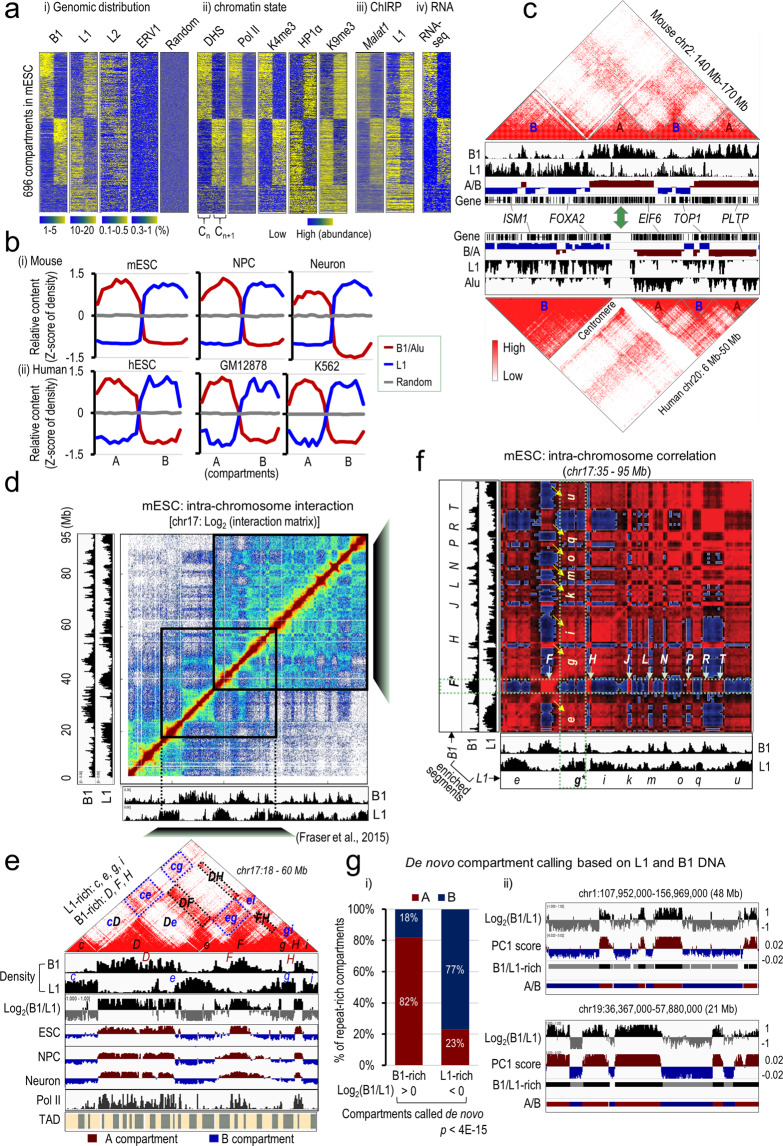
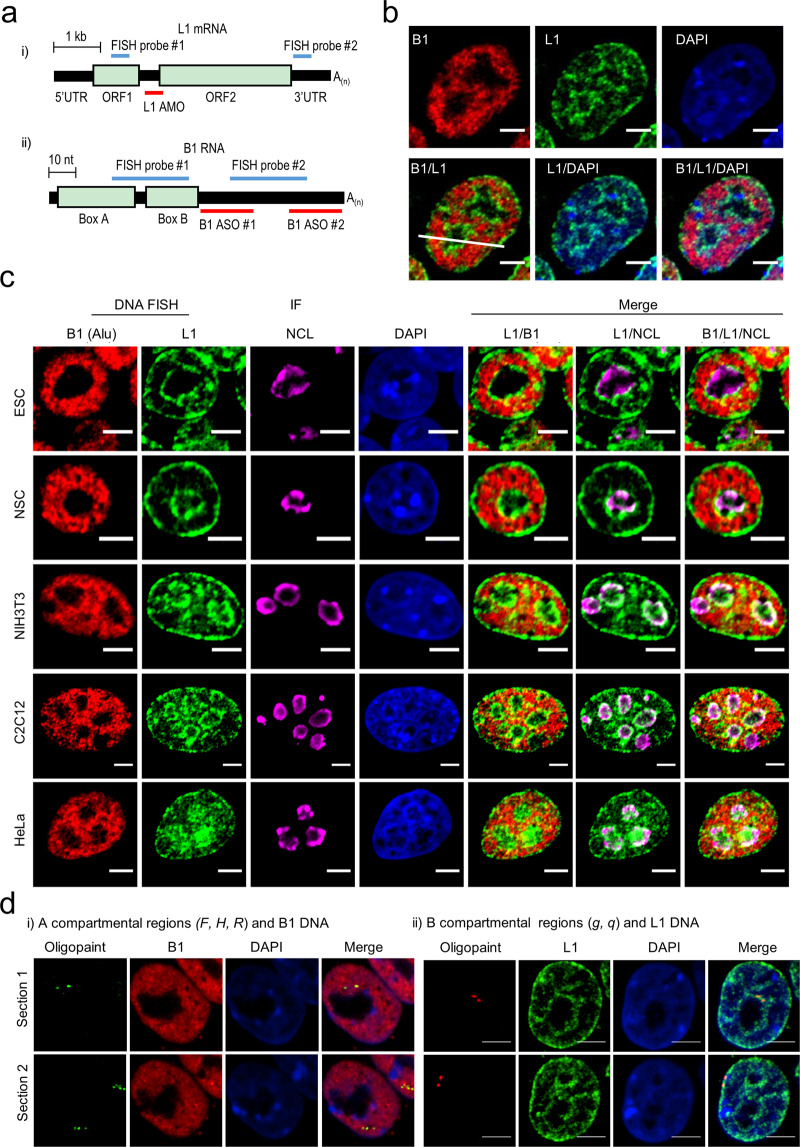
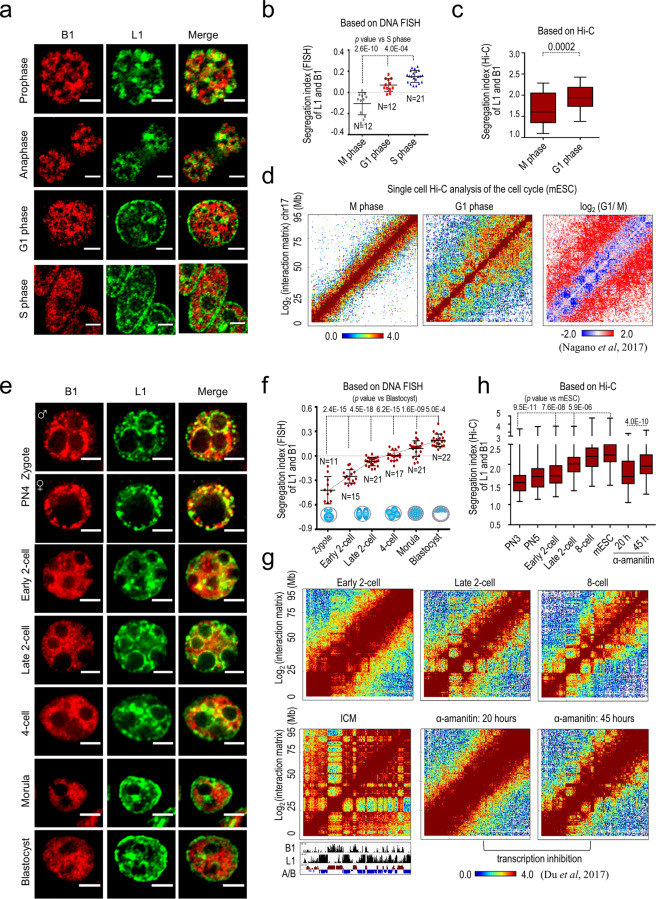
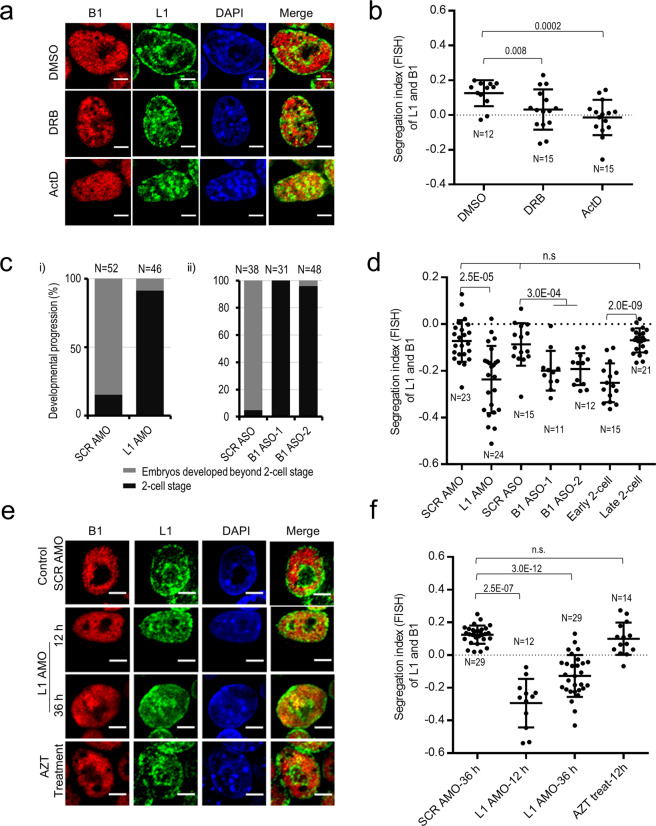
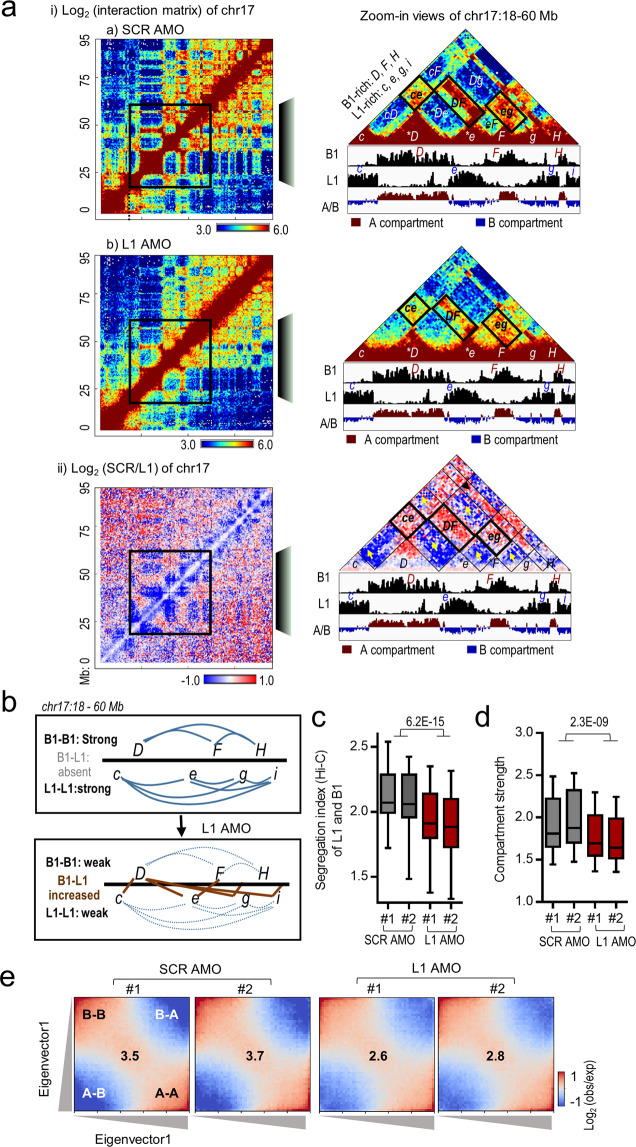
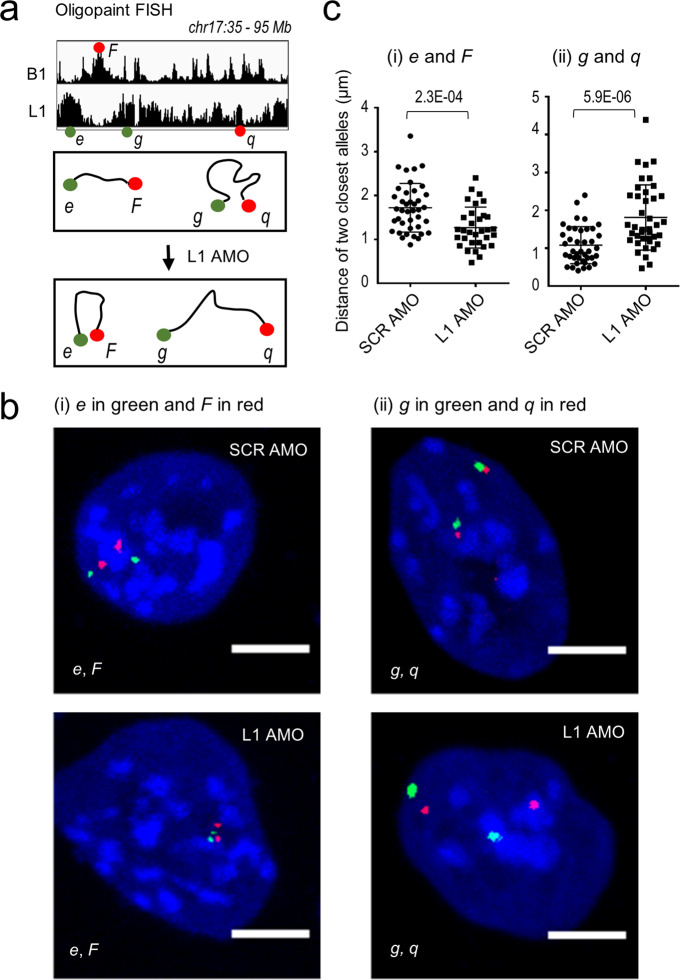
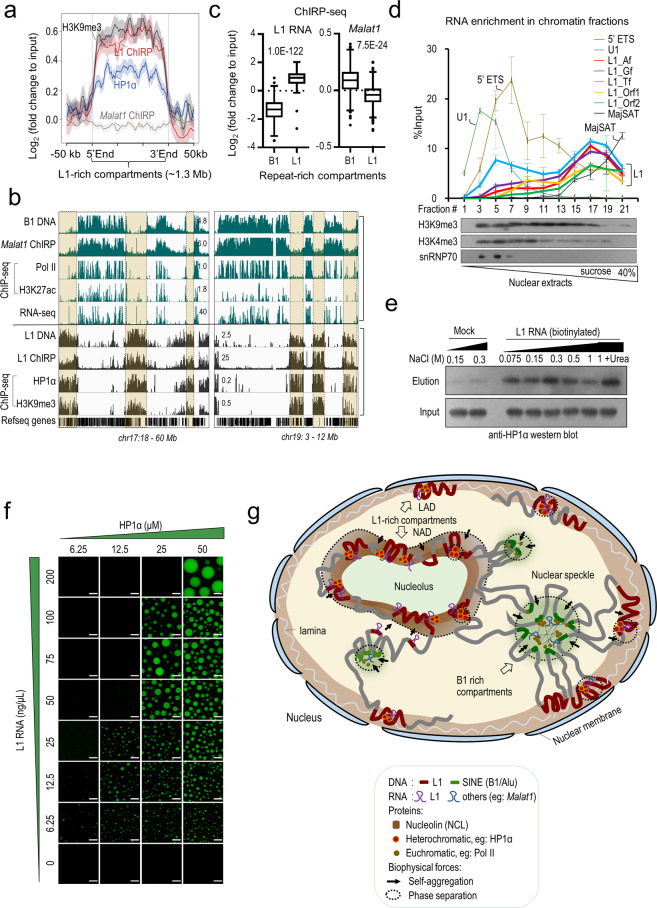
Organization of the genome into euchromatin and heterochromatin appears to be evolutionarily conserved and relatively stable during lineage differentiation. In an effort to unravel the basic principle underlying genome folding, here we focus on the genome itself and report a fundamental role for L1 (LINE1 or LINE-1) and B1/Alu retrotransposons, the most abundant subclasses of repetitive sequences, in chromatin compartmentalization. We find that homotypic clustering of L1 and B1/Alu demarcates the genome into grossly exclusive domains, and characterizes and predicts Hi-C compartments. Spatial segregation of L1-rich sequences in the nuclear and nucleolar peripheries and B1/Alu-rich sequences in the nuclear interior is conserved in mouse and human cells and occurs dynamically during the cell cycle. In addition, de novo establishment of L1 and B1 nuclear segregation is coincident with the formation of higher-order chromatin structures during early embryogenesis and appears to be critically regulated by L1 and B1 transcripts. Importantly, depletion of L1 transcripts in embryonic stem cells drastically weakens homotypic repeat contacts and compartmental strength, and disrupts the nuclear segregation of L1- or B1-rich chromosomal sequences at genome-wide and individual sites. Mechanistically, nuclear co-localization and liquid droplet formation of L1 repeat DNA and RNA with heterochromatin protein HP1α suggest a phase-separation mechanism by which L1 promotes heterochromatin compartmentalization. Taken together, we propose a genetically encoded model in which L1 and B1/Alu repeats blueprint chromatin macrostructure. Our model explains the robustness of genome folding into a common conserved core, on which dynamic gene regulation is overlaid across cells.
Overview
The claims and statistics of this paper haven’t been checked yet.
Free: it reads the open-access text and checks the first 5 claims that cite a source we can check. Create a free account to check every claim.
Integrity signals
Registry
Cites
Statistics
Figures
Verification
Claims the paper makes
The claims and statistics of this paper haven’t been checked yet.
Free: it reads the open-access text and checks the first 5 claims that cite a source we can check. Create a free account to check every claim.
Claims other papers make about this one
Each is checked against this paper’s own text: does it say what the citing paper says it does?
The check wasn’t confident either way, so it gives no verdict — never disputed.
In the citing paper
“Previous studies suggest an inverse correlation between repetitive sequence expression and cell cycle progression14,15 and a positive correlation with immune responses16,17.”
From Multi-omics analysis identifies glioblastoma dependency on H3K9me3 methyltransferase activity (2025) · cites this paper as [14]
Experimental — accuracy not yet measured
Self-check
Percentages, sums and reported differences re-computed from the paper’s own numbers.
The self-check needs the paper’s full text.
Citations
Cites
Initial sequencing and analysis of the human genome
International Human Genome Sequencing Consortium, Whitehead Institute for Biomedical Research, C. F. G. R., Lander, E. S., Linton, L. M., Birren, B., Nusbaum, C., Zody, M. C., Baldwin, J., Devon, K., Dewar, K., et al. (2001) · Nature · doi:10.1038/35057062 · Cited by 24,216 · cited 1×
“3 million copies) of mouse and human genomes.(64,65) L1 and B1/Alu have distinct nucleotide compositions and sequence lengths.”
A 3D Map of the Human Genome at Kilobase Resolution Reveals Principles of Chromatin Looping
Rao, S. S. P., Huntley, M. H., Durand, N. C., Stamenova, E. K., Bochkov, I. D., Robinson, J. T., Sanborn, A. L., Machol, I., Omer, A. D., Lander, E. S., et al. (2014) · Cell · doi:10.1016/j.cell.2014.11.021 · Cited by 9,212 · cited 2×
“We then performed a quantitative sequence analysis of annotated A/B compartments in six distinct mouse and human cell types.(20,72) All cells exhibit consistently high levels of SINE repeats (including B1, B2, B4 in mouse and Alu in human) in the A compartments and L1 repeats (including truncated or intact, and evolut…”
BackgroundMethodComprehensive Mapping of Long-Range Interactions Reveals Folding Principles of the Human Genome
Lieberman-Aiden, E., van Berkum, N. L., Williams, L., Imakaev, M., Ragoczy, T., Telling, A., Amit, I., Lajoie, B. R., Sabo, P. J., Dorschner, M. O., et al. (2009) · Science · doi:10.1126/science.1181369 · Cited by 8,898
Initial sequencing and comparative analysis of the mouse genome
Mouse Genome Sequencing Consortium (2002) · Nature · doi:10.1038/nature01262 · Cited by 7,187
Topological domains in mammalian genomes identified by analysis of chromatin interactions
Dixon, J. R., Selvaraj, S., Yue, F., Kim, A., Li, Y., Shen, Y., Hu, M., Liu, J. S., & Ren, B. (2012) · Nature · doi:10.1038/nature11082 · Cited by 6,829 · cited 2×
“In comparison, we find ERV retrotransposons to be randomly distributed, which is consistent with a previous report by the Ren group that no genome-wide enrichment of ERVs was found at TAD boundary.(13) Recently, the Ren group reported that transcriptionally active HERV-H repeats, a subclass of ERVs, demarcate TADs in…”
BackgroundResultCapturing Chromosome Conformation
Dekker, J., Rippe, K., Dekker, M., & Kleckner, N. (2002) · Science · doi:10.1126/science.1067799 · Cited by 3,652
HiC-Pro: an optimized and flexible pipeline for Hi-C data processing.
Servant, N., Varoquaux, N., Lajoie, B. R., Viara, E., Chen, C.-J., Vert, J.-P., Heard, E., Dekker, J., & Barillot, E. (2015) · Genome Biology · doi:10.1186/s13059-015-0831-x · Cited by 2,565 · cited 1×
“7) as described.(128) A and B compartments(6) and compartmentalization strength(23,34,94) were identified as described previously.”
BackgroundPhase transitions in the assembly of multivalent signalling proteins
Li, P., Banjade, S., Cheng, H.-C., Kim, S., Chen, B., Guo, L., Llaguno, M., Hollingsworth, J. V., King, D. S., Banani, S. F., et al. (2012) · Nature · doi:10.1038/nature10879 · Cited by 2,550
Self-citationSelfish DNA: the ultimate parasite
Orgel, L. E., & Crick, F. H. C. (1980) · Nature · doi:10.1038/284604a0 · Cited by 2,156
Domain organization of human chromosomes revealed by mapping of nuclear lamina interactions
Guelen, L., Pagie, L., Brasset, E., Meuleman, W., Faza, M. B., Talhout, W., Eussen, B. H., de Klein, A., Wessels, L., de Laat, W., et al. (2008) · Nature · doi:10.1038/nature06947 · Cited by 1,953
Research works printed but not linked: 1
- Annunziato AT DNA packaging: nucleosomes and chromatin Nature Educ. 2008 1 26
Cited by
Items 101–200 of 206
Ma, J.-X., Li, H.-J., Jin, C. C., Wang, H., Tang, L.-X., Si, J., & Cui, B. (2025) · IMA Fungus · doi:10.3897/imafungus.16.141288 · Cited by 6
“As such, repeats greatly expand and enrich genetic information in the process of species evolution and generate the impetus of evolution (Eichler and Sankoff 2003; Lu et al. 2021).”
Nucleosome spacing across cell types, diseases, and ages
Bikova, M., Clarkson, C. T., & Teif, V. B. (2026) · Nucleic Acids Research · doi:10.1093/nar/gkag074 · Cited by 9
Liu, S., Zhongyang, C., Shen, X., Gao, J., Guo, J., Rong, Y., Li, T., Zhou, F., Si, Y., Zhao, H., et al. (2026) · Molecular Cell · doi:10.1016/j.molcel.2026.03.031 · Cited by 7
Self-citationMesenchymal drift: A convergent framework for the hallmarks of aging
Lu, J. Y., Tu, W. B., Ma, S., Ma, Z., Imaz-Rosshandler, I., Weng, M., Qu, J., Esteban, C. R., Reddy, P., Liu, G.-H., et al. (2026) · Cell · doi:10.1016/j.cell.2026.04.020 · Cited by 12
Self-citationTransposable element DNA and RNA: Drivers of gene expression, evolution, and disease
Ho, J., Douse, C. H., & Marazzi, I. (2026) · Cell · doi:10.1016/j.cell.2026.05.003 · Cited by 9
Long, J., Liu, W., Fan, X., Yang, Y., Yang, X., & Tang, Z. (2024) · G3 Genes Genomes Genetics · doi:10.1093/g3journal/jkae178 · Cited by 8
“2023), which was the most abundant subclass of short interspersed nuclear elements (SINEs) (Lu et al .”
BackgroundRewiring of SINE-MIR enhancer topology and Esrrb modulation in expanded and naive pluripotency
Cipta, N. O., Zeng, Y., Wong, K. W., Zheng, Z., Yao, Y., Warrier, T., Teo, J. Z., Teo, J. H. J., Kok, Y. J., Bi, X., et al. (2025) · Genome biology · doi:10.1186/s13059-025-03577-8 · Cited by 6
“This was in contrast to LINE1 (L1), which was poorly accessible and enriched in B compartment, in agreement with a published report [65].”
Self-citationZhang, Y., He, F., Zhang, Y., Dai, Q., Li, Q., Jing, N., Miao, R., & Cheng, B. W. (2022) · Mobile DNA · doi:10.1186/s13100-022-00279-x · Cited by 7
DAXX safeguards heterochromatin formation in embryonic stem cells
Canat, A., Veillet, A., Batrin, R., Dubourg, C., Lhoumaud, P., Arnau-Romero, P., Greenberg, M., Bonhomme, F., Arimondo, P. B., Illingworth, R. S., et al. (2023) · Journal of Cell Science · doi:10.1242/jcs.261092 · Cited by 8
3D genome encoded by LINE and SINE repeats
Liang, Z., & Fu, X. (2021) · Cell Research · doi:10.1038/s41422-021-00485-x · Cited by 7
Chromatin-Associated RNAs Regulate Gene Expression and Chromatin Structure
Xie, B., & Dean, A. (2025) · Non-Coding RNA · doi:10.3390/ncrna11050068 · Cited by 10
“Furthermore, repeat-derived RNAs also regulate chromatin compartments, as LINE1 transcript depletion disrupts A/B compart-mentalization [66].”
STAU1 promotes adipogenesis by regulating the alternative splicing of Pparγ2 mRNA
Jiang, S., Meng, X.-Y., Gu, H., Sun, J., Chen, S., Chen, Z., Liu, D., & Liang, X. (2023) · Biochimica et Biophysica Acta (BBA) - Molecular and Cell Biology of Lipids · doi:10.1016/j.bbalip.2023.159293 · Cited by 12
Development and evolution of Drosophila chromatin landscape in a 3D genome context
Ali, M., Younas, L., Liu, J., He, H., Zhang, X., & Zhou, Q. (2024) · Nature Communications · doi:10.1038/s41467-024-53892-0 · Cited by 9
“Besides such regulatory functions, TEs can also play an important role in shaping the chromatin architecture, suggested by previous studies in mammals 62 – 66 .”
THE SOURCES OF GENOME VARIABILITY AS DOMESTICATION DRIVERS (review)
Glazko, V. I. (2022) · Sel skokhozyaistvennaya Biologiya · doi:10.15389/agrobiology.2022.5.832eng · Cited by 5
Marson, F., Zampieri, M., Verdone, L., Bacalini, M. G., Ravaioli, F., Morandi, L., Chiarella, S. G., Vetriani, V., Venditti, S., Caserta, M., et al. (2023) · PLoS ONE · doi:10.1371/journal.pone.0293199 · Cited by 6
LINE-1, the NORth star of nucleolar organizationPreprint
Matsuo, M., & Cristofari, G. (2025) · Genes & Development · doi:10.1101/gad.352583.124 · Cited by 5
Factors determining chromosomal localization of transposable elements in plants
Kejnovský, E., Jedlička, P., Lexa, M., & Kubát, Z. (2025) · Plant Biology · doi:10.1111/plb.70057 · Cited by 6
“The interactions of TEs with other repetitive elements play a role in 3D organization of the inter-phase nucleus and have recently been a subject of intensive study (Lu et al .”
Generalized nuclear localization of retroelement transcripts
Das, S., Jones, A. E., & Abrams, J. (2022) · Mobile DNA · doi:10.1186/s13100-022-00287-x · Cited by 4
“For example, several groups have recently shown that retroelement transcripts can regulate gene expression and chromatin organization [37, 39, 65].”
BackgroundCell-specific housekeeping role of lncRNAs in COVID-19-infected and recovered patients
Chattopadhyay, P., Mehta, P., Soni, J., Tardalkar, K., Joshi, M. G., & Pandey, R. (2024) · NAR Genomics and Bioinformatics · doi:10.1093/nargab/lqae023 · Cited by 6
“In our previous studies, we have shown Alu-mediated regulation of proximal genes as well as homologous interaction with the promoter region of protein-coding genes present within the same TAD ( 53–55 ).”
BackgroundNucleosome-induced homology recognition in chromatin
Hedley, J. G., Teif, V. B., & Kornyshev, A. A. (2021) · Journal of The Royal Society Interface · doi:10.1098/rsif.2021.0147 · Cited by 4
D2 Plot, a Matrix of DNA Density and Distance to Periphery, Reveals Functional Genome Regions
Che, Y., Yang, X., Jia, P., Wang, T., Xu, D., Guo, T., & Ye, K. (2022) · Advanced Science · doi:10.1002/advs.202202149 · Cited by 3
Self-citationNR5A2 connects genome activation to the first lineage segregation in early mouse developmentPreprint
Lai, F.-N., Li, L., Hu, X., Liu, B., Zhu, Z., Liu, L., Fan, Q., Tian, H., Xu, K., Lu, X., et al. (2022) · bioRxiv (Cold Spring Harbor Laboratory) · doi:10.1101/2022.11.25.518012 · Cited by 4
Self-citationLINE-1 Locus Transcription Nucleates Oncogenic Chromatin Architecture
Lee, M., Zhang, Y., Lim, J. Y. S., Dai, T., Ye, J. S., Brecker, M., Sondhi, V., Zheng, S., Kim, Y. J., Chen, B., et al. (2026) · Cancer Discovery · doi:10.1158/2159-8290.cd-25-1085 · Cited by 7
“Our findings also raise the possibility that LINE-1 transcripts contribute to heterochromatin compartmentalization in cancer cells as has been proposed previously in early mouse embryonic development (80, 81).”
ZNF146/OZF and ZNF507 target LINE-1 sequences
Creamer, K. M., Larsen, E. C., & Lawrence, J. B. (2022) · G3 Genes Genomes Genetics · doi:10.1093/g3journal/jkac002 · Cited by 3
“In recent years, however, TEs and TE-derived sequences have been implicated as drivers of gene expression patterning, genome organization, development, and evolution in higher organisms (Rebollo et al. 2012; Hall et al. 2014; Lu et al. 2021).”
BackgroundГЕНОМНЫЕ ИСТОЧНИКИ РАЗНООБРАЗИЯ КАК ДРАЙВЕРЫ ДОМЕСТИКАЦИИ (обзор)
Тимирязева, Ф. В. Р. Г. А. У. И. К. А., & ГЛАЗКО, В. И. (2022) · Sel skokhozyaistvennaya Biologiya · doi:10.15389/agrobiology.2022.5.832 · Cited by 3
Xu, W., Ren, L., Zheng, C., & Cai, J. (2021) · bioRxiv (Cold Spring Harbor Laboratory) · doi:10.1101/2021.04.28.441894 · Cited by 3
“Our evidence that LINE-1 RNAs and CTCF protein co-localize on the chromosomal regions also indicates the involvement of the transposon RNAs in the establishment of 3D chromatin structure (Lu et al. 2021).”
BackgroundInfluentialEvolution of chromosomes and nuclear architectures of amniotes
Liu, J., & Zhou, Q. (2025) · Nature Communications · doi:10.1038/s41467-025-67427-8 · Cited by 5
“…studies suggest that clustering of L1 LINE elements and Alu/B1 SINE elements com-partmentalize the genome respectively into heterochromatin and euchromatin 4,89 , and we further found only subfamilies of AluSx and B1 may play an important role, possibly through interactions with nuclear speckles.”
Repetitive Sequence Stability in Embryonic Stem Cells
Shi, G. W., Pang, Q., Lin, Z., Zhang, X., & Huang, K. (2024) · International Journal of Molecular Sciences · doi:10.3390/ijms25168819 · Cited by 4
“The distribution of SINE-B1/ALU and LINE-1 repeat sequences correlates with A/B compartments in mice and humans [161].”
BackgroundInfluentialRetrotransposons and Diabetes Mellitus
Katsanou, A., Kostoulas, C., Liberopoulos, E. N., Tsatsoulis, A. A., Georgiou, I. A., & Tigas, S. K. (2024) · Epigenomes · doi:10.3390/epigenomes8030035 · Cited by 6
“Retrotransposons play a significant role in the chromatin structuring, and particularly, the transcriptions of LINE-1 and Alu are crucial for nuclear segregation [30,36].”
BackgroundHikmat, W. M., Sievers, A., Hausmann, M., & Hildenbrand, G. L. (2024) · Genes · doi:10.3390/genes15101247 · Cited by 2
“Additionally, the interspersed elements ALU and L1 were analyzed, since transposable elements are known to be determinedly involved in genome organization [41].”
BackgroundHall, L. L., Creamer, K. M., Byron, M., & Lawrence, J. B. (2024) · Nucleus · doi:10.1080/19491034.2024.2400525 · Cited by 4
“L1-rich DNA is reported to be enriched at the nuclear periphery, related to its density of lamina-associated domains (LADs), with some published images indicating much or most L1 DNA is at the nuclear periphery with little L1 in the rest of the nucleus (e.g [7,22].”
BackgroundTran, T. T. Q., Pham, T. T., Nguyen, T. T., Do, T. H., Luu, P. T. T., Nguyen, U. Q., Vuong, L. D., Nguyen, Q. N., Ho, S. V., Dao, H. V., et al. (2024) · PLoS ONE · doi:10.1371/journal.pone.0316394 · Cited by 4
Detecting Horizontal Transfer of Transposons
Galbraith, J. D., Ivancevic, A. M., Qu, Z., & Adelson, D. L. (2022) · Methods in molecular biology · doi:10.1007/978-1-0716-2883-6_3 · Cited by 2
Lappin, T. (2021) · Stem Cells Translational Medicine · doi:10.1002/sctm.21-0138 · Cited by 2
“Their work was recently published in Cell Research, “Homotypic clustering of L1 and B1/Alu repeats compartmentalizes the 3D genome”.(3)”
BackgroundMicrohomology-Mediated Circular DNA Formation from Oligonucleosomal Fragments During SpermatogenesisPreprint
Hu, J. S., Zhang, Z., Xiao, S. J., Cao, Y., Chen, Y., Weng, J., Jiang, H., Li, W., Chen, J., & Liu, C. (2023) · bioRxiv (Cold Spring Harbor Laboratory) · doi:10.1101/2023.02.27.530352 · Cited by 2
Self-citationGenome folding principles revealed in condensin-depleted mitotic chromosomesPreprint
Zhao, H., Lin, Y., Lin, E., Liu, F., Shu, L., Jing, D., Wang, B., Wang, M., Shan, F., Zhang, L., et al. (2023) · bioRxiv (Cold Spring Harbor Laboratory) · doi:10.1101/2023.11.09.566494 · Cited by 2
Self-citationKang, W., Yip, W. H., Li-Wang, X., Verron, Q., Bouwman, B. A. M., Pedrotti, S., Yaghi, A. A., Murata, M., Salviati, L., Wernersson, E., et al. (2025) · bioRxiv (Cold Spring Harbor Laboratory) · doi:10.1101/2025.03.13.641826 · Cited by 3
Zhu, M., Zhou, J., Chen, N., Xu, J., Wang, H., Jiang, L., & Yang, F. (2025) · Genes · doi:10.3390/genes16040397 · Cited by 1
“In humans and mice, the distribution of B1/Alu and L1 repeats is strongly correlated with A and B chromatin compartments, suggesting their potential contribution to genome folding [30].”
Glazko, T. T., Kosovsky, G. Y., & Глазко, В. И. (2025) · Foods and raw materials · doi:10.21603/2308-4057-2025-2-653 · Cited by 1
Sievers, A., Hausmann, M., & Hildenbrand, G. L. (2025) · Genes · doi:10.3390/genes16091082 · Cited by 1
Tamon, L., Fahmi, Z., Ashford, J., Collepardo‐Guevara, R., & Sahakyan, A. B. (2025) · NAR Genomics and Bioinformatics · doi:10.1093/nargab/lqaf146 · Cited by 2
“Consistently, a combination of computational [68–70] and experimental [71] findings show that the self-clustering of repeat families is indeed correlated with genome organisation.”
Block copolymer concepts of how transcription organizes the stem cell genome
Bao, Y., Ma, S., Shen, X., & Hilbert, L. (2026) · Current Opinion in Genetics & Development · doi:10.1016/j.gde.2025.102428 · Cited by 1
Self-citationKeshet, G., & Benvenisty, N. (2026) · Cell Reports · doi:10.1016/j.celrep.2026.117124 · Cited by 3
LINE-1 retrotransposons: Multifaceted functions and regulatory mechanisms in health and disease
Liu, X., Zhong, C., Wang, S., 黄清育, & Li, Z. (2026) · Molecular Therapy — Nucleic Acids · doi:10.1016/j.omtn.2026.102934 · Cited by 3
“93 This expansion of dense heterochromatin strengthens the anchoring of chromosomal fragments to the nucleolus and nuclear periphery, bringing relevant domains into closer spatial proximity and altering their 3D organization.”
Sun, Y., Jensen, L. J., Tommerup, N., & Gorodkin, J. (2026) · NAR Genomics and Bioinformatics · doi:10.1093/nargab/lqag092 · Cited by 1
“These repeat elements have previously been implicated in chromatin organization [ 44 ].”
Self-citationȘerban, M., Toader, C., & Covache-Busuioc, R.-A. (2026) · International Journal of Molecular Sciences · doi:10.3390/ijms27167478 · Cited by 2
Retrotransposons in embryogenesis and neurodevelopment
Talley, M. J., & Longworth, M. S. (2024) · Biochemical Society Transactions · doi:10.1042/bst20230757 · Cited by 3
Ma, Z., Chai, Z., Yang, H., Zhang, X., Zhao, H., Luo, X., Zhong, J., & Wu, Z. (2024) · Frontiers in Veterinary Science · doi:10.3389/fvets.2024.1448587 · Cited by 1
“Among these elements, long interspersed nuclear element 1 ( LINE1 ) is a retrotransposon that constitutes a considerable fraction of mammalian DNA, accounting for approximately 18% of mouse DNA, 23% of rat DNA, and 17% of human DNA (15, 16).”
BackgroundSelf-citationChromatin unfolding via loops can drive clustered transposon insertion
Prizak, R., Gadzekpo, A., & Hilbert, L. (2025) · Biophysical Journal · doi:10.1016/j.bpj.2025.03.038 · Cited by 4
“The compartmentalization into A and B compartments, corresponding largely to euchromatin and heterochromatin, is driven by homotypic affinities among LINE-1 and among Alu repeats, respectively (25,68).”
InfluentialLiu, J. (2025) · Molecular Biology and Evolution · doi:10.1093/molbev/msaf235 · Cited by 3
Clustered transposon insertion via formation of chromatin loopsPreprint
Prizak, R., & Hilbert, L. (2022) · bioRxiv (Cold Spring Harbor Laboratory) · doi:10.1101/2022.02.16.480760 · Cited by 1
“LINE-1 47 and Alu repeats, for example, have been implicated in the 48 spatial separation of the genome into the A and the B 49 compartment (24).”
BackgroundTransposable Elements in Human Diseases: Evolutionary and Therapeutic PerspectivesPreprint
Shah, K., & Berkyurek, A. C. (2022) · Preprints.org · doi:10.20944/preprints202205.0117.v1 · Cited by 1
Hall, L. L., Creamer, K. M., Byron, M., & Lawrence, J. B. (2024) · bioRxiv (Cold Spring Harbor Laboratory) · doi:10.1101/2024.01.09.574742 · Cited by 1
Live imaging of Alu elements reveals non-uniform euchromatin dynamics coupled to transcriptionPreprint
Chang, Y.-C., Quinodoz, S. A., & Brangwynne, C. P. (2024) · eLife · doi:10.7554/elife.97537.1 · Cited by 2
LINE1 promotes nuclear compartmentalization to repress the 8-cell state in embryonic stem cellsPreprint
Zhang, J., Ataei, L., Wu, L. L., Mittal, K., Huynh, L., Sarajideen, S., Mazid, M. A., Cook, D. P., Trcka, D., Tse, K., et al. (2024) · bioRxiv (Cold Spring Harbor Laboratory) · doi:10.1101/2024.09.22.614332 · Cited by 1
Self-citationTamon, L., Fahmi, Z., Ashford, J., Collepardo‐Guevara, R., & Sahakyan, A. B. (2025) · bioRxiv (Cold Spring Harbor Laboratory) · doi:10.1101/2025.03.16.643527 · Cited by 1
A New Model about the Role of Satellite DNA in Forming Higher-Order Chromatin StructurePreprint
Fu, S., Guo, H., Wan, L., Zeng, Z., Zhu, B., & Tang, Z. (2025) · Research Square · doi:10.21203/rs.3.rs-7224262/v1 · Cited by 1
Self-citationCell-cycle-resolved Hi-C reveals unexpected plasticity of A/B compartments across interphasePreprint
Choubani, L., Miura, H., Ichinose, T., Oji, A., Takahashi, S., Cerbus, R., & Hiratani, I. (2026) · eLife · doi:10.7554/elife.110073.2 · Cited by 3
Liu, Y., Ma, G., Gao, Z.-H., Li, J., Wang, J., Zhu, X., Yang, J., Zhou, Y., Hu, K., Zhang, Y., et al. (2021) · bioRxiv (Cold Spring Harbor Laboratory) · doi:10.1101/2021.06.15.448470
ARID1A loss derepresses human endogenous retrovirus-H to modulate BRD4-dependent transcriptionPreprint
Yu, C., Lei, X., Chen, F., Mao, S., Lv, L., Liu, H., Hu, X., Wang, R., Shen, L., Zhang, N., et al. (2021) · bioRxiv (Cold Spring Harbor Laboratory) · doi:10.1101/2021.06.28.450127
Self-citationPhase separation as higher-order catalystPreprint
Huang, K., Quan, X., & Qin, S. (2022) · bioRxiv (Cold Spring Harbor Laboratory) · doi:10.1101/2022.10.27.514140
Development and Evolution of Drosophila Chromatin Landscape in a 3D genome contextPreprint
Ali, M., Younas, L., Liu, J., & Zhou, Q. (2022) · bioRxiv (Cold Spring Harbor Laboratory) · doi:10.1101/2022.11.28.518159
Microhomology-Mediated Circular DNA Formation from Oligonucleosomal Fragments During SpermatogenesisPreprint
Hu, J., Zhang, Z., Xiao, S. J., Cao, Y., Chen, Y., Weng, J., Jiang, H., Li, W., Chen, J., & Liu, C. (2023) · eLife · doi:10.7554/elife.87115.1
Self-citationThe Emerging Role of B1 SINE in Pluripotent Reprogramming
Weltner, J., & Trokovic, R. (2023) · Cellular Reprogramming · doi:10.1089/cell.2023.0037
Microhomology-Mediated Circular DNA Formation from Oligonucleosomal Fragments During SpermatogenesisPreprint
Hu, J. P., Zhang, Z., Xiao, S. J., Cao, Y., Chen, Y., Weng, J., Jiang, H., Li, W., Chen, J., & Liu, C. (2023) · eLife · doi:10.7554/elife.87115.2
Self-citationMicrohomology-mediated circular DNA formation from oligonucleosomal fragments during spermatogenesis
Hu, J. S., Zhang, Z., Xiao, S. J., Cao, Y., Chen, Y., Weng, J., Jiang, H., Li, W., Chen, J., & Liu, C. (2023) · eLife · doi:10.7554/elife.87115.3
Self-citationNara, T., Takahashi, H., Awazu, A., & Kikuchi, Y. (2024) · bioRxiv (Cold Spring Harbor Laboratory) · doi:10.1101/2024.01.27.577362
Live imaging of Alu elements reveals non-uniform euchromatin dynamics coupled to transcriptionPreprint
Chang, Y.-C., Quinodoz, S. A., & Brangwynne, C. P. (2024) · bioRxiv (Cold Spring Harbor Laboratory) · doi:10.1101/2024.03.15.585287
“…Alu-targeted dCas9 localization correlates with H3K4me3 marks, suggesting dCas9 localization is enriched near sites of active transcription and within the A compartment (Figure 1 D), consistent with bioinformatic characterizations of Alu element distributions (Lander et al., 2001; Lu et al., 2021).”
BackgroundMethodResultInfluentialHu, J. S., Zhang, Z., Xiao, S. J., Cao, Y., Chen, Y., Weng, J., Jiang, H., Li, W., Chen, J., & Liu, C. (2023) · eLife · doi:10.7554/elife.87115.1.sa3
Self-citationLive imaging of Alu elements reveals non-uniform euchromatin dynamics coupled to transcriptionPreprint
Chang, Y.-C., Quinodoz, S. A., & Brangwynne, C. P. (2024) · eLife · doi:10.7554/elife.97537
Epigenetic Control of Cell Fate Decisions by Enhancer-Derived Long Noncoding RNAs
Mattick, J. S. (2024) · Springer eBooks · doi:10.1007/978-3-031-59286-7_2
Retrotransposon LINE1 trans-inhibiting differentiation maintains embryonic stem cell identityPreprint
Ren, L., Teng, Y., Xu, W., Hou, J., Lu, M., Shi, F., Ren, J., Zheng, C., & Cai, J. (2024) · bioRxiv (Cold Spring Harbor Laboratory) · doi:10.1101/2024.12.02.626147 · Cited by 1
Extrinsic heterogeneity: Collectivity in isotropic conformational fluctuations of chromosomes
Nara, T., Takahashi, H., Awazu, A., & Kikuchi, Y. (2025) · Biophysical Journal · doi:10.1016/j.bpj.2025.05.020
Emerging Functions of the Repeat Genome in Nuclear Structure: A View from the Human Karyotype
Hall, L. L., Smith, K. P., & Lawrence, J. B. (2025) · Annual Review of Genomics and Human Genetics · doi:10.1146/annurev-genom-111522-014017 · Cited by 2
“L1 RNA, which is transiently expressed from L1 TEDS in very early embryogenesis, is required for the de novo formation of the constitutive heterochromatin compartment (before cell type–specific gene regulation begins) (85, 112, 113, 129).”
Xu, T., Bush, S. J., Che, Y., Zhao, H., Wang, T., Jia, P., Wang, S., Sun, P., Zhang, P., Gao, S., et al. (2025) · Genomics Proteomics & Bioinformatics · doi:10.1093/gpbjnl/qzaf061 · Cited by 1
Self-citationMittal, K., Ataei, L., & Ramalho‐Santos, M. (2025) · bioRxiv (Cold Spring Harbor Laboratory) · doi:10.1101/2025.07.11.664446
Self-citationSharif, J., Ma, M., Onishi, R., Katsuyama, K., Shu-lan, S., Mizutani-Koseki, Y., Han, Y.-W., Matsuda, M., Nakayama, M., & Koseki, H. (2025) · Research Square · doi:10.21203/rs.3.rs-7260042/v1
The emerging sequence grammar of 3D genome organisation
Tamon, L., Ashford, J., Nicholls, M., Bruijn, M. F. T. R. D., & Sahakyan, A. B. (2025) · Human Genetics · doi:10.1007/s00439-025-02772-8 · Cited by 3
“B1/Alu-and L1/LINE1-rich sequences tend to self-segregate, forming clusters that are highly correlated with A/B compartments (Prost et al. 2020; Lu et al. 2021 ).”
Birth–Death Dynamics of Microsatellites: Mechanistic Insights from Orthologous Loci in Felidae
Zhang, W., Zhang, M. H., & Liu, H. (2025) · Genes · doi:10.3390/genes16091115
“Repeat length polymorphisms influence a wide range of traits, such as limb and skull morphology in dogs [6], behavioral phenotypes in voles [7], and gene expression through alterations in chromatin structure and epigenetic modifications in humans [8–10].”
Transposable Elements and Their Roles in Genome Architecture
Majumder, S., Pandey, S., & Sengupta, S. (2025) · Epigenetics and human health · doi:10.1007/978-3-032-04125-8_3
Transposable Elements and Hereditary Diseases
Kõks, S. (2025) · Epigenetics and human health · doi:10.1007/978-3-032-04125-8_9
Transposable elements in aging: From biomarkers to effectors
Fuentes-Iglesias, A., García-Vílchez, R., & Guallar, D. (2025) · Advances in genetics · doi:10.1016/bs.adgen.2025.11.001 · Cited by 1
Additional file 3 of Single-cell 3D genome structure reveals distinct human pluripotent states
Li, N., Jin, K., Liu, B., Yang, M., Shi, P., Heng, D., Wang, J., & Liu, L. (2024) · Figshare · doi:10.6084/m9.figshare.26719692
Additional file 4 of Single-cell 3D genome structure reveals distinct human pluripotent states
Li, N., Jin, K., Liu, B., Yang, M., Shi, P., Heng, D., Wang, J., & Liu, L. (2024) · Figshare · doi:10.6084/m9.figshare.26719695
Additional file 2 of Single-cell 3D genome structure reveals distinct human pluripotent states
Li, N., Jin, K., Liu, B., Yang, M., Shi, P., Heng, D., Wang, J., & Liu, L. (2024) · Figshare · doi:10.6084/m9.figshare.25815610
Petrosino, G., Ponte, G., Volpe, M., Zarrella, I., Ansaloni, F., Langella, C., Cristina, G. D., Finaurini, S., Russo, M. T., Basu, S., et al. (2022) · Figshare · doi:10.6084/m9.figshare.19785781
Additional file 1 of Single-cell 3D genome structure reveals distinct human pluripotent states
Li, N., Jin, K., Liu, B., Yang, M., Shi, P., Heng, D., Wang, J., & Liu, L. (2024) · Figshare · doi:10.6084/m9.figshare.25815153
Cell-cycle-resolved Hi-C reveals unexpected plasticity of A/B compartments across interphase
Choubani, L., Miura, H., Ichinose, T., Oji, A., Takahashi, S., Cerbus, R., & Hiratani, I. (2026) · eLife · doi:10.7554/elife.110073.3
Homotypic Transposable Element Pairing May Drive Coherent Chromatin Folding
Myakishev-Rempel, M. (2025) · Genes · doi:10.3390/genes17010043
“Recent work demonstrated that transposable elements form homotypic clusters in nuclear space—meaning that L1 elements preferentially associate with other L1s and Alu elements associate with other Alus [3].”
Dissecting the contribution of transposable elements to interphase chromosome structure
Shi, L., Xiao, Z., Babarinde, I. A., Xiuling, F., Ma, G., Huang, Z., Sun, L., Zhou, X., He, J., Strunnikov, A. V., et al. (2026) · Genome biology · doi:10.1186/s13059-026-03945-y · Cited by 2
Cerbus, R., Kawaguchi, K., & Hiratani, I. (2026) · bioRxiv (Cold Spring Harbor Laboratory) · doi:10.64898/2026.02.26.708372
“The heterochromatic or B compartments, by comparison, are gene-and GC-poor and show higher densities of long (L1) repeats [16], a class of long interspersed nuclear elements (LINEs).”
InfluentialChoi, J., Park, S., Kim, N., Kwon, S., Park, J., Lee, S., Lee, H., Kang, K., Kim, T., Sul, J., et al. (2026) · Nucleic Acids Research · doi:10.1093/nar/gkag168 · Cited by 1
“For instance, A and B compartments are established by homotypic interactions of SINEs and LINEs, respectively [ 59 ].”
Pham, T. T., Vuong, L. D., Mai, T., Ho, S. V., Vu, G. S., Tran, T. T. Q., Do, T. H., Pham, O. M., Nguyen, L. T. T., Pham, L. T. P., et al. (2026) · PLoS ONE · doi:10.1371/journal.pone.0345087
“Therefore, chromatin accessibility [24,25], endonuclease cleavages influenced by DNA methylation, fragmentations dependent on end-motif sites in these regions [26–28] and VINIF.2022.”
Gérard, D., Ohnmacht, J., Ramos, B. G., Catillon, M., Sharif, J., Baumgarten, N., Hecker, D., Ginolhac, A., Landoulsi, Z., Valceschini, E., et al. (2026) · bioRxiv (Cold Spring Harbor Laboratory) · doi:10.64898/2026.03.26.714241 · Cited by 3
Convergence and Parallelism of Phenotypic and Molecular Genetic Variability in Some Species
Kosovsky, G. Y., & Glazko, T. T. (2026) · Doklady Biological Sciences · doi:10.1134/s0012496625600666
“…HIBCH (3-hydroxyisobutyryl-CoA hydrolase, an enzyme regulating activity of the tricarboxylic acid cycle), AKAP19 (A-kinase anchoring protein 19, a member of the AKAP family; the ortholog C2orf88 is found in cattle and house mice), MSTN (myostatin, a TGF-β family ligand), and PMS1 (PMS1…”
Painters in Chromatin : Theoretical models for 3D propagation of epigenetic marks
Abdulla, A. Z. (2022) · theses.fr (ABES) · doi:10.70675/424fbaa1z5a8bz4f6fz9db4z3434f8c9e7fc · Cited by 1
Metadata
- Authors
- Lu, J. Y., Chang, L., Li, T., Wang, T., Yin, Y., Zhan, G., Han, X., Zhang, K., Tao, Y., Percharde, M., Wang, L., Peng, Q., Yan, P., Zhang, H., Bi, X., Shao, W., Hong, Y., Wu, Z., Ma, R., Wang, P., Li, W., Zhang, J., Chang, Z., Hou, Y., Zhu, B., Ramalho-Santos, M., Li, P., Xie, W., Na, J., Sun, Y., & Shen, X.
- Affiliations
- Center for Life Sciences (CN)
- Peking University (CN)
- MRC London Institute of Medical Sciences (GB)
- Chinese Academy of Sciences (CN)
- Corresponding author
- Sun, Yujie
- Shen, Xiaohua
- ORCID
- Venue
- Cell Research
- Published
- 2021-01-29
- Volume
- 31
- Issue
- 6
- Pages
- 613-630
- ISSN
- 1001-0602 (ISSN-L)
- 1748-7838
- PMC
- PMC8169921
- OpenAlex
- W3125962248
- Semantic Scholar
- 176bb4ea6412ebdcb7d85eddaf10d31c97b78818
- Cited by
- 205
- References
- 129
- Citations by year
- 2026: 24 · 2025: 37 · 2024: 43 · 2023: 40 · 2022: 37 · 2021: 23
- FWCI
- 11.32
- Type
- journal article
- Language
- en
- Open access
- hybrid
- doi.org
- Licence
- cc-by
- creativecommons.org/licenses/by/4.0 (tdm)
- creativecommons.org/licenses/by/4.0 (vor)
- Locations
- Cell Research (publishedVersion, cc-by)
- PubMed Central (publishedVersion, cc-by)
- PubMed (publishedVersion)
- Greater South Information System
- Funders
- National Natural Science Foundation of China (31630095, 31471219, 21573013, 21825401)
- Center for Life Sciences (Tsinghua University)
- Topics
- Life Sciences › Biochemistry, Genetics and Molecular Biology › Molecular Biology › Genomics and Chromatin Dynamics
- Life Sciences › Biochemistry, Genetics and Molecular Biology › Genetics › Chromosomal and Genetic Variations
- Life Sciences › Biochemistry, Genetics and Molecular Biology › Molecular Biology › Nuclear Structure and Function
- Keywords
- LINE-1 retrotransposons, Alu elements, 3D genome organization, chromatin compartmentalization, heterochromatin, euchromatin, nucleolus, nuclear compartmentalization, embryonic stem cells, HP1α, phase separation, droplets, genome folding, cell cycle
- MeSH terms
- Animals, Repetitive Sequences, Nucleic Acid, RNA, Cluster Analysis, Retroelements, Long Interspersed Nucleotide Elements, Mice
About these checks
Registry, retraction, Cites and statistics results are computed, not judged, with one exception: a printed reference that no index lists is read once by a model before it counts as a citation error. Claims are extracted by a model and kept only when their quote appears verbatim in the text; each cited source is then checked, with a model’s help, for whether it says what the claim relies on. Those verdicts can be wrong — read the claim’s quote and the cited source before relying on one.
Statistics and arithmetic are recomputed, not judged.
Confidence bands are shown only for fields calibrated on our annotated test set. None is calibrated yet, so no band is shown.
What counts as a claim ›How we measure confidence ›How we check this ›
Are you an author, or do you see a problem with this page? Request a review
Data sources
Bibliographic data: Semantic Scholar, OpenAlex, Crossref.
Contains information from the Semantic Scholar Academic Graph Datasets, made available under the ODC Attribution License (ODC-BY 1.0).
Semantic Scholar’s data is described in: Kinney, R., et al. (2023). The Semantic Scholar Open Data Platform. arXiv:2301.10140.
