

Interaction between microbiota and immunity in health and disease
Open accessThe DOI matches its Crossref record; 271 of the 271 references it cites were found in a registry or an index; 72 of the 258 sources its claims cite were checked for support.
Abstract
The interplay between the commensal microbiota and the mammalian immune system development and function includes multifold interactions in homeostasis and disease. The microbiome plays critical roles in the training and development of major components of the host’s innate and adaptive immune system, while the immune system orchestrates the maintenance of key features of host-microbe symbiosis. In a genetically susceptible host, imbalances in microbiota-immunity interactions under defined environmental contexts are believed to contribute to the pathogenesis of a multitude of immune-mediated disorders. Here, we review features of microbiome-immunity crosstalk and their roles in health and disease, while providing examples of molecular mechanisms orchestrating these interactions in the intestine and extra-intestinal organs. We highlight aspects of the current knowledge, challenges and limitations in achieving causal understanding of host immune-microbiome interactions, as well as their impact on immune-mediated diseases, and discuss how these insights may translate towards future development of microbiome-targeted therapeutic interventions.
Overview
CoChat Summary
TL;DR
This review synthesizes bidirectional interactions between the commensal microbiota and host innate/adaptive immunity in homeostasis and immune-mediated disease. It highlights mechanistic examples across the intestine and extra-intestinal organs while emphasizing that causal relationships and translation to microbiome-targeted therapies remain unresolved.
Key findings
- The microbiome trains major immune components, including intraepithelial lymphocytes, IgA, Th17 cells, regulatory T cells, ILC3s, and Tfh cells; germ-free animals show profound immune defects that can be restored by colonization.
- Host immunity maintains microbiota compartmentalization through mucus, tight junctions, secretory IgA, antimicrobial peptides, PRRs, and inflammasomes; dysregulation is implicated in IBD, rheumatoid arthritis, cardiometabolic disease, cancer, and extra-intestinal organ immunity.
- Early-life colonization is critical, with microbiota composition reaching a more stable adult-like configuration at ~3 years of age; IBD genome-wide association studies have revealed more than 200 susceptibility loci, many involved in microbial sensing.
- Several grams of IgA are secreted daily in human intestines, and microbiome-immune interactions can modulate anticancer immunotherapy responses, including associations with *Bifidobacterium longum*, *Collinsella aerofaciens*, *Enterococcus faecium*, and *Akkermansia muciniphila*.
Methods
- Narrative review of published literature on microbiome-immunity crosstalk in health and disease, including animal models and human studies.
- No primary data, cohort, or systematic search/meta-analysis is reported; the paper synthesizes mechanistic examples and conceptual frameworks.
- Main analysis is conceptual and integrative, covering intestinal homeostasis, environmental perturbations, disease associations, extra-intestinal organs, and therapeutic perspectives.
Limitations
- The paper states that direct causal relationships between the microbiome and immunity before or during early disease have not been established in most medical conditions, and that whether microbiome alterations are cause or consequence remains unclear in diseases such as IBD.
- It states that laboratory mice harbor microbiota divergent from wild animals and humans, limiting translational potential and reproducibility, and that 16S rRNA sequencing is limited by genus-level, compositional resolution.
- It also states that low-biomass microbiome studies are challenged by contamination and artefacts, and that inter-individual variability is a major experimental challenge; evident from the text, this is a narrative review without systematic methods or quantitative synthesis.
Model-written summary. Check it against the paper before relying on it.
Integrity signals
Registry
Cites
Statistics
Figures
Verification
Claims the paper makes
58 Valid · 3 Not valid · 152 Not checked · 13 Own results and interpretations
At least one cited source doesn’t support this claim or points to a different paper, and none confirmed it — see the verdicts below.
In the paper
“Spontaneous development of T cell-mediated autoimmune arthritis in IL1rn–/– mice requires the activation of TLR2 and TLR4 by microbial ligands.174”
§ Interaction between microbiota and immunity in health and disease > Dysregulation of microbiome-immunity interaction in disease > Rheumatoid arthritis
What the sources say
- Disputedcites [174] Abdollahi-Roodsaz S Stimulation of TLR2 and TLR4 differentially skews the balance of T cells in a mouse model of arthritis J. Clin. Invest. 2008 118 205 216 18060042 PMC2104479 sourceExperimental — accuracy not yet measured
The paper supports a role for microbial flora: germ-free IL1rn−/− mice did not develop arthritis (Introduction; Figure 1). But it does not find that activation of both TLR2 and TLR4 is required. Tlr2-deficient mice developed more severe arthritis, and Tlr4-deficient mice had comparable disease incidence, which the paper says indicates that initiation is independent of TLR4 activation (Results, TLR-deficiency comparisons). (LLM, conf=0.90)
Checked by a reasoning model — may be wrong.
plainstates a cause- Asserted: passes — The authors put it forward as true.
- Checkable: passes — It can be checked against evidence.
- Load-bearing: passes — The paper’s conclusions depend on it.
- Based: passes — The paper gives a reason why it holds.
- Disputed
The cited sources support only part of this claim — read each source’s verdict below.
In the paper
“Most critical events in education of host immunity may take place during the first years of life, in which microbiota composition displays the highest intra- and inter-individual variability before reaching a more stable adult-like configuration at the age of ~3 years.18–20”
§ Interaction between microbiota and immunity in health and disease > The role of the microbiome in immune system development
What the sources say
- Partly supportedcites [18] Backhed F Dynamics and stabilization of the human gut microbiome during the first year of life Cell Host Microbe 2015 17 690 703 25974306 sourceExperimental — accuracy not yet measured
Split into 2 atoms — 0 confirmed, 1 partially supported, 0 disputed, 0 misattributed, 1 unverifiable. Expand the claim to see per-atom verdicts.
- Not checked yetcites [19] Koenig JE Succession of microbial consortia in the developing infant gut microbiome Proc. Natl. Acad. Sci. USA 2011 108 Suppl 1 4578 4585 20668239 PMC3063592 source
- Partly supportedcites [20] Yatsunenko T Human gut microbiome viewed across age and geography Nature 2012 486 222 227 22699611 PMC3376388 sourceExperimental — accuracy not yet measured
Split into 2 atoms — 1 confirmed, 1 partially supported, 0 disputed, 0 misattributed, 0 unverifiable. Expand the claim to see per-atom verdicts.
hedgedstates a possible cause- Asserted: passes — The authors put it forward as true.
- Checkable: passes — It can be checked against evidence.
- Load-bearing: passes — The paper’s conclusions depend on it.
- Based: passes — The paper gives a reason why it holds.
- Partly supported
The cited sources support only part of this claim — read each source’s verdict below.
In the paper
“IgA antibodies are a mainstay of protective humoral mucosal immunity and show substantial reduction in newborns and GF animals, which is rapidly restored by microbial colonization.32”
§ Interaction between microbiota and immunity in health and disease > The role of the microbiome in immune system development
What the sources say
- Partly supportedcites [32] Hapfelmeier S Reversible microbial colonization of germ-free mice reveals the dynamics of IgA immune responses Science 2010 328 1705 1709 20576892 PMC3923373 sourceExperimental — accuracy not yet measured
Our copy supports only the germ-free half of the claim: the Introduction states 'It has long been known that the IgA responses in the intestine are strongly induced by colonization of germ-free animals with commensal bacteria,' and the results describe equivalent IgA plasma-cell increases in germ-free mice 4 weeks after HA107 or ASF colonization. The 'newborns' element is nowhere addressed — searches for neonatal/newborn/weaning returned no passage on age-related IgA levels. Moreover, the 'rapidly restored' qualifier runs against the paper's own finding: the Abstract reports a SLOW (>14 days) onset of the anti-commensal IgA response in germ-free mice, with rapidity attributed instead to ongoing commensal exposure ABROGATING the response. So the speed characterization and the newborn extension are not supported by this source. (LLM, conf=0.72)
plainstates a cause- Asserted: passes — The authors put it forward as true.
- Checkable: passes — It can be checked against evidence.
- Load-bearing: unclear — It is unclear whether the paper’s conclusions depend on it.
- Based: passes — The paper gives a reason why it holds.
- Partly supported
Every source the paper cites for this claim was checked and supports it.
In the paper
“In a healthy state, the host’s immune response to the intestinal microbiota is strictly compartmentalized to the mucosal surface.42”
§ Interaction between microbiota and immunity in health and disease > Interaction between microbiota and immune system in homeostasis > Host-induced compartmentalization of intestinal microbiota
What the sources say
- Supportedcites [42] Konrad A Cong Y Duck W Borlaza R Elson CO Tight mucosal compartmentation of the murine immune response to antigens of the enteric microbiota Gastroenterology 2006 130 2050 2059 16762628 source
The Background & Aims (p. 1) and Conclusions state that 'the host immune response to enteric bacteria is tightly compartmentalized to the mucosa in normal mice, with systemic B cells and CD4+ T cells remaining naive rather than tolerant,' and the Discussion (p. 6) concludes the response 'is confined to the mucosa.' The citing sentence reproduces this faithfully, with the caveat that the paper's demonstration is in specific-pathogen-free C3H/HeJ mice in the healthy (non-colitic) state; it also notes that in colitic mice this compartmentation fails. (LLM, conf=0.90)
plain- Asserted: passes — The authors put it forward as true.
- Checkable: passes — It can be checked against evidence.
- Load-bearing: unclear — It is unclear whether the paper’s conclusions depend on it.
- Based: passes — The paper gives a reason why it holds.
- Supported
Every source the paper cites for this claim was checked and supports it.
In the paper
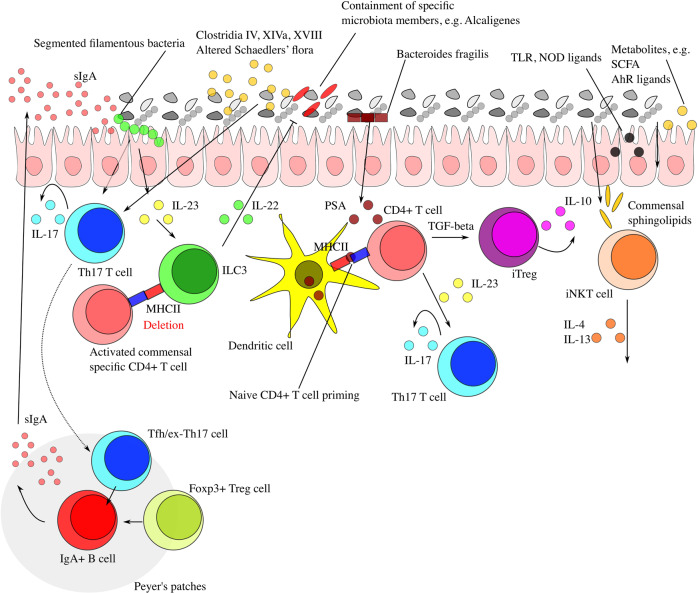
“Induction of Th17 cells by SFB is enabled by their adhesion to epithelial cells.36”
§ Interaction between microbiota and immunity in health and disease > The role of the microbiome in immune system development
What the sources say
- Supportedcites [36] Atarashi K Th17 cell induction by adhesion of microbes to intestinal epithelial cells Cell 2015 163 367 380 26411289 PMC4765954 source
The Results section 'Host-Specific Adhesion to SI ECs and Th17 Induction by SFB' (p. ~1) reports that EC-adhesive M-SFB caused robust Th17 accumulation in the SI LP while non-adherent R-SFB had no significant effect, and that colonic Th17 induction 'correlat[ed] with the EC adhesion efficacy of the SFB.' The 'Induction of Antigen-Specific Th17 Cells by EC-Adhesive SFB' section adds that Th17 TCRs in co-colonized mice were specific to EC-adhering M-SFB, indicating adhesion is required for antigen uptake and priming, and 'SI EC Activation by Adhering SFB' shows adhesion-driven SAA/ROS production conditions CD11c+ cells for Th17 differentiation. This matches the paper's title and the cited claim. (LLM, conf=0.95)
plainstates a cause- Asserted: passes — The authors put it forward as true.
- Checkable: passes — It can be checked against evidence.
- Load-bearing: unclear — It is unclear whether the paper’s conclusions depend on it.
- Based: passes — The paper gives a reason why it holds.
- Supported
158 more claims · 42 with their cited sources checked
Create a free account to see all 226 claims and to verify the 186 references still open.
- It may state two separate claims as one. 55
- Probably not a substantial claim. 7
- The quote only partly states this claim. 1
Claims other papers make about this one
Each is checked against this paper’s own text: does it say what the citing paper says it does?
The source backs part of the claim, not all of it — or backs it for a different population, condition or comparison.
In the citing paper
“Notably, certain gut microbiota and their metabolites may stimulate or inhibit the differentiation of naive CD4+ T cells into TH17 cells.”
From Microbiota–gut–brain axis and its therapeutic applications in neurodegenerative diseases (2024) · cites this paper as [696]
Experimental — accuracy not yet measuredThe source backs part of the claim, not all of it — or backs it for a different population, condition or comparison.
In the citing paper
“Deciphering the underlying mechanisms reveals that the gut microbiota reprogram the immunity of the tumor microenvironment (TME) by engaging innate and/or adaptive immune cells.”
From Gut microbiota influence immunotherapy responses: mechanisms and therapeutic strategies (2022) · doi:10.1186/s13045-022-01273-9 · cites this paper as [2]
Experimental — accuracy not yet measuredThe source backs part of the claim, not all of it — or backs it for a different population, condition or comparison.
In the citing paper
“Crosstalk between the GM and CNS is also essential for normal development and homeostatic functioning of the immune system, both innate and adaptive (256).”
From Signalling cognition: The gut microbiota and hypothalamic-pituitary-adrenal axis (2023) · cites this paper as [256]
Experimental — accuracy not yet measuredThe cited source says what the claim attributes to it.
In the citing paper
“The GM is therefore closely linked to the immune system, and they interact in several ways [reviewed recently (256, 257)].”
From Signalling cognition: The gut microbiota and hypothalamic-pituitary-adrenal axis (2023) · cites this paper as [256]
In the citing paper
“The gut microbiome participates in extensive bidirectional communication with the immune system.622,696”
From Microbiota–gut–brain axis and its therapeutic applications in neurodegenerative diseases (2024) · cites this paper as [696]
1 more claim about this paper
Create a free account to see every claim other papers make about this one.
Citations
Cites
Items 201–271 of 271
Yang, D., Chen, X., Wang, J., Lou, Q., Lou, Y., Li, L., Wang, H., Chen, J., Wu, M., Song, X., et al. (2019) · Immunity · doi:10.1016/j.immuni.2019.02.001 · Cited by 250
Complementarity and redundancy of IL-22-producing innate lymphoid cells
Rankin, L. C., Girard-Madoux, M. J. H., Seillet, C., Mielke, L. A., Kerdiles, Y., Fenis, A., Wieduwild, E., Putoczki, T., Mondot, S., Lantz, O., et al. (2016) · Nature Immunology · doi:10.1038/ni.3332 · Cited by 249 · cited 1×
“NCR ILC3 cells were demonstrated to be essential for maintaining cecal homeostasis in mice during Citrobacter rodentium infection.(97) A commensal linked with risk for allergic disease in children, Ruminococcus gnavus, induces infiltration of the colon and lung parenchyma by eosinophils and mast cells in mice via a ca…”
BackgroundAnti-commensal IgG Drives Intestinal Inflammation and Type 17 Immunity in Ulcerative Colitis
Castro-Dopico, T., Dennison, T. W., Ferdinand, J. R., Mathews, R. J., Fleming, A., Clift, D., Stewart, B. J., Jing, C., Strongili, K., Labzin, L. I., et al. (2019) · Immunity · doi:10.1016/j.immuni.2019.02.006 · Cited by 248 · cited 2×
“In patients with ulcerative colitis, a surplus of anti-commensal IgG engages gut-resident FcγR-expressing macrophages, inducing NLRP3- and reactive oxygen species-dependent production of the pro-inflammatory cytokine IL-1β.(76) Upon intestinal injury, certain members of the microbiota such as Proteus mirabilis stimula…”
BackgroundFagundes, C. T., Amaral, F. A., Vieira, A. T., Soares, A. C., Pinho, V., Nicoli, J. R., Vieira, L. Q., Teixeira, M. M., & Souza, D. G. (2012) · The Journal of Immunology · doi:10.4049/jimmunol.1101682 · Cited by 244 · cited 1×
“Accordingly, GF mice show an impaired pulmonary pathogen clearance.(218) Microbiome-derived SCFAs promote bone marrow hematopoiesis, and the primed myeloid cells subsequently migrate to the lung, shaping the lung’s immunological landscape and conferring protection against airway inflammation.”
BackgroundChua, H.-H., Chou, H.-C., Tung, Y.-L., Chiang, B.-L., Liao, C.-C., Liu, H.-H., & Ni, Y.-H. (2018) · Gastroenterology · doi:10.1053/j.gastro.2017.09.006 · Cited by 229 · cited 1×
“A commensal linked with risk for allergic disease in children, Ruminococcus gnavus, induces infiltration of the colon and lung parenchyma by eosinophils and mast cells in mice via a cascade implicating type 2 ILCs, hinting at a crucial role of ILCs in immune tolerance.(98)”
BackgroundTruax, A. D., Chen, L., Tam, J. W., Cheng, N., Guo, H., Koblansky, A. A., Chou, W.-C., Wilson, J. E., Brickey, W. J., Petrucelli, A., et al. (2018) · Cell Host & Microbe · doi:10.1016/j.chom.2018.08.009 · Cited by 228 · cited 1×
“Recently, the innate immune sensor NLRP12 was shown to decrease high fat diet-induced obesity in mice by preserving SCFA-producing members of the Lachnospiraceae family.(184) One of the most perilous common sequelae of cardiometabolic disease is atherosclerosis and its complications.”
BackgroundMartínez-López, M., Iborra, S., Conde-Garrosa, R., Mastrangelo, A., Danne, C., Mann, E. R., Reid, D. M., Gaboriau-Routhiau, V., Chaparro, M., Lorenzo, M. P., et al. (2019) · Immunity · doi:10.1016/j.immuni.2018.12.020 · Cited by 228 · cited 1×
“Recently, a Syk kinase-coupled signaling pathway in DCs was described to be critical for microbiotainduced production of IL-17 and IL-22 by CD4 T cells.(122) Moreover, a noncanonical NF-κB-inducing kinase (NIK) was recently reported to be a crucial mediator of mucosal DC function.”
BackgroundRodriguez-Palacios, A., Harding, A., Menghini, P., Himmelman, C., Retuerto, M., Nickerson, K. P., Lam, M., Croniger, C. M., McLean, M. H., Durum, S. K., et al. (2018) · Inflammatory Bowel Diseases · doi:10.1093/ibd/izy060 · Cited by 225
Torres, J., Hu, J., Seki, A., Eisele, C., Nair, N., Huang, R., Tarassishin, L., Jharap, B., Cote-Daigneault, J., Mao, Q., et al. (2020) · Gut · doi:10.1136/gutjnl-2018-317855 · Cited by 218
To respond or not to respond — a personal perspective of intestinal tolerance
Mowat, A. M. (2018) · Nature Reviews Immunology · doi:10.1038/s41577-018-0002-x · Cited by 206 · cited 1×
“A remarkable feature of the intestinal immune system is its ability to establish immune tolerance towards an enormous and constantly changing wealth of harmless microorganisms while concomitantly preserving immune responses against pathogenic infection or commensal intrusion into the sterile body milieu.(41) In a heal…”
BackgroundNeonatal selection by Toll-like receptor 5 influences long-term gut microbiota composition
Fulde, M., Sommer, F., Chassaing, B., van Vorst, K., Dupont, A., Hensel, M., Basic, M., Klopfleisch, R., Rosenstiel, P., Bleich, A., et al. (2018) · Nature · doi:10.1038/s41586-018-0395-5 · Cited by 206
de Aquino, S. G., Abdollahi-Roodsaz, S., Koenders, M. I., van de Loo, F. A. J., Pruijn, G. J. M., Marijnissen, R. J., Walgreen, B., Helsen, M. M., van den Bersselaar, L. A., de Molon, R. S., et al. (2014) · The Journal of Immunology · doi:10.4049/jimmunol.1301970 · Cited by 203
Kim, M., Galan, C., Hill, A. A., Wu, W.-J., Fehlner-Peach, H., Song, H. W., Schady, D., Bettini, M. L., Simpson, K. W., Longman, R. S., et al. (2018) · Immunity · doi:10.1016/j.immuni.2018.05.009 · Cited by 202
Larsen, J. M., Musavian, H. S., Butt, T. M., Ingvorsen, C., Thysen, A. H., & Brix, S. (2015) · Immunology · doi:10.1111/imm.12376 · Cited by 200
He, B., Hoang, T. K., Wang, T., Ferris, M., Taylor, C. M., Tian, X., Luo, M., Tran, D. Q., Zhou, J., Tatevian, N., et al. (2017) · Journal of Experimental Medicine · doi:10.1084/jem.20160961 · Cited by 196
A Potential Link between Environmental Triggers and Autoimmunity
Vojdani, A. (2014) · Autoimmune Diseases · doi:10.1155/2014/437231 · Cited by 195
Ahuja, M., Schwartz, D. M., Tandon, M., Son, A., Zeng, M., Swaim, W., Eckhaus, M., Hoffman, V., Cui, Y., Xiao, B., et al. (2017) · Cell Metabolism · doi:10.1016/j.cmet.2017.02.007 · Cited by 195 · cited 1×
“Adding to the complexity of intestinal AMPs, antimicrobial secretion from pancreatic acini seems to be critical for maintenance of intestinal homeostasis, as mice featuring reduced secretion of pancreas-derived cathelicidin-related AMP secondary to lack of the potassium channel Orai1 demonstrate a dramatically increas…”
BackgroundDiverse developmental pathways of intestinal intraepithelial lymphocytes
McDonald, B. D., Jabri, B., & Bendelac, A. (2018) · Nature Reviews Immunology · doi:10.1038/s41577-018-0013-7 · Cited by 190 · cited 1×
“ILCs represent a rapidly growing new research area reviewed more comprehensively elsewhere.(92,93) The phenotypic diversity and functional plasticity of the host’s intestinal ILCs are shaped by integrating signals from the microbiome.”
BackgroundA specific gene-microbe interaction drives the development of Crohn’s disease–like colitis in mice
Caruso, R., Mathes, T., Martens, E. C., Kamada, N., Nusrat, A., Inohara, N., & Núñez, G. (2019) · Science Immunology · doi:10.1126/sciimmunol.aaw4341 · Cited by 185 · cited 2×
“More strikingly, one single pathobiont, Mucispirillum schaedleri, was demonstrated to be sufficient to trigger a Th1 cell-driven intestinal inflammation in mice deficient in both NOD2 and CYBB.(165) Similarly, ectopic colonization of oral Klebsiella spp.”
BackgroundComplement modulates the cutaneous microbiome and inflammatory milieu
Chehoud, C., Rafail, S., Tyldsley, A. S., Seykora, J. T., Lambris, J. D., & Grice, E. A. (2013) · Proceedings of the National Academy of Sciences · doi:10.1073/pnas.1307855110 · Cited by 184
Microbiota Promotes Chronic Pulmonary Inflammation by Enhancing IL-17A and Autoantibodies
Yadava, K., Pattaroni, C., Sichelstiel, A. K., Trompette, A., Gollwitzer, E. S., Salami, O., von Garnier, C., Nicod, L. P., & Marsland, B. J. (2016) · American Journal of Respiratory and Critical Care Medicine · doi:10.1164/rccm.201504-0779oc · Cited by 184
Early-Life Formation of the Microbial and Immunological Environment of the Human Airways
Pattaroni, C., Watzenboeck, M. L., Schneidegger, S., Kieser, S., Wong, N. C., Bernasconi, E., Pernot, J., Mercier, L., Knapp, S., Nicod, L. P., et al. (2018) · Cell Host & Microbe · doi:10.1016/j.chom.2018.10.019 · Cited by 183
Commensal bacteria contribute to insulin resistance in aging by activating innate B1a cells
Bodogai, M., O’Connell, J., Kim, K., Kim, Y., Moritoh, K., Chen, C., Gusev, F., Vaughan, K., Shulzhenko, N., Mattison, J. A., et al. (2018) · Science Translational Medicine · doi:10.1126/scitranslmed.aat4271 · Cited by 182 · cited 1×
“These in turn activate innate pancreatic B1a cells, resulting in increased insulin resistance.(182) Furthermore, the crosstalk between the microbiome and immunity plays a crucial role in obesity.”
BackgroundProietti, M., Cornacchione, V., Rezzonico Jost, T., Romagnani, A., Faliti, C. E., Perruzza, L., Rigoni, R., Radaelli, E., Caprioli, F., Preziuso, S., et al. (2014) · Immunity · doi:10.1016/j.immuni.2014.10.010 · Cited by 181 · cited 1×
“Tfh cells are implicated in maintenance of microbiota homeostasis as highlighted by studies showing that impairment of Tfh cells resulting from lack of expression of co-receptor programmed cell death 1 (PD-1) or ATP-gated ionotropic P2RX7 receptor can alter gut microbiota composition.(117,118) The relationship between…”
BackgroundHost–microbiota interactions in rheumatoid arthritis
Maeda, Y., & Takeda, K. (2019) · Experimental & Molecular Medicine · doi:10.1038/s12276-019-0283-6 · Cited by 180
ATG16L1 orchestrates interleukin-22 signaling in the intestinal epithelium via cGAS–STING
Aden, K., Tran, F., Ito, G., Sheibani-Tezerji, R., Lipinski, S., Kuiper, J. W., Tschurtschenthaler, M., Saveljeva, S., Bhattacharyya, J., Häsler, R., et al. (2018) · Journal of Experimental Medicine · doi:10.1084/jem.20171029 · Cited by 167
Sanford, J. A., Zhang, L.-J., Williams, M. R., Gangoiti, J. A., Huang, C.-M., & Gallo, R. L. (2016) · Science Immunology · doi:10.1126/sciimmunol.aah4609 · Cited by 166
Wang, S., Charbonnier, L.-M., Noval Rivas, M., Georgiev, P., Li, N., Gerber, G., Bry, L., & Chatila, T. A. (2015) · Immunity · doi:10.1016/j.immuni.2015.06.014 · Cited by 161
Ratsimandresy, R. A., Indramohan, M., Dorfleutner, A., & Stehlik, C. (2017) · Cellular & Molecular Immunology · doi:10.1038/cmi.2016.35 · Cited by 161 · cited 1×
“The AIM2 inflammasome was described to regulate intestinal homeostasis through the IL-18/IL-22/STAT3 pathway.(79) Mammalian peptidoglycan recognition proteins (PGRPs) protect the host from colitis by promoting balanced microbiota configuration and by preventing production of IFNγ by NK cells in response to injury.”
BackgroundMicrobiota-targeted maternal antibodies protect neonates from enteric infection
Zheng, W., Zhao, W., Wu, M., Song, X., Caro, F., Sun, X., Gazzaniga, F., Stefanetti, G., Oh, S., Mekalanos, J. J., et al. (2020) · Nature · doi:10.1038/s41586-019-1898-4 · Cited by 158 · cited 1×
“Interestingly, a recent work showed that the commensal microbiota of pregnant mice drives antibody-mediated protective immunity through breastfeeding.(29) The study of mechanistic causal relationships between commensal microbiota and host immunity is strongly informed by the use of germ-free (GF) animal models.”
BackgroundCeliac Disease and the Microbiome
Valitutti, F., Cucchiara, S., & Fasano, A. (2019) · Nutrients · doi:10.3390/nu11102403 · Cited by 157
Identification of subepithelial mesenchymal cells that induce IgA and diversify gut microbiota
Nagashima, K., Sawa, S., Nitta, T., Tsutsumi, M., Okamura, T., Penninger, J. M., Nakashima, T., & Takayanagi, H. (2017) · Nature Immunology · doi:10.1038/ni.3732 · Cited by 154
Alterations of the bile microbiome in primary sclerosing cholangitis
Liwinski, T., Zenouzi, R., John, C., Ehlken, H., Rühlemann, M. C., Bang, C., Groth, S., Lieb, W., Kantowski, M., Andersen, N., et al. (2020) · Gut · doi:10.1136/gutjnl-2019-318416 · Cited by 149 · cited 2×
“Interestingly, a recent study showed alterations of the bile microbiota in PSC patients, characterized by reduced biodiversity, higher abundance of the pathobiont Enterococcus faecalis, and increased levels of the noxious secondary bile acid taurolithocholic acid.(234) However, it remains unclear whether these alterat…”
BackgroundSelf-citationLee, Y. K., Mehrabian, P., Boyajian, S., Wu, W.-L., Selicha, J., Vonderfecht, S. L., & Mazmanian, S. K. (2018) · mSphere · doi:10.1128/msphere.00587-18 · Cited by 146
Deep microbial analysis of multiple placentas shows no evidence for a placental microbiome
Kuperman, A., Zimmerman, A., Hamadia, S., Ziv, O., Gurevich, V, Fichtman, B., Gavert, N., Straussman, R., Rechnitzer, H., Barzilay, M., et al. (2020) · BJOG: An International Journal of Obstetrics & Gynaecology · doi:10.1111/1471-0528.15896 · Cited by 143 · cited 1×
“Notably, the notion of the existence of a placental microbiome and its link to reproductive health was recently challenged by a thorough comparison of results using different kits, blank controls and complementary approaches of microbial detection not exclusively relying on sequencing.(252,253) In order to avoid falla…”
Guo, X., Liang, Y., Zhang, Y., Lasorella, A., Kee, B. L., & Fu, Y.-X. (2015) · Immunity · doi:10.1016/j.immuni.2015.03.012 · Cited by 138 · cited 2×
“Type 3 ILCs mediate immune surveillance of microbiota configuration to facilitate early colonization resistance through a transcriptional regulator ID2-dependent regulation of IL-22.(96) NCR ILC3 cells were demonstrated to be essential for maintaining cecal homeostasis in mice during Citrobacter rodentium infection.”
BackgroundSaha, S., Jing, X., Park, S. Y., Wang, S., Li, X., Gupta, D., & Dziarski, R. (2010) · Cell Host & Microbe · doi:10.1016/j.chom.2010.07.005 · Cited by 137
KatharoSeq Enables High-Throughput Microbiome Analysis from Low-Biomass Samples
Minich, J. J., Zhu, Q., Janssen, S., Hendrickson, R., Amir, A., Vetter, R., Hyde, J., Doty, M. M., Stillwell, K., Benardini, J., et al. (2018) · mSystems · doi:10.1128/msystems.00218-17 · Cited by 137
Influence of antibiotic use in early childhood on asthma and allergic diseases at age 5
Yamamoto-Hanada, K., Yang, L., Narita, M., Saito, H., & Ohya, Y. (2017) · Annals of Allergy, Asthma & Immunology · doi:10.1016/j.anai.2017.05.013 · Cited by 129
Symbionts exploit complex signaling to educate the immune system
Erturk-Hasdemir, D., Oh, S. F., Okan, N. A., Stefanetti, G., Gazzaniga, F. S., Seeberger, P. H., Plevy, S. E., & Kasper, D. L. (2019) · Proceedings of the National Academy of Sciences · doi:10.1073/pnas.1915978116 · Cited by 129 · cited 1×
“kinase 3β (GSK3β), which in turn induces cAMP response elementbinding protein (CREB)-dependent expression of antiinflammatory genes.(60) Moreover, Dectin-1 may regulate intestinal immunity by controlling Treg cell differentiation through modification of microbiota configuration.”
BackgroundCD 4+ T‐cell help amplifies innate signals for primary CD 8+ T‐cell immunity
Bedoui, S., Heath, W. R., & Mueller, S. N. (2016) · Immunological Reviews · doi:10.1111/imr.12426 · Cited by 120
Danne, C., Ryzhakov, G., Martínez-López, M., Ilott, N. E., Franchini, F., Cuskin, F., Lowe, E. C., Bullers, S. J., Arthur, J. S. C., & Powrie, F. (2017) · Cell Host & Microbe · doi:10.1016/j.chom.2017.11.002 · Cited by 120 · cited 1×
“A large microbiota-derived polysaccharide has been shown to induce an anti-inflammatory gene signature in murine intestinal macrophages.(87) Moreover, butyrate can drive monocyte-to-macrophage differentiation through histone deacetylase 3 (HDAC3) inhibition, thereby amplifying antimicrobial host defense.”
BackgroundFostering of advanced mutualism with gut microbiota by Immunoglobulin A
Sutherland, D. B., Suzuki, K., & Fagarasan, S. (2016) · Immunological Reviews · doi:10.1111/imr.12384 · Cited by 115
Human IgA binds a diverse array of commensal bacteria
Sterlin, D., Fadlallah, J., Adams, O., Fieschi, C., Parizot, C., Dorgham, K., Rajkumar, A., Autaa, G., El-Kafsi, H., Charuel, J.-L., et al. (2020) · Journal of Experimental Medicine · doi:10.1084/jem.20181635 · Cited by 115
Ehmann, D., Wendler, J., Koeninger, L., Larsen, I. S., Klag, T., Berger, J., Marette, A., Schaller, M., Stange, E. F., Malek, N. P., et al. (2019) · Proceedings of the National Academy of Sciences · doi:10.1073/pnas.1817376116 · Cited by 112 · cited 1×
“Intestinal AMPs exhibit manifold interactions with the microbiota and are an essential component in shaping its configuration.(49) Adding to the complexity of intestinal AMPs, antimicrobial secretion from pancreatic acini seems to be critical for maintenance of intestinal homeostasis, as mice featuring reduced secreti…”
BackgroundCaballero-Flores, G., Sakamoto, K., Zeng, M. Y., Wang, Y., Hakim, J., Matus-Acuña, V., Inohara, N., & Núñez, G. (2019) · Cell Host & Microbe · doi:10.1016/j.chom.2018.12.015 · Cited by 111
A Methylaspartate Cycle in Haloarchaea
Khomyakova, M., Bükmez, Ö., Thomas, L. K., Erb, T. J., & Berg, I. A. (2011) · Science · doi:10.1126/science.1196544 · Cited by 110
Stehlikova, Z., Kostovcik, M., Kostovcikova, K., Kverka, M., Juzlova, K., Rob, F., Hercogova, J., Bohac, P., Pinto, Y., Uzan, A., et al. (2019) · Frontiers in Microbiology · doi:10.3389/fmicb.2019.00438 · Cited by 105
Cheng, L., Jin, H., Qiang, Y., Wu, S., Yan, C., Han, M., Xiao, T., Yan, N., An, H., Zhou, X., et al. (2016) · International Immunopharmacology · doi:10.1016/j.intimp.2016.08.018 · Cited by 98
Rogier, R., Ederveen, T. H. A., Boekhorst, J., Wopereis, H., Scher, J. U., Manasson, J., Frambach, S. J. C. M., Knol, J., Garssen, J., van der Kraan, P. M., et al. (2017) · Microbiome · doi:10.1186/s40168-017-0278-2 · Cited by 98 · cited 1×
“Dysbiotic microbiota from IL1rn mice elicits a IL17 response by intestinal lymphocytes.(175) Moreover, genetically susceptible mice colonized with dysbiotic microbiota from RA patients show an enhanced Th17 type response.”
BackgroundTight Mucosal Compartmentation of the Murine Immune Response to Antigens of the Enteric Microbiota
Konrad, A., Cong, Y., Duck, W., Borlaza, R., & Elson, C. O. (2006) · Gastroenterology · doi:10.1053/j.gastro.2006.02.055 · Cited by 94 · cited 1×
“In a healthy state, the host’s immune response to the intestinal microbiota is strictly compartmentalized to the mucosal surface.(42) A single layer of epithelium separates the intestinal lumen from underlying tissues.”
BackgroundCorbitt, N., Kimura, S., Isse, K., Specht, S., Chedwick, L., Rosborough, B. R., Lunz, J. G., Murase, N., Yokota, S., & Demetris, A. J. (2013) · The American Journal of Pathology · doi:10.1016/j.ajpath.2012.09.010 · Cited by 87
Shaping of Intestinal Microbiota in Nlrp6- and Rag2-Deficient Mice Depends on Community Structure
Gálvez, E. J. C., Iljazovic, A., Gronow, A., Flavell, R., & Strowig, T. (2017) · Cell Reports · doi:10.1016/j.celrep.2017.12.027 · Cited by 81
Re‐assessing microbiomes in the low‐biomass reproductive niche
O’Callaghan, J. L., Turner, R., Nitert, M. D., Barrett, H. L., Clifton, V. L., & Pelzer, E. (2019) · BJOG An International Journal of Obstetrics & Gynaecology · doi:10.1111/1471-0528.15974 · Cited by 77
Bishehsari, F., Engen, P. A., Voigt, R. M., Swanson, G., Shaikh, M., Wilber, S., Naqib, A., Green, S. J., Shetuni, B., Forsyth, C. B., et al. (2020) · Cellular and Molecular Gastroenterology and Hepatology · doi:10.1016/j.jcmgh.2019.10.011 · Cited by 76 · cited 1×
“In contrast, mistimed dietary intake accelerates alcohol-associated colonic carcinogenesis by reducing the number of butyrate- and SCFA-producing bacteria, which causes mucosal Th17/regulatory T cell imbalance.(146) Review Article”
BackgroundSato, H., Zhang, L. S., Martinez, K., Chang, E. B., Yang, Q., Wang, F., Howles, P. N., Hokari, R., Miura, S., & Tso, P. (2016) · Gastroenterology · doi:10.1053/j.gastro.2016.07.009 · Cited by 75
Chen, J., Wei, Y., He, J., Cui, G., Zhu, Y., Lu, C., Ding, Y., Xue, R., Bai, L., Uede, T., et al. (2014) · Scientific Reports · doi:10.1038/srep07259 · Cited by 71 · cited 1×
“Intestinal pathogens may exacerbate immunological hepatic injury by activating DCs and NKT cells in the liver.(230) Similarly, glycolipid antigen-containing probiotics were reported to stimulate hepatic NKT cells in a strain- and dosedependent manner.”
BackgroundMicrobial Immuno-Communication in Neurodegenerative Diseases
Main, B. S., & Minter, M. R. (2017) · Frontiers in Neuroscience · doi:10.3389/fnins.2017.00151 · Cited by 68
RNA virus receptor Rig-I monitors gut microbiota and inhibits colitis-associated colorectal cancer
Zhu, H., Xu, W., Hu, Z., Zhang, H., Shen, Y., Lu, S., Wei, C., & Wang, Z. (2017) · Journal of Experimental & Clinical Cancer Research · doi:10.1186/s13046-016-0471-3 · Cited by 64
A Specific Mutation in Muc2 Determines Early Dysbiosis in Colitis-Prone Winnie Mice
Liso, M., De Santis, S., Verna, G., Dicarlo, M., Calasso, M., Santino, A., Gigante, I., Eri, R., Raveenthiraraj, S., Sobolewski, A., et al. (2020) · Inflammatory Bowel Diseases · doi:10.1093/ibd/izz279 · Cited by 57
Gern, J. E. (2012) · Pediatrics · doi:10.1542/peds.2012-2183bbbb · Cited by 56
Separating the signal from the noise in metagenomic cell-free DNA sequencing
Burnham, P., Gomez‐Lopez, N., Heyang, M., Cheng, A. P., Lenz, J. S., Dadhania, D. M., Lee, J. R., Suthanthiran, M., Romero, R. J., & Vlaminck, I. D. (2020) · Microbiome · doi:10.1186/s40168-020-0793-4 · Cited by 56
Neutrophilic Granulocytes Modulate Invariant NKT Cell Function in Mice and Humans
Wingender, G., Hiss, M., Engel, I., Peukert, K., Ley, K., Haller, H., Kronenberg, M., & von Vietinghoff, S. (2012) · The Journal of Immunology · doi:10.4049/jimmunol.1101273 · Cited by 52
NIK signaling axis regulates dendritic cell function in intestinal immunity and homeostasis
Jie, Z., Yang, J.-Y., Gu, M., Wang, H., Xie, X., Li, Y., Liu, T., Zhu, L., Shi, J., Zhang, L., et al. (2018) · Nature Immunology · doi:10.1038/s41590-018-0206-z · Cited by 50 · cited 1×
“In the same study, DC-specific NIK altered enteric IgA secretion and microbiota homeostasis, rendering mice vulnerable to enteric pathogens.(123) A relatively unexplored set of immune cells with crucial relationship to the commensal microbiota is represented by invariant natural killer T cells (iNKTs).”
BackgroundWang, Q., & Xu, R. (2019) · BMC Genomics · doi:10.1186/s12864-019-5510-y · Cited by 46
Dichotomous regulation of group 3 innate lymphoid cells by nongastric Helicobacter species
Bostick, J. W., Wang, Y., Shen, Z., Ge, Y., Brown, J., Chen, Z.-M. E., Mohamadzadeh, M., Fox, J. G., & Zhou, L. (2019) · Proceedings of the National Academy of Sciences · doi:10.1073/pnas.1908128116 · Cited by 44 · cited 1×
“These species activated ILCs but negatively regulated the proliferation of group 3 RORγt ILCs that are crucial for host immunity and inflammation.(95) Type 3 ILCs mediate immune surveillance of microbiota configuration to facilitate early colonization resistance through a transcriptional regulator ID2-dependent regula…”
BackgroundProbiotic antigens stimulate hepatic natural killer T cells
Liang, S., Webb, T., & Li, Z. (2014) · Immunology · doi:10.1111/imm.12180 · Cited by 39 · cited 1×
“Similarly, glycolipid antigen-containing probiotics were reported to stimulate hepatic NKT cells in a strain- and dosedependent manner.(231) Hepatic stellate cells, the main fibrosisinducing cell line in the liver, can also be directly stimulated by bacterial lipopolysaccharide (LPS), mainly through induction of TLR4…”
BackgroundEndogenous Antimicrobial Peptide Expression in Response to Bacterial Epidermal Colonization
Brandwein, M., Bentwich, Z., & Steinberg, D. (2017) · Frontiers in Immunology · doi:10.3389/fimmu.2017.01637 · Cited by 39
Jing, X., Zulfiqar, F., Park, S. Y., Núñez, G., Dziarski, R., & Gupta, D. (2014) · The Journal of Immunology · doi:10.4049/jimmunol.1301548 · Cited by 37 · cited 2×
“The AIM2 inflammasome was described to regulate intestinal homeostasis through the IL-18/IL-22/STAT3 pathway.79 Mammalian peptidoglycan recognition proteins (PGRPs) protect the host from colitis by promoting balanced microbiota configuration and by preventing production of IFNγ by NK cells in response to injury.80 The…”
BackgroundCutaneous Immune Cell-Microbiota Interactions Are Controlled by Epidermal JunB/AP-1
Uluçkan, Ö., Jiménez, M., Roediger, B., Schnabl, J., Díez-Córdova, L. T., Troulé, K., Weninger, W., & Wagner, E. F. (2019) · Cell Reports · doi:10.1016/j.celrep.2019.09.042 · Cited by 21 · cited 1×
“aureus colonization.(216) However, many open questions remain to be explored, including the molecular basis of cutaneous microbiota-immune interactions and mechanisms by which the cutaneous immune system discriminates between skin commensals and pathogens.”
BackgroundSeparating the signal from the noise in metagenomic cell-free DNA sequencingPreprint
Burnham, P., Gomez‐Lopez, N., Heyang, M., et al. (2019) · bioRxiv (Cold Spring Harbor Laboratory) · doi:10.1101/734756 · Cited by 4
Cited by
The gut microbiota–brain axis in behaviour and brain disorders
Morais, L. H., Schreiber, H. L., & Mazmanian, S. K. (2021) · Nature Reviews Microbiology · doi:10.1038/s41579-020-00460-0 · Cited by 2,149
Microbiota–gut–brain axis and its therapeutic applications in neurodegenerative diseases
Loh, J. S., Mak, W. Q., Tan, L. K. S., Ng, C. X., Chan, H. H., Yeow, S. H., Foo, J. B., Ong, Y. S., How, C. W., & Khaw, K. Y. (2024) · Signal Transduction and Targeted Therapy · doi:10.1038/s41392-024-01743-1 · Cited by 1,193
Probiotics Mechanism of Action on Immune Cells and Beneficial Effects on Human Health
Mazziotta, C., Tognon, M., Martini, F., Torreggiani, E., & Rotondo, J. C. (2023) · Cells · doi:10.3390/cells12010184 · Cited by 889
Gasaly, N., de Vos, P., & Hermoso, M. A. (2021) · Frontiers in Immunology · doi:10.3389/fimmu.2021.658354 · Cited by 578
Mass spectrometry-based metabolomics in microbiome investigations
Bauermeister, A., Mannochio-Russo, H., Costa-Lotufo, L. V., Jarmusch, A. K., & Dorrestein, P. C. (2022) · Nature Reviews Microbiology · doi:10.1038/s41579-021-00621-9 · Cited by 525
Metadata
- Authors
- Zheng, D., Liwinski, T., & Elinav, E.
- Affiliations
- Sun Yat-sen University (CN)
- University Medical Center Hamburg-Eppendorf (DE)
- German Cancer Research Center (DE)
- Corresponding author
- Elinav, Eran
- Venue
- Cell Research
- Published
- 2020-05-20
- Volume
- 30
- Issue
- 6
- Pages
- 492-506
- ISSN
- 1001-0602 (ISSN-L)
- 1748-7838
- PMC
- PMC7264227
- OpenAlex
- W3027658010
- Cited by
- 3,947
- References
- 271
- Citations by year
- 2026: 594 · 2025: 817 · 2024: 858 · 2023: 630 · 2022: 585 · 2021: 397 · 2020: 61
- FWCI
- 39.90
- Type
- journal article
- Language
- en
- Open access
- hybrid
- doi.org
- Licence
- cc-by
- creativecommons.org/licenses/by/4.0 (tdm)
- creativecommons.org/licenses/by/4.0 (vor)
- Locations
- Cell Research (publishedVersion, cc-by)
- PubMed Central (publishedVersion, cc-by)
- PubMed (publishedVersion)
- Funders
- Howard Hughes Medical Institute
- Bill and Melinda Gates Foundation
- Canadian Institute for Advanced Research
- Deutsche Forschungsgemeinschaft (420943353)
- Sun Yat-sen University
- Topics
- Life Sciences › Biochemistry, Genetics and Molecular Biology › Molecular Biology › Gut microbiota and health
- Life Sciences › Immunology and Microbiology › Immunology › Immune Response and Inflammation
- Life Sciences › Immunology and Microbiology › Immunology › T-cell and B-cell Immunology
- Keywords
- microbiota-immune interactions, gut microbiota, innate immunity, adaptive immunity, immune system development, host-microbe symbiosis, immune-mediated diseases, intestinal immunity, microbiome-targeted therapy, immune homeostasis
- MeSH terms
- Gastrointestinal Microbiome, Animals, Homeostasis, Humans, Immunity, Innate, Intestinal Mucosa, Symbiosis
About these checks
Registry, retraction, Cites and statistics results are computed, not judged, with one exception: a printed reference that no index lists is read once by a model before it counts as a citation error. Claims are extracted by a model and kept only when their quote appears verbatim in the text; each cited source is then checked, with a model’s help, for whether it says what the claim relies on. Those verdicts can be wrong — read the claim’s quote and the cited source before relying on one.
The claim verdicts this report counts are experimental: their accuracy is not yet measured.
A language model drew the claims from the paper on 2026-10-07, under version 3 of the claim definition (model deepseek-v4.1-flash, prompt extract-v3).
A second model labelled each claim on 2026-10-07 (model jev-1.13-20260917, definition revision gold-guideline-v0.2).
Cited sources are checked with a language model’s help (gpt-6-sol and qwen3.8-omni-flash).
Statistics and arithmetic are recomputed, not judged.
Confidence bands are shown only for fields calibrated on our annotated test set. None is calibrated yet, so no band is shown.
What counts as a claim ›How we measure confidence ›How we check this ›
Are you an author, or do you see a problem with this page? Request a review
Data sources
Bibliographic data: Semantic Scholar, OpenAlex, Crossref.
Contains information from the Semantic Scholar Academic Graph Datasets, made available under the ODC Attribution License (ODC-BY 1.0).
Semantic Scholar’s data is described in: Kinney, R., et al. (2023). The Semantic Scholar Open Data Platform. arXiv:2301.10140.
