

Interaction between microbiota and immunity in health and disease
Open accessThe DOI matches its Crossref record; 271 of the 271 references it cites were found in a registry or an index; 72 of the 258 sources its claims cite were checked for support.
Abstract
The interplay between the commensal microbiota and the mammalian immune system development and function includes multifold interactions in homeostasis and disease. The microbiome plays critical roles in the training and development of major components of the host’s innate and adaptive immune system, while the immune system orchestrates the maintenance of key features of host-microbe symbiosis. In a genetically susceptible host, imbalances in microbiota-immunity interactions under defined environmental contexts are believed to contribute to the pathogenesis of a multitude of immune-mediated disorders. Here, we review features of microbiome-immunity crosstalk and their roles in health and disease, while providing examples of molecular mechanisms orchestrating these interactions in the intestine and extra-intestinal organs. We highlight aspects of the current knowledge, challenges and limitations in achieving causal understanding of host immune-microbiome interactions, as well as their impact on immune-mediated diseases, and discuss how these insights may translate towards future development of microbiome-targeted therapeutic interventions.
Overview
CoChat Summary
TL;DR
This review synthesizes bidirectional interactions between the commensal microbiota and host innate/adaptive immunity in homeostasis and immune-mediated disease. It highlights mechanistic examples across the intestine and extra-intestinal organs while emphasizing that causal relationships and translation to microbiome-targeted therapies remain unresolved.
Key findings
- The microbiome trains major immune components, including intraepithelial lymphocytes, IgA, Th17 cells, regulatory T cells, ILC3s, and Tfh cells; germ-free animals show profound immune defects that can be restored by colonization.
- Host immunity maintains microbiota compartmentalization through mucus, tight junctions, secretory IgA, antimicrobial peptides, PRRs, and inflammasomes; dysregulation is implicated in IBD, rheumatoid arthritis, cardiometabolic disease, cancer, and extra-intestinal organ immunity.
- Early-life colonization is critical, with microbiota composition reaching a more stable adult-like configuration at ~3 years of age; IBD genome-wide association studies have revealed more than 200 susceptibility loci, many involved in microbial sensing.
- Several grams of IgA are secreted daily in human intestines, and microbiome-immune interactions can modulate anticancer immunotherapy responses, including associations with *Bifidobacterium longum*, *Collinsella aerofaciens*, *Enterococcus faecium*, and *Akkermansia muciniphila*.
Methods
- Narrative review of published literature on microbiome-immunity crosstalk in health and disease, including animal models and human studies.
- No primary data, cohort, or systematic search/meta-analysis is reported; the paper synthesizes mechanistic examples and conceptual frameworks.
- Main analysis is conceptual and integrative, covering intestinal homeostasis, environmental perturbations, disease associations, extra-intestinal organs, and therapeutic perspectives.
Limitations
- The paper states that direct causal relationships between the microbiome and immunity before or during early disease have not been established in most medical conditions, and that whether microbiome alterations are cause or consequence remains unclear in diseases such as IBD.
- It states that laboratory mice harbor microbiota divergent from wild animals and humans, limiting translational potential and reproducibility, and that 16S rRNA sequencing is limited by genus-level, compositional resolution.
- It also states that low-biomass microbiome studies are challenged by contamination and artefacts, and that inter-individual variability is a major experimental challenge; evident from the text, this is a narrative review without systematic methods or quantitative synthesis.
Model-written summary. Check it against the paper before relying on it.
Integrity signals
Registry
Cites
Statistics
Figures
Verification
Claims the paper makes
58 Valid · 3 Not valid · 152 Not checked · 13 Own results and interpretations
At least one cited source doesn’t support this claim or points to a different paper, and none confirmed it — see the verdicts below.
In the paper
“Spontaneous development of T cell-mediated autoimmune arthritis in IL1rn–/– mice requires the activation of TLR2 and TLR4 by microbial ligands.174”
§ Interaction between microbiota and immunity in health and disease > Dysregulation of microbiome-immunity interaction in disease > Rheumatoid arthritis
What the sources say
- Disputedcites [174] Abdollahi-Roodsaz S Stimulation of TLR2 and TLR4 differentially skews the balance of T cells in a mouse model of arthritis J. Clin. Invest. 2008 118 205 216 18060042 PMC2104479 sourceExperimental — accuracy not yet measured
The paper supports a role for microbial flora: germ-free IL1rn−/− mice did not develop arthritis (Introduction; Figure 1). But it does not find that activation of both TLR2 and TLR4 is required. Tlr2-deficient mice developed more severe arthritis, and Tlr4-deficient mice had comparable disease incidence, which the paper says indicates that initiation is independent of TLR4 activation (Results, TLR-deficiency comparisons). (LLM, conf=0.90)
Checked by a reasoning model — may be wrong.
plainstates a cause- Asserted: passes — The authors put it forward as true.
- Checkable: passes — It can be checked against evidence.
- Load-bearing: passes — The paper’s conclusions depend on it.
- Based: passes — The paper gives a reason why it holds.
- Disputed
The cited sources support only part of this claim — read each source’s verdict below.
In the paper
“Most critical events in education of host immunity may take place during the first years of life, in which microbiota composition displays the highest intra- and inter-individual variability before reaching a more stable adult-like configuration at the age of ~3 years.18–20”
§ Interaction between microbiota and immunity in health and disease > The role of the microbiome in immune system development
What the sources say
- Partly supportedcites [18] Backhed F Dynamics and stabilization of the human gut microbiome during the first year of life Cell Host Microbe 2015 17 690 703 25974306 sourceExperimental — accuracy not yet measured
Split into 2 atoms — 0 confirmed, 1 partially supported, 0 disputed, 0 misattributed, 1 unverifiable. Expand the claim to see per-atom verdicts.
- Not checked yetcites [19] Koenig JE Succession of microbial consortia in the developing infant gut microbiome Proc. Natl. Acad. Sci. USA 2011 108 Suppl 1 4578 4585 20668239 PMC3063592 source
- Partly supportedcites [20] Yatsunenko T Human gut microbiome viewed across age and geography Nature 2012 486 222 227 22699611 PMC3376388 sourceExperimental — accuracy not yet measured
Split into 2 atoms — 1 confirmed, 1 partially supported, 0 disputed, 0 misattributed, 0 unverifiable. Expand the claim to see per-atom verdicts.
hedgedstates a possible cause- Asserted: passes — The authors put it forward as true.
- Checkable: passes — It can be checked against evidence.
- Load-bearing: passes — The paper’s conclusions depend on it.
- Based: passes — The paper gives a reason why it holds.
- Partly supported
The cited sources support only part of this claim — read each source’s verdict below.
In the paper
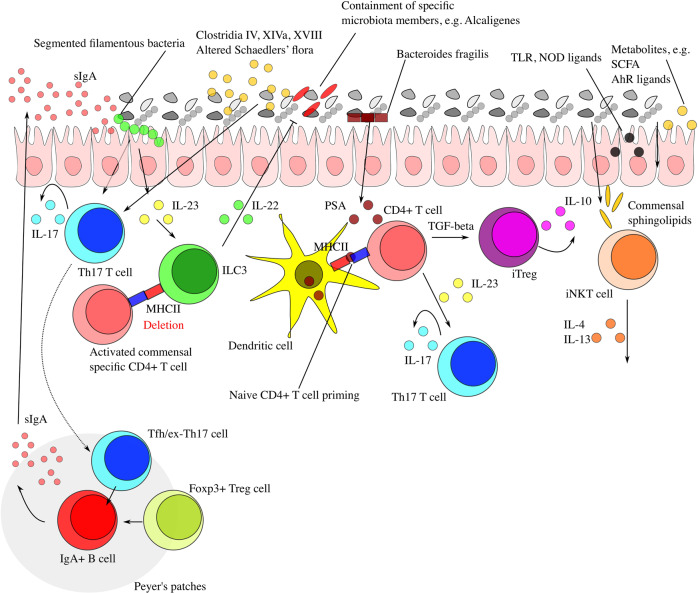
“IgA antibodies are a mainstay of protective humoral mucosal immunity and show substantial reduction in newborns and GF animals, which is rapidly restored by microbial colonization.32”
§ Interaction between microbiota and immunity in health and disease > The role of the microbiome in immune system development
What the sources say
- Partly supportedcites [32] Hapfelmeier S Reversible microbial colonization of germ-free mice reveals the dynamics of IgA immune responses Science 2010 328 1705 1709 20576892 PMC3923373 sourceExperimental — accuracy not yet measured
Our copy supports only the germ-free half of the claim: the Introduction states 'It has long been known that the IgA responses in the intestine are strongly induced by colonization of germ-free animals with commensal bacteria,' and the results describe equivalent IgA plasma-cell increases in germ-free mice 4 weeks after HA107 or ASF colonization. The 'newborns' element is nowhere addressed — searches for neonatal/newborn/weaning returned no passage on age-related IgA levels. Moreover, the 'rapidly restored' qualifier runs against the paper's own finding: the Abstract reports a SLOW (>14 days) onset of the anti-commensal IgA response in germ-free mice, with rapidity attributed instead to ongoing commensal exposure ABROGATING the response. So the speed characterization and the newborn extension are not supported by this source. (LLM, conf=0.72)
plainstates a cause- Asserted: passes — The authors put it forward as true.
- Checkable: passes — It can be checked against evidence.
- Load-bearing: unclear — It is unclear whether the paper’s conclusions depend on it.
- Based: passes — The paper gives a reason why it holds.
- Partly supported
Every source the paper cites for this claim was checked and supports it.
In the paper
“In a healthy state, the host’s immune response to the intestinal microbiota is strictly compartmentalized to the mucosal surface.42”
§ Interaction between microbiota and immunity in health and disease > Interaction between microbiota and immune system in homeostasis > Host-induced compartmentalization of intestinal microbiota
What the sources say
- Supportedcites [42] Konrad A Cong Y Duck W Borlaza R Elson CO Tight mucosal compartmentation of the murine immune response to antigens of the enteric microbiota Gastroenterology 2006 130 2050 2059 16762628 source
The Background & Aims (p. 1) and Conclusions state that 'the host immune response to enteric bacteria is tightly compartmentalized to the mucosa in normal mice, with systemic B cells and CD4+ T cells remaining naive rather than tolerant,' and the Discussion (p. 6) concludes the response 'is confined to the mucosa.' The citing sentence reproduces this faithfully, with the caveat that the paper's demonstration is in specific-pathogen-free C3H/HeJ mice in the healthy (non-colitic) state; it also notes that in colitic mice this compartmentation fails. (LLM, conf=0.90)
plain- Asserted: passes — The authors put it forward as true.
- Checkable: passes — It can be checked against evidence.
- Load-bearing: unclear — It is unclear whether the paper’s conclusions depend on it.
- Based: passes — The paper gives a reason why it holds.
- Supported
Every source the paper cites for this claim was checked and supports it.
In the paper
“Induction of Th17 cells by SFB is enabled by their adhesion to epithelial cells.36”
§ Interaction between microbiota and immunity in health and disease > The role of the microbiome in immune system development
What the sources say
- Supportedcites [36] Atarashi K Th17 cell induction by adhesion of microbes to intestinal epithelial cells Cell 2015 163 367 380 26411289 PMC4765954 source
The Results section 'Host-Specific Adhesion to SI ECs and Th17 Induction by SFB' (p. ~1) reports that EC-adhesive M-SFB caused robust Th17 accumulation in the SI LP while non-adherent R-SFB had no significant effect, and that colonic Th17 induction 'correlat[ed] with the EC adhesion efficacy of the SFB.' The 'Induction of Antigen-Specific Th17 Cells by EC-Adhesive SFB' section adds that Th17 TCRs in co-colonized mice were specific to EC-adhering M-SFB, indicating adhesion is required for antigen uptake and priming, and 'SI EC Activation by Adhering SFB' shows adhesion-driven SAA/ROS production conditions CD11c+ cells for Th17 differentiation. This matches the paper's title and the cited claim. (LLM, conf=0.95)
plainstates a cause- Asserted: passes — The authors put it forward as true.
- Checkable: passes — It can be checked against evidence.
- Load-bearing: unclear — It is unclear whether the paper’s conclusions depend on it.
- Based: passes — The paper gives a reason why it holds.
- Supported
158 more claims · 42 with their cited sources checked
Create a free account to see all 226 claims and to verify the 186 references still open.
- It may state two separate claims as one. 55
- Probably not a substantial claim. 7
- The quote only partly states this claim. 1
Claims other papers make about this one
Each is checked against this paper’s own text: does it say what the citing paper says it does?
The source backs part of the claim, not all of it — or backs it for a different population, condition or comparison.
In the citing paper
“Notably, certain gut microbiota and their metabolites may stimulate or inhibit the differentiation of naive CD4+ T cells into TH17 cells.”
From Microbiota–gut–brain axis and its therapeutic applications in neurodegenerative diseases (2024) · cites this paper as [696]
Experimental — accuracy not yet measuredThe source backs part of the claim, not all of it — or backs it for a different population, condition or comparison.
In the citing paper
“Deciphering the underlying mechanisms reveals that the gut microbiota reprogram the immunity of the tumor microenvironment (TME) by engaging innate and/or adaptive immune cells.”
From Gut microbiota influence immunotherapy responses: mechanisms and therapeutic strategies (2022) · doi:10.1186/s13045-022-01273-9 · cites this paper as [2]
Experimental — accuracy not yet measuredThe source backs part of the claim, not all of it — or backs it for a different population, condition or comparison.
In the citing paper
“Crosstalk between the GM and CNS is also essential for normal development and homeostatic functioning of the immune system, both innate and adaptive (256).”
From Signalling cognition: The gut microbiota and hypothalamic-pituitary-adrenal axis (2023) · cites this paper as [256]
Experimental — accuracy not yet measuredThe cited source says what the claim attributes to it.
In the citing paper
“The GM is therefore closely linked to the immune system, and they interact in several ways [reviewed recently (256, 257)].”
From Signalling cognition: The gut microbiota and hypothalamic-pituitary-adrenal axis (2023) · cites this paper as [256]
In the citing paper
“The gut microbiome participates in extensive bidirectional communication with the immune system.622,696”
From Microbiota–gut–brain axis and its therapeutic applications in neurodegenerative diseases (2024) · cites this paper as [696]
1 more claim about this paper
Create a free account to see every claim other papers make about this one.
Citations
Cites
Exploring the full spectrum of macrophage activation
Mosser, D. M., & Edwards, J. P. (2008) · Nature Reviews Immunology · doi:10.1038/nri2448 · Cited by 9,144 · cited 1×
“Monocytes and macrophages are crucial innate immune effector cells and have vital homeostatic roles.(86) Recent research started to shed light on the relationships between these monocytes/macrophages and the commensal microbiota.”
BackgroundJaneway, C. A., & Medzhitov, R. (2002) · Annual Review of Immunology · doi:10.1146/annurev.immunol.20.083001.084359 · Cited by 8,394 · cited 1×
“MyD88 is an adapter for multiple innate immune receptors that recognize microbial signals, and of the signaling pathways induced by the effector molecules interleukin-1 (IL-1) and IL-18 through their respective receptors.(66) Mice deficient in MyD88 display an altered microbiota composition.”
BackgroundHuman gut microbiome viewed across age and geography
Yatsunenko, T., Rey, F. E., Manary, M. J., Trehan, I., Dominguez-Bello, M. G., Contreras, M., Magris, M., Hidalgo, G., Baldassano, R. N., Anokhin, A. P., et al. (2012) · Nature · doi:10.1038/nature11053 · Cited by 7,815
Gut microbiome influences efficacy of PD-1-based immunotherapy against epithelial tumors
Routy, B., Le Chatelier, E., Derosa, L., Duong, C. P. M., Alou, M. T., Daillère, R., Fluckiger, A., Messaoudene, M., Rauber, C., Roberti, M. P., et al. (2018) · Science · doi:10.1126/science.aan3706 · Cited by 5,671
Gut flora metabolism of phosphatidylcholine promotes cardiovascular disease
Wang, Z., Klipfell, E., Bennett, B. J., Koeth, R., Levison, B. S., DuGar, B., Feldstein, A. E., Britt, E. B., Fu, X., Chung, Y.-M., et al. (2011) · Nature · doi:10.1038/nature09922 · Cited by 5,597 · cited 1×
“Interestingly, TMAO augments arthrosclerosis by upregulating the macrophage scavenger receptors CD36 and SR-A1, and by reinforcing cholesterol accumulation in macrophages and foam cell formation.(186)”
BackgroundAssociation of NOD2 leucine-rich repeat variants with susceptibility to Crohn's disease
Hugot, J.-P., Chamaillard, M., Zouali, H., Lesage, S., Cézard, J.-P., Belaiche, J., Almer, S., Tysk, C., O'Morain, C. A., Gassull, M., et al. (2001) · Nature · doi:10.1038/35079107 · Cited by 5,591 · cited 2×
“Among these, mutation in the NOD2 gene was the first to be confirmed to be strongly associated with susceptibility to CD.(157,158) NOD2 is an intracellular PRR capable of recognizing bacterial peptidoglycan-conserved motifs.”
BackgroundThe Microbial Metabolites, Short-Chain Fatty Acids, Regulate Colonic T reg Cell Homeostasis
Smith, P. M., Howitt, M. R., Panikov, N., Michaud, M., Gallini, C. A., Bohlooly-Y, M., Glickman, J. N., & Garrett, W. S. (2013) · Science · doi:10.1126/science.1241165 · Cited by 5,413
Role of the microbiota in immunity and inflammation.
Belkaid, Y., & Hand, T. W. (2014) · Cell · doi:10.1016/j.cell.2014.03.011 · Cited by 5,385
A frameshift mutation in NOD2 associated with susceptibility to Crohn's disease
Ogura, Y., Bonen, D. K., Inohara, N., Nicolae, D. L., Chen, F. F., Ramos, R., Britton, H., Moran, T., Karaliuskas, R., Duerr, R. H., et al. (2001) · Nature · doi:10.1038/35079114 · Cited by 5,030
Metabolites produced by commensal bacteria promote peripheral regulatory T-cell generation
Arpaia, N., Campbell, C., Fan, X., Dikiy, S., van der Veeken, J., deRoos, P., Liu, H., Cross, J. R., Pfeffer, K., Coffer, P. J., et al. (2013) · Nature · doi:10.1038/nature12726 · Cited by 4,838
Gut microbiome modulates response to anti-PD-1 immunotherapy in melanoma patients
Gopalakrishnan, V., Spencer, C. N., Nezi, L., Reuben, A., Andrews, M. C., Karpinets, T. V., Prieto, P. A., Vicente, D., Hoffman, K., Wei, S. C., et al. (2018) · Science · doi:10.1126/science.aan4236 · Cited by 4,812
Dominguez-Bello, M. G., Costello, E. K., Contreras, M., Magris, M., Hidalgo, G., Fierer, N., & Knight, R. (2010) · Proceedings of the National Academy of Sciences · doi:10.1073/pnas.1002601107 · Cited by 4,774 · cited 1×
“Multiple modulators impact this initial colonization, including delivery mode that impacts on the composition of the initial microbiota across multiple body habitats.(27) It is well established that in neonates maternal antibodies delivered via breastmilk offer crucial passive protection against pathogens.”
BackgroundInduction of Intestinal Th17 Cells by Segmented Filamentous Bacteria
Ivanov, I. I., Atarashi, K., Manel, N., Brodie, E. L., Shima, T., Karaoz, U., Wei, D., Goldfarb, K. C., Santee, C. A., Lynch, S. V., et al. (2009) · Cell · doi:10.1016/j.cell.2009.09.033 · Cited by 4,554
Recognition of Commensal Microflora by Toll-Like Receptors Is Required for Intestinal Homeostasis
Rakoff-Nahoum, S., Paglino, J., Eslami-Varzaneh, F., Edberg, S., & Medzhitov, R. (2004) · Cell · doi:10.1016/j.cell.2004.07.002 · Cited by 4,251 · cited 1×
“TLRs are involved in host defense against pathogens, regulate the abundance of commensal microbes and maintain tissue integrity.(51) TLR expression in the intestinal epithelium is characterized by a high diversity in terms of spatial, cell type-specific, and temporal patterns.”
BackgroundCommensal Bifidobacterium promotes antitumor immunity and facilitates anti–PD-L1 efficacy
Sivan, A., Corrales, L., Hubert, N., Williams, J. B., Aquino-Michaels, K., Earley, Z. M., Benyamin, F. W., Man Lei, Y., Jabri, B., Alegre, M.-L., et al. (2015) · Science · doi:10.1126/science.aac4255 · Cited by 3,888
Induction of Colonic Regulatory T Cells by Indigenous Clostridium Species
Atarashi, K., Tanoue, T., Shima, T., Imaoka, A., Kuwahara, T., Momose, Y., Cheng, G., Yamasaki, S., Saito, T., Ohba, Y., et al. (2011) · Science · doi:10.1126/science.1198469 · Cited by 3,752
Host microbiota constantly control maturation and function of microglia in the CNS
Erny, D., Hrabě de Angelis, A. L., Jaitin, D., Wieghofer, P., Staszewski, O., David, E., Keren-Shaul, H., Mahlakoiv, T., Jakobshagen, K., Buch, T., et al. (2015) · Nature Neuroscience · doi:10.1038/nn.4030 · Cited by 3,569 · cited 3×
“The microbiota contributes to microglia homeostasis, potentially mediated by signaling through SCFAs.(240) GF mice display marked defects in microglia structure and function and hence feature impaired CNS innate immune responses.”
BackgroundInflammasomes: mechanism of assembly, regulation and signalling
Broz, P., & Dixit, V. M. (2016) · Nature Reviews Immunology · doi:10.1038/nri.2016.58 · Cited by 3,500
Anticancer immunotherapy by CTLA-4 blockade relies on the gut microbiota
Vétizou, M., Pitt, J. M., Daillère, R., Lepage, P., Waldschmitt, N., Flament, C., Rusakiewicz, S., Routy, B., Roberti, M. P., Duong, C. P. M., et al. (2015) · Science · doi:10.1126/science.aad1329 · Cited by 3,488
Reagent and laboratory contamination can critically impact sequence-based microbiome analyses
Salter, S. J., Cox, M. J., Turek, E. M., Calus, S. T., Cookson, W. O., Moffatt, M. F., Turner, P., Parkhill, J., Loman, N. J., & Walker, A. W. (2014) · BMC Biology · doi:10.1186/s12915-014-0087-z · Cited by 3,463 · cited 1×
“Contaminating microbial DNA may originate from multiple environmental sources, such as laboratory extraction, amplification and library preparation kits.(251) Notably, the notion of the existence of a placental microbiome and its link to reproductive health was recently challenged by a thorough comparison of results u…”
BackgroundDynamics and Stabilization of the Human Gut Microbiome during the First Year of Life
Bäckhed, F., Roswall, J., Peng, Y., Feng, Q., Jia, H., Kovatcheva-Datchary, P., Li, Y., Xia, Y., Xie, H., Zhong, H., et al. (2015) · Cell Host & Microbe · doi:10.1016/j.chom.2015.04.004 · Cited by 3,315
The Treatment-Naive Microbiome in New-Onset Crohn’s Disease
Gevers, D., Kugathasan, S., Denson, L. A., Vázquez-Baeza, Y., Van Treuren, W., Ren, B., Schwager, E., Knights, D., Song, S. J., Yassour, M., et al. (2014) · Cell Host & Microbe · doi:10.1016/j.chom.2014.02.005 · Cited by 3,220
Multi-omics of the gut microbial ecosystem in inflammatory bowel diseases
Lloyd-Price, J., Arze, C., Ananthakrishnan, A. N., Schirmer, M., Avila-Pacheco, J., Poon, T. W., Andrews, E., Ajami, N. J., Bonham, K. S., Brislawn, C. J., et al. (2019) · Nature · doi:10.1038/s41586-019-1237-9 · Cited by 3,143 · cited 1×
“These include a reduced bacterial diversity and marked shifts in abundance of certain bacterial taxa, including decreased abundance of Bacteroides, Firmicutes, Clostridia, Lactobacillus, Ruminococcaceae and increased abundance of Gammaproteobacteria and Enterobacteriaceae,(149,150), coupled with altered microbiomeasso…”
BackgroundThe commensal microbiome is associated with anti-PD-1 efficacy in metastatic melanoma patients
Matson, V., Fessler, J., Bao, R., Chongsuwat, T., Zha, Y., Alegre, M.-L., Luke, J. J., & Gajewski, T. F. (2018) · Science · doi:10.1126/science.aao3290 · Cited by 3,107
Topographical and Temporal Diversity of the Human Skin Microbiome
Grice, E. A., Kong, H. H., Conlan, S., Deming, C. B., Davis, J., Young, A. C., Program, N. C. S., Bouffard, G. G., Blakesley, R. W., Murray, P. R., et al. (2009) · Science · doi:10.1126/science.1171700 · Cited by 2,953
Personalized nutrition by prediction of glycemic responses
Zeevi, D., Korem, T., Zmora, N., Israeli, D., Rothschild, D., Weinberger, A., Ben-Yacov, O., Lador, D., Avnit-Sagi, T., Lotan-Pompan, M., et al. (2015) · Cell · doi:10.1016/j.cell.2015.11.001 · Cited by 2,929 · cited 1×
“It may be intriguing to determine the efficacy of personalized diets, selective diets or manipulation of dietary timing in treating immunological disease, and to investigate how these diets influence host immune responses.(266) Additionally, the large wealth of microbiomederived metabolites found in high concentration…”
BackgroundSelf-citationAn Immunomodulatory Molecule of Symbiotic Bacteria Directs Maturation of the Host Immune System
Mazmanian, S. K., Liu, C. H., Tzianabos, A. O., & Kasper, D. L. (2005) · Cell · doi:10.1016/j.cell.2005.05.007 · Cited by 2,910 · cited 1×
“A bacterial polysaccharide derived from the ubiquitous commensal Bacteroides fragilis directs the maturation of the developing immune system in mice, including correction of systemic T cell deficiencies and Th1/Th2 imbalances in lymphoid tissues.(37) An early B cell lineage in the intestinal mucosa is regulated by ext…”
BackgroundEnvironment dominates over host genetics in shaping human gut microbiota
Rothschild, D., Weissbrod, O., Barkan, E., Kurilshikov, A., Korem, T., Zeevi, D., Costea, P. I., Godneva, A., Kalka, I. N., Bar, N., et al. (2018) · Nature · doi:10.1038/nature25973 · Cited by 2,859 · cited 1×
“INFLUENCE OF ENVIRONMENTAL MICROBIOME PERTURBATION ON THE IMMUNE SYSTEM The gut microbiome is shaped by a wealth of environmental factors whose impacts dominate over host genetics.(126) These environmental factors, including diet, antibiotic use, westernized lifestyle, etc.”
BackgroundSelf-citationThe global burden of IBD: from 2015 to 2025
Kaplan, G. G. (2015) · Nature Reviews Gastroenterology & Hepatology · doi:10.1038/nrgastro.2015.150 · Cited by 2,639
Inflammation, metaflammation and immunometabolic disorders
Hotamisligil, G. S. (2017) · Nature · doi:10.1038/nature21363 · Cited by 2,570 · cited 1×
“In metabolically highly active organs such as the liver or adipose tissue, the crosstalk between immune cells and parenchymal cells plays a critical role in the pathogenesis of metabolic diseases.(178) Growing evidence shows that gut microbiome-derived metabolites can reach systemic circulation through the gut barrier…”
BackgroundSuccession of microbial consortia in the developing infant gut microbiome
Koenig, J. E., Spor, A., Scalfone, N., Fricker, A. D., Stombaugh, J., Knight, R., Angenent, L. T., & Ley, R. E. (2011) · Proceedings of the National Academy of Sciences · doi:10.1073/pnas.1000081107 · Cited by 2,540
Inflammasome-mediated dysbiosis regulates progression of NAFLD and obesity
Henao-Mejia, J., Elinav, E., Jin, C., Hao, L., Mehal, W. Z., Strowig, T., Thaiss, C. A., Kau, A. L., Eisenbarth, S. C., Jurczak, M. J., et al. (2012) · Nature · doi:10.1038/nature10809 · Cited by 2,435 · cited 1×
“In addition to TLRs, the NLRP6 and NLRP3 inflammasomes may exert protective effects against NAFLD/NASH through modulation of the gut microbiota.(181) Multiple interactions between the host’s immune system and the gut microbiota were reported to be involved in type 1 diabetes (T1D).”
BackgroundSelf-citationA microbial symbiosis factor prevents intestinal inflammatory disease
Mazmanian, S. K., Round, J. L., & Kasper, D. L. (2008) · Nature · doi:10.1038/nature07008 · Cited by 2,340
Obesity-induced gut microbial metabolite promotes liver cancer through senescence secretome
Yoshimoto, S., Loo, T. M., Atarashi, K., Kanda, H., Sato, S., Oyadomari, S., Iwakura, Y., Oshima, K., Morita, H., Hattori, M., et al. (2013) · Nature · doi:10.1038/nature12347 · Cited by 2,219
Neu, J., & Walker, W. A. (2011) · New England Journal of Medicine · doi:10.1056/nejmra1005408 · Cited by 2,141
Metabolic Syndrome and Altered Gut Microbiota in Mice Lacking Toll-Like Receptor 5
Vijay-Kumar, M., Aitken, J. D., Carvalho, F. A., Cullender, T. C., Mwangi, S., Srinivasan, S., Sitaraman, S. V., Knight, R., Ley, R. E., & Gewirtz, A. T. (2010) · Science · doi:10.1126/science.1179721 · Cited by 2,068
The Intestinal Microbiota Modulates the Anticancer Immune Effects of Cyclophosphamide
Viaud, S., Saccheri, F., Mignot, G., Yamazaki, T., Daillère, R., Hannani, D., Enot, D. P., Pfirschke, C., Engblom, C., Pittet, M. J., et al. (2013) · Science · doi:10.1126/science.1240537 · Cited by 2,050
Are We Really Vastly Outnumbered? Revisiting the Ratio of Bacterial to Host Cells in Humans
Sender, R., Fuchs, S., & Milo, R. (2016) · Cell · doi:10.1016/j.cell.2016.01.013 · Cited by 2,050
Expansion of intestinal Prevotella copri correlates with enhanced susceptibility to arthritis
Scher, J. U., Sczesnak, A., Longman, R. S., Segata, N., Ubeda, C., Bielski, C., Rostron, T., Cerundolo, V., Pamer, E. G., Abramson, S. B., et al. (2013) · eLife · doi:10.7554/elife.01202 · Cited by 2,047
How colonization by microbiota in early life shapes the immune system
Gensollen, T., Iyer, S. S., Kasper, D. L., & Blumberg, R. S. (2016) · Science · doi:10.1126/science.aad9378 · Cited by 2,044
NLRP6 Inflammasome Regulates Colonic Microbial Ecology and Risk for Colitis
Elinav, E., Strowig, T., Kau, A. L., Henao-Mejia, J., Thaiss, C. A., Booth, C. J., Peaper, D. R., Bertin, J., Eisenbarth, S. C., Gordon, J. I., et al. (2011) · Cell · doi:10.1016/j.cell.2011.04.022 · Cited by 2,024
Self-citationGut microbiome structure and metabolic activity in inflammatory bowel disease
Franzosa, E. A., Sirota-Madi, A., Avila-Pacheco, J., Fornelos, N., Haiser, H. J., Reinker, S., Vatanen, T., Hall, A. B., Mallick, H., McIver, L. J., et al. (2018) · Nature Microbiology · doi:10.1038/s41564-018-0306-4 · Cited by 1,995 · cited 1×
“These include a reduced bacterial diversity and marked shifts in abundance of certain bacterial taxa, including decreased abundance of Bacteroides, Firmicutes, Clostridia, Lactobacillus, Ruminococcaceae and increased abundance of Gammaproteobacteria and Enterobacteriaceae,(149,150), coupled with altered microbiomeasso…”
BackgroundInnate immunity and intestinal microbiota in the development of Type 1 diabetes
Wen, L., Ley, R. E., Volchkov, P. Y., Stranges, P. B., Avanesyan, L., Stonebraker, A. C., Hu, C., Wong, F. S., Szot, G. L., Bluestone, J. A., et al. (2008) · Nature · doi:10.1038/nature07336 · Cited by 1,921 · cited 2×
“Mice deficient in MyD88 display an altered microbiota composition.(56) MyD88 controls the epithelial expression of several AMPs, including RegIIIγ, which restricts the number of surface-associated gram-positive bacteria and limits activation of adaptive immunity.”
BackgroundDietary-fat-induced taurocholic acid promotes pathobiont expansion and colitis in Il10-/- mice
Devkota, S., Wang, Y., Musch, M. W., Leone, V., Fehlner-Peach, H., Nadimpalli, A., Antonopoulos, D. A., Jabri, B., & Chang, E. B. (2012) · Nature · doi:10.1038/nature11225 · Cited by 1,904
T follicular helper cell differentiation, function, and roles in disease
Crotty, S. (2014) · Immunity · doi:10.1016/j.immuni.2014.10.004 · Cited by 1,847 · cited 1×
“Follicular helper T (Tfh) cells are specialized to assist B cells, and are crucial for germinal center formation, affinity maturation, and generation of high-affinity antibody responses and memory B cells.(116) Tfh cells are implicated in maintenance of microbiota homeostasis as highlighted by studies showing that imp…”
BackgroundGeller, L. T., Barzily-Rokni, M., Danino, T., Jonas, O. H., Shental, N., Nejman, D., Gavert, N., Zwang, Y., Cooper, Z. A., Shee, K., et al. (2017) · Science · doi:10.1126/science.aah5043 · Cited by 1,817 · cited 1×
“In addition, the presence of Gammaproteobacteria in murine colon cancer and human PDAC contributes to resistance against therapy with gemcitabine.(198) Interestingly, the intra-tumor microbiome in long-term survivors of PDAC patients exhibits higher microbial diversity, which may induce potent immune infiltration and…”
BackgroundKong, H. H., Oh, J., Deming, C., Conlan, S., Grice, E. A., Beatson, M. A., Nomicos, E., Polley, E. C., Komarow, H. D., Program, N. C. S., et al. (2012) · Genome Research · doi:10.1101/gr.131029.111 · Cited by 1,808
The Microbiome in Inflammatory Bowel Disease: Current Status and the Future Ahead
Kostic, A. D., Xavier, R. J., & Gevers, D. (2014) · Gastroenterology · doi:10.1053/j.gastro.2014.02.009 · Cited by 1,789
Ivanov, I. I., Frutos, R. D. L., Manel, N., Yoshinaga, K., Rifkin, D. B., Sartor, R. B., Finlay, B. B., & Littman, D. R. (2008) · Cell Host & Microbe · doi:10.1016/j.chom.2008.09.009 · Cited by 1,770 · cited 1×
“The lamina propria of the small intestine contains a large number of IL-17CD4 T (Th17) cells, which represent a class of potent immunomodulatory effector cells.(33) Th17 cells are absent in GF mice and are inducible upon microbial colonization, most notably with segmented filamentous bacteria (SFB),(33,34) but also ot…”
BackgroundZhang, X., Zhang, D., Jia, H., Feng, Q., Wang, D., Liang, D., Wu, X., Li, J., Tang, L., Li, Y., et al. (2015) · Nature Medicine · doi:10.1038/nm.3914 · Cited by 1,690
Van der Sluis, M., De Koning, B. A. E., De Bruijn, A. C. J. M., Velcich, A., Meijerink, J. P. P., Van Goudoever, J. B., Büller, H. A., Dekker, J., Van Seuningen, I., Renes, I. B., et al. (2006) · Gastroenterology · doi:10.1053/j.gastro.2006.04.020 · Cited by 1,684
An ecological and evolutionary perspective on human–microbe mutualism and disease
Dethlefsen, L., McFall-Ngai, M., & Relman, D. A. (2007) · Nature · doi:10.1038/nature06245 · Cited by 1,660 · cited 1×
“From an ecological perspective, mammals and their commensal microorganisms co-evolved toward mutualism and hemostasis.(5) Such intimate relationship requires the proper functioning of host immunity to prevent commensals from overexploitation of host resources while maintaining immune tolerance to innocuous stimuli.”
BackgroundReciprocal interactions of the intestinal microbiota and immune system
Maynard, C. L., Elson, C. O., Hatton, R. D., & Weaver, C. T. (2012) · Nature · doi:10.1038/nature11551 · Cited by 1,598
Induction of Protective IgA by Intestinal Dendritic Cells Carrying Commensal Bacteria
Macpherson, A. J., & Uhr, T. (2004) · Science · doi:10.1126/science.1091334 · Cited by 1,584 · cited 1×
“Intestinal DCs are believed to play a critical role in compartmentalizing enteric microbiota, through mechanisms involving sampling of gut bacteria for antigen presentation.(47)”
BackgroundGut-Residing Segmented Filamentous Bacteria Drive Autoimmune Arthritis via T Helper 17 Cells
Wu, H.-J., Ivanov, I. I., Darce, J., Hattori, K., Shima, T., Umesaki, Y., Littman, D. R., Benoist, C., & Mathis, D. (2010) · Immunity · doi:10.1016/j.immuni.2010.06.001 · Cited by 1,577
Tumor Microbiome Diversity and Composition Influence Pancreatic Cancer Outcomes
Riquelme, E., Zhang, Y., Zhang, L., Montiel, M., Zoltan, M., Dong, W., Quesada, P., Sahin, I., Chandra, V., San Lucas, A., et al. (2019) · Cell · doi:10.1016/j.cell.2019.07.008 · Cited by 1,577
Immunopathogenesis of IBD: current state of the art
de Souza, H. S. P., & Fiocchi, C. (2016) · Nature Reviews Gastroenterology & Hepatology · doi:10.1038/nrgastro.2015.186 · Cited by 1,551
A key role for autophagy and the autophagy gene Atg16l1 in mouse and human intestinal Paneth cells
Cadwell, K., Liu, J. Y., Brown, S. L., Miyoshi, H., Loh, J., Lennerz, J. K., Kishi, C., Kc, W., Carrero, J. A., Hunt, S., et al. (2008) · Nature · doi:10.1038/nature07416 · Cited by 1,542
The central nervous system and the gut microbiome
Sharon, G., Sampson, T. R., Geschwind, D. H., & Mazmanian, S. K. (2016) · Cell · doi:10.1016/j.cell.2016.10.027 · Cited by 1,513 · cited 1×
“Among these, molecular signals originating from the gut microbiome may play prominent roles in modulating brain cell function.(238) Microglia are among the primary innate immune cells in the CNS, and are instrumental in CNS immune defense and contribute to brain development and homeostasis.”
BackgroundGut microbiome–mediated bile acid metabolism regulates liver cancer via NKT cells
Ma, C., Han, M., Heinrich, B., Fu, Q., Zhang, Q., Sandhu, M., Agdashian, D., Terabe, M., Berzofsky, J. A., Fako, V., et al. (2018) · Science · doi:10.1126/science.aan5931 · Cited by 1,508 · cited 1×
“In remote tissues such as the liver, the intestinal commensal Clostridium species utilize bile acids as messengers to enhance the antitumoral effect of hepatic CXCR6 NKT cells, affecting both primary and metastatic liver tumors.(189) The microbiome has been recently suggested to also modulate anticancer immunotherapy…”
BackgroundMicrobiota regulates immune defense against respiratory tract influenza A virus infection
Ichinohe, T., Pang, I. K., Kumamoto, Y., Peaper, D. R., Ho, J. H., Murray, T. S., & Iwasaki, A. (2011) · Proceedings of the National Academy of Sciences · doi:10.1073/pnas.1019378108 · Cited by 1,502 · cited 1×
“Gut commensals regulate antiviral immunity at the respiratory mucosa through inflammasome activation upon influenza A virus infection.(217) Accordingly, GF mice show an impaired pulmonary pathogen clearance.”
BackgroundGur, C., Ibrahim, Y., Isaacson, B., Yamin, R., Abed, J., Gamliel, M., Enk, J., Bar-On, Y., Stanietsky-Kaynan, N., Coppenhagen-Glazer, S., et al. (2015) · Immunity · doi:10.1016/j.immuni.2015.01.010 · Cited by 1,490
Targeting IL-17 and TH17 cells in chronic inflammation
Miossec, P., & Kolls, J. K. (2012) · Nature Reviews Drug Discovery · doi:10.1038/nrd3794 · Cited by 1,414 · cited 1×
“Of these cells, the Th17 subset is intensely studied because of its ambiguous roles in both host protection and inflammatory disorders.(109) The intestine harbors functionally distinct Th17 cell populations and their inflammatory propensity is largely determined by distinct bacteria eliciting their differentiation.”
BackgroundVaishnava, S., Yamamoto, M., Severson, K. M., Ruhn, K. A., Yu, X., Koren, O., Ley, R., Wakeland, E. K., & Hooper, L. V. (2011) · Science · doi:10.1126/science.1209791 · Cited by 1,412
Pushalkar, S., Hundeyin, M., Daley, D., Zambirinis, C. P., Kurz, E., Mishra, A., Mohan, N., Aykut, B., Usyk, M., Torres, L. E., et al. (2018) · Cancer Discovery · doi:10.1158/2159-8290.cd-17-1134 · Cited by 1,400 · cited 1×
“For example, intra-tumor microbiota in pancreatic adenocarcinoma (PDAC) in mice and humans promotes carcinogenesis through induction of a tolerogenic immune program, including suppressive differentiation in monocytes via selective TLRs and T cell anergy.(197) In addition, the presence of Gammaproteobacteria in murine…”
BackgroundThe Influence of the Gut Microbiome on Cancer, Immunity, and Cancer Immunotherapy
Gopalakrishnan, V., Helmink, B. A., Spencer, C. N., Reuben, A., & Wargo, J. A. (2018) · Cancer Cell · doi:10.1016/j.ccell.2018.03.015 · Cited by 1,392 · cited 2×
“microbiome in anticancer immune surveillance and immunotherapy may hold great promise in optimizing treatment responses in cancer patients, and has been reviewed elsewhere in greater detail.(13,196) Aside from the gut microbiome, most recent research begins to explore the role of intra-tumor tissue microbiome in regul…”
BackgroundThe Integrative Human Microbiome Project
The Integrative HMP (iHMP) Research Network Consortium, Proctor, L. M., Creasy, H. H., Fettweis, J. M., Lloyd-Price, J., Mahurkar, A., Zhou, W., Buck, G. A., Snyder, M. P., Strauss, J. F., et al. (2019) · Nature · doi:10.1038/s41586-019-1238-8 · Cited by 1,381
Promotion of Hepatocellular Carcinoma by the Intestinal Microbiota and TLR4
Dapito, D. H., Mencin, A., Gwak, G.-Y., Pradere, J.-P., Jang, M.-K., Mederacke, I., Caviglia, J. M., Khiabanian, H., Adeyemi, A., Bataller, R., et al. (2012) · Cancer Cell · doi:10.1016/j.ccr.2012.02.007 · Cited by 1,346 · cited 2×
“Recent studies also demonstrated carcinogenic effects of microbiome-derived small molecules via regulation of immune responses in liver malignancy, including secondary bile acid mediating upregulation of hepatic NKT cells,(189) deoxycholic acid modulating the inflammatory secretome,(235) lipoteichoic acid regulating p…”
BackgroundFungal microbiota dysbiosis in IBD
Sokol, H., Leducq, V., Aschard, H., Pham, H.-P., Jegou, S., Landman, C., Cohen, D., Liguori, G., Bourrier, A., Nion-Larmurier, I., et al. (2017) · Gut · doi:10.1136/gutjnl-2015-310746 · Cited by 1,314
Immunoglobulin A Coating Identifies Colitogenic Bacteria in Inflammatory Bowel Disease
Palm, N. W., de Zoete, M. R., Cullen, T. W., Barry, N. A., Stefanowski, J., Hao, L., Degnan, P. H., Hu, J., Peter, I., Zhang, W., et al. (2014) · Cell · doi:10.1016/j.cell.2014.08.006 · Cited by 1,286 · cited 1×
“Interestingly, intestinal secretory IgA antibodies preferentially coat colitogenic bacteria, therefore preventing perturbation of enteric homeostasis and inflammation.(102) In the absence of B cells, or of IgA, intestinal epithelia upregulate epithelium-inherent immune defense mechanisms mediated by interferon-inducib…”
BackgroundDisease-Specific Alterations in the Enteric Virome in Inflammatory Bowel Disease
Norman, J. M., Handley, S. A., Baldridge, M. T., Droit, L., Liu, C. Y., Keller, B. C., Kambal, A., Monaco, C. L., Zhao, G., Fleshner, P., et al. (2015) · Cell · doi:10.1016/j.cell.2015.01.002 · Cited by 1,285
Homeostatic Immunity and the Microbiota
Belkaid, Y., & Harrison, O. J. (2017) · Immunity · doi:10.1016/j.immuni.2017.04.008 · Cited by 1,261
Paneth cells, antimicrobial peptides and maintenance of intestinal homeostasis
Bevins, C. L., & Salzman, N. H. (2011) · Nature Reviews Microbiology · doi:10.1038/nrmicro2546 · Cited by 1,238 · cited 1×
“The majority of intestinal AMPs is produced by Paneth cells, which represent specialized secretory cells of the small intestinal mucosa.(48) Intestinal AMPs exhibit manifold interactions with the microbiota and are an essential component in shaping its configuration.”
BackgroundThe maternal microbiota drives early postnatal innate immune development
Gomez de Agüero, M., Ganal-Vonarburg, S. C., Fuhrer, T., Rupp, S., Uchimura, Y., Li, H., Steinert, A., Heikenwalder, M., Hapfelmeier, S., Sauer, U., et al. (2016) · Science · doi:10.1126/science.aad2571 · Cited by 1,231 · cited 2×
“Gestational maternal colonization increases intestinal group 3 innate lymphoid cells (ILC3s) and F4/80CD11c mononuclear cells in the offspring.(26) The lamina propria of the small intestine contains a large number of IL-17CD4 T (Th17) cells, which represent a class of potent immunomodulatory effector cells.”
BackgroundMicroglia development follows a stepwise program to regulate brain homeostasis
Matcovitch-Natan, O., Winter, D. R., Giladi, A., Vargas Aguilar, S., Spinrad, A., Sarrazin, S., Ben-Yehuda, H., David, E., Zelada González, F., Perrin, P., et al. (2016) · Science · doi:10.1126/science.aad8670 · Cited by 1,180 · cited 1×
“GF mice display marked defects in microglia structure and function and hence feature impaired CNS innate immune responses.(240,241) Interestingly, the maternal microbiome impacts on microglial development during prenatal stages, and microglial perturbations associated with the absence of microbiota manifest in a sex-d…”
BackgroundSelf-citationDectin-1: a signalling non-TLR pattern-recognition receptor
Brown, G. D. (2006) · Nature Reviews Immunology · doi:10.1038/nri1745 · Cited by 1,158
Biogeography and individuality shape function in the human skin metagenome
Program, N. C. S., Oh, J., Byrd, A. L., Deming, C., Conlan, S., Kong, H. H., & Segre, J. A. (2014) · Nature · doi:10.1038/nature13786 · Cited by 1,148 · cited 1×
“High throughput sequencing-based studies revealed a diversity of sitespecific but temporally stable microbial communities in the healthy human skin(200,201) featuring inter-individual variability.(202) The skin microbiota induces protective and regulatory immunity that contributes to host-microbe mutualism.”
BackgroundContamination in Low Microbial Biomass Microbiome Studies: Issues and Recommendations
Eisenhofer, R., Minich, J. J., Marotz, C., Cooper, A., Knight, R., & Weyrich, L. S. (2019) · Trends in Microbiology · doi:10.1016/j.tim.2018.11.003 · Cited by 1,146
A defined commensal consortium elicits CD8 T cells and anti-cancer immunity
Tanoue, T., Morita, S., Plichta, D. R., Skelly, A. N., Suda, W., Sugiura, Y., Narushima, S., Vlamakis, H., Motoo, I., Sugita, K., et al. (2019) · Nature · doi:10.1038/s41586-019-0878-z · Cited by 1,145
Franchi, L., Amer, A., Body-Malapel, M., Kanneganti, T.-D., Özören, N., Jagirdar, R., Inohara, N., Vandenabeele, P., Bertin, J., Coyle, A., et al. (2006) · Nature Immunology · doi:10.1038/ni1346 · Cited by 1,131
Commensal microbiota affects ischemic stroke outcome by regulating intestinal γδ T cells
Benakis, C., Brea, D., Caballero, S., Faraco, G., Moore, J., Murphy, M., Sita, G., Racchumi, G., Ling, L., Pamer, E. G., et al. (2016) · Nature Medicine · doi:10.1038/nm.4068 · Cited by 1,114
Lymphoid tissue genesis induced by commensals through NOD1 regulates intestinal homeostasis
Bouskra, D., Brézillon, C., Bérard, M., Werts, C., Varona, R., Boneca, I. G., & Eberl, G. (2008) · Nature · doi:10.1038/nature07450 · Cited by 1,107 · cited 1×
“Nucleotide-binding oligomerization domain-containing protein 1 (NOD1) serves as an innate sensor assisting generation of adaptive lymphoid tissues and maintenance of intestinal homeostasis.(63) The bacterial sensor NOD2 prevents inflammation of the small intestine by restricting the growth of the commensal Bacteroides…”
BackgroundNakatsuji, T., Chen, T. H., Narala, S., Chun, K. A., Two, A. M., Yun, T., Shafiq, F., Kotol, P. F., Bouslimani, A., Melnik, A. V., et al. (2017) · Science Translational Medicine · doi:10.1126/scitranslmed.aah4680 · Cited by 1,095 · cited 1×
“Furthermore, cutaneous commensals such as coagulase-negative Staphylococcus strains produce antimicrobials that protect from pathobionts such as Staphylococcus aureus.(211) Skin dysbiosis has been associated with different inflammatory skin disorders, including atopic dermatitis(212) and psoriasis.”
BackgroundCompartmentalized Control of Skin Immunity by Resident Commensals
Naik, S., Bouladoux, N., Wilhelm, C., Molloy, M. J., Salcedo, R., Kastenmuller, W., Deming, C., Quinones, M., Koo, L., Conlan, S., et al. (2012) · Science · doi:10.1126/science.1225152 · Cited by 1,092
The intestinal microbiota fuelling metabolic inflammation
Tilg, H., Zmora, N., Adolph, T. E., & Elinav, E. (2020) · Nature Reviews Immunology · doi:10.1038/s41577-019-0198-4 · Cited by 1,089
Self-citationTh17 cell induction by adhesion of microbes to intestinal epithelial cells
Atarashi, K., Tanoue, T., Ando, M., Kamada, N., Nagano, Y., Narushima, S., Suda, W., Imaoka, A., Setoyama, H., Nagamori, T., et al. (2015) · Cell · doi:10.1016/j.cell.2015.08.058 · Cited by 1,071 · cited 1×
“Induction of Th17 cells by SFB is enabled by their adhesion to epithelial cells.(36) A bacterial polysaccharide derived from the ubiquitous commensal Bacteroides fragilis directs the maturation of the developing immune system in mice, including correction of systemic T cell deficiencies and Th1/Th2 imbalances in lymph…”
BackgroundMicroglial signatures and their role in health and disease
Butovsky, O., & Weiner, H. L. (2018) · Nature Reviews Neuroscience · doi:10.1038/s41583-018-0057-5 · Cited by 1,046 · cited 1×
“Microglia are among the primary innate immune cells in the CNS, and are instrumental in CNS immune defense and contribute to brain development and homeostasis.(239) The microbiota contributes to microglia homeostasis, potentially mediated by signaling through SCFAs.”
BackgroundThe Short Chain Fatty Acid Butyrate Imprints an Antimicrobial Program in Macrophages
Schulthess, J., Pandey, S., Capitani, M., Rue-Albrecht, K. C., Arnold, I., Franchini, F., Chomka, A., Ilott, N. E., Johnston, D. G. W., Pires, E., et al. (2019) · Immunity · doi:10.1016/j.immuni.2018.12.018 · Cited by 1,037 · cited 1×
“Moreover, butyrate can drive monocyte-to-macrophage differentiation through histone deacetylase 3 (HDAC3) inhibition, thereby amplifying antimicrobial host defense.(88) Recently, it has been demonstrated that a soluble microbiome-derived metabolite, trimethylamine N-oxide (TMAO), can drive murine macrophage polarizati…”
BackgroundTemporal Stability of the Human Skin Microbiome
Oh, J., Byrd, A. L., Park, M., Kong, H. H., & Segre, J. A. (2016) · Cell · doi:10.1016/j.cell.2016.04.008 · Cited by 1,036
Microbial bile acid metabolites modulate gut RORγ+ regulatory T cell homeostasis
Song, X., Sun, X., Oh, S. F., Wu, M., Zhang, Y., Zheng, W., Geva-Zatorsky, N., Jupp, R., Mathis, D., Benoist, C., et al. (2020) · Nature · doi:10.1038/s41586-019-1865-0 · Cited by 1,024
Commensal Microbiota Promote Lung Cancer Development via γδ T Cells
Jin, C., Lagoudas, G. K., Zhao, C., Bullman, S., Bhutkar, A., Hu, B., Ameh, S., Sandel, D., Liang, X. S., Mazzilli, S., et al. (2019) · Cell · doi:10.1016/j.cell.2018.12.040 · Cited by 964
Levy, M., Thaiss, C. A., Zeevi, D., Dohnalová, L., Zilberman-Schapira, G., Mahdi, J. A., David, E., Savidor, A., Korem, T., Herzig, Y., et al. (2015) · Cell · doi:10.1016/j.cell.2015.10.048 · Cited by 960
Self-citationEctopic colonization of oral bacteria in the intestine drives T H 1 cell induction and inflammation
Atarashi, K., Suda, W., Luo, C., Kawaguchi, T., Motoo, I., Narushima, S., Kiguchi, Y., Yasuma, K., Watanabe, E., Tanoue, T., et al. (2017) · Science · doi:10.1126/science.aan4526 · Cited by 957 · cited 1×
“derived from IBD patients, induces Th1-type intestinal inflammation in IL10 mice.(166) Furthermore, abnormal T cell and B cell adaptive immunity can be transmitted to GF mice from infantharbored microbiome born to IBD-prone mothers.”
BackgroundSelf-citationDietary fatty acids directly impact central nervous system autoimmunity via the small intestine
Haghikia, A., Jörg, S., Duscha, A., Berg, J., Manzel, A., Waschbisch, A., Hammer, A., Lee, D.-H., May, C., Wilck, N., et al. (2015) · Immunity · doi:10.1016/j.immuni.2015.09.007 · Cited by 927 · cited 1×
“Dietary long-chain fatty acids may exacerbate autoimmunity in the central nervous system (CNS) by modulating the gut microbiome and metabolome.(139) In mice, intake of dietary carbohydrates,(105) certain probiotics,(140) artificial sweeteners(141) and emulsifiers(142) can modulate host immunity and inflammation, in pa…”
BackgroundWestern Diet and the Immune System: An Inflammatory Connection
Christ, A., Lauterbach, M., & Latz, E. (2019) · Immunity · doi:10.1016/j.immuni.2019.09.020 · Cited by 907
Antibiotic-Induced Changes in the Intestinal Microbiota and Disease
Becattini, S., Taur, Y., & Pamer, E. G. (2016) · Trends in Molecular Medicine · doi:10.1016/j.molmed.2016.04.003 · Cited by 901 · cited 1×
“Intake of antibiotics profoundly affects the composition and function of the gut microbiota, and may introduce longlasting adverse effects on the host.(129) Different immune cell subsets and functions can be altered by antibiotic-driven gut microbial dysbiosis.”
BackgroundEarly life antibiotic‐driven changes in microbiota enhance susceptibility to allergic asthma
Russell, S. L., Gold, M. J., Hartmann, M., Willing, B. P., Thorson, L., Wlodarska, M., Gill, N., Blanchet, M., Mohn, W. W., McNagny, K. M., et al. (2012) · The EMBO Reports · doi:10.1038/embor.2012.32 · Cited by 883
Bansal, T., Alaniz, R. C., Wood, T. K., & Jayaraman, A. (2010) · Proceedings of the National Academy of Sciences · doi:10.1073/pnas.0906112107 · Cited by 868
The microbiota regulates type 2 immunity through RORγt + T cells
Ohnmacht, C., Park, J.-H., Cording, S., Wing, J. B., Atarashi, K., Obata, Y., Gaboriau-Routhiau, V., Marques, R., Dulauroy, S., Fedoseeva, M., et al. (2015) · Science · doi:10.1126/science.aac4263 · Cited by 863
Wild Mouse Gut Microbiota Promotes Host Fitness and Improves Disease Resistance
Rosshart, S. P., Vassallo, B. G., Angeletti, D., Hutchinson, D. S., Morgan, A. P., Takeda, K., Hickman, H. D., McCulloch, J. A., Badger, J. H., Ajami, N. J., et al. (2017) · Cell · doi:10.1016/j.cell.2017.09.016 · Cited by 862
An expansion of rare lineage intestinal microbes characterizes rheumatoid arthritis
Chen, J., Wright, K., Davis, J. M., Jeraldo, P., Marietta, E. V., Murray, J., Nelson, H., Matteson, E. L., & Taneja, V. (2016) · Genome Medicine · doi:10.1186/s13073-016-0299-7 · Cited by 858 · cited 1×
“Another study identified a strong link between three rare genera (Collinsella, Eggerthella and Faecalibacterium) and RA, among which Collinsella is associated with proinflammatory IL-17A production.(171) In a Chinese cohort, RA patients displayed an over-representation of Lactobacillus salivarius and reduced levels of…”
BackgroundReversible Microbial Colonization of Germ-Free Mice Reveals the Dynamics of IgA Immune Responses
Hapfelmeier, S., Lawson, M. A. E., Slack, E., Kirundi, J. K., Stoel, M., Heikenwalder, M., Cahenzli, J., Velykoredko, Y., Balmer, M. L., Endt, K., et al. (2010) · Science · doi:10.1126/science.1188454 · Cited by 835 · cited 2×
“IgA antibodies are a mainstay of protective humoral mucosal immunity and show substantial reduction in newborns and GF animals, which is rapidly restored by microbial colonization.(32) Gestational maternal colonization increases intestinal group 3 innate lymphoid cells (ILC3s) and F4/80CD11c mononuclear cells in the o…”
BackgroundIgA Response to Symbiotic Bacteria as a Mediator of Gut Homeostasis
Peterson, D. A., McNulty, N. P., Guruge, J. L., & Gordon, J. I. (2007) · Cell Host & Microbe · doi:10.1016/j.chom.2007.09.013 · Cited by 828
Commensal–dendritic-cell interaction specifies a unique protective skin immune signature
Naik, S., Bouladoux, N., Linehan, J. L., Han, S.-J., Harrison, O. J., Wilhelm, C., Conlan, S., Himmelfarb, S., Byrd, A. L., Deming, C., et al. (2015) · Nature · doi:10.1038/nature14052 · Cited by 820 · cited 1×
“One of the most highly abundant skin commensals, Staphylococcus epidermidis, can specifically induce homing of CD8 T cells primed by CD103 DCs into the epidermis and can promote skin antimicrobial responses in an IL17dependent manner.(205) Furthermore, the S.”
BackgroundA committed precursor to innate lymphoid cells
Constantinides, M. G., McDonald, B. D., Verhoef, P. A., & Bendelac, A. (2014) · Nature · doi:10.1038/nature13047 · Cited by 816
Commensal bacteria regulate Toll-like receptor 3–dependent inflammation after skin injury
Lai, Y., Di Nardo, A., Nakatsuji, T., Leichtle, A., Yang, Y., Cogen, A. L., Wu, Z.-R., Hooper, L. V., Schmidt, R. R., von Aulock, S., et al. (2009) · Nature Medicine · doi:10.1038/nm.2062 · Cited by 781 · cited 1×
“epidermidis cell wall component lipoteichoic acid suppresses skin inflammation and inhibits release of inflammatory cytokines, thereby promoting wound healing.(207) It should be noted that colonization with skin commensal during the neonatal period is crucial for establishing immune tolerance through massive accumulat…”
BackgroundMicrobiota and Host Nutrition across Plant and Animal Kingdoms
Hacquard, S., Garrido-Oter, R., González, A., Spaepen, S., Ackermann, G., Lebeis, S., McHardy, A. C., Dangl, J. L., Knight, R., Ley, R., et al. (2015) · Cell Host & Microbe · doi:10.1016/j.chom.2015.04.009 · Cited by 779
Microbiome Influences Prenatal and Adult Microglia in a Sex-Specific Manner
Thion, M. S., Low, D., Silvin, A., Chen, J., Grisel, P., Schulte-Schrepping, J., Blecher, R., Ulas, T., Squarzoni, P., Hoeffel, G., et al. (2018) · Cell · doi:10.1016/j.cell.2017.11.042 · Cited by 779
Dialogue between skin microbiota and immunity
Belkaid, Y., & Segre, J. A. (2014) · Science · doi:10.1126/science.1260144 · Cited by 749 · cited 1×
“Whether skin dysbiosis is the cause or consequence of these disorders is not yet clarified, but it has been proposed that locally amplified immune responses to particular skin microbes, or increased microbial load, in the setting of impaired skin barrier and genetic predisposition, might contribute to pathology.(214)…”
BackgroundWlodarska, M., Thaiss, C. A., Nowarski, R., Henao-Mejia, J., Zhang, J.-P., Brown, E. M., Frankel, G., Levy, M., Katz, M. N., Philbrick, W. M., et al. (2014) · Cell · doi:10.1016/j.cell.2014.01.026 · Cited by 708
Self-citationBachem, A., Makhlouf, C., Binger, K. J., de Souza, D. P., Tull, D., Hochheiser, K., Whitney, P. G., Fernandez-Ruiz, D., Dähling, S., Kastenmüller, W., et al. (2019) · Immunity · doi:10.1016/j.immuni.2019.06.002 · Cited by 702
Human placenta has no microbiome but can contain potential pathogens
de Goffau, M. C., Lager, S., Sovio, U., Gaccioli, F., Cook, E., Peacock, S. J., Parkhill, J., Charnock-Jones, D. S., & Smith, G. C. S. (2019) · Nature · doi:10.1038/s41586-019-1451-5 · Cited by 691 · cited 1×
“Notably, the notion of the existence of a placental microbiome and its link to reproductive health was recently challenged by a thorough comparison of results using different kits, blank controls and complementary approaches of microbial detection not exclusively relying on sequencing.(252,253) In order to avoid falla…”
Maeda, Y., Kurakawa, T., Umemoto, E., Motooka, D., Ito, Y., Gotoh, K., Hirota, K., Matsushita, M., Furuta, Y., Narazaki, M., et al. (2016) · Arthritis & Rheumatology · doi:10.1002/art.39783 · Cited by 686
Segal, L. N., Clemente, J. C., Tsay, J.-C. J., Koralov, S. B., Keller, B. C., Wu, B. G., Li, Y., Shen, N., Ghedin, E., Morris, A., et al. (2016) · Nature Microbiology · doi:10.1038/nmicrobiol.2016.31 · Cited by 685
Maternal gut bacteria promote neurodevelopmental abnormalities in mouse offspring
Kim, S., Kim, H., Yim, Y. S., Ha, S., Atarashi, K., Tan, T. G., Longman, R. S., Honda, K., Littman, D. R., Choi, G. B., et al. (2017) · Nature · doi:10.1038/nature23910 · Cited by 678 · cited 1×
“Offsprings of pregnant female mice that harbor certain gut bacteria with a propensity to induce T helper 17 response are at increased risk of developing neurodevelopmental disorders.(246) Interestingly in a murine maternal immune activation model, IL-17a-mediated inflammatory responses were shown to exert beneficial r…”
BackgroundTrompette, A., Gollwitzer, E. S., Pattaroni, C., Lopez-Mejia, I. C., Riva, E., Pernot, J., Ubags, N., Fajas, L., Nicod, L. P., & Marsland, B. J. (2018) · Immunity · doi:10.1016/j.immuni.2018.04.022 · Cited by 678
Fusobacterium nucleatum and T Cells in Colorectal Carcinoma
Mima, K., Sukawa, Y., Nishihara, R., Qian, Z. R., Yamauchi, M., Inamura, K., Kim, S. A., Masuda, A., Nowak, J. A., Nosho, K., et al. (2015) · JAMA Oncology · doi:10.1001/jamaoncol.2015.1377 · Cited by 669
Martini, E., Krug, S. M., Siegmund, B., Neurath, M. F., & Becker, C. (2017) · Cellular and Molecular Gastroenterology and Hepatology · doi:10.1016/j.jcmgh.2017.03.007 · Cited by 668
Paik, Y.-H., Schwabe, R. F., Bataller, R., Russo, M. P., Jobin, C., & Brenner, D. A. (2003) · Hepatology · doi:10.1053/jhep.2003.50182 · Cited by 651
An, D., Oh, S. F., Olszak, T., Neves, J. F., Avci, F. Y., Erturk-Hasdemir, D., Lu, X., Zeissig, S., Blumberg, R. S., & Kasper, D. L. (2014) · Cell · doi:10.1016/j.cell.2013.11.042 · Cited by 643 · cited 1×
“fragilis was able to restore iNKT cell numbers in GF mice and to protect the animals from oxazolone-induced colitis.(125)”
BackgroundMucus Enhances Gut Homeostasis and Oral Tolerance by Delivering Immunoregulatory Signals
Shan, M., Gentile, M., Yeiser, J. R., Walland, A. C., Bornstein, V. U., Chen, K., He, B., Cassis, L., Bigas, A., Cols, M., et al. (2013) · Science · doi:10.1126/science.1237910 · Cited by 642 · cited 1×
“However, MUC2 not only offers protection by static shielding, but also constrains the immunogenicity of intestinal antigens by imprinting enteric dendritic cells (DCs) towards an anti-inflammatory state.(44) Tight junctions are a critical structure in restricting trans-epithelial permeability.”
BackgroundInnate immune recognition of the microbiota promotes host-microbial symbiosis
Chu, H., & Mazmanian, S. K. (2013) · Nature Immunology · doi:10.1038/ni.2635 · Cited by 630 · cited 1×
“Such intimate relationship requires the proper functioning of host immunity to prevent commensals from overexploitation of host resources while maintaining immune tolerance to innocuous stimuli.(6,7) However, perturbation of the gut microbiome by environmental incursions (such as antibiotic use, diet or changes in geo…”
BackgroundGut microbiome composition is linked to whole grain-induced immunological improvements
Martínez, I., Lattimer, J. M., Hubach, K. L., Case, J. A., Yang, J., Weber, C. G., Louk, J. A., Rose, D. J., Kyureghian, G., Peterson, D. A., et al. (2013) · The ISME Journal · doi:10.1038/ismej.2012.104 · Cited by 614 · cited 1×
“In humans, individuals with higher fecal abundance of the bacterial genus Dialister and lower levels of Coriobacteriaceae family members show reduced serum levels of the pro-inflammatory cytokine IL-6 after short-term consumption of whole grains.(143) In addition to dietary quantity and content, the timing of dietary…”
BackgroundIntestinal Microbial Diversity during Early-Life Colonization Shapes Long-Term IgE Levels
Cahenzli, J., Köller, Y., Wyss, M., Geuking, M. B., & McCoy, K. D. (2013) · Cell Host & Microbe · doi:10.1016/j.chom.2013.10.004 · Cited by 611 · cited 1×
“Intestinal microbial diversity during early-life colonization is critical to establish an immunoregulatory network that protects from induction of mucosal IgE, which is linked to allergy susceptibility.(39) The innate immune receptor Toll-like receptor 5 (TLR5) serves as a sensor for bacterial flagellin.”
BackgroundLung microbiota promotes tolerance to allergens in neonates via PD-L1
Gollwitzer, E. S., Saglani, S., Trompette, A., Yadava, K., Sherburn, R., McCoy, K. D., Nicod, L. P., Lloyd, C. M., & Marsland, B. J. (2014) · Nature Medicine · doi:10.1038/nm.3568 · Cited by 596 · cited 1×
“In mice, the rapid formation of an airway microbiome within the first 2 postnatal weeks is critical for immune tolerance to inhaled allergens through PD-L1-related mechanisms.(222) The human microbiome in the lower respiratory tract forms within the first 2 postnatal months, alongside lung immune maturation.”
BackgroundRole of Gut Commensal Microflora in the Development of Experimental Autoimmune Encephalomyelitis
Ochoa-Repáraz, J., Mielcarz, D. W., Ditrio, L. E., Burroughs, A. R., Foureau, D. M., Haque-Begum, S., & Kasper, L. H. (2009) · The Journal of Immunology · doi:10.4049/jimmunol.0900747 · Cited by 590 · cited 1×
“mice, which is suggested to be mediated by induction of IL-10producing regulatory T cells.(245) Offsprings of pregnant female mice that harbor certain gut bacteria with a propensity to induce T helper 17 response are at increased risk of developing neurodevelopmental disorders.”
BackgroundGury-BenAri, M., Thaiss, C. A., Serafini, N., Winter, D. R., Giladi, A., Lara-Astiaso, D., Levy, M., Salame, T. M., Weiner, A., David, E., et al. (2016) · Cell · doi:10.1016/j.cell.2016.07.043 · Cited by 587 · cited 3×
“However, an in-depth single-cell transcriptome and chromatin state profiling hints towards a much more diverse landscape of ILCs.91 ILCs represent a rapidly growing new research area reviewed more comprehensively elsewhere.92,93 The phenotypic diversity and functional plasticity of the host’s intestinal ILCs are shape…”
BackgroundSelf-citationA wave of regulatory T cells into neonatal skin mediates tolerance to commensal microbes
Scharschmidt, T. C., Vasquez, K. S., Truong, H.-A., Gearty, S. V., Pauli, M. L., Nosbaum, A., Gratz, I. K., Otto, M., Moon, J. J., Liese, J., et al. (2015) · Immunity · doi:10.1016/j.immuni.2015.10.016 · Cited by 586
Laboratory mice born to wild mice have natural microbiota and model human immune responses
Rosshart, S. P., Herz, J., Vassallo, B. G., Hunter, A., Wall, M. K., Badger, J. H., McCulloch, J. A., Anastasakis, D. G., Sarshad, A. A., Leonardi, I., et al. (2019) · Science · doi:10.1126/science.aaw4361 · Cited by 572 · cited 1×
“Mice with a natural wild microbiota are more resilient to environmental challenges and show responses to immunotherapy that are more resemblant of humans.(147) Therefore, it is important to study the impact of environmental exposures on the host immune system in a context of such human-like microbiota configuration, w…”
BackgroundAntibiotics-Driven Gut Microbiome Perturbation Alters Immunity to Vaccines in Humans
Hagan, T., Cortese, M., Rouphael, N., Boudreau, C., Linde, C., Maddur, M. S., Das, J., Wang, H., Guthmiller, J., Zheng, N.-Y., et al. (2019) · Cell · doi:10.1016/j.cell.2019.08.010 · Cited by 572 · cited 1×
“In humans with pre-existing immune system impairment, microbiome depletion through broad-spectrum antibiotics not only results in a diminished antibody response to seasonal influenza vaccination, but also leads to augmented circulatory inflammatory signatures and altered plasma metabolome profiles.(135) The long-term…”
BackgroundThe microbial metabolite desaminotyrosine protects from influenza through type I interferon
Steed, A. L., Christophi, G. P., Kaiko, G. E., Sun, L., Goodwin, V. M., Jain, U., Esaulova, E., Artyomov, M. N., Morales, D. J., Holtzman, M. J., et al. (2017) · Science · doi:10.1126/science.aam5336 · Cited by 569 · cited 1×
“Desaminotyrosine, a product derived from the gut commensal Clostridium orbiscindens, exerts distal effects on the lung to protect against influenza through modulation of type I IFN signaling.(220) Additionally, recent evidence points towards a potential of a locally entrenched lung microbiota possibly impacting pulmon…”
BackgroundA sentinel goblet cell guards the colonic crypt by triggering Nlrp6-dependent Muc2 secretion
Birchenough, G. M. H., Nyström, E. E. L., Johansson, M. E. V., & Hansson, G. C. (2016) · Science · doi:10.1126/science.aaf7419 · Cited by 568 · cited 1×
“Moreover, the NLRP6 inflammasome governs intestinal ‘sentinel’ goblet cell mucus secretion, which offers critical protection against pathogens.(72,73) Beyond its role with regard to the bacterial kingdom, NLRP6 regulates intestinal antiviral innate immunity.”
BackgroundIntermittent Fasting Confers Protection in CNS Autoimmunity by Altering the Gut Microbiota
Cignarella, F., Cantoni, C., Ghezzi, L., Salter, A., Dorsett, Y., Chen, L., Phillips, D., Weinstock, G. M., Fontana, L., Cross, A. H., et al. (2018) · Cell Metabolism · doi:10.1016/j.cmet.2018.05.006 · Cited by 568
Nod2 is required for the regulation of commensal microbiota in the intestine
Petnicki-Ocwieja, T., Hrncir, T., Liu, Y.-J., Biswas, A., Hudcovic, T., Tlaskalova-Hogenova, H., & Kobayashi, K. S. (2009) · Proceedings of the National Academy of Sciences · doi:10.1073/pnas.0907722106 · Cited by 564
Staphylococcus δ-toxin induces allergic skin disease by activating mast cells
Nakamura, Y., Oscherwitz, J., Cease, K. B., Chan, S. M., Muñoz-Planillo, R., Hasegawa, M., Villaruz, A. E., Cheung, G. Y. C., McGavin, M. J., Travers, J. B., et al. (2013) · Nature · doi:10.1038/nature12655 · Cited by 558
Britton, G. J., Contijoch, E. J., Mogno, I., Vennaro, O. H., Llewellyn, S. R., Ng, R., Li, Z., Mortha, A., Merad, M., Das, A., et al. (2019) · Immunity · doi:10.1016/j.immuni.2018.12.015 · Cited by 549
Carvalho, F. A., Koren, O., Goodrich, J. K., Johansson, M. E. V., Nalbantoglu, I., Aitken, J. D., Su, Y., Chassaing, B., Walters, W. A., González, A., et al. (2012) · Cell Host & Microbe · doi:10.1016/j.chom.2012.07.004 · Cited by 548
Precision editing of the gut microbiota ameliorates colitis
Zhu, W., Winter, M. G., Byndloss, M. X., Spiga, L., Duerkop, B. A., Hughes, E. R., Büttner, L., de Lima Romão, E., Behrendt, C. L., Lopez, C. A., et al. (2018) · Nature · doi:10.1038/nature25172 · Cited by 548
Kawamoto, S., Maruya, M., Kato, L. M., Suda, W., Atarashi, K., Doi, Y., Tsutsui, Y., Qin, H., Honda, K., Okada, T., et al. (2014) · Immunity · doi:10.1016/j.immuni.2014.05.016 · Cited by 531
Abdollahi-Roodsaz, S., Joosten, L. A. B., Koenders, M. I., Devesa, I., Roelofs, M. F., Radstake, T. R. D. J., Heuvelmans-Jacobs, M., Akira, S., Nicklin, M. J. H., Ribeiro-Dias, F., et al. (2008) · Journal of Clinical Investigation · doi:10.1172/jci32639 · Cited by 527 · cited 1×
“Spontaneous development of T cell-mediated autoimmune arthritis in IL1rn mice requires the activation of TLR2 and TLR4 by microbial ligands.(174) Dysbiotic microbiota from IL1rn mice elicits a IL17 response by intestinal lymphocytes.”
BackgroundThe role of the microbiome in NAFLD and NASH
Kolodziejczyk, A. A., Zheng, D., Shibolet, O., & Elinav, E. (2019) · EMBO Molecular Medicine · doi:10.15252/emmm.201809302 · Cited by 523 · cited 2×
“Innate immune sensing of gut-derived microbial products by different TLRs, including TLR4, TLR9, TLR5, and their downstream impacts on liver inflammation in the context of NAFLD/NASH have been recently reviewed elsewhere.(180) Liver inflammation impacted by gut microbiota was also described in primary sclerosing chola…”
BackgroundSelf-citationThe role of the microbiome in exacerbations of chronic lung diseases
Dickson, R. P., Martinez, F. J., & Huffnagle, G. B. (2014) · The Lancet · doi:10.1016/s0140-6736(14)61136-3 · Cited by 495 · cited 1×
“Alterations of the lung microbiota has been implicated in exacerbation of chronic pulmonary diseases, including chronic obstructive pulmonary disease, asthma and cystic fibrosis.(224) Notably, exposure to different lung microbes is associated with different cellular immune responses.”
BackgroundMicrobiome and Anticancer Immunosurveillance
Zitvogel, L., Ayyoub, M., Routy, B., & Kroemer, G. (2016) · Cell · doi:10.1016/j.cell.2016.03.001 · Cited by 478
Loo, T. M., Kamachi, F., Watanabe, Y., Yoshimoto, S., Kanda, H., Arai, Y., Nakajima-Takagi, Y., Iwama, A., Koga, T., Sugimoto, Y., et al. (2017) · Cancer Discovery · doi:10.1158/2159-8290.cd-16-0932 · Cited by 478
Microbiome–microglia connections via the gut–brain axis
Abdel-Haq, R., Schlachetzki, J. C. M., Glass, C. K., & Mazmanian, S. K. (2019) · Journal of Experimental Medicine · doi:10.1084/jem.20180794 · Cited by 471
Peptidoglycan recognition by the innate immune system
Wolf, A. J., & Underhill, D. M. (2018) · Nature Reviews Immunology · doi:10.1038/nri.2017.136 · Cited by 469
Non-classical Immunity Controls Microbiota Impact on Skin Immunity and Tissue Repair
Linehan, J. L., Harrison, O. J., Han, S.-J., Byrd, A. L., Vujkovic-Cvijin, I., Villarino, A. V., Sen, S. K., Shaik, J., Smelkinson, M., Tamoutounour, S., et al. (2018) · Cell · doi:10.1016/j.cell.2017.12.033 · Cited by 456 · cited 1×
“epidermidis-specific CD8 T cell response is restricted to non-classical MHC class I molecules, which also promote tissue repair.(206) During skin injury, TLR2 recognition of S.”
BackgroundDysbiosis of maternal and neonatal microbiota associated with gestational diabetes mellitus
Wang, J., Zheng, J., Shi, W., Du, N., Xu, X., Zhang, Y., Ji, P., Zhang, F., Jia, Z., Wang, Y., et al. (2018) · Gut · doi:10.1136/gutjnl-2018-315988 · Cited by 452
Malassezia Is Associated with Crohn’s Disease and Exacerbates Colitis in Mouse Models
Limon, J. J., Tang, J., Li, D., Wolf, A. J., Michelsen, K. S., Funari, V., Gargus, M., Nguyen, C., Sharma, P., Maymi, V. I., et al. (2019) · Cell Host & Microbe · doi:10.1016/j.chom.2019.01.007 · Cited by 452
The Inhibitory Receptor PD-1 Regulates IgA Selection and Bacterial Composition in the Gut
Kawamoto, S., Tran, T. H., Maruya, M., Suzuki, K., Doi, Y., Tsutsui, Y., Kato, L. M., & Fagarasan, S. (2012) · Science · doi:10.1126/science.1217718 · Cited by 451 · cited 1×
“Tfh cells are implicated in maintenance of microbiota homeostasis as highlighted by studies showing that impairment of Tfh cells resulting from lack of expression of co-receptor programmed cell death 1 (PD-1) or ATP-gated ionotropic P2RX7 receptor can alter gut microbiota composition.(117,118) The relationship between…”
BackgroundPrevotella copri in individuals at risk for rheumatoid arthritis
Alpizar-Rodriguez, D., Lesker, T. R., Gronow, A., Gilbert, B., Raemy, E., Lamacchia, C., Gabay, C., Finckh, A., & Strowig, T. (2019) · Annals of the Rheumatic Diseases · doi:10.1136/annrheumdis-2018-214514 · Cited by 449
Schaubeck, M., Clavel, T., Calasan, J., Lagkouvardos, I., Haange, S. B., Jehmlich, N., Basic, M., Dupont, A., Hornef, M., Bergen, M. V., et al. (2016) · Gut · doi:10.1136/gutjnl-2015-309333 · Cited by 447 · cited 1×
“Some emerging evidence supports a causal role of gut dysbiosis in IBD, since transfer of disease-associated microbiota triggers CD-like inflammation in genetically susceptible GF recipient mice.(163) Microbiota from IBD patients transplanted to GF mice likewise induces imbalances in intestinal Th17 and RORgt regulator…”
BackgroundMetabolites: messengers between the microbiota and the immune system
Levy, M., Thaiss, C. A., & Elinav, E. (2016) · Genes & Development · doi:10.1101/gad.284091.116 · Cited by 439
Self-citationTan, T. G., Sefik, E., Geva-Zatorsky, N., Kua, L., Naskar, D., Teng, F., Pasman, L., Ortiz-Lopez, A., Jupp, R., Wu, H.-J. J., et al. (2016) · Proceedings of the National Academy of Sciences · doi:10.1073/pnas.1617460113 · Cited by 427
Nakamoto, N., Sasaki, N., Aoki, R., Miyamoto, K., Suda, W., Teratani, T., Suzuki, T., Koda, Y., Chu, P.-S., Taniki, N., et al. (2019) · Nature Microbiology · doi:10.1038/s41564-018-0333-1 · Cited by 425 · cited 1×
“The enteric pathobiont Klebsiella pneumonia cultured from PSC patient specimens was demonstrated to damage the intestinal epithelial barrier, thereby inducing bacterial translocation that promotes Th17 cell responses in the murine liver.(233) Interestingly, a recent study showed alterations of the bile microbiota in P…”
BackgroundGut mucosal virome alterations in ulcerative colitis
Zuo, T., Lu, X.-J., Zhang, Y., Cheung, C. P., Lam, S., Zhang, F., Tang, W., Ching, J. Y. L., Zhao, R., Chan, P. K. S., et al. (2019) · Gut · doi:10.1136/gutjnl-2018-318131 · Cited by 423
Interactions between Bacteriophage, Bacteria, and the Mammalian Immune System
Van Belleghem, J. D., Dąbrowska, K., Vaneechoutte, M., Barr, J. J., & Bollyky, P. L. (2018) · Viruses · doi:10.3390/v11010010 · Cited by 408 · cited 1×
“For example, selective and precise depletion of certain pathobionts by bacteriophage therapy is being actively pursued.(265) Diet-based alteration in nutrient availability may constitute another feasible microbiome-modulating approach, given the strong influence of diet on gut microbiome composition and function.”
BackgroundNLRP6 Protects Il10 Mice from Colitis by Limiting Colonization of Akkermansia muciniphila
Seregin, S. S., Golovchenko, N., Schaf, B., Chen, J., Pudlo, N. A., Mitchell, J., Baxter, N. T., Zhao, L., Schloss, P. D., Martens, E. C., et al. (2017) · Cell Reports · doi:10.1016/j.celrep.2017.03.080 · Cited by 386
Compartmentalized and systemic control of tissue immunity by commensals
Belkaid, Y., & Naik, S. (2013) · Nature Immunology · doi:10.1038/ni.2604 · Cited by 382 · cited 1×
“A dense mucus layer separates the intestinal epithelium from resident microbes.(43) The mucus barrier is organized around the hyperglycosylated mucin MUC2.”
BackgroundPrice, A. E., Shamardani, K., Lugo, K. A., Deguine, J., Roberts, A. W., Lee, B. L., & Barton, G. M. (2018) · Immunity · doi:10.1016/j.immuni.2018.07.016 · Cited by 379
Kim, Y.-G., Udayanga, K. G. S., Totsuka, N., Weinberg, J. B., Núñez, G., & Shibuya, A. (2014) · Cell Host & Microbe · doi:10.1016/j.chom.2013.12.010 · Cited by 366
Host–microorganism interactions in lung diseases
Marsland, B. J., & Gollwitzer, E. S. (2014) · Nature Reviews Immunology · doi:10.1038/nri3769 · Cited by 351
Shulzhenko, N., Morgun, A., Hsiao, W., Battle, M., Yao, M., Gavrilova, O., Orandle, M., Mayer, L., Macpherson, A. J., McCoy, K. D., et al. (2011) · Nature Medicine · doi:10.1038/nm.2505 · Cited by 349 · cited 1×
“Interestingly, the simultaneous repression of Gata4-related metabolic functions in this scenario results in impaired intestinal absorption and metabolic alterations.(103) Recently, a new subset of subepithelial mesenchymal cells expressing the cytokine RANKL were identified to serve as intestinal M cell inducers, ther…”
BackgroundInteractions between Intestinal Microbiota and Host Immune Response in Inflammatory Bowel Disease
Zhang, M., Sun, K., Wu, Y., Yang, Y., Tso, P., & Wu, Z. (2017) · Frontiers in Immunology · doi:10.3389/fimmu.2017.00942 · Cited by 347
Wu, K., Yuan, Y., Yu, H., Dai, X., Wang, S., Sun, Z., Wang, F., Fei, H., Lin, Q., Jiang, H., et al. (2020) · Blood · doi:10.1182/blood.2019003990 · Cited by 345
A Forward Chemical Genetic Screen Reveals Gut Microbiota Metabolites That Modulate Host Physiology
Chen, H., Nwe, P.-K., Yang, Y., Rosen, C. E., Bielecka, A. A., Kuchroo, M., Cline, G. W., Kruse, A. C., Ring, A. M., Crawford, J. M., et al. (2019) · Cell · doi:10.1016/j.cell.2019.03.036 · Cited by 344
OAS proteins and cGAS: unifying concepts in sensing and responding to cytosolic nucleic acids
Hornung, V., Hartmann, R., Ablasser, A., & Hopfner, K.-P. (2014) · Nature Reviews Immunology · doi:10.1038/nri3719 · Cited by 342
Gut Microbiome Dysbiosis and Immunometabolism: New Frontiers for Treatment of Metabolic Diseases
Belizário, J. E., Faintuch, J., & Garay-Malpartida, M. (2018) · Mediators of Inflammation · doi:10.1155/2018/2037838 · Cited by 341
Microbiomes as sources of emergent host phenotypes
Lynch, J. B., & Hsiao, E. Y. (2019) · Science · doi:10.1126/science.aay0240 · Cited by 339 · cited 1×
“Recent advances in microbiome research revealed that the gut microbiome is not just a passive bystander, but actively impacts multiple host functions, including circadian rhythmicity, nutritional responses, metabolism and immunity.(3,4) The mammalian immune system encompasses a complex network of innate and adaptive c…”
BackgroundHegazy, A. N., West, N. R., Stubbington, M. J. T., Wendt, E., Suijker, K. I. M., Datsi, A., This, S., Danne, C., Campion, S., Duncan, S. H., et al. (2017) · Gastroenterology · doi:10.1053/j.gastro.2017.07.047 · Cited by 338
Scott, N. A., Andrusaite, A., Andersen, P., Lawson, M., Alcon-Giner, C., Leclaire, C., Caim, S., Le Gall, G., Shaw, T., Connolly, J. P. R., et al. (2018) · Science Translational Medicine · doi:10.1126/scitranslmed.aao4755 · Cited by 336 · cited 1×
“Broad-spectrum antibiotic-mediated microbial perturbation and depletion of microbiota-derived SCFAs causes hyperactivation of intestinal macrophages and expansion of proinflammatory T helper cells and increases susceptibility to infection.(131) Furthermore, antibiotic treatment permits overgrowth of enteric fungi, the…”
BackgroundMetabolite-Sensing Receptor Ffar2 Regulates Colonic Group 3 Innate Lymphoid Cells and Gut Immunity
Chun, E., Lavoie, S., Fonseca-Pereira, D., Bae, S., Michaud, M., Hoveyda, H. R., Fraser, G. L., Gallini Comeau, C. A., Glickman, J. N., Fuller, M. H., et al. (2019) · Immunity · doi:10.1016/j.immuni.2019.09.014 · Cited by 336
Global Maternal, Newborn, and Child Health — So Near and Yet So Far
Bhutta, Z. A., & Black, R. E. (2013) · New England Journal of Medicine · doi:10.1056/nejmra1111853 · Cited by 334
MyD88 Signaling in T Cells Directs IgA-Mediated Control of the Microbiota to Promote Health
Kubinak, J. L., Petersen, C., Stephens, W. Z., Soto, R., Bake, E., O’Connell, R. M., & Round, J. L. (2015) · Cell Host & Microbe · doi:10.1016/j.chom.2014.12.009 · Cited by 328
l-Carnitine in omnivorous diets induces an atherogenic gut microbial pathway in humans
Koeth, R. A., Lam-Galvez, B. R., Kirsop, J., Wang, Z., Levison, B. S., Gu, X., Copeland, M. F., Bartlett, D., Cody, D. B., Dai, H. J., et al. (2018) · Journal of Clinical Investigation · doi:10.1172/jci94601 · Cited by 327 · cited 1×
“The gut microbiota-derived metabolite TMAO has been linked to atherosclerotic heart disease in both mice and humans.(185) Interestingly, TMAO augments arthrosclerosis by upregulating the macrophage scavenger receptors CD36 and SR-A1, and by reinforcing cholesterol accumulation in macrophages and foam cell formation.”
BackgroundControlling for Contaminants in Low-Biomass 16S rRNA Gene Sequencing Experiments
Karstens, L., Asquith, M., Davin, S., Fair, D., Gregory, W. T., Wolfe, A. J., Braun, J., & McWeeney, S. (2019) · mSystems · doi:10.1128/msystems.00290-19 · Cited by 326
Host-Protozoan Interactions Protect from Mucosal Infections through Activation of the Inflammasome
Chudnovskiy, A., Mortha, A., Kana, V., Kennard, A., Ramirez, J. D., Rahman, A., Remark, R., Mogno, I., Ng, R., Gnjatic, S., et al. (2016) · Cell · doi:10.1016/j.cell.2016.08.076 · Cited by 325 · cited 1×
“In an elegant study on transkingdom interactions, the authors demonstrate that the murine commensal protist Trichomonas musculis protects against enteric bacterial infection by activating epithelial inflammasome signaling, and thus promoting DC-driven Th1 and Th17 immunity.(85) Monocytes and macrophages are crucial in…”
BackgroundSeo, S.-U., Kamada, N., Muñoz-Planillo, R., Kim, Y.-G., Kim, D., Koizumi, Y., Hasegawa, M., Himpsl, S. D., Browne, H. P., Lawley, T. D., et al. (2015) · Immunity · doi:10.1016/j.immuni.2015.03.004 · Cited by 318
The gut microbiota regulates white adipose tissue inflammation and obesity via a family of microRNAs
Virtue, A. T., McCright, S. J., Wright, J. M., Jimenez, M. T., Mowel, W. K., Kotzin, J. J., Joannas, L., Basavappa, M. G., Spencer, S. P., Clark, M. L., et al. (2019) · Science Translational Medicine · doi:10.1126/scitranslmed.aav1892 · Cited by 317 · cited 1×
“For example, microbiome-derived tryptophan metabolites modulate white adipose tissue inflammation in obesity, mediated through the miR-181 family of microRNAs.(183) Recently, the innate immune sensor NLRP12 was shown to decrease high fat diet-induced obesity in mice by preserving SCFA-producing members of the Lachnosp…”
BackgroundSelf-citationThe Intestine Harbors Functionally Distinct Homeostatic Tissue-Resident and Inflammatory Th17 Cells
Omenetti, S., Bussi, C., Metidji, A., Iseppon, A., Lee, S., Tolaini, M., Li, Y., Kelly, G., Chakravarty, P., Shoaie, S., et al. (2019) · Immunity · doi:10.1016/j.immuni.2019.05.004 · Cited by 317
Rangan, P., Choi, I., Wei, M., Navarrete, G., Guen, E., Brandhorst, S., Enyati, N., Pasia, G., Maesincee, D., Ocon, V., et al. (2019) · Cell Reports · doi:10.1016/j.celrep.2019.02.019 · Cited by 312
Ubeda, C., Lipuma, L., Gobourne, A., Viale, A., Leiner, I., Equinda, M., Khanin, R., & Pamer, E. G. (2012) · Journal of Experimental Medicine · doi:10.1084/jem.20120504 · Cited by 310
Nlrp6 regulates intestinal antiviral innate immunity
Wang, P., Zhu, S., Yang, L., Cui, S., Pan, W., Jackson, R., Zheng, Y., Rongvaux, A., Sun, Q., Yang, G., et al. (2015) · Science · doi:10.1126/science.aab3145 · Cited by 304 · cited 1×
“Beyond its role with regard to the bacterial kingdom, NLRP6 regulates intestinal antiviral innate immunity.(74) Importantly, the impact of NLRP6 on microbiota community structure is dependent on the background microbiota in the vivarium, with dysbiosis occurring in mice lacking NLRP6 only in the presence of distinct m…”
BackgroundDendritic Cells Shuttle Microbes Across Gut Epithelial Monolayers
Rescigno, M., Rotta, G., Valzasina, B., & Ricciardi-Castagnoli, P. (2001) · Immunobiology · doi:10.1078/0171-2985-00094 · Cited by 297
Genetics and Pathogenesis of Inflammatory Bowel Disease
Liu, T.-C., & Stappenbeck, T. S. (2016) · Annual Review of Pathology: Mechanisms of Disease · doi:10.1146/annurev-pathol-012615-044152 · Cited by 289
Microbial colonization influences early B-lineage development in the gut lamina propria
Wesemann, D. R., Portuguese, A. J., Meyers, R. M., Gallagher, M. P., Cluff-Jones, K., Magee, J. M., Panchakshari, R. A., Rodig, S. J., Kepler, T. B., & Alt, F. W. (2013) · Nature · doi:10.1038/nature12496 · Cited by 286
Tang, C., Kamiya, T., Liu, Y., Kadoki, M., Kakuta, S., Oshima, K., Hattori, M., Takeshita, K., Kanai, T., Saijo, S., et al. (2015) · Cell Host & Microbe · doi:10.1016/j.chom.2015.07.003 · Cited by 285 · cited 1×
“Moreover, Dectin-1 may regulate intestinal immunity by controlling Treg cell differentiation through modification of microbiota configuration.(62) Additional PRRs suggested to shape the gut microbiota composition are NOD-like receptors (NLRs).”
BackgroundRamakrishna, C., Kujawski, M., Chu, H., Li, L., Mazmanian, S. K., & Cantin, E. M. (2019) · Nature Communications · doi:10.1038/s41467-019-09884-6 · Cited by 284
Immune responses that adapt the intestinal mucosa to commensal intestinal bacteria
Macpherson, A. J., Geuking, M. B., & McCoy, K. D. (2005) · Immunology · doi:10.1111/j.1365-2567.2005.02159.x · Cited by 283
Teng, F., Klinger, C. N., Felix, K. M., Bradley, C. P., Wu, E., Tran, N. L., Umesaki, Y., & Wu, H.-J. J. (2016) · Immunity · doi:10.1016/j.immuni.2016.03.013 · Cited by 281 · cited 2×
“In mice, SFB can induce Tfh cell differentiation in Peyer’s patches by limiting the access of IL-2 to CD4 T cells, thereby amplifying the master regulator Bcl-6 of Tfh cells.(120) The microbiota-Tfh axis may also be relevant in autoimmune diseases, as in mice SFB-induced Tfh cell differentiation can boost autoantibody…”
BackgroundNigro, G., Rossi, R., Commere, P.-H., Jay, P., & Sansonetti, P. J. (2014) · Cell Host & Microbe · doi:10.1016/j.chom.2014.05.003 · Cited by 277
Unique aspects of the perinatal immune system
Zhang, X., Zhivaki, D., & Lo-Man, R. (2017) · Nature Reviews Immunology · doi:10.1038/nri.2017.54 · Cited by 276
IL-17a promotes sociability in mouse models of neurodevelopmental disorders
Reed, M. D., Yim, Y. S., Wimmer, R. D., Kim, H., Ryu, C., Welch, G. M., Andina, M., King, H. O., Waisman, A., Halassa, M. M., et al. (2020) · Nature · doi:10.1038/s41586-019-1843-6 · Cited by 274
Umesaki, Y., Setoyama, H., Matsumoto, S., & Okada, Y. (1993) · PubMed Central · Cited by 270
Functional interactions between innate lymphoid cells and adaptive immunity
Sonnenberg, G. F., & Hepworth, M. R. (2019) · Nature Reviews Immunology · doi:10.1038/s41577-019-0194-8 · Cited by 270
Ramanan, D., Tang, M. S., Bowcutt, R., Loke, P., & Cadwell, K. (2014) · Immunity · doi:10.1016/j.immuni.2014.06.015 · Cited by 269 · cited 2×
“NOD2 acts as a critical regulator of the intestinal commensal microbiota, by controlling the expression and secretion of AMPs(159) (see above) and suppressing the expansion of certain proinflammatory bacterial species such as Bacteroides vulgatus.(64) The dysregulated microbiome-immunity interaction in the context of…”
BackgroundDietary Emulsifier–Induced Low-Grade Inflammation Promotes Colon Carcinogenesis
Viennois, E., Merlin, D., Gewirtz, A. T., & Chassaing, B. (2017) · Cancer Research · doi:10.1158/0008-5472.can-16-1359 · Cited by 268
Scharschmidt, T. C., Vasquez, K. S., Pauli, M. L., Leitner, E. G., Chu, K., Truong, H.-A., Lowe, M. M., Sanchez Rodriguez, R., Ali, N., Laszik, Z. G., et al. (2017) · Cell Host & Microbe · doi:10.1016/j.chom.2017.03.001 · Cited by 258 · cited 1×
“It should be noted that colonization with skin commensal during the neonatal period is crucial for establishing immune tolerance through massive accumulation of active T regulatory cells in the neonatal skin, collaboratively driven by hair follicle morphogenesis.(208,209) Moreover, epidermal keratinocytes also activel…”
BackgroundThe response of the lymphatic tissue to the microbial flora. Studies on germfree mice.
Bauer, H., Horowitz, R. E., Levenson, S. Μ., & Pópper, H. (1963) · PubMed Central · Cited by 257
Dutzan, N., Abusleme, L., Bridgeman, H., Greenwell-Wild, T., Zangerle-Murray, T., Fife, M. E., Bouladoux, N., Linley, H., Brenchley, L., Wemyss, K., et al. (2017) · Immunity · doi:10.1016/j.immuni.2016.12.010 · Cited by 252 · cited 1×
“While it is well established that microbiota is involved in Th17 differentiation in the intestine(36) and the skin(111), oral barrier Th17 cell development seems to be largely independent from microbial colonization.(112) Another example of microbiome regulation of adoptive T cell responses involves CD8 (cytotoxic) T…”
Background
Cited by
The gut microbiota–brain axis in behaviour and brain disorders
Morais, L. H., Schreiber, H. L., & Mazmanian, S. K. (2021) · Nature Reviews Microbiology · doi:10.1038/s41579-020-00460-0 · Cited by 2,149
Microbiota–gut–brain axis and its therapeutic applications in neurodegenerative diseases
Loh, J. S., Mak, W. Q., Tan, L. K. S., Ng, C. X., Chan, H. H., Yeow, S. H., Foo, J. B., Ong, Y. S., How, C. W., & Khaw, K. Y. (2024) · Signal Transduction and Targeted Therapy · doi:10.1038/s41392-024-01743-1 · Cited by 1,193
Probiotics Mechanism of Action on Immune Cells and Beneficial Effects on Human Health
Mazziotta, C., Tognon, M., Martini, F., Torreggiani, E., & Rotondo, J. C. (2023) · Cells · doi:10.3390/cells12010184 · Cited by 889
Gasaly, N., de Vos, P., & Hermoso, M. A. (2021) · Frontiers in Immunology · doi:10.3389/fimmu.2021.658354 · Cited by 578
Mass spectrometry-based metabolomics in microbiome investigations
Bauermeister, A., Mannochio-Russo, H., Costa-Lotufo, L. V., Jarmusch, A. K., & Dorrestein, P. C. (2022) · Nature Reviews Microbiology · doi:10.1038/s41579-021-00621-9 · Cited by 525
Metadata
- Authors
- Zheng, D., Liwinski, T., & Elinav, E.
- Affiliations
- Sun Yat-sen University (CN)
- University Medical Center Hamburg-Eppendorf (DE)
- German Cancer Research Center (DE)
- Corresponding author
- Elinav, Eran
- Venue
- Cell Research
- Published
- 2020-05-20
- Volume
- 30
- Issue
- 6
- Pages
- 492-506
- ISSN
- 1001-0602 (ISSN-L)
- 1748-7838
- PMC
- PMC7264227
- OpenAlex
- W3027658010
- Cited by
- 3,947
- References
- 271
- Citations by year
- 2026: 594 · 2025: 817 · 2024: 858 · 2023: 630 · 2022: 585 · 2021: 397 · 2020: 61
- FWCI
- 39.90
- Type
- journal article
- Language
- en
- Open access
- hybrid
- doi.org
- Licence
- cc-by
- creativecommons.org/licenses/by/4.0 (tdm)
- creativecommons.org/licenses/by/4.0 (vor)
- Locations
- Cell Research (publishedVersion, cc-by)
- PubMed Central (publishedVersion, cc-by)
- PubMed (publishedVersion)
- Funders
- Howard Hughes Medical Institute
- Bill and Melinda Gates Foundation
- Canadian Institute for Advanced Research
- Deutsche Forschungsgemeinschaft (420943353)
- Sun Yat-sen University
- Topics
- Life Sciences › Biochemistry, Genetics and Molecular Biology › Molecular Biology › Gut microbiota and health
- Life Sciences › Immunology and Microbiology › Immunology › Immune Response and Inflammation
- Life Sciences › Immunology and Microbiology › Immunology › T-cell and B-cell Immunology
- Keywords
- microbiota-immune interactions, gut microbiota, innate immunity, adaptive immunity, immune system development, host-microbe symbiosis, immune-mediated diseases, intestinal immunity, microbiome-targeted therapy, immune homeostasis
- MeSH terms
- Gastrointestinal Microbiome, Animals, Homeostasis, Humans, Immunity, Innate, Intestinal Mucosa, Symbiosis
About these checks
Registry, retraction, Cites and statistics results are computed, not judged, with one exception: a printed reference that no index lists is read once by a model before it counts as a citation error. Claims are extracted by a model and kept only when their quote appears verbatim in the text; each cited source is then checked, with a model’s help, for whether it says what the claim relies on. Those verdicts can be wrong — read the claim’s quote and the cited source before relying on one.
The claim verdicts this report counts are experimental: their accuracy is not yet measured.
A language model drew the claims from the paper on 2026-10-07, under version 3 of the claim definition (model deepseek-v4.1-flash, prompt extract-v3).
A second model labelled each claim on 2026-10-07 (model jev-1.13-20260917, definition revision gold-guideline-v0.2).
Cited sources are checked with a language model’s help (gpt-6-sol and qwen3.8-omni-flash).
Statistics and arithmetic are recomputed, not judged.
Confidence bands are shown only for fields calibrated on our annotated test set. None is calibrated yet, so no band is shown.
What counts as a claim ›How we measure confidence ›How we check this ›
Are you an author, or do you see a problem with this page? Request a review
Data sources
Bibliographic data: Semantic Scholar, OpenAlex, Crossref.
Contains information from the Semantic Scholar Academic Graph Datasets, made available under the ODC Attribution License (ODC-BY 1.0).
Semantic Scholar’s data is described in: Kinney, R., et al. (2023). The Semantic Scholar Open Data Platform. arXiv:2301.10140.
