

The DOI matches its Crossref record; 14 of the 25 references it cites were found in a registry or an index, and 11 are not checked yet.
The effect of NOTCH3 pathogenic variant position on CADASIL disease severity: NOTCH3 EGFr 1-6 pathogenic variant are associated with a more severe phenotype and lower survival compared with EGFr 7-34 pathogenic variant
Open accessAbstract
PURPOSE: CADASIL is a small-vessel disease caused by a cysteine-altering pathogenic variant in one of the 34 epidermal growth factor-like repeat (EGFr) domains of the NOTCH3 protein. We recently found that pathogenic variant in EGFr domains 7-34 have an unexpectedly high frequency in the general population (1:300). We hypothesized that EGFr 7-34 pathogenic variant more frequently cause a much milder phenotype, thereby explaining an important part of CADASIL disease variability. METHODS: Age at first stroke, survival and white matter hyperintensity volume were compared between 664 CADASIL patients with either a NOTCH3 EGFr 1-6 pathogenic variant or an EGFr 7-34 pathogenic variant. The frequencies of NOTCH3 EGFr 1-6 and EGFr 7-34 pathogenic variant were compared between individuals in the genome Aggregation Database and CADASIL patients. RESULTS: CADASIL patients with an EGFr 1-6 pathogenic variant have a 12-year earlier onset of stroke than those with an EGFr 7-34 pathogenic variant, lower survival, and higher white matter hyperintensity volumes. Among diagnosed CADASIL patients, 70% have an EGFr 1-6 pathogenic variant, whereas EGFr 7-34 pathogenic variant strongly predominate in the population. CONCLUSION: NOTCH3 pathogenic variant position is the most important determinant of CADASIL disease severity, with EGFr 7-34 pathogenic variant predisposing to a later onset of stroke and longer survival.
Overview
The claims and statistics of this paper haven’t been checked yet.
Run the check — free, no account needed. It reads the open-access text and checks the sources it cites.
Integrity signals
Registry
Cites
Statistics
Figures
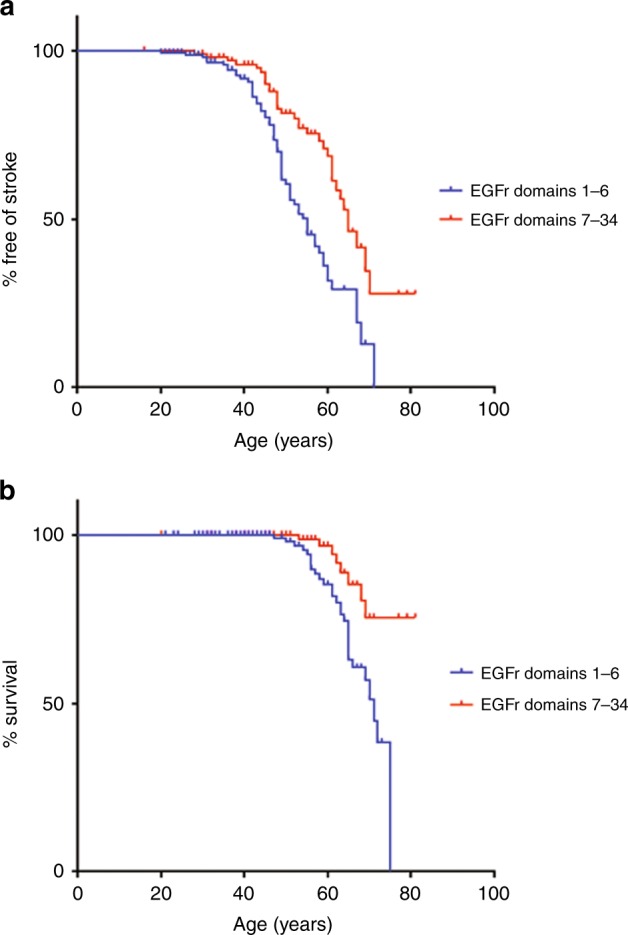
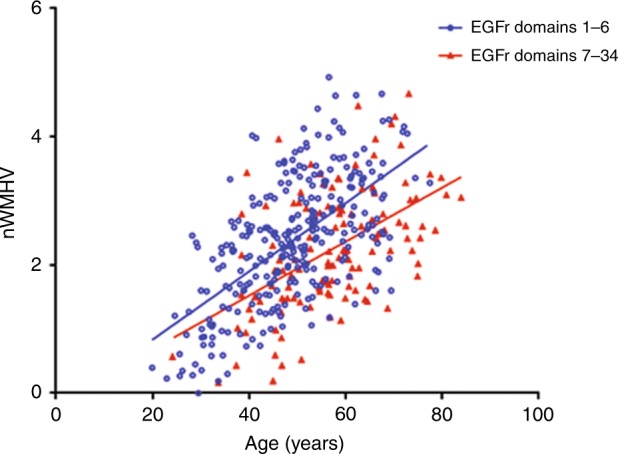
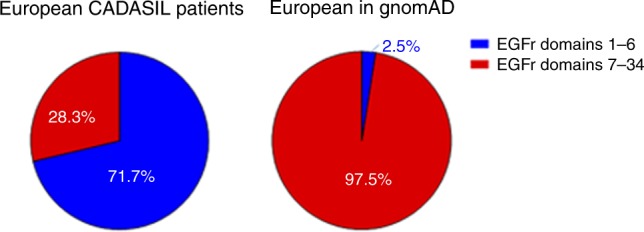
Verification
Claims the paper makes
The claims and statistics of this paper haven’t been checked yet.
Run the check — free, no account needed. It reads the open-access text and checks the sources it cites.
Claims other papers make about this one
Each is checked against this paper’s own text: does it say what the citing paper says it does?
The source backs part of the claim, not all of it — or backs it for a different population, condition or comparison.
In the citing paper
“In addition, all 4 had NOTCH3 variants located outside the classic high-risk EGFr 1–6 domains.14”
From Multiple Sclerosis Misdiagnosis in Cerebral Autosomal Dominant Arteriopathy With Subcortical Infarcts and Leukoencephalopathy (2026) · cites this paper as [14]
Experimental — accuracy not yet measured
Self-check
Percentages, sums and reported differences re-computed from the paper’s own numbers.
The self-check needs the paper’s full text.
Citations
Cites
Analysis of protein-coding genetic variation in 60,706 humans
Exome Aggregation Consortium, Lek, M., Karczewski, K. J., Minikel, E. V., Samocha, K. E., Banks, E., Fennell, T., O’Donnell-Luria, A. H., Ware, J. S., Hill, A. J., et al. (2016) · Nature · doi:10.1038/nature19057 · Cited by 9,587
Kernan, W. N., Ovbiagele, B., Black, H. R., Bravata, D. M., Chimowitz, M. I., Ezekowitz, M. D., Fang, M. C., Fisher, M., Furie, K. L., Heck, D. V., et al. (2014) · Stroke · doi:10.1161/str.0000000000000024 · Cited by 5,170
Notch3 mutations in CADASIL, a hereditary adult-onset condition causing stroke and dementia
Joutel, A., Corpechot, C., Ducros, A., Vahedi, K., Chabriat, H., Mouton, P., Alamowitch, S., Domenga, V., Cécillion, M., Maréchal, E., et al. (1996) · Nature · doi:10.1038/383707a0 · Cited by 2,068
Self-citationChabriat, H., Joutel, A., Dichgans, M., Tournier-Lasserve, E., & Bousser, M.-G. (2009) · The Lancet Neurology · doi:10.1016/s1474-4422(09)70127-9 · Cited by 1,088
Self-citationThe phenotypic spectrum of CADASIL: Clinical findings in 102 cases
Dichgans, M., Mayer, M., Uttner, I., Brüning, R., Müller‐Höcker, J., Rungger, G., Ebke, M., Klockgether, T., & Gasser, T. (1998) · Annals of Neurology · doi:10.1002/ana.410440506 · Cited by 737
Self-citationStrong clustering and stereotyped nature of Notch3 mutations in CADASIL patients
Joutel, A., Vahedi, K., Corpechot, C., Troesch, A., Chabriat, H., Vayssière, C., Cruaud, C., Maciazek, J., Weissenbach, J., Bousser, M.-G., et al. (1997) · The Lancet · doi:10.1016/s0140-6736(97)08083-5 · Cited by 682
Self-citationPatterns of MRI lesions in CADASIL
Chabriat, H., Levy, C., Taillia, H., Iba-Zizen, M.-T., Vahedi, K., Joutel, A., Tournier-Lasserve, E., & Bousser, M.-G. (1998) · Neurology · doi:10.1212/wnl.51.2.452 · Cited by 339
Self-citationLong-term prognosis and causes of death in CADASIL: a retrospective study in 411 patients
Opherk, C. (2004) · Brain · doi:10.1093/brain/awh282 · Cited by 326
Self-citationAdib-Samii, P., Brice, G., Martin, R. J., & Markus, H. S. (2010) · Stroke · doi:10.1161/strokeaha.109.568402 · Cited by 239
Self-citationvan den Boom, R., Lesnik Oberstein, S. A. J., Ferrari, M. D., Haan, J., & van Buchem, M. A. (2003) · Radiology · doi:10.1148/radiol.2293021354 · Cited by 224
Cited by
Sorted by citations
Items 101–167 of 167
Cheng, Y., Liao, Y., Chen, C., Chung, C., Fann, C. S. J., Chang, C.-S., Lee, Y., & Tang, S. (2023) · Journal of the American Heart Association · doi:10.1161/jaha.123.032689 · Cited by 3
Choi, J. C., Lee, J. S., & Kim, K. (2020) · Journal of Medicine and Life Science · doi:10.22730/jmls.2020.17.3.65 · Cited by 3
SQSTM1 gene as a potential genetic modifier of CADASIL phenotype
Almeida, M. R., Silva, A. R., Elias, I., Fernandes, C., Machado, R., Galego, O., & Cordeiro, G. (2020) · Journal of Neurology · doi:10.1007/s00415-020-10308-5 · Cited by 3
Genetics of intracerebral hemorrhage
Kimball, T. N., Tack, R. W. P., Chen, A., Prapiadou, S., Senff, J. R., Tan, B. Y., Singh, S., van Veluw, S. J., Greenberg, S. M., Rosand, J. M., et al. (2025) · Journal of Cerebral Blood Flow & Metabolism · doi:10.1177/0271678x241310401 · Cited by 5
Analysis of Gut Microbiota and Their Metabolites in CADASIL Patients
Watanabe-Hosomi, A., Inoüe, R., Mizuta, I., Matsuura, J., Matsuura, H., Fukunaga, D., Ohara, T., Naito, Y., & Mizuno, T. (2025) · Journal of Clinical Neurology · doi:10.3988/jcn.2025.0231 · Cited by 2
Detection of Vascular Notch3 Deposits in Unfixed Frozen Skin Biopsy Sample in CADASIL
Ueda, A., Nakajima, M., Misumi, Y., Nakahara, K., Shinriki, S., Tasaki, M., Matsui, H., & Ueda, M. (2022) · Frontiers in Neurology · doi:10.3389/fneur.2022.881528 · Cited by 2
Improvement of an External Predictive Model Based on New Information Using a Synthetic Data Approach
Chhoa, H., Chabriat, H., Anato, A. J., Bamba, M., Zittoun, F., Chevret, S., & Biard, L. (2023) · Neurology Genetics · doi:10.1212/nxg.0000000000200091 · Cited by 2
Self-citationRutten, J. W., van den Akker, E. B., & Oberstein, S. A. J. L. (2018) · Translational Stroke Research · doi:10.1007/s12975-018-0681-4 · Cited by 2
Self-citationNOTCH3 p.Arg1231Cys is Markedly Enriched in South Asians and Associated with StrokePreprint
Rodríguez-Flores, J. L., Khalid, S., Parikshak, N., Rasheed, A., Ye, B., Kapoor, M., Backman, J., Sepehrband, F., Gioia, S. A. D., Gelfman, S., et al. (2023) · medRxiv · doi:10.1101/2023.10.05.23296511 · Cited by 2
Li, W., Li, H., Lu, C., Zhao, J., Xu, H., Xu, Z., Mitchell, B. D., Jiang, Y., Gu, H., Xu, Q., et al. (2023) · Stroke and Vascular Neurology · doi:10.1136/svn-2022-002158 · Cited by 1
The Spectrum of NOTCH3 Variants in an Australian CADASIL Cohort
Guyler, S. K., Tsai, J., Maksemous, N., Smith, R. A., Sutherland, H. G. E., Harvey, E. E., Duggins, A., & Griffiths, L. R. (2025) · Genes · doi:10.3390/genes16111353 · Cited by 1
Cerebral autosomal dominant arteriopathy with subcortical infarcts and leukoencephalopathy (CADASIL)
Maksimova, M. Y., & Айрапетова, А. С. (2026) · Neurology neuropsychiatry Psychosomatics · doi:10.14412/2074-2711-2026-1-70-75 · Cited by 1
Wang, H., Liu, X., Gravesteijn, G., Atella, A., Liu, J., Rutten, J. W., ten Dijke, P., Gonçalves, M. A. F. V., Oberstein, S. A. J. L., & Baker, D. A. (2026) · The FASEB Journal · doi:10.1096/fj.202504022r · Cited by 2
Self-citationLee, S. J., Zhang, X., Xu, G., Borjigin, J., & Wang, M. M. (2022) · Journal of Biological Chemistry · doi:10.1016/j.jbc.2022.102772 · Cited by 1
A novel report of Cys1298Gly mutation in exon 24 of NOTCH3 gene in a Chinese family with CADASIL
Hu, J., Qian, J., Che, Z., Tang, B., Li, Y., Gong, Q., & Lu, X. (2023) · Journal of Stroke and Cerebrovascular Diseases · doi:10.1016/j.jstrokecerebrovasdis.2023.107208 · Cited by 1
Four Novel Disease-Causing Variants in the NOTCH3 Gene in Russian Patients with CADASIL
Bostanova, F., Tsygankova, P. G., Олегович, Н. И., Леонидовна, Д. Е., Bessonova, L., Kulesh, A. A., Евгеньевич, Д. В., Danchenko, I. Y., Kanivets, I. V., & Zakharova, E. Y. (2023) · Genes · doi:10.3390/genes14091715 · Cited by 1
Wang, P., Yao, M., Yuan, J., Han, F., Zhai, F., Zhang, D., Zhou, L., Ni, J., Zhang, S., Cui, L., et al. (2024) · Journal of the American Heart Association · doi:10.1161/jaha.123.032668 · Cited by 1
The protocol for an observational Australian cohort study of CADASIL: The AusCADASIL study
Saks, D., Bajorek, B. V., Catts, V. S., Bentvelzen, A. C., Jiang, J., Wen, W. X., Mather, K. A., Thalamuthu, A., Huang, J., Nivison‐Smith, L., et al. (2024) · Cerebral Circulation - Cognition and Behavior · doi:10.1016/j.cccb.2024.100225 · Cited by 1
Case Report: Inflammatory CADASIL phenotype associated with a rare cysteine-sparing NOTCH3 variant
Madjidov, A., Abbott, M., Mullen, K. M., Hicks, R., & Gottfried Schlaug, A. (2025) · Frontiers in Human Neuroscience · doi:10.3389/fnhum.2025.1568937 · Cited by 1
Haile, S., Balzer, B. C., Egan, E., Jorcyk, C. L., & Ali, N. (2025) · The Nucleus · doi:10.1007/s13237-025-00598-3 · Cited by 2
Aggiornamenti in tema di malattia cerebrovascolare: prevenzione, terapia e riabilitazione
Bandini, G. E. F., Fontanella, A., & Manfellotto, D. (2020) · Italian Journal of Medicine · doi:10.4081/itjm.q.2020.2 · Cited by 1
Impact of Brain MRI Markers on Major and Mild Vascular Cognitive Impairment in CADASIL
Lee, J. S., Koh, M. J., Lee, H. K., & Choi, J. C. (2022) · Journal of the Korean Neurological Association · doi:10.17340/jkna.2022.1.5 · Cited by 1
Clinical and genetic aspects of CADASIL syndrome: A systematic review
Fagundes, M. D. S., Matos, D. F., da Paz, W. S., da Silva, A. V., Brandão, D. G., Sotero, V. R. L., Alfredo, J., & de Almeida, D. (2021) · International Journal of Advanced Scientific Research and Management · doi:10.36282/ijasrm/6.12.2021.1845
Dang, J., Lei, S., Xia, M., & Chen, J. (2022) · Medicine · doi:10.1097/md.0000000000028870 · Cited by 1
NOTCH ing toward better understanding of CADASIL
Hedera, P. (2020) · Neurology · doi:10.1212/wnl.0000000000010507 · Cited by 1
Dunn, P. J., Maksemous, N., Smith, R. A., Sutherland, H. G. E., Haupt, L. M., & Griffiths, L. R. (2022) · Research Square · doi:10.21203/rs.3.rs-1333758/v1 · Cited by 1
Cerebral Autosomal Dominant Arteriopathy With Subcortical Infarcts and Leukoencephalopathy
Chabriat, H., Joutel, A., Tournier‐Lasserve, E., & Bousser, M. (2021) · Elsevier eBooks · doi:10.1016/b978-0-323-69424-7.00041-7 · Cited by 1
Self-citationCho, B. P. H., Harshfield, E. L., Al-Thani, M., Tozer, D. J., Bell, S., & Markus, H. S. (2022) · medRxiv · doi:10.1101/2022.05.24.22275509 · Cited by 1
Self-citationMendis, D. D., Vallamchetla, S. K., Marin Collazo, I. V., Sandhu, S. J. S., & Meschia, J. F. (2026) · Neurology Genetics · doi:10.1212/nxg.0000000000200430
A case of co-occurrence of radiation-induced leukoencephalopathy and CADASIL
Kaat, L. D., van der Wielen-Jongen, J. C. F., Kruit, M. C., Bromberg, J. E. C., Baas, F., & Oberstein, S. A. J. L. (2020) · Neurology Clinical Practice · doi:10.1212/cpj.0000000000000705
Tournier‐Lasserve, E. (2021) · Springer eBooks · doi:10.1007/978-3-030-70761-3_4
Experiencias educativas en el Parque Nacional de Doñana
España, M. C. C., Ortiz, E. M. L., & Giner, M. I. C. (1997) · LA Referencia (Red Federada de Repositorios Institucionales de Publicaciones Científicas)
Scala, I., Piane, M., Frisullo, G., Marotta, J., Bellavia, S., Rizzo, P. A., Rollo, E., Vollono, C., Pizzuti, A., Brunetti, V., et al. (2022) · Clinical Genetics · doi:10.1111/cge.14137
Dunn, P. J. (2022) · Queensland University of Technology · doi:10.5204/thesis.eprints.229972
Felling, R. J., & Dowling, M. M. (2020) · Elsevier eBooks · doi:10.1016/b978-0-12-813866-3.00033-3
Sheiko, G. E., Belova, A. N., Grigoryeva, V. N., Rasteryaeva, M. V., & Kosyakina, M. Y. (2022) · Russian neurological Journal · doi:10.30629/2658-7947-2022-27-3-20-27
What's in a Domain? The Role of NOTCH3 EGFr Domains in CADASIL Disease Severity
Hack, R. J., Rutten, J. W., & Oberstein, S. A. J. L. (2022) · Neurology · doi:10.1212/wnl.0000000000200755
Self-citationLi, J., Abedi, V., Chaudhary, D. P., Goren, O., Carey, D. J., Wain, K. E., & Zand, R. (2022) · medRxiv · doi:10.1101/2022.08.11.22278284
Monogenic Stroke—Can We Overcome Nature With Nurture?
Jha, R. M. (2022) · JAMA Neurology · doi:10.1001/jamaneurol.2022.3994
Mania with mixed symptoms arising in a woman with CADASIL
Linderman, K., Wong, J., & Kious, B. M. (2022) · Psychiatry Research Case Reports · doi:10.1016/j.psycr.2022.100092
Zafar, M., Gajre, M., Balagopal, A., Naqvi, S. A., Khalesi, D. S., Premathilaka, R., Islam, A., Berliti, S., Hovagim, G., & HACIKURT, K. (2023) · Cureus · doi:10.7759/cureus.39099
Cerebral Autosomal Dominant Arteriopathy with Subcortical Infarcts and Leukoencephalopathy (CADASIL)
Chabriat, H. (2024) · Springer eBooks · doi:10.1007/978-3-031-41777-1_6
Self-citationCADASIL: Son gelişmeler neler?
Yıldız, Ö. K. (2024) · Turkish Journal of Cerebrovascular Diseases · doi:10.5505/tbdhd.2024.85429
“Management of Emerging or Unconventional Risk Factors-2”
Miwa, K., & Toyoda, Ḱ. (2024) · Springer eBooks · doi:10.1007/978-3-031-49963-0_12
Markus, H. S., & Tan, R. Y. Y. (2024) · Elsevier eBooks · doi:10.1016/b978-0-12-822951-4.00018-7
Self-citationHuang, X., Qiu, P., Ji, H. L., Shi, Y., Zhang, L., Wang, L., Mei, L., & Li, P. (2024) · Cureus · doi:10.7759/cureus.65164
Bonnet, W., Dowling, M. M., & Felling, R. J. (2024) · Elsevier eBooks · doi:10.1016/b978-0-443-19176-3.00040-6
A Chinese CADASIL family with a rare heterozygous mutation in exon 2 of NOTCH3: A case report
Guo, J., Liu, L., & Yan, M. (2024) · Medicine · doi:10.1097/md.0000000000040107
Wurthmann, S., Kastrup, O., Wurthmann, C., Scherbaum, N., & Roser, P. (2025) · Fortschritte der Neurologie · Psychiatrie · doi:10.1055/a-2512-7605
Matsuura, H., Sakai, K., Fujikawa, K., Watanabe-Hosomi, A., Mukai, M., Ashida, S., Fukunaga, D., Koizumi, T., Ohara, T., Mizuta, I., et al. (2025) · Internal Medicine · doi:10.2169/internalmedicine.5270-25
Hosseini-Alghaderi, S., & Baron, M. (2025) · Cell Communication and Signaling · doi:10.1186/s12964-025-02362-1
Nan, H., Chu, M. K., Yue, A., He, Q., Li, J., Liu, Y., Chi, L., Liu, X., Peng, G., & Wu, L. (2025) · Alzheimer s Research & Therapy · doi:10.1186/s13195-025-01836-1 · Cited by 1
Geographic Distribution of Patients with CADASIL in Japan
Mukai, M., Mizuta, I., Ohara, T., Watanabe-Hosomi, A., Koizumi, T., Matsuura, H., Fukunaga, D., & Mizuno, T. (2025) · Rinsho Shinkeigaku · doi:10.5692/clinicalneurol.cn-002135
Serum NOTCH3Extracellular Domain in Patients With CADASIL
Kim, H. S., Yamamoto, Y., Kim, Y. R., Lee, K., Kim, C. K., Jung, J., Bae, H., Kim, D., Sohn, S., Park, M., et al. (2025) · Neurology Genetics · doi:10.1212/nxg.0000000000200321
Harahsheh, E. Y., Olarewaju, B. A., Weaver, D. J., Boczek, N. J., Vanood, A., Ingall, T. J., & Osundiji, M. A. (2025) · Neurogenetics · doi:10.1007/s10048-025-00861-4
Neilson, S. J., Boadu, W., Sitaram, A., Davidson, R., Moreton, F. C., Dickie, D. A., Dawson, J., & Muir, K. W. (2026) · European Stroke Journal · doi:10.1093/esj/23969873251381917
Lee, J., LEE, M. G., Lim, J.-S., Oh, M. S., Yu, K., Kim, Y. E., Ma, H.-I., Kim, Y. J., Park, J., & Jung, Y. H. (2026) · Journal of Clinical Neurology · doi:10.3988/jcn.2025.0373
Chen, C.-H., Lin, C., Wu, S.-H., Yang, Z.-W., Lin, C.-W., Shen, Y., Cheng, Y.-W., Su, M., & Tang, S. (2026) · Investigative Ophthalmology & Visual Science · doi:10.1167/iovs.67.3.37
Cysteine-reactive mitigators of small vessel disease-related NOTCH3 mutants
Cartee, N. M. P., Zhang, X., Lee, S. H., & Wang, M. M. (2026) · Scientific Reports · doi:10.1038/s41598-026-45103-1
Lan, S., Liu, Y.-H., Lan, J., Liao, Y. H., Lan, M., & Lee, Y. (2026) · Journal of the Chinese Medical Association · doi:10.1097/jcma.0000000000001371
Rosa-Batlle, I., & Rudilosso, S. (2026) · Neurología · doi:10.1016/j.nrl.2026.502028
Clinical Impact of NOTCH3 Variant Location After First Stroke in CADASIL
Aguilhon, L., Chabriat, H., Hervé, D., Guey, S., du Montcel, S. T., & Ortholand, J. (2026) · Annals of Clinical and Translational Neurology · doi:10.1002/acn3.70424
Self-citationGuey, S., & Chabriat, H. (2026) · Encyclopédie médico-chirurgicale. Neurologie · doi:10.1016/s0246-0378(26)49795-x
Self-citationYang, W.-Y. O., Hsu, S., Chung, C., Chang, F., Lee, Y., & Liao, Y. (2026) · Journal of Clinical Neurology · doi:10.3988/jcn.2025.0746
Potential contributors to variable penetrance of NOTCH3 p.Arg1231Cys Variant
Hwang, J., Iverson, A. A., Woroch, A., Keret, O., Elahi, F. M., & Naasan, G. (2026) · Neurogenetics · doi:10.1007/s10048-026-00937-9
Rosa-Batlle, I., & Rudilosso, S. (2026) · Neurología (English Edition) · doi:10.1016/j.nrleng.2026.502028
Guey, S., & Chabriat, H. (2026) · EMC - Neurologia · doi:10.1016/s1634-7072(26)52356-0
Self-citation
Metadata
- Authors
- Rutten, J. W., Van Eijsden, B. J., Duering, M., Jouvent, E., Opherk, C., Pantoni, L., Federico, A., Dichgans, M., Markus, H. S., Chabriat, H., & Lesnik Oberstein, S. A. J.
- Affiliations
- Leiden University Medical Center (NL)
- LMU Klinikum (DE)
- SLK-Kliniken Heilbronn (DE)
- University of Milan (IT)
- University of Siena (IT)
- University of Cambridge (GB)
- Assistance Publique – Hôpitaux de Paris (FR)
- Corresponding author
- Rutten, Julie W.
- ORCID
- Venue
- Genetics in Medicine
- Publisher
- Elsevier BV
- Published
- 2019-03
- Volume
- 21
- Issue
- 3
- Pages
- 676-682
- ISSN
- 1098-3600 (ISSN-L)
- PMC
- PMC6752295
- OpenAlex
- W4249518051
- Cited by
- 169
- References
- 17
- Citations by year
- 2026: 16 · 2025: 24 · 2024: 25 · 2023: 18 · 2022: 35 · 2021: 16 · 2020: 23 · 2019: 10
- FWCI
- 8.49
- Type
- journal article
- Language
- en
- Update notices
- erratum (2019-08-01)
- Open access
- hybrid
- doi.org
- Licence
- Locations
- Genetics in Medicine (publishedVersion, cc-by)
- PubMed Central (publishedVersion, cc-by)
- PubMed (publishedVersion)
- Data Archiving and Networked Services (DANS) (submittedVersion)
- Archivio Istituzionale della Ricerca (Universita Degli Studi Di Milano) (submittedVersion, other-oa)
- Leiden Repository (Leiden University) (submittedVersion)
- Apollo (University of Cambridge) (submittedVersion, cc-by)
- Apollo (cc-by)
- Funders
- National Institute for Health and Care Research (NF-SI-0512-10019, NF-SI-0617-10006)
- Topics
- Health Sciences › Medicine › Clinical Neurology › Cerebrovascular and genetic disorders
- Life Sciences › Neuroscience › Cellular and Molecular Neuroscience › Genetic Neurodegenerative Diseases
- Health Sciences › Medicine › Clinical Neurology › Intracerebral and Subarachnoid Hemorrhage Research
- Keywords
- CADASIL, Notch3, epidermal growth factor-like repeats, disease severity, survival, white matter hyperintensity volume, cerebral small vessel disease
- MeSH terms
- Receptor, Notch3, Protein Domains, Adult, Aged, Brain, Female, Humans, Male, Middle Aged, Netherlands, Phenotype, Disease Progression, Stroke, CADASIL
About these checks
Registry, retraction, Cites and statistics results are computed, not judged, with one exception: a printed reference that no index lists is read once by a model before it counts as a citation error. Claims are extracted by a model and kept only when their quote appears verbatim in the text; each cited source is then checked, with a model’s help, for whether it says what the claim relies on. Those verdicts can be wrong — read the claim’s quote and the cited source before relying on one.
Statistics and arithmetic are recomputed, not judged.
Confidence bands are shown only for fields calibrated on our annotated test set. None is calibrated yet, so no band is shown.
What counts as a claim ›How we measure confidence ›How we check this ›
Are you an author, or do you see a problem with this page? Request a review
