

The DOI matches its Crossref record; 14 of the 25 references it cites were found in a registry or an index, and 11 are not checked yet.
The effect of NOTCH3 pathogenic variant position on CADASIL disease severity: NOTCH3 EGFr 1-6 pathogenic variant are associated with a more severe phenotype and lower survival compared with EGFr 7-34 pathogenic variant
Open accessAbstract
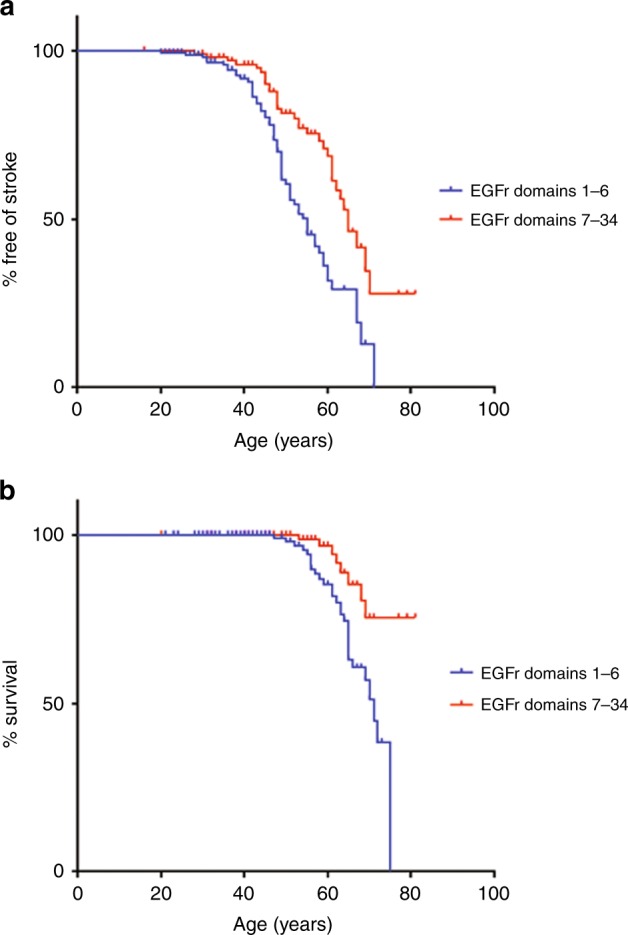
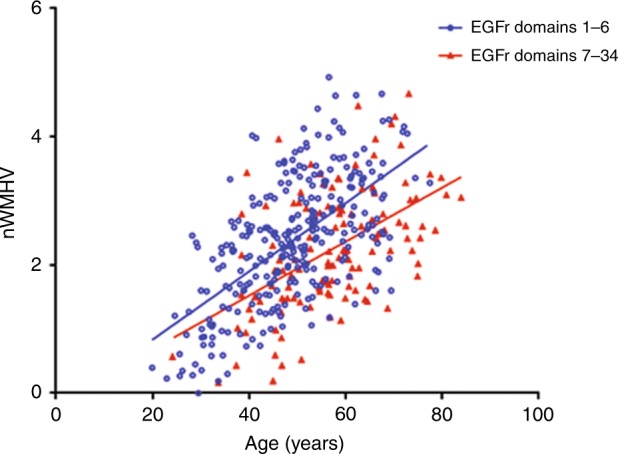
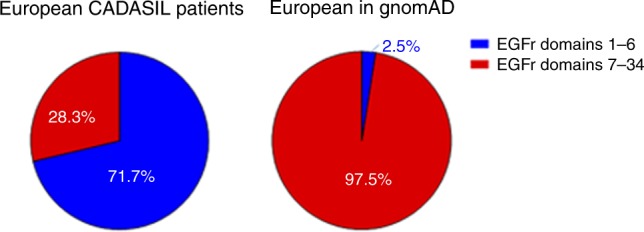
PURPOSE: CADASIL is a small-vessel disease caused by a cysteine-altering pathogenic variant in one of the 34 epidermal growth factor-like repeat (EGFr) domains of the NOTCH3 protein. We recently found that pathogenic variant in EGFr domains 7-34 have an unexpectedly high frequency in the general population (1:300). We hypothesized that EGFr 7-34 pathogenic variant more frequently cause a much milder phenotype, thereby explaining an important part of CADASIL disease variability. METHODS: Age at first stroke, survival and white matter hyperintensity volume were compared between 664 CADASIL patients with either a NOTCH3 EGFr 1-6 pathogenic variant or an EGFr 7-34 pathogenic variant. The frequencies of NOTCH3 EGFr 1-6 and EGFr 7-34 pathogenic variant were compared between individuals in the genome Aggregation Database and CADASIL patients. RESULTS: CADASIL patients with an EGFr 1-6 pathogenic variant have a 12-year earlier onset of stroke than those with an EGFr 7-34 pathogenic variant, lower survival, and higher white matter hyperintensity volumes. Among diagnosed CADASIL patients, 70% have an EGFr 1-6 pathogenic variant, whereas EGFr 7-34 pathogenic variant strongly predominate in the population. CONCLUSION: NOTCH3 pathogenic variant position is the most important determinant of CADASIL disease severity, with EGFr 7-34 pathogenic variant predisposing to a later onset of stroke and longer survival.
Overview
The claims and statistics of this paper haven’t been checked yet.
Run the check — free, no account needed. It reads the open-access text and checks the sources it cites.
Integrity signals
Registry
Cites
Statistics
Figures
Verification
Claims the paper makes
The claims and statistics of this paper haven’t been checked yet.
Run the check — free, no account needed. It reads the open-access text and checks the sources it cites.
Claims other papers make about this one
Each is checked against this paper’s own text: does it say what the citing paper says it does?
The source backs part of the claim, not all of it — or backs it for a different population, condition or comparison.
In the citing paper
“In addition, all 4 had NOTCH3 variants located outside the classic high-risk EGFr 1–6 domains.14”
From Multiple Sclerosis Misdiagnosis in Cerebral Autosomal Dominant Arteriopathy With Subcortical Infarcts and Leukoencephalopathy (2026) · cites this paper as [14]
Experimental — accuracy not yet measured
Self-check
Percentages, sums and reported differences re-computed from the paper’s own numbers.
The self-check needs the paper’s full text.
Citations
Cites
Analysis of protein-coding genetic variation in 60,706 humans
Exome Aggregation Consortium, Lek, M., Karczewski, K. J., Minikel, E. V., Samocha, K. E., Banks, E., Fennell, T., O’Donnell-Luria, A. H., Ware, J. S., Hill, A. J., et al. (2016) · Nature · doi:10.1038/nature19057 · Cited by 9,587
Kernan, W. N., Ovbiagele, B., Black, H. R., Bravata, D. M., Chimowitz, M. I., Ezekowitz, M. D., Fang, M. C., Fisher, M., Furie, K. L., Heck, D. V., et al. (2014) · Stroke · doi:10.1161/str.0000000000000024 · Cited by 5,170
Notch3 mutations in CADASIL, a hereditary adult-onset condition causing stroke and dementia
Joutel, A., Corpechot, C., Ducros, A., Vahedi, K., Chabriat, H., Mouton, P., Alamowitch, S., Domenga, V., Cécillion, M., Maréchal, E., et al. (1996) · Nature · doi:10.1038/383707a0 · Cited by 2,068
Self-citationChabriat, H., Joutel, A., Dichgans, M., Tournier-Lasserve, E., & Bousser, M.-G. (2009) · The Lancet Neurology · doi:10.1016/s1474-4422(09)70127-9 · Cited by 1,088
Self-citationThe phenotypic spectrum of CADASIL: Clinical findings in 102 cases
Dichgans, M., Mayer, M., Uttner, I., Brüning, R., Müller‐Höcker, J., Rungger, G., Ebke, M., Klockgether, T., & Gasser, T. (1998) · Annals of Neurology · doi:10.1002/ana.410440506 · Cited by 737
Self-citationStrong clustering and stereotyped nature of Notch3 mutations in CADASIL patients
Joutel, A., Vahedi, K., Corpechot, C., Troesch, A., Chabriat, H., Vayssière, C., Cruaud, C., Maciazek, J., Weissenbach, J., Bousser, M.-G., et al. (1997) · The Lancet · doi:10.1016/s0140-6736(97)08083-5 · Cited by 682
Self-citationPatterns of MRI lesions in CADASIL
Chabriat, H., Levy, C., Taillia, H., Iba-Zizen, M.-T., Vahedi, K., Joutel, A., Tournier-Lasserve, E., & Bousser, M.-G. (1998) · Neurology · doi:10.1212/wnl.51.2.452 · Cited by 339
Self-citationLong-term prognosis and causes of death in CADASIL: a retrospective study in 411 patients
Opherk, C. (2004) · Brain · doi:10.1093/brain/awh282 · Cited by 326
Self-citationAdib-Samii, P., Brice, G., Martin, R. J., & Markus, H. S. (2010) · Stroke · doi:10.1161/strokeaha.109.568402 · Cited by 239
Self-citationvan den Boom, R., Lesnik Oberstein, S. A. J., Ferrari, M. D., Haan, J., & van Buchem, M. A. (2003) · Radiology · doi:10.1148/radiol.2293021354 · Cited by 224
Cited by
Sorted by citations
Wei, C.-Y., Yang, J.-H., Yeh, E., Tsai, M.-F., Kao, H., Lo, C.-Z., Chang, L.-P., Lin, W.-J., Hsieh, F., Belsare, S., et al. (2021) · npj Genomic Medicine · doi:10.1038/s41525-021-00178-9 · Cited by 254
Mancuso, M., Arnold, M., Bersano, A., Burlina, A. P., Chabriat, H., Debette, S., Enzinger, C., Federico, A., Filla, A., Finsterer, J., et al. (2020) · European Journal of Neurology · doi:10.1111/ene.14183 · Cited by 205
Self-citationThe pathogenesis of cerebral small vessel disease and vascular cognitive impairment
Markus, H. S., & Joutel, A. (2025) · Physiological Reviews · doi:10.1152/physrev.00028.2024 · Cited by 140
Self-citationClinical and Genetic Aspects of CADASIL
Mizuno, T., Mizuta, I., Watanabe-Hosomi, A., Mukai, M., & Koizumi, T. (2020) · Frontiers in Aging Neuroscience · doi:10.3389/fnagi.2020.00091 · Cited by 100
Role of Notch signaling in neurovascular aging and Alzheimer’s disease
Kapoor, A., & Nation, D. A. (2020) · Seminars in Cell and Developmental Biology · doi:10.1016/j.semcdb.2020.12.011 · Cited by 95
The Notch pathway in CNS homeostasis and neurodegeneration
Ho, D. M., Artavanis‐Tsakonas, S., & Louvi, A. (2020) · WIREs Developmental Biology · doi:10.1002/wdev.358 · Cited by 90
Broad phenotype of cysteine-altering NOTCH3 variants in UK Biobank
Rutten, J. W., Hack, R. J., Duering, M., Gravesteijn, G., Dauwerse, J. G., Overzier, M., van den Akker, E. B., Slagboom, P. E., Holstege, H. H., Nho, K. T., et al. (2020) · Neurology · doi:10.1212/wnl.0000000000010525 · Cited by 87
Self-citationNotch3 in Development, Health and Disease
Hosseini-Alghaderi, S., & Baron, M. (2020) · Biomolecules · doi:10.3390/biom10030485 · Cited by 83
Notch in mechanotransduction – from molecular mechanosensitivity to tissue mechanostasis
Stassen, O. M. J. A., Ristori, T., & Sahlgren, C. (2020) · Journal of Cell Science · doi:10.1242/jcs.250738 · Cited by 75
Cho, B. P. H., Nannoni, S., Harshfield, E. L., Tozer, D. J., Gräf, S., Bell, S., & Markus, H. S. (2021) · Journal of Neurology Neurosurgery & Psychiatry · doi:10.1136/jnnp-2020-325838 · Cited by 82
Self-citationCho, B. P. H., Harshfield, E. L., Al-Thani, M., Tozer, D. J., Bell, S., & Markus, H. S. (2022) · JAMA Neurology · doi:10.1001/jamaneurol.2022.3832 · Cited by 68
Self-citationCADASIL: new advances in basic science and clinical perspectives
Ferrante, E. A., Cudrici, C. D., & Boehm, M. (2019) · Current Opinion in Hematology · doi:10.1097/moh.0000000000000497 · Cited by 68
Heritable and non-heritable uncommon causes of stroke
Bersano, A., Kraemer, M., Burlina, A. P., Mancuso, M., Finsterer, J., Sacco, S., Salvarani, C., Caputi, L., Chabriat, H., Oberstein, S. A. J. L., et al. (2020) · Journal of Neurology · doi:10.1007/s00415-020-09836-x · Cited by 71
Self-citationCADASIL: A NOTCH3-associated cerebral small vessel disease
Yuan, L., Chen, X., Jankovic, J. J., & Deng, H. (2024) · Journal of Advanced Research · doi:10.1016/j.jare.2024.01.001 · Cited by 77
Hack, R. J., Gravesteijn, G., Cerfontaine, M. N., Santcroos, M. A., Gatti, L., Kopczak, A., Bersano, A., Duering, M., Rutten, J. W., & Lesnik Oberstein, S. A. J. (2023) · Brain · doi:10.1093/brain/awac486 · Cited by 60
Self-citationLocatelli, M., Padovani, A., & Pezzini, A. (2020) · Frontiers in Pharmacology · doi:10.3389/fphar.2020.00321 · Cited by 65
Stroke Genetics: Discovery, Insight Into Mechanisms, and Clinical Perspectives
Debette, S., & Markus, H. S. (2022) · Circulation Research · doi:10.1161/circresaha.122.319950 · Cited by 64
Self-citationCADASIL: yesterday, today, tomorrow
Chabriat, H., Joutel, A., Tournier‐Lasserve, E., & Bousser, M. (2020) · European Journal of Neurology · doi:10.1111/ene.14293 · Cited by 59
Self-citationYamamoto, Y., Liao, Y., Lee, Y., Ihara, M., & Choi, J. C. (2023) · Journal of Clinical Neurology · doi:10.3988/jcn.2023.19.1.12 · Cited by 63
Hereditary Cerebral Small Vessel Diseases and Stroke: A Guide for Diagnosis and Management
Guey, S., Oberstein, S. A. J. L., Tournier‐Lasserve, E., & Chabriat, H. (2021) · Stroke · doi:10.1161/strokeaha.121.032620 · Cited by 52
Self-citationGenotype–phenotype correlations and effect of mutation location in Japanese CADASIL patients
Mukai, M., Mizuta, I., Watanabe-Hosomi, A., Koizumi, T., Matsuura, J., Hamano, A., Tomimoto, H., & Mizuno, T. (2020) · Journal of Human Genetics · doi:10.1038/s10038-020-0751-9 · Cited by 51
NOTCH3 cysteine-altering variant is an important risk factor for stroke in the Taiwanese population
Lee, Y., Chung, C., Chang, M.-H., Wang, S., & Liao, Y. (2019) · Neurology · doi:10.1212/wnl.0000000000008700 · Cited by 47
Cho, B. P. H., Jolly, A. A., Nannoni, S., Tozer, D. J., Bell, S., & Markus, H. S. (2022) · Neurology · doi:10.1212/wnl.0000000000200744 · Cited by 49
Self-citationMeschia, J. F., Worrall, B. B., Elahi, F. M., Ross, O. A., Wang, M. M., Goldstein, E. D., Rost, N. S., Majersik, J. J., Gutierrez, J., & on behalf of the American Heart Association Stroke Council; Council on Cardiovascular and Stroke Nursing; Council on Clinical Cardiology; and Council on Hypertension (2023) · Stroke · doi:10.1161/str.0000000000000444 · Cited by 44
NO TCH3 variant position is associated with NOTCH3 aggregation load in CADASIL vasculature
Gravesteijn, G., Hack, R. J., Mulder, A. A., Cerfontaine, M. N., van Doorn, R., Hegeman, I. M., Jost, C. R., Rutten, J. W., & Oberstein, S. A. J. L. (2021) · Neuropathology and Applied Neurobiology · doi:10.1111/nan.12751 · Cited by 44
Self-citationHack, R. J., Cerfontaine, M. N., Gravesteijn, G., Tap, S. C., Hafkemeijer, A., van der Grond, J., Witjes‐Ané, M. W., Baas, F., Rutten, J. W., & Oberstein, S. A. J. L. (2022) · Stroke · doi:10.1161/strokeaha.122.039325 · Cited by 45
Self-citationCysteine-Altering NOTCH3 Variants Are a Risk Factor for Stroke in the Elderly Population
Hack, R. J., Rutten, J. W., Person, T. N., Li, J., Khan, A., Griessenauer, C. J., Abedi, V., Oberstein, S. A. J. L., & Zand, R. (2020) · Stroke · doi:10.1161/strokeaha.120.030343 · Cited by 40
Self-citationDupé, C., Guey, S., Biard, L., Dieng, S., Lebenberg, J., Grosset, L., Alili, N., Hervé, D., Tournier‐Lasserve, E., Jouvent, É., et al. (2022) · Journal of Cerebral Blood Flow & Metabolism · doi:10.1177/0271678x221126280 · Cited by 41
Self-citationNOTCH3 and CADASIL syndrome: a genetic and structural overview
Papakonstantinou, E., Bacopoulou, F., Brοuzas, D., Megalooikonomou, V., D’Elia, D., Bongcam‐Rudloff, E., & Vlachakis, D. (2019) · EMBnet journal · doi:10.14806/ej.24.0.921 · Cited by 38
Clinical and research applications of magnetic resonance imaging in the study of CADASIL
Schoemaker, D., Quiroz, Y. T., Torrico-Teave, H., & Arboleda-Velasquez, J. F. (2019) · Neuroscience Letters · doi:10.1016/j.neulet.2019.01.014 · Cited by 36
Prevalence and Predictors of Vascular Cognitive Impairment in Patients With CADASIL
Jolly, A. A., Nannoni, S., Edwards, H., Morris, R. G., & Markus, H. S. (2022) · Neurology · doi:10.1212/wnl.0000000000200607 · Cited by 35
Self-citationCerebral Autosomal Dominant Arteriopathy With Subcortical Infarcts and Leukoencephalopathy
Jouvent, É., Duering, M., & Chabriat, H. (2019) · Stroke · doi:10.1161/strokeaha.119.024152 · Cited by 30
Self-citationSchoemaker, D., & Arboleda‐Velásquez, J. F. (2021) · American Journal Of Pathology · doi:10.1016/j.ajpath.2021.03.015 · Cited by 32
Min, J.-Y., Park, S., Kang, E.-J., Hwang, S.-Y., & Han, S. (2021) · Neurogenetics · doi:10.1007/s10048-021-00674-1 · Cited by 31
Human iPS cell-derived mural cells as an in vitro model of hereditary cerebral small vessel disease
Yamamoto, Y., Kojima, K., Taura, D., Sone, M., Washida, K., Egawa, N., Kondo, T., Minakawa, E. N., Tsukita, K., Enami, T., et al. (2020) · Molecular Brain · doi:10.1186/s13041-020-00573-w · Cited by 28
Cognition, mood and behavior in CADASIL
Chabriat, H., & Oberstein, S. A. J. L. (2022) · Cerebral Circulation - Cognition and Behavior · doi:10.1016/j.cccb.2022.100043 · Cited by 25
Self-citationHack, R. J., Gravesteijn, G., Cerfontaine, M. N., Hegeman, I. M., Mulder, A. A., Oberstein, S. A. J. L., & Rutten, J. W. (2022) · Stroke · doi:10.1161/strokeaha.121.036307 · Cited by 24
Self-citationCADASIL vs. Multiple Sclerosis: Is It Misdiagnosis or Concomitant? A Case Series
Khan, A., Abedi, V., Li, J., Malik, M. T., Esch, M., & Zand, R. (2020) · Frontiers in Neurology · doi:10.3389/fneur.2020.00860 · Cited by 23
Boston, G., Jobson, D., Mizuno, T., Ihara, M., & Kalaria, R. N. (2024) · Cerebral Circulation - Cognition and Behavior · doi:10.1016/j.cccb.2024.100227 · Cited by 28
Gravesteijn, G., Dauwerse, J. G., Overzier, M., Brouwer, G., Hegeman, I. M., Mulder, A. A., Baas, F., Kruit, M. C., Terwindt, G. M., van Duinen, S. G., et al. (2019) · Human Molecular Genetics · doi:10.1093/hmg/ddz285 · Cited by 23
Self-citationContribution of “Omic” Studies to the Understanding of Cadasil. A Systematic Review
Muiño, E., Fernández‐Cadenas, I., & Arboix, A. (2021) · International Journal of Molecular Sciences · doi:10.3390/ijms22147357 · Cited by 22
Zhang, R., Chen, C., du Montcel, S. T., Lebenberg, J., Cheng, Y., Dichgans, M., Tang, S., & Chabriat, H. (2023) · Neurology · doi:10.1212/wnl.0000000000207713 · Cited by 25
Self-citationElderly CADASIL patients with intact neurological status
Zhang, R., Ouin, E., Grosset, L., Ighilkrim, K., Lebenberg, J., Guey, S., François, V., Tournier‐Lasserve, E., Jouvent, É., & Chabriat, H. (2022) · Journal of Stroke · doi:10.5853/jos.2022.01578 · Cited by 20
Self-citationProgress to Clarify How NOTCH3 Mutations Lead to CADASIL, a Hereditary Cerebral Small Vessel Disease
Mizuta, I., Nakao-Azuma, Y., Yoshida, H., Yamaguchi, M., & Mizuno, T. (2024) · Biomolecules · doi:10.3390/biom14010127 · Cited by 21
Genotype and Phenotype Differences in CADASIL from an Asian Perspective
Kim, Y., Bae, J. S., Lee, J.-Y., Song, H. K., Lee, J.-H., Lee, M., Kim, C., & Lee, S. (2022) · International Journal of Molecular Sciences · doi:10.3390/ijms231911506 · Cited by 21
Genetic Mechanisms of Migraine: Insights from Monogenic Migraine Mutations
Gosalia, H., Karsan, N., & Goadsby, P. J. (2023) · International Journal of Molecular Sciences · doi:10.3390/ijms241612697 · Cited by 18
The Notch Signaling Pathway: Mechanistic Insights in Health and Disease
Meng, Y., Bo, Z., Feng, X., Yang, X., & Handford, P. A. (2023) · Engineering · doi:10.1016/j.eng.2023.11.011 · Cited by 21
Sukhonpanich, N., & Markus, H. S. (2024) · Journal of Neurology · doi:10.1007/s00415-023-12177-0 · Cited by 19
Self-citationProspects for Diminishing the Impact of Nonamyloid Small-Vessel Diseases of the Brain
Joutel, A. (2019) · The Annual Review of Pharmacology and Toxicology · doi:10.1146/annurev-pharmtox-010818-021712 · Cited by 17
Guo, L., Jiao, B., Liao, X., Xiao, X., Zhang, W., Yuan, Z., Liu, X., Zhou, L., Wang, X., Zhu, Y., et al. (2021) · CNS Neuroscience & Therapeutics · doi:10.1111/cns.13647 · Cited by 16
Lee, S. J., Zhang, X., Wu, E., Sukpraphrute, R., Sukpraphrute, C., Ye, A., & Wang, M. M. (2023) · Journal of Biological Chemistry · doi:10.1016/j.jbc.2023.104838 · Cited by 16
Clinical and neuroradiological spectrum of biallelic variants in NOTCH3
Iruzubieta, P., Alves, C., Al-Shamsi, A. M., ElGhazali, G. E., Zaki, M. S., Pinelli, L., Lopergolo, D., Cho, B. P. H., Jolly, A. A., Al-Futaisi, A. M., et al. (2024) · EBioMedicine · doi:10.1016/j.ebiom.2024.105297 · Cited by 16
Self-citationCerfontaine, M. N., Hack, R. J., Gesierich, B. G., Duering, M., Witjes‐Ané, M. W., Rodríguez-Girondo, M., Gravesteijn, G., Rutten, J. W., & Oberstein, S. A. J. L. (2024) · Neurology · doi:10.1212/wnl.0000000000209310 · Cited by 14
Self-citationKoizumi, T., Mizuta, I., Watanabe-Hosomi, A., Mukai, M., Hamano, A., Matsuura, J., Ohara, T., & Mizuno, T. (2019) · Journal of Stroke and Cerebrovascular Diseases · doi:10.1016/j.jstrokecerebrovasdis.2019.03.026 · Cited by 14
Top-NOTCH3 Variants in the Population at Large
Kalaria, R. N., & Kittner, S. J. (2020) · Stroke · doi:10.1161/strokeaha.120.031609 · Cited by 14
Eighteen-Year Disease Progression and Survival in CADASIL
Gravesteijn, G., Hack, R. J., van Opstal, A. M., Eijsden, B. J. V., Middelkoop, H. A. M., Girondo, M. D. M. R., Aartsma-Rus, A. M., van der Grond, J., Rutten, J. W., & Oberstein, S. A. J. L. (2021) · Journal of Stroke · doi:10.5853/jos.2020.04112 · Cited by 13
Self-citationOligomerization, trans-reduction, and instability of mutant NOTCH3 in inherited vascular dementia
Young, K. Z., Ramírez, C. R., Keep, S. G., Gatti, J. R., Lee, S. J., Zhang, X., Ivanova, M. I., Ruotolo, B. T., & Wang, M. M. (2022) · Communications Biology · doi:10.1038/s42003-022-03259-2 · Cited by 13
Novel and Recurring NOTCH3 Mutations in Two Chinese Patients with CADASIL
Chen, X., Deng, S., Xu, H., Hou, D., Hu, P., Yang, Y. X., Wen, J., Deng, H., & Yuan, L. (2019) · Neurodegenerative Diseases · doi:10.1159/000500166 · Cited by 12
Härtl, J., Hartberger, J., Wunderlich, S., Cordts, I., Bafligil, C., Sturm, M., Westphal, D. S., Haack, T. B., Hemmer, B., Ikenberg, B. D., et al. (2022) · Journal of Neurology · doi:10.1007/s00415-022-11401-7 · Cited by 14
Cao, Y., Zhang, D., Han, F., Jiang, N., Yao, M., & Zhu, Y. (2024) · International Journal of Molecular Sciences · doi:10.3390/ijms25168796 · Cited by 13
Muiño, E., Maisterra, O., Jiménez-Baladó, J., Cullell, N., Carrera, C., Torres‐Aguila, N. P., Cárcel‐Márquez, J., Gallego-Fábrega, C., Lledós, M., González-Sanchez, J., et al. (2021) · Scientific Reports · doi:10.1038/s41598-021-86349-1 · Cited by 11
Changes in the prognosis of CADASIL over time: a 23-year study in 555 individuals
Sukhonpanich, N., Koohi, F., Jolly, A. A., & Markus, H. S. (2024) · Journal of Neurology Neurosurgery & Psychiatry · doi:10.1136/jnnp-2024-334823 · Cited by 10
Self-citationGenetic and nongenetic factors associated with CADASIL: A retrospective cohort study
Ospina, C., Arboleda‐Velásquez, J. F., Aguirre-Acevedo, D. C., Zuluaga, Y., Velilla, L. M., García, G., Quiroz, Y. T., & Lopera, F. J. (2020) · Journal of the Neurological Sciences · doi:10.1016/j.jns.2020.117178 · Cited by 10
Lee, J. S., Ko, K. H., Oh, J.-H., Kim, J., Kang, C., Song, S., Kang, S., Kang, J., Park, J. H., Koh, M. J., et al. (2020) · Frontiers in Aging Neuroscience · doi:10.3389/fnagi.2020.591879 · Cited by 9
Genetic Counselling Improves the Molecular Characterisation of Dementing Disorders
Zampatti, S., Ragazzo, M., Peconi, C., Luciano, S., Gambardella, S., Caputo, V., Strafella, C., Cascella, R., Caltagirone, C., & Giardina, E. (2021) · Journal of Personalized Medicine · doi:10.3390/jpm11060474 · Cited by 8
The Future of Ischemic Stroke Diagnosis and a Review of Underrecognized Ischemic Stroke Etiologies
Johansen, M. C. (2023) · Neurotherapeutics · doi:10.1007/s13311-023-01383-3 · Cited by 9
NOTCH3 p.Arg1231Cys is markedly enriched in South Asians and associated with stroke
Rodríguez-Flores, J. L., Khalid, S., Parikshak, N., Rasheed, A., Ye, B., Kapoor, M., Backman, J., Sepehrband, F., Gioia, S. A. D., Gelfman, S., et al. (2024) · Nature Communications · doi:10.1038/s41467-024-51819-3 · Cited by 9
Mönkäre, S., Kuuluvainen, L., Schleutker, J., Myllykangas, L., & Pöyhönen, M. (2022) · Acta Neurologica Scandinavica · doi:10.1111/ane.13703 · Cited by 8
The emerging role of the HTRA1 protease in brain microvascular disease
Haffner, C. (2023) · Frontiers in Dementia · doi:10.3389/frdem.2023.1146055 · Cited by 10
Determining Clinical Disease Progression in Symptomatic Patients With CADASIL
Kaisaridi, S., Hervé, D., Jabouley, A., Reyes, S., Machado, C., Guey, S., Taleb, A., Fernandes, F., Chabriat, H., & du Montcel, S. T. (2024) · Neurology · doi:10.1212/wnl.0000000000210193 · Cited by 8
Self-citationIs migraine a common manifestation of CADASIL? Arguments Pros
Chabriat, H. (2025) · The Journal of Headache and Pain · doi:10.1186/s10194-025-01980-x · Cited by 7
Self-citationHeidari, P., Taghizadeh, M., & Vakili, O. (2025) · The Journal of Headache and Pain · doi:10.1186/s10194-025-02025-z · Cited by 9
NOTCH3 mutations in a cohort of Portuguese patients within CADASIL spectrum phenotype
Almeida, M. R., Elias, I., Fernandes, C., Machado, R., Galego, O., & Santo, G. (2021) · Neurogenetics · doi:10.1007/s10048-021-00679-w · Cited by 8
NOTCH3 Variant Position Affects the Phenotype at the Pluripotent Stem Cell Level in CADASIL
Bugallo-Casal, A., Muiño, E., Bravo, S. B., Hervella, P., Rivas, S. A., Rodríguez‐Yáñez, M., Vara-León, E., Quintas‐Rey, R., Pérez-Gayol, L., Maisterra, O., et al. (2025) · NeuroMolecular Medicine · doi:10.1007/s12017-025-08840-6 · Cited by 6
The role of NOTCH3 in CADASIL pathogenesis: insights into novel therapies
Felix-Ilemhenbhio, F., Kocsy, K., Azzouz, M., & Majid, A. (2025) · Brain Research · doi:10.1016/j.brainres.2025.149754 · Cited by 6
Kerner, C., Fadhil, A., & Sundararajan, S. (2022) · Stroke · doi:10.1161/strokeaha.121.037610 · Cited by 6
Wang, Y.-F., Liao, Y., Tzeng, Y., Chen, S., Lirng, J., Fuh, J., Chen, W., Lai, K., Lee, Y., & Wang, S. (2022) · Cephalalgia · doi:10.1177/03331024221080891 · Cited by 6
Juhosova, M., Chandoga, J., Cisárik, F., Dallemule, S., Ďurina, P., Jaraskova, D., Jungová, P., Kantarska, D., Kvasnicová, M., Mistrík, M., et al. (2022) · Neurogenetics · doi:10.1007/s10048-022-00704-6 · Cited by 9
Monogenic causes of cerebral small vessel disease and stroke
Guey, S., & Chabriat, H. (2024) · Handbook of clinical neurology · doi:10.1016/b978-0-323-99209-1.00018-1 · Cited by 6
Self-citationKról, Z. J., Dorobek, M., Dabrowski, M., Zielińska-Turek, J., Mruk, B., Walecki, J. M., Sklinda, K., Robert, G., Pawlak, A., Wojtaszewska, M. L., et al. (2022) · Archives of Medical Science · doi:10.5114/aoms/146978 · Cited by 5
Saks, D., Smith, E. E., & Sachdev, P. S. (2023) · Cerebral Circulation - Cognition and Behavior · doi:10.1016/j.cccb.2023.100195 · Cited by 7
Dunn, P. J., Lea, R. A., Maksemous, N., Smith, R. A., Sutherland, H. G. E., Haupt, L. M., & Griffiths, L. R. (2022) · Molecular Neurobiology · doi:10.1007/s12035-022-03039-3 · Cited by 5
Clinical presentation of Y189C mutation of the NOTCH3 gene in the Polish family with CADASIL
Dorszewska, J., Kowalska, M., Grzegorski, T., Dziewulska, D., Karmelita‐Katulska, K., Barciszewska, A., Prendecki, M., Gorczyński, W., & Kozubski, W. P. (2020) · Folia Neuropathologica · doi:10.5114/fn.2020.94009 · Cited by 5
Zedde, M., Romani, I., Scaravilli, A., Cocozza, S., Trojano, L., Ragno, M., Rifino, N., Bersano, A., Gerevini, S., Pantoni, L., et al. (2024) · Cells · doi:10.3390/cells13131131 · Cited by 5
Self-citationCartee, N. M. P., Lee, S. J., Wu, E., Sukpraphrute, R., Sukpraphrute, C., Greenbaum, J., & Wang, M. M. (2025) · Journal of Biological Chemistry · doi:10.1016/j.jbc.2025.108224 · Cited by 4
Hu, F., Xie, W., Fan, M., Wang, Y., Xu, S., Qiu, W., Yang, T., Lv, H., Huang, H., Wu, Y., et al. (2025) · European Journal of Neurology · doi:10.1111/ene.70100 · Cited by 4
Cerfontaine, M. N., Gravesteijn, G., Hack, R. J., Dijkstra, K. L., Rodríguez‐Girondo, M., Gesierich, B. G., Witjes‐Ané, M. W., van Doorn, R., Duering, M., Rutten, J. W., et al. (2025) · Annals of Neurology · doi:10.1002/ana.27240 · Cited by 4
Self-citationLebenberg, J., Guichard, J., Guillonnet, A., Hervé, D., Alili, N., Taleb, A., Dias-Gastellier, N., Chabriat, H., & Jouvent, É. (2022) · American Journal of Neuroradiology · doi:10.3174/ajnr.a7499 · Cited by 4
Self-citationPapageorgiou, L., Papa, L., Papakonstantinou, E., Ματαράγκα, Α., Dragoumani, K., Chaniotis, D. I., Beloukas, A. I., Iliopoulos, C. S., Bongcam‐Rudloff, E., Chrousos, G. P., et al. (2024) · Genes · doi:10.3390/genes15050529 · Cited by 4
Targeted exonic sequencing identifies novel variants in a cerebral small vessel disease cohort
Dunn, P. J., Maksemous, N., Smith, R. A., Sutherland, H. G. E., Haupt, L. M., & Griffiths, L. R. (2024) · Clinica Chimica Acta · doi:10.1016/j.cca.2024.120120 · Cited by 6
Rustemoglu, B. S., Samancı, B., Tepgeç, F., Kürtüncü, M., Altunoğlu, U., Gündüz, T., Yeşil, G., Avcı, Ş., Gurvit, H. I., Bılgıç, B., et al. (2021) · Turkish Journal Of Neurology · doi:10.4274/tnd.2021.91298 · Cited by 4
Cherebillo, C. C., Назаров, В. Д., Kiryanov, Y. M., Lapin, S. V., Маzing, A. V., Shuleshova, N. V., Makshakov, G., Totolyan, N. A., Kushnir, Y. B., Cupaeva, A. V., et al. (2022) · Russian neurological Journal · doi:10.30629/2658-7947-2022-27-1-32-42 · Cited by 4
Sánchez‐Lanzas, R., BARCLAY, J. L., Hardas, A., Kalampalika, F., Jiménez‐Pompa, A., Gallipoli, P., & Ganuza, M. (2024) · Leukemia · doi:10.1038/s41375-024-02464-8 · Cited by 4
Trans-Reduction of Cerebral Small Vessel Disease Proteins by Notch-Derived EGF-like Sequences
Cartee, N. M. P., Lee, S. J., Young, K. Z., Zhang, X., & Wang, M. M. (2022) · International Journal of Molecular Sciences · doi:10.3390/ijms23073671 · Cited by 4
Diagnostic challenges in CADASIL
Markus, H. S. (2023) · Arquivos de Neuro-Psiquiatria · doi:10.1055/s-0043-1769618 · Cited by 4
Self-citationGenetic and imaging features of CADASIL patients with acute ischemic stroke
Park, J. Y., Song, J. Y., Chang, J. Y., Kang, D., Kwon, S. U., Suh, C. H., Kim, H., Lim, J.-S., Saitô, S., Ha, S. H., et al. (2025) · Scientific Reports · doi:10.1038/s41598-025-00220-1 · Cited by 3
Advances in genetics and multi-omics for ischemic stroke: from pathogenesis to clinical translation
Zhao, S., Liu, L., Wu, J., Chen, L., Xu, J., Huang, F., He, B., Wu, D., Liang, Y., Yan, C., et al. (2026) · Frontiers in Genetics · doi:10.3389/fgene.2026.1868950 · Cited by 3
Is migraine a common manifestation of CADASIL-Cons
Wang, Y.-F. (2025) · The Journal of Headache and Pain · doi:10.1186/s10194-025-01981-w · Cited by 4
Zhao, Y., Lu, Y., Wang, F., Wang, Y., Li, Y., Sun, R., Shang, J., Jiang, C. Q., & Zhang, J. (2025) · Frontiers in Neurology · doi:10.3389/fneur.2025.1573052 · Cited by 4
Li, M., Zhao, Y., Wang, Y., He, R., Zhao, G., Wang, X., Xu, Y., Cao, H., Liu, H., Mao, C., et al. (2025) · Movement Disorders · doi:10.1002/mds.70106 · Cited by 3
Metadata
- Authors
- Rutten, J. W., Van Eijsden, B. J., Duering, M., Jouvent, E., Opherk, C., Pantoni, L., Federico, A., Dichgans, M., Markus, H. S., Chabriat, H., & Lesnik Oberstein, S. A. J.
- Affiliations
- Leiden University Medical Center (NL)
- LMU Klinikum (DE)
- SLK-Kliniken Heilbronn (DE)
- University of Milan (IT)
- University of Siena (IT)
- University of Cambridge (GB)
- Assistance Publique – Hôpitaux de Paris (FR)
- Corresponding author
- Rutten, Julie W.
- ORCID
- Venue
- Genetics in Medicine
- Publisher
- Elsevier BV
- Published
- 2019-03
- Volume
- 21
- Issue
- 3
- Pages
- 676-682
- ISSN
- 1098-3600 (ISSN-L)
- PMC
- PMC6752295
- OpenAlex
- W4249518051
- Cited by
- 169
- References
- 17
- Citations by year
- 2026: 16 · 2025: 24 · 2024: 25 · 2023: 18 · 2022: 35 · 2021: 16 · 2020: 23 · 2019: 10
- FWCI
- 8.49
- Type
- journal article
- Language
- en
- Update notices
- erratum (2019-08-01)
- Open access
- hybrid
- doi.org
- Licence
- Locations
- Genetics in Medicine (publishedVersion, cc-by)
- PubMed Central (publishedVersion, cc-by)
- PubMed (publishedVersion)
- Data Archiving and Networked Services (DANS) (submittedVersion)
- Archivio Istituzionale della Ricerca (Universita Degli Studi Di Milano) (submittedVersion, other-oa)
- Leiden Repository (Leiden University) (submittedVersion)
- Apollo (University of Cambridge) (submittedVersion, cc-by)
- Apollo (cc-by)
- Funders
- National Institute for Health and Care Research (NF-SI-0512-10019, NF-SI-0617-10006)
- Topics
- Health Sciences › Medicine › Clinical Neurology › Cerebrovascular and genetic disorders
- Life Sciences › Neuroscience › Cellular and Molecular Neuroscience › Genetic Neurodegenerative Diseases
- Health Sciences › Medicine › Clinical Neurology › Intracerebral and Subarachnoid Hemorrhage Research
- Keywords
- CADASIL, Notch3, epidermal growth factor-like repeats, disease severity, survival, white matter hyperintensity volume, cerebral small vessel disease
- MeSH terms
- Receptor, Notch3, Protein Domains, Adult, Aged, Brain, Female, Humans, Male, Middle Aged, Netherlands, Phenotype, Disease Progression, Stroke, CADASIL
About these checks
Registry, retraction, Cites and statistics results are computed, not judged, with one exception: a printed reference that no index lists is read once by a model before it counts as a citation error. Claims are extracted by a model and kept only when their quote appears verbatim in the text; each cited source is then checked, with a model’s help, for whether it says what the claim relies on. Those verdicts can be wrong — read the claim’s quote and the cited source before relying on one.
Statistics and arithmetic are recomputed, not judged.
Confidence bands are shown only for fields calibrated on our annotated test set. None is calibrated yet, so no band is shown.
What counts as a claim ›How we measure confidence ›How we check this ›
Are you an author, or do you see a problem with this page? Request a review
