

Odd skipped-related 1 identifies a population of embryonic fibro-adipogenic progenitors regulating myogenesis during limb development
Open accessThe DOI matches its Crossref record; 70 of the 70 references it cites were found in a registry or an index.
Abstract
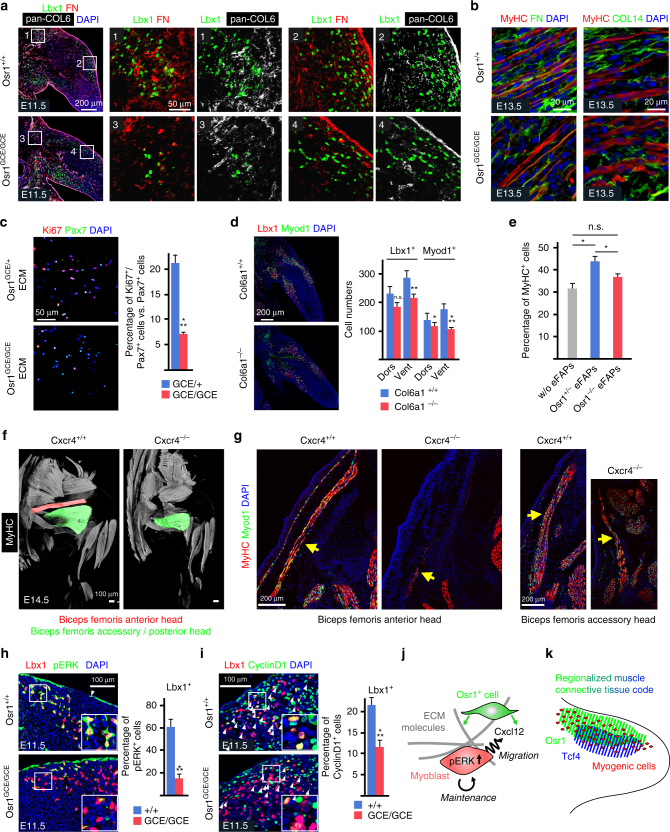
Fibro-adipogenic progenitors (FAPs) are an interstitial cell population in adult skeletal muscle that support muscle regeneration. During development, interstitial muscle connective tissue (MCT) cells support proper muscle patterning, however the underlying molecular mechanisms are not well understood and it remains unclear whether adult FAPs and embryonic MCT cells share a common lineage. We show here that mouse embryonic limb MCT cells expressing the transcription factor Osr1, differentiate into fibrogenic and adipogenic cells in vivo and in vitro defining an embryonic FAP-like population. Genetic lineage tracing shows that developmental Osr1 + cells give rise to a subset of adult FAPs. Loss of Osr1 function leads to a reduction of myogenic progenitor proliferation and survival resulting in limb muscle patterning defects. Transcriptome and functional analyses reveal that Osr1 + cells provide a critical pro-myogenic niche via the production of MCT specific extracellular matrix components and secreted signaling factors.
Overview
The claims and statistics of this paper haven’t been checked yet.
Free: it reads the open-access text and checks the first 5 claims that cite a source we can check. Create a free account to check every claim.
Integrity signals
Registry
Cites
Statistics
Figures
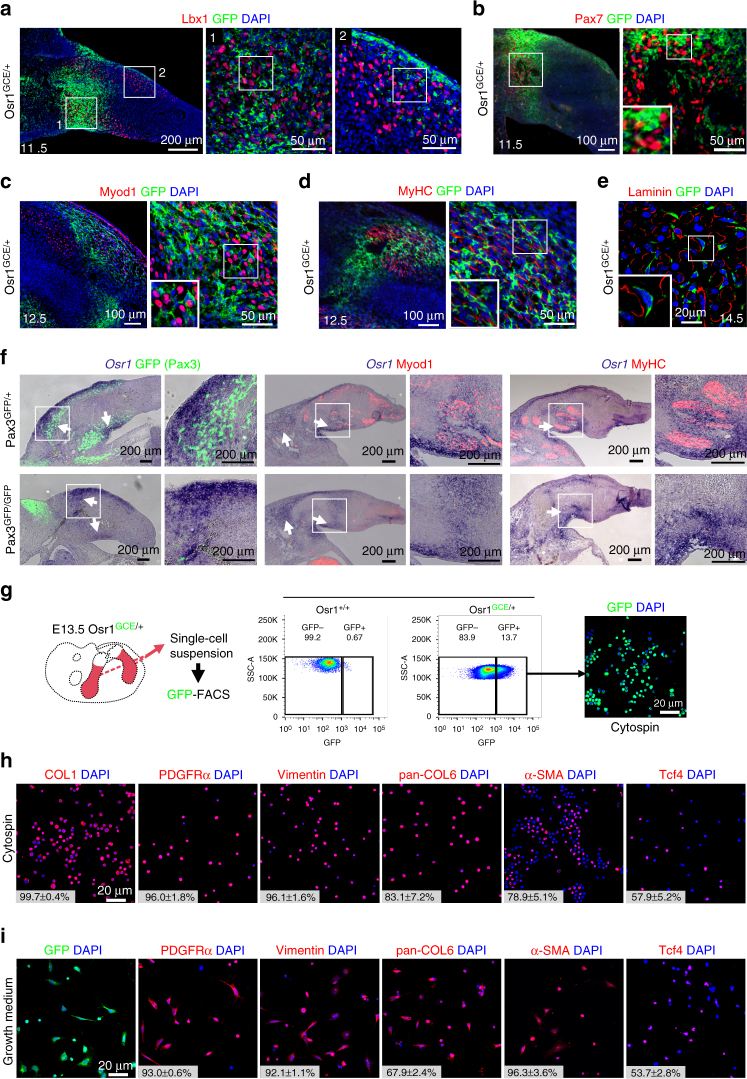
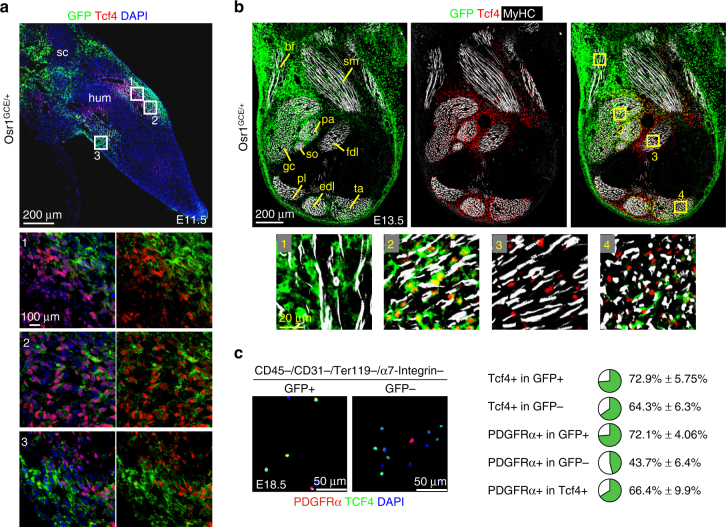
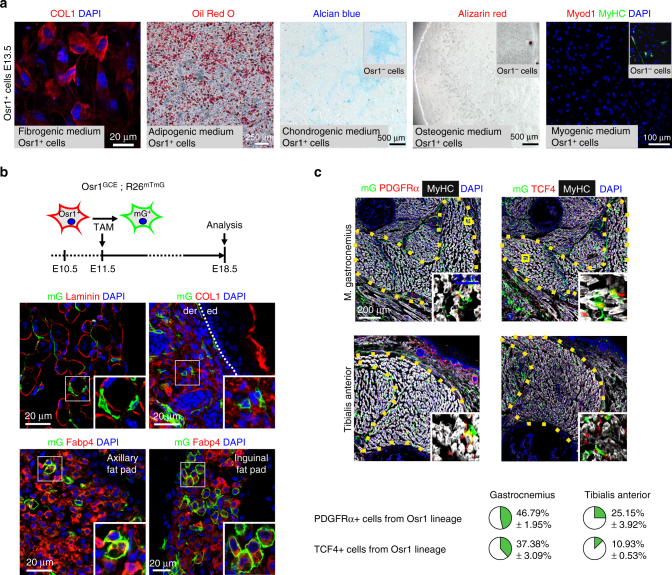
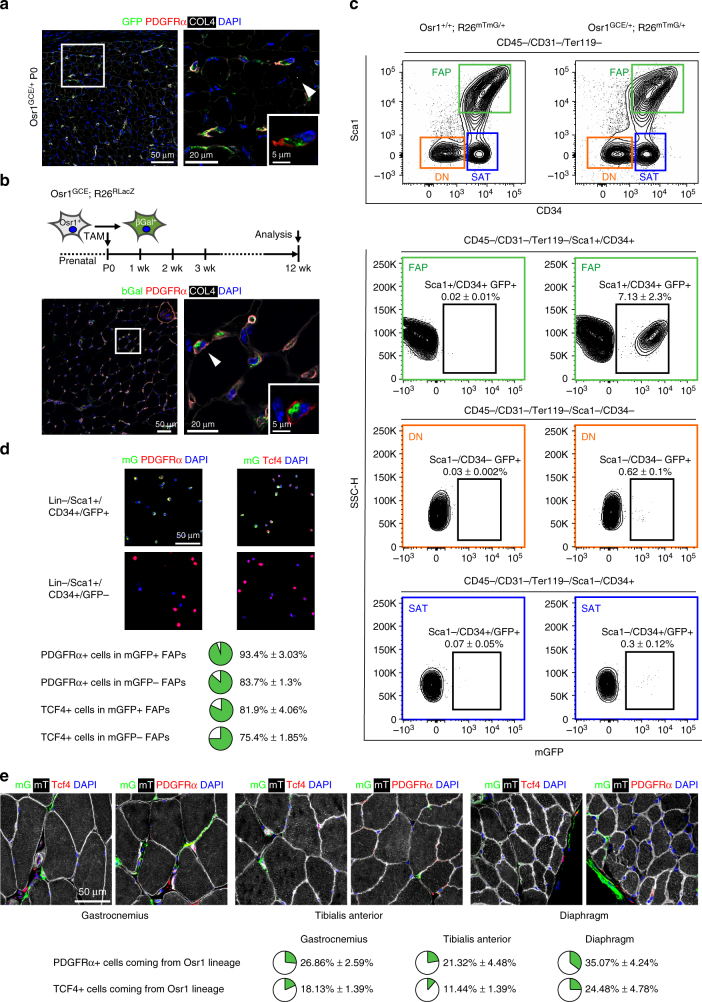
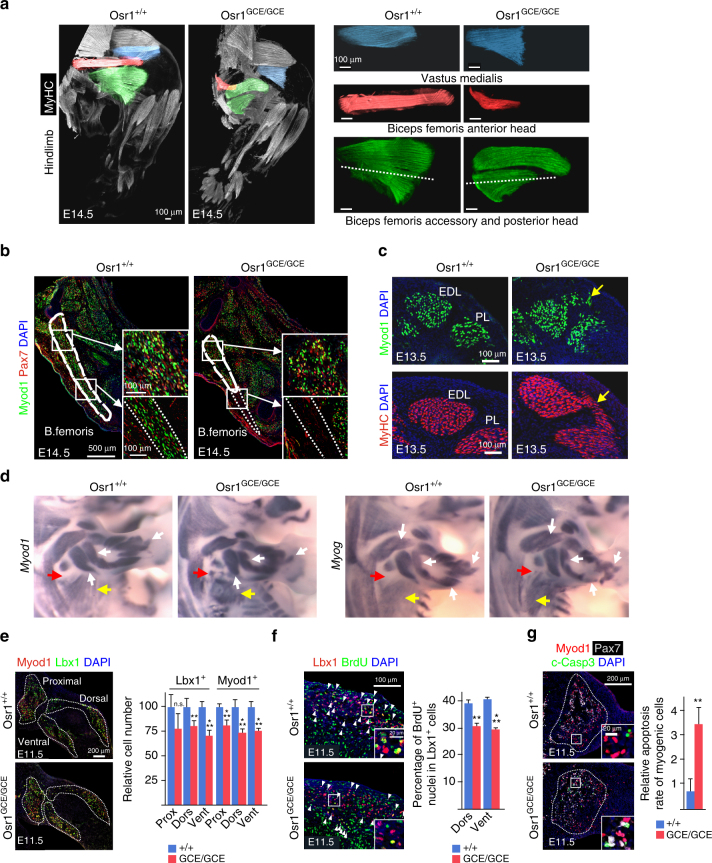
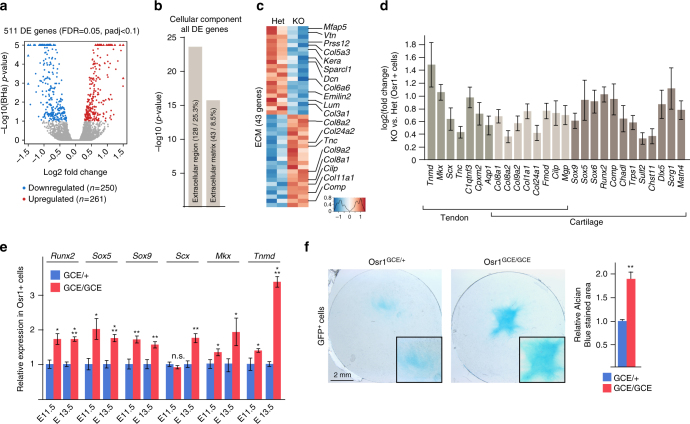
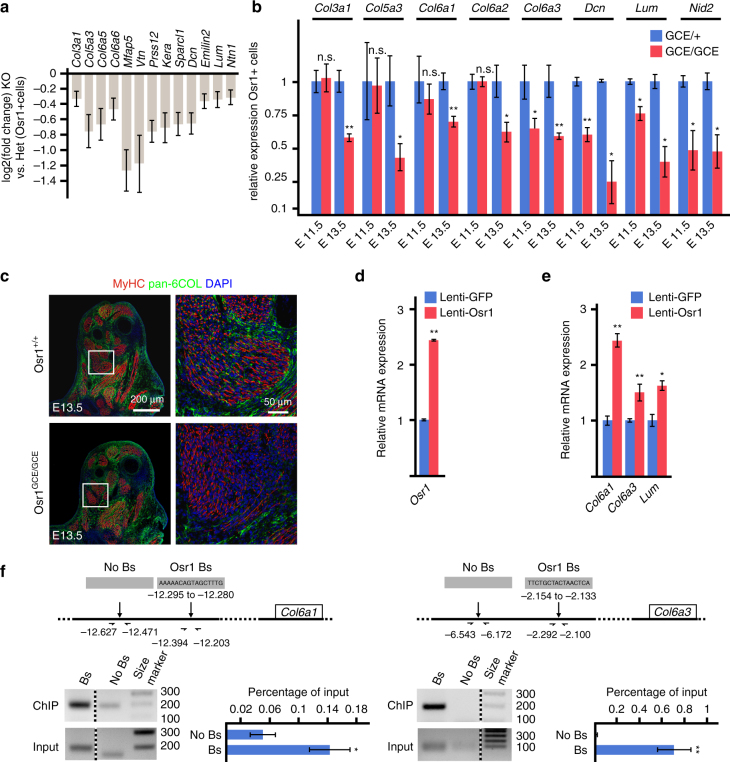
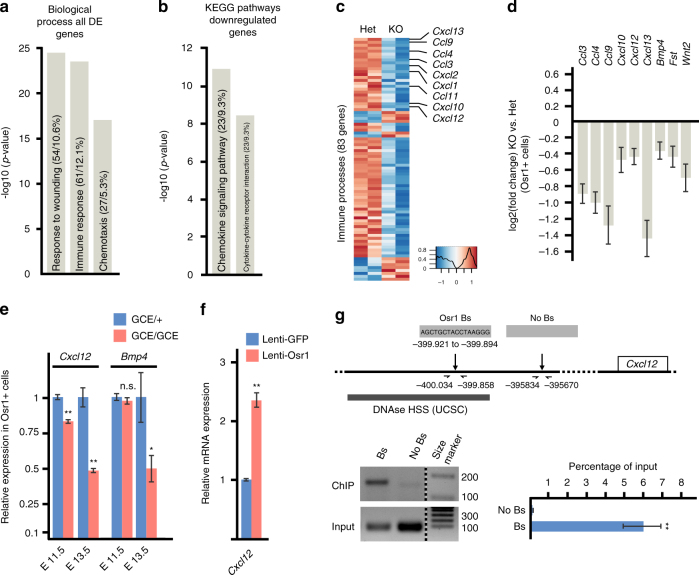
Verification
Claims the paper makes
The claims and statistics of this paper haven’t been checked yet.
Free: it reads the open-access text and checks the first 5 claims that cite a source we can check. Create a free account to check every claim.
Claims other papers make about this one
Each is checked against this paper’s own text: does it say what the citing paper says it does?
The source backs part of the claim, not all of it — or backs it for a different population, condition or comparison.
In the citing paper
“and could contribute to developmental abnormalities in fetuses exposed to thalidomide (25–30).”
From Defining the human C2H2 zinc finger degrome targeted by thalidomide analogs through CRBN (2018) · cites this paper as [27]
Experimental — accuracy not yet measuredThe source backs part of the claim, not all of it — or backs it for a different population, condition or comparison.
In the citing paper
“HIC1, HIC2, GZF1, OSR1, OSR2, and SALL4 have all been implicated in development”
From Defining the human C2H2 zinc finger degrome targeted by thalidomide analogs through CRBN (2018) · cites this paper as [27]
Experimental — accuracy not yet measuredThe check wasn’t confident either way, so it gives no verdict — never disputed.
In the citing paper
“Several of the ZFs identified as degraded in functional experiments, or in vitro binders that could be targeted with further drug development, have been implicated in human disease.”
From Defining the human C2H2 zinc finger degrome targeted by thalidomide analogs through CRBN (2018) · cites this paper as [27]
Experimental — accuracy not yet measured
Self-check
Percentages, sums and reported differences re-computed from the paper’s own numbers.
The self-check needs the paper’s full text.
Citations
Cites
Moderated estimation of fold change and dispersion for RNA-seq data with DESeq2
Love, M. I., Huber, W., & Anders, S. (2014) · Genome Biology · doi:10.1186/s13059-014-0550-8 · Cited by 95,106
Systematic and integrative analysis of large gene lists using DAVID bioinformatics resources
Huang, D. W., Sherman, B. T., & Lempicki, R. A. (2009) · Nature Protocols · doi:10.1038/nprot.2008.211 · Cited by 35,890
HTSeq—a Python framework to work with high-throughput sequencing data
Anders, S., Pyl, P. T., & Huber, W. (2015) · Bioinformatics · doi:10.1093/bioinformatics/btu638 · Cited by 21,464
Kim, D., Pertea, G., Trapnell, C., Pimentel, H., Kelley, R., & Salzberg, S. L. (2013) · Genome Biology · doi:10.1186/gb-2013-14-4-r36 · Cited by 12,668
The Human Genome Browser at UCSC
Kent, W. J., Sugnet, C. W., Furey, T. S., Roskin, K. M., Pringle, T. H., Zahler, A. M., & Haussler, A. D. (2002) · Genome Research · doi:10.1101/gr.229102 · Cited by 10,400
Topological domains in mammalian genomes identified by analysis of chromatin interactions
Dixon, J. R., Selvaraj, S., Yue, F., Kim, A., Li, Y., Shen, Y., Hu, M., Liu, J. S., & Ren, B. (2012) · Nature · doi:10.1038/nature11082 · Cited by 6,829
Generalized lacZ expression with the ROSA26 Cre reporter strain
Soriano, P. (1999) · Nature Genetics · doi:10.1038/5007 · Cited by 4,859
A global double-fluorescent Cre reporter mouse
Muzumdar, M. D., Tasic, B., Miyamichi, K., Li, L., & Luo, L. (2007) · genesis · doi:10.1002/dvg.20335 · Cited by 3,491
Function of the chemokine receptor CXCR4 in haematopoiesis and in cerebellar development
Zou, Y.-R., Kottmann, A. H., Kuroda, M., Taniuchi, I., & Littman, D. R. (1998) · Nature · doi:10.1038/31269 · Cited by 2,489
Muscle injury activates resident fibro/adipogenic progenitors that facilitate myogenesis
Joe, A. W. B., Yi, L., Natarajan, A., Le Grand, F., So, L., Wang, J., Rudnicki, M. A., & Rossi, F. M. V. (2010) · Nature Cell Biology · doi:10.1038/ncb2015 · Cited by 1,690
Cited by
Items 101–132 of 132
Murugapoopathy, V., Ramsay, C., Abouheif, E., & Gupta, I. R. (2025) · Differentiation · doi:10.1016/j.diff.2025.100930 · Cited by 1
Fetal programming and molecular characterization of the skeletal muscle development in ruminants
Costa, T. C. (2022) · doi:10.47328/ufvbbt.2022.488 · Cited by 1
Sadeghi, Z., Wu, Y. X., Vu, A., Song, L., Phan, W., Kim, J., Keast, J. R., Balis, U. J., DeLancey, J. O. L., Villalta, S. A., et al. (2023) · PubMed Central · Cited by 1
Yoo, K., Jo, Y., Yoo, T., Hann, S., Park, I., Kim, Y.-E., Kim, Y. L., Rhee, J., Song, I.-W., Kim, J.-H., et al. (2024) · eLife · doi:10.7554/elife.97662.1 · Cited by 1
Yoo, K., Jo, Y., Yoo, T., Hann, S., Park, I., Kim, Y.-E., Kim, Y. L., Rhee, J., Song, I.-W., Kim, J.-H., et al. (2024) · eLife · doi:10.7554/elife.97662.2 · Cited by 1
A spatial and single-cell transcriptomic atlas of the embryonic synovial joint and its explant modelPreprint
Onggo, S. E. S., Yea, J.-H., Young, K. K., Chen, K., Cho, H., Ning, Z., & Cahan, P. (2026) · bioRxiv (Cold Spring Harbor Laboratory) · doi:10.64898/2026.10.19.760178 · Cited by 1
Electronic interactions at noble metal surfaces studied by scanning tunneling microscopy
Knorr, N. (2002) · PubMed Central · doi:10.5075/epfl-thesis-2659 · Cited by 1
Osr1 Is a Critical Regulator of Macrophage Polarization in NASH Progression
Lee, J. Y., & Feng, G. (2023) · Cellular and Molecular Gastroenterology and Hepatology · doi:10.1016/j.jcmgh.2023.01.009 · Cited by 1
Développment et Croissance de la Musculature Épaxial et du Membre chez les Amniotes
Toulouse, G. (2024) · theses.fr (ABES) · doi:10.70675/6d3199a9z5bdcz4cd6z87e0z9c11a4dc70c6 · Cited by 1
Jafree, D. J., Russell, L. G., Σταθοπούλου, Α., O’Riordan, C., Rowan, C. J., White, A. T., Kolatsi‐Joannou, M., Price, K. L., Ivins, S. M., Ridge, L. A., et al. (2026) · Cell Reports · doi:10.1016/j.celrep.2026.117560 · Cited by 1
Rueckert, H. E., Mirando, A. J., Leinroth, A. P., Panken, D., Ibarra, J., McCloud, J., Chakkalakal, J. V., & Hilton, M. J. (2026) · Skeletal Muscle · doi:10.1186/s13395-026-00448-z · Cited by 1
DNA methylation networks during pig fetal development: a joint fused ridge estimation approachPreprint
Wachala, K. M., de Vos, J., Madsen, O., Derks, M. F. L., & Peeters, C. F. W. (2025) · bioRxiv (Cold Spring Harbor Laboratory) · doi:10.1101/2025.05.15.654211
Regulatory roots of cranial muscle diversity : developmental origins of muscular resilience
Grimaldi, A. (2020) · theses.fr (ABES) · doi:10.70675/d30bcd75z2b3dz47b1za355zb03cfbe26c48
PW1/Peg3+ cells respond to hypoxia in the adult heart
Sayed, A. (2019) · theses.fr (ABES) · doi:10.70675/722787a3z5efbz4ed9zadfaz56c6f7fc4045
The contribution of skeletal muscle interstitial cells to myogenesis
Issa, F., Relaix, F., & de Lima, J. E. (2026) · Skeletal Muscle · doi:10.1186/s13395-026-00414-9
Self-citationInvestigation of the molecular diversity defining muscle stem cell heterogeneity
Benavente-Diaz, M. (2020) · theses.fr (ABES) · doi:10.70675/a5426795z7433z497fz9698z63a9efd33839
Ren, Q., Yang, G., Wang, D., Wu, W., Wang, Y., Feng, J., Ma, K., Guo, A., Fan, M., Sun, Y., et al. (2026) · bioRxiv (Cold Spring Harbor Laboratory) · doi:10.64898/2026.01.15.699636
Laurichesse, Q. (2019) · theses.fr (ABES) · doi:10.70675/60d2d9faz48f5z464fzbb76z95e6d5119cf3
Nassari, S., Blavet, C., Duprez, D., & Fournier‐Thibault, C. (2022) · bioRxiv (Cold Spring Harbor Laboratory) · doi:10.1101/2022.07.08.499311
Self-citationCaruso, N., Zimmermann, A. K., Nigam, T., Becker, C., Lipson, K., & Helmbacher, F. (2022) · bioRxiv (Cold Spring Harbor Laboratory) · doi:10.1101/2022.09.14.507898
Guilhot, C. (2022) · theses.fr (ABES) · doi:10.70675/c046dd68z96f3z4aa5zafe6z81dcc388bcfa
Characterization of DPP4⁺ fibroadipogenic progenitors in skeletal muscle
Cheung, C. W. (2023) · cIRcle (University of British Columbia) · doi:10.14288/1.0435707
Sun, J., Ma, F., Yang, D., Chen, S., Wang, L., Li, S., Gu, M., & Zhang, W. (2026) · International Journal of Molecular Sciences · doi:10.3390/ijms27219774
La signalisation BMP régule la structuration des muscles des membres
Asfour, H. A. (2021) · theses.fr (ABES) · doi:10.70675/b1adedd5z5ec7z4283z8128zf787ddc864f8
Murugapoopathy, V., & Gupta, I. R. (2025) · Research Square · doi:10.21203/rs.3.rs-8435221/v1
Moucaud, B., Prince, E., Ragot, E., Renaud, Y., Jagla, K., Junion, G., & Soler, C. (2024) · doi:10.1371/journal.pbio.3002842.r005
Metadata
- Authors
- Vallecillo-García, P., Orgeur, M., vom Hofe-Schneider, S., Stumm, J., Kappert, V., Ibrahim, D. M., Börno, S. T., Hayashi, S., Relaix, F., Hildebrandt, K., Sengle, G., Koch, M., Timmermann, B., Marazzi, G., Sassoon, D. A., Duprez, D., & Stricker, S.
- Affiliations
- Max Planck Institute for Molecular Genetics (DE)
- Centre National de la Recherche Scientifique (FR)
- Inserm (FR)
- University of Cologne (DE)
- Sorbonne Université (FR)
- Corresponding author
- Stricker, Sigmar
- ORCID
- Venue
- Nature Communications
- Published
- 2017-10-31
- Volume
- 8
- Issue
- 1
- Pages
- 1218-1218
- ISSN
- 2041-1723 (ISSN-L)
- PMC
- PMC5662571
- OpenAlex
- W2766765760
- Semantic Scholar
- fae1be3fd35b5286771a5d16645e76ac261debcc
- Cited by
- 126
- References
- 70
- Citations by year
- 2026: 10 · 2025: 8 · 2024: 23 · 2023: 14 · 2022: 16 · 2021: 16 · 2020: 15 · 2019: 10 · 2018: 14
- FWCI
- 4.33
- Type
- journal article
- Language
- en
- Open access
- gold
- doi.org
- Licence
- cc-by
- creativecommons.org/licenses/by/4.0 (tdm)
- creativecommons.org/licenses/by/4.0 (vor)
- Locations
- Nature Communications (publishedVersion, cc-by)
- PubMed Central (publishedVersion, cc-by)
- PubMed (publishedVersion)
- Kölner Universitäts PublikationsServer (Universität zu Köln) (publishedVersion)
- HAL (submittedVersion, cc-by)
- HAL (submittedVersion)
- RePEc: Research Papers in Economics (submittedVersion)
- DOAJ (DOAJ: Directory of Open Access Journals) (submittedVersion, cc-by-sa)
- DOAJ (DOAJ: Directory of Open Access Journals) (submittedVersion)
- MPG.PuRe (Max Planck Society) (submittedVersion, other-oa)
- Refubium (Universitätsbibliothek der Freien Universität Berlin) (submittedVersion, cc-by)
- Universitätsbibliothek der FU Berlin Hochschulschriftenstelle u. Dokumentenserver (cc-by)
- Funders
- Deutsche Forschungsgemeinschaft (GK 1631)
- Fondation pour la Recherche Médicale (FRM DEQ20140329500, FDT20150532272, DEQ20140329500)
- Medizinischen Hochschule Hannover
- Freie Universität Berlin
- Topics
- Life Sciences › Biochemistry, Genetics and Molecular Biology › Molecular Biology › Muscle Physiology and Disorders
- Life Sciences › Biochemistry, Genetics and Molecular Biology › Molecular Biology › Developmental Biology and Gene Regulation
- Life Sciences › Biochemistry, Genetics and Molecular Biology › Molecular Biology › Congenital heart defects research
- Keywords
- OSR1, fibro-adipogenic progenitors, myogenesis, limb muscle development, muscle patterning, myogenic progenitor cells, lineage tracing, extracellular matrix, muscle regeneration, adipogenesis, fibrogenesis
- MeSH terms
- Transcription Factor 4, Aging, Animals, Connective Tissue, Embryo, Mammalian, Extremities, Gene Expression Regulation, Transcription Factors, Signal Transduction, Extracellular Matrix Proteins, Body Patterning, Muscle Development, Myoblasts, Mice
About these checks
Registry, retraction, Cites and statistics results are computed, not judged, with one exception: a printed reference that no index lists is read once by a model before it counts as a citation error. Claims are extracted by a model and kept only when their quote appears verbatim in the text; each cited source is then checked, with a model’s help, for whether it says what the claim relies on. Those verdicts can be wrong — read the claim’s quote and the cited source before relying on one.
Statistics and arithmetic are recomputed, not judged.
Confidence bands are shown only for fields calibrated on our annotated test set. None is calibrated yet, so no band is shown.
What counts as a claim ›How we measure confidence ›How we check this ›
Are you an author, or do you see a problem with this page? Request a review
Data sources
Bibliographic data: Semantic Scholar, OpenAlex, Crossref.
Contains information from the Semantic Scholar Academic Graph Datasets, made available under the ODC Attribution License (ODC-BY 1.0).
Semantic Scholar’s data is described in: Kinney, R., et al. (2023). The Semantic Scholar Open Data Platform. arXiv:2301.10140.
