

The low affinity neurotrophin receptor CD271 regulates phenotype switching in melanoma
Open accessThe DOI matches its Crossref record; 72 of the 72 references it cites were found in a registry or an index.
Abstract
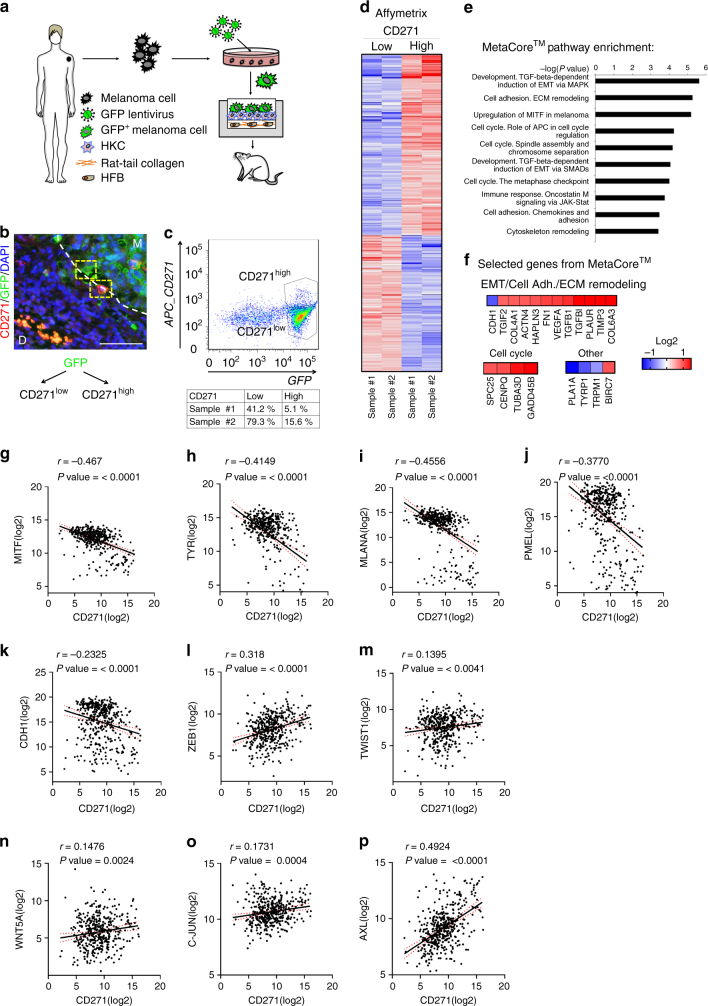
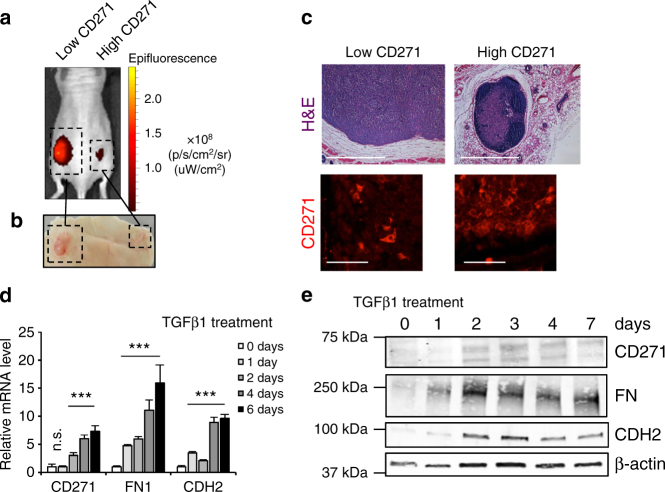
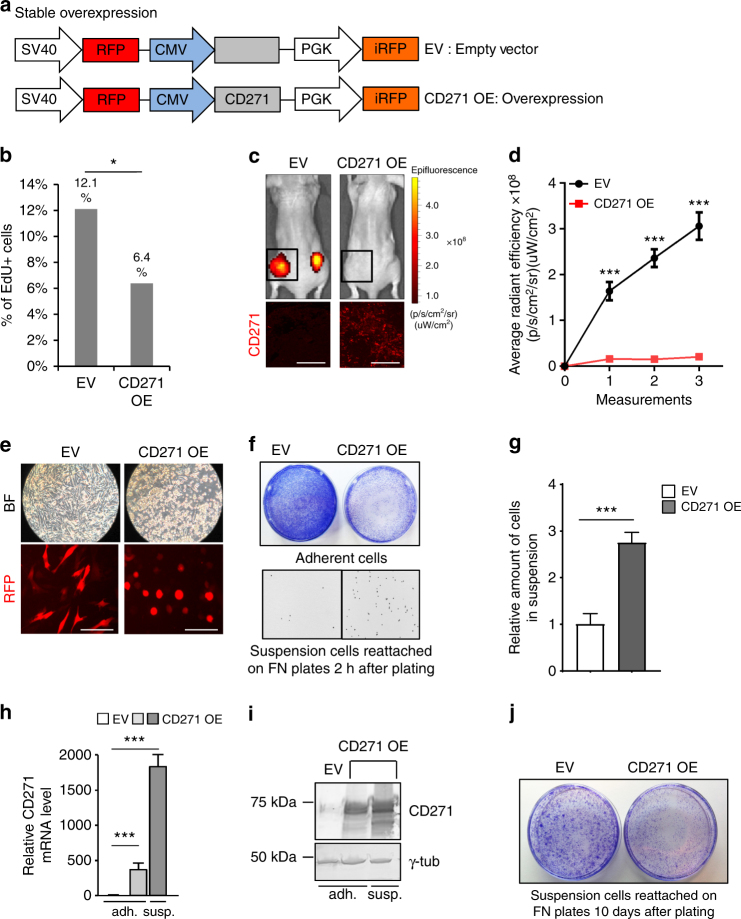
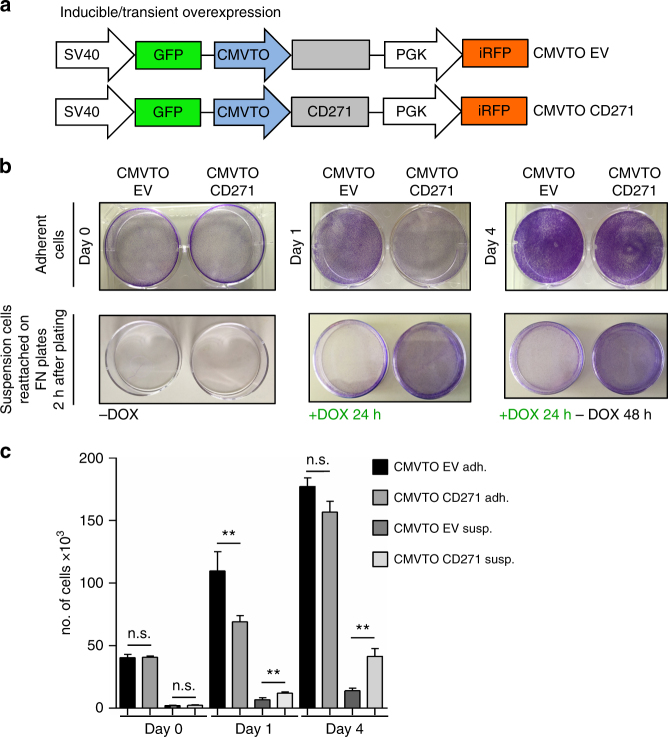
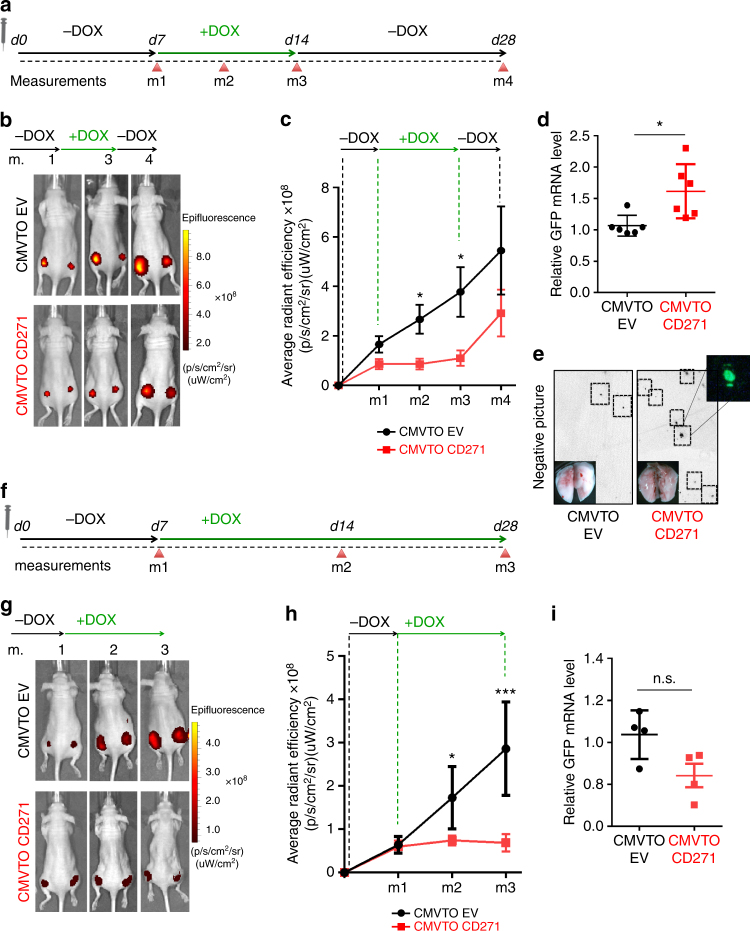
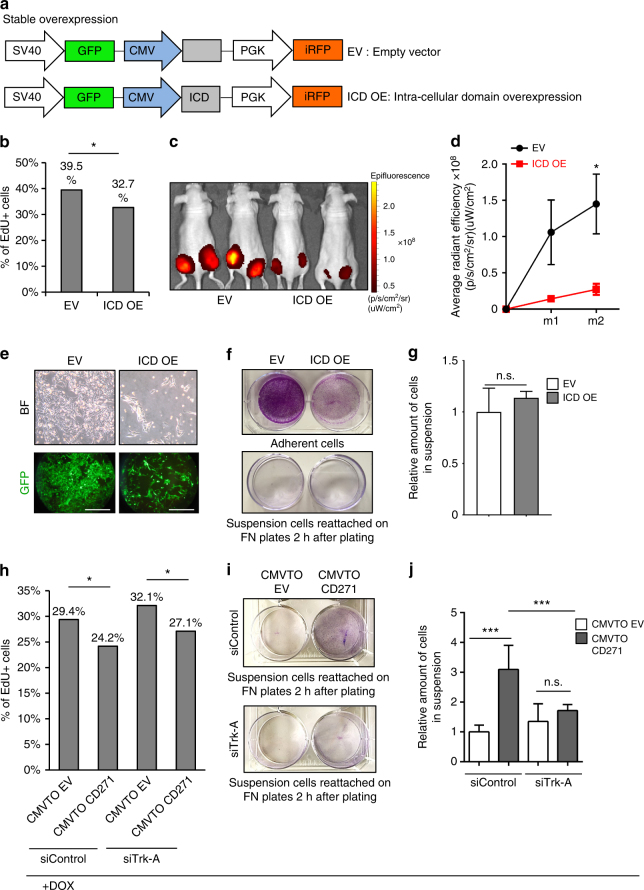
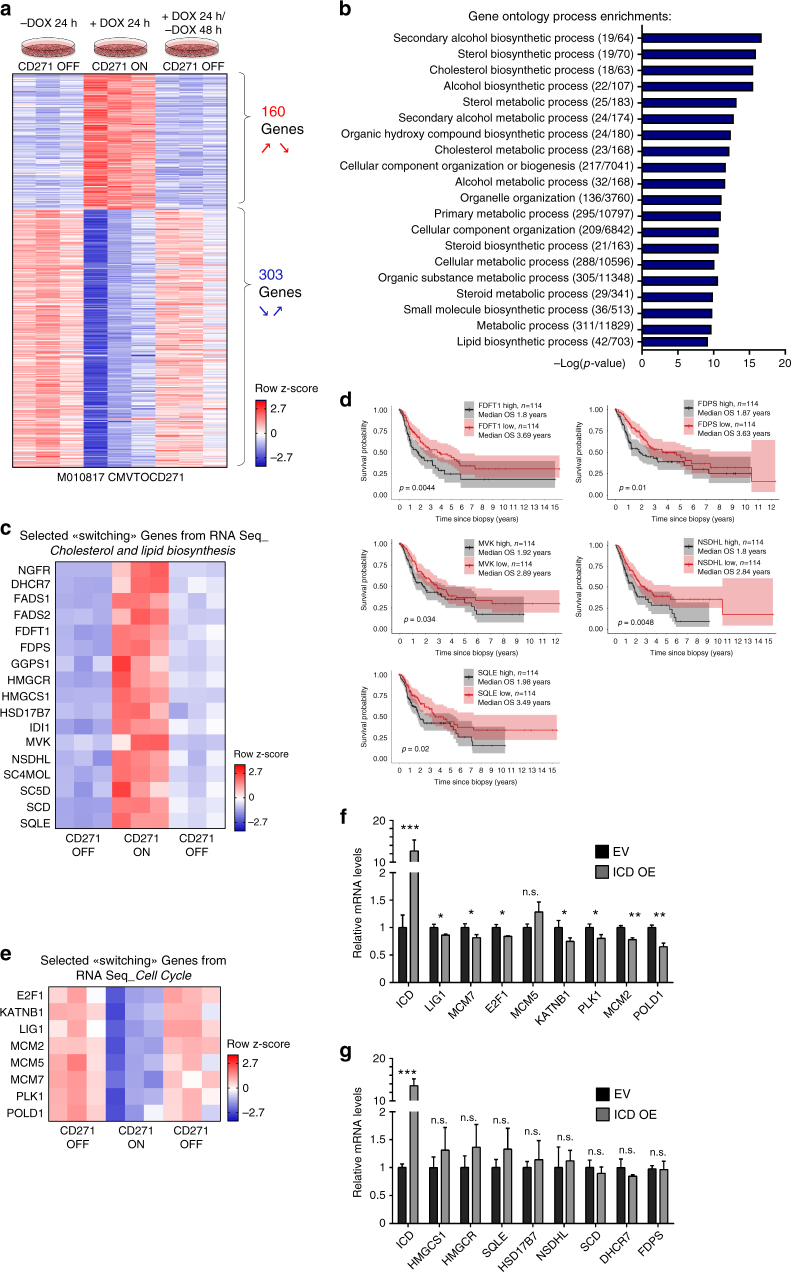
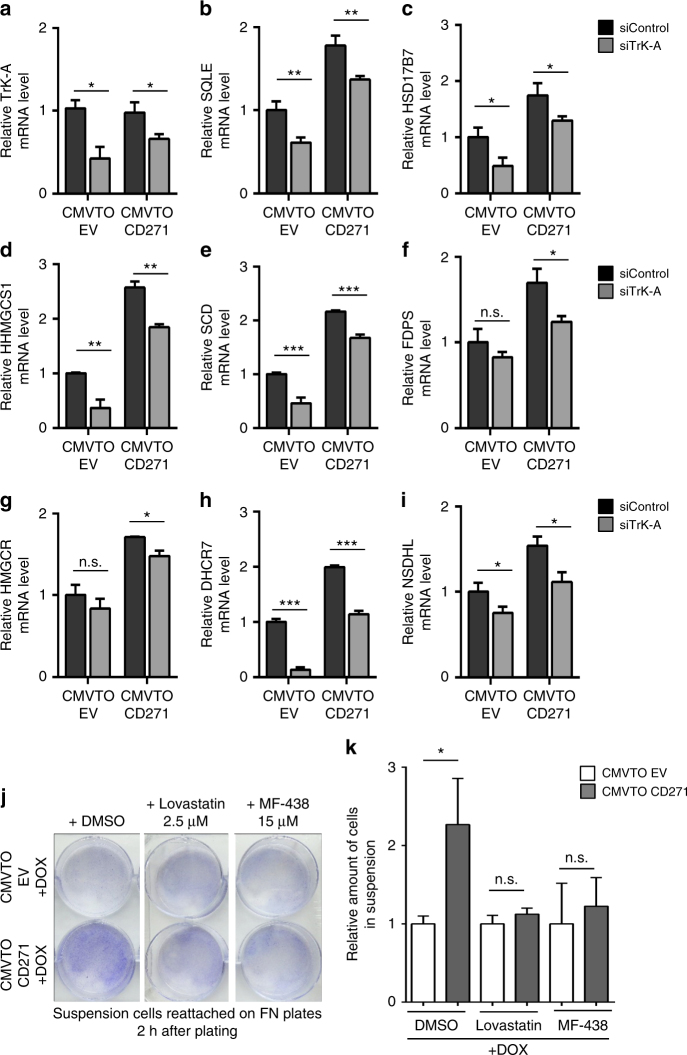
Cutaneous melanoma represents the most fatal skin cancer due to its high metastatic capacity. According to the “phenotype switching” model, the aggressive nature of melanoma cells results from their intrinsic potential to dynamically switch from a high-proliferative/low-invasive to a low-proliferative/high-invasive state. Here we identify the low affinity neurotrophin receptor CD271 as a key effector of phenotype switching in melanoma. CD271 plays a dual role in this process by decreasing proliferation, while simultaneously promoting invasiveness. Dynamic modification of CD271 expression allows tumor cells to grow at low levels of CD271, to reduce growth and invade when CD271 expression is high, and to re-expand at a distant site upon decrease of CD271 expression. Mechanistically, the cleaved intracellular domain of CD271 controls proliferation, while the interaction of CD271 with the neurotrophin receptor Trk-A modulates cell adhesiveness through dynamic regulation of a set of cholesterol synthesis genes relevant for patient survival.
Overview
The claims and statistics of this paper haven’t been checked yet.
Free: it reads the open-access text and checks the first 5 claims that cite a source we can check. Create a free account to check every claim.
Integrity signals
Registry
Cites
Statistics
Figures
Verification
Claims the paper makes
The claims and statistics of this paper haven’t been checked yet.
Free: it reads the open-access text and checks the first 5 claims that cite a source we can check. Create a free account to check every claim.
Claims other papers make about this one
Each is checked against this paper’s own text: does it say what the citing paper says it does?
The source backs part of the claim, not all of it — or backs it for a different population, condition or comparison.
In the citing paper
“other NCSC-associated factors, such as CD271/NGFR/p75NTR, PAX3, and FOXD3 promote melanoma cell invasiveness and metastasis formation22,70.”
From Epigenetic control of melanoma cell invasiveness by the stem cell factor SALL4 (2021) · cites this paper as [22]
Experimental — accuracy not yet measuredThe cited source says what the claim attributes to it.
In the citing paper
“Notably, SALL4 negatively controls melanoma invasiveness-related genes, as for instance NGFR, a potent regulator of phenotype switching22, FN1, VEGFR-1, CDH2 (N-cadherin), and other genes implicated in melanoma invasiveness.”
From Epigenetic control of melanoma cell invasiveness by the stem cell factor SALL4 (2021) · cites this paper as [22]
Self-check
Percentages, sums and reported differences re-computed from the paper’s own numbers.
The self-check needs the paper’s full text.
Citations
Cites
Ror2 signaling regulates Golgi structure and transport through IFT20 for tumor invasiveness
Nishita, M., Park, S.-Y., Nishio, T., Kamizaki, K., Wang, Z., Tamada, K., Takumi, T., Hashimoto, R., Otani, H., Pazour, G. J., et al. (2017) · Scientific Reports · doi:10.1038/s41598-016-0028-x · Cited by 15,947
The Epithelial-Mesenchymal Transition Generates Cells with Properties of Stem Cells
Mani, S. A., Guo, W., Liao, M.-J., Eaton, E. N., Ayyanan, A., Zhou, A. Y., Brooks, M., Reinhard, F., Zhang, C. C., Shipitsin, M., et al. (2008) · Cell · doi:10.1016/j.cell.2008.03.027 · Cited by 8,672
Dissecting the multicellular ecosystem of metastatic melanoma by single-cell RNA-seq
Tirosh, I., Izar, B., Prakadan, S. M., Wadsworth, M. H., Treacy, D., Trombetta, J. J., Rotem, A., Rodman, C., Lian, C., Murphy, G., et al. (2016) · Science · doi:10.1126/science.aad0501 · Cited by 4,944
Combined BRAF and MEK inhibition in melanoma with BRAF V600 mutations
Flaherty, K. T., Infante, J. R., Daud, A., Gonzalez, R., Kefford, R. F., Sosman, J., Hamid, O., Schuchter, L., Cebon, J., Ibrahim, N., et al. (2012) · New England Journal of Medicine · doi:10.1056/nejmoa1210093 · Cited by 2,810
A landscape of driver mutations in melanoma
Hodis, E., Watson, I. R., Kryukov, G. V., Arold, S. T., Imielinski, M., Theurillat, J.-P., Nickerson, E., Auclair, D., Li, L., Place, C., et al. (2012) · Cell · doi:10.1016/j.cell.2012.06.024 · Cited by 2,610
Targeting metastasis-initiating cells through the fatty acid receptor CD36
Pascual, G., Avgustinova, A., Mejetta, S., Martín, M., Castellanos, A., Attolini, C. S.-O., Berenguer, A., Prats, N., Toll, A., Hueto, J. A., et al. (2017) · Nature · doi:10.1038/nature20791 · Cited by 1,437
Rare cell variability and drug-induced reprogramming as a mode of cancer drug resistance
Shaffer, S. M., Dunagin, M. C., Torborg, S. R., Torre, E. A., Emert, B., Krepler, C., Beqiri, M., Sproesser, K., Brafford, P. A., Xiao, M., et al. (2017) · Nature · doi:10.1038/nature22794 · Cited by 1,218
Epithelial–mesenchymal plasticity in carcinoma metastasis
Tsai, J. H., & Yang, J. (2013) · Genes & Development · doi:10.1101/gad.225334.113 · Cited by 1,136
Acquired Resistance and Clonal Evolution in Melanoma during BRAF Inhibitor Therapy
Shi, H., Hugo, W., Kong, X., Hong, A., Koya, R. C., Moriceau, G., Chodon, T., Guo, R., Johnson, D. B., Dahlman, K. B., et al. (2014) · Cancer Discovery · doi:10.1158/2159-8290.cd-13-0642 · Cited by 982
In vivo Switching of Human Melanoma Cells between Proliferative and Invasive States
Hoek, K. S., Eichhoff, O. M., Schlegel, N. C., Döbbeling, U., Kobert, N., Schaerer, L., Hemmi, S., & Dummer, R. (2008) · Cancer Research · doi:10.1158/0008-5472.can-07-2491 · Cited by 743
Self-citation
Research works printed but not linked: 1
- Boiko AD Human melanoma-initiating cells express neural crest nerve growth factor receptor CD271 Nature 2010 466 133 137 10.1038/nature09161 20596026 PMC2898751 · DOI · Paper page
Cited by
Phenotype plasticity as enabler of melanoma progression and therapy resistance
Arozarena, I., & Wellbrock, C. (2019) · Nature Reviews Cancer · doi:10.1038/s41568-019-0154-4 · Cited by 381
Landscape of helper and regulatory antitumour CD4+ T cells in melanoma
Oliveira, G., Stromhaug, K., Cieri, N., Iorgulescu, J. B., Klaeger, S., Wolff, J. O., Rachimi, S., Chea, V., Krause, K., Freeman, S. S., et al. (2022) · Nature · doi:10.1038/s41586-022-04682-5 · Cited by 196
García-Silva, S., Benito-Martín, A., Nogués, L., Hernández-Barranco, A., Mazariegos, M. S., Santos, V., Hergueta-Redondo, M., Ximénez-Embún, P., Kataru, R. P., Lopez, A. A., et al. (2021) · Nature Cancer · doi:10.1038/s43018-021-00272-y · Cited by 189
Self-citationEvolution of delayed resistance to immunotherapy in a melanoma responder
Liu, D., Lin, J., Robitschek, E. J., Kasumova, G. G., Heyde, A., Shi, A., Kraya, A., Zhang, G., Moll, T. O. C., Frederick, D. T., et al. (2021) · Nature Medicine · doi:10.1038/s41591-021-01331-8 · Cited by 148
“…studies have defined an NGFR-High program within a subset of melanoma cells in association with dedifferentiation 35 , increased invasiveness and decreased proliferation 16 , and demonstrated that functional relevance to targeted therapy resistance 15,39,40 and immunotherapy in vitro/in vivo 41 .”
Reversal of pre-existing NGFR-driven tumor and immune therapy resistance
Boshuizen, J., Vredevoogd, D. W., Krijgsman, O., Ligtenberg, M. A., Blankenstein, S., de Bruijn, B., Frederick, D. T., Kenski, J. C. N., Parren, M., Brüggemann, M., et al. (2020) · Nature Communications · doi:10.1038/s41467-020-17739-8 · Cited by 124
“In melanoma (which are non-epithelial cells), dedifferentiation and phenotype switching resemble EMT 37 , processes to which NGFR is known to contribute 24 .”
InfluentialTargeting SOX10-deficient cells to reduce the dormant-invasive phenotype state in melanoma
Capparelli, C., Purwin, T. J., Glasheen, M. Q., Caksa, S., Tiago, M., Wilski, N. A., Pomante, D., Rosenbaum, S. R., Nguyen, M. Q., Cai, W., et al. (2022) · Nature Communications · doi:10.1038/s41467-022-28801-y · Cited by 111
Tang, Y., Durand, S., Dalle, S., & Caramel, J. (2020) · Cancers · doi:10.3390/cancers12082154 · Cited by 124
Pietrobono, S., Anichini, G., Sala, C., Manetti, F., Almada, L. L., Pepe, S., Carr, R. M., Paradise, B. D., Sarkaria, J. N., Davila, J. I., et al. (2020) · Nature Communications · doi:10.1038/s41467-020-19575-2 · Cited by 95
Lipid metabolic Reprogramming: Role in Melanoma Progression and Therapeutic Perspectives
Pellerin, L., Carrié, L., Dufau, C., Nieto, L., Ségui, B., Levade, T., Riond, J., & Andrieu‐Abadie, N. (2020) · Cancers · doi:10.3390/cancers12113147 · Cited by 97
Melanoma dedifferentiation induced by IFN-γ epigenetic remodeling in response to anti–PD-1 therapy
Kim, Y. J., Sheu, K. M., Tsoi, J., Abril-Rodríguez, G., Medina, E., Grasso, C. S., Torrejon, D. Y., Champhekar, A. S., Litchfield, K., Swanton, C., et al. (2021) · Journal of Clinical Investigation · doi:10.1172/jci145859 · Cited by 83
Yan, B. Y., Garcet, S., Gulati, N., Kiecker, F., Fuentes‐Duculan, J., Gilleaudeau, P., Sullivan-Whalen, M. M., Shemer, A., Mitsui, H., & Krueger, J. G. (2018) · Experimental Dermatology · doi:10.1111/exd.13805 · Cited by 72
Loss of Ambra1 promotes melanoma growth and invasion
Leo, L. D., Bodemeyer, V., Bosisio, F. M., Claps, G., Carretta, M., Rizza, S., Faienza, F., Frías, A., Khan, S., Bordi, M., et al. (2021) · Nature Communications · doi:10.1038/s41467-021-22772-2 · Cited by 67
Diener, J., & Sommer, L. (2021) · Stem Cells Translational Medicine · doi:10.1002/sctm.20-0351 · Cited by 64
Self-citationHuang, F., Gonçalves, C., Bartish, M., Rémy-Sarrazin, J., Issa, M. E., Cordeiro, B., Guo, Q., Émond, A., Attias, M., Yang, W., et al. (2021) · Journal of Clinical Investigation · doi:10.1172/jci140752 · Cited by 69
“A wealth of data suggests that the cell surface receptor NGFR serves as a molecular switch to promote melanoma dedifferentiation (29, 30, 32, 33).”
BackgroundMelanoma Plasticity: Promoter of Metastasis and Resistance to Therapy
Huang, F., Santinon, F., González, R. E. F., & Rincon, S. V. D. (2021) · Frontiers in Oncology · doi:10.3389/fonc.2021.756001 · Cited by 76
“While we showed that the MNK1/2eIF4E axis promotes the translation of NGFR, melanoma phenotype switching and therapy resistance (146), little evidence links NGFR inhibition with a fully reversed switch in melanoma cells (13, 79).”
BackgroundCellular and molecular biology of cancer stem cells in melanoma: Possible therapeutic implications
Marzagalli, M., Raimondi, M., Fontana, F., Marelli, M. M., Moretti, R. M., & Limonta, P. (2019) · Seminars in Cancer Biology · doi:10.1016/j.semcancer.2019.06.019 · Cited by 68
Hartman, M. L., Sztiller-Sikorska, M., Gajos-Michniewicz, A., & Czyż, M. (2020) · Cells · doi:10.3390/cells9010142 · Cited by 57
SMAD signaling promotes melanoma metastasis independently of phenotype switching
Tuncer, E., Calçada, R. R., Zingg, D., Varum, S., Cheng, P. F., Freiberger, S. N., Deng, C., Kleiter, I., Levesque, M. P., Dummer, R., et al. (2019) · Journal of Clinical Investigation · doi:10.1172/jci94295 · Cited by 62
“, the reversible switch from a proliferative MITFhiAXLlo melanoma cell to an invasive MITFloAXLhi cell, is thought to represent a key mechanism underlying melanoma progression (2, 3, 5, 14, 49).”
BackgroundSelf-citationMenon, D. R., Hammerlindl, H., Torrano, J., Schaider, H., & Fujita, M. (2020) · Theranostics · doi:10.7150/thno.42523 · Cited by 58
Wu, R., Li, K., Yuan, M., & Luo, K. Q. (2021) · Oncogene · doi:10.1038/s41388-021-01691-y · Cited by 60
Cancer Cell Phenotype Plasticity as a Driver of Immune Escape in Melanoma
Benboubker, V., Boivin, F., Dalle, S., & Caramel, J. (2022) · Frontiers in Immunology · doi:10.3389/fimmu.2022.873116 · Cited by 56
“Notably, ZEB1 increases the expression of NCSC markers, such as NGFR (62), a major regulator of phenotype switching in melanoma (63).”
BackgroundERG orchestrates chromatin interactions to drive prostate cell fate reprogramming
Li, F., Yuan, Q., Di, W., Xia, X., Liu, Z., Mao, N., Li, L., Li, C., He, J., Li, Y., et al. (2020) · Journal of Clinical Investigation · doi:10.1172/jci137967 · Cited by 50
Mechanisms of Melanoma Progression and Treatment Resistance: Role of Cancer Stem-like Cells
Hmada, Y. A., Brodell, R. T., Kharouf, N., Flanagan, T. W., AlAmodi, A. A., Hassan, S.-Y., Shalaby, H., Hassan, S.-L., Haïkel, Y., Megahed, M., et al. (2024) · Cancers · doi:10.3390/cancers16020470 · Cited by 49
BORIS/CTCFL promotes a switch from a proliferative towards an invasive phenotype in melanoma cells
Janssen, S. M., Moscona, R., Elchebly, M., Papadakis, A. I., Redpath, M., Wang, H., Rubin, E., van Kempen, L. C. L. T., & Spatz, A. (2020) · Cell Death Discovery · doi:10.1038/s41420-019-0235-x · Cited by 42
p75NTR−/− mice exhibit an alveolar bone loss phenotype and inhibited PI3K/Akt/β‐catenin pathway
Wang, Y., Yang, K., Li, G., Liu, R., Liu, J., Li, J., Tang, M., Zhao, M., Song, J., & Wen, X. (2020) · Cell Proliferation · doi:10.1111/cpr.12800 · Cited by 40
Epigenetic control of melanoma cell invasiveness by the stem cell factor SALL4
Diener, J., Baggiolini, A., Pernebrink, M., Dalcher, D., Lerra, L., Cheng, P. F., Varum, S., Häusel, J., Stierli, S., Treier, M., et al. (2021) · Nature Communications · doi:10.1038/s41467-021-25326-8 · Cited by 34
Self-citationWislet‐Gendebien, S., Vandervelden, G., & Rogister, B. (2018) · Frontiers in Molecular Neuroscience · doi:10.3389/fnmol.2018.00244 · Cited by 37
CD271+ Cells Are Diagnostic and Prognostic and Exhibit Elevated MAPK Activity in SHH Medulloblastoma
Liang, L., Coudière-Morrison, L., Tatari, N., Stromecki, M., Fresnoza, A. L., Porter, C. J., Bigio, M. R. D., Hawkins, C. E., Chan, J. A.-W., Ryken, T. C., et al. (2018) · Cancer Research · doi:10.1158/0008-5472.can-18-0027 · Cited by 37
p53 Family in Resistance to Targeted Therapy of Melanoma
Vlašić, I., Horvat, A., Tadijan, A., & Slade, N. (2022) · International Journal of Molecular Sciences · doi:10.3390/ijms24010065 · Cited by 44
Verykiou, S., Alexander, M., Edwards, N., Plummer, R., Chaudhry, B., Lovat, P. E., & Hill, D. S. (2018) · British Journal of Dermatology · doi:10.1111/bjd.17333 · Cited by 34
Effect of melanoma stem cells on melanoma metastasis (Review)
Yin, Q., Shi, X., Lan, S., Jin, H., & Wu, D. (2021) · Oncology Letters · doi:10.3892/ol.2021.12827 · Cited by 36
A Transient Metabolic State in Melanoma Persister Cells Mediated by Chemotherapeutic Treatments
Karki, P., Angardi, V., Mier, J. C., & Orman, M. A. (2022) · Frontiers in Molecular Biosciences · doi:10.3389/fmolb.2021.780192 · Cited by 36
“Since high aldehyde dehydrogenase (ALDH) activity and increased expression of stem cell biomarkers, CD271, CD44 and CD34, were shown to be associated with the phenotypic plasticity of melanoma cells (Held et al., 2010; Luo et al., 2012; Paulis et al., 2015; Restivo et al., 2017), we performed the ALDEFLUOR assay and f…”
MethodDecoding molecular programs in melanoma brain metastases
Radke, J., Schumann, E., Onken, J., Koll, R., Acker, G., Bodnar, B., Senger, C., Tierling, S., Möbs, M., Vajkoczy, P., et al. (2022) · Nature Communications · doi:10.1038/s41467-022-34899-x · Cited by 34
New Insights into the Phenotype Switching of Melanoma
Pagliuca, C., Leo, L. D., & Zio, D. D. (2022) · Cancers · doi:10.3390/cancers14246118 · Cited by 33
Durand, S., Tang, Y., Pommier, R. M., Benboubker, V., Grimont, M., Boivin, F., Barbollat‐Boutrand, L., Cumunel, E., Dupeuble, F., Eberhardt, A., et al. (2024) · Oncogene · doi:10.1038/s41388-024-03010-7 · Cited by 29
Grzywa, T. M., Klicka, K., Paskal, W., Dudkiewicz-Garbicz, J., Wejman, J., Pyźlak, M., & Wlodarski, P. K. (2020) · PLoS ONE · doi:10.1371/journal.pone.0234707 · Cited by 27
“miR-410-3p-targets axis was found to be associated with cancer signaling and BRAFi resistance pathways, including MAPK, mTOR [38], and neurotrophins [39] microRNAs contribute to the development and progression of melanoma [11].”
BackgroundEscape from NK cell tumor surveillance by NGFR-induced lipid remodeling in melanoma
Lehmann, J., Caduff, N., Krzywińska, E., Stierli, S., Salas-Bastos, A., Loos, B., Levesque, M. P., Dummer, R., Stockmann, C., Münz, C., et al. (2023) · Science Advances · doi:10.1126/sciadv.adc8825 · Cited by 30
“In our previous study, we associated the observed phenotype switch mediated by NGFR with cell-intrinsic changes in cellular adhesion ( 23 ).”
InfluentialSelf-citationGuetter, S., König, C., Koerkel-Qu, H., Markiewicz, A., Scheitler, S., Katzer, M., Berneburg, M., Renner, P., Cucuruz, B., Guttenberger, L., et al. (2025) · Nature Cancer · doi:10.1038/s43018-025-00963-w · Cited by 24
Expression of Neural Crest Markers GLDC and ERRFI1 is Correlated with Melanoma Prognosis
Jäger, K., Larribère, L., Wu, H., Weiß, C., Gebhardt, C., & Utikal, J. S. (2019) · Cancers · doi:10.3390/cancers11010076 · Cited by 20
Larribère, L., Kuphal, S., Sachpekidis, C., Sachindra, Hüser, L., Bosserhoff, A., & Utikal, J. S. (2018) · Cancers · doi:10.3390/cancers10110451 · Cited by 28
The convergent roles of CD271/p75 in neural crest-derived melanoma plasticity
Kasemeier‐Kulesa, J. C., & Kulesa, P. M. (2018) · Developmental Biology · doi:10.1016/j.ydbio.2018.04.008 · Cited by 13
“When CD271 overexpression is controlled in a reversible manner, the gene expression signatures defining proliferative versus invasive cells hardly overlapped with previously established profiles (Restivo et al., 2017).”
BackgroundResultInfluentialKusienicka, A., Bukowska-Straková, K., Cieśla, M., Nowak, W. N., Bronisz-Budzyńska, I., Seretny, A., Żukowska, M., Jeż, M., Krutyhołowa, R., Taha, H., et al. (2022) · International Journal of Molecular Sciences · doi:10.3390/ijms23073596 · Cited by 16
Thier, B., Zhao, F., Stupia, S., Brüggemann, A., Koch, J., Schulze, N., Horn, S., Coch, C., Hartmann, G., Sucker, A., et al. (2022) · Journal for ImmunoTherapy of Cancer · doi:10.1136/jitc-2021-003863 · Cited by 17
Beretti, F., Gatti, M., Zavatti, M., Bassoli, S., Pellacani, G., & Maraldi, T. (2023) · Biomedicines · doi:10.3390/biomedicines11041229 · Cited by 17
“It has been demonstrated that the NGFR-p53 feedback loop is essential for maintaining the melanoma-initiating stem cell-like phenotype, suggesting NGFR as a potential target for developing a molecule-based therapy against melanoma [8,9].”
BackgroundBRAF-Inhibitor-Induced Metabolic Alterations in A375 Melanoma Cells
Karki, P., Sensenbach, S., Angardi, V., & Orman, M. A. (2021) · Metabolites · doi:10.3390/metabo11110777 · Cited by 14
Cis-topic modelling of single-cell epigenomesPreprint
Gonzalez-Blas, C., Minnoye, L., Papasokrati, D., Aibar, S., Hulselmans, G., Christiaens, V., Davie, K., Wouters, J., & Aerts, S. (2018) · bioRxiv · doi:10.1101/370346 · Cited by 15
“In vitro studies of melanoma lines (Bittner et al., 2000; Hoek et al., 2006; Restivo et al., 2017), and later in vivo studies (Eichhoff et al., 2010; Hoek et al., 2008; Wouters et al., 2014), have identified two stable subpopulations in melanoma, characterised by very distinct transcriptomes: a…”
BackgroundLimonta, P., Chiaramonte, R., & Casati, L. (2024) · Cancers · doi:10.3390/cancers16162861 · Cited by 13
Comaposada-Baró, R., Benito-Martínez, A., Escribano-Saiz, J. J., Franco, M. L., Ceccarelli, L., Calatayud-Baselga, I., Mira, H., & Vilar, M. (2023) · Frontiers in Molecular Neuroscience · doi:10.3389/fnmol.2023.1237458 · Cited by 10
“Furthermore, in melanoma, metastasis is promoted by the upregulation of cholesterol synthesis genes by the axis NGF/TrkA/p75 NTR (Restivo et al., 2017).”
BackgroundLopes-Rodrigues, V., Nyantakyi, S. A., Lun, X., Han, X., Zhang, J., Ramanujan, A., Salim, S., Saleeb, M., Babes, L., Chou, A. Z., et al. (2025) · EMBO Molecular Medicine · doi:10.1038/s44321-025-00297-1 · Cited by 7
“…(Herrmann et al, 1993; Walch et al, 1999; Marchetti et al, 2004; Shonukan et al, 2003; Truzzi et al, 2008; Kasemeier-Kulesa and Kulesa, 2018; Restivo et al, 2017) and have implicated p75 NTR in resistance to targeted BRAF and MEK inhibition (Rambow et al, 2018; Lehraiki et al, 2015) and…”
Xing, Y., Zhang, Y., Li, J., Tang, Y., Zhang, J., Yang, R., Tang, H., Qian, H., Huang, D., Chen, W., et al. (2024) · ACS Applied Materials & Interfaces · doi:10.1021/acsami.4c11686 · Cited by 8
RELA is required for CD271 expression and stem-like characteristics in hypopharyngeal cancer
Nakazato, A., Mochizuki, M., Shibuya‐Takahashi, R., Fujimori, H., Fujii, K., Saijoh, S., Morita, S., Yamazaki, T., Imai, T., Sato, I., et al. (2022) · Scientific Reports · doi:10.1038/s41598-022-22736-6 · Cited by 7
Kasemeier‐Kulesa, J. C., Spengler, J. A., Muolo, C. E., Morrison, J. A., Woolley, T. E., Schnell, S. D., & Kulesa, P. M. (2021) · Developmental Biology · doi:10.1016/j.ydbio.2021.08.007 · Cited by 7
Moscona, R., Janssen, S. M., Elchebly, M., Papadakis, A. I., Rubin, E., & Spatz, A. (2023) · Pigment Cell & Melanoma Research · doi:10.1111/pcmr.13089 · Cited by 6
Guendisch, U., Loos, B., Cheng, P. F., Dummer, R., Levesque, M. P., Varum, S., & Sommer, L. (2022) · Frontiers in Cell and Developmental Biology · doi:10.3389/fcell.2022.916033 · Cited by 7
Self-citationQuaglia, F., Krishn, S. R., Sossey‐Alaoui, K., Rana, P. S., Pluskota, E., Park, P. H., Shields, C. D., Lin, S., McCue, P. A., Kossenkov, A. V., et al. (2022) · Scientific Reports · doi:10.1038/s41598-022-21711-5 · Cited by 6
Harmony in chaos: understanding cancer through the lenses of developmental biology
Lent, J. V., & Baggiolini, A. (2024) · Molecular Oncology · doi:10.1002/1878-0261.13594 · Cited by 5
Mendelson, K., Martin, T. C., Nguyen, C. B., Hsu, M., Xu, J., Lang, C. C. V., Dummer, R., Saenger, Y. M., Messina, J. L., Sondak, V. K., et al. (2024) · JCI Insight · doi:10.1172/jci.insight.166611 · Cited by 7
Self-citationTey, S.-R., Mueller, M., Reilly, M. L., Switalski, C., Robertson, S., Sakanaka, M., & Suzuki, M. (2022) · Stem Cells International · doi:10.1155/2022/2735414 · Cited by 6
Koziej, P., Kluszczyńska, K., Hartman, M. L., & Czyż, M. (2023) · International Journal of Molecular Sciences · doi:10.3390/ijms24097891 · Cited by 5
Modelling Cell Invasion: A Review of What JD Murray and the Embryo Can Teach Us
Kulesa, P. M., Kasemeier‐Kulesa, J. C., Morrison, J. A., McLennan, R., McKinney, M. C., & Bailey, C. M. (2021) · Bulletin of Mathematical Biology · doi:10.1007/s11538-021-00859-7 · Cited by 6
Ferreres, J. R., Vinyals, A., Campos-Martín, R., Espín, R., Podlipnik, S., Ramos, R., Bertrán, E., Carrera, C., Marcoval, J., Malvehy, J., et al. (2024) · Molecular Oncology · doi:10.1002/1878-0261.13688 · Cited by 13
Lee, M., Yoon, Y.-J., Lee, J. Y., Hwang, M., Park, S., Lee, M. H., Um, S., Cho, B. C., Rheey, J., Sato, T., et al. (2025) · Scientific Reports · doi:10.1038/s41598-025-29214-9 · Cited by 10
“Relative to LCO monocultures, cocultured LCOs upregulated EMT-related genes 18,19 , suggesting that coculture induces EMT in LCOs.”
Knowles, O., Doldan, P., Hillier-Richardson, I., Lunetto, S., Lunt, S., Youssef, G., Gammon, L., Mackenzie, I. C., Philpott, M. P., Rizvi, H., et al. (2025) · BMC Biology · doi:10.1186/s12915-025-02336-2 · Cited by 6
Protein‐based classification of melanoma differentiation subtypes
Lim, S. Y., Pedersen, B., & Rizos, H. (2022) · Pigment Cell & Melanoma Research · doi:10.1111/pcmr.13041 · Cited by 3
Multi-omics analysis reveals different cholesterol metabolism subtypes in colorectal cancer
Sun, Y., Kong, D., Zhang, H., Fan, J., Lu, S., Yang, W., Xiang, R., Zhang, Q., Pei, W., Feng, L., et al. (2025) · Discover Oncology · doi:10.1007/s12672-025-03993-z · Cited by 2
The YYR (YY1- RKIP) Regulatory Axis in the pathogenesis of Cancer and Immune Evasion
Ung, W., & Bonavida, B. (2025) · Journal of Experimental & Clinical Cancer Research · doi:10.1186/s13046-025-03583-5 · Cited by 2
NGFR induces melanoma invasion and immunotherapy resistance through myosin light chain 2 modulation
Nogués, L., Santos, V., García-Agulló, J., García-Silva, S., Maiques, Ó., Hernández‐Barranco, A., Mazariegos, M. S., Pérez‐Martínez, M., Torres-Ruiz, R., Saltari, A., et al. (2026) · The EMBO Journal · doi:10.1038/s44318-026-00803-2 · Cited by 1
“NGFR is considered a key regulator of phenotype switching in both targeted and immunotherapy resistance (Boshuizen et al, 2020; Lehraiki et al, 2015; Restivo et al, 2017).”
Self-citationInvasiveness‐triggered state transition in malignant melanoma cells
Wang, H., Zhang, Y., Ma, J., Li, J., Zhang, J., & Yu, Y. (2018) · Journal of Cellular Physiology · doi:10.1002/jcp.27405 · Cited by 1
“Recently, Restivo et al. (2017) identified that dynamic p75NTR expression enabled melanoma cells to grow at low levels, to reduce growth, and invade at overexpression levels.”
BackgroundInfluentialHochheuser, C., Boltjes, A., Keller, K. M., Tol, S., van de Mheen, M., Barros, C. P., van Gestel-Fadaie, Z., Kuilenburg, A. B. P., van Hooff, S. R., Voermans, C., et al. (2024) · bioRxiv (Cold Spring Harbor Laboratory) · doi:10.1101/2024.09.13.612231 · Cited by 1
“Specifically, Restivo and colleagues found that the high NGFR levels in metastatic cells had to return to basal levels in order for the cells to regain their proliferative capacity ( 63 ).”
BackgroundHan, X., Xie, M., & Ibáñez, C. F. (2025) · bioRxiv (Cold Spring Harbor Laboratory) · doi:10.1101/2025.10.20.683521 · Cited by 1
Df, G., Fil'chenkov, A. A., & Николаевна, И. Т. (2020) · Voprosy Onkologii · doi:10.37469/0507-3758-2020-66-4-336-345
A Comprehensive Analysis of Cutaneous Melanoma Patients in Greece Based on Multi-Omic Data
Kontogianni, G., Voutetakis, K., Piroti, G., Kypreou, K. P., Stefanaki, I., Vlachavas, E., Pilalis, E. D., Stratigos, A., Chatziioannou, A. A., & Papadodima, O. (2023) · Cancers · doi:10.3390/cancers15030815
Lopes-Rodrigues, V., Nyantakyi, S. A., Lun, X. Q., Zhang, J., Ramanujuan, A., Salim, S., Saleeb, M., Senger, D. L., & Ibáñez, C. F. (2023) · bioRxiv (Cold Spring Harbor Laboratory) · doi:10.1101/2023.11.13.566904
Peeper, D. S., Schieven, S. M., Traets, J. J. H., Velds, A., de Rink, I., Nieto, J. S., Song, J., Vliet, A. V., George, A., Nieuwland, M., et al. (2025) · Research Square · doi:10.21203/rs.3.rs-6506453/v1
Brain-derived neurotrophic factor as a target for the search of anti-addiction drugs
Khalimanov, M. S., Grigorevskikh, E., Zavadich, K. A., Sologov, S. I., Traschenkova, D. A., Александровна, Т. К., Polikarpov, E., Sologova, S. S., Kudlay, D. A., & Smolyarchuk, Е. А. (2025) · Pharmacy & Pharmacology · doi:10.19163/2307-9266-2025-13-1-4-19
NGFR as a biomarker and actionable target in cisplatin-based chemoradiotherapy–resistant HNSCCPreprint
García-Agulló, J., Santos, V., Garcia‐Mayea, Y., de Luxán‐Delgado, B., Bataller, M., LLeonart, M. E., Rodrigo, J. P., Garcia-Pedrero, J. M., Álvarez‐Fernández, M., & Peinado, H. (2025) · medRxiv · doi:10.64898/2025.12.25.25342978
Abou‐Hamad, J., Delisle, S., Garland, B., Hersi, M., Cook, D. P., & Sabourin, L. A. (2026) · Biochimica et Biophysica Acta (BBA) - Molecular Cell Research · doi:10.1016/j.bbamcr.2026.120118
García-Agulló, J., Santos, V., Kalisz, M., Marques, M., Andrada, E., Berca, C., Ramal, M., de Villarreal, J. M., Pérez‐Martínez, M., Eckstein, M., et al. (2026) · bioRxiv (Cold Spring Harbor Laboratory) · doi:10.64898/2026.05.14.725085
García-Agulló, J., Santos, V., Garcia‐Mayea, Y., de Luxán‐Delgado, B., Bataller, M., LLeonart, M. E., Rodrigo, J. P., Garcia-Pedrero, J. M., Álvarez‐Fernández, M., & Peinado, H. (2026) · Oral Oncology · doi:10.1016/j.oraloncology.2026.108080
García-Agulló, J., Santos, V., Majem, B., Munárriz-Paños, M., Serrano-Ron, L., de Mora, M. C., Sánchez‐Redondo, S., Achuela, D., Aceña-Gonzalo, T., Sentís, I., et al. (2026) · bioRxiv (Cold Spring Harbor Laboratory) · doi:10.64898/2026.08.24.746602
Metadata
- Authors
- Restivo, G., Diener, J., Cheng, P. F., Kiowski, G., Bonalli, M., Biedermann, T., Reichmann, E., Levesque, M. P., Dummer, R., & Sommer, L.
- Affiliations
- University of Zurich (CH)
- University Hospital Zurich (CH)
- Corresponding author
- Sommer, Lukas
- ORCID
- Venue
- Nature Communications
- Published
- 2017-12-07
- Volume
- 8
- Issue
- 1
- Pages
- 1988-1988
- ISSN
- 2041-1723 (ISSN-L)
- PMC
- PMC5719420
- OpenAlex
- W2773581742
- Semantic Scholar
- bf13191a3d2801c8474ddf4001e84106d7e52db9
- Cited by
- 82
- References
- 72
- Citations by year
- 2026: 5 · 2025: 10 · 2024: 8 · 2023: 8 · 2022: 14 · 2021: 13 · 2020: 12 · 2019: 4 · 2018: 8
- FWCI
- 2.68
- Type
- journal article
- Language
- en
- Update notices
- correction (2018-01-22)
- Open access
- gold
- doi.org
- Licence
- cc-by
- creativecommons.org/licenses/by/4.0 (tdm)
- creativecommons.org/licenses/by/4.0 (vor)
- Locations
- Nature Communications (publishedVersion, cc-by)
- PubMed Central (publishedVersion, cc-by)
- PubMed (publishedVersion)
- Zurich Open Repository and Archive (University of Zurich) (acceptedVersion, cc-by)
- RePEc: Research Papers in Economics (submittedVersion)
- DOAJ (DOAJ: Directory of Open Access Journals) (submittedVersion, cc-by-sa)
- DOAJ (DOAJ: Directory of Open Access Journals) (submittedVersion)
- Zurich Open Repository and Archive (University of Zurich) (submittedVersion, cc-by)
- Zurich Open Repository and Archive (University of Zurich)
- Funders
- National Science Foundation
- Schweizerischer Nationalfonds zur Förderung der Wissenschaftlichen Forschung
- Functional Genomics Center Zurich
- Topics
- Life Sciences › Biochemistry, Genetics and Molecular Biology › Molecular Biology › Melanoma and MAPK Pathways
- Health Sciences › Medicine › Oncology › Cutaneous Melanoma Detection and Management
- Health Sciences › Medicine › Oncology › Cancer Cells and Metastasis
- Keywords
- p75 neurotrophin receptor, neurotrophin receptors, cutaneous melanoma, phenotypic switching, tumor cell proliferation, tumor invasion, cytoplasmic domain, cell adhesion, metastasis
- MeSH terms
- Protein Domains, Animals, Cell Adhesion, Female, Fibroblasts, Humans, Male, Melanoma, Mice, Nude, Neoplasm Invasiveness, Nerve Tissue Proteins, Skin, Skin Neoplasms, Keratinocytes, Gene Expression Regulation, Neoplastic, Receptors, Nerve Growth Factor, Receptor, trkA, Xenograft Model Antitumor Assays, RNA, Small Interfering, Cell Line, Tumor, Tissue Culture Techniques, Cell Proliferation, Mice, Gene Knockdown Techniques, HEK293 Cells
About these checks
Registry, retraction, Cites and statistics results are computed, not judged, with one exception: a printed reference that no index lists is read once by a model before it counts as a citation error. Claims are extracted by a model and kept only when their quote appears verbatim in the text; each cited source is then checked, with a model’s help, for whether it says what the claim relies on. Those verdicts can be wrong — read the claim’s quote and the cited source before relying on one.
Statistics and arithmetic are recomputed, not judged.
Confidence bands are shown only for fields calibrated on our annotated test set. None is calibrated yet, so no band is shown.
What counts as a claim ›How we measure confidence ›How we check this ›
Are you an author, or do you see a problem with this page? Request a review
Data sources
Bibliographic data: Semantic Scholar, OpenAlex, Crossref.
Contains information from the Semantic Scholar Academic Graph Datasets, made available under the ODC Attribution License (ODC-BY 1.0).
Semantic Scholar’s data is described in: Kinney, R., et al. (2023). The Semantic Scholar Open Data Platform. arXiv:2301.10140.
