

The low affinity neurotrophin receptor CD271 regulates phenotype switching in melanoma
Open accessThe DOI matches its Crossref record; 72 of the 72 references it cites were found in a registry or an index.
Abstract
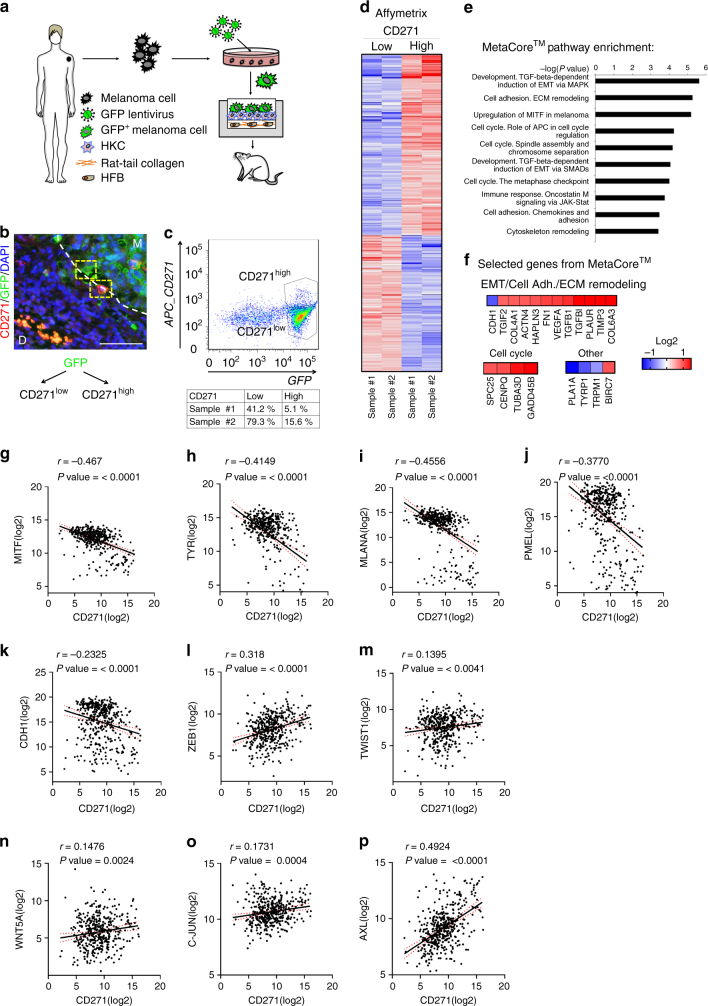
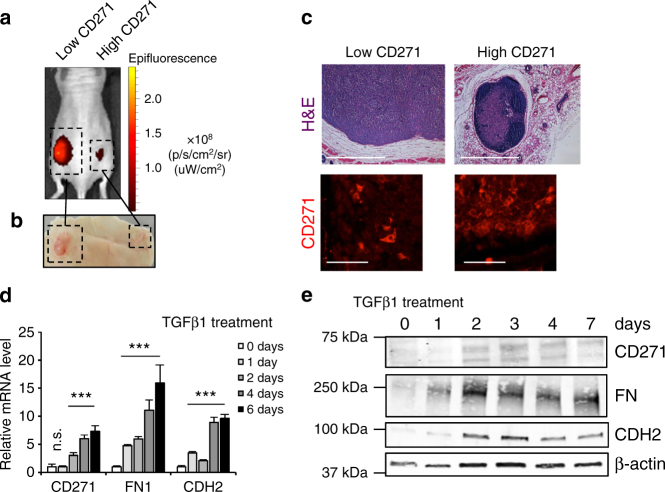
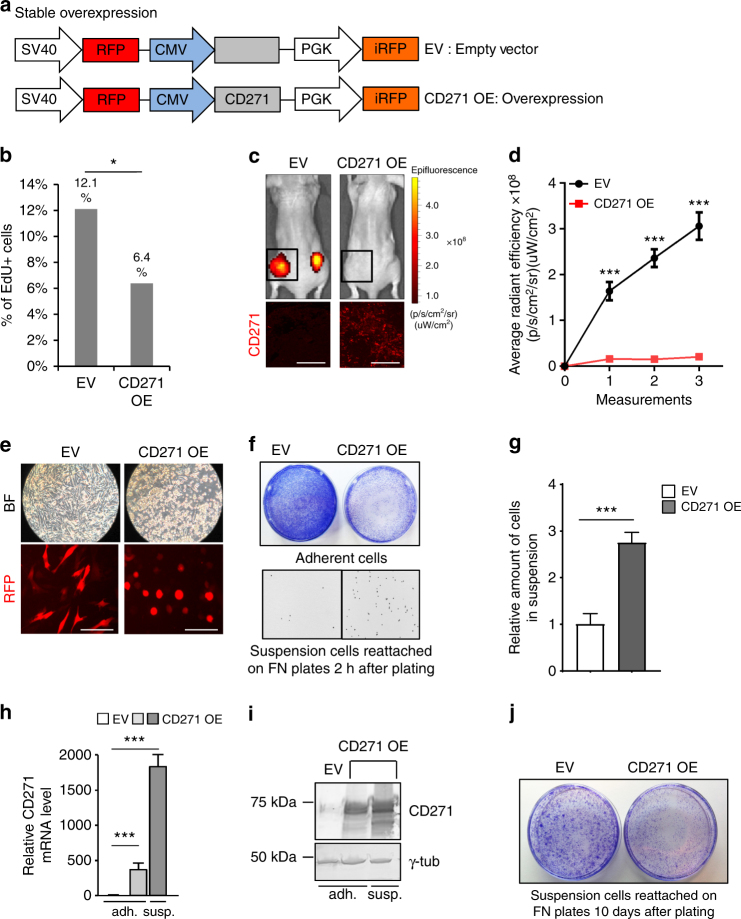
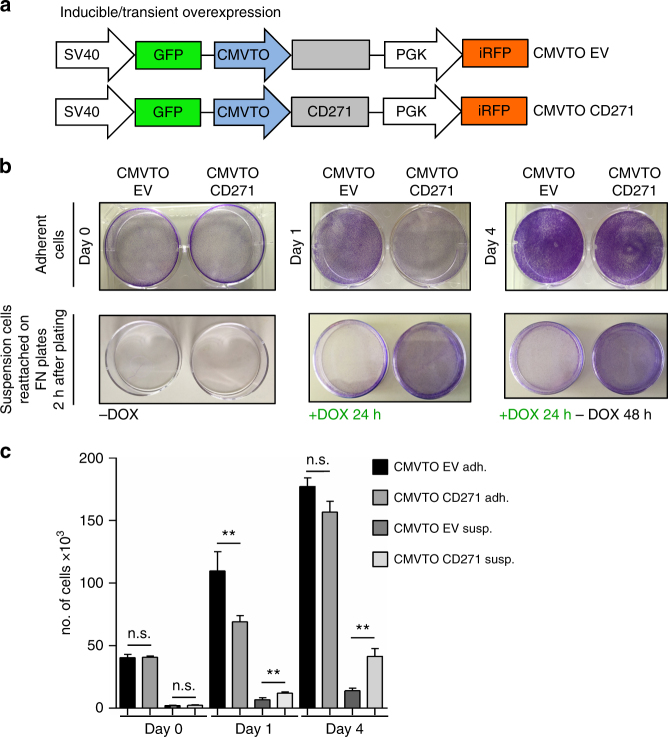
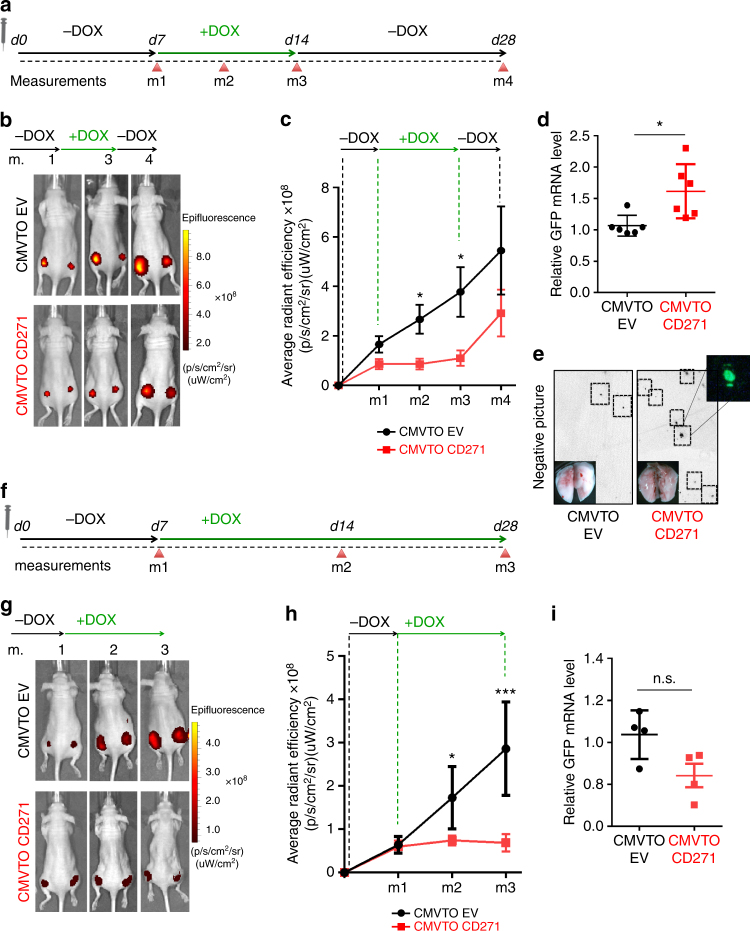
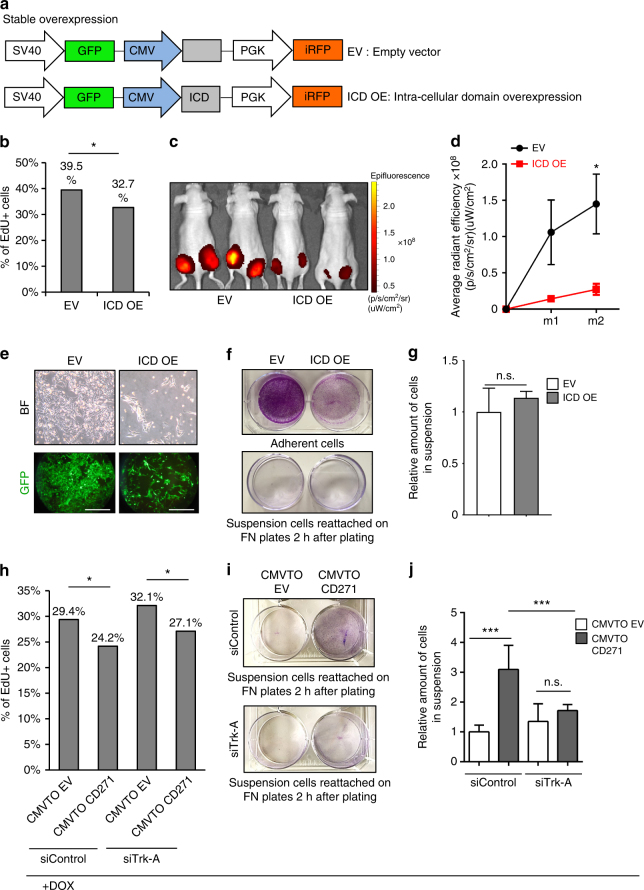
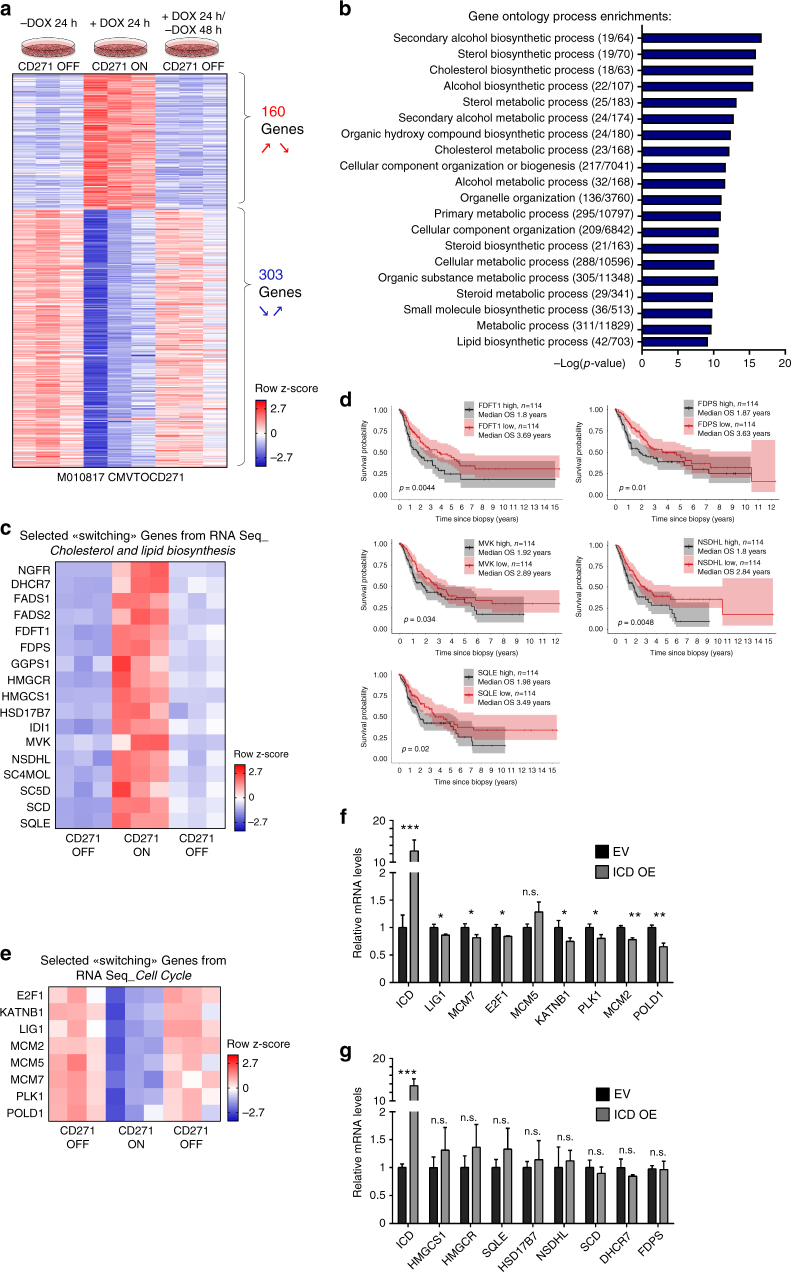
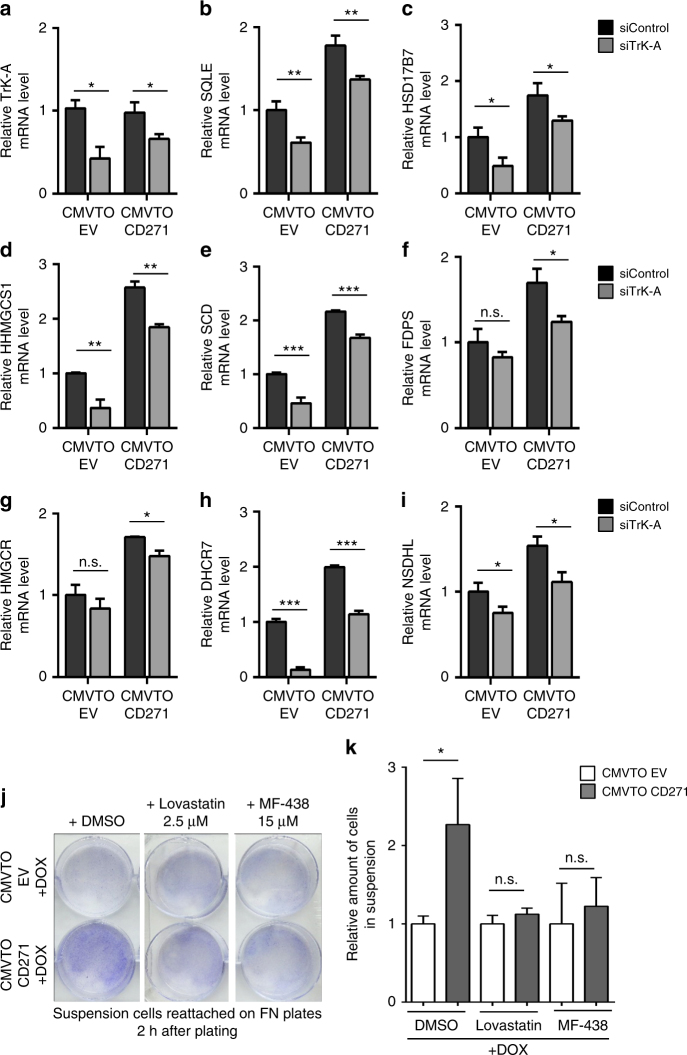
Cutaneous melanoma represents the most fatal skin cancer due to its high metastatic capacity. According to the “phenotype switching” model, the aggressive nature of melanoma cells results from their intrinsic potential to dynamically switch from a high-proliferative/low-invasive to a low-proliferative/high-invasive state. Here we identify the low affinity neurotrophin receptor CD271 as a key effector of phenotype switching in melanoma. CD271 plays a dual role in this process by decreasing proliferation, while simultaneously promoting invasiveness. Dynamic modification of CD271 expression allows tumor cells to grow at low levels of CD271, to reduce growth and invade when CD271 expression is high, and to re-expand at a distant site upon decrease of CD271 expression. Mechanistically, the cleaved intracellular domain of CD271 controls proliferation, while the interaction of CD271 with the neurotrophin receptor Trk-A modulates cell adhesiveness through dynamic regulation of a set of cholesterol synthesis genes relevant for patient survival.
Overview
The claims and statistics of this paper haven’t been checked yet.
Free: it reads the open-access text and checks the first 5 claims that cite a source we can check. Create a free account to check every claim.
Integrity signals
Registry
Cites
Statistics
Figures
Verification
Claims the paper makes
The claims and statistics of this paper haven’t been checked yet.
Free: it reads the open-access text and checks the first 5 claims that cite a source we can check. Create a free account to check every claim.
Claims other papers make about this one
Each is checked against this paper’s own text: does it say what the citing paper says it does?
The source backs part of the claim, not all of it — or backs it for a different population, condition or comparison.
In the citing paper
“other NCSC-associated factors, such as CD271/NGFR/p75NTR, PAX3, and FOXD3 promote melanoma cell invasiveness and metastasis formation22,70.”
From Epigenetic control of melanoma cell invasiveness by the stem cell factor SALL4 (2021) · cites this paper as [22]
Experimental — accuracy not yet measuredThe cited source says what the claim attributes to it.
In the citing paper
“Notably, SALL4 negatively controls melanoma invasiveness-related genes, as for instance NGFR, a potent regulator of phenotype switching22, FN1, VEGFR-1, CDH2 (N-cadherin), and other genes implicated in melanoma invasiveness.”
From Epigenetic control of melanoma cell invasiveness by the stem cell factor SALL4 (2021) · cites this paper as [22]
Self-check
Percentages, sums and reported differences re-computed from the paper’s own numbers.
The self-check needs the paper’s full text.
Citations
Cites
Ror2 signaling regulates Golgi structure and transport through IFT20 for tumor invasiveness
Nishita, M., Park, S.-Y., Nishio, T., Kamizaki, K., Wang, Z., Tamada, K., Takumi, T., Hashimoto, R., Otani, H., Pazour, G. J., et al. (2017) · Scientific Reports · doi:10.1038/s41598-016-0028-x · Cited by 15,947
The Epithelial-Mesenchymal Transition Generates Cells with Properties of Stem Cells
Mani, S. A., Guo, W., Liao, M.-J., Eaton, E. N., Ayyanan, A., Zhou, A. Y., Brooks, M., Reinhard, F., Zhang, C. C., Shipitsin, M., et al. (2008) · Cell · doi:10.1016/j.cell.2008.03.027 · Cited by 8,672
Dissecting the multicellular ecosystem of metastatic melanoma by single-cell RNA-seq
Tirosh, I., Izar, B., Prakadan, S. M., Wadsworth, M. H., Treacy, D., Trombetta, J. J., Rotem, A., Rodman, C., Lian, C., Murphy, G., et al. (2016) · Science · doi:10.1126/science.aad0501 · Cited by 4,944
Combined BRAF and MEK inhibition in melanoma with BRAF V600 mutations
Flaherty, K. T., Infante, J. R., Daud, A., Gonzalez, R., Kefford, R. F., Sosman, J., Hamid, O., Schuchter, L., Cebon, J., Ibrahim, N., et al. (2012) · New England Journal of Medicine · doi:10.1056/nejmoa1210093 · Cited by 2,810
A landscape of driver mutations in melanoma
Hodis, E., Watson, I. R., Kryukov, G. V., Arold, S. T., Imielinski, M., Theurillat, J.-P., Nickerson, E., Auclair, D., Li, L., Place, C., et al. (2012) · Cell · doi:10.1016/j.cell.2012.06.024 · Cited by 2,610
Targeting metastasis-initiating cells through the fatty acid receptor CD36
Pascual, G., Avgustinova, A., Mejetta, S., Martín, M., Castellanos, A., Attolini, C. S.-O., Berenguer, A., Prats, N., Toll, A., Hueto, J. A., et al. (2017) · Nature · doi:10.1038/nature20791 · Cited by 1,437
Rare cell variability and drug-induced reprogramming as a mode of cancer drug resistance
Shaffer, S. M., Dunagin, M. C., Torborg, S. R., Torre, E. A., Emert, B., Krepler, C., Beqiri, M., Sproesser, K., Brafford, P. A., Xiao, M., et al. (2017) · Nature · doi:10.1038/nature22794 · Cited by 1,218
Epithelial–mesenchymal plasticity in carcinoma metastasis
Tsai, J. H., & Yang, J. (2013) · Genes & Development · doi:10.1101/gad.225334.113 · Cited by 1,136
Acquired Resistance and Clonal Evolution in Melanoma during BRAF Inhibitor Therapy
Shi, H., Hugo, W., Kong, X., Hong, A., Koya, R. C., Moriceau, G., Chodon, T., Guo, R., Johnson, D. B., Dahlman, K. B., et al. (2014) · Cancer Discovery · doi:10.1158/2159-8290.cd-13-0642 · Cited by 982
In vivo Switching of Human Melanoma Cells between Proliferative and Invasive States
Hoek, K. S., Eichhoff, O. M., Schlegel, N. C., Döbbeling, U., Kobert, N., Schaerer, L., Hemmi, S., & Dummer, R. (2008) · Cancer Research · doi:10.1158/0008-5472.can-07-2491 · Cited by 743
Self-citationHuman melanoma-initiating cells express neural crest nerve growth factor receptor CD271
Boiko, A. D., Razorenova, O. V., van de Rijn, M., Swetter, S. M., Johnson, D. L., Ly, D. P., Butler, P. D., Yang, G. P., Joshua, B., Kaplan, M. J., et al. (2010) · Nature · doi:10.1038/nature09161 · Cited by 720
The Role of Cholesterol in Cancer
Kuzu, O. F., Noory, M. A., & Robertson, G. P. (2016) · Cancer Research · doi:10.1158/0008-5472.can-15-2613 · Cited by 708
Low MITF/AXL ratio predicts early resistance to multiple targeted drugs in melanoma
Müller, J., Krijgsman, O., Tsoi, J., Robert, L., Hugo, W., Song, C., Kong, X., Possik, P. A., Cornelissen-Steijger, P. D. M., Foppen, M. H. G., et al. (2014) · Nature Communications · doi:10.1038/ncomms6712 · Cited by 639
Melanomas resist T-cell therapy through inflammation-induced reversible dedifferentiation
Landsberg, J., Kohlmeyer, J., Renn, M., Bald, T., Rogava, M., Cron, M., Fatho, M., Lennerz, V., Wölfel, T., Hölzel, M., et al. (2012) · Nature · doi:10.1038/nature11538 · Cited by 632
Mitf regulation of Dia1 controls melanoma proliferation and invasiveness
Carreira, S., Goodall, J., Denat, L., Rodriguez, M., Nuciforo, P., Hoek, K. S., Testori, A., Larue, L., & Goding, C. R. (2006) · Genes & Development · doi:10.1101/gad.406406 · Cited by 608
Quintana, E., Shackleton, M., Foster, H. R., Fullen, D. R., Sabel, M. S., Johnson, T. M., & Morrison, S. J. (2010) · Cancer Cell · doi:10.1016/j.ccr.2010.10.012 · Cited by 599
Theveneau, E., & Mayor, R. (2012) · Developmental Biology · doi:10.1016/j.ydbio.2011.12.041 · Cited by 535
A Melanoma Cell State Distinction Influences Sensitivity to MAPK Pathway Inhibitors
Konieczkowski, D. J., Johannessen, C. M., Abudayyeh, O., Kim, J. W., Cooper, Z. A., Piris, A., Frederick, D. T., Barzily-Rokni, M., Straussman, R., Haq, R., et al. (2014) · Cancer Discovery · doi:10.1158/2159-8290.cd-13-0424 · Cited by 535
A Switch in the Expression of Embryonic EMT-Inducers Drives the Development of Malignant Melanoma
Caramel, J., Papadogeorgakis, E., Hill, L., Browne, G. J., Richard, G., Wierinckx, A., Saldanha, G., Osborne, J., Hutchinson, P., Tse, G., et al. (2013) · Cancer Cell · doi:10.1016/j.ccr.2013.08.018 · Cited by 517
Decoding the regulatory landscape of melanoma reveals TEADS as regulators of the invasive cell state
Verfaillie, A., Imrichova, H., Atak, Z. K., Dewaele, M., Rambow, F., Hulselmans, G., Christiaens, V., Svetlichnyy, D., Luciani, F., Van den Mooter, L., et al. (2015) · Nature Communications · doi:10.1038/ncomms7683 · Cited by 489
Dissanayake, S. K., Wade, M., Johnson, C. E., O'Connell, M. P., Leotlela, P. D., French, A. D., Shah, K. V., Hewitt, K. J., Rosenthal, D. T., Indig, F. E., et al. (2007) · Journal of Biological Chemistry · doi:10.1074/jbc.m700075200 · Cited by 374
β-Catenin Signaling Controls Metastasis in Braf-Activated Pten-Deficient Melanomas
Damsky, W. E., Curley, D. P., Santhanakrishnan, M., Rosenbaum, L. E., Platt, J. T., Gould Rothberg, B. E., Taketo, M. M., Dankort, D., Rimm, D. L., McMahon, M., et al. (2011) · Cancer Cell · doi:10.1016/j.ccr.2011.10.030 · Cited by 351
Paratore, C., Goerich, D. E., Suter, U., Wegner, M., & Sommer, L. (2001) · Development · doi:10.1242/dev.128.20.3949 · Cited by 338
Self-citationAlonso, S. R., Tracey, L., Ortiz, P., Pérez-Gómez, B., Palacios, J., Pollán, M., Linares, J., Serrano, S., Sáez-Castillo, A. I., Sánchez, L., et al. (2007) · Cancer Research · doi:10.1158/0008-5472.can-06-3481 · Cited by 326
Civenni, G., Walter, A., Kobert, N., Mihic-Probst, D., Zipser, M., Belloni, B., Seifert, B., Moch, H., Dummer, R., van den Broek, M., et al. (2011) · Cancer Research · doi:10.1158/0008-5472.can-10-3997 · Cited by 326
Self-citationDelmas, V., Beermann, F., Martinozzi, S., Carreira, S., Ackermann, J., Kumasaka, M., Denat, L., Goodall, J., Luciani, F., Viros, A., et al. (2007) · Genes & Development · doi:10.1101/gad.450107 · Cited by 311
Cholesterol and prostate cancer
Pelton, K., Freeman, M. R., & Solomon, K. R. (2012) · Current Opinion in Pharmacology · doi:10.1016/j.coph.2012.07.006 · Cited by 303
Sox10 promotes the formation and maintenance of giant congenital naevi and melanoma
Shakhova, O., Zingg, D., Schaefer, S. M., Hari, L., Civenni, G., Blunschi, J., Claudinot, S., Okoniewski, M., Beermann, F., Mihic-Probst, D., et al. (2012) · Nature Cell Biology · doi:10.1038/ncb2535 · Cited by 274
Self-citationKanning, K. C., Hudson, M., Amieux, P. S., Wiley, J. C., Bothwell, M., & Schecterson, L. C. (2003) · The Journal of Neuroscience · doi:10.1523/jneurosci.23-13-05425.2003 · Cited by 259
Phenotype Switching: Tumor Cell Plasticity as a Resistance Mechanism and Target for Therapy
Kemper, K., de Goeje, P. L., Peeper, D. S., & van Amerongen, R. (2014) · Cancer Research · doi:10.1158/0008-5472.can-14-1174 · Cited by 216
Singh, R., Yadav, V., kumar, S., & Saini, N. (2015) · Scientific Reports · doi:10.1038/srep17454 · Cited by 183
WNT5A enhances resistance of melanoma cells to targeted BRAF inhibitors
Anastas, J. N., Kulikauskas, R. M., Tamir, T., Rizos, H., Long, G. V., von Euw, E. M., Yang, P.-T., Chen, H.-W., Haydu, L., Toroni, R. A., et al. (2014) · Journal of Clinical Investigation · doi:10.1172/jci70156 · Cited by 176
Zhao, W., Prijic, S., Urban, B. C., Tisza, M. J., Zuo, Y., Li, L., Tan, Z., Chen, X., Mani, S. A., & Chang, J. T. (2016) · Cancer Research · doi:10.1158/0008-5472.can-15-1970 · Cited by 172
Neurotrophins and Their Receptors Stimulate Melanoma Cell Proliferation and Migration
Truzzi, F., Marconi, A., Lotti, R., Dallaglio, K., French, L. E., Hempstead, B. L., & Pincelli, C. (2008) · Journal of Investigative Dermatology · doi:10.1038/jid.2008.21 · Cited by 169
Hypoxia Contributes to Melanoma Heterogeneity by Triggering HIF1α-Dependent Phenotype Switching
Widmer, D. S., Hoek, K. S., Cheng, P. F., Eichhoff, O. M., Biedermann, T., Raaijmakers, M. I. G., Hemmi, S., Dummer, R., & Levesque, M. P. (2013) · Journal of Investigative Dermatology · doi:10.1038/jid.2013.115 · Cited by 166
Self-citationSánchez-Martínez, R., Cruz-Gil, S., de Cedrón, M. G., Álvarez-Fernández, M., Vargas, T., Molina, S., García, B., Herranz, J., Moreno-Rubio, J., Reglero, G., et al. (2015) · Oncotarget · doi:10.18632/oncotarget.5340 · Cited by 158
Generation of melanocytes from neural crest cells
Sommer, L. (2011) · Pigment Cell & Melanoma Research · doi:10.1111/j.1755-148x.2011.00834.x · Cited by 156
Self-citationDirected Phenotype Switching as an Effective Antimelanoma Strategy
Sáez‐Ayala, M., Montenegro, M. F., Sánchez‐del‐Campo, L., Fernández-Pérez, M. P., Chazarra, S., Freter, R., Middleton, M. R., Piñero, A., Cabezas‐Herrera, J., Goding, C. R., et al. (2013) · Cancer Cell · doi:10.1016/j.ccr.2013.05.009 · Cited by 147
Ramsdale, R., Jorissen, R. N., Li, F. Z., Al-Obaidi, S., Ward, T., Sheppard, K. E., Bukczynska, P. E., Young, R. J., Boyle, S. E., Shackleton, M., et al. (2015) · Science Signaling · doi:10.1126/scisignal.aab1111 · Cited by 143
Shafique, K., McLoone, P., Qureshi, K. N., Leung, H. Y., Hart, C., & Morrison, D. S. (2012) · BMC Cancer · doi:10.1186/1471-2407-12-25 · Cited by 130
ZEB 1‐mediated melanoma cell plasticity enhances resistance to MAPK inhibitors
Richard, G., Dalle, S., Monet, M., Ligier, M., Boespflug, A., Pommier, R. M., de la Fouchardière, A., Perier‐Muzet, M., Depaepe, L., Barnault, R., et al. (2016) · EMBO Molecular Medicine · doi:10.15252/emmm.201505971 · Cited by 130
Kenchappa, R. S., Tep, C., Korade, Z., Urra, S., Bronfman, F. C., Yoon, S. O., & Carter, B. D. (2010) · Journal of Biological Chemistry · doi:10.1074/jbc.m109.082834 · Cited by 126
Herrmann, J. L., Menter, D. G., Hamada, J., Marchetti, D., Nakajima, M., & Nicolson, G. L. (1993) · Molecular Biology of the Cell · doi:10.1091/mbc.4.11.1205 · Cited by 123
Brain metastases in melanoma: Roles of neurotrophins
Denkins, Y., Reiland, J., Roy, M., Sinnappah-Kang, N. D., Galjour, J., Murry, B. P., Blust, J., Aucoin, R., & Marchetti, D. (2004) · Neuro-Oncology · doi:10.1215/s115285170300067x · Cited by 117
Glynn, S. A., O'Sullivan, D., Eustace, A. J., Clynes, M., & O'Donovan, N. (2008) · BMC Cancer · doi:10.1186/1471-2407-8-9 · Cited by 105
Insights into the Transforming Growth Factor-β Signaling Pathway in Cutaneous Melanoma
Perrot, C. Y., Javelaud, D., & Mauviel, A. (2013) · Annals of Dermatology · doi:10.5021/ad.2013.25.2.135 · Cited by 101
Juneja, M., Kobelt, D., Walther, W., Voss, C., Smith, J. L., Specker, E., Neuenschwander, M., Gohlke, B.-O., Dahlmann, M., Radetzki, S., et al. (2017) · PLoS Biology · doi:10.1371/journal.pbio.2000784 · Cited by 100
Kidera, Y., Tsubaki, M., Yamazoe, Y., Shoji, K., Nakamura, H., Ogaki, M., Satou, T., Itoh, T., Isozaki, M., Kaneko, J., et al. (2010) · Journal of Experimental & Clinical Cancer Research · doi:10.1186/1756-9966-29-127 · Cited by 99
Redmer, T., Welte, Y., Behrens, D., Fichtner, I., Przybilla, D., Wruck, W., Yaspo, M.-L., Lehrach, H., Schäfer, R., & Regenbrecht, C. R. A. (2014) · PLoS ONE · doi:10.1371/journal.pone.0092596 · Cited by 98
Cholesterol Metabolism and Prostate Cancer Lethality
Stopsack, K. H., Gerke, T. A., Sinnott, J. A., Penney, K. L., Tyekucheva, S., Sesso, H. D., Andersson, S., Andrén, O., Cerhan, J. R., Giovannucci, E. L., et al. (2016) · Cancer Research · doi:10.1158/0008-5472.can-16-0903 · Cited by 98
The Wnts of change: How Wnts regulate phenotype switching in melanoma
Webster, M. R., Kugel, C. H., & Weeraratna, A. T. (2015) · Biochimica et Biophysica Acta (BBA) - Reviews on Cancer · doi:10.1016/j.bbcan.2015.10.002 · Cited by 94
A picture of Mitf in melanoma immortality
Goding, C. R. (2011) · Oncogene · doi:10.1038/onc.2010.641 · Cited by 90
Inflammation-Induced Plasticity in Melanoma Therapy and Metastasis
Hölzel, M., & Tüting, T. (2016) · Trends in Immunology · doi:10.1016/j.it.2016.03.009 · Cited by 85
Schointuch, M. N., Gilliam, T. P., Stine, J. E., Han, X., Zhou, C., Gehrig, P. A., Kim, K., & Bae-Jump, V. L. (2014) · Gynecologic Oncology · doi:10.1016/j.ygyno.2014.05.015 · Cited by 77
Wang, L., Rahn, J. J., Lun, X., Sun, B., Kelly, J. J. P., Weiss, S., Robbins, S. M., Forsyth, P. A., & Senger, D. L. (2008) · PLoS Biology · doi:10.1371/journal.pbio.0060289 · Cited by 76
Schlegel, N. C., von Planta, A., Widmer, D. S., Dummer, R., & Christofori, G. (2015) · Experimental Dermatology · doi:10.1111/exd.12580 · Cited by 72
Self-citationA versatile modular vector system for rapid combinatorial mammalian genetics
Albers, J., Danzer, C., Rechsteiner, M., Lehmann, H., Brandt, L. P., Hejhal, T., Catalano, A., Busenhart, P., Gonçalves, A. F., Brandt, S., et al. (2015) · Journal of Clinical Investigation · doi:10.1172/jci79743 · Cited by 71
Lehraiki, A., Cerezo, M., Rouaud, F., Abbe, P., Allegra, M., Kluza, J., Marchetti, P., Imbert, V., Cheli, Y., Bertolotto, C., et al. (2015) · Cell Discovery · doi:10.1038/celldisc.2015.30 · Cited by 69
Dai, M., Zhu, X., Liu, F., Xu, Q., Ge, Q., Jiang, S., Yang, X., Li, J., Wang, Y., Wu, Q., et al. (2017) · Scientific Reports · doi:10.1038/srep41404 · Cited by 67
Synthesis and biological activity of a potent and orally bioavailable SCD inhibitor (MF-438)
Léger, S., Black, W. C., Deschênes, D., Dolman, S. J., Falgueyret, J., Gagnon, M., Guiral, S., Huang, Z., Guay, J., Leblanc, Y., et al. (2009) · Bioorganic & Medicinal Chemistry Letters · doi:10.1016/j.bmcl.2009.11.111 · Cited by 66
Wolfe, A. R., Debeb, B. G., Lacerda, L., Larson, R., Bambhroliya, A., Huang, X., Bertucci, F., Finetti, P., Birnbaum, D., Van Laere, S., et al. (2015) · Breast Cancer Research and Treatment · doi:10.1007/s10549-015-3645-3 · Cited by 64
Zeng, Z., Yang, H., Wang, Y., Ren, J., Dai, Y., & Dai, C. (2017) · Scientific Reports · doi:10.1038/srep46861 · Cited by 64
Testing the cancer stem cell hypothesis in melanoma: The clinics will tell
Shakhova, O., & Sommer, L. (2012) · Cancer Letters · doi:10.1016/j.canlet.2012.10.009 · Cited by 58
Self-citationStatins Reduce Melanoma Development and Metastasis through MICA Overexpression
Pich-Bavastro, C., Teiti, I., Rochaix, P., Mariamé, B., Couderc, B. C., Favre, G., & Tilkin‐Mariamé, A. (2013) · Frontiers in Immunology · doi:10.3389/fimmu.2013.00062 · Cited by 52
Raaijmakers, M. I. G., Widmer, D. S., Maudrich, M., Koch, T., Langer, A., Flace, A., Schnyder, C., Dummer, R., & Levesque, M. P. (2015) · Experimental Dermatology · doi:10.1111/exd.12683 · Cited by 45
Self-citationSaltari, A., Truzzi, F., Quadri, M., Lotti, R., Palazzo, E., Grisendi, G., Tiso, N., Marconi, A., & Pincelli, C. (2016) · Journal of Investigative Dermatology · doi:10.1016/j.jid.2016.05.116 · Cited by 40
Bronfman, F. C. (2007) · Journal of Neurochemistry · doi:10.1111/j.1471-4159.2007.04781.x · Cited by 36
Livingstone, E., Hollestein, L. M., van Herk‐Sukel, M. P. P., van de Poll-Franse, L. V., Joosse, A., Schilling, B., Nijsten, T. E. C., Schadendorf, D., & de Vries, E. (2014) · Cancer Medicine · doi:10.1002/cam4.285 · Cited by 35
Howard, L., Wyatt, S. L., Nagappan, G., & Davies, A. M. (2013) · Development · doi:10.1242/dev.085266 · Cited by 35
Engineering Melanoma Progression in a Humanized Environment In Vivo
Kiowski, G., Biedermann, T., Widmer, D. S., Civenni, G., Burger, C., Dummer, R., Sommer, L., & Ernst Reichmann, A. (2011) · Journal of Investigative Dermatology · doi:10.1038/jid.2011.275 · Cited by 25
Self-citationLovastatin: A New Cholesterol-Lowering Agent
McKenney, J. M. (1988) · American Journal of Health-System Pharmacy · doi:10.1093/ajhp/45.2.410 · Cited by 22
Li, J., Lee, S. Y., Gu, D., Song, B., Chen, S., Konieczny, S. F., Ratliff, T. L., Liu, X., Xie, J., & Cheng, J. (2015) · Cancer Research · doi:10.1158/1538-7445.panca2014-b50 · Cited by 1
Research works printed but not linked: 1
- Boiko AD Human melanoma-initiating cells express neural crest nerve growth factor receptor CD271 Nature 2010 466 133 137 10.1038/nature09161 20596026 PMC2898751 · DOI · Paper page
Cited by
Phenotype plasticity as enabler of melanoma progression and therapy resistance
Arozarena, I., & Wellbrock, C. (2019) · Nature Reviews Cancer · doi:10.1038/s41568-019-0154-4 · Cited by 381
Landscape of helper and regulatory antitumour CD4+ T cells in melanoma
Oliveira, G., Stromhaug, K., Cieri, N., Iorgulescu, J. B., Klaeger, S., Wolff, J. O., Rachimi, S., Chea, V., Krause, K., Freeman, S. S., et al. (2022) · Nature · doi:10.1038/s41586-022-04682-5 · Cited by 196
García-Silva, S., Benito-Martín, A., Nogués, L., Hernández-Barranco, A., Mazariegos, M. S., Santos, V., Hergueta-Redondo, M., Ximénez-Embún, P., Kataru, R. P., Lopez, A. A., et al. (2021) · Nature Cancer · doi:10.1038/s43018-021-00272-y · Cited by 189
Self-citationEvolution of delayed resistance to immunotherapy in a melanoma responder
Liu, D., Lin, J., Robitschek, E. J., Kasumova, G. G., Heyde, A., Shi, A., Kraya, A., Zhang, G., Moll, T. O. C., Frederick, D. T., et al. (2021) · Nature Medicine · doi:10.1038/s41591-021-01331-8 · Cited by 148
“…studies have defined an NGFR-High program within a subset of melanoma cells in association with dedifferentiation 35 , increased invasiveness and decreased proliferation 16 , and demonstrated that functional relevance to targeted therapy resistance 15,39,40 and immunotherapy in vitro/in vivo 41 .”
Reversal of pre-existing NGFR-driven tumor and immune therapy resistance
Boshuizen, J., Vredevoogd, D. W., Krijgsman, O., Ligtenberg, M. A., Blankenstein, S., de Bruijn, B., Frederick, D. T., Kenski, J. C. N., Parren, M., Brüggemann, M., et al. (2020) · Nature Communications · doi:10.1038/s41467-020-17739-8 · Cited by 124
“In melanoma (which are non-epithelial cells), dedifferentiation and phenotype switching resemble EMT 37 , processes to which NGFR is known to contribute 24 .”
Influential
Metadata
- Authors
- Restivo, G., Diener, J., Cheng, P. F., Kiowski, G., Bonalli, M., Biedermann, T., Reichmann, E., Levesque, M. P., Dummer, R., & Sommer, L.
- Affiliations
- University of Zurich (CH)
- University Hospital Zurich (CH)
- Corresponding author
- Sommer, Lukas
- ORCID
- Venue
- Nature Communications
- Published
- 2017-12-07
- Volume
- 8
- Issue
- 1
- Pages
- 1988-1988
- ISSN
- 2041-1723 (ISSN-L)
- PMC
- PMC5719420
- OpenAlex
- W2773581742
- Cited by
- 82
- References
- 72
- Citations by year
- 2026: 5 · 2025: 10 · 2024: 8 · 2023: 8 · 2022: 14 · 2021: 13 · 2020: 12 · 2019: 4 · 2018: 8
- FWCI
- 2.68
- Type
- journal article
- Language
- en
- Update notices
- correction (2018-01-22)
- Open access
- gold
- doi.org
- Licence
- cc-by
- creativecommons.org/licenses/by/4.0 (tdm)
- creativecommons.org/licenses/by/4.0 (vor)
- Locations
- Nature Communications (publishedVersion, cc-by)
- PubMed Central (publishedVersion, cc-by)
- PubMed (publishedVersion)
- Zurich Open Repository and Archive (University of Zurich) (acceptedVersion, cc-by)
- RePEc: Research Papers in Economics (submittedVersion)
- DOAJ (DOAJ: Directory of Open Access Journals) (submittedVersion, cc-by-sa)
- DOAJ (DOAJ: Directory of Open Access Journals) (submittedVersion)
- Zurich Open Repository and Archive (University of Zurich) (submittedVersion, cc-by)
- Zurich Open Repository and Archive (University of Zurich)
- Funders
- National Science Foundation
- Schweizerischer Nationalfonds zur Förderung der Wissenschaftlichen Forschung
- Functional Genomics Center Zurich
- Topics
- Life Sciences › Biochemistry, Genetics and Molecular Biology › Molecular Biology › Melanoma and MAPK Pathways
- Health Sciences › Medicine › Oncology › Cutaneous Melanoma Detection and Management
- Health Sciences › Medicine › Oncology › Cancer Cells and Metastasis
- Keywords
- p75 neurotrophin receptor, neurotrophin receptors, cutaneous melanoma, phenotypic switching, tumor cell proliferation, tumor invasion, cytoplasmic domain, cell adhesion, metastasis
- MeSH terms
- Protein Domains, Animals, Cell Adhesion, Female, Fibroblasts, Humans, Male, Melanoma, Mice, Nude, Neoplasm Invasiveness, Nerve Tissue Proteins, Skin, Skin Neoplasms, Keratinocytes, Gene Expression Regulation, Neoplastic, Receptors, Nerve Growth Factor, Receptor, trkA, Xenograft Model Antitumor Assays, RNA, Small Interfering, Cell Line, Tumor, Tissue Culture Techniques, Cell Proliferation, Mice, Gene Knockdown Techniques, HEK293 Cells
About these checks
Registry, retraction, Cites and statistics results are computed, not judged, with one exception: a printed reference that no index lists is read once by a model before it counts as a citation error. Claims are extracted by a model and kept only when their quote appears verbatim in the text; each cited source is then checked, with a model’s help, for whether it says what the claim relies on. Those verdicts can be wrong — read the claim’s quote and the cited source before relying on one.
Statistics and arithmetic are recomputed, not judged.
Confidence bands are shown only for fields calibrated on our annotated test set. None is calibrated yet, so no band is shown.
What counts as a claim ›How we measure confidence ›How we check this ›
Are you an author, or do you see a problem with this page? Request a review
Data sources
Bibliographic data: Semantic Scholar, OpenAlex, Crossref.
Contains information from the Semantic Scholar Academic Graph Datasets, made available under the ODC Attribution License (ODC-BY 1.0).
Semantic Scholar’s data is described in: Kinney, R., et al. (2023). The Semantic Scholar Open Data Platform. arXiv:2301.10140.
