

ER-associated degradation regulates Alzheimer’s amyloid pathology and memory function by modulating γ-secretase activity
Open accessThe DOI matches its Crossref record; 53 of the 53 references it cites were found in a registry or an index.
Abstract
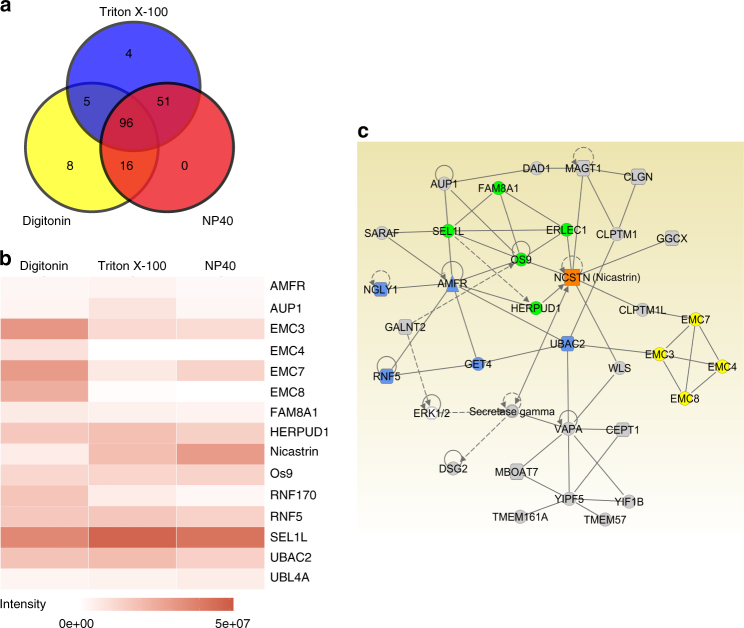
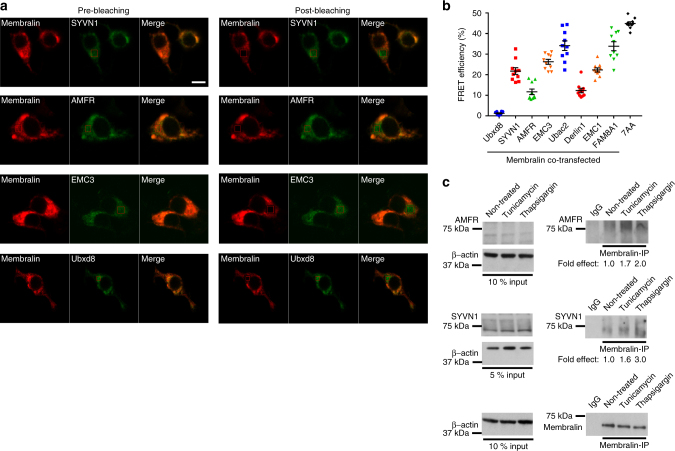
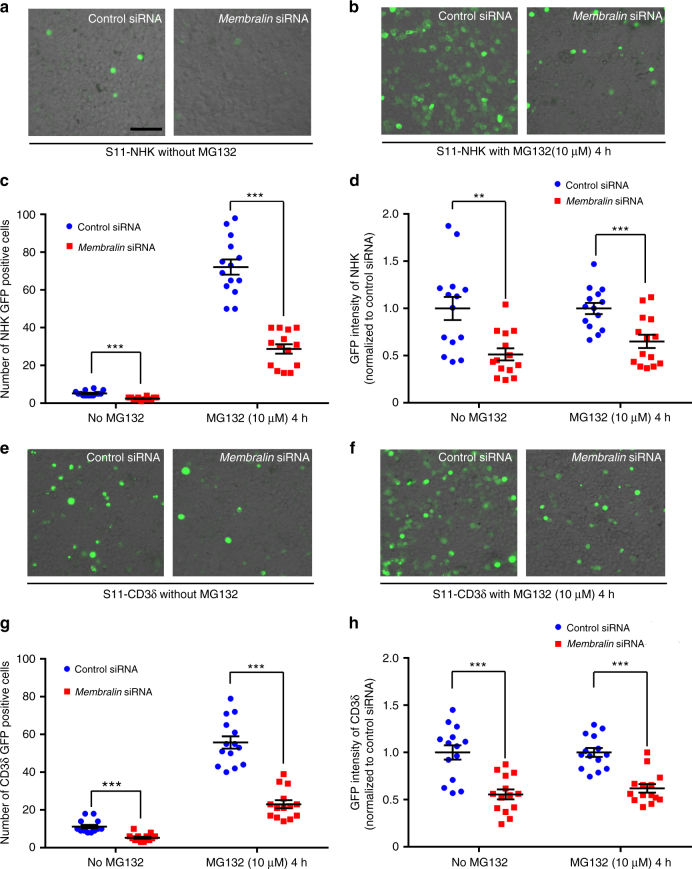
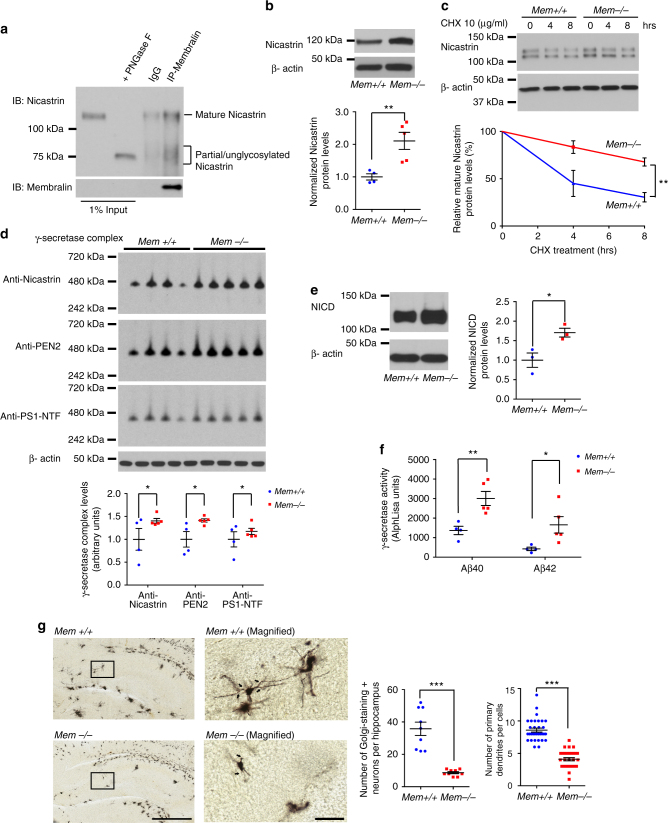
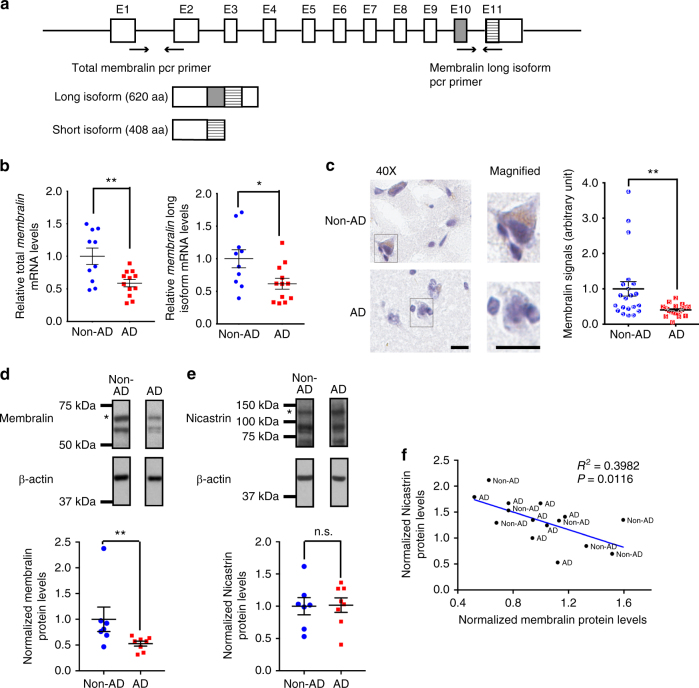
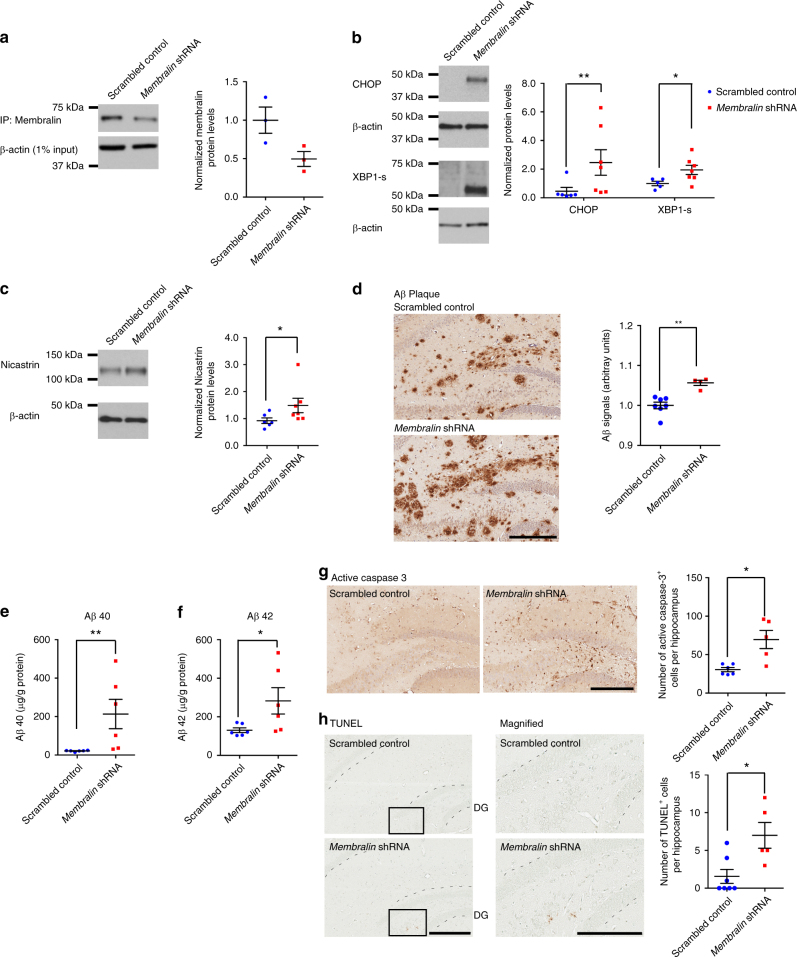
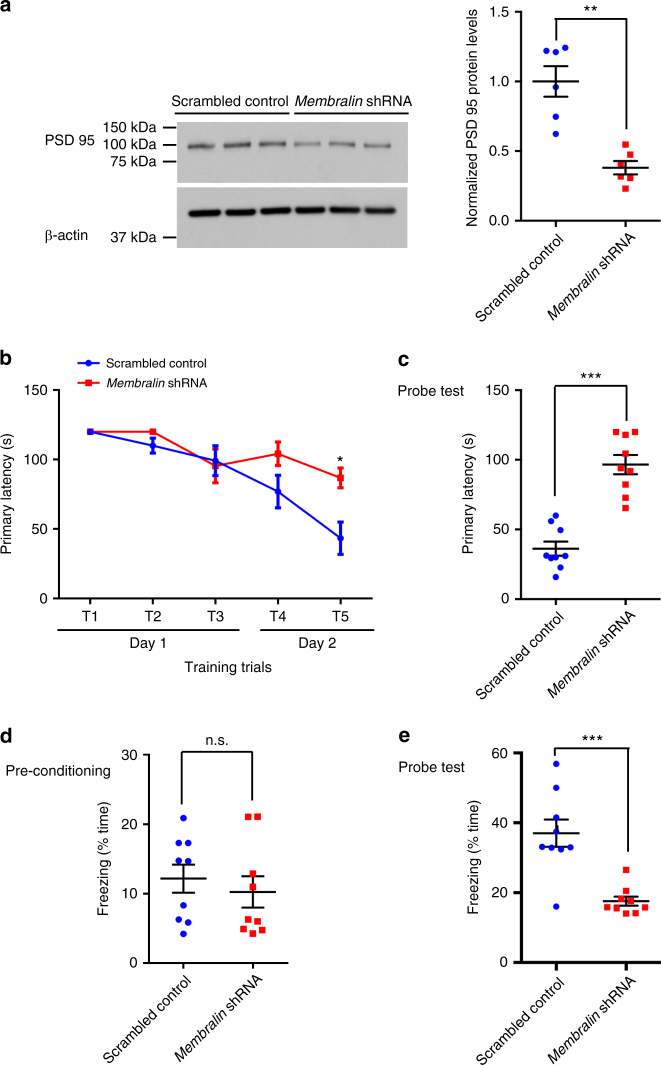
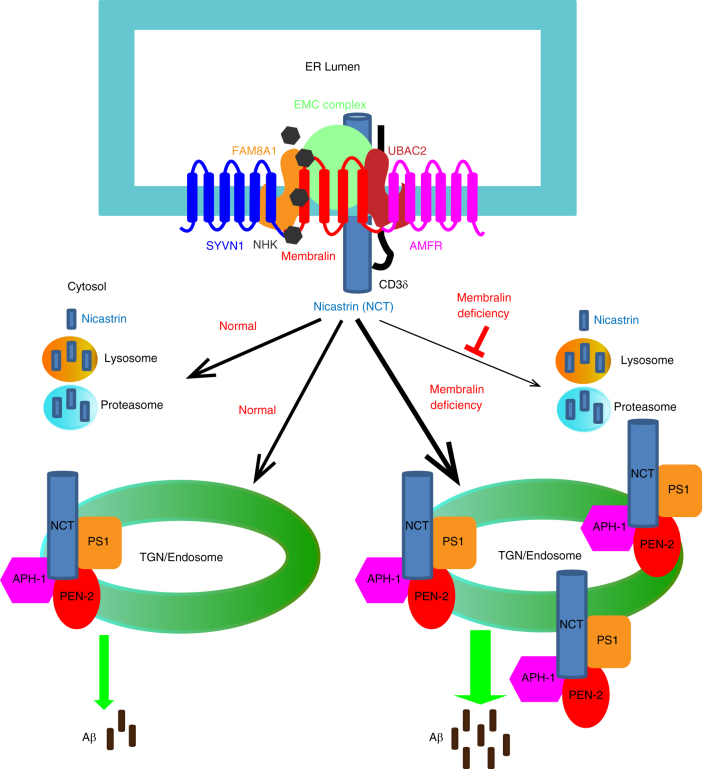
Endoplasmic-reticulum-associated degradation (ERAD) is an important protein quality control system which maintains protein homeostasis. Constituents of the ERAD complex and its role in neurodegeneration are not yet fully understood. Here, using proteomic and FRET analyses, we demonstrate that the ER protein membralin is an ERAD component, which mediates degradation of ER luminal and membrane substrates. Interestingly, we identify nicastrin, a key component of the γ-secretase complex, as a membralin binding protein and membralin-associated ERAD substrate. We demonstrate a reduction of membralin mRNA and protein levels in Alzheimer’s disease (AD) brain, the latter of which inversely correlates with nicastrin abundance. Furthermore, membralin deficiency enhances γ-secretase activity and neuronal degeneration. In a mouse AD model, downregulating membralin results in β-amyloid pathology, neuronal death, and exacerbates synaptic/memory deficits. Our results identify membralin as an ERAD component and demonstrate a critical role for ERAD in AD pathogenesis.
Overview
The claims and statistics of this paper haven’t been checked yet.
Free: it reads the open-access text and checks the first 5 claims that cite a source we can check. Create a free account to check every claim.
Integrity signals
Registry
Cites
Statistics
Figures
Verification
Claims the paper makes
The claims and statistics of this paper haven’t been checked yet.
Free: it reads the open-access text and checks the first 5 claims that cite a source we can check. Create a free account to check every claim.
Claims other papers make about this one
Each is checked against this paper’s own text: does it say what the citing paper says it does?
The source backs part of the claim, not all of it — or backs it for a different population, condition or comparison.
In the citing paper
“The other gene, CG8237, has not previously been linked to fertility, but has a mammalian ortholog (FAM8A1) that has been recently proposed to help assemble the machinery for ER-associated degradation (ERAD) and so may have an indirect effect on oogenesis [39,40].”
From Functional unknomics: Systematic screening of conserved genes of unknown function (2023) · cites this paper as [40]
Experimental — accuracy not yet measured
Self-check
Percentages, sums and reported differences re-computed from the paper’s own numbers.
The self-check needs the paper’s full text.
Citations
Cites
Alzheimer Mechanisms and Therapeutic Strategies
Huang, Y., & Mucke, L. (2012) · Cell · doi:10.1016/j.cell.2012.02.040 · Cited by 1,758
ERAD: the long road to destruction
Meusser, B., Hirsch, C., Jarosch, E., & Sommer, T. (2005) · Nature Cell Biology · doi:10.1038/ncb0805-766 · Cited by 1,220
Mutations in UBQLN2 cause dominant X-linked juvenile and adult-onset ALS and ALS/dementia
Deng, H.-X., Chen, W., Hong, S.-T., Boycott, K. M., Gorrie, G. H., Siddique, N., Yang, Y., Fecto, F., Shi, Y., Zhai, H., et al. (2011) · Nature · doi:10.1038/nature10353 · Cited by 1,174
Chishti, M. A., Yang, D.-S., Janus, C., Phinney, A. L., Horne, P., Pearson, J., Strome, R., Zuker, N., Loukides, J., French, J., et al. (2001) · Journal of Biological Chemistry · doi:10.1074/jbc.m100710200 · Cited by 955
Spreading of pathology in neurodegenerative diseases: a focus on human studies
Brettschneider, J., Tredici, K. D., Lee, V. M.-Y., & Trojanowski, J. Q. (2015) · Nature Reviews Neuroscience · doi:10.1038/nrn3887 · Cited by 790
ER-associated degradation: Protein quality control and beyond
Ruggiano, A., Foresti, O., & Carvalho, P. (2014) · Journal of Cell Biology · doi:10.1083/jcb.201312042 · Cited by 607
Oligomeric Aβ-induced synaptic dysfunction in Alzheimer’s disease
Tu, S., Okamoto, S.-I., Lipton, S. A., & Xu, H. (2014) · Molecular Neurodegeneration · doi:10.1186/1750-1326-9-48 · Cited by 576
Self-citationSuppression of eIF2α kinases alleviates Alzheimer's disease–related plasticity and memory deficits
Ma, T., Trinh, M. A., Wexler, A. J., Bourbon, C., Gatti, E., Pierre, P., Cavener, D. R., & Klann, E. (2013) · Nature Neuroscience · doi:10.1038/nn.3486 · Cited by 569
Nishitoh, H., Kadowaki, H., Nagai, A., Maruyama, T., Yokota, T., Fukutomi, H., Noguchi, T., Matsuzawa, A., Takeda, K., & Ichijo, H. (2008) · Genes & Development · doi:10.1101/gad.1640108 · Cited by 509
Defining human ERAD networks through an integrative mapping strategy
Christianson, J. C., Olzmann, J. A., Shaler, T. A., Sowa, M. E., Bennett, E. J., Richter, C. M., Tyler, R. E., Greenblatt, E. J., Wade Harper, J., & Kopito, R. R. (2012) · Nature Cell Biology · doi:10.1038/ncb2383 · Cited by 483
Cited by
TREM2 Is a Receptor for β-Amyloid that Mediates Microglial Function
Zhao, Y., Wu, X., Li, X., Jiang, L.-L., Gui, X., Liu, Y., Sun, Y., Zhu, B., Piña-Crespo, J. C., Zhang, M., et al. (2018) · Neuron · doi:10.1016/j.neuron.2018.01.031 · Cited by 763
Self-citationProteostasis Failure in Neurodegenerative Diseases: Focus on Oxidative Stress
Höhn, A., Tramutola, A., & Cascella, R. (2020) · Oxidative Medicine and Cellular Longevity · doi:10.1155/2020/5497046 · Cited by 192
“It was recently shown that the ER protein membralin, an essential component of the ERAD complex mediating the degradation of ER luminal and membrane substrates, is downregulated in AD, suggesting a critical role for ERAD in AD pathogenesis [128].”
BackgroundProkopenko, D., Morgan, S. L., Mullin, K., Hofmann, O., Chapman, B., Kirchner, R., (ADNI), A. D. N. I., Amberkar, S., Wohlers, I., Lange, C., et al. (2021) · Alzheimer's & Dementia · doi:10.1002/alz.12319 · Cited by 105
“In contrast, common loci associated with AD 22 have been enriched significantly in microglia (Figure 7).”
Penke, B., Bogár, F., Crul, T., Sántha, M., Tóth, M. E., & Vígh, L. (2018) · International Journal of Molecular Sciences · doi:10.3390/ijms19010325 · Cited by 125
“[93] demonstrated that the ER-protein membralin is also an ERAD component which mediates degradation of ER-luminal and ER-membrane substrates (ERAD-L and -M).”
BackgroundContribution of astrocytes to neuropathology of neurodegenerative diseases
Acıoğlu, Ç., Li, L., & Elkabes, S. (2021) · Brain Research · doi:10.1016/j.brainres.2021.147291 · Cited by 122
ER stress activates immunosuppressive network: implications for aging and Alzheimer’s disease
Salminen, A., Kaarniranta, K., & Kauppinen, A. (2020) · Journal of Molecular Medicine · doi:10.1007/s00109-020-01904-z · Cited by 96
“Moreover, ER stress increases the activities of BACE1 and γ-secretase and thus enhances the processing of APP [68, 69].”
BackgroundInterplay Between Mitochondrial Oxidative Disorders and Proteostasis in Alzheimer’s Disease
Llanos-González, E., Henares-Chavarino, Á. A., Pedrero-Prieto, C. M., García-Carpintero, S., Frontiñán-Rubio, J., Sancho-Bielsa, F. J., Alcain, F. J., Peinado, J. R., Rabanal-Ruíz, Y., & Durán-Prado, M. (2020) · Frontiers in Neuroscience · doi:10.3389/fnins.2019.01444 · Cited by 96
Fenech, E. J., Lari, F., Charles, P. D., Fischer, R., Laétitia-Thézénas, M., Bagola, K., Paton, A. W., Paton, J. C., Gyrd-Hansen, M., Kessler, B. M., et al. (2020) · eLife · doi:10.7554/elife.57306 · Cited by 107
Cao, Q., Shin, W. S., Chan, H., Vuong, C. K., Dubois, B., Li, B., Murray, K. A., Sawaya, M. R., Feigon, J., Black, D. L., et al. (2018) · Nature Chemistry · doi:10.1038/s41557-018-0147-z · Cited by 75
Self-citationProteostasis Disturbances and Inflammation in Neurodegenerative Diseases
Sonninen, T.-M., Goldsteins, G., Laham-Karam, N., Koıstınaho, J., & Lehtonen, Š. (2020) · Cells · doi:10.3390/cells9102183 · Cited by 100
Functional unknomics: Systematic screening of conserved genes of unknown function
Rocha, J. J., Jayaram, S. A., Stevens, T. J., Muschalik, N., Shah, R. D., Emran, S., Robles, C., Freeman, M., & Munro, S. (2023) · PLOS Biology · doi:10.1371/journal.pbio.3002222 · Cited by 70
Multifunctional roles of zinc in Alzheimer’s disease
Xie, Z., Wu, H., & Zhao, J. (2020) · NeuroToxicology · doi:10.1016/j.neuro.2020.07.003 · Cited by 89
Contribution of the Presenilins in the cell biology, structure and function of γ-secretase
Escamilla-Ayala, A., Wouters, R., Sannerud, R., & Annaert, W. (2020) · Seminars in Cell & Developmental Biology · doi:10.1016/j.semcdb.2020.02.005 · Cited by 65
Quality Control of ER Membrane Proteins by the RNF185/Membralin Ubiquitin Ligase Complex
van de Weijer, M. L., Krshnan, L., Liberatori, S., Navarro‐Guerrero, E., Robson‐Tull, J., Hahn, L., Lebbink, R. J., Wiertz, E. J. H. J., Fischer, R., Ebner, D. V., et al. (2020) · Molecular Cell · doi:10.1016/j.molcel.2020.07.009 · Cited by 77
Alzheimer’s Disease: A Molecular View of β-Amyloid Induced Morbific Events
Asik, R. M., Suganthy, N., Aarifa, M. A., Kumar, A., Szigeti, K., Máthé, D., Gulyás, B. Z., Archunan, G., & Padmanabhan, P. (2021) · Biomedicines · doi:10.3390/biomedicines9091126 · Cited by 56
Organoplatinum-Substituted Polyoxometalate Inhibits β-amyloid Aggregation for Alzheimer's Therapy.
Zhao, J., Li, K., Wan, K.-W., Sun, T.-D., Zheng, N., Zhu, F., Ma, J., Jiao, J., Li, T.-C., Ni, J., et al. (2019) · Angewandte Chemie · doi:10.1002/anie.201910521 · Cited by 48
Zheng, Y., Zhang, L., Zhao, J., Li, L., Wang, M., Gao, P., Wang, Q., Zhang, X., & Wang, W. (2022) · Theranostics · doi:10.7150/thno.69465 · Cited by 55
“their aggregates have been widely regarded as the main biomarkers and therapeutic targets of AD [12, 13].”
BackgroundZheng, Y., Geng, X., Yang, X., Li, S., Liu, Y., Liu, X., Wang, Q., Wang, K., Jia, R., & Yao, X. (2020) · Analytical Chemistry · doi:10.1021/acs.analchem.9b05493 · Cited by 43
Membralin deficiency dysregulates astrocytic glutamate homeostasis, leading to ALS-like impairment
Jiang, L.-L., Zhu, B., Zhao, Y., Li, X., Liu, T., Pina-Crespo, J., Zhou, L., Xu, W., Rodriguez, M. J., Yu, H., et al. (2019) · Journal of Clinical Investigation · doi:10.1172/jci127695 · Cited by 46
“subcloning the mouse-Membralin-Myc plasmid (23, 64) into an AAV”
BackgroundMethodInfluentialSelf-citationHIGH STEROL ESTER 1 is a key factor in plant sterol homeostasis
Shimada, T. L., Shimada, T., Okazaki, Y., Higashi, Y., Saito, K., Kuwata, K., Oyama, K., Kato, M., Ueda, H., Nakano, A., et al. (2019) · Nature Plants · doi:10.1038/s41477-019-0537-2 · Cited by 37
GSAP regulates lipid homeostasis and mitochondrial function associated with Alzheimer’s disease
Xu, P., Chang, J. C., Zhou, X., Wang, W., Bamkole, M. A., Wong, E., Bettayeb, K., Jiang, L.-L., Huang, T. Y., Luo, W., et al. (2021) · The Journal of Experimental Medicine · doi:10.1084/jem.20202446 · Cited by 39
“Lastly, GSAP also interacts with several components of the ER-associated degradation machinery, a protein quality-control mechanism that regulates mitochondrial function through MAM and is critical in AD pathogenesis (Zhou et al., 2020; Zhu et al., 2017).”
BackgroundSelf-citationDevelopment of DNA Aptamer as a β-Amyloid Aggregation Inhibitor
Zheng, Y., Wang, P., Li, S., Geng, X., Zou, L., Jin, M., Zou, Q., Wang, Q., Yang, X., & Wang, K. (2020) · ACS Applied Bio Materials · doi:10.1021/acsabm.0c00996 · Cited by 34
A Drosophila screen identifies NKCC1 as a modifier of NGLY1 deficiency
Talsness, D. M., Owings, K. G., Coelho, E., Mercenne, G., Pleinis, J. M., Partha, R., Hope, K., Zuberi, A., Clark, N. L., Lutz, C., et al. (2020) · eLife · doi:10.7554/elife.57831 · Cited by 29
“CG8405 is the Drosophila ortholog of human TMEM259, which physically interacts with NGLY1 in co-immunoprecipitation experiments (Zhu et al., 2017).”
BackgroundThe role of ER-associated degradation and ER-phagy in health and disease
Jeon, Y. J., & Ronai, Z. A. (2026) · Signal Transduction and Targeted Therapy · doi:10.1038/s41392-025-02501-7 · Cited by 31
“433,434 De fi ciency of SEL1L within Purkinje cells causes early-onset, progressive cerebellar ataxia accompanied by age-dependent progressive loss of Purkinje cells.”
MicroRNA-181a Is Involved in Methamphetamine Addiction Through the ERAD Pathway
Wang, Y.-J., Wei, T., Zhao, W., Ren, Z., Wang, Y., Zhou, Y., Song, X., Zhou, R., Zhang, X.-C., & Jiao, D.-L. (2021) · Frontiers in Molecular Neuroscience · doi:10.3389/fnmol.2021.667725 · Cited by 22
Neuro-Immuno-Gene- and Genome-Editing-Therapy for Alzheimer’s Disease: Are We There Yet?
Raikwar, S. P., Thangavel, R., Dubova, I., Ahmed, M. E., Selvakumar, G. P., Kempuraj, D., Zaheer, S. A., Iyer, S. S., & Zaheer, A. (2018) · Journal of Alzheimer s Disease · doi:10.3233/jad-180422 · Cited by 32
“scriptomics [130], metabolomics [131], proteomics [132, 133], CRISPR/Cas-mediated genome and base editing [134, 135], gene therapy [136], stem cellbased brain organoids [137–139], direct neuronal reprogramming and transdifferentiation [140–142], nanotechnology [143], biomolecular 3D organ printing [144], molecular ima…”
BackgroundGene body DNA hydroxymethylation restricts the magnitude of transcriptional changes during aging
Occean, J. R., Yang, N., Sun, Y., Dawkins, M. S., Munk, R. B., Belair, C., Dar, S. A., Anerillas, C., Wang, L., Shi, C., et al. (2024) · Nature Communications · doi:10.1038/s41467-024-50725-y · Cited by 34
“12proteinsweresigni fi cantlyenrichedfor5hmC,twoofwhichare known to be involved in the endoplasmic reticulum stress response (HYOU1 51 and TMEM259 52 , Supplementary Fig.”
BackgroundProtein degradation-associated mechanisms that are affected in Alzheimer´s disease
Tecalco-Cruz, Á. C., Pedraza‐Chaverrí, J., Briones‐Herrera, A., Cruz-Ramos, E., López‐Cánovas, L., & Zepeda–Cervantes, J. (2022) · Molecular and Cellular Biochemistry · doi:10.1007/s11010-021-04334-8 · Cited by 21
“ERAD contains several components, including Derlin1 [111], Erlin2 [112], VCP [113], SYVN1 (Hrd1) [114], and Ubiquilin2, associating with neurodegenerative diseases [115].”
BackgroundQian, B., Li, T., Zheng, Z.-X., Zhang, H., Xu, W., Mo, S.-M., Cui, J., Chen, W.-J., Lin, Y., & Lin, Z. (2024) · Journal of Hazardous Materials · doi:10.1016/j.jhazmat.2024.134466 · Cited by 22
Roles of Ubiquitin Ligases and Deubiquitylases in Alzheimer’s Disease
Jia, F., & Fu, L. (2025) · Molecular Neurobiology · doi:10.1007/s12035-025-04739-2 · Cited by 21
“The inhibition of USP25 during acute ER stress also hinders APP degradation through the activation of ERAD and proteasome-dependent pathways [56].”
The Proteostasis Network: A Global Therapeutic Target for Neuroprotection after Spinal Cord Injury
Whittemore, S. R., Ohri, S. S., Forston, M. D., Wei, G. Z., & Hetman, M. (2022) · Cells · doi:10.3390/cells11213339 · Cited by 23
“Conversely, the disruption of several ERAD components has been implicated in a number of neurodegenerative diseases that are characterized by the presence of misfolded protein aggregates including, but not limited to Huntington’s disease (HD) [44], amyotrophic lateral sclerosis (ALS) [45], and Alzheimer’s disease (AD)…”
BackgroundGugliandolo, A., Blando, S., Salamone, S., Caprioglio, D., Pollastro, F., Mazzon, E., & Chiricosta, L. (2023) · International Journal of Molecular Sciences · doi:10.3390/ijms24076598 · Cited by 15
Liu, Q., Yang, X., Long, G., Hu, Y., Gu, Z., Boisclair, Y. R., & Long, Q. (2020) · Journal of Biological Chemistry · doi:10.1074/jbc.ra120.013987 · Cited by 26
Invasive and non-invasive therapies for Alzheimer’s disease and other amyloidosis
Pandey, G., & Ramakrishnan, V. (2020) · Biophysical Reviews · doi:10.1007/s12551-020-00752-y · Cited by 31
Noncanonical Form of ERAD Regulates Cardiac Hypertrophy
Blackwood, E. A., MacDonnell, L. F., Thuerauf, D. J., Bilal, A. S., Murray, V. B., Bedi, K. C., Margulies, K. B., & Glembotski, C. C. (2022) · Circulation · doi:10.1161/circulationaha.122.061557 · Cited by 17
Palu, R. A. S., Dalton, H. M., & Chow, C. Y. (2020) · Genetics · doi:10.1534/genetics.119.303004 · Cited by 10
Identification of the changes in the platelet proteomic profile of elderly individuals
Chen, H.-L., Wang, Q.-Y., Qi, R., & Cai, J.-P. (2024) · Frontiers in Cardiovascular Medicine · doi:10.3389/fcvm.2024.1384679 · Cited by 11
“The endoplasmic reticulum-associated degradation (ERAD) pathway is an important protein quality control system that helps maintain protein homeostasis (27).”
BackgroundExcess sterols disrupt plant cellular activity by inducing stress-responsive gene expression
Shimada, T. L., Yamaguchi, K., Shigenobu, S., Takahashi, H., Murase, M., Fukuyoshi, S., & Hara-Nishimura, I. (2020) · Journal of plant research · doi:10.1007/s10265-020-01181-4 · Cited by 11
“While there are no reports on the involvement of a mammalian HISE1/Membralin in lipid homeostasis, mouse HISE1/ Membralin reportedly contributes to neural development and endoplasmic reticulum-associated degradation (ERAD) (Zhu et al.”
BackgroundJi, Y., Li, X., Li, X., Hu, X., Cong, W., Hu, H., Liu, S., & Chen, Y. (2025) · Materials Today Bio · doi:10.1016/j.mtbio.2025.102081 · Cited by 10
Self-citationWu, S., Liu, P., Cvetanović, M., & Lin, W. (2024) · Frontiers in Neuroscience · doi:10.3389/fnins.2024.1437854 · Cited by 9
Quach, T., Stratton, H. J., Khanna, R., Mackey-Alfonso, S. E., Deems, N., Honnorat, J., Meyer, K., & Duchemin, A. (2022) · International Journal of Molecular Sciences · doi:10.3390/ijms232214188 · Cited by 12
“In attempts to remedy the stress, the ER, via Binding Immunoglobin Protein (BiP), activates unfolded protein response (UPR) [2] by stimulating a set of transcriptional/translational programs involving PRKR-like ER kinase (PERK), Inositol-requiring Enzyme 1α (IRE1α), Estrogen Receptor Alpha (ERA), the ubiquitin-proteas…”
BackgroundGariballa, N., Mohamed, F. E., Badawi, S., & Ali, B. R. (2024) · Journal of Biomedical Science · doi:10.1186/s12929-024-01054-1 · Cited by 11
“…and Parkinson’s diseases [97], metabolic disorders such as diabetes and obesity [98–100], inflammatory diseases [101], cancer [102, 103], and rare genetic disorders like cystic fibrosis (CF) [104], Gaucher disease [105, 106], Acromesomelic Dysplasia 1, Maroteaux type [18] and many others [107–110].”
BackgroundMullins, R. J., & Kapogiannis, D. (2022) · Frontiers in Neuroscience · doi:10.3389/fnins.2022.908650 · Cited by 9
Zhang, J., Lu, X.-R., Li, S., Wang, T., Ahmad, I., & Zheng, Y.-H. (2025) · Advancement of science · doi:10.1002/advs.202519256 · Cited by 9
Liu, B., Xu, C., He, Q., Zhang, K., Qi, S., Jin, Z., Cheng, W., Ding, Z., Chen, D., Zhao, X., et al. (2024) · Proceedings of the National Academy of Sciences · doi:10.1073/pnas.2406090121 · Cited by 9
“Membralin deficiency attenuates the degradation rate of ERAD substrates and thus promotes necrosis of motor neurons, leading to mortality in young mice ( Mus musculus ) soon after birth (16, 17).”
InfluentialCao, H., Zhou, X., Xu, B., Hu, H., Guo, J., Ma, Y., Wang, M., Li, N., & Zou, J. (2024) · Journal of Zhejiang University SCIENCE B · doi:10.1631/jzus.b2300403 · Cited by 11
“ER protein membralin is also a component of ERAD, which can bind and promote the ERAD of nicastrin, a key component of γ -secretase (Zhu et al., 2017), thereby inhibiting γ -secretase activity and indirectly affecting the production of A β and the development of AD (Zhu et al., 2017).”
Podinić, T., Werstuck, G. H., & Raha, S. (2023) · International Journal of Molecular Sciences · doi:10.3390/ijms241311003 · Cited by 11
“When protein degradation pathways fail and/or misfolded or abnormal proteins aggregate, the ER stress response pathway can become activated, which is prevalent in the progression of pathological conditions such as Alzheimer’s disease [105,106].”
BackgroundDong, Z., Dai, H., Zhang, X., Zhao, Z., Chen, Y., Zheng, Y., Rui, H., Liu, B., & Zhong, X. (2026) · Frontiers in Immunology · doi:10.3389/fimmu.2026.1772536 · Cited by 10
“While co-immunoprecipitation (Co-IP) and fl uorescence resonance energy transfer (FRET) are classic methods for validating protein interactions (139), establishing robust and reliable experimental systems in precious, limited primary human immune cells, especially T follicular helper (Tfh) cells,…”
Gene body DNA hydroxymethylation restricts the magnitude of transcriptional changes during aging
Occean, J. R., Yang, N., Sun, Y., Dawkins, M. S., Munk, R., Belair, C., Dar, S. A., Anerillas, C., Wang, L., Shi, C., et al. (2023) · bioRxiv · doi:10.1101/2023.02.15.528714 · Cited by 7
Selective clearance of aberrant membrane proteins by TORC1-mediated micro-ER-phagy
Gyurkovska, V., Alvarado-Cartagena, Y. M., Murtazina, R., Zhao, S. F., de Olaso, C. X., & Segev, N. (2025) · Cell Reports · doi:10.1016/j.celrep.2025.115282 · Cited by 8
“67 70 Therefore, understanding the regulation of constitutive ER-QC pathways and the effect of different stresses on their cargoes in human cells is important for a variety of diseases.”
Lipid biosynthesis perturbation impairs endoplasmic reticulum–associated degradation
Turk, S. M., Indovina, C., Miller, J. M., Overton, D. L., Runnebohm, A. M., Orchard, C. J., Tragesser-Tiña, M. E., Gosser, S. K., Doss, E. M., Richards, K. A., et al. (2022) · bioRxiv · doi:10.1016/j.jbc.2023.104939 · Cited by 6
“The involvement of ERAD in Alzheimer’s disease progression is complex; multiple physiological ERAD substrates differentially impact amyloid-Δ accumulation (Tanabe et al. 2012; Zhu et al. 2017).”
Zhang, N., Liu, S.-H., Jia, Y., Zhao, G., Duan, X., Wang, Y.-G., Zhang, D.-P., & Wei, Q. (2022) · Social Science Research Network · doi:10.2139/ssrn.4188576 · Cited by 6
Self-citationLópez, M. E., Ozerov, M. Y., Pukk, L., Noreikienė, K., Gross, R., & Vasemägi, A. (2025) · Molecular Ecology · doi:10.1111/mec.17659 · Cited by 4
“GRIN3B gene, implicated in synaptic development and neurotransmission (Chikina, Robinson, and Clark 2016), TMEM259 is involved in inhibiting neuron death and positive regulation of ERAD pathway (Zhu et al. 2017).”
Xia, J., Wang, J., Zhao, N., Zhang, Q., & Xu, B. (2024) · Heliyon · doi:10.1016/j.heliyon.2024.e38458 · Cited by 5
“Supporting this, previous findings have indicated that abnormal expression of ER protein folding chaperones [8 – 10] and compromised ERAD pathway [11,12] exist in the brains of both AD patients and animal models.”
ResultYang, X., Liu, Q., Long, G., Hu, Y., Gu, Z., Boisclair, Y., & Long, Q.-M. (2020) · bioRxiv · doi:10.1101/2020.04.22.053546 · Cited by 4
“Impaired ER function or ER stress has been implicated in a increasing number of chronic human diseases, including obesity, diabetes, neurodegeneration, non-alcohol fatty liver disease (NAFLD) and cancer [1-3].”
BackgroundSNX17 Mediates Dendritic Spine Maturation via p140Cap
Cui, Q., Liang, S., Li, H., Guo, Y., Lv, J., Wang, X., Qin, P., Xu, H., Huang, T. Y., Lu, Y., et al. (2024) · Molecular Neurobiology · doi:10.1007/s12035-023-03620-4 · Cited by 3
“The sample preparation and LC–MS/MS analysis were performed as previously described [34, 35].”
Self-citationChemical Glycoproteomic Profiling in Rice Seedlings Reveals N-glycosylation in the ERAD-L Machinery
Lei, C., Li, X.-L., Li, W., Chen, Z., Liu, S., Cheng, B., Hu, Y.-L., Song, Q.-T., Qiu, Y.-H., Zhou, Y.-L., et al. (2024) · Molecular & Cellular Proteomics · doi:10.1016/j.mcpro.2024.100883 · Cited by 3
Self-citationModulating Aβ Fibrillogenesis with 'Trojan' peptides.
Pandey, G., Morla, S., Kumar, S., & Ramakrishnan, V. (2020) · Neuropeptides · doi:10.1016/j.npep.2020.102030 · Cited by 3
Kong, B., Huang, W.-Y., Zhong, Y.-M., Liu, Y.-N., Wang, H., Shen, Y.-L., Xu, J.-J., Xiang, M.-L., & Ye, B. (2026) · Cellular and molecular neurobiology · doi:10.1007/s10571-026-01687-w · Cited by 2
“Moreover, analysis of brain tissues from 7 cases of AD patients revealed a marked reduction in membralin expression (Zhu et al. 2017).”
Self-citationTalsness, D. M., Owings, K. G., Coelho, E., Mercenne, G., Pleinis, J. M., Zuberi, A., Partha, R., Clark, N. L., Lutz, C., Rodan, A., et al. (2020) · bioRxiv · doi:10.1101/2020.04.13.039651 · Cited by 2
“CG8405 is the Drosophila ortholog of human TMEM259, which physically interacts with NGLY1 in co-immunoprecipitation experiments (Zhu et al., 2017).”
BackgroundOuyang, Y., Chen, Z., Huang, Q., Zhang, H., Song, H., Wang, X., Dong, W., Tang, Y. P., Shah, N., Shuai, S., et al. (2025) · Neuroscience Bulletin · doi:10.1007/s12264-025-01469-2 · Cited by 2
“In addition, the ER-associated degradation pathway is implicated in AD [67, 68].”
Membralin Selects Foreign Glycoproteins from the Endoplasmic Reticulum to Lysosomes for Degradation
Zheng, Y.-H., Zhang, J., Lu, X.-R., Li, S., Wang, T., & Ahmad, I. (2025) · Research Square · doi:10.21203/rs.3.rs-6498082/v1 · Cited by 1
“Membralin/TMEM259, encoded by TMEM259, is crucial for motor neuron survival as it maintains optimal expression levels of nicastrin, a core component of the γ -secretase complex 2 .”
Salcedo-Tacuma, D., Asad, N., Howells, G., Anderson, R., & Smith, D. M. (2024) · bioRxiv · doi:10.1101/2024.04.04.588128 · Cited by 1
“The impairment of the ERAD pathway has been implicated in the accumulation of toxic proteins, such as Aβ and tau in Alzheimer's disease and α-synuclein in Parkinson's disease, leading to ER stress and neuronal dysfunction 113,114 .”
Xu, P., Chang, J. C., Zhou, X.-P., Wang, W., Bamkole, M. A., Wong, E., Bettayeb, K., Jiang, L.-L., Huang, T. Y., Luo, W., et al. (2020) · bioRxiv · doi:10.1101/2020.11.17.385245 · Cited by 1
“Lastly, GSAP also interacts with several components of endoplasmic reticulum-associated degredation (ERAD) machinery, a protein quality control mechanism that regulates mitochondrial function through MAM and is critical in AD pathogenesis (Zhou et al., 2020; Zhu et al., 2017).”
BackgroundSelf-citationPalu, R. A. S., & Chow, C. Y. (2019) · bioRxiv · doi:10.1101/620492 · Cited by 1
Human immunodeficiency virus 1 glycoprotein Gp120 induces amyloid pathology in neurons
Agbey, C., Gamboa, A., Wilson, K., Campbell, L. A., Rebeck, W. G., Nath, A., & Mocchetti, I. (2026) · Experimental Neurology · doi:10.1016/j.expneurol.2026.116108
Basavaraju, K. C., & G., P. P. C. (2026) · Biochemical and Biophysical Research Communications · doi:10.1016/j.bbrc.2026.154717
Neuro-psycho MMSig: multimodal mechanism enrichment platform for neuropsychiatric disorders
Bharadhwaj, V. S., Shalaby, K. S., Rao, S. G., Schultz, B., Zhang, J.-Y., Domingo-Fernándéz, D., Hofmann-Apitius, M., & Kodamullil, A. T. (2026) · Frontiers in Bioinformatics · doi:10.3389/fbinf.2026.1898607
“It is also known that the downward trend in the dysregulation of positive regulation of ERAD pathway has been linked to neuronal degeneration (Zhu et al., 2017).”
Bota, P. M., Picón-Pagès, P., Fanlo-Ucar, H., Almabhouh, S., Bagudanch, O., Zeylan, M. E., Senyuz, S., Gohl, P., Molina-Fernández, R., Fernandez-Fuentes, N., et al. (2026) · Computational and Structural Biotechnology Journal · doi:10.1016/j.csbj.2025.12.032
“…supports amyloid-β biology [82] (cellular response to A β ; negative regulation of A β formation; amyloid fibril/fiber formation), ER proteostasis [83] (positive regulation of ERAD; calnexin/calreticulin cycle; HSF1 activation) and mitochondrial protein quality control (UPRmt; mitochondrial…”
Yan, S., Wang, A., Chen, X., Jiang, W., Du, X., Huang, Y., Zu, X.-Y., Zhu, Y., Liu, J., Fan, L.-L., et al. (2025) · Frontiers in Oncology · doi:10.3389/fonc.2025.1709962
Understanding the Structure, Toxicity and Inhibition of IAPP at the Nanoscale
Pilkington, E. H. (2020) · doi:10.26180/5ed4b0925ff3e
Metadata
- Authors
- Zhu, B., Jiang, L., Huang, T., Zhao, Y., Liu, T., Zhong, Y., Li, X., Campos, A., Pomeroy, K., Masliah, E., Zhang, D., & Xu, H.
- Affiliations
- Sanford Burnham Prebys Medical Discovery Institute (US)
- University of Maryland, Baltimore (US)
- University of California San Diego (US)
- Corresponding author
- Xu, Huaxi
- Venue
- Nature Communications
- Published
- 2017-11-13
- Volume
- 8
- Issue
- 1
- Pages
- 1472-1472
- ISSN
- 2041-1723 (ISSN-L)
- PMC
- PMC5684335
- OpenAlex
- W2767960588
- Cited by
- 71
- References
- 53
- Citations by year
- 2026: 8 · 2025: 11 · 2024: 10 · 2023: 5 · 2022: 8 · 2021: 5 · 2020: 16 · 2019: 4 · 2018: 4
- FWCI
- 4.85
- Type
- journal article
- Language
- en
- Open access
- gold
- doi.org
- Licence
- cc-by
- creativecommons.org/licenses/by/4.0 (tdm)
- creativecommons.org/licenses/by/4.0 (vor)
- Locations
- Nature Communications (publishedVersion, cc-by)
- Europe PMC (PubMed Central) (publishedVersion, cc-by)
- PubMed Central (publishedVersion, cc-by)
- PubMed (publishedVersion)
- RePEc: Research Papers in Economics (submittedVersion)
- DOAJ (DOAJ: Directory of Open Access Journals) (submittedVersion, cc-by-sa)
- DOAJ (DOAJ: Directory of Open Access Journals) (submittedVersion)
- Funders
- National Institute on Aging (R01AG044420, R01AG038710, R21AG048519, R01AG021173)
- National Institute of Neurological Disorders and Stroke (R01NS046673)
- Eunice Kennedy Shriver National Institute of Child Health and Human Development (R01HD074961)
- Topics
- Life Sciences › Neuroscience › Cellular and Molecular Neuroscience › Alzheimer's disease research and treatments
- Life Sciences › Biochemistry, Genetics and Molecular Biology › Cell Biology › Endoplasmic Reticulum Stress and Disease
- Life Sciences › Biochemistry, Genetics and Molecular Biology › Molecular Biology › Heat shock proteins research
- Keywords
- ER-associated degradation, nicastrin, gamma-secretase, Alzheimer's disease, amyloid-beta pathology, protein quality control, neurodegeneration, memory impairment, synaptic dysfunction
- MeSH terms
- Alzheimer Disease, Animals, Brain, Cell Line, Endoplasmic Reticulum, Female, Humans, Male, Membrane Glycoproteins, Membrane Proteins, Memory, Mice, Inbred C3H, Mice, Inbred C57BL, Nerve Tissue Proteins, Protein Binding, RNA, Messenger, Amyloid beta-Peptides, Amyloid beta-Protein Precursor, Protein Folding, Mice, Knockout, RNA Interference, RNA, Small Interfering, Mice, Amyloid Precursor Protein Secretases, HEK293 Cells, Endoplasmic Reticulum-Associated Degradation, Cognitive Dysfunction
About these checks
Registry, retraction, Cites and statistics results are computed, not judged, with one exception: a printed reference that no index lists is read once by a model before it counts as a citation error. Claims are extracted by a model and kept only when their quote appears verbatim in the text; each cited source is then checked, with a model’s help, for whether it says what the claim relies on. Those verdicts can be wrong — read the claim’s quote and the cited source before relying on one.
Statistics and arithmetic are recomputed, not judged.
Confidence bands are shown only for fields calibrated on our annotated test set. None is calibrated yet, so no band is shown.
What counts as a claim ›How we measure confidence ›How we check this ›
Are you an author, or do you see a problem with this page? Request a review
Data sources
Bibliographic data: Semantic Scholar, OpenAlex, Crossref.
Contains information from the Semantic Scholar Academic Graph Datasets, made available under the ODC Attribution License (ODC-BY 1.0).
Semantic Scholar’s data is described in: Kinney, R., et al. (2023). The Semantic Scholar Open Data Platform. arXiv:2301.10140.
