

ER-associated degradation regulates Alzheimer’s amyloid pathology and memory function by modulating γ-secretase activity
Open accessThe DOI matches its Crossref record; 53 of the 53 references it cites were found in a registry or an index.
Abstract
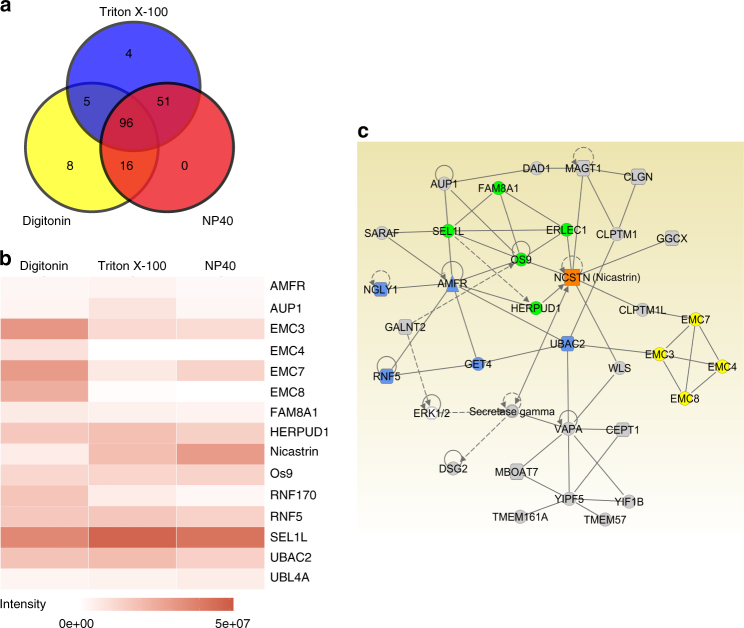
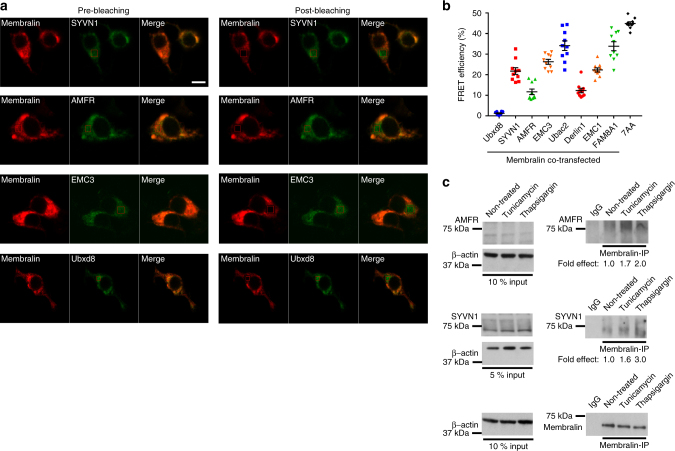
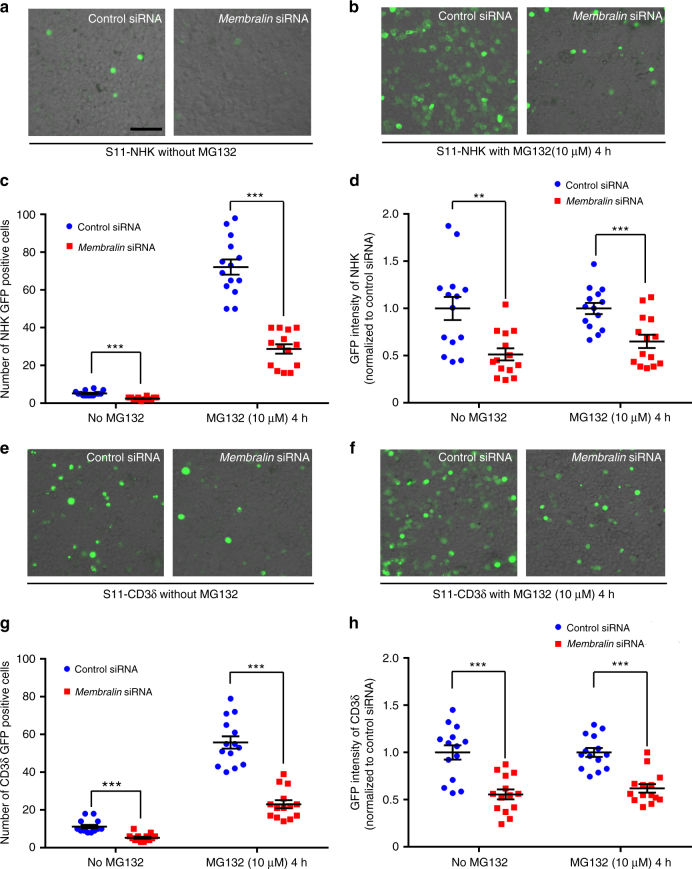
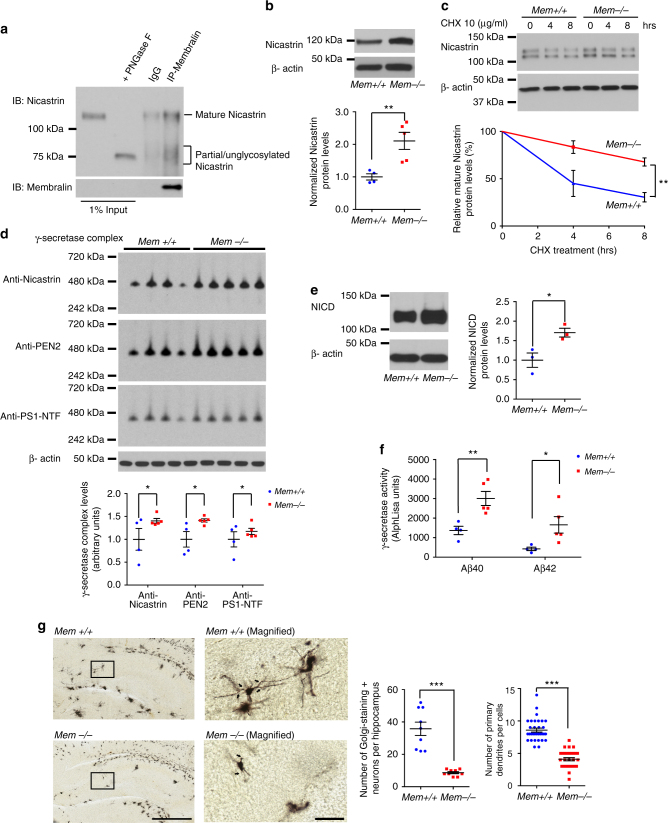
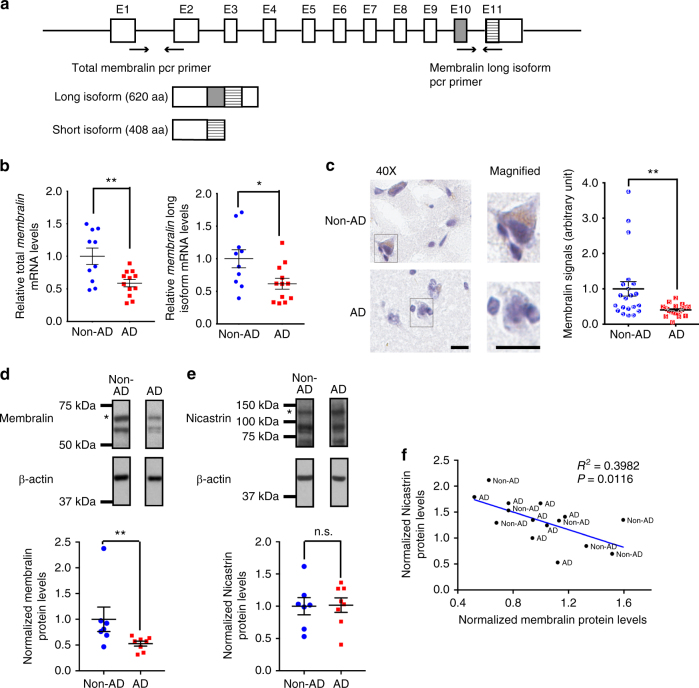
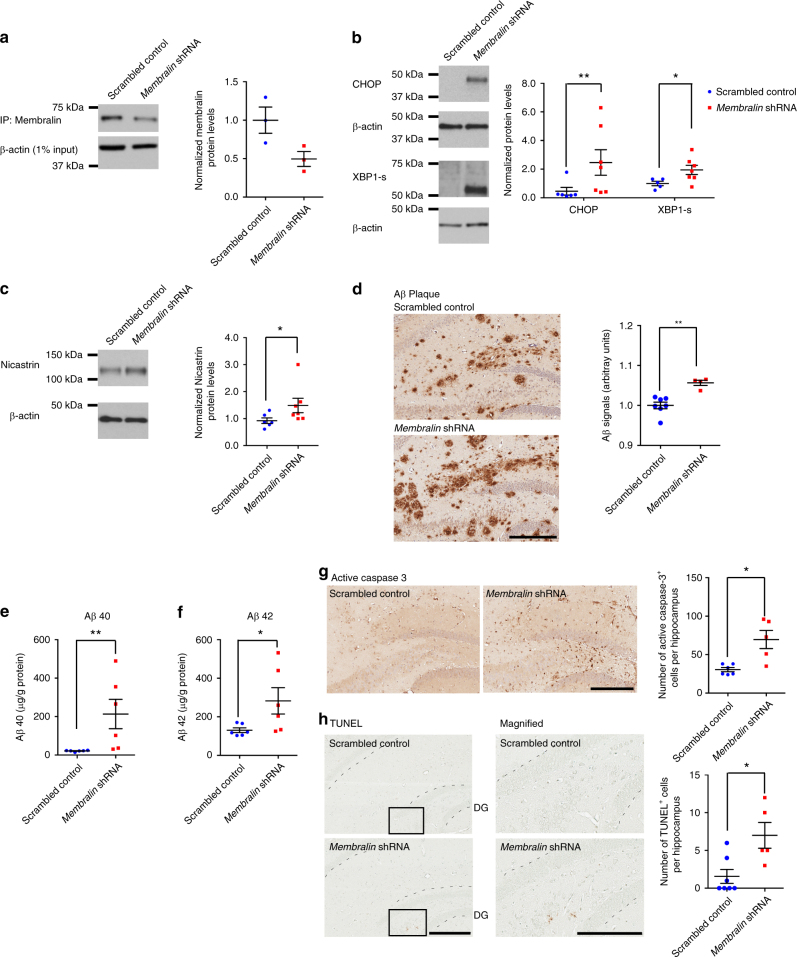
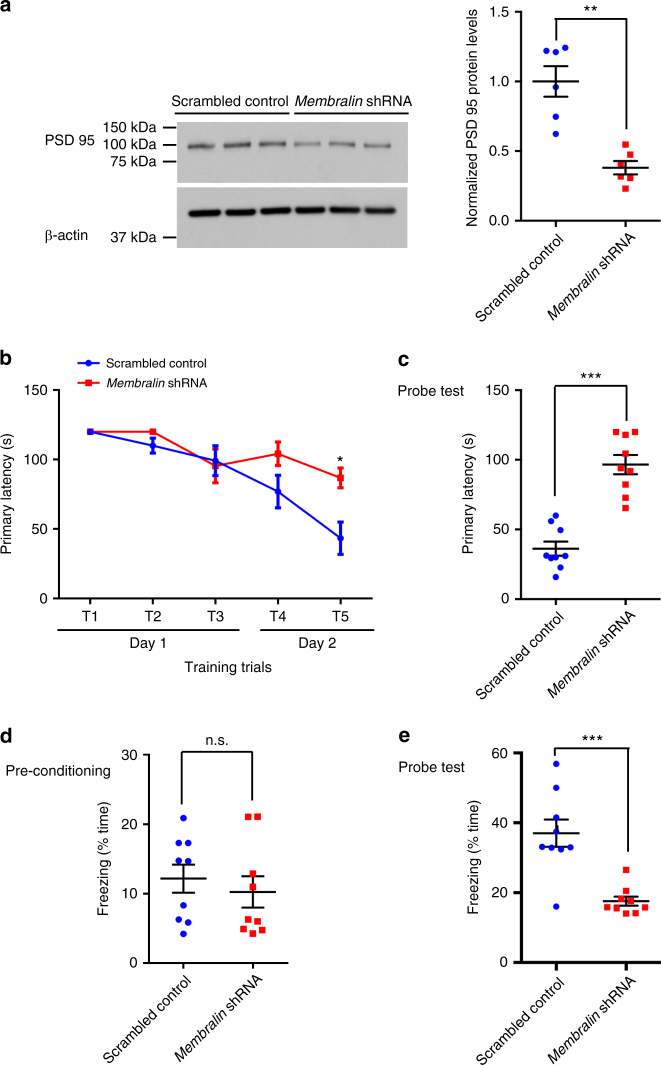
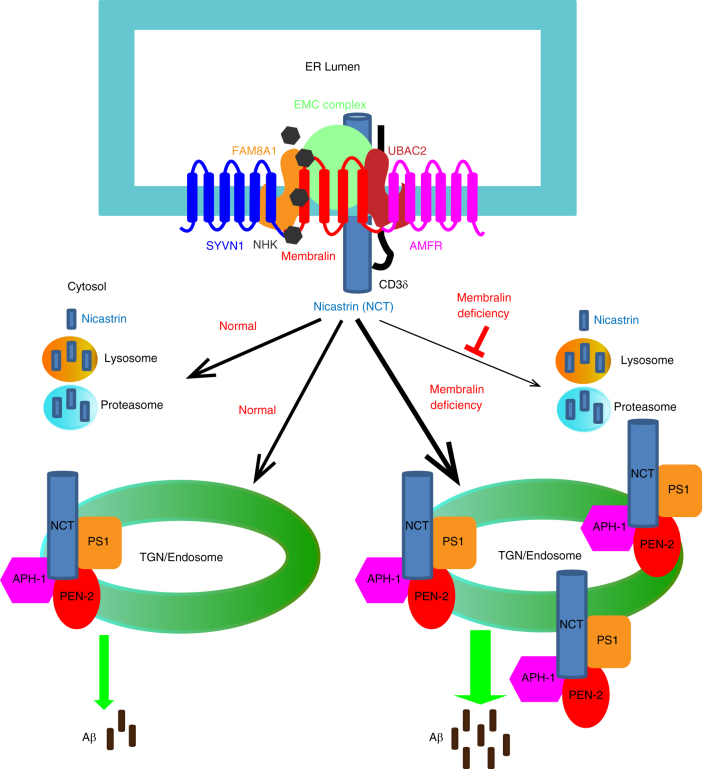
Endoplasmic-reticulum-associated degradation (ERAD) is an important protein quality control system which maintains protein homeostasis. Constituents of the ERAD complex and its role in neurodegeneration are not yet fully understood. Here, using proteomic and FRET analyses, we demonstrate that the ER protein membralin is an ERAD component, which mediates degradation of ER luminal and membrane substrates. Interestingly, we identify nicastrin, a key component of the γ-secretase complex, as a membralin binding protein and membralin-associated ERAD substrate. We demonstrate a reduction of membralin mRNA and protein levels in Alzheimer’s disease (AD) brain, the latter of which inversely correlates with nicastrin abundance. Furthermore, membralin deficiency enhances γ-secretase activity and neuronal degeneration. In a mouse AD model, downregulating membralin results in β-amyloid pathology, neuronal death, and exacerbates synaptic/memory deficits. Our results identify membralin as an ERAD component and demonstrate a critical role for ERAD in AD pathogenesis.
Overview
The claims and statistics of this paper haven’t been checked yet.
Free: it reads the open-access text and checks the first 5 claims that cite a source we can check. Create a free account to check every claim.
Integrity signals
Registry
Cites
Statistics
Figures
Verification
Claims the paper makes
The claims and statistics of this paper haven’t been checked yet.
Free: it reads the open-access text and checks the first 5 claims that cite a source we can check. Create a free account to check every claim.
Claims other papers make about this one
Each is checked against this paper’s own text: does it say what the citing paper says it does?
The source backs part of the claim, not all of it — or backs it for a different population, condition or comparison.
In the citing paper
“The other gene, CG8237, has not previously been linked to fertility, but has a mammalian ortholog (FAM8A1) that has been recently proposed to help assemble the machinery for ER-associated degradation (ERAD) and so may have an indirect effect on oogenesis [39,40].”
From Functional unknomics: Systematic screening of conserved genes of unknown function (2023) · cites this paper as [40]
Experimental — accuracy not yet measured
Self-check
Percentages, sums and reported differences re-computed from the paper’s own numbers.
The self-check needs the paper’s full text.
Citations
Cites
Alzheimer Mechanisms and Therapeutic Strategies
Huang, Y., & Mucke, L. (2012) · Cell · doi:10.1016/j.cell.2012.02.040 · Cited by 1,758
ERAD: the long road to destruction
Meusser, B., Hirsch, C., Jarosch, E., & Sommer, T. (2005) · Nature Cell Biology · doi:10.1038/ncb0805-766 · Cited by 1,220
Mutations in UBQLN2 cause dominant X-linked juvenile and adult-onset ALS and ALS/dementia
Deng, H.-X., Chen, W., Hong, S.-T., Boycott, K. M., Gorrie, G. H., Siddique, N., Yang, Y., Fecto, F., Shi, Y., Zhai, H., et al. (2011) · Nature · doi:10.1038/nature10353 · Cited by 1,174
Chishti, M. A., Yang, D.-S., Janus, C., Phinney, A. L., Horne, P., Pearson, J., Strome, R., Zuker, N., Loukides, J., French, J., et al. (2001) · Journal of Biological Chemistry · doi:10.1074/jbc.m100710200 · Cited by 955
Spreading of pathology in neurodegenerative diseases: a focus on human studies
Brettschneider, J., Tredici, K. D., Lee, V. M.-Y., & Trojanowski, J. Q. (2015) · Nature Reviews Neuroscience · doi:10.1038/nrn3887 · Cited by 790
ER-associated degradation: Protein quality control and beyond
Ruggiano, A., Foresti, O., & Carvalho, P. (2014) · Journal of Cell Biology · doi:10.1083/jcb.201312042 · Cited by 607
Oligomeric Aβ-induced synaptic dysfunction in Alzheimer’s disease
Tu, S., Okamoto, S.-I., Lipton, S. A., & Xu, H. (2014) · Molecular Neurodegeneration · doi:10.1186/1750-1326-9-48 · Cited by 576
Self-citationSuppression of eIF2α kinases alleviates Alzheimer's disease–related plasticity and memory deficits
Ma, T., Trinh, M. A., Wexler, A. J., Bourbon, C., Gatti, E., Pierre, P., Cavener, D. R., & Klann, E. (2013) · Nature Neuroscience · doi:10.1038/nn.3486 · Cited by 569
Nishitoh, H., Kadowaki, H., Nagai, A., Maruyama, T., Yokota, T., Fukutomi, H., Noguchi, T., Matsuzawa, A., Takeda, K., & Ichijo, H. (2008) · Genes & Development · doi:10.1101/gad.1640108 · Cited by 509
Defining human ERAD networks through an integrative mapping strategy
Christianson, J. C., Olzmann, J. A., Shaler, T. A., Sowa, M. E., Bennett, E. J., Richter, C. M., Tyler, R. E., Greenblatt, E. J., Wade Harper, J., & Kopito, R. R. (2012) · Nature Cell Biology · doi:10.1038/ncb2383 · Cited by 483
Nicastrin Functions as a γ-Secretase-Substrate Receptor
Shah, S., Lee, S.-F., Tabuchi, K., Hao, Y.-H., Yu, C., LaPlant, Q., Ball, H., Dann, C. E., Südhof, T., & Yu, G. (2005) · Cell · doi:10.1016/j.cell.2005.05.022 · Cited by 470
The Many Substrates of Presenilin/γ-Secretase
Haapasalo, A., & Kovacs, D. M. (2011) · Journal of Alzheimer's Disease · doi:10.3233/jad-2011-101065 · Cited by 458
The VCP/p97 system at a glance: connecting cellular function to disease pathogenesis
Meyer, H., & Weihl, C. C. (2014) · Journal of Cell Science · doi:10.1242/jcs.093831 · Cited by 430
Desikan, R. S., Fan, C. C., Wang, Y., Schork, A. J., Cabral, H. J., Cupples, L. A., Thompson, W. K., Besser, L., Kukull, W. A., Holland, D., et al. (2017) · PLoS Medicine · doi:10.1371/journal.pmed.1002258 · Cited by 395
The unfolded protein response in neurodegenerative diseases: a neuropathological perspective
Scheper, W., & Hoozemans, J. J. M. (2015) · Acta Neuropathologica · doi:10.1007/s00401-015-1462-8 · Cited by 367
Salminen, A., Kauppinen, A., Suuronen, T., Kaarniranta, K., & Ojala, J. (2009) · Journal of Neuroinflammation · doi:10.1186/1742-2094-6-41 · Cited by 329
IRE1α is an endogenous substrate of endoplasmic-reticulum-associated degradation
Sun, S., Shi, G., Sha, H., Ji, Y., Han, X., Shu, X., Ma, H., Inoue, T., Gao, B., Kim, H., et al. (2015) · Nature Cell Biology · doi:10.1038/ncb3266 · Cited by 253
Edbauer, D., Winkler, E., Haass, C., & Steiner, H. (2002) · Proceedings of the National Academy of Sciences · doi:10.1073/pnas.132277899 · Cited by 225
Wang, X., Zhao, Y., Zhang, X., Badie, H., Zhou, Y., Mu, Y., Loo, L. S., Cai, L., Thompson, R. C., Yang, B., et al. (2013) · Nature Medicine · doi:10.1038/nm.3117 · Cited by 220
Self-citationSato, B. K., Schulz, D., Do, P. H., & Hampton, R. Y. (2009) · Molecular Cell · doi:10.1016/j.molcel.2009.03.010 · Cited by 212
Zhong, X., Shen, Y., Ballar, P., Apostolou, A., Agami, R., & Fang, S. (2004) · Journal of Biological Chemistry · doi:10.1074/jbc.m409034200 · Cited by 209
Active γ-Secretase Complexes Contain Only One of Each Component
Sato, T., Diehl, T. S., Narayanan, S., Funamoto, S., Ihara, Y., De Strooper, B., Steiner, H., Haass, C., & Wolfe, M. S. (2007) · Journal of Biological Chemistry · doi:10.1074/jbc.m705248200 · Cited by 187
Presenilin 1 Is Required for Maturation and Cell Surface Accumulation of Nicastrin
Leem, J. Y., Vijayan, S., Han, P., Cai, D., Machura, M., Lopes, K. O., Veselits, M. L., Xu, H., & Thinakaran, G. (2002) · Journal of Biological Chemistry · doi:10.1074/jbc.c200148200 · Cited by 181
Self-citationStringent requirement for HRD1, SEL1L, and OS-9/XTP3-B for disposal of ERAD-LS substrates
Bernasconi, R., Galli, C., Calanca, V., Nakajima, T., & Molinari, M. (2010) · Journal of Cell Biology · doi:10.1083/jcb.200910042 · Cited by 176
Attar, A., Liu, T., Chan, W.-T. C., Hayes, J., Nejad, M., Lei, K., & Bitan, G. (2013) · PLoS ONE · doi:10.1371/journal.pone.0080355 · Cited by 165
Self-citationPathological and physiological functions of presenilins
Vetrivel, K. S., Zhang, Y.-W., Xu, H., & Thinakaran, G. (2006) · Molecular Neurodegeneration · doi:10.1186/1750-1326-1-4 · Cited by 156
Self-citationThe ubiquitin proteasome system in neurodegenerative diseases: Culprit, accomplice or victim?
Dennissen, F. J. A., Kholod, N., & van Leeuwen, F. W. (2012) · Progress in Neurobiology · doi:10.1016/j.pneurobio.2012.01.003 · Cited by 144
Zhang, Y.-W., Luo, W.-J., Wang, H., Lin, P., Vetrivel, K. S., Liao, F., Li, F., Wong, P. C., Farquhar, M. G., Thinakaran, G., et al. (2005) · Journal of Biological Chemistry · doi:10.1074/jbc.m409467200 · Cited by 126
Self-citationRegulation of Endoplasmic Reticulum-Associated Protein Degradation (ERAD) by Ubiquitin
Lemus, L., & Goder, V. (2014) · Cells · doi:10.3390/cells3030824 · Cited by 120
Omura, T., Kaneko, M., Okuma, Y., Matsubara, K., & Nomura, Y. (2013) · Oxidative Medicine and Cellular Longevity · doi:10.1155/2013/239854 · Cited by 113
TMEM129 is a Derlin-1 associated ERAD E3 ligase essential for virus-induced degradation of MHC-I
van den Boomen, D. J. H., Timms, R. T., Grice, G. L., Stagg, H. R., Skødt, K., Dougan, G., Nathan, J. A., & Lehner, P. J. (2014) · Proceedings of the National Academy of Sciences · doi:10.1073/pnas.1409099111 · Cited by 108
Tian, Y., Bassit, B., Chau, D.-M., & Li, Y. (2010) · Nature Structural & Molecular Biology · doi:10.1038/nsmb.1743 · Cited by 106
Zhao, Y., Tseng, I.-C., Heyser, C. J., Rockenstein, E., Mante, M., Adame, A., Zheng, Q., Huang, T., Wang, X., Arslan, P. E., et al. (2015) · Neuron · doi:10.1016/j.neuron.2015.08.020 · Cited by 98
Self-citationSorting Nexin 27 Regulates Aβ Production through Modulating γ-Secretase Activity
Wang, X., Huang, T., Zhao, Y., Zheng, Q., Thompson, R. C., Bu, G., Zhang, Y.-W., Hong, W., & Xu, H. (2014) · Cell Reports · doi:10.1016/j.celrep.2014.09.037 · Cited by 77
Self-citationLoss of ERLIN2 function leads to juvenile primary lateral sclerosis
Al-Saif, A. M., Bohlega, S., & Al-Mohanna, F. A. (2012) · Annals of Neurology · doi:10.1002/ana.23641 · Cited by 75
Familial Alzheimer Disease Presenilin-1 Mutations Alter the Active Site Conformation of γ-secretase
Chau, D.-M., Crump, C. J., Villa, J. C., Scheinberg, D. A., & Li, Y.-M. (2012) · Journal of Biological Chemistry · doi:10.1074/jbc.m111.300483 · Cited by 61
Zattas, D., Adle, D. J., Rubenstein, E. M., & Hochstrasser, M. (2013) · Molecular Biology of the Cell · doi:10.1091/mbc.e12-11-0838 · Cited by 55
Structural biology of presenilin 1 complexes
Li, Y., Böhm, C., Dodd, R. B., Chen, F., Qamar, S., Schmitt‐Ulms, G., Fraser, P. E., & George‐Hyslop, P. S. (2014) · Molecular Neurodegeneration · doi:10.1186/1750-1326-9-59 · Cited by 48 · cited 1×
“8, 250 mM sucrose, 25 mM KCl, and 1 mM EGTA) supplemented with Complete protease inhibitor cocktail (Roche), followed by sonication and two rounds of serial centrifugation to remove nuclear and cytosol fractions: (1) 1000 x g for 15 min, where the supernatant was subsequently spun; (2) 140,000 × g for 2 h.”
MethodHumphries, C., Kohli, M. A., Whitehead, P., Mash, D. C., Pericak-Vance, M. A., & Gilbert, J. (2015) · Molecular and Cellular Neuroscience · doi:10.1016/j.mcn.2015.05.003 · Cited by 46
A Multi-Functional Imaging Approach to High-Content Protein Interaction Screening
Matthews, D., Fruhwirth, G., Weitsman, G., Carlin, L., Ofo, E., Keppler, M., Barber, P., Tullis, I., Vojnovic, B., Ng, T., et al. (2012) · PLoS ONE · doi:10.1371/journal.pone.0033231 · Cited by 38
Live Cell Imaging of Protein Dislocation from the Endoplasmic Reticulum
Zhong, Y., & Fang, S. (2012) · Journal of Biological Chemistry · doi:10.1074/jbc.m112.381798 · Cited by 37
Self-citationZemoura, K., Schenkel, M., Acuña, M. A., Yévenes, G. E., Zeilhofer, H. U., & Benke, D. (2013) · Journal of Biological Chemistry · doi:10.1074/jbc.m113.514745 · Cited by 36
Wang, Y., Pearce, M. M. P., Sliter, D. A., Olzmann, J. A., Christianson, J. C., Kopito, R. R., Boeckmann, S., Gagen, C., Leichner, G. S., Roitelman, J., et al. (2009) · Biochimica et Biophysica Acta (BBA) - Molecular Cell Research · doi:10.1016/j.bbamcr.2009.09.004 · Cited by 33
Opattová, A., Cente, M., Novak, M., & Filipčík, P. (2015) · PubMed · doi:10.4149/gpb_2015024 · Cited by 32
Staff, T. P. M. (2017) · PLoS Medicine · doi:10.1371/journal.pmed.1002289 · Cited by 28
Tanabe, C., Maeda, T., Zou, K., Liu, J., Liu, S., Nakajima, T., & Komano, H. (2012) · Journal of Biological Chemistry · doi:10.1074/jbc.m112.365296 · Cited by 23
Erlin-2 is associated with active γ-secretase in brain and affects amyloid β-peptide production
Teranishi, Y., Hur, J., Gu, G. J., Kihara, T., Ishikawa, T., Nishimura, T., Winblad, B. G., Behbahani, H., Kamali‐Moghaddam, M., Frykman, S., et al. (2012) · Biochemical and Biophysical Research Communications · doi:10.1016/j.bbrc.2012.06.137 · Cited by 20
The critical role of membralin in postnatal motor neuron survival and disease
Yang, B., Qu, M., Wang, R., Chatterton, J. E., Liu, X., Zhu, B., Narisawa, S., Millán, J. L., Nakanishi, N., Swoboda, K. J., et al. (2015) · eLife · doi:10.7554/elife.06500 · Cited by 19
Self-citationChen, Y.-C., Davidson, B., Cheng, C.-C., Maitra, A., Giuntoli, R., Hruban, R., Wang, T.-L., & Shih, I. (2005) · Biochimica et Biophysica Acta · doi:10.1016/j.bbaexp.2005.06.008 · Cited by 17
RPS23RG1 reduces Aβ oligomer-induced synaptic and cognitive deficits
Li, Y., Chen, Y., Li, W., Huang, X., Badie-Mahdavi, H., Jian, F., Huang, T. Y., Zhao, Y., Cohen, S. N., Li, L., et al. (2016) · Scientific Reports · doi:10.1038/srep18668 · Cited by 13
Self-citationAndersson, O., & von Euler, G. (2002) · Brain research. Gene expression patterns · doi:10.1016/s1567-133x(02)00019-4 · Cited by 13
Imaging protein interactions by FRET microscopy: FRET measurements by acceptor photobleaching.Preprint
Verveer, P., Rocks, O., Harpur, A., & Bastiaens, P. (2006) · Cold Spring Harbor Protocols · doi:10.1101/pdb.prot4598 · Cited by 11
Willis, B., Martényi, F., Dean, R., Lowe, S. L., Nakano, M., Monk, S., Gonzales, C., Mergott, D., Daugherty, L. L., Citron, M., et al. (2012) · doi:10.1016/j.jalz.2012.05.233 · Cited by 6
Cited by
TREM2 Is a Receptor for β-Amyloid that Mediates Microglial Function
Zhao, Y., Wu, X., Li, X., Jiang, L.-L., Gui, X., Liu, Y., Sun, Y., Zhu, B., Piña-Crespo, J. C., Zhang, M., et al. (2018) · Neuron · doi:10.1016/j.neuron.2018.01.031 · Cited by 763
Self-citationProteostasis Failure in Neurodegenerative Diseases: Focus on Oxidative Stress
Höhn, A., Tramutola, A., & Cascella, R. (2020) · Oxidative Medicine and Cellular Longevity · doi:10.1155/2020/5497046 · Cited by 192
“It was recently shown that the ER protein membralin, an essential component of the ERAD complex mediating the degradation of ER luminal and membrane substrates, is downregulated in AD, suggesting a critical role for ERAD in AD pathogenesis [128].”
BackgroundProkopenko, D., Morgan, S. L., Mullin, K., Hofmann, O., Chapman, B., Kirchner, R., (ADNI), A. D. N. I., Amberkar, S., Wohlers, I., Lange, C., et al. (2021) · Alzheimer's & Dementia · doi:10.1002/alz.12319 · Cited by 105
“In contrast, common loci associated with AD 22 have been enriched significantly in microglia (Figure 7).”
Penke, B., Bogár, F., Crul, T., Sántha, M., Tóth, M. E., & Vígh, L. (2018) · International Journal of Molecular Sciences · doi:10.3390/ijms19010325 · Cited by 125
“[93] demonstrated that the ER-protein membralin is also an ERAD component which mediates degradation of ER-luminal and ER-membrane substrates (ERAD-L and -M).”
BackgroundContribution of astrocytes to neuropathology of neurodegenerative diseases
Acıoğlu, Ç., Li, L., & Elkabes, S. (2021) · Brain Research · doi:10.1016/j.brainres.2021.147291 · Cited by 122
Metadata
- Authors
- Zhu, B., Jiang, L., Huang, T., Zhao, Y., Liu, T., Zhong, Y., Li, X., Campos, A., Pomeroy, K., Masliah, E., Zhang, D., & Xu, H.
- Affiliations
- Sanford Burnham Prebys Medical Discovery Institute (US)
- University of Maryland, Baltimore (US)
- University of California San Diego (US)
- Corresponding author
- Xu, Huaxi
- Venue
- Nature Communications
- Published
- 2017-11-13
- Volume
- 8
- Issue
- 1
- Pages
- 1472-1472
- ISSN
- 2041-1723 (ISSN-L)
- PMC
- PMC5684335
- OpenAlex
- W2767960588
- Cited by
- 71
- References
- 53
- Citations by year
- 2026: 8 · 2025: 11 · 2024: 10 · 2023: 5 · 2022: 8 · 2021: 5 · 2020: 16 · 2019: 4 · 2018: 4
- FWCI
- 4.85
- Type
- journal article
- Language
- en
- Open access
- gold
- doi.org
- Licence
- cc-by
- creativecommons.org/licenses/by/4.0 (tdm)
- creativecommons.org/licenses/by/4.0 (vor)
- Locations
- Nature Communications (publishedVersion, cc-by)
- Europe PMC (PubMed Central) (publishedVersion, cc-by)
- PubMed Central (publishedVersion, cc-by)
- PubMed (publishedVersion)
- RePEc: Research Papers in Economics (submittedVersion)
- DOAJ (DOAJ: Directory of Open Access Journals) (submittedVersion, cc-by-sa)
- DOAJ (DOAJ: Directory of Open Access Journals) (submittedVersion)
- Funders
- National Institute on Aging (R01AG044420, R01AG038710, R21AG048519, R01AG021173)
- National Institute of Neurological Disorders and Stroke (R01NS046673)
- Eunice Kennedy Shriver National Institute of Child Health and Human Development (R01HD074961)
- Topics
- Life Sciences › Neuroscience › Cellular and Molecular Neuroscience › Alzheimer's disease research and treatments
- Life Sciences › Biochemistry, Genetics and Molecular Biology › Cell Biology › Endoplasmic Reticulum Stress and Disease
- Life Sciences › Biochemistry, Genetics and Molecular Biology › Molecular Biology › Heat shock proteins research
- Keywords
- ER-associated degradation, nicastrin, gamma-secretase, Alzheimer's disease, amyloid-beta pathology, protein quality control, neurodegeneration, memory impairment, synaptic dysfunction
- MeSH terms
- Alzheimer Disease, Animals, Brain, Cell Line, Endoplasmic Reticulum, Female, Humans, Male, Membrane Glycoproteins, Membrane Proteins, Memory, Mice, Inbred C3H, Mice, Inbred C57BL, Nerve Tissue Proteins, Protein Binding, RNA, Messenger, Amyloid beta-Peptides, Amyloid beta-Protein Precursor, Protein Folding, Mice, Knockout, RNA Interference, RNA, Small Interfering, Mice, Amyloid Precursor Protein Secretases, HEK293 Cells, Endoplasmic Reticulum-Associated Degradation, Cognitive Dysfunction
About these checks
Registry, retraction, Cites and statistics results are computed, not judged, with one exception: a printed reference that no index lists is read once by a model before it counts as a citation error. Claims are extracted by a model and kept only when their quote appears verbatim in the text; each cited source is then checked, with a model’s help, for whether it says what the claim relies on. Those verdicts can be wrong — read the claim’s quote and the cited source before relying on one.
Statistics and arithmetic are recomputed, not judged.
Confidence bands are shown only for fields calibrated on our annotated test set. None is calibrated yet, so no band is shown.
What counts as a claim ›How we measure confidence ›How we check this ›
Are you an author, or do you see a problem with this page? Request a review
Data sources
Bibliographic data: Semantic Scholar, OpenAlex, Crossref.
Contains information from the Semantic Scholar Academic Graph Datasets, made available under the ODC Attribution License (ODC-BY 1.0).
Semantic Scholar’s data is described in: Kinney, R., et al. (2023). The Semantic Scholar Open Data Platform. arXiv:2301.10140.
