

A PRDX1 mutant allele causes a MMACHC secondary epimutation in cblC patients
Open accessThe DOI matches its Crossref record; 40 of the 40 references it cites were found in a registry or an index.
Abstract
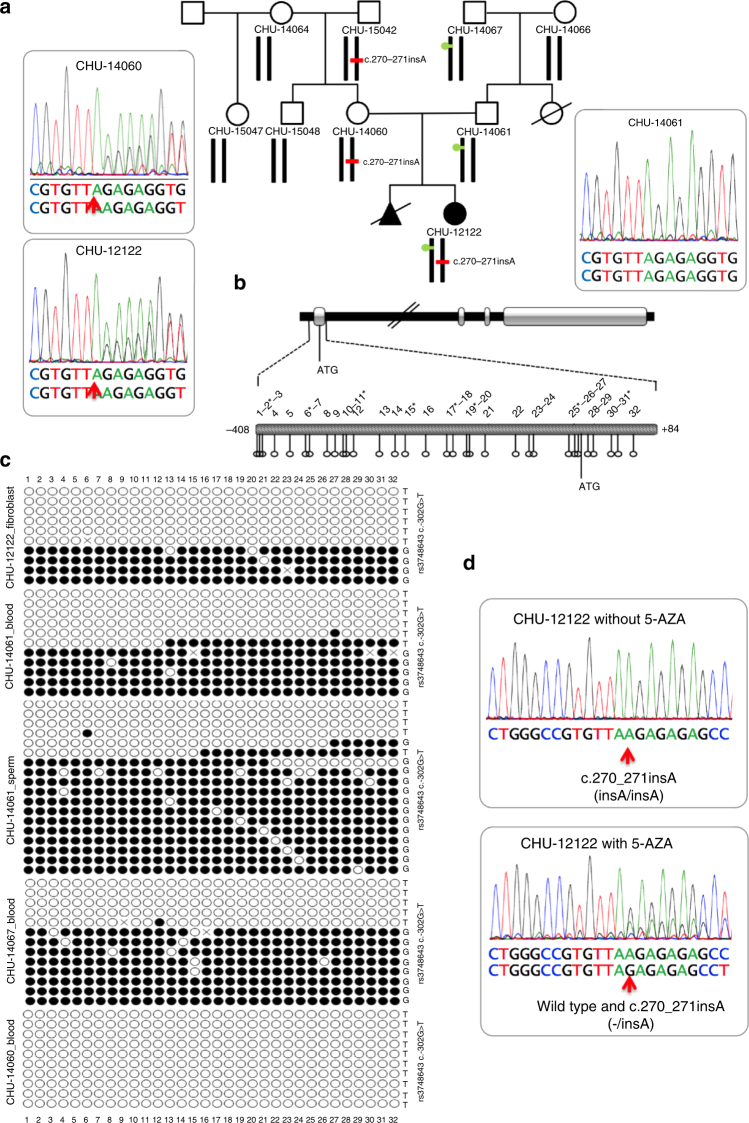
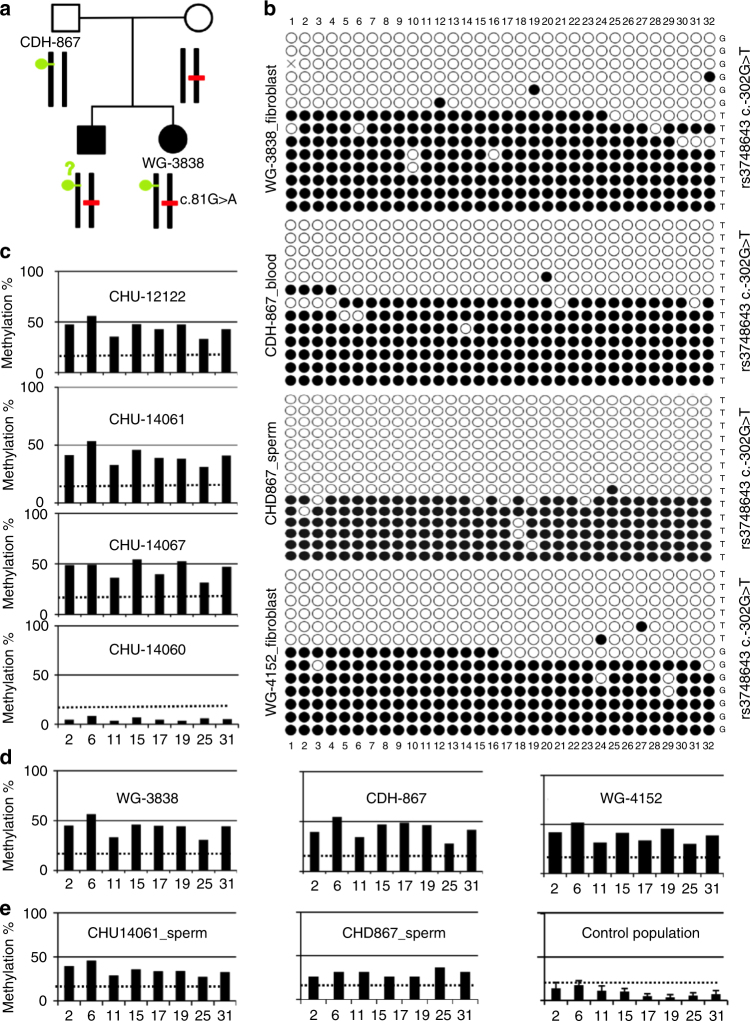
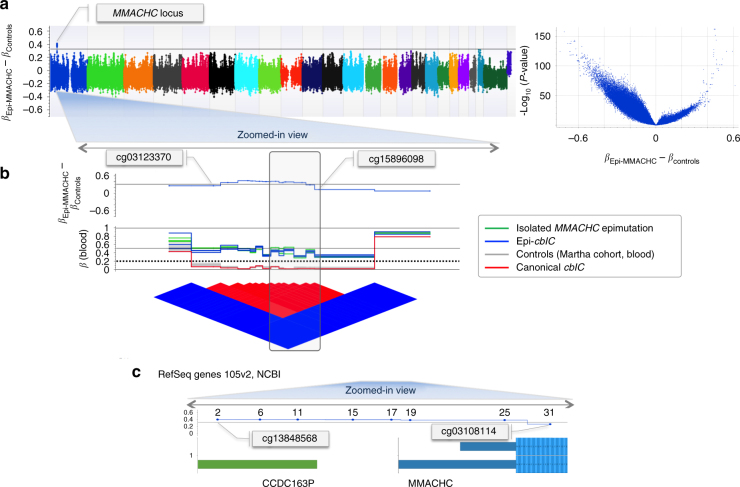
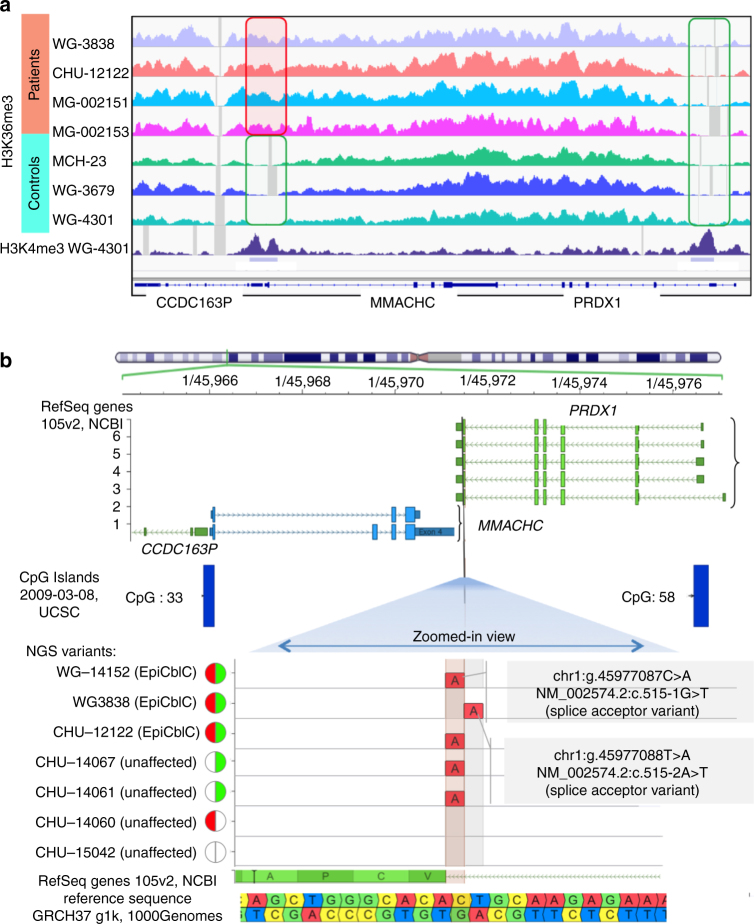
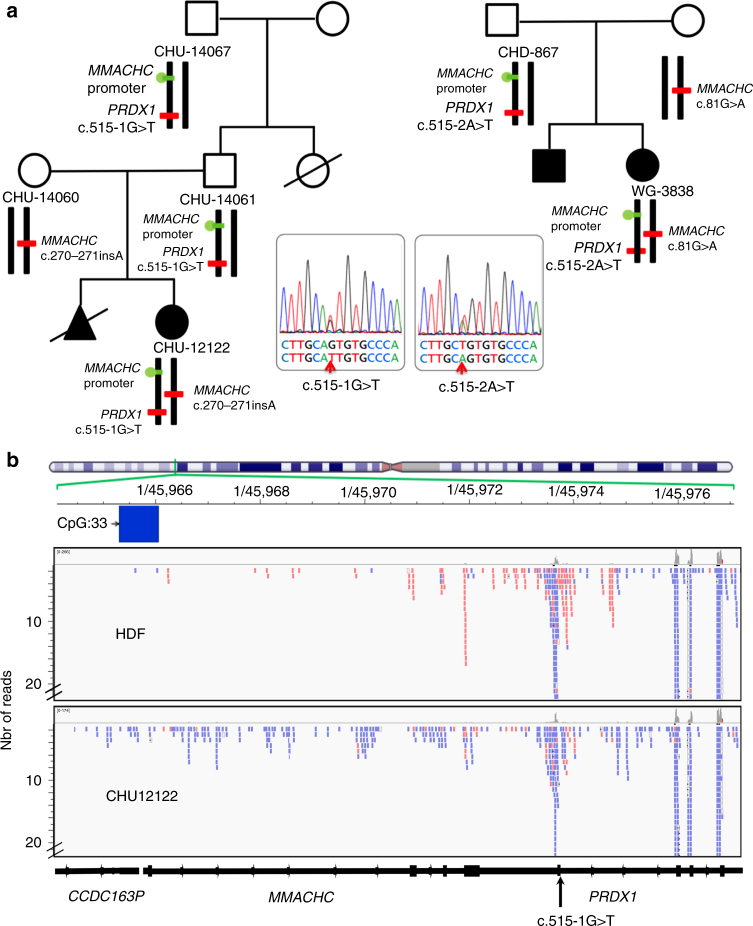
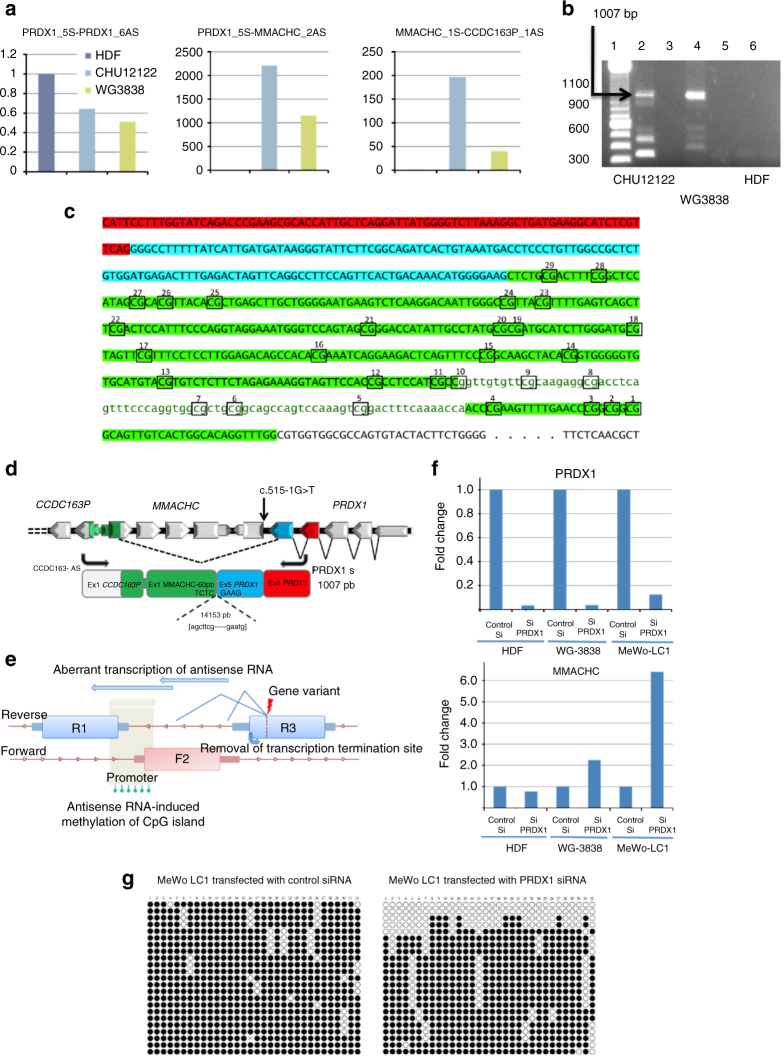
To date, epimutations reported in man have been somatic and erased in germlines. Here, we identify a cause of the autosomal recessive cblC class of inborn errors of vitamin B 12 metabolism that we name “epi-cblC”. The subjects are compound heterozygotes for a genetic mutation and for a promoter epimutation, detected in blood, fibroblasts, and sperm, at the MMACHC locus; 5-azacytidine restores the expression of MMACHC in fibroblasts. MMACHC is flanked by CCDC163P and PRDX1, which are in the opposite orientation. The epimutation is present in three generations and results from PRDX1 mutations that force antisense transcription of MMACHC thereby possibly generating a H3K36me3 mark. The silencing of PRDX1 transcription leads to partial hypomethylation of the epiallele and restores the expression of MMACHC. This example of epi-cblC demonstrates the need to search for compound epigenetic-genetic heterozygosity in patients with typical disease manifestation and genetic heterozygosity in disease-causing genes located in other gene trios.
Overview
The claims and statistics of this paper haven’t been checked yet.
Free: it reads the open-access text and checks the first 5 claims that cite a source we can check. Create a free account to check every claim.
Integrity signals
Registry
Cites
Statistics
Figures
Verification
Claims the paper makes
The claims and statistics of this paper haven’t been checked yet.
Free: it reads the open-access text and checks the first 5 claims that cite a source we can check. Create a free account to check every claim.
Claims other papers make about this one
Each is checked against this paper’s own text: does it say what the citing paper says it does?
The source backs part of the claim, not all of it — or backs it for a different population, condition or comparison.
In the citing paper
“Interestingly, it has been reported that epigenetic patterns and phenotypic changes can be induced by a single genetic variant, combined with random epimutation (289).”
From Epigenetic Modifications in Stress Response Genes Associated With Childhood Trauma (2019) · cites this paper as [289]
Experimental — accuracy not yet measuredThe source backs part of the claim, not all of it — or backs it for a different population, condition or comparison.
In the citing paper
“Several studies14–16 including a recent study by Guéant et al.18 in this journal, have reported the co-segregation of an abnormal DNA methylation pattern (called “epimutation”) with a rare disease in two or more generations of certain families.”
From A critical view on transgenerational epigenetic inheritance in humans (2018) · cites this paper as [18]
Experimental — accuracy not yet measuredThe cited source says what the claim attributes to it.
In the citing paper
“If this gene is expressed also in the germline, as in the families described by Guéant et al.18, the epimutation is also found in germ cells , which should not be mistaken for transgenerational epigenetic inheritance.”
From A critical view on transgenerational epigenetic inheritance in humans (2018) · cites this paper as [18]
The cited source says what the claim attributes to it.
In the citing paper
“In these cases, the abnormal DNA methylation of the gene under investigation was linked to a mutation in a neighboring gene that removed the transcription termination signal (Fig. 1b).”
From A critical view on transgenerational epigenetic inheritance in humans (2018) · cites this paper as [18]
The cited source says what the claim attributes to it.
In the citing paper
“As a consequence, transcription from this gene extended into the gene under investigation, causing abnormal promoter methylation and gene silencing.”
From A critical view on transgenerational epigenetic inheritance in humans (2018) · cites this paper as [18]
Self-check
Percentages, sums and reported differences re-computed from the paper’s own numbers.
The self-check needs the paper’s full text.
Citations
Cites
Model-based Analysis of ChIP-Seq (MACS)
Zhang, Y., Liu, T., Meyer, C. A., Eeckhoute, J., Johnson, D. S., Bernstein, B. E., Nusbaum, C., Myers, R. M., Brown, M., Li, W., et al. (2008) · Genome Biology · doi:10.1186/gb-2008-9-9-r137 · Cited by 18,386 · cited 1×
“Peaks were called using Model-based Analysis of ChIP-Seq MACS2 with input DNA as control and using the broad peak mode (--broad --broad-cutoff 0.1) 35 .”
InfluentialAn integrated encyclopedia of DNA elements in the human genome
The ENCODE Project Consortium (2012) · Nature · doi:10.1038/nature11247 · Cited by 18,072
Heinz, S., Benner, C., Spann, N., Bertolino, E., Lin, Y. C., Laslo, P., Cheng, J. X., Murre, C., Singh, H., & Glass, C. K. (2010) · Molecular Cell · doi:10.1016/j.molcel.2010.05.004 · Cited by 13,382 · cited 1×
“In order to generate Wiggle (WIG) and Tiled Data Format (TDF) fi les, HOMER (4.7) 36 and igvtools (2.3.67; http://software.broadinstitute.org/software/igv/igvtools) were used.”
InfluentialPrincipal components analysis corrects for stratification in genome-wide association studies
Price, A. L., Patterson, N. J., Plenge, R. M., Weinblatt, M. E., Shadick, N. A., & Reich, D. (2006) · Nature Genetics · doi:10.1038/ng1847 · Cited by 10,248
Population Structure and Eigenanalysis
Patterson, N., Price, A. L., & Reich, D. (2006) · PLoS Genetics · doi:10.1371/journal.pgen.0020190 · Cited by 5,280 · cited 1×
“We established a list of tail-to-tail SAGPs using a systematic search through the United Sense-Antisense Gene Pairs Database and retrieved 385 gene pairs 30 .”
CpG Islands in vertebrate genomes
Gardiner-Garden, M., & Frommer, M. (1987) · Journal of Molecular Biology · doi:10.1016/0022-2836(87)90689-9 · Cited by 3,353 · cited 2×
“…visually inspected (RefSeq Genes 105v2) in order to look for the presence of a fl anking gene that meets the two criteria of sense – antisense trios of genes: (1) antisense with one of the tail-to-tail SAGPs and (2) sharing a CpG island with the proxy gene (CpG Islands 2009 – 03 – 08, UCSC) 30, 31 .”
Driver mutations in histone H3.3 and chromatin remodelling genes in paediatric glioblastoma
Schwartzentruber, J., Korshunov, A., Liu, X.-Y., Jones, D. T. W., Pfaff, E., Jacob, K., Sturm, D., Fontebasso, A. M., Quang, D.-A. K., Tönjes, M., et al. (2012) · Nature · doi:10.1038/nature10833 · Cited by 2,631 · cited 1×
“All samples were sequenced using the HiSeq X Ten Illumina System sequencer with paired-end 150-bp read length and the mean average of 35 – 37X. Bioinformatics analysis was performed as previously described 34 .”
Self-citationLandon, M., Saam, J., Brown, K. L., Moyes, K., Evans, B., & Wenstrup, R. (2015) · Oncology · doi:10.1159/000430097 · Cited by 1,939
Transgenerational epigenetic inheritance: myths and mechanisms
Heard, E., & Martienssen, R. A. (2014) · Cell · doi:10.1016/j.cell.2014.02.045 · Cited by 1,864 · cited 1×
“In most cases, epimutations are somatic and are likely to exist as mosaics with tissue-speci fi c effects 2 – 4 .”
Structure of linkage disequilibrium and phenotypic associations in the maize genome
Remington, D. L., Thornsberry, J. M., Matsuoka, Y., Wilson, L. M., Whitt, S. R., Doebley, J., Kresovich, S., Goodman, M. M., & Buckler, E. S. (2001) · Proceedings of the National Academy of Sciences · doi:10.1073/pnas.201394398 · Cited by 1,256 · cited 2×
“…(epi-haplotype blocks, epi-LD analysis), linkage disequilibrium (LD) pairwise analysis was performed on all adjacent CpG pairs in a chromosome or within a haplotype block using a matrix output for both the expectation – maximization (EM) algorithm and the composite haplotype method (CHM) 37 .”
Cited by
A critical view on transgenerational epigenetic inheritance in humans
Horsthemke, B. (2018) · Nature Communications · doi:10.1038/s41467-018-05445-5 · Cited by 349
Epigenetic Modifications in Stress Response Genes Associated With Childhood Trauma
Jiang, S., Postovit, L., Cattaneo, A., Binder, E. B., & Aitchison, K. J. (2019) · Frontiers in Psychiatry · doi:10.3389/fpsyt.2019.00808 · Cited by 288
Glutaminase Deficiency Caused by Short Tandem Repeat Expansion in GLS
van Kuilenburg, A. B. P., Tarailo-Graovac, M., Richmond, P. A., Drögemöller, B. I., Pouladi, M. A., Leen, R., Brand-Arzamendi, K., Dobritzsch, D., Dolzhenko, E., Eberle, M. A., et al. (2019) · New England Journal of Medicine · doi:10.1056/nejmoa1806627 · Cited by 91
Wortmann, S. B., Oud, M. M., Alders, M. M., Coene, K. L. M., van der Crabben, S. N., Feichtinger, R. G., Garanto, A., Hoischen, A., Langeveld, M., Lefeber, D. J., et al. (2022) · Journal of Inherited Metabolic Disease · doi:10.1002/jimd.12507 · Cited by 90
“Both these variants cause aberrant antisense transcription and cis-hypermethylation of the MMACHC gene promotor with subsequent silencing.(149)”
BackgroundGenetic basis of mitochondrial diseases
Gušić, M., & Prokisch, H. (2021) · FEBS Letters · doi:10.1002/1873-3468.14068 · Cited by 88
“The secondary epimutation, marked by promoter hypermethylation, was caused by the antisense transcription of adjacent mutated PRDX1 [272].”
Huemer, M., & Baumgartner, M. R. (2019) · Journal of Inherited Metabolic Disease · doi:10.1002/jimd.12012 · Cited by 85
Self-citationMultigenerational epigenetic inheritance: One step forward, two generations back
Tuscher, J. J., & Day, J. J. (2019) · Neurobiology of Disease · doi:10.1016/j.nbd.2019.104591 · Cited by 63
Garg, P., Jadhav, B., Rodriguez, O. L., Patel, N., Martin-Trujillo, A., Jain, M., Metsu, S., Olsen, H. E., Paten, B., Ritz, B. R., et al. (2020) · The American Journal of Human Genetics · doi:10.1016/j.ajhg.2020.08.019 · Cited by 74
Impact of Endocrine Disruptors upon Non-Genetic Inheritance
Montjean, D., Neyroud, A.-S., Yéfimova, M., Khalifa, M. B., Cabry, R., & Ravel, C. (2022) · International Journal of Molecular Sciences · doi:10.3390/ijms23063350 · Cited by 67
Guéant, J., Guéant‐Rodriguez, R., Kosgei, V. J., & Coelho, D. (2021) · Critical Reviews in Biochemistry and Molecular Biology · doi:10.1080/10409238.2021.1979459 · Cited by 75
Self-citationUncovering Missing Heritability in Rare Diseases
Maroilley, T., & Tarailo‐Graovac, M. (2019) · Genes · doi:10.3390/genes10040275 · Cited by 64
“Similarly, recently described promoter epimutation [43] or allelic imbalance due to untranslated (UTR) variations [44] are some examples of not routinely screened genetic mechanisms that may cause unexplained RDs.”
BackgroundVitamin B12 Metabolism: A Network of Multi-Protein Mediated Processes
Mucha, P. T., Kuś, F., Cysewski, D., Smolenski, R. T., & Tomczyk, M. (2024) · International Journal of Molecular Sciences · doi:10.3390/ijms25158021 · Cited by 81
“Individuals affected by the cblC disorder manifest severe neurological and systemic metabolic abnormalities [97], such as atypical hemolytic uremic syndromes (aHUS), decline in renal function, idiopathic neuropathies, spinal cord degenerations, ataxias, recurrent thrombosis, visual field defects,…”
BackgroundWe, Z., Li, H., Wang, C., Wang, X., & Gu, M. (2019) · Frontiers in Genetics · doi:10.3389/fgene.2018.00726 · Cited by 53
“To date, there has been some reliable evidence that such compound heterozygotes might exit another mutation for a promoter epimutation, resulting from PRDX1 mutations that force antisense transcription of MMACHC (Guéant et al., 2018).”
BackgroundTransgenerational epigenetic inheritance of traumatic experience in mammals
Švorcová, J. (2023) · Genes · doi:10.3390/genes14010120 · Cited by 47
Medrano, C., Vega, A. I., Navarrete, R., Ecay, M. J., Calvo, R., Pascual, S. I. P., Pons, M. R., Toledo, L., García‐Jiménez, I., Arroyo, I., et al. (2019) · Clinical Genetics · doi:10.1111/cge.13508 · Cited by 47
Liu, Q., & Zhang, Y. (2019) · Biochemical and Biophysical Research Communications · doi:10.1016/j.bbrc.2019.08.077 · Cited by 47
Guéant, J., Oussalah, A., Zgheib, R., Siblini, Y., Battaglia-Hsu, S.-F., & Namour, F. (2020) · Biochimie · doi:10.1016/j.biochi.2020.03.015 · Cited by 41
Self-citationAdult-onset CblC deficiency: a challenging diagnosis involving different adult clinical specialists
Kalantari, S., Brezzi, B., Bracciamà, V., Barreca, A., Nozza, P., Vaisitti, T., Amoroso, A., Deaglio, S., Manganaro, M., Porta, F., et al. (2022) · Orphanet Journal of Rare Diseases · doi:10.1186/s13023-022-02179-y · Cited by 34
Cubilin, the Intrinsic Factor-Vitamin B12 Receptor in Development and Disease
Kozyraki, R., & Cases, O. (2018) · Current Medicinal Chemistry · doi:10.2174/0929867325666181008143945 · Cited by 37
Sloan, J. L., Achilly, N. P., Arnold, M. L., Catlett, J. L., Blake, T. B., Bishop, K. S., Jones, M. S., Harper, U. L., English, M. A., Anderson, S. M., et al. (2020) · Human Molecular Genetics · doi:10.1093/hmg/ddaa044 · Cited by 33
Inherited defects of cobalamin metabolism
Watkins, D., & Rosenblatt, D. S. (2022) · Vitamins and hormones · doi:10.1016/bs.vh.2022.01.010 · Cited by 31
Self-citationElangovan, R., & Baruteau, J. (2022) · Frontiers in Pharmacology · doi:10.3389/fphar.2022.972468 · Cited by 36
“, 2017); In epi-CblC, an epimutation leads to a splicing variant in the adjacent PRDX1 gene causes transcriptional silencing of MMACHC (Guéant et al., 2018).”
BackgroundInfluentialNavarrete, R., Leal, F., Vega, A. I., López, A. M., García‐Silva, M. T., Martín‐Hernández, E., Quijada‐Fraile, P., Martínez, A. B., Vives, I., García‐Jiménez, I., et al. (2019) · European Journal of Human Genetics · doi:10.1038/s41431-018-0330-0 · Cited by 28
Mergnac, J.-P., Wiedemann, A., Chéry, C., Ravel, J., Namour, F., Guéant, J., Feillet, F., & Oussalah, A. (2021) · Human Genetics · doi:10.1007/s00439-021-02358-0 · Cited by 31
Self-citationVersatile enzymology and heterogeneous phenotypes in cobalamin complementation type C disease
Esser, A. J., Mukherjee, S., Dereven’kov, I. А., Makarov, S. V., Jacobsen, D. W., Spiekerkoetter, U., & Hannibal, L. (2022) · iScience · doi:10.1016/j.isci.2022.104981 · Cited by 32
“…Protein 11, a transcriptional regulator) and ZNF143 (Zinc finger protein 143, a transcriptional regulator) were found to cause combined methylmalonic acidemia and homocystinemia mimicking classic cblC disease (Guéant et al., 2018; Pupavac et al., 2016; Quintana et al., 2017; Yu et al., 2013).”
InfluentialLin, L., Lin, G., Lin, H., Chen, L., Chen, X., Lin, Q., Xu, Y., & Zeng, Y. (2022) · Frontiers in Immunology · doi:10.3389/fimmu.2022.906420 · Cited by 27
“2 was considered to be unmethylated (16).”
Screening for rare epigenetic variations in autism and schizophrenia
Garg, P., & Sharp, A. J. (2019) · Human Mutation · doi:10.1002/humu.23740 · Cited by 24
Wiedemann, A., Oussalah, A., Lamireau, N., Théron, M., Julien, M., Mergnac, J.-P., Augay, B., Deniaud, P., Alix, T., Frayssinoux, M., et al. (2022) · Cell Reports Medicine · doi:10.1016/j.xcrm.2022.100670 · Cited by 34
“147 This disorder is due to an epimutation at the MMACHC promoter, which results from PRDX1 splicing mutations with an aberrant extension of antisense transcription through theMMACHC promoter.(147) The antisense readthrough transcripts also encompass the promoter of the TESK2 neighboring gene, resulting in the silenci…”
Self-citationRenard, É., Chéry, C., Oussalah, A., Josse, T., Perrin, P., Tramoy, D., Voirin, J., Klein, O., Leheup, B., Feillet, F., et al. (2019) · Human Genetics · doi:10.1007/s00439-019-02015-7 · Cited by 29
Self-citationCavicchi, C., Oussalah, A., Falliano, S., Ferri, L., Gozzini, A., Gasperini, S., Motta, S., Rigoldi, M., Parenti, G., Tummolo, A., et al. (2021) · Clinical Epigenetics · doi:10.1186/s13148-021-01117-2 · Cited by 24
“515-1G > T variant leads to a loss of MMACHC protein expression through the secondary MMACHC epimutation triggered by its aberrant transcription [6].”
BackgroundResultInfluentialSelf-citationHow I treat thrombotic microangiopathy in the era of rapid genomics
Doreille, A., Rafat, C., Rondeau, É., & Mesnard, L. (2022) · Blood · doi:10.1182/blood.2022015583 · Cited by 21
Evolving Role of RING1 and YY1 Binding Protein in the Regulation of Germ-Cell-Specific Transcription
Bajusz, I., Henry, S., Sutus, E., Kovács, G. E., & Pirity, M. K. (2019) · Genes · doi:10.3390/genes10110941 · Cited by 22
A critical appraisal of clinical epigenetics
Horsthemke, B. (2022) · Clinical Epigenetics · doi:10.1186/s13148-022-01315-6 · Cited by 24
Monogenic Disorders of ROS Production and the Primary Anti-Oxidative Defense
Grüning, N., & Ralser, M. (2024) · Biomolecules · doi:10.3390/biom14020206 · Cited by 19
Oussalah, A., Jeannesson, É., Chéry, C., Perrin, P., Rouyer, P., Josse, T., Cano, A., Barth, M., Fouilhoux, A., Mention, K., et al. (2020) · EBioMedicine · doi:10.1016/j.ebiom.2019.102623 · Cited by 19
Self-citationIntracellular processing of vitamin B12 by MMACHC (CblC)
Hannibal, L., & Jacobsen, D. W. (2022) · Vitamins and hormones · doi:10.1016/bs.vh.2022.02.001 · Cited by 17
Chen, Z., Dong, H., Liu, Y., He, R., Song, J., Jin, Y. S., Li, M., Liu, Y., Liu, X., Yan, H., et al. (2022) · Orphanet Journal of Rare Diseases · doi:10.1186/s13023-022-02471-x · Cited by 15
Methionine dependence in tumor cells: The potential role of cobalamin and MMACHC
Sorin, M., Watkins, D., Gilfix, B. M., & Rosenblatt, D. S. (2021) · Molecular Genetics and Metabolism · doi:10.1016/j.ymgme.2021.01.006 · Cited by 16
Self-citationWang, C., Liu, Y., Zhang, X., Wang, H., Cui, Y., Zhi, X., Zheng, J., Wang, N., Shu, J., Li, D., et al. (2021) · Clinica Chimica Acta · doi:10.1016/j.cca.2021.08.008 · Cited by 14
Oussalah, A., Siblini, Y., Hergalant, S., Chéry, C., Rouyer, P., Cavicchi, C., Guerrini, R., Morange, P., Trégouët, D., Pupavac, M., et al. (2022) · Clinical Epigenetics · doi:10.1186/s13148-022-01271-1 · Cited by 18
“In this homozygous case, we found that the bi-allelic epimutation produces the complete silencing of MMACHC in the patient’s fibroblasts [2].”
BackgroundInfluentialSelf-citationRapid screening of MMACHC gene mutations by high‐resolution melting curve analysis
Wang, C., Liu, Y., Cai, F., Zhang, X., Xu, X., Li, Y., Zou, Q., Zheng, J., Zhang, Y., Guo, W., et al. (2020) · Molecular Genetics & Genomic Medicine · doi:10.1002/mgg3.1221 · Cited by 14
“In addition, it is reported in a literature that PRDX1 (MIM# 176763), which is adjacent, reverse oriented to and can cause “secondary epigenetic” mutation of MMACHC, can also lead to cblC (Gueant et al., 2018).”
BackgroundMultiple sclerosis and intracellular cobalamin defect (MMACHC/PRDX1) comorbidity in a young male
Pollini, L., Tolve, M., Nardecchia, F., Galosi, S., Carducci, C., Carlo, E. D., Carducci, C., & Leuzzi, V. (2020) · Molecular Genetics and Metabolism Reports · doi:10.1016/j.ymgmr.2019.100560 · Cited by 11
Heritable changeability: Epimutation and the legacy of negative definition in epigenetic concepts
Goff, A. L., Allard, P., & Landecker, H. L. (2021) · Studies in History and Philosophy of Science Part A · doi:10.1016/j.shpsa.2020.12.006 · Cited by 11
Dreumont, N., Mimoun, K., Bossenmeyer‐Pourié, C., Quadros, E. V., Alberto, J., Umoret, R., Helle, D., Robert, A., Daval, J., Guéant, J., et al. (2020) · Molecular Neurobiology · doi:10.1007/s12035-020-02163-2 · Cited by 14
Self-citationDisorders of Cobalamin and Folate Transport and Metabolism
Fowler, B., Froese, D. S., & Watkins, D. (2022) · Springer eBooks · doi:10.1007/978-3-662-63123-2_28 · Cited by 10
Self-citationPlastic Ontogenesis: Memory, Closure, and Habitual Teleology in Development
Švorcová, J. (2024) · Biosemiotics/Biosemiotics. Bookseries · doi:10.1007/978-3-031-53626-7_9 · Cited by 11
Epimutation of MMACHC compound to a genetic mutation in cblC cases
Zhang, X., Chen, Q., Song, Y., Guo, P., Wang, Y., Luo, S., Zhang, Y., Zhou, C., Li, D., Chen, Y., et al. (2021) · Molecular Genetics & Genomic Medicine · doi:10.1002/mgg3.1625 · Cited by 11
“Previous research demonstrated that the silencing of PRDX1 gene restored the expression of MMACHC gene in cultured cells, and that it produced 10– 15% hypomethylation of the allele initially fully methylated in the clones generated from bisulfitetreated DNA(Gueant et al., 2018).”
BackgroundIdentification of Clinical Variants beyond the Exome in Inborn Errors of Metabolism
Soriano‐Sexto, A., Gallego, D., Leal, F., Castejón‐Fernández, N., Navarrete, R., Alcaide, P., Couce, M. L., Martín‐Hernández, E., Quijada‐Fraile, P., Quintana, L. P., et al. (2022) · International Journal of Molecular Sciences · doi:10.3390/ijms232112850 · Cited by 11
Redox signaling in inherited diseases of metabolism
Jacobsen, D. W., & Hannibal, L. (2019) · Current Opinion in Physiology · doi:10.1016/j.cophys.2019.04.024 · Cited by 9
Veldman, A., Sikkema‐Raddatz, B., Derks, T. G. J., van Karnebeek, C., Kiewiet, M. B. G., Mulder, M. F., Nelen, M. R., Rubio‐Gozalbo, M. E., Sinke, R. J., der Velden, M. G. M. D. S., et al. (2024) · International Journal of Neonatal Screening · doi:10.3390/ijns11010001 · Cited by 9
Demaret, T., Bédard, K., Soucy, J., Watkins, D., Allard, P., Levtova, A., O’Brien, A., Brunel‐Guitton, C., Rosenblatt, D. S., & Mitchell, G. A. (2024) · Molecular Genetics and Metabolism · doi:10.1016/j.ymgme.2024.108345 · Cited by 8
Self-citationGallet, P., Oussalah, A., Pouget, C., Dittmar, G. A. G., Chéry, C., Gauchotte, G., Jankowski, R., Guéant, J., & Houlgatte, R. (2021) · Clinical Epigenetics · doi:10.1186/s13148-021-01122-5 · Cited by 8
“Due to the low sample size, and considering the exploratory approach of our analysis, we used the smoothed P-value transformation by converting nominal P-values obtained from the t-test to smoothed P-values using a window radius of 3, as previously reported [33].”
MethodSelf-citationThe Power of Clinical Diagnosis for Deciphering Complex Genetic Mechanisms in Rare Diseases
Shu, L., Maroilley, T., & Tarailo‐Graovac, M. (2023) · Genes · doi:10.3390/genes14010196 · Cited by 11
“[36] 2018 methylmalonic aciduria and homocystinuria, cobalamin C type (MAHCC; OMIM: #277400) AR MMACHC Sanger sequencing single heterozygous mutations methylation analysis (Sanger sequencing of bisulfite-converted DNA) heterozygous promoter hypermethylation 29302025”
BackgroundTransgenerational Epigenetic DNA Methylation Editing and Human Disease
Tompkins, J. D. (2023) · Biomolecules · doi:10.3390/biom13121684 · Cited by 15
“For example, transgenerational DNAme may ostensibly arise from co-segregation with a mutation in a neighboring gene, which removes transcription termination [172,173].”
BackgroundGuéant, J., & Feillet, F. (2022) · Human Genetics · doi:10.1007/s00439-022-02467-4 · Cited by 8
“The new type of cbl IMD named epicblC was first evidenced in patients from Europe and the United States and further found in Italy and China (Guéant et al. 2018; Guéant et al. 2022b).”
BackgroundInfluentialSelf-citationBrasil, S., Leal, F., Vega, A. I., Navarrete, R., Ecay, M. J., Desviat, L. R., Riera, C., Padilla, N., de la Cruz, X., Couce, M. L., et al. (2018) · Orphanet Journal of Rare Diseases · doi:10.1186/s13023-018-0862-y · Cited by 8
“Thus, these patients result from pathogenic variants in MMACHC and one in PRDX1 which force the antisense transcription of MMACHC and thereby a possible methylation mark [14].”
BackgroundThe (not so) Controversial Role of DNA Methylation in Epigenetic Inheritance Across Generations
Irmler, M., Kaspar, D., de Angelis, M. H., & Beckers, J. (2020) · Springer eBooks · doi:10.1007/978-3-030-35213-4_10 · Cited by 7
HIF1 and DROSHA are involved in MMACHC repression in hypoxia
Kiessling, E., Peters, F., Ebner, L. J. A., Merolla, L., Samardzija, M., Baumgartner, M. R., Grimm, C., & Froese, D. S. (2022) · Biochimica et Biophysica Acta (BBA) - General Subjects · doi:10.1016/j.bbagen.2022.130175 · Cited by 7
Self-citationHu, B., Chen, X., Zou, D., Du, X., Feng, S., Shen, Y., Sha, X., Jiang, F., Zhou, G., Lin, F., et al. (2025) · Translational Lung Cancer Research · doi:10.21037/tlcr-2025-204 · Cited by 6
“Recently, Guéant et al. proposed a mechanism that underlies methionine dependence in the MeWo LC1 cutaneous melanoma cell line, suggesting the involvement of MMACHC , which encodes a crucial protein in cobalamin (vitamin B12) metabolism and its inactivation (44).”
Hao, L., Deng, Y., Ding, S., Qiu, W., Zhang, H., Liang, L., Zhan, X., Chen, T., Gu, X., & Han, L. (2025) · Molecular Genetics and Metabolism · doi:10.1016/j.ymgme.2025.109182 · Cited by 5
Tejedor, J. R., Soriano‐Sexto, A., Beccari, L. L., Castejón‐Fernández, N., Medina, P. C., Sainz‐Ledo, L., Alba‐Linares, J. J., Urdinguio, R. G., Ugarte, M., Fernández, A. F., et al. (2024) · Journal of Inherited Metabolic Disease · doi:10.1002/jimd.12829 · Cited by 6
Genome and RNA sequencing in patients with methylmalonic aciduria of unknown cause
Abdrabo, L. S., Watkins, D., Wang, S. R., Lafond‐Lapalme, J., Rivière, J., & Rosenblatt, D. S. (2019) · Genetics in Medicine · doi:10.1038/s41436-019-0640-9 · Cited by 5
Self-citationA human somatic cell culture system for modelling gene silencing by transcriptional interference
Kühnel, T., Heinz, H., Utz, N., Božić, T., Horsthemke, B., & Steenpaß, L. (2020) · Heliyon · doi:10.1016/j.heliyon.2020.e03261 · Cited by 7
Rodriguez, M. S., Mulot, M., Chéry, C., Bensenane, M., Guéant‐Rodriguez, R., Jaussaud, R., Cobat, A., Feillet, F., Bronowicki, J., Namour, F., et al. (2025) · Hepatology Research · doi:10.1111/hepr.14203 · Cited by 3
“17,19,21,22 The Burrows– Wheeler Aligner software package was used to align all reads to the GRCh37/hg19 annotation with the default parameters of the BWA - MEM algorithm.”
Self-citationSiblini, Y., Chéry, C., Rouyer, P., Raso, J., Julien, A., Hergalant, S., François, A., Bezdetnaya, L., Vogin, G., Guéant, J., et al. (2021) · Clinical Epigenetics · doi:10.1186/s13148-021-01199-y · Cited by 5
Self-citationAhmed, S., Cai, L., Akbar, F., Siddiqui, A., DeBerardinis, R. J., Ni, M., Vu, H., & Afroze, B. (2024) · Scandinavian Journal of Clinical and Laboratory Investigation · doi:10.1080/00365513.2024.2394983 · Cited by 2
“In epi-cblC, the epimutation in the MMACHC promoter is produced by mutations in the antisense flanking gene [4].”
Waheed, N., Fayyaz, Z., & Imran, A. (2021) · Egyptian Journal of Medical Human Genetics · doi:10.1186/s43042-021-00197-2 · Cited by 2
“There is a need to search further for compound epigenetic–genetic heterozygosity in patients with typical disease manifestation and genetic heterozygosity in disease-causing genes located in other gene trios [12].”
BackgroundThe role of epigenetics in rare diseases
Horsthemke, B. (2024) · Medizinische Genetik · doi:10.1515/medgen-2024-2014 · Cited by 4
“This has been observed in some patients with Lynch syndrome [10], α-thalassemia [11] and combined methyl-malonic acidemia and homocystinuria, cblC type [12].”
BackgroundBauer, W. G., Watkins, D., Zacharias, C. A., Gilfix, B. M., & Rosenblatt, D. S. (2023) · Molecular Genetics and Metabolism · doi:10.1016/j.ymgme.2023.108111 · Cited by 2
Self-citationZhang, Y., Wang, L., Liu, X., Sun, M., Wang, H., Li, J., Zhang, S., Zhang, N., Li, D., Shu, J., et al. (2025) · Molecular Biology Reports · doi:10.1007/s11033-025-10935-z · Cited by 1
“PRDX1 mutation silenced the expression of MMACHC through methylating its promoter [ 18–22 ].”
Lucca, M. D., Casique, L., & Cornejo, V. (2019) · Elsevier eBooks · doi:10.1016/b978-0-12-849886-6.00011-2 · Cited by 1
L’épigénétique ou le changement transmissible du phénotype sans modification de la séquence de l’ADN
Delpech, M., Junien, C., Guéant, J., & Debré, P. (2021) · Bulletin de l Académie Nationale de Médecine · doi:10.1016/j.banm.2021.03.007 · Cited by 1
Self-citationNature beyond control: how expectations should inform decisions about human germline engineering
Parent, B., & Turi, A. (2019) · Journal of Assisted Reproduction and Genetics · doi:10.1007/s10815-019-01528-4 · Cited by 2
Guéant, J., Chéry, C., Oussalah, A., Nicolas, J., Majewski, J., & Rosenblatt, D. S. (2018) · Bulletin de l Académie Nationale de Médecine · doi:10.1016/s0001-4079(19)30225-0
Self-citationEpigenetics Won't Do Miracles. Some Sobering Remarks in Response to Professor Johannes Huber
Oexle, K. (2021) · Strategies for sustainability · doi:10.1007/978-3-030-74458-8_22
Epigenomic abnormalities and human diseases: genetic dysfunction without genetic mutation
Hata, K. (2021) · Japanese Journal of Thrombosis and Hemostasis · doi:10.2491/jjsth.32.619
Vitamins: cobalamin and folate
Watkins, D., Venditti, C. P., & Rosenblatt, D. S. (2020) · Elsevier eBooks · doi:10.1016/b978-0-12-813955-4.00051-9 · Cited by 1
Self-citationChen, Z., Dong, H., Liu, Y., He, R., Song, J., Jin, Y. S., Li, M., Liu, Y., Liu, X., Yan, H., et al. (2022) · Figshare · doi:10.6084/m9.figshare.20887284
Vitamins: cobalamin and folate
Watkins, D., Manoli, I., Venditti, C. P., & Rosenblatt, D. S. (2024) · Elsevier eBooks · doi:10.1016/b978-0-443-19176-3.00060-1
Self-citationCliment‐Cantó, P., Subirana-Granés, M., Ramos-Rodríguez, M., Dámaso, E., Marín, F., Vara, C., Pérez-González, B., Raurell, H., Munté, E., Soto, J. L., et al. (2024) · Clinical Epigenetics · doi:10.1186/s13148-024-01770-3
Michieletto, P., Baldo, F., Madonia, M., Zupin, L., Pensiero, S., & Bonati, M. T. (2025) · Genes · doi:10.3390/genes16060635
“4): c.515-1G>T is a splicing variant that activates a cryptic acceptor site in intron 5, producing the skipping of the last exon (6) and the loss of transcription termination signal of PRDX1 [3].”
InfluentialThe inherent fragility of collective proliferative control
Caldwell, M. G., & Lander, A. D. (2025) · iScience · doi:10.1016/j.isci.2025.113838 · Cited by 1
“Although mechanisms underlying dormancy are unknown 37 , it likely involves at least some degree of restoration of normal cell behavior to cells that were once cancer.”
Oussalah, A., Siblini, Y., Hergalant, S., Chéry, C., Rouyer, P., Cavicchi, C., Guerrini, R., Morange, P., Trégouët, D., Pupavac, M., et al. (2022) · Figshare · doi:10.6084/m9.figshare.19619244
Self-citationOussalah, A., Siblini, Y., Hergalant, S., Chéry, C., Rouyer, P., Cavicchi, C., Guerrini, R., Morange, P., Trégouët, D., Pupavac, M., et al. (2022) · Figshare · doi:10.6084/m9.figshare.19619238
Self-citationCavicchi, C., Oussalah, A., Falliano, S., Ferri, L., Gozzini, A., Gasperini, S., Motta, S., Rigoldi, M., Parenti, G., Tummolo, A., et al. (2021) · Figshare · doi:10.6084/m9.figshare.14904009
Self-citationOussalah, A., Siblini, Y., Hergalant, S., Chéry, C., Rouyer, P., Cavicchi, C., Guerrini, R., Morange, P., Trégouët, D., Pupavac, M., et al. (2022) · Figshare · doi:10.6084/m9.figshare.19619241
Self-citationEpigenetics and Inherited Metabolic Disorders
Cavicchi, C., Guéant, J., & Morrone, A. (2025) · Rare diseases of the immune system · doi:10.1007/978-3-032-02902-7_12
Self-citationFolates et pathologies du neurodéveloppement : autisme et anomalies de fermeture du tube neural
Renard, É. (2018) · theses.fr (ABES) · doi:10.70675/76b8f70bzfbf3z4c5bz9648z18860d401964
Kosgei, V. J. (2019) · theses.fr (ABES) · doi:10.70675/f3a31948zabb5z4be0z8f59zbcac02c1cd4d
“HF leads to dilated cardiomyopathy (DCM) 302 (Dickstein et al., 2008; Elliott et al., 2007; Maron et al., 2006; Ziaeian & Fonarow, 2016).”
BackgroundInfluentialŠkopková, M., Kabelíková, P., Andrésová, A., Brennerová, K., Dallemule, S., Sabo, M., Petrovič, R., & Gašperíková, D. (2026) · Clinical Epigenetics · doi:10.1186/s13148-026-02135-8
“Assuming the presence of a similar aberrant transcript in our patient, we used previously published primers [3] for amplification and Sanger sequencing of the aberrant transcript.”
InfluentialThe vitamin rheostat: A unified model of epigenetic feedback in vitamin homeostasis
Kubant, R., Anderson, G. H., & Korda, M. (2026) · Biochimica et Biophysica Acta (BBA) - Gene Regulatory Mechanisms · doi:10.1016/j.bbagrm.2026.195164
Stępień, K. M., Sykut‐Cegielska, J., Sloan, J. L., Piazzon, F., Bick, S. L., Bouchereau, J., Ferren, E., Gold, N. B., Imbard, A., Janssen, M. C. H., et al. (2026) · Journal of Inherited Metabolic Disease · doi:10.1002/jimd.70243
“In addition, biallelic variants in THAP11 , ZNF143 , or hemizygous variants in the HCFC1 gene (cblX; [3–7]) compose a rare group of transcription factors affecting the expression of MMACHC (Figure 1).”
Molecular mechanisms of promoter silencing by transcriptional readthrough
Shipman, G. A., Walback, E., González, A. G., Horth, C., Gravel, M., Bareke, E., & Majewski, J. (2026) · Cell Reports · doi:10.1016/j.celrep.2026.118139
Self-citation
Metadata
- Authors
- Guéant, J.-L., Chéry, C., Oussalah, A., Nadaf, J., Coelho, D., Josse, T., Flayac, J., Robert, A., Koscinski, I., Gastin, I., Filhine-Tresarrieu, P., Pupavac, M., Brebner, A., Watkins, D., Pastinen, T., Montpetit, A., Hariri, F., Tregouët, D., Raby, B. A., Chung, W. K., Morange, P.-E., Froese, D. S., Baumgartner, M. R., Benoist, J.-F., Ficicioglu, C., Marchand, V., Motorin, Y., Bonnemains, C., Feillet, F., Majewski, J., & Rosenblatt, D. S.
- Affiliations
- Inserm (FR)
- McGill University Health Centre (CA)
- Brigham and Women's Hospital (US)
- Columbia University Irving Medical Center (US)
- University Children's Hospital Zurich (CH)
- Hôpital Robert-Debré (FR)
- Children's Hospital of Philadelphia (US)
- Centre National de la Recherche Scientifique (FR)
- Corresponding author
- Guéant, Jean-Louis
- ORCID
- Guéant, Jean-Louis
- Chéry, Céline
- Oussalah, Abderrahim
- Nadaf, Javad
- Coelho, David
- Flayac, Justine
- Robert, Aurélie
- Koscinski, Isabelle
- Pupavac, Mihaela
- Watkins, David
- Pastinen, Tomi
- Raby, Benjamin A
- Chung, Wendy K.
- Morange, Pierre-Emmanuel
- Froese, D. Sean
- Baumgartner, Matthias R.
- Benoist, Jean-François
- Ficicioglu, Can
- Marchand, Virginie
- Motorin, Yuri
- Feillet, François
- Majewski, Jacek
- Rosenblatt, David S.
- Venue
- Nature Communications
- Published
- 2018-01-04
- Volume
- 9
- Issue
- 1
- Pages
- 67-67
- ISSN
- 2041-1723 (ISSN-L)
- PMC
- PMC5754367
- OpenAlex
- W2800841088
- Semantic Scholar
- 3b9af236b0b8a8e438906f7c0f092c3eccdd4bf0
- Cited by
- 93
- References
- 40
- Citations by year
- 2026: 4 · 2025: 7 · 2024: 10 · 2023: 4 · 2022: 20 · 2021: 16 · 2020: 10 · 2019: 17 · 2018: 5
- FWCI
- 3.57
- Type
- journal article
- Language
- en
- Update notices
- correction (2018-02-02)
- Open access
- gold
- doi.org
- Licence
- cc-by
- creativecommons.org/licenses/by/4.0 (tdm)
- creativecommons.org/licenses/by/4.0 (vor)
- Locations
- Nature Communications (publishedVersion, cc-by)
- Europe PMC (PubMed Central) (publishedVersion, cc-by)
- PubMed Central (publishedVersion, cc-by)
- PubMed (publishedVersion)
- Zurich Open Repository and Archive (University of Zurich) (acceptedVersion, cc-by)
- HAL AMU (submittedVersion, cc-by)
- Digital Access to Scholarship at Harvard (DASH) (Harvard University) (submittedVersion, cc-by)
- RePEc: Research Papers in Economics (submittedVersion)
- DOAJ (DOAJ: Directory of Open Access Journals) (submittedVersion)
- DOAJ (DOAJ: Directory of Open Access Journals) (submittedVersion, cc-by-sa)
- Zurich Open Repository and Archive (University of Zurich) (submittedVersion, cc-by)
- Zurich Open Repository and Archive (University of Zurich)
- Funders
- Agence Nationale de la Recherche (ANR-15-IDEX-0004)
- Institut National de la Santé et de la Recherche Médicale
- Topics
- Life Sciences › Biochemistry, Genetics and Molecular Biology › Molecular Biology › Epigenetics and DNA Methylation
- Life Sciences › Biochemistry, Genetics and Molecular Biology › Clinical Biochemistry › Metabolism and Genetic Disorders
- Health Sciences › Nursing › Nutrition and Dietetics › Folate and B Vitamins Research
- Keywords
- peroxiredoxin 1, MMACHC, cblC, epimutations, antisense transcription, compound heterozygosity, azacitidine, DNA methylation, H3K36me3, autosomal recessive inheritance
- MeSH terms
- Whole Genome Sequencing, Alleles, Azacitidine, Base Sequence, Carrier Proteins, Enzyme Inhibitors, Epistasis, Genetic, Family Health, Female, Fibroblasts, Heterozygote, Humans, Male, Metabolism, Inborn Errors, Mutation, Oxidoreductases, Pedigree, Vitamin B 12, Peroxiredoxins
About these checks
Registry, retraction, Cites and statistics results are computed, not judged, with one exception: a printed reference that no index lists is read once by a model before it counts as a citation error. Claims are extracted by a model and kept only when their quote appears verbatim in the text; each cited source is then checked, with a model’s help, for whether it says what the claim relies on. Those verdicts can be wrong — read the claim’s quote and the cited source before relying on one.
Statistics and arithmetic are recomputed, not judged.
Confidence bands are shown only for fields calibrated on our annotated test set. None is calibrated yet, so no band is shown.
What counts as a claim ›How we measure confidence ›How we check this ›
Are you an author, or do you see a problem with this page? Request a review
Data sources
Bibliographic data: Semantic Scholar, OpenAlex, Crossref.
Contains information from the Semantic Scholar Academic Graph Datasets, made available under the ODC Attribution License (ODC-BY 1.0).
Semantic Scholar’s data is described in: Kinney, R., et al. (2023). The Semantic Scholar Open Data Platform. arXiv:2301.10140.
