

The DOI matches its Crossref record; 46 of the 46 references it cites were found in a registry or an index.
TNFα blockade overcomes resistance to anti-PD-1 in experimental melanoma
Open accessAbstract
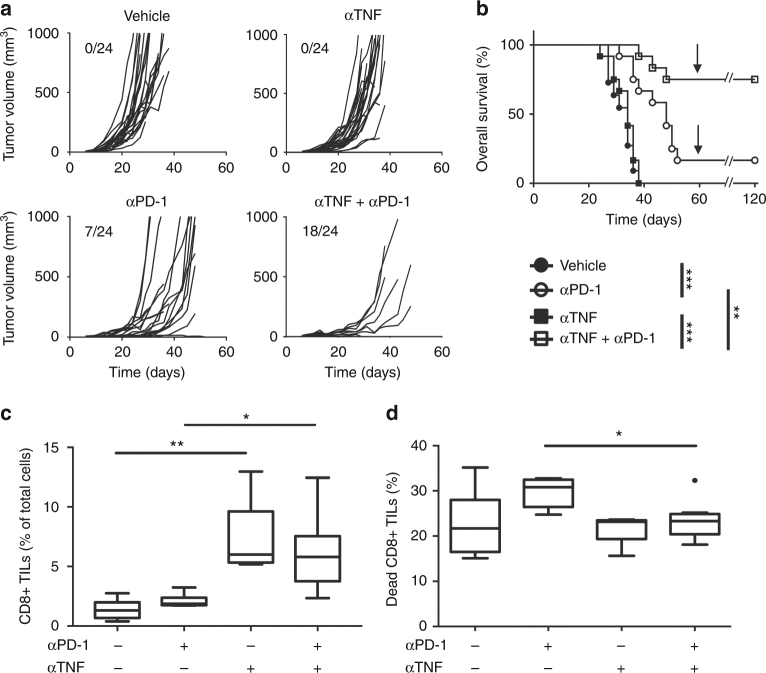
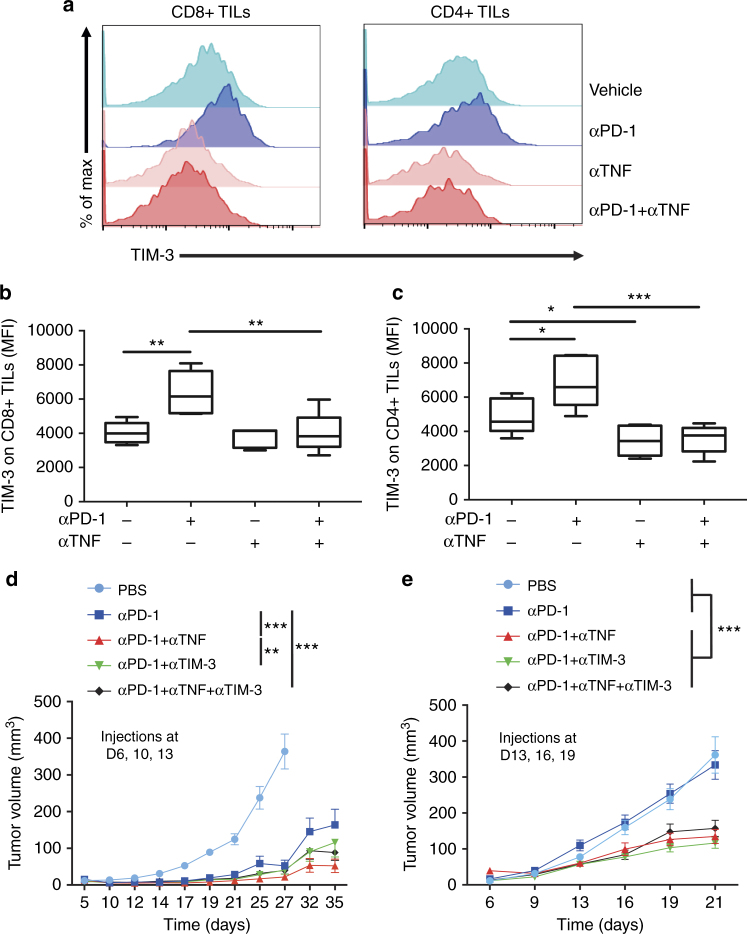
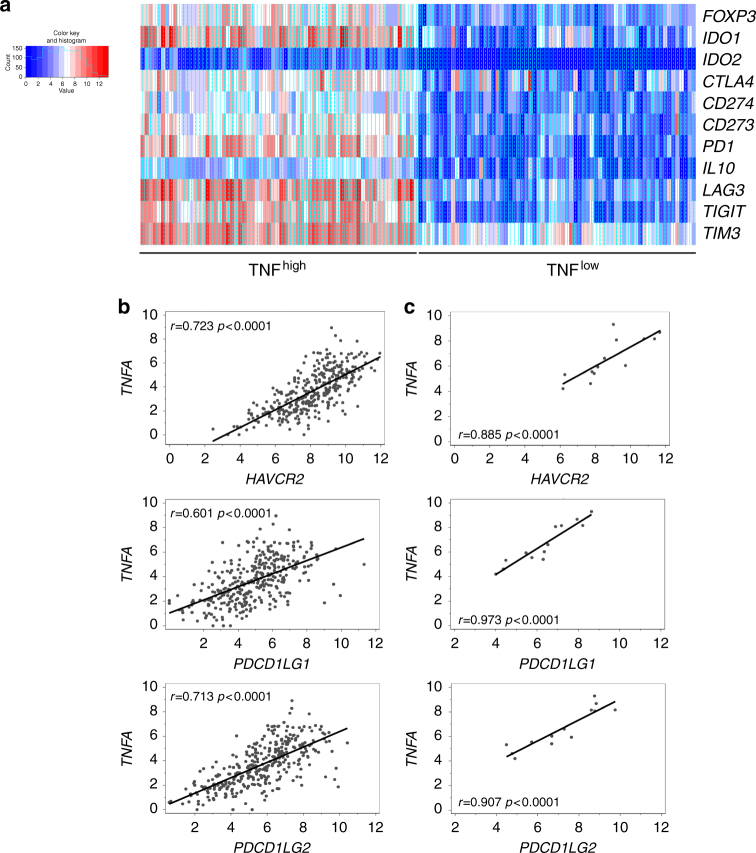
Antibodies against programmed cell death-1 (PD-1) have considerably changed the treatment for melanoma. However, many patients do not display therapeutic response or eventually relapse. Moreover, patients treated with anti-PD-1 develop immune-related adverse events that can be cured with anti-tumor necrosis factor α (TNF) antibodies. Whether anti-TNF antibodies affect the anti-cancer immune response remains unknown. Our recent work has highlighted that TNFR1-dependent TNF signalling impairs the accumulation of CD8+ tumor-infiltrating T lymphocytes (CD8+ TILs) in mouse melanoma. Herein, our results indicate that TNF or TNFR1 blockade synergizes with anti-PD-1 on anti-cancer immune responses towards solid cancers. Mechanistically, TNF blockade prevents anti-PD-1-induced TIL cell death as well as PD-L1 and TIM-3 expression. TNF expression positively correlates with expression of PD-L1 and TIM-3 in human melanoma specimens. This study provides a strong rationale to develop a combination therapy based on the use of anti-PD-1 and anti-TNF in cancer patients.
Overview
The claims and statistics of this paper haven’t been checked yet.
Run the check — free, no account needed. It reads the open-access text and checks the sources it cites.
Integrity signals
Registry
Cites
Statistics
Figures
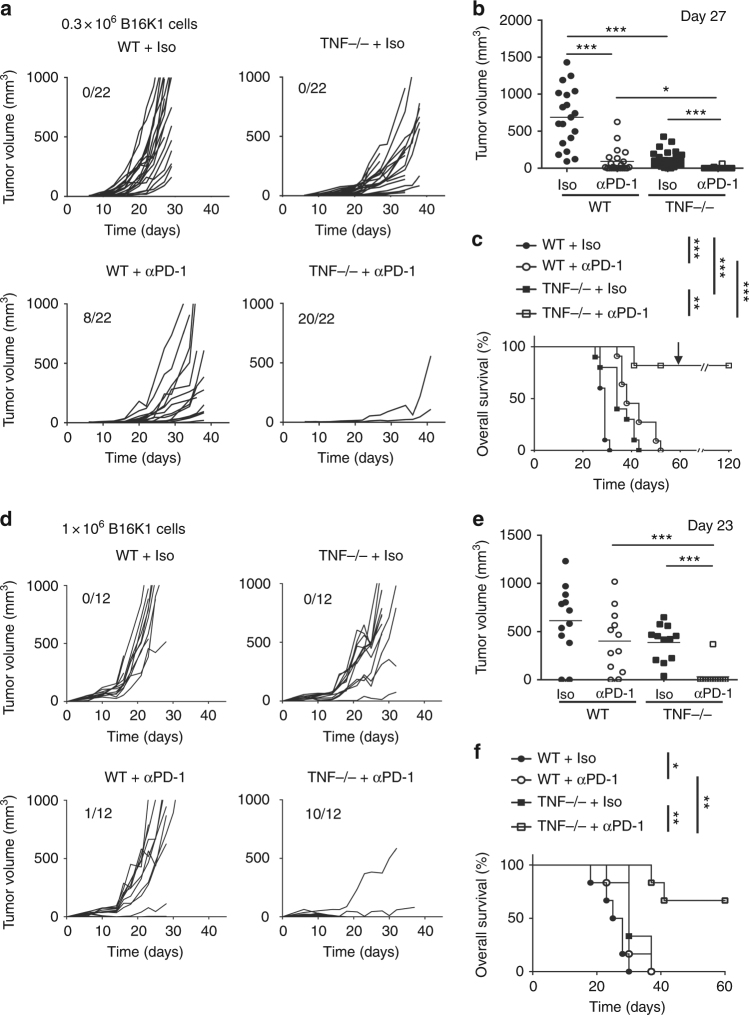
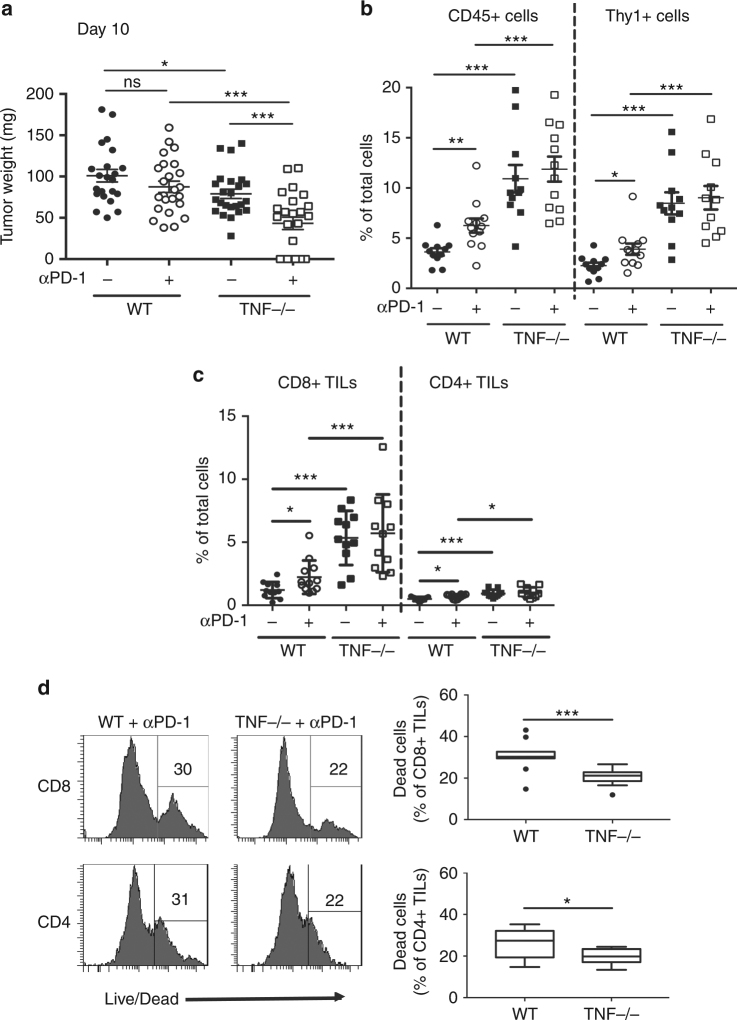
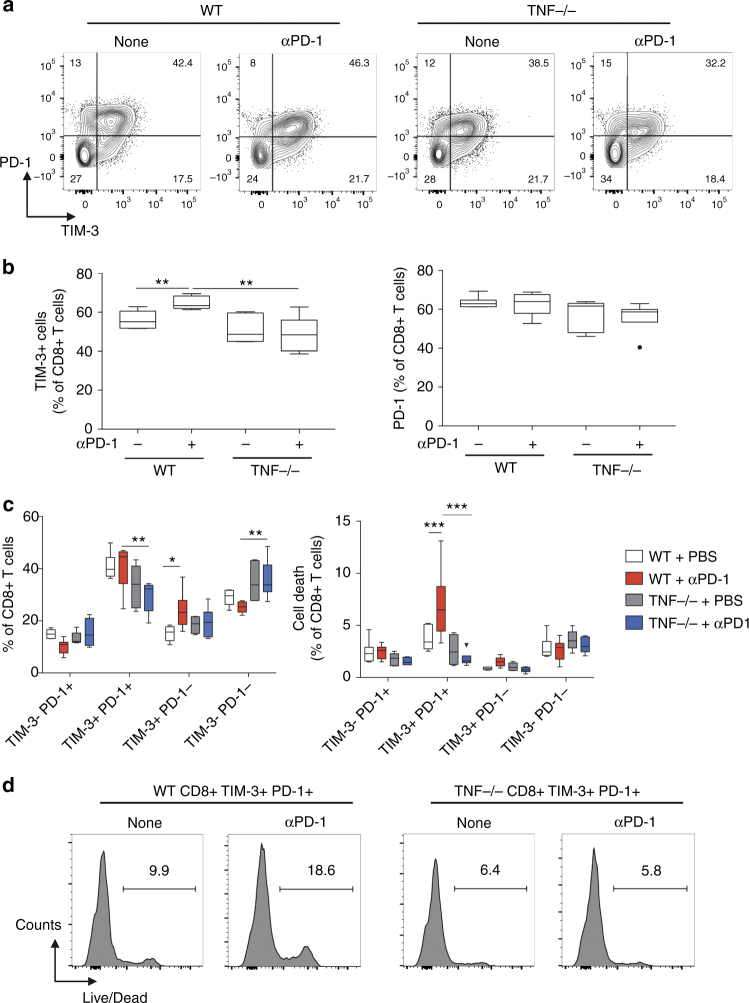
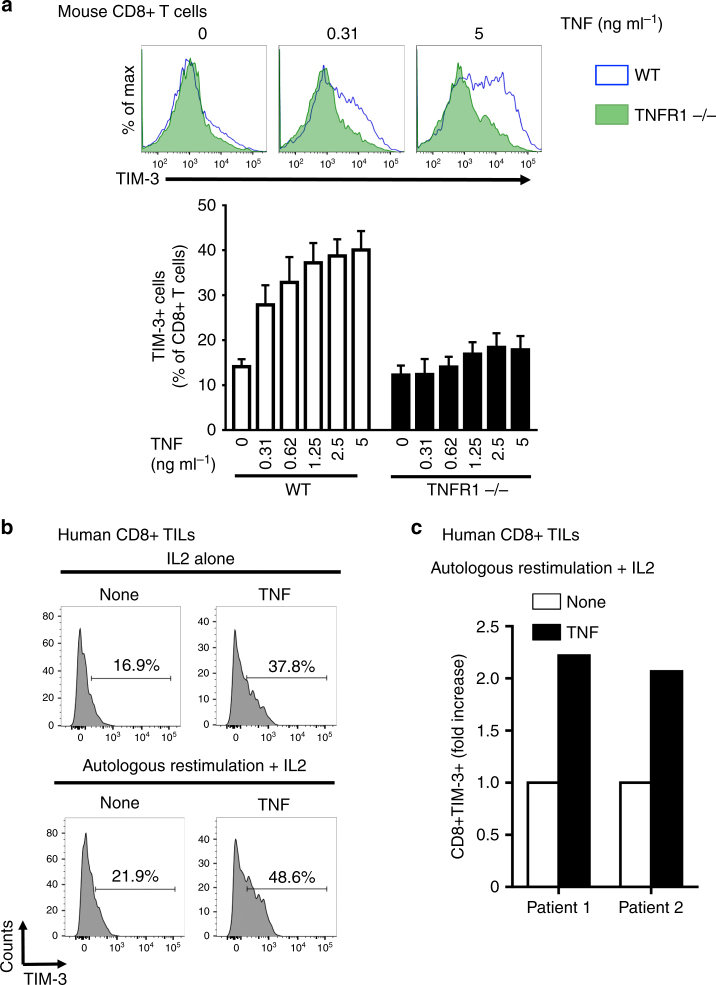
Verification
Claims the paper makes
The claims and statistics of this paper haven’t been checked yet.
Run the check — free, no account needed. It reads the open-access text and checks the sources it cites.
Claims other papers make about this one
Each is checked against this paper’s own text: does it say what the citing paper says it does?
In the citing paper
“Contrarily, other published reports showed evidence in mouse models that anti-TNF-a enhances the antitumor activity of combined anti-PD-1 and anti-CTLA-4 immunotherapy, 61 reinforces both CD8 T-cell-dependent immunity and anti-PD-1 therapy, by preventing anti-PD-1-induced cell death of tumor infiltrating lymphocytes as well as PD-L1 and T-cell immunoglobulin and mucin-domain containing-3 (Tim-3)”
From Autoimmune diseases and immune-checkpoint inhibitors for cancer therapy: Review of the literature and personalized risk-based prevention strategy (2020) · cites this paper as [62]
Self-check
Percentages, sums and reported differences re-computed from the paper’s own numbers.
The self-check needs the paper’s full text.
Citations
Cites
PD-1 and PD-L1 Immune Checkpoint Blockade to Treat Breast Cancer
Hartkopf, A. D., Taran, F., Wallwiener, M., Walter, C. B., Krämer, B., Grischke, E., & Brucker, S. Y. (2016) · Breast Care · doi:10.1159/000453569 · Cited by 30,989
Adverse Renal Effects of Immune Checkpoint Inhibitors: A Narrative Review
Wanchoo, R., Karam, S., Uppal, N. N., Barta, V. S., Deray, G., Devoe, C., Launay‐Vacher, V., Jhaveri, K. D., & on behalf of Cancer and Kidney International Network Workgroup on Immune Checkpoint Inhibitors (2017) · American Journal of Nephrology · doi:10.1159/000455014 · Cited by 15,320
Nivolumab versus docetaxel in advanced nonsquamous non-small-cell lung cancer
Borghaei, H., Paz-Ares, L., Horn, L., Spigel, D. R., Steins, M., Ready, N. E., Chow, L. Q., Vokes, E. E., Felip, E., Holgado, E., et al. (2015) · New England Journal of Medicine · doi:10.1056/nejmoa1507643 · Cited by 9,335 · cited 1×
“Thus, synergism of TNF/TNFR1 de fi ciency and anti-PD-1 is likely not restricted to melanoma but applies to other cancers, such as lung carcinoma, which can bene fi t from anti-PD-1 according to phase 2 and phase 3 clinical trials 25,26 .”
Combined Nivolumab and Ipilimumab or Monotherapy in Untreated Melanoma
Larkin, J., Chiarion-Sileni, V., Gonzalez, R., Grob, J. J., Cowey, C. L., Lao, C. D., Schadendorf, D., Dummer, R., Smylie, M., Rutkowski, P., et al. (2015) · New England Journal of Medicine · doi:10.1056/nejmoa1504030 · Cited by 8,157
PD-1 blockade induces responses by inhibiting adaptive immune resistance
Tumeh, P. C., Harview, C. L., Yearley, J. H., Shintaku, I. P., Taylor, E. J. M., Robert, L., Chmielowski, B., Spasic, M., Henry, G., Ciobanu, V., et al. (2014) · Nature · doi:10.1038/nature13954 · Cited by 6,609 · cited 2×
“We show here that TNF blockade leads to an increased content of CD8+ TILs, which is predictive of the response to anti-PD-1 in melanoma patients 33 .”
Pembrolizumab versus Ipilimumab in Advanced Melanoma
Robert, C., Schachter, J., Long, G. V., Arance, A., Grob, J. J., Mortier, L., Daud, A., Carlino, M. S., McNeil, C., Lotem, M., et al. (2015) · New England Journal of Medicine · doi:10.1056/nejmoa1503093 · Cited by 5,887
Primary, Adaptive, and Acquired Resistance to Cancer Immunotherapy
Sharma, P., Hu-Lieskovan, S., Wargo, J. A., & Ribas, A. (2017) · Cell · doi:10.1016/j.cell.2017.01.017 · Cited by 5,588
Nivolumab in Previously Untreated Melanoma without BRAF Mutation
Robert, C., Long, G. V., Brady, B., Dutriaux, C., Maio, M., Mortier, L., Hassel, J. C., Rutkowski, P., McNeil, C., Kalinka-Warzocha, E., et al. (2015) · New England Journal of Medicine · doi:10.1056/nejmoa1412082 · Cited by 5,519 · cited 2×
“In addition, responders develop severe immune-related adverse events (irAEs) with a frequency close to 12% 19,20 .”
An endotoxin-induced serum factor that causes necrosis of tumors
Carswell, E. A., Old, L. J., Kassel, R. L., Green, S., Fiore, N., & Williamson, B. (1975) · Proceedings of the National Academy of Sciences · doi:10.1073/pnas.72.9.3666 · Cited by 4,532 · cited 2×
“Whereas TNF was fi rst identi fi ed as a cytotoxic soluble factor 4 , mounting evidence indicates that TNF facilitates the accumulation and/or biological activity of regulatory T lymphocytes (Tregs) 12 , regulatory B lymphocytes (Bregs) 8 as well as myeloid-derived suppressor cells (MDSC) 9 , which…”
Genomic classification of cutaneous melanoma
Akbani, R., Akdemir, K. C., Aksoy, B. A., Albert, M., Ally, A., Amin, S. B., Arachchi, H., Arora, A., Auman, J. T., Ayala, B., et al. (2015) · Cell · doi:10.1016/j.cell.2015.05.044 · Cited by 3,151
Cited by
Sorted by citations
CD8+ cytotoxic T lymphocytes in cancer immunotherapy: A review
Farhood, B., Najafi, M., & Mortezaee, K. (2018) · Journal of Cellular Physiology · doi:10.1002/jcp.27782 · Cited by 1,701
“Recently, it has been identified a role for TNF in anti‐PD‐1 inducible effect on Tim‐3 expression in tumor‐infiltrating CD8+ T cells (Bertrand et al., 2017).”
BackgroundInfluentialRole of the tumor microenvironment in PD-L1/PD-1-mediated tumor immune escape
Jiang, X., Wang, J., Deng, X., Xiong, F., Ge, J., Xiang, B., Wu, X., Ma, J., Zhou, M., Li, X., et al. (2019) · Molecular Cancer · doi:10.1186/s12943-018-0928-4 · Cited by 1,482
“A study with a melanoma mouse model showed that treatment with both PD-1 inhibitors and TNF-α inhibitors had a better therapeutic effect than treatment with PD-1 inhibitors alone [176].”
BackgroundCytokines in clinical cancer immunotherapy
Berraondo, P., Sanmamed, M. F., Ochoa, M. C., Etxeberría, I., Aznar, M. A., Perez‐Gracia, J. L., Rodriguez-Ruiz, M. E., Ponz‐Sarvisé, M., Álvarez, E. C., & Melero, I. (2018) · British Journal of Cancer · doi:10.1038/s41416-018-0328-y · Cited by 1,218
“The proposed mechanism involves the TNF-αmediated upregulation of the secondary checkpoint component TIM-3 in CD8 T lymphocytes, induced by anti-PD-1 antibody therapy.(96) Safety of the triple combination of ipilimumab, nivolumab and an antibody to block TNF-α (infliximab or certolizumab) is being evaluated in a phase…”
BackgroundHarnessing cytokines and chemokines for cancer therapy
PROPPER, D. J., & Balkwill, F. R. (2022) · Nature Reviews Clinical Oncology · doi:10.1038/s41571-021-00588-9 · Cited by 1,027
Immune-checkpoint inhibitors: long-term implications of toxicity
Johnson, D. B., Nebhan, C. A., Moslehi, J. J., & Balko, J. M. (2022) · Nature Reviews Clinical Oncology · doi:10.1038/s41571-022-00600-w · Cited by 982
Metadata
- Authors
- Bertrand, F., Montfort, A., Marcheteau, E., Imbert, C., Gilhodes, J., Filleron, T., Rochaix, P., Andrieu-Abadie, N., Levade, T., Meyer, N., Colacios, C., & Ségui, B.
- Affiliations
- Inserm (FR)
- Université Toulouse III - Paul Sabatier (FR)
- Corresponding author
- Ségui, Bruno
- ORCID
- Venue
- Nature Communications
- Published
- 2017-12-22
- Volume
- 8
- Issue
- 1
- Pages
- 2256-2256
- ISSN
- 2041-1723 (ISSN-L)
- PMC
- PMC5741628
- OpenAlex
- W2779658193
- Cited by
- 384
- References
- 46
- Citations by year
- 2026: 32 · 2025: 36 · 2024: 44 · 2023: 44 · 2022: 49 · 2021: 50 · 2020: 82 · 2019: 29 · 2018: 17
- FWCI
- 15.43
- Type
- journal article
- Language
- en
- Open access
- gold
- doi.org
- Locations
- Nature Communications (publishedVersion, cc-by)
- Europe PMC (PubMed Central) (publishedVersion, cc-by)
- PubMed Central (publishedVersion, cc-by)
- PubMed (publishedVersion)
- HAL (submittedVersion, cc-by)
- RePEc: Research Papers in Economics (submittedVersion)
- DOAJ (DOAJ: Directory of Open Access Journals) (submittedVersion)
- DOAJ (DOAJ: Directory of Open Access Journals) (submittedVersion, cc-by-sa)
- Funders
- Institut National de la Santé et de la Recherche Médicale (INSERM U1048, U1043, U1048)
- Institut National Du Cancer
- Fondation Toulouse Cancer Santé
- Inserm Transfert
- Topics
- Health Sciences › Medicine › Oncology › Cancer Immunotherapy and Biomarkers
- Life Sciences › Immunology and Microbiology › Immunology › T-cell and B-cell Immunology
- Life Sciences › Immunology and Microbiology › Immunology › Immunotherapy and Immune Responses
- Keywords
- anti-PD-1 therapy, melanoma, immune checkpoint inhibitor resistance, TNFR1 signaling, tumor-infiltrating lymphocytes, CD8+ T cells, PD-L1, TIM-3, combination immunotherapy, immune-related adverse events, cancer immunotherapy
- MeSH terms
- Hepatitis A Virus Cellular Receptor 2, Antineoplastic Agents, Immunological, Ipilimumab, Nivolumab, Animals, Antibodies, Monoclonal, Drug Synergism, Female, Humans, Melanoma, Melanoma, Experimental, Skin Neoplasms, Tumor Necrosis Factor-alpha, Mammary Neoplasms, Animal, Lymphocytes, Tumor-Infiltrating, CD8-Positive T-Lymphocytes, Drug Resistance, Neoplasm, Cell Line, Tumor, Receptors, Tumor Necrosis Factor, Type I, Mice, B7-H1 Antigen, Programmed Cell Death 1 Receptor
About these checks
Registry, retraction, Cites and statistics results are computed, not judged, with one exception: a printed reference that no index lists is read once by a model before it counts as a citation error. Claims are extracted by a model and kept only when their quote appears verbatim in the text; each cited source is then checked, with a model’s help, for whether it says what the claim relies on. Those verdicts can be wrong — read the claim’s quote and the cited source before relying on one.
Statistics and arithmetic are recomputed, not judged.
Confidence bands are shown only for fields calibrated on our annotated test set. None is calibrated yet, so no band is shown.
What counts as a claim ›How we measure confidence ›How we check this ›
Are you an author, or do you see a problem with this page? Request a review
