

The DOI matches its Crossref record; 46 of the 46 references it cites were found in a registry or an index.
TNFα blockade overcomes resistance to anti-PD-1 in experimental melanoma
Open accessAbstract
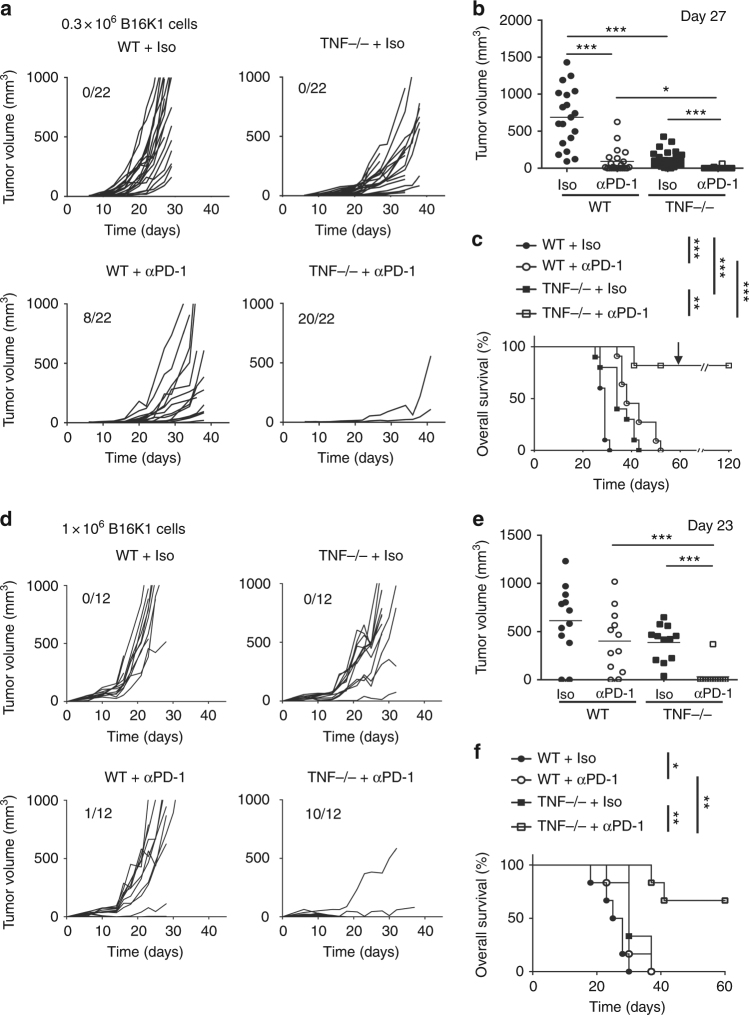
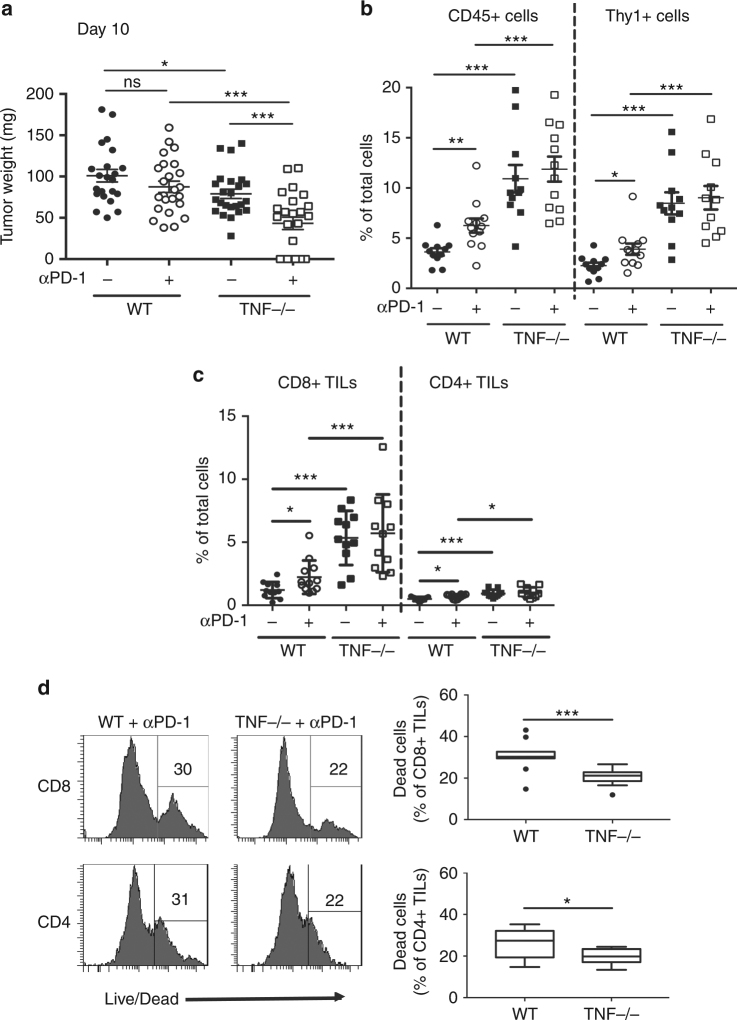
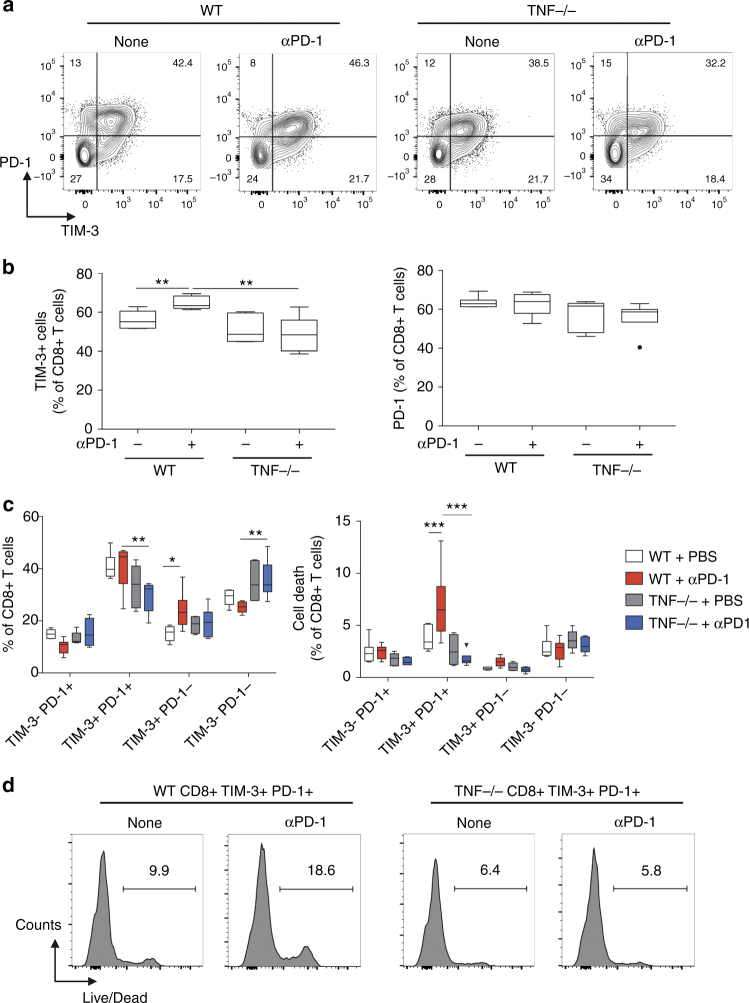
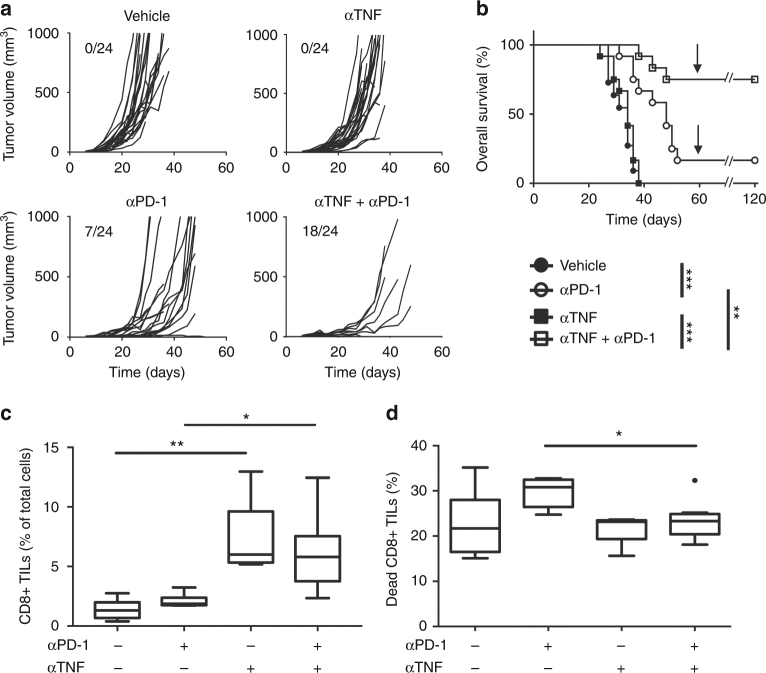
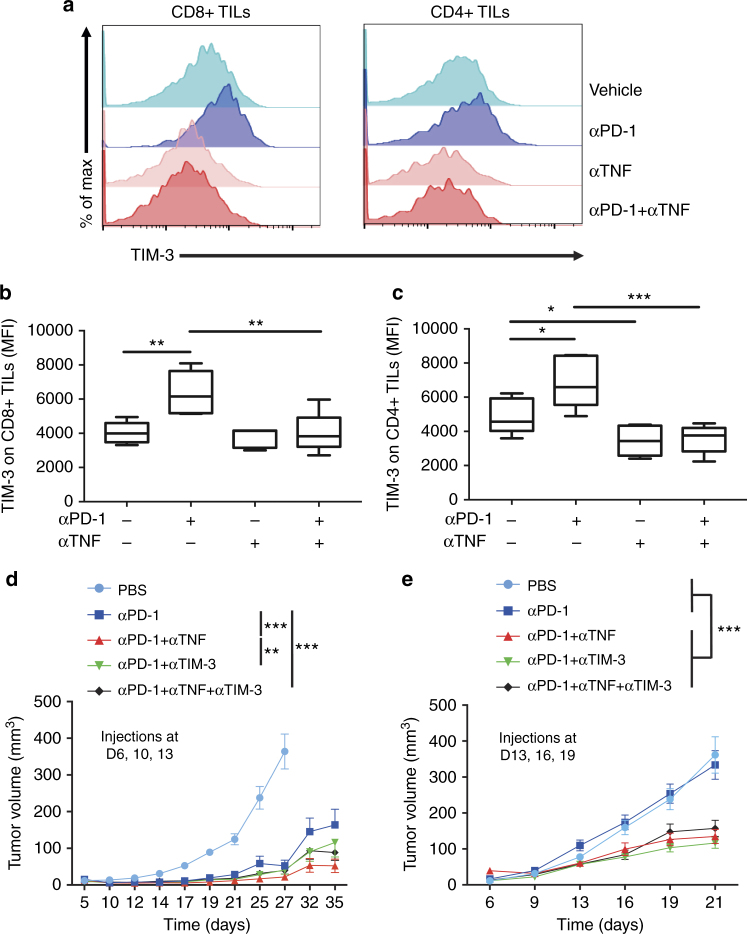
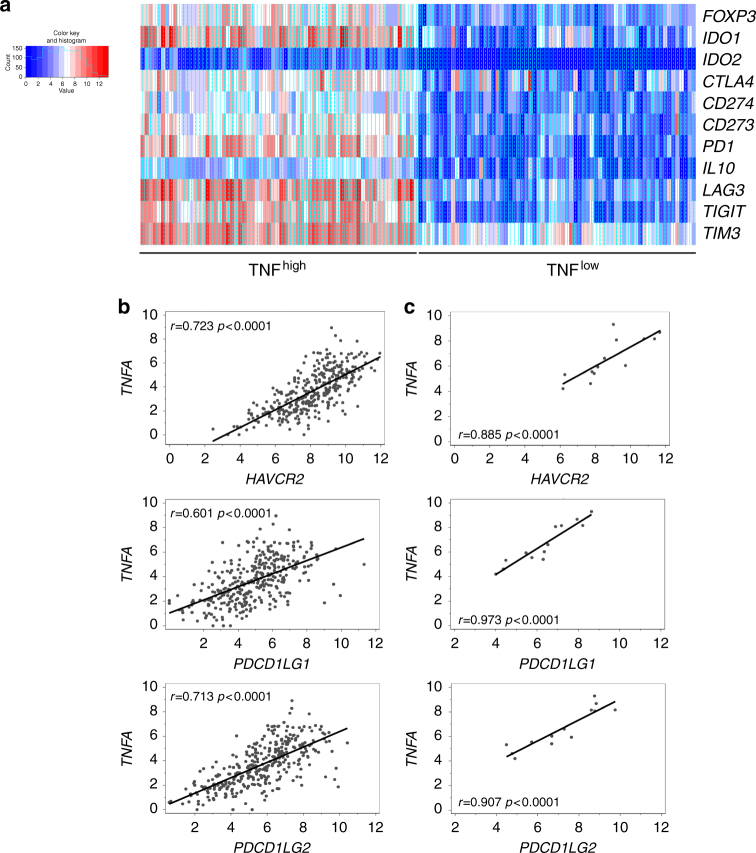
Antibodies against programmed cell death-1 (PD-1) have considerably changed the treatment for melanoma. However, many patients do not display therapeutic response or eventually relapse. Moreover, patients treated with anti-PD-1 develop immune-related adverse events that can be cured with anti-tumor necrosis factor α (TNF) antibodies. Whether anti-TNF antibodies affect the anti-cancer immune response remains unknown. Our recent work has highlighted that TNFR1-dependent TNF signalling impairs the accumulation of CD8+ tumor-infiltrating T lymphocytes (CD8+ TILs) in mouse melanoma. Herein, our results indicate that TNF or TNFR1 blockade synergizes with anti-PD-1 on anti-cancer immune responses towards solid cancers. Mechanistically, TNF blockade prevents anti-PD-1-induced TIL cell death as well as PD-L1 and TIM-3 expression. TNF expression positively correlates with expression of PD-L1 and TIM-3 in human melanoma specimens. This study provides a strong rationale to develop a combination therapy based on the use of anti-PD-1 and anti-TNF in cancer patients.
Overview
The claims and statistics of this paper haven’t been checked yet.
Run the check — free, no account needed. It reads the open-access text and checks the sources it cites.
Integrity signals
Registry
Cites
Statistics
Figures
Verification
Claims the paper makes
The claims and statistics of this paper haven’t been checked yet.
Run the check — free, no account needed. It reads the open-access text and checks the sources it cites.
Claims other papers make about this one
Each is checked against this paper’s own text: does it say what the citing paper says it does?
In the citing paper
“Contrarily, other published reports showed evidence in mouse models that anti-TNF-a enhances the antitumor activity of combined anti-PD-1 and anti-CTLA-4 immunotherapy, 61 reinforces both CD8 T-cell-dependent immunity and anti-PD-1 therapy, by preventing anti-PD-1-induced cell death of tumor infiltrating lymphocytes as well as PD-L1 and T-cell immunoglobulin and mucin-domain containing-3 (Tim-3)”
From Autoimmune diseases and immune-checkpoint inhibitors for cancer therapy: Review of the literature and personalized risk-based prevention strategy (2020) · cites this paper as [62]
Self-check
Percentages, sums and reported differences re-computed from the paper’s own numbers.
The self-check needs the paper’s full text.
Citations
Cites
PD-1 and PD-L1 Immune Checkpoint Blockade to Treat Breast Cancer
Hartkopf, A. D., Taran, F., Wallwiener, M., Walter, C. B., Krämer, B., Grischke, E., & Brucker, S. Y. (2016) · Breast Care · doi:10.1159/000453569 · Cited by 30,989
Adverse Renal Effects of Immune Checkpoint Inhibitors: A Narrative Review
Wanchoo, R., Karam, S., Uppal, N. N., Barta, V. S., Deray, G., Devoe, C., Launay‐Vacher, V., Jhaveri, K. D., & on behalf of Cancer and Kidney International Network Workgroup on Immune Checkpoint Inhibitors (2017) · American Journal of Nephrology · doi:10.1159/000455014 · Cited by 15,320
Nivolumab versus docetaxel in advanced nonsquamous non-small-cell lung cancer
Borghaei, H., Paz-Ares, L., Horn, L., Spigel, D. R., Steins, M., Ready, N. E., Chow, L. Q., Vokes, E. E., Felip, E., Holgado, E., et al. (2015) · New England Journal of Medicine · doi:10.1056/nejmoa1507643 · Cited by 9,335 · cited 1×
“Thus, synergism of TNF/TNFR1 de fi ciency and anti-PD-1 is likely not restricted to melanoma but applies to other cancers, such as lung carcinoma, which can bene fi t from anti-PD-1 according to phase 2 and phase 3 clinical trials 25,26 .”
Combined Nivolumab and Ipilimumab or Monotherapy in Untreated Melanoma
Larkin, J., Chiarion-Sileni, V., Gonzalez, R., Grob, J. J., Cowey, C. L., Lao, C. D., Schadendorf, D., Dummer, R., Smylie, M., Rutkowski, P., et al. (2015) · New England Journal of Medicine · doi:10.1056/nejmoa1504030 · Cited by 8,157
PD-1 blockade induces responses by inhibiting adaptive immune resistance
Tumeh, P. C., Harview, C. L., Yearley, J. H., Shintaku, I. P., Taylor, E. J. M., Robert, L., Chmielowski, B., Spasic, M., Henry, G., Ciobanu, V., et al. (2014) · Nature · doi:10.1038/nature13954 · Cited by 6,609 · cited 2×
“We show here that TNF blockade leads to an increased content of CD8+ TILs, which is predictive of the response to anti-PD-1 in melanoma patients 33 .”
Pembrolizumab versus Ipilimumab in Advanced Melanoma
Robert, C., Schachter, J., Long, G. V., Arance, A., Grob, J. J., Mortier, L., Daud, A., Carlino, M. S., McNeil, C., Lotem, M., et al. (2015) · New England Journal of Medicine · doi:10.1056/nejmoa1503093 · Cited by 5,887
Primary, Adaptive, and Acquired Resistance to Cancer Immunotherapy
Sharma, P., Hu-Lieskovan, S., Wargo, J. A., & Ribas, A. (2017) · Cell · doi:10.1016/j.cell.2017.01.017 · Cited by 5,588
Nivolumab in Previously Untreated Melanoma without BRAF Mutation
Robert, C., Long, G. V., Brady, B., Dutriaux, C., Maio, M., Mortier, L., Hassel, J. C., Rutkowski, P., McNeil, C., Kalinka-Warzocha, E., et al. (2015) · New England Journal of Medicine · doi:10.1056/nejmoa1412082 · Cited by 5,519 · cited 2×
“In addition, responders develop severe immune-related adverse events (irAEs) with a frequency close to 12% 19,20 .”
An endotoxin-induced serum factor that causes necrosis of tumors
Carswell, E. A., Old, L. J., Kassel, R. L., Green, S., Fiore, N., & Williamson, B. (1975) · Proceedings of the National Academy of Sciences · doi:10.1073/pnas.72.9.3666 · Cited by 4,532 · cited 2×
“Whereas TNF was fi rst identi fi ed as a cytotoxic soluble factor 4 , mounting evidence indicates that TNF facilitates the accumulation and/or biological activity of regulatory T lymphocytes (Tregs) 12 , regulatory B lymphocytes (Bregs) 8 as well as myeloid-derived suppressor cells (MDSC) 9 , which…”
Genomic classification of cutaneous melanoma
Akbani, R., Akdemir, K. C., Aksoy, B. A., Albert, M., Ally, A., Amin, S. B., Arachchi, H., Arora, A., Auman, J. T., Ayala, B., et al. (2015) · Cell · doi:10.1016/j.cell.2015.05.044 · Cited by 3,151
Cited by
Sorted by citations
CD8+ cytotoxic T lymphocytes in cancer immunotherapy: A review
Farhood, B., Najafi, M., & Mortezaee, K. (2018) · Journal of Cellular Physiology · doi:10.1002/jcp.27782 · Cited by 1,701
“Recently, it has been identified a role for TNF in anti‐PD‐1 inducible effect on Tim‐3 expression in tumor‐infiltrating CD8+ T cells (Bertrand et al., 2017).”
BackgroundInfluentialRole of the tumor microenvironment in PD-L1/PD-1-mediated tumor immune escape
Jiang, X., Wang, J., Deng, X., Xiong, F., Ge, J., Xiang, B., Wu, X., Ma, J., Zhou, M., Li, X., et al. (2019) · Molecular Cancer · doi:10.1186/s12943-018-0928-4 · Cited by 1,482
“A study with a melanoma mouse model showed that treatment with both PD-1 inhibitors and TNF-α inhibitors had a better therapeutic effect than treatment with PD-1 inhibitors alone [176].”
BackgroundCytokines in clinical cancer immunotherapy
Berraondo, P., Sanmamed, M. F., Ochoa, M. C., Etxeberría, I., Aznar, M. A., Perez‐Gracia, J. L., Rodriguez-Ruiz, M. E., Ponz‐Sarvisé, M., Álvarez, E. C., & Melero, I. (2018) · British Journal of Cancer · doi:10.1038/s41416-018-0328-y · Cited by 1,218
“The proposed mechanism involves the TNF-αmediated upregulation of the secondary checkpoint component TIM-3 in CD8 T lymphocytes, induced by anti-PD-1 antibody therapy.(96) Safety of the triple combination of ipilimumab, nivolumab and an antibody to block TNF-α (infliximab or certolizumab) is being evaluated in a phase…”
BackgroundHarnessing cytokines and chemokines for cancer therapy
PROPPER, D. J., & Balkwill, F. R. (2022) · Nature Reviews Clinical Oncology · doi:10.1038/s41571-021-00588-9 · Cited by 1,027
Immune-checkpoint inhibitors: long-term implications of toxicity
Johnson, D. B., Nebhan, C. A., Moslehi, J. J., & Balko, J. M. (2022) · Nature Reviews Clinical Oncology · doi:10.1038/s41571-022-00600-w · Cited by 982
Myeloid immunosuppression and immune checkpoints in the tumor microenvironment
Nakamura, K., & Smyth, M. J. (2019) · Cellular and Molecular Immunology · doi:10.1038/s41423-019-0306-1 · Cited by 530
Prophylactic TNF blockade uncouples efficacy and toxicity in dual CTLA-4 and PD-1 immunotherapy
Perez-Ruiz, E., Minute, L., Otano, I., Alvarez, M., Ochoa, M. C., Belsue, V., de Andrea, C., Rodriguez-Ruiz, M. E., Perez-Gracia, J. L., Marquez-Rodas, I., et al. (2019) · Nature · doi:10.1038/s41586-019-1162-y · Cited by 480
Targeting cytokine and chemokine signaling pathways for cancer therapy
Yi, M., Li, T., Niu, M., Zhang, H., Wu, Y., Wu, K., & Dai, Z. (2024) · Signal Transduction and Targeted Therapy · doi:10.1038/s41392-024-01868-3 · Cited by 528
Gao, Y., Nihira, N. T., Bu, X., Chu, C., Zhang, J., Kołodziejczyk, A., Fan, Y., Chan, N. T., Ma, L., Liu, J., et al. (2020) · Nature Cell Biology · doi:10.1038/s41556-020-0562-4 · Cited by 399
“These findings are consistent with recent reports that blocking TNF α could overcome resistance to immunotherapy 42, 43 .”
Signal pathways of melanoma and targeted therapy
Guo, W., Wang, H., & Li, C. (2021) · Signal Transduction and Targeted Therapy · doi:10.1038/s41392-021-00827-6 · Cited by 419
“Further investigation also revealed that TNFα blockade could overcome the resistance to anti-PD-1 in melanoma via the prevention of cell death of tumor-infiltrating lymphocytes.(347) In aggregate, targeting TNFα might be of high translational potential to synergize with anti-PD-1 antibody in treating melanoma.”
BackgroundMoving towards personalized treatments of immune-related adverse events
Esfahani, K., Elkrief, A., Calabrese, C., Lapointe, R., Hudson, M., Routy, B., Miller, W. H., & Calabrese, L. (2020) · Nature Reviews Clinical Oncology · doi:10.1038/s41571-020-0352-8 · Cited by 351
Liu, C., Liu, X., Xiang, X., Pang, X., Chen, S., Zhang, Y., Ren, E., Zhang, L., Liu, X., Lv, P., et al. (2022) · Nature Nanotechnology · doi:10.1038/s41565-022-01098-0 · Cited by 364
Understanding and treating the inflammatory adverse events of cancer immunotherapy
Dougan, M., Luoma, A. M., Dougan, S. K., & Wucherpfennig, K. W. (2021) · Cell · doi:10.1016/j.cell.2021.02.011 · Cited by 319
“In animal models, inhibition of TNFα synergizes with checkpoint blockade, leading to enhanced CD8 T cell immunity (Bertrand et al., 2017).”
Ren, D., Hua, Y., Yu, B., Ye, X., He, Z., Li, C., Wang, J., Mo, Y., Wei, X., Chen, Y., et al. (2020) · Molecular Cancer · doi:10.1186/s12943-020-1144-6 · Cited by 320
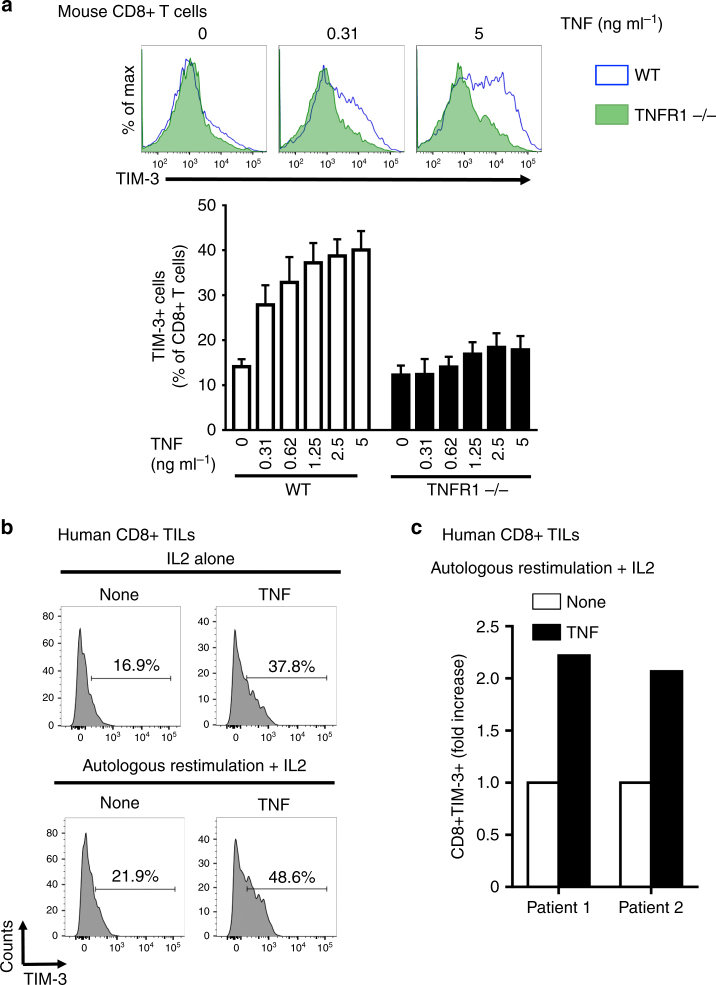
“TNF is essential for the expression of TIM-3 in TILs, and its compensatory expression is upregulated after blocking PD-1, thereby inducing TIM-3 expression [92].”
BackgroundThe TNF Paradox in Cancer Progression and Immunotherapy
Montfort, A., Colacios, C., Levade, T., Andrieu‐Abadie, N., Meyer, N., & Ségui, B. (2019) · Frontiers in Immunology · doi:10.3389/fimmu.2019.01818 · Cited by 306
“In an immunogenic mouse melanoma model, anti-PD-1 therapy allowed for the regression of 20% of tumors, whereas combining anti-PD-1, and anti-TNF induced the regression of 75% of them (36).”
Kostine, M., Finckh, A., Bingham, C. O., Visser, K., Leipe, J., Schulze‐Koops, H., Choy, E., Benesova, K., Radstake, T. R. D. J., Cope, A. P., et al. (2020) · Annals of the Rheumatic Diseases · doi:10.1136/annrheumdis-2020-217139 · Cited by 307
Immunotherapy, Inflammation and Colorectal Cancer
Lichtenstern, C. R., Ngu, R. K., Shalapour, S., & Karin, M. (2020) · Cells · doi:10.3390/cells9030618 · Cited by 296
Pharmacologic modulation of RNA splicing enhances anti-tumor immunity
Lu, S. X., Neef, E. D., Thomas, J. D., Sabio, E. Y., Rousseau, B., Gigoux, M., Knorr, D. A., Greenbaum, B. D., Elhanati, Y., Hogg, S. J., et al. (2021) · Cell · doi:10.1016/j.cell.2021.05.038 · Cited by 286
Immune mechanisms of toxicity from checkpoint inhibitors
Wang, S. J., Dougan, S. K., & Dougan, M. L. (2023) · Trends in cancer · doi:10.1016/j.trecan.2023.04.002 · Cited by 313
Sun, J., Zhang, D., Wu, S., Xu, M., Zhou, X., Lu, X., & Ji, J. (2020) · Biomarker Research · doi:10.1186/s40364-020-00212-5 · Cited by 292
“Similarly, the combination of PD-1/PD-L1 blockade with tumor necrosis factor inhibitor [85, 86], metformin [87], anti-VEGF agents [88], or other immune checkpoint inhibitors (e.”
Augmenting Immunotherapy Impact by Lowering Tumor TNF Cytotoxicity Threshold
Vredevoogd, D. W., Kuilman, T., Ligtenberg, M. A., Boshuizen, J., Stecker, K. E., de Bruijn, B., Krijgsman, O., Huang, X., Kenski, J. C. N., Lacroix, R., et al. (2019) · Cell · doi:10.1016/j.cell.2019.06.014 · Cited by 259
Haanen, J., Ernstoff, M. S., Wang, Y., Menzies, A. M., Puzanov, I., Grivas, P., Larkin, J., Peters, S., Thompson, J. A., & Obeid, M. (2020) · Annals of Oncology · doi:10.1016/j.annonc.2020.03.285 · Cited by 222
Xu, L., Zou, C., Zhang, S., Chu, T. S. M., Zhang, Y., Chen, W., Zhao, C., Li, Y., Xu, Z., Dong, S., et al. (2022) · Journal of Hematology & Oncology · doi:10.1186/s13045-022-01307-2 · Cited by 219
“The results of an experiment in a mouse model showed that TNF-α blockade could overcome resistance to PD-1 inhibitor immunotherapy [224].”
BackgroundImmune-checkpoint inhibitor use in patients with cancer and pre-existing autoimmune diseases
Tison, A., Garaud, S., Chiche, L., Cornec, D., & Kostine, M. (2022) · Nature Reviews Rheumatology · doi:10.1038/s41584-022-00841-0 · Cited by 204
Johnson, D. H., Zobniw, C. M., Trinh, V. A., Ma, J., Bassett, R. L., Abdel‐Wahab, N., Anderson, J. E., Davis, J. E., Joseph, J., Uemura, M. I., et al. (2018) · Journal for ImmunoTherapy of Cancer · doi:10.1186/s40425-018-0412-0 · Cited by 196
“immunity and overcome resistance to anti–PD-1 and adoptive T cell therapy [28].”
BackgroundTargeting regulatory T cells by curcumin: A potential for cancer immunotherapy
Shafabakhsh, R., Pourhanifeh, M. H., Mirzaei, H. R., Sahebkar, A., Asemi, Z., & Mirzaei, H. (2019) · Pharmacological Research · doi:10.1016/j.phrs.2019.104353 · Cited by 192
Nakao, S., Arai, Y., Tasaki, M., YAMASHITA, M., Murakami, R., Kawase, T., Amino, N., Nakatake, M., Kurosaki, H., Mori, M., et al. (2020) · Science Translational Medicine · doi:10.1126/scitranslmed.aax7992 · Cited by 192
Verheijden, R. J., May, A. M., Blank, C. U., Aarts, M. J. B., van den Berkmortel, F. W. P. J., van den Eertwegh, A. J. M., de Groot, J. W. B., Boers‐Sonderen, M. J., van der Hoeven, J. J. M., Hospers, G. A. P., et al. (2020) · Clinical Cancer Research · doi:10.1158/1078-0432.ccr-19-3322 · Cited by 187
“These findings were in line with other mouse data from Bertrand and colleagues who demonstrated that combining anti-TNF and anti-PD1 led to more tumor regression and improved survival as compared with anti-PD1 alone (22).”
ResultTumor Necrosis Factor α Blockade: An Opportunity to Tackle Breast Cancer
Mercogliano, M. F., Bruni, S., Elizalde, P. V., & Schillaci, R. (2020) · Frontiers in Oncology · doi:10.3389/fonc.2020.00584 · Cited by 197
“TNFR2 expression can be upregulated on CD8+ T lymphocytes (190) and can induce the expression of the inhibitory receptor Tim3 (191).”
BackgroundUnderstanding and overcoming the resistance of cancer to PD-1/PD-L1 blockade
Shergold, A. L., Millar, R., & Nibbs, R. J. B. (2019) · Pharmacological Research · doi:10.1016/j.phrs.2019.104258 · Cited by 176
Targeting early stages of cardiotoxicity from anti-PD1 immune checkpoint inhibitor therapy
Michel, L., Helfrich, I., Hendgen-Cotta, U. B., Mincu, R., Korste, S., Mrotzek, S. M., Spomer, A., Odersky, A., Rischpler, C., Herrmann, K., et al. (2021) · European Heart Journal · doi:10.1093/eurheartj/ehab430 · Cited by 169
Haanen, J. B. A. G., Ernstoff, M. S., Wang, Y., Menzies, A. M., Puzanov, I. J., Grivas, P. D., Larkin, J., Peters, S., Thompson, J. A., & Obéid, M. (2020) · Journal for ImmunoTherapy of Cancer · doi:10.1136/jitc-2020-000604 · Cited by 174
Diabetes and cancer: Epidemiological and biological links
Wang, M., Yang, Y., & Liao, Z. (2020) · World Journal of Diabetes · doi:10.4239/wjd.v11.i6.227 · Cited by 158
TNF in the era of immune checkpoint inhibitors: friend or foe?
Chen, A. Y., Wolchok, J. D., & Bass, A. R. (2021) · Nature Reviews Rheumatology · doi:10.1038/s41584-021-00584-4 · Cited by 169
Mast Cells: A New Frontier for Cancer Immunotherapy
Lichterman, J. N., & Reddy, S. M. (2021) · Cells · doi:10.3390/cells10061270 · Cited by 153
“TNF-α has been shown to be detrimental for immune checkpoint blockade by upregulating the secondary checkpoint component TIM-3 on ICB-induced CD8 T cells [119].”
BackgroundCytokine and Chemokine Signals of T‐Cell Exclusion in Tumors
Zhang, Y., Guan, X.-Y., & Jiang, P. (2020) · Frontiers in Immunology · doi:10.3389/fimmu.2020.594609 · Cited by 133
Weulersse, M., Asrir, A., Pichler, A., Lemaitre, L., Braun, M., Carrié, N., Joubert, M.-V., Moine, M. L., Souto, L. D., Gaud, G., et al. (2020) · Immunity · doi:10.1016/j.immuni.2020.09.006 · Cited by 148
Wang, M., Zhai, X., Li, J., Guan, J., Xu, S., Li, Y., & Zhu, H. (2021) · Frontiers in Immunology · doi:10.3389/fimmu.2021.670391 · Cited by 143
“Blocking TNF and PD-1 increased the number and activity of tumor-infiltrating CD8+ TIL (31, 47) and enabled to achieve 75% survival versus 20% survival in the case of treatment with anti-PD-1 alone.”
BackgroundInfluentialPrescott, J. A., & Cook, S. J. (2018) · Cells · doi:10.3390/cells7090115 · Cited by 141
“Nonetheless, this approach has received some support by the observation that TNFα-blockade overcomes resistance to anti-PD-1 in experimental melanoma [209].”
ResultNanobody Engineering: Toward Next Generation Immunotherapies and Immunoimaging of Cancer
Chanier, T., & Chames, P. (2019) · Antibodies · doi:10.3390/antib8010013 · Cited by 140
“Anti-TNF-α blockade has shown interesting anti-tumor effects [97].”
BackgroundBadran, Y. R., Cohen, J. V., Brastianos, P. K., Parikh, A. R., Hong, T. S., & Dougan, M. L. (2019) · Journal for ImmunoTherapy of Cancer · doi:10.1186/s40425-019-0711-0 · Cited by 143
Bianchi, A., Silva, I. D. C., Deshpande, N., Singh, S. P., Mehra, S., Garrido, V. T., Guo, X., Nivelo, L. A., Kolonias, D. S., Saigh, S. J., et al. (2023) · Cancer Discovery · doi:10.1158/2159-8290.cd-22-1046 · Cited by 138
Exosomal PD‐L1 functions as an immunosuppressant to promote wound healing
Su, D., Tsai, H., Xu, Z., Yan, F., Wu, Y., Xiao, Y., Liu, X., Wu, Y., Parvanian, S., Zhu, W., et al. (2019) · Journal of Extracellular Vesicles · doi:10.1080/20013078.2019.1709262 · Cited by 128
Harnessing Tumor Necrosis Factor Alpha to Achieve Effective Cancer Immunotherapy
Mercogliano, M. F., Bruni, S., Mauro, F. L., Elizalde, P. V., & Schillaci, R. (2021) · Cancers · doi:10.3390/cancers13030564 · Cited by 145
“Preventing TNFα upregulation of PD-L1 and TIM-3 expression by CD8+ tumor infiltrating lymphocytes (TILs) causes reinvigoration of the antitumor immune response, consequently overcoming anti-PD-1 resistance (Figure 2).”
BackgroundClinical and translational attributes of immune-related adverse events
Suijkerbuijk, K. P. M., van Eijs, M. J. M., van Wijk, F., & Eggermont, A. M. M. (2024) · Nature Cancer · doi:10.1038/s43018-024-00730-3 · Cited by 136
“As an example, preclinical studies found that TNF blockade can potentiate ICI efficacy by promoting tumor-infiltrating lymphocyte survival and reducing macrophage immune-suppressive activity while ameliorating experimental irAEs 157–159 .”
Autoimmune complications of immunotherapy: pathophysiology and management
Chan, K. K., & Bass, A. R. (2020) · BMJ · doi:10.1136/bmj.m736 · Cited by 130
Antibody and antibody fragments for cancer immunotherapy
Chen, W., Yang, Y., & Jiang, X. (2020) · Journal of Controlled Release · doi:10.1016/j.jconrel.2020.08.021 · Cited by 123
Verheijden, R. J., van Eijs, M. J. M., May, A. M., van Wijk, F., & Suijkerbuijk, K. P. M. (2023) · npj Precision Oncology · doi:10.1038/s41698-023-00380-1 · Cited by 128
TNF Receptor 2 Makes Tumor Necrosis Factor a Friend of Tumors
Sheng, Y., Li, F., & Qin, Z. (2018) · Frontiers in Immunology · doi:10.3389/fimmu.2018.01170 · Cited by 118
Macrophage and Tumor Cell Cross-Talk Is Fundamental for Lung Tumor Progression: We Need to Talk
Sarode, P., Schaefer, M. B., Grimminger, F., Seeger, W., & Savai, R. (2020) · Frontiers in Oncology · doi:10.3389/fonc.2020.00324 · Cited by 116
“On the hand recent studies showed that instead of augmenting effect of TNFα in tumor, TNFα blockade increases effect of immune checkpoint inhibitors (111, 112).”
BackgroundFBXO44 promotes DNA replication-coupled repetitive element silencing in cancer cells
Shen, J. Z., Qiu, Z., Wu, Q., Finlay, D., Garcia, G., Sun, D., Rantala, J., Barshop, W., Hope, J. L., Gimple, R. C., et al. (2021) · Cell · doi:10.1016/j.cell.2020.11.042 · Cited by 113
Nielsen, D. L., Juhl, C. B., Chen, I. M., Kellermann, L., & Nielsen, O. H. (2022) · Cancer Treatment Reviews · doi:10.1016/j.ctrv.2022.102440 · Cited by 128
Lohard, S., Bourgeois, N., Maillet, L., Gautier, F., Fétiveau, A., Lasla, H., Nguyen, F., Vuillier, C., Dumont, A., Moreau‐Aubry, A., et al. (2020) · Nature Communications · doi:10.1038/s41467-019-13689-y · Cited by 120
Towards efficient immunotherapy for bacterial infection
McCulloch, T. R., Wells, T. J., & Souza-Fonseca-Guimarães, F. (2021) · Trends in Microbiology · doi:10.1016/j.tim.2021.05.005 · Cited by 116
Montfort, A., Filleron, T., Virazels, M., Dufau, C., Milhès, J., Pagès, C., Olivier, P., Ayyoub, M., Mounier, M., Lusque, A., et al. (2020) · Clinical Cancer Research · doi:10.1158/1078-0432.ccr-20-3449 · Cited by 110
“Accordingly, our preclinical studies demonstrated that TNF deficiency (i) enhanced IFNg production from leukocytes of tumor-draining lymph nodes upon restimulation by irradiated melanoma cells (8) and (ii) elicited IFNg expression in murine melanoma tumors, a phenomenon further increased upon anti–PD-1 therapy (10).”
BackgroundPredicting and Preventing Immune Checkpoint Inhibitor Toxicity: Targeting Cytokines
Kang, J. H., Bluestone, J. A., & Young, A. (2021) · Trends in Immunology · doi:10.1016/j.it.2021.02.006 · Cited by 107
Checkpoint Inhibitor–Induced Colitis
Bellaguarda, E., & Hanauer, S. B. (2020) · The American Journal of Gastroenterology · doi:10.14309/ajg.0000000000000497 · Cited by 107
Assessing the future of solid tumor immunotherapy
Guha, P., Heatherton, K. R., O’Connell, K. P., Alexander, I. S., & Katz, S. C. (2022) · Biomedicines · doi:10.3390/biomedicines10030655 · Cited by 105
“TNF-α is also known, however, to upregulate exhaustion markers TIM-3 in CD8+ T cells induced by programmed cell death-1 (PD-1) antibody therapy [37].”
BackgroundMao, X., Tey, S. K., Yeung, C. L. S., Kwong, E. M. L., Fung, Y. M. E., Chung, C. Y., Mak, L., Wong, D. K.-H., Yuen, M., Ho, J., et al. (2020) · Advanced Science · doi:10.1002/advs.202002157 · Cited by 103
NF-κB and Its Role in Checkpoint Control
Betzler, A. C., Theodoraki, M., Schuler, P. J., Döscher, J., Laban, S. A., Hoffmann, T. K., & Brunner, C. (2020) · International Journal of Molecular Sciences · doi:10.3390/ijms21113949 · Cited by 106
“To increase patients’ response rates to immune checkpoint blockade, the combination therapy of anti-PD-L1 together with anti-CTLA-4 blockers has become a promising treatment approach in recent years, which results in strong and sustained responses [132,133].”
BackgroundZheng, Y., Li, Y., Lian, J., Yang, H., Li, F., Zhao, S., Qi, Y., Zhang, Y., & Huang, L. (2019) · Journal of Translational Medicine · doi:10.1186/s12967-019-1917-0 · Cited by 100
Predictive Biomarkers for Checkpoint Inhibitor Immune-Related Adverse Events
Les, I., Martínez, M., Pérez-Francisco, I., Cabero, M., Teijeira, L., Arrazubi, V., Torrego, N., Campillo-Calatayud, A., Elejalde, I., Kochan, G., et al. (2023) · Cancers · doi:10.3390/cancers15051629 · Cited by 100
Time to dissect the autoimmune etiology of cancer antibody immunotherapy
Dougan, M. L., & Pietropaolo, M. (2020) · Journal of Clinical Investigation · doi:10.1172/jci131194 · Cited by 92
1-Methylnicotinamide is an immune regulatory metabolite in human ovarian cancer
Kilgour, M. K., MacPherson, S., Zacharias, L. G., Ellis, A. E., Sheldon, R. D., Liu, E. Y., Keyes, S., Pauly, B., Carleton, G. A., Allard, B., et al. (2021) · Science Advances · doi:10.1126/sciadv.abe1174 · Cited by 86
Alfaro‐Arnedo, E., López, I. P., Piñeiro‐Hermida, S., Canalejo, M., Gotera, C., Sola, J. J., Roncero, A., Peces‐Barba, G., Ruíz-Martínez, C., & Pichel, J. G. (2022) · Oncogene · doi:10.1038/s41388-022-02376-w · Cited by 90
“In this regard, blocking of TNFα was shown to enhance CD8 T-cell-dependent immunity, thus favoring accumulation of CD8 TILs [74, 75].”
BackgroundThe Resistance Mechanisms of Lung Cancer Immunotherapy
Wang, F., Wang, S., & Zhou, Q. H. (2020) · Frontiers in Oncology · doi:10.3389/fonc.2020.568059 · Cited by 90
Tumor necrosis factor in lung cancer: Complex roles in biology and resistance to treatment
Gong, K., Guo, G., Beckley, N. A., Zhang, Y., Yang, X., Sharma, M., & Habib, A. A. (2020) · Neoplasia · doi:10.1016/j.neo.2020.12.006 · Cited by 86
Targeting regulation of tryptophan metabolism for colorectal cancer therapy: a systematic review
Zhang, H., Zhang, A., Miao, J.-H., Sun, H. J., Yan, G., Wu, F., & Wang, X. (2019) · RSC Advances · doi:10.1039/c8ra08520j · Cited by 87
Alard, E. L., Butnariu, A.-B., Grillo, M., Kirkham, C., Zinovkin, D. A., Newnham, L. J., Macciochi, J., & Pranjol, M. Z. I. (2020) · Cancers · doi:10.3390/cancers12071826 · Cited by 91
“Interestingly, in a promising pre-clinical study it was shown that using anti-TNF antibody or TNF-receptor inhibitor with this combination therapy can significantly reduce increased double-checkpoint blockade-induced colitis and increase infiltration of tumour-specific CD8+ T cells in to the TME [88,89].”
BackgroundPreet, R., Islam, M. A., Shim, J., Rajendran, G., Mitra, A., Vishwakarma, V., Kutz, C., Choudhury, S., Pathak, H. B., Dai, Q., et al. (2025) · Nature Communications · doi:10.1038/s41467-025-58553-4 · Cited by 82
“2b, even in the presence of CD and NS treatments, it appears that the uptake of BEVs significantly decreases.”
Lesage, C., Longvert, C., Prey, S., Maanaoui, S., Dréno, B., Machet, L., Zehou, O., Kramkimel, N., Jeudy, G., Skowron, F., et al. (2019) · Journal of Immunotherapy · doi:10.1097/cji.0000000000000268 · Cited by 73
Singh, M. P., Sethuraman, S. N., Miller, C., Malayer, J. R., & Ranjan, A. (2020) · Theranostics · doi:10.7150/thno.49517 · Cited by 74
“Although promising, the immunosuppressive tumor microenvironment (TME) can influence ICI outcomes in a large proportion of treated patients [5-10].”
BackgroundAlim, L., Keane, C., & Souza-Fonseca-Guimarães, F. (2023) · Current Opinion in Immunology · doi:10.1016/j.coi.2023.102409 · Cited by 79
Guillebon, É. D., Dardenne, A., Saldmann, A., Séguier, S., Tran, T., Paolini, L., Lebbé, C., & Tartour, É. (2020) · International Journal of Cancer · doi:10.1002/ijc.32889 · Cited by 76
Tumor accomplice: T cell exhaustion induced by chronic inflammation
Fang, L., Liu, K., Liu, C., Wang, X., Ma, W., Xu, W., Wu, J., & Sun, C. (2022) · Frontiers in Immunology · doi:10.3389/fimmu.2022.979116 · Cited by 72
Zhang, C., Zhang, G., Sun, N., Zhang, Z., Zhang, Z., Luo, Y., Che, Y., Xue, Q., & He, J. (2020) · EBioMedicine · doi:10.1016/j.ebiom.2020.102959 · Cited by 66
“Blocking of the TNFa-TNFR1 axis can overcome resistance to anti-PD-1 in experimental melanoma [46], indicating a close relationship between the TNFSF/TNFRSF family and immune checkpointbased immunotherapy.”
BackgroundUnleashing TNF cytotoxicity to enhance cancer immunotherapy
Freeman, A. J., Kearney, C. J., Silke, J., & Oliaro, J. (2021) · Trends in Immunology · doi:10.1016/j.it.2021.10.003 · Cited by 69
Verheijden, R. J., Burgers, F. H., Janssen, J. C., Putker, A. E., Veenstra, S., Hospers, G. A. P., Aarts, M. J. B., Hehenkamp, K. W., Doornebosch, V. L. E., Verhaert, M., et al. (2024) · European Journal of Cancer · doi:10.1016/j.ejca.2024.114172 · Cited by 72
Lin, J. S., Mamlouk, O., Selamet, U., Tchakarov, A. S., Glass, W. F., Sheth, R. A., Layman, R. M., Dadu, R., Abdel‐Wahab, N., Abdelrahim, M., et al. (2021) · OncoImmunology · doi:10.1080/2162402x.2021.1877415 · Cited by 70
“In a preclinical study, TNF-α blockade was shown to significantly enhance tumor immunity and overcome resistance to anti–PD1 and adoptive T cell therapy.(27) Experience in the use of infliximab or TNF-α blockade to treat inflammatory kidney diseases is limited.”
BackgroundLRG1 destabilizes tumor vessels and restricts immunotherapeutic potency
O’Connor, M. N., Kallenberg, D. M., Camilli, C., Pilotti, C., Dritsoula, A., Jackstadt, R., Bowers, C., Watson, H. A., Alatsatianos, M., Ohme, J., et al. (2021) · Med · doi:10.1016/j.medj.2021.10.002 · Cited by 70
Characterization of neoantigen-specific T cells in cancer resistant to immune checkpoint therapies
Li, S., Simoni, Y., Zhuang, S., Gabel, A. M., Ma, S., Chee, J., Islas, L., Cessna, A., Creaney, J., Bradley, R. K., et al. (2021) · Proceedings of the National Academy of Sciences · doi:10.1073/pnas.2025570118 · Cited by 61
Revitalizing T cells: breakthroughs and challenges in overcoming T cell exhaustion
Wu, Y., Wu, Y., Gao, Z., Yu, W., Zhang, L., & Zhou, F. (2026) · Signal Transduction and Targeted Therapy · doi:10.1038/s41392-025-02327-3 · Cited by 78
Ballotti, R., Chéli, Y., & Bertolotto, C. (2020) · Molecular Cancer · doi:10.1186/s12943-020-01290-7 · Cited by 63
“Consistent with this, nivolumab+ipilimumab in combination with the anti-TNF-α antibody certolizumab has been studied in advanced melanoma in clinical trial (NCT03293784) [109].”
BackgroundLocal angiotensin II contributes to tumor resistance to checkpoint immunotherapy
Xie, G., Tan, C., Lin, J., Zhang, L., Zheng, J., Liu, Y., Xie, G., Wang, B., & Yuan, Y. (2018) · Journal for ImmunoTherapy of Cancer · doi:10.1186/s40425-018-0401-3 · Cited by 61
Miyawaki, T., Naito, T., Kodama, A., Nishioka, N., Miyawaki, E., Mamesaya, N., Kawamura, T., Kobayashi, H., Omori, S., Wakuda, K., et al. (2020) · JTO Clinical and Research Reports · doi:10.1016/j.jtocrr.2020.100020 · Cited by 56
“TNF-a compromises CD8þ TILs and reduces the expression of PD-L1 on tumor cells in a murine model of melanoma, which results in decreased efficacy of PD-1 inhibitors.(18,19) IL-1b also suppresses TILs and adversely enhances tumor-infiltrating myeloid-derived suppressor cells.”
BackgroundGlycosylation of Immune Receptors in Cancer
Sun, R., Kim, A. M. J., & Lim, S. (2021) · Cells · doi:10.3390/cells10051100 · Cited by 58
“On the contrary, studies performed on the melanoma model clearly showed that resistance to anti-PD-1 treatment could be unleashed by TNF blockade [95].”
A Therapeutically Actionable Protumoral Axis of Cytokines Involving IL-8, TNFα, and IL-1β
Olivera, I., Pamplona, R. S., Bolaños, E., Rodríguez, I., Etxeberría, I., Cirella, A., Egea, J., Garasa, S., Miguéliz, I., Eguren‐Santamaría, I., et al. (2022) · Cancer Discovery · doi:10.1158/2159-8290.cd-21-1115 · Cited by 60
Madeddu, C., Busquets, S., Donisi, C., Lai, E., Pretta, A., López-Soriano, F. J., Argilés, J. M. A., Scartozzi, M., & Macciò, A. (2023) · Cancers · doi:10.3390/cancers15041076 · Cited by 60
Modulation of the tumor micro-environment by CD8+ T cell-derived cytokines
Hoekstra, M. E., Vijver, S. V., & Schumacher, T. N. (2021) · Current Opinion in Immunology · doi:10.1016/j.coi.2021.03.016 · Cited by 56
Dougan, M. L., Blidner, A. G., Choi, J. N., Cooksley, T., Glezerman, I. G., Ginex, P., Girotra, M., Gupta, D., Johnson, D. B., Shannon, V. R., et al. (2020) · Supportive Care in Cancer · doi:10.1007/s00520-020-05707-3 · Cited by 53
Acquired resistance to cancer immunotherapy
Draghi, A., Chamberlain, C. A., Furness, A. J. S., & Donia, M. (2018) · Seminars in Immunopathology · doi:10.1007/s00281-018-0692-y · Cited by 51
Neutral Sphingomyelinase 2 Heightens Anti-Melanoma Immune Responses and Anti–PD-1 Therapy Efficacy
Montfort, A., Bertrand, F. A., Rochotte, J., Gilhodes, J., Filleron, T., Milhès, J., Dufau, C., Imbert, C., Riond, J., Tosolini, M., et al. (2021) · Cancer Immunology Research · doi:10.1158/2326-6066.cir-20-0342 · Cited by 56
“Considering the key role of IFNg and TNF on PD-L1 expression (36, 46, 47), which can be a predictivemarker of response to anti–PD-1 therapy, we next analyzed the expression of PD-L1 on macrophages (CD11bþF4/80þ cells), CD45 cells, and CD11cþ DCs in tumors.”
BackgroundImmunotherapy to treat malignancy in patients with pre-existing autoimmunity
Boland, P., Pavlick, A. C., Weber, J., & Sandigursky, S. (2020) · Journal for ImmunoTherapy of Cancer · doi:10.1136/jitc-2019-000356 · Cited by 50
Human CD8 T cells are susceptible to TNF-mediated activation-induced cell death
Otano, I., Álvarez, M., Minute, L., Ochoa, M. C., Miguéliz, I., Molina, C., Azpilikueta, A., de Andrea, C. E., Etxeberría, I., Sanmamed, M. F., et al. (2020) · Theranostics · doi:10.7150/thno.41646 · Cited by 51
“Our group and others have shown [21,24,33] that blocking TNF in combination with immune checkpoints facilitates an increase in CD8 T cell numbers and viability in the tumor microenvironment and tumor draining lymph nodes, enhancing anti-tumor efficacy while paradoxically reducing immune related adverse effects (irAEs).”
BackgroundDraghi, A., Borch, T. H., Radic, H. D., Chamberlain, C. A., Gokuldass, A., Svane, I. M., & Donia, M. (2018) · International Journal of Cancer · doi:10.1002/ijc.32080 · Cited by 53
“On the other hand, TNFα can act as an immunosuppressive cytokine acting on regulatory immune cell function.(24,25) Notably, TNFsignaling has been shown to impair CD8 T cell immune responses against melanoma by triggering TNF-R1-mediated”
BackgroundInfluentialKwak, S. Y., Lee, S., Han, H. D., Chang, S., Kim, K., & Ahn, H. J. (2019) · Molecular Pharmaceutics · doi:10.1021/acs.molpharmaceut.9b00826 · Cited by 52
Yang, C., Shi, S., Su, Y., Tong, J., & Li, L. (2020) · Journal of Cellular and Molecular Medicine · doi:10.1111/jcmm.15708 · Cited by 51
“Sequential enzymatic digestion was utilized to obtain single-cell suspensions from tumors as previously described(29).”
MethodTNFR2: Role in Cancer Immunology and Immunotherapy
Yang, Y., Islam, M. S., Hu, Y., & Chen, X. (2021) · ImmunoTargets and Therapy · doi:10.2147/itt.s255224 · Cited by 53
“Interestingly, TNF blockade can inhibit the AICD and consequently increase CD8 tumor-infiltrating lymphocytes (TILs) and decrease PD-L1 and TIM-3 expression.(170,171) Recently, it was reported that anti-TNF therapy through inhibition of AICD of CD8 TILs could enhance the efficacy of combination therapy with anti-PD-1…”
BackgroundCharting roadmaps towards novel and safe synergistic immunotherapy combinations
Sanmamed, M. F., Berraondo, P., Rodriguez-Ruiz, M. E., & Melero, I. (2022) · Nature Cancer · doi:10.1038/s43018-022-00401-1 · Cited by 50
Bruera, S., & Suarez-Almazor, M. E. (2022) · Frontiers in Oncology · doi:10.3389/fonc.2022.928390 · Cited by 49
“In vitro studies have suggested that the addition of TNFi may augment the response against tumors when combined with immunotherapy (41).”
Background
Metadata
- Authors
- Bertrand, F., Montfort, A., Marcheteau, E., Imbert, C., Gilhodes, J., Filleron, T., Rochaix, P., Andrieu-Abadie, N., Levade, T., Meyer, N., Colacios, C., & Ségui, B.
- Affiliations
- Inserm (FR)
- Université Toulouse III - Paul Sabatier (FR)
- Corresponding author
- Ségui, Bruno
- ORCID
- Venue
- Nature Communications
- Published
- 2017-12-22
- Volume
- 8
- Issue
- 1
- Pages
- 2256-2256
- ISSN
- 2041-1723 (ISSN-L)
- PMC
- PMC5741628
- OpenAlex
- W2779658193
- Cited by
- 384
- References
- 46
- Citations by year
- 2026: 32 · 2025: 36 · 2024: 44 · 2023: 44 · 2022: 49 · 2021: 50 · 2020: 82 · 2019: 29 · 2018: 17
- FWCI
- 15.43
- Type
- journal article
- Language
- en
- Open access
- gold
- doi.org
- Locations
- Nature Communications (publishedVersion, cc-by)
- Europe PMC (PubMed Central) (publishedVersion, cc-by)
- PubMed Central (publishedVersion, cc-by)
- PubMed (publishedVersion)
- HAL (submittedVersion, cc-by)
- RePEc: Research Papers in Economics (submittedVersion)
- DOAJ (DOAJ: Directory of Open Access Journals) (submittedVersion)
- DOAJ (DOAJ: Directory of Open Access Journals) (submittedVersion, cc-by-sa)
- Funders
- Institut National de la Santé et de la Recherche Médicale (INSERM U1048, U1043, U1048)
- Institut National Du Cancer
- Fondation Toulouse Cancer Santé
- Inserm Transfert
- Topics
- Health Sciences › Medicine › Oncology › Cancer Immunotherapy and Biomarkers
- Life Sciences › Immunology and Microbiology › Immunology › T-cell and B-cell Immunology
- Life Sciences › Immunology and Microbiology › Immunology › Immunotherapy and Immune Responses
- Keywords
- anti-PD-1 therapy, melanoma, immune checkpoint inhibitor resistance, TNFR1 signaling, tumor-infiltrating lymphocytes, CD8+ T cells, PD-L1, TIM-3, combination immunotherapy, immune-related adverse events, cancer immunotherapy
- MeSH terms
- Hepatitis A Virus Cellular Receptor 2, Antineoplastic Agents, Immunological, Ipilimumab, Nivolumab, Animals, Antibodies, Monoclonal, Drug Synergism, Female, Humans, Melanoma, Melanoma, Experimental, Skin Neoplasms, Tumor Necrosis Factor-alpha, Mammary Neoplasms, Animal, Lymphocytes, Tumor-Infiltrating, CD8-Positive T-Lymphocytes, Drug Resistance, Neoplasm, Cell Line, Tumor, Receptors, Tumor Necrosis Factor, Type I, Mice, B7-H1 Antigen, Programmed Cell Death 1 Receptor
About these checks
Registry, retraction, Cites and statistics results are computed, not judged, with one exception: a printed reference that no index lists is read once by a model before it counts as a citation error. Claims are extracted by a model and kept only when their quote appears verbatim in the text; each cited source is then checked, with a model’s help, for whether it says what the claim relies on. Those verdicts can be wrong — read the claim’s quote and the cited source before relying on one.
Statistics and arithmetic are recomputed, not judged.
Confidence bands are shown only for fields calibrated on our annotated test set. None is calibrated yet, so no band is shown.
What counts as a claim ›How we measure confidence ›How we check this ›
Are you an author, or do you see a problem with this page? Request a review
