

Maturation of the gut microbiome and risk of asthma in childhood
Open accessThe DOI matches its Crossref record; 71 of the 71 references it cites were found in a registry or an index.
Abstract
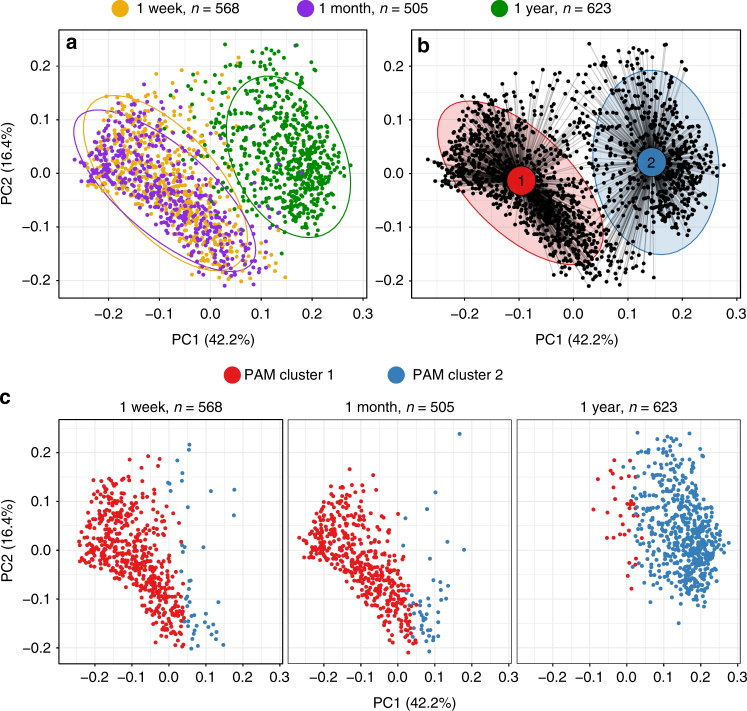
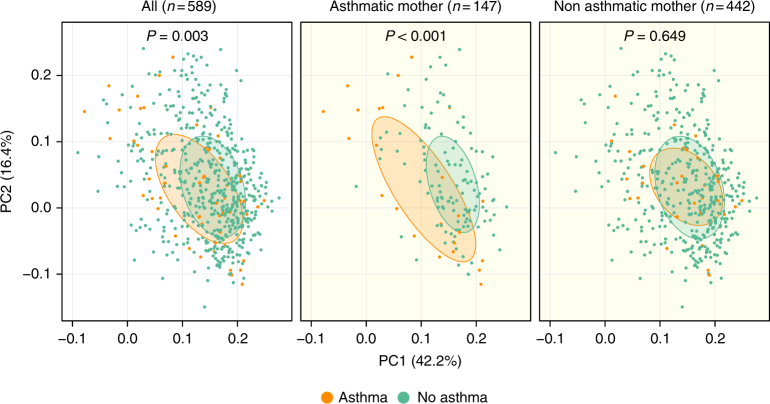
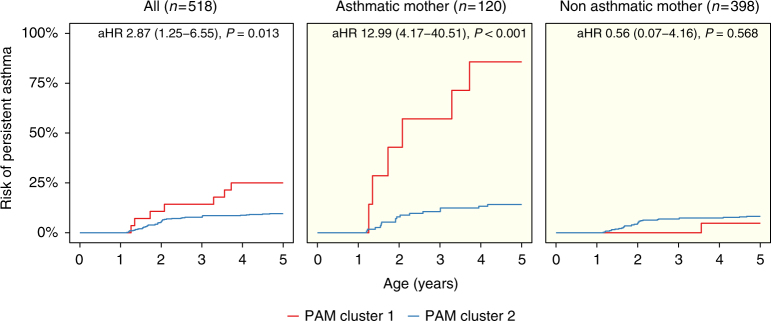
The composition of the human gut microbiome matures within the first years of life. It has been hypothesized that microbial compositions in this period can cause immune dysregulations and potentially cause asthma. Here we show, by associating gut microbial composition from 16S rRNA gene amplicon sequencing during the first year of life with subsequent risk of asthma in 690 participants, that 1-year-old children with an immature microbial composition have an increased risk of asthma at age 5 years. This association is only apparent among children born to asthmatic mothers, suggesting that lacking microbial stimulation during the first year of life can trigger their inherited asthma risk. Conversely, adequate maturation of the gut microbiome in this period may protect these pre-disposed children.
Overview
The claims and statistics of this paper haven’t been checked yet.
Free: it reads the open-access text and checks the first 5 claims that cite a source we can check. Create a free account to check every claim.
Integrity signals
Registry
Cites
Statistics
Figures
Verification
Claims the paper makes
The claims and statistics of this paper haven’t been checked yet.
Free: it reads the open-access text and checks the first 5 claims that cite a source we can check. Create a free account to check every claim.
Claims other papers make about this one
Each is checked against this paper’s own text: does it say what the citing paper says it does?
The source backs part of the claim, not all of it — or backs it for a different population, condition or comparison.
In the citing paper
“Cesarean delivery also predicts a more unstable neonatal microbiome and a heightened risk of infections, immune disorders, obesity, and neuroendocrine disturbances.31–33”
From Gut dysbiosis in oncology: a risk factor for immunoresistance (2026) · doi:10.1038/s41422-025-01212-6 · cites this paper as [33]
Experimental — accuracy not yet measuredThe source backs part of the claim, not all of it — or backs it for a different population, condition or comparison.
In the citing paper
“the composition and function of the gut microbiota in patients with lung diseases [such as pneumonia (15), lung cancer (16), asthma (17), and tuberculosis (18)] were significantly changed compared with those in healthy people”
From The Role of Gut Microbiota in Lung Cancer: From Carcinogenesis to Immunotherapy (2021) · doi:10.3389/fonc.2021.720842 · cites this paper as [17]
Experimental — accuracy not yet measuredIn the citing paper
“Some studies have indicated that gut dysbiosis is common in patients with asthma, and dysregulation of specific bacterial taxa seems to be one of the powerful predictors of high asthma risk (17,(35)(36)(37).”
From The Role of Gut Microbiota in Lung Cancer: From Carcinogenesis to Immunotherapy (2021) · doi:10.3389/fonc.2021.720842 · cites this paper as [17]
Self-check
Percentages, sums and reported differences re-computed from the paper’s own numbers.
The self-check needs the paper’s full text.
Citations
Cites
DADA2: High–resolution sample inference from Illumina amplicon data
Callahan, B. J., McMurdie, P. J., Rosen, M. J., Han, A. W., Johnson, A. J. A., & Holmes, S. P. (2016) · Nature Methods · doi:10.1038/nmeth.3869 · Cited by 35,698
QIIME allows analysis of high-throughput community sequencing data
Caporaso, J. G., Kuczynski, J., Stombaugh, J., Bittinger, K., Bushman, F. D., Costello, E. K., Fierer, N., Peña, A. G., Goodrich, J. K., Gordon, J. I., et al. (2010) · Nature Methods · doi:10.1038/nmeth.f.303 · Cited by 34,887
Silhouettes: A graphical aid to the interpretation and validation of cluster analysis
Rousseeuw, P. J. (1987) · Journal of Computational and Applied Mathematics · doi:10.1016/0377-0427(87)90125-7 · Cited by 21,392
phyloseq: An R Package for Reproducible Interactive Analysis and Graphics of Microbiome Census Data
McMurdie, P. J., & Holmes, S. (2013) · PLoS ONE · doi:10.1371/journal.pone.0061217 · Cited by 21,322
Search and clustering orders of magnitude faster than BLAST
Edgar, R. C. (2010) · Bioinformatics · doi:10.1093/bioinformatics/btq461 · Cited by 20,826
Schloss, P. D., Westcott, S. L., Ryabin, T., Hall, J. R., Hartmann, M., Hollister, E. B., Lesniewski, R. A., Oakley, B. B., Parks, D. H., Robinson, C. J., et al. (2009) · Applied and Environmental Microbiology · doi:10.1128/aem.01541-09 · Cited by 19,549
UPARSE: highly accurate OTU sequences from microbial amplicon reads
Edgar, R. C. (2013) · Nature Methods · doi:10.1038/nmeth.2604 · Cited by 16,707
Diversity of the Human Intestinal Microbial Flora
Eckburg, P. B., Bik, E. M., Bernstein, C. N., Purdom, E., Dethlefsen, L., Sargent, M., Gill, S. R., Nelson, K. E., & Relman, D. A. (2005) · Science · doi:10.1126/science.1110591 · Cited by 7,913 · cited 1×
“Asthma was diagnosed based on a previously detailed quantitative symptom algorithm requiring all of the following criteria51–53: (1) verified diary recordings of five episodes of troublesome lung symptoms within 6 months, each lasting at least 3 consecutive days; (2) symptoms typical of asthma including exercise-induc…”
MethodHuman gut microbiome viewed across age and geography
Yatsunenko, T., Rey, F. E., Manary, M. J., Trehan, I., Dominguez-Bello, M. G., Contreras, M., Magris, M., Hidalgo, G., Baldassano, R. N., Anokhin, A. P., et al. (2012) · Nature · doi:10.1038/nature11053 · Cited by 7,815
Enterotypes of the human gut microbiome
MetaHIT Consortium (additional members), Arumugam, M., Raes, J., Pelletier, E., Le Paslier, D., Yamada, T., Mende, D. R., Fernandes, G. R., Tap, J., Bruls, T., et al. (2011) · Nature · doi:10.1038/nature09944 · Cited by 7,548
Cited by
Items 301–400 of 677
Quasi-normal modes and shadows of scale-dependent regular black holes
Koch, B., Olmo, G. J., Riahinia, A., Rincón, Á., & Rubiera-García, D. (2026) · Journal of Cosmology and Astroparticle Physics · doi:10.1088/1475-7516/2026/03/048 · Cited by 18
Influence of the gut and airway microbiome on asthma development and disease
Smulders, T., van der Schee, M. P., der Zee, A. H. M., Dikkers, F. G., & van Drunen, C. M. (2024) · Pediatric Allergy and Immunology · doi:10.1111/pai.14095 · Cited by 18
“52,55 The remaining two studies found no differences.”
BackgroundGut–lung axis in asthma and obesity: role of the gut microbiome
Tashiro, H., Kuwahara, Y., & Takahashi, K. (2025) · Frontiers in Allergy · doi:10.3389/falgy.2025.1618466 · Cited by 18
Human Respiratory and Gut Microbiomes—Do They Really Contribute to Respiratory Health?
Durack, J., & Christophersen, C. T. (2020) · Frontiers in Pediatrics · doi:10.3389/fped.2020.00528 · Cited by 18
“Further evidence for the gut-lung axis crosstalk comes from studies implicating early-life gut microbiome perturbations, characterized by loss of commensal Bifidobacteria, Lachnospira, Faecalibacteria, and Akkermansia (39, 68, 80, 81) in risk for childhood asthma development.”
BackgroundStudy of the specificity of gut microbiota in adult patients with delayed-onset of atopic dermatitis
Liu, T., Yang, C. H., He, J., Wang, Y., Hu, T., & Zhang, X. (2022) · Allergologia et Immunopathologia · doi:10.15586/aei.v50i6.705 · Cited by 17
Transient Effect of Infant Formula Supplementation on the Intestinal Microbiota
Chin, N., Méndez‐Lagares, G., Taft, D. H., Laleau, V., Kieu, H. T., Narayan, N., Roberts, S. B., Mills, D. A., Hartigan-O’Connor, D. J., & Flaherman, V. J. (2021) · Nutrients · doi:10.3390/nu13030807 · Cited by 17
Ultracompact Nanophotonics: Light Emission and Manipulation with Metasurfaces
Hong, Y., Hsu, W.-C., Tsai, W., Huang, Y., Chen, S.-C., & Kuo, H. (2022) · Nanoscale Research Letters · doi:10.1186/s11671-022-03680-w · Cited by 17
“modulator based on a tunable metasurface absorber operating in mid‐infrared range [89]”
BackgroundHou, Y., Zheng, S., Zou, F., Wang, D., Da, H., Zhou, Y., Fan, X., Liu, J., Zhao, H., He, J., et al. (2023) · Immunobiology · doi:10.1016/j.imbio.2023.152712 · Cited by 17
Gut microbiota markers in early childhood are linked to farm living, pets in household and allergy
Ljung, A., Gio-Batta, M., Hesselmar, B., Imberg, H., Rabe, H., Nowrouzian, F. L., Johansen, S., Törnhage, C., Lindhagen, G., Ceder, M., et al. (2024) · PLoS ONE · doi:10.1371/journal.pone.0313078 · Cited by 16
Gene-by-environment interactions modulate the infant gut microbiota in asthma and atopy
Stickley, S. A., Fang, Z. Y., Ambalavanan, A., Zhang, Y., Zacharias, A. M., Petersen, C., Dai, D. L., Azad, M. B., Brook, J. R., Mandhane, P. J., et al. (2025) · Journal of Allergy and Clinical Immunology · doi:10.1016/j.jaci.2025.03.018 · Cited by 16
The Microbiome as a Gateway to Prevention of Allergic Disease Development
Kloepfer, K. M., McCauley, K. E., & Kirjavainen, P. V. (2022) · The Journal of Allergy and Clinical Immunology In Practice · doi:10.1016/j.jaip.2022.05.033 · Cited by 16
Zhang, Y. (2023) · Chinese Medical Journal - Pulmonary and Critical Care Medicine · doi:10.1016/j.pccm.2023.08.001 · Cited by 16
“35 Bacteria and viruses are the most extensively studied microorganisms relating to asthma pathogenesis.”
The re-emerging role of linoleic acid in paediatric asthma
Naughten, S. M., Ecklu-Mensah, G., Constantino, G., Quaranta, A., Escalante, K. S., Bai-Tong, S. S., Gilbert, J. A., Leibel, S. L., Wheelock, C. E., & Leibel, S. A. (2023) · European Respiratory Review · doi:10.1183/16000617.0063-2023 · Cited by 16
“Infants with reduced proportions of the microbial genera Bifidobacterium , Faecalibacterium and Akkermansia , and increased proportions of the microbial genera Candida and Rhodotorula had the greatest risk for developing future asthma symptoms [50, 53, 54, 59].”
BackgroundLiu, M., Wang, Y., & Du, B. (2024) · Allergy Asthma and Clinical Immunology · doi:10.1186/s13223-024-00870-2 · Cited by 16
“Ecological dysregulation caused by alterations in the composition and abundance of the gut microbiota plays a role in asthma [36, 37], especially in the development and progression of asthma in children [38–40].”
BackgroundGut-Heart Axis in Myocardial Repair: Mechanisms, Cross-Organ Networks, and Therapeutic Opportunities
Chen, H.-C., Tang, T. W.-H., Pasaribu, S. N. N., Wu, D.-C., Rey, F. E., & Hsieh, P. C. H. (2026) · Circulation Research · doi:10.1161/circresaha.125.326978 · Cited by 15
“57 Parallel findings in murine models demonstrate that dysbiosis exacerbates systemic inflammation, triggers pulmonary vascular remodeling, and impairs cardiac function.”
Pirker, A.-L., & Vogl, T. J. (2024) · Frontiers in Allergy · doi:10.3389/falgy.2024.1439303 · Cited by 16
Use of antibiotics in early life and development of diseases in childhood: nationwide registry study
Brandt, S., Thorsen, J., Rasmussen, M. A., Chawes, B., Bønnelykke, K., Blaser, M. J., Sevelsted, A., & Stokholm, J. (2025) · BMJ Medicine · doi:10.1136/bmjmed-2024-001064 · Cited by 16
“34 The associations were not replicated in the sibling analysis, however, with reduced risk estimates or non-significant estimates.”
Self-citationGut Microbiota Dysbiosis in Childhood Vasculitis: A Perspective Comparative Pilot Study
Fabi, M., D’Amico, F., Turroni, S., Andreozzi, L., Filice, E., Brigidi, P., & Lanari, M. (2022) · Journal of Personalized Medicine · doi:10.3390/jpm12060973 · Cited by 15
Contributions of the early-life microbiome to childhood atopy and asthma development
Steininger, H. M., Anderson, J. M., & Lynch, S. V. (2023) · Seminars in Immunology · doi:10.1016/j.smim.2023.101795 · Cited by 15
Li, J., Zhang, C., Tang, J., He, M., He, C., Pu, G., Liu, L., & Sun, J. (2024) · BMC Pulmonary Medicine · doi:10.1186/s12890-024-02898-x · Cited by 15
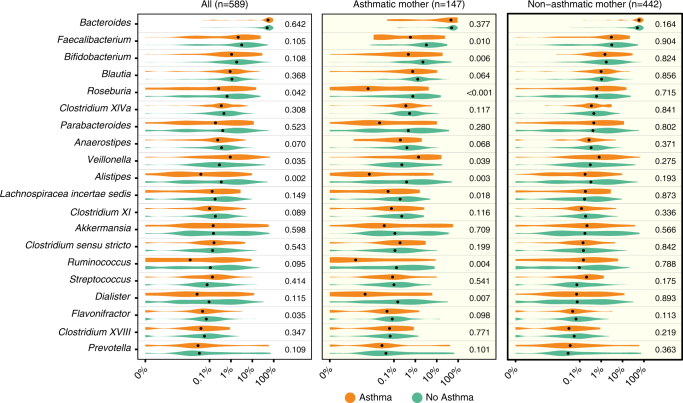
“A Danish prospective cohort study on asthma indicates that a higher abundance of Veil-lonella and lower abundance of Roseburia , Alistipes , and Flavonifractor at age 1 year were associated with an increased risk of developing asthma by age 5 years [15].”
BackgroundUrine Microbe-Derived Extracellular Vesicles in Children With Asthma
Lee, Y. S., Kim, J. H., & Lim, D. H. (2020) · Allergy Asthma and Immunology Research · doi:10.4168/aair.2021.13.1.75 · Cited by 15
Kullberg, R. F. J., Haak, B. W., Abdel‐Aziz, M. I., Davids, M., Hugenholtz, F., Nieuwdorp, M., Galenkamp, H., Prins, M., der Zee, A. H. M., & Wiersinga, W. J. (2021) · Gut Microbes · doi:10.1080/19490976.2021.1995279 · Cited by 15
“For example, infants with an immature microbial composition have an increased risk of developing asthma at 5 years of age and disrupted neonatal gut microbiota might promote CD4 T-cell dysfunction thereby increasing susceptibility to childhood allergic asthma.(2,3) Although these findings provide clues that gut microb…”
BackgroundMicrobial evolutionary medicine: from theory to clinical practice
Andersen, S. B., Shapiro, B. J., Vandenbroucke‐Grauls, C. M. J. E., & de Vos, M. G. J. (2019) · The Lancet Infectious Diseases · doi:10.1016/s1473-3099(19)30045-3 · Cited by 16
Tracheostomy in children is associated with neutrophilic airway inflammation
Powell, J., Powell, S. M., Mather, M. W., Beck, L. C., Nelson, A., Palmowski, P., Porter, A., Coxhead, J., Hedley, A., Scott, J., et al. (2023) · Thorax · doi:10.1136/thorax-2022-219557 · Cited by 14
Preschool wheeze and asthma endotypes- implications for future therapy
Hillson, K., Saglani, S., & Čustović, A. (2024) · Expert Review of Respiratory Medicine · doi:10.1080/17476348.2024.2440468 · Cited by 14
“The Copenhagen birth cohort (COPSAC 2010) study showed that gut microbiota composition and maturity after the first year of life had a significant association with subsequent development of asthma, in children with maternal history of asthma [140].”
Maternal pre- and postnatal stress and maternal and infant gut microbiota features
Eckermann, H. A., Lustermans, H., Pärnänen, K. M. M., Lahti, L., & de Weerth, C. (2025) · Psychoneuroendocrinology · doi:10.1016/j.psyneuen.2024.107273 · Cited by 14
“Flavonifractor plautii has been negatively associated with the development of asthma later in life (Stokholm et al., 2018) and was able to strongly suppress Th2 immune responses in mice (Ogita et al., 2020).”
Liu, L., Zhao, W., Zhang, H., Shang, Y., Huang, W., & Cheng, Q. (2025) · Frontiers in Microbiology · doi:10.3389/fmicb.2025.1550783 · Cited by 14
“The Copenhagen Prospective Studies on Asthma in Childhood (COPSAC) (Stokholm et al., 2018) demonstrated that early-life gut microbial alterations in 1-year-old infants born to asthmatic mothers, characterized by dysregulated relative abundances of Veillonella , Lachnospiraceae , Bifidobacterium ,…”
Compositional differences between gut microbiota of adult patients with asthma and healthy controls
Hoffmann, A., Strózik, T., Wasiak, T., Buczyłko, K., & Pawliczak, R. (2022) · Advances in Dermatology and Allergology · doi:10.5114/ada.2022.117998 · Cited by 14
“Any disturbance in the initial development of the microbiota may cause many immunologic disorders like allergy and asthma, and thereby may be recognized as a crucial environmental factor linked to the healthto-disease transition [8].”
BackgroundThe role of the environment in shaping the trends of childhood asthma – An Asian perspective
Leung, A. S. Y., Tham, E. H., Li, J., Pacharn, P., Takizawa, T., Lee, E., Xing, Y., Leung, T. F., Hong, S., & Wong, G. (2021) · Pediatric Allergy and Immunology · doi:10.1111/pai.13508 · Cited by 14
Mikkelsen, S., Dinh, K. M., Boldsen, J. K., Pedersen, O. B., Holst, G. J., Petersen, M. S., Kaspersen, K. A., Møller, B. K., Nielsen, K. R., Paarup, H. M., et al. (2021) · Clinical and Translational Allergy · doi:10.1002/clt2.12013 · Cited by 14
Risk of immune-related diseases in childhood after intrapartum antibiotic exposure
Ainonen, S., Ronkainen, E., Hakkola, M., Pokka, T. M.-L., Honkila, M., Paalanne, M., Kajantie, E., Paalanne, N., & Ruuska, T. S. (2024) · American Journal of Obstetrics and Gynecology · doi:10.1016/j.ajog.2024.02.020 · Cited by 13
Research Progress on the Degradation of Human Milk Oligosaccharides (HMOs) by Bifidobacteria
Cai, R., Zhang, J., Song, Y., Liu, X., & Xu, H.-L. (2025) · Nutrients · doi:10.3390/nu17030519 · Cited by 14
“In the process of breastfeeding, the efficient use of HMO by Bifidobacterium makes it occupy a competitive advantage in the infant’s intestine, which helps infants better adapt to breast milk nutrition [11].”
Uribe, I. A. M., Terauchi, H., Bell, J. A., Zanetti, A. T., Jantre, S. R., Huebner, M., Arshad, S. H., Ewart, S., & Mansfield, L. S. (2025) · mBio · doi:10.1128/mbio.03764-24 · Cited by 13
Goswami, S., Ansari, A., Saraf, C., O’Toole, P. W., Shanahan, F., Ahuja, V., & Ghosh, T. S. (2026) · Nature Communications · doi:10.1038/s41467-026-72289-9 · Cited by 13
“…by 33 additional study-cohorts from infants/adult/senior available either as part of the cur-atedMetagenomicData repository (https://github.com/waldronlab/ curatedMetagenomicData), or downloaded as part of extensive literature searches and processed for inclusion in the analysis 44 – 49 .”
Strain-level transmission inference across multi-kingdom metagenomic data using TRACS
Tonkin‐Hill, G. Q., Shao, Y., Zarebski, A. E., Mallawaarachchi, S., Xie, O., Mäklin, T., Thorpe, H. A., Davies, M. R., Bentley, S. D., Lawley, T. D., et al. (2026) · Nature Microbiology · doi:10.1038/s41564-026-02339-x · Cited by 13
“In particular, the impact of perturbations driven by interventions in early childhood, such as caesarean section and antimicrobial treatment, have been associated with health complications including asthma and atopy 39,40 .”
Fornasaro, S., Esposito, A., Florian, F., Pallavicini, A., Leo, L. D., Not, T., Lagatolla, C., Mezzarobba, M., Silvestre, A. D., Sergo, V., et al. (2022) · Analytical and Bioanalytical Chemistry · doi:10.1007/s00216-022-03975-y · Cited by 13
“For instance, the faecal microbiome and metabolome are simultaneously found to be disordered in colorectal cancer [4], systemic lupus erythematosus [5], metabolic syndrome [6], asthma [7] and central nervous system disorders [8].”
BackgroundContinuous Rather Than Solely Early Farm Exposure Protects From Hay Fever Development
Pechlivanis, S., Depner, M., Kirjavainen, P. V., Roduit, C., Täubel, M., Frei, R., Skevaki, C. L., Hose, A., Barnig, C., Schmaußer‐Hechfellner, E., et al. (2022) · The Journal of Allergy and Clinical Immunology In Practice · doi:10.1016/j.jaip.2022.10.035 · Cited by 13
Wang, Y., Liu, T., Wan, Z., Wang, L., Hou, J., Shi, M., & Tsui, S. K. (2023) · Frontiers in Genetics · doi:10.3389/fgene.2023.1153847 · Cited by 13
Luan, J., Zhang, F., Suo, L., Zhang, W., Li, Y., Xiaofeng, Y., Liu, B., & Cao, H. (2024) · BMC Pulmonary Medicine · doi:10.1186/s12890-023-02825-6 · Cited by 13
“Emerging studies have indicated that significant changes in the composition and function of the gut microbiota in patients with pulmonary diseases compared to healthy individuals [7, 9, 10].”
BackgroundSarate, P., Šrůtková, D., Geissler, N., Schwarzer, M., Schabussová, I., Inić‐Kanada, A., Kozáková, H., & Wiedermann, U. (2021) · Frontiers in Immunology · doi:10.3389/fimmu.2020.612775 · Cited by 13
Chen, Y., Liu, P., Liu, R., Hu, S., He, Z., Dong, G., Feng, C., An, S., & Ying, X. (2021) · mSystems · doi:10.1128/msystems.00775-21 · Cited by 13
“The gut microbiome has been associated with numerous diseases, including inflammatory bowel disease (IBD) (1), asthma (2), obesity (3), diabetes mellitus (4, 5), cardiovascular”
BackgroundLu, C., Tian, Y., Tian, H., Li, B., Peng, B., Zheng, J., & Dai, Y. (2022) · Science China Materials · doi:10.1007/s40843-022-2125-1 · Cited by 13
The economics of microbiodiversity
Han, K. Y., Kröger, L., Buchholz, F., Dewan, I., Quaas, M. F., Schulenburg, H., & Reusch, T. B. H. (2022) · Ecological Economics · doi:10.1016/j.ecolecon.2022.107664 · Cited by 13
Microbiome in the primary prevention of allergic diseases and bronchial asthma
Sozańska, B. (2018) · Allergologia et Immunopathologia · doi:10.1016/j.aller.2018.03.005 · Cited by 13
Capsaicin as a Microbiome Modulator: Metabolic Interactions and Implications for Host Health
Guerrero, I. A. C., Martínez-Medina, A. E., Alvarado-Mata, L. Y., Chávez, A. C. F., Muñoz-García, R., Luévanos‐Escareño, M. P., Sosa-Martínez, J. D., Castro-Alonso, M. J., Nimmakayala, P., Reddy, U. K., et al. (2025) · Metabolites · doi:10.3390/metabo15060372 · Cited by 12
“In particular, children born by cesarean section or who received multiple antibiotic treatments during infancy show a higher prevalence of asthma, as well as an elevated abundance of bacteria of the phylum Proteobacteria [53].”
Blaser, M. J., & Domínguez-Bello, M. G. (2025) · Annual Review of Microbiology · doi:10.1146/annurev-micro-051024-092416 · Cited by 12
Self-citationAdvances in the Gut‐Lung Axis and Bronchial Asthma: From Mechanisms to Therapeutic Potential
Zheng, T., Huang, Y., & Yao, H. (2025) · Clinical and Translational Allergy · doi:10.1002/clt2.70128 · Cited by 12
“Furthermore, studies reveal that elevated relative abundance of Veillonella spp. coupled with reduced levels of Roseburia , Blautia , and Flavonifractor at 1 year of age has been associated with an increased risk of asthma diagnosis by 5 years of age [45].”
Huang, C., Yu, Y., Du, W., Liu, Y., Dai, R., Wang, P., Zhang, C., & Shi, G. (2021) · Future Microbiology · doi:10.2217/fmb-2020-0101 · Cited by 12
Nagasaki, T., Tabuchi, T., Matsumoto, H., & Horimukai, K. (2022) · Pediatric Allergy and Immunology · doi:10.1111/pai.13771 · Cited by 12
Bikov, A., Dragonieri, S., Csoma, B., Mazzuca, C., Finamore, P., Rocchi, G., Putignani, L., Guarino, M. P. L., & Scarlata, S. (2022) · Microorganisms · doi:10.3390/microorganisms10122457 · Cited by 13
Herbal medicine for the treatment of obesity-associated asthma: a comprehensive review
Das, A., Pathak, M. P., Pathak, K., Saikia, R., & Gogoi, U. (2023) · Frontiers in Pharmacology · doi:10.3389/fphar.2023.1186060 · Cited by 12
“Increased risk of asthma was linked to higher Veillonella abundance and lower Roseburia, Alistipes, and Flavonifractor abundances at 1-year-old age for children with asthma at age 5 (n = 60), albeit the association was only significant for kids whose mothers also had asthma (Stokholm et al., 2018).”
BackgroundDoes the Human Gut Virome Contribute to Host Health or Disease?
Pavia, G., Marascio, N., Matera, G., & Quirino, A. (2023) · Viruses · doi:10.3390/v15112271 · Cited by 12
Jia, B., Tang, L., Liu, H., Chen, W., Chen, Q., Zhong, M., & Yin, A. (2024) · Journal of Translational Medicine · doi:10.1186/s12967-023-04603-8 · Cited by 12
“A host’s gut microbiota is critical in forming and modifying immune responses [40].”
BackgroundThe Airway Microbiome and Childhood Asthma – What Is the Link?
Dick, F. D., & Turner, S. (2020) · Acta Medica Academica · doi:10.5644/ama2006-124.294 · Cited by 12
“Results from a Danish cohort study revealed that lack of maturation of the gut microbiome in the first year of life contributed to increased risk of developing asthma at age five (39).”
BackgroundSustainable Microbiome: a symphony orchestrated by synthetic phages
Mirzaei, M. K., & Deng, L. (2020) · Microbial Biotechnology · doi:10.1111/1751-7915.13697 · Cited by 12
“…with several human diseases or conditions, including inflammatory bowel diseases (IBD) (Franzosa et al., 2019), colorectal cancer (CRC) (Wong et al., 2017), obesity (Turnbaugh et al., 2006), type 2 diabetes (Wu et al., 2017), autism (Sharon et al., 2019), asthma and allergy (Stokholm et al., 2018).”
BackgroundImmunomodulatory Effects of Rhinovirus and Enterovirus Infections During the First Year of Life
Ruohtula, T., Kondrashova, A., Lehtonen, J., Oikarinen, S., Hämäläinen, A., Niemelä, O. J., Peet, A., Tillmann, V., Nieminen, J. K., Ilonen, J., et al. (2021) · Frontiers in Immunology · doi:10.3389/fimmu.2020.567046 · Cited by 12
Mousavian, A.-H., Garizi, F. Z., Ghoreshi, B., Ketabi, S., Eslami, S., Ejtahed, H., & Qorbani, M. (2024) · Journal of Asthma · doi:10.1080/02770903.2024.2332921 · Cited by 11
“…Clostridium neonatale , and lower levels of Bifidobacterium , Akkermansia , Faecalibacterium , Lachnospira , and Rothia were associated with a higher risk of pediatric asthma, while higher levels of Roseburia , Alistipes , and Flavonifractor was associated with lower asthma risk (34,37,48,49,51).”
Characteristics of Three Microbial Colonization States in the Duodenum of the Cirrhotic Patients
Zha, H., Chen, Y., Wu, J., Chang, K., Lu, Y., Zhang, H., Xie, J., Wang, Q., Tang, R., & Li, L. (2020) · Future Microbiology · doi:10.2217/fmb-2019-0270 · Cited by 11
Practical and Robust NMR-Based Metabolic Phenotyping of Gut Health in Early Life
Bervoets, L., Ippel, H., Smolinska, A., van Best, N., Savelkoul, P. H. M., Mommers, M., & Penders, J. (2021) · Journal of Proteome Research · doi:10.1021/acs.jproteome.1c00617 · Cited by 11
The influence of early life exposures on the infant gut virome
Zhang, Y., Castro-Mejía, J. L., Deng, L., Shah, S. A., Thorsen, J., Rodríguez, C. L., Jessen, L. E., Dion, M. B., Chawes, B., Bønnelykke, K., et al. (2025) · Gut Microbes · doi:10.1080/19490976.2025.2501194 · Cited by 10
“…bacterial-host and life-style predictions, abundance-mapping (vOTU table), and taxonomy of complete and partial viral genomes (here termed vOTUs) can be found in Shah et al. 9 16S rRNA gene amplicon data (bOTU table) from same cohort’s participants were retrieved from Stokholm et al. (2018).”
Self-citationMicrobiota of the first‐pass meconium and subsequent atopic and allergic disorders in children
Kielenniva, K., Ainonen, S., Vänni, P., Paalanne, N., Renko, M., Salo, J., Tejesvi, M. V., Pokka, T. M.-L., Pirttilä, A. M., & Tapiainen, T. (2022) · Clinical & Experimental Allergy · doi:10.1111/cea.14117 · Cited by 10
“051 −13,149 to 19,976 No wheezing, n = 103 15,886 (15,763) Cow's milk allergy, n = 12 5048 (10,182) .”
Vänni, P., Tejesvi, M. V., Paalanne, N., Aagaard, K. M., Ackermann, G. L., Camargo, C. A., Eggesbø, M. Å., Hasegawa, K., Hoen, A. G., Karagas, M. R., et al. (2023) · mSystems · doi:10.1128/msystems.00364-23 · Cited by 11
Self-citationLeech, S. M., Borg, D. J., Rae, K. M., Kumar, S., Clifton, V. L., & Nitert, M. D. (2024) · Microbial Genomics · doi:10.1099/mgen.0.001269 · Cited by 10
Depner, M., Taft, D. H., Peschel, S., Roduit, C., Karvonen, A. M., Barnig, C., Divaret‐Chauveau, A., Riedler, J., Pekkanen, J., Schmaußer‐Hechfellner, E., et al. (2025) · Pediatric Allergy and Immunology · doi:10.1111/pai.70041 · Cited by 10
The Microbiome in Asthma Heterogeneity: The Role of Multi‐Omic Investigations
Huang, Y. J. (2025) · Immunological Reviews · doi:10.1111/imr.70015 · Cited by 10
“A plethora of clinical and mechanistic studies have examined how gut microbiota can influence asthma risk and pathogenesis in early life [12–15].”
Influentialvan der Does, A. M., Amatngalim, G. D., Keijser, B. J. F., Hiemstra, P. S., & Villenave, R. (2018) · Vaccines · doi:10.3390/vaccines6030049 · Cited by 10
Exposure to sewage water and the development of allergic manifestations in Finnish children
Kujansuu, E., Kujansuu, L., Paassilta, M., Mustonen, J. T., & Vaarala, O. (2019) · Pediatric Allergy and Immunology · doi:10.1111/pai.13090 · Cited by 10
Influence of perinatal and childhood exposure to tobacco and mercury in children’s gut microbiota
Pérez‐Castro, S., D’Auria, G., Llambrich, M., Fernández‐Barrés, S., López-Espinosa, M.-J., Llop, S., Regueiro, B. J., Bustamante, M., Francino, M. P., Vrijheid, M., et al. (2024) · Frontiers in Microbiology · doi:10.3389/fmicb.2023.1258988 · Cited by 10
“In addition, child body mass index (BMI) has been associated with their gut microbiota (Bai et al., 2019; Vander Wyst et al., 2021), whereas the risk of asthma could be related to the microbiome maturation along the first year of life (Stokholm et al., 2018).”
BackgroundNew Directions in Pediatric Asthma
Bacharier, L. B., & Guilbert, T. W. (2019) · Immunology and Allergy Clinics of North America · doi:10.1016/j.iac.2018.12.012 · Cited by 10
Alenius, H. T., Sinkko, H., Moitinho‐Silva, L., Rodríguez, E., Broderick, C., Alexander, H., Reiger, M., Hjelmsø, M. H., Fyhrquist, N., Oláh, P., et al. (2021) · Experimental Dermatology · doi:10.1111/exd.14446 · Cited by 10
Self-citationPoulsen, C. E., Vinding, R., Rasmussen, M. A., Shah, S. A., Trivedi, U., Rodríguez, C. L., Widdowson, M., Jiang, J., Poulsen, C. S., Eliasen, A. U., et al. (2024) · Med · doi:10.1016/j.medj.2024.10.015 · Cited by 9
Self-citationBarnett, D. J. M., Thijs, C. T., Mommers, M., Endika, M. F., Klostermann, C. E., Schols, H. A., Smidt, H., Nauta, A., Arts, I. C. W., & Penders, J. (2025) · Gut Microbes · doi:10.1080/19490976.2025.2485326 · Cited by 9
Zha, H., Liu, F., Ling, Z., Chang, K., Yang, J., & Li, L. (2021) · Scientific Reports · doi:10.1038/s41598-021-81507-x · Cited by 9
Asthma medication and risk of dental diseases in children – A prospective cohort study
Nørrisgaard, P. E., Haubek, D., Schoos, A. M., Kühnisch, J., Chawes, B., Stokholm, J., Bisgaard, H. F., & Bønnelykke, K. (2023) · Pediatric Allergy and Immunology · doi:10.1111/pai.14026 · Cited by 9
Self-citationMAGinator enables accurate profiling of de novo MAGs with strain-level phylogenies
Zachariasen, T., Russel, J., Petersen, C., Vestergaard, G., Shah, S. A., Atienza, P., Passali, M., Turvey, S. E., Sørensen, S. J., Lund, O., et al. (2024) · Nature Communications · doi:10.1038/s41467-024-49958-8 · Cited by 9
Self-citationCallaway, Z., & Kim, C. K. (2025) · Korean Journal of Pediatrics · doi:10.3345/cep.2024.01382 · Cited by 9
“41) 41-43) Cohort studies reported that A study of infants hospitalized for respiratory diseases was conducted 1 year later.”
Next-Generation Probiotics Their Molecular Taxonomy and Health Benefits
Khan, S. T., & Malik, A. R. A. (2019) · Springer eBooks · doi:10.1007/978-3-030-24903-8_16 · Cited by 9
Vital Members in the More Dysbiotic Oropharyngeal Microbiotas in H7N9-Infected Patients
Zha, H., Lu, H., Wu, J., Chang, K., Wang, Q., Zhang, H., Li, J., Luo, Q., Lu, Y., & Li, L. (2020) · Frontiers in Medicine · doi:10.3389/fmed.2020.00396 · Cited by 9
Hosts, microbiomes, and the evolution of critical windows
Metcalf, C. J. E., Tepekule, B., Bruijning, M., & Koskella, B. (2022) · Evolution Letters · doi:10.1002/evl3.298 · Cited by 9
“For example, children with “immature” microbiomes relative to their age (Stokholm et al. 2018) or who have been exposed to antibiotics (Donovan et al.”
BackgroundThe farm-like effect: Rural exposures in early life, the microbiome, and asthma
Lee‐Sarwar, K. A. (2021) · Journal of Allergy and Clinical Immunology · doi:10.1016/j.jaci.2021.04.020 · Cited by 9
Microbiome and well-being: a meta-analysis
Kowal, M., Sorokowski, P., David, D., Iuga, I. A., Renwick, S., & Sorokowska, A. (2025) · npj Biofilms and Microbiomes · doi:10.1038/s41522-025-00829-0 · Cited by 8
“Previous studies have shown that higher diversity and abundance in the intestinal microbiome enhance immune system functionality 70,71 , which can further aid in maintaining health and well-being 72 .”
Precise synthesis of conjugated polymers via reducing homocoupling defects
Ma, B., Shi, Q., & Huang, H. (2026) · Chemical Society Reviews · doi:10.1039/d4cs00644e · Cited by 8
Jiang, T., Li, P., Zhao, J., Dai, L., Sun, D., Liu, M., An, L. K., Jia, L., Jing, X., Wang, H., et al. (2021) · Journal of Functional Foods · doi:10.1016/j.jff.2021.104465 · Cited by 8
The Role of the Microbiome in Pediatric Respiratory Diseases
Zemanick, E. T., & Rosas‐Salazar, C. (2024) · Clinics in Chest Medicine · doi:10.1016/j.ccm.2024.02.026 · Cited by 8
Valdez-Palomares, F., Aguilar‐Reyes, J., Pérez‐Campos, E., Mayoral, L. P.-C., Meraz‐Cruz, N., & Palacios‐González, B. (2024) · PLoS ONE · doi:10.1371/journal.pone.0302726 · Cited by 8
“…of the intestinal microbiota during the first years of life, unlike offspring from mothers exposed to DMG that presented lower alpha diversity, which has been associated with overall delay in microbial maturation and subsequent adverse health outcomes, including atopy and allergic diseases [32,33].”
BackgroundFrom vacant to vivid: The nutritional landscape drives infant gut microbiota establishment
Melki, R., & Litvak, Y. (2024) · Molecular Microbiology · doi:10.1111/mmi.15296 · Cited by 10
“…community have been associates with a broad range of unfavorable health outcomes, including inflammatory bowel disease, type I diabetes, and asthma (Arrieta et al., 2015; El Ouarrat et al., 2020; Lewis et al., 2015; Stokholm et al., 2018; Vatanen et al., 2018; Virtanen et al., 2014) (Figure 1).”
Xie, Y., Zhang, Y., Wang, T., Liu, Y., Ma, J., Wu, S., Duan, C., Qiao, W., Cheng, K., Lu, L., et al. (2023) · International Immunopharmacology · doi:10.1016/j.intimp.2023.110051 · Cited by 8
Early-life antibiotic exposure, the gut microbiome, and disease in later life
Rautava, S. (2020) · Elsevier eBooks · doi:10.1016/b978-0-12-818097-6.00006-7 · Cited by 8
Lin, T., Wu, C., Fan, Y., Chang, Y., Ho, H. J., & Chen, Y. (2022) · Annals of Allergy Asthma & Immunology · doi:10.1016/j.anai.2021.12.016 · Cited by 8
A Non-Invasive Neonatal Signature Predicts Later Development of Atopic Diseases
Sérémé, Y., Michel, M., Mezouar, S., Guindo, C. O., Kaba, L., Grine, G., Mura, T., Mège, J., Tran, T.-A., Corbeau, P., et al. (2022) · Journal of Clinical Medicine · doi:10.3390/jcm11102749 · Cited by 8
Miyachi, H., Shibata, R., Cregeen, S. J., Surathu, A., Sijaric, M., Espinola, J. A., Sullivan, A. F., Mansbach, J. M., Camargo, C. A., & Zhu, Z. (2026) · Journal of Allergy and Clinical Immunology · doi:10.1016/j.jaci.2025.12.1005 · Cited by 7
Intestinal Microbes-based Analysis of Immune Mechanism of Childhood Asthma
Mo, M., Wang, J., Gu, H., Zhou, J., Zheng, C., Zheng, Q., & Chen, H. (2022) · Cellular and Molecular Biology · doi:10.14715/cmb/2022.68.2.11 · Cited by 7
Keerthy, D., Spratlen, M. J., Wen, L., Seeram, D., Park, H., Calero, L., Uhlemann, A., & Herbstman, J. B. (2024) · Environmental Research · doi:10.1016/j.envres.2024.120053 · Cited by 7
Moyo, G., Tepekule, B., Katsidzira, L., Blaser, M. J., & Metcalf, C. J. E. (2025) · Trends in Microbiology · doi:10.1016/j.tim.2025.01.004 · Cited by 7
Self-citationImoto, N., Kano, C., Morita, H., Hirota, T., Amanuma, F., Maruyama, H., Nojiri, S., & Watanabe, S. (2025) · BMC Microbiology · doi:10.1186/s12866-025-04056-7 · Cited by 7
“Previous reports have suggested associations between Clostridium and food allergies [36, 49, 51], and between Faecalibacterium and asthma [23, 45, 52], although the results are inconsistent.”
Dasgupta, S. (2025) · OMICS A Journal of Integrative Biology · doi:10.1177/15578100251358958 · Cited by 7
“Inrecent years, there has been growing recognition of the role of the human microbiome in shaping immune responses relevant to asthma pathogenesis (Kozik and Huang, 2019; Stokholm et al., 2018).”
Nasal-gut microbiome axis in health and disease
Alao, J. O., & Bamigboye, F. O. (2025) · Medicine in Microecology · doi:10.1016/j.medmic.2025.100153 · Cited by 7
Fuertes, M., Faria, A., Gonçalves, J. L., Antunes, S., & Dionísio, F. (2023) · Antibiotics · doi:10.3390/antibiotics12020309 · Cited by 7
Circulating microbiome analysis in patients with perioperative anaphylaxis
de Chaisemartin, L., Ciocan, D. M., Gouél‐Cheron, A., Granger, V., Longrois, D., Montravers, P., Cassard, A., & Chollet‐Martin, S. (2024) · Frontiers in Immunology · doi:10.3389/fimmu.2023.1241851 · Cited by 7
Wang, W., Li, C., Chang, Y.-T., Bai, Y., Tsai, S., Chen, T., Chiou, S., & Chen, M. (2023) · Allergy and Asthma Proceedings · doi:10.2500/aap.2023.44.230035 · Cited by 7
Metadata
- Authors
- Stokholm, J., Blaser, M. J., Thorsen, J., Rasmussen, M. A., Waage, J., Vinding, R. K., Schoos, A.-M. M., Kunøe, A., Fink, N. R., Chawes, B. L., Bønnelykke, K., Brejnrod, A. D., Mortensen, M. S., Al-Soud, W. A., Sørensen, S. J., & Bisgaard, H.
- Affiliations
- University of Copenhagen (DK)
- NYU Langone Health (US)
- Corresponding author
- Sørensen, Søren J.
- Bisgaard, Hans
- ORCID
- Venue
- Nature Communications
- Published
- 2018-01-10
- Volume
- 9
- Issue
- 1
- Pages
- 141-141
- ISSN
- 2041-1723 (ISSN-L)
- PMC
- PMC5762761
- OpenAlex
- W2782017756
- Cited by
- 614
- References
- 71
- Citations by year
- 2026: 53 · 2025: 64 · 2024: 85 · 2023: 72 · 2022: 85 · 2021: 94 · 2020: 68 · 2019: 59 · 2018: 34
- FWCI
- 22.67
- Type
- journal article
- Language
- en
- Update notices
- correction (2018-02-13)
- Open access
- gold
- doi.org
- Licence
- cc-by
- creativecommons.org/licenses/by/4.0 (tdm)
- creativecommons.org/licenses/by/4.0 (vor)
- Locations
- Nature Communications (publishedVersion, cc-by)
- Europe PMC (PubMed Central) (publishedVersion, cc-by)
- PubMed Central (publishedVersion, cc-by)
- PubMed (publishedVersion)
- Research at the University of Copenhagen (University of Copenhagen) (publishedVersion, cc-by)
- Rutgers University Community Repository (Rutgers University) (submittedVersion)
- RePEc: Research Papers in Economics (submittedVersion)
- DOAJ (DOAJ: Directory of Open Access Journals) (submittedVersion, cc-by-sa)
- DOAJ (DOAJ: Directory of Open Access Journals) (submittedVersion)
- Funders
- Thrasher Research Fund
- Strategiske Forskningsråd
- Lundbeckfonden (R223-2016-179)
- Danmarks Frie Forskningsfond
- Ministeriet Sundhed Forebyggelse
- Alfred Benzon Foundation
- Novo Nordisk Fonden (NNF17OC0025014)
- H. Lundbeck A/S
- National Institutes of Health
- National Institute of Diabetes and Digestive and Kidney Diseases (R01DK090989)
- Topics
- Life Sciences › Biochemistry, Genetics and Molecular Biology › Molecular Biology › Gut microbiota and health
- Health Sciences › Medicine › Pulmonary and Respiratory Medicine › Asthma and respiratory diseases
- Health Sciences › Medicine › Dermatology › Dermatology and Skin Diseases
- Keywords
- childhood asthma, early life microbial exposure, maternal asthma, immune dysregulation, microbial stimulation, asthma risk, 16S rRNA gene amplicon sequencing
- MeSH terms
- Gastrointestinal Microbiome, Asthma, Bacteroides, Bifidobacterium, Child Development, Child, Preschool, Enterobacteriaceae, Female, Humans, Infant, Male, Mothers, Risk, RNA, Ribosomal, 16S, Staphylococcus, Streptococcus, Veillonella, Enterococcus
About these checks
Registry, retraction, Cites and statistics results are computed, not judged, with one exception: a printed reference that no index lists is read once by a model before it counts as a citation error. Claims are extracted by a model and kept only when their quote appears verbatim in the text; each cited source is then checked, with a model’s help, for whether it says what the claim relies on. Those verdicts can be wrong — read the claim’s quote and the cited source before relying on one.
Statistics and arithmetic are recomputed, not judged.
Confidence bands are shown only for fields calibrated on our annotated test set. None is calibrated yet, so no band is shown.
What counts as a claim ›How we measure confidence ›How we check this ›
Are you an author, or do you see a problem with this page? Request a review
Data sources
Bibliographic data: Semantic Scholar, OpenAlex, Crossref.
Contains information from the Semantic Scholar Academic Graph Datasets, made available under the ODC Attribution License (ODC-BY 1.0).
Semantic Scholar’s data is described in: Kinney, R., et al. (2023). The Semantic Scholar Open Data Platform. arXiv:2301.10140.
