

Maturation of the gut microbiome and risk of asthma in childhood
Open accessThe DOI matches its Crossref record; 71 of the 71 references it cites were found in a registry or an index.
Abstract
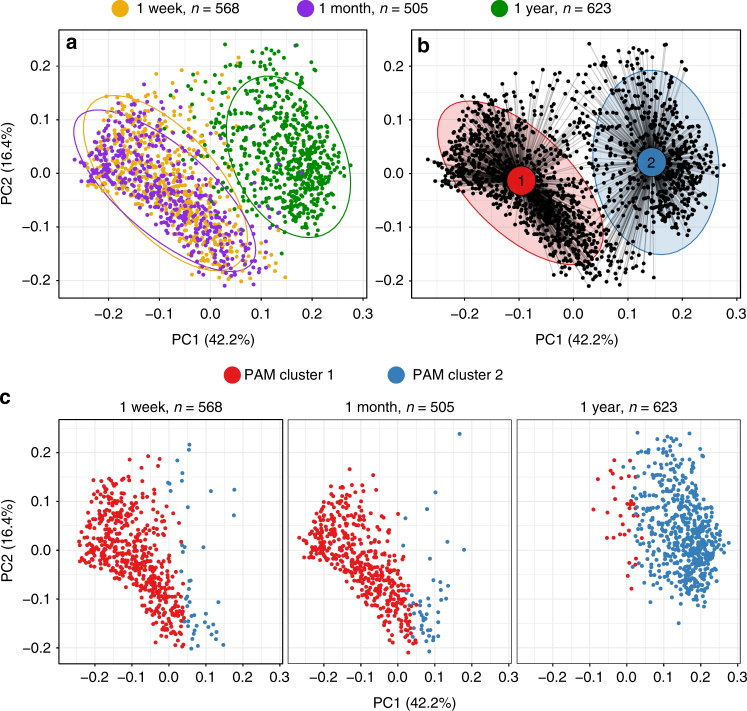
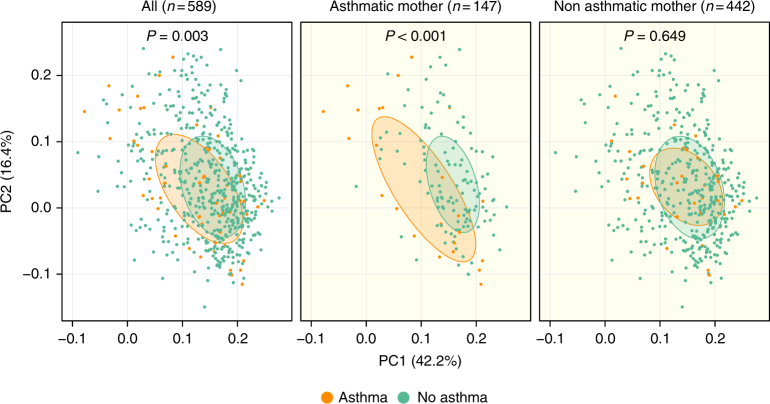
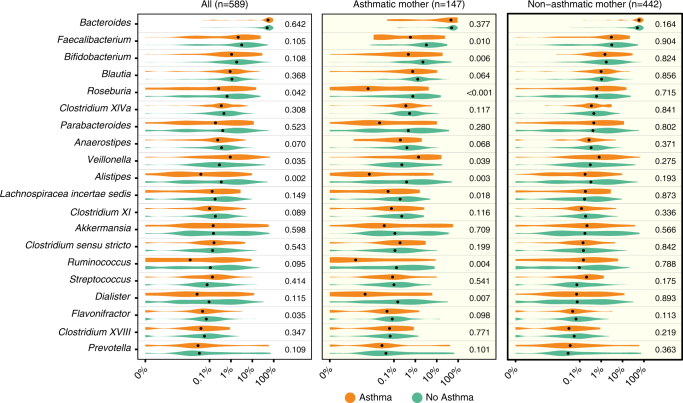
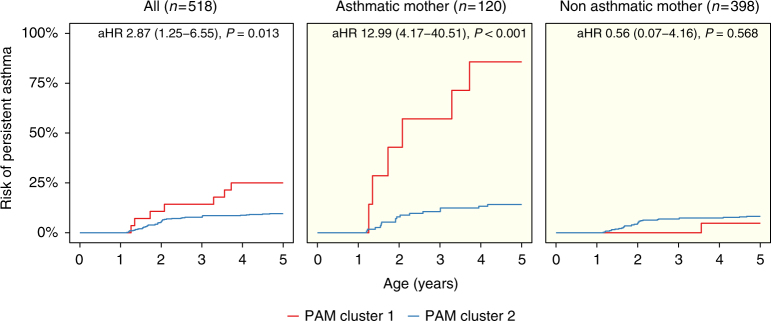
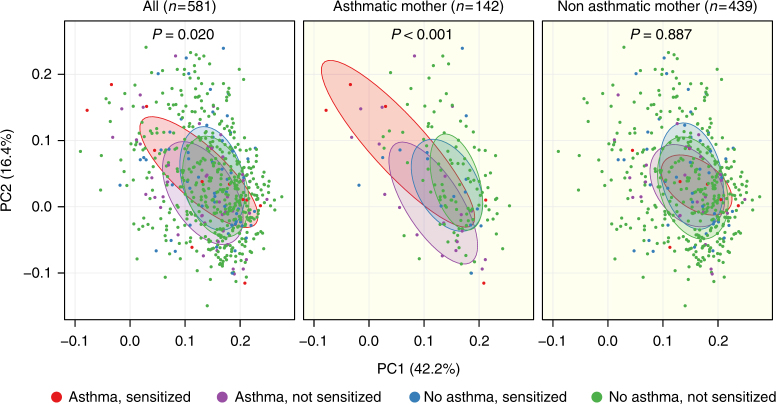
The composition of the human gut microbiome matures within the first years of life. It has been hypothesized that microbial compositions in this period can cause immune dysregulations and potentially cause asthma. Here we show, by associating gut microbial composition from 16S rRNA gene amplicon sequencing during the first year of life with subsequent risk of asthma in 690 participants, that 1-year-old children with an immature microbial composition have an increased risk of asthma at age 5 years. This association is only apparent among children born to asthmatic mothers, suggesting that lacking microbial stimulation during the first year of life can trigger their inherited asthma risk. Conversely, adequate maturation of the gut microbiome in this period may protect these pre-disposed children.
Overview
The claims and statistics of this paper haven’t been checked yet.
Free: it reads the open-access text and checks the first 5 claims that cite a source we can check. Create a free account to check every claim.
Integrity signals
Registry
Cites
Statistics
Figures
Verification
Claims the paper makes
The claims and statistics of this paper haven’t been checked yet.
Free: it reads the open-access text and checks the first 5 claims that cite a source we can check. Create a free account to check every claim.
Claims other papers make about this one
Each is checked against this paper’s own text: does it say what the citing paper says it does?
The source backs part of the claim, not all of it — or backs it for a different population, condition or comparison.
In the citing paper
“Cesarean delivery also predicts a more unstable neonatal microbiome and a heightened risk of infections, immune disorders, obesity, and neuroendocrine disturbances.31–33”
From Gut dysbiosis in oncology: a risk factor for immunoresistance (2026) · doi:10.1038/s41422-025-01212-6 · cites this paper as [33]
Experimental — accuracy not yet measuredThe source backs part of the claim, not all of it — or backs it for a different population, condition or comparison.
In the citing paper
“the composition and function of the gut microbiota in patients with lung diseases [such as pneumonia (15), lung cancer (16), asthma (17), and tuberculosis (18)] were significantly changed compared with those in healthy people”
From The Role of Gut Microbiota in Lung Cancer: From Carcinogenesis to Immunotherapy (2021) · doi:10.3389/fonc.2021.720842 · cites this paper as [17]
Experimental — accuracy not yet measuredIn the citing paper
“Some studies have indicated that gut dysbiosis is common in patients with asthma, and dysregulation of specific bacterial taxa seems to be one of the powerful predictors of high asthma risk (17,(35)(36)(37).”
From The Role of Gut Microbiota in Lung Cancer: From Carcinogenesis to Immunotherapy (2021) · doi:10.3389/fonc.2021.720842 · cites this paper as [17]
Self-check
Percentages, sums and reported differences re-computed from the paper’s own numbers.
The self-check needs the paper’s full text.
Citations
Cites
DADA2: High–resolution sample inference from Illumina amplicon data
Callahan, B. J., McMurdie, P. J., Rosen, M. J., Han, A. W., Johnson, A. J. A., & Holmes, S. P. (2016) · Nature Methods · doi:10.1038/nmeth.3869 · Cited by 35,698
QIIME allows analysis of high-throughput community sequencing data
Caporaso, J. G., Kuczynski, J., Stombaugh, J., Bittinger, K., Bushman, F. D., Costello, E. K., Fierer, N., Peña, A. G., Goodrich, J. K., Gordon, J. I., et al. (2010) · Nature Methods · doi:10.1038/nmeth.f.303 · Cited by 34,887
Silhouettes: A graphical aid to the interpretation and validation of cluster analysis
Rousseeuw, P. J. (1987) · Journal of Computational and Applied Mathematics · doi:10.1016/0377-0427(87)90125-7 · Cited by 21,392
phyloseq: An R Package for Reproducible Interactive Analysis and Graphics of Microbiome Census Data
McMurdie, P. J., & Holmes, S. (2013) · PLoS ONE · doi:10.1371/journal.pone.0061217 · Cited by 21,322
Search and clustering orders of magnitude faster than BLAST
Edgar, R. C. (2010) · Bioinformatics · doi:10.1093/bioinformatics/btq461 · Cited by 20,826
Schloss, P. D., Westcott, S. L., Ryabin, T., Hall, J. R., Hartmann, M., Hollister, E. B., Lesniewski, R. A., Oakley, B. B., Parks, D. H., Robinson, C. J., et al. (2009) · Applied and Environmental Microbiology · doi:10.1128/aem.01541-09 · Cited by 19,549
UPARSE: highly accurate OTU sequences from microbial amplicon reads
Edgar, R. C. (2013) · Nature Methods · doi:10.1038/nmeth.2604 · Cited by 16,707
Diversity of the Human Intestinal Microbial Flora
Eckburg, P. B., Bik, E. M., Bernstein, C. N., Purdom, E., Dethlefsen, L., Sargent, M., Gill, S. R., Nelson, K. E., & Relman, D. A. (2005) · Science · doi:10.1126/science.1110591 · Cited by 7,913 · cited 1×
“Asthma was diagnosed based on a previously detailed quantitative symptom algorithm requiring all of the following criteria51–53: (1) verified diary recordings of five episodes of troublesome lung symptoms within 6 months, each lasting at least 3 consecutive days; (2) symptoms typical of asthma including exercise-induc…”
MethodHuman gut microbiome viewed across age and geography
Yatsunenko, T., Rey, F. E., Manary, M. J., Trehan, I., Dominguez-Bello, M. G., Contreras, M., Magris, M., Hidalgo, G., Baldassano, R. N., Anokhin, A. P., et al. (2012) · Nature · doi:10.1038/nature11053 · Cited by 7,815
Enterotypes of the human gut microbiome
MetaHIT Consortium (additional members), Arumugam, M., Raes, J., Pelletier, E., Le Paslier, D., Yamada, T., Mende, D. R., Fernandes, G. R., Tap, J., Bruls, T., et al. (2011) · Nature · doi:10.1038/nature09944 · Cited by 7,548
Cited by
Items 601–677 of 677
Luan, J., Zhang, F., Suo, L., Zhang, W., Li, Y., Yu, X., Liu, B., & Cao, H. (2024) · Figshare · doi:10.6084/m9.figshare.24934031
Algasham, D.-A. H., Ali, M. M., & AL-Hasnawi, S. M. J. (2024) · International Journal of Research in Interdisciplinary Studies · doi:10.5281/zenodo.13123502
Jia, B., Tang, L., Liu, H., Chen, W., Chen, Q., Zhong, M., & Yin, A. (2024) · Figshare · doi:10.6084/m9.figshare.24934622
Li, N., Dai, Z., Wang, Z., Deng, Z., Zhang, J., Pu, J., Cao, W., Pan, T., Zhou, Y., Yang, Z., et al. (2021) · Figshare · doi:10.6084/m9.figshare.16869784
Li, N., Dai, Z., Wang, Z., Deng, Z., Zhang, J., Pu, J., Cao, W., Pan, T., Zhou, Y., Yang, Z., et al. (2021) · Figshare · doi:10.6084/m9.figshare.16869794
Li, N., Dai, Z., Wang, Z., Deng, Z., Zhang, J., Pu, J., Cao, W., Pan, T., Zhou, Y., Yang, Z., et al. (2021) · Figshare · doi:10.6084/m9.figshare.16869788
Li, N., Dai, Z., Wang, Z., Deng, Z., Zhang, J., Pu, J., Cao, W., Pan, T., Zhou, Y., Yang, Z., et al. (2021) · Figshare · doi:10.6084/m9.figshare.16869786
Huoman, J., Martínez-Enguita, D., Olsson, E., Ernerudh, J., Nilsson, L. J., Duchén, K., Gustafsson, M., & Jenmalm, M. C. (2021) · Figshare · doi:10.6084/m9.figshare.14889663
Li, N., Dai, Z., Wang, Z., Deng, Z., Zhang, J., Pu, J., Cao, W., Pan, T., Zhou, Y., Yang, Z., et al. (2021) · Figshare · doi:10.6084/m9.figshare.16869790
Li, J., Zhang, C., Tang, J., He, M., He, C., Pu, G., Liu, L., & Sun, J. (2024) · Figshare · doi:10.6084/m9.figshare.25183233
Wang, W.-W., Mao, B., Liu, Y., Gu, S., Lu, H., Bai, J.-W., Liang, S., Yang, J.-W., Li, J.-X., Su, X., et al. (2022) · Figshare · doi:10.6084/m9.figshare.21593922
Christensen, E. D., Hjelmsø, M. H., Thorsen, J., Shah, S., Redgwell, T. A., Poulsen, C. E., Trivedi, U., Russel, J., Gupta, S., Chawes, B., et al. (2022) · Figshare · doi:10.6084/m9.figshare.20307673
Self-citationLay, C., Chu, C. W., Purbojati, R. W., Acerbi, E., Drautz‐Moses, D. I., de Sessions, P. F., Jie, S., Ho, E. X. P., Kok, Y. J., Bi, X., et al. (2021) · Figshare · doi:10.6084/m9.figshare.14850770
Li, J., Zhang, C., Tang, J., He, M., He, C., Pu, G., Liu, L., & Sun, J. (2024) · Figshare · doi:10.6084/m9.figshare.26678003
Development and Benchmarking of Imputation Methods for Micriobome and Single-cell Sequencing Data
Jiang, R. (2021) · eScholarship (California Digital Library)
Genetic and epigenetic risk factors for asthma in infancy and childhood
Hoyer, A. (2024) · Open Archive (Karolinska Institutet)
Lad, N. (2023) · Nottingham Trent University's Institutional Repository (Nottingham Trent Repository)
Développement d'outils exploitant les loci CRISPR pour l'étude des interactions phages-bactéries
Dion, M. B. (2023) · Corpus Université Laval (Université Laval)
The Microbial Mediators: Investigating Microbiome-Driven Responses in Cancer Therapy
Tsakmaklis, A. (2024) · Kölner Universitäts PublikationsServer (Universität zu Köln)
Cesarean section - impacts on child health
Hermansson, H. (2023) · UTUPub (University of Turku)
D’Elios, S. (2020) · Electronic Theses and Dissertations Repository (University of Pisa)
Influence of environmental factors on early-life gut microbial trajectories and maturationPreprint
Ettingshausen, J., Kjellberg, A., Zachariasen, T., Nesme, J., Garcia-Fernandez, M., Martínez‐Costa, C., Selma‐Royo, M., Stokholm, J., Collado, M. C., Thorsen, J., et al. (2025) · Research Square · doi:10.21203/rs.3.rs-8025481/v1
Self-citationAsbury, M. R., Guedez, A. G., Lee, J. P., Mercer, E. M., Kasaba, F., Rangipour, Z., Kellner, J. D., Lacaze‐Masmonteil, T., Samara, J., Leijser, L. M., et al. (2026) · Research Square · doi:10.21203/rs.3.rs-7330498/v1
Ventura, E. F., Ruiz-Saavedra, S., Cabrera‐Rubio, R., Martínez‐Costa, C., González, S., & Collado, M. C. (2026) · European Journal of Nutrition · doi:10.1007/s00394-026-03909-9
“…gut Bifidobacterium and Bacteroides strains are vertically transferred and they are adapted to persist in the infant gut [16–18] and also, breastfeeding practices influence the microbiota [ 9, 19] and is linked to reduce risk of infectious diseases and allergies development later in life [20–24].”
León-González, P. J. L. (2026) · Revista Científica Episteme & Praxis · doi:10.62451/rep.v4i1.173
Loganathan, T. (2026) · In Silico Research in Biomedicine · doi:10.1016/j.insi.2026.100325
Place de la diversité bactérienne et de sa dynamique dans la surveillance épidémiologique
Kaba, L. (2022) · theses.fr (ABES) · doi:10.70675/5f00cf1fzdaa3z41e8zbb90ze22cb93d4b5b
Ndela, É. O. (2023) · theses.fr (ABES) · doi:10.70675/17b72026z076az4622za540z38bfb251dd02
Margelidon-Cozzolino, V. (2024) · theses.fr (ABES) · doi:10.70675/ab88157fz8774z43e2za1bdza41e8db8c5db
The Infant Gut Virome: Knowns, Unknowns, and Avenues for Future Studies
Kuzub, N., Fernández-Pato, A., Garmaeva, S., & Zhernakova, A. (2026) · Engineering · doi:10.1016/j.eng.2026.03.018
Itching to know: the Microbiome, Allergic Disease, and Antimicrobial Chemicals
Laue, H. E., Fleury, E. S., Romano, M. E., Hoen, A. G., & Braun, J. M. (2026) · Current Environmental Health Reports · doi:10.1007/s40572-025-00519-1
Thye, A. Y.-K., Kumari, Y., Chan, K., Lee, J. K.-F., Tan, L. T., Letchumanan, V., Lee, L.-H., & Law, J. W.-F. (2026) · Progress In Microbes & Molecular Biology · doi:10.36877/pmmb.a0000479
Wu, H., Shi, L., Wang, C., Liang, Y., & Huang, C. (2026) · Frontiers in Cellular and Infection Microbiology · doi:10.3389/fcimb.2026.1779298
“Accumulating evidence underscores that early-life gut microbiota dysbiosis is a key risk factor for the development of childhood allergic disorders, including asthma, atopic dermatitis, and AR (Fujimura et al., 2016; Stokholm et al., 2018).”
Pieters, S., Burk, W. J., Klip, H., de Weerth, C., van der Mheen, M., Mies, G. W., van Tetering, E. M. A., van den Hoek, A.-M., van Summeren, W., Staal, W., et al. (2026) · Research on Child and Adolescent Psychopathology · doi:10.1007/s10802-026-01465-8
“First, some perinatal exposures were of low prevalence (e.g., maternal illness/ infection), which may have limited statistical power to detect associations (Stokholm et al., 2018).”
Dual human milk oligosaccharide-fibre utilisation is a selection cue for the weaning gut microbiome
So, Y., Pichler, M. J., Kappel, S. S., Jin, C., Eriksen, C., Chatzigiannidou, I., Andersen, M. H. B., Tsiamis, V., Lukassen, M. V., Skytthe, L. E., et al. (2026) · Nature Communications · doi:10.1038/s41467-026-73297-5
“9 and 10).”
Asbury, M. R., Guedez, A. G., Lee, J., Mercer, E. M., Kasaba, F., Rangipour, Z., Kellner, J. D., Lacaze‐Masmonteil, T., Samara, J., Leijser, L. M., et al. (2026) · JMIR Research Protocols · doi:10.2196/95658
“Recent studies have provided evidence of a causal link between early-life gut microbiome alterations and the development of asthma; however, these have largely excluded preterm infants, despite them being at the highest risk of developing asthma [42-46].”
Núñez, H., Straub, T. J., Imam, N., Goad, D., Mueller, N. T., Mars, R. A. T., Hoy, C. S., Paullin, T. R., & Sukhum, K. V. (2026) · Frontiers in Microbiomes · doi:10.3389/frmbi.2026.1804117
Zhao, Y., Gao, Y., Li, X., Georgian, E. M., Pinkerton, K. E., & Zhang, C. (2026) · Frontiers in Cellular and Infection Microbiology · doi:10.3389/fcimb.2026.1739520
“…and their receptors (Kabeerdoss et al., 2013), an elevated risk of neonatal opportunistic infections (Shao et al., 2019), immune disorders (Stokholm et al., 2018), obesity (Blustein et al., 2013), and neuroendocrine abnormalities, including cognitive and behavioral de fi cits associated…”
Gut mucosal barrier: the frontline of bidirectional regulation of the gut-X axis
Xu, X. W., Hu, Y., Ruan, S., Peng, C., Han, T., Yan, P., Chan, F. K. L., & Li, J. (2026) · Medical Review · doi:10.1515/mr-2026-0009
“The strongest directionality evidence comes from early life, where delayed gut microbiome maturation and speci fi c infant stool patterns precede later asthma risk [259, 260].”
InfluentialEarly-life microbiome trajectories as biomarkers to predict health outcomes
Joos, R., Lavelle, A., Dempsey, E. M., Stanton, C., & Ross, R. P. (2026) · Microbiome Research Reports · doi:10.20517/mrr.2026.03
Hauerslev, M., Wang, T., Kjellberg, A., Luo, Y., Thorsen, J., Brix, S., Sultan, T., Sørensen, S., Ernst, M., Stokholm, J., et al. (2026) · Journal of Allergy and Clinical Immunology · doi:10.1016/j.jaci.2026.05.034
Self-citationAsgari, G., Rahmani, M., Madandar, A., Aldaghi, T., Khalili‐Tanha, G., & Nazari, E. (2026) · Food Production Processing and Nutrition · doi:10.1186/s43014-026-00389-6
“…Faecalibacterium, and Akkermansia, and an increased prevalence of potentially pro-inflammatory taxa including Clostridium and Escherichia, with some protective bacterial genera being entirely absent from their gut microbiota (Arrieta et al., 2015; Fujimura et al., 2014; Stokholm et al., 2018).”
Zhao, K., Dong, R., BaCo, K., Wei, W., & Yu, Y. (2026) · Journal of Asthma · doi:10.1080/02770903.2026.2701395
“First, gut commensal bacteria are indispensable for the maturation and modulation of both innate and adaptive immunity in early life (36).”
Chen, H., Huang, Y., Hong, L., Chen, J., Luo, N., Guo, X., Han, J., Li, S., Yu, W., Yan, W., et al. (2026) · Mucosal Immunology · doi:10.1016/j.mucimm.2026.100383
Early Determinants of Childhood Asthma in Children With Atopic Eczema and High Allergy Risk
Puisto, R., Ollila, H., Rautava, S., & Isolauri, E. (2026) · Clinical & Experimental Allergy · doi:10.1111/cea.70398
Microbial imprinting of the airway epithelium
van de Ven, J. J. I., Amatngalim, G. D., Garssen, J., Netea, M. G., & Perdijk, O. (2026) · Cell Reports · doi:10.1016/j.celrep.2026.117705
Shaping Immunity from Birth: Mechanistic Insights into Early-Life Microbiome and Immune Development
Mahdy, A., Mageed, S. S. A., Salah, A. N., Rizk, H. A., Sayed, G. A., Alahwany, A. M., Salman, A., Abdulkader, A. O., Noureldin, H. A. M., Albukhari, A. F., et al. (2026) · Bratislavské lekárske listy/Bratislava medical journal · doi:10.1007/s44411-026-00779-9
“Prospective birth-cohort studies provide direct support for these associations: specific shifts in early infant gut colonization, shaped by lifestyle and environmental factors, have been correlated with the later development of pediatric asthma and atopy [20–22].”
Cao, Y., Xing, G., Zhang, D., Gong, J., Wang, Q., & Li, Y. (2026) · BMC Pregnancy and Childbirth · doi:10.1186/s12884-026-10098-0
Battaje, R. R., Skalenko, K. S., Han, A., Abdujabbarova, K., Boyd, J. M., Carabetta, V. J., Yang, J. H., & Yadavalli, S. S. (2026) · mSphere · doi:10.1128/msphere.00366-26
“COPSAC 2010 birth cohort study of 623 Danish children demonstrated that the heightened asthma risk seen in Cesareansection births correlated directly with abnormal microbial maturation scores (12).”
[Gut microbiota and allergic diseases].
Yu, L., Wu, M., & Zheng, X. (2026) · PubMed Central · doi:10.11817/j.issn.1672-7347.2026.260103
“…介导的免疫调控,促进 Th2 型 免疫偏倚和 IgE 介导致敏,从而加重皮肤炎症反应。 动物实验 [47] 也提示,补充丁酸可改善小鼠皮肤屏障功 循环 [48] 。 receptor family pyrin domain-containing 3 , NLRP3) 炎 症小体活化,从而参与环境暴露导致的鼻黏膜上皮 屏障损伤加剧,进而导致 AR [50] 。 哮喘患者肠道菌群组成失衡表现为菌群多样性 降低,拟杆菌门 / 厚壁菌门比例升高,以及机会致病 菌 ( 如大肠杆菌 ) 丰度增加 [51] ,且生命早期肠道菌群不 成熟与后续哮喘风险增加密切相关 [24, 52] 。研究 [53-54]”
Dong, J., Lv, J., Sun, G., & Xiao, Z. (2026) · International Journal of General Medicine · doi:10.2147/ijgm.s615244
“13 A later study refined this model by showing that abnormal maturation can occur in more than one direction: accelerated maturation in early infancy and delayed maturation at 1 year both tracked with later wheeze or asthma.”
Cannon, M. L., Peldyak, J., Reynolds, P. R., & Ferrer, G. (2026) · Microorganisms · doi:10.3390/microorganisms14091913
Solid Foods Drive the Maturation of the Gut Microbiota During InfancyPreprint
Wang, Y., Ku, H., Safarchi, A., Rebuli, M. A., Almond, T., Mühlhäusler, B. S., Tran, C. D., & Conlon, M. A. (2026) · bioRxiv (Cold Spring Harbor Laboratory) · doi:10.64898/2026.09.09.750284
Promotion of long-term health in early life
Stocker, M., Klingenberg, C., Rogers, J. A., Patel, N., Morgillo, D., Peitler, A., Christmann, M., von Meyenn, F., Domellöf, M., Xu, S., et al. (2026) · Proceedings of the National Academy of Sciences · doi:10.1073/pnas.2601943123
Hanna, M. E., Kartha, N., Mantia, A. L., Grayson, M. H., & Hussain, S.-R. A. (2026) · Frontiers in Allergy · doi:10.3389/falgy.2026.1952677
“Genetics play a role as well, as at least one study demonstrated that in infants without any microbial stimulation, only those with an inherited risk of asthma (mothers with asthma) developed asthma by 5 years of age (64).”
Turi, K. N., Wu, X., Li, Y., Rosas‐Salazar, C., Gebretsadik, T. S., Shilts, M. H., Das, S. R., Gern, J., Xu, Y., & Hartert, T. V. (2026) · Metabolomics · doi:10.1007/s11306-026-02540-3
“Children with asthma exhibited evidence of microbial immaturity and lower abundance of several beneficial taxa involved in immune regulation (Stokholm et al. 2018).”
Maniya, S., Aliza, G., Muneefa, & Srishti, V. (2026) · ACUMEN INTERNATIONAL JOURNAL OF MULTIDISCIPLINARY RESEARCH · doi:10.66301/1dya9v89
Carnazzo, S. M., Vitello, A., Praticò, A. D., Maida, M. F., & Fanos, V. (2026) · Nutrients · doi:10.3390/nu18193260
Peldyak, J., Reynolds, P. R., Pineda, C. A., Ferrer, G., & Cannon, M. L. (2026) · Biomedicines · doi:10.3390/biomedicines14102268
“Both strains contribute to gut-level colonization resistance and to the gut–airway immune axis that links intestinal probiotic exposure to respiratory outcomes [31].”
Moriki, D., Kalogiannis, M., Tsouprou, M., Grammeniatis, V., Boutopoulou, B., Douros, K., & Koumpagioti, D. (2026) · Applied Sciences · doi:10.3390/app16209972
Yang, Y., Tang, X., Chen, R., & Wang, Z. (2026) · Respirology · doi:10.1002/resp.70329 · Cited by 1
Sibling factors associated with gut microbiota and fecal short-chain fatty acids in preschoolers
Tanaka, Y., Shibata, R., Nakanishi, Y., Kato, T., Fikri, B., Takahashi, T., Sakurai, K., Yamamoto, M., Shima, M., Takeshima, Y., et al. (2026) · Pediatric Research · doi:10.1038/s41390-026-05478-3
Tan, L., Tang, X., Shan, Y., Ren, Y., Sun, T., 周一平, Fu, J., 张玉彩, & Cui, Y. (2026) · Journal of Pediatric Gastroenterology and Nutrition · doi:10.1002/jpn3.70605
Современное понимание взаимосвязи кишечной микробиоты и развития аллергических заболеваний у детей
Геннадиевна, М. С., Петрович, Ф. А., Григорьевна, Г. И., & Евгеньевич, Е. Е. (2024) · Medical alphabet
The Origins of Allergy: An Outside‐In, Bioenergetic Hypothesis
Smith, P. K., West, N. P., Preez, S. D., Sampson, H. A., Hellings, P. W., Price, D. B., O’Mahony, L., Venter, C., Akdiş, C. A., & Yosipovitch, G. (2026) · Allergy · doi:10.1111/all.70532
Tranæs, K., Olsén, N. N., Helms, M., Rasmussen, T. S., Kyvsgaard, J. N., Karlsen, M. A., Hegaard, H. K., Mirsepasi‐Lauridsen, H. C., Petersen, A. M., Aunsholt, L., et al. (2026) · BMJ Open · doi:10.1136/bmjopen-2026-126018
Self-citationEnvironmental Changes and Their Effect on the Airway Microbiome: Implications for Airway Diseases
Rentzos, G., Fouka, E., Lazarinis, N., Gülen, T., Ramos‐Ramírez, P., Flynn, L., Loukides, S., Xepapadaki, P. V., Papadopoulos, N. G., Lindén, A., et al. (2026) · Allergy · doi:10.1111/all.70552
Longitudinal dynamics of gut microbiota maturation and its modulators from infancy through childhood
Peng, S., Stokholm, J., Thorsen, J., Jiang, J., Trivedi, U., Li, X. J., & Sørensen, S. J. (2026) · Cell Reports · doi:10.1016/j.celrep.2026.118265
Self-citationCheng, H. Y., Chan, J. C. Y., Yap, G. C., Huang, C.-H., Kioh, D. Y. Q., Tham, E. H., Loo, E. X. L., Shek, L. P. C., Karnani, N., Goh, A., et al. (2022) · doi:10.3389/falgy.2022.873168.s001
Fan, X., Zang, T., Dai, J., Wu, N., Hope, C., Bai, J., & Liu, Y. (2022) · doi:10.3389/fimmu.2022.1038876.s005
Litos, A., Intze, E., Pavlidis, P., & Lagkouvardos, I. (2022) · doi:10.3389/fbinf.2022.866902.s001
Pérez-Castro, S., D’Auria, G., Llambrich, M., Fernández-Barrés, S., Lopez-Espinosa, M.-J., Llop, S., Regueiro, B., Bustamante, M., Francino, M. P., Vrijheid, M., et al. (2024) · doi:10.3389/fmicb.2023.1258988.s001
de Chaisemartin, L., Ciocan, D., Gouel-Chéron, A., Granger, V., Longrois, D., Montravers, P., Cassard, A.-M., & Chollet-Martin, S. (2024) · doi:10.3389/fimmu.2023.1241851.s001
Metadata
- Authors
- Stokholm, J., Blaser, M. J., Thorsen, J., Rasmussen, M. A., Waage, J., Vinding, R. K., Schoos, A.-M. M., Kunøe, A., Fink, N. R., Chawes, B. L., Bønnelykke, K., Brejnrod, A. D., Mortensen, M. S., Al-Soud, W. A., Sørensen, S. J., & Bisgaard, H.
- Affiliations
- University of Copenhagen (DK)
- NYU Langone Health (US)
- Corresponding author
- Sørensen, Søren J.
- Bisgaard, Hans
- ORCID
- Venue
- Nature Communications
- Published
- 2018-01-10
- Volume
- 9
- Issue
- 1
- Pages
- 141-141
- ISSN
- 2041-1723 (ISSN-L)
- PMC
- PMC5762761
- OpenAlex
- W2782017756
- Cited by
- 614
- References
- 71
- Citations by year
- 2026: 53 · 2025: 64 · 2024: 85 · 2023: 72 · 2022: 85 · 2021: 94 · 2020: 68 · 2019: 59 · 2018: 34
- FWCI
- 22.67
- Type
- journal article
- Language
- en
- Update notices
- correction (2018-02-13)
- Open access
- gold
- doi.org
- Licence
- cc-by
- creativecommons.org/licenses/by/4.0 (tdm)
- creativecommons.org/licenses/by/4.0 (vor)
- Locations
- Nature Communications (publishedVersion, cc-by)
- Europe PMC (PubMed Central) (publishedVersion, cc-by)
- PubMed Central (publishedVersion, cc-by)
- PubMed (publishedVersion)
- Research at the University of Copenhagen (University of Copenhagen) (publishedVersion, cc-by)
- Rutgers University Community Repository (Rutgers University) (submittedVersion)
- RePEc: Research Papers in Economics (submittedVersion)
- DOAJ (DOAJ: Directory of Open Access Journals) (submittedVersion, cc-by-sa)
- DOAJ (DOAJ: Directory of Open Access Journals) (submittedVersion)
- Funders
- Thrasher Research Fund
- Strategiske Forskningsråd
- Lundbeckfonden (R223-2016-179)
- Danmarks Frie Forskningsfond
- Ministeriet Sundhed Forebyggelse
- Alfred Benzon Foundation
- Novo Nordisk Fonden (NNF17OC0025014)
- H. Lundbeck A/S
- National Institutes of Health
- National Institute of Diabetes and Digestive and Kidney Diseases (R01DK090989)
- Topics
- Life Sciences › Biochemistry, Genetics and Molecular Biology › Molecular Biology › Gut microbiota and health
- Health Sciences › Medicine › Pulmonary and Respiratory Medicine › Asthma and respiratory diseases
- Health Sciences › Medicine › Dermatology › Dermatology and Skin Diseases
- Keywords
- childhood asthma, early life microbial exposure, maternal asthma, immune dysregulation, microbial stimulation, asthma risk, 16S rRNA gene amplicon sequencing
- MeSH terms
- Gastrointestinal Microbiome, Asthma, Bacteroides, Bifidobacterium, Child Development, Child, Preschool, Enterobacteriaceae, Female, Humans, Infant, Male, Mothers, Risk, RNA, Ribosomal, 16S, Staphylococcus, Streptococcus, Veillonella, Enterococcus
About these checks
Registry, retraction, Cites and statistics results are computed, not judged, with one exception: a printed reference that no index lists is read once by a model before it counts as a citation error. Claims are extracted by a model and kept only when their quote appears verbatim in the text; each cited source is then checked, with a model’s help, for whether it says what the claim relies on. Those verdicts can be wrong — read the claim’s quote and the cited source before relying on one.
Statistics and arithmetic are recomputed, not judged.
Confidence bands are shown only for fields calibrated on our annotated test set. None is calibrated yet, so no band is shown.
What counts as a claim ›How we measure confidence ›How we check this ›
Are you an author, or do you see a problem with this page? Request a review
Data sources
Bibliographic data: Semantic Scholar, OpenAlex, Crossref.
Contains information from the Semantic Scholar Academic Graph Datasets, made available under the ODC Attribution License (ODC-BY 1.0).
Semantic Scholar’s data is described in: Kinney, R., et al. (2023). The Semantic Scholar Open Data Platform. arXiv:2301.10140.
