

The senescence-associated secretory phenotype is potentiated by feedforward regulatory mechanisms involving Zscan4 and TAK1.
Open accessThe DOI matches its Crossref record; 54 of the 54 references it cites were found in a registry or an index.
Abstract
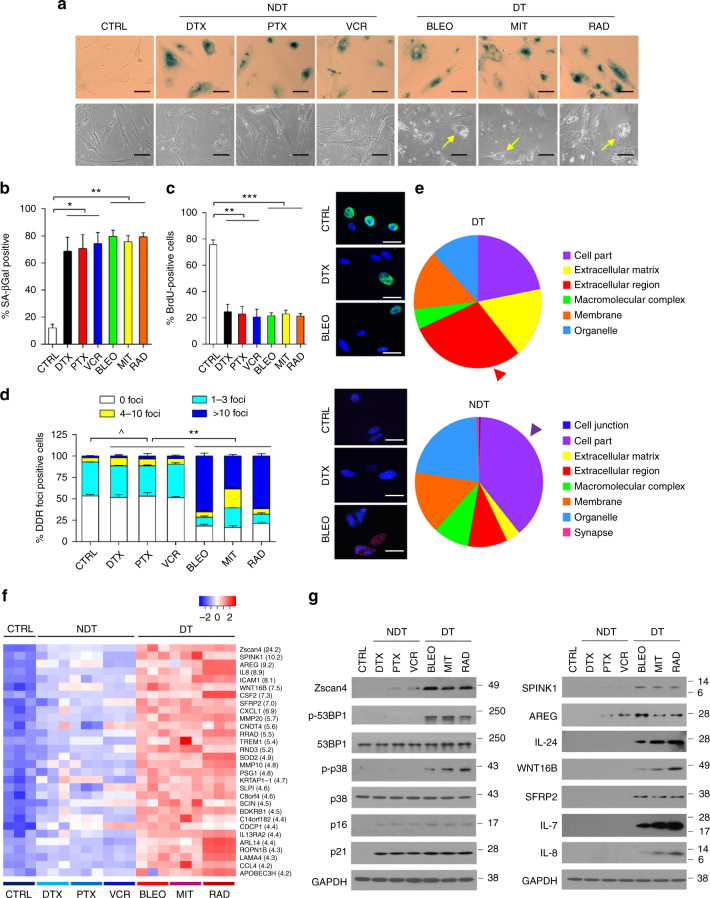
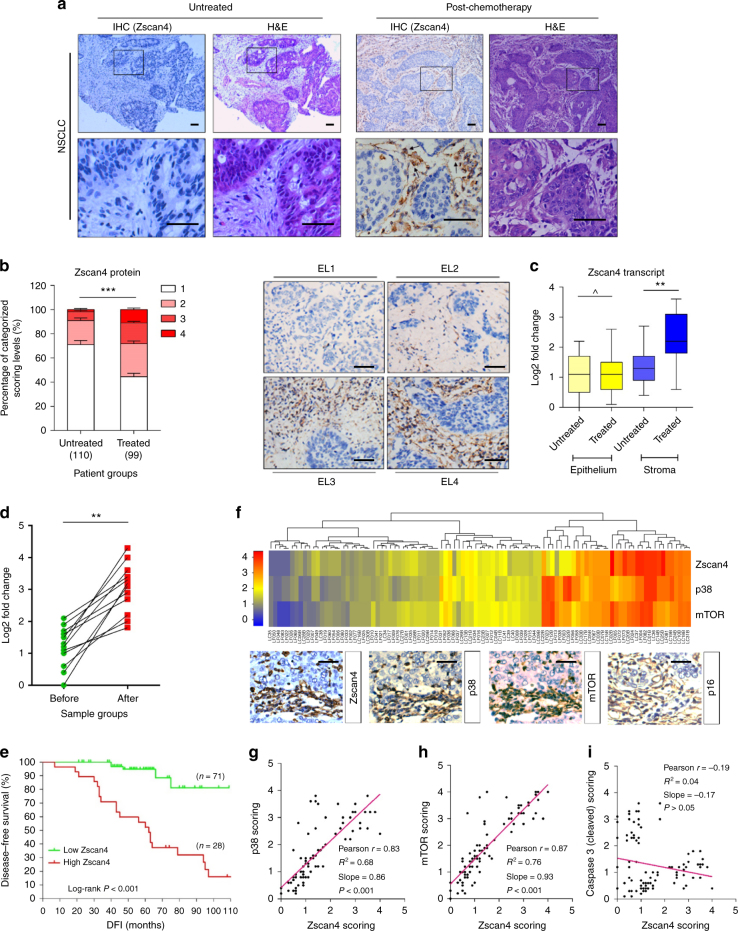
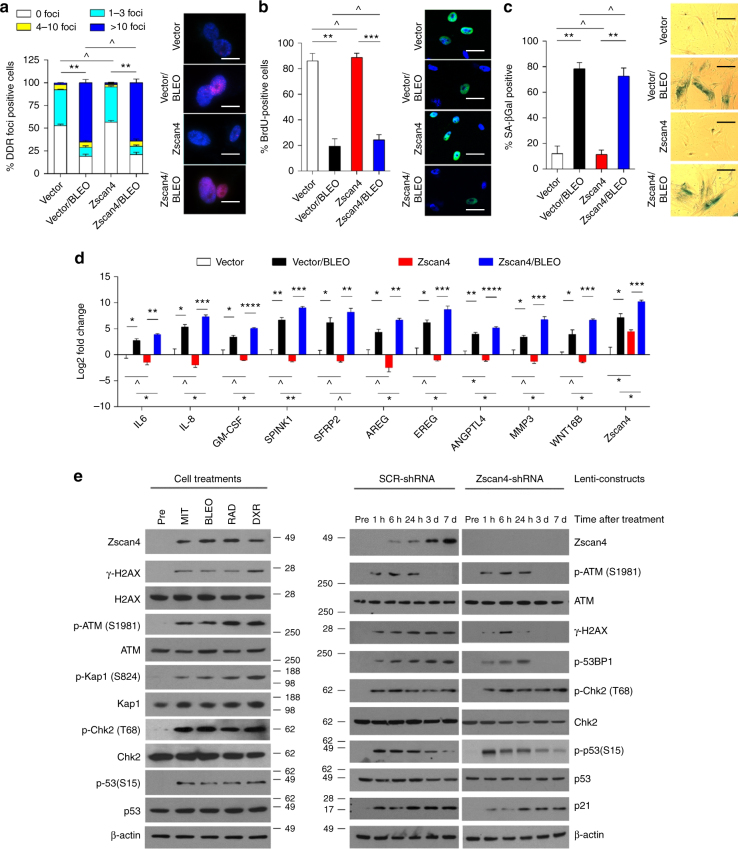
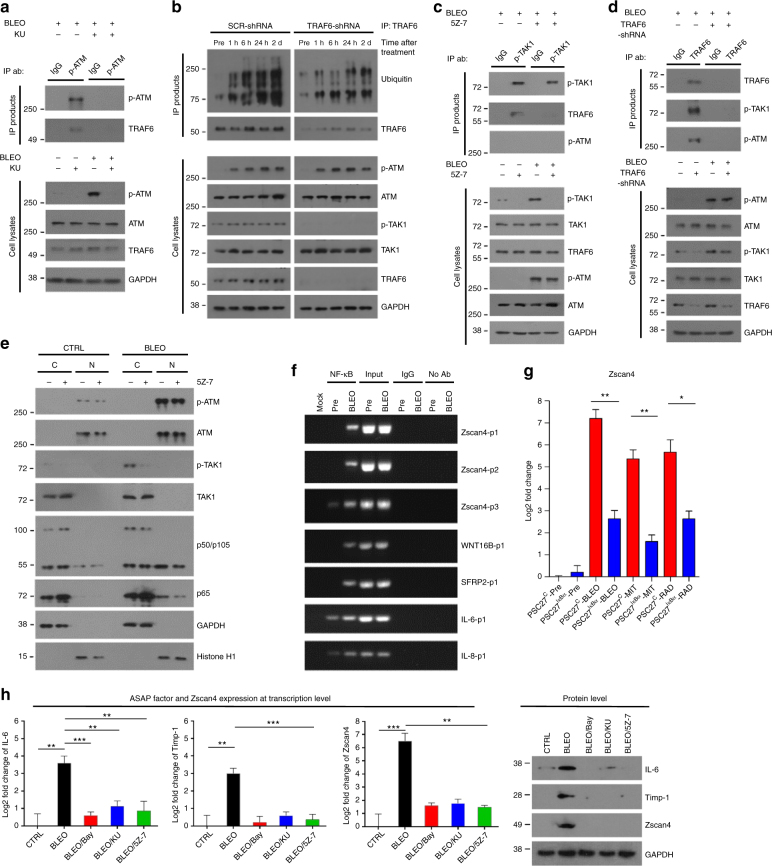
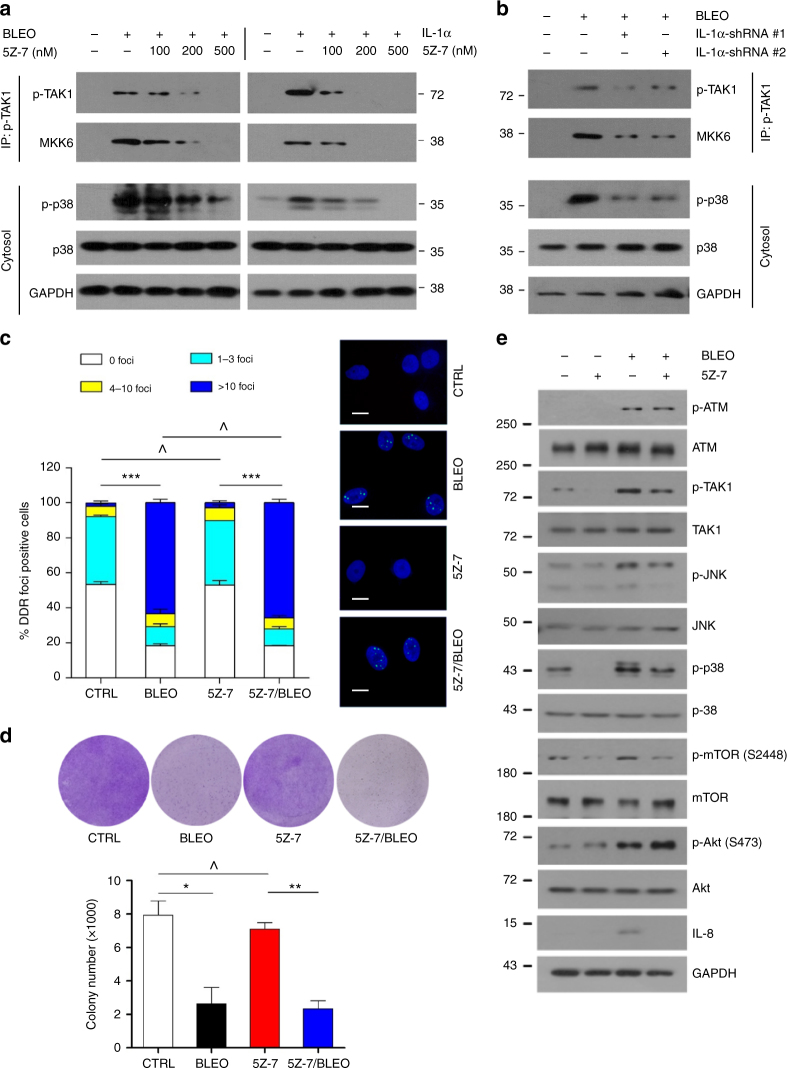
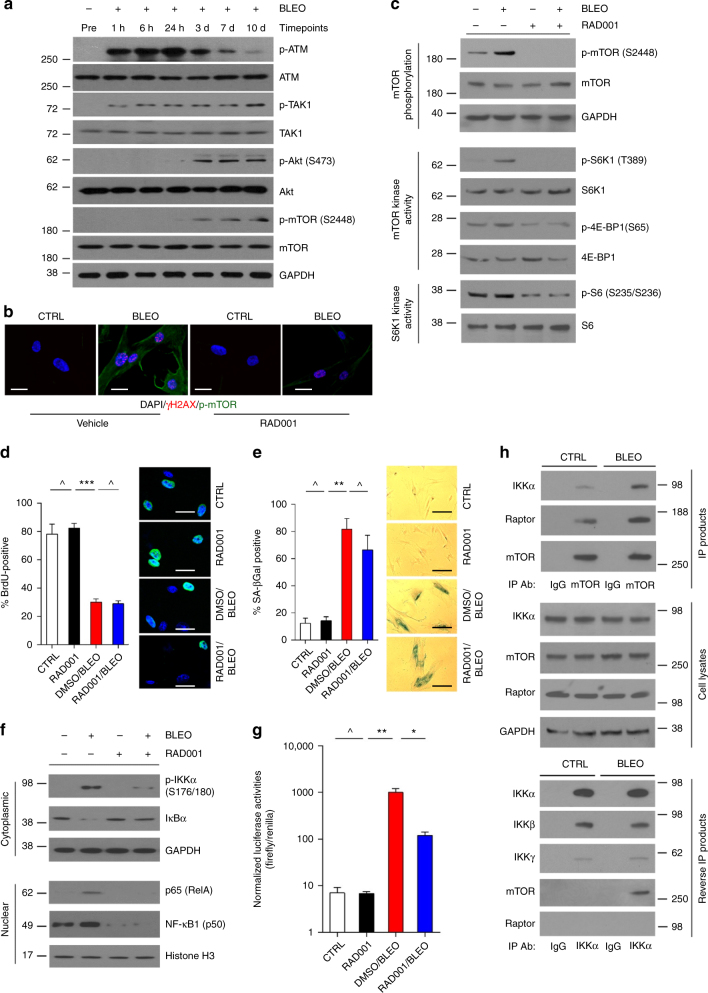
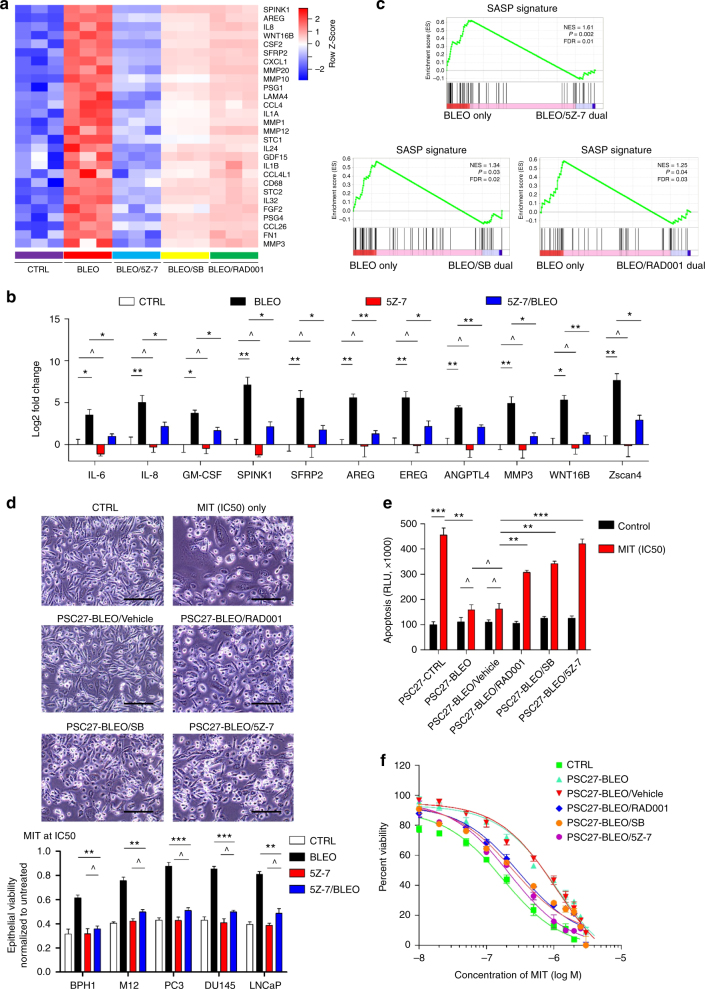
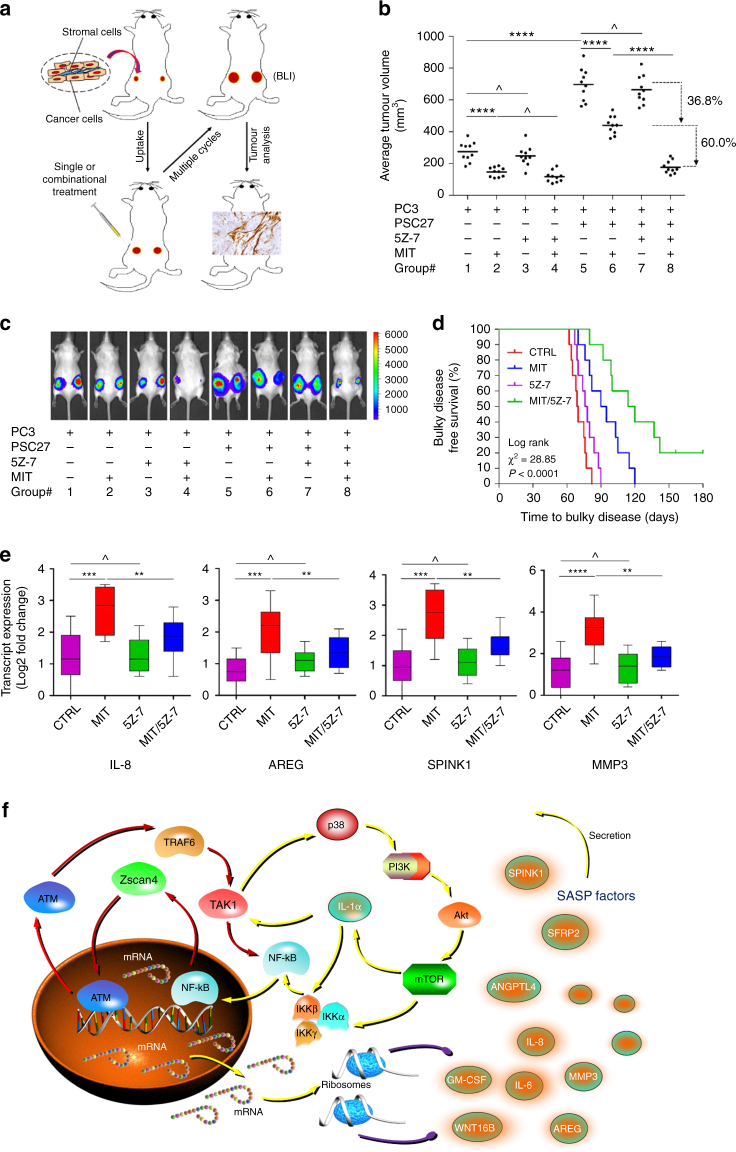
The senescence-associated secretory phenotype (SASP) can be provoked by side effects of therapeutic agents, fueling advanced complications including cancer resistance. However, the intracellular signal network supporting initiation and development of the SASP driven by treatment-induced damage remains unclear. Here we report that the transcription factor Zscan4 is elevated for expression by an ATM-TRAF6-TAK1 axis during the acute DNA damage response and enables a long term SASP in human stromal cells. Further, TAK1 activates p38 and PI3K/Akt/mTOR to support the persistent SASP signaling. As TAK1 is implicated in dual feedforward mechanisms to orchestrate the SASP development, pharmacologically targeting TAK1 deprives cancer cells of resistance acquired from treatment-damaged stromal cells in vitro and substantially promotes tumour regression in vivo. Together, our study reveals a novel network that links functionally critical molecules associated with the SASP development in therapeutic settings, thus opening new avenues to improve clinical outcomes and advance precision medicine.
Overview
The claims and statistics of this paper haven’t been checked yet.
Free: it reads the open-access text and checks the first 5 claims that cite a source we can check. Create a free account to check every claim.
Integrity signals
Registry
Cites
Statistics
Figures
Verification
Claims the paper makes
The claims and statistics of this paper haven’t been checked yet.
Free: it reads the open-access text and checks the first 5 claims that cite a source we can check. Create a free account to check every claim.
Claims other papers make about this one
Each is checked against this paper’s own text: does it say what the citing paper says it does?
The cited source says what the claim attributes to it.
In the citing paper
“Interestingly following DNA damage, TAK1, a crucial kinase involved in ASAP, eventually activates PI3K/Akt/mTOR and p38MAPK pathways to sustain persistent SASP signaling (Zhang et al., 2018).”
From Mechanisms of Cellular Senescence: Cell Cycle Arrest and Senescence Associated Secretory Phenotype (2021) · cites this paper as Zhang et al., 2018
In the citing paper
“DNA damaged human stromal cells, transition from transient ASAP to chronic SASP during acute DDR; this is mediated by expression of Zscan4 enhanced by the ATM-TRAF6-TAK1 axis (Zhang et al., 2018).”
From Mechanisms of Cellular Senescence: Cell Cycle Arrest and Senescence Associated Secretory Phenotype (2021) · cites this paper as Zhang et al., 2018
In the citing paper
“The ATM-TRAF6-TAK1 axis is a driver of the SASP,78 and an Serine-protein kinase ATM inhibitor was found to have an anti-senescence effect.79”
From Senescence-induced inflammation: an important player and key therapeutic target in atherosclerosis (2020) · cites this paper as [78]
Self-check
Percentages, sums and reported differences re-computed from the paper’s own numbers.
The self-check needs the paper’s full text.
Citations
Cites
1 retracted
Sun, Y., Zhu, D., Chen, F., Qian, M., Wei, H., Chen, W., & Xu, J. (2016) · Oncogene · doi:10.1038/onc.2015.494 · Cited by 116
Self-citationRetractedA biomarker that identifies senescent human cells in culture and in aging skin in vivo.
Dimri, G. P., Lee, X., Basile, G., Acosta, M., Scott, G., Roskelley, C., Medrano, E. E., Linskens, M., Rubelj, I., & Pereira-Smith, O. (1995) · Proceedings of the National Academy of Sciences · doi:10.1073/pnas.92.20.9363 · Cited by 7,477
Cancer drug resistance: an evolving paradigm
Holohan, C., Van Schaeybroeck, S., Longley, D. B., & Johnston, P. G. (2013) · Nature Reviews Cancer · doi:10.1038/nrc3599 · Cited by 4,681
Influence of tumour micro-environment heterogeneity on therapeutic response
Junttila, M. R., & de Sauvage, F. J. (2013) · Nature · doi:10.1038/nature12626 · Cited by 2,694
Cellular senescence in aging and age-related disease: from mechanisms to therapy
Childs, B. G., Durik, M., Baker, D. J., & van Deursen, J. M. (2015) · Nature Medicine · doi:10.1038/nm.4000 · Cited by 2,363
A complex secretory program orchestrated by the inflammasome controls paracrine senescence
Acosta, J. C., Banito, A., Wuestefeld, T., Georgilis, A., Janich, P., Morton, J. P., Athineos, D., Kang, T.-W., Lasitschka, F., Andrulis, M., et al. (2013) · Nature Cell Biology · doi:10.1038/ncb2784 · Cited by 2,278
Persistent DNA damage signalling triggers senescence-associated inflammatory cytokine secretion
Rodier, F., Coppé, J.-P., Patil, C. K., Hoeijmakers, W. A. M., Muñoz, D. P., Raza, S. R., Freund, A., Campeau, E., Davalos, A. R., & Campisi, J. (2009) · Nature Cell Biology · doi:10.1038/ncb1909 · Cited by 2,232
Oncogene-Induced Senescence Relayed by an Interleukin-Dependent Inflammatory Network
Kuilman, T., Michaloglou, C., Vredeveld, L. C. W., Douma, S., van Doorn, R., Desmet, C. J., Aarden, L. A., Mooi, W. J., & Peeper, D. S. (2008) · Cell · doi:10.1016/j.cell.2008.03.039 · Cited by 2,086
An Essential Role for Senescent Cells in Optimal Wound Healing through Secretion of PDGF-AA
Demaria, M., Ohtani, N., Youssef, S. A., Rodier, F., Toussaint, W., Mitchell, J. R., Laberge, R.-M., Vijg, J., Van Steeg, H., Dollé, M. E. T., et al. (2014) · Developmental Cell · doi:10.1016/j.devcel.2014.11.012 · Cited by 2,045
Chemokine signaling via the CXCR2 receptor reinforces senescence
Acosta, J. C., O'Loghlen, A., Banito, A., Guijarro, M. V., Augert, A., Raguz, S., Fumagalli, M., Da Costa, M., Brown, C., Popov, N., et al. (2008) · Cell · doi:10.1016/j.cell.2008.03.038 · Cited by 1,801
Cellular senescence promotes adverse effects of chemotherapy and cancer relapse
Demaria, M., O'Leary, M. N., Chang, J., Shao, L., Liu, S., Alimirah, F., Koenig, K., Le, C., Mitin, N., Deal, A. M., et al. (2017) · Cancer Discovery · doi:10.1158/2159-8290.cd-16-0241 · Cited by 1,338
Mitochondrial Dysfunction Induces Senescence with a Distinct Secretory Phenotype
Wiley, C. D., Velarde, M. C., Lecot, P., Liu, S., Sarnoski, E. A., Freund, A., Shirakawa, K., Lim, H. W., Davis, S. S., Ramanathan, A., et al. (2016) · Cell Metabolism · doi:10.1016/j.cmet.2015.11.011 · Cited by 1,275 · cited 1×
“0 designed for global profiling of human LncRNAs (32,586) and protein-coding transcripts (26,109) covering all entries of Refseq, UCSC known genes and Gencode was employed.”
MethodInnateDB: systems biology of innate immunity and beyond—recent updates and continuing curation
Breuer, K., Foroushani, A. K., Laird, M. R., Chen, C., Sribnaia, A., Lo, R., Winsor, G. L., Hancock, R. E. W., Brinkman, F. S. L., & Lynn, D. J. (2013) · Nucleic Acids Research · doi:10.1093/nar/gks1147 · Cited by 1,259
Laberge, R.-M., Sun, Y., Orjalo, A. V., Patil, C. K., Freund, A., Zhou, L., Curran, S. C., Davalos, A. R., Wilson-Edell, K. A., Liu, S., et al. (2015) · Nature Cell Biology · doi:10.1038/ncb3195 · Cited by 1,160
Self-citationChien, Y., Scuoppo, C., Wang, X., Fang, X., Balgley, B., Bolden, J. E., Premsrirut, P., Luo, W., Chicas, A., Lee, C. S., et al. (2011) · Genes & Development · doi:10.1101/gad.17276711 · Cited by 1,046
Freund, A., Patil, C. K., & Campisi, J. (2011) · The EMBO Journal · doi:10.1038/emboj.2011.69 · Cited by 1,039
The DNA damage response induces inflammation and senescence by inhibiting autophagy of GATA4.
Kang, C., Xu, Q., Martin, T. D., Li, M. Z., Demaria, M., Aron, L., Lu, T., Yankner, B. A., Campisi, J., & Elledge, S. J. (2015) · Science · doi:10.1126/science.aaa5612 · Cited by 982
Self-citationNetworkAnalyst for statistical, visual and network-based meta-analysis of gene expression data
Xia, J., Gill, E. E., & Hancock, R. E. W. (2015) · Nature Protocols · doi:10.1038/nprot.2015.052 · Cited by 948
Xu, M., Tchkonia, T., Ding, H., Ogrodnik, M., Lubbers, E. R., Pirtskhalava, T., White, T. A., Johnson, K. O., Stout, M. B., Mezera, V., et al. (2015) · Proceedings of the National Academy of Sciences · doi:10.1073/pnas.1515386112 · Cited by 915
Overcoming EGFR(T790M) and EGFR(C797S) resistance with mutant-selective allosteric inhibitors
Jia, Y., Yun, C.-H., Park, E., Ercan, D., Manuia, M., Juarez, J., Xu, C., Rhee, K., Chen, T., Zhang, H., et al. (2016) · Nature · doi:10.1038/nature17960 · Cited by 886
Telomeric DNA damage is irreparable and causes persistent DNA-damage-response activation
Fumagalli, M., Rossiello, F., Clerici, M., Barozzi, S., Cittaro, D., Kaplunov, J. M., Bucci, G., Dobreva, M., Matti, V., Beausejour, C. M., et al. (2012) · Nature Cell Biology · doi:10.1038/ncb2466 · Cited by 851
Fedchenko, N., & Reifenrath, J. (2014) · Diagnostic Pathology · doi:10.1186/s13000-014-0221-9 · Cited by 808
Sun, Y., Campisi, J., Higano, C., Beer, T. M., Porter, P., Coleman, I., True, L., & Nelson, P. S. (2012) · Nature Medicine · doi:10.1038/nm.2890 · Cited by 793
Self-citationmTOR regulates MAPKAPK2 translation to control the senescence-associated secretory phenotype
Herranz, N., Gallage, S., Mellone, M., Wuestefeld, T., Klotz, S., Hanley, C. J., Raguz, S., Acosta, J. C., Innes, A. J., Banito, A., et al. (2015) · Nature Cell Biology · doi:10.1038/ncb3225 · Cited by 788
Microenvironmental regulation of therapeutic response in cancer
Klemm, F., & Joyce, J. A. (2015) · Trends in Cell Biology · doi:10.1016/j.tcb.2014.11.006 · Cited by 771
Orjalo, A. V., Bhaumik, D., Gengler, B. K., Scott, G. K., & Campisi, J. (2009) · Proceedings of the National Academy of Sciences · doi:10.1073/pnas.0905299106 · Cited by 654
Rodier, F., Muñoz, D. P., Teachenor, R., Chu, V., Le, O., Bhaumik, D., Coppé, J.-P., Campeau, E., Beauséjour, C. M., Kim, S.-H., et al. (2011) · Journal of Cell Science · doi:10.1242/jcs.071340 · Cited by 535
Stromal senescence establishes an immunosuppressive microenvironment that drives tumorigenesis
Ruhland, M. K., Loza, A. J., Capietto, A.-H., Luo, X., Knolhoff, B. L., Flanagan, K. C., Belt, B. A., Alspach, E., Leahy, K., Luo, J., et al. (2016) · Nature Communications · doi:10.1038/ncomms11762 · Cited by 496
Zscan4 regulates telomere elongation and genomic stability in ES cells
Zalzman, M., Falco, G., Sharova, L. V., Nishiyama, A., Thomas, M., Lee, S.-L., Stagg, C. A., Hoang, H. G., Yang, H.-T., Indig, F. E., et al. (2010) · Nature · doi:10.1038/nature08882 · Cited by 441
DNA Damage-Mediated Induction of a Chemoresistant Niche
Gilbert, L. A., & Hemann, M. T. (2010) · Cell · doi:10.1016/j.cell.2010.09.043 · Cited by 428
Toso, A., Revandkar, A., Di Mitri, D., Guccini, I., Proietti, M., Sarti, M., Pinton, S., Zhang, J., Kalathur, M., Civenni, G., et al. (2014) · Cell Reports · doi:10.1016/j.celrep.2014.08.044 · Cited by 418
Ninomiya-Tsuji, J., Kajino, T., Ono, K., Ohtomo, T., Matsumoto, M., Shiina, M., Mihara, M., Tsuchiya, M., & Matsumoto, K. (2003) · Journal of Biological Chemistry · doi:10.1074/jbc.m207453200 · Cited by 409
Combine and conquer: challenges for targeted therapy combinations in early phase trials
Lopez, J. S., & Banerji, U. (2017) · Nature Reviews Clinical Oncology · doi:10.1038/nrclinonc.2016.96 · Cited by 394
Hayward, S. W., Dahiya, R., Cunha, G. R., Bartek, J., Deshpande, N., & Narayan, P. (1995) · In Vitro Cellular & Developmental Biology - Animal · doi:10.1007/bf02631333 · Cited by 340
Effective and selective targeting of leukemia cells using a TORC1/2 kinase inhibitor
Janes, M. R., Limon, J. J., So, L., Chen, J., Lim, R. J., Chavez, M. A., Vu, C., Lilly, M. B., Mallya, S., Ong, S. T., et al. (2010) · Nature Medicine · doi:10.1038/nm.2091 · Cited by 337
Coppé, J.-P., Patil, C. K., Rodier, F., Sun, Y., Muñoz, D. P., Goldstein, J., Nelson, P. S., Desprez, P.-Y., & Campisi, J. (2008) · PLoS Biology · doi:10.1371/journal.pbio.0060301 · Cited by 302
Krzywinski, M., & Altman, N. (2013) · Nature Methods · doi:10.1038/nmeth.2659 · Cited by 293
Hinz, M., Stilmann, M., Arslan, S. Ç., Khanna, K. K., Dittmar, G., & Scheidereit, C. (2010) · Molecular Cell · doi:10.1016/j.molcel.2010.09.008 · Cited by 280
Krzywinski, M., & Altman, N. (2013) · Nature Methods · doi:10.1038/nmeth.2738 · Cited by 230
Chen, H., Ruiz, P. D., McKimpson, W. M., Novikov, L., Kitsis, R. N., & Gamble, M. J. (2015) · Molecular Cell · doi:10.1016/j.molcel.2015.07.011 · Cited by 205
Bent, E. H., Gilbert, L. A., & Hemann, M. T. (2016) · Genes & Development · doi:10.1101/gad.284851.116 · Cited by 179
Wei, W., Shin, Y. S., Xue, M., Matsutani, T., Masui, K., Yang, H., Ikegami, S., Gu, Y., Herrmann, K., Johnson, D., et al. (2016) · Cancer Cell · doi:10.1016/j.ccell.2016.03.012 · Cited by 168
p38MAPK plays a crucial role in stromal-mediated tumorigenesis
Alspach, E., Flanagan, K. C., Luo, X., Ruhland, M. K., Huang, H., Pazolli, E., Donlin, M. J., Marsh, T., Piwnica-Worms, D., Monahan, J., et al. (2014) · Cancer Discovery · doi:10.1158/2159-8290.cd-13-0743 · Cited by 167
Transcriptional outcome of telomere signalling
Ye, J., Renault, V. M., Jamet, K., & Gilson, É. (2014) · Nature Reviews Genetics · doi:10.1038/nrg3743 · Cited by 157
Modulation of Pancreatic Cancer Chemoresistance by Inhibition of TAK1
Melisi, D., Xia, Q., Paradiso, G., Ling, J., Moccia, T., Carbone, C., Budillon, A., Abbruzzese, J. L., & Chiao, P. J. (2011) · JNCI: Journal of the National Cancer Institute · doi:10.1093/jnci/djr243 · Cited by 154
Self-citationMetastatic sublines of an SV40 large T antigen immortalized human prostate epithelial cell line
Bae, V. L., Jackson-Cook, C. K., Maygarden, S. J., Plymate, S. R., Chen, J., & Ware, J. L. (1998) · The Prostate · doi:10.1002/(sici)1097-0045(19980301)34:4<275::aid-pros5>3.0.co;2-g · Cited by 117
Identification of intermediate cell types by keratin expression in the developing human prostate
Xue, Y., Smedts, F. M. M., Debruyne, F. M. J., de la Rosette, J. J. M. C. H., & Schalken, J. A. (1998) · The Prostate · doi:10.1002/(sici)1097-0045(19980301)34:4<292::aid-pros7>3.0.co;2-j · Cited by 115
Arnold, C. P., Merryman, M. S., Harris-Arnold, A., McKinney, S. A., Seidel, C. W., Loethen, S., Proctor, K. N., Guo, L., & Sánchez Alvarado, A. (2016) · eLife · doi:10.7554/elife.16793 · Cited by 105
Molecular Pathways: Involving Microenvironment Damage Responses in Cancer Therapy Resistance
Sun, Y., & Nelson, P. S. (2012) · Clinical Cancer Research · doi:10.1158/1078-0432.ccr-11-0768 · Cited by 73
Self-citationAlberts, D. S., Surwit, E. A., Peng, Y. M., McCloskey, T. M., Rivest, R. S., Graham, V. M., McDonald, L., & Roe, D. J. (1988) · PubMed · Cited by 62
Chemotherapeutic Resistance: Surviving Stressful Situations
Gilbert, L. A., & Hemann, M. T. (2011) · Cancer Research · doi:10.1158/0008-5472.can-11-0277 · Cited by 54
Micelli, G., Lozupone, A., Quaranta, M., Donadeo, A., Coviello, M., & Lorusso, V. (1992) · Biomedical Chromatography · doi:10.1002/bmc.1130060403 · Cited by 12
Erratum: Telomeric DNA damage is irreparable and causes persistent DNA-damage-response activation
Fumagalli, M., Rossiello, F., Clerici, M., Barozzi, S., Cittaro, D., Kaplunov, J. M., Bucci, G., Dobreva, M., Matti, V., Beausejour, C. M., et al. (2012) · Nature Cell Biology · doi:10.1038/ncb0512-555b · Cited by 11
Microenvironmental InterFereNce of metabolism regulates chemosensitivity
Akkari, L., & Joyce, J. A. (2016) · Cell Research · doi:10.1038/cr.2016.82 · Cited by 9
Research works printed but not linked: 1
- Kuilman T Oncogene-induced senescence relayed by an interleukin-dependent inflammatory network Cell 2008 133 1019 1031 10.1016/j.cell.2008.03.039 18555778 · DOI · Paper page
Cited by
Cellular senescence in ageing: from mechanisms to therapeutic opportunities
Di Micco, R., Krizhanovsky, V., Baker, D., & d’Adda di Fagagna, F. (2021) · Nature Reviews Molecular Cell Biology · doi:10.1038/s41580-020-00314-w · Cited by 2,277
Mechanisms of Cellular Senescence: Cell Cycle Arrest and Senescence Associated Secretory Phenotype
Kumari, R., & Jat, P. (2021) · Frontiers in Cell and Developmental Biology · doi:10.3389/fcell.2021.645593 · Cited by 1,622
The senescence-associated secretory phenotype and its physiological and pathological implications
Wang, B., Han, J., Elisseeff, J. H., & Demaria, M. (2024) · Nature Reviews Molecular Cell Biology · doi:10.1038/s41580-024-00727-x · Cited by 948
“…activation of TAK1 (also known as MAP3K7), and a TAK1–ZSCAN4 complex has a key role in promoting the SASP by activating p38 MAPK and mTOR signalling 90 . mTOR promotes the production of SASP proteins, especially pro-inflammatory factors, through two mechanisms: it promotes translation of…”
The senescence-associated secretory phenotype and its regulation
Lopes-Paciencia, S., Saint-Germain, E., Rowell, M.-C., Ruiz, A. F., Kalegari, P., & Ferbeyre, G. (2019) · Cytokine · doi:10.1016/j.cyto.2019.01.013 · Cited by 601
Cai, Y., Song, W., Li, J., Jing, Y., Liang, C., Zhang, L., Zhang, X., Zhang, W., Liu, B., An, Y., et al. (2022) · Science China Life Sciences · doi:10.1007/s11427-022-2161-3 · Cited by 408
Self-citation
Metadata
- Authors
- Zhang, B., Fu, D., Xu, Q., Cong, X., Wu, C., Zhong, X., Ma, Y., Lv, Z., Chen, F., Han, L., Qian, M., Chin, Y. E., Lam, E. W. F., Chiao, P., & Sun, Y.
- Affiliations
- Shanghai Jiao Tong University (CN)
- Tongji University (CN)
- Jilin University (CN)
- Jiangxi Provincial Cancer Hospital (CN)
- Imperial College London (GB)
- The University of Texas MD Anderson Cancer Center (US)
- Corresponding author
- Sun, Yu
- ORCID
- Venue
- Nature Communications
- Published
- 2018-04-30
- Volume
- 9
- Issue
- 1
- Pages
- 1723-1723
- ISSN
- 2041-1723 (ISSN-L)
- PMC
- PMC5928226
- OpenAlex
- W2804761556
- Cited by
- 157
- References
- 53
- Citations by year
- 2026: 17 · 2025: 17 · 2024: 24 · 2023: 21 · 2022: 20 · 2021: 28 · 2020: 16 · 2019: 9 · 2018: 5
- FWCI
- 9.94
- Type
- journal article
- Language
- en
- Open access
- gold
- doi.org
- Licence
- cc-by
- creativecommons.org/licenses/by/4.0 (tdm)
- creativecommons.org/licenses/by/4.0 (vor)
- Locations
- Nature Communications (publishedVersion, cc-by)
- Europe PMC (PubMed Central) (publishedVersion, cc-by)
- PubMed Central (publishedVersion, cc-by)
- PubMed (publishedVersion)
- RePEc: Research Papers in Economics (submittedVersion)
- DOAJ (DOAJ: Directory of Open Access Journals) (submittedVersion, cc-by-sa)
- DOAJ (DOAJ: Directory of Open Access Journals) (submittedVersion)
- Spiral (Imperial College London) (submittedVersion, cc-by)
- Funders
- U.S. Department of Defense (PC111703)
- Cancer Research UK (12011, A12011)
- National Institute for Health and Care Research
- National Natural Science Foundation of China (31671425, 81302065, 81201535, 2016YFC1302400, 81472709, 81472202)
- Chinese Academy of Sciences
- Imperial Experimental Cancer Medicine Centre
- Medical Research Council (MR/N012097/1)
- National Key Research and Development Program of China (81472202, 81302065, 2016YFC1302400)
- NIHR Imperial Biomedical Research Centre
- DOD Prostate Cancer Research Program (PC111703)
- Topics
- Life Sciences › Biochemistry, Genetics and Molecular Biology › Cell Biology › Telomeres, Telomerase, and Senescence
- Life Sciences › Biochemistry, Genetics and Molecular Biology › Aging › Genetics, Aging, and Longevity in Model Organisms
- Life Sciences › Biochemistry, Genetics and Molecular Biology › Molecular Biology › TGF-β signaling in diseases
- Keywords
- senescence-associated secretory phenotype, Zscan4, TAK1, ATM, TRAF6, feedforward control, DNA damage response, p38 MAPK, PI3K/AKT/mTOR pathway, stromal cells, tumor resistance, TAK1 inhibition, tumor regression
- MeSH terms
- Everolimus, MAP Kinase Kinase Kinase 7, Animals, Antineoplastic Agents, Breast Neoplasms, Carcinoma, Non-Small-Cell Lung, Cell Line, DNA-Binding Proteins, Epithelial Cells, Female, Humans, Lactones, Lung Neoplasms, Male, Mitoxantrone, Phenotype, Prostate, Resorcinols, Transcription Factors, Zearalenone, Signal Transduction, Gene Expression Regulation, Neoplastic, Mice, SCID, Cellular Senescence, Stromal Cells, MAP Kinase Kinase Kinases, Xenograft Model Antitumor Assays, Mammary Glands, Human, Carcinoma, Ductal, Mice
About these checks
Registry, retraction, Cites and statistics results are computed, not judged, with one exception: a printed reference that no index lists is read once by a model before it counts as a citation error. Claims are extracted by a model and kept only when their quote appears verbatim in the text; each cited source is then checked, with a model’s help, for whether it says what the claim relies on. Those verdicts can be wrong — read the claim’s quote and the cited source before relying on one.
Statistics and arithmetic are recomputed, not judged.
Confidence bands are shown only for fields calibrated on our annotated test set. None is calibrated yet, so no band is shown.
What counts as a claim ›How we measure confidence ›How we check this ›
Are you an author, or do you see a problem with this page? Request a review
Data sources
Bibliographic data: Semantic Scholar, OpenAlex, Crossref.
Contains information from the Semantic Scholar Academic Graph Datasets, made available under the ODC Attribution License (ODC-BY 1.0).
Semantic Scholar’s data is described in: Kinney, R., et al. (2023). The Semantic Scholar Open Data Platform. arXiv:2301.10140.
