

The senescence-associated secretory phenotype is potentiated by feedforward regulatory mechanisms involving Zscan4 and TAK1.
Open accessThe DOI matches its Crossref record; 54 of the 54 references it cites were found in a registry or an index.
Abstract
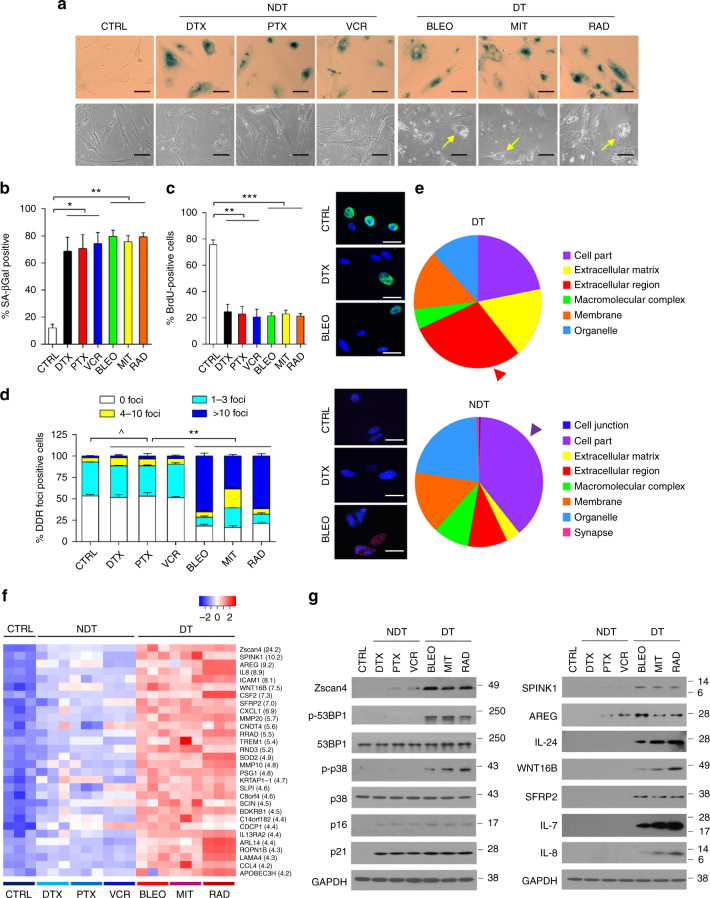
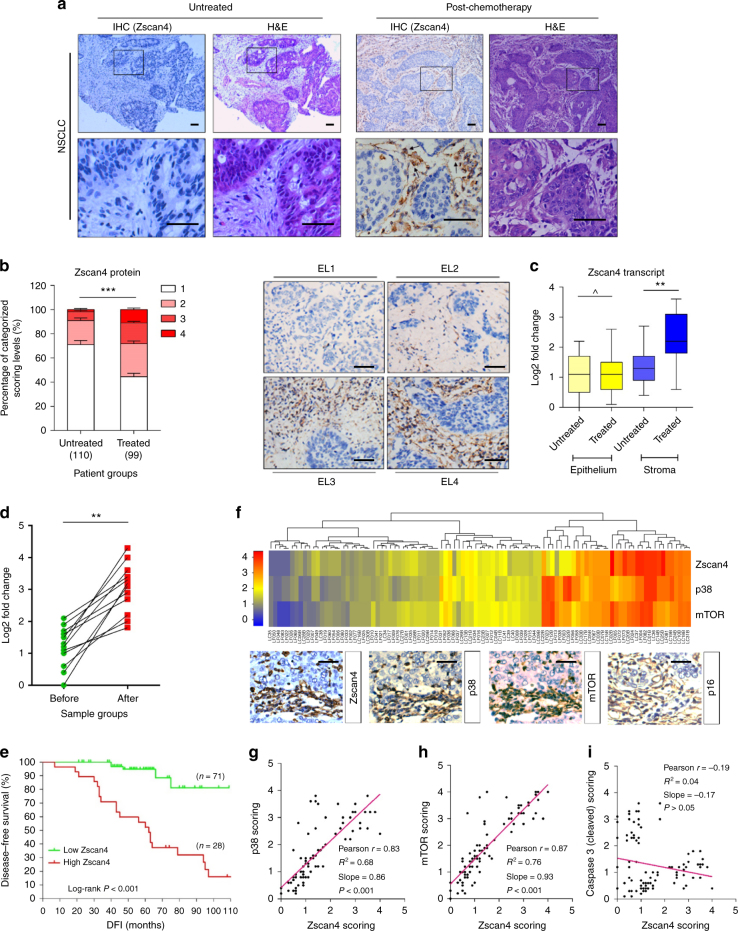
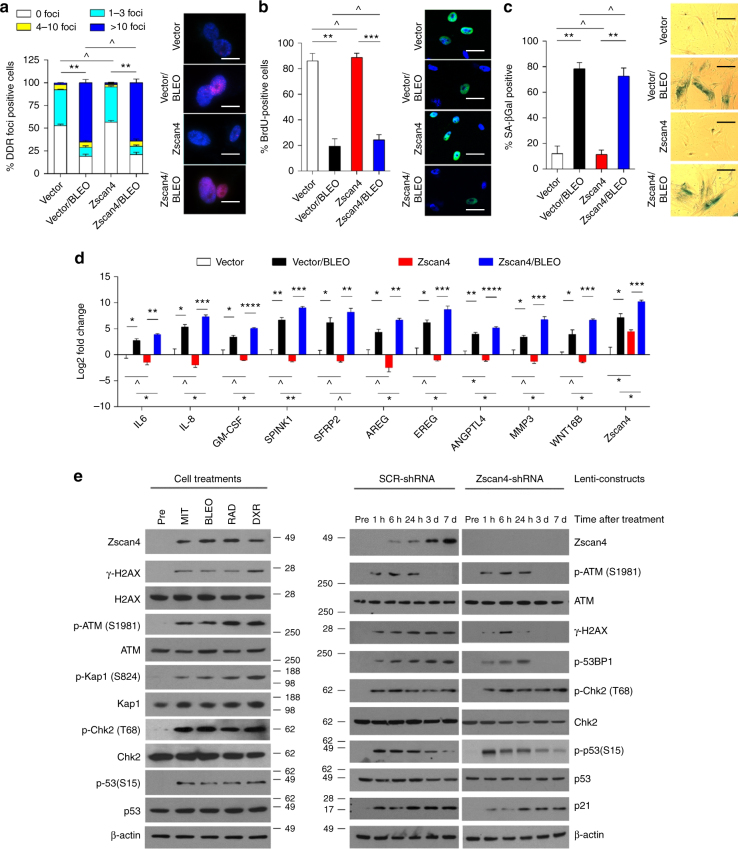
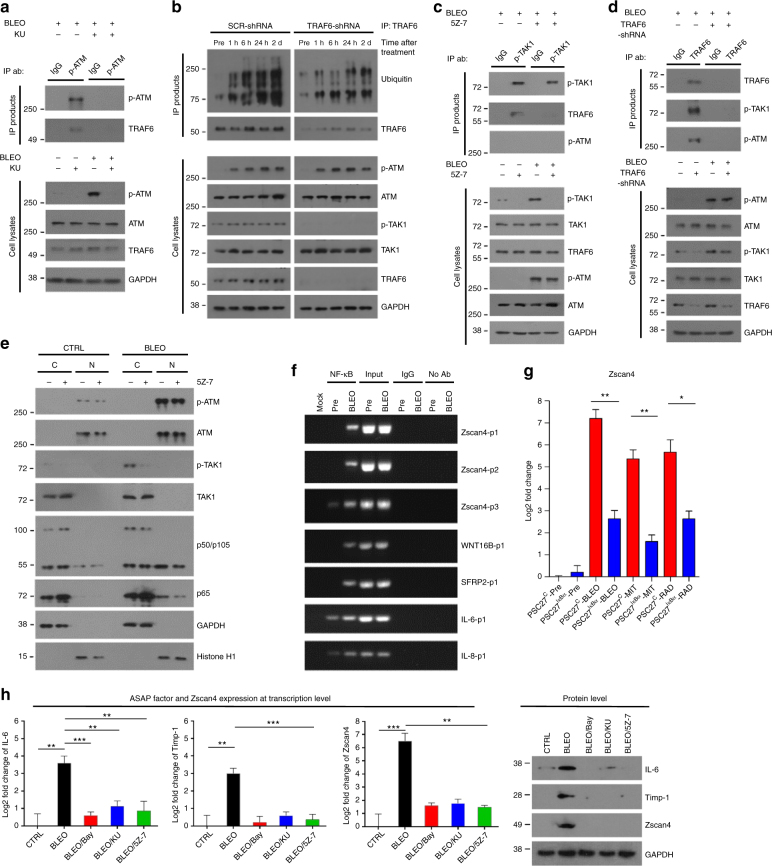
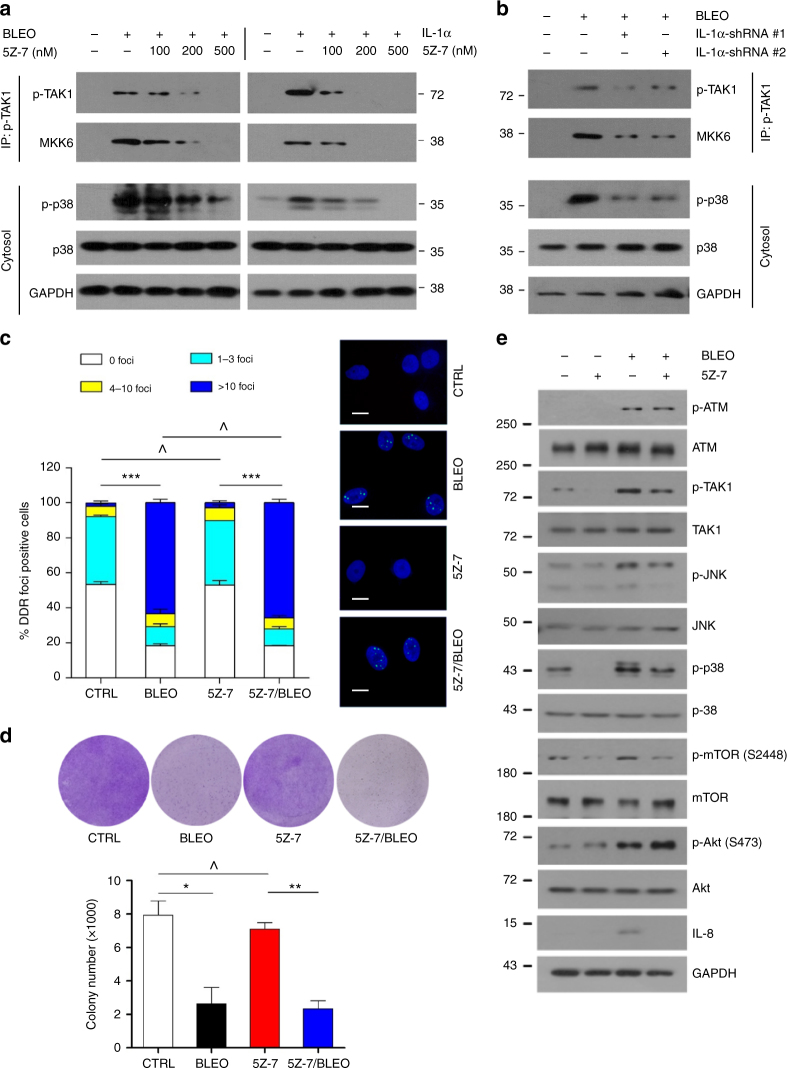
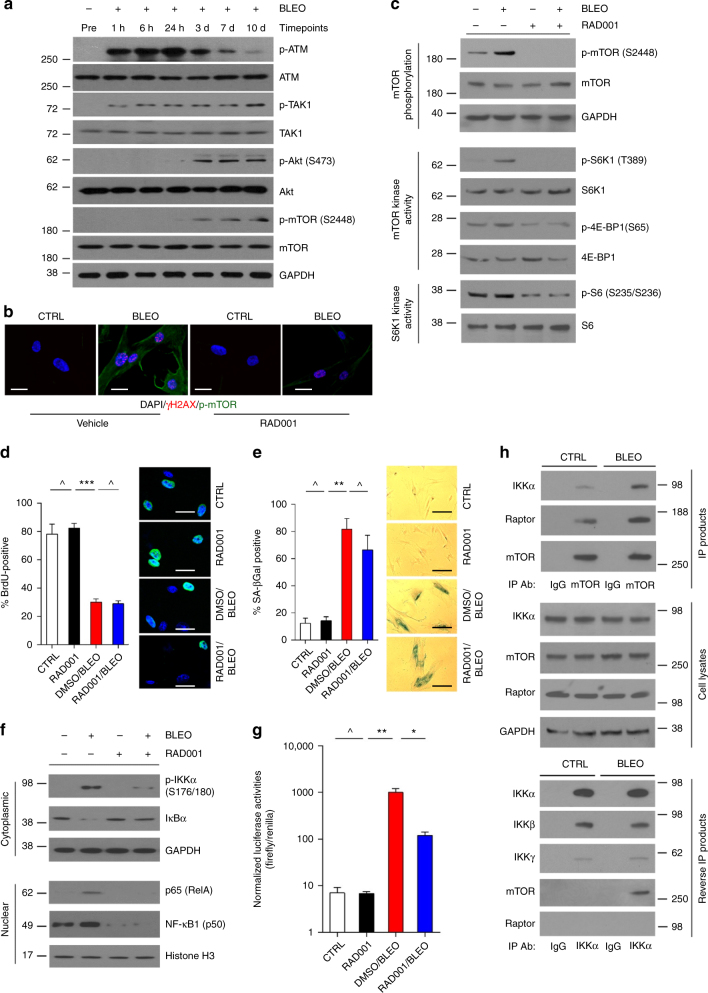
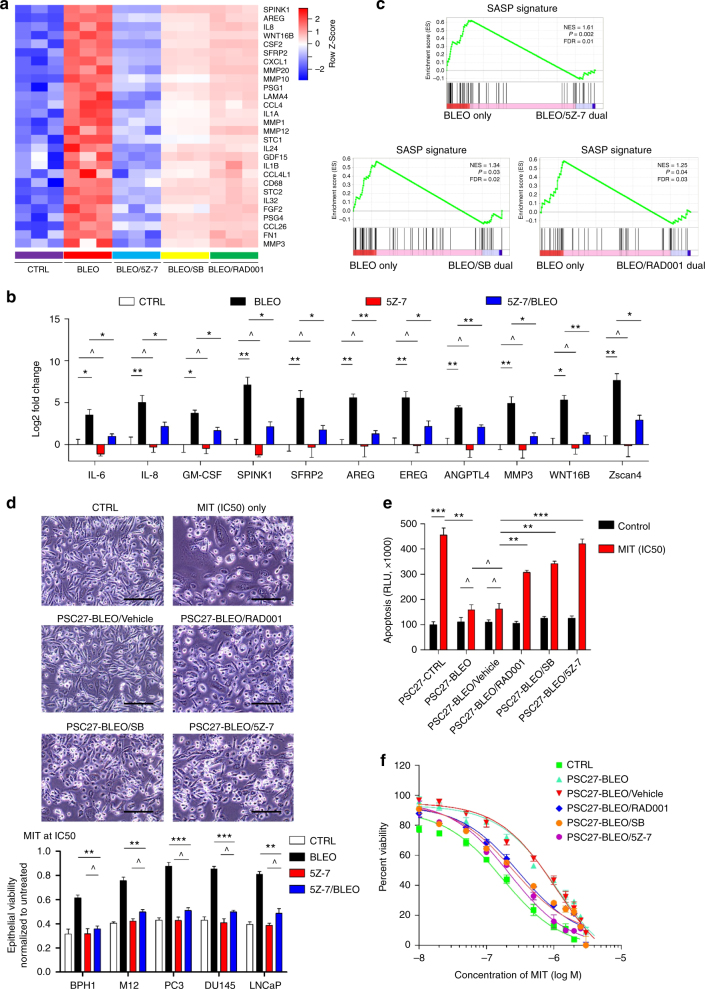
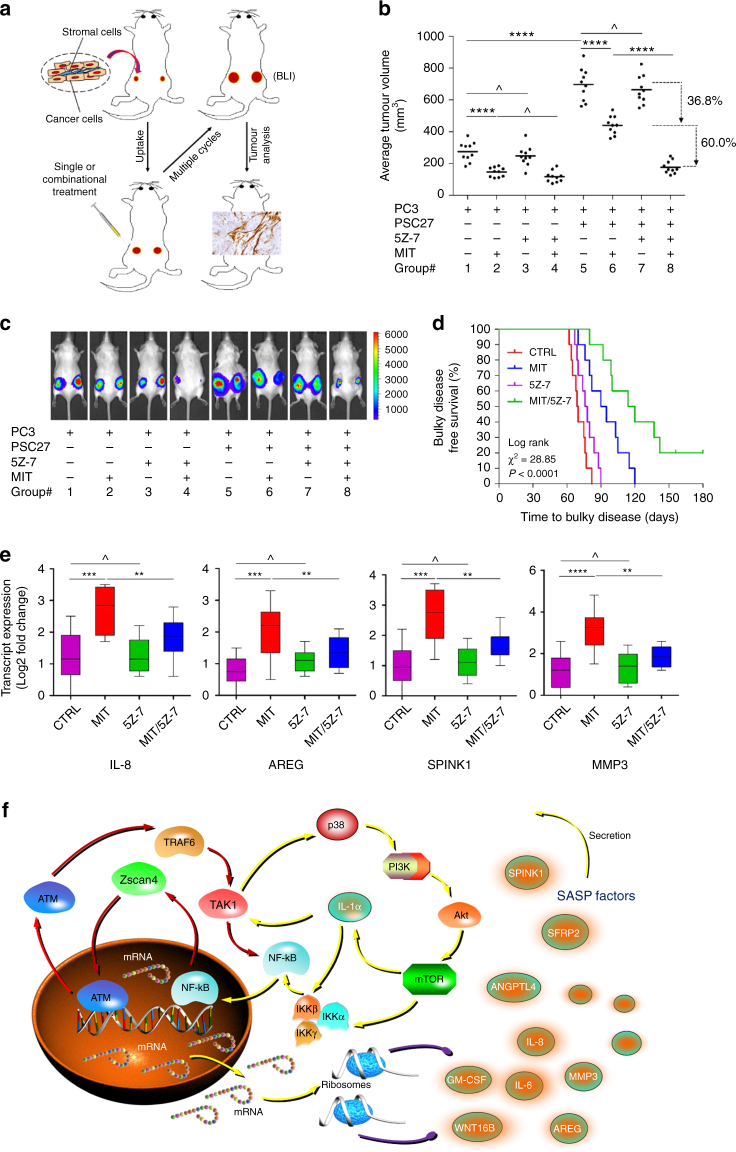
The senescence-associated secretory phenotype (SASP) can be provoked by side effects of therapeutic agents, fueling advanced complications including cancer resistance. However, the intracellular signal network supporting initiation and development of the SASP driven by treatment-induced damage remains unclear. Here we report that the transcription factor Zscan4 is elevated for expression by an ATM-TRAF6-TAK1 axis during the acute DNA damage response and enables a long term SASP in human stromal cells. Further, TAK1 activates p38 and PI3K/Akt/mTOR to support the persistent SASP signaling. As TAK1 is implicated in dual feedforward mechanisms to orchestrate the SASP development, pharmacologically targeting TAK1 deprives cancer cells of resistance acquired from treatment-damaged stromal cells in vitro and substantially promotes tumour regression in vivo. Together, our study reveals a novel network that links functionally critical molecules associated with the SASP development in therapeutic settings, thus opening new avenues to improve clinical outcomes and advance precision medicine.
Overview
The claims and statistics of this paper haven’t been checked yet.
Free: it reads the open-access text and checks the first 5 claims that cite a source we can check. Create a free account to check every claim.
Integrity signals
Registry
Cites
Statistics
Figures
Verification
Claims the paper makes
The claims and statistics of this paper haven’t been checked yet.
Free: it reads the open-access text and checks the first 5 claims that cite a source we can check. Create a free account to check every claim.
Claims other papers make about this one
Each is checked against this paper’s own text: does it say what the citing paper says it does?
The cited source says what the claim attributes to it.
In the citing paper
“Interestingly following DNA damage, TAK1, a crucial kinase involved in ASAP, eventually activates PI3K/Akt/mTOR and p38MAPK pathways to sustain persistent SASP signaling (Zhang et al., 2018).”
From Mechanisms of Cellular Senescence: Cell Cycle Arrest and Senescence Associated Secretory Phenotype (2021) · cites this paper as Zhang et al., 2018
In the citing paper
“DNA damaged human stromal cells, transition from transient ASAP to chronic SASP during acute DDR; this is mediated by expression of Zscan4 enhanced by the ATM-TRAF6-TAK1 axis (Zhang et al., 2018).”
From Mechanisms of Cellular Senescence: Cell Cycle Arrest and Senescence Associated Secretory Phenotype (2021) · cites this paper as Zhang et al., 2018
In the citing paper
“The ATM-TRAF6-TAK1 axis is a driver of the SASP,78 and an Serine-protein kinase ATM inhibitor was found to have an anti-senescence effect.79”
From Senescence-induced inflammation: an important player and key therapeutic target in atherosclerosis (2020) · cites this paper as [78]
Self-check
Percentages, sums and reported differences re-computed from the paper’s own numbers.
The self-check needs the paper’s full text.
Citations
Cites
1 retracted
Sun, Y., Zhu, D., Chen, F., Qian, M., Wei, H., Chen, W., & Xu, J. (2016) · Oncogene · doi:10.1038/onc.2015.494 · Cited by 116
Self-citationRetractedA biomarker that identifies senescent human cells in culture and in aging skin in vivo.
Dimri, G. P., Lee, X., Basile, G., Acosta, M., Scott, G., Roskelley, C., Medrano, E. E., Linskens, M., Rubelj, I., & Pereira-Smith, O. (1995) · Proceedings of the National Academy of Sciences · doi:10.1073/pnas.92.20.9363 · Cited by 7,477
Cancer drug resistance: an evolving paradigm
Holohan, C., Van Schaeybroeck, S., Longley, D. B., & Johnston, P. G. (2013) · Nature Reviews Cancer · doi:10.1038/nrc3599 · Cited by 4,681
Influence of tumour micro-environment heterogeneity on therapeutic response
Junttila, M. R., & de Sauvage, F. J. (2013) · Nature · doi:10.1038/nature12626 · Cited by 2,694
Cellular senescence in aging and age-related disease: from mechanisms to therapy
Childs, B. G., Durik, M., Baker, D. J., & van Deursen, J. M. (2015) · Nature Medicine · doi:10.1038/nm.4000 · Cited by 2,363
A complex secretory program orchestrated by the inflammasome controls paracrine senescence
Acosta, J. C., Banito, A., Wuestefeld, T., Georgilis, A., Janich, P., Morton, J. P., Athineos, D., Kang, T.-W., Lasitschka, F., Andrulis, M., et al. (2013) · Nature Cell Biology · doi:10.1038/ncb2784 · Cited by 2,278
Persistent DNA damage signalling triggers senescence-associated inflammatory cytokine secretion
Rodier, F., Coppé, J.-P., Patil, C. K., Hoeijmakers, W. A. M., Muñoz, D. P., Raza, S. R., Freund, A., Campeau, E., Davalos, A. R., & Campisi, J. (2009) · Nature Cell Biology · doi:10.1038/ncb1909 · Cited by 2,232
Oncogene-Induced Senescence Relayed by an Interleukin-Dependent Inflammatory Network
Kuilman, T., Michaloglou, C., Vredeveld, L. C. W., Douma, S., van Doorn, R., Desmet, C. J., Aarden, L. A., Mooi, W. J., & Peeper, D. S. (2008) · Cell · doi:10.1016/j.cell.2008.03.039 · Cited by 2,086
An Essential Role for Senescent Cells in Optimal Wound Healing through Secretion of PDGF-AA
Demaria, M., Ohtani, N., Youssef, S. A., Rodier, F., Toussaint, W., Mitchell, J. R., Laberge, R.-M., Vijg, J., Van Steeg, H., Dollé, M. E. T., et al. (2014) · Developmental Cell · doi:10.1016/j.devcel.2014.11.012 · Cited by 2,045
Chemokine signaling via the CXCR2 receptor reinforces senescence
Acosta, J. C., O'Loghlen, A., Banito, A., Guijarro, M. V., Augert, A., Raguz, S., Fumagalli, M., Da Costa, M., Brown, C., Popov, N., et al. (2008) · Cell · doi:10.1016/j.cell.2008.03.038 · Cited by 1,801
Research works printed but not linked: 1
- Kuilman T Oncogene-induced senescence relayed by an interleukin-dependent inflammatory network Cell 2008 133 1019 1031 10.1016/j.cell.2008.03.039 18555778 · DOI · Paper page
Cited by
Cellular senescence in ageing: from mechanisms to therapeutic opportunities
Di Micco, R., Krizhanovsky, V., Baker, D., & d’Adda di Fagagna, F. (2021) · Nature Reviews Molecular Cell Biology · doi:10.1038/s41580-020-00314-w · Cited by 2,277
Mechanisms of Cellular Senescence: Cell Cycle Arrest and Senescence Associated Secretory Phenotype
Kumari, R., & Jat, P. (2021) · Frontiers in Cell and Developmental Biology · doi:10.3389/fcell.2021.645593 · Cited by 1,622
The senescence-associated secretory phenotype and its physiological and pathological implications
Wang, B., Han, J., Elisseeff, J. H., & Demaria, M. (2024) · Nature Reviews Molecular Cell Biology · doi:10.1038/s41580-024-00727-x · Cited by 948
“…activation of TAK1 (also known as MAP3K7), and a TAK1–ZSCAN4 complex has a key role in promoting the SASP by activating p38 MAPK and mTOR signalling 90 . mTOR promotes the production of SASP proteins, especially pro-inflammatory factors, through two mechanisms: it promotes translation of…”
The senescence-associated secretory phenotype and its regulation
Lopes-Paciencia, S., Saint-Germain, E., Rowell, M.-C., Ruiz, A. F., Kalegari, P., & Ferbeyre, G. (2019) · Cytokine · doi:10.1016/j.cyto.2019.01.013 · Cited by 601
Cai, Y., Song, W., Li, J., Jing, Y., Liang, C., Zhang, L., Zhang, X., Zhang, W., Liu, B., An, Y., et al. (2022) · Science China Life Sciences · doi:10.1007/s11427-022-2161-3 · Cited by 408
Self-citationThe flavonoid procyanidin C1 has senotherapeutic activity and increases lifespan in mice
Xu, Q., Fu, Q., Li, Z., Liu, H., Wang, Y., Lin, X., He, R., Zhang, X., Ju, Z., Campisi, J., et al. (2021) · Nature Metabolism · doi:10.1038/s42255-021-00491-8 · Cited by 341
Self-citationTargeting the DNA damage response in immuno-oncology: developments and opportunities
Chabanon, R. M., Rouanne, M., Lord, C. J., Soria, J.-C., Pasero, P., & Postel-Vinay, S. (2021) · Nature Reviews Cancer · doi:10.1038/s41568-021-00386-6 · Cited by 293
Cuollo, L., Antonangeli, F., Santoni, A., & Soriani, A. (2020) · Biology · doi:10.3390/biology9120485 · Cited by 291
Skeletal Aging and Osteoporosis: Mechanisms and Therapeutics
Chandra, A., & Rajawat, J. (2021) · International Journal of Molecular Sciences · doi:10.3390/ijms22073553 · Cited by 264
Tumor methionine metabolism drives T-cell exhaustion in hepatocellular carcinoma
Hung, M. H., Lee, J. S., Ma, C., Diggs, L. P., Heinrich, S., Chang, C. W., Ma, L., Forgues, M., Budhu, A., Chaisaingmongkol, J., et al. (2021) · Nature Communications · doi:10.1038/s41467-021-21804-1 · Cited by 238
Prostate carcinogenesis: inflammatory storms
de Bono, J. S., Guo, C., Gurel, B., De Marzo, A. M., Sfanos, K. S., Mani, R. S., Gil, J., Drake, C. G., & Alimonti, A. (2020) · Nature Reviews Cancer · doi:10.1038/s41568-020-0267-9 · Cited by 227
Adaptive Mechanisms of Tumor Therapy Resistance Driven by Tumor Microenvironment
Wu, P., Gao, W., Su, M., Nice, E. C., Zhang, W., Lin, J., & Xie, N. (2021) · Frontiers in Cell and Developmental Biology · doi:10.3389/fcell.2021.641469 · Cited by 209
Cellular senescence: the sought or the unwanted?
Sun, Y., Coppé, J.-P., & Lam, E. W.-F. (2018) · Trends in Molecular Medicine · doi:10.1016/j.molmed.2018.08.002 · Cited by 208
Self-citationSenescent Cells: Emerging Targets for Human Aging and Age-Related Diseases
Song, S., Lam, E. W.-F., Tchkonia, T., Kirkland, J. L., & Sun, Y. (2020) · Trends in Biochemical Sciences · doi:10.1016/j.tibs.2020.03.008 · Cited by 195
“In senescent cells, TAK1 activates p38 and PI3K/Akt/mTOR pathways to support a persistent SASP signaling via engagement in a dual-feedforward mechanism, while pharmacologically targeting TAK1 minimizes cancer resistance and promotes tumor regression in vivo [40].”
BackgroundSelf-citationSenescence-induced inflammation: an important player and key therapeutic target in atherosclerosis
Stojanović, S. D., Fiedler, J., Bauersachs, J., Thum, T., & Sedding, D. G. (2020) · European Heart Journal · doi:10.1093/eurheartj/ehz919 · Cited by 188
PDK4-dependent hypercatabolism and lactate production of senescent cells promotes cancer malignancy
Dou, X., Fu, Q., Long, Q., Liu, S., Zou, Y., Fu, D., Xu, Q., Jiang, Z., Ren, X., Zhang, G., et al. (2023) · Nature Metabolism · doi:10.1038/s42255-023-00912-w · Cited by 183
“During tumor surveillance, bulky disease was considered once the tumor burden became prominent (size ≥2,000 mm 3 ), an approach described previously 15,38 .”
InfluentialSelf-citationYasuda, T., Koiwa, M., Yonemura, A., Miyake, K., Kariya, R., Kubota, S., Yokomizo-Nakano, T., Yasuda-Yoshihara, N., Uchihara, T., Itoyama, R., et al. (2021) · Cell Reports · doi:10.1016/j.celrep.2021.108779 · Cited by 165
Han, J., Wu, J., & Silke, J. (2020) · F1000Research · doi:10.12688/f1000research.22092.1 · Cited by 174
Spatial transcriptomic landscape unveils immunoglobin-associated senescence as a hallmark of aging
Ma, S., Ji, Z., Zhang, B., Geng, L., Cai, Y., Nie, C., Li, J., Zuo, Y., Sun, Y., Xu, G., et al. (2024) · Cell · doi:10.1016/j.cell.2024.10.019 · Cited by 162
Self-citationXu, Q., Long, Q., Zhu, D., Fu, D., Zhang, B., Han, L., Qian, M., Guo, J., Xu, J., Cao, L., et al. (2019) · Aging Cell · doi:10.1111/acel.13027 · Cited by 139
“…and anticancer treatments, we showed that stromal cells are more ready to express AREG than cancer cells upon treatment by DDA agents that cause typical DNA lesions, instead of NDDA treatments that do not target DNA, a feature that is indeed shared by most of the SASP factors (Zhang et al., 2018).”
BackgroundSelf-citationSenescence and the tumor-immune landscape: Implications for cancer immunotherapy
Chibaya, L., Snyder, J. T., & Ruscetti, M. A. (2022) · Seminars in Cancer Biology · doi:10.1016/j.semcancer.2022.02.005 · Cited by 161
NAD metabolism: Role in senescence regulation and aging
Chini, C. C. S., Cordeiro, H. S., Tran, N. L. K., & Chini, E. N. (2023) · Aging Cell · doi:10.1111/acel.13920 · Cited by 168
“In addition, the production of SASP by SC is also regulated by multiple signaling pathways, including p38 MAPK, TAK1, JAK2/STAT3, p53, mTOR, GATA4, Zscan4, and others (Freund et al., 2011; Laberge et al., 2015; Sun et al., 2022; Zhang et al., 2018).”
BackgroundLiu, H., Xu, Q., Wufuer, H., Li, Z., Sun, R., Jiang, Z., Dou, X., Fu, Q., Campisi, J., & Sun, Y. (2023) · Aging Cell · doi:10.1111/acel.13921 · Cited by 147
Self-citationTargeting Senescent Cells for a Healthier Aging: Challenges and Opportunities
Song, S., Tchkonia, T., Jiang, J., Kirkland, J. L., & Sun, Y. (2020) · Advanced Science · doi:10.1002/advs.202002611 · Cited by 129
Self-citationTumor microenvironment-driven non-cell-autonomous resistance to antineoplastic treatment
Qu, Y., Dou, B., Tan, H., Feng, Y., Wang, N., & Wang, D. (2019) · Molecular Cancer · doi:10.1186/s12943-019-0992-4 · Cited by 127
Liu, X., Hoft, D. F., & Peng, G. (2020) · Journal of Clinical Investigation · doi:10.1172/jci133679 · Cited by 128
Large-scale chromatin reorganization reactivates placenta-specific genes that drive cellular aging
Liu, Z., Ji, Q., Ren, J., Yan, P., Wu, Z., Wang, S., Sun, L., Wang, Z., Li, J., Sun, G., et al. (2022) · Developmental Cell · doi:10.1016/j.devcel.2022.05.004 · Cited by 109
Targeting senescent cells for a healthier longevity: the roadmap for an era of global aging
Sun, Y., Li, Q., & Kirkland, J. L. (2022) · Life Medicine · doi:10.1093/lifemedi/lnac030 · Cited by 105
Self-citationLiu, H., Zhao, H., & Sun, Y. (2021) · Seminars in Cancer Biology · doi:10.1016/j.semcancer.2021.11.004 · Cited by 109
Self-citationHan, L., Long, Q., Li, S., Xu, Q., Zhang, B., Dou, X., Qian, M., Jiramongkol, Y., Guo, J., Cao, L., et al. (2020) · Cancer Research · doi:10.1158/0008-5472.can-20-0506 · Cited by 91
Self-citationRetractedPotential Regulators of the Senescence-Associated Secretory Phenotype During Senescence and Aging
Han, X., Lei, Q., Xie, J., Liu, H., Li, J., Zhang, X., Zhang, T., & Gou, X. (2022) · The Journals of Gerontology Series A · doi:10.1093/gerona/glac097 · Cited by 112
Shiau, J., Chuang, Y.-T., Tang, J., Yang, K., Chang, F., Hou, M., Yen, C., & Chang, H. (2022) · Antioxidants · doi:10.3390/antiox11091845 · Cited by 106
The redox-senescence axis and its therapeutic targeting
Ngoi, N. Y., Liew, A. Q., Chong, S. J. F., Davids, M. S., Clement, M.-V., & Pervaiz, S. (2021) · Redox Biology · doi:10.1016/j.redox.2021.102032 · Cited by 88
New insights on the role of vascular endothelial growth factor in biliary pathophysiology
Mariotti, V., Fiorotto, R., Cadamuro, M., Fabris, L., & Strazzabosco, M. (2021) · JHEP Reports · doi:10.1016/j.jhepr.2021.100251 · Cited by 87
“They are characterised by the activation of a pro-inflammatory response, the so-called "senescence-associated secretory phenotype” (SASP) with secretion of soluble factors similar to those released by DRCs.81,82 Several factors produced by DRCs, including not only VEGF-A, but also platelet-derived growth factor (PDGF)-”
BackgroundThe PTEN Conundrum: How to Target PTEN-Deficient Prostate Cancer
Turnham, D. J., Bullock, N., Dass, M. S., Staffurth, J. N., & Pearson, H. B. (2020) · Cells · doi:10.3390/cells9112342 · Cited by 87
Evidence of sex differences in cellular senescence
Ng, M., & Hazrati, L.-N. (2022) · Neurobiology of Aging · doi:10.1016/j.neurobiolaging.2022.08.014 · Cited by 78
“Regarding the SASP, estrogen has been implicated in the activation of multiple SASP regulatory pathways, including p38MAPK, PI3K, and mTOR (Tower et al., 2020).”
InfluentialMa, Y., Lv, Z., Yu, F., Chang, Z., Cong, X., Zhong, X., Lu, G., Zhu, J., & Fu, D. (2018) · Journal of Experimental & Clinical Cancer Research · doi:10.1186/s13046-018-0927-8 · Cited by 78
Self-citationSchoetz, U., Klein, D., Hess, J., Shnayien, S., Spoerl, S., Orth, M., Mutlu, S., Hennel, R., Sieber, A., Ganswindt, U., et al. (2021) · Cell Death & Disease · doi:10.1038/s41419-021-04454-5 · Cited by 74
(2021) · doi:10.1038/s43587-021-00063-1 · Cited by 66
“Such a pattern sharply contrasts with that of TRAF6, a molecule exhibiting ubiquitin E3 ligase activity for diverse substrates including itself (auto-ubiquitination) upon cellular stress and senescence 23–25 , and makes the case of KDM4A/B an interesting topic that warrants future investigation.”
InfluentialSelf-citationRetractedSunitinib facilitates metastatic breast cancer spreading by inducing endothelial cell senescence
Wang, D., Xiao, F., Feng, Z., Li, M., Kong, L., Huang, L., Wei, Y., Li, H., Liu, F., Zhang, H., et al. (2020) · Breast Cancer Research · doi:10.1186/s13058-020-01346-y · Cited by 59
“In addition to their role in direct causing cell damage, anticancer drugs also induce cell senescence in the tumor microenvironment, including cancer cells [16] and noncancerous cells, such as fibroblasts, infiltrating immune cells, and ECs [17, 18].”
Senescence and tissue fibrosis: opportunities for therapeutic targeting
O’Reilly, S., Tsou, P., & Varga, J. (2024) · Trends in Molecular Medicine · doi:10.1016/j.molmed.2024.05.012 · Cited by 73
The Jekyll and Hyde of Cellular Senescence in Cancer
Demirci, D., Dayanc, B., Mazi, F. A., & Şentürk, Ş. (2021) · Cells · doi:10.3390/cells10020208 · Cited by 69
Targeting Colorectal Cancer Stem Cells as an Effective Treatment for Colorectal Cancer
Ma, Y., Li, W., Liu, Y., Shi, Y., Lin, Q., & Fu, D. (2020) · Technology in Cancer Research & Treatment · doi:10.1177/1533033819892261 · Cited by 64
Self-citationChou, L.-Y., Ho, C.-T., & Hung, S. (2022) · Cells · doi:10.3390/cells11203324 · Cited by 66
“NF-κB controls the transcription of key regulators of key SASP factors, such as the proinflammatory cytokines IL-1α, IL-6, and IL-8, which in turn positively regulates NF-κB activity in an autocrine feedback manner to enhance SASP signaling [36].”
BackgroundG Protein-Coupled Receptor Systems and Their Role in Cellular Senescence
Santos‐Otte, P., Leysen, H., van Gastel, J., Hendrickx, J. O., Martin, B., & Maudsley, S. R. (2019) · Computational and Structural Biotechnology Journal · doi:10.1016/j.csbj.2019.08.005 · Cited by 58
“Genomic downregulation of GIT2 has been furthermore associated with the creation of SASP-like phenotype [31], via the increase of expression of pro-senescent factors such as Cdkn2c and Ehmt2 [31,162–164].”
BackgroundInfluentialCellular senescence in the tumor microenvironment and context‐specific cancer treatment strategies
Yasuda, T., Baba, H., & Ishimoto, T. (2021) · FEBS Journal · doi:10.1111/febs.16231 · Cited by 61
Distinct mechanisms mediating therapy-induced cellular senescence in prostate cancer
Kallenbach, J., Roozbahani, G. A., Horestani, M. H., & Baniahmad, A. (2022) · Cell & Bioscience · doi:10.1186/s13578-022-00941-0 · Cited by 59
“TAK1 phosphorylates p38, occurring at a time between the acute stress-associated phenotype and the expression of SASP [141].”
BackgroundInfluentialGuillén Díaz-Maroto, N., Sanz-Pamplona, R., Berdiel-Acer, M., Cimas, F. J., García, E., Gonçalves-Ribeiro, S., Albert, N., Garcia-Vicién, G., Capella, G., Moreno, V., et al. (2019) · Clinical Cancer Research · doi:10.1158/1078-0432.ccr-18-3957 · Cited by 51
“Very recently, it was reported that the inhibition of stromal TAK1 diminishes the senescence-associated secretory phenotype (SASP) in vitro and in vivo (44).”
BackgroundBacterial genotoxins induce T cell senescence
Mathiasen, S. L., Gall-Mas, L., Pateras, I. S., Theodorou, S. D. P., Namini, M. R. J., Hansen, M., Martin, O. C. B., Vadivel, C. K., Ntostoglou, K., Butter, D., et al. (2021) · Cell Reports · doi:10.1016/j.celrep.2021.109220 · Cited by 52
Ferroptosis and immunosenescence in colorectal cancer
Wang, Y., Cao, X., Yang, C., Fan, J., Zhang, X., Wu, X., Guo, W., Sun, S., Liu, M., Zhang, L., et al. (2024) · Seminars in Cancer Biology · doi:10.1016/j.semcancer.2024.10.003 · Cited by 52
A tale of the good and bad: Cell senescence in bone homeostasis and disease
(2019) · International Review of Cell and Molecular Biology · doi:10.1016/bs.ircmb.2019.03.005 · Cited by 45
Cellular senescence in cancer: molecular mechanisms and therapeutic targets
Jin, P., Duan, X., Li, L., Zhou, P., Zou, C., & Xie, K. (2024) · MedComm · doi:10.1002/mco2.542 · Cited by 57
“320 Likewise, inhibition of nicotinamide phosphoribosyltransferase (NAMPT) can suppress the out-growth of cisplatin-treated epithelial ovarian cancer (EOC) via inhibition of senescence-associated cancer stem cells (CSCs) because NAD + /NADH metabolism is a crucial controllable factor in determining…”
Backgroundβ-galactosidase responsive AIE fluorogene for identification and removal of senescent cancer cells
Gao, Z., Gao, H., Zheng, D., Xu, T., Chen, Y., Liang, C., Wang, L., Ding, D., & Yang, Z. (2020) · Science China Chemistry · doi:10.1007/s11426-019-9659-2 · Cited by 44
Diaphragm-Type Pneumatic-Driven Soft Grippers for Precision Harvesting
Navas, E., Fernández, R., Armada, M., & de Santos, P. G. (2021) · Agronomy · doi:10.3390/agronomy11091727 · Cited by 41
Zhang, H., Xu, Q., Jiang, Z., Sun, R., Wang, Q., Liu, S., Luan, X., Campisi, J., Kirkland, J. L., Zhang, W., et al. (2025) · Advanced Science · doi:10.1002/advs.202412950 · Cited by 56
Self-citationCell-Intrinsic Mechanisms of Drug Tolerance to Systemic Therapies in Cancer
Léonce, C., Saintigny, P., & Ortiz‐Cuaran, S. (2022) · Molecular Cancer Research · doi:10.1158/1541-7786.mcr-21-0038 · Cited by 44
The impact of ageing mechanisms on musculoskeletal system diseases in the elderly
Cai, Y., Han, Z., Cheng, H., Li, H., Wang, K., Chen, J., Liu, Z., Xie, Y., Lin, Y., Zhou, S., et al. (2024) · Frontiers in Immunology · doi:10.3389/fimmu.2024.1405621 · Cited by 60
mTOR as a senescence manipulation target: A forked road
(2021) · Advances in Cancer Research · doi:10.1016/bs.acr.2021.02.002 · Cited by 35
Zhao, S., Qiao, Z., Pfeifer, R., Pape, H.-C., Mao, K., Tang, H., Meng, B., Chen, S., & Liu, H. (2024) · European Journal of Medical Research · doi:10.1186/s40001-023-01604-7 · Cited by 35
“In several studies, the modulatory role was found to be displayed at systemic and cellular levels [5–8].”
BackgroundTargeting senescent cells to reshape the tumor microenvironment and improve anticancer efficacy
Jiang, B., Zhang, W., Zhang, X., & Sun, Y. (2024) · Seminars in Cancer Biology · doi:10.1016/j.semcancer.2024.05.002 · Cited by 39
Self-citationCharacterizing microglial senescence: Tau as a key player
Karabag, D., Scheiblich, H., Griep, A., Santarelli, F., Schwartz, S., Heneka, M. T., & Ising, C. (2023) · Journal of Neurochemistry · doi:10.1111/jnc.15866 · Cited by 38
“Interestingly, increased DNA damage has been associated with the proinflammatory profile expressed by senescent cells (Ishida et al., 2019; Zhang et al., 2018).”
BackgroundMamun, A. A., Sufian, M. A., Uddin, M. S., Sumsuzzman, D. M., Jeandet, P., Islam, M. S., Zhang, H., Kong, A. T., & Sarwar, M. S. (2022) · European Journal of Pharmacology · doi:10.1016/j.ejphar.2022.174991 · Cited by 41
Wang, C., Long, Q., Fu, Q., Xu, Q., Fu, D., Li, Y., Gao, L., Guo, J., Zhang, X., Lam, E. W. ‐., et al. (2021) · Oncogene · doi:10.1038/s41388-022-02476-7 · Cited by 39
“Specifically, stromal compartments associated with glands in patient tumor samples were separately isolated using an Arcturus (Veritas Microdissection) laser capture microscope following the criteria defined formerly [1, 22].”
MethodSelf-citationWang, W., Chen, X., & Cai, G. (2021) · Experimental Gerontology · doi:10.1016/j.exger.2021.111403 · Cited by 39
Ninni, S., Dombrowicz, D., Kuznetsova, T., Vicario, R., Gao, V., Molendi‐Coste, O., Haas, J. T., Woitrain, E., Coisne, A., Neele, A. E., et al. (2023) · Journal of the American College of Cardiology · doi:10.1016/j.jacc.2023.01.036 · Cited by 34
Guo, D., Ma, D., Liu, P., Lan, J., Liu, Z., & Liu, Q. (2021) · Aging · doi:10.18632/aging.202740 · Cited by 35
“…the expression of IFN-β, a downstream mediator of the cytoplasmic DNA sensing machinery [20], and the other canonical SASP factors such as IL-6, IL-8, CXCL10, SPINK1 and AREG [20, 23] were examined by RT-qPCR, western-blotting or elisa assays (Figure 3E, 3F, 3H, 3I and Supplementary Figure 3E).”
Hallmarks of aging: A user’s guide for comparative biologists
Biga, P. R., Duan, J. E., Young, T. E., Marks, J. R., Bronikowski, A. M., Decena-Segarra, L. P., Randolph, E. C., Pavuluri, A., Li, G., Fang, Y., et al. (2024) · Ageing Research Reviews · doi:10.1016/j.arr.2024.102616 · Cited by 33
Revolutionizing Diabetic Foot Ulcer Care: The Senotherapeutic Approach
Zhang, G., Samarawickrama, P. N., Gui, L., Ma, Y., Cao, M., Zhu, H., Li, W., Yang, H., Li, K., Yang, Y., et al. (2024) · Aging and Disease · doi:10.14336/ad.2024.0065 · Cited by 32
Self-citationSenescent Stromal Cells in the Tumor Microenvironment: Victims or Accomplices?
Ye, M., Huang, X., Wu, Q., & Liu, F. (2023) · Cancers · doi:10.3390/cancers15071927 · Cited by 30
Peng, Y., Feng, W., Huang, H., Chen, Y., & Yang, S. (2025) · Bioactive Materials · doi:10.1016/j.bioactmat.2025.02.025 · Cited by 45
“All the aforementioned experiments have confirmed that CZALO can inhibit the uptake of ox LDL, thereby preventing the formation of foam cells [48,49].”
Telomere Maintenance and the cGAS-STING Pathway in Cancer
Ebata, H., Loo, T. M., & Takahashi, A. (2022) · Cells · doi:10.3390/cells11121958 · Cited by 29
“Furthermore, targeting the p38MAPK signaling protein, TAK1, using 5Z-7-oxozeaenol, decreases SASP and inhibits the pro-tumorigenic effect in patients after chemotherapy [174].”
BackgroundSenescent cells: A new Achilles’ heel to exploit for cancer medicine?
Zhang, B., Lam, E. W. ‐., & Sun, Y. (2018) · Aging Cell · doi:10.1111/acel.12875 · Cited by 24
“…demonstrated by multiple studies to be able to enhance cancer resistance, relapse and metastasis by causing diverse cytotoxicity‐related side effects including an in vivo form of the SASP (Chen et al., 2018; Kim et al., 2017; Mikula‐Pietrasik et al., 2016; Wieland et al., 2017; Zhang et al., 2018).”
BackgroundSelf-citationBreast cancer dormancy is associated with a 4NG1 state and not senescence
Prunier, C., Alay, A., van Dijk, M., Ammerlaan, K. L., van Gelderen, S., Marvin, D. L., Teunisse, A. F. A. S., Slieker, R. C., Szuhai, K., Jochemsen, A. G., et al. (2021) · npj Breast Cancer · doi:10.1038/s41523-021-00347-0 · Cited by 23
The Dynamic Process and Its Dual Effects on Tumors of Therapy-Induced Senescence
Liao, C., Xiao, Y., & Liu, L. (2020) · Cancer Management and Research · doi:10.2147/cmar.s285083 · Cited by 26
“Thus, 5Z-7 substantially sensitizes cancer cells to chemotherapy and promotes tumor regression by affecting the expression of SASP factors but not senescence.(91) Anakinra, an IL-1 receptor (IL-1R) antagonist, markedly reduced the invasiveness of metastatic cancer cells by decreasing senescence-associated IL-6/IL-8 se…”
BackgroundLi, S., Wang, J., Lu, Y., Zhao, Y., Prinz, R. A., & Xu, X. (2021) · Cell Death and Disease · doi:10.1038/s41419-021-03744-2 · Cited by 22
Venkataraman, A., Kordic, I., Li, J., Zhang, N. Y., Bharadwaj, N. S., Fang, Z., Das, S., & Coskun, A. F. (2024) · npj Aging · doi:10.1038/s41514-024-00178-w · Cited by 23
Identification of a small molecule SR9009 that activates NRF2 to counteract cellular senescence
Gao, L., Wang, Y., Liu, Z., Sun, Y., Cai, P., & Jing, Q. (2021) · Aging Cell · doi:10.1111/acel.13483 · Cited by 22
Self-citationCellular Senescence in Non-Small Cell Lung Cancer
Zhu, H., Sun, J., Zhang, C., Li, P., Tan, C., Yang, M., & Zhao, G. (2023) · Frontiers in Bioscience-Landmark · doi:10.31083/j.fbl2812357 · Cited by 21
“However, other studies have implicated senescent cells within the tumour microenvironment in the progression and metastasis of NSCLC [23,24].”
BackgroundInfluentialCellular senescence: A novel therapeutic target for central nervous system diseases
Lei, S.-Y., Qu, Y., Yang, Y.-Q., Liu, J., Zhang, Y.-F., Zhou, S., He, Q., Jin, H., Yang, Y., & Guo, Z. (2024) · Biomedicine & Pharmacotherapy · doi:10.1016/j.biopha.2024.117311 · Cited by 23
Wu, S. K., Ariffin, J., Tay, S. C., & Picone, R. (2023) · Aging Cell · doi:10.1111/acel.13766 · Cited by 20
“As expected, the increased expression of ANGPTL4 is a common feature of SASP (Zhang et al., 2018).”
BackgroundSenescence in the ageing skin: a new focus on m TORC 1 and the lysosome
Smith, P., & Carroll, B. (2024) · FEBS Journal · doi:10.1111/febs.17281 · Cited by 21
“IL-1A in turn enhances NF-jb activity via the regulator IKK b [31,43].”
Nadeem, J., Sultana, R., Parveen, A., & Kim, S. Y. (2025) · Cell Biochemistry and Function · doi:10.1002/cbf.70046 · Cited by 21
“TAK1 (transforming growth factor ‐ β ‐ activated kinase), a special kinase of DDR is responsible for the occurrence of multiple events such as P38 activation and NF ‐ Κ B transduction which are key controllers of the SASP regulation following the P38/ P13K/mTOR signaling network [74].”
Lu, H., Yi, W., Ma, Y., Wu, W., Yu, F., Fan, H., Lv, Z., Yang, H., Chang, Z., Zhang, C., et al. (2018) · Oncology Letters · doi:10.3892/ol.2018.9559 · Cited by 16
“Drug resistance has remained the primary factor influencing prognosis, therefore the treatment of advanced and metastatic NSCLC remains a notable challenge (27).”
BackgroundSelf-citationSun, Y. (2023) · Translational Medicine of Aging · doi:10.1016/j.tma.2023.06.001 · Cited by 16
Self-citationThe positive regulatory loop of TCF4N/p65 promotes glioblastoma tumourigenesis and chemosensitivity
Hu, Y., Zhang, B., Lu, P., Wang, J., Chen, C. Y., Yin, Y., Wan, Q., Wang, J., Jiao, J., Fang, X., et al. (2022) · Clinical and Translational Medicine · doi:10.1002/ctm2.1042 · Cited by 14
Self-citationA Comprehensive Review on the Role of ZSCAN4 in Embryonic Development, Stem Cells, and Cancer
Thool, M., Sundaravadivelu, P. K., Selvaraju, S., & Thummer, R. P. (2022) · Stem Cell Reviews and Reports · doi:10.1007/s12015-022-10412-1 · Cited by 18
“This upregulation is also essential for sustaining senescence-associated secretory phenotype, which does not favor the long-term survival of cancer patients [99].”
BackgroundSenile Osteoarthritis Regulated by the Gut Microbiota: From Mechanisms to Treatments
Yu, F., Zhu, C., & Wu, W. (2025) · International Journal of Molecular Sciences · doi:10.3390/ijms26041505 · Cited by 17
“In turn, inflammatory factors lead to increased ROS production in mitochondria and chondrocytes, which triggers SASPs through activation of p38 MAPK, further promoting chondrocyte senescence and chondrocyte apoptosis [76,77].”
Jiang, B., Zhang, H., Xu, Q., Jiang, Z., He, R., Fu, Q., & Sun, Y. (2025) · Aging Cell · doi:10.1111/acel.70138 · Cited by 14
“Former studies proved that a full-spectrum SASP can significantly promote the malignancy of cancer cells by acting as a key driver of tumor progression (Demaria et al. 2017; Zhang et al. 2018).”
InfluentialSelf-citationKhadirnaikar, S., Chatterjee, A., & Shukla, S. K. (2021) · American Journal Of Pathology · doi:10.1016/j.ajpath.2021.07.005 · Cited by 13
Huang, R., Wang, H., Hong, J., Wang, Z., Wu, J., Huang, O., He, J., Chen, W., Li, Y., Chen, X., et al. (2023) · Frontiers in Pharmacology · doi:10.3389/fphar.2023.1191910 · Cited by 15
The effect of B and Sb on the corrosion behavior of T6-treated Al–Si–Mg alloys
Xu, S.-L., Jia, H. L., Zha, M., Zhou, X.-L., Gao, D., Ma, P.-K., & Wang, D. (2024) · Journal of Materials Research and Technology · doi:10.1016/j.jmrt.2024.04.083 · Cited by 12
Wu, J., Liu, X., Liu, Y., Su, W., & Zhuo, Y. (2025) · Bioengineering · doi:10.3390/bioengineering12060563 · Cited by 15
Cellular and molecular mechanisms of xenobiotics-induced premature senescence
Liang, Y., Liang, N., Yin, L., & Xiao, F. (2020) · Toxicology Research · doi:10.1093/toxres/tfaa073 · Cited by 16
“It is reported that all kinds of xenobiotics [9], such as anticancer drugs, peroxides such as hydrogen peroxide (H2O2) [10], and the pollutants such as hexavalent chromium [Cr(VI)] [11], may lead to premature senescence.”
BackgroundTiwari, D. K., Hannen, R., Unger, K., Kohl, S., Heß, J., Lauber, K., Subtil, F. S. B., Dikomey, E., Engenhart‐Cabillic, R., & Schötz, U. (2022) · Frontiers in Oncology · doi:10.3389/fonc.2022.878675 · Cited by 14
“Especially the roles of the IL1 pathway are manifold with pivotal contributions to senescence, stress response, and inflammation (20, 21).”
BackgroundIL-1 and senescence: Friends and foe of EGFR neutralization and immunotherapy
Romaniello, D., Gelfo, V., Pagano, F., Sgarzi, M., Morselli, A., Girone, C., Filippini, D. M., D’Uva, G., & Lauriola, M. (2023) · Frontiers in Cell and Developmental Biology · doi:10.3389/fcell.2022.1083743 · Cited by 15
“Among the component of SASP, the secretion of proinflammatory cytokines including IL-1α, IL-6, and IL-8 are controlled by NF-kB and CEBPβ in an autocrine feedforward manner (Huggins et al., 2013; Zhang et al., 2018).”
BackgroundANGPTL4-the Link Binding Lipid Metabolism and Inflammation
Zhang, Y., Liang, J., Li, Z., Zuo, Y., & Dai, L. (2024) · Current Medicinal Chemistry · doi:10.2174/0109298673320024240829070906 · Cited by 12
Makrakis, D., Wright, J. L., Roudier, M. P., Garcia, J. M., Vakar‐Lopez, F., Porter, M. P., Wang, Y., Dash, A., Lin, D. W., Schade, G. R., et al. (2022) · Clinical Genitourinary Cancer · doi:10.1016/j.clgc.2022.12.003 · Cited by 11
The Hippo Signaling Pathway Manipulates Cellular Senescence
Miyajima, C., Nagasaka, M., Aoki, H., Toriuchi, K., Yamanaka, S., Hashiguchi, S., Morishita, D., Aoyama, M., Hayashi, H., & Inoue, Y. (2024) · Cells · doi:10.3390/cells14010013 · Cited by 11
“The mTOR inhibitor rapamycin and its analog RAD001 attenuated SASP production and prevented senescence in spontaneously aging mice [156,157].”
Wu, J., Zhang, L., Zhao, Z., Liu, Y., Li, Z., Feng, X., Zhang, L., Yao, X., Du, J., Chen, L., et al. (2025) · Ageing Research Reviews · doi:10.1016/j.arr.2025.102783 · Cited by 10
Alpha-1 Antitrypsin Deficiency and Accelerated Aging: A New Model for an Old Disease?
Crossley, D., Stockley, R. A., & Sapey, E. (2019) · Drugs & Aging · doi:10.1007/s40266-019-00684-7 · Cited by 12
Metadata
- Authors
- Zhang, B., Fu, D., Xu, Q., Cong, X., Wu, C., Zhong, X., Ma, Y., Lv, Z., Chen, F., Han, L., Qian, M., Chin, Y. E., Lam, E. W. F., Chiao, P., & Sun, Y.
- Affiliations
- Shanghai Jiao Tong University (CN)
- Tongji University (CN)
- Jilin University (CN)
- Jiangxi Provincial Cancer Hospital (CN)
- Imperial College London (GB)
- The University of Texas MD Anderson Cancer Center (US)
- Corresponding author
- Sun, Yu
- ORCID
- Venue
- Nature Communications
- Published
- 2018-04-30
- Volume
- 9
- Issue
- 1
- Pages
- 1723-1723
- ISSN
- 2041-1723 (ISSN-L)
- PMC
- PMC5928226
- OpenAlex
- W2804761556
- Cited by
- 157
- References
- 53
- Citations by year
- 2026: 17 · 2025: 17 · 2024: 24 · 2023: 21 · 2022: 20 · 2021: 28 · 2020: 16 · 2019: 9 · 2018: 5
- FWCI
- 9.94
- Type
- journal article
- Language
- en
- Open access
- gold
- doi.org
- Licence
- cc-by
- creativecommons.org/licenses/by/4.0 (tdm)
- creativecommons.org/licenses/by/4.0 (vor)
- Locations
- Nature Communications (publishedVersion, cc-by)
- Europe PMC (PubMed Central) (publishedVersion, cc-by)
- PubMed Central (publishedVersion, cc-by)
- PubMed (publishedVersion)
- RePEc: Research Papers in Economics (submittedVersion)
- DOAJ (DOAJ: Directory of Open Access Journals) (submittedVersion, cc-by-sa)
- DOAJ (DOAJ: Directory of Open Access Journals) (submittedVersion)
- Spiral (Imperial College London) (submittedVersion, cc-by)
- Funders
- U.S. Department of Defense (PC111703)
- Cancer Research UK (12011, A12011)
- National Institute for Health and Care Research
- National Natural Science Foundation of China (31671425, 81302065, 81201535, 2016YFC1302400, 81472709, 81472202)
- Chinese Academy of Sciences
- Imperial Experimental Cancer Medicine Centre
- Medical Research Council (MR/N012097/1)
- National Key Research and Development Program of China (81472202, 81302065, 2016YFC1302400)
- NIHR Imperial Biomedical Research Centre
- DOD Prostate Cancer Research Program (PC111703)
- Topics
- Life Sciences › Biochemistry, Genetics and Molecular Biology › Cell Biology › Telomeres, Telomerase, and Senescence
- Life Sciences › Biochemistry, Genetics and Molecular Biology › Aging › Genetics, Aging, and Longevity in Model Organisms
- Life Sciences › Biochemistry, Genetics and Molecular Biology › Molecular Biology › TGF-β signaling in diseases
- Keywords
- senescence-associated secretory phenotype, Zscan4, TAK1, ATM, TRAF6, feedforward control, DNA damage response, p38 MAPK, PI3K/AKT/mTOR pathway, stromal cells, tumor resistance, TAK1 inhibition, tumor regression
- MeSH terms
- Everolimus, MAP Kinase Kinase Kinase 7, Animals, Antineoplastic Agents, Breast Neoplasms, Carcinoma, Non-Small-Cell Lung, Cell Line, DNA-Binding Proteins, Epithelial Cells, Female, Humans, Lactones, Lung Neoplasms, Male, Mitoxantrone, Phenotype, Prostate, Resorcinols, Transcription Factors, Zearalenone, Signal Transduction, Gene Expression Regulation, Neoplastic, Mice, SCID, Cellular Senescence, Stromal Cells, MAP Kinase Kinase Kinases, Xenograft Model Antitumor Assays, Mammary Glands, Human, Carcinoma, Ductal, Mice
About these checks
Registry, retraction, Cites and statistics results are computed, not judged, with one exception: a printed reference that no index lists is read once by a model before it counts as a citation error. Claims are extracted by a model and kept only when their quote appears verbatim in the text; each cited source is then checked, with a model’s help, for whether it says what the claim relies on. Those verdicts can be wrong — read the claim’s quote and the cited source before relying on one.
Statistics and arithmetic are recomputed, not judged.
Confidence bands are shown only for fields calibrated on our annotated test set. None is calibrated yet, so no band is shown.
What counts as a claim ›How we measure confidence ›How we check this ›
Are you an author, or do you see a problem with this page? Request a review
Data sources
Bibliographic data: Semantic Scholar, OpenAlex, Crossref.
Contains information from the Semantic Scholar Academic Graph Datasets, made available under the ODC Attribution License (ODC-BY 1.0).
Semantic Scholar’s data is described in: Kinney, R., et al. (2023). The Semantic Scholar Open Data Platform. arXiv:2301.10140.
