

Gut microbiota associations with common diseases and prescription medications in a population-based cohort
Open accessThe DOI matches its Crossref record; 29 of the 30 references it cites were found in a registry or an index.
Abstract
The human gut microbiome has been associated with many health factors but variability between studies limits exploration of effects between them. Gut microbiota profiles are available for >2700 members of the deeply phenotyped TwinsUK cohort, providing a uniform platform for such comparisons. Here, we present gut microbiota association analyses for 38 common diseases and 51 medications within the cohort. We describe several novel associations, highlight associations common across multiple diseases, and determine which diseases and medications have the greatest association with the gut microbiota. These results provide a reference for future studies of the gut microbiome and its role in human health.
Overview
The claims and statistics of this paper haven’t been checked yet.
Free: it reads the open-access text and checks the first 5 claims that cite a source we can check. Create a free account to check every claim.
Integrity signals
Registry
Cites
Statistics
Figures
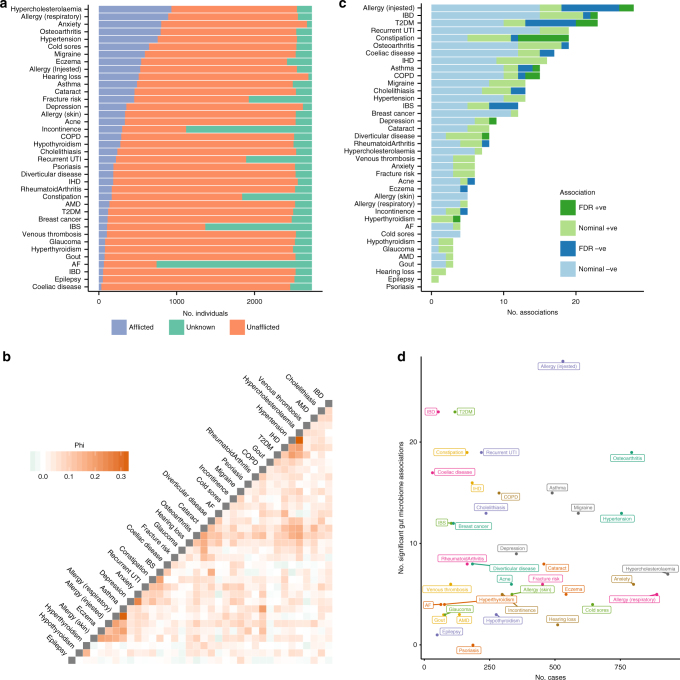
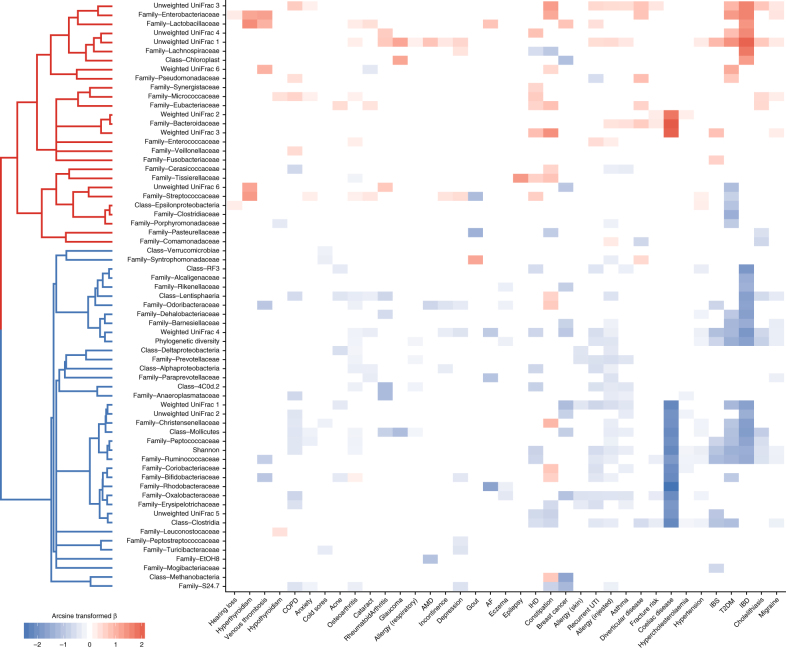
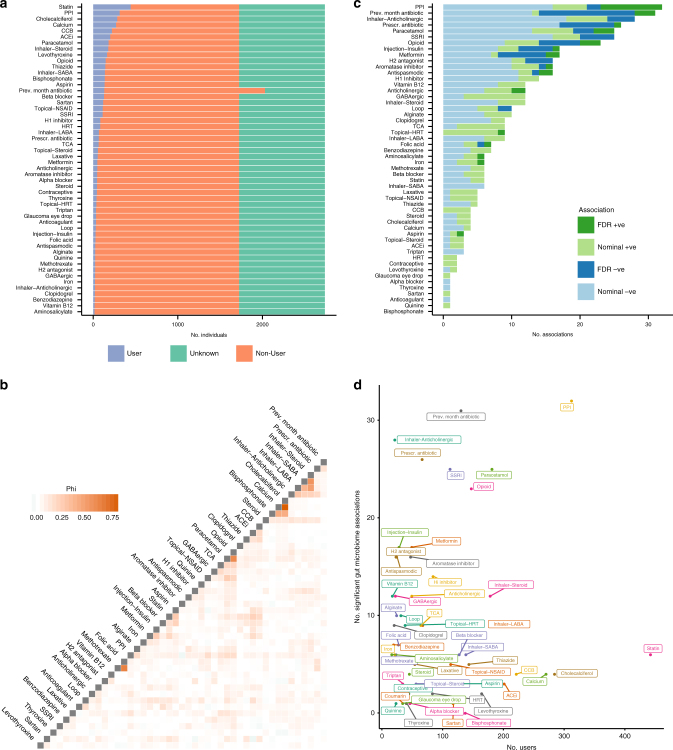
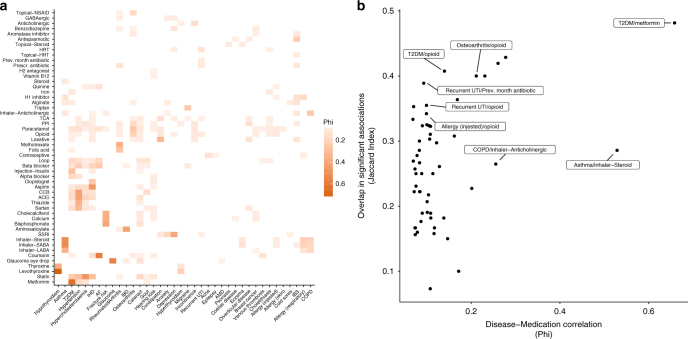
Verification
Claims the paper makes
The claims and statistics of this paper haven’t been checked yet.
Free: it reads the open-access text and checks the first 5 claims that cite a source we can check. Create a free account to check every claim.
Claims other papers make about this one
Each is checked against this paper’s own text: does it say what the citing paper says it does?
The source backs part of the claim, not all of it — or backs it for a different population, condition or comparison.
In the citing paper
“Despite this, medication usage was a significant, albeit minor, contributor (R2 = 0.003) to microbial community composition, highlighting how xenobiotics can and do influence the gut microbiome (Jackson et al., 2018; Maier et al., 2018).”
From Gut microbiome stability and dynamics in healthy donors and patients with non-gastrointestinal cancers (2021) · cites this paper as Jackson et al., 2018
Experimental — accuracy not yet measured
Self-check
Percentages, sums and reported differences re-computed from the paper’s own numbers.
The self-check needs the paper’s full text.
Citations
Cites
QIIME allows analysis of high-throughput community sequencing data
Caporaso, J. G., Kuczynski, J., Stombaugh, J., Bittinger, K., Bushman, F. D., Costello, E. K., Fierer, N., Peña, A. G., Goodrich, J. K., Gordon, J. I., et al. (2010) · Nature Methods · doi:10.1038/nmeth.f.303 · Cited by 34,887
UCHIME improves sensitivity and speed of chimera detection
Edgar, R. C., Haas, B. J., Clemente, J. C., Quince, C., & Knight, R. (2011) · Bioinformatics · doi:10.1093/bioinformatics/btr381 · Cited by 15,114
VEGAN, a package of R functions for community ecology
Dixon, P. (2003) · Journal of Vegetation Science · doi:10.1111/j.1654-1103.2003.tb02228.x · Cited by 6,824
Linking long-term dietary patterns with gut microbial enterotypes
Wu, G. D., Chen, J., Hoffmann, C., Bittinger, K., Chen, Y.-Y., Keilbaugh, S. A., Bewtra, M., Knights, D., Walters, W. A., Knight, R., et al. (2011) · Science · doi:10.1126/science.1208344 · Cited by 6,513
The Treatment-Naive Microbiome in New-Onset Crohn’s Disease
Gevers, D., Kugathasan, S., Denson, L. A., Vázquez-Baeza, Y., Van Treuren, W., Ren, B., Schwager, E., Knights, D., Song, S. J., Yassour, M., et al. (2014) · Cell Host & Microbe · doi:10.1016/j.chom.2014.02.005 · Cited by 3,220
Human Genetics Shape the Gut Microbiome
Goodrich, J. K., Waters, J. L., Poole, A. C., Sutter, J. L., Koren, O., Blekhman, R., Beaumont, M., Van Treuren, W., Knight, R., Bell, J. T., et al. (2014) · Cell · doi:10.1016/j.cell.2014.09.053 · Cited by 3,164
Self-citationGut Microbiota in Human Adults with Type 2 Diabetes Differs from Non-Diabetic Adults
Larsen, N., Vogensen, F. K., van den Berg, F. W. J., Nielsen, D. S., Andreasen, A. S., Pedersen, B. K., Al-Soud, W. A., Sørensen, S. J., Hansen, L. H., & Jakobsen, M. (2010) · PLoS ONE · doi:10.1371/journal.pone.0009085 · Cited by 2,952
Environment dominates over host genetics in shaping human gut microbiota
Rothschild, D., Weissbrod, O., Barkan, E., Kurilshikov, A., Korem, T., Zeevi, D., Costea, P. I., Godneva, A., Kalka, I. N., Bar, N., et al. (2018) · Nature · doi:10.1038/nature25973 · Cited by 2,859
Pvclust: an R package for assessing the uncertainty in hierarchical clustering
Suzuki, R., & Shimodaira, H. (2006) · Bioinformatics · doi:10.1093/bioinformatics/btl117 · Cited by 2,451
Dethlefsen, L., & Relman, D. A. (2011) · Proceedings of the National Academy of Sciences · doi:10.1073/pnas.1000087107 · Cited by 2,421
Population-level analysis of gut microbiome variation
Falony, G., Joossens, M., Vieira-Silva, S., Wang, J., Darzi, Y., Faust, K., Kurilshikov, A., Bonder, M. J., Valles-Colomer, M., Vandeputte, D., et al. (2016) · Science · doi:10.1126/science.aad3503 · Cited by 2,400
Disentangling type 2 diabetes and metformin treatment signatures in the human gut microbiota
MetaHIT consortium, Forslund, K., Hildebrand, F., Nielsen, T., Falony, G., Le Chatelier, E., Sunagawa, S., Prifti, E., Vieira-Silva, S., Gudmundsdottir, V., et al. (2015) · Nature · doi:10.1038/nature15766 · Cited by 2,116
Zheng, P., Zeng, B., Zhou, C., Liu, M., Fang, Z., Xu, X., Zeng, L., Chen, J., Fan, S., Du, X., et al. (2016) · Molecular Psychiatry · doi:10.1038/mp.2016.44 · Cited by 2,023
Population-based metagenomics analysis reveals markers for gut microbiome composition and diversity
Zhernakova, A., Kurilshikov, A., Bonder, M. J., Tigchelaar, E. F., Schirmer, M., Vatanen, T., Mujagic, Z., Vila, A. V., Falony, G., Vieira-Silva, S., et al. (2016) · Science · doi:10.1126/science.aad3369 · Cited by 1,914
Extensive impact of non-antibiotic drugs on human gut bacteria
Maier, L., Pruteanu, M., Kuhn, M., Zeller, G., Telzerow, A., Anderson, E. E., Brochado, A. R., Fernandez, K. C., Dose, H., Mori, H., et al. (2018) · Nature · doi:10.1038/nature25979 · Cited by 1,905
Lloyd-Price, J., Abu-Ali, G., & Huttenhower, C. (2016) · Genome Medicine · doi:10.1186/s13073-016-0307-y · Cited by 1,891 · cited 1×
“For constipation and cystitis, responses were scored as (0) no, (1) rarely, (2) sometimes, (3) frequently, and (4) always; in these two cases, 0–2 was considered negative and 3–4 positive.”
Proton pump inhibitors affect the gut microbiome
Imhann, F., Bonder, M. J., Vich Vila, A., Fu, J., Mujagic, Z., Vork, L., Tigchelaar, E. F., Jankipersadsing, S. A., Cenit, M. C., Harmsen, H. J. M., et al. (2016) · Gut · doi:10.1136/gutjnl-2015-310376 · Cited by 1,371
Jakobsson, H. E., Jernberg, C., Andersson, A. F., Sjölund-Karlsson, M., Jansson, J. K., & Engstrand, L. (2010) · PLoS ONE · doi:10.1371/journal.pone.0009836 · Cited by 1,160
Genetic determinants of the gut microbiome in UK twins
Goodrich, J. K., Davenport, E. R., Beaumont, M., Jackson, M. A., Knight, R., Ober, C., Spector, T. D., Bell, J. T., Clark, A. G., & Ley, R. E. (2016) · Cell Host & Microbe · doi:10.1016/j.chom.2016.04.017 · Cited by 1,048
Self-citationMeta-analysis of gut microbiome studies identifies disease-specific and shared responses
(2017) · doi:10.1038/s41467-017-01973-8 · Cited by 986 · cited 1×
“For constipation and cystitis, responses were scored as (0) no, (1) rarely, (2) sometimes, (3) frequently, and (4) always; in these two cases, 0–2 was considered negative and 3–4 positive.”
Proton pump inhibitors alter the composition of the gut microbiota
Jackson, M. A., Goodrich, J. K., Maxan, M.-E., Freedberg, D. E., Abrams, J. A., Poole, A. C., Sutter, J. L., Welter, D., Ley, R. E., Bell, J. T., et al. (2016) · Gut · doi:10.1136/gutjnl-2015-310861 · Cited by 895
Self-citationSystematic improvement of amplicon marker gene methods for increased accuracy in microbiome studies
Gohl, D. M., Vangay, P., Garbe, J., MacLean, A., Hauge, A., Becker, A., Gould, T. J., Clayton, J. B., Johnson, T. J., Hunter, R., et al. (2016) · Nature Biotechnology · doi:10.1038/nbt.3601 · Cited by 819 · cited 1×
“For constipation and cystitis, responses were scored as (0) no, (1) rarely, (2) sometimes, (3) frequently, and (4) always; in these two cases, 0–2 was considered negative and 3–4 positive.”
Pozuelo, M., Panda, S., Santiago, A., Mendez, S., Accarino, A., Santos, J., Guarner, F., Azpiroz, F., & Manichanh, C. (2015) · Scientific Reports · doi:10.1038/srep12693 · Cited by 325
The UK Adult Twin Registry (TwinsUK Resource)
Moayyeri, A., Hammond, C. J., Hart, D. J., & Spector, T. D. (2013) · Twin Research and Human Genetics · doi:10.1017/thg.2012.89 · Cited by 256
Self-citationHeritable components of the human fecal microbiome are associated with visceral fat
Beaumont, M., Goodrich, J. K., Jackson, M. A., Yet, I., Davenport, E. R., Vieira-Silva, S., Debelius, J., Pallister, T., Mangino, M., Raes, J., et al. (2016) · Genome Biology · doi:10.1186/s13059-016-1052-7 · Cited by 244
Self-citationComparing clustering and pre-processing in taxonomy analysis
Bonder, M. J., Abeln, S., Zaura, E., & Brandt, B. W. (2012) · Bioinformatics · doi:10.1093/bioinformatics/bts552 · Cited by 99 · cited 1×
“For constipation and cystitis, responses were scored as (0) no, (1) rarely, (2) sometimes, (3) frequently, and (4) always; in these two cases, 0–2 was considered negative and 3–4 positive.”
Methanogens in Human Health and Disease
Pimentel, M., Gunsalus, R. P., Rao, S. S., & Zhang, H. (2012) · The American Journal of Gastroenterology Supplements · doi:10.1038/ajgsup.2012.6 · Cited by 78
Jackson, M. A., Bonder, M. J., Kuncheva, Z., Zierer, J., Fu, J., Kurilshikov, A., Wijmenga, C., Zhernakova, A., Bell, J. T., Spector, T. D., et al. (2018) · PeerJ · doi:10.7717/peerj.4303 · Cited by 60
Self-citationJackson, M. A., Bell, J. T., Spector, T. D., & Steves, C. J. (2016) · PeerJ · doi:10.7717/peerj.2341 · Cited by 44
Self-citation
Cited by
Interaction between drugs and the gut microbiome
Weersma, R. K., Zhernakova, A., & Fu, J. (2020) · Gut · doi:10.1136/gutjnl-2019-320204 · Cited by 961
Chen, Y., Xu, J., & Chen, Y. (2021) · Nutrients · doi:10.3390/nu13062099 · Cited by 917
The gut microbiota in anxiety and depression—A systematic review
Simpson, C. A., Diaz-Arteche, C., Eliby, D., Schwartz, O. S., Simmons, J. G., & Cowan, C. S. M. (2021) · Clinical Psychology Review · doi:10.1016/j.cpr.2020.101943 · Cited by 912
Effect of Diet on the Gut Microbiota: Rethinking Intervention Duration
Leeming, E. R., Johnson, A. J., Spector, T. D., & Le Roy, C. I. (2019) · Nutrients · doi:10.3390/nu11122862 · Cited by 817
“Compositional or functional changes within the gut microbiota have been shown to contribute to both health and disease including immune, metabolic and neuro-behavioural traits [1,2].”
Self-citationImpact of commonly used drugs on the composition and metabolic function of the gut microbiota
Vich Vila, A., Collij, V., Sanna, S., Sinha, T., Imhann, F., Bourgonje, A. R., Mujagic, Z., Jonkers, D. M. A. E., Masclee, A. A. M., Fu, J., et al. (2020) · Nature Communications · doi:10.1038/s41467-019-14177-z · Cited by 791
Metadata
- Authors
- Jackson, M. A., Verdi, S., Maxan, M.-E., Shin, C. M., Zierer, J., Bowyer, R. C. E., Martin, T., Williams, F. M. K., Menni, C., Bell, J. T., Spector, T. D., & Steves, C. J.
- Affiliations
- King's College London (GB)
- King's College Hospital NHS Foundation Trust (GB)
- Seoul National University (KR)
- Corresponding author
- Jackson, Matthew A.
- Steves, Claire J.
- ORCID
- Venue
- Nature Communications
- Published
- 2018-07-09
- Volume
- 9
- Issue
- 1
- Pages
- 2655-2655
- ISSN
- 2041-1723 (ISSN-L)
- PMC
- PMC6037668
- OpenAlex
- W2810208030
- Cited by
- 616
- References
- 30
- Citations by year
- 2026: 46 · 2025: 50 · 2024: 85 · 2023: 109 · 2022: 73 · 2021: 106 · 2020: 86 · 2019: 48 · 2018: 12
- FWCI
- 22.59
- Type
- journal article
- Language
- en
- Open access
- gold
- doi.org
- Licence
- cc-by
- creativecommons.org/licenses/by/4.0 (tdm)
- creativecommons.org/licenses/by/4.0 (vor)
- Locations
- Nature Communications (publishedVersion, cc-by)
- Europe PMC (PubMed Central) (publishedVersion, cc-by)
- PubMed Central (publishedVersion, cc-by)
- PubMed (publishedVersion)
- Research Portal (King's College London) (submittedVersion, cc-by)
- RePEc: Research Papers in Economics (submittedVersion)
- Archivio Istituzionale della Ricerca (Universita Degli Studi Di Milano) (submittedVersion, other-oa)
- DOAJ (DOAJ: Directory of Open Access Journals) (submittedVersion)
- DOAJ (DOAJ: Directory of Open Access Journals) (submittedVersion, cc-by-sa)
- PuSH - Publication Server of Helmholtz Zentrum München (submittedVersion)
- Funders
- Wellcome Trust (MR/M016560/1, WT081878MA)
- Chronic Disease Research Foundation
- National Institute for Health and Care Research (NF-SI-0507-10228, MR/M016560/1, NF-SI-0514-10027)
- King's College London
- National Institutes of Health (1dp2od007444-01)
- Medical Research Council (MR/M016560/1, MR/N01183X/1)
- National Institute of Diabetes and Digestive and Kidney Diseases (R01DK093595)
- Topics
- Life Sciences › Biochemistry, Genetics and Molecular Biology › Molecular Biology › Gut microbiota and health
- Life Sciences › Biochemistry, Genetics and Molecular Biology › Genetics › Genetic Associations and Epidemiology
- Health Sciences › Dentistry › Periodontics › Oral microbiology and periodontitis research
- Keywords
- gut microbiota, human microbiome, common diseases, prescription drugs
- MeSH terms
- Gastrointestinal Microbiome, Aged, Bacteria, Cross-Sectional Studies, Disease, Drug Therapy, Feces, Female, Humans, Male, Middle Aged, Surveys and Questionnaires, RNA, Ribosomal, 16S, Cohort Studies, Gastrointestinal Tract
About these checks
Registry, retraction, Cites and statistics results are computed, not judged, with one exception: a printed reference that no index lists is read once by a model before it counts as a citation error. Claims are extracted by a model and kept only when their quote appears verbatim in the text; each cited source is then checked, with a model’s help, for whether it says what the claim relies on. Those verdicts can be wrong — read the claim’s quote and the cited source before relying on one.
Statistics and arithmetic are recomputed, not judged.
Confidence bands are shown only for fields calibrated on our annotated test set. None is calibrated yet, so no band is shown.
What counts as a claim ›How we measure confidence ›How we check this ›
Are you an author, or do you see a problem with this page? Request a review
Data sources
Bibliographic data: Semantic Scholar, OpenAlex, Crossref.
Contains information from the Semantic Scholar Academic Graph Datasets, made available under the ODC Attribution License (ODC-BY 1.0).
Semantic Scholar’s data is described in: Kinney, R., et al. (2023). The Semantic Scholar Open Data Platform. arXiv:2301.10140.
