

Gut microbiota associations with common diseases and prescription medications in a population-based cohort
Open accessThe DOI matches its Crossref record; 29 of the 30 references it cites were found in a registry or an index.
Abstract
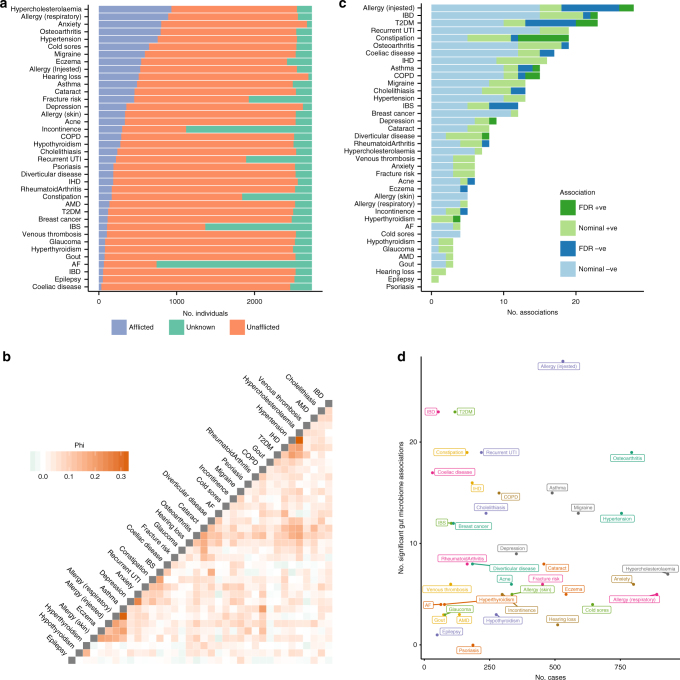
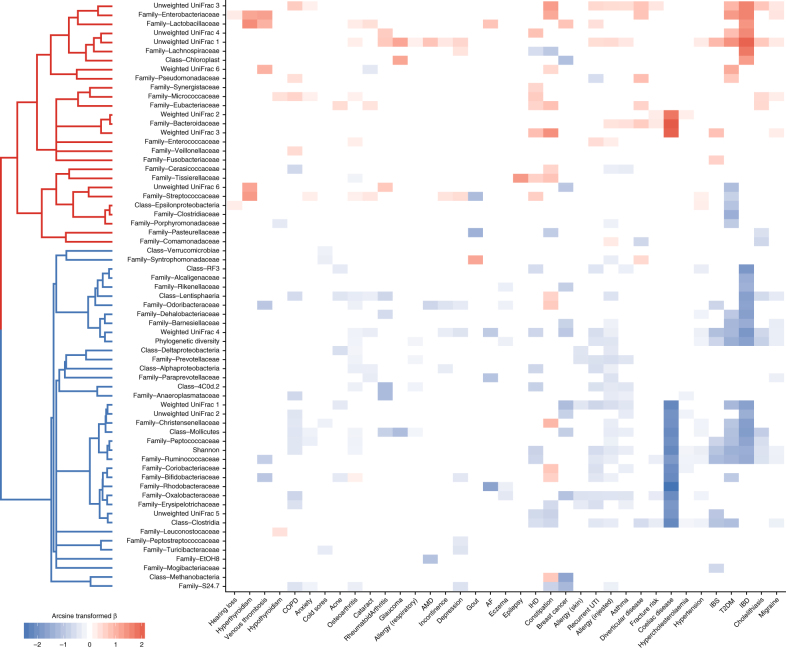
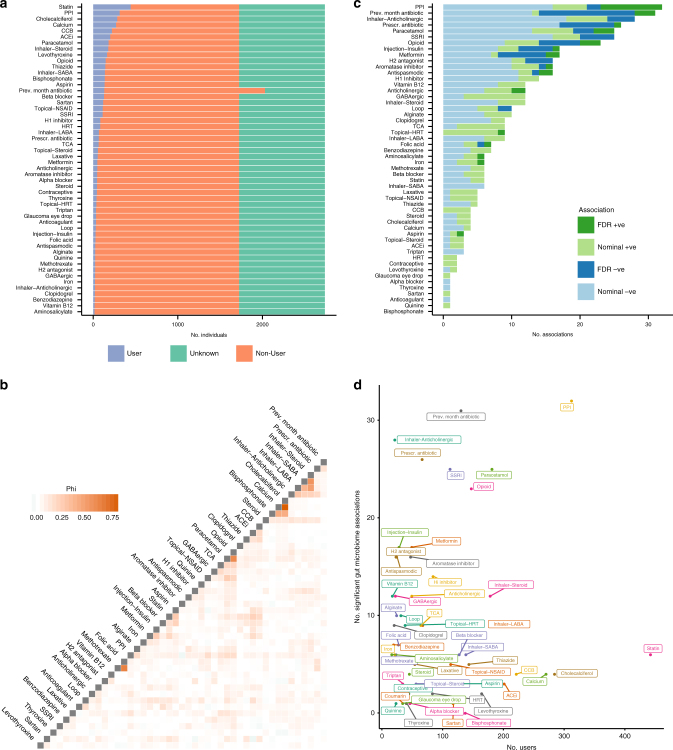
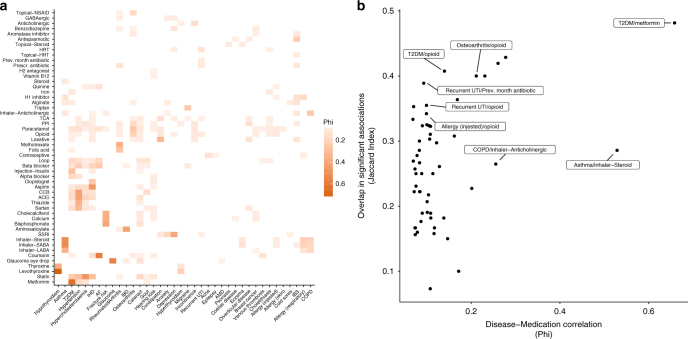
The human gut microbiome has been associated with many health factors but variability between studies limits exploration of effects between them. Gut microbiota profiles are available for >2700 members of the deeply phenotyped TwinsUK cohort, providing a uniform platform for such comparisons. Here, we present gut microbiota association analyses for 38 common diseases and 51 medications within the cohort. We describe several novel associations, highlight associations common across multiple diseases, and determine which diseases and medications have the greatest association with the gut microbiota. These results provide a reference for future studies of the gut microbiome and its role in human health.
Overview
The claims and statistics of this paper haven’t been checked yet.
Free: it reads the open-access text and checks the first 5 claims that cite a source we can check. Create a free account to check every claim.
Integrity signals
Registry
Cites
Statistics
Figures
Verification
Claims the paper makes
The claims and statistics of this paper haven’t been checked yet.
Free: it reads the open-access text and checks the first 5 claims that cite a source we can check. Create a free account to check every claim.
Claims other papers make about this one
Each is checked against this paper’s own text: does it say what the citing paper says it does?
The source backs part of the claim, not all of it — or backs it for a different population, condition or comparison.
In the citing paper
“Despite this, medication usage was a significant, albeit minor, contributor (R2 = 0.003) to microbial community composition, highlighting how xenobiotics can and do influence the gut microbiome (Jackson et al., 2018; Maier et al., 2018).”
From Gut microbiome stability and dynamics in healthy donors and patients with non-gastrointestinal cancers (2021) · cites this paper as Jackson et al., 2018
Experimental — accuracy not yet measured
Self-check
Percentages, sums and reported differences re-computed from the paper’s own numbers.
The self-check needs the paper’s full text.
Citations
Cites
QIIME allows analysis of high-throughput community sequencing data
Caporaso, J. G., Kuczynski, J., Stombaugh, J., Bittinger, K., Bushman, F. D., Costello, E. K., Fierer, N., Peña, A. G., Goodrich, J. K., Gordon, J. I., et al. (2010) · Nature Methods · doi:10.1038/nmeth.f.303 · Cited by 34,887
UCHIME improves sensitivity and speed of chimera detection
Edgar, R. C., Haas, B. J., Clemente, J. C., Quince, C., & Knight, R. (2011) · Bioinformatics · doi:10.1093/bioinformatics/btr381 · Cited by 15,114
VEGAN, a package of R functions for community ecology
Dixon, P. (2003) · Journal of Vegetation Science · doi:10.1111/j.1654-1103.2003.tb02228.x · Cited by 6,824
Linking long-term dietary patterns with gut microbial enterotypes
Wu, G. D., Chen, J., Hoffmann, C., Bittinger, K., Chen, Y.-Y., Keilbaugh, S. A., Bewtra, M., Knights, D., Walters, W. A., Knight, R., et al. (2011) · Science · doi:10.1126/science.1208344 · Cited by 6,513
The Treatment-Naive Microbiome in New-Onset Crohn’s Disease
Gevers, D., Kugathasan, S., Denson, L. A., Vázquez-Baeza, Y., Van Treuren, W., Ren, B., Schwager, E., Knights, D., Song, S. J., Yassour, M., et al. (2014) · Cell Host & Microbe · doi:10.1016/j.chom.2014.02.005 · Cited by 3,220
Human Genetics Shape the Gut Microbiome
Goodrich, J. K., Waters, J. L., Poole, A. C., Sutter, J. L., Koren, O., Blekhman, R., Beaumont, M., Van Treuren, W., Knight, R., Bell, J. T., et al. (2014) · Cell · doi:10.1016/j.cell.2014.09.053 · Cited by 3,164
Self-citationGut Microbiota in Human Adults with Type 2 Diabetes Differs from Non-Diabetic Adults
Larsen, N., Vogensen, F. K., van den Berg, F. W. J., Nielsen, D. S., Andreasen, A. S., Pedersen, B. K., Al-Soud, W. A., Sørensen, S. J., Hansen, L. H., & Jakobsen, M. (2010) · PLoS ONE · doi:10.1371/journal.pone.0009085 · Cited by 2,952
Environment dominates over host genetics in shaping human gut microbiota
Rothschild, D., Weissbrod, O., Barkan, E., Kurilshikov, A., Korem, T., Zeevi, D., Costea, P. I., Godneva, A., Kalka, I. N., Bar, N., et al. (2018) · Nature · doi:10.1038/nature25973 · Cited by 2,859
Pvclust: an R package for assessing the uncertainty in hierarchical clustering
Suzuki, R., & Shimodaira, H. (2006) · Bioinformatics · doi:10.1093/bioinformatics/btl117 · Cited by 2,451
Dethlefsen, L., & Relman, D. A. (2011) · Proceedings of the National Academy of Sciences · doi:10.1073/pnas.1000087107 · Cited by 2,421
Cited by
Interaction between drugs and the gut microbiome
Weersma, R. K., Zhernakova, A., & Fu, J. (2020) · Gut · doi:10.1136/gutjnl-2019-320204 · Cited by 961
Chen, Y., Xu, J., & Chen, Y. (2021) · Nutrients · doi:10.3390/nu13062099 · Cited by 917
The gut microbiota in anxiety and depression—A systematic review
Simpson, C. A., Diaz-Arteche, C., Eliby, D., Schwartz, O. S., Simmons, J. G., & Cowan, C. S. M. (2021) · Clinical Psychology Review · doi:10.1016/j.cpr.2020.101943 · Cited by 912
Effect of Diet on the Gut Microbiota: Rethinking Intervention Duration
Leeming, E. R., Johnson, A. J., Spector, T. D., & Le Roy, C. I. (2019) · Nutrients · doi:10.3390/nu11122862 · Cited by 817
“Compositional or functional changes within the gut microbiota have been shown to contribute to both health and disease including immune, metabolic and neuro-behavioural traits [1,2].”
Self-citationImpact of commonly used drugs on the composition and metabolic function of the gut microbiota
Vich Vila, A., Collij, V., Sanna, S., Sinha, T., Imhann, F., Bourgonje, A. R., Mujagic, Z., Jonkers, D. M. A. E., Masclee, A. A. M., Fu, J., et al. (2020) · Nature Communications · doi:10.1038/s41467-019-14177-z · Cited by 791
Intestinal serotonin and fluoxetine exposure modulate bacterial colonization in the gut
Fung, T. C., Vuong, H. E., Luna, C. D. G., Pronovost, G. N., Aleksandrova, A. A., Riley, N. G., Vavilina, A., McGinn, J., Rendon, T., Forrest, L. R., et al. (2019) · Nature Microbiology · doi:10.1038/s41564-019-0540-4 · Cited by 477
“Notably, a recent human study of >2700 twins concluded that SSRI use is associated particularly with reduced Turicibacteraceae in humans, which is consistent with findings from our in silico, in vitro and in vivo animal experiments 25 .”
Role of Dietary Nutrients in the Modulation of Gut Microbiota: A Narrative Review
Yang, Q., Liang, Q., Balakrishnan, B., Belobrajdic, D. P., Feng, Q.-J., & Zhang, W. (2020) · Nutrients · doi:10.3390/nu12020381 · Cited by 466
Gut Microbiota in Hypertension and Atherosclerosis: A Review
Verhaar, B. J. H., Prodan, A., Nieuwdorp, M., & Muller, M. (2020) · Nutrients · doi:10.3390/nu12102982 · Cited by 400
“2019 756 HT, 1790 controls Self-report or antihypertensive medication use 16S Lactobacillaceae, Streptococcaceae Dehalobacteriaceae, Christensenellaceae, Oxalobacteraceae, Mollicutes, Rikenellaceae, Clostridia, Anaeroplasmataceae, Peptococcaceae Lower Age [32]”
Unravelling the collateral damage of antibiotics on gut bacteria
Maier, L., Goemans, C. V., Wirbel, J., Kuhn, M., Eberl, C., Pruteanu, M., Müller, P., Garcia-Santamarina, S., Cacace, E., Zhang, B., et al. (2021) · Nature · doi:10.1038/s41586-021-03986-2 · Cited by 391
RETRACTED ARTICLE: Role of the gut microbiome in chronic diseases: a narrative review
Vijay, A., & Valdes, A. M. (2022) · European Journal of Clinical Nutrition · doi:10.1038/s41430-021-00991-6 · Cited by 361
RetractedGut microbiota Turicibacter strains differentially modify bile acids and host lipids
Lynch, J. B., Gonzalez, E. L., Choy, K., Faull, K. F., Jewell, T., Arellano, A., Liang, J., Yu, K. B., Paramo, J., & Hsiao, E. Y. (2023) · Nature Communications · doi:10.1038/s41467-023-39403-7 · Cited by 347
d'Enfert, C., Kaune, A.-K., Alaban, L.-R., Chakraborty, S., Cole, N., Delavy, M., Kosmala, D., Marsaux, B., Fróis-Martins, R., Morelli, M., et al. (2021) · FEMS Microbiology Reviews · doi:10.1093/femsre/fuaa060 · Cited by 347
Bioaccumulation of therapeutic drugs by human gut bacteria
Klünemann, M., Andrejev, S., Blasche, S., Mateus, A., Phapale, P., Devendran, S., Vappiani, J., Simon, B., Scott, T. A., Kafkia, E., et al. (2021) · Nature · doi:10.1038/s41586-021-03891-8 · Cited by 327
The gut microbiome and hypertension
O’Donnell, J. A., Zheng, T., Meric, G., & Marques, F. Z. (2023) · Nature Reviews Nephrology · doi:10.1038/s41581-022-00654-0 · Cited by 281
Vitamins, the gut microbiome and gastrointestinal health in humans
Pham, V. T., Dold, S., Rehman, A., Bird, J. K., & Steinert, R. E. (2021) · Nutrition Research · doi:10.1016/j.nutres.2021.09.001 · Cited by 278
Drug-microbiota interactions: an emerging priority for precision medicine
Zhao, Q., Chen, Y., Huang, W., Zhou, H., & Zhang, W. (2023) · Signal Transduction and Targeted Therapy · doi:10.1038/s41392-023-01619-w · Cited by 268
Rethinking healthy eating in light of the gut microbiome
Armet, A. M., Deehan, E. C., O’Sullivan, A. F., Mota, J. F., Field, C. J., Prado, C. M., Lucey, A. J., & Walter, J. (2022) · Cell Host & Microbe · doi:10.1016/j.chom.2022.04.016 · Cited by 252
Cantorna, M. T., Snyder, L., & Arora, J. (2019) · Critical Reviews in Biochemistry and Molecular Biology · doi:10.1080/10409238.2019.1611734 · Cited by 240
“Chronic diseases including inflammatory bowel disease (IBD), diabetes, cardiovascular disease, cancer, and neuroinflammatory disorders are associated with dysbiosis and reduced diversity of microbes as compared to healthy individuals (Frank et al. 2007; Shreiner et al. 2015; Jackson et al. 2018).”
Pietzner (2021) · doi:10.1038/s41591-021-01266-0 · Cited by 239
The Gut Microbiota: Emerging Evidence in Autoimmune Diseases
Zhang, X., Chen, B.-D., Zhao, L.-D., & Li, H. (2020) · Trends in Molecular Medicine · doi:10.1016/j.molmed.2020.04.001 · Cited by 232
Adjusting for age improves identification of gut microbiome alterations in multiple diseases
Ghosh, T. S., Das, M., Jeffery, I. B., & O'Toole, P. W. (2020) · eLife · doi:10.7554/elife.50240 · Cited by 233
“For example, Streptococcaceae have been shown to be associated with intake of Proton Pump Inhibitors (Jackson et al., 2018).”
The microbiota-immune axis as a central mediator of gut-brain communication
Fung, T. C. (2020) · Neurobiology of Disease · doi:10.1016/j.nbd.2019.104714 · Cited by 230
Combinatorial, additive and dose-dependent drug–microbiome associations
Forslund, S. K., Chakaroun, R., Zimmermann-Kogadeeva, M., Markó, L., Aron-Wisnewsky, J., Nielsen, T., Moitinho-Silva, L., Schmidt, T. S. B., Falony, G., Vieira-Silva, S., et al. (2021) · Nature · doi:10.1038/s41586-021-04177-9 · Cited by 226
Microbial transmission in animal social networks and the social microbiome
Sarkar, A., Harty, S., Johnson, K. V.-A., Moeller, A. H., Archie, E. A., Schell, L. D., Carmody, R. N., Clutton-Brock, T. H., Dunbar, R. I. M., & Burnet, P. W. J. (2020) · Nature Ecology & Evolution · doi:10.1038/s41559-020-1220-8 · Cited by 223
Yan, F., Li, N., Shi, J., Li, H., Yue, Y., Jiao, W., Wang, N., Song, Y., Huo, G., & Li, B. (2019) · Food & Function · doi:10.1039/c9fo01062a · Cited by 222
Chen, B., Jia, X., Xu, J., Zhao, L., Ji, J., Wu, B., Ma, Y., Li, H., Zuo, X., Pan, W., et al. (2021) · Arthritis & Rheumatology · doi:10.1002/art.41511 · Cited by 219
“Further reductions in microbial diversity observed in the SLE patients after treatment was probably a result of the type of medication used, as some therapies commonly used to treat patients with SLE (such as steroids, methotrexate, and leflunomide) can inhibit the growth of certain gut bacteria and have previously be…”
Verhaar, B. J. H., Collard, D., Prodan, A., Levels, J. H. M., Zwinderman, A. H., Bäckhed, F., Vogt, L., Peters, M. J. L., Muller, M., Nieuwdorp, M., et al. (2020) · European Heart Journal · doi:10.1093/eurheartj/ehaa704 · Cited by 219
“The current study extends previous findings in cohort studies by evaluating the association between gut microbiota composition and BP in a large multi-ethnic cohort using machine learning prediction models.(19,20) We found that, in the complete cohort, machine learning models based on gut microbiota composition explai…”
Yang, R., Liu, H., Bai, C., Wang, Y., Zhang, X., Guo, R., Wu, S., Wang, J., Leung, E., Chang, H., et al. (2020) · Pharmacological Research · doi:10.1016/j.phrs.2020.104820 · Cited by 217
“Gut microbiota of rats in different group were analyzed as previous study [32] .”
Vandeputte, D., De Commer, L., Tito, R. Y., Kathagen, G., Sabino, J., Vermeire, S., Faust, K., & Raes, J. (2021) · Nature Communications · doi:10.1038/s41467-021-27098-7 · Cited by 215
Human Gut Microbiota and Drug Metabolism
Pant, A., Maiti, T. K., Mahajan, D., & Das, B. (2023) · Microbial Ecology · doi:10.1007/s00248-022-02081-x · Cited by 212
Rocca, J. D., Simonin, M., Blaszczak, J. R., Ernakovich, J. G., Gibbons, S. M., Midani, F. S., & Washburne, A. D. (2019) · Frontiers in Microbiology · doi:10.3389/fmicb.2018.03272 · Cited by 213
“, 2018), human gut ecosystems (Duvallet et al., 2017; Gibbons et al., 2018; Jackson et al., 2018), and even across distinct environments (Shade et al.”
van der Meulen, T. A., Harmsen, H. J. M., Vila, A. V., Kurilshikov, A., Liefers, S. C., Zhernakova, A., Fu, J., Wijmenga, C., Weersma, R. K., de Leeuw, K., et al. (2019) · Journal of Autoimmunity · doi:10.1016/j.jaut.2018.10.009 · Cited by 212
(2020) · Progress in Molecular Biology and Translational Science · doi:10.1016/bs.pmbts.2020.04.003 · Cited by 212
Raygoza Garay, J. A., Turpin, W., Lee, S.-H., Smith, M. I., Goethel, A., Griffiths, A. M., Moayyedi, P., Espin-Garcia, O., Abreu, M., Aumais, G. L., et al. (2023) · Gastroenterology · doi:10.1053/j.gastro.2023.05.032 · Cited by 201
Hoskinson, C., Dai, D. L. Y., Del Bel, K. L., Becker, A. B., Moraes, T. J., Mandhane, P. J., Finlay, B. B., Simons, E., Kozyrskyj, A. L., Azad, M. B., et al. (2023) · Nature Communications · doi:10.1038/s41467-023-40336-4 · Cited by 199
“Previous studies looking at multiple diseases have noted common microbiome associations in individualsdiagnosedwithdistinctindividualallergicdiseases 16,17 .”
Zhou, W., Han, Y., Tang, Y., Shi, W., Du, X., Sun, S., & Liu, G. (2020) · Environmental Science & Technology · doi:10.1021/acs.est.0c01575 · Cited by 199
Derosa, L., Iebba, V., Silva, C. A. C., Piccinno, G., Wu, G., Lordello, L., Routy, B., Zhao, N., Thelemaque, C., Birebent, R., et al. (2024) · Cell · doi:10.1016/j.cell.2024.05.029 · Cited by 198
Gut Microbiota Resilience: Definition, Link to Health and Strategies for Intervention
Dogra, S. K., Doré, J., & Damak, S. (2020) · Frontiers in Microbiology · doi:10.3389/fmicb.2020.572921 · Cited by 196
Cheng, L., Qi, C., Zhuang, H., Fu, T., & Zhang, X. (2020) · Nucleic Acids Research · doi:10.1093/nar/gkz843 · Cited by 192
Involvement of the gut microbiota and barrier function in glucocorticoid-induced osteoporosis
Schepper, J. D., Collins, F., Rios-Arce, N. D., Kang, H. J., Schaefer, L., Gardinier, J. D., Raghuvanshi, R., Quinn, R. A., Britton, R., Parameswaran, N., et al. (2020) · Journal of Bone and Mineral Research · doi:10.1002/jbmr.3947 · Cited by 199
Macrofungi: A review of cultivation strategies, bioactivity, and application of mushrooms
Lu, H., Lou, H., Hu, J., Liu, Z., & Chen, Q. (2020) · Comprehensive Reviews in Food Science and Food Safety · doi:10.1111/1541-4337.12602 · Cited by 190
Gut microbiota alterations associated with reduced bone mineral density in older adults
Das, M., Cronin, O., Keohane, D. M., Cormac, E. M., Nugent, H., Nugent, M., Molloy, C., O’Toole, P. W., Shanahan, F., Molloy, M. G., et al. (2019) · Rheumatology · doi:10.1093/rheumatology/kez302 · Cited by 185
Vitamin D and the gut microbiome: a systematic review of in vivo studies
Waterhouse, M., Hope, B., Krause, L., Morrison, M., Protani, M. M., Zakrzewski, M., & Neale, R. E. (2019) · European Journal of Nutrition · doi:10.1007/s00394-018-1842-7 · Cited by 183
Biver, E., Berenbaum, F., Valdes, A. M., Araujo de Carvalho, I., Bindels, L. B., Brandi, M. L., Calder, P. C., Castronovo, V., Cavalier, E., Cherubini, A., et al. (2019) · Ageing Research Reviews · doi:10.1016/j.arr.2019.100946 · Cited by 183
“A large cross-sectional analysis of a population based cohort in UK found that OA was associated with a large number of GMB features (Jackson et al., 2018).”
Nagata, N., Nishijima, S., Miyoshi-Akiyama, T., Kojima, Y., Kimura, M., Aoki, R., Ohsugi, M., Ueki, K., Miki, K., Iwata, E., et al. (2022) · Gastroenterology · doi:10.1053/j.gastro.2022.06.070 · Cited by 178
Multi-omic approaches for host-microbiome data integration
Chetty, A., & Blekhman, R. (2024) · Gut Microbes · doi:10.1080/19490976.2023.2297860 · Cited by 171
TwinsUK: The UK Adult Twin Registry Update
Verdi, S., Abbasian, G., Bowyer, R. C. E., Lachance, G., Yarand, D., Christofidou, P., Mangino, M., Menni, C., Bell, J. T., Falchi, M., et al. (2019) · Twin Research and Human Genetics · doi:10.1017/thg.2019.65 · Cited by 173
“Associations have been observed with a number of health deficits and medication usage (Jackson, Goodrich et al., 2016, Jackson et al., 2018; Le Roy et al., 2017), and age-related traits, including frailty and cognition (Jackson, Jeffrey et al., 2016; Verdi et al., 2018), among others (Menni, Lin et…”
Self-citationThe Milieu Intérieur Consortium, Scepanovic, P., Hodel, F., Mondot, S., Partula, V., Byrd, A., Hammer, C., Alanio, C., Bergstedt, J., Patin, E., et al. (2019) · Microbiome · doi:10.1186/s40168-019-0747-x · Cited by 171
Taxonomic signatures of cause-specific mortality risk in human gut microbiome
Salosensaari, A., Laitinen, V., Havulinna, A. S., Meric, G., Cheng, S., Perola, M., Valsta, L., Alfthan, G., Inouye, M., Watrous, J. D., et al. (2021) · Nature Communications · doi:10.1038/s41467-021-22962-y · Cited by 171
“In addition, sensitivity analyses were performed in subsamples of (1) 6191 individuals without antibiotics use 6 months prior to baseline and (2) 5727 individuals with dietary data available.”
Microbiota-Centered Interventions: The Next Breakthrough in Immuno-Oncology?
Derosa, L., Routy, B., Desilets, A., Daillère, R., Terrisse, S., Kroemer, G., & Zitvogel, L. (2021) · Cancer Discovery · doi:10.1158/2159-8290.cd-21-0236 · Cited by 170
Metagenomic profiling of the pro-inflammatory gut microbiota in ankylosing spondylitis
Zhou, C., Zhao, H., Xiao, X.-Y., Chen, B.-D., Guo, R.-J., Wang, Q., Chen, H., Zhao, L.-D., Zhang, C.-C., Jiao, Y.-H., et al. (2020) · Journal of Autoimmunity · doi:10.1016/j.jaut.2019.102360 · Cited by 169
The Gut Microbiome in Hypertension: Recent Advances and Future Perspectives
Avery, E. G., Bartolomaeus, H., Maifeld, A., Marko, L., Wiig, H., Wilck, N., Rosshart, S. P., Forslund, S. K., & Müller, D. N. (2021) · Circulation Research · doi:10.1161/circresaha.121.318065 · Cited by 168
Future of Hypertension: The Need for Transformation
Dzau, V. J., & Balatbat, C. A. (2019) · Hypertension · doi:10.1161/hypertensionaha.119.13437 · Cited by 162
Gut Microbiota Dysbiosis Drives the Development of Colorectal Cancer
Fan, X., Jin, Y., Chen, G., Ma, X., & Zhang, L. (2021) · Digestion · doi:10.1159/000508328 · Cited by 166
Simpson, C. A., Mu, A., Haslam, N., Schwartz, O. S., & Simmons, J. G. (2020) · Journal of Affective Disorders · doi:10.1016/j.jad.2020.01.124 · Cited by 164
The Role of the Gut Microbiota in Lipid and Lipoprotein Metabolism
Yu, Y., Raka, F., & Adeli, K. (2019) · Journal of Clinical Medicine · doi:10.3390/jcm8122227 · Cited by 160
“, host genetics, antibiotics, prescribed drugs, probiotic and prebiotics supplementation) [11,12].”
Effects of polysaccharides on glycometabolism based on gut microbiota alteration
Fang, Q., Hu, J., Nie, Q., & Nie, S. (2019) · Trends in Food Science & Technology · doi:10.1016/j.tifs.2019.08.015 · Cited by 158
Toward Understanding Microbiome-Neuronal Signaling
Jameson, K. G., Olson, C. A., Kazmi, S. A., & Hsiao, E. Y. (2020) · Molecular Cell · doi:10.1016/j.molcel.2020.03.006 · Cited by 149
Xu, F., Fu, Y., Sun, T., Jiang, Z., Miao, Z., Shuai, M., Gou, W., Ling, C.-W., Yang, J., Wang, J., et al. (2020) · Microbiome · doi:10.1186/s40168-020-00923-9 · Cited by 168
Wang, Q., Duan, Y., Wang, S., Wang, L., Hou, Z., Cui, Y., Hou, J., Das, R., Mao, D., & Luo, Y. (2019) · Journal of Hazardous Materials · doi:10.1016/j.jhazmat.2019.121129 · Cited by 162
Salminen, A. (2023) · Journal of Molecular Medicine · doi:10.1007/s00109-023-02289-5 · Cited by 168
“, atherosclerosis, diabetes, metabolic syndrome, inflammatory bowel disease, and central nervous system disorders [38].”
The gut microbiome: what the oncologist ought to know
Lee, K. A., Luong, M. K., Shaw, H., Nathan, P., Bataille, V., & Spector, T. D. (2021) · British Journal of Cancer · doi:10.1038/s41416-021-01467-x · Cited by 143
“A number of groups have demonstrated increased Streptococcaceae and Micrococcaceae abundance in PPI users [92, 93].”
Self-citationGut microbiota remodeling: A promising therapeutic strategy to confront hyperuricemia and gout
Wang, Z., Li, Y., Liao, W., Huang, J., Liu, Y., Li, Z., & Tang, J. (2022) · Frontiers in Cellular and Infection Microbiology · doi:10.3389/fcimb.2022.935723 · Cited by 180
“Considering the gut microbiota as an entry point to explore the pathogenesis of diseases has become a new hotspot worldwide (Meng et al., 2018; Jackson et al., 2018; Angelucci et al., 2019; Bell et al., 2020), especially in research on investigating the pathogenesis of metabolic-related diseases, such as HUA and gout.”
Xu, Y., Liu, L., Zhu, J.-Y., Zhu, S., Ye, B., Yang, J.-L., Huang, J.-Y., Huang, Z.-H., You, Y., Li, W., et al. (2024) · Cell Host & Microbe · doi:10.1016/j.chom.2024.02.001 · Cited by 162
Gawalko, M. M., Agbaedeng, T. A., Saljic, A., Müller, D. N., Wilck, N., Schnabel, R. B., Penders, J., Rienstra, M., Gelder, I. C. V., Jespersen, T., et al. (2021) · Cardiovascular Research · doi:10.1093/cvr/cvab292 · Cited by 159
Lang, T., Zhu, R., Zhu, X., Yan, W., Li, Y., Zhai, Y., Wu, T., Huang, X., Yin, Q., & Li, Y. (2023) · Nature Communications · doi:10.1038/s41467-023-40439-y · Cited by 133
Jiang, Z., Sun, T., He, Y., Gou, W., Zuo, L.-S.-Y., Fu, Y., Miao, Z., Shuai, M., Xu, F., Xiao, C., et al. (2020) · BMC Medicine · doi:10.1186/s12916-020-01842-0 · Cited by 144
Evolutionary Parasitology: The Integrated Study of Infections, Immunology, Ecology, and Genetics
Schmid‐Hempel, P. (2021) · doi:10.1093/oso/9780198832140.001.0001 · Cited by 166
Serum metabolites reflecting gut microbiome alpha diversity predict type 2 diabetes
Menni, C., Zhu, J., Le Roy, C. I., Mompeo, O., Young, K., Rebholz, C. M., Selvin, E., North, K. E., Mohney, R. P., Bell, J. T., et al. (2020) · Gut Microbes · doi:10.1080/19490976.2020.1778261 · Cited by 126
Self-citationZubcevic, J. A., Richards, E. M., Yang, T., Kim, S., Sumners, C., Pepine, C. J., & Raizada, M. K. (2019) · Circulation Research · doi:10.1161/circresaha.119.313965 · Cited by 130
“Recent findings from a cohort study question the enthusiasm for a role of gut dysbiosis in hypertension.(33) However, as pointed out by the Marques group,(34) the considerable overlap between diseases, medications, and microbes could account for the lack of strong correlation between the gut and hypertension in that s…”
Cheng, L., Qi, C., Zhuang, H., Fu, T., & Zhang, X. (2020) · Nucleic Acids Research · doi:10.1093/nar/gkaa511 · Cited by 138
Role of the Intestinal Epithelium and Its Interaction With the Microbiota in Food Allergy
Ali, A., HuiYing, T., & Kaiko, G. E. (2020) · Frontiers in Immunology · doi:10.3389/fimmu.2020.604054 · Cited by 140
“Interestingly, the latter correlates with the microbiome results of the food allergy analysis in the twins cohort study (105) and likewise in a separate birth cohort study with maternal carriage of Prevotella being protective against infant risk of food allergy (119).”
The Association between Vitamin D and Gut Microbiota: A Systematic Review of Human Studies
Bellerba, F., Muzio, V., Gnagnarella, P., Facciotti, F., Chiocca, S., Bossi, P., Cortinovis, D. L., Chiaradonna, F., Serrano, D., Raimondi, S., et al. (2021) · Nutrients · doi:10.3390/nu13103378 · Cited by 148
“Similarly, a large UK twins cohort study [39], characterized by the self-reported use of VD supplements, was also not significantly associated with a change in gut microbiota.”
InfluentialTowards a mechanistic understanding of reciprocal drug–microbiome interactions
Zimmermann, M., Patil, K. R., Typas, A., & Maier, L. (2021) · Molecular Systems Biology · doi:10.15252/msb.202010116 · Cited by 121
“…the antidiabetic metformin, proton-pump inhibitors, antipsychotics, non-steroidal anti-inflammatory drugs, paracetamol, opioids, selective serotonin reuptake inhibitors, laxatives, and statins (Le Bastard et al , 2018; Jackson et al , 2018; Kummen et al , 2020; MetaCardis Consortium et al , 2020).”
Recent advances in modulation of cardiovascular diseases by the gut microbiota
Masenga, S. K., Hamooya, B., Hangoma, J., Hayumbu, V., Ertuglu, L. A., Ishimwe, J., Rahman, S., Saleem, M., Laffer, C. L., Elijovich, F., et al. (2022) · Journal of Human Hypertension · doi:10.1038/s41371-022-00698-6 · Cited by 121
Gut Microbiome and Response to Cardiovascular Drugs
Tuteja, S., & Ferguson, J. F. (2019) · Circulation Genomic and Precision Medicine · doi:10.1161/circgen.119.002314 · Cited by 134
Association Between the Gut Microbiota and Blood Pressure in a Population Cohort of 6953 Individuals
Palmu, J., Salosensaari, A., Havulinna, A. S., Cheng, S. C., Inouye, M., Jain, M., Salido, R. A., Sanders, K., Brennan, C., Humphrey, G., et al. (2020) · Journal of the American Heart Association · doi:10.1161/jaha.120.016641 · Cited by 135
“Jackson et al 13 studied the link between gut microbiota markers and self-reported common diseases in a sample of 2737 TwinsUK study participants.”
Gut microbiota development during infancy: Impact of introducing allergenic foods
Marrs, T., Jo, J., Perkin, M. R., Rivett, D. W., Witney, A. A., Bruce, K. D., Logan, K., Craven, J., Radulović, S., Versteeg, S. A., et al. (2021) · Journal of Allergy and Clinical Immunology · doi:10.1016/j.jaci.2020.09.042 · Cited by 126
“samples from the TwinsUK (adults from the same UK region) (27, 28), which were sequenced 12 using the same primers (Accession No.”
Metabolic control by the microbiome
Cox, T. O., Lundgren, P., Nath, K., & Thaiss, C. A. (2022) · Genome Medicine · doi:10.1186/s13073-022-01092-0 · Cited by 132
Nuzum, N. D., Loughman, A., Szymlek-Gay, E. A., Hendy, A., Teo, W.-P., & Macpherson, H. (2020) · Neuroscience & Biobehavioral Reviews · doi:10.1016/j.neubiorev.2020.02.003 · Cited by 103
Jama, H. A., Beale, A. L., Shihata, W., & Marques, F. Z. (2019) · Cardiovascular Research · doi:10.1093/cvr/cvz091 · Cited by 108
Gut microbiota-gonadal axis: the impact of gut microbiota on reproductive functions
Ashonibare, V. J., Akorede, B. A., Ashonibare, P. J., Akhigbe, T. M., & Akhigbe, R. E. (2024) · Frontiers in Immunology · doi:10.3389/fimmu.2024.1346035 · Cited by 116
Hamada, T., Nowak, J. A., Milner, D. A., Song, M., & Ogino, S. (2019) · The Journal of Pathology · doi:10.1002/path.5236 · Cited by 106
The Gut Microbiome Is Altered in Postmenopausal Women With Osteoporosis and Osteopenia
Rettedal, E. A., Ilesanmi-Oyelere, B. L., Roy, N. C., Coad, J., & Kruger, M. C. (2021) · JBMR Plus · doi:10.1002/jbm4.10452 · Cited by 108
“(60) A study in human twins, found that SSRI use was negatively associated with Turicibacteraceae.”
The connection between microbiome and schizophrenia
Golofast, B., & Vales, K. (2020) · Neuroscience & Biobehavioral Reviews · doi:10.1016/j.neubiorev.2019.12.011 · Cited by 92
Saji, N., Murotani, K., Hisada, T., Kunihiro, T., Tsuduki, T., Sugimoto, T., Kimura, A., Niida, S., Toba, K., & Sakurai, T. (2020) · Scientific Reports · doi:10.1038/s41598-020-65196-6 · Cited by 90
Wu, S., Zuo, J., Cheng, Y., Zhang, Y., Zhang, Z., Wu, M., Yang, Y., & Tong, H. (2021) · Food Research International · doi:10.1016/j.foodres.2021.110550 · Cited by 96
Hirayama, M., Nishiwaki, H., Hamaguchi, T., Ito, M., Ueyama, J., Maeda, T., Kashihara, K., Tsuboi, Y., & Ohno, K. (2021) · PLoS ONE · doi:10.1371/journal.pone.0260451 · Cited by 97
“7 72 16S rRNA V3-V4 not specified 9 Jackson [21] London, United Kingdom PRJEB13747 1680.”
Zádori, Z., Király, K. P., Al‐Khrasani, M., & Gyires, K. (2022) · Pharmacology & Therapeutics · doi:10.1016/j.pharmthera.2022.108327 · Cited by 99
McGovern, A. S., Hamlin, A. S., & Winter, G. (2019) · Australian & New Zealand Journal of Psychiatry · doi:10.1177/0004867419877954 · Cited by 89
“A large observational study (n > 2700, 113 taking SSRIs) examining the effects of 38 common diseases and 51 medications on the GM (Jackson et al., 2018) found negative associations between a number of taxa and SSRI use.”
Hong, Y., Li, B., Zheng, N., Wu, G., Ma, J., Tao, X., Chen, L., Zhong, J., Sheng, L., & Li, H. (2020) · Frontiers in Pharmacology · doi:10.3389/fphar.2020.00833 · Cited by 94
The alteration of gut microbiota in newly diagnosed type 2 diabetic patients
Chen, P., Chien, Y., & Yang, S. (2018) · Nutrition · doi:10.1016/j.nut.2018.11.019 · Cited by 98
Concomitant Proton Pump Inhibitor Use and Survival in Urothelial Carcinoma Treated with Atezolizumab
Hopkins, A. M., Kichenadasse, G., Karapetis, C. S., Rowland, A., & Sorich, M. J. (2020) · Clinical Cancer Research · doi:10.1158/1078-0432.ccr-20-1876 · Cited by 88
Elkrief, A., Pidgeon, R., Vareki, S. M., Messaoudene, M., Castagner, B., & Routy, B. (2025) · Nature Reviews Drug Discovery · doi:10.1038/s41573-025-01211-7 · Cited by 109
“Multiple xenobiotics can affect the microbiota composition, which could have unintended consequences on immunotherapy 240,241 .”
Lee, K. A., Shaw, H. M., Bataille, V. A., Nathan, P., & Spector, T. D. (2020) · European Journal of Cancer · doi:10.1016/j.ejca.2020.07.026 · Cited by 94
Self-citationOjo, O., Ojo, O., Zand, N., & Wang, X. (2021) · Nutrients · doi:10.3390/nu13061805 · Cited by 102
“Furthermore, it has been suggested that the modulation of specific bacteria that is related to the dysregulation of glucose metabolism by dietary fibre may be an effective method of promoting glucose homeostasis and improving lipid profile [15,18,19].”
The maternal gut microbiome during pregnancy and its role in maternal and infant health
Sinha, T., Brushett, S., Prins, J. R., & Zhernakova, A. (2023) · Current Opinion in Microbiology · doi:10.1016/j.mib.2023.102309 · Cited by 106
Grahnemo, L., Nethander, M., Coward, E., Gabrielsen, M. E., Sree, S., Billod, J., Engstrand, L. G., Abrahamsson, S., Langhammer, A., Hveem, K., et al. (2022) · The Lancet Diabetes & Endocrinology · doi:10.1016/s2213-8587(22)00113-9 · Cited by 90
Zhang, C., Chen, Y., Chen, S., Guan, X., Zhong, Y., & Yang, Q. (2023) · Ecotoxicology and Environmental Safety · doi:10.1016/j.ecoenv.2023.114817 · Cited by 89
Underwood, M. A., Mukhopadhyay, S., Lakshminrusimha, S., & Bevins, C. L. (2020) · Journal of Perinatology · doi:10.1038/s41372-020-00829-2 · Cited by 102
Metadata
- Authors
- Jackson, M. A., Verdi, S., Maxan, M.-E., Shin, C. M., Zierer, J., Bowyer, R. C. E., Martin, T., Williams, F. M. K., Menni, C., Bell, J. T., Spector, T. D., & Steves, C. J.
- Affiliations
- King's College London (GB)
- King's College Hospital NHS Foundation Trust (GB)
- Seoul National University (KR)
- Corresponding author
- Jackson, Matthew A.
- Steves, Claire J.
- ORCID
- Venue
- Nature Communications
- Published
- 2018-07-09
- Volume
- 9
- Issue
- 1
- Pages
- 2655-2655
- ISSN
- 2041-1723 (ISSN-L)
- PMC
- PMC6037668
- OpenAlex
- W2810208030
- Cited by
- 616
- References
- 30
- Citations by year
- 2026: 46 · 2025: 50 · 2024: 85 · 2023: 109 · 2022: 73 · 2021: 106 · 2020: 86 · 2019: 48 · 2018: 12
- FWCI
- 22.59
- Type
- journal article
- Language
- en
- Open access
- gold
- doi.org
- Licence
- cc-by
- creativecommons.org/licenses/by/4.0 (tdm)
- creativecommons.org/licenses/by/4.0 (vor)
- Locations
- Nature Communications (publishedVersion, cc-by)
- Europe PMC (PubMed Central) (publishedVersion, cc-by)
- PubMed Central (publishedVersion, cc-by)
- PubMed (publishedVersion)
- Research Portal (King's College London) (submittedVersion, cc-by)
- RePEc: Research Papers in Economics (submittedVersion)
- Archivio Istituzionale della Ricerca (Universita Degli Studi Di Milano) (submittedVersion, other-oa)
- DOAJ (DOAJ: Directory of Open Access Journals) (submittedVersion)
- DOAJ (DOAJ: Directory of Open Access Journals) (submittedVersion, cc-by-sa)
- PuSH - Publication Server of Helmholtz Zentrum München (submittedVersion)
- Funders
- Wellcome Trust (MR/M016560/1, WT081878MA)
- Chronic Disease Research Foundation
- National Institute for Health and Care Research (NF-SI-0507-10228, MR/M016560/1, NF-SI-0514-10027)
- King's College London
- National Institutes of Health (1dp2od007444-01)
- Medical Research Council (MR/M016560/1, MR/N01183X/1)
- National Institute of Diabetes and Digestive and Kidney Diseases (R01DK093595)
- Topics
- Life Sciences › Biochemistry, Genetics and Molecular Biology › Molecular Biology › Gut microbiota and health
- Life Sciences › Biochemistry, Genetics and Molecular Biology › Genetics › Genetic Associations and Epidemiology
- Health Sciences › Dentistry › Periodontics › Oral microbiology and periodontitis research
- Keywords
- gut microbiota, human microbiome, common diseases, prescription drugs
- MeSH terms
- Gastrointestinal Microbiome, Aged, Bacteria, Cross-Sectional Studies, Disease, Drug Therapy, Feces, Female, Humans, Male, Middle Aged, Surveys and Questionnaires, RNA, Ribosomal, 16S, Cohort Studies, Gastrointestinal Tract
About these checks
Registry, retraction, Cites and statistics results are computed, not judged, with one exception: a printed reference that no index lists is read once by a model before it counts as a citation error. Claims are extracted by a model and kept only when their quote appears verbatim in the text; each cited source is then checked, with a model’s help, for whether it says what the claim relies on. Those verdicts can be wrong — read the claim’s quote and the cited source before relying on one.
Statistics and arithmetic are recomputed, not judged.
Confidence bands are shown only for fields calibrated on our annotated test set. None is calibrated yet, so no band is shown.
What counts as a claim ›How we measure confidence ›How we check this ›
Are you an author, or do you see a problem with this page? Request a review
Data sources
Bibliographic data: Semantic Scholar, OpenAlex, Crossref.
Contains information from the Semantic Scholar Academic Graph Datasets, made available under the ODC Attribution License (ODC-BY 1.0).
Semantic Scholar’s data is described in: Kinney, R., et al. (2023). The Semantic Scholar Open Data Platform. arXiv:2301.10140.
