

Evaluation of chromatin accessibility in prefrontal cortex of individuals with schizophrenia
Open accessThe DOI matches its Crossref record; 97 of the 97 references it cites were found in a registry or an index.
Abstract
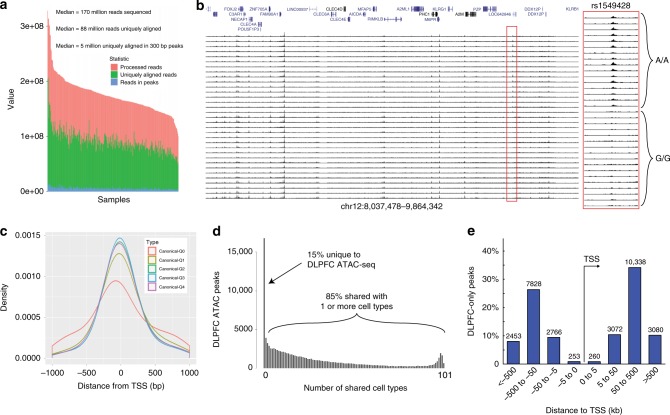
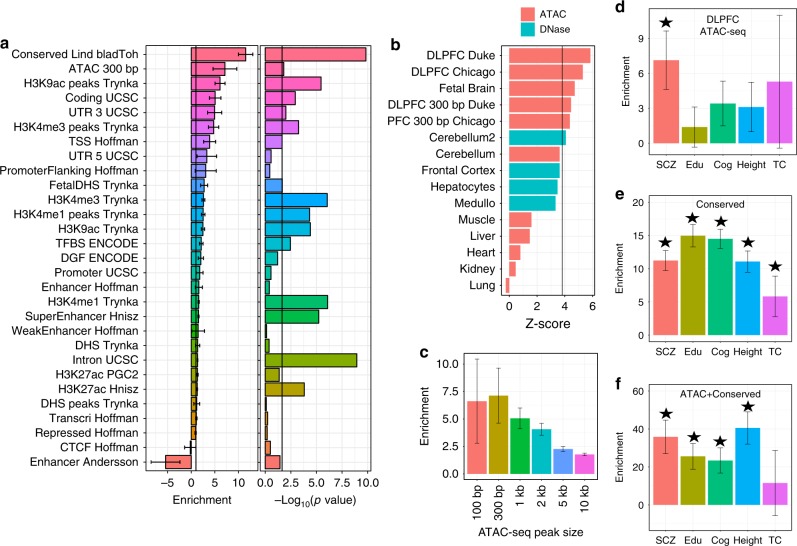
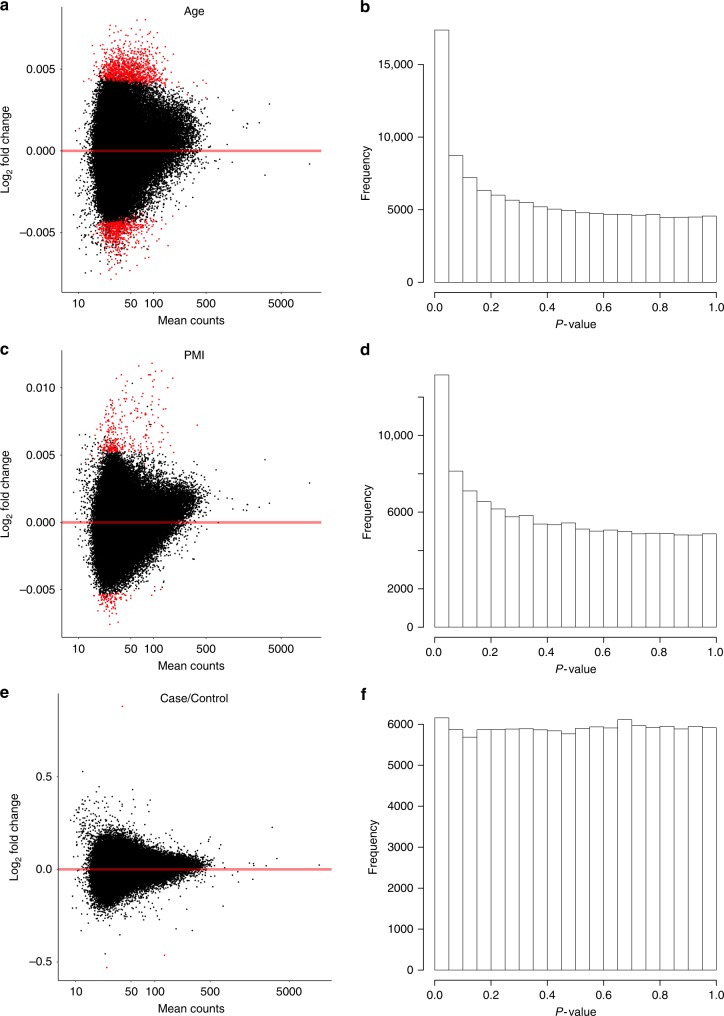
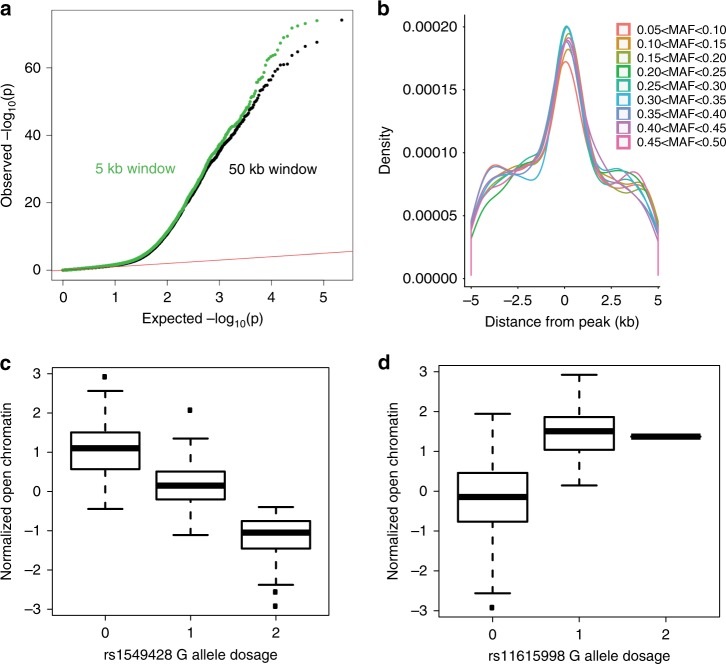
Schizophrenia genome-wide association studies have identified >150 regions of the genome associated with disease risk, yet there is little evidence that coding mutations contribute to this disorder. To explore the mechanism of non-coding regulatory elements in schizophrenia, we performed ATAC-seq on adult prefrontal cortex brain samples from 135 individuals with schizophrenia and 137 controls, and identified 118,152 ATAC-seq peaks. These accessible chromatin regions in the brain are highly enriched for schizophrenia SNP heritability. Accessible chromatin regions that overlap evolutionarily conserved regions exhibit an even higher heritability enrichment, indicating that sequence conservation can further refine functional risk variants. We identify few differences in chromatin accessibility between cases and controls, in contrast to thousands of age-related differential accessible chromatin regions. Altogether, we characterize chromatin accessibility in the human prefrontal cortex, the effect of schizophrenia and age on chromatin accessibility, and provide evidence that our dataset will allow for fine mapping of risk variants.
Overview
The claims and statistics of this paper haven’t been checked yet.
Free: it reads the open-access text and checks the first 5 claims that cite a source we can check. Create a free account to check every claim.
Integrity signals
Registry
Cites
Statistics
Figures
Verification
Claims the paper makes
The claims and statistics of this paper haven’t been checked yet.
Free: it reads the open-access text and checks the first 5 claims that cite a source we can check. Create a free account to check every claim.
Claims other papers make about this one
Each is checked against this paper’s own text: does it say what the citing paper says it does?
The cited source says what the claim attributes to it.
In the citing paper
“ATAC-seq analysis of SZ DLPFC shows that genetic regions with high chromatin accessibility are highly enriched in heritable genetic risk factors for SZ 197.”
From Mechanisms of synaptic transmission dysregulation in the prefrontal cortex: pathophysiological implications (2022) · cites this paper as [197]
In the citing paper
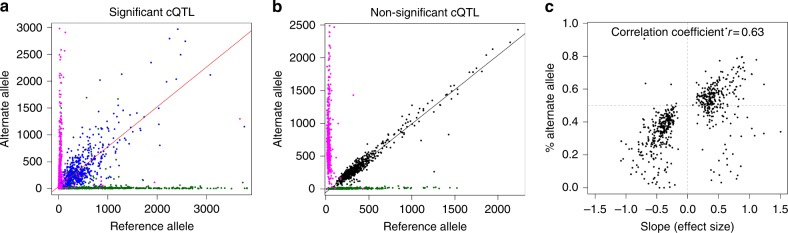
“Overall, we identified ~2000 cQTLs in addition to 6200 identified from individuals within the CMC cohort (39).”
From Comprehensive functional genomic resource and integrative model for the human brain (2018) · cites this paper as [39]
Self-check
Percentages, sums and reported differences re-computed from the paper’s own numbers.
The self-check needs the paper’s full text.
Citations
Cites
Moderated estimation of fold change and dispersion for RNA-seq data with DESeq2
Love, M. I., Huber, W., & Anders, S. (2014) · Genome Biology · doi:10.1186/s13059-014-0550-8 · Cited by 95,106
The Sequence Alignment/Map format and SAMtools
Li, H., Handsaker, B., Wysoker, A., Fennell, T., Ruan, J., Homer, N., Marth, G., Abecasis, G., Durbin, R., & 1000 Genome Project Data Processing Subgroup (2009) · Bioinformatics · doi:10.1093/bioinformatics/btp352 · Cited by 62,041
Fast gapped-read alignment with Bowtie 2
Langmead, B., & Salzberg, S. L. (2012) · Nature Methods · doi:10.1038/nmeth.1923 · Cited by 56,400
Cutadapt removes adapter sequences from high-throughput sequencing reads
Martin, M. (2011) · EMBnet.journal · doi:10.14806/ej.17.1.200 · Cited by 33,889
Heinz, S., Benner, C., Spann, N., Bertolino, E., Lin, Y. C., Laslo, P., Cheng, J. X., Murre, C., Singh, H., & Glass, C. K. (2010) · Molecular Cell · doi:10.1016/j.molcel.2010.05.004 · Cited by 13,382
Second-generation PLINK: rising to the challenge of larger and richer datasets
Chang, C. C., Chow, C. C., Tellier, L. C., Vattikuti, S., Purcell, S. M., & Lee, J. J. (2015) · Gigascience · doi:10.1186/s13742-015-0047-8 · Cited by 12,709
Statistical significance for genomewide studies
Storey, J. D., & Tibshirani, R. (2003) · Proceedings of the National Academy of Sciences · doi:10.1073/pnas.1530509100 · Cited by 9,692
A 3D Map of the Human Genome at Kilobase Resolution Reveals Principles of Chromatin Looping
Rao, S. S. P., Huntley, M. H., Durand, N. C., Stamenova, E. K., Bochkov, I. D., Robinson, J. T., Sanborn, A. L., Machol, I., Omer, A. D., Lander, E. S., et al. (2014) · Cell · doi:10.1016/j.cell.2014.11.021 · Cited by 9,212
A scaling normalization method for differential expression analysis of RNA-seq data
Robinson, M. D., & Oshlack, A. (2010) · Genome Biology · doi:10.1186/gb-2010-11-3-r25 · Cited by 7,876
Biological insights from 108 schizophrenia-associated genetic loci
Schizophrenia Working Group of the Psychiatric Genomics Consortium (2014) · Nature · doi:10.1038/nature13595 · Cited by 7,577
Self-citation
Cited by
Items 101–165 of 165
Girdhar, K., Rahman, S., Dong, P., Fullard, J. F., & Roussos, P. (2022) · Biological Psychiatry · doi:10.1016/j.biopsych.2022.04.018 · Cited by 9
Self-citationKouakou, M. R., Cameron, D., Hannon, E. J., Dempster, E. L., Mill, J. S., Hill, M., & Bray, N. J. (2021) · American Journal of Medical Genetics Part B Neuropsychiatric Genetics · doi:10.1002/ajmg.b.32877 · Cited by 9
Bianchi, O., Willey, M., Alvarado, C. X., Danek, B. P., Khani, M., Kuznetsov, N., Dadu, A., Shah, S. M. T., Koretsky, M. J., Makarious, M. B., et al. (2026) · The Lancet Digital Health · doi:10.1016/j.landig.2025.100943 · Cited by 17
Informing disease modelling with brain-relevant functional genomic annotations
Reynolds, R. H., Hardy, J., Ryten, M., & Taliun, S. A. G. (2019) · Brain · doi:10.1093/brain/awz295 · Cited by 8
“detected in a study of bulk chromatin accessibility from the dorsolateral prefrontal cortex (Bryois et al., 2018).”
BackgroundCurrin, K. W., Perrin, H. J., Pandey, G. K., Alkhawaja, A. A., Vadlamudi, S., Musser, A. E., Etheridge, A. S., Broadaway, K. A., Rosen, J. D., Varshney, A., et al. (2025) · Genome Research · doi:10.1101/gr.279741.124 · Cited by 10
Baratta, A. M., Brandner, A. J., Plasil, S. L., Rice, R. C., & Farris, S. P. (2022) · Frontiers in Molecular Neuroscience · doi:10.3389/fnmol.2022.905328 · Cited by 7
Genetic similarities and differences among distinct definitions of depression
Wu, Y., Wang, L., Zhang, C., Li, M., & Li, Y. (2022) · Psychiatry Research · doi:10.1016/j.psychres.2022.114843 · Cited by 8
Dong, P., Voloudakis, G., Fullard, J. F., Hoffman, G. E., & Roussos, P. (2023) · Molecular Psychiatry · doi:10.1038/s41380-023-02370-y · Cited by 8
“The cis -linked genes were strongly enriched for SCZ risk variants and cell-type speci fi c markers, but their relationship with transcriptome dysregulation is unclear.”
Self-citation3D genetic architecture of schizophrenia risk across three neuronal subtypes
Powell, S. K., Liao, W., Ghorbani, S., Rigat, R., O’Shea, C. P., Kammourh, S., Elahi, R., Infante, D., Deans, P. M., Le, D. J., et al. (2025) · Molecular Psychiatry · doi:10.1038/s41380-025-03352-y · Cited by 7
“Furthermore, thousands of schizophrenia risk variants affect H3K4me3 and H3K27ac levels [24] and impact chromatin accessibility [79].”
Self-citationAlver, M., Lykoskoufis, N. M. R., Ramisch, A., Dermitzakis, E. T., & Ongen, H. (2022) · Molecular Psychiatry · doi:10.1038/s41380-022-01768-4 · Cited by 6
Subtyping Schizophrenia Using Psychiatric Polygenic ScoresPreprint
Lu, Y., Kowalec, K., Song, J., Karlsson, R., Harder, A., Giusti‐Rodríguez, P., Sullivan, P. F., & Yao, S. (2023) · medRxiv · doi:10.1101/2023.10.12.23296915 · Cited by 6
Self-citationRaabe, F. J., Hausruckinger, A., Gagliardi, M., Ahmad, R., de Almeida, V., Galinski, S., Hoffmann, A., Weigert, L., Rummel, C. K., Murek, V., et al. (2024) · bioRxiv (Cold Spring Harbor Laboratory) · doi:10.1101/2024.01.09.574815 · Cited by 7
Montel Hayes, R., Mason, C. E., & Miller, J. J. (2025) · Frontiers in Psychiatry · doi:10.3389/fpsyt.2025.1671122 · Cited by 5
Fundamentals for predicting transcriptional regulations from DNA sequence patterns
Koido, M., Tomizuka, K., & Terao, C. (2024) · Journal of Human Genetics · doi:10.1038/s10038-024-01256-3 · Cited by 7
Morimoto, Y., Ono, S., Yoshida, S., Mishima, H., Kinoshita, A., Tanaka, T., Komohara, Y., Kurotaki, N., Kishino, T., Okazaki, Y., et al. (2021) · Translational Psychiatry · doi:10.1038/s41398-021-01258-1 · Cited by 5
Use of the epigenetic toolbox to contextualize common variants associated with schizophrenia risk
Rajarajan, P., & Akbarian, S. (2019) · Dialogues in Clinical Neuroscience · doi:10.31887/dcns.2019.21.4/sakbarian · Cited by 5
Self-citationCis-regulatory hubs: a new 3D model of complex disease genetics with an application to schizophrenia
Mangnier, L., Joly-Beauparlant, C., Droit, A., Bilodeau, S., & Bureau, A. (2022) · Life Science Alliance · doi:10.26508/lsa.202101156 · Cited by 5
“Since open chromatin regions in the prefrontal cortex of schizophrenia individuals have shown to be enriched in risk variants (Bryois et al. 2018) and that H3K27ac regions are strongly associated with schizophrenia-risk variants (Girdhar et al. 2018), we focused our attention on the…”
BackgroundDoostparast Torshizi, A., Duan, J., & Wang, K. (2020) · Patterns · doi:10.1016/j.patter.2020.100091 · Cited by 5
“Open chromatin accessibility peaks were downloaded from the study by Bryois et al.(30) Protein abundances in all of the tissues and cell types as well as the subcellular localization of all of the proteins were obtained from the Human Protein Atlas project.”
Torshizi, A. D., Duan, J., & Wang, K. (2020) · doi:10.1101/2020.05.28.121517 · Cited by 5
Cheng, B., Yan, W., Wei, W., Cheng, S., Pan, C., Meng, P., Liu, L., Yang, X., Liu, H., Jia, Y., et al. (2025) · Schizophrenia Research · doi:10.1016/j.schres.2025.02.008 · Cited by 4
SNP rs615552 and lncRNA CDKN2B-AS1 influence brain cancer pathogenesis through multi-omic mechanisms
Ye, Z., Yuan, J., Yi, Q., Xu, P., & Liu, W. (2025) · Scientific Reports · doi:10.1038/s41598-025-10360-z · Cited by 5
“…33 was obtained for haQTLs in Brain Cortex (n = 561) from Mostafavi Lab. caQTL Data: Bryois_caQTL data (Bryois et al. 2018, PMID: 30,087,329) 40 was obtained for cis-caQTLs in Prefrontal Cortex (135 schizophrenia patients and 137 controls) from the SMR website. sQTL Data: GTEx sQTL data was…”
From Reads to Insights: Integrative Pipelines for Biological Interpretation of ATAC-Seq Data
Cui, Y., Li, J. S., & Li, W. (2021) · Genomics Proteomics & Bioinformatics · doi:10.1016/j.gpb.2021.06.002 · Cited by 4
“Several international consortia, including The Cancer Genome Atlas (TCGA) [7], CommonMind [8], FOUNDIN-PD [9], AD Knowledge Portal [10], and iPSCORE [11], use ATAC-seq data for population-scale studies.”
MethodJoint-Tissue Integrative Analysis Identified Hundreds of Schizophrenia Risk Genes
Wu, Y., Yu, X., Xiao, X., Li, M., & Li, Y. (2021) · Molecular Neurobiology · doi:10.1007/s12035-021-02572-x · Cited by 4
“However, some risk variants could affect transcription by regulating splicing [59, 60], methylation [61, 62], or histone modification [63, 64].”
BackgroundA map of enhancer regions in primary human neural progenitor cells using capture STARR-seq
Gaynor-Gillett, S. C., Cheng, L., Shi, M., Liu, J. J., Wang, G., Spector, M., Guo, Q., Qi, L., Flaherty, M., Wall, M., et al. (2025) · Genome Research · doi:10.1101/gr.279584.124 · Cited by 6
“We made use of existing bulk PFC ATAC-seq data from the HumanFC and BrainGVEX cohorts of PsychENCODE (Bryois et al. 2018; Fullard et al. 2018), which resulted in a total of ∼ 350,000 candidate enhancers derived from PFC.”
InfluentialSelf-citationPluripotent stem cells-based neural organoids for modelling human brain development and diseases
Tong, L., Tian, P., Wang, R., Niu, S., Wang, R., Ye, Y., Wu, Y., Zhang, W., Wang, Y., Foggetti, A., et al. (2025) · Cell & Bioscience · doi:10.1186/s13578-025-01515-6 · Cited by 3
“For neurological diseases, ATAC-seq has identified gene-regulatory alterations in late-stage Alzheimer’s disease (AD) [212] and schizophrenia-associated non-coding therapeutic targets [216].”
Chromatin accessibility in neuropsychiatric disorders
Egervári, G. (2021) · Neurobiology of Learning and Memory · doi:10.1016/j.nlm.2021.107438 · Cited by 3
Genetic identification of tissues and cell types underlying attention-deficit/hyperactivity disorder
Wei, W.-Q., Sun, H. Y., Chen, Y., Liu, X.-W., Zhou, R., Li, Y., & Liu, X. (2022) · Frontiers in Psychiatry · doi:10.3389/fpsyt.2022.999007 · Cited by 3
“First, GWAS risk SNPs can exert its function not only through regulation of gene expression but also through other pathways (34), such as splicing (35), histone modification (36), and chromatin accessibility (37).”
BackgroundIsolation, phylogenetic analysis and bioprospection of myxobacteria from Vietnam
Nguyen, Y. T. N., Chung, D. Đ., Nguyen, H. T. K., Nguyen, C. P., THI, N. V., Dinh, L. T. L., BAO, N. N. L., Nguyen, T. M., DINH, N. N., & Nguyen, T.-A. (2023) · Biodiversitas Journal of Biological Diversity · doi:10.13057/biodiv/d241047 · Cited by 3
Wang, G., Zhang, H., Shao, M., Tian, M., Feng, H., Li, Q., & Cao, C. (2024) · Computational and Structural Biotechnology Journal · doi:10.1016/j.csbj.2024.05.050 · Cited by 2
Analysis of biased allelic enhancer activity of schizophrenia-linked common variants
Gao, C., Zhang, Q., Wu, C., Peng, L.-X., Wu, M., Wang, B., Xue, B., Niu, M., Jiang, Y., Yuan, W., et al. (2025) · Communications Biology · doi:10.1038/s42003-025-08456-3 · Cited by 2
A practical guide to sequencing in neuropsychiatric research
Minerva, A. R., DeBerardine, M., Lin, R., Kim, H. J. J., Rogers, F. D., Rashford, R. L., & Peña, C. J. (2025) · NPP—Digital Psychiatry and Neuroscience · doi:10.1038/s44277-025-00041-0 · Cited by 2
“For example, by generating a chromatin accessibility atlas of the prefrontal cortex of healthy and schizophrenia patients, researchers identi fi ed over 100,000 accessible regions enriched for psychiatric disease associated variants [43].”
Guo, Q., Wu, S. J., & Geschwind, D. H. (2023) · Developmental Neuroscience · doi:10.1159/000530929 · Cited by 2
“In parallel to data generation in fetal brain, similar efforts have been carried out for adult human brain [22, 99 – 102].”
MethodDeepGWAS: Enhance GWAS Signals for Neuropsychiatric Disorders via Deep Neural NetworkPreprint
Wen, J., Li, G., Chen, J. C., Sun, Q., Liu, W., Guan, W., Lai, B., Zhou, H., Szatkiewicz, J., He, X., et al. (2022) · bioRxiv (Cold Spring Harbor Laboratory) · doi:10.1101/2022.12.20.521277 · Cited by 1
Self-citationInfluence of cis -regulatory elements on expression divergence in human segmental duplications
Shew, C. J., Kaya, G., McGinty, S. P., & Dennis, M. Y. (2026) · Genome Research · doi:10.1101/gr.281526.125 · Cited by 2
“In the case of Bryois et al. (2018), only control samples were used.”
Assay for Transposase-Accessible Chromatin Using Sequencing of Freshly Isolated Muscle Stem Cells
Yekelchyk, M., Günther, S., & Braun, T. W. (2023) · Methods in molecular biology · doi:10.1007/978-1-0716-3036-5_27 · Cited by 1
Weitzman, S. A., Orrick, J., Fulton‐Howard, B., Renton, A. E., Fridrikh, M., McKetney, J., Dixon, G., Qi, L., Labrie‐Cleary, C., Rizzi, L., et al. (2026) · Neuron · doi:10.1016/j.neuron.2026.09.008 · Cited by 1
ATAC-seq and psychiatric disorders
Fullard, J. F., Bendl, J. M., & Roussos, P. (2021) · Elsevier eBooks · doi:10.1016/b978-0-12-823577-5.00036-2 · Cited by 1
Self-citationSingle-Cell Genomic and Epigenomic DNA Analyses
Geurs, S., Lefevre, T., & Voet, T. (2022) · Neuromethods · doi:10.1007/978-1-0716-2525-5_2 · Cited by 1
Li, X., Hu, H., Johansen, N., & Quon, G. (2022) · bioRxiv (Cold Spring Harbor Laboratory) · doi:10.1101/2022.11.11.516161 · Cited by 1
Validation of Enhancer Regions in Primary Human Neural Progenitor Cells using Capture STARR-seqPreprint
Gaynor-Gillett, S. C., Cheng, L., Shi, M., Liu, J. J., Wang, G., Spector, M., Flaherty, M., Wall, M., Hwang, A., Gu, M., et al. (2024) · bioRxiv (Cold Spring Harbor Laboratory) · doi:10.1101/2024.03.14.585066 · Cited by 1
Self-citationAlterations in chromatin accessibility and conformation elucidate genetic mechanisms in ASDPreprint
Yin, J., Huang, J. I., Ou, J., Chen, G. T., Bicks, L. K., Wamsley, B., Cheng, Y., Chen, L., Haney, J. R., Wong, R., et al. (2025) · medRxiv · doi:10.1101/2025.04.02.25325129 · Cited by 1
Cis-Regulatory Hubs: a new 3D Model of Complex Disease Genetics with an Application to SchizophreniaPreprint
Mangnier, L., Joly-Beauparlant, C., Droit, A., Bilodeau, S., & Bureau, A. (2021) · bioRxiv (Cold Spring Harbor Laboratory) · doi:10.1101/2021.06.22.449467
Loureiro, C. M. (2021) · Digital Library of Theses and Dissertations (Universidade de São Paulo) · doi:10.11606/t.17.2021.tde-04082021-134444
Epigenetics and precision medicine in allergic diseases
Tost, J. (2021) · Elsevier eBooks · doi:10.1016/b978-0-12-823008-4.00019-6
Kottyan, L. C. (2020) · Faculty Opinions – Post-Publication Peer Review of the Biomedical Literature · doi:10.3410/f.738406137.793577248
Nürnberger, J. I. (2019) · Faculty Opinions – Post-Publication Peer Review of the Biomedical Literature · doi:10.3410/f.734622872.793563012
Genes, environments, and epigenetics
Gram, S., Sokolowski, D., & Sokolowski, M. B. (2023) · Principles of Gender-Specific Medicine · doi:10.1016/b978-0-323-88534-8.00031-6
Functional Enrichment Analysis Identifying Regulatory Information Associated with Human Fracture
Meng, X., Liu, Z., Chen, X., Deng, A., & Mao, Z. (2023) · Calcified Tissue International · doi:10.1007/s00223-023-01108-w
“Regulatory information, also known as functional annotation, including CHIP-seq peaks, DNase I hypersensitivity peaks, DNase I footprints, ATAC-seq, conserved motifs, expression quantitative trait loci (eQTLs), Epigenome marks and transcription factor (TF) binding sites, was used to suggest functional hypotheses for v…”
MethodGusev, F. E., Андреева, Т. В., & Rogaev, E. I. (2023) · Russian Journal of Genetics · doi:10.1134/s1022795423080082
“For example, in the study of human brain cells using the ATAC-seq method [33], it was found that more than 466 loci of the genome change the degree of chromatin openness depending on the duration of the time interval elapsed from the moment of death to the receipt of brain-tis-sue samples…”
MethodAntipsychotic-induced epigenomic reorganization in frontal cortex of individuals with schizophreniaPreprint
Zhu, B., Ainsworth, R. I., Wang, Z., Liu, Z., Sierra, S., Deng, C., Callado, L. F., Meana, J. J., Wang, W., Lu, C., et al. (2023) · eLife · doi:10.7554/elife.92393.1
Gusev, F. E., Андреева, Т. В., & Rogaev, E. I. (2023) · Генетика · doi:10.31857/s0016675823080088
Weitzman, S. A., Pedicone, C., Orrick, J., Fulton‐Howard, B., Renton, A. E., Fridrikh, M., McKetney, J., Labrie‐Cleary, C., Grinberg, L. T., Swaney, D. L., et al. (2025) · SSRN Electronic Journal · doi:10.2139/ssrn.5348336
A developmentally regulated long-range enhancer-promoter contact mediates human neural developmentPreprint
Bready, D., Wang, S., Ravn-Boess, N., Frenster, J. D., Sabio, J., Kushmakov, R., Clark, F., Guerrero, A., Dada, H., Lapierre, C., et al. (2025) · bioRxiv (Cold Spring Harbor Laboratory) · doi:10.64898/2025.12.01.691702
“Collectively, these data suggest that enhancer activation is not coupled to establishment of the chromatin loop, since it is observed in both the ROSA26 and nMotif conditions, and that the enhancer regulates activating and repressive epigenetic modifications in the SOX2 TAD.”
Aygün, N., Liang, D., Crouse, W. L., Keele, G. R., Love, M. I., & Stein, J. L. (2024) · Figshare · doi:10.6084/m9.figshare.26592971
Aygün, N., Liang, D., Crouse, W. L., Keele, G. R., Love, M. I., & Stein, J. L. (2024) · Figshare · doi:10.6084/m9.figshare.26592974
Aygün, N., Liang, D., Crouse, W. L., Keele, G. R., Love, M. I., & Stein, J. L. (2024) · Figshare · doi:10.6084/m9.figshare.26592962
Aygün, N., Liang, D., Crouse, W. L., Keele, G. R., Love, M. I., & Stein, J. L. (2024) · Figshare · doi:10.6084/m9.figshare.26592968
Aygün, N., Liang, D., Crouse, W. L., Keele, G. R., Love, M. I., & Stein, J. L. (2024) · Figshare · doi:10.6084/m9.figshare.26592965
A developmentally regulated long-range enhancer-promoter contact mediates human neural developmentPreprint
Bready, D., Wang, S., Ravn-Boess, N., Frenster, J. D., Sabio, J., Kushmakov, R., Clark, F., Guerrero, A., Dada, H., Lapierre, C., et al. (2026) · eLife · doi:10.7554/elife.110525 · Cited by 2
A developmentally regulated long-range enhancer-promoter contact mediates human neural developmentPreprint
Bready, D., Wang, S., Ravn-Boess, N., Frenster, J. D., Sabio, J., Kushmakov, R., Clark, F., Guerrero, A., Lapierre, C., Galbraith, K., et al. (2026) · eLife · doi:10.7554/elife.110525.1 · Cited by 1
Yu, C., Liu, N., Xu, J., Tang, J., Fu, J., Wang, S., Ji, Y., Xue, H., Zhang, N., Xu, Q., et al. (2026) · Research Square · doi:10.21203/rs.3.rs-8949457/v1
Yuan, Q. (2026) · Journal of Translational Genetics and Genomics · doi:10.20517/jtgg.2026.60
Chen, H., Fan, B., Chen, H., Chen, Y., Shu, Y., & Zhang, H. (2026) · Phenomics · doi:10.1007/s43657-026-00338-w
Decoding Primary Open-Angle Glaucoma: A Multi-Omics Approach to Identify Druggable Effector Genes
Guo, J., Yao, Y., Lin, H., Niu, Y., Li, X., Liu, J., Liu, S., Qin, Y., Biradar, M. I., Shang, X., et al. (2026) · Investigative Ophthalmology & Visual Science · doi:10.1167/iovs.67.11.19
“24 A total of 12,794 sQTLs were identified from RNA splicing analyses of RNA-sequencing (RNA-seq) data from 2,865 brain cortex samples of unrelated individuals of European ancestry.”
Porras, L. M., Farrell, M. S., Rodríguez‐Lausell, I., Iglesias-Maldonado, G. A., Tuliao, E. V. F., Wright, E., Kreiman, A., Ancalade, N., Stoddard, C. E., Szatkiewicz, J., et al. (2026) · bioRxiv (Cold Spring Harbor Laboratory) · doi:10.64898/2026.10.26.761993
“…score based on data from the 200 Mammals Project (Sullivan et al. 2023), presence of known regulatory elements (based on brain open chromatin (Bryois et al. 2018), ChIP-seq (Lu et al. 2020), Hi-C data (Giusti-Rodríguez et al. 2019), TFBS (Castro-Mondragon et al. 2022), VISTA Enhancer Browser…”
Metadata
- Authors
- Bryois, J., Garrett, M. E., Song, L., Safi, A., Giusti-Rodriguez, P., Johnson, G. D., Shieh, A. W., Buil, A., Fullard, J. F., Roussos, P., Sklar, P., Akbarian, S., Haroutunian, V., Stockmeier, C. A., Wray, G. A., White, K. P., Liu, C., Reddy, T. E., Ashley-Koch, A., Sullivan, P. F., & Crawford, G. E.
- Affiliations
- Karolinska Institutet (SE)
- Duke University (US)
- SUNY Upstate Medical University (US)
- Sankt Hans Hospital (DK)
- Icahn School of Medicine at Mount Sinai (US)
- James J. Peters VA Medical Center (US)
- University of Mississippi Medical Center (US)
- University of Chicago (US)
- University of North Carolina at Chapel Hill (US)
- Corresponding author
- Sullivan, Patrick F.
- Crawford, Gregory E.
- ORCID
- Bryois, Julien
- Song, Lingyun
- Safi, Alexias
- Giusti-Rodriguez, Paola
- Johnson, Graham D.
- Shieh, Annie W.
- Buil, Alfonso
- Fullard, John F.
- Roussos, Panos
- Sklar, Pamela
- Akbarian, Schahram
- Haroutunian, Vahram
- Stockmeier, Craig A.
- Wray, Gregory A.
- White, Kevin P.
- Liu, Chunyu
- Reddy, Timothy E.
- Sullivan, Patrick F.
- Crawford, Gregory E.
- Venue
- Nature Communications
- Published
- 2018-08-07
- Volume
- 9
- Issue
- 1
- Pages
- 3121-3121
- ISSN
- 2041-1723 (ISSN-L)
- PMC
- PMC6081462
- OpenAlex
- W2886367104
- Semantic Scholar
- 9c846845c1807dfda67d90c2433c12830641bee9
- Cited by
- 167
- References
- 72
- Citations by year
- 2026: 8 · 2025: 16 · 2024: 21 · 2023: 19 · 2022: 25 · 2021: 30 · 2020: 28 · 2019: 13 · 2018: 7
- FWCI
- 15.35
- Type
- journal article
- Language
- en
- Open access
- gold
- doi.org
- Licence
- cc-by
- creativecommons.org/licenses/by/4.0 (tdm)
- creativecommons.org/licenses/by/4.0 (vor)
- Locations
- Nature Communications (publishedVersion, cc-by)
- Europe PMC (PubMed Central) (publishedVersion, cc-by)
- PubMed Central (publishedVersion, cc-by)
- PubMed (publishedVersion)
- Carolina Digital Repository (University of North Carolina at Chapel Hill) (submittedVersion)
- RePEc: Research Papers in Economics (submittedVersion)
- DOAJ (DOAJ: Directory of Open Access Journals) (submittedVersion, cc-by-sa)
- DOAJ (DOAJ: Directory of Open Access Journals) (submittedVersion)
- UNC Libraries
- Funders
- U.S. Department of Health & Human Services | NIH | National Institute of Mental Health (R01 MH105472)
- Vetenskapsrådet (D0886501)
- U.S. Department of Health & Human Services | NIH | National Institute of General Medical Sciences (P30GM103328)
- Topics
- Health Sciences › Medicine › Psychiatry and Mental health › Schizophrenia research and treatment
- Life Sciences › Biochemistry, Genetics and Molecular Biology › Molecular Biology › Genomics and Chromatin Dynamics
- Life Sciences › Biochemistry, Genetics and Molecular Biology › Genetics › Genetic Associations and Epidemiology
- Keywords
- schizophrenia, chromatin accessibility, prefrontal cortex, non-coding regulatory elements, ATAC-seq, SNP heritability, evolutionary conservation, fine mapping, brain development
- MeSH terms
- Aged, Aged, 80 and over, Brain, Chromatin, Female, Humans, Male, Middle Aged, Risk, Schizophrenia, Prefrontal Cortex, Sequence Analysis, DNA, Polymorphism, Single Nucleotide, Gene Expression Profiling, Quantitative Trait Loci, Genome-Wide Association Study, High-Throughput Nucleotide Sequencing
About these checks
Registry, retraction, Cites and statistics results are computed, not judged, with one exception: a printed reference that no index lists is read once by a model before it counts as a citation error. Claims are extracted by a model and kept only when their quote appears verbatim in the text; each cited source is then checked, with a model’s help, for whether it says what the claim relies on. Those verdicts can be wrong — read the claim’s quote and the cited source before relying on one.
Statistics and arithmetic are recomputed, not judged.
Confidence bands are shown only for fields calibrated on our annotated test set. None is calibrated yet, so no band is shown.
What counts as a claim ›How we measure confidence ›How we check this ›
Are you an author, or do you see a problem with this page? Request a review
Data sources
Bibliographic data: Semantic Scholar, OpenAlex, Crossref.
Contains information from the Semantic Scholar Academic Graph Datasets, made available under the ODC Attribution License (ODC-BY 1.0).
Semantic Scholar’s data is described in: Kinney, R., et al. (2023). The Semantic Scholar Open Data Platform. arXiv:2301.10140.
