

Evaluation of chromatin accessibility in prefrontal cortex of individuals with schizophrenia
Open accessThe DOI matches its Crossref record; 97 of the 97 references it cites were found in a registry or an index.
Abstract
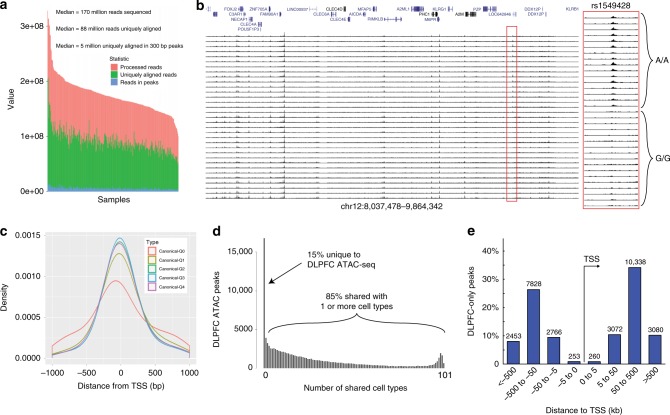
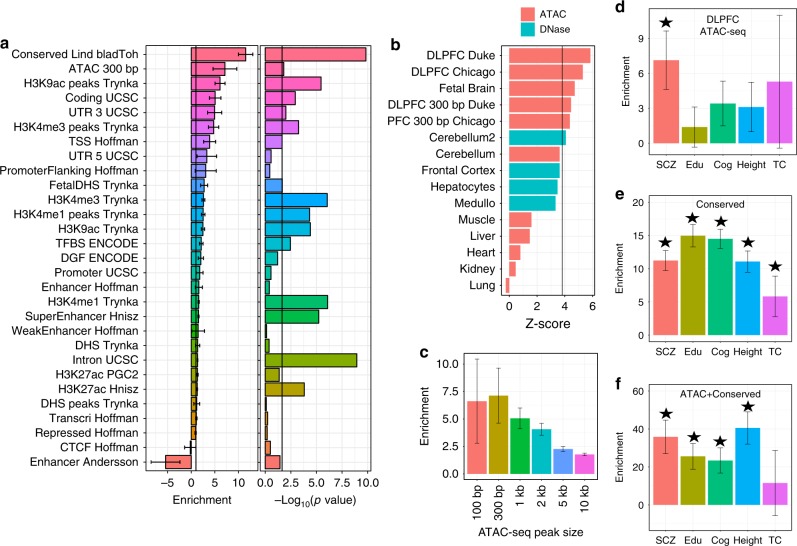
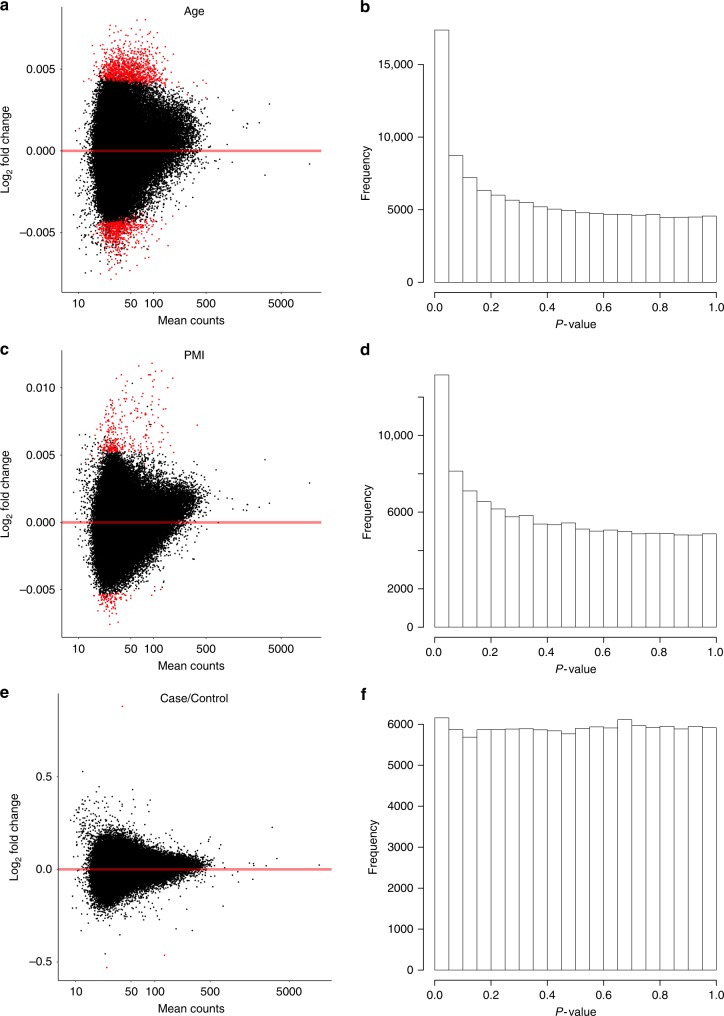
Schizophrenia genome-wide association studies have identified >150 regions of the genome associated with disease risk, yet there is little evidence that coding mutations contribute to this disorder. To explore the mechanism of non-coding regulatory elements in schizophrenia, we performed ATAC-seq on adult prefrontal cortex brain samples from 135 individuals with schizophrenia and 137 controls, and identified 118,152 ATAC-seq peaks. These accessible chromatin regions in the brain are highly enriched for schizophrenia SNP heritability. Accessible chromatin regions that overlap evolutionarily conserved regions exhibit an even higher heritability enrichment, indicating that sequence conservation can further refine functional risk variants. We identify few differences in chromatin accessibility between cases and controls, in contrast to thousands of age-related differential accessible chromatin regions. Altogether, we characterize chromatin accessibility in the human prefrontal cortex, the effect of schizophrenia and age on chromatin accessibility, and provide evidence that our dataset will allow for fine mapping of risk variants.
Overview
The claims and statistics of this paper haven’t been checked yet.
Free: it reads the open-access text and checks the first 5 claims that cite a source we can check. Create a free account to check every claim.
Integrity signals
Registry
Cites
Statistics
Figures
Verification
Claims the paper makes
The claims and statistics of this paper haven’t been checked yet.
Free: it reads the open-access text and checks the first 5 claims that cite a source we can check. Create a free account to check every claim.
Claims other papers make about this one
Each is checked against this paper’s own text: does it say what the citing paper says it does?
The cited source says what the claim attributes to it.
In the citing paper
“ATAC-seq analysis of SZ DLPFC shows that genetic regions with high chromatin accessibility are highly enriched in heritable genetic risk factors for SZ 197.”
From Mechanisms of synaptic transmission dysregulation in the prefrontal cortex: pathophysiological implications (2022) · cites this paper as [197]
In the citing paper
“Overall, we identified ~2000 cQTLs in addition to 6200 identified from individuals within the CMC cohort (39).”
From Comprehensive functional genomic resource and integrative model for the human brain (2018) · cites this paper as [39]
Self-check
Percentages, sums and reported differences re-computed from the paper’s own numbers.
The self-check needs the paper’s full text.
Citations
Cites
Moderated estimation of fold change and dispersion for RNA-seq data with DESeq2
Love, M. I., Huber, W., & Anders, S. (2014) · Genome Biology · doi:10.1186/s13059-014-0550-8 · Cited by 95,106
The Sequence Alignment/Map format and SAMtools
Li, H., Handsaker, B., Wysoker, A., Fennell, T., Ruan, J., Homer, N., Marth, G., Abecasis, G., Durbin, R., & 1000 Genome Project Data Processing Subgroup (2009) · Bioinformatics · doi:10.1093/bioinformatics/btp352 · Cited by 62,041
Fast gapped-read alignment with Bowtie 2
Langmead, B., & Salzberg, S. L. (2012) · Nature Methods · doi:10.1038/nmeth.1923 · Cited by 56,400
Cutadapt removes adapter sequences from high-throughput sequencing reads
Martin, M. (2011) · EMBnet.journal · doi:10.14806/ej.17.1.200 · Cited by 33,889
Heinz, S., Benner, C., Spann, N., Bertolino, E., Lin, Y. C., Laslo, P., Cheng, J. X., Murre, C., Singh, H., & Glass, C. K. (2010) · Molecular Cell · doi:10.1016/j.molcel.2010.05.004 · Cited by 13,382
Second-generation PLINK: rising to the challenge of larger and richer datasets
Chang, C. C., Chow, C. C., Tellier, L. C., Vattikuti, S., Purcell, S. M., & Lee, J. J. (2015) · Gigascience · doi:10.1186/s13742-015-0047-8 · Cited by 12,709
Statistical significance for genomewide studies
Storey, J. D., & Tibshirani, R. (2003) · Proceedings of the National Academy of Sciences · doi:10.1073/pnas.1530509100 · Cited by 9,692
A 3D Map of the Human Genome at Kilobase Resolution Reveals Principles of Chromatin Looping
Rao, S. S. P., Huntley, M. H., Durand, N. C., Stamenova, E. K., Bochkov, I. D., Robinson, J. T., Sanborn, A. L., Machol, I., Omer, A. D., Lander, E. S., et al. (2014) · Cell · doi:10.1016/j.cell.2014.11.021 · Cited by 9,212
A scaling normalization method for differential expression analysis of RNA-seq data
Robinson, M. D., & Oshlack, A. (2010) · Genome Biology · doi:10.1186/gb-2010-11-3-r25 · Cited by 7,876
Biological insights from 108 schizophrenia-associated genetic loci
Schizophrenia Working Group of the Psychiatric Genomics Consortium (2014) · Nature · doi:10.1038/nature13595 · Cited by 7,577
Self-citation
Cited by
eQTLGen, Wray, N. R., 23andMe, the Major Depressive Disorder Working Group of the Psychiatric Genomics Consortium, Ripke, S., Mattheisen, M., Trzaskowski, M., Byrne, E. M., Abdellaoui, A., Adams, M. J., et al. (2018) · Nature Genetics · doi:10.1038/s41588-018-0090-3 · Cited by 3,005
Self-citationComprehensive functional genomic resource and integrative model for the human brain
Wang, D., Liu, S., Warrell, J., Won, H., Shi, X., Navarro, F. C. P., Clarke, D., Gu, M., Emani, P., Yang, Y. T., et al. (2018) · Science · doi:10.1126/science.aat8464 · Cited by 965
“Overall, we identified ~2000 cQTLs in addition to 6200 identified from individuals within the CMC cohort (39).”
BackgroundSelf-citationComparative genetic architectures of schizophrenia in East Asian and European populations
Schizophrenia Working Group of the Psychiatric Genomics Consortium, Lam, M., Indonesia Schizophrenia Consortium, Genetic REsearch on schizophreniA neTwork-China and the Netherlands (GREAT-CN), Chen, C.-Y., Li, Z., Martin, A. R., Bryois, J., Ma, X., Gaspar, H., et al. (2019) · Nature Genetics · doi:10.1038/s41588-019-0512-x · Cited by 655
“We used partitioned LDSC 23 to look for heritability enrichment in diverse functional genomic annotations defined and used in previous publications 34,35 (Methods and Supplementary Fig.”
InfluentialSelf-citationFrom reads to insight: a hitchhiker’s guide to ATAC-seq data analysis
Yan, F., Powell, D. R., Curtis, D. J., & Wong, N. C. (2020) · Genome Biology · doi:10.1186/s13059-020-1929-3 · Cited by 473
Eliciting priors and relaxing the single causal variant assumption in colocalisation analyses
Wallace, C. (2020) · PLOS Genetics · doi:10.1371/journal.pgen.1008720 · Cited by 441
Bryois, J., Skene, N. G., Hansen, T. F., Kogelman, L. J. A., Watson, H. J., Liu, Z., Eating Disorders Working Group of the Psychiatric Genomics Consortium, Adan, R., Alfredsson, L., Ando, T., et al. (2020) · Nature Genetics · doi:10.1038/s41588-020-0610-9 · Cited by 366
Self-citationCorces, M. R., Shcherbina, A., Kundu, S., Gloudemans, M. J., Frésard, L., Granja, J. M., Louie, B. H., Eulalio, T., Shams, S., Bagdatli, S. T., et al. (2020) · Nature Genetics · doi:10.1038/s41588-020-00721-x · Cited by 358
Multi-ancestry genome-wide association meta-analysis of Parkinson’s disease
Kim, J. J., Vitale, D., Otani, D. V., Lian, M. M., Heilbron, K., the 23andMe Research Team, Aslibekyan, S., Auton, A., Babalola, E., Bell, R. K., et al. (2024) · Nature Genetics · doi:10.1038/s41588-023-01584-8 · Cited by 285
Yan, Z., & Rein, B. (2022) · Molecular Psychiatry · doi:10.1038/s41380-021-01092-3 · Cited by 300
“ATAC-seq analysis of SZ DLPFC shows that genetic regions with high chromatin accessibility are highly enriched in heritable genetic risk factors for SZ [197].”
Genetic Control of Expression and Splicing in Developing Human Brain Informs Disease Mechanisms
Walker, R. L., Ramaswami, G., Hartl, C., Mancuso, N., Gandal, M. J., de la Torre-Ubieta, L., Pasaniuc, B., Stein, J. L., & Geschwind, D. H. (2019) · Cell · doi:10.1016/j.cell.2019.09.021 · Cited by 273
Biological embedding of experience: a primer on epigenetics
Aristizabal, M. J., Anreiter, I., Halldorsdottir, T., Odgers, C. L., McDade, T. W., Goldenberg, A., Mostafavi, S., Kobor, M. S., Binder, E. B., Sokolowski, M. B., et al. (2020) · Proceedings of the National Academy of Sciences · doi:10.1073/pnas.1820838116 · Cited by 268
Hoffman, G. E., Bendl, J., Voloudakis, G., Montgomery, K. S., Sloofman, L., Wang, Y.-C., Shah, H. R., Hauberg, M. E., Johnson, J. S., Girdhar, K., et al. (2019) · Scientific Data · doi:10.1038/s41597-019-0183-6 · Cited by 225
Self-citationChromatin accessibility profiling methods
Minnoye, L., Marinov, G. K., Krausgruber, T., Pan, L., Marand, A. P., Secchia, S., Greenleaf, W. J., Furlong, E. E. M., Zhao, K., Schmitz, R. J., et al. (2021) · Nature Reviews Methods Primers · doi:10.1038/s43586-020-00008-9 · Cited by 206
Richetto, J., & Meyer, U. (2021) · Biological Psychiatry · doi:10.1016/j.biopsych.2020.03.008 · Cited by 181
“For example, performing ATAC-seq on adult PFC brain samples from 135 individuals with schizophrenia and 137 control subjects, Bryois et al. (56) found that chromatin accessibility in schizophrenia differs in three specific genomic regions.”
BackgroundMethodSingle-cell genomics and regulatory networks for 388 human brains
Emani, P. S., Liu, J. J., Clarke, D., Jensen, M., Warrell, J., Gupta, C., Meng, R., Lee, C. Y., Xu, S., Dursun, C., et al. (2024) · Science · doi:10.1126/science.adi5199 · Cited by 163
Self-citationGenetics of the human microglia regulome refines Alzheimer’s disease risk loci
Kosoy, R., Fullard, J. F., Zeng, B., Bendl, J., Dong, P., Rahman, S., Kleopoulos, S. P., Shao, Z., Girdhar, K., Humphrey, J., et al. (2022) · Nature Genetics · doi:10.1038/s41588-022-01149-1 · Cited by 168
“The replication of microglia caQTLs was lower in caQTLs derived from homogenate brain specimens (π 1 =0.602) 17 .”
BackgroundInfluentialSelf-citationTurner, A. W., Hu, S. S., Mosquera, J. V., Ma, W. F., Hodonsky, C. J., Wong, D., Auguste, G., Song, Y., Sol-Church, K., Farber, E., et al. (2022) · Nature Genetics · doi:10.1038/s41588-022-01069-0 · Cited by 156
Sestan, N., & State, M. W. (2018) · Neuron · doi:10.1016/j.neuron.2018.10.015 · Cited by 127
Allele-specific open chromatin in human iPSC neurons elucidates functional disease variants
Zhang, S., Zhang, H., Zhou, Y., Qiao, M., Zhao, S., Kozlova, A., Shi, J., Sanders, A. R., Wang, G., Luo, K., et al. (2020) · Science · doi:10.1126/science.aay3983 · Cited by 127
Leveraging base-pair mammalian constraint to understand genetic variation and human disease
Sullivan, P. F., Meadows, J. R. S., Gazal, S., Phan, B. N., Li, X., Genereux, D. P., Dong, M. X., Bianchi, M., Andrews, G., Sakthikumar, S., et al. (2023) · Science · doi:10.1126/science.abn2937 · Cited by 120
Self-citationChromatin accessibility landscape and regulatory network of high-altitude hypoxia adaptation
Xin, J., Zhang, H., He, Y., Duren, Z., Bai, C., Chen, L., Luo, X., Yan, D.-S., Zhang, C., Zhu, X., et al. (2020) · Nature Communications · doi:10.1038/s41467-020-18638-8 · Cited by 119
Neurobiological functions of transcriptional enhancers
Nord, A. S., & West, A. E. (2020) · Nature Neuroscience · doi:10.1038/s41593-019-0538-5 · Cited by 103
Liang, D., Elwell, A. L., Aygün, N., Krupa, O., Wolter, J. M., Kyere, F. A., Lafferty, M. J., Cheek, K. E., Courtney, K. P., Yusupova, M., et al. (2021) · Nature Neuroscience · doi:10.1038/s41593-021-00858-w · Cited by 102
Self-citationFrom genetic associations to genes: methods, applications, and challenges
Qi, T., Song, L., Guo, Y., Chen, C., & Yang, J. (2024) · Trends in Genetics · doi:10.1016/j.tig.2024.04.008 · Cited by 105
Self-citationHalvorsen, M., Huh, R., Oskolkov, N., Wen, J., Netotea, S., Giusti-Rodriguez, P., Karlsson, R., Bryois, J., Nystedt, B., Ameur, A., et al. (2020) · Nature Communications · doi:10.1038/s41467-020-15707-w · Cited by 81
Self-citationGiusti-Rodriguez, P. M., & Sullivan, P. F. (2018) · bioRxiv (Cold Spring Harbor Laboratory) · doi:10.1101/406330 · Cited by 71
Self-citationComparative genetic architectures of schizophrenia in East Asian and European populations
Lam, M., Chen, C.-Y., Li, Z., Martin, A. R., Bryois, J., Ma, X., Gaspar, H. A., Ikeda, M., Benyamin, B., Brown, B. C., et al. (2019) · Lancaster EPrints (Lancaster University) · Cited by 83
Self-citationGuan, F., Ni, T., Zhu, W., Williams, L. K., Cui, L., Li, M., Tubbs, J. D., Sham, P. C., & Gui, H. (2021) · Molecular Psychiatry · doi:10.1038/s41380-021-01201-2 · Cited by 83
Hauberg, M. E., Creus-Muncunill, J., Bendl, J., Kozlenkov, A., Zeng, B., Corwin, C., Chowdhury, S., Kranz, H., Hurd, Y. L., Wegner, M., et al. (2020) · Nature Communications · doi:10.1038/s41467-020-19319-2 · Cited by 79
Self-citationNew considerations for hiPSC-based models of neuropsychiatric disorders
Hoffman, G. E., Schrode, N., Flaherty, E., & Brennand, K. J. (2019) · Molecular Psychiatry · doi:10.1038/s41380-018-0029-1 · Cited by 66
A Multi-Omics Perspective of Quantitative Trait Loci in Precision Medicine
Ye, Y., Zhang, Z., Liu, Y., Diao, L., & Han, L. (2020) · Trends in Genetics · doi:10.1016/j.tig.2020.01.009 · Cited by 73
Coleman, J. R. I., Bryois, J., Gaspar, H. A., Jansen, P. R., Savage, J. E., Skene, N., Plomin, R., Muñoz-Manchado, A. B., Linnarsson, S., Crawford, G., et al. (2019) · Molecular Psychiatry · doi:10.1038/s41380-018-0040-6 · Cited by 66
Self-citationATACdb: a comprehensive human chromatin accessibility database
Wang, F., Bai, X., Wang, Y., Jiang, Y., Ai, B., Zhang, Y., Liu, Y., Xu, M., Wang, Q., Han, X., et al. (2020) · Nucleic Acids Research · doi:10.1093/nar/gkaa943 · Cited by 69
“In the brain tissue, the SNP heritability of schizophrenia enriched in accessible chromatin regions contributes to the risk of schizophrenia (9).”
BackgroundGirdhar, K., Hoffman, G. E., Bendl, J., Rahman, S., Dong, P., Liao, W., Hauberg, M. E., Sloofman, L., Brown, L., Devillers, O., et al. (2022) · Nature Neuroscience · doi:10.1038/s41593-022-01032-6 · Cited by 75
Self-citationHoffman, G. E., Bendl, J. M., Girdhar, K., Schadt, E. E., & Roussos, P. (2019) · Nucleic Acids Research · doi:10.1093/nar/gkz808 · Cited by 78
“Raw ATAC-seq (44) data from 189 human post mortem brains (45) of European ancestry was aligned to GRCh38 with STAR aligner (46).”
BackgroundMethodSelf-citationGenetic effects on liver chromatin accessibility identify disease regulatory variants
Currin, K. W., Erdos, M. R., Narisu, N., Rai, V., Vadlamudi, S., Perrin, H. J., Idol, J. R., Yan, T., Albanus, R. D., Broadaway, K. A., et al. (2021) · The American Journal of Human Genetics · doi:10.1016/j.ajhg.2021.05.001 · Cited by 65
Genetic regulation of cell type–specific chromatin accessibility shapes brain disease etiology
Zeng, B., Bendl, J., Deng, C., Lee, D., Misir, R., Reach, S. M., Kleopoulos, S. P., Auluck, P., Marenco, S., Lewis, D. A., et al. (2024) · Science · doi:10.1126/science.adh4265 · Cited by 56
Self-citationCharacterization of the chromatin accessibility in an Alzheimer’s disease (AD) mouse model
Wang, Y., Zhang, X., Song, Q., Hou, Y., Liu, J., Sun, Y., & Wang, P. (2020) · Alzheimer s Research & Therapy · doi:10.1186/s13195-020-00598-2 · Cited by 56
Keele, G. R., Quach, B. C., Israel, J. W., Chappell, G. A., Lewis, L., Safi, A., Simon, J. M., Cotney, P. A., Crawford, G. E., Valdar, W. S. J., et al. (2020) · PLoS Genetics · doi:10.1371/journal.pgen.1008537 · Cited by 60
“In recent studies of gene expression and chromatin accessibility in the adult brain from the same individuals, 2,154,331 cis-eQTL were found for 467 individuals [38], whereas only 6,200 cQTL were detected, albeit for only 272 individuals [39].”
BackgroundSelf-citationPopulation-level variation in enhancer expression identifies disease mechanisms in the human brain
Dong, P., Hoffman, G. E., Apontes, P., Bendl, J. M., Rahman, S., Fernando, M. B., Zeng, B., Vicari, J. M., Zhang, W., Girdhar, K., et al. (2022) · Nature Genetics · doi:10.1038/s41588-022-01170-4 · Cited by 58
Self-citationDeconstructing and reconstructing the human brain with regionally specified brain organoids
Xiang, Y., Çakır, B., & Park, I. (2020) · Seminars in Cell and Developmental Biology · doi:10.1016/j.semcdb.2020.05.023 · Cited by 42
ezQTL: A Web Platform for Interactive Visualization and Colocalization of QTLs and GWAS Loci
Zhang, T., Klein, A., Sang, J., Choi, J., & Brown, K. M. (2022) · Genomics Proteomics & Bioinformatics · doi:10.1016/j.gpb.2022.05.004 · Cited by 44
Integrative analysis reveals multiple modes of LXR transcriptional regulation in liver
Bideyan, L., Fan, W., Kaczor‐Urbanowicz, K. E., Priest, C., Casero, D., & Tontonoz, P. (2022) · Proceedings of the National Academy of Sciences · doi:10.1073/pnas.2122683119 · Cited by 36
Wen, J., Trost, B., Engchuan, W., Halvorsen, M., Pallotto, L. M., Mitina, A., Ancalade, N., Farrell, M. S., Backstrom, I., Guo, K., et al. (2022) · Molecular Psychiatry · doi:10.1038/s41380-022-01857-4 · Cited by 35
Self-citationEpigenetic Basis of Psychiatric Disorders: A Narrative Review
Panariello, F., Fanelli, G., Fabbri, C., Atti, A. R., Ronchi, D. D., & Serretti, A. (2021) · CNS & Neurological Disorders - Drug Targets · doi:10.2174/1871527320666210825101915 · Cited by 34
LaBianca, S., Brikell, I., Helenius, D., Loughnan, R. J., Mefford, J., Palmer, C. E., Walker, R. L., Gådin, J. R., Krebs, M. D., Appadurai, V., et al. (2023) · Nature Genetics · doi:10.1038/s41588-023-01593-7 · Cited by 32
Garrett, M. E., Qin, X., Mehta, D., Dennis, M. F., Marx, C. E., Grant, G. A., Workgroup, V. M.-A. M., Initiative, P., Stein, M. B., Kimbrel, N. A., et al. (2021) · Frontiers in Neuroscience · doi:10.3389/fnins.2021.678548 · Cited by 34
“Of note, a chromatin accessibility QTL (cQTL) in RERE identified in dlPFC of post-mortem human brains was shown to colocalize with schizophrenia GWAS variants (Bryois et al., 2018), another psychiatric disorder that cooccurs with PTSD.”
BackgroundSelf-citationMultiomic profiling of transcription factor binding and function in human brain
Loupe, J. M., Anderson, A. G., Rizzardi, L. F., Rodríguez-Nunez, I., Moyers, B. A., Trausch‐Lowther, K., Jain, R., Bunney, W. E., Bunney, B. G., Cartagena, P. M., et al. (2024) · Nature Neuroscience · doi:10.1038/s41593-024-01658-8 · Cited by 29
“…of heritability for TFs in specific cell types (psychiatric in neuron-enriched and Alzheimer’s in microglia-enriched as observed in previous studies 15,16,69 ) relative to histone marks and ATAC-seq shows the value of performing ChIP–seq for specific TFs in disease-relevant cell types (Fig.”
Gerstner, N., Fröhlich, A. S., Matosin, N., Gagliardi, M., Cruceanu, C., Ködel, M., Rex‐Haffner, M., Tu, X., Mostafavi, S., Ziller, M. J., et al. (2025) · Science Advances · doi:10.1126/sciadv.adq2290 · Cited by 32
Richer, S., Yuan, T., Schoenfelder, S., Hurst, L. D., Murrell, A., & Pisignano, G. (2023) · Genome biology · doi:10.1186/s13059-023-02876-2 · Cited by 31
“…data to identify associated genes (Zhu et al., 2016), and approaches that combine epigenetic data such as DNA methylation (Giambartolomei et al., 2018), ChIP-seq, DNase I hypersensitivity have been used to suggest functional hypotheses for variants associated with diseases (Bryois et al., 2018).”
MethodNon-Coding Variants in Cancer: Mechanistic Insights and Clinical Potential for Personalized Medicine
Lange, M., Begolli, R., & Giakountis, A. (2021) · Non-Coding RNA · doi:10.3390/ncrna7030047 · Cited by 37
Sabaie, H., Moghaddam, M. M., Moghaddam, M. M., Amirinejad, N., Asadi, M. R., Daneshmandpour, Y., Hussen, B. M., Taheri, M. N., & Rezazadeh, M. (2021) · Scientific Reports · doi:10.1038/s41598-021-04326-0 · Cited by 32
PlantCADB: A Comprehensive Plant Chromatin Accessibility Database
Ding, K., Sun, S., Luo, Y., Long, C., Zhai, J., Zhai, Y., & Wang, G. (2022) · Genomics Proteomics & Bioinformatics · doi:10.1016/j.gpb.2022.10.005 · Cited by 26
“628 [60] Bryois J, Garrett ME, Song L, Safi A, Giusti-Rodriguez P, Johnson GD, et al.”
Koido, M., Hon, C.-C., Koyama, S., Kawaji, H., Murakawa, Y., Ishigaki, K., Ito, K., Sese, J., Parrish, N. F., Kamatani, Y., et al. (2022) · Nature Biomedical Engineering · doi:10.1038/s41551-022-00961-8 · Cited by 29
Chromatin profiling of cortical neurons identifies individual epigenetic signatures in schizophrenia
Gusev, F. E., Reshetov, D. A., Mitchell, A., Андреева, Т. В., Dincer, A., Grigorenko, A. P., Fedonin, G. G., Halene, T. B., Aliseychik, M., Filippova, E., et al. (2019) · Translational Psychiatry · doi:10.1038/s41398-019-0596-1 · Cited by 26
Self-citationGene expression changes following chronic antipsychotic exposure in single cells from mouse striatum
Abrantes, A., Giusti‐Rodríguez, P., Ancalade, N., Sekle, S., Basiri, M. L., Stuber, G. D., Sullivan, P. F., & Hultman, R. C. (2022) · Molecular Psychiatry · doi:10.1038/s41380-022-01509-7 · Cited by 25
Self-citationInferring cell-type-specific causal gene regulatory networks during human neurogenesis
Aygün, N., Liang, D., Crouse, W. L., Keele, G. R., Love, M. I., & Stein, J. L. (2023) · Genome biology · doi:10.1186/s13059-023-02959-0 · Cited by 26
Estimating contribution of rare non‐coding variants to neuropsychiatric disorders
Takata, A. (2018) · Psychiatry and Clinical Neurosciences · doi:10.1111/pcn.12774 · Cited by 25
Social Environment and Epigenetics
Merrill, S. M., Gladish, N., & Kobor, M. S. (2019) · Current topics in behavioral neurosciences · doi:10.1007/7854_2019_114 · Cited by 25
Gianfrancesco, O., Bubb, V. J., & Quinn, J. P. (2019) · Frontiers in Psychiatry · doi:10.3389/fpsyt.2019.00009 · Cited by 29
“found that schizophrenia-associated SNPs were enriched in regions of open chromatin (15).”
BackgroundInfluentialCortical cellular diversity and development in schizophrenia
Price, A. J., Jaffe, A. E., & Weinberger, D. R. (2020) · Molecular Psychiatry · doi:10.1038/s41380-020-0775-8 · Cited by 25
“sible regions between schizophrenia patients and matched neurotypical counterparts [127].”
BackgroundChawla, A., Nagy, C., & Turecki, G. (2021) · International Journal of Molecular Sciences · doi:10.3390/ijms22147612 · Cited by 23
“Of note, this study used a very large sample-size, but did not correct for cell-type heterogeneity in chromatin states [85].”
BackgroundMethodResultInfluentialGenetics, leadership position, and well-being: An investigation with a large-scale GWAS
Song, Z., Li, W., Jin, X., Ying, J., Zhang, X., Song, Y., Li, H., & Fan, Q. (2022) · Proceedings of the National Academy of Sciences · doi:10.1073/pnas.2114271119 · Cited by 28
Chromatin Alterations in Neurological Disorders and Strategies of (Epi)Genome Rescue
Janowski, M., Milewska, M., Zare, P., & Pękowska, A. (2021) · Pharmaceuticals · doi:10.3390/ph14080765 · Cited by 23
He, R., Lu, J., Feng, J., Lu, Z., Shen, K., Xu, K., Luo, H., Yang, G., Chi, H., & Huang, S. (2024) · Frontiers in Immunology · doi:10.3389/fimmu.2024.1435187 · Cited by 23
“3) Single-Cell Epigenomics (e.g., single-cell ATAC-seq): Used to analyze chromatin accessibility [In cancer (39), Leukemia (40) and Schizophrenia (41)] and epigenetic modi fi cations at the single-cell level.”
MethodSingle-cell multiomics analysis reveals cell/tissue-specific associations in bipolar disorder
Wei, W., Cheng, B., Yang, X., Chu, X., He, D., Qin, X., Zhang, N., Zhao, Y., Shi, S., Cai, Q., et al. (2024) · Translational Psychiatry · doi:10.1038/s41398-024-03044-1 · Cited by 22
“These fi les were obtained from the PsychENCODE consortium (Synapse ID: syn7349497) [24].”
Parsing the Functional Impact of Noncoding Genetic Variants in the Brain Epigenome
Powell, S. K., O’Shea, C. P., Brennand, K., & Akbarian, S. (2020) · Biological Psychiatry · doi:10.1016/j.biopsych.2020.06.033 · Cited by 25
“Of note, ATAC-seq is a fairly simple protocol compatible with limited amounts of input material with 50,000 nuclei or less (30), providing an efficient method to study chromatin regulatory regions on a genome-wide scale in the human brain(31, 32).”
BackgroundMethodSelf-citationSystems modeling of metabolic dysregulation in neurodegenerative diseases
Baloni, P., Funk, C. C., Readhead, B., & Price, N. D. (2021) · Current Opinion in Pharmacology · doi:10.1016/j.coph.2021.06.012 · Cited by 20
den Berge, K. V., Chou, H.-J., de Bézieux, H. R., Street, K., Risso, D., Ngai, J., & Dudoit, S. (2022) · Cell Reports Methods · doi:10.1016/j.crmeth.2022.100321 · Cited by 22
Alvarado, C. X., Makarious, M. B., Weller, C. A., Vitale, D., Koretsky, M. J., Bandrés‐Ciga, S., Iwaki, H., Levine, K. S., Singleton, A., Faghri, F., et al. (2024) · The American Journal of Human Genetics · doi:10.1016/j.ajhg.2023.12.006 · Cited by 19
“23 Blood tissues have been shown to have high correlation in expression levels with brain tissues, allowing blood tissues to provide a gain of power and ease of use in biomarker studies due to the relative ease of availability of this tissue.”
BackgroundBerrío, A., Haygood, R., & Wray, G. A. (2020) · BMC Genomics · doi:10.1186/s12864-020-6752-4 · Cited by 21
Self-citationBrown, A. R., Fox, G. A., Kaplow, I. M., Lawler, A. J., Phan, B. N., Gadey, L., Wirthlin, M. E., Ramamurthy, E., May, G. E., Chen, Z., et al. (2025) · Frontiers in Genetics · doi:10.3389/fgene.2025.1533900 · Cited by 22
Chromatin Accessibility of Human Mitral Valves and Functional Assessment of MVP Risk Loci
Kyryachenko, S., Georges, A. B., Yu, M., Berrandou, T.-E., Guo, L., Bruneval, P., Rubio, T., Gronwald, J., Baraki, H., Kutschka, I., et al. (2021) · Circulation Research · doi:10.1161/circresaha.120.317581 · Cited by 18
Cell type-specific chromatin accessibility analysis in the mouse and human brain
Rocks, D., Jarić, I., Tesfa, L., Greally, J. M., Suzuki, M., & Kundaković, M. (2021) · Epigenetics · doi:10.1080/15592294.2021.1896983 · Cited by 18
Álvarez-Estévez, D., & Rijsman, R. M. (2022) · PLoS ONE · doi:10.1371/journal.pone.0275530 · Cited by 20
Antipsychotic-induced epigenomic reorganization in frontal cortex of individuals with schizophrenia
Zhu, B., Ainsworth, R., Wang, Z.-M., Liu, Z., Sierra, S., Deng, C.-Y., Callado, L., Meana, J., Wang, W., Lu, C., et al. (2024) · eLife · doi:10.7554/elife.92393 · Cited by 12
“…postmortem human brain samples compared using indirect methods differences in chromatin accessibility between schizophrenia subjects and controls ( Bryois et al., 2018 ), here we provide epigenomic signatures that distinguish between those observed in AF-schizophrenia subjects as well as…”
BackgroundLian, K., Li, Y., Yang, W. H., Ye, J., Liu, H., Wang, T., Yang, G., Cheng, Y., & Xu, X. (2024) · IBRO Neuroscience Reports · doi:10.1016/j.ibneur.2024.01.007 · Cited by 18
“…genes but rather occurs from the interplay between several genes or genomes, is influenced by environmental circumstances, and is controlled by different aspects of cellular metabolism (DeMichele-Sweet et al., 2018; Bryois et al., 2018; Wang et al., 2020; Lieberman et al., 2018; Chen et al., 2020).”
BackgroundInvestigation of Schizophrenia with Human Induced Pluripotent Stem Cells
Powell, S., O’Shea, C., Shannon, S., Akbarian, S., & Brennand, K. (2020) · Advances in neurobiology · doi:10.1007/978-3-030-45493-7_6 · Cited by 10
Self-citationMeng, X., Xiao, H., & Deng, H. (2020) · Bioinformatics · doi:10.1093/bioinformatics/btaa970 · Cited by 16
Novel Approaches for Identifying the Molecular Background of Schizophrenia
Golov, A. K., Kondratyev, N. V., Kostyuk, G. P., & Golimbet, A. V. E. (2020) · Cells · doi:10.3390/cells9010246 · Cited by 16
“The causal variability of schizophrenia has been reported to be located primarily in the remote regulatory genomic elements [22,25,46,56].”
BackgroundInfluentialClinical implications of chromatin accessibility in human cancers
Liu, Y. (2020) · Oncotarget · doi:10.18632/oncotarget.27584 · Cited by 15
“This is consistent with a previous report that very few peaks were differentially observed between cases and controls [23].”
ResultRegulatory landscape in brain development and disease
Spiess, K., & Won, H. (2020) · Current Opinion in Genetics & Development · doi:10.1016/j.gde.2020.05.007 · Cited by 15
Khan, U., Rahman, M. H., Khan, M. S., Hossain, M. S., & Billah, M. M. (2022) · Brain Research · doi:10.1016/j.brainres.2022.147889 · Cited by 16
decorate: differential epigenetic correlation test
Hoffman, G. E., Bendl, J. M., Girdhar, K., & Roussos, P. (2020) · Bioinformatics · doi:10.1093/bioinformatics/btaa067 · Cited by 14
Self-citationComparative genetic architectures of schizophrenia in East Asian and European populations
Lam, M., Chen, C.-Y., Li, Z., Martin, A. R., Bryois, J., Ma, X., Gaspar, H., Ikeda, M., Benyamin, B., Brown, B. C., et al. (2018) · doi:10.1101/445874 · Cited by 9
Self-citationNeurodevelopmental disorders: 2021 update
Zamora‐Moratalla, A., de Lagrán, M. M., & Dierssen, M. (2021) · Free Neuropathology · doi:10.17879/freeneuropathology-2021-3268 · Cited by 19
What Have Advances in Transcriptomic Technologies Taught us About Human White Matter Pathologies?
Jäkel, S., & Williams, A. (2020) · Frontiers in Cellular Neuroscience · doi:10.3389/fncel.2020.00238 · Cited by 13
“, 2013) including the human brain in health and disease (Corces et al., 2017; Bryois et al., 2018; Fullard et al., 2018), but can now also be done at the single-cell/nuclear level (Figure 2C).”
BackgroundLai, B., Qian, S., Zhang, H., Zhang, S., Kozlova, A., Duan, J., He, X., & Xu, J. (2022) · PLoS Computational Biology · doi:10.1371/journal.pcbi.1010011 · Cited by 14
Jia, Y., Dong, H., Li, L., Wang, F., Juan, L., Wang, Y., Guo, H., & Zhao, T. (2024) · Nucleic Acids Research · doi:10.1093/nar/gkae837 · Cited by 13
A compendium of genetic variations associated with promoter usage across 49 human tissues
Yuan, J., Tong, Y., Wang, L., Yang, X., Liu, X., Shu, M., Li, Z., Jin, W., Guan, C., Wang, Y., et al. (2024) · Nature Communications · doi:10.1038/s41467-024-53131-6 · Cited by 13
“4b and Supplementary Data 5).”
InfluentialDong, P., Song, L., Bendl, J. M., Misir, R., Shao, Z., Edelstien, J., Davis, D. A., Haroutunian, V. H., Scott, W. K., Acker, S., et al. (2024) · Nature Communications · doi:10.1038/s41467-024-54448-y · Cited by 15
Self-citationNuclear receptor 5A2 regulation of Agrp underlies olanzapine-induced hyperphagia
Zapata, R. C., Zhang, D., Libster, A. M., Porcu, A., Montilla‐Perez, P., Nur, A., Xu, B., Zhang, Z., Correa, S. M., Liu, C., et al. (2023) · Molecular Psychiatry · doi:10.1038/s41380-023-01981-9 · Cited by 12
Self-citationDeepGWAS: Enhance GWAS Signals for Neuropsychiatric Disorders via Deep Neural NetworkPreprint
Li, Y., Wen, J., Li, G., Chen, J. C., Sun, Q., Liu, W., Guan, W., Lai, B., Szatkiewicz, J., He, X., et al. (2023) · Research Square · doi:10.21203/rs.3.rs-2399024/v1 · Cited by 16
Self-citationGirdhar, K., Bendl, J. M., Baumgartner, A. M., Therrien, K., Venkatesh, S., Bercovitch, R., Mathur, D. D., Dong, P., Rahman, S., Kleopoulos, S. P., et al. (2025) · Nature Neuroscience · doi:10.1038/s41593-025-02081-3 · Cited by 11
“To test whether the openness in the fetal epigenome resides within the OCRs in all region-specific neuronal TRDs as well, we measured correlation between disease-associated changes and developmental-specific n a t u r e p o r t f o l i o | r e p o r t i n g s u mm a r y A p r il 2023 Replication (Bryois et al 2018, PM…”
InfluentialSelf-citationTranscriptomics of the depressed and PTSD brain
Zhang, J., Kaye, A. P., Wang, J., & Girgenti, M. J. (2021) · Neurobiology of Stress · doi:10.1016/j.ynstr.2021.100408 · Cited by 12
Nuclear Receptor NR5A2 Promotes Neuronal Identity in the Adult Hippocampus
Tsampoula, M., Tarampoulous, I., Antoniadou, I. T., Koutmani, Y., Gkikas, D., Vekrellis, K., & Politis, P. K. (2021) · Molecular Neurobiology · doi:10.1007/s12035-020-02222-8 · Cited by 17
Chromatin accessibility provides a window into the genetic etiology of human brain disease
Bendl, J. M., Fullard, J. F., Girdhar, K., Dong, P., Kosoy, R., Zeng, B., Hoffman, G. E., & Roussos, P. (2025) · Trends in Genetics · doi:10.1016/j.tig.2025.01.001 · Cited by 10
Self-citationLu, X., Ni, P., Suárez-Meade, P., Ma, Y., Forrest, E., Wang, G., Wang, Y., Quiñones‐Hinojosa, A., Gerstein, M., & Jiang, Y.-H. (2024) · Cell Reports · doi:10.1016/j.celrep.2024.114376 · Cited by 11
Eralp, B., & Sefer, E. (2025) · Scientific Reports · doi:10.1038/s41598-025-21746-4 · Cited by 10
Integration with systems biology approaches and -omics data to characterize risk variation
Young, H. E., Cote, A. C., & Huckins, L. M. (2022) · Elsevier eBooks · doi:10.1016/b978-0-12-819602-1.00017-6 · Cited by 10
Metadata
- Authors
- Bryois, J., Garrett, M. E., Song, L., Safi, A., Giusti-Rodriguez, P., Johnson, G. D., Shieh, A. W., Buil, A., Fullard, J. F., Roussos, P., Sklar, P., Akbarian, S., Haroutunian, V., Stockmeier, C. A., Wray, G. A., White, K. P., Liu, C., Reddy, T. E., Ashley-Koch, A., Sullivan, P. F., & Crawford, G. E.
- Affiliations
- Karolinska Institutet (SE)
- Duke University (US)
- SUNY Upstate Medical University (US)
- Sankt Hans Hospital (DK)
- Icahn School of Medicine at Mount Sinai (US)
- James J. Peters VA Medical Center (US)
- University of Mississippi Medical Center (US)
- University of Chicago (US)
- University of North Carolina at Chapel Hill (US)
- Corresponding author
- Sullivan, Patrick F.
- Crawford, Gregory E.
- ORCID
- Bryois, Julien
- Song, Lingyun
- Safi, Alexias
- Giusti-Rodriguez, Paola
- Johnson, Graham D.
- Shieh, Annie W.
- Buil, Alfonso
- Fullard, John F.
- Roussos, Panos
- Sklar, Pamela
- Akbarian, Schahram
- Haroutunian, Vahram
- Stockmeier, Craig A.
- Wray, Gregory A.
- White, Kevin P.
- Liu, Chunyu
- Reddy, Timothy E.
- Sullivan, Patrick F.
- Crawford, Gregory E.
- Venue
- Nature Communications
- Published
- 2018-08-07
- Volume
- 9
- Issue
- 1
- Pages
- 3121-3121
- ISSN
- 2041-1723 (ISSN-L)
- PMC
- PMC6081462
- OpenAlex
- W2886367104
- Semantic Scholar
- 9c846845c1807dfda67d90c2433c12830641bee9
- Cited by
- 167
- References
- 72
- Citations by year
- 2026: 8 · 2025: 16 · 2024: 21 · 2023: 19 · 2022: 25 · 2021: 30 · 2020: 28 · 2019: 13 · 2018: 7
- FWCI
- 15.35
- Type
- journal article
- Language
- en
- Open access
- gold
- doi.org
- Licence
- cc-by
- creativecommons.org/licenses/by/4.0 (tdm)
- creativecommons.org/licenses/by/4.0 (vor)
- Locations
- Nature Communications (publishedVersion, cc-by)
- Europe PMC (PubMed Central) (publishedVersion, cc-by)
- PubMed Central (publishedVersion, cc-by)
- PubMed (publishedVersion)
- Carolina Digital Repository (University of North Carolina at Chapel Hill) (submittedVersion)
- RePEc: Research Papers in Economics (submittedVersion)
- DOAJ (DOAJ: Directory of Open Access Journals) (submittedVersion, cc-by-sa)
- DOAJ (DOAJ: Directory of Open Access Journals) (submittedVersion)
- UNC Libraries
- Funders
- U.S. Department of Health & Human Services | NIH | National Institute of Mental Health (R01 MH105472)
- Vetenskapsrådet (D0886501)
- U.S. Department of Health & Human Services | NIH | National Institute of General Medical Sciences (P30GM103328)
- Topics
- Health Sciences › Medicine › Psychiatry and Mental health › Schizophrenia research and treatment
- Life Sciences › Biochemistry, Genetics and Molecular Biology › Molecular Biology › Genomics and Chromatin Dynamics
- Life Sciences › Biochemistry, Genetics and Molecular Biology › Genetics › Genetic Associations and Epidemiology
- Keywords
- schizophrenia, chromatin accessibility, prefrontal cortex, non-coding regulatory elements, ATAC-seq, SNP heritability, evolutionary conservation, fine mapping, brain development
- MeSH terms
- Aged, Aged, 80 and over, Brain, Chromatin, Female, Humans, Male, Middle Aged, Risk, Schizophrenia, Prefrontal Cortex, Sequence Analysis, DNA, Polymorphism, Single Nucleotide, Gene Expression Profiling, Quantitative Trait Loci, Genome-Wide Association Study, High-Throughput Nucleotide Sequencing
About these checks
Registry, retraction, Cites and statistics results are computed, not judged, with one exception: a printed reference that no index lists is read once by a model before it counts as a citation error. Claims are extracted by a model and kept only when their quote appears verbatim in the text; each cited source is then checked, with a model’s help, for whether it says what the claim relies on. Those verdicts can be wrong — read the claim’s quote and the cited source before relying on one.
Statistics and arithmetic are recomputed, not judged.
Confidence bands are shown only for fields calibrated on our annotated test set. None is calibrated yet, so no band is shown.
What counts as a claim ›How we measure confidence ›How we check this ›
Are you an author, or do you see a problem with this page? Request a review
Data sources
Bibliographic data: Semantic Scholar, OpenAlex, Crossref.
Contains information from the Semantic Scholar Academic Graph Datasets, made available under the ODC Attribution License (ODC-BY 1.0).
Semantic Scholar’s data is described in: Kinney, R., et al. (2023). The Semantic Scholar Open Data Platform. arXiv:2301.10140.
