

Uncovering the heterogeneity and temporal complexity of neurodegenerative diseases with Subtype and Stage Inference
Open accessPublished version of a preprint
The DOI matches its Crossref record; 47 of the 47 references it cites were found in a registry or an index.
Abstract
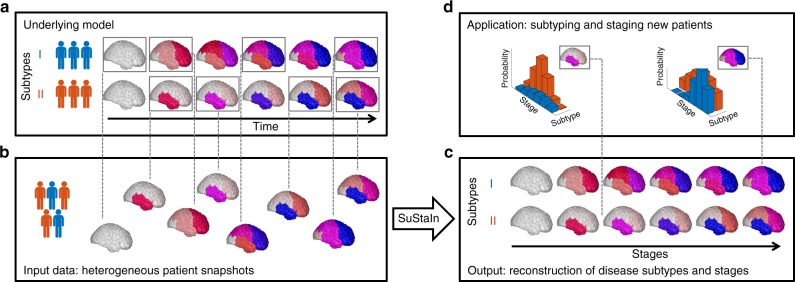
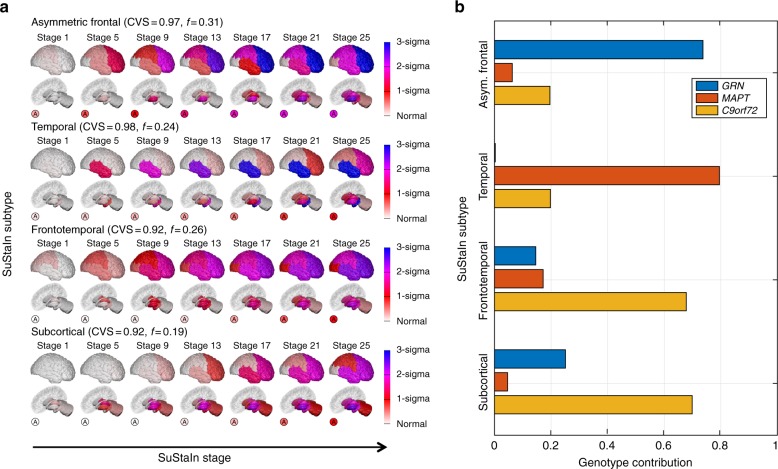
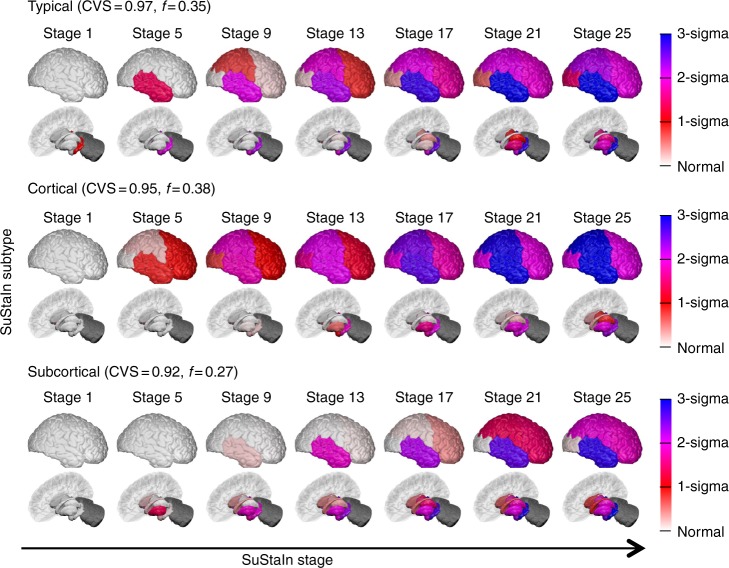
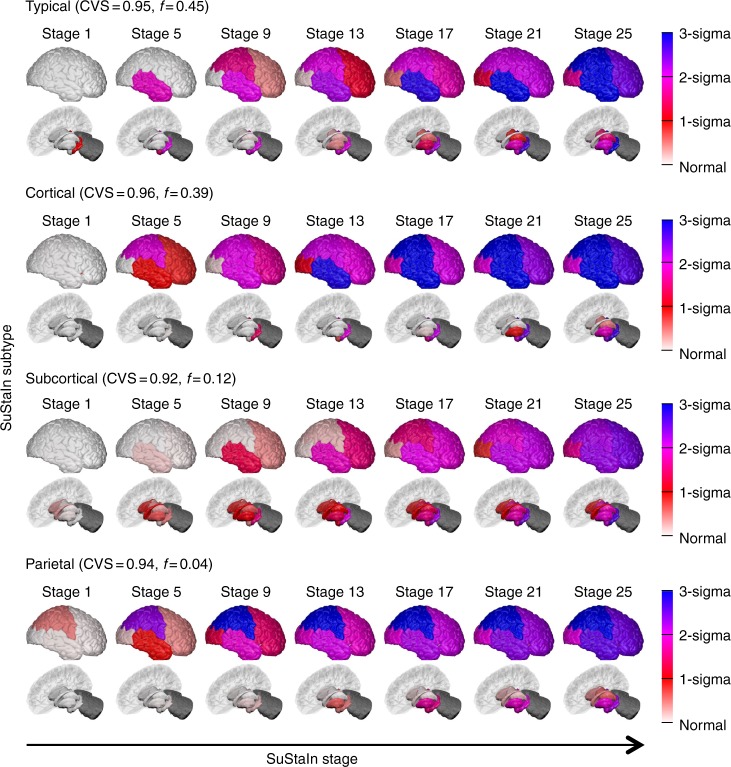
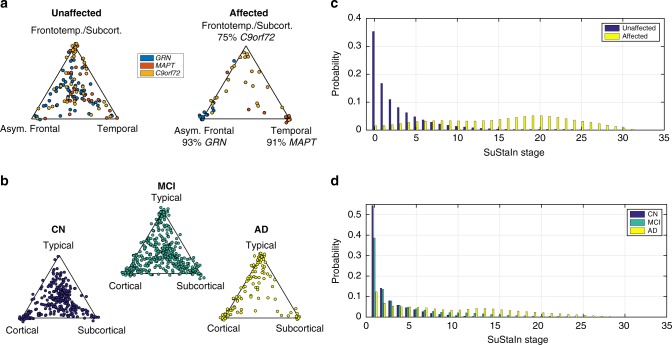
The heterogeneity of neurodegenerative diseases is a key confound to disease understanding and treatment development, as study cohorts typically include multiple phenotypes on distinct disease trajectories. Here we introduce a machine-learning technique—Subtype and Stage Inference (SuStaIn)—able to uncover data-driven disease phenotypes with distinct temporal progression patterns, from widely available cross-sectional patient studies. Results from imaging studies in two neurodegenerative diseases reveal subgroups and their distinct trajectories of regional neurodegeneration. In genetic frontotemporal dementia, SuStaIn identifies genotypes from imaging alone, validating its ability to identify subtypes; further the technique reveals within-genotype heterogeneity. In Alzheimer’s disease, SuStaIn uncovers three subtypes, uniquely characterising their temporal complexity. SuStaIn provides fine-grained patient stratification, which substantially enhances the ability to predict conversion between diagnostic categories over standard models that ignore subtype ( p = 7.18 × 10 −4 ) or temporal stage ( p = 3.96 × 10 −5 ). SuStaIn offers new promise for enabling disease subtype discovery and precision medicine.
Overview
The claims and statistics of this paper haven’t been checked yet.
Free: it reads the open-access text and checks the first 5 claims that cite a source we can check. Create a free account to check every claim.
Integrity signals
Registry
Cites
Statistics
Figures
Verification
Claims the paper makes
The claims and statistics of this paper haven’t been checked yet.
Free: it reads the open-access text and checks the first 5 claims that cite a source we can check. Create a free account to check every claim.
Claims other papers make about this one
Each is checked against this paper’s own text: does it say what the citing paper says it does?
The cited source says what the claim attributes to it.
In the citing paper
“The Subtype and Stage Inference (SuStaIn) algorithm identifies data-driven phenotypes with unique temporal patterns from cross-sectional data”
From Multimodal neuroimaging and AI integration in cognitive disorders: advances, challenges, and future directions for precision medicine (2026) · cites this paper as Young et al., 2018
Experimental — accuracy not yet measuredThe cited source says what the claim attributes to it.
In the citing paper
“In FTD, SuStaIn reveals genetic subtypes and within-genotype heterogeneity from imaging; in AD, it delineates three subtypes with characteristic neuroanatomical sequences.”
From Multimodal neuroimaging and AI integration in cognitive disorders: advances, challenges, and future directions for precision medicine (2026) · cites this paper as Young et al., 2018
The cited source says what the claim attributes to it.
In the citing paper
“The Sustain algorithm can identify phenotypes in genetic FTD from imaging alone while in AD it has uncovered three subtypes opening opportunities for disease subtype phenotyping and better precision medicine [246].”
From The use of neuroimaging techniques in the early and differential diagnosis of dementia (2023) · cites this paper as [246]
The cited source says what the claim attributes to it.
In the citing paper
“Nevertheless, considering the complexity and variability of the different types of dementia along with the presence of mixed pathologies, machine learning algorithms, such as the Subtype and Stage inference (Sustain) have been introduced to discover data-driven disease phenotypes with distinct temporal progression patterns [246].”
From The use of neuroimaging techniques in the early and differential diagnosis of dementia (2023) · cites this paper as [246]
Self-check
Percentages, sums and reported differences re-computed from the paper’s own numbers.
The self-check needs the paper’s full text.
Citations
Cites
Clinical and biomarker changes in dominantly inherited Alzheimer's disease
Bateman, R. J., Xiong, C., Benzinger, T. L. S., Fagan, A. M., Goate, A., Fox, N. C., Marcus, D. S., Cairns, N. J., Xie, X., Blazey, T. M., et al. (2012) · New England Journal of Medicine · doi:10.1056/nejmoa1202753 · Cited by 3,814
Self-citationVillemagne, V. L., Burnham, S., Bourgeat, P., Brown, B., Ellis, K. A., Salvado, O., Szoeke, C., Macaulay, S. L., Martins, R., Maruff, P., et al. (2013) · The Lancet Neurology · doi:10.1016/s1474-4422(13)70044-9 · Cited by 2,279
Understanding predictive information criteria for Bayesian models
Gelman, A., Hwang, J., & Vehtari, A. (2014) · Statistics and Computing · doi:10.1007/s11222-013-9416-2 · Cited by 2,104
Cerebrospinal fluid biomarker signature in Alzheimer's disease neuroimaging initiative subjects
Shaw, L. M., Vanderstichele, H., Knapik‐Czajka, M., Clark, C. M., Aisen, P. S., Petersen, R. C., Blennow, K., Soares, H., Simon, A., Lewczuk, P., et al. (2009) · Annals of Neurology · doi:10.1002/ana.21610 · Cited by 2,065
Self-citationQualitative Assessment of Verbal Fluency Performance in Frontotemporal Dementia
van den Berg, E., Jiskoot, L. C., Grosveld, M. J. H., van Swieten, J. C., & Papma, J. M. (2017) · Dementia and Geriatric Cognitive Disorders · doi:10.1159/000477538 · Cited by 2,046
Self-citationBhattacharyya, A. (1943) · Medical Entomology and Zoology · Cited by 2,002
Iturria-Medina, Y., Sotero, R. C., Toussaint, P. J., Mateos-Pérez, J. M., Evans, A. C., Initiative, T. A. D. N., Weiner, M. W., Aisen, P., Petersen, R., Jack, C. R., et al. (2016) · Nature Communications · doi:10.1038/ncomms11934 · Cited by 1,202
Self-citationReview Article: Genetics of Alzheimer Disease
Bekris, L. M., Yu, C.-E., Bird, T. D., & Tsuang, D. W. (2010) · Journal of Geriatric Psychiatry and Neurology · doi:10.1177/0891988710383571 · Cited by 1,029
Murray, M. E., Graff-Radford, N. R., Ross, O. A., Petersen, R. C., Duara, R., & Dickson, D. W. (2011) · The Lancet Neurology · doi:10.1016/s1474-4422(11)70156-9 · Cited by 972
Self-citationA network diffusion model of disease progression in dementia
Raj, A., Kuceyeski, A., & Weiner, M. (2012) · Neuron · doi:10.1016/j.neuron.2011.12.040 · Cited by 723
Self-citation
Research works printed but not linked: 2
- Huang, J. & Alexander, D. Advances in Neural Information Processing Systems 3104–3112 (The MIT Press, Cambridge, MA, 2012).
- Kass, R. E. & Raftery, A. E. Bayes factors. J. R. Stat. Soc. Ser. B 90, 773–795 (1995).
Cited by
Items 401–500 of 632
An, G. Z., Xie, Y., Benzinger, T. L. S., Gordon, B. A., & Sotiras, A. (2025) · Alzheimer s Research & Therapy · doi:10.1186/s13195-025-01850-3 · Cited by 2
Wijeratne, P. A., & Alexander, D. C. (2024) · neural information processing systems · doi:10.52202/079017-2023 · Cited by 8
Self-citationPersonalized single-cell transcriptomics reveals molecular diversity in Alzheimer’s disease
Chandrashekar, P. B., Alatkar, S. A., Kalafut, N. C., Jin, T., Gupta, C., Burczak, R. C., Xiang, H., Liu, S., Li, A. Z., Hong, A., et al. (2026) · Nature Communications · doi:10.1038/s41467-026-72310-1 · Cited by 2
“These diseases are heterogeneous, with a broad spectrum of symptoms, varying severity levels, and phenotypic differences 3,4 that stem from diverse cellular and molecular mechanisms 5,6 .”
Delineating COVID-19 subgroups using routine clinical data identifies distinct in-hospital outcomes
Rangelov, B., Young, A. L., Lilaonitkul, W., Aslani, S., Taylor, P. M., Gudmundsson, E., Yang, Q., Hu, Y., Hurst, J. R., Hawkes, D. J., et al. (2023) · Scientific Reports · doi:10.1038/s41598-023-32469-9 · Cited by 2
Self-citationNon-Parametric Mixture Modelling and its Application to Disease Progression ModellingPreprint
Firth, N. C., Oxtoby, N. P., Primativo, S., Brotherhood, E., Young, A. L., Yong, K. X. X., Crutch, S. J., & Alexander, D. C. (2018) · bioRxiv (Cold Spring Harbor Laboratory) · doi:10.1101/297978 · Cited by 2
Self-citationPoulakis, K., Ferreira, D., Pereira, J. B., Smedby, Ö., Vemuri, P., Westman, E., & Initiative, A. D. N. (2019) · bioRxiv (Cold Spring Harbor Laboratory) · doi:10.1101/854356 · Cited by 2
Self-citationPredicting personalised risk of disability worsening in multiple sclerosis with machine learningPreprint
Eshaghi, A., Wijeratne, P. A., Oxtoby, N. P., Arnold, D. L., Collins, D. L., Narayanan, S., Guttmann, C. R. G., Thompson, A. J., Alexander, D. C., Barkhof, F., et al. (2022) · medRxiv · doi:10.1101/2022.02.03.22270364 · Cited by 3
Self-citationNeurophysiological trajectories in Alzheimer’s disease progressionPreprint
Kudo, K., Ranasinghe, K. G., Morise, H., Syed, F., Sekihara, K., Rankin, K. P., Miller, B. L., Kramer, J. H., Rabinovici, G. D., Vossel, K. A., et al. (2024) · eLife · doi:10.7554/elife.91044.2 · Cited by 12
Self-citationChen, Z., Liu, Y., Zhang, Y., Zhu, J., & Li, Q. (2023) · Lecture notes in computer science · doi:10.1007/978-981-99-8067-3_13 · Cited by 1
Revealing clinical heterogeneity in a large brain bank cohort
(2024) · Nature Medicine · doi:10.1038/s41591-024-02871-5 · Cited by 1
Skampardoni, I., Wen, J., Erus, G., Shou, H., Nikita, K. S., & Davatzikos, C. A. (2024) · IEEE International Symposium on Biomedical Imaging (ISBI) · doi:10.1109/isbi56570.2024.10635830 · Cited by 2
Pan, Q., Liu, Y., Li, Q., & Wang, M. (2024) · IEEE International Conference on Bioinformatics and Biomedicine (BIBM) · doi:10.1109/bibm62325.2024.10821992 · Cited by 1
Ryu, H. J., Kwon, K. J., & Moon, Y. (2025) · Dementia and Neurocognitive Disorders · doi:10.12779/dnd.2025.24.1.44 · Cited by 1
Suzuki, A., Sano, K., Saito, Y., Wijeratne, P. A., Yamamoto, K., Fujita, S., Woo, J., Tomizawa, N., Kamagata, K., Imamura, H., et al. (2025) · Cureus · doi:10.7759/cureus.78744 · Cited by 1
Self-citationViani, A., Gutman, B. A., d’Angremont, E., & Lorenzi, M. (2025) · Lecture notes in computer science · doi:10.1007/978-3-031-84525-3_1 · Cited by 2
Totzek, J. F., Shah, J. L., Young, A. L., MALLA, A. K., Joober, R., Raucher‐Chéné, D., Lepage, M., & Lavigne, K. M. (2025) · Psychiatry Research · doi:10.1016/j.psychres.2025.116538 · Cited by 2
Self-citationMueller, S. G. (2025) · NeuroImage Clinical · doi:10.1016/j.nicl.2025.103810 · Cited by 1
Data-driven modelling of tau pathology reveals distinct progressive supranuclear palsy subtypes
Cullinane, P. W., Parmera, J. B., Nelvagal, H. R., Curless, T. J., Chajed, L. P., Wrigley, S., Valladares, W. S., Burrows, M., Ebanks, K., Wu, L., et al. (2026) · Brain · doi:10.1093/brain/awag131 · Cited by 3
“15 The overall objective of this work is to uncover clinical, genetic and pathological factors that drive phenotypic diversity and disease progression in PSP in order to improve patient stratification, aid interpretation of biomarkers and inform therapeutic interventions targeting the removal of…”
Self-citationHani, M., Mahmoudi, S., & Benjelloun, M. (2025) · Electronics · doi:10.3390/electronics14173502 · Cited by 1
Augmenting radiological assessment of imaging evident dementias with radiomic analysis
Puducheri, S., Zhou, O. T., Kapadia, K., Romano, M. F., Yalamanchili, S., Agrawal, A., Arasa, V. C. A., Farris, C. W., Mian, A. Z., Paul, A. B., et al. (2025) · npj Dementia · doi:10.1038/s44400-025-00031-1 · Cited by 2
Use of Big Data and Artificial Intelligence in Multiple Sclerosis
Peeters, L. M., Comi, G., & Faes, A. (2025) · Frontiers research topics · doi:10.3389/978-2-8325-7054-8 · Cited by 1
Progression of fragile X-associated tremor/ataxia syndrome revealed by subtype and stage inference
Morrison, D. E., Ponzini, M. D., Santos, E. R., Biag, H. M. B., Espinal, G. M., Tassone, F., Rivera, S. M., Hessl, D. R., Schneider, A., Bourgeois, J. A., et al. (2025) · Brain Communications · doi:10.1093/braincomms/fcaf483 · Cited by 2
Bourque, T., Zhukovsky, P., Morrison, C., Anderson, J. A., & (ADNI), T. A. D. I. I. (2025) · Alzheimer s & Dementia · doi:10.1002/alz70856_105149 · Cited by 1
Self-citationNovel Aggressive Subtype of Multiple System Atrophy Identified by Unsupervised Machine Learning
Sekiya, H., Ono, D., Maier, A. R., Soto‐Beasley, A. I., Deture, M. A., Ross, O. A., Uitti, R. J., Cheshire, W. P., Wszołek, Z. K., & Dickson, D. W. (2026) · Annals of Neurology · doi:10.1002/ana.78131 · Cited by 1
Heterogeneous patterns of cognitive decline in Alzheimer's disease across three domains of cognition
Scollard, P., Mukherjee, S., Choi, S., Lee, M. L., Klinedinst, B. S., Gibbons, L. E., Trittschuh, E. H., Mez, J., Saykin, A. J., James, B. D., et al. (2026) · Journal of Alzheimer s Disease · doi:10.1177/13872877251414975 · Cited by 1
Self-citationTotzek, J. F., Guimond, S., Makowski, C., Mišić, B., Joober, R., Chakravarty, M. M., Heckers, S., Menon, M., Raucher‐Chéné, D., Shah, J. L., et al. (2026) · Aperture Neuro · doi:10.52294/001c.151763 · Cited by 1
Yang, F., Maher, M., Saxena, R., & Dutta, J. (2026) · Imaging Neuroscience · doi:10.1162/imag.a.1151 · Cited by 2
Are Medical Image Generative Models Biologically Trustworthy?
Ahn, S., Park, W., & Park, J. (2025) · IEEE International Conference on Computer Vision Workshops · doi:10.1109/iccvw69036.2025.00072 · Cited by 3
Chougar, L., Vo, A., Lehéricy, S., & Dagher, A. (2026) · Frontiers in Aging Neuroscience · doi:10.3389/fnagi.2026.1786423 · Cited by 1
Zhang, T., Nie, B., Liu, H., Mao, G., OuYang, C., Jiang, X., & Shan, B. (2026) · European Journal of Nuclear Medicine and Molecular Imaging · doi:10.1007/s00259-026-07797-3 · Cited by 1
“…patient populations [6–9], utilizing longitudinal data to track individual developmental trajectories [3, 10, 11], estimating disease progression timelines based on clinical staging [12, 13], and applying data-driven methodologies to infer long-term changes from short-term observations [14–25].”
Quantitative pathology and APOE genotype reveal dementia risk and progression in Lewy body disease
Nelvagal, H. R., Chiraki, N., Curless, T. J., Cullinane, P. W., Rockliffe, A., Pimparkar, S., Kawamura, H., Ollerenshaw, S., Elahi, I., Brandner, S., et al. (2026) · Brain · doi:10.1093/brain/awag114 · Cited by 2
Neuroimaging-Based Subgroups in Schizophrenia: A Critical Appraisal of Clustering Studies
Yu, Y., Ge, R., & Frangou, S. (2026) · Biological Psychiatry Global Open Science · doi:10.1016/j.bpsgos.2026.100745 · Cited by 2
“The most recent unsupervised method was subtype and stage inference (SuStaIn) (26), used in the 2 largest studies (11,20).”
Decomposing heterogeneity in disease progression speeds and pathways
Yada, Y., & Naoki, H. (2026) · npj Digital Medicine · doi:10.1038/s41746-026-02665-8 · Cited by 1
“Yuichiro Yada 1,2 & Honda Naoki 1,3,4 Understanding why patients with the same diagnosis exhibit markedly different disease progression — some rapidly, others slowly, with distinct symptom patterns — remains a major challenge in medicine.”
Mallus, F., Yang, Y., Dinga, R., Kia, S. M., Grootswagers, T., Michela, A., Ros, T., & Wolfers, T. (2026) · Imaging Neuroscience · doi:10.1162/imag.a.1269 · Cited by 1
“…techniques offer millisecond-level temporal resolution ( Rangayyan, 2015; Sharon et al., 2007), enabling the study of rapidly evolving electrophysiological correlates of cognitive and pathological processes ( Brookes et al., 2022; Ranasinghe & Mapa, 2024; Stancin et al., 2021; Young et al., 2018).”
Dou, X., Hu, D., Wang, J., Zhong, Y., Yu, C., Zhan, H., Chen, Y., Zhou, R., Zhang, X., Zhang, B., et al. (2026) · European Journal of Nuclear Medicine and Molecular Imaging · doi:10.1007/s00259-026-07989-x · Cited by 1
“…could influence regional estimates, though we controlled for multiple comparisons using FDR. Finally, SuStaIn modeling choices can influence subtype boundaries [19 ], we mitigated this by aligning our approach with prior literature and demonstrating robust - ness across multiple topology metrics.”
CTE has multiple pathologic variants that might relate to different clinical symptom presentation
Tuz‐Zahra, F., Hallowell, E., Tilton, C. M., Alvarez, V. E., Aytan, N., Hawkins, S., Mez, J., Alosco, M. L., McKee, A. C., Tripodis, Y., et al. (2026) · Acta Neuropathologica · doi:10.1007/s00401-026-03045-y · Cited by 1
“One such approach is subtype and stage inference (SuStaIn), an unsupervised machine learning algorithm that identifies subtypes and groups with common predicted disease progressions [37].”
Wang, C., Zhang, C. H. I., Li, Z., Liu, C., Zhang, C. H. I., Qi, M., Zhao, Z., Pang, T., Gao, Z., Zhang, X., et al. (2026) · Journal of Affective Disorders · doi:10.1016/j.jad.2026.122158 · Cited by 1
Neuroinflammation and neurodegeneration: Linking mechanisms, biomarkers, and therapeutic opportunity
Zhang, X., Ho, H. L., Fu, Y., Yuan, Z., & Sun, H. (2026) · Advanced Neurology · doi:10.36922/an026250026 · Cited by 1
Lesion-Level Subtypes of White Matter Hyperintensity Evolution Beyond Spatial Location
González-Gómez, R., Tagliazuchi, E., Gonzalez-Campo, C., Medel, V., Bennett, D. A., & Iturria‐Medina, Y. (2026) · Neurology · doi:10.1212/wnl.0000000000218472 · Cited by 1
Comorbidity patterns and sex differences in late-onset Alzheimer’s disease using electronic records
Katsuhara, Y., Khan, U., Miller, Z., Allen, I. E., Oskotsky, T., Sirota, M., & Tang, A. (2026) · iScience · doi:10.1016/j.isci.2026.117753 · Cited by 1
Chen, R., Lee, K., & Herskovits, E. H. (2020) · The Neuroradiology Journal · doi:10.1177/1971400920950694 · Cited by 1
Howe, E. S., Shdo, S. M., Elliott, M., Hua, A. Y., Tang, N. M., Dronkers, N. F., & LEVENSON, R. W. (2023) · Training and Education in Professional Psychology · doi:10.1037/tep0000425 · Cited by 1
The Emerging Role of AI in Dementia Research and Healthcare
Ranson, J. M., Bucholc, M., Lyall, D. M., Newby, D., Winchester, L. M., Oxtoby, N. P., Veldsman, M., Rittman, T., Marzi, S. J., Skene, N., et al. (2022) · Brain informatics and health · doi:10.1007/978-981-19-5272-2_4 · Cited by 1
Self-citationDu, J., Zhou, Y., & Initiative, A. D. N. (2023) · Lecture notes in computer science · doi:10.1007/978-3-031-34048-2_8 · Cited by 1
Bocchetta, M. (2023) · Oxford University Press eBooks · doi:10.1093/med/9780197676158.003.0070 · Cited by 1
Self-citationInteligencia artificial en esclerosis múltiple
Tur, C., & Collorone, S. (2023) · Kranion · doi:10.24875/kranion.m23000065 · Cited by 1
Five biomarkers from one cerebrospinal fluid sample to stage Alzheimer’s disease
Salvadó, G., & Hansson, O. (2024) · Nature Aging · doi:10.1038/s43587-024-00618-y · Cited by 1
Choi, E. S., Hnath, B., Sha, C. M., & Dokholyan, N. V. (2024) · Structure · doi:10.1016/j.str.2024.08.002 · Cited by 1
Ikanga, J. N., Patel, S. S., Schwinne, M., Obenauf, C., Epenge, E., Gikelekele, G., Tshengele, N., Kavugho, I., Mampunza, S. M. M., Mananga, L., et al. (2025) · Frontiers in Aging Neuroscience · doi:10.3389/fnagi.2025.1552348 · Cited by 1
Modeling heterogeneity in cognitive trajectories in the Framingham Heart Study
Fang, Y., Chen, J., Mez, J., Satizábal, C. L., Alosco, M. L., Qiu, W. Q., Doyle, M. F., Murabito, J. M., & Lunetta, K. L. (2025) · Frontiers in Aging Neuroscience · doi:10.3389/fnagi.2025.1471154 · Cited by 1
Massetti, N., Granzotto, A., Bomba, M., Pizzi, S. D., Mosca, A., Scherer, R., ONOFRJ, M. C., Sensi, S. L., & (ADNI), F. T. A. D. N. I. (2021) · Journal of the Neurological Sciences · doi:10.1016/j.jns.2021.119015 · Cited by 1
Modelling the Neuroanatomical Progression of Alzheimer's Disease and Posterior Cortical AtrophyPreprint
Marinescu, R. V. (2020) · arXiv (Cornell University) · doi:10.48550/arxiv.2003.04805 · Cited by 2
Self-citationA novel bioinformatics approach to reveal the role of circadian oscillations in AD developmentPreprint
Ji, Z., Shang, D., Kim, P., Yang, M., Wu, S., Zhao, W., Kim, E., Wirianto, M., Chen, Z., Yoo, S. H., et al. (2020) · bioRxiv (Cold Spring Harbor Laboratory) · doi:10.1101/2020.07.16.207357 · Cited by 1
Simulation-based power analysis could improve the design of clinical trials in Alzheimer’s diseasePreprint
Andrews, D., Arnold, D. L., Bzdok, D., Ducharme, S., Chertkow, H. M., Collins, D. L., & Initiative, T. A. D. N. (2022) · medRxiv · doi:10.1101/2022.12.24.22283807 · Cited by 1
Self-citationMuldoon, S. F. (2024) · Epiliepsy currents/Epilepsy currents · doi:10.1177/15357597241279744 · Cited by 1
“5 It was further employed on imaging data from patients with schizophrenia, revealing 2 distinct trajectories of brain atrophy.”
Methodological considerations for advancing general paresis research
Liu, S., Wu, W., & Ma, J. (2025) · Brain · doi:10.1093/brain/awaf357 · Cited by 1
Batziou, V., Young, A. L., Rittman, T., & Vuksanović, V. (2025) · medRxiv · doi:10.1101/2025.10.19.25337876 · Cited by 1
Self-citationWang, Z., Li, J., Yang, L., Liu, X., Lv, S., Shu, H., Guo, Q., Yang, X., Zhang, C., Yang, H., et al. (2025) · Brain · doi:10.1093/brain/awaf451 · Cited by 1
Beyond clinical labels: a molecular-structural framework for multiple sclerosis subtyping
Brummer, T., & Fleischer, V. (2025) · Brain · doi:10.1093/brain/awaf400 · Cited by 1
Lorenzi, M., Custo, A., Frisoni, G. B., & Garibotto, V. (2026) · medRxiv · doi:10.64898/2026.05.03.26352317 · Cited by 1
Self-citationPoulakis, K., Ioannou, K., Bezgin, G., Chiotis, K., & Iturria‐Medina, Y. (2026) · medRxiv · doi:10.64898/2026.05.24.26353955 · Cited by 1
Study of early stages of Alzheimer's disease using magnetic resonance imaging
Casamitjana, A. (2019) · UPCommons institutional repository (Universitat Politècnica de Catalunya) · doi:10.5821/dissertation-2117-175259 · Cited by 2
Kamagata, K., Hatano, T., Andica, C., Uchida, W., Saito, Y., Kuramochi, M., Ogawa, T., Takeshige‐Amano, H., Hagiwara, A., Akashi, T., et al. (2020) · Japanese Journal of Magnetic Resonance in Medicine · doi:10.2463/jjmrm.2019-1701
Modelling prognostic trajectories in Alzheimer’s disease
Giorgio, J. (2020) · Apollo (University of Cambridge) · doi:10.17863/cam.58841
Clustering Left-Censored Multivariate Time-Series.Preprint
Chen, I. Y., Krishnan, R. G., & Sontag, D. A. (2021) · arXiv (Cornell University)
White matter abnormalities of the brain: similar to multiple sclerosis in adolescence
Júnior, D. S. T., Santos, S. N., Araújo, A. C., Marques, A. B. D. S., Farias, K. P., Souza, A. B., & de Oliveira, R. C. (2021) · Research Society and Development · doi:10.33448/rsd-v10i5.15231
Villaverde, Á. C., Gómez, J. C. E., & Malagón, R. S. (2012) · Library Open Repository (Universidad Complutense Madrid)
Multiple Cortical to Striatal Accumulation Trajectories of β-Amyloid: Do All Roads Lead to Rome?
Vogel, J. W., & Tosun, D. (2022) · Neurology · doi:10.1212/wnl.0000000000200191
Huang, Y. Y., Holcombe, S. A., Zhou, Q., Wang, S. C., Tang, J., & Nie, B. (2022) · Computers in Biology and Medicine · doi:10.1016/j.compbiomed.2022.105647
Data-Driven Disease Progression ModellingPreprint
Oxtoby, N. P. (2022) · arXiv (Cornell University) · doi:10.48550/arxiv.2211.05786
Self-citationHacein‐Bey, L., & Kuchcinski, G. (2023) · American Journal of Roentgenology · doi:10.2214/ajr.23.29113
Saito, Y., Wijeratne, P. A., Kamagata, K., Andica, C., Uchida, W., Akashi, T., Wada, A., Hori, M., & Aoki, S. (2023) · Japanese Journal of Magnetic Resonance in Medicine · doi:10.2463/jjmrm.2023-1790 · Cited by 1
Zhang, S., Yuan, J., Sun, Y., Wu, F., Liu, Z., Zhai, F., Zhang, Y., Somekh, J., Peleg, M., Zhu, Y., et al. (2023) · Research Square · doi:10.21203/rs.3.rs-2924370/v1
Neurophysiological trajectories in Alzheimer’s disease progressionPreprint
Kudo, K., Ranasinghe, K. G., Morise, H., Syed, F., Sekihara, K., Rankin, K. P., Miller, B. L., Kramer, J. H., Rabinovici, G. D., Vossel, K. A., et al. (2023) · eLife · doi:10.7554/elife.91044.1
Self-citationAuthor Response: Neurophysiological trajectories in Alzheimer’s disease progression
Kudo, K., Ranasinghe, K. G., Morise, H., Syed, F., Sekihara, K., Rankin, K. P., Miller, B. L., Kramer, J. H., Rabinovici, G. D., Vossel, K. A., et al. (2024) · eLife · doi:10.7554/elife.91044.2.sa3
Self-citationEncoding and decoding multimodal brain images for disease biomarker discovery
Chan, Y. H. (2023) · DR-NTU (Nanyang Technological University) · doi:10.32657/10356/173338
eLife assessment: Neurophysiological trajectories in Alzheimer’s disease progression
Herrmann, B. (2024) · eLife · doi:10.7554/elife.91044.3.sa0
Huang, Z. (2024) · medRxiv · doi:10.1101/2024.05.07.24306979
Data-driven brain atrophy staging in spinocerebellar ataxia type 3Preprint
Baumeister, H., Schaprian, T., Wegner, P., Ferreira, M., Kuegler, D., França, M. C., de Rezende, T. J. R., Martinez, A. R. M., Jiang, H. F., Grobe‐Einsler, M., et al. (2024) · medRxiv · doi:10.1101/2024.05.29.24307992
Neuroimaging and Biomarkers in AD Detection
Thapa, K., Kanojia, N., Sharma, A., Rani, L., & Puri, V. (2024) · Advances in medical technologies and clinical practice book series · doi:10.4018/979-8-3693-3605-2.ch002
Wei, S., Wen, C., Tan, H., & Wei, C. (2024) · International Joint Conference on Neural Networks (IJCNN) · doi:10.1109/ijcnn60899.2024.10650102 · Cited by 1
Methods for Measuring Neural Oscillations in Mental Disorders
Atagün, M. İ., Tamura, S., & Hirano, Y. (2024) · Springer eBooks · doi:10.1007/978-3-031-32035-4_105-1
Adaptive Subtype and Stage Inference for Alzheimer’s Disease
Wang, X., & Shi, Y. (2024) · Lecture notes in computer science · doi:10.1007/978-3-031-72384-1_5
Structural insight of MODAG-005 on 𝛼-Synuclein aggregates as a novel PET tracer
Kim, M. (2024) · eDiss (Georg-August-Universität Göttingen) · doi:10.53846/goediss-10855
Exploring Alzheimer's disease subtype replicability
Taylor, A., & Zhang, F. (2024) · iDEA - Drexel University Institutional Repository · doi:10.17918/00010692
Oxtoby, N. P., & Barkhof, F. (2024) · Brain Communications · doi:10.1093/braincomms/fcae474
Self-citationAnswer to Dou et al. and to Chen et al.
Luo, A., Yang, Q., Zhang, Z., Yang, Y., Li, X., Deng, Y., He, L., & Zhou, M. (2025) · Joint Bone Spine · doi:10.1016/j.jbspin.2025.105856
Lewy body disease can spread via two distinct body-first routes
(2025) · Nature Neuroscience · doi:10.1038/s41593-025-01911-8
Distinct medical and substance use histories associate with cognitive decline in Alzheimer's disease
Mansel, C. O., Mazzotti, D. R., Townley, R. A., Sardiu, M. E., Swerdlow, R. H., Honea, R. A., & Veatch, O. J. (2025) · Alzheimer s & Dementia · doi:10.1002/alz.70017
Self-citationSandell, R., Torok, J., Nagarajan, S. S., Ranasinghe, K. G., Ma, D., & Raj, A. (2025) · IEEE International Symposium on Biomedical Imaging (ISBI) · doi:10.1109/isbi60581.2025.10981024
Brain age as an imaging-based diagnostic and treatment biomarker of neurodegenerative disorders
Korbmacher, M. (2025) · Research Ideas and Outcomes · doi:10.3897/rio.11.e156738
Nguyen, M., Dương, N. T., Duc, V. T., Phan, C., Phan, T. N. M., & Ha, H. (2025) · World Congress on Medical Physics and Biomedical Engineering, September 7 - 12, 2009, Munich, Germany · doi:10.1007/978-3-031-90194-2_29
Ozawa, M., Yoshimaru, D., Oishi, K., Yuzawa, A., Matsuno, H., Umehara, T., Omoto, S., Sengoku, R., Murakami, H., Okano, H. J., et al. (2025) · Research Square · doi:10.21203/rs.3.rs-6821224/v1
Unraveling temporal dynamics of the post-mortem transcriptome in amyotrophic lateral sclerosisPreprint
Shen, T., Spencer, B. E., Kuksa, P. P., Deerlin, V. M. V., Phatnani, H. P., Lee, E. B., & McMillan, C. T. (2025) · medRxiv · doi:10.1101/2025.06.10.25329061
Back to the Future: Predicting Individual Tau Progression in Alzheimer’s DiseasePreprint
Sandell, R., Torok, J., Ranasinghe, K. G., Nagarajan, S. S., & Raj, A. (2025) · Research Square · doi:10.21203/rs.3.rs-6772220/v1 · Cited by 2
Ota, M., Nakayama, K., Kitabatake, A., Takahashi, T., Nemoto, K., & Arai, T. (2025) · Dementia and Geriatric Cognitive Disorders Extra · doi:10.1159/000547113
639. Subtyping Schizophrenia Using Brain Imaging: A Critical Appraisal of Clustering-Based Models
Yu, Y., Ge, R., & Frangou, S. (2026) · Biological Psychiatry · doi:10.1016/j.biopsych.2026.03.873
Metadata
- Authors
- Young, A. L., Marinescu, R. V., Oxtoby, N. P., Bocchetta, M., Yong, K., Firth, N. C., Cash, D. M., Thomas, D. L., Dick, K. M., Cardoso, J., van Swieten, J., Borroni, B., Galimberti, D., Masellis, M., Tartaglia, M. C., Rowe, J. B., Graff, C., Tagliavini, F., Frisoni, G. B., Laforce, R., Finger, E., de Mendonça, A., Sorbi, S., Warren, J. D., Crutch, S., Fox, N. C., Ourselin, S., Schott, J. M., Rohrer, J. D., Alexander, D. C., (GENFI), T. G. F. I., Andersson, C., Archetti, S., Arighi, A., Benussi, L., Binetti, G., Black, S., Cosseddu, M., Fallström, M., Ferreira, C., Fenoglio, C., Freedman, M., Fumagalli, G. G., Gazzina, S., Ghidoni, R., Grisoli, M., Jelic, V., Jiskoot, L., Keren, R., Lombardi, G., Maruta, C., Meeter, L., Mead, S., van Minkelen, R., Nacmias, B., Öijerstedt, L., Padovani, A., Panman, J., Pievani, M., Polito, C., Premi, E., Prioni, S., Rademakers, R., Redaelli, V., Rogaeva, E., Rossi, G., Rossor, M., Scarpini, E., Tang-Wai, D., Thonberg, H., Tiraboschi, P., Verdelho, A., (ADNI), T. A. D. N. I., Weiner, M. W., Aisen, P., Petersen, R., Jack, C. R., Jagust, W., Trojanowki, J. Q., Toga, A. W., Beckett, L., Green, R. C., Saykin, A. J., Morris, J., Shaw, L. M., Khachaturian, Z., Sorensen, G., Kuller, L., Raichle, M., Paul, S., Davies, P., Fillit, H., Hefti, F., Holtzman, D., Mesulam, M. M., Potter, W., Snyder, P., Schwartz, A., Montine, T., Thomas, R. G., Donohue, M., Walter, S., Gessert, D., Sather, T., Jiminez, G., Harvey, D., Bernstein, M., Thompson, P., Schuff, N., Borowski, B., Gunter, J., Senjem, M., Vemuri, P., Jones, D., Kantarci, K., Ward, C., Koeppe, R. A., Foster, N., Reiman, E. M., Chen, K., Mathis, C., Landau, S., Cairns, N. J., Householder, E., Taylor-Reinwald, L., Lee, V., Korecka, M., Figurski, M., Crawford, K., Neu, S., Foroud, T. M., Potkin, S., Shen, L., Faber, K., Kim, S., Nho, K., Thal, L., Buckholtz, N., Albert, M., Frank, R., Hsiao, J., Kaye, J., Quinn, J., Lind, B., Carter, R., Dolen, S., Schneider, L. S., Pawluczyk, S., Beccera, M., Teodoro, L., Spann, B. M., Brewer, J., Vanderswag, H., Fleisher, A., Heidebrink, J. L., Lord, J. L., Mason, S. S., Albers, C. S., Knopman, D., Johnson, K., Doody, R. S., Villanueva-Meyer, J., Chowdhury, M., Rountree, S., Dang, M., Stern, Y., Honig, L. S., Bell, K. L., Ances, B., Carroll, M., Leon, S., Mintun, M. A., Schneider, S., Oliver, A., Marson, D., Griffith, R., Clark, D., Geldmacher, D., Brockington, J., Roberson, E., Grossman, H., Mitsis, E., de Toledo-Morrell, L., Shah, R. C., Duara, R., Varon, D., Greig, M. T., Roberts, P., Albert, M., Onyike, C., D’Agostino, D., Kielb, S., Galvin, J. E., Cerbone, B., Michel, C. A., Rusinek, H., de Leon, M. J., Glodzik, L., De Santi, S., Doraiswamy, P. M., Petrella, J. R., Wong, T. Z., Arnold, S. E., Karlawish, J. H., Wolk, D., Smith, C. D., Jicha, G., Hardy, P., Sinha, P., Oates, E., Conrad, G., Lopez, O. L., Oakley, M., Simpson, D. M., Porsteinsson, A. P., Goldstein, B. S., Martin, K., Makino, K. M., Ismail, M. S., Brand, C., Mulnard, R. A., Thai, G., Mc-Adams-Ortiz, C., Womack, K., Mathews, D., Quiceno, M., Diaz-Arrastia, R., King, R., Weiner, M., Martin-Cook, K., DeVous, M., Levey, A. I., Lah, J. J., Cellar, J. S., Burns, J. M., Anderson, H. S., Swerdlow, R. H., Apostolova, L., Tingus, K., Woo, E., Silverman, D. H., Lu, P. H., Bartzokis, G., Graff-Radford, N. R., Parfitt, F., Kendall, T., Johnson, H., Farlow, M. R., Hake, A. M., Matthews, B. R., Herring, S., Hunt, C., van Dyck, C. H., Carson, R. E., MacAvoy, M. G., Chertkow, H., Bergman, H., Hosein, C., Stefanovic, B., Caldwell, C., Hsiung, G.-Y. R., Feldman, H., Mudge, B., Assaly, M., Kertesz, A., Rogers, J., Bernick, C., Munic, D., Kerwin, D., Mesulam, M.-M., Lipowski, K., Wu, C.-K., Johnson, N., Sadowsky, C., Martinez, W., Villena, T., Turner, R. S., Johnson, K., Reynolds, B., Sperling, R. A., Johnson, K. A., Marshall, G., Frey, M., Lane, B., Rosen, A., Tinklenberg, J., Sabbagh, M. N., Belden, C. M., Jacobson, S. A., Sirrel, S. A., Kowall, N., Killiany, R., Budson, A. E., Norbash, A., Johnson, P. L., Allard, J., Lerner, A., Ogrocki, P., Hudson, L., Fletcher, E., Carmichael, O., Olichney, J., DeCarli, C., Kittur, S., Borrie, M., Lee, T.-Y., Bartha, R., Johnson, S., Asthana, S., Carlsson, C. M., Potkin, S. G., Preda, A., Nguyen, D., Tariot, P., Reeder, S., Bates, V., Capote, H., Rainka, M., Scharre, D. W., Kataki, M., Adeli, A., Zimmerman, E. A., Celmins, D., Brown, A. D., Pearlson, G. D., Blank, K., Anderson, K., Santulli, R. B., Kitzmiller, T. J., Schwartz, E. S., Sink, K. M., Williamson, J. D., Garg, P., Watkins, F., Ott, B. R., Querfurth, H., Tremont, G., Salloway, S., Malloy, P., Correia, S., Rosen, H. J., Miller, B. L., Mintzer, J., Spicer, K., Bachman, D., Pasternak, S., Rachinsky, I., Drost, D., Pomara, N., Hernando, R., Sarrael, A., Schultz, S. K., Ponto, L. L. B., Shim, H., Smith, K. E., Relkin, N., Chaing, G., Raudin, L., Smith, A., Fargher, K., Raj, B. A., Neylan, T., Grafman, J., Davis, M., Morrison, R., Hayes, J., Finley, S., Friedl, K., Fleischman, D., Arfanakis, K., James, O., Massoglia, D., Fruehling, J. J., Harding, S., Peskind, E. R., Petrie, E. C., Li, G., Yesavage, J. A., Taylor, J. L., & Furst, A. J.
- Affiliations
- University College London (GB)
- UCL Queen Square Institute of Neurology (GB)
- University of Brescia (IT)
- University of Milan (IT)
- Sunnybrook Health Science Centre (CA)
- University of Toronto (CA)
- University of Cambridge (GB)
- Karolinska Institutet (SE)
- Fondazione IRCCS Istituto Neurologico Carlo Besta (IT)
- University of Geneva (CH)
- Université Laval (CA)
- Western University (CA)
- Don Carlo Gnocchi Foundation (IT)
- Fondazione IRCCS Ca' Granda Ospedale Maggiore Policlinico (IT)
- Centro San Giovanni di Dio Fatebenefratelli (IT)
- Sunnybrook Research Institute (CA)
- Karolinska University Hospital (SE)
- University of Lisbon (PT)
- University Health Network (CA)
- Erasmus MC (NL)
- University of Florence (IT)
- Mayo Clinic in Florida (US)
- University of California San Diego (US)
- Mayo Clinic (US)
- University of Southern California (US)
- University of Pennsylvania (US)
- Indiana University Bloomington (US)
- Brigham and Women's Hospital (US)
- Washington University in St. Louis (US)
- Siemens (Germany) (DE)
- University of Pittsburgh (US)
- Albert Einstein College of Medicine (US)
- Alzheimer's Drug Discovery Foundation (US)
- Northwestern University (US)
- Eli Lilly (United States) (US)
- University of Washington (US)
- University of California, Los Angeles (US)
- University of Michigan (US)
- University of Utah (US)
- Banner Alzheimer’s Institute (US)
- National Institutes of Health (US)
- Johns Hopkins University (US)
- Oregon Health & Science University (US)
- Baylor College of Medicine (US)
- University of Alabama (US)
- Rush University Medical Center (US)
- New York University (US)
- Duke Medical Center (US)
- University of Kentucky (US)
- University of Rochester Medicine (US)
- University of California, Irvine (US)
- The University of Texas Southwestern Medical Center (US)
- University of California, San Francisco (US)
- Emory University (US)
- University of Kansas Medical Center (US)
- Yale University (US)
- Jewish General Hospital (CA)
- University of British Columbia (CA)
- Cleveland Clinic (US)
- St Joseph's Health Care (CA)
- Palm Beach Neurology (US)
- Georgetown University Medical Center (US)
- Banner Sun Health Research Institute (US)
- Boston University (US)
- Howard University (US)
- Case Western Reserve University (US)
- University of California, Davis (US)
- University of Wisconsin–Madison (US)
- Dent Neurologic Institute (US)
- The Ohio State University (US)
- Albany Medical College (US)
- Hartford Hospital (US)
- Dartmouth–Hitchcock Medical Center (US)
- Wake Forest University Health Sciences (US)
- Rhode Island Hospital (US)
- Butler Hospital (US)
- Medical University of South Carolina (US)
- Nathan Kline Institute for Psychiatric Research (US)
- University of Iowa (US)
- Cornell University (US)
- University of South Florida (US)
- United States Department of Defense (US)
- Stanford University (US)
- Corresponding author
- Young, Alexandra L
- ORCID
- Young, Alexandra L
- Marinescu, Razvan V
- Oxtoby, Neil P
- Bocchetta, Martina
- Yong, Keir
- Firth, Nicholas C
- Cash, David M
- Thomas, David L
- Cardoso, Jorge
- Borroni, Barbara
- Galimberti, Daniela
- Masellis, Mario
- Tartaglia, Maria Carmela
- Rowe, James B
- Graff, Caroline
- Tagliavini, Fabrizio
- Frisoni, Giovanni B
- Laforce, Robert
- Finger, Elizabeth
- Sorbi, Sandro
- Warren, Jason D
- Crutch, Sebastian
- Fox, Nick C
- Schott, Jonathan M
- Rohrer, Jonathan D
- Alexander, Daniel C
- Arighi, Andrea
- Benussi, Luisa
- Binetti, Giuliano
- Black, Sandra
- Cosseddu, Maura
- Ferreira, Carlos
- Fenoglio, Chiara
- Freedman, Morris
- Fumagalli, Giorgio G
- Gazzina, Stefano
- Ghidoni, Roberta
- Grisoli, Marina
- Jiskoot, Lize
- Keren, Ron
- Lombardi, Gemma
- Maruta, Carolina
- Meeter, Lieke
- Mead, Simon
- Nacmias, Benedetta
- Öijerstedt, Linn
- Padovani, Alessandro
- Panman, Jessica
- Pievani, Michela
- Polito, Cristina
- Premi, Enrico
- Prioni, Sara
- Rademakers, Rosa
- Redaelli, Veronica
- Rogaeva, Ekaterina
- Rossi, Giacomina
- Rossor, Martin
- Scarpini, Elio
- Tiraboschi, Pietro
- Verdelho, Ana
- Weiner, Michael W
- Petersen, Ronald
- Jack, Clifford R
- Jagust, William
- Toga, Arthur W
- Beckett, Laurel
- Green, Robert C
- Saykin, Andrew J
- Morris, John
- Shaw, Leslie M
- Paul, Steven
- Davies, Peter
- Fillit, Howard
- Hefti, Franz
- Snyder, Peter
- Thomas, Ronald G
- Donohue, Michael
- Walter, Sarah
- Thompson, Paul
- Vemuri, Prashanthi
- Jones, David
- Kantarci, Kejal
- Koeppe, Robert A
- Reiman, Eric M
- Chen, Kewei
- Cairns, Nigel J
- Lee, Virginia
- Korecka, Magdalena
- Crawford, Karen
- Foroud, Tatiana M
- Shen, Li
- Faber, Kelley
- Kim, Sungeun
- Nho, Kwangsik
- Hsiao, John
- Kaye, Jeffrey
- Quinn, Joseph
- Schneider, Lon S
- Fleisher, Adam
- Heidebrink, Judith L
- Lord, Joanne L
- Knopman, David
- Johnson, Kris
- Stern, Yaakov
- Honig, Lawrence S
- Bell, Karen L
- Ances, Beau
- Carroll, Maria
- Oliver, Angela
- Marson, Daniel
- Clark, David
- Geldmacher, David
- Roberson, Erik
- Shah, Raj C
- Duara, Ranjan
- Albert, Marilyn
- Onyike, Chiadi
- D’Agostino, Daniel
- Kielb, Stephanie
- Galvin, James E
- Cerbone, Brittany
- Rusinek, Henry
- Glodzik, Lidia
- Doraiswamy, P Murali
- Petrella, Jeffrey R
- Wong, Terence Z
- Arnold, Steven E
- Karlawish, Jason H
- Wolk, David
- Smith, Charles D
- Hardy, Peter
- Sinha, Partha
- Porsteinsson, Anton P
- Ismail, M Saleem
- Thai, Gaby
- Womack, Kyle
- Quiceno, Mary
- Diaz-Arrastia, Ramon
- Weiner, Myron
- DeVous, Michael
- Levey, Allan I
- Lah, James J
- Burns, Jeffrey M
- Swerdlow, Russell H
- Apostolova, Liana
- Silverman, Daniel Hs
- Lu, Po H
- Johnson, Heather
- Farlow, Martin R
- Hake, Ann Marie
- Carson, Richard E
- Chertkow, Howard
- Bergman, Howard
- Stefanovic, Bojana
- Hsiung, Ging-Yuek Robin
- Feldman, Howard
- Bernick, Charles
- Kerwin, Diana
- Johnson, Nancy
- Turner, Raymond Scott
- Sperling, Reisa A
- Johnson, Keith A
- Marshall, Gad
- Frey, Meghan
- Lane, Barton
- Rosen, Allyson
- Sabbagh, Marwan N
- Belden, Christine M
- Jacobson, Sandra A
- Kowall, Neil
- Killiany, Ronald
- Budson, Andrew E
- Norbash, Alexander
- Lerner, Alan
- Carmichael, Owen
- Olichney, John
- DeCarli, Charles
- Johnson, Sterling
- Asthana, Sanjay
- Carlsson, Cynthia M
- Preda, Adrian
- Nguyen, Dana
- Tariot, Pierre
- Scharre, Douglas W
- Kataki, Maria
- Pearlson, Godfrey D
- Santulli, Robert B
- Sink, Kaycee M
- Williamson, Jeff D
- Garg, Pradeep
- Ott, Brian R
- Tremont, Geoffrey
- Salloway, Stephen
- Correia, Stephen
- Miller, Bruce L
- Mintzer, Jacobo
- Bachman, David
- Pasternak, Stephen
- Pomara, Nunzio
- Schultz, Susan K
- Ponto, Laura L Boles
- Shim, Hyungsub
- Relkin, Norman
- Smith, Amanda
- Neylan, Thomas
- Grafman, Jordan
- Hayes, Jacqueline
- Friedl, Karl
- Fleischman, Debra
- Arfanakis, Konstantinos
- Peskind, Elaine R
- Petrie, Eric C
- Yesavage, Jerome A
- Taylor, Joy L
- Furst, Ansgar J
- Venue
- Nature Communications
- Published
- 2018-10-15
- Volume
- 9
- Issue
- 1
- Pages
- 4273-4273
- ISSN
- 2041-1723 (ISSN-L)
- PMC
- PMC6189176
- OpenAlex
- W2782660935
- Cited by
- 596
- References
- 47
- Citations by year
- 2026: 111 · 2025: 111 · 2024: 91 · 2023: 102 · 2022: 57 · 2021: 59 · 2020: 37 · 2019: 23 · 2018: 4
- FWCI
- 23.81
- Type
- journal article
- Language
- en
- Open access
- gold
- doi.org
- Licence
- cc-by
- creativecommons.org/licenses/by/4.0 (tdm)
- creativecommons.org/licenses/by/4.0 (vor)
- Locations
- Nature Communications (publishedVersion, cc-by)
- bioRxiv (Cold Spring Harbor Laboratory) (acceptedVersion)
- Europe PMC (PubMed Central) (publishedVersion, other-oa)
- PubMed Central (publishedVersion, cc-by)
- PubMed (publishedVersion)
- EUR Research Repository (Erasmus University Rotterdam) (publishedVersion, other-oa)
- Archive ouverte UNIGE (University of Geneva) (publishedVersion, other-oa)
- eScholarship (California Digital Library) (submittedVersion, cc-by)
- Portuguese National Funding Agency for Science, Research and Technology (RCAAP Project by FCT) (submittedVersion, cc-by)
- Institutional Research Information System (Università degli Studi di Trento) (submittedVersion, cc-by)
- EUR Research Repository (Erasmus University Rotterdam) (submittedVersion, other-oa)
- RePub (Erasmus University Rotterdam) (submittedVersion, other-oa)
- RePEc: Research Papers in Economics (submittedVersion)
- Archivio Istituzionale della Ricerca (Universita Degli Studi Di Milano) (submittedVersion, other-oa)
- DOAJ (DOAJ: Directory of Open Access Journals) (submittedVersion)
- DOAJ (DOAJ: Directory of Open Access Journals) (submittedVersion, cc-by-sa)
- UCL Discovery (University College London) (submittedVersion)
- Florence Research (University of Florence) (submittedVersion, other-oa)
- Scholarship@Western (Western University) (submittedVersion)
- Institutional Research Information System (Università degli Studi di Brescia) (submittedVersion)
- Research Portal (King's College London) (submittedVersion, other-oa)
- Archive ouverte UNIGE (University of Geneva) (submittedVersion, cc-by)
- Apollo (University of Cambridge) (submittedVersion, cc-by)
- Apollo (cc-by)
- Funders
- U.S. Department of Defense (U01 AG024904, W81XWH, W81XWH-12-2-, W81XWH-12, W81XWH1220012, AG024904)
- Foundation for the National Institutes of Health (W81XWH-12-2-0012, U01AG024904, Grant U01 AG024904, AG024904)
- Michael J. Fox Foundation for Parkinson's Research
- Alzheimer's Association (U01 AG024904, W81XWH-12-2-0012)
- Bristol-Myers Squibb (U01 AG024904, AG024904, W81XWH-12-2-0012)
- Eli Lilly and Company (U01 AG024904, AG024904, W81XWH-12-2-0012)
- Pfizer (AG024904, W81XWH-12-2-0012, U01 AG024904)
- Biogen (W81XWH-12-2-0012, U01 AG024904, AG024904)
- University of Southern California (W81XWH-12-2-0012, U01 AG024904)
- F. Hoffmann-La Roche (W81XWH-12-2-0012, 666992, AG024904, U01 AG024904)
- Meso Scale Diagnostics (U01 AG024904, AG024904, W81XWH-12-2-0012)
- Alzheimer's Disease Neuroimaging Initiative (W81XWH-12-2–0012, U01AG024904, AG024904, W81XWH-12-2-, Department of Defense award number W81XWH-12-2-0012)
- BioClinica (U01 AG024904, W81XWH-12-2-0012, AG024904)
- Novartis Pharmaceuticals Corporation (W81XWH-12-2-0012, U01 AG024904, AG024904)
- Northern California Institute for Research and Education (U01 AG024904, W81XWH-12-2-0012)
- Wellcome Trust (103838/Z/14/Z, 103838, ARUK-Network 2012-6-ICE, EP/J020990/1, ART-SRF2010-3)
- Weston Brain Institute
- Alzheimer's Society (MR/M008525/1)
- National Institute for Health and Care Research (NF-SI-0512-10033, NF-SI-0513-10134, MR/L023784/1, NF-SI-0617-10175, ES/L001810/1, U01 AG024904, 103838, NF-SI-0508-10123, CL-2012-18-010, EP/J020990/1, EP/M020533/1)
- Brain Research Trust (UCC14191)
- European Commission (U01 AG024904, EP/M020533/1, 666992, HORIZON2020, W81XWH-12-2-0012)
- Rosetrees Trust (M668-CD1)
- Wolfson Foundation (ARUK-PG2017-1946, PR/ylr/18575)
- Eisai (W81XWH-12-2-0012, U01 AG024904, AG024904)
- University College London Hospitals NHS Foundation Trust
- Servier (AG024904, W81XWH-12-2-0012, U01 AG024904)
- H. Lundbeck A/S (U01 AG024904, AG024904, W81XWH-12-2-0012)
- IXICO (AG024904, W81XWH-12-2-0012, U01 AG024904)
- Associazione Italiana Ricerca Alzheimer
- National Institutes of Health (3u01ag024904-10s2, W81XWH, W81XWH-12-2-0012, U01-AG024904, Grant U01 AG024904, AG024904)
- Genentech (W81XWH-12-2-0012, AG024904, U01 AG024904)
- Canadian Institutes of Health Research (U01 AG024904, W81XWH-12-2-0012)
- Medical Research Council (MR/L023784/1, MR/M024873/1, U01 AG024904, MR/M023664/1, MR/M009106/1, MR/J009482/1, MR/M009041/1, MR/M008525/1)
- Engineering and Physical Sciences Research Council (EP/L016478/1, EP/J020990/01, EP/M020533/1, EP/M006093/1, 1219295, MR/L023784/1, EP/J020990/1, M020533/1, ART-SRF2010-3, U01 AG024904, J020990, M006093, 1787142, M020533)
- Economic and Social Research Council (ES/L001810/1)
- National Institute on Aging (U01-AG-024904, P30AG010129, W81XWH-12-2–0012, AG 024904, MR/L023784/1)
- National Institute of Biomedical Imaging and Bioengineering (W81XWH-12-2-0012, U01 AG024904, AG024904)
- EPSRC Centre for Doctoral Training in Medical Imaging (EP/L016478/1)
- Topics
- Health Sciences › Medicine › Psychiatry and Mental health › Dementia and Cognitive Impairment Research
- Life Sciences › Neuroscience › Cellular and Molecular Neuroscience › Alzheimer's disease research and treatments
- Life Sciences › Neuroscience › Cognitive Neuroscience › Functional Brain Connectivity Studies
- Keywords
- neurodegenerative diseases, disease heterogeneity, disease subtypes, disease staging, temporal development, frontotemporal dementia, Alzheimer's disease, patient stratification, conversion prediction, precision medicine, neuroimaging
- MeSH terms
- Alzheimer Disease, Genotype, Humans, Models, Neurological, Phenotype, Time Factors, Reproducibility of Results, Neurodegenerative Diseases, Frontotemporal Dementia
About these checks
Registry, retraction, Cites and statistics results are computed, not judged, with one exception: a printed reference that no index lists is read once by a model before it counts as a citation error. Claims are extracted by a model and kept only when their quote appears verbatim in the text; each cited source is then checked, with a model’s help, for whether it says what the claim relies on. Those verdicts can be wrong — read the claim’s quote and the cited source before relying on one.
Statistics and arithmetic are recomputed, not judged.
Confidence bands are shown only for fields calibrated on our annotated test set. None is calibrated yet, so no band is shown.
What counts as a claim ›How we measure confidence ›How we check this ›
Are you an author, or do you see a problem with this page? Request a review
Data sources
Bibliographic data: Semantic Scholar, OpenAlex, Crossref.
Contains information from the Semantic Scholar Academic Graph Datasets, made available under the ODC Attribution License (ODC-BY 1.0).
Semantic Scholar’s data is described in: Kinney, R., et al. (2023). The Semantic Scholar Open Data Platform. arXiv:2301.10140.
