

Cell cycle-resolved chromatin proteomics reveals the extent of mitotic preservation of the genomic regulatory landscape
Open accessThe DOI matches its Crossref record; 92 of the 93 references it cites were found in a registry or an index.
Abstract
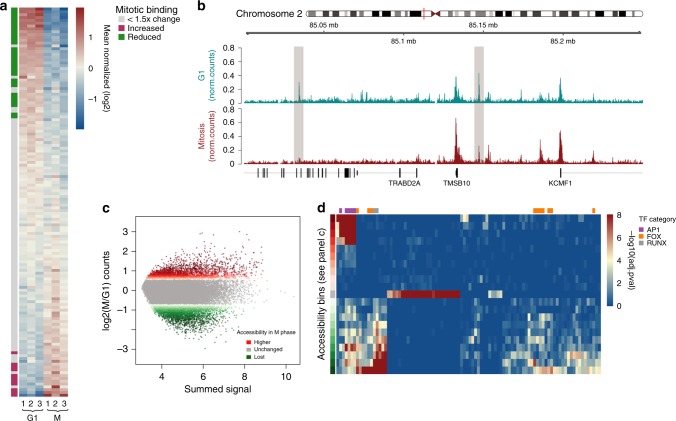
Regulation of transcription, replication, and cell division relies on differential protein binding to DNA and chromatin, yet it is unclear which regulatory components remain bound to compacted mitotic chromosomes. By utilizing the buoyant density of DNA–protein complexes after cross-linking, we here develop a mass spectrometry-based approach to quantify the chromatin-associated proteome at separate stages of the cell cycle. While epigenetic modifiers that promote transcription are lost from mitotic chromatin, repressive modifiers generally remain associated. Furthermore, while proteins involved in transcriptional elongation are evicted, most identified transcription factors are retained on mitotic chromatin to varying degrees, including core promoter binding proteins. This predicts conservation of the regulatory landscape on mitotic chromosomes, which we confirm by genome-wide measurements of chromatin accessibility. In summary, this work establishes an approach to study chromatin, provides a comprehensive catalog of chromatin changes during the cell cycle, and reveals the degree to which the genomic regulatory landscape is maintained through mitosis.
Overview
The claims and statistics of this paper haven’t been checked yet.
Free: it reads the open-access text and checks the first 5 claims that cite a source we can check. Create a free account to check every claim.
Integrity signals
Registry
Cites
Statistics
Figures
Verification
Claims the paper makes
The claims and statistics of this paper haven’t been checked yet.
Free: it reads the open-access text and checks the first 5 claims that cite a source we can check. Create a free account to check every claim.
Claims other papers make about this one
Each is checked against this paper’s own text: does it say what the citing paper says it does?
The cited source says what the claim attributes to it.
In the citing paper
“Mitotic retention of regulatory components (Fig. 2c), including transcription factors and some of the epigenetic machineries described above 38,39 , has been well-documented in recent years 40,41 .”
From Advances in epigenetics link genetics to the environment and disease (2019) · cites this paper as [39]
Self-check
Percentages, sums and reported differences re-computed from the paper’s own numbers.
The self-check needs the paper’s full text.
Citations
Cites
Controlling the False Discovery Rate: A Practical and Powerful Approach to Multiple Testing
Benjamini, Y., & Hochberg, Y. (1995) · Journal of the Royal Statistical Society Series B: Statistical Methodology · doi:10.1111/j.2517-6161.1995.tb02031.x · Cited by 109,482
limma powers differential expression analyses for RNA-sequencing and microarray studies
Ritchie, M. E., Phipson, B., Wu, D., Hu, Y., Law, C. W., Shi, W., & Smyth, G. K. (2015) · Nucleic Acids Research · doi:10.1093/nar/gkv007 · Cited by 40,458
clusterProfiler: an R Package for Comparing Biological Themes Among Gene Clusters
Yu, G., Wang, L.-G., Han, Y., & He, Q.-Y. (2012) · OMICS: A Journal of Integrative Biology · doi:10.1089/omi.2011.0118 · Cited by 36,259
Cutadapt removes adapter sequences from high-throughput sequencing reads
Martin, M. (2011) · EMBnet.journal · doi:10.14806/ej.17.1.200 · Cited by 33,889
Modern Applied Statistics with S
Venables, W. N., & Ripley, B. D. (2002) · Statistics and Computing · doi:10.1007/978-0-387-21706-2 · Cited by 24,305
Model-based Analysis of ChIP-Seq (MACS)
Zhang, Y., Liu, T., Meyer, C. A., Eeckhoute, J., Johnson, D. S., Bernstein, B. E., Nusbaum, C., Myers, R. M., Brown, M., Li, W., et al. (2008) · Genome Biology · doi:10.1186/gb-2008-9-9-r137 · Cited by 18,386
An integrated encyclopedia of DNA elements in the human genome
The ENCODE Project Consortium (2012) · Nature · doi:10.1038/nature11247 · Cited by 18,072
Cox, J., & Mann, M. (2008) · Nature Biotechnology · doi:10.1038/nbt.1511 · Cited by 14,855
Heinz, S., Benner, C., Spann, N., Bertolino, E., Lin, Y. C., Laslo, P., Cheng, J. X., Murre, C., Singh, H., & Glass, C. K. (2010) · Molecular Cell · doi:10.1016/j.molcel.2010.05.004 · Cited by 13,382
Chromatin modifications and their function
Kouzarides, T. (2007) · Cell · doi:10.1016/j.cell.2007.02.005 · Cited by 10,883
Cited by
Advances in epigenetics link genetics to the environment and disease
Cavalli, G., & Heard, E. (2019) · Nature · doi:10.1038/s41586-019-1411-0 · Cited by 1,509
Modulation of cellular processes by histone and non-histone protein acetylation
Shvedunova, M., & Akhtar, A. (2022) · Nature Reviews Molecular Cell Biology · doi:10.1038/s41580-021-00441-y · Cited by 936
Mechanisms and Functions of Chromosome Compartmentalization
Hildebrand, E. M., & Dekker, J. (2020) · Trends in Biochemical Sciences · doi:10.1016/j.tibs.2020.01.002 · Cited by 268
“In this case, many of the protein-protein interactions required for phase separation are likely disrupted by transient cell-cycle regulated phosphorylation and other post-translational modifications that occur during mitosis, such as H3S10 phosphorylation [76].”
BackgroundTranscription Factors and DNA Play Hide and Seek
Suter, D. M. (2020) · Trends in Cell Biology · doi:10.1016/j.tcb.2020.03.003 · Cited by 160
A mitotic chromatin phase transition prevents perforation by microtubules
Schneider, M. W. G., Gibson, B. A., Otsuka, S., Spicer, M. F. D., Petrovic, M., Blaukopf, C., Langer, C. C. H., Batty, P., Nagaraju, T., Doolittle, L. K., et al. (2022) · Nature · doi:10.1038/s41586-022-05027-y · Cited by 126
Samata, M., Alexiadis, A., Richard, G., Georgiev, P., Nuebler, J., Kulkarni, T., Renschler, G., Basilicata, M. F., Zenk, F. L., Shvedunova, M., et al. (2020) · Cell · doi:10.1016/j.cell.2020.05.026 · Cited by 108
Transcription factor activity and nucleosome organization in mitosis
Festuccia, N., Owens, N. D. L., Papadopoulou, T., González, I., Tachtsidi, A., Vandormael‐Pournin, S., Gallego, E., Gutierrez, N., Dubois, A., Cohen‐Tannoudji, M., et al. (2019) · Genome Research · doi:10.1101/gr.243048.118 · Cited by 103
Mitotic chromosome binding predicts transcription factor properties in interphase
Raccaud, M., Friman, E. T., Alber, A. B., Agarwal, H., Deluz, C., Kuhn, T., Gebhardt, J. C. M., & Suter, D. M. (2019) · Nature Communications · doi:10.1038/s41467-019-08417-5 · Cited by 98
Kang, H., Shokhirev, M. N., Xu, Z., Chandran, S., Dixon, J. R., & Hetzer, M. W. (2020) · Genes & Development · doi:10.1101/gad.335794.119 · Cited by 101
“In contrast, consistent with previous observations (Zhiteneva et al. 2017; Ginno et al. 2018; Javasky et al. 2018), H3K27ac showed a reduction in mitosis in both U2OS and RPE1.”
MTHFD1 interaction with BRD4 links folate metabolism to transcriptional regulation
Sdelci, S., Rendeiro, A. F., Rathert, P., You, W., Lin, J.-M. G., Ringler, A., Hofstätter, G., Moll, H. P., Gürtl, B., Farlik, M., et al. (2019) · Nature Genetics · doi:10.1038/s41588-019-0413-z · Cited by 92
CTCF and transcription influence chromatin structure re-configuration after mitosis
Zhang, H., Lam, J. C., Zhang, D., Lan, Y., Vermunt, M. W., Keller, C. A., Giardine, B. M., Hardison, R. C., & Blobel, G. A. (2021) · Nature Communications · doi:10.1038/s41467-021-25418-5 · Cited by 88
E3 Ubiquitin Ligase TRIP12: Regulation, Structure, and Physiopathological Functions
Brunet, M., Vargas, C., Larrieu, D., Torrisani, J., & Dufresne, M. (2020) · International Journal of Molecular Sciences · doi:10.3390/ijms21228515 · Cited by 78
Mitotic bookmarking by SWI/SNF subunits
Zhu, Z., Chen, X., Guo, A., Manzano, T. I., Walsh, P. J., Wills, K. M., Halliburton, R. L., Radko-Juettner, S., Carter, R. D., Partridge, J. F., et al. (2023) · Nature · doi:10.1038/s41586-023-06085-6 · Cited by 74
Interrogating Histone Acetylation and BRD4 as Mitotic Bookmarks of Transcription
Behera, V., Stonestrom, A. J., Hamagami, N., Hsiung, C. C. ‐., Keller, C. A., Giardine, B. M., Sidoli, S., Yuan, Z., Bhanu, N. V., Werner, M. T., et al. (2019) · Cell Reports · doi:10.1016/j.celrep.2019.03.057 · Cited by 73
“Recently, mass spectrometric and genome-wide approaches found methylation to be mostly stable in mitosis, but that acetylation marks varied widely in their maintenance on mitotic chromatin (Ginno et al., 2018; Javasky et al., 2018; Zhiteneva et al., 2017).”
BackgroundEpigenetics in the modern era of crop improvements
Xue, Y., Cao, X., Chen, X., Deng, X. M., Deng, X. W., Ding, Y., Dong, A., Duan, C., Fang, X., Gong, L., et al. (2025) · Science China Life Sciences · doi:10.1007/s11427-024-2784-3 · Cited by 60
“Although the chromosome territory may undergo dynamic changes under certain conditions (de Lima et al., 2022; Ginno et al., 2018; Parada et al., 2004; Zhu and Wang, 2019), whether such changes will lead to phenotypic consequences remains to be determined (Wang et al., 2023f).”
Challa, K., Schmid, C. D., Kitagawa, S., Cheblal, A., Iešmantavičius, V., Seeber, A., Amitai, A., Seebacher, J., Hauer, M. H., Shimada, K., et al. (2021) · Molecular Cell · doi:10.1016/j.molcel.2020.12.021 · Cited by 59
Self-citationShi, M., You, K., Chen, T., Hou, C., Liang, Z., Liu, M., Wang, J., Wei, T., Qin, J., Chen, Y., et al. (2021) · Genome biology · doi:10.1186/s13059-021-02456-2 · Cited by 58
“Typically, 10(8) cells are required for genome-wide chromatin protein capture methods [18, 19], while for HiMS analysis, 10(7) cells are sufficient.”
BackgroundMethodAnalysis of protein-DNA interactions in chromatin by UV induced cross-linking and mass spectrometry
Stützer, A., Welp, L. M., Raabe, M., Sachsenberg, T. T., Kappert, C., Wulf, A., Lau, A. M., David, S.-S., Chernev, A., Kramer, K., et al. (2020) · Nature Communications · doi:10.1038/s41467-020-19047-7 · Cited by 57
Maintaining Transcriptional Specificity Through Mitosis
Ito, K., & Zaret, K. S. (2022) · Annual Review of Genomics and Human Genetics · doi:10.1146/annurev-genom-121321-094603 · Cited by 42
The molecular basis of cell memory in mammals: The epigenetic cycle
Espinosa-Martínez, M., Alcázar‐Fabra, M., & Landeira, D. (2024) · Science Advances · doi:10.1126/sciadv.adl3188 · Cited by 41
“Complementarily, proteomic analyses indicate that most of the chromatin machinery required to sustain DNA methylation, H3K27me3, and H3K9me3 remains bound to chromosomes during mitosis (i.e., DNMT1/3a/3b, several PRC2 subunits, G9A, and SUV39H1/H2) ( 137 , 138 ).”
BackgroundCondensin action and compaction
Paul, M. R., Hochwagen, A., & Ercan, S. (2018) · Current Genetics · doi:10.1007/s00294-018-0899-4 · Cited by 41
Epigenetic memory of cell fate commitment
Elsherbiny, A., & Dobreva, G. D. (2021) · Current Opinion in Cell Biology · doi:10.1016/j.ceb.2020.12.014 · Cited by 41
Djeghloul, D., Patel, B., Kramer, H., Dimond, A., Whilding, C., Brown, K. E., Kohler, A., Feytout, A., Veland, N., Elliott, J. I., et al. (2020) · Nature Communications · doi:10.1038/s41467-020-17823-z · Cited by 39
“4/ My last point regarding the technique itself: the authors should provide a more principled comparison with the paper from Schubeler lab published in Nature Communications (Ginno, 2018): which proteins are differentially identified in both studies?”
BackgroundGenetic elements promote retention of extrachromosomal DNA in cancer cells
Sankar, V., Hung, K. L., Gnanasekar, A., Wong, I. T.-L., Shi, Q., Kraft, K., Jones, M. G., He, B. J., Yan, X., Belk, J. A., et al. (2025) · Nature · doi:10.1038/s41586-025-09764-8 · Cited by 35
“Candidate bookmarking factors were curated from three recently published studies 37,39,83 .”
Chromatin Proteomics to Study Epigenetics — Challenges and Opportunities
van Mierlo, G., & Vermeulen, M. (2020) · Molecular & Cellular Proteomics · doi:10.1074/mcp.r120.002208 · Cited by 36
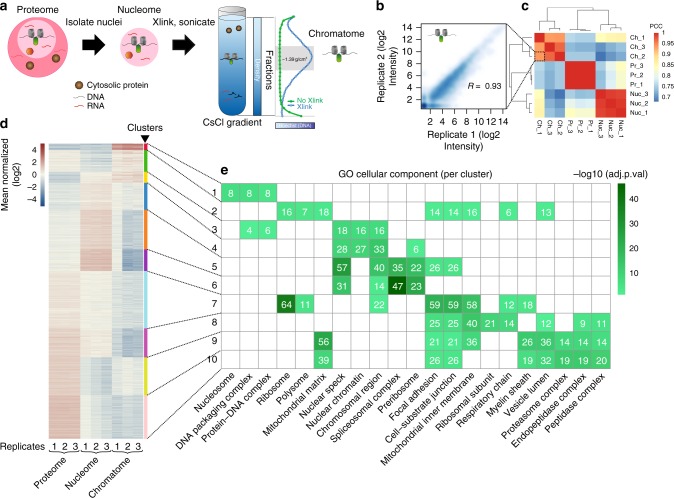
“A more recent adaptation of crosslinked chromatin enrichment comprises densitybased enrichment for MS analysis of chromatin (DEMAC), which relies on crosslinking nuclei, lysis, and subsequent ultracentrifugation of the crosslinked lysate in a buoyant density gradient made from cesium chloride (20) (Fig.”
MethodMitotic memories of gene activity
González, I., Molliex, A., & Navarro, P. (2021) · Current Opinion in Cell Biology · doi:10.1016/j.ceb.2020.12.009 · Cited by 33
Djeghloul, D., Dimond, A., Cheriyamkunnel, S. J., Kramer, H., Patel, B., Brown, K. E., Montoya, A., Whilding, C., Wang, Y.-F., Futschik, M. E., et al. (2023) · Nature Structural & Molecular Biology · doi:10.1038/s41594-023-00943-7 · Cited by 33
Delaney, C. E., Methot, S. P., Kalck, V., Seebacher, J., Heß, D., Gasser, S. M., & Padeken, J. (2022) · Nature Structural & Molecular Biology · doi:10.1038/s41594-021-00712-4 · Cited by 32
Self-citationÁlvarez, V., Bandau, S., Jiang, H., Rios-Szwed, D. O., Hukelmann, J. L., Garcia-Wilson, E., Wiechens, N., Griesser, E., ten Have, S., Owen‐Hughes, T., et al. (2023) · Cell Reports · doi:10.1016/j.celrep.2023.111996 · Cited by 27
“22,57 However, in mitosis, regulatory regions remain highly accessible 22 while chromatin accessibility over TF binding sites is globally lost on newly replicated DNA.”
BackgroundMethodRega, C., Tsitsa, I., Roumeliotis, T. I., Krystkowiak, I., Portillo, M. G., Yu, L., Vorhauser, J., Pines, J., Mansfeld, J., Choudhary, J. S., et al. (2025) · Nature Communications · doi:10.1038/s41467-025-57537-8 · Cited by 28
Halsall, J. A., Andrews, S., Krueger, F., Rutledge, C. E., Ficz, G., Reik, W., & Turner, B. M. (2021) · Scientific Reports · doi:10.1038/s41598-021-82539-z · Cited by 28
PTEN as a Guardian of the Genome: Pathways and Targets
Fan, X., Kraynak, J., Knisely, J. P. S., Formenti, S. C., & Shen, W. H. (2020) · Cold Spring Harbor Perspectives in Medicine · doi:10.1101/cshperspect.a036194 · Cited by 26
“Nevertheless, proteomic analysis of the replisome and mitotic machinery often fails to detect PTEN (Alabert et al. 2014; Dungrawala et al. 2015; Ly et al. 2017; Ginno et al. 2018; Heusel et al. 2019).”
BackgroundGenome folding principles uncovered in condensin-depleted mitotic chromosomes
Zhao, H., Lin, Y., Lin, E., Liu, F., Shu, L., Jing, D., Wang, B., Wang, M., Shan, F., Zhang, L., et al. (2024) · Nature Genetics · doi:10.1038/s41588-024-01759-x · Cited by 25
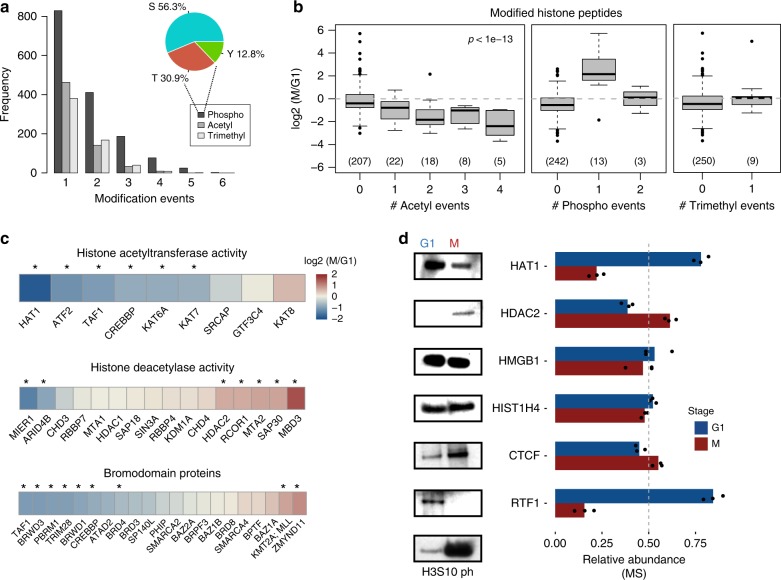
“Most histone modifications are globally maintained during mitosis, as measured by mass spectrometry 18,32 .”
Transcriptional repression across mitosis: mechanisms and functions
Contreras, A., & Perea-Resa, C. (2024) · Biochemical Society Transactions · doi:10.1042/bst20231071 · Cited by 26
The human proteome with direct physical access to DNA
Trendel, J., Trendel, S., Sha, S., Greulich, F., Goll, S., Wudy, S. I., Kleigrewe, K., Kubicek, S., Uhlenhaut, N. H., & Küster, B. (2025) · Cell · doi:10.1016/j.cell.2025.04.037 · Cited by 26
The proteomic landscape of genotoxic stress-induced micronuclei
MacDonald, K. M., Khan, S., Lin, B., Hurren, R., Schimmer, A. D., Kislinger, T., & Harding, S. M. (2024) · Molecular Cell · doi:10.1016/j.molcel.2024.02.001 · Cited by 25
Mitotic H3K9ac is controlled by phase-specific activity of HDAC2, HDAC3, and SIRT1
Gandhi, S., Mitterhoff, R., Rapoport, R., Farago, M., Greenberg, A., Hodge, L., Eden, S., Benner, C. W., Goren, A., & Simon, I. (2022) · Life Science Alliance · doi:10.26508/lsa.202201433 · Cited by 23
“Our observations, together with other studies (Behera et al 2019, Ginno et al 2018, Hsiung et al 2015, Kang et al 2020, Kelly et al 2010, Kruhlak et al 2001, Liang et al 2015, Liu et al 2017, McManus & Hendzel 2006, Pelham-Webb et al 2021, Van Hooser et al 1998) support the following notions: (i)…”
BackgroundResultInfluentialRegulatory mechanism of cyclins and cyclin-dependent kinases in post-mitotic neuronal cell division
Gupta, R. V., Jha, A., Ambasta, R. K., & Kumar, P. (2021) · Life Sciences · doi:10.1016/j.lfs.2021.120006 · Cited by 21
Hurst, V., Challa, K., Jonas, F., Forey, R., Sack, R., Seebacher, J., Schmid, C. D., Barkai, N., Shimada, K., Gasser, S. M., et al. (2021) · The EMBO Journal · doi:10.15252/embj.2021108439 · Cited by 19
“4 (Thermo Fisher Scientific) for every TMT multiplexing experiment individually before creating a multi-consensus, according to Ginno et al (2018) with minor modification.”
Self-citationRafiee, M., Zagalak, J. A., Sidorov, S., Steinhauser, S., Davey, K., Ule, J., & Luscombe, N. M. (2021) · Nucleic Acids Research · doi:10.1093/nar/gkab1180 · Cited by 20
“Past studies required much larger amounts of material (21,63), and they required the incorporation of modified nucletoides such as EdU or biotin-dUTP into DNA (17,64,65).”
BackgroundSister chromatid–sensitive Hi-C to map the conformation of replicated genomes
Mitter, M., Takács, Z., Köcher, T., Micura, R., Langer, C. C. H., & Gerlich, D. W. (2022) · Nature Protocols · doi:10.1038/s41596-022-00687-6 · Cited by 18
Han, Y.-T., Haouel, A., Georgii, E., Priego‐Cubero, S., Wurm, C. J., Hemmler, D., Schmitt‐Kopplin, P., Becker, C., Durner, J., & Lindermayr, C. (2023) · Genes · doi:10.3390/genes14061199 · Cited by 18
Regulation of transcription reactivation dynamics exiting mitosis
Sarnataro, S., Riba, A., & Molina, N. (2021) · PLoS Computational Biology · doi:10.1371/journal.pcbi.1009354 · Cited by 15
Genome folding dynamics during the M-to-G1-phase transition
Zhang, H., & Blobel, G. A. (2023) · Current Opinion in Genetics & Development · doi:10.1016/j.gde.2023.102036 · Cited by 14
Ugur, E., de la Porte, A., Qin, W., Bultmann, S., Ivanova, A., Drukker, M., Mann, M., Wierer, M., & Leonhardt, H. (2023) · Nucleic Acids Research · doi:10.1093/nar/gkad058 · Cited by 13
“) and multiple purification steps, which impairs overall protein recovery and quantification (30,31).”
BackgroundCracking chromatin with proteomics: From chromatome to histone modifications
Sigismondo, G., Papageorgiou, D. N., & Krijgsveld, J. (2022) · PROTEOMICS · doi:10.1002/pmic.202100206 · Cited by 13
“Cesium chloridebased enrichment of crosslinked chromatin via DEMAC approach (density-based enrichment for mass spectrometry analysis of chromatin) characterized changes in both the chromatin association and abundance of hPTMs across the cell cycle [32].”
MethodProfiling and characterization of constitutive chromatin-enriched RNAs
Shen, W., Zhang, Y., Shi, M., Ye, B., Yin, M., Li, P., Shi, S., Jin, Y., Zhang, Z., Zhang, M. Q., et al. (2022) · iScience · doi:10.1016/j.isci.2022.105349 · Cited by 13
“…although chromosomes condense 2- to 3-fold during mitosis, chromatin accessibility and binding of transcription factors (TFs) to mitotic chromatin is partially preserved (Caravaca et al., 2013; Dey et al., 2009; Ginno et al., 2018; Hsiung et al., 2015; Kadauke et al., 2012; Teves et al., 2016).”
BackgroundMass Spectrometry for Assessing Protein–Nucleic Acid Interactions
He, X., Chen, X., & Wang, Y. (2023) · Analytical Chemistry · doi:10.1021/acs.analchem.2c04353 · Cited by 13
Street, L. A., Morao, A. K., Winterkorn, L. H., Jiao, C.-Y., Albritton, S. E., Sadic, M., Kramer, M., & Ercan, S. (2019) · Genetics · doi:10.1534/genetics.119.302254 · Cited by 12
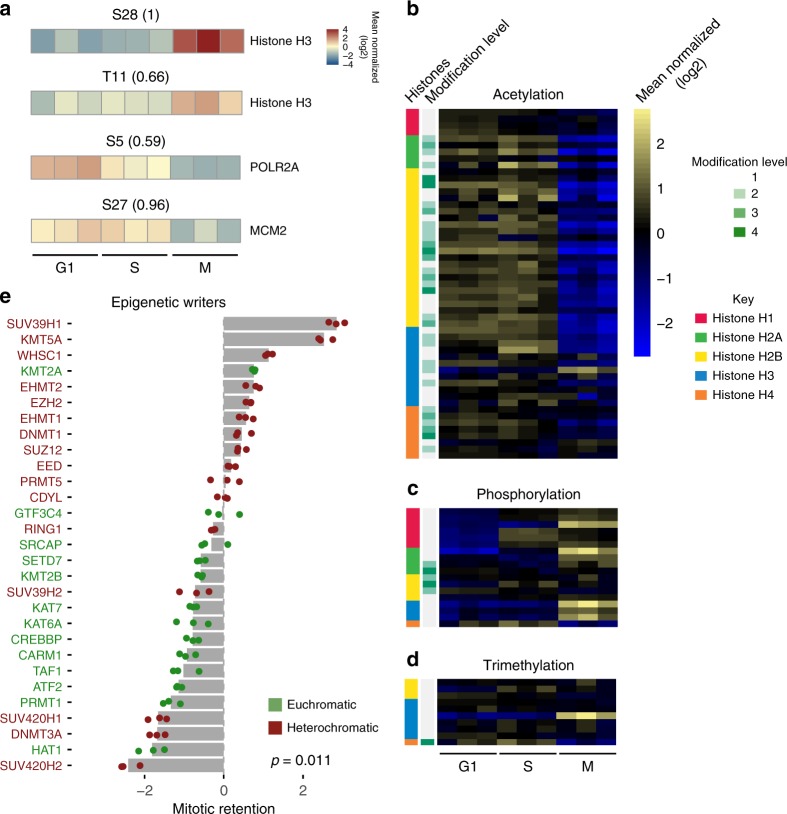
“Intriguingly, a recent proteomic analysis found that mitotic chromosomes disproportionately lose chromatinmodifying complexes associated with euchromatin and not heterochromatin [38].”
BackgroundThe material properties of mitotic chromosomes
Spicer, M. F. D., & Gerlich, D. W. (2023) · Current Opinion in Structural Biology · doi:10.1016/j.sbi.2023.102617 · Cited by 11
Retargeting of macroH2A following mitosis to cytogenetic-scale heterochromatic domains
Sato, H., Wu, B., Delahaye, F., Singer, R. H., & Greally, J. M. (2019) · The Journal of Cell Biology · doi:10.1083/jcb.201811109 · Cited by 11
“, 2018), including the observation that activating marks tend to be lost but repressive marks are retained locally during chromatin reassembly (Ginno et al., 2018).”
BackgroundRegulation of apoptosis, ferroptosis, and pyroptosis mediated by acetylation
Lu, W., Deng, Y., Liu, M., Hu, Y., Yang, K., Wang, B., Li, Y., wang, G., Ma, L., LIU, J., et al. (2026) · Cell Death Discovery · doi:10.1038/s41420-025-02859-1 · Cited by 11
“Time regulation of acetylation: Cell cycle - histone acetylation kinetics : Imaging and proteomic analysis of chromatin-associated proteins indicate that most KATs are expelled from the chromatin during mitosis [77].”
Locus-Specific Chromatin Proteome Revealed by Mass Spectrometry-Based CasID
Ugur, E., Bartoschek, M. D., & Leonhardt, H. (2020) · Methods in molecular biology · doi:10.1007/978-1-0716-0763-3_9 · Cited by 12
The effects of STAT3 acetylation on the transcriptional activity and tumorigenesis
Yan, H., Tang, L., Zhu, Y., & Zhang, Y. (2025) · Biochemical Pharmacology · doi:10.1016/j.bcp.2025.117076 · Cited by 11
Harris, R. J., Heer, M., Levasseur, M. D., Cartwright, T. N., Weston, B., Mitchell, J. L., Coxhead, J., Gaughan, L., Prendergast, L., Rico, D., et al. (2023) · Nature Communications · doi:10.1038/s41467-023-43115-3 · Cited by 9
“Indeed, the increased DNA accessibility of active promoters is largely maintained in mitosis 6,7,9,10,18,22 – 25 .”
Transcriptional repression upon S phase entry protects genome integrity in pluripotent cells
Gökbuget, D., Lenshoek, K., Boileau, R. M., Bayerl, J., Huang, H. H., Wiita, A. P., Laird, D. J., & Blelloch, R. H. (2023) · Nature Structural & Molecular Biology · doi:10.1038/s41594-023-01092-7 · Cited by 9
“Histone acetylation is known to be highly dynamic during the cell cycle with specific functions for different acetylated histone residues 57,58 .”
BackgroundBookmarking by histone methylation ensures chromosomal integrity during mitosis
Kim, J. (2019) · Archives of Pharmacal Research · doi:10.1007/s12272-019-01156-7 · Cited by 9
“Indeed, EZH2, SUZ12, and EED (all PRC2 subunits) are retained at condensed mitotic chromosomes during mitosis rather than during G1 phase (Ginno et al. 2018).”
BackgroundShi, M., You, K., Chen, T., Hou, C., Liang, Z., Liu, M., Wang, J., Wei, T., Qin, J., Chen, Y., et al. (2020) · bioRxiv (Cold Spring Harbor Laboratory) · doi:10.1101/2020.12.07.415489 · Cited by 8
“4 using 4% SDS and 8M urea[20]; while for DEMAC, high speed centrifugation for at least 48h is needed[21].”
BackgroundMethodKnutson, S. D., Boyer, J. A., Morgan, D. C., Großkopf, J. J., Rabinowitz, J. D., & MacMillan, D. W. C. (2025) · bioRxiv (Cold Spring Harbor Laboratory) · doi:10.1101/2025.06.10.658685 · Cited by 8
Geng, Q., Kong, Y., Li, W., Zhang, J., Ma, H., Zhang, Y., Da, L., Zhao, Y., & Du, H. (2023) · Advanced Science · doi:10.1002/advs.202303224 · Cited by 7
Proteome Analysis of Condensed Barley Mitotic Chromosomes
Perutka, Z., Kaduchová, K., Chamrád, I., Beinhauer, J., Lenobel, R., Petrovská, B., Bergougnoux, V., Vrána, J., Pečinka, A., Doležel, J., et al. (2021) · Frontiers in Plant Science · doi:10.3389/fpls.2021.723674 · Cited by 6
Chromosome Territories in Hematological Malignancies
de Lima, M. F., Lisboa, M. D. O., Terceiro, L. E. L., Pozzo, A. R., & Mai, S. (2022) · Cells · doi:10.3390/cells11081368 · Cited by 8
“This high level of genomic organization is maintained even during dynamic nuclear events, such as cell cycle and gene expression [42,43].”
BackgroundOverexpression of KAT8 induces a failure in early embryonic development in mice
Wu, X. G., Wang, S., Guo, Y., & Zeng, S. (2024) · Theriogenology · doi:10.1016/j.theriogenology.2024.03.014 · Cited by 6
Molecular mechanisms altering cell identity in cancer
Zippo, A., & Beyes, S. (2025) · Oncogene · doi:10.1038/s41388-025-03314-2 · Cited by 5
“On the contrary, there is increasing evidence that repressive epigenetic marks, such as methylation of histone H3 at lysine 9 or lysine 27, (H3K9me3 and H3K27me3, respectively), and components of the Polycomb repression complex (PRC) are retained on mitotic chromatin [56 – 58].”
Djeghloul, D., Cheriyamkunnel, S. J., Patel, B., Kramer, H., Montoya, A., Brown, K. E., Whilding, C., Nesterova, T. B., Wei, G., Brockdorff, N., et al. (2025) · Nature Cell Biology · doi:10.1038/s41556-025-01748-0 · Cited by 6
“40,66,80), showed no increased representation in female samples (that contain Xi) compared to male (Fig.”
Dimond, A., Gim, D. H., Ing‐Simmons, E., Whilding, C., Kramer, H., Djeghloul, D., Montoya, A., Patel, B., Cheriyamkunnel, S. J., Brown, K. E., et al. (2025) · Nature Communications · doi:10.1038/s41467-025-63740-4 · Cited by 5
“Furthermore, prior studies by us and others have shown that many factors that contribute to durable chromatin-based epigenetic silencing remain chromosome-associated in mitosis 8,10,51 – 53 .”
The changing chromatome as a driver of disease: A panoramic view from different methodologies
Espejo, I., Croce, L. D., & Aranda, S. (2020) · BioEssays · doi:10.1002/bies.202000203 · Cited by 6
Transcription factor Sp1 regulates mitotic chromosome assembly and segregation
Flashner, S. P., Swift, M. L., Sowash, A., Fahmy, A. N., & Azizkhan‐Clifford, J. (2022) · Chromosoma · doi:10.1007/s00412-022-00778-z · Cited by 4
Ocular disease-associated mutations diminish the mitotic chromosome retention ability of PAX6
Lan, H.-C., Du, T.-H., Yao, Y.-L., & Yang, W. (2021) · Biochimica et Biophysica Acta (BBA) - Gene Regulatory Mechanisms · doi:10.1016/j.bbagrm.2021.194751 · Cited by 4
Gribkova, A. K., Armeev, G. A., Kirpichnikov, M. P., & Shaytan, A. К. (2026) · Nucleic Acids Research · doi:10.1093/nar/gkaf1489 · Cited by 3
“From Ginno et al. (2018) study [ 25 ] proteins quantified with at least two unique peptides and consistent signal across all three replicates of at least one cell cycle stage (G1, S, or M) were selected.”
FAIRE‐MS reveals mitotic retention of transcriptional regulators on a proteome‐wide scale
Ye, B., Shen, W., Li, Y., Wang, D., Zhang, Y., Li, P., Yin, M., Wang, Y., Xie, D., Shi, S., et al. (2022) · The FASEB Journal · doi:10.1096/fj.202201038rrr · Cited by 3
Maintaining transcriptional homeostasis during cell cycle
Ramos-Alonso, L., & Chymkowitch, P. (2023) · Transcription · doi:10.1080/21541264.2023.2246868 · Cited by 3
“Notably, CDK1 plays a crucial role in this process by phosphorylating certain GTFs, leading to a reduction in transcription [13,21,23,26,93,103–105].”
BackgroundInfluentialRafiee, M., Zagalak, J. A., Sidorov, S., Steinhauser, S., Davey, K., Ule, J., & Luscombe, N. M. (2020) · bioRxiv (Cold Spring Harbor Laboratory) · doi:10.25418/crick.18149924.v1 · Cited by 4
Zapater, A. G., Kourtis, S., Elbæk, C. R., Espinar, L., Toro‐Márquez, C., Coll‐Manzano, A., Smiriglia, A., García‐López, L., Wiegand, L., Guirola, M., et al. (2026) · Advanced Science · doi:10.1002/advs.202501083 · Cited by 2
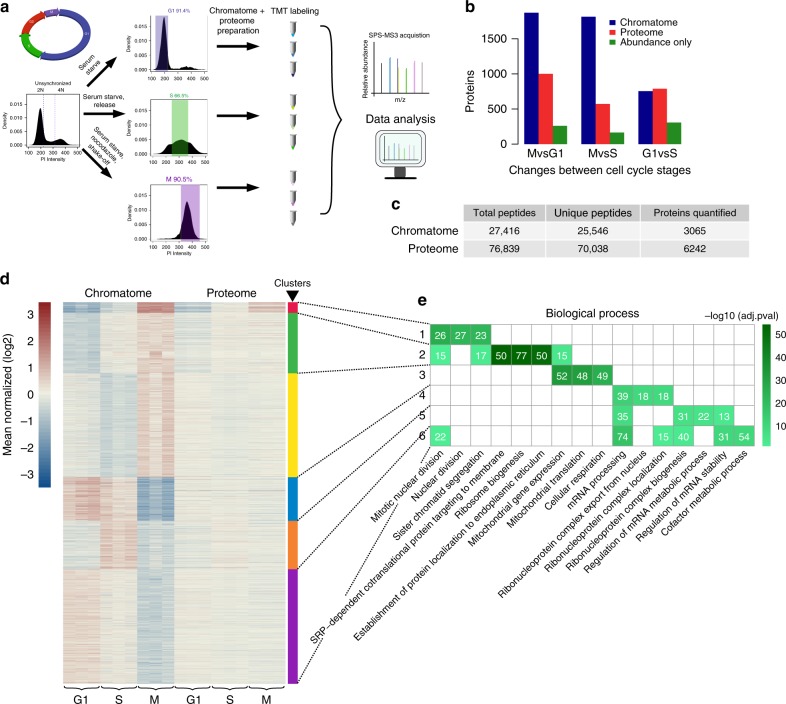
“Unlike other studies [ 75–80 ], our FUCCI-3 system allowed naïve sorting of cells in distinct cell cycle phases and transitions without the use of chemical arrestors, thereby avoiding artifacts associated with enforced cell cycle blockade.”
Fallet, M. (2024) · Springer eBooks · doi:10.1007/978-3-031-59286-7_5 · Cited by 3
OMICS – Mass Spectrometry-Based Proteomics in Systems Biology Research
Blattmann, P., & Aebersold, R. H. (2022) · Elsevier eBooks · doi:10.1016/b978-0-12-821618-7.00158-9 · Cited by 2
Metastatic cell plasticity is maintained by SOX9 function during mitosis in breast cancerPreprint
Beyes, S., Michelatti, D., Negri, M. L., Morelli, L., Frigoli, E., Fagnocchi, L., & Zippo, A. (2025) · bioRxiv (Cold Spring Harbor Laboratory) · doi:10.1101/2025.01.24.633933 · Cited by 2
Ma, X., Huicai, L., Cao, X., Liu, Z., & He, D. (2019) · Biotechnology Letters · doi:10.1007/s10529-019-02679-1 · Cited by 1
Aurora-A prevents transcription-replication conflicts in MYCN-amplified neuroblastoma
Röschert, I. (2021) · Online Publication Service of Würzburg University (Würzburg University) · doi:10.25972/opus-24303
Mechanisms of H2A.Z and its Chromatin Remodelling Complexes during the Cell Cycle
Dijkwel, Y. (2020) · ANU Open Research (Australian National University) · doi:10.25911/5f68816a2245a
Sarnataro, S. (2020) · theses.fr (ABES) · doi:10.70675/b5a180fcz9668z412fz8888z30a9070e1fef
Shi, M., You, K., Chen, T., Hou, C., Liang, Z., Liu, M., Wang, J., Wei, T., Qin, J., Chen, Y., et al. (2021) · Figshare · doi:10.6084/m9.figshare.15184562
Shi, M., You, K., Chen, T., Hou, C., Liang, Z., Liu, M., Wang, J., Wei, T., Qin, J., Chen, Y., et al. (2021) · Figshare · doi:10.6084/m9.figshare.15184571
Shi, M., You, K., Chen, T., Hou, C., Liang, Z., Liu, M., Wang, J., Wei, T., Qin, J., Chen, Y., et al. (2021) · Figshare · doi:10.6084/m9.figshare.15184565
Implication de l'E3 ubiquitine ligase TRIP12 dans l'organisation de la chromatine
Vargas, C. (2023) · theses.fr (ABES) · doi:10.70675/8ab3e4a9z4875z467fza210z8d5435ea2797
Shi, M., You, K., Chen, T., Hou, C., Liang, Z., Liu, M., Wang, J., Wei, T., Qin, J., Chen, Y., et al. (2021) · Figshare · doi:10.6084/m9.figshare.15184574
Shi, M., You, K., Chen, T., Hou, C., Liang, Z., Liu, M., Wang, J., Wei, T., Qin, J., Chen, Y., et al. (2021) · Figshare · doi:10.6084/m9.figshare.15184559
Shi, M., You, K., Chen, T., Hou, C., Liang, Z., Liu, M., Wang, J., Wei, T., Qin, J., Chen, Y., et al. (2021) · Figshare · doi:10.6084/m9.figshare.15184568
Brunet, M. (2021) · theses.fr (ABES) · doi:10.70675/f592998cz8f23z4e1eza7d6zb86e792878f3
CYCLON is a nucleolar protein that regulates pan-cancer cell fitness through ribosome biogenesisPreprint
Garcia-Sandoval, A. C., Durand, S., Robertson, N., Hamaidia, S., Mikolajczyk, J., Bourdelais, F., Montaut, É., Lopez, V., Turowski, T. W., Tollervey, D. W., et al. (2026) · bioRxiv (Cold Spring Harbor Laboratory) · doi:10.64898/2026.05.13.724782
H4K16ac contributes to chromatin compartment reorganization during mitotic and meiotic transitions
Zhao, Y., Tripathy, B. K., Shvedunova, M., Arrigoni, L., Katarzyna, S., Seyfferth, J., Greene, J. A. M., & Akhtar, A. (2026) · Cell Reports · doi:10.1016/j.celrep.2026.117639
Proteomic investigation of signaling dynamics: from static maps to network rewiring
Dionne, U., Vafaee, K., Hesketh, G. G., & Gingras, A. (2026) · Bioscience Reports · doi:10.1042/bsr20250116
“Note that several structural proteomics developments, including crosslinking MS and limited proteolysis, have also enabled studying how the structure of proteins and their PPIs change in dynamic and disease states [130,131,169–175].”
Gribkova, A. K., Armeev, G. A., Kirpichnikov, M. P., & Shaytan, A. К. (2026) · SSRN Electronic Journal · doi:10.2139/ssrn.7466941
Discovery of N6-methyladenosine on R-loops and elucidating its role in their regulation
Abakir, A. (2020) · Nottingham ePrints (University of Nottingham)
Distinct regulation across the transcription cycle drives mitotic transcriptional silencingPreprint
Gaetani, P., Tavares, A., Paixão, T., & Oliveira, R. A. (2026) · bioRxiv (Cold Spring Harbor Laboratory) · doi:10.64898/2026.10.12.758451
The DNA demethylase TET1 recognises chromatin via nucleosome engagement of its N-terminal regionPreprint
Martin, F., Burdett, H., Matelot, M., Baroung, C. N., Alexander-Howden, B., Wilson, M. D., Bergamin, E., & Pantier, R. (2026) · bioRxiv (Cold Spring Harbor Laboratory) · doi:10.64898/2026.10.31.763349
Morelli, L., Cretti, S., Michelatti, D., Bressan, D., Scandino, R., Chiacchiera, F., Cittaro, D., Peixoto, T. P., & Zippo, A. (2026) · bioRxiv (Cold Spring Harbor Laboratory) · doi:10.64898/2026.10.28.762220
Metadata
- Authors
- Ginno, P. A., Burger, L., Seebacher, J., Iesmantavicius, V., & Schübeler, D.
- Affiliations
- Friedrich Miescher Institute (CH)
- SIB Swiss Institute of Bioinformatics (CH)
- University of Basel (CH)
- Corresponding author
- Schübeler, Dirk
- Venue
- Nature Communications
- Published
- 2018-10-02
- Volume
- 9
- Issue
- 1
- Pages
- 4048-4048
- ISSN
- 2041-1723 (ISSN-L)
- PMC
- PMC6168604
- OpenAlex
- W2892790175
- Cited by
- 91
- References
- 93
- Citations by year
- 2026: 6 · 2025: 11 · 2024: 8 · 2023: 13 · 2022: 13 · 2021: 17 · 2020: 13 · 2019: 9 · 2018: 1
- FWCI
- 3.82
- Type
- journal article
- Language
- en
- Open access
- gold
- doi.org
- Licence
- cc-by
- creativecommons.org/licenses/by/4.0 (tdm)
- creativecommons.org/licenses/by/4.0 (vor)
- Locations
- Nature Communications (publishedVersion, cc-by)
- Europe PMC (PubMed Central) (publishedVersion, cc-by)
- PubMed Central (publishedVersion, cc-by)
- PubMed (publishedVersion)
- RePEc: Research Papers in Economics (submittedVersion)
- DOAJ (DOAJ: Directory of Open Access Journals) (submittedVersion, cc-by-sa)
- DOAJ (DOAJ: Directory of Open Access Journals) (submittedVersion)
- Funders
- European Commission
- H2020 European Research Council (667951)
- Topics
- Life Sciences › Biochemistry, Genetics and Molecular Biology › Molecular Biology › Genomics and Chromatin Dynamics
- Physical Sciences › Chemistry › Spectroscopy › Advanced Proteomics Techniques and Applications
- Life Sciences › Biochemistry, Genetics and Molecular Biology › Molecular Biology › Chromatin Remodeling and Cancer
- Keywords
- mitotic chromatin, chromatin proteome, cell cycle, mitosis, chromatin accessibility, epigenetic regulators, transcription factors, transcription elongation, protein-DNA complex
- MeSH terms
- Cell Cycle, Chromatin, Gene Expression Regulation, Humans, Mass Spectrometry, Transcription Factors, Proteomics, Cell Line, Tumor
About these checks
Registry, retraction, Cites and statistics results are computed, not judged, with one exception: a printed reference that no index lists is read once by a model before it counts as a citation error. Claims are extracted by a model and kept only when their quote appears verbatim in the text; each cited source is then checked, with a model’s help, for whether it says what the claim relies on. Those verdicts can be wrong — read the claim’s quote and the cited source before relying on one.
Statistics and arithmetic are recomputed, not judged.
Confidence bands are shown only for fields calibrated on our annotated test set. None is calibrated yet, so no band is shown.
What counts as a claim ›How we measure confidence ›How we check this ›
Are you an author, or do you see a problem with this page? Request a review
Data sources
Bibliographic data: Semantic Scholar, OpenAlex, Crossref.
Contains information from the Semantic Scholar Academic Graph Datasets, made available under the ODC Attribution License (ODC-BY 1.0).
Semantic Scholar’s data is described in: Kinney, R., et al. (2023). The Semantic Scholar Open Data Platform. arXiv:2301.10140.
