

Suppression of autophagic activity by Rubicon is a signature of aging
Open accessThe DOI matches its Crossref record; 52 of the 54 references it cites were found in a registry or an index.
Abstract
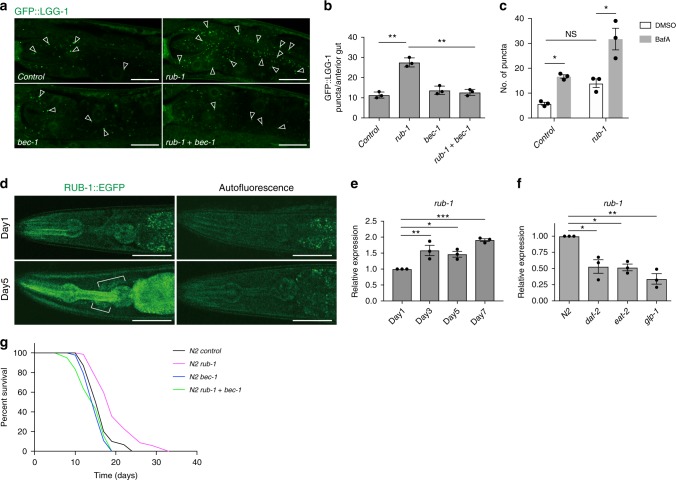
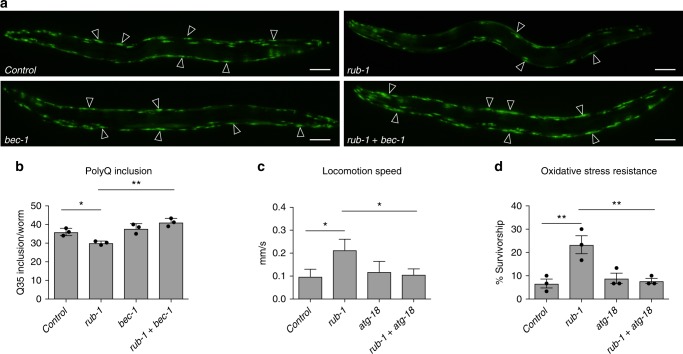
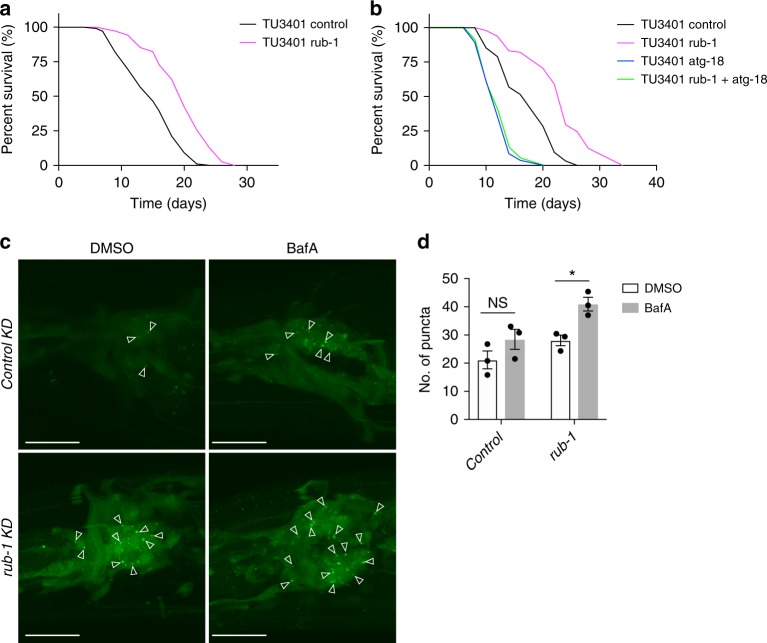
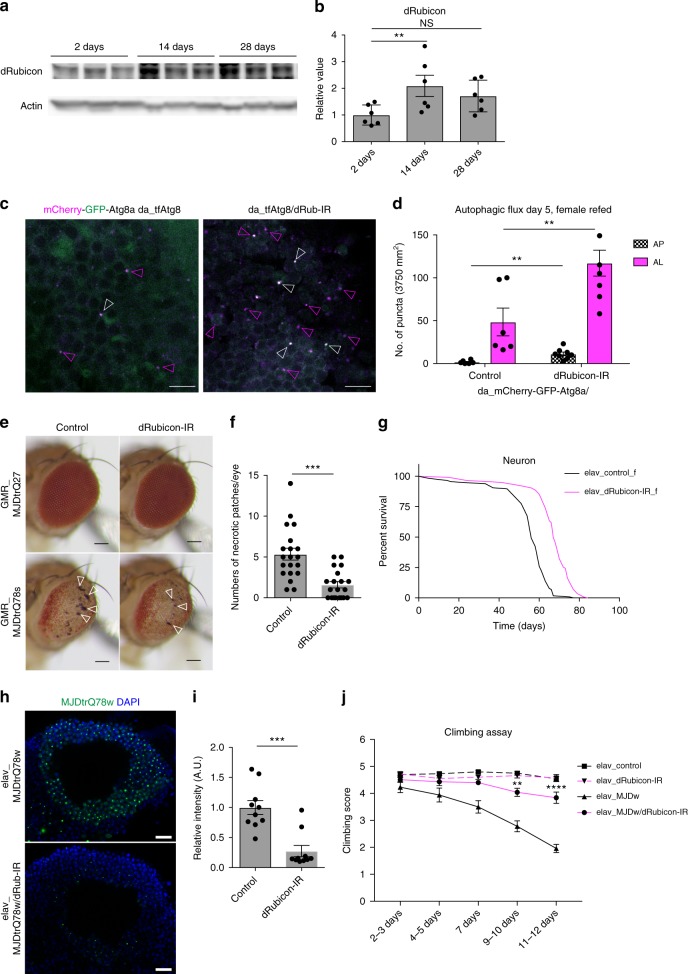
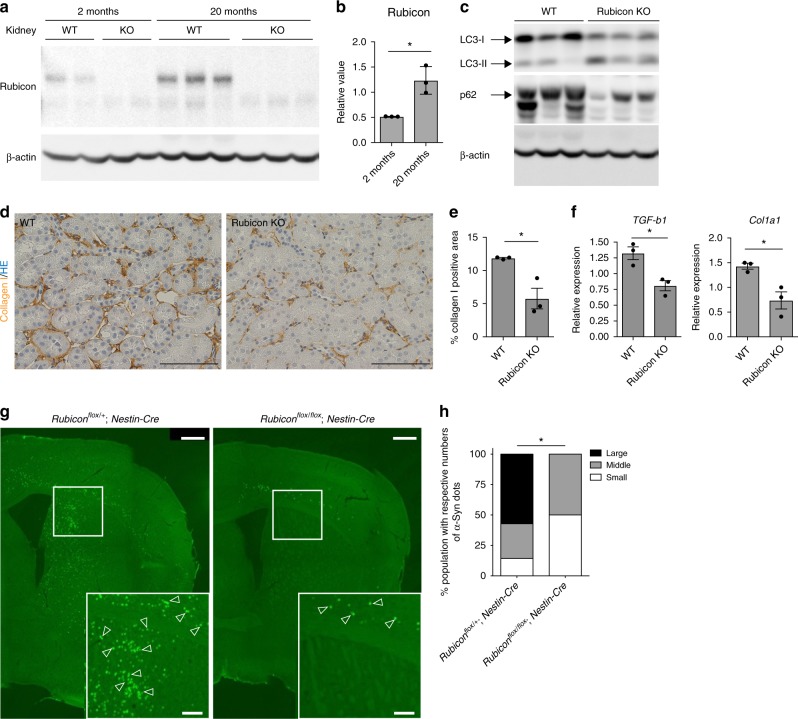
Autophagy, an evolutionarily conserved cytoplasmic degradation system, has been implicated as a convergent mechanism in various longevity pathways. Autophagic activity decreases with age in several organisms, but the underlying mechanism is unclear. Here, we show that the expression of Rubicon, a negative regulator of autophagy, increases in aged worm, fly and mouse tissues at transcript and/or protein levels, suggesting that an age-dependent increase in Rubicon impairs autophagy over time, and thereby curtails animal healthspan. Consistent with this idea, knockdown of Rubicon extends worm and fly lifespan and ameliorates several age-associated phenotypes. Tissue-specific experiments reveal that Rubicon knockdown in neurons has the greatest effect on lifespan. Rubicon knockout mice exhibits reductions in interstitial fibrosis in kidney and reduced α-synuclein accumulation in the brain. Rubicon is suppressed in several long-lived worms and calorie restricted mice. Taken together, our results suggest that suppression of autophagic activity by Rubicon is one of signatures of aging.
Overview
The claims and statistics of this paper haven’t been checked yet.
Free: it reads the open-access text and checks the first 5 claims that cite a source we can check. Create a free account to check every claim.
Integrity signals
Registry
Cites
Statistics
Figures
Verification
Claims the paper makes
The claims and statistics of this paper haven’t been checked yet.
Free: it reads the open-access text and checks the first 5 claims that cite a source we can check. Create a free account to check every claim.
Claims other papers make about this one
Each is checked against this paper’s own text: does it say what the citing paper says it does?
The cited source says what the claim attributes to it.
In the citing paper
“Consistent with this result, the activation of autophagy decreases the accumulation of SNCA/α‐synuclein (Nakamura et al, 2019).”
From Autophagy in major human diseases (2021) · cites this paper as Nakamura et al, 2019
The cited source says what the claim attributes to it.
In the citing paper
“ageing in mouse tissues, including kidney tissues, was characterized by suppression of autophagy by the run domain beclin-1-interacting and cysteine-rich domain-containing protein (rubicon)”
From Autophagy in kidney homeostasis and disease (2020) · cites this paper as [63]
Self-check
Percentages, sums and reported differences re-computed from the paper’s own numbers.
The self-check needs the paper’s full text.
Citations
Cites
Younossi, Z. M., Koenig, A. B., Abdelatif, D., Fazel, Y., Henry, L., & Wymer, M. (2016) · Hepatology · doi:10.1002/hep.28431 · Cited by 10,781
Evaluation of survival data and two new rank order statistics arising in its consideration.
Mantel, N. (1966) · PubMed · Cited by 7,519
Guidelines for the use and interpretation of assays for monitoring autophagy (3rd edition).
Klionsky, D. J., Abdelmohsen, K., Abe, A., Abedin, M. J., Abeliovich, H., Acevedo Arozena, A., Adachi, H., Adams, C. M., Adams, P. D., Adeli, K., et al. (2016) · Autophagy · doi:10.1080/15548627.2015.1100356 · Cited by 5,894
Rapamycin fed late in life extends lifespan in genetically heterogeneous mice
Harrison, D. E., Strong, R., Sharp, Z. D., Nelson, J. F., Astle, C. M., Flurkey, K., Nadon, N. L., Wilkinson, J. E., Frenkel, K., Carter, C. S., et al. (2009) · Nature · doi:10.1038/nature08221 · Cited by 3,766
Luk, K. C., Kehm, V., Carroll, J., Zhang, B., O’Brien, P., Trojanowski, J. Q., & Lee, V. M.-Y. (2012) · Science · doi:10.1126/science.1227157 · Cited by 2,563
Autophagy Genes Are Essential for Dauer Development and Life-Span Extension in C. elegans
Meléndez, A., Tallóczy, Z., Seaman, M., Eskelinen, E.-L., Hall, D. H., & Levine, B. (2003) · Science · doi:10.1126/science.1087782 · Cited by 1,270
Matsunaga, K., Saitoh, T., Tabata, K., Omori, H., Satoh, T., Kurotori, N., Maejima, I., Shirahama-Noda, K., Ichimura, T., Isobe, T., et al. (2009) · Nature Cell Biology · doi:10.1038/ncb1846 · Cited by 1,235
Self-citationSarkar, S., Davies, J. E., Huang, Z., Tunnacliffe, A., & Rubinsztein, D. C. (2007) · Journal of Biological Chemistry · doi:10.1074/jbc.m609532200 · Cited by 1,142
Ryu, D., Mouchiroud, L., Andreux, P. A., Katsyuba, E., Moullan, N., Nicolet-dit-Félix, A. A., Williams, E. G., Jha, P., Lo Sasso, G., Huzard, D., et al. (2016) · Nature Medicine · doi:10.1038/nm.4132 · Cited by 1,105
Zhong, Y., Wang, Q. J., Li, X., Yan, Y., Backer, J. M., Chait, B. T., Heintz, N., & Yue, Z. (2009) · Nature Cell Biology · doi:10.1038/ncb1854 · Cited by 1,005
Cited by
Items 101–200 of 214
Zaryouh, H., Loenhout, J. V., Peeters, M., Vermorken, J. B., Lardon, F., & Wouters, A. (2022) · Cancers · doi:10.3390/cancers14246128 · Cited by 16
Osteoporosis: Emerging targets on the classical signaling pathways of bone formation
Li, S.-Y., Xue, S.-T., & Li, Z. (2024) · European Journal of Pharmacology · doi:10.1016/j.ejphar.2024.176574 · Cited by 16
LC3 ‐associated phagocytosis and human diseases: Insights from mechanisms to therapeutic potential
Chen, X., Su, Q., Gong, R., Ling, X., Xu, R., Feng, Q., Ke, J., Liu, M., Kahaerjiang, G., Liu, Y., et al. (2024) · The FASEB Journal · doi:10.1096/fj.202402126r · Cited by 18
“24,63 Rubicon is one of the components of Class III PI(3)K complex, the other components are composed of UVRAG, VPS34, and Beclin.”
Contestabile, M., Marzi, I., Mangione, C., Franzoni, F., Artini, P. G., & Daniele, S. (2026) · Cells · doi:10.3390/cells15030296 · Cited by 15
“Beyond suppressing autophagy, Rubicon interacts with the p22phox subunit of the NADPH oxidase complex, promoting ROS generation and the release of pro-inflammatory mediators like TNF-α and IL-6 [156].”
Suhardi, V. J., Oktarina, A., Hammad, M. A., Niu, Y., Li, Q., Thomson, A. L., Lopez, J., McCormick, J., Ayturk, U. M., Greenblatt, M. B., et al. (2024) · Nature Biomedical Engineering · doi:10.1038/s41551-024-01238-y · Cited by 16
Aging, cancer, and autophagy: connections and therapeutic perspectives
Zapatería, B., & Arias, E. (2025) · Frontiers in Molecular Biosciences · doi:10.3389/fmolb.2024.1516789 · Cited by 16
A conserved MTMR lipid phosphatase increasingly suppresses autophagy in brain neurons during aging
Kovács, T., Szinyákovics, J., Billes, V., Murányi, G., Varga, V. B., Bjelik, A., Légrádi, Á., Szabó, M., Sándor, S., Kubinyi, E., et al. (2022) · Scientific Reports · doi:10.1038/s41598-022-24843-w · Cited by 14
The Role of Autophagy in the Female Reproduction System: For Beginners to Experts in This Field
Nakashima, A., Furuta, A., Yamada, K., Yoshida‐Kawaguchi, M., Yamaki‐Ushijima, A., Yasuda, I., Ito, M., Yamashita, S., Tsuda, S., Yoneda, S., et al. (2023) · Biology · doi:10.3390/biology12030373 · Cited by 14
“cysteine-rich-containing protein), which suppresses autophagy by interacting with Becn1, is a central regulator of aging-inhibited autophagy [27].”
BackgroundAndo, S., Hashida, N., Yamashita, D., Kawabata, T., Asao, K., Kawasaki, S., Sakurai, K., Yoshimori, T., & Nishida, K. (2021) · Biochemical and Biophysical Research Communications · doi:10.1016/j.bbrc.2021.02.148 · Cited by 14
Self-citationC. elegans to model autophagy-related human disorders
Wong, S. Q., Kumar, A. V., Mills, J., & Lapierre, L. R. (2020) · Progress in molecular biology and translational science · doi:10.1016/bs.pmbts.2020.01.007 · Cited by 15
Mitochondria, Autophagy and Inflammation: Interconnected in Aging
Silva, R. C. M. C. (2024) · Cell Biochemistry and Biophysics · doi:10.1007/s12013-024-01231-x · Cited by 13
“In contrast, Rubicon, which inhibits autophagy by binding to the class III PI3K complex, is associated with aging [44], similar to mTOR [45], which restrains autophagy after AMPK1 and ULK1 complex inhibition [46, 47].”
Shioda, T., Takahashi, I., Ikenaka, K., Fujita, N., Kanki, T., Oka, T., Mochizuki, H., Antebi, A., Yoshimori, T., & Nakamura, S. (2023) · Proceedings of the National Academy of Sciences · doi:10.1073/pnas.2221553120 · Cited by 12
“Locomotion assay was conducted as previously described (88).”
MethodSelf-citationSánchez-Vidaña, D. I., Li, J., Abokyi, S., Chan, J. N.-M., Ngai, S. P. C., & Lau, B. W.-M. (2023) · Frontiers in Molecular Neuroscience · doi:10.3389/fnmol.2023.1168948 · Cited by 12
“Autophagosome aggregation and recruitment of PI3KIII complex and Rubicon, a negative regulator of autophagy, have been observed in the presence of mutant LRRK2 causing deficits in autophagy, shortening of dendrites, and inhibition of phagosome maturation leading to autophagosome aggregation (Guo et al., 2018; Meng et…”
BackgroundNatural products as geroprotectors: An autophagy perspective
Raj, S. D., Fann, D. Y., Wong, E. S. P., & Kennedy, B. K. (2021) · Medicinal Research Reviews · doi:10.1002/med.21815 · Cited by 12
Involvement of Autophagy in Ageing and Chronic Cholestatic Diseases
Pinto, C., Ninfole, E., Benedetti, A., Marzioni, M., & Maroni, L. (2021) · Cells · doi:10.3390/cells10102772 · Cited by 13
Conserved components of the macroautophagy machinery in Caenorhabditis elegans
Zhang, H., & Meléndez, A. (2025) · Genetics · doi:10.1093/genetics/iyaf007 · Cited by 12
“Suppression of Rubicon, a negative regulator of autophagy, was also found to promote longevity (Nakamura et al .”
Recruitment of Atg1 to the phagophore by Atg8 orchestrates autophagy machineries
Song, J.-Z., Li, H., Yang, H., Liu, R., Zhang, W., He, T., Xie, M.-X., Chen, C., Cui, L., Wu, S., et al. (2025) · Nature Structural & Molecular Biology · doi:10.1038/s41594-025-01546-0 · Cited by 12
Noguchi, M., Kitakaze, T., Kobayashi, Y., Mukai, K., Harada, N., & Yamaji, R. (2020) · Nutrients · doi:10.3390/nu12082180 · Cited by 11
Hakata, Y., Ishikawa, S., Ohtsuki, T., Miyazawa, M., & Kitamatsu, M. (2020) · Organic & Biomolecular Chemistry · doi:10.1039/c9ob02559f · Cited by 11
Leyton, E., Matus, D., Espinoza, S., Benitez, J. M., Cortés, B. I., Gómez, W., Arévalo, N. B., Murgas, P., Manque, P., Woehlbier, U., et al. (2021) · Journal of Alzheimer s Disease · doi:10.3233/jad-201264 · Cited by 11
Opposing roles of RUBCN isoforms in autophagy and memory B cell generation
Tsai, C., Sakakibara, S., Kuan, Y.-D., Omori, H., Hussien, M. A. E., Okuzaki, D., Lu, S.-L., Noda, T., Tabata, K., Nakamura, S., et al. (2023) · Science Signaling · doi:10.1126/scisignal.ade3599 · Cited by 10
Self-citationAutophagy Dysfunction and Neurodegeneration: Where Does It Go Wrong?
Oettinger, D., & Yamamoto, A. (2025) · Journal of Molecular Biology · doi:10.1016/j.jmb.2025.169219 · Cited by 11
DJ-1 in Parkinson's disease: Its important role at endoplasmic reticulum–mitochondria contact sites
Fan, H., Li, Y., Huang, J., Jiang, J., Feng, F., Huang, N., & Luo, Y. (2025) · Behavioural Brain Research · doi:10.1016/j.bbr.2025.115775 · Cited by 11
Yang, P., Liu, Y., Tong, Z., Huang, Q., Xie, X., Mao, S.-Y., Ding, J., Lu, M., Tan, R. X., & Hu, G. (2024) · Acta Pharmacologica Sinica · doi:10.1038/s41401-024-01259-y · Cited by 10
“Previous studies demonstrated that liver-speci fi c Rubcn knockout could repress liver steatosis in mice fed a high-fat diet and that Rubcn was suppressed in several long-lived worms and calorie-restricted mice [52, 53].”
Cannabidiol induces autophagy via CB1 receptor and reduces α-synuclein cytosolic levels
Erustes, A. G., Abílio, V. C., Bincoletto, C., Piacentini, M., Pereira, G. J. S., & Smaili, S. S. (2024) · Brain Research · doi:10.1016/j.brainres.2024.149414 · Cited by 11
“…role in PD, as chaperone-mediated autophagy reduces the cytosolic levels of soluble α -syn (Cuervo et al., 2004), and activation of autophagy promotes the degradation of protein aggregates (Moors et al., 2016; Nakamura et al., 2019; Webb et al., 2003), which reduces the cytosolic levels of α -syn.”
Drosophila as a model to study autophagy in neurodegenerative diseases and digestive tract
Tzou, F., Wen, J., Yeh, J., Huang, S., Chen, G., & Chan, C. (2021) · IUBMB Life · doi:10.1002/iub.2583 · Cited by 11
“The proteotoxicity, neuronal death, and locomotor defects of SCA-Q78 expressing flies were rescued due to the increased autophagy activity with RNAi knockdown of Rubicon, which is a negative regulator of autophagy.(182) Also, Drosophila insulin receptor (InR) signaling has been shown to rescue poly(Q)mediated degenera…”
BackgroundCathepsin L prevents the accumulation of alpha‐synuclein fibrils in the cell
Matsuki, A., Watanabe, Y., Hashimoto, S., Hoshino, A., & Matoba, S. (2024) · Genes to Cells · doi:10.1111/gtc.13099 · Cited by 9
“…to improve the pathology of PD and DLB. α -Syn is degraded by autophagy, the proteasome and chaperone-mediated autophagy (Cuervo et al., 2004; Webb et al., 2003), and activation of autophagy has been reported to ameliorate α -Syn progression (Decressaca et al., 2013; Nakamura et al., 2019).”
BackgroundSelf-citationMondoA and AKI and AKI-to-CKD Transition
Maeda, S., Sakai, S., Takabatake, Y., Yamamoto, T., Minami, S., Nakamura, J., Namba‐Hamano, T., Takahashi, A., Matsuda, J., Yonishi, H., et al. (2024) · Journal of the American Society of Nephrology · doi:10.1681/asn.0000000000000414 · Cited by 9
Self-citationRubicon, a Key Molecule for Oxidative Stress-Mediated DNA Damage, in Ovarian Granulosa Cells
Nakashima, A., Yamada, K., Ito, M., Nunomura, H., Nishigori, T., Furuta, A., Yoshida, M., Yamaki, A., Nakamura, T., Iwase, A., et al. (2025) · Antioxidants · doi:10.3390/antiox14040470 · Cited by 10
“13 of 19 The genetic loss of Rubicon prevents the accumulation of misfolded proteins, which are degraded through the autophagy pathway in neurons, leading to the amelioration of aging phenotypes [22].”
InfluentialLipid Dyshomeostasis and Inherited Cerebellar Ataxia
Zhao, J., Zhang, H., Fan, X., Yu, X., & Huai, J. (2022) · Molecular Neurobiology · doi:10.1007/s12035-022-02826-2 · Cited by 9
Maintenance and Decline of Neuronal Lysosomal Function in Aging
Zhong, R., & Richardson, C. E. (2025) · Cells · doi:10.3390/cells14241976 · Cited by 9
Liu, X.-Y., Lu, R., Chen, J., Wang, J., Qian, H.-M., Chen, G., Wu, R., & Chi, Z. (2021) · Frontiers in Neuroscience · doi:10.3389/fnins.2021.738022 · Cited by 8
Yan, Z., Zhang, L., Ma, T., Yuan, Y., Kang, Y., Liu, S., Chen, B., Li, K., Xiao, M., & Xie, Y. (2025) · Frontiers in Pharmacology · doi:10.3389/fphar.2025.1543277 · Cited by 8
“Research has shown that inhibition of autophagy activity by Rubicon (an autophagy-associated negative regulator) is considered a hallmark of senescence (Nakamura et al., 2019).”
Rubicon-regulated beta-1 adrenergic receptor recycling protects the heart from pressure overload
Akazawa, Y., Taneike, M., Ueda, H., Kitazume-Taneike, R., Murakawa, T., Sugihara, R., Yorifuji, H., Nishida, H., Mine, K., Hioki, A., et al. (2022) · Scientific Reports · doi:10.1038/s41598-021-03920-6 · Cited by 8
Self-citationNeuronal Rubicon Represses Extracellular APP/Amyloid β Deposition in Alzheimer’s Disease
Espinoza, S., Grünenwald, F., Gómez, W., García, F., Abarzúa-Catalán, L., Oyarce-Pezoa, S., Hernandez, M. F., Cortés, B. I., Uhrig, M., Ponce, D. P., et al. (2022) · Cells · doi:10.3390/cells11121860 · Cited by 8
“Crescent Rubicon levels during aging have been associated with the decline in autophagy activity, arising as one of the potential target molecules in aging [28,29,65].”
BackgroundInfluentialAoyama, S., Nishida, Y., Fujitani, Y., Fukunaka, A., Miyatsuka, T., Suzuki, L., Himuro, M., Yoshimori, T., & Watada, H. (2020) · Endocrine Journal · doi:10.1507/endocrj.ej20-0326 · Cited by 8
“In addition, Rubi‐ con knockout (KO) worms showed prolonged life spans, suggesting that inactivation of Rubicon has beneficial effects mediated by increased autophagic activity [13].”
BackgroundSelf-citationBelenchia, A. M., Boukhalfa, A., DeMarco, V. G., Mehm, A., Mahmood, A., Liu, P., Tang, Y., Gavini, M. P., Mooney, B., Chen, H. H., et al. (2023) · Cells · doi:10.3390/cells12101373 · Cited by 8
Altalbawy, F. M. A., Theab, E. Y., Sanghvi, G. V., Roopashree, R., Kashyap, A., Al‐Hetty, H. R. A. K., S, G. S., Panigrahi, R., Mustafa, Y. F., & Yasin, H. A. (2025) · Seminars in Oncology · doi:10.1016/j.seminoncol.2025.152397 · Cited by 7
Pathobiology of aging: An introduction to age-related diseases
Caruso, C., Accardi, G., Ligotti, M. E., Vasto, S., & Candore, G. (2021) · Elsevier eBooks · doi:10.1016/b978-0-12-822569-1.00010-x · Cited by 8
Watany, M. M., El‐Horany, H. E., Elhosary, M. M., & Elhadidy, A. A. (2022) · Molecular Medicine · doi:10.1186/s10020-022-00580-8 · Cited by 7
The autophagy protein Def8 is altered in Alzheimer's disease and Aβ42-expressing Drosophila brains
Oyarce-Pezoa, S., Rucatti, G. G., Muñoz-Carvajal, F., Sanhueza, N., Gómez, W., Espinoza, S., Leiva, M., García, N., Ponce, D. P., SanMartín, C. D., et al. (2023) · Scientific Reports · doi:10.1038/s41598-023-44203-6 · Cited by 8
Mori, Y., Masuda, M., Yoshida-Shimizu, R., Aoyagi, S., Adachi, Y., Nguyen, A. T., Maruyama, Y., Okumura, Y., Kamei, Y., Sakai, M., et al. (2024) · The Journal of Nutritional Biochemistry · doi:10.1016/j.jnutbio.2024.109589 · Cited by 7
Kakegawa, J., Ohtsuka, S., Yokoyama, M., Hosoi, T., Ozawa, K., & Hatanaka, T. (2021) · Molecular Pharmacology · doi:10.1124/molpharm.121.000243 · Cited by 8
“Indeed, autophagy suppressor rubicon-knockout mice reduced α-synuclein accumulation in the brain or interstitial fibrosis in kidney (Nakamura et al., 2019).”
BackgroundReduced Autophagy in Aged Trigeminal Neurons Causes Amyloid β Diffusion
Sonoda, R., Kuramoto, E., Minami, S., Matsumoto, S., Ohyagi, Y., Saito, T., Saido, T., Noguchi, K., & Goto, T. (2023) · Journal of Dental Research · doi:10.1177/00220345231156095 · Cited by 8
“It interferes with the fusion of autophagosomes and lysosomes, as well as inhibits autophagy (Tabata et al. 2010; Nakamura et al. 2019).”
BackgroundSelf-citationKomlós, M., Szinyákovics, J., Falcsik, G., Sigmond, T., Jezsó, B., Vellai, T., & Kovács, T. (2023) · International Journal of Molecular Sciences · doi:10.3390/ijms24098100 · Cited by 7
“Similar data have been previously obtained from other Drosophila tissues, including the nervous system [30,43].”
The space-time continuum in neurological disorders of the autophagosome-lysosome fusion machinery
Dafsari, H. S., Schuler, J., Schober, E., Möller, B., Antebi, A., Fanto, M., & Jungbluth, H. (2025) · Autophagy Reports · doi:10.1080/27694127.2025.2560903 · Cited by 10
“Genetic knockdowns of RUBCN in mice and worms have been demonstrated to enhance autophagic flux, diminish pathological protein accumulation such as α-synuclein-accumulation in the brain of mice, and alleviate age-related phenotypes, particularly when targeted in neuronal cells [182] .”
Self-citationMALT-1 shortens lifespan by inhibiting autophagy in the intestine of C. elegans
Vérièpe-Salerno, J., Podavini, S., Long, M. J. C., Kolotuev, I., Cuendet, M., & Thome, M. (2023) · Autophagy Reports · doi:10.1080/27694127.2023.2277584 · Cited by 7
“The latter seems unlikely in view of prior studies that link increased autophagy in neurons to increased longevity [51,52].”
Pathological mechanisms and treatment of sporadic Parkinson’s disease: past, present, and future
Mochizuki, H. (2024) · Journal of Neural Transmission · doi:10.1007/s00702-024-02788-w · Cited by 6
“In Rubicon-knockout mice, αSyn accumulation in the brain was reduced (Nakamura et al. 2019).”
Self-citationTargeting macroautophagy to combat neurodegenerative disease: strategies and considerations
Duncan, G. M., & Yamamoto, A. (2025) · Autophagy Reports · doi:10.1080/27694127.2025.2571940 · Cited by 6
“Although increasing autophagy in this manner may augment aggregate turnover [45] , studies also suggest that decreasing RUBCN expression can increase the secretion of APP/Aβ in an autophagy independent manner manner [50] and thereby may be a problematic approach for those at risk for AD.”
Tissue Fibrosis Decoded via Cellular Senescence: Mechanisms, Treatments, and Emerging Technologies
Cai, W., Zhang, H., Li, Z., Cai, M., Yu, S., Chen, P., & Song, X. (2025) · Aging and Disease · doi:10.14336/ad.2025.0503 · Cited by 10
“In the study by Nakamura et al., run domain beclin-1 interaction and inhibition of autophagy by cysteine-rich domain-rich proteins in renal tissues were identified as one of the features of aging [92].”
OSP-1 protects neurons from autophagic cell death induced by acute oxidative stress
Donato, A., Ritchie, F. K., Lu, L., Wadia, M., Martínez‐Mármol, R., Kaulich, E., Sankorrakul, K., Lu, H., Coakley, S., Coulson, E. J., et al. (2025) · Nature Communications · doi:10.1038/s41467-024-55105-0 · Cited by 5
“However, contrary to these results, the reduction of autophagy in neurons driven by the age-dependent increased expression of the gene rub-1 (Rubicon) leads to reduced lifespan 94 .”
Etoposide-Induced Cellular Senescence Suppresses Autophagy in Human Keratinocytes
Yoshida, M., Takahashi, S., Tsuchimochi, N., Ishii, H., Naito, T., & Ohno, J. (2023) · Journal of Hard Tissue Biology · doi:10.2485/jhtb.32.183 · Cited by 6
The mechanism of disease progression by aging and age-related gut dysbiosis in multiple sclerosis
Yadav, S. K., Chen, C., Dhib-Jalbut, S. S., & Ito, K. (2025) · Neurobiology of Disease · doi:10.1016/j.nbd.2025.106956 · Cited by 4
“As age-related reductions in autophagic activity occur, the relapse rate in RRMS patients tends to decrease (Nakamura et al., 2019; Schwehr et al., 2020).”
Kuo, C., Manastireanu, D. M., Nieto-Torres, J. L., & Kumsta, C. (2025) · Frontiers in Bioscience-Landmark · doi:10.31083/fbl38730 · Cited by 4
“Rubicon, a negative regulator of autophagy increases in expression with age across species, including C. elegans , Drosophila , and mice [10].”
Shioda, T., Takahashi, I., Horikawa, M., Osumi, T., Shima, T., Yamauchi, A., Nakamura, K., Sasaki, T., Kaminishi, T., Yoshikawa, H., et al. (2026) · Aging Cell · doi:10.1111/acel.70454 · Cited by 4
Self-citationCirculating autophagy regulator Rubicon is linked to increased myocardial infarction risk
Grazide, M.-H., Ruidavets, J., Martinet, W., Elbaz, M., & Vindis, C. (2024) · Journal of Molecular and Cellular Cardiology Plus · doi:10.1016/j.jmccpl.2024.100279 · Cited by 4
“As demonstrated, the knockdown of Rubicon extends the lifespan of worms and flies and ameliorates several age-associated phenotypes [26].”
Liu, S., & Zhang, J. (2025) · Journal of Cell Communication and Signaling · doi:10.1002/ccs3.70035 · Cited by 5
Oxytocin promotes heat stress tolerance via insulin signals in Caenorhabditis elegans
Yasuda, K., & Sakamoto, K. (2019) · Bioscience Biotechnology and Biochemistry · doi:10.1080/09168451.2019.1630253 · Cited by 5
Plasma levels of autophagy regulator Rubicon are inversely associated with acute coronary syndrome
Grazide, M.-H., Ruidavets, J., Martinet, W., Elbaz, M., & Vindis, C. (2024) · Frontiers in Cardiovascular Medicine · doi:10.3389/fcvm.2023.1279899 · Cited by 4
Wang, H., Stevens, T., Lu, J. L., Roberts, A., Land, C. V., Muzumdar, R. H., Gong, Z., Vockley, J., & Prochownik, E. V. (2024) · Advanced Science · doi:10.1002/advs.202401593 · Cited by 3
High-fat diet impairs intermediate-term memory by autophagic-lysosomal dysfunction in Drosophila
Tong, Y. A., Jiang, M., Onuki, K., Itoh, M., & Tonoki, A. (2025) · PLoS Genetics · doi:10.1371/journal.pgen.1011818 · Cited by 3
“Rubi-con, a negative regulator of autophagy, inhibits autophagosome-lysosome fusion process [53,54].”
Burján, T., Aslam, M., Keresztes, F., Sigmond, T., Billes, V., Bencsik, N., Schlett, K., Vellai, T., & Kovács, A. L. (2025) · International Journal of Molecular Sciences · doi:10.3390/ijms262110443 · Cited by 4
Revised Two-Stage Model of Preeclampsia Based on Autophagic Dysfunction: A Comprehensive Review
Furuta, A., Shima, T., Nishigori, T., Yamada, K., Nunomura, H., Yoshida, M., Sakaguchi, S., Majima, T., Yamaki‐Ushijima, A., Shozu, K., et al. (2026) · Biomolecules · doi:10.3390/biom16030441 · Cited by 4
“Notably, studies from Yoshimori’s group have demonstrated that Rubi-con accumulates with age in organs such as the liver and kidney, leading to suppression of autophagy and age-related functional decline [80].”
Rubicon modulates neuroimmune responses following traumatic brain injury
Thapa, S., Mehrabani-Tabari, A. A., Pettyjohn-Robin, O., Nguyen, D. P., Weldemariam, M. M., Sarkar, C., Khan, M., Kane, M. A., & Lipinski, M. M. (2026) · Cell Death and Disease · doi:10.1038/s41419-026-09083-4 · Cited by 4
“Rubicon is a negative regulator of autophagy, and decreased Rubicon levels are associated with increased autophagic activity [24, 25].”
Marukawa, D., Gotoh, K., Kobayashi, S., Sasaki, K., Iwagami, Y., Yamada, D., Tomimaru, Y., Akita, H., Asaoka, T., Noda, T., et al. (2023) · International Journal of Clinical Oncology · doi:10.1007/s10147-023-02306-0 · Cited by 2
Temporal Dynamic Regulation of Autophagy and Senescence Induction in Response to Radiation Exposure
Noguchi, M., Ihara, T., Suzuki, K., & Yokoya, A. (2023) · Radiation Research · doi:10.1667/rade-23-00173.1 · Cited by 2
“Another study showed that senescence is potentiated by a negative regulator of autophagy, Rubicon, which interacted with PI-3K and negatively regulated fusion between auto-phagosomes and lysosomes ( 19 ).”
BackgroundOba, M., Fukui, K., Sango, K., & Suzuki, M. (2021) · Data in Brief · doi:10.1016/j.dib.2021.107222 · Cited by 2
Self-citationCellular Care and Aging Control by Autophagy-From the Viewpoint of Activity Measurement Method-
Shoji, S., Emiko, Y. A. G. I., & Ishido, M. (2023) · Oleoscience · doi:10.5650/oleoscience.23.11 · Cited by 1
All-trans retinoic acid induces lipophagy by reducing Rubicon in Hepa1c1c7 cells
Nguyen, A. T., Masuda, M., Mori, Y., Adachi, Y., Fukuda, T., Furuichi, A., Takikawa, M., Tsuda, Y., Hamada, Y., Maruyama, Y., et al. (2024) · Journal of Lipid Research · doi:10.1016/j.jlr.2024.100598 · Cited by 1
“As mentioned above, hepatic Rubicon expression increases in the mice fed an HFD or aged mice (18, 20).”
Autophagy and Intracellular Membrane Dynamics in Aging and Age-Related Diseases
Minami, S., Nakamura, S., & Yoshimori, T. (2025) · Learning materials in biosciences · doi:10.1007/978-3-031-88121-3_7 · Cited by 1
Self-citationMAB_0676c-induced enhanced IL-10 production inhibits the autophagic flux via the MTOR/RUBCN pathway
Kim, D. H., Woo, K., Park, H., Park, H., Kim, H., & Choi, C. H. (2025) · Virulence · doi:10.1080/21505594.2025.2529493 · Cited by 1
“In addition, RUBCN plays a role in LC3-associated phagocytosis (LAP) and contributes to reactive oxygen species (ROS) production by activating and stabilizing nicotinamide adenine dinucleotide phosphate (NADPH) oxidase [18,19].”
Hsu, C.-H., Li, Y., Guo, T.-N., Tzou, F., Hong, C.-L., Lin, C., Huang, S., & Chan, C. (2025) · Autophagy · doi:10.1080/15548627.2025.2541384 · Cited by 1
Drosophila as a model to study autophagy during oogenesis
Kulkarni, M., Murmu, N., Ayachit, M. S., Selarka, K., Nilangekar, K. S., & Shravage, B. V. (2025) · Developmental Biology · doi:10.1016/j.ydbio.2025.12.013 · Cited by 1
Autophagy in kidney physiology: from cellular quality control to organ metabolism
Yamamoto, T., Minami, S., & Isaka, Y. (2026) · Autophagy Reports · doi:10.1080/27694127.2026.2622228 · Cited by 2
“Regarding Rubicon, we previously demonstrated that CR down-regulates both its mRNA and protein levels in the kidney [124] .”
Self-citationProtein acetylation modification in tissue fibrosis: Opportunities and challenges
Hu, J., Dou, X., Xiao, Y., Gao, L., Cao, G., & Han, X. (2026) · Pharmacology & Therapeutics · doi:10.1016/j.pharmthera.2026.109072 · Cited by 1
Autophagie et pathologies osseuses
Trojani, M.-C., Santucci‐Darmanin, S., Breuil, V., Carle, G. F., & Pierrefite‐Carle, V. (2021) · Revue du Rhumatisme · doi:10.1016/j.rhum.2021.06.014 · Cited by 1
Autophagy in Aging and Longevity
Nakamura, S., Shioda, T., & Yoshimori, T. (2022) · Springer eBooks · doi:10.1007/978-981-16-7977-3_11 · Cited by 1
Self-citationAutophagy Protects Integrity of Tumor Suppressors From Replication StressPreprint
Kawabata, T., Unno, R., Yamamuro, T., Kageyama, S., Akamatsu, K., Sekiya, R., Fujita, T., Sakamoto, M., Kawakatsu, M., Hamasaki, M., et al. (2021) · SSRN Electronic Journal · doi:10.2139/ssrn.3950748 · Cited by 1
Self-citationExosome regulation by Rubicon in ageing
Zhen, Y., & Stenmark, H. (2024) · Nature Cell Biology · doi:10.1038/s41556-024-01482-z · Cited by 1
The interplay between mitochondria-endoplasmic reticulum contacts and Alzheimer’s disease
Leal, N. S., & João, N. (2019) · Figshare · Cited by 1
Defect of autophagy signaling in sarcopenic muscle
Sakuma, K., Yamaguchi, A., & Matsuo, H. (2021) · Elsevier eBooks · doi:10.1016/b978-0-12-822146-4.00001-6
Effects of physiologic inputs on autophagy
Eisenberg, T., Abdellatif, M., Ljubojević-Holzer, S., & Sedej, S. (2021) · Elsevier eBooks · doi:10.1016/b978-0-12-822003-0.00001-2 · Cited by 2
Lee, S., & Jung, Y. (2019) · Faculty Opinions – Post-Publication Peer Review of the Biomedical Literature · doi:10.3410/f.736800399.793569011
The 6th international cell senescence association conference
Kawamoto, S., Matsumoto, T., Takasugi, M., & Hara, E. (2022) · Genes to Cells · doi:10.1111/gtc.12970
Reply to: Muscle-specific programmed cell death 5 in heart disease: Friend or foe?
Zhu, H., & He, L. (2022) · International Journal of Cardiology · doi:10.1016/j.ijcard.2022.07.004
Resolving Geroplasticity to the Balance of Rejuvenins and Geriatrins
TABIBZADEH, S. S. (2022) · Aging and Disease · doi:10.14336/ad.2022.0414
Dong, Y. J., & Lu, J. (2024) · Scientia Sinica Vitae · doi:10.1360/ssv-2024-0039
Mammalian autophagy—focusing on its relationship to disease and aging
Minami, S., & Yoshimori, T. (2024) · Japanese Journal of Thrombosis and Hemostasis · doi:10.2491/jjsth.35.666
Self-citationProtein Homeostasis and Antiaging Medicine: Autophagy and Antiaging
Nakamura, S., & Yoshimori, T. (2024) · Springer eBooks · doi:10.1007/978-981-97-8514-8_22
Self-citationAz autofág kapacitás életkor-függő szabályozása Drosophila melanogasterben
Szinyákovics, J. (2024) · Eötvös Loránd Tudományegyetem · doi:10.15476/elte.2023.204
Adusumilli, S., Mathe, M. M., Shandilya, J., & Nayak, T. K. (2025) · bioRxiv (Cold Spring Harbor Laboratory) · doi:10.1101/2025.06.28.662125
Xia, M.-L., Xie, X.-H., Ding, J.-H., Du, R.-H., & Hu, G. (2020) · Figshare · doi:10.6084/m9.figshare.12097050
Watany, M. M., El‐Horany, H. E., Elhosary, M. M., & Elhadidy, A. A. (2023) · Figshare · doi:10.6084/m9.figshare.22615484
Rubicon Homology Proteins and their Role in Neurodegeneration
Tudorica, D. A. (2024) · eScholarship (California Digital Library)
A glimpse into the aging heart: Unraveling the link between autophagy and contractile dysfunction
Walter, S. (2025) · publish.UP (University of Potsdam) · doi:10.25932/publishup-68906
Ünal, İ. (2023) · Dspace Repository (Marmara Üniversitesi)
Mechanisms and function of mitophagy in adaptation to heat stress during development of C. elegans
Chen, Y. (2019) · theses.fr (ABES) · doi:10.70675/c8145e7bz8153z43acz8532z3ea5954dd01c
Rôle de l’autophagie dans l’ostéosarcome
Camuzard, O. (2019) · theses.fr (ABES) · doi:10.70675/db9b0551zd9a2z4cf6z8dc4zdfbbe6b4e208
Influence of bile acids metabolism on hepatic immunity in mice
Guinot, V. (2022) · theses.fr (ABES) · doi:10.70675/b69bb11eza30fz4874z9af2za6e31b2d5ad8
Metadata
- Authors
- Nakamura, S., Oba, M., Suzuki, M., Takahashi, A., Yamamuro, T., Fujiwara, M., Ikenaka, K., Minami, S., Tabata, N., Yamamoto, K., Kubo, S., Tokumura, A., Akamatsu, K., Miyazaki, Y., Kawabata, T., Hamasaki, M., Fukui, K., Sango, K., Watanabe, Y., Takabatake, Y., Kitajima, T. S., Okada, Y., Mochizuki, H., Isaka, Y., Antebi, A., & Yoshimori, T.
- Affiliations
- Institute for Advanced Co-Creation Studies, The University of Osaka (JP)
- Shibaura Institute of Technology (JP)
- Tokyo Metropolitan Institute of Medical Science (JP)
- The University of Osaka (JP)
- Kyoto University (JP)
- Nagasaki University (JP)
- Kyoto Prefectural University of Medicine (JP)
- University of Cologne (DE)
- Corresponding author
- Yoshimori, Tamotsu
- ORCID
- Nakamura, Shuhei
- Suzuki, Mari
- Takahashi, Atsushi
- Yamamuro, Tadashi
- Ikenaka, Kensuke
- Minami, Satoshi
- Yamamoto, Kenichi
- Akamatsu, Kanako
- Kawabata, Tsuyoshi
- Hamasaki, Maho
- Fukui, Koji
- Sango, Kazunori
- Watanabe, Yoshihisa
- Takabatake, Yoshitsugu
- Kitajima, Tomoya S.
- Okada, Yukinori
- Mochizuki, Hideki
- Isaka, Yoshitaka
- Antebi, Adam
- Yoshimori, Tamotsu
- Venue
- Nature Communications
- Published
- 2019-02-19
- Volume
- 10
- Issue
- 1
- Pages
- 847-847
- ISSN
- 2041-1723 (ISSN-L)
- PMC
- PMC6381146
- OpenAlex
- W2915168964
- Semantic Scholar
- 90d01206aa2a53bf51d9f54222aac8c6b8180088
- Cited by
- 205
- References
- 54
- Citations by year
- 2026: 13 · 2025: 25 · 2024: 34 · 2023: 25 · 2022: 34 · 2021: 30 · 2020: 31 · 2019: 13
- FWCI
- 9.82
- Type
- journal article
- Language
- en
- Open access
- gold
- doi.org
- Licence
- cc-by
- creativecommons.org/licenses/by/4.0 (tdm)
- creativecommons.org/licenses/by/4.0 (vor)
- Locations
- Nature Communications (publishedVersion, cc-by)
- Europe PMC (PubMed Central) (publishedVersion, other-oa)
- PubMed Central (publishedVersion, cc-by)
- PubMed (publishedVersion)
- Kölner Universitäts PublikationsServer (Universität zu Köln) (publishedVersion)
- RePEc: Research Papers in Economics (submittedVersion)
- DOAJ (DOAJ: Directory of Open Access Journals) (submittedVersion, cc-by-sa)
- DOAJ (DOAJ: Directory of Open Access Journals) (submittedVersion)
- Funders
- University of Minnesota
- Takeda Science Foundation
- Japan Agency for Medical Research and Development (17gm0610005h0006, CREST, JP17gm5010001, 17gm6110003h0001)
- Ministry of Education, Culture, Sports, Science and Technology (CREST)
- Ichiro Kanehara Foundation for the Promotion of Medical Sciences and Medical Care
- Senri Life Science Foundation
- Japan Society for the Promotion of Science (18K07505, 26251020, 19K07987, JP17gm5010001, 16H06161, 17K16134, CREST, 18H05549)
- Core Research for Evolutional Science and Technology (JPMJCR17H6)
- Topics
- Life Sciences › Biochemistry, Genetics and Molecular Biology › Aging › Genetics, Aging, and Longevity in Model Organisms
- Life Sciences › Biochemistry, Genetics and Molecular Biology › Cell Biology › Autophagy in Disease and Therapy
- Life Sciences › Biochemistry, Genetics and Molecular Biology › Molecular Biology › Ubiquitin and proteasome pathways
- Keywords
- Rubicon, autophagy, aging, longevity, lifespan extension, healthspan, neurons, interstitial fibrosis, alpha-synuclein accumulation, caloric restriction, Caenorhabditis elegans, Drosophila, knockout mice
- MeSH terms
- Autophagy-Related Proteins, Aging, Animals, Autophagy, Drosophila, Female, Gene Expression Regulation, Longevity, Male, Mice, Inbred C57BL, Caenorhabditis elegans, Drosophila Proteins, Caenorhabditis elegans Proteins, Animals, Genetically Modified, Intracellular Signaling Peptides and Proteins, Gene Knockdown Techniques
About these checks
Registry, retraction, Cites and statistics results are computed, not judged, with one exception: a printed reference that no index lists is read once by a model before it counts as a citation error. Claims are extracted by a model and kept only when their quote appears verbatim in the text; each cited source is then checked, with a model’s help, for whether it says what the claim relies on. Those verdicts can be wrong — read the claim’s quote and the cited source before relying on one.
Statistics and arithmetic are recomputed, not judged.
Confidence bands are shown only for fields calibrated on our annotated test set. None is calibrated yet, so no band is shown.
What counts as a claim ›How we measure confidence ›How we check this ›
Are you an author, or do you see a problem with this page? Request a review
Data sources
Bibliographic data: Semantic Scholar, OpenAlex, Crossref.
Contains information from the Semantic Scholar Academic Graph Datasets, made available under the ODC Attribution License (ODC-BY 1.0).
Semantic Scholar’s data is described in: Kinney, R., et al. (2023). The Semantic Scholar Open Data Platform. arXiv:2301.10140.
