

Suppression of autophagic activity by Rubicon is a signature of aging
Open accessThe DOI matches its Crossref record; 52 of the 54 references it cites were found in a registry or an index.
Abstract
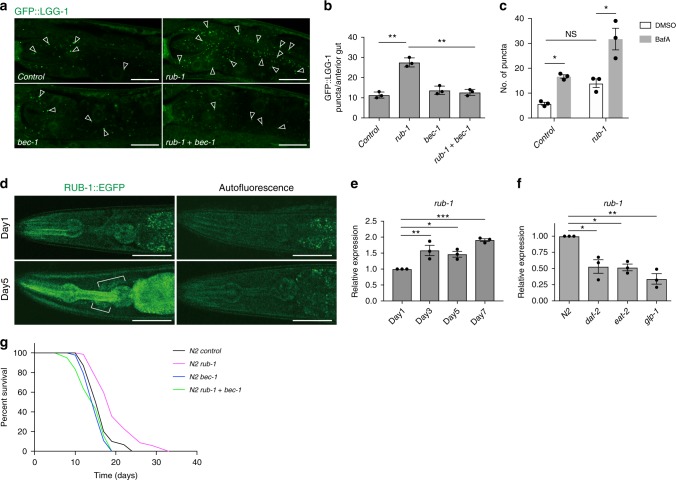
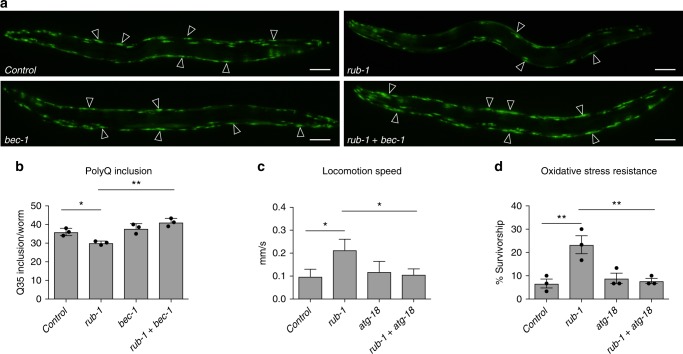
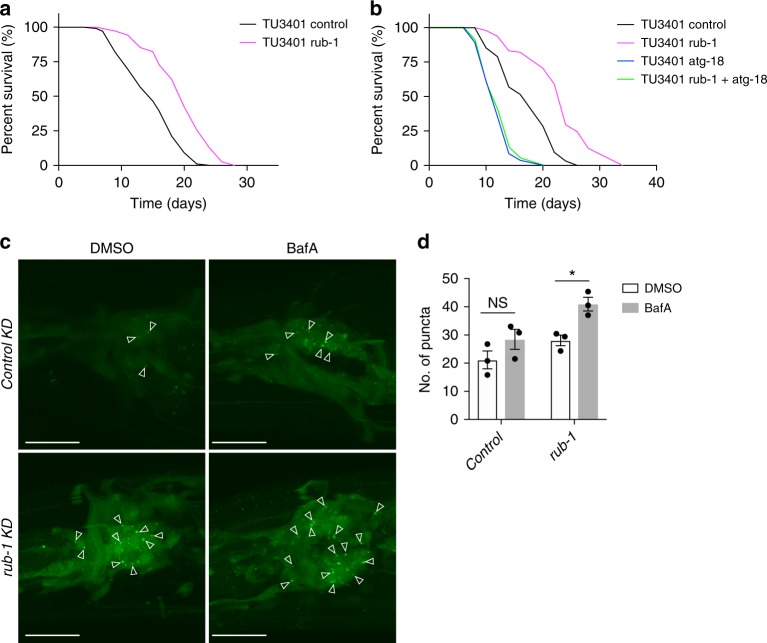
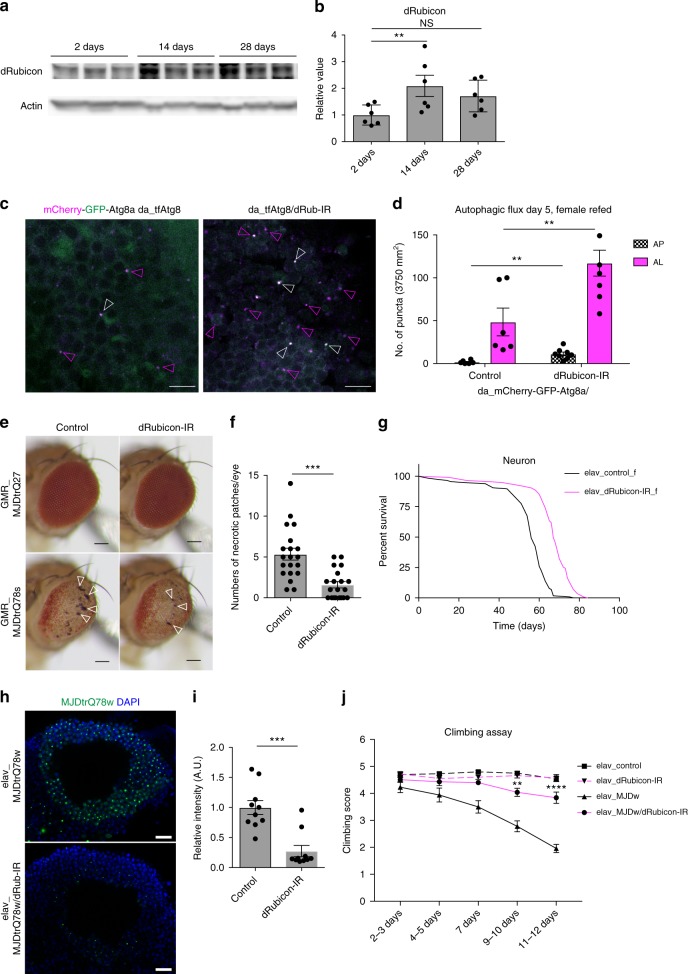
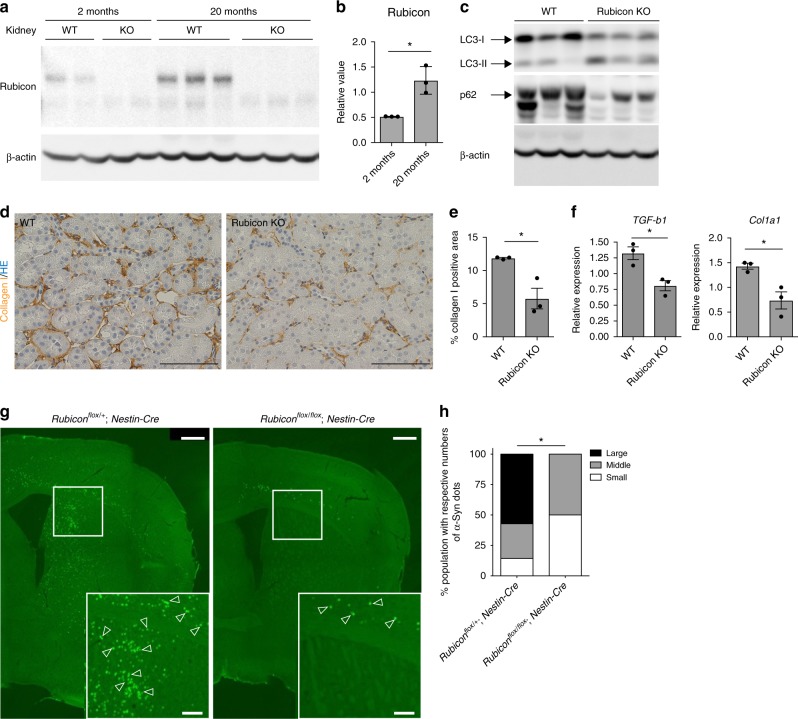
Autophagy, an evolutionarily conserved cytoplasmic degradation system, has been implicated as a convergent mechanism in various longevity pathways. Autophagic activity decreases with age in several organisms, but the underlying mechanism is unclear. Here, we show that the expression of Rubicon, a negative regulator of autophagy, increases in aged worm, fly and mouse tissues at transcript and/or protein levels, suggesting that an age-dependent increase in Rubicon impairs autophagy over time, and thereby curtails animal healthspan. Consistent with this idea, knockdown of Rubicon extends worm and fly lifespan and ameliorates several age-associated phenotypes. Tissue-specific experiments reveal that Rubicon knockdown in neurons has the greatest effect on lifespan. Rubicon knockout mice exhibits reductions in interstitial fibrosis in kidney and reduced α-synuclein accumulation in the brain. Rubicon is suppressed in several long-lived worms and calorie restricted mice. Taken together, our results suggest that suppression of autophagic activity by Rubicon is one of signatures of aging.
Overview
The claims and statistics of this paper haven’t been checked yet.
Free: it reads the open-access text and checks the first 5 claims that cite a source we can check. Create a free account to check every claim.
Integrity signals
Registry
Cites
Statistics
Figures
Verification
Claims the paper makes
The claims and statistics of this paper haven’t been checked yet.
Free: it reads the open-access text and checks the first 5 claims that cite a source we can check. Create a free account to check every claim.
Claims other papers make about this one
Each is checked against this paper’s own text: does it say what the citing paper says it does?
The cited source says what the claim attributes to it.
In the citing paper
“Consistent with this result, the activation of autophagy decreases the accumulation of SNCA/α‐synuclein (Nakamura et al, 2019).”
From Autophagy in major human diseases (2021) · cites this paper as Nakamura et al, 2019
The cited source says what the claim attributes to it.
In the citing paper
“ageing in mouse tissues, including kidney tissues, was characterized by suppression of autophagy by the run domain beclin-1-interacting and cysteine-rich domain-containing protein (rubicon)”
From Autophagy in kidney homeostasis and disease (2020) · cites this paper as [63]
Self-check
Percentages, sums and reported differences re-computed from the paper’s own numbers.
The self-check needs the paper’s full text.
Citations
Cites
Younossi, Z. M., Koenig, A. B., Abdelatif, D., Fazel, Y., Henry, L., & Wymer, M. (2016) · Hepatology · doi:10.1002/hep.28431 · Cited by 10,781
Evaluation of survival data and two new rank order statistics arising in its consideration.
Mantel, N. (1966) · PubMed · Cited by 7,519
Guidelines for the use and interpretation of assays for monitoring autophagy (3rd edition).
Klionsky, D. J., Abdelmohsen, K., Abe, A., Abedin, M. J., Abeliovich, H., Acevedo Arozena, A., Adachi, H., Adams, C. M., Adams, P. D., Adeli, K., et al. (2016) · Autophagy · doi:10.1080/15548627.2015.1100356 · Cited by 5,894
Rapamycin fed late in life extends lifespan in genetically heterogeneous mice
Harrison, D. E., Strong, R., Sharp, Z. D., Nelson, J. F., Astle, C. M., Flurkey, K., Nadon, N. L., Wilkinson, J. E., Frenkel, K., Carter, C. S., et al. (2009) · Nature · doi:10.1038/nature08221 · Cited by 3,766
Luk, K. C., Kehm, V., Carroll, J., Zhang, B., O’Brien, P., Trojanowski, J. Q., & Lee, V. M.-Y. (2012) · Science · doi:10.1126/science.1227157 · Cited by 2,563
Autophagy Genes Are Essential for Dauer Development and Life-Span Extension in C. elegans
Meléndez, A., Tallóczy, Z., Seaman, M., Eskelinen, E.-L., Hall, D. H., & Levine, B. (2003) · Science · doi:10.1126/science.1087782 · Cited by 1,270
Matsunaga, K., Saitoh, T., Tabata, K., Omori, H., Satoh, T., Kurotori, N., Maejima, I., Shirahama-Noda, K., Ichimura, T., Isobe, T., et al. (2009) · Nature Cell Biology · doi:10.1038/ncb1846 · Cited by 1,235
Self-citationSarkar, S., Davies, J. E., Huang, Z., Tunnacliffe, A., & Rubinsztein, D. C. (2007) · Journal of Biological Chemistry · doi:10.1074/jbc.m609532200 · Cited by 1,142
Ryu, D., Mouchiroud, L., Andreux, P. A., Katsyuba, E., Moullan, N., Nicolet-dit-Félix, A. A., Williams, E. G., Jha, P., Lo Sasso, G., Huzard, D., et al. (2016) · Nature Medicine · doi:10.1038/nm.4132 · Cited by 1,105
Zhong, Y., Wang, Q. J., Li, X., Yan, Y., Backer, J. M., Chait, B. T., Heintz, N., & Yue, Z. (2009) · Nature Cell Biology · doi:10.1038/ncb1854 · Cited by 1,005
Rapamycin, But Not Resveratrol or Simvastatin, Extends Life Span of Genetically Heterogeneous Mice
Miller, R. A., Harrison, D. E., Astle, C. M., Baur, J. A., Boyd, A. R., de Cabo, R., Fernandez, E., Flurkey, K., Javors, M. A., Nelson, J. F., et al. (2011) · The Journals of Gerontology: Series A · doi:10.1093/gerona/glq178 · Cited by 896
Morley, J. F., Brignull, H. R., Weyers, J. J., & Morimoto, R. I. (2002) · Proceedings of the National Academy of Sciences · doi:10.1073/pnas.152161099 · Cited by 810
Coordination of mitophagy and mitochondrial biogenesis during ageing in C. elegans
Palikaras, K., Lionaki, E., & Tavernarakis, N. (2015) · Nature · doi:10.1038/nature14300 · Cited by 770
A Role for Autophagy in the Extension of Lifespan by Dietary Restriction in C. elegans
Hansen, M., Chandra, A., Mitic, L. L., Onken, B., Driscoll, M., & Kenyon, C. (2008) · PLoS Genetics · doi:10.1371/journal.pgen.0040024 · Cited by 766
Autophagy as a promoter of longevity: insights from model organisms
Hansen, M., Rubinsztein, D. C., & Walker, D. W. (2018) · Nature Reviews Molecular Cell Biology · doi:10.1038/s41580-018-0033-y · Cited by 754
Overexpression of Atg5 in mice activates autophagy and extends lifespan
Pyo, J.-O., Yoo, S.-M., Ahn, H.-H., Nah, J., Hong, S.-H., Kam, T.-I., Jung, S., & Jung, Y.-K. (2013) · Nature Communications · doi:10.1038/ncomms3300 · Cited by 721
Simonsen, A., Cumming, R. C., Brech, A., Isakson, P., Schubert, D. R., & Finley, K. D. (2008) · Autophagy · doi:10.4161/auto.5269 · Cited by 716
Growth Curves and Survival Characteristics of the Animals Used in the Biomarkers of Aging Program
Turturro, A., Witt, W. W., Lewis, S., Hass, B. S., Lipman, R. D., & Hart, R. W. (1999) · The Journals of Gerontology Series A: Biological Sciences and Medical Sciences · doi:10.1093/gerona/54.11.b492 · Cited by 674
Disruption of the beclin 1–BCL2 autophagy regulatory complex promotes longevity in mice
Fernández, Á. F., Sebti, S., Wei, Y., Zou, Z., Shi, M., McMillan, K. L., He, C., Ting, T., Liu, Y., Chiang, W.-C., et al. (2018) · Nature · doi:10.1038/s41586-018-0162-7 · Cited by 630
Miller, R. A., Harrison, D. E., Astle, C. M., Fernandez, E., Flurkey, K., Han, M., Javors, M. A., Li, X., Nadon, N. L., Nelson, J. F., et al. (2014) · Aging Cell · doi:10.1111/acel.12194 · Cited by 621
Spencer, B., Potkar, R., Trejo, M., Rockenstein, E., Patrick, C., Gindi, R., Adame, A., Wyss-Coray, T., & Masliah, E. (2009) · The Journal of Neuroscience · doi:10.1523/jneurosci.4390-09.2009 · Cited by 595
Hypothalamic stem cells control ageing speed partly through exosomal miRNAs
Zhang, Y., Kim, M. S., Jia, B., Yan, J., Zuniga-Hertz, J. P., Han, C., & Cai, D. (2017) · Nature · doi:10.1038/nature23282 · Cited by 564
Ponpuak, M., Mandell, M. A., Kimura, T., Chauhan, S., Cleyrat, C., & Deretic, V. (2015) · Current Opinion in Cell Biology · doi:10.1016/j.ceb.2015.04.016 · Cited by 506
Essential role for autophagy in life span extension
Madeo, F., Zimmermann, A., Maiuri, M. C., & Kroemer, G. (2015) · Journal of Clinical Investigation · doi:10.1172/jci73946 · Cited by 464
High-throughput behavioral analysis in C. elegans
Swierczek, N. A., Giles, A. C., Rankin, C. H., & Kerr, R. A. (2011) · Nature Methods · doi:10.1038/nmeth.1625 · Cited by 456
Longevity pathways converge on autophagy genes to regulate life span in Caenorhabditis elegans
Tóth, M. L., Sigmond, T., Borsos, É., Barna, J., Erdélyi, P., Takács-Vellai, K., Orosz, L., Kovács, A. L., Csikós, G., Sass, M., et al. (2008) · Autophagy · doi:10.4161/auto.5618 · Cited by 428
Enhanced neuronal RNAi in C. elegans using SID-1
Calixto, A., Chelur, D., Topalidou, I., Chen, X., & Chalfie, M. (2010) · Nature Methods · doi:10.1038/nmeth.1463 · Cited by 412
Tanaka, S., Hikita, H., Tatsumi, T., Sakamori, R., Nozaki, Y., Sakane, S., Shiode, Y., Nakabori, T., Saito, Y., Hiramatsu, N., et al. (2016) · Hepatology · doi:10.1002/hep.28820 · Cited by 376
Self-citationAutophagy and Lipid Metabolism Coordinately Modulate Life Span in Germline-less C. elegans
Lapierre, L. R., Gelino, S., Meléndez, A., & Hansen, M. (2011) · Current Biology · doi:10.1016/j.cub.2011.07.042 · Cited by 343
Autophagy is Required for Dietary Restriction-Mediated Life Span Extension in C. elegans
Jia, K., & Levine, B. (2007) · Autophagy · doi:10.4161/auto.4989 · Cited by 341
AMPK Modulates Tissue and Organismal Aging in a Non-Cell-Autonomous Manner
Ulgherait, M., Rana, A., Rera, M., Graniel, J., & Walker, D. W. (2014) · Cell Reports · doi:10.1016/j.celrep.2014.08.006 · Cited by 306
Friedman, L. G., Lachenmayer, M. L., Wang, J., He, L., Poulose, S. M., Komatsu, M., Holstein, G. R., & Yue, Z. (2012) · The Journal of Neuroscience · doi:10.1523/jneurosci.5809-11.2012 · Cited by 303
Dual roles of autophagy in the survival of Caenorhabditis elegans during starvation
Kang, C., You, Y.-J., & Avery, L. (2007) · Genes & Development · doi:10.1101/gad.1573107 · Cited by 294
Non-Alcoholic Fatty Liver Disease in Older People
Frith, J., Day, C. P., Henderson, E., Burt, A. D., & Newton, J. L. (2009) · Gerontology · doi:10.1159/000235677 · Cited by 282
Spatiotemporal regulation of autophagy during Caenorhabditis elegans aging
Chang, J. T., Kumsta, C., Hellman, A. B., Adams, L. M., & Hansen, M. (2017) · eLife · doi:10.7554/elife.18459 · Cited by 266
Nezis, I. P., Shravage, B. V., Sagona, A. P., Lamark, T., Bjørkøy, G., Johansen, T., Rusten, T. E., Brech, A., Baehrecke, E. H., & Stenmark, H. (2010) · Journal of Cell Biology · doi:10.1083/jcb.201002035 · Cited by 252
Hahm, J.-H., Kim, S., DiLoreto, R., Shi, C., Lee, S.-J. V., Murphy, C. T., & Nam, H. G. (2015) · Nature Communications · doi:10.1038/ncomms9919 · Cited by 235
Establishment of a tissue-specific RNAi system in C. elegans
Qadota, H., Inoue, M., Hikita, T., Köppen, M., Hardin, J. D., Amano, M., Moerman, D. G., & Kaibuchi, K. (2007) · Gene · doi:10.1016/j.gene.2007.06.020 · Cited by 213
Iron-starvation-induced mitophagy mediates lifespan extension upon mitochondrial stress in C.elegans
Schiavi, A., Maglioni, S., Palikaras, K., Shaik, A., Strappazzon, F., Brinkmann, V., Torgovnick, A., Castelein, N., De Henau, S., Braeckman, B. P., et al. (2015) · Current Biology · doi:10.1016/j.cub.2015.05.059 · Cited by 209
RAB-10 Is Required for Endocytic Recycling in the Caenorhabditis elegans Intestine
Chen, C. C.-H., Schweinsberg, P. J., Vashist, S., Mareiniss, D. P., Lambie, E. J., & Grant, B. D. (2006) · Molecular Biology of the Cell · doi:10.1091/mbc.e05-08-0787 · Cited by 202
Fang, E. F., Waltz, T. B., Kassahun, H., Lu, Q., Kerr, J. S., Morevati, M., Fivenson, E. M., Wollman, B. N., Marosi, K., Wilson, M. A., et al. (2017) · Scientific Reports · doi:10.1038/srep46208 · Cited by 187
Neuronal CRTC-1 governs systemic mitochondrial metabolism and lifespan via a catecholamine signal
Burkewitz, K., Morantte, I., Weir, H. J. M., Yeo, R., Zhang, Y., Huynh, F. K., Ilkayeva, O. R., Hirschey, M. D., Grant, A. R., & Mair, W. B. (2015) · Cell · doi:10.1016/j.cell.2015.02.004 · Cited by 186
Donati, A., Cavallini, G., Paradiso, C., Vittorini, S., Pollera, M., Gori, Z., & Bergamini, E. (2001) · The Journals of Gerontology Series A: Biological Sciences and Medical Sciences · doi:10.1093/gerona/56.9.b375 · Cited by 142
Yamamoto, T., Takabatake, Y., Kimura, T., Takahashi, A., Namba, T., Matsuda, J., Minami, S., Kaimori, J.-Y., Matsui, I., Kitamura, H., et al. (2016) · Autophagy · doi:10.1080/15548627.2016.1159376 · Cited by 135
Self-citationSuzuki, M., Fujikake, N., Takeuchi, T., Kohyama‐Koganeya, A., Nakajima, K., Hirabayashi, Y., Wada, K., & Nagai, Y. (2015) · Human Molecular Genetics · doi:10.1093/hmg/ddv372 · Cited by 106
Self-citationCheng, X., Ma, X., Ding, X., Li, L., Jiang, X. M., Shen, Z., Chen, S., Liu, W., Gong, W., & Sun, Q. (2017) · Molecular Cell · doi:10.1016/j.molcel.2017.02.010 · Cited by 105
Wilhelm, T., Byrne, J., Medina, R., Kolundžić, E., Geisinger, J., Hajduskova, M., Tursun, B., & Richly, H. (2017) · Genes & Development · doi:10.1101/gad.301648.117 · Cited by 96
HSF1 stress response pathway regulates autophagy receptor SQSTM1/p62-associated proteostasis
Watanabe, Y., Tsujimura, A., Taguchi, K., & Tanaka, M. (2017) · Autophagy · doi:10.1080/15548627.2016.1248018 · Cited by 84
Self-citationAutophagic activity in thymus and liver during aging
Uddin, M. N., Nishio, N., Ito, S., Suzuki, H., & Isobe, K. (2011) · AGE · doi:10.1007/s11357-011-9221-9 · Cited by 77
(2016) · Autophagy · doi:10.1080/15548627.2016.1147886 · Cited by 65
Hox Proteins Mediate Developmental and Environmental Control of Autophagy
Bánréti, Á., Hudry, B., Sass, M., Saurin, A. J., & Graba, Y. (2014) · Developmental Cell · doi:10.1016/j.devcel.2013.11.024 · Cited by 63
Autophagy links lipid metabolism to longevity in C. elegans
Lapierre, L. R., Meléndez, A., & Hansen, M. (2012) · Autophagy · doi:10.4161/auto.8.1.18722 · Cited by 60
Yamaguchi, M., Hirose, F., Inoue, Y. H., Shiraki, M., Hayashi, Y., Nishi, Y., & Matsukage, A. (1999) · Oncogene · doi:10.1038/sj.onc.1203113 · Cited by 54
Bejarano, E., Murray, J. W., Wang, X., Pampliega, O., Yin, D., Patel, B., Yuste, A., Wolkoff, A. W., & Cuervo, A. M. (2018) · Aging Cell · doi:10.1111/acel.12777 · Cited by 45
Cited by
Autophagy in major human diseases
Klionsky, D. J., Petroni, G., Amaravadi, R. K., Baehrecke, E. H., Ballabio, A., Boya, P., Bravo‐San Pedro, J. M., Cadwell, K., Cecconi, F., Choi, A. M. K., et al. (2021) · The EMBO Journal · doi:10.15252/embj.2021108863 · Cited by 1,585
Self-citationMizushima, N., & Levine, B. (2020) · New England Journal of Medicine · doi:10.1056/nejmra2022774 · Cited by 1,140
Mechanisms governing autophagosome biogenesis
Nakatogawa, H. (2020) · Nature Reviews Molecular Cell Biology · doi:10.1038/s41580-020-0241-0 · Cited by 879
Autophagy in kidney homeostasis and disease
Tang, C., Livingston, M. J., Liu, Z., & Dong, Z. (2020) · Nature Reviews Nephrology · doi:10.1038/s41581-020-0309-2 · Cited by 496
Autophagy in metabolic disease and ageing
Kitada, M., & Koya, D. (2021) · Nature Reviews Endocrinology · doi:10.1038/s41574-021-00551-9 · Cited by 399
Metadata
- Authors
- Nakamura, S., Oba, M., Suzuki, M., Takahashi, A., Yamamuro, T., Fujiwara, M., Ikenaka, K., Minami, S., Tabata, N., Yamamoto, K., Kubo, S., Tokumura, A., Akamatsu, K., Miyazaki, Y., Kawabata, T., Hamasaki, M., Fukui, K., Sango, K., Watanabe, Y., Takabatake, Y., Kitajima, T. S., Okada, Y., Mochizuki, H., Isaka, Y., Antebi, A., & Yoshimori, T.
- Affiliations
- Institute for Advanced Co-Creation Studies, The University of Osaka (JP)
- Shibaura Institute of Technology (JP)
- Tokyo Metropolitan Institute of Medical Science (JP)
- The University of Osaka (JP)
- Kyoto University (JP)
- Nagasaki University (JP)
- Kyoto Prefectural University of Medicine (JP)
- University of Cologne (DE)
- Corresponding author
- Yoshimori, Tamotsu
- ORCID
- Nakamura, Shuhei
- Suzuki, Mari
- Takahashi, Atsushi
- Yamamuro, Tadashi
- Ikenaka, Kensuke
- Minami, Satoshi
- Yamamoto, Kenichi
- Akamatsu, Kanako
- Kawabata, Tsuyoshi
- Hamasaki, Maho
- Fukui, Koji
- Sango, Kazunori
- Watanabe, Yoshihisa
- Takabatake, Yoshitsugu
- Kitajima, Tomoya S.
- Okada, Yukinori
- Mochizuki, Hideki
- Isaka, Yoshitaka
- Antebi, Adam
- Yoshimori, Tamotsu
- Venue
- Nature Communications
- Published
- 2019-02-19
- Volume
- 10
- Issue
- 1
- Pages
- 847-847
- ISSN
- 2041-1723 (ISSN-L)
- PMC
- PMC6381146
- OpenAlex
- W2915168964
- Cited by
- 205
- References
- 54
- Citations by year
- 2026: 13 · 2025: 25 · 2024: 34 · 2023: 25 · 2022: 34 · 2021: 30 · 2020: 31 · 2019: 13
- FWCI
- 9.82
- Type
- journal article
- Language
- en
- Open access
- gold
- doi.org
- Licence
- cc-by
- creativecommons.org/licenses/by/4.0 (tdm)
- creativecommons.org/licenses/by/4.0 (vor)
- Locations
- Nature Communications (publishedVersion, cc-by)
- Europe PMC (PubMed Central) (publishedVersion, other-oa)
- PubMed Central (publishedVersion, cc-by)
- PubMed (publishedVersion)
- Kölner Universitäts PublikationsServer (Universität zu Köln) (publishedVersion)
- RePEc: Research Papers in Economics (submittedVersion)
- DOAJ (DOAJ: Directory of Open Access Journals) (submittedVersion, cc-by-sa)
- DOAJ (DOAJ: Directory of Open Access Journals) (submittedVersion)
- Funders
- University of Minnesota
- Takeda Science Foundation
- Japan Agency for Medical Research and Development (17gm0610005h0006, CREST, JP17gm5010001, 17gm6110003h0001)
- Ministry of Education, Culture, Sports, Science and Technology (CREST)
- Ichiro Kanehara Foundation for the Promotion of Medical Sciences and Medical Care
- Senri Life Science Foundation
- Japan Society for the Promotion of Science (18K07505, 26251020, 19K07987, JP17gm5010001, 16H06161, 17K16134, CREST, 18H05549)
- Core Research for Evolutional Science and Technology (JPMJCR17H6)
- Topics
- Life Sciences › Biochemistry, Genetics and Molecular Biology › Aging › Genetics, Aging, and Longevity in Model Organisms
- Life Sciences › Biochemistry, Genetics and Molecular Biology › Cell Biology › Autophagy in Disease and Therapy
- Life Sciences › Biochemistry, Genetics and Molecular Biology › Molecular Biology › Ubiquitin and proteasome pathways
- Keywords
- Rubicon, autophagy, aging, longevity, lifespan extension, healthspan, neurons, interstitial fibrosis, alpha-synuclein accumulation, caloric restriction, Caenorhabditis elegans, Drosophila, knockout mice
- MeSH terms
- Autophagy-Related Proteins, Aging, Animals, Autophagy, Drosophila, Female, Gene Expression Regulation, Longevity, Male, Mice, Inbred C57BL, Caenorhabditis elegans, Drosophila Proteins, Caenorhabditis elegans Proteins, Animals, Genetically Modified, Intracellular Signaling Peptides and Proteins, Gene Knockdown Techniques
About these checks
Registry, retraction, Cites and statistics results are computed, not judged, with one exception: a printed reference that no index lists is read once by a model before it counts as a citation error. Claims are extracted by a model and kept only when their quote appears verbatim in the text; each cited source is then checked, with a model’s help, for whether it says what the claim relies on. Those verdicts can be wrong — read the claim’s quote and the cited source before relying on one.
Statistics and arithmetic are recomputed, not judged.
Confidence bands are shown only for fields calibrated on our annotated test set. None is calibrated yet, so no band is shown.
What counts as a claim ›How we measure confidence ›How we check this ›
Are you an author, or do you see a problem with this page? Request a review
Data sources
Bibliographic data: Semantic Scholar, OpenAlex, Crossref.
Contains information from the Semantic Scholar Academic Graph Datasets, made available under the ODC Attribution License (ODC-BY 1.0).
Semantic Scholar’s data is described in: Kinney, R., et al. (2023). The Semantic Scholar Open Data Platform. arXiv:2301.10140.
