

Inactivation of a CRF-dependent amygdalofugal pathway reverses addiction-like behaviors in alcohol-dependent rats
Open accessThe DOI matches its Crossref record; 49 of the 49 references it cites were found in a registry or an index.
Abstract
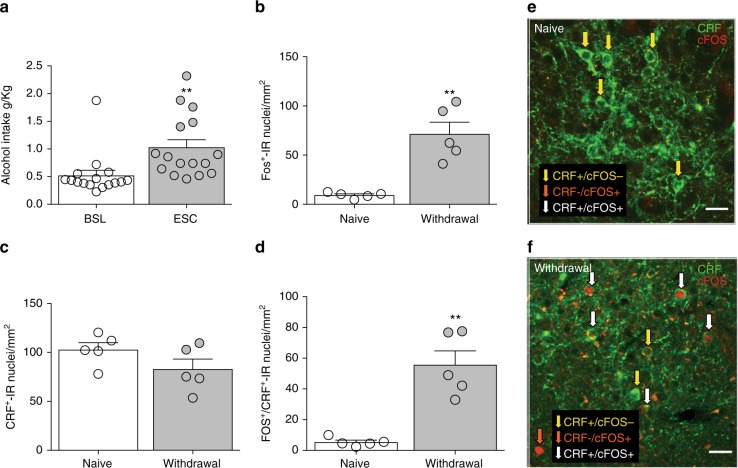
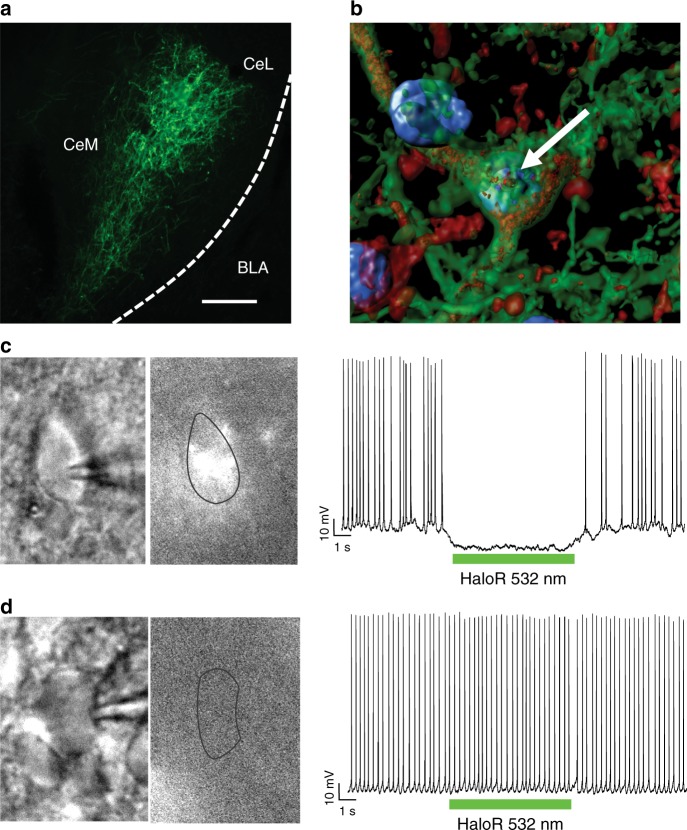
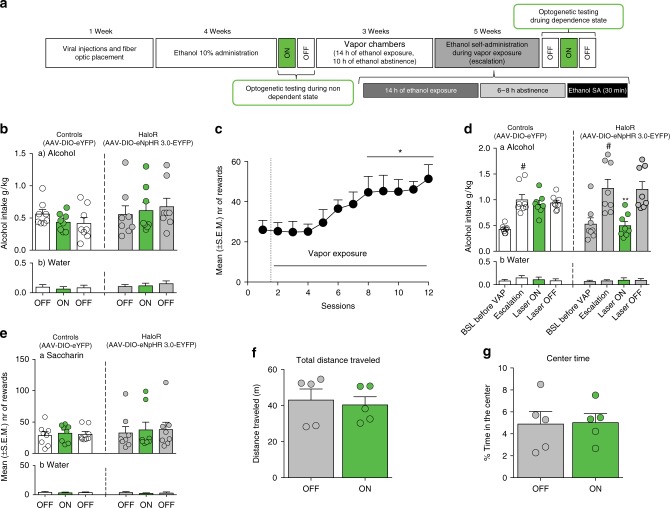
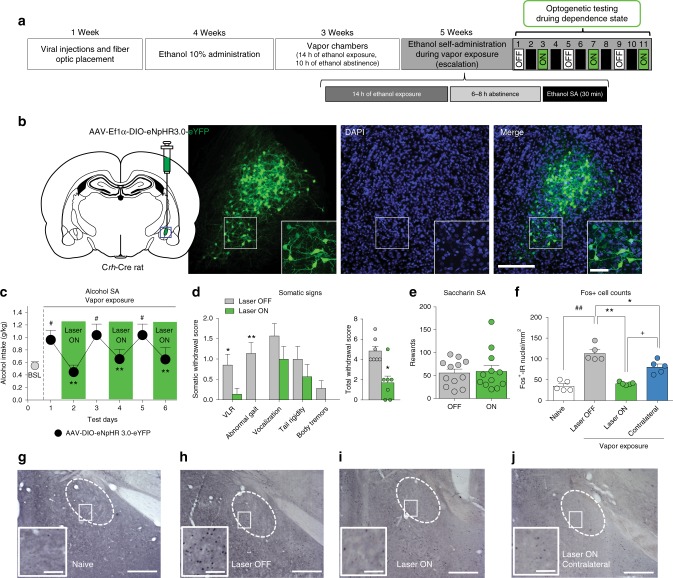
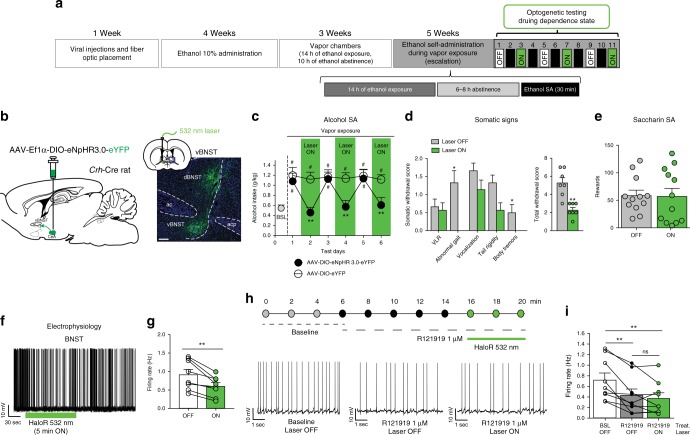
The activation of a neuronal ensemble in the central nucleus of the amygdala (CeA) during alcohol withdrawal has been hypothesized to induce high levels of alcohol drinking in dependent rats. In the present study we describe that the CeA neuronal ensemble that is activated by withdrawal from chronic alcohol exposure contains ~80% corticotropin-releasing factor (CRF) neurons and that the optogenetic inactivation of these CeA CRF+ neurons prevents recruitment of the neuronal ensemble, decreases the escalation of alcohol drinking, and decreases the intensity of somatic signs of withdrawal. Optogenetic dissection of the downstream neuronal pathways demonstrates that the reversal of addiction-like behaviors is observed after the inhibition of CeA CRF projections to the bed nucleus of the stria terminalis (BNST) and that inhibition of the CRF CeA-BNST pathway is mediated by inhibition of the CRF-CRF 1 system and inhibition of BNST cell firing. These results suggest that the CRF CeA-BNST pathway could be targeted for the treatment of excessive drinking in alcohol use disorder.
Overview
The claims and statistics of this paper haven’t been checked yet.
Free: it reads the open-access text and checks the first 5 claims that cite a source we can check. Create a free account to check every claim.
Integrity signals
Registry
Cites
Statistics
Figures
Verification
Claims the paper makes
The claims and statistics of this paper haven’t been checked yet.
Free: it reads the open-access text and checks the first 5 claims that cite a source we can check. Create a free account to check every claim.
Claims other papers make about this one
Each is checked against this paper’s own text: does it say what the citing paper says it does?
The cited source says what the claim attributes to it.
In the citing paper
“An optogenetic study showed that activation of CRF neurons in the CeA during alcohol withdrawal that projected to the BNST may mediate dependenceinduced excessive alcohol intake (de Guglielmo et al., 2016(de Guglielmo et al., , 2019)).”
From Drug Addiction: Hyperkatifeia/Negative Reinforcement as a Framework for Medications Development (2021) · cites this paper as de Guglielmo et al., 2019
The cited source says what the claim attributes to it.
In the citing paper
“More recently, also as noted above, optogenetically shutting off CRF neurons in the CeA selectively suppressed alcohol-dependent drinking, but only in dependent animals (de Guglielmo et al., 2019).”
From Drug Addiction: Hyperkatifeia/Negative Reinforcement as a Framework for Medications Development (2021) · cites this paper as de Guglielmo et al., 2019
Self-check
Percentages, sums and reported differences re-computed from the paper’s own numbers.
The self-check needs the paper’s full text.
Citations
Cites
The Rat Brain in Stereotaxic Coordinates
(1982) · Elsevier eBooks · doi:10.1016/c2009-0-63235-9 · Cited by 51,963
From circuits to behaviour in the amygdala
Janak, P. H., & Tye, K. M. (2015) · Nature · doi:10.1038/nature14188 · Cited by 2,011
Optogenetics in neural systems
Yizhar, O., Fenno, L. E., Davidson, T. J., Mogri, M., & Deisseroth, K. (2011) · Neuron · doi:10.1016/j.neuron.2011.06.004 · Cited by 1,881
Optical Deconstruction of Parkinsonian Neural Circuitry
Gradinaru, V., Mogri, M., Thompson, K. R., Henderson, J. M., & Deisseroth, K. (2009) · Science · doi:10.1126/science.1167093 · Cited by 1,526
Amygdala circuitry mediating reversible and bidirectional control of anxiety
Tye, K. M., Prakash, R., Kim, S.-Y., Fenno, L. E., Grosenick, L., Zarabi, H., Thompson, K. R., Gradinaru, V., Ramakrishnan, C., & Deisseroth, K. (2011) · Nature · doi:10.1038/nature09820 · Cited by 1,289
Brog, J. S., Salyapongse, A., Deutch, A. Y., & Zahm, D. S. (1993) · Journal of Comparative Neurology · doi:10.1002/cne.903380209 · Cited by 1,102
A Role for Brain Stress Systems in Addiction
Koob, G. F. (2008) · Neuron · doi:10.1016/j.neuron.2008.06.012 · Cited by 1,056
Self-citationZhao, S., Ting, J. T., Atallah, H. E., Qiu, L., Tan, J., Gloss, B., Augustine, G. J., Deisseroth, K., Luo, M., Graybiel, A. M., et al. (2011) · Nature Methods · doi:10.1038/nmeth.1668 · Cited by 653
Neurobiological mechanisms in the transition from drug use to drug dependence
Koob, G. F., Ahmed, S. H., Boutrel, B., Chen, S. A., Kenny, P. J., Markou, A., O'Dell, L. E., Parsons, L. H., & Sanna, P. P. (2004) · Neuroscience & Biobehavioral Reviews · doi:10.1016/j.neubiorev.2003.11.007 · Cited by 584
Self-citationPich, E., Lorang, M., Yeganeh, M., Rodriguez de Fonseca, F., Raber, J., Koob, G., & Weiss, F. (1995) · The Journal of Neuroscience · doi:10.1523/jneurosci.15-08-05439.1995 · Cited by 565
Self-citation
Cited by
Drug Addiction: Hyperkatifeia/Negative Reinforcement as a Framework for Medications Development
Koob, G. F. (2021) · Pharmacological Reviews · doi:10.1124/pharmrev.120.000083 · Cited by 337
“More recently, also as noted above, optogenetically shutting off CRF neurons in the CeA selectively suppressed alcohol-dependent drinking, but only in dependent animals (de Guglielmo et al., 2019).”
BackgroundSelf-citationAmygdala, neuropeptides, and chronic pain-related affective behaviors
Neugebauer, V., Mazzitelli, M., Cragg, B., Ji, G., Navratilova, E., & Porreca, F. (2020) · Neuropharmacology · doi:10.1016/j.neuropharm.2020.108052 · Cited by 212
Dorsal Striatal Circuits for Habits, Compulsions and Addictions
Lipton, D. M., Gonzales, B. J., & Citri, A. (2019) · Frontiers in Systems Neuroscience · doi:10.3389/fnsys.2019.00028 · Cited by 196
A tool kit of highly selective and sensitive genetically encoded neuropeptide sensors
Wang, H., Qian, T., Zhao, Y., Zhuo, Y., Wu, C., Osakada, T., Chen, P., Chen, Z., Ren, H., Yan, Y., et al. (2023) · Science · doi:10.1126/science.abq8173 · Cited by 153
“3J).”
Alcohol and the brain: from genes to circuits
Egervári, G., Siciliano, C. A., Whiteley, E. L., & Ron, D. (2021) · Trends in Neurosciences · doi:10.1016/j.tins.2021.09.006 · Cited by 151
Dichotomous organization of amygdala/temporal-prefrontal bundles in both humans and monkeys
Folloni, D., Sallet, J., Khrapitchev, A. A., Sibson, N., Verhagen, L., & Mars, R. B. (2019) · eLife · doi:10.7554/elife.47175 · Cited by 98
“…et al., 2005) and is often omitted from human studies of circuits for social-emotional behavior and decision making (Alm et al., 2015; Ameis and Catani, 2015), even though its role in cognitive and emotional processes in animals is critical (Bachevalier et al., 1985; de Guglielmo et al., 2019).”
BackgroundConsolidating the Circuit Model for Addiction
Lüscher, C., & Janak, P. H. (2021) · Annual Review of Neuroscience · doi:10.1146/annurev-neuro-092920-123905 · Cited by 95
“A subpopulation of amygdala neurons in the CeA are activated by alcohol withdrawal and are largely CRF positive (de Guglielmo et al. 2019).”
BackgroundTorruella-Suárez, M. L., Vandenberg, J. R., Cogan, E. S., Tipton, G. J., Teklezghi, A. T., Dange, K., Patel, G., McHenry, J. A., Hardaway, J. A., Kantak, P. A., et al. (2019) · Journal of Neuroscience · doi:10.1523/jneurosci.1466-19.2019 · Cited by 91
“…conducted in animals dependent on, or consuming binge quantities of, ethanol have identified CeA CRF signaling and CRFCeA neurons as a locus of ethanol effects on GABA transmission (Nie et al., 2004; Lowery-Gionta et al., 2012; Pleil et al., 2015; Herman et al., 2016; de Guglielmo et al., 2019).”
BackgroundInfluentialThe Negative Affect of Protracted Opioid Abstinence: Progress and Perspectives From Rodent Models
Welsch, L., Bailly, J., Darcq, E., & Kieffer, B. L. (2019) · Biological Psychiatry · doi:10.1016/j.biopsych.2019.07.027 · Cited by 89
“The corticotropin-releasing factor (CRF) is a stress–related neuropeptide, which was associated to drug use in humans often in relation to a stress history, and rodent research showed a key role for the CRF system in the etiology and maintenance of addiction (reviewed in (57), and see (58, 59), for recent examples in…”
BackgroundKappa opioid receptor and dynorphin signaling in the central amygdala regulates alcohol intake
Bloodgood, D. W., Hardaway, J. A., Stanhope, C. M., Pati, D., Pina, M. M., Neira, S., Desai, S., Boyt, K. M., Palmiter, R. D., & Kash, T. L. (2020) · Molecular Psychiatry · doi:10.1038/s41380-020-0690-z · Cited by 80
Distinct µ-opioid ensembles trigger positive and negative fentanyl reinforcement
Chaudun, F., Python, L., Liu, Y., Hiver, A., Cand, J., Kieffer, B. L., Valjent, E., & Lüscher, C. (2024) · Nature · doi:10.1038/s41586-024-07440-x · Cited by 76
“CeA neurons may indeed drive the expression of the withdrawal syndrome via an inhibitory projection to VTA 42,43 .”
BackgroundBaumgartner, H. M., Schulkin, J. A., & Berridge, K. C. (2021) · Biological Psychiatry · doi:10.1016/j.biopsych.2021.01.007 · Cited by 75
Stress-induced plasticity of a CRH/GABA projection disrupts reward behaviors in mice
Birnie, M. T., Short, A. K., de Carvalho, G., Taniguchi, L., Gunn, B. G., Pham, A. L., Itoga, C. A., Xu, X., Chen, L. Y., Mahler, S. V., et al. (2023) · Nature Communications · doi:10.1038/s41467-023-36780-x · Cited by 78
Neurotensin in reward processes
Torruella-Suárez, M. L., & McElligott, Z. A. (2020) · Neuropharmacology · doi:10.1016/j.neuropharm.2020.108005 · Cited by 68
“It was recently shown that inhibition of the CRFCeA->BNST pathway in ethanol-dependent rats decreases both consumption of ethanol and withdrawal symptomology (de Guglielmo et al., 2019).”
BackgroundSimpson, S., Kimbrough, A., Boomhower, B., Mclellan, R., Hughes, M., Shankar, K., de Guglielmo, G., & George, O. (2020) · eNeuro · doi:10.1523/eneuro.0312-19.2020 · Cited by 61
“The CeA is known to be involved in withdrawal symptoms through the activation of CRF and GABA transmission (Funk et al., 2006; de Guglielmo et al., 2019).”
BackgroundSelf-citationCentanni, S. W., Bedse, G., Patel, S., & Winder, D. G. (2019) · Alcoholism: Clinical and Experimental Research · doi:10.1111/acer.14178 · Cited by 58
“Further, the neurons recruited during withdrawal in the CeA were identified as mostly CRF+, and optogenetically inhibiting these neurons alleviated somatic signs of withdrawal in mice (de Guglielmo et al., 2019).”
BackgroundLi, J.-N., & Sheets, P. L. (2019) · Pain · doi:10.1097/j.pain.0000000000001691 · Cited by 53
“In the CeA, CRH1 neurons modulate fear- and anxiety-like behavior(1,23,59,65) as well as negative effects of alcohol withdrawal.(20) We find that SNI reduced synaptic efficacy to both CRH1 and CRH2 neurons in CeL, which contrasts our data showing no effects of SNI on PPR of PBn inputs to SOM1 and SOM2 in CeL.”
Mazzitelli, M., Yakhnitsa, V., Neugebauer, B., & Neugebauer, V. (2022) · Neuropharmacology · doi:10.1016/j.neuropharm.2022.109031 · Cited by 55
A Rationale for Allopregnanolone Treatment of Alcohol Use Disorders: Basic and Clinical Studies
Morrow, A. L., Boero, G., & Porcu, P. (2019) · Alcoholism Clinical and Experimental Research · doi:10.1111/acer.14253 · Cited by 56
“In line with this interpretation, it has recently been shown that optogenetic inactivation of CRF neurons in the CeA reduced alcohol consumption and withdrawal symptoms in dependent male rats (de Guglielmo et al., 2019).”
BackgroundCells and circuits for amygdala neuroplasticity in the transition to chronic pain
Kiritoshi, T., Yakhnitsa, V., Singh, S., Wilson, T. D., Chaudhry, S., Neugebauer, B., Torres-Rodriguez, J. M., Lin, J. J., Carrasquillo, Y., & Neugebauer, V. (2024) · Cell Reports · doi:10.1016/j.celrep.2024.114669 · Cited by 63
CRH Promotes the Neurogenic Activity of Neural Stem Cells in the Adult Hippocampus
Koutmani, Y., Gampierakis, I. A., Polissidis, A., Ximerakis, M., Koutsoudaki, P. N., Polyzos, A., Agrogiannis, G. D., Karaliota, S., Thomaidou, D., Rubin, L. L., et al. (2019) · Cell Reports · doi:10.1016/j.celrep.2019.09.037 · Cited by 47
Cell-type specific changes in PKC-delta neurons of the central amygdala during alcohol withdrawal
Dilly, G. A., Kittleman, C. W., Kerr, T. M., Messing, R. O., & Mayfield, R. D. (2022) · Translational Psychiatry · doi:10.1038/s41398-022-02063-0 · Cited by 51
Self-citationShah, T., Dunning, J. L., & Contet, C. (2021) · Neuropharmacology · doi:10.1016/j.neuropharm.2021.108906 · Cited by 51
Hein, M., Ji, G., Tidwell, D., D’Souza, P., Kiritoshi, T., Yakhnitsa, V., Navratilova, E., Porreca, F., & Neugebauer, V. (2021) · Neuropharmacology · doi:10.1016/j.neuropharm.2021.108456 · Cited by 49
“The parameters for optogenetic stimulation in our study were similar to those used by others to silence CeA-CRF (De Guglielmo et al., 2019).”
MethodInfluentialNentwig, T. B., Obray, J. D., Vaughan, D. T., & Chandler, L. J. (2022) · Scientific Reports · doi:10.1038/s41598-022-10668-0 · Cited by 56
“…these observations are consistent with the suggestion that while global inhibition of the CeA may reduce ethanol intake regardless of dependence status, inhibition of specific cell-types and circuits in the CeA may selectively reduce ethanol intake in dependent rats (de Guglielmo et al., 2019).”
ResultKoob, G. F., & Vendruscolo, L. F. (2023) · Current topics in behavioral neurosciences · doi:10.1007/7854_2023_424 · Cited by 54
Self-citationFarokhnia, M., Rentsch, C. T., Chuong, V., McGinn, M. A., Elvig, S. K., Douglass, E. A., Gonzalez, L. A., Sanfilippo, J. E., Marchette, R. C. N., Tunstall, B. J., et al. (2022) · Molecular Psychiatry · doi:10.1038/s41380-022-01736-y · Cited by 41
Self-citationBNST PKCδ neurons are activated by specific aversive conditions to promote anxiety-like behavior
Williford, K. M., Taylor, A., Melchior, J. R., Yoon, H. J., Sale, E., Negasi, M. D., Adank, D. N., Brown, J. A., Bedenbaugh, M. N., Luchsinger, J. R., et al. (2023) · Neuropsychopharmacology · doi:10.1038/s41386-023-01569-5 · Cited by 42
Walker, L. C. (2021) · Journal of Neurochemistry · doi:10.1111/jnc.15301 · Cited by 41
“For example, escalated operant self- administration following vapour chamber- imposed chronic alcohol exposure led to robust Fos activation of CRF+ cells in the CeA of Crh- Cre rats, representing ~80% of all CeA activation (de Guglielmo et al., 2019).”
BackgroundSex Differences in CGRP Regulation and Function in the Amygdala in a Rat Model of Neuropathic Pain
Presto, P., & Neugebauer, V. (2022) · Frontiers in Molecular Neuroscience · doi:10.3389/fnmol.2022.928587 · Cited by 41
Ferragud, A., Velázquez-Sánchez, C., Minnig, M. A., Sabino, V., & Cottone, P. (2020) · Neuropsychopharmacology · doi:10.1038/s41386-020-00904-4 · Cited by 37
“Additionally, in the same rat model used in this study, optogenetic inhibition of incoming CRF+ fibers in the BNST reduces excessive ethanol consumption in ethanol-dependent rats during acute withdrawal [79].”
MethodHaaranen, M., Schäfer, A., Järvi, V., & Hyytiä, P. (2020) · Frontiers in Behavioral Neuroscience · doi:10.3389/fnbeh.2020.580849 · Cited by 40
BNST-insula structural connectivity in humans
Flook, E. A., Feola, B., Avery, S. N., Winder, D. G., Woodward, N. D., Heckers, S., & Blackford, J. U. (2020) · NeuroImage · doi:10.1016/j.neuroimage.2020.116555 · Cited by 36
Haun, H. L., Lebonville, C. L., Solomon, M. G., Griffin, W. C., Lopez, M. F., & Becker, H. C. (2022) · Biological Psychiatry · doi:10.1016/j.biopsych.2022.01.002 · Cited by 36
Bardo, M. T., Hammerslag, L. R., & Malone, S. G. (2021) · Neuropharmacology · doi:10.1016/j.neuropharm.2021.108567 · Cited by 32
New era of optogenetics: from the central to peripheral nervous system
Xu, X., Mee, T., & Jia, X. (2020) · Critical Reviews in Biochemistry and Molecular Biology · doi:10.1080/10409238.2020.1726279 · Cited by 32
“…al. (2018) Alzheimer’s disease Perusini et al. (2017) Epilepsy Magloire et al. (2018); Berglind et al. (2018); Chang et al. (2017) Drug Addiction de Guglielmo et al. (2019); Gioia et al. (2018) Depression Covington et al. (2010); Kumar et al. (2013); Warden et al. (2012) Stroke Shah et al.…”
BackgroundMazzitelli, M., Marshall, K., Pham, A., Ji, G., & Neugebauer, V. (2021) · Frontiers in Pharmacology · doi:10.3389/fphar.2021.668337 · Cited by 34
“…are found mostly in the lateral division (CeL) of the CeA and their projections target several nuclei of the hypothalamus, the bed nucleus of the stria terminalis and different areas of the brainstem, including periaqueductal gray (PAG) and PB (Pomrenze et al., 2015; De Guglielmo et al., 2019).”
BackgroundMethodInfluentialHaun, H. L., Griffin, W. C., Lopez, M. F., & Becker, H. C. (2020) · Neuropharmacology · doi:10.1016/j.neuropharm.2020.107984 · Cited by 31
Extended‐amygdala intrinsic functional connectivity networks: A population study
Berry, S. C., Wise, R. G., Lawrence, A. D., & Lancaster, T. M. (2020) · Human Brain Mapping · doi:10.1002/hbm.25314 · Cited by 37
“…quite a substantial body of preclinical work linking the ExtA to alcohol consumption (Campbell et al., 2019; Centanni, Bedse, Patel, & Winder, 2019; de Guglielmo et al., 2019; Erikson et al., 2018; Harris & Winder, 2018; Kash, 2012; Pleil et al., 2016; Roberto et al., 2020; Volkow et al., 2016),…”
BackgroundZhang, N., Zhao, S., Ma, Y., Xiao, Z., Xue, B., Dong, Y., Wang, Q., Xu, H., Zhang, X., & Wang, Y. (2024) · Science Advances · doi:10.1126/sciadv.adk7636 · Cited by 33
Synaptic Effects Induced by Alcohol
Lovinger, D. M., & Roberto, M. (2023) · Current topics in behavioral neurosciences · doi:10.1007/7854_2022_412 · Cited by 36
Vierkant, V., Xie, X., Wang, X., & Wang, J. (2023) · Current Protocols · doi:10.1002/cpz1.831 · Cited by 32
Li, X., Yin, C., Hu, Q., Wang, J., Nie, H., Liu, B., Tai, Y., Fang, J., Du, J., Shao, X., et al. (2022) · Oxidative Medicine and Cellular Longevity · doi:10.1155/2022/8035109 · Cited by 35
Factors contributing to the escalation of alcohol consumption
Bowen, M. T., George, O., Muskiewicz, D. E., & Hall, F. S. (2021) · Neuroscience & Biobehavioral Reviews · doi:10.1016/j.neubiorev.2021.11.017 · Cited by 36
Self-citationAlcohol Dependence Induces CRF Sensitivity in Female Central Amygdala GABA Synapses
Rodriguez, L., Kirson, D., Wolfe, S. A., Patel, R. R., Varodayan, F. P., Snyder, A. E., Gandhi, P. J., Khom, S., Vlkolinský, R., Bajo, M., et al. (2022) · International Journal of Molecular Sciences · doi:10.3390/ijms23147842 · Cited by 25
Ji, G., & Neugebauer, V. (2020) · Molecular Brain · doi:10.1186/s13041-020-00669-3 · Cited by 27
Synaptic plasticity in two cell types of central amygdala for regulation of emotion and pain
Ge, J., Cai, Y., & Pan, Z. Z. (2022) · Frontiers in Cellular Neuroscience · doi:10.3389/fncel.2022.997360 · Cited by 26
Role of corticotropin-releasing factor in alcohol and nicotine addiction
Simpson, S., Shankar, K., Kimbrough, A., & George, O. (2020) · Brain Research · doi:10.1016/j.brainres.2020.146850 · Cited by 28
Self-citationSnyder, A. E., & Silberman, Y. (2021) · Neuropharmacology · doi:10.1016/j.neuropharm.2021.108814 · Cited by 24
Cannella, N., Ubaldi, M., Masi, A., Bramucci, M., Roberto, M., Bifone, A., & Ciccocioppo, R. (2019) · Neuroscience & Biobehavioral Reviews · doi:10.1016/j.neubiorev.2019.05.014 · Cited by 27
Alcohol and sweet reward are encoded by distinct meta-ensembles
Wandres, M., Pfarr, S., Molnár, B., Schöllkopf, U., Ercsey-Ravasz, M., Sommer, W. H., & Körber, C. (2021) · Neuropharmacology · doi:10.1016/j.neuropharm.2021.108496 · Cited by 23
Cruz, B., Vozella, V., Borgonetti, V., Bullard, R., Bianchi, P., Kirson, D., Bertotto, L. B., Bajo, M., Vlkolinský, R., Messing, R. O., et al. (2024) · Molecular Psychiatry · doi:10.1038/s41380-024-02514-8 · Cited by 25
Self-citationKreifeldt, M., Herman, M. A., Sidhu, H., Okhuarobo, A., Macedo, G. C., Shahryari, R., Gandhi, P. J., Roberto, M., & Contet, C. (2022) · Molecular Psychiatry · doi:10.1038/s41380-022-01496-9 · Cited by 23
Baumgartner, H. M., Granillo, M. T., Schulkin, J. A., & Berridge, K. C. (2022) · PLoS ONE · doi:10.1371/journal.pone.0267345 · Cited by 19
Zhu, Y., Xie, S., Peng, A.-B., Yu, X., Li, C., Fu, J., Shen, C.-J., Cao, S.-X., Zhang, Y., Chen, J., et al. (2023) · Biological Psychiatry · doi:10.1016/j.biopsych.2023.08.022 · Cited by 19
Pattern of neural activation following yohimbine‐induced reinstatement of alcohol seeking in rats
Walker, L. C., Kastman, H. E., & Lawrence, A. J. (2019) · European Journal of Neuroscience · doi:10.1111/ejn.14431 · Cited by 23
Lichlyter, D. A., Krumm, Z. A., Golde, T. E., & Doré, S. (2022) · FEBS Journal · doi:10.1111/febs.16380 · Cited by 17
de Guglielmo, G., Simpson, S., Kimbrough, A., Conlisk, D., Baker, R., Cantor, M., Kallupi, M., & George, O. (2022) · Neuropharmacology · doi:10.1016/j.neuropharm.2022.109309 · Cited by 18
Self-citationFlook, E. A., Feola, B., Benningfield, M. M., Silveri, M. M., Winder, D. G., & Blackford, J. U. (2021) · Alcoholism Clinical and Experimental Research · doi:10.1111/acer.14596 · Cited by 19
Role of BNST CRFR1 Receptors in Incubation of Fentanyl Seeking
Gyawali, U., Martin, D. A., Sulima, A., Rice, K. C., & Calu, D. J. (2020) · Frontiers in Behavioral Neuroscience · doi:10.3389/fnbeh.2020.00153 · Cited by 20
Avegno, E. M., & Gilpin, N. W. (2021) · Neuropharmacology · doi:10.1016/j.neuropharm.2021.108856 · Cited by 16
Aroni, S., Marino, R. A. M., Girven, K. S., Irving, J. M., Cheer, J. F., & Sparta, D. R. (2021) · Neuropharmacology · doi:10.1016/j.neuropharm.2021.108527 · Cited by 16
A conceptual framework for the intersection of hyperalgesia and hyperkatifeia in alcohol addiction
Koob, G. F., & Vendruscolo, L. F. (2025) · Alcohol · doi:10.1016/j.alcohol.2025.08.004 · Cited by 17
Self-citationLi, J., Chen, K. M., & Sheets, P. L. (2022) · The Journal of Comparative Neurology · doi:10.1002/cne.25332 · Cited by 11
“For example, activation of CeA-CRH+ neurons projecting to the bed nucleus of the stria terminalis (BNST) drive excessive alcohol drinking and withdrawal in dependent rats (de Guglielmo et al., 2019).”
BackgroundCentral amygdala astrocyte plasticity underlies GABAergic dysregulation in ethanol dependence
Nentwig, T. B., Obray, J. D., Kruyer, A., Wilkes, E. T., Vaughan, D. T., Scofield, M. D., & Chandler, L. J. (2025) · Translational Psychiatry · doi:10.1038/s41398-025-03337-z · Cited by 16
Zuo, W., Zuo, Q., Wu, L., Mei, Q., Shah, M. U., Zheng, J., Li, D., Xu, Y., & Ye, J.-H. (2021) · Neurobiology of Stress · doi:10.1016/j.ynstr.2021.100395 · Cited by 12
Montañez‐Miranda, C., Bramlett, S. N., & Hepler, J. R. (2022) · Hippocampus · doi:10.1002/hipo.23492 · Cited by 13
“…which is increased recruitment of stress response systems (e.g., increased CRF release from the CeA) (de Guglielmo et al., 2019; Liu et al., 1989; Volkow et al., 1993; Volkow et al., 1996; Volkow et al., 2007), and results in escalation of the behavior (de Guglielmo et al., 2019; Liu et al., 1989).”
BackgroundInfluentialSun, M., Wu, C., Liu, L., Gu, L., Wang, Z., Xu, F., & Zhu, D. (2023) · Biochemical Pharmacology · doi:10.1016/j.bcp.2023.115578 · Cited by 14
Stielper, Z. F., Fucich, E. A., Middleton, J. W., Hillard, C. J., Edwards, S., Molina, P. E., & Gilpin, N. W. (2021) · Journal of Neurotrauma · doi:10.1089/neu.2020.7175 · Cited by 11
Fraser, K. M., Kim, T. H., Castro, M., Drieu, C., Padovan‐Hernandez, Y., Chen, B. J., Pat, F., Ottenheimer, D. J., & Janak, P. H. (2024) · iScience · doi:10.1016/j.isci.2024.109652 · Cited by 13
Neurodegeneration Within the Amygdala Is Differentially Induced by Opioid and HIV-1 Tat Exposure
Nass, S. R., Ohene‐Nyako, M., Hahn, Y. K., Knapp, P. E., & Hauser, K. F. (2022) · Frontiers in Neuroscience · doi:10.3389/fnins.2022.804774 · Cited by 13
Modulation of neuronal excitability by binge alcohol drinking
Giménez‐Gómez, P., Le, T., & Martin, G. E. (2023) · Frontiers in Molecular Neuroscience · doi:10.3389/fnmol.2023.1098211 · Cited by 12
Kozanian, O. O., Nedelescu, H., Kufahl, P. R., Mayford, M. R., & Weiss, F. (2022) · British Journal of Pharmacology · doi:10.1111/bph.15854 · Cited by 11
“…factor (CRF) neurons in this nucleus which become hyperactive during alcohol withdrawal and, via projections to the bed nucleus of the stria terminalis, mediate both the somatic signs of withdrawal and excessive self-administration in dependent rats (de Guglielmo et al., 2019).”
BackgroundRegulation of alcohol drinking by ventral striatum and extended amygdala circuitry
Borrego, M. B., Chan, A. E., & Ozburn, A. R. (2022) · Neuropharmacology · doi:10.1016/j.neuropharm.2022.109074 · Cited by 14
Subregional Differences in Alcohol Modulation of Central Amygdala Neurocircuitry
Melkumyan, M., & Silberman, Y. (2022) · Frontiers in Molecular Neuroscience · doi:10.3389/fnmol.2022.888345 · Cited by 10
Gereau, G. B., Zhou, D., Voorhies, K. V., Tyler, R. E., Campbell, J., Murray, J. G., Alvarez-Pamir, A., Wykoff, L. A., Companion, M. A., Jackson, M. R. C., et al. (2024) · Addiction Neuroscience · doi:10.1016/j.addicn.2024.100185 · Cited by 15
Gianessi, C. A., Haun, H. L., Pati, D., Sides, T. R., D’Ambrosio, S., Kelson, W. P., Hernandez, R., Gereau, G. B., Boyt, K. M., Hodge, C. W., et al. (2025) · Neuropsychopharmacology · doi:10.1038/s41386-025-02192-2 · Cited by 11
Leveraging Neural Networks in Preclinical Alcohol Research
Smith, L. C., & Kimbrough, A. (2020) · Brain Sciences · doi:10.3390/brainsci10090578 · Cited by 10
“Several studies have used optogenetic manipulation to identify projections from the central amygdala (CEA) that are critical for addiction-like behaviors [116–118].”
BackgroundThe lateral habenula is not required for ethanol dependence-induced escalation of drinking
Nentwig, T. B., Vaughan, D. T., Braunscheidel, K. M., Browning, B. D., Woodward, J. J., & Chandler, L. J. (2022) · Neuropsychopharmacology · doi:10.1038/s41386-022-01357-7 · Cited by 10
Li, J., Li, Z.-A., Tian, H.-M., Tao, S.-S., Zhang, Q., Li, F. Y., & Li, Y.-Q. (2025) · Brain Research · doi:10.1016/j.brainres.2025.149753 · Cited by 10
Doyle, M. R., Dirik, S., Martinez, A. R., Hughes, T. E., Iyer, M. R., Sneddon, E. A., Seo, H., Cohen, S. M., & de Guglielmo, G. (2023) · Neuropharmacology · doi:10.1016/j.neuropharm.2023.109770 · Cited by 7
“Given the role of CRF in alcohol withdrawal and dependence (de Guglielmo et al., 2019; Funk and Koob, 2007; Funk et al., 2006; Gilpin et al., 2008; Koob, 2010; Roberto et al., 2010), a similar interaction between COMT and CRF systems could be an explanation for the selective effects of tolcapone…”
BackgroundAlcohol Use Disorder: Stress, Negative Reinforcement, and Negative Urgency
Vendruscolo, L. F., Koob, G. F., & Zorrilla, E. P. (2023) · Springer eBooks · doi:10.1007/978-3-031-32483-3_36 · Cited by 13
Self-citationAcute and chronic alcohol modulation of extended amygdala calcium dynamics
Roland, A. V., Chao, T.-H. H., Hon, O. J., Machinski, S. N., Sides, T. R., Lee, S. I., Shih, Y. I., & Kash, T. L. (2024) · Alcohol · doi:10.1016/j.alcohol.2024.02.004 · Cited by 11
Narasimhan, K. K. S., Chettiar, P. B., Kiritoshi, T., Ji, G., Neugebauer, V., & Dravid, S. M. (2025) · Autophagy · doi:10.1080/15548627.2025.2574968 · Cited by 12
Central amygdala neuroimmune signaling in alcohol use disorder
Melkumyan, M., Randall, P. A., & Silberman, Y. (2024) · Addiction Neuroscience · doi:10.1016/j.addicn.2024.100194 · Cited by 9
Avegno, E. M., Middleton, J. W., & Gilpin, N. W. (2019) · Physiological Reports · doi:10.14814/phy2.14245 · Cited by 7
“…experiments is the recording temperature, with studies performing experiments either at room temperature (e.g., Kirson et al, 2018; de Guglielmo et al, 2019), or using an in-line heater to maintain recording aCSF at a more physiologically relevant temperature (e.g., Herman et al,…”
MethodHuang, C., Wang, Y., Chen, P., Shan, Q., Wang, H., Ding, L., Bi, G., & Zhou, J. (2022) · Communications Biology · doi:10.1038/s42003-022-03260-9 · Cited by 6
Staehle, M. M., O’Sullivan, S. J., Vadigepalli, R., Kernan, K. F., Gonye, G. E., Ogunnaike, B. A., & Schwaber, J. S. (2020) · Frontiers in Neuroscience · doi:10.3389/fnins.2020.00375 · Cited by 7
Dirik, S., Doyle, M. R., Wood, C. P., Campo, P., Martinez, A. R., Fannon, M. J., Balaguer, M. G., Seely, S., Montoya, B. A., Cook, G. M. R., et al. (2025) · Neuropsychopharmacology · doi:10.1038/s41386-025-02164-6 · Cited by 11
Self-citationA Preclinical Alcohol Biobank: Samples from Behaviorally Characterized HS Rats for AUD Research
Doyle, M. R., Campo, P., Dirik, S., Balaguer, M. G., Martinez, A. R., Kallupi, M., Palmer, A. A., & de Guglielmo, G. (2025) · eNeuro · doi:10.1523/eneuro.0207-25.2025 · Cited by 5
Self-citationYu, Z., Zeng, T., Han, Z., Ye, K., Zeng, Y., Kong, C., Fang, B., Zhang, X., Geng, L., Lv, W., et al. (2025) · ACS Applied Nano Materials · doi:10.1021/acsanm.4c06195 · Cited by 6
Marshall, S. A., Robinson, S. L., Ebert, S. E., Companion, M. A., & Thiele, T. E. (2022) · Behavioral Neuroscience · doi:10.1037/bne0000522 · Cited by 9
Ma, Y., Sardar, H., Benabou, M. E., Yu, A. C., Morningstar, A. R., Fajardo, R. N., Kandil, I. F., Rogers, E. T., Vassalli, A., Kauer, J. A., et al. (2025) · Biological Psychiatry Global Open Science · doi:10.1016/j.bpsgos.2025.100617 · Cited by 8
“While the BNST CRF system is heavily implicated in AUD neurobiology (10,62–64), only a few addiction-related studies have examined BNST HcrtR signaling.”
Zhu, K., Tao, G., Huang, Z., Qu, W., & Wang, L. (2023) · European Journal of Neuroscience · doi:10.1111/ejn.16068 · Cited by 5
Identification of a Hippocampus‐to‐Zona Incerta Projection involved in Motor Learning
Zhang, Z., Wang, B., Yan, P., Xu, Y., Li, C., Ning, Y., Zhao, Y. F., Shan, F., Zhang, B., Yang, N., et al. (2024) · Advanced Science · doi:10.1002/advs.202307185 · Cited by 7
Torruella-Suárez, M. L., Vandenberg, J. R., Cogan, E. S., Tipton, G. J., Teklezghi, A., Dange, K., Patel, G. K., McHenry, J. A., Hardaway, J. A., Kantak, P. A., et al. (2018) · bioRxiv (Cold Spring Harbor Laboratory) · doi:10.1101/245274 · Cited by 5
Mouse parasubthalamic Crh neurons drive alcohol drinking escalation and behavioral disinhibitionPreprint
Kreifeldt, M., Okhuarobo, A., Dunning, J. L., Lopez, C., Macedo, G. C., Sidhu, H., & Contet, C. (2024) · bioRxiv (Cold Spring Harbor Laboratory) · doi:10.1101/2024.07.06.602357 · Cited by 4
The link between early-life adversity and later alcohol use disorder: A role for microglia?
Lichtenstein, H. D., Sequeira, M. K., & Bolton, J. L. (2025) · Neurobiology of Stress · doi:10.1016/j.ynstr.2025.100714 · Cited by 4
“The BNST shows very similar patterns of CRF modulation after both ELA and adolescent alcohol exposure, as projections from the CeA to the BNST seem to regulate many of the anxiety-like behaviors observed during alcohol cessation (Herman et al., 2016; de Guglielmo et al., 2019).”
Neurobiology of negative reinforcement as a driving force in alcohol addiction
Vendruscolo, L. F., & Koob, G. F. (2026) · Neuron · doi:10.1016/j.neuron.2026.04.038 · Cited by 5
Self-citationCały, A., Ziółkowska, M., Pagano, R., Salamian, A., Śliwińska, M. A., Sotoudeh, N., Bernaś, T., & Radwańska, K. (2023) · Addiction Biology · doi:10.1111/adb.13276 · Cited by 4
Metadata
- Authors
- de Guglielmo, G., Kallupi, M., Pomrenze, M. B., Crawford, E., Simpson, S., Schweitzer, P., Koob, G. F., Messing, R. O., & George, O.
- Affiliations
- Scripps Research Institute (US)
- The University of Texas at Austin (US)
- National Institutes of Health (US)
- Corresponding author
- George, Olivier
- ORCID
- Venue
- Nature Communications
- Published
- 2019-03-18
- Volume
- 10
- Issue
- 1
- Pages
- 1238-1238
- ISSN
- 2041-1723 (ISSN-L)
- PMC
- PMC6423296
- OpenAlex
- W2921968057
- Cited by
- 127
- References
- 45
- Citations by year
- 2026: 6 · 2025: 16 · 2024: 15 · 2023: 16 · 2022: 23 · 2021: 19 · 2020: 20 · 2019: 11
- FWCI
- 8.72
- Type
- journal article
- Language
- en
- Open access
- gold
- doi.org
- Licence
- cc-by
- creativecommons.org/licenses/by/4.0 (tdm)
- creativecommons.org/licenses/by/4.0 (vor)
- Locations
- Nature Communications (publishedVersion, cc-by)
- Europe PMC (PubMed Central) (publishedVersion, other-oa)
- PubMed Central (publishedVersion, cc-by)
- PubMed (publishedVersion)
- eScholarship (California Digital Library) (submittedVersion, cc-by)
- RePEc: Research Papers in Economics (submittedVersion)
- DOAJ (DOAJ: Directory of Open Access Journals) (submittedVersion, cc-by-sa)
- DOAJ (DOAJ: Directory of Open Access Journals) (submittedVersion)
- eScholarship (California Digital Library) (submittedVersion)
- Funders
- National Institutes of Health (AA13588, AA006420)
- National Institute on Alcohol Abuse and Alcoholism (R01AA020608, R37AA013588, R01AA026075, P50AA006420, R01AA026081, R01AA013588, P60AA006420, R01AA022977)
- Topics
- Life Sciences › Neuroscience › Cellular and Molecular Neuroscience › Neurotransmitter Receptor Influence on Behavior
- Life Sciences › Neuroscience › Cellular and Molecular Neuroscience › Neuroscience and Neuropharmacology Research
- Life Sciences › Neuroscience › Cellular and Molecular Neuroscience › Neuropeptides and Animal Physiology
- Keywords
- alcoholism, alcohol withdrawal, corticotropin-releasing factor, central amygdala, bed nucleus of the stria terminalis, neuronal ensembles, optogenetic inactivation, somatic withdrawal signs, addiction treatment targets
- MeSH terms
- Alcoholism, Animals, Behavior, Animal, Corticotropin-Releasing Hormone, Disease Models, Animal, Humans, Male, Neural Pathways, Neurons, Septal Nuclei, Substance Withdrawal Syndrome, Behavior, Addictive, Rats, Optogenetics, Central Amygdaloid Nucleus
About these checks
Registry, retraction, Cites and statistics results are computed, not judged, with one exception: a printed reference that no index lists is read once by a model before it counts as a citation error. Claims are extracted by a model and kept only when their quote appears verbatim in the text; each cited source is then checked, with a model’s help, for whether it says what the claim relies on. Those verdicts can be wrong — read the claim’s quote and the cited source before relying on one.
Statistics and arithmetic are recomputed, not judged.
Confidence bands are shown only for fields calibrated on our annotated test set. None is calibrated yet, so no band is shown.
What counts as a claim ›How we measure confidence ›How we check this ›
Are you an author, or do you see a problem with this page? Request a review
Data sources
Bibliographic data: Semantic Scholar, OpenAlex, Crossref.
Contains information from the Semantic Scholar Academic Graph Datasets, made available under the ODC Attribution License (ODC-BY 1.0).
Semantic Scholar’s data is described in: Kinney, R., et al. (2023). The Semantic Scholar Open Data Platform. arXiv:2301.10140.
