

The DOI matches its Crossref record; 63 of the 63 references it cites were found in a registry or an index.
P2X7 receptor induces mitochondrial failure in monocytes and compromises NLRP3 inflammasome activation during sepsis
Open accessAbstract
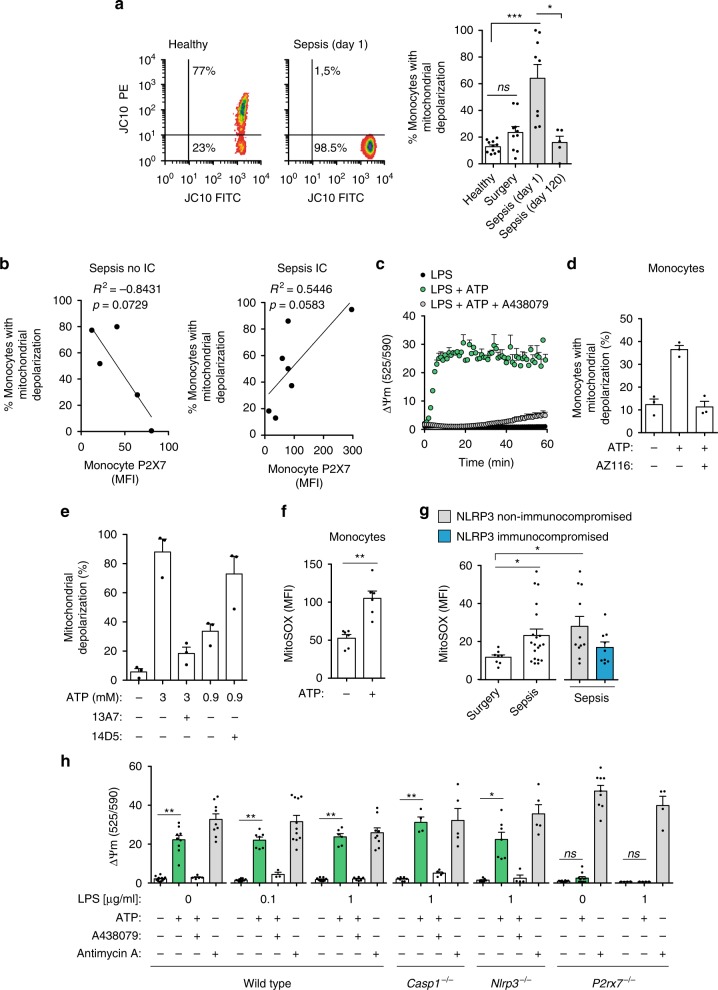
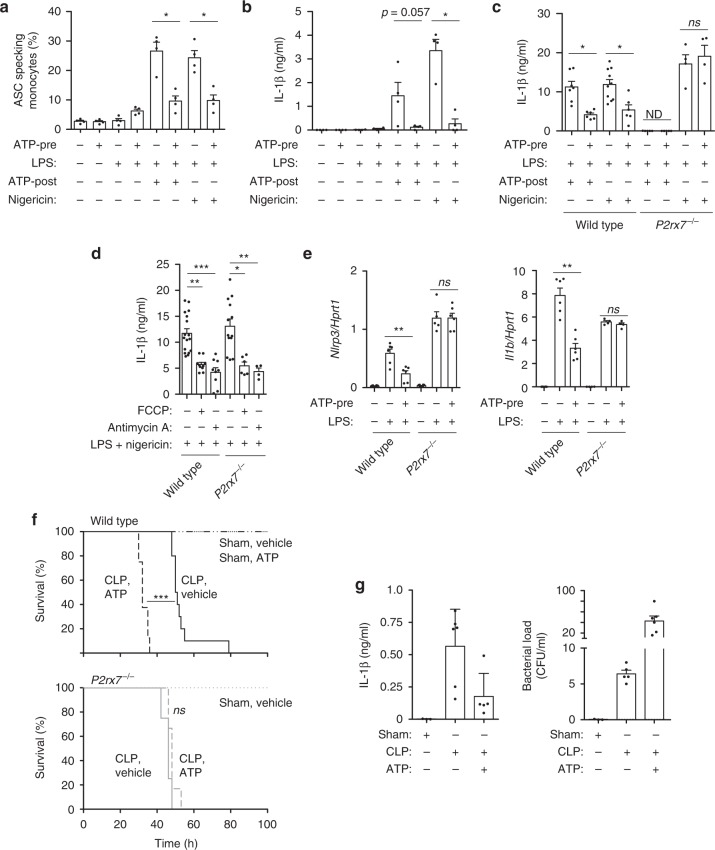
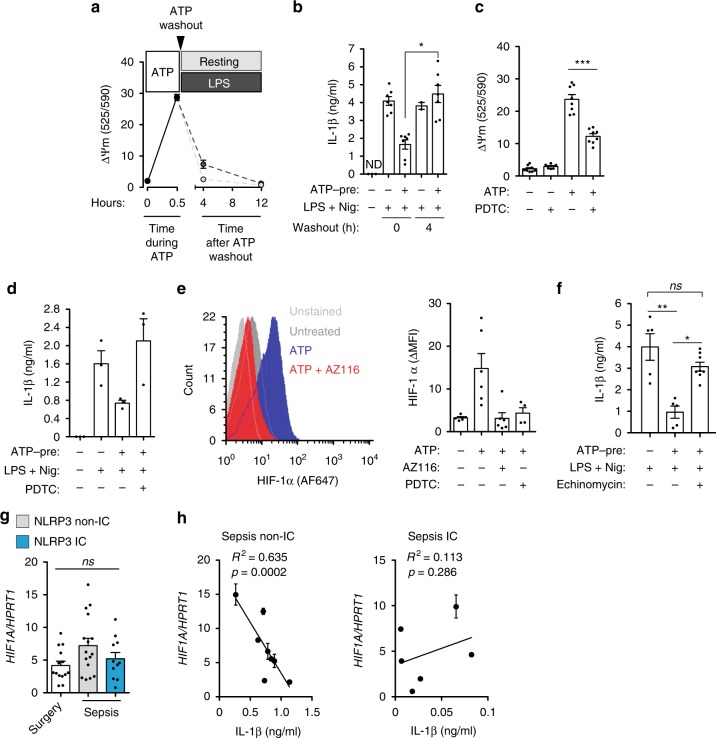
Sepsis is characterized by a systemic inflammatory response followed by immunosuppression of the host. Metabolic defects and mitochondrial failure are common in immunocompromised patients with sepsis. The NLRP3 inflammasome is important for establishing an inflammatory response after activation by the purinergic P2X7 receptor. Here, we study a cohort of individuals with intra-abdominal origin sepsis and show that patient monocytes have impaired NLRP3 activation by the P2X7 receptor. Furthermore, most sepsis-related deaths are among patients whose NLRP3 activation is profoundly altered. In monocytes from sepsis patients, the P2X7 receptor is associated with mitochondrial dysfunction. Furthermore, activation of the P2X7 receptor results in mitochondrial damage, which in turn inhibits NLRP3 activation by HIF-1α. We show that mortality increases in a mouse model of sepsis when the P2X7 receptor is activated in vivo. These data reveal a molecular mechanism initiated by the P2X7 receptor that contributes to NLRP3 impairment during infection.
Overview
The claims and statistics of this paper haven’t been checked yet.
Run the check — free, no account needed. It reads the open-access text and checks the sources it cites.
Integrity signals
Registry
Cites
Statistics
Figures
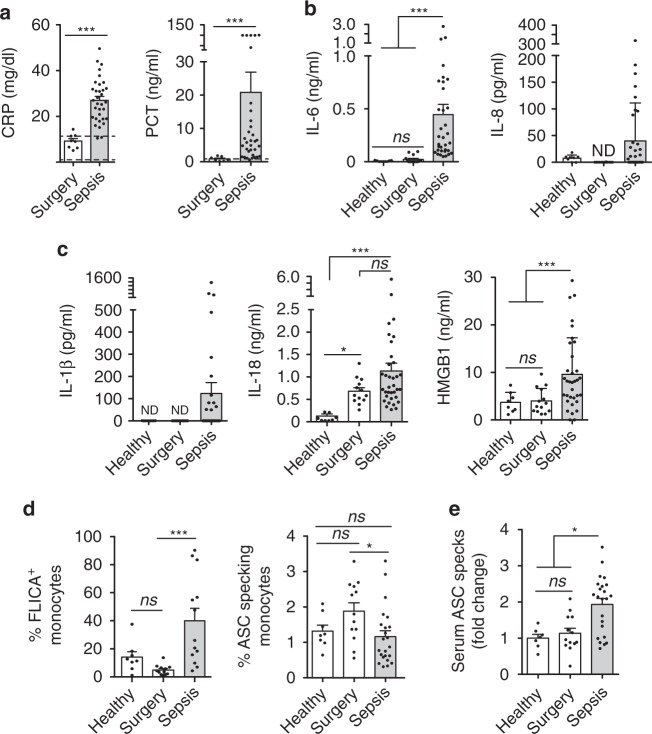
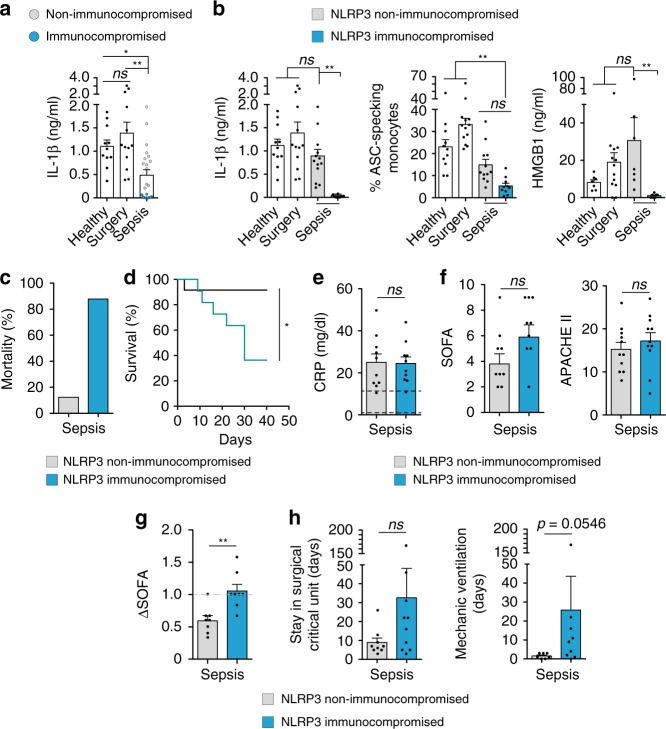
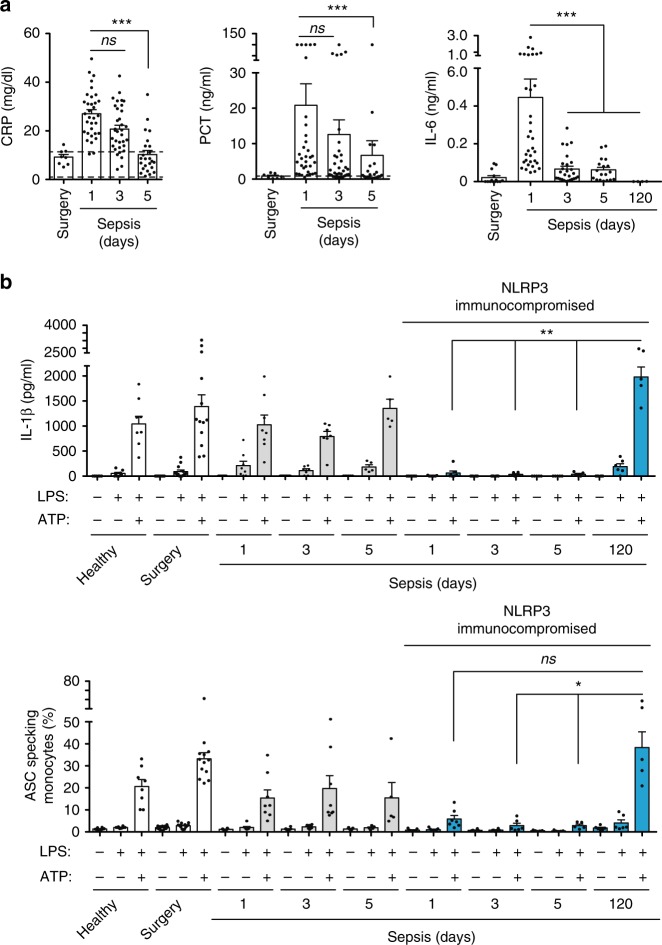
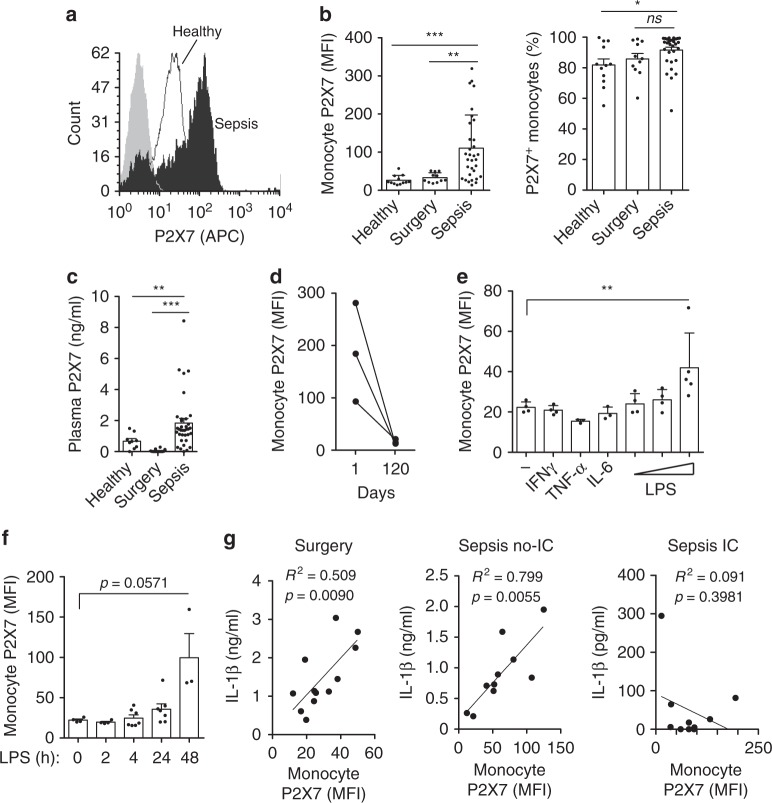
Verification
Claims the paper makes
The claims and statistics of this paper haven’t been checked yet.
Run the check — free, no account needed. It reads the open-access text and checks the sources it cites.
Claims other papers make about this one
Each is checked against this paper’s own text: does it say what the citing paper says it does?
The cited source says what the claim attributes to it.
In the citing paper
“It was already reported its capacity to modulate acute and chronic infection [81, 82], inflammatory diseases [82], sepsis [83, 84], neuropathic pain [85], and T-cell activation [86].”
From Hyperactivation of P2X7 receptors as a culprit of COVID-19 neuropathology (2021) · cites this paper as [83]
Self-check
Percentages, sums and reported differences re-computed from the paper’s own numbers.
The self-check needs the paper’s full text.
Citations
Cites
Origin and physiological roles of inflammation
Medzhitov, R. (2008) · Nature · doi:10.1038/nature07201 · Cited by 6,618
2001 SCCM/ESICM/ACCP/ATS/SIS International Sepsis Definitions Conference
Levy, M. M., Fink, M. P., Marshall, J. C., Abraham, E. H., Angus, D. C., Cook, D., Cohen, J., Opal, S. M., Vincent, J., & Ramsay, G. (2003) · Critical Care Medicine · doi:10.1097/01.ccm.0000050454.01978.3b · Cited by 5,976
Schroder, K., & Tschopp, J. (2010) · Cell · doi:10.1016/j.cell.2010.01.040 · Cited by 5,475
Severe Sepsis and Septic Shock
Angus, D. C., & van der Poll, T. (2013) · New England Journal of Medicine · doi:10.1056/nejmra1208623 · Cited by 4,119
Activation and regulation of the inflammasomes
Latz, E., Xiao, T. S., & Stutz, A. (2013) · Nature Reviews Immunology · doi:10.1038/nri3452 · Cited by 2,884
Sepsis-induced immunosuppression: from cellular dysfunctions to immunotherapy
Hotchkiss, R. S., Monneret, G., & Payen, D. (2013) · Nature Reviews Immunology · doi:10.1038/nri3552 · Cited by 2,772
Mills, E. L., Kelly, B., Logan, A., Costa, A. S. H., Varma, M., Bryant, C. E., Tourlomousis, P., Däbritz, J. H. M., Gottlieb, E., Latorre, I., et al. (2016) · Cell · doi:10.1016/j.cell.2016.08.064 · Cited by 2,291
mTOR- and HIF-1α–mediated aerobic glycolysis as metabolic basis for trained immunity
Cheng, S.-C., Quintin, J., Cramer, R. A., Shepardson, K. M., Saeed, S., Kumar, V., Giamarellos-Bourboulis, E. J., Martens, J. H. A., Rao, N. A., Aghajanirefah, A., et al. (2014) · Science · doi:10.1126/science.1250684 · Cited by 2,224
Immunosuppression in Patients Who Die of Sepsis and Multiple Organ Failure
Boomer, J. S., To, K. B., Chang, K. C., Takasu, O., Osborne, D. F., Walton, A. H., Bricker, T. L., Jarman, S. D., Kreisel, D., Krupnick, A. S., et al. (2011) · JAMA · doi:10.1001/jama.2011.1829 · Cited by 1,839
Endotoxin tolerance: new mechanisms, molecules and clinical significance
Biswas, S. K., & Lopez-Collazo, E. (2009) · Trends in Immunology · doi:10.1016/j.it.2009.07.009 · Cited by 1,318
Cited by
Sorted by citations
The role of HIF in immunity and inflammation
McGettrick, A. F., & O’Neill, L. A. J. (2020) · Cell Metabolism · doi:10.1016/j.cmet.2020.08.002 · Cited by 768
NLRP3 and pyroptosis blockers for treating inflammatory diseases
Coll, R. C., Schroder, K., & Pelegrín, P. (2022) · Trends in Pharmacological Sciences · doi:10.1016/j.tips.2022.04.003 · Cited by 790
P2X7 receptor and the NLRP3 inflammasome: Partners in crime
Pelegrín, P. (2020) · Biochemical Pharmacology · doi:10.1016/j.bcp.2020.114385 · Cited by 253
Chen, H., Deng, Y., Gan, X., Li, Y., Huang, W., Lü, L., Wei, L., Su, L., Luo, J., Zou, B., et al. (2020) · Molecular Neurodegeneration · doi:10.1186/s13024-020-00372-w · Cited by 184
Antimicrobial-associated harm in critical care: a narrative review
Arulkumaran, N., Routledge, M., Schlebusch, S., Lipman, J., & Conway Morris, A. (2020) · Intensive Care Medicine · doi:10.1007/s00134-020-05929-3 · Cited by 175
Ye, M., Zhao, Y., Wang, Y., Xie, R., Tong, Y., Sauer, J., & Gong, S. (2022) · Nature Nanotechnology · doi:10.1038/s41565-022-01137-w · Cited by 170
Energetic dysfunction in sepsis: a narrative review
Préau, S., Vodovar, D., Jung, B., Lancel, S., Zafrani, L., Flatres, A., Oualha, M., Voiriot, G., Jouan, Y., Joffre, J., et al. (2021) · Annals of Intensive Care · doi:10.1186/s13613-021-00893-7 · Cited by 156
“Mitochondrial depolarization, which occurs during apoptosis, is also detected in septic monocytes [128, 129].”
BackgroundTapia‐Abellán, A., Angosto-Bazarra, D., Alarcón‐Vila, C., Baños, M. C., Hafner‐Bratkovič, I., Oliva, B., & Pelegrín, P. (2021) · Science Advances · doi:10.1126/sciadv.abf4468 · Cited by 155
Self-citationStrategies for Targeting the NLRP3 Inflammasome in the Clinical and Preclinical Space
Schwaid, A. G., & Spencer, K. B. (2020) · Journal of Medicinal Chemistry · doi:10.1021/acs.jmedchem.0c01307 · Cited by 154
Hyperactivation of P2X7 receptors as a culprit of COVID-19 neuropathology
Ribeiro, D. E., Oliveira-Giacomelli, Á., Glaser, T., Arnaud-Sampaio, V. F., Andrejew, R., Dieckmann, L., Baranova, J., Lameu, C., Ratajczak, M. Z., & Ulrich, H. (2021) · Molecular Psychiatry · doi:10.1038/s41380-020-00965-3 · Cited by 145
Chen, X., Wu, R., Li, L., Zeng, Y., Chen, J., Wei, M., Feng, Y., Chen, G., Wang, Y., Lin, L., et al. (2023) · Immunity · doi:10.1016/j.immuni.2023.01.015 · Cited by 135
Targeting Innate Immunity in Cancer Therapy
Rameshbabu, S., Labadie, B. W., Argulian, A., & Patnaik, A. (2021) · Vaccines · doi:10.3390/vaccines9020138 · Cited by 121
GABA transporter sustains IL-1β production in macrophages
Xia, Y., He, F., Wu, X., Tan, B., Chen, S., Liao, Y., Qi, M., Chen, S., Peng, Y., Yin, Y., et al. (2021) · Science Advances · doi:10.1126/sciadv.abe9274 · Cited by 102
Saller, B. S., Wöhrle, S., Fischer, L., Dufossez, C., Ingerl, I. L., Kessler, S., Tortola, M. M., Gorka, O., Lange, F., Cheng, Y., et al. (2024) · Immunity · doi:10.1016/j.immuni.2024.10.012 · Cited by 97
Angosto-Bazarra, D., Alarcón‐Vila, C., Hurtado‐Navarro, L., Baños, M. C., Rivers‐Auty, J., & Pelegrı́n, P. (2022) · BMC Biology · doi:10.1186/s12915-021-01220-z · Cited by 83
“phages (BMDMs) were obtained from wild-type mice using 25% L cell-conditioned media as previously described [63].”
MethodSelf-citationRíos, L., Pokhrel, S., Li, S., Heo, G., Haileselassie, B., & Mochly‐Rosen, D. (2023) · Nature Communications · doi:10.1038/s41467-023-40043-0 · Cited by 83
“We provide several lines of evidence demonstrating that P110, which we identified as a selective inhibitor of Drp1-Fis1 interaction and mitochondrial dysfunction(22), shares a common mechanism with SC9: (1) both P110 and SC9 exert similar uncompetitive inhibitory kinetics on Drp1 GTPase activity; (2) their effect is l…”
BackgroundMolecular mechanisms and functions of pyroptosis in sepsis and sepsis-associated organ dysfunction
Wen, R., Liu, Y., Tong, X.-X., Zhang, T., & Yang, N. (2022) · Frontiers in Cellular and Infection Microbiology · doi:10.3389/fcimb.2022.962139 · Cited by 80
“The studies discussed in this review strongly demonstrate that pyroptosis and its related pathways play critical roles in sepsis and SAOD, although many questions remain unsolved.”
BackgroundInfluentialA rationale for targeting the P2X7 receptor in Coronavirus disease 19
Di Virgilio, F., Tang, Y., Sarti, A. C., & Rossato, M. (2020) · British Journal of Pharmacology · doi:10.1111/bph.15138 · Cited by 71
Low-Dose Radiation Therapy Promotes Radiation Pneumonitis by Activating NLRP3 Inflammasome
Li, X., Gong, Y., Li, D., Li, X., Ou, Y., Jiang, L., Shu, P., Liu, X., Guo, F., Qin, D., et al. (2020) · International Journal of Radiation Oncology*Biology*Physics · doi:10.1016/j.ijrobp.2020.02.643 · Cited by 68
Apoptotic cell therapy for cytokine storm associated with acute severe sepsis
Karbian, N., Abutbul, A., el-Amore, R., Eliaz, R., Beeri, R., Reicher, B., & Mevorach, D. (2020) · Cell Death and Disease · doi:10.1038/s41419-020-02748-8 · Cited by 63
Signalling by extracellular nucleotides in health and disease
Vultaggio-Poma, V., Falzoni, S., Salvi, G., Giuliani, A. L., & Virgilio, F. D. (2022) · Biochimica et Biophysica Acta (BBA) - Molecular Cell Research · doi:10.1016/j.bbamcr.2022.119237 · Cited by 59
Guo, Y., Zhang, H., Lv, Z., Du, Y., Li, D., Fang, H., You, J., Yu, L., & Li, R. (2023) · Cell Communication and Signaling · doi:10.1186/s12964-023-01041-3 · Cited by 60
Zou, Z.-J., Wang, Q., Zhou, M.-G., Li, W.-C., Zheng, Y., Li, F.-Y., Zheng, S.-C., & He, Z.-J. (2020) · Journal of Gene Medicine · doi:10.1002/jgm.3261 · Cited by 41
“Extracellular adenosine triphosphate activates P2X7R and then the NLRP3 inflammasome, followed by caspase‐1 activation, which releases mature interleukin (IL)‐1β, thereby promoting inflammation.(13) P2X7R is involved in the process of proinflammatory cytokine production,(12,14) the cell cycle,(15) apoptosis, autophagy…”
BackgroundLiu, Z., Pan, H., Zhang, Y., Zheng, Z., Xiao, W., Hong, X., Chen, F., Peng, X., Pei, Y., Rong, J., et al. (2021) · Journal of Biochemical and Molecular Toxicology · doi:10.1002/jbt.22885 · Cited by 60
Zhang, Y., Sun, C., Duan, J., Yang, H., Zhang, C., Xiong, J., Zhong, W., Zu, C., Guan, X., Jiang, H., et al. (2020) · Biomedicine & Pharmacotherapy · doi:10.1016/j.biopha.2020.109907 · Cited by 57
The Impact of Cytokines on Neutrophils’ Phagocytosis and NET Formation during Sepsis—A Review
Gierlikowska, B., Stachura, A., Gierlikowski, W., & Demkow, U. A. (2022) · International Journal of Molecular Sciences · doi:10.3390/ijms23095076 · Cited by 60
Chen, X., Li, H., Wang, K., Liang, X., Wang, W., Hu, X., Huang, Z., & Wang, Y. (2019) · Frontiers in Physiology · doi:10.3389/fphys.2019.01286 · Cited by 58
“Under the action of P2X7R, NLRP3 inflammasome was activated, and then cleaved pro-caspase-1 to form caspase-1, which triggered a series of inflammation (Martinez-Garcia et al., 2019).”
BackgroundMishra, A., Behura, A., Kumar, A., Naik, L., Swain, A., Das, M., Sarangi, S. S., Dokania, P., Dirisala, V. R., Bhutia, S. K., et al. (2021) · European Journal of Pharmacology · doi:10.1016/j.ejphar.2021.174235 · Cited by 53
Sestrin2 protects against lethal sepsis by suppressing the pyroptosis of dendritic cells
Wang, L., Ren, C., Yao, R.-Q., Luo, Y., Yin, Y., Wu, Y., Dong, N., Zhu, X.-M., & Yao, Y.-M. (2021) · Cellular and Molecular Life Sciences · doi:10.1007/s00018-021-03970-z · Cited by 54
“The NLRP3 inflammasome has been confirmed to be activated in monocytes and macrophages under septic conditions [43, 44].”
BackgroundP2X7 receptor in inflammation and pain
Hu, S.-Q., Hu, J., Zou, F.-L., Liu, J., Luo, H., Hu, D.-X., Wu, L., & Zhang, W. (2022) · Brain Research Bulletin · doi:10.1016/j.brainresbull.2022.07.006 · Cited by 52
Courjon, J., Dufies, O., Robert, A., Bailly, L., Torre, C., Chirio, D., Contenti, J., Vitale, S., Loubatier, C., Doye, A., et al. (2021) · Blood Advances · doi:10.1182/bloodadvances.2020003918 · Cited by 53
“23 Another possibility to explain this absence of responsiveness is that severe or critical COVID-19 patients exhibited a more immature subset of neutrophils associated with an altered response.”
InfluentialDamage associated molecular patterns and neutrophil extracellular traps in acute pancreatitis
Zhou, X., Jin, S., Pan, J., Lin, Q., Yang, S., Ambe, P. C., Basharat, Z., Zimmer, V., Wang, W., & Hong, W. (2022) · Frontiers in Cellular and Infection Microbiology · doi:10.3389/fcimb.2022.927193 · Cited by 51
NLRP3 Inflammasome: A Potential Alternative Therapy Target for Atherosclerosis
Liu, Y., Li, C., Yin, H., Zhang, X., & Li, Y. (2020) · Evidence-based Complementary and Alternative Medicine · doi:10.1155/2020/1561342 · Cited by 49
“When cells are damaged or necrotic, ATP generated inside the cell is released to outside of the cell to activate the P2X7 ion channel controlled by ATP on the membrane, causing ion transmembrane migration [28].”
BackgroundLi, M., Yang, C., Wang, Y., Song, W., Jia, L., Peng, X., & Zhao, R. (2020) · The Journal of Immunology · doi:10.4049/jimmunol.2000222 · Cited by 48
“Studies have shown that full-length P2X7R can be released into the circulation, and its blood levels increased in various disease (17, 18).”
BackgroundCD14 release induced by P2X7 receptor restricts inflammation and increases survival during sepsis
Alarcón‐Vila, C., Baroja‐Mazo, A., de Torre‐Minguela, C., Martínez, C. M., Martínez-García, J. J., Martínez‐Banaclocha, H., García-Palenciano, C., & Pelegrı́n, P. (2020) · eLife · doi:10.7554/elife.60849 · Cited by 48
Self-citationHow immune‐cell fate and function are determined by metabolic pathway choice
Kohoutková, M. H., Lázničková, P., & Frič, J. (2020) · BioEssays · doi:10.1002/bies.202000067 · Cited by 48
Li, Z., Yang, B., Yang, Z., Xie, X. N., Guo, Z., Zhao, J., Wang, R., Fu, H., Zhao, P., Zhao, X., et al. (2024) · Advanced Materials · doi:10.1002/adma.202307176 · Cited by 46
Li, W., Cai, Z., Schindler, F., Afjehi-Sadat, L., Montsch, B., Heffeter, P., Heiß, E. H., & Weckwerth, W. (2024) · Journal of Agricultural and Food Chemistry · doi:10.1021/acs.jafc.3c09132 · Cited by 45
Fundamental Neurochemistry Review: Microglial immunometabolism in traumatic brain injury
Strogulski, N. R., Portela, L. V., Polster, B. M., & Loane, D. J. (2023) · Journal of Neurochemistry · doi:10.1111/jnc.15959 · Cited by 49
Role of NLRP3 Inflammasomes in Neuroinflammation Diseases
Lin, S., & Mei, X. (2020) · European Neurology · doi:10.1159/000509798 · Cited by 44
Therapeutic implications of inflammasome in inflammatory bowel disease
Khatri, V., & Kalyanasundaram, R. (2021) · The FASEB Journal · doi:10.1096/fj.202002622r · Cited by 48
Arulkumaran, N., Pollen, S., Tidswell, R., Gaupp, C., Peters, V. B. M., Stanzani, G., Snow, T. A. C., Duchen, M. R., & Singer, M. (2021) · British Journal of Anaesthesia · doi:10.1016/j.bja.2021.05.036 · Cited by 44
Canonical and non-canonical functions of NLRP3
Accogli, T., Hibos, C., & Végran, F. (2023) · Journal of Advanced Research · doi:10.1016/j.jare.2023.01.001 · Cited by 45
Liang, S., Zhou, J., Cao, C., Liu, Y., Ming, S., Liu, X., Shang, Y., Lao, J., Qin, P., Yang, J., et al. (2024) · Cellular and Molecular Immunology · doi:10.1038/s41423-024-01170-w · Cited by 45
“All patients were selected based on clinical diagnosis and laboratory information.”
Xie, S., Qi, X., Wu, Q., Li, W., Zhang, M., Yun, X., Shi, W., Chen, S., Zeng, X., Wang, S., et al. (2021) · Free Radical Biology and Medicine · doi:10.1016/j.freeradbiomed.2021.02.034 · Cited by 42
Joshi, S., Kundu, S., Priya, V. V., Kulhari, U., Mugale, M. N., & Sahu, B. D. (2023) · Life Sciences · doi:10.1016/j.lfs.2023.121743 · Cited by 44
Mokmeli, S., & Vetrici, M. A. (2020) · Canadian Journal of Respiratory Therapy · doi:10.29390/cjrt-2020-015 · Cited by 41
“Extracellular ATP plays a central role in apoptotic cell death [27], the induction of inflammation [28], and mitochondrial failure in monocytes [29].”
BackgroundLipid oxidation dysregulation: an emerging player in the pathophysiology of sepsis
Muniz‐Santos, R., Costa, G. L. A., de Almeida, M. A. P., Moraes-de-Souza, I., Brito, M. A. D. S. M., Silva, A. R., & Gonçalves-de-Albuquerque, C. F. (2023) · Frontiers in Immunology · doi:10.3389/fimmu.2023.1224335 · Cited by 43
Molina‐López, C., Hurtado‐Navarro, L., García, C. J., Angosto-Bazarra, D., Vallejo, F., Tapia‐Abellán, A., Marques-Soares, J. R., Vargas, C., Buján-Rivas, S., Tomás-Barberán, F. A., et al. (2024) · Nature Communications · doi:10.1038/s41467-024-44990-0 · Cited by 41
Self-citationGut Enterobacteriaceae and uraemic toxins - Perpetrators for ageing
Boopathi, S., Kumar, R. M. S., Priya, P. S., Haridevamuthu, B., Nayak, S. P. R. R., Chulenbayeva, L., Kushugulova, A. R., & Arockiaraj, J. (2023) · Experimental Gerontology · doi:10.1016/j.exger.2023.112088 · Cited by 40
“In addition to curli fibres, endotoxin from Enterobacteriaceae can stimulate the activation of NLRP3 inflammasome (Martínez-García et al., 2019).”
BackgroundPurinergic signalling in host innate immune defence against intracellular pathogens
Coutinho‐Silva, R., & Savio, L. E. B. (2021) · Biochemical Pharmacology · doi:10.1016/j.bcp.2021.114405 · Cited by 42
Saber, S., Yahya, G., Gobba, N. A., Sharaf, H., Alshaman, R., Alattar, A., Amin, N. A., El-Shedody, R., Aboutouk, F. H., El-Galeel, Y. A., et al. (2021) · Journal of Inflammation Research · doi:10.2147/jir.s315938 · Cited by 38
The prognostic impact of SIGLEC5-induced impairment of CD8+ T cell activation in sepsis
Lozano‐Rodríguez, R., Ortiz, J. A., Montalbán-Hernández, K. M., Ruiz‐Rodríguez, J. C., Ferrer, R., Martín‐Quirós, A., Maroun‐Eid, C., González‐López, J. J., Fàbrega, A., Terrón‐Arcos, V., et al. (2023) · EBioMedicine · doi:10.1016/j.ebiom.2023.104841 · Cited by 44
Self-citationGarcía-Villalba, J., Hurtado‐Navarro, L., Peñín‐Franch, A., Molina‐López, C., Martínez-Alarcón, L., Angosto-Bazarra, D., Baroja‐Mazo, A., & Pelegrín, P. (2022) · Frontiers in Immunology · doi:10.3389/fimmu.2022.894470 · Cited by 37
“In diseases satisfactorily treated with anti-IL-1 therapy, such as sepsis or autoinflammatory syndromes, the blood concentrations of IL-1b are very low and usually not detected (33, 43).”
BackgroundSelf-citationGalvanic current activates the NLRP3 inflammasome to promote Type I collagen production in tendon
Peñín‐Franch, A., García-Vidal, J. A., Martínez, C. M., Escolar‐Reina, P., Martínez-Ojeda, R. M., Gómez, A. I., Bueno, J. M., Minaya‐Muñoz, F., Valera‐Garrido, F., Medina‐Mirapeix, F., et al. (2022) · eLife · doi:10.7554/elife.73675 · Cited by 44
Self-citationMacrophage polarization in sepsis: Emerging role and clinical application prospect
Hou, F., Mi, J. H., Wang, Q., Tao, Y. L., bin Guo, S., Ran, G. H., & Wang, J. C. (2024) · International Immunopharmacology · doi:10.1016/j.intimp.2024.113715 · Cited by 40
HGF alleviates septic endothelial injury by inhibiting pyroptosis via the mTOR signalling pathway
Peng, F., Chang, W., Sun, Q., Xu, X., Xie, J., Qiu, H., & Yang, Y. (2020) · Respiratory Research · doi:10.1186/s12931-020-01480-3 · Cited by 35
Circulating P2X7 Receptor Signaling Components as Diagnostic Biomarkers for Temporal Lobe Epilepsy
Conte, G., Menéndez‐Méndez, A., Bauer, S., Naggar, H. E., Alves, M., Nicke, A., Delanty, N., Rosenow, F., Henshall, D. C., & Engel, T. (2021) · Cells · doi:10.3390/cells10092444 · Cited by 36
“While promising, we acknowledge, however, that changes in P2X7R protein levels in plasma are not unique to seizures and epilepsy and, as mentioned above, have been previously reported for different pathological conditions [30,31,53,60].”
BackgroundResultInfluentialTo Inhibit or Enhance? Is There a Benefit to Positive Allosteric Modulation of P2X Receptors?
Stokes, L., Bidula, S. M., Bibič, L., & Allum, E. (2020) · Frontiers in Pharmacology · doi:10.3389/fphar.2020.00627 · Cited by 37
Role of CD39 in COVID-19 Severity: Dysregulation of Purinergic Signaling and Thromboinflammation
Díaz‐García, E., García-Tovar, S., Alfaro, E., Zamarrón, E., Mangas-Moro, A., Galera, R., Ruiz-Hernández, J. J., Solé‐Violán, J., Rodríguez‐Gallego, C., Rym, A. M. V. D., et al. (2022) · Frontiers in Immunology · doi:10.3389/fimmu.2022.847894 · Cited by 35
“eATP constitutes an important alarm for the immune system (36) as it is recognized by P2X7R, the most relevant purinergic receptor involved in inflammatory processes (37), such as sepsis (38).”
BackgroundEmerging Role of NLRP3 Inflammasome and Pyroptosis in Liver Transplantation
Lucas‐Ruiz, F., Peñín‐Franch, A., Pons, J. A., Ramírez, P., Pelegrı́n, P., Cuevas, S., & Baroja‐Mazo, A. (2022) · International Journal of Molecular Sciences · doi:10.3390/ijms232214396 · Cited by 35
Self-citationCui, J., He, Y., Zhu, F., Gong, W., Zuo, R., Wang, Y., Luo, Y., Chen, L., Wang, C., Huo, G., et al. (2023) · International Journal of Biological Sciences · doi:10.7150/ijbs.82980 · Cited by 35
“HMGB1 is a main proinflammatory factor released by pyroptotic cells as a result of plasma membrane rupture and leakage[41].”
BackgroundGAS6 attenuates sepsis-induced cardiac dysfunction through NLRP3 inflammasome-dependent mechanism
Ji, T., Liu, Q., Yu, L., Lei, W., Lu, C., Chen, J., Xie, X., Zhang, Z., Liang, Z., Deng, C., et al. (2023) · Free Radical Biology and Medicine · doi:10.1016/j.freeradbiomed.2023.11.007 · Cited by 34
The roles of NLRP3 inflammasome in bacterial infection
Zhong, Y., Lu, Y., Yang, X., Tang, Y., Zhao, K., Yuan, C., & Zhong, X. (2020) · Molecular Immunology · doi:10.1016/j.molimm.2020.03.020 · Cited by 34
Chen, P., An, Q., Huang, Y., Zhang, M., & Mao, S. (2021) · European Journal of Pharmacology · doi:10.1016/j.ejphar.2021.174438 · Cited by 33
Neutrophils Facilitate Prolonged Inflammasome Response in the DAMP-Rich Inflammatory Milieu
Son, S., Yoon, S.-H., Chae, B. J., Hwang, I., Shim, D.-W., Choe, Y. H., Hyun, Y., & Yu, J. (2021) · Frontiers in Immunology · doi:10.3389/fimmu.2021.746032 · Cited by 34
Yang, S., Hua, K., Chu, L. J., Hwu, Y., Yang, S., Wu, C.-Y., Lin, T.-J., Weng, J.-C., Zhao, H., Hsu, W., et al. (2020) · Kidney International · doi:10.1016/j.kint.2020.02.033 · Cited by 30
P2RX7 at the Host-Pathogen Interface of Infectious Diseases
Soare, A. Y., Freeman, T. L., Min, A. K., Malik, H. S., Osota, E. O., & Swartz, T. H. (2021) · Microbiology and Molecular Biology Reviews · doi:10.1128/mmbr.00055-20 · Cited by 31
The double sides of NLRP3 inflammasome activation in sepsis
Vigneron, C., Py, B. F., Monneret, G., & Venet, F. (2023) · Clinical Science · doi:10.1042/cs20220556 · Cited by 34
Ghait, M., Duduskar, S. N., Rooney, M. D., Häfner, N., Reng, L., Göhrig, B., Reuken, P. A., Bloos, F., Bauer, M. W., Sponholz, C., et al. (2023) · Frontiers in Immunology · doi:10.3389/fimmu.2023.1239474 · Cited by 30
Zhu, J., Zhang, M., Han, T.-L., Wu, H., Xiao, Z., Lin, S., Wang, C., & Xu, F. (2019) · BioMed Research International · doi:10.1155/2019/2612849 · Cited by 29
“-e expression level if HIF-1 can be induced in response to reduced oxygen availability and other stimulants (such as nitric oxide (NO) or various growth factors) in metabolic processes [14].”
BackgroundP2RX7 Enhances Tumor Control by CD8+ T Cells in Adoptive Cell Therapy
Wanhainen, K. M., Peng, C., Zhou, M. H., Macedo, B. D. G., O’Flanagan, S. D., Yang, T., Kelekar, A., Burbach, B. J., da Silva, H. B., & Jameson, S. C. (2022) · Cancer Immunology Research · doi:10.1158/2326-6066.cir-21-0691 · Cited by 29
Gonçalves-Pereira, J., Fernandes, J., Duarte, A. R., & Fernandes, S. M. (2022) · Antibiotics · doi:10.3390/antibiotics11121839 · Cited by 30
Alves, V. S., da Silva, J. P., Rodrigues, F. C., Araújo, S. M. B., Gouvêa, A. L., Leite-Aguiar, R., Santos, S. A. C. S., da Silva, M. S. P., Ferreira, F. S., Marques, E. P., et al. (2023) · Frontiers in Pharmacology · doi:10.3389/fphar.2023.1179723 · Cited by 29
“Interestingly, P2X7 receptor expression increases on the surface of monocytes from septic patients (Martínez-García et al., 2019), and P2X7 receptor gain-offunction single nucleotide polymorphisms increased susceptibility to developing severe sepsis (Geistlinger et al.”
BackgroundThe P2X7 Receptor as a Mechanistic Biomarker for Epilepsy
Engel, T. (2023) · International Journal of Molecular Sciences · doi:10.3390/ijms24065410 · Cited by 28
Togre, N. S., Mekala, N. K., Bhoj, P. S., Mogadala, N., Winfield, M., Trivedi, J., Grove, D., Kotnala, S., Rom, S., Sriram, U., et al. (2024) · Journal of Neuroinflammation · doi:10.1186/s12974-024-03230-4 · Cited by 28
CMPK2 accelerates liver ischemia/reperfusion injury via the NLRP3 signaling pathway
Luo, Y., Zheng, D., Mou, T., Pu, J., Huang, Z., Chen, W., Zhang, Y., & Wu, Z. (2021) · Experimental and Therapeutic Medicine · doi:10.3892/etm.2021.10793 · Cited by 25
“Uncontrollable NLRP3 inflammasome is associated with several diseases, such as atherosclerosis (9), sepsis (10), Crohn's disease (11), acute myocardial infarction (12) and cancer (13).”
BackgroundThe role of P2X7 receptor in infection and metabolism: Based on inflammation and immunity
Cai, X. T., Yao, Y., Teng, F., Li, Y., Wu, L., Yan, W., & Lin, N. (2021) · International Immunopharmacology · doi:10.1016/j.intimp.2021.108297 · Cited by 29
Reprogramming Macrophage Metabolism and its Effect on NLRP3 Inflammasome Activation in Sepsis
Luo, R., Li, X., & Wang, D. (2022) · Frontiers in Molecular Biosciences · doi:10.3389/fmolb.2022.917818 · Cited by 27
“Inflammasomes are a class of pattern-recognition receptors (PPRs) located in the cytoplasm and were first detected in 2002 (Martinon et al., 2002).”
BackgroundAnimal Models for the Investigation of P2X7 Receptors
Sluyter, R., Adriouch, S., Fuller, S. J., Nicke, A., Sophocleous, R. A., & Watson, D. (2023) · International Journal of Molecular Sciences · doi:10.3390/ijms24098225 · Cited by 28
Self-citationRepositioning linifanib as a potent anti-necroptosis agent for sepsis
Yu, L., Yang, K., He, X., Li, M., Gao, L., & Zha, Y. (2023) · Cell Death Discovery · doi:10.1038/s41420-023-01351-y · Cited by 26
Hu, Y., Li, Q., Pan, Y., & Li, X. (2019) · Molecules · doi:10.3390/molecules24234416 · Cited by 25
“As a component of inn te immunity [21], the NLRP3 inflam asome plays an important role in many inflammatory diseases [22,23].”
BackgroundZhang, Y., Zhang, J., Ren, Y., Li, T., Bi, J., Du, Z., & Wu, R. (2020) · Shock · doi:10.1097/shk.0000000000001624 · Cited by 25
“A recent study revealed that most sepsis-related deaths are among patients whose NLRP3 activation is profoundly altered (32).”
BackgroundZalpoor, H., Akbari, A., Nabi‐Afjadi, M., Forghaniesfidvajani, R., Tavakol, C., Barzegar, Z., Iravanpour, F., Hosseini, M., Mousavi, S. R., & Farrokhi, M. R. (2022) · Human Cell · doi:10.1007/s13577-022-00747-9 · Cited by 25
Adu‐Amankwaah, J., Adekunle, A. O., Tang, Z., Bushi, A., Tan, R., Fu, L., Gong, Z., Ma, Z., Mprah, R., Noah, M. L. N., et al. (2024) · Metabolism · doi:10.1016/j.metabol.2024.155934 · Cited by 25
Immunotherapy in the context of sepsis-induced immunological dysregulation
Wu, Y., Wang, L., Li, Y., Cao, Y., Wang, M., Deng, Z., & Kang, H. (2024) · Frontiers in Immunology · doi:10.3389/fimmu.2024.1391395 · Cited by 27
Detection of In Vivo Inflammasome Activation for Predicting Sepsis Mortality
Cui, J. Z., Oehrl, S., Ahmad, F., Brenner, T., Uhle, F., Nußhag, C., Rupp, C., Funck, F., Meisel, S., Weigand, M. A., et al. (2021) · Frontiers in Immunology · doi:10.3389/fimmu.2020.613745 · Cited by 24
“Inflammasome research and monocyte function are of particular interest in sepsis (18, 20, 21).”
BackgroundInfluentialMekala, N. K., Gheewala, N., Rom, S., Sriram, U., & Persidsky, Y. (2022) · Antioxidants · doi:10.3390/antiox11071328 · Cited by 24
Cai, S., Fan, X., Wu, J., Wang, Y., Hu, X., Pei, S., Zheng, Y., Chen, J., Huang, Y., Li, N., et al. (2023) · Acta Pharmacologica Sinica · doi:10.1038/s41401-022-01037-8 · Cited by 25
“For example, HIF-1α is involved in metabolic reprogramming to glycolysis and in the production of proinflammatory cytokines and chemokines during sepsis [55, 56].”
BackgroundZhang, M., Zheng, R., Liu, W., Hou, J.-L., Yang, Y., & Shang, H. (2023) · Journal of Chinese Integrative Medicine · doi:10.1016/j.joim.2023.08.004 · Cited by 25
Signaling Through Purinergic Receptor P2Y2 Enhances Macrophage IL-1β Production
de la Rosa, G., Gómez, A. I., Baños, M. C., & Pelegrı́n, P. (2020) · International Journal of Molecular Sciences · doi:10.3390/ijms21134686 · Cited by 24
“On the contrary, when extracellular ATP concentration rises to the mM range and P2X7R activates before macrophage priming with endotoxin, we recently found that the activity of NLRP3 inflammasome is reduced [7].”
BackgroundKorhonen, E., Hytti, M., Piippo, N., Kaarniranta, K., & Kauppinen, A. (2021) · Experimental Eye Research · doi:10.1016/j.exer.2021.108687 · Cited by 23
Js, K., Mun, S., Cho, E., Kim, D.-G., Son, W., Jeon, H.-I., Kim, H. K., Jang, K., & Yang, C. (2020) · International Journal of Molecular Sciences · doi:10.3390/ijms21228437 · Cited by 22
“However, NLRP3 activation was shown to be impaired by the P2 × 7 receptor in monocytes from a patient with an immunocompromised status caused by mitochondrial dysfunction and the inhibition of NLRP3 activation by HIF-1α [50].”
BackgroundLu, F., Chen, H., Hong, Y., Lin, Y., Liu, L., Wei, N., Wu, Q., Liao, S., Yang, S., He, J., et al. (2021) · Scientific Reports · doi:10.1038/s41598-021-92547-8 · Cited by 21
Multiple Targets for Oxysterols in Their Regulation of the Immune System
Reinmuth, L., Hsiao, C., Hamann, J., ROSENKILDE, M. M., & Mackrill, J. J. (2021) · Cells · doi:10.3390/cells10082078 · Cited by 22
“Extracellular ATP promotes the activation of the NLRP3-inflammosome in monocytes and this process is impaired during sepsis [148].”
BackgroundWang, Y., Wang, C., He, Q., Chen, G., Yu, J., Cang, J., & Zhong, M. (2023) · Frontiers in Immunology · doi:10.3389/fimmu.2023.1090202 · Cited by 21
Interplay between inflammasomes and PD-1/PD-L1 and their implications in cancer immunotherapy
Jiao, Z., & Zhang, J. (2023) · Carcinogenesis · doi:10.1093/carcin/bgad072 · Cited by 20
Tao, T., Chen, X., Zhou, Y., Zheng, Q., Gao, S., Wang, J., Ding, P.-F., Li, X., Peng, Z., Lu, Y., et al. (2022) · Journal of Neurochemistry · doi:10.1111/jnc.15712 · Cited by 19
Zhao, N., Sun, R., Cui, Y., Song, Y., Ma, W., Li, Y., Liang, J., Wang, G., Yu, Y., Han, J., et al. (2023) · Journal of Personalized Medicine · doi:10.3390/jpm13020244 · Cited by 19
P2X7 receptor antagonist A-438079 alleviates oxidative stress of lung in LPS-induced septic rats
Özkanlar, S., Ulaş, N., Kaynar, Ö., & Satıcı, E. (2023) · Purinergic Signalling · doi:10.1007/s11302-023-09936-z · Cited by 19
“P2X7Rs are activated in the monocytes of patients with sepsis [18] and LPS administration increases P2X7R immuno-expression in lung parenchyma while macrophages are not activated in P2X7R knockout mice [19].”
Metadata
- Authors
- Martínez-García, J. J., Martínez-Banaclocha, H., Angosto-Bazarra, D., de Torre-Minguela, C., Baroja-Mazo, A., Alarcón-Vila, C., Martínez-Alarcón, L., Amores-Iniesta, J., Martín-Sánchez, F., Ercole, G. A., Martínez, C. M., González-Lisorge, A., Fernández-Pacheco, J., Martínez-Gil, P., Adriouch, S., Koch-Nolte, F., Luján, J., Acosta-Villegas, F., Parrilla, P., García-Palenciano, C., & Pelegrin, P.
- Affiliations
- Instituto Murciano de Investigación Biosanitaria (ES)
- Hospital Universitario Virgen de la Arrixaca (ES)
- Inserm (FR)
- ORCID
- Venue
- Nature Communications
- Published
- 2019-06-20
- Volume
- 10
- Issue
- 1
- Pages
- 2711-2711
- ISSN
- 2041-1723 (ISSN-L)
- PMC
- PMC6586640
- OpenAlex
- W2952125019
- Cited by
- 233
- References
- 63
- Citations by year
- 2026: 16 · 2025: 16 · 2024: 44 · 2023: 48 · 2022: 39 · 2021: 34 · 2020: 33 · 2019: 3
- FWCI
- 9.01
- Type
- journal article
- Language
- en
- Open access
- gold
- doi.org
- Locations
- Nature Communications (publishedVersion, cc-by)
- PubMed Central (publishedVersion, cc-by)
- PubMed (publishedVersion)
- Hispana (publishedVersion, cc-by)
- HAL (submittedVersion, other-oa)
- RePEc: Research Papers in Economics (submittedVersion)
- DOAJ (DOAJ: Directory of Open Access Journals) (submittedVersion, cc-by-sa)
- DOAJ (DOAJ: Directory of Open Access Journals) (submittedVersion)
- Funders
- Institute for Research in Biomedicine
- Ablynx
- European Cooperation in Science and Technology (BM-1406)
- Ministerio de Economía y Competitividad (FJCI-2014-22041, PI13/00174, CD13/00059)
- Ministerio de Asuntos Económicos y Transformación Digital, Gobierno de España (SAF2017‐88276‐R)
- European Regional Development Fund (PI13/00174)
- Topics
- Life Sciences › Biochemistry, Genetics and Molecular Biology › Molecular Biology › Inflammasome and immune disorders
- Life Sciences › Biochemistry, Genetics and Molecular Biology › Physiology › Adenosine and Purinergic Signaling
- Health Sciences › Medicine › Critical Care and Intensive Care Medicine › Sepsis Diagnosis and Treatment
- Keywords
- P2X7 receptor, NLRP3 inflammasome, mitochondrial dysfunction, monocytes, sepsis, HIF-1α, purinergic signaling, immunosuppression, sepsis mortality, abdominal sepsis, mouse sepsis model
- MeSH terms
- NLR Family, Pyrin Domain-Containing 3 Protein, Adult, Aged, Aged, 80 and over, Animals, Disease Models, Animal, Female, Follow-Up Studies, Humans, Macrophages, Male, Middle Aged, Mitochondria, Monocytes, Up-Regulation, Sepsis, Mice, Hypoxia-Inducible Factor 1, alpha Subunit, Receptors, Purinergic P2X7, Inflammasomes, Mitochondrial Dynamics
About these checks
Registry, retraction, Cites and statistics results are computed, not judged, with one exception: a printed reference that no index lists is read once by a model before it counts as a citation error. Claims are extracted by a model and kept only when their quote appears verbatim in the text; each cited source is then checked, with a model’s help, for whether it says what the claim relies on. Those verdicts can be wrong — read the claim’s quote and the cited source before relying on one.
Statistics and arithmetic are recomputed, not judged.
Confidence bands are shown only for fields calibrated on our annotated test set. None is calibrated yet, so no band is shown.
What counts as a claim ›How we measure confidence ›How we check this ›
Are you an author, or do you see a problem with this page? Request a review
