

The DOI matches its Crossref record; 82 of the 83 references it cites were found in a registry or an index.
A molecular switch from STAT2-IRF9 to ISGF3 underlies interferon-induced gene transcription
Open accessAbstract
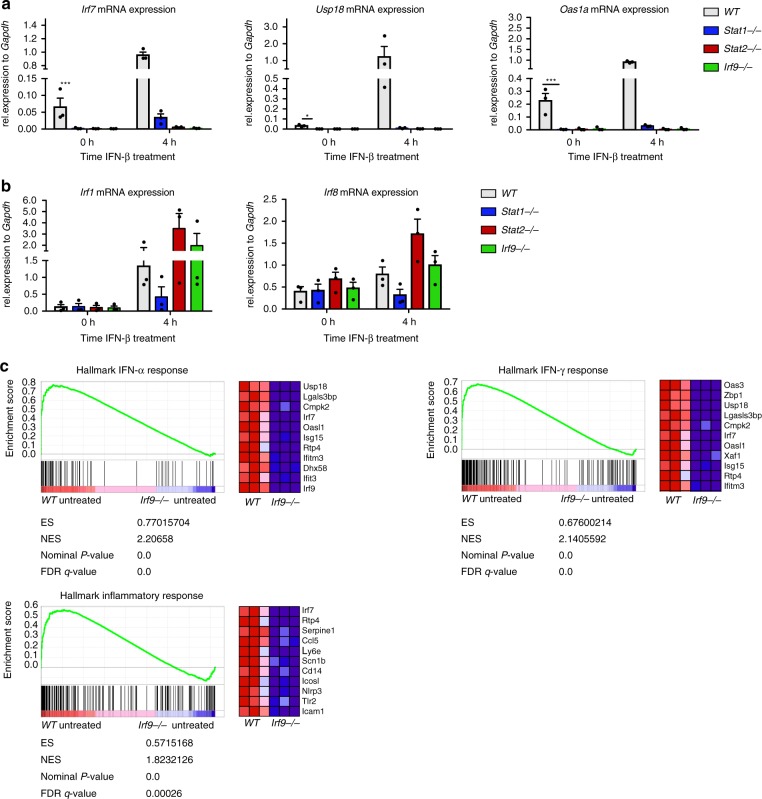
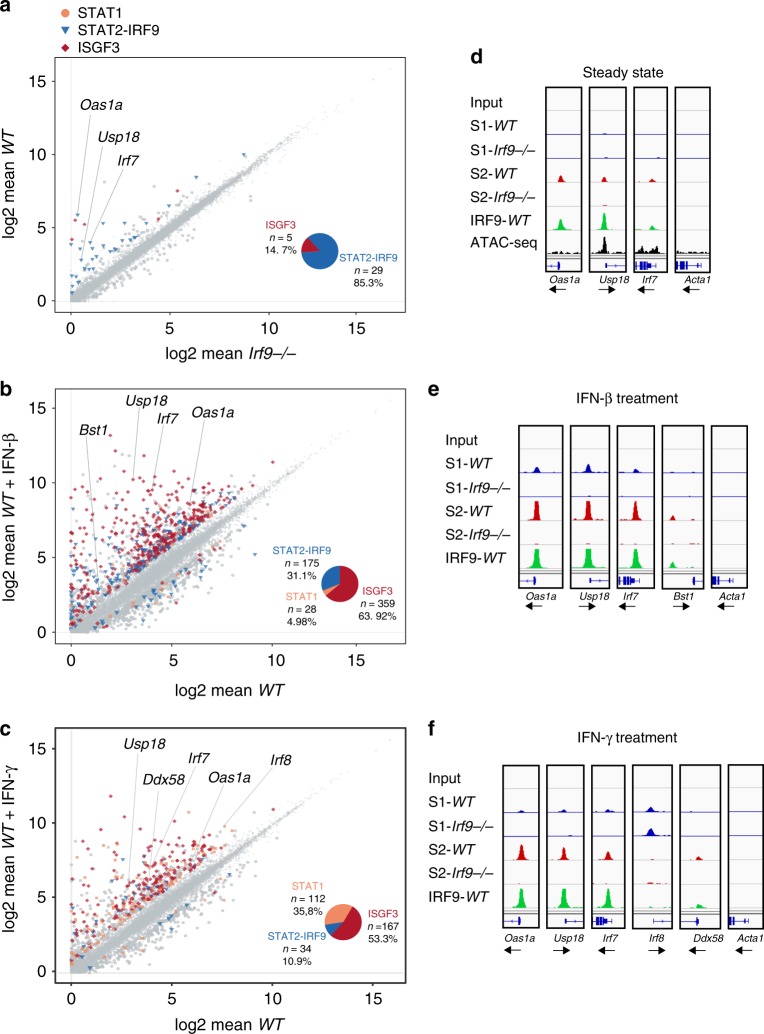
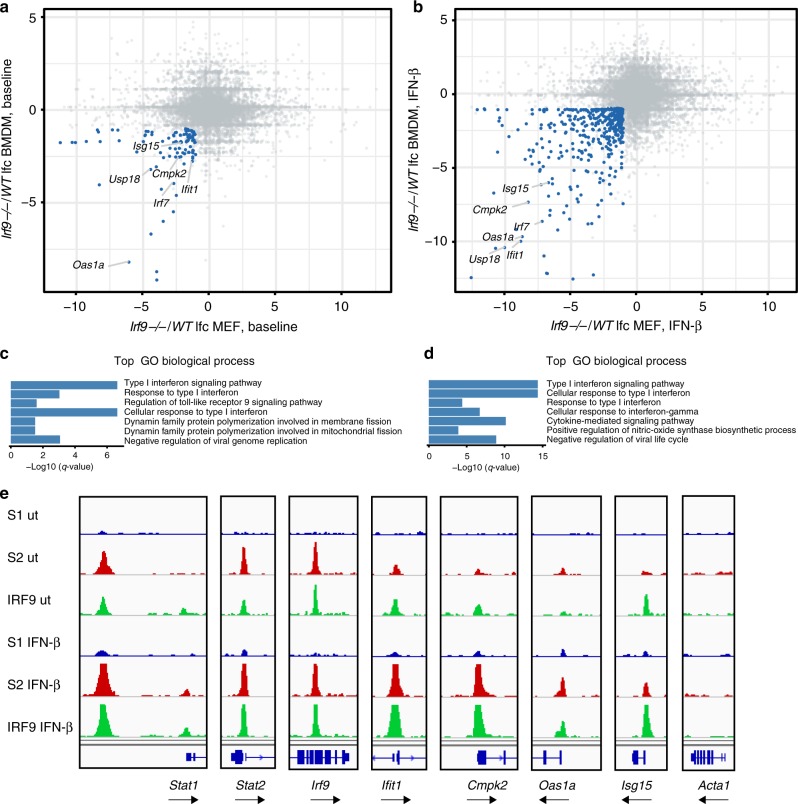
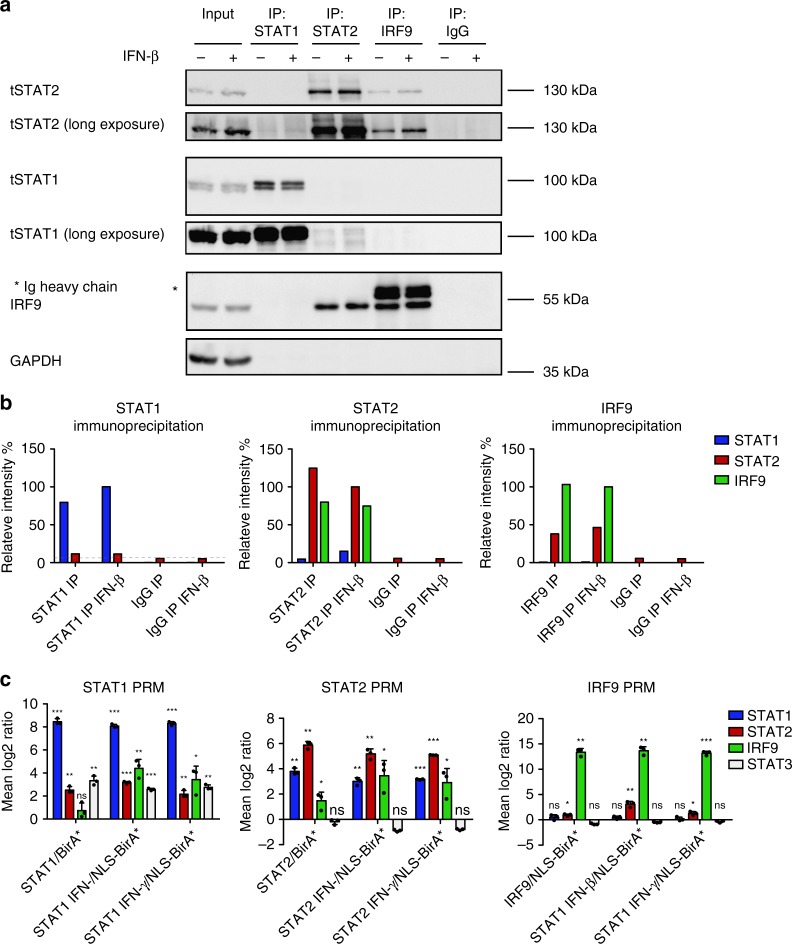
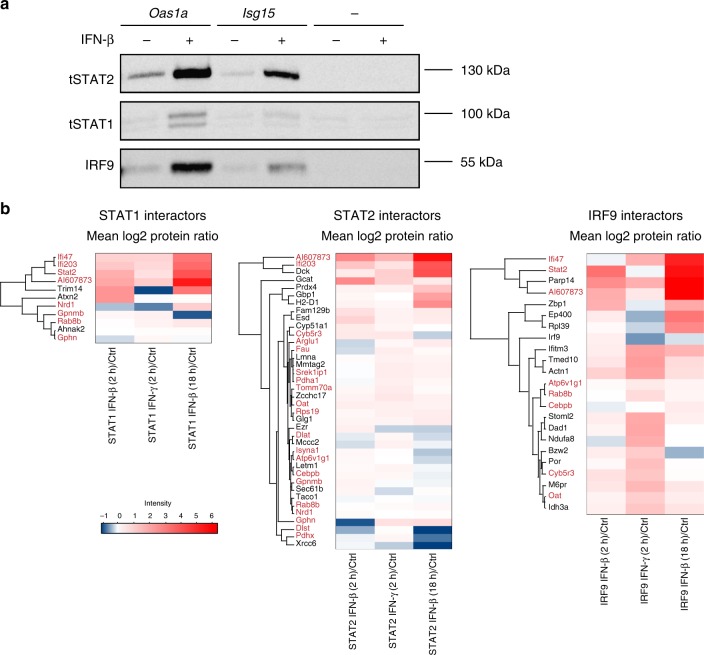
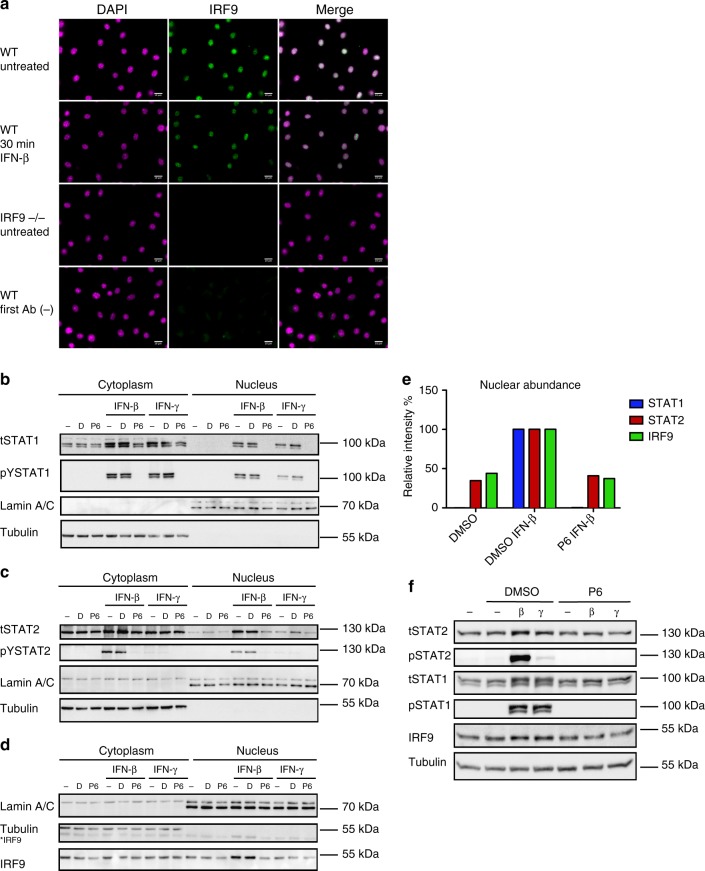
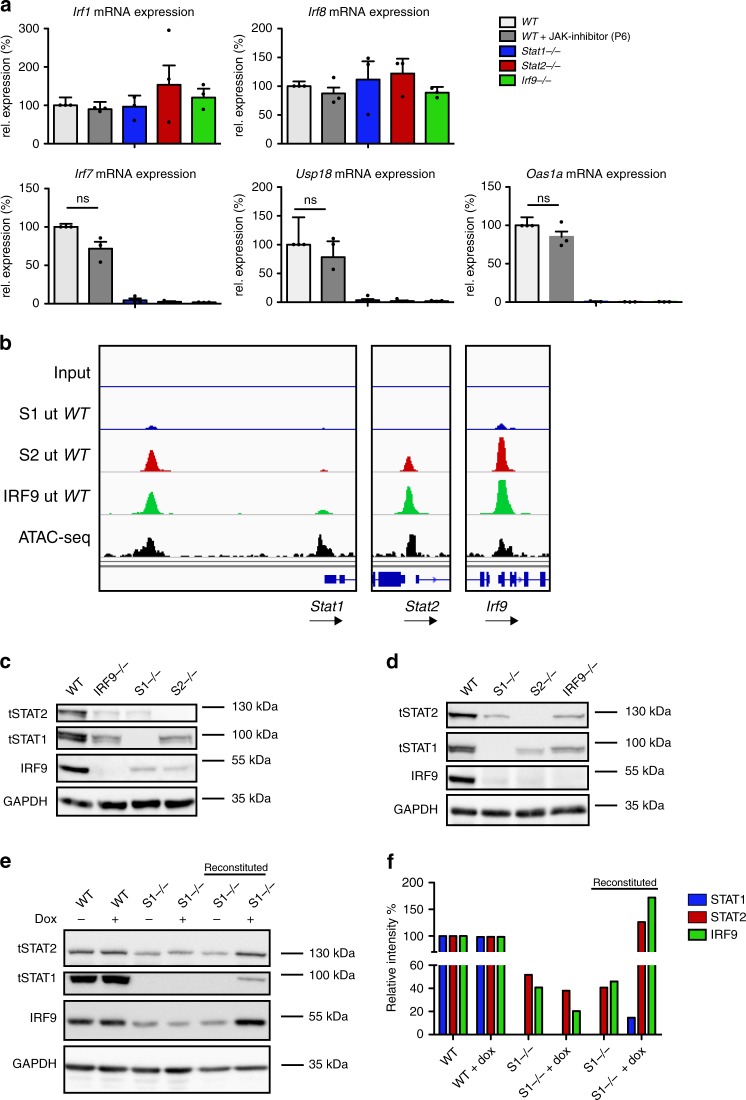
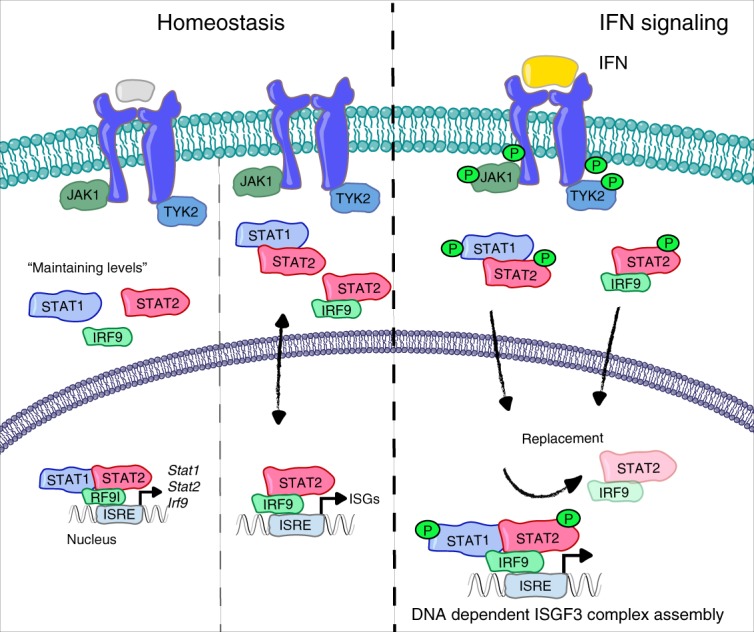
Cells maintain the balance between homeostasis and inflammation by adapting and integrating the activity of intracellular signaling cascades, including the JAK-STAT pathway. Our understanding of how a tailored switch from homeostasis to a strong receptor-dependent response is coordinated remains limited. Here, we use an integrated transcriptomic and proteomic approach to analyze transcription-factor binding, gene expression and in vivo proximity-dependent labelling of proteins in living cells under homeostatic and interferon (IFN)-induced conditions. We show that interferons (IFN) switch murine macrophages from resting-state to induced gene expression by alternating subunits of transcription factor ISGF3. Whereas preformed STAT2-IRF9 complexes control basal expression of IFN-induced genes (ISG), both type I IFN and IFN-γ cause promoter binding of a complete ISGF3 complex containing STAT1, STAT2 and IRF9. In contrast to the dogmatic view of ISGF3 formation in the cytoplasm, our results suggest a model wherein the assembly of the ISGF3 complex occurs on DNA.
Overview
The claims and statistics of this paper haven’t been checked yet.
Run the check — free, no account needed. It reads the open-access text and checks the sources it cites.
Integrity signals
Registry
Cites
Statistics
Figures
Verification
Claims the paper makes
The claims and statistics of this paper haven’t been checked yet.
Run the check — free, no account needed. It reads the open-access text and checks the sources it cites.
Claims other papers make about this one
Each is checked against this paper’s own text: does it say what the citing paper says it does?
The cited source says what the claim attributes to it.
In the citing paper
“Together, these findings imply that the wider footprints (due to increased steric blockage of methylation at ISREs) correspond to ISGF3 trimer binding and are consistent with the known structure and DNA contacts of ISGF3 and its subunits40,41”
From Single-molecule states link transcription factor binding to gene expression (2024) · cites this paper as [41]
Self-check
Percentages, sums and reported differences re-computed from the paper’s own numbers.
The self-check needs the paper’s full text.
Citations
Cites
Moderated estimation of fold change and dispersion for RNA-seq data with DESeq2
Love, M. I., Huber, W., & Anders, S. (2014) · Genome Biology · doi:10.1186/s13059-014-0550-8 · Cited by 95,106
The Sequence Alignment/Map format and SAMtools
Li, H., Handsaker, B., Wysoker, A., Fennell, T., Ruan, J., Homer, N., Marth, G., Abecasis, G., Durbin, R., & 1000 Genome Project Data Processing Subgroup (2009) · Bioinformatics · doi:10.1093/bioinformatics/btp352 · Cited by 62,041
Fast and accurate short read alignment with Burrows-Wheeler transform
Li, H., & Durbin, R. (2009) · Bioinformatics · doi:10.1093/bioinformatics/btp324 · Cited by 58,607
limma powers differential expression analyses for RNA-sequencing and microarray studies
Ritchie, M. E., Phipson, B., Wu, D., Hu, Y., Law, C. W., Shi, W., & Smyth, G. K. (2015) · Nucleic Acids Research · doi:10.1093/nar/gkv007 · Cited by 40,458
HTSeq—a Python framework to work with high-throughput sequencing data
Anders, S., Pyl, P. T., & Huber, W. (2015) · Bioinformatics · doi:10.1093/bioinformatics/btu638 · Cited by 21,464
Model-based Analysis of ChIP-Seq (MACS)
Zhang, Y., Liu, T., Meyer, C. A., Eeckhoute, J., Johnson, D. S., Bernstein, B. E., Nusbaum, C., Myers, R. M., Brown, M., Li, W., et al. (2008) · Genome Biology · doi:10.1186/gb-2008-9-9-r137 · Cited by 18,386
Kim, D., Pertea, G., Trapnell, C., Pimentel, H., Kelley, R., & Salzberg, S. L. (2013) · Genome Biology · doi:10.1186/gb-2013-14-4-r36 · Cited by 12,668
The Perseus computational platform for comprehensive analysis of (prote)omics data
Tyanova, S., Temu, T., Sinitcyn, P., Carlson, A., Hein, M. Y., Geiger, T., Mann, M., & Cox, J. (2016) · Nature Methods · doi:10.1038/nmeth.3901 · Cited by 8,803
Li, H. (2011) · Bioinformatics · doi:10.1093/bioinformatics/btr509 · Cited by 6,454
Darnell, J. E., Kerr, L. M., & Stark, G. R. (1994) · Science · doi:10.1126/science.8197455 · Cited by 6,080
Research works printed but not linked: 1
- Mariani, M. et al. RNASeq analysis identifies non-canonical role of STAT2 and IRF9 in the regulation of a STAT1-independent antiviral and immunoregulatory transcriptional program induced by IFNβ and TNFα. Preprint at https://www.biorxiv.org/content/10.1101/273623v1 (2018). · DOI
Cited by
Sorted by citations
Items 201–231 of 231
IFN-γ–driven immune networks in hepatocellular carcinoma
Kırkık, D., & Tanoğlu, A. (2026) · Anatolian Current Medical Journal · doi:10.38053/acmj.1870749
Killian, M. (2019) · theses.fr (ABES) · doi:10.70675/149672f6zd66az455ezaf8dz5befec5c0dc5
Unveiling the potential of the 3'UTR of USP18 as regulatory element duplicated in human chr22q11.21
Rubino, E. (2020) · theses.fr (ABES) · doi:10.70675/17c71d58zaa72z496fza197zc75116058539
Genetic and Epigenetic Regulation of Immune Checkpoints
Tayebi, L., & Abdolmaleki, M. (2026) · Springer eBooks · doi:10.1007/978-981-95-8026-2_3
The modifier matrix: emerging roles of ubiquitin-like proteins in Alzheimer’s disease
颜亭祥, Vaquer, J., Springer, W., & Fiesel, F. C. (2026) · Molecular Neurodegeneration Advances · doi:10.1186/s44477-026-00031-2
Dai, X., Hua, S., Xue, L., Gong, Z., Ya-ying, P., Li, Z., Han, C., Gao, X.-M., & Gong, F. (2026) · Journal of Virology · doi:10.1128/jvi.02106-25
Huai-Xin, M. E. N. G., Ling-Yun, L. I. N., Jia-Yun, Y. A. O., Qiong-Yao, G. U. O., Jin-Yu, S. H. E. N., & Xiao-Yi, P. (2026) · Acta Hydrobiologica Sinica · doi:10.3724/1000-3207.2025.2025.0423
Tang, L., Ji, J., Kong, F., Yang, D., Zhu, Y., Yang, F., Kuerban, K., Zhang, H., Wang, C., Jiang, S., et al. (2026) · Research Square · doi:10.21203/rs.3.rs-9906083/v1
Oncogenic KRAS-driven type I interferon signalling primes pancreatic cancer for necroptosis
Tishina, S., Dahlhaus, A., Manik, M., Mulalic, L., Murr, J., Kotliar, M., Rakhsh-Khorshid, H., Kostopoulou, M., Hocher, F., Stroh, J., et al. (2026) · Nature Communications · doi:10.1038/s41467-026-73189-8 · Cited by 1
Abietic acid targets RAN to restrict coxsackievirus B3 infection
Huang, J., Song, Q., Di, Y., Cheng, Z., Yang, Z., Lin, X., Hunag, K., Zhan, H., Xie, L., liu, J., et al. (2026) · Frontiers in Microbiology · doi:10.3389/fmicb.2026.1874898
The Therapeutic Effect of Tapinarof on In Vitro Cutaneous Lupus-like Keratinocyte Model
Fuyuno, Y., Tsuji, G., Kido‐Nakahara, M., Yamamura, K., Sakai, S., & Nakahara, T. (2026) · International Journal of Molecular Sciences · doi:10.3390/ijms27135828
Lijiao, Y., Zhou, Y., Jingjing, R., Daming, S., Wang, M., Xinqi, H., Haixue, Z., & Dan, L. (2026) · Virus Research · doi:10.1016/j.virusres.2026.199775
Smesnik, G., Virgolini, N., Dürauer, A., & Borth, N. (2026) · Biotechnology Journal · doi:10.1002/biot.70282
USP18-STAT2 axis enhances hepatic resilience under proteotoxic stress
Sen, A., Chowdhury, S., & Chakrabarti, P. (2026) · Cell Communication and Signaling · doi:10.1186/s12964-026-03330-z
Fan, Q., Pan, M., Jiang, M., Feng, C., Cui, J., Zhang, J., Liang, S., Wang, Y., Shi, J., Li, R., et al. (2026) · Nature Communications · doi:10.1038/s41467-026-75678-2
OTUD5 maintains STAT1/2 stability and promotes IFNγ-driven intestinal inflammation
Guan, H., Cai, C., Wang, J., Liu, Z., Peng, J., Bai, X., Wu, L., Jiang, K., Zhen, X., Yu, C., et al. (2026) · Journal of Biological Chemistry · doi:10.1016/j.jbc.2026.113420
Lin, J., Han, Y., Yang, H., Yang, M., Ji, G., Sun, C., & Liu, Z. (2026) · bioRxiv (Cold Spring Harbor Laboratory) · doi:10.64898/2026.08.17.745176
STAT1 sets microglial neutral-lipid content independently of lipid-handling transcriptional programsPreprint
Mesaoudi, A. E., Lundby, J. M. B., de Jong, N., Luo, Y., Lin, L., & Kim, D. W. (2026) · bioRxiv (Cold Spring Harbor Laboratory) · doi:10.64898/2026.08.15.745002
Advanced Biological Therapies: Principles, Mechanisms and Medical Applications
Brożek, R., Lorenz, A., Dorocka−Bobkowska, B., & Kurpisz, M. K. (2026) · Journal of Clinical Medicine · doi:10.3390/jcm15176523
Li, H., Wang, R., Li, J., Duan, W., Liang, Y., Sun, Q., Zhou, J., & Zhang, Y. (2026) · Virology · doi:10.1016/j.virol.2026.111068
Chronic stress promotes sex-divergent Type 1, 2 and 17 responses in brain resident lymphocytesPreprint
Paris, S., Cao, K., Park, Y., Lee, K. J., Zhou, S., Uthayakumar, D., Novelo, M., Tuncer, A., Qian, C., & Wang, C. (2026) · bioRxiv (Cold Spring Harbor Laboratory) · doi:10.64898/2026.08.31.748329
Fu, H., Wang, M., Zhu, H., Li, W., Shen, X., Yan, H., & He, J. (2026) · International Journal of Molecular Sciences · doi:10.3390/ijms27188031
Zika virus and host innate immunity: mechanisms of activation and evasion
Qian, D., Guo, Y., Li, A., Ma, C., Zhao, Y., Li, Z., & Hui, L. (2026) · Frontiers in Immunology · doi:10.3389/fimmu.2026.1912541
Tudorache, S. I., Grigorean, V. T., Dumitru, A. V., Fulina, M., Șerban, M., Covache-Busuioc, R.-A., Toader, C., & Dumitrescu, D. (2026) · Medical Sciences · doi:10.3390/medsci14060635
Bewersdorf, J. P., Hou, H., Yen, E. Y., Imada, S., Chang, S., Tsai, C., & Qin, A. (2026) · Cancers · doi:10.3390/cancers18203266
Decoding interferon-mediated spatiotemporal regulation at the maternal–fetal interface
Ye, Y., Yin, T., & Li, Y. (2026) · Journal of Reproductive Immunology · doi:10.1016/j.jri.2026.104976
Nanoscale Immune Activator for Enhancing CD8+ T Cell Infiltration in Hepatocellular Carcinoma
Zhang, D., Peng, D., Wang, X., Gao, Y., Liu, Z., Yang, R., Wei, T., Li, C., Gao, C., Jiang, Z., et al. (2026) · ACS Nano · doi:10.1021/acsnano.6c05553
Leya, M., Phan, T. V., Roh, Y., & Kim, B. (2026) · The International Journal of Biochemistry & Cell Biology · doi:10.1016/j.biocel.2026.107069
Metadata
- Authors
- Platanitis, E., Demiroz, D., Schneller, A., Fischer, K., Capelle, C., Hartl, M., Gossenreiter, T., Müller, M., Novatchkova, M., & Decker, T.
- Affiliations
- University of Vienna (AT)
- University of Veterinary Medicine Vienna (AT)
- Institute of Molecular Biotechnology (AT)
- Corresponding author
- Decker, Thomas
- ORCID
- Venue
- Nature Communications
- Published
- 2019-07-02
- Volume
- 10
- Issue
- 1
- Pages
- 2921-2921
- ISSN
- 2041-1723 (ISSN-L)
- PMC
- PMC6606597
- OpenAlex
- W2955932976
- Cited by
- 233
- References
- 83
- Citations by year
- 2026: 46 · 2025: 28 · 2024: 35 · 2023: 39 · 2022: 35 · 2021: 28 · 2020: 16 · 2019: 6
- FWCI
- 8.57
- Type
- journal article
- Language
- en
- Open access
- gold
- doi.org
- Locations
- Nature Communications (publishedVersion, cc-by)
- Europe PMC (PubMed Central) (publishedVersion, cc-by)
- PubMed Central (publishedVersion, cc-by)
- PubMed (publishedVersion)
- RePEc: Research Papers in Economics (submittedVersion)
- DOAJ (DOAJ: Directory of Open Access Journals) (submittedVersion)
- DOAJ (DOAJ: Directory of Open Access Journals) (submittedVersion, cc-by-sa)
- Funders
- Austrian Science Fund (P 25186-B22, SFB F6103)
- Topics
- Life Sciences › Immunology and Microbiology › Immunology › interferon and immune responses
- Life Sciences › Immunology and Microbiology › Immunology › Cytokine Signaling Pathways and Interactions
- Life Sciences › Biochemistry, Genetics and Molecular Biology › Molecular Biology › Genomics and Chromatin Dynamics
- Keywords
- ISGF3, STAT1, IRF9, JAK/STAT signaling, type I interferon, interferon-gamma, macrophages, transcription factor binding, promoter binding
- MeSH terms
- RAW 264.7 Cells, Animals, Female, Gene Expression Regulation, Humans, Interferons, Macrophages, Male, Mice, Inbred C57BL, Promoter Regions, Genetic, Transcription, Genetic, Mice, Knockout, STAT1 Transcription Factor, STAT2 Transcription Factor, Interferon-Stimulated Gene Factor 3, Interferon-Stimulated Gene Factor 3, gamma Subunit, Mice
About these checks
Registry, retraction, Cites and statistics results are computed, not judged, with one exception: a printed reference that no index lists is read once by a model before it counts as a citation error. Claims are extracted by a model and kept only when their quote appears verbatim in the text; each cited source is then checked, with a model’s help, for whether it says what the claim relies on. Those verdicts can be wrong — read the claim’s quote and the cited source before relying on one.
Statistics and arithmetic are recomputed, not judged.
Confidence bands are shown only for fields calibrated on our annotated test set. None is calibrated yet, so no band is shown.
What counts as a claim ›How we measure confidence ›How we check this ›
Are you an author, or do you see a problem with this page? Request a review
