

The DOI matches its Crossref record; 62 of the 62 references it cites were found in a registry or an index.
A meta-analysis of genome-wide association studies identifies multiple longevity genes
Open accessAbstract
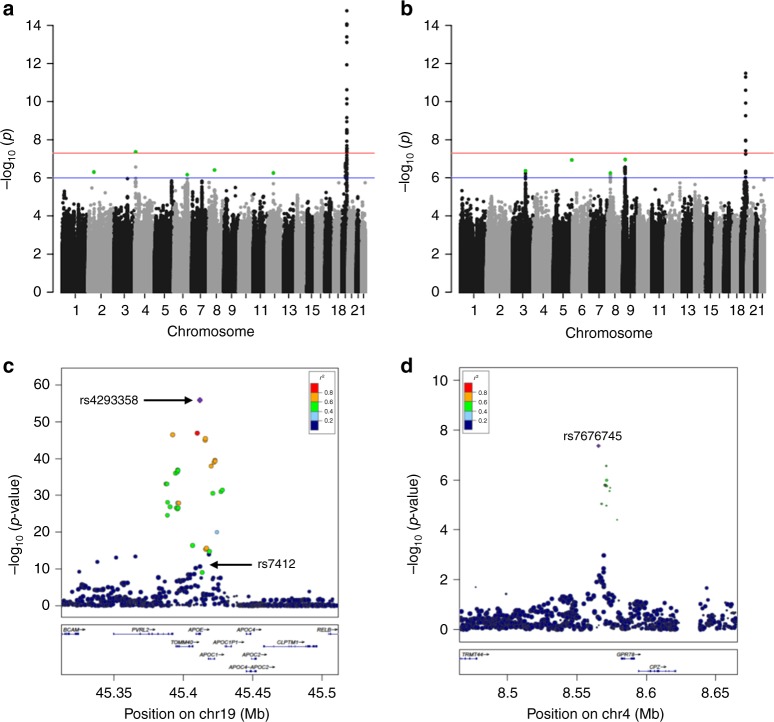
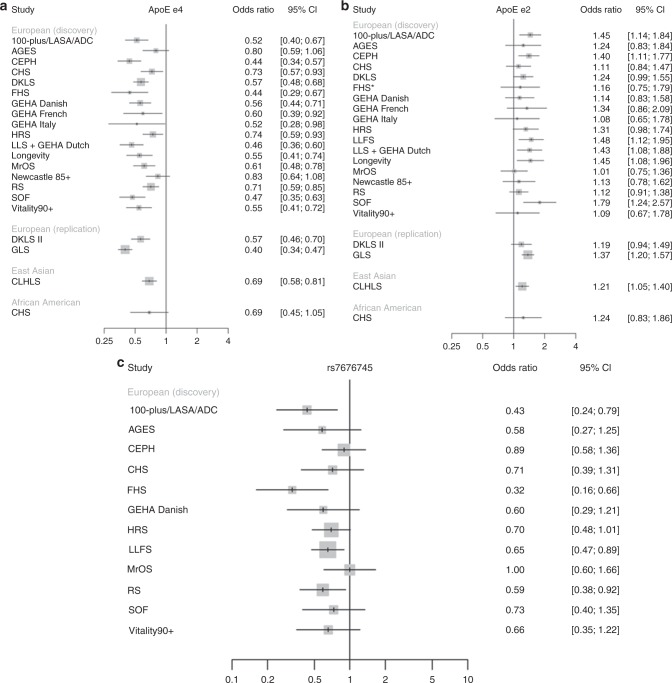
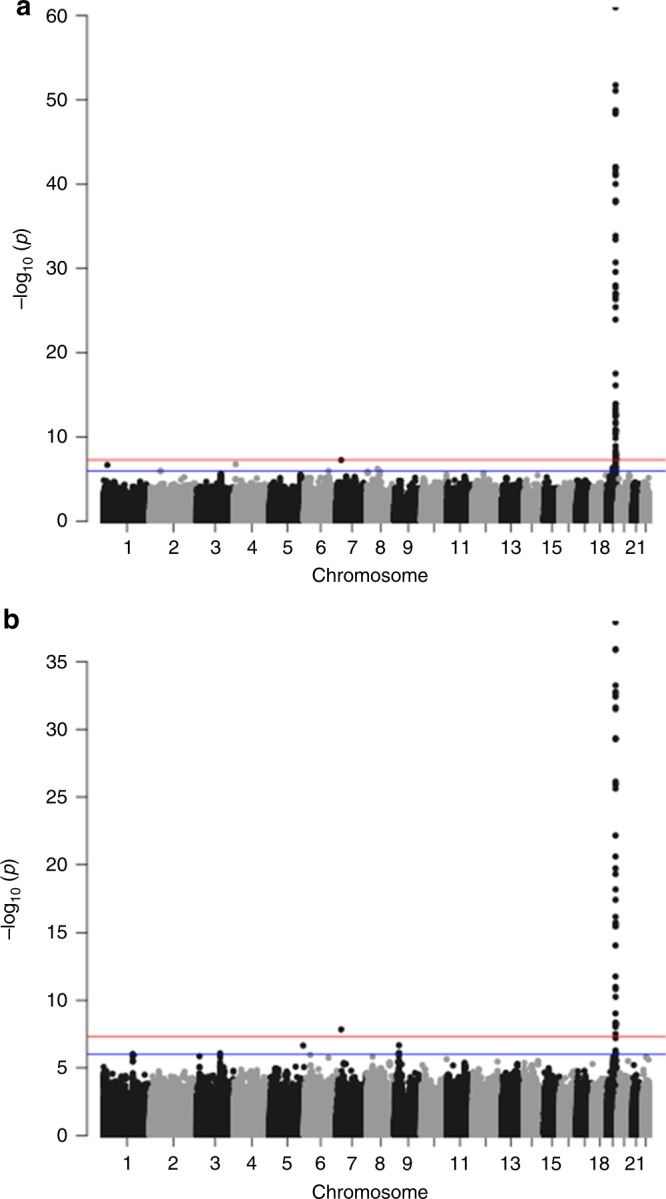
Human longevity is heritable, but genome-wide association (GWA) studies have had limited success. Here, we perform two meta-analyses of GWA studies of a rigorous longevity phenotype definition including 11,262/3484 cases surviving at or beyond the age corresponding to the 90th/99th survival percentile, respectively, and 25,483 controls whose age at death or at last contact was at or below the age corresponding to the 60th survival percentile. Consistent with previous reports, rs429358 (apolipoprotein E (ApoE) ε4) is associated with lower odds of surviving to the 90th and 99th percentile age, while rs7412 (ApoE ε2) shows the opposite. Moreover, rs7676745, located near GPR78 , associates with lower odds of surviving to the 90th percentile age. Gene-level association analysis reveals a role for tissue-specific expression of multiple genes in longevity. Finally, genetic correlation of the longevity GWA results with that of several disease-related phenotypes points to a shared genetic architecture between health and longevity.
Overview
The claims and statistics of this paper haven’t been checked yet.
Run the check — free, no account needed. It reads the open-access text and checks the sources it cites.
Integrity signals
Registry
Cites
Statistics
Figures
Verification
Claims the paper makes
The claims and statistics of this paper haven’t been checked yet.
Run the check — free, no account needed. It reads the open-access text and checks the sources it cites.
Claims other papers make about this one
Each is checked against this paper’s own text: does it say what the citing paper says it does?
The source backs part of the claim, not all of it — or backs it for a different population, condition or comparison.
In the citing paper
“Several studies of large populations of individuals from European ancestry have raised the possibility that APOE is a longevity gene, with the APOEε2 variant associated with longer survival and the APOEε4 with shorter survival in a dose-dependent manner90–94.”
From Multifaceted roles of APOE in Alzheimer disease (2024) · cites this paper as [92]
Experimental — accuracy not yet measuredThe cited source says what the claim attributes to it.
In the citing paper
“In contrast, APOE2 carriers trended towards better survival in patients with low risk of melanoma-associated death (Extended Data Fig. 9c–g), consistent with the known association of APOE2 with enhanced lifespan in the general population24.”
From Common germline variants of the human APOE gene modulate melanoma progression and survival (2020) · cites this paper as [24]
The cited source says what the claim attributes to it.
In the citing paper
“This is aligned with previous findings and reinforces the hypothesis that disease risk reduces lifespan via shared biological pathways45–47.”
From Genetic trade-offs in fertility and longevity explain the maintenance of disease-associated alleles in humans (2026) · cites this paper as [46]
In the citing paper
“Genes that regulate lifespan in animal models6–9 and human studies10–14 as well as multiple experimental paradigms, such as caloric restriction, heterochronic parabiosis and partial epigenetic reprogramming, have demonstrated that it is possible to manipulate ageing biology to ‘rejuvenate’ physiological functioning in complex model organisms15–28.”
From Measuring biological age using omics data (2022) · cites this paper as [12]
Self-check
Percentages, sums and reported differences re-computed from the paper’s own numbers.
The self-check needs the paper’s full text.
Citations
Cites
López-Otín, C., Blasco, M. A., Partridge, L., Serrano, M., & Kroemer, G. (2013) · Cell · doi:10.1016/j.cell.2013.05.039 · Cited by 14,982
Statistical significance for genomewide studies
Storey, J. D., & Tibshirani, R. (2003) · Proceedings of the National Academy of Sciences · doi:10.1073/pnas.1530509100 · Cited by 9,692
LD Score regression distinguishes confounding from polygenicity in genome-wide association studies
Schizophrenia Working Group of the Psychiatric Genomics Consortium, Bulik-Sullivan, B. K., Loh, P.-R., Finucane, H. K., Ripke, S., Yang, J., Patterson, N., Daly, M. J., Price, A. L., & Neale, B. M. (2015) · Nature Genetics · doi:10.1038/ng.3211 · Cited by 5,559
METAL: fast and efficient meta-analysis of genomewide association scans
Willer, C. J., Li, Y., & Abecasis, G. R. (2010) · Bioinformatics · doi:10.1093/bioinformatics/btq340 · Cited by 5,205
Giambartolomei, C., Vukcevic, D., Schadt, E. E., Franke, L., Hingorani, A. D., Wallace, C., & Plagnol, V. (2014) · PLoS Genetics · doi:10.1371/journal.pgen.1004383 · Cited by 4,261
Broken Limits to Life Expectancy
Oeppen, J., & Vaupel, J. W. (2002) · Science · doi:10.1126/science.1069675 · Cited by 2,819
Self-citationThe structure and function of G-protein-coupled receptors
Rosenbaum, D. M., Rasmussen, S. G. F., & Kobilka, B. K. (2009) · Nature · doi:10.1038/nature08144 · Cited by 2,534
Large-scale association analysis identifies 13 new susceptibility loci for coronary artery disease
Cardiogenics, Schunkert, H., the CARDIoGRAM Consortium, König, I. R., Kathiresan, S., Reilly, M. P., Assimes, T. L., Holm, H., Preuss, M., Stewart, A. F. R., et al. (2011) · Nature Genetics · doi:10.1038/ng.784 · Cited by 1,866
Self-citationApolipoprotein E: Far More Than a Lipid Transport Protein
Mahley, R. W., & Rall, S. C. (2000) · Annual Review of Genomics and Human Genetics · doi:10.1146/annurev.genom.1.1.507 · Cited by 1,836
Large-scale association analysis identifies new risk loci for coronary artery disease
The CARDIoGRAMplusC4D Consortium, Deloukas, P., DIAGRAM Consortium, CARDIOGENICS Consortium, MuTHER Consortium, Wellcome Trust Case Control Consortium, Kanoni, S., Willenborg, C., Farrall, M., Assimes, T. L., et al. (2013) · Nature Genetics · doi:10.1038/ng.2480 · Cited by 1,614
Self-citation
Research works printed but not linked: 1
- Oeppen, J. & Vaupel, J. W. Demography. Broken limits life Expect. Sci. 296, 1029–1031 (2002).
Cited by
Sorted by citations
Items 101–200 of 373
The association between plasma metabolites and future risk of all‐cause mortality
Yan, Y., Smith, E., Melander, O., & Ottosson, F. A. (2022) · Journal of Internal Medicine · doi:10.1111/joim.13540 · Cited by 23
Torres, G. G., Dose, J., Hasenbein, T. P., Nygaard, M., Krause‐Kyora, B., Mengel‐From, J., Christensen, K., Andersen‐Ranberg, K., Kolbe, D., Lieb, W., et al. (2022) · International Journal of Molecular Sciences · doi:10.3390/ijms231810949 · Cited by 20
“, “genome-wide”, for the German longevity sample using published summary statistics from a recent large longevity metaGWAS [15].”
BackgroundMethodInfluentialSelf-citationPerrot, N., Pelletier, W., Bourgault, J., Couture, C., Li, Z., Mitchell, P. L., Ghodsian, N., Bossé, Y., Thériault, S., Mathieu, P., et al. (2021) · Aging Cell · doi:10.1111/acel.13497 · Cited by 20
“However, the most comprehensive meta- analysis of genome- wide association studies (GWAS) of survival percentiles only reported one locus (APOE) to be robustly associated with human longevity (Deelen et al., 2019).”
BackgroundReduced insulin signaling in neurons induces sex-specific health benefits
Baghdadi, M., Nespital, T., Mesaros, A., Buschbaum, S., Withers, D. J., Grönke, S., & Partridge, L. (2023) · Science Advances · doi:10.1126/sciadv.ade8137 · Cited by 24
Ageing-associated small RNA cargo of extracellular vesicles
Kern, F., Kuhn, T., Ludwig, N., Simon, M. C., Gröger, L., Fabis, N., Aparicio‐Puerta, E., Salhab, A., Fehlmann, T., Hahn, O., et al. (2023) · RNA Biology · doi:10.1080/15476286.2023.2234713 · Cited by 22
“viduals [2], serum proteomic profiling [3], small RNA patterns in blood cells [4,5], or the exploration of epigenetic control of ageing clocks [6].”
BackgroundKASE, N. G., Friedman, E. G., Brodman, M. L., Kang, C., Gallagher, E. J., & LeRoith, D. (2020) · American Journal of Obstetrics and Gynecology · doi:10.1016/j.ajog.2020.05.051 · Cited by 24
Alzheimer’s disease and age-related macular degeneration: Shared and distinct immune mechanisms
Butovsky, O., & Rosenzweig, N. (2025) · Immunity · doi:10.1016/j.immuni.2025.04.013 · Cited by 22
Foote, I. F., Flint, J. P., Fürtjes, A. E., Lawrence, J. M., Mullin, D. S., Fisk, J. D., Karakach, T. K., Rutenberg, A. D., Martin, N. G., Lupton, M. K., et al. (2025) · Nature Genetics · doi:10.1038/s41588-025-02269-0 · Cited by 27
The impact of the senescent microenvironment on tumorigenesis: Insights for cancer therapy
Zhang, W., Zhang, K., Shi, J., Qiu, H., Kan, C., Ma, Y., Hou, N., Han, F., & Sun, X. (2024) · Aging Cell · doi:10.1111/acel.14182 · Cited by 23
“…only by genetic factors but also by lifestyle habits (e.g., high-sugar and high-fat diets, exercise, and sleep quality) and environmental factors, elucidating the disparity between biological and chronological age for some individuals (Chedraui & Pérez-López, 2013; Deelen et al., 2019) (Figure 2).”
Backgroundvan den Berg, N., Rodríguez‐Girondo, M., Mandemakers, K., Janssens, A. A. P. O., Beekman, M., & Slagboom, P. E. (2020) · Aging Cell · doi:10.1111/acel.13139 · Cited by 19
Self-citationHaghani, A., Thorwald, M. A., Morgan, T. E., & Finch, C. E. (2020) · Alzheimer s & Dementia · doi:10.1002/alz.12230 · Cited by 21
Germline burden of rare damaging variants negatively affects human healthspan and lifespan
Shindyapina, A. V., Zenin, A., Tarkhov, A. E., Santesmasses, D., Fedichev, P. O., & Gladyshev, V. N. (2020) · eLife · doi:10.7554/elife.53449 · Cited by 19
“At the same time, a genetic correlation between longevity and father’s age at death was reported to be one of the strongest (Deelen et al., 2019).”
BackgroundGenome-wide determinants of mortality and motor progression in Parkinson’s disease
Tan, M. M. X., Lawton, M. A., Pollard, M. I., Brown, E., Real, R., Carrasco, A. M., Bekadar, S., Jabbari, E., Reynolds, R. H., Iwaki, H., et al. (2024) · npj Parkinson's Disease · doi:10.1038/s41531-024-00729-8 · Cited by 17
“Indeed, GWASs of longevity andsurvivalinthegeneralpopulationhaveidenti fi ed APOE asthestrongest genetic factor, with the same ε 4 (rs429358) allele associated with increased mortality 24 and found less frequently in long-living individuals 25 .”
BackgroundCastañeda, V., Haro-Vinueza, A., Salinas, I., Caicedo, A., & Méndez, M. (2022) · Mitochondrion · doi:10.1016/j.mito.2022.06.008 · Cited by 23
Reviewing and assessing existing meta-analysis models and tools
Makinde, F., Tchamga, M. S. S., Jafali, J., Fatumo, S., Chimusa, E. R., Mulder, N., & Mazandu, G. K. (2021) · Briefings in Bioinformatics · doi:10.1093/bib/bbab324 · Cited by 19
Кононов, С. И., Маль, Г. С., Azarova, I. E., Klyosova, E. Y., Быканова, М. А., Churnosov, M. I., & Polonikov, A. (2021) · Pharmacogenomics · doi:10.2217/pgs-2021-0097 · Cited by 19
APOE4 Copy Number-Dependent Proteomic Changes in the Cerebrospinal Fluid1
Berger, M., Cooter, M., Roesler, A. S., Chung, S., Park, J., Modliszeski, J. L., VanDusen, K. W., Thompson, J. W., Moseley, M. A., Devinney, M. J., et al. (2020) · Journal of Alzheimer s Disease · doi:10.3233/jad-200747 · Cited by 15
“2 years less than nonAPOE4 carriers [10, 11].”
Probability of Alzheimer’s disease based on common and rare genetic variants
Escott‐Price, V., & Schmidt, K. M. (2021) · Alzheimer s Research & Therapy · doi:10.1186/s13195-021-00884-7 · Cited by 18
Potential protective effect against SARS-CoV-2 infection by APOE rs7412 polymorphism
Espinosa‐Salinas, I., Colmenarejo, G., Fernández-Díaz, C. M., de Cedrón, M. G., Martínez, J. A., Reglero, G., & de Molina, A. R. (2022) · Scientific Reports · doi:10.1038/s41598-022-10923-4 · Cited by 19
APOE Locus-Associated Mitochondrial Function and Its Implication in Alzheimer’s Disease and Aging
Lee, E.-G., Leong, L., Chen, S., Tulloch, J., & Yu, C. (2023) · International Journal of Molecular Sciences · doi:10.3390/ijms241310440 · Cited by 16
Mendelian randomization analyses support causal relationships between gut microbiome and longevity
Chen, S., Chen, W., Wang, X., & Liu, S. (2024) · Journal of Translational Medicine · doi:10.1186/s12967-024-05823-2 · Cited by 17
“The GWAS data of longevity was derived from 36,745 individuals of European ancestry in multiple studies, encompassing 11,262 cases and 25,483 controls, and the cases were individuals who lived to age above the 90th percentile or 99th percentile [5].”
Genetically predicted iron status and life expectancy
Daghlas, I., & Gill, D. (2020) · Clinical Nutrition · doi:10.1016/j.clnu.2020.06.025 · Cited by 16
“60th percentile age (11,262 cases, 25,483 controls) [9].”
MethodLiang, Y., Luo, S., Schooling, C. M., & Yeung, S. L. A. (2021) · Frontiers in Genetics · doi:10.3389/fgene.2021.699455 · Cited by 16
APOE ɛ4 allele and TOMM40‐APOC1 variants jointly contribute to survival to older ages
Kulminski, A. M., Jain‐Washburn, E., Philipp, I., He, L., Loika, Y., Loiko, E., Bagley, O., Ukraintseva, S. V., Yashin, A. I., Arbeev, K. G., et al. (2022) · Aging Cell · doi:10.1111/acel.13730 · Cited by 14
“Various studies show that carriers of the ɛ4 allele live shorter lives and have higher risks of death (Deelen et al., 2019; Drenos & Kirkwood, 2010; Kulminski et al., 2014; Nygaard et al., 2014; Raichlen & Alexander, 2014; Sebastiani et al., 2019; Wolters et al., 2019; Yashin et al., 2018).”
BackgroundResultSelf-citationModifiable pathways for longevity: A Mendelian randomization analysis
Ni, X., Su, H., Lv, Y., Li, R., Liu, L., Zhu, Y. P., Yang, Z., & Hu, C. (2023) · Clinical Nutrition · doi:10.1016/j.clnu.2023.04.026 · Cited by 15
Causal associations and genetic overlap between COVID-19 and intelligence
Cao, H., Baranova, A. V., Song, Y., Chen, J., & Zhang, F. (2023) · QJM · doi:10.1093/qjmed/hcad122 · Cited by 15
“53,54 The same gene serves as a pathogenic culprit for Koolen De Vries syndrome characterized by intellectual disability accompanied by characteristic facial features and hypotonia, 55 a longevity gene 56 and a contributor to Alzheimer’s disease phenotypes.”
BackgroundDato, S., Rango, F. D., Crocco, P., Pallotti, S., Belloy, M. E., Guen, Y. L., Greicius, M. D., Passarino, G., Rose, G., & Napolioni, V. (2023) · Aging Cell · doi:10.1111/acel.13938 · Cited by 12
Wang, H., Xiao, F., Gao, Z., Guo, L., Yang, L., Li, G., & Kong, Q. (2024) · Aging Cell · doi:10.1111/acel.14163 · Cited by 15
“To further investigate the contribution of low ME cell state signatures to the longevity, we utilized the S-LDSC to partition heritability of longevity to gene sets using GWAS summary statistics (Deelen et al., 2019).”
MethodWoodling, N. S., Rajasingam, A., Minkley, L. J., Rizzo, A., & Partridge, L. (2020) · BMC Biology · doi:10.1186/s12915-020-00854-9 · Cited by 16
Schoepf, I. C., Thorball, C. W., Ledergerber, B., Engel, T., Raffenberg, M., Kootstra, N. A., Reiss, P., Hasse, B. K., Marzolini, C., Thurnheer, C., et al. (2021) · Clinical Infectious Diseases · doi:10.1093/cid/ciab521 · Cited by 15
Mendelian randomization analyses implicate biogenesis of translation machinery in human agingPreprint
Javidnia, S., Cranwell, S., Mueller, S. H., Selman, C., Tullet, J. M. A., Kuchenbaecker, K. B., & Alic, N. (2022) · Genome Research · doi:10.1101/gr.275636.121 · Cited by 16
“It included 11,262 individuals (cases) that hadsurvived beyondthe 90thpercentilein agiven humanco-hort and 25,483 controls (Deelen et al. 2019).”
InfluentialHuman longevity and Alzheimer’s disease variants act via microglia and oligodendrocyte gene networks
Graham, A. C., Bellou, E., Harwood, J. C., Yaman, Ü., Celikag, M., Magusali, N., Rambarack, N., Botía, J. A., Frigerio, C. S., Hardy, J., et al. (2024) · Brain · doi:10.1093/brain/awae339 · Cited by 23
“14,15 Genetic variation in these genes might underlie some of the differences in ageing between people who are long-lived versus those that live an average lifespan.”
Measuring biological age: Insights from omics studies
Kočar, E., Šket, R., Vasle, A. H., Avguštin, G., Benedik, E., Seljak, B. K., Simić, P., Martinko, A., Morrison, S. A., Sorić, M., et al. (2025) · Ageing Research Reviews · doi:10.1016/j.arr.2025.102988 · Cited by 23
Bolukbasi, E., Woodling, N. S., Ivanov, D. K., Adcott, J., Foley, A., Rajasingam, A., Gittings, L. M., Aleyakpo, B., Niccoli, T., Thornton, J. M., et al. (2021) · Proceedings of the National Academy of Sciences · doi:10.1073/pnas.2011491118 · Cited by 16
“Consistent with a prolongevity role for FOXO family members in humans, single-nucleotide polymorphisms in the FOXO3A gene are associated with longevity in large-scale genome-wide association studies (18, 19).”
Depletion of loss-of-function germline mutations in centenarians reveals longevity genes
Ying, K., Castro, J. P., Shindyapina, A. V., Tyshkovskiy, A., Moqri, M., Goeminne, L. J. E., Milman, S., Zhang, Z. D., Barzilai, N., & Gladyshev, V. N. (2024) · Nature Communications · doi:10.1038/s41467-024-52967-2 · Cited by 14
Self-citationCentenarians—the way to healthy vascular ageing and longevity: a review from VascAgeNet
Summer, S., Borrell-Pagés, M., Bruno, R. M., Climie, R. E., Δίπλα, Κ., Dogan, A., Eruslanova, K. A., Fraenkel, E., Mattace-Raso, F. U. S., Pugh, C. J. A., et al. (2024) · GeroScience · doi:10.1007/s11357-024-01467-8 · Cited by 16
“Certain genetic variants have been associated with a higher likelihood of reaching an advanced age while maintaining good health, including genes involved in cellular repair mechanisms, oxidative stress response, and inflammation [24].”
Discovering Biological Mechanisms of Exceptional Human Health Span and Life SpanPreprint
Milman, S., & Barzilai, N. (2023) · Cold Spring Harbor Perspectives in Medicine · doi:10.1101/cshperspect.a041204 · Cited by 14
Self-citationSexual dimorphism in immunity and longevity among the oldest old
Arakelyan, N. A., Kupriyanova, D. A., Vasiļevska, J., & Rogaev, E. I. (2025) · Frontiers in Immunology · doi:10.3389/fimmu.2025.1525948 · Cited by 14
Schoeler, T., Pingault, J., & Kutalik, Z. (2025) · Nature Communications · doi:10.1038/s41467-025-59383-0 · Cited by 16
Kolbe, D., da Silva, N. A., Dose, J., Torres, G. G., Caliebe, A., Krause‐Kyora, B., & Nebel, A. (2023) · Aging Cell · doi:10.1111/acel.13819 · Cited by 12
Self-citationLu, T. Y., Wang, J., Jiang, C. Q., Jin, Y. L., Cheng, K. K., Lam, T. H., Zhang, W. S., & Xu, L. (2024) · GeroScience · doi:10.1007/s11357-024-01329-3 · Cited by 15
“Based on a meta-analysis of longevity genome-wide association study (GWAS) [34], in GBCS, longevity cases were defined as participants whose age was at or above the 90th age percentile of the whole GBCS sample (i.e., men: 87.7 years; women: 86.7 years), while controls were participants whose age…”
InfluentialThe Effect of Alzheimer’s Disease-Associated Genetic Variants on Longevity
Tesi, N., Hulsman, M., van der Lee, S. J., Jansen, I. E., Stringa, N., van Schoor, N. M., Scheltens, P., van der Flier, W. M., Huisman, M. A., Reinders, M. J. T., et al. (2021) · Frontiers in Genetics · doi:10.3389/fgene.2021.748781 · Cited by 13
Self-citationThe burden of rare protein-truncating genetic variants on human lifespan
Liu, J. Z., Chen, C., Tsai, E. A., Whelan, C. D., Sexton, D., John, S., & Runz, H. (2022) · Nature Aging · doi:10.1038/s43587-022-00182-3 · Cited by 12
Genetic trade‐offs between complex diseases and longevity
Hu, D., Li, Y., Zhang, D., Ding, J., Song, Z., Min, J., Zeng, Y., & Nie, C. (2022) · Aging Cell · doi:10.1111/acel.13654 · Cited by 13
Self-citationHow to measure and model cardiovascular aging
Spray, L., Richardson, G. D., Booth, L. K., Haendeler, J., Altschmied, J., Bromage, D. I., Wallis, S. B., Stellos, K., Tual‐Chalot, S., & Spyridopoulos, I. (2025) · Cardiovascular Research · doi:10.1093/cvr/cvaf138 · Cited by 14
“267,268 ApoE is the major carrying molecule for lipids, and its consistent association with longevity highlights the major impact of atherosclerotic disease on lifespan.”
Nagwani, A. K., Kaczmarek, Ł., & Kmita, H. (2022) · Diversity · doi:10.3390/d14080664 · Cited by 13
“Additionally, some studies have focused on specific gene variants associated with longevity (e.g., [87]).”
BackgroundXu, C. D., Padilla, V., Lozano, S., Gamez, D., Su, B., Wang, X., Maestre, G. E., & Wang, K. (2023) · Genes · doi:10.3390/genes14071405 · Cited by 13
Acar, İ. E., Galesloot, T. E., Luhmann, U. F. O., Fauser, S., Gayán, J., den Hollander, A. I., & Nogoceke, E. (2023) · Investigative Ophthalmology & Visual Science · doi:10.1167/iovs.64.14.24 · Cited by 11
“53 Interestingly, we identified rs429358 as one of the most significantly associated variants in our study, which is a replication of the results of Fritsche et al. 7 The variant rs7412 reaches genome-wide significance (Supplementary Table S5), but this finding seems to be affected and loses its…”
Li, S., Wen, C. P., Tu, H., Wang, S., Li, X., Xu, A., Li, W., & Wu, X. (2025) · Diabetology & Metabolic Syndrome · doi:10.1186/s13098-025-01628-5 · Cited by 13
“The detailed methods have been reported in previous studies [21, 22].”
Miller, J. B., Ward, E., Staley, L. A., Stevens, J., Teerlink, C. C., Tavana, J. P., Cloward, M. E., Page, M. L., Dayton, L., Cannon‐Albright, L., et al. (2020) · Neurobiology of Disease · doi:10.1016/j.nbd.2020.104972 · Cited by 12
Yan, B., Yang, J., Zhao, B., Wu, Y., Bai, L., & Ma, X. (2021) · Frontiers in Endocrinology · doi:10.3389/fendo.2021.722187 · Cited by 12
“, beyond the age corresponding to the 90th or 99th survival percentile) (19).”
BackgroundMethodSecci, R., Hartmann, A., Walter, M., Grabe, H. J., der Auwera, S. V., Kowald, A., Palmer, D. H., Rimbach, G. H., Fuellen, G., & Barrantes, I. (2021) · Critical Reviews in Food Science and Nutrition · doi:10.1080/10408398.2021.1975638 · Cited by 11
M3NetFlow: A multi-scale multi-hop graph AI model for integrative multi-omic data analysis
Zhang, H., Goedegebuure, S. P., Ding, L., DeNardo, D., Fields, R. C., Province, M., Chen, Y., Payne, P., & Li, F. (2025) · iScience · doi:10.1016/j.isci.2025.111920 · Cited by 12
“Also, the exceptional longevity (EL), like the Long-Life Family Study project, has been generating multi-omic data 6,7 to identify protective biomarkers and pathways for long and healthy life.”
Self-citationTreaster, S. B., Karasik, D., & Harris, M. P. (2021) · Frontiers in Genetics · doi:10.3389/fgene.2021.678073 · Cited by 12
Self-citationAssociation of FOXO3 Blood DNA Methylation with Cancer Risk, Cancer Survival, and Mortality
Yu, C., Hodge, A. M., Wong, E. M., Joo, J. E., Makalic, E., Schmidt, D. F., Buchanan, D. D., Hopper, J. L., Giles, G. G., Southey, M. C., et al. (2021) · Cells · doi:10.3390/cells10123384 · Cited by 12
“In the largest GWAS to date [14], minor allele carriers of the variant rs2802292, together with carriers of rs10457180, which is also in FOXO3 and in strong linkage disequilibrium (r2 = 0.”
BackgroundA phylogenetic method linking nucleotide substitution rates to rates of continuous trait evolution
Gemmell, P., Sackton, T. B., Edwards, S. V., & Liu, J. S. (2024) · PLOS Computational Biology · doi:10.1371/journal.pcbi.1011995 · Cited by 11
Zhang, H., Cao, D., Chen, Z., Zhang, X., Chen, Y., Sessions, C., Cruchaga, C., Payne, P., Li, G., Province, M. A., et al. (2024) · Bioinformatics Advances · doi:10.1093/bioadv/vbae151 · Cited by 12
“Moreover, large-scale multi-omics data, like genetics, epigenetics, transcriptomics, proteomics, and metabolomics (Deelen et al. 2019, Raghavachari et al. 2022) are being generated by ongoing NIA-supported exceptional longevity (EL) studies, including the Long-Life Family Study (LLFS), the…”
BackgroundSelf-citationSchoepf, I. C., Thorball, C. W., Kovari, H., Ledergerber, B., Buechel, R. R., Calmy, A., Weber, R. K., Kaufmann, P. A., Nkoulou, R. N., Schwenke, J. M., et al. (2022) · Clinical Infectious Diseases · doi:10.1093/cid/ciac758 · Cited by 11
Wang, H., Zhao, L., Yang, L., Ge, M., Yang, X., Gao, Z., Cun, Y., Xiao, F., & Kong, Q. (2023) · Aging Cell · doi:10.1111/acel.13916 · Cited by 10
“Third, only a small number of longevity-related germ line variants have been identified in the longevity cohorts using genome-wide scanning method (Deelen et al., 2019 ), although emerging evidence suggests that CENs may be at greater threat from genome-wide somatic mutations due to their much…”
BackgroundGuo, Y., Ma, G., Wang, Y., Lin, T., Hu, Y., & Zang, T. (2024) · Aging Cell · doi:10.1111/acel.14271 · Cited by 12
“The multivariate GWAS summary-level dataset comprises four aging phenotypes (Timmers et al., 2020 ), which are healthspan (Zenin et al., 2019), parental lifespan (Timmers et al., 2019), and extreme longevity (Deelen et al., 2019) ( Table 1 ).”
The 90 plus: longevity and COVID-19 survival
Zatz, M., Silva, M. V. R., de Castro, M. V., & Naslavsky, M. S. (2022) · Molecular Psychiatry · doi:10.1038/s41380-022-01461-6 · Cited by 10
“THE IMPORTANCE OF ELDERLY POPULATION-BASED COHORTS Previous genome-wide associations studies (GWAS) and functional studies [54] in long-lived individuals (aged > 90 years old) as compared to younger control individuals (aged < 65 years old) have identified several genetic variants which are more common in the older gr…”
BackgroundHigh polygenic risk score for exceptional longevity is associated with a healthy metabolic profile
Revelas, M., Thalamuthu, A., Zettergren, A., Oldmeadow, C. J., Najar, J., Seidu, N. M., Armstrong, N. J., Riveros, C., Kwok, J. B., Schofield, P. R., et al. (2022) · GeroScience · doi:10.1007/s11357-022-00643-y · Cited by 11
“Deelen et al. found EL was genetically correlated with coronary artery disease (CAD), type 2 diabetes and paternal age at death [38].”
InfluentialChen, H., Zhou, X., Hu, J., Li, S., Wang, Z., Zhu, T., Cheng, H., & Zhang, G. (2023) · Lipids in Health and Disease · doi:10.1186/s12944-023-01983-0 · Cited by 10
“The validation GWAS data follow a binary design that comprises 36,745 Euro-peans, including 11,262 individuals of European ancestry who survived past the 90th survival percentile and 25,483 control individuals [21].”
BackgroundMethodEscribà-Montagut, X., Marcon, Y., Anguita‐Ruiz, A., Avraam, D., Urquiza, J., Morgan, A. S., Wilson, B., Burton, P. R., & González, J. R. (2024) · PLoS Computational Biology · doi:10.1371/journal.pcbi.1012626 · Cited by 10
Li, M., Kwok, M.-K., & Schooling, C. M. (2021) · Nutrients · doi:10.3390/nu13072215 · Cited by 10
Are Alzheimer's and coronary artery diseases genetically related to longevity?
Bellou, E., & Escott‐Price, V. (2023) · Frontiers in Psychiatry · doi:10.3389/fpsyt.2022.1102347 · Cited by 10
Wang, S., Li, H., Nishijo, M., Nishino, Y., Kato, N., Kasamaki, Y., Ueda, T., & Kanda, T. (2020) · Journal of International Medical Research · doi:10.1177/0300060520964016 · Cited by 9
“Accordingly, human longevity can be inherited, and ApoE is related to a lower odds ratio with respect to survival to the 90th and 99th percentiles of age(7,16) ApoE-e4 carrier status has important implications for associations between the brain and cardiovascular health in aging adults.(17) A lack of ApoE and lipid ov…”
BackgroundShultz, S., Britnell, J., & Harvey, N. (2021) · Ecology and Evolution · doi:10.1002/ece3.8331 · Cited by 9
“The role of environmental traits and functional indicators of health outcomes (i.e., reproductive failure, elevated mortality) can be evaluated using a model selection approach (Deelen et al., 2019).”
Backgroundde Rojas, I., Hernández, I., Montrreal, L., Quintela, I., Calero, M., Royo, J. L., Vilas, R. H., González-Pérez, A., Macías, E. F., Macı́as, J., et al. (2021) · Journal of Personalized Medicine · doi:10.3390/jpm11121318 · Cited by 9
“Beyond its involvement in dementia causality, the locus is also involved in a number of cardiovascular phenotypes [21] and human longevity [22,23] of special interest for dementia studies like GR@ACE/DEGESCO.”
BackgroundYu, Z., Zhang, F., Xu, C., & Wang, Y.-G. (2022) · BioMed Research International · doi:10.1155/2022/4012603 · Cited by 10
“Therefore, the in fl u-ence of heterogeneity between cases and controls can be mitigated [32].”
InfluentialAjnakina, O., Shamsutdinova, D., Wimberley, T., Dalsgaard, S., & Steptoe, A. (2022) · BMC Medicine · doi:10.1186/s12916-022-02279-3 · Cited by 7
“Nonetheless, mortality has been shown to have shared polygenic contributions with several other traits and conditions beyond ADHD, including educational attainment [34], coronary artery disease [35] and type 2 diabetes [36].”
BackgroundLiu, C., Zhu, T., Zhang, J., Wang, J., Gao, F., Ou, Q., Jin, C., Xu, J., Zhang, J., Tian, H., et al. (2021) · IUBMB Life · doi:10.1002/iub.2544 · Cited by 9
Escribe, C., Lu, T., Keller‐Baruch, J., Forgetta, V., Xiao, B., Richards, J. B., Bhatnagar, S., Oualkacha, K., & Greenwood, C. M. T. (2021) · Genetic Epidemiology · doi:10.1002/gepi.22430 · Cited by 9
Genetics of remnant cholesterol
Wulff, A. B., & Nordestgaard, B. G. (2025) · Current Opinion in Lipidology · doi:10.1097/mol.0000000000000991 · Cited by 8
Ma, Y., Yao, Y., Zhou, Y., Dai, W., Li, J., Gui, Y., Sun, H., Zhu, Z., Jiang, D., Cheng Ann, C. H. E. N., et al. (2025) · Nature Aging · doi:10.1038/s43587-025-01027-5 · Cited by 8
“…( n = 300,477) 87 , parental lifespan ( n = 570,798) 88 , frailty ( n = 175,226) 89 , epigenetic age acceleration (EAA; n = 34,710) 90 , extreme longevity (90th percentile, n = 36,345; and 99th percentile, n = 28,967) 91 and the common factor multivariate longevity (mvAge; n = 1,958,774) 92 .”
Healthy dietary patterns, longevity genes, and life expectancy: A prospective cohort study
Lv, Y., Song, J., Ding, D., Luo, M., He, F. J., Yuan, C., MacGregor, G. A., Liu, L., & Chen, L. (2026) · Science Advances · doi:10.1126/sciadv.ads7559 · Cited by 9
Restored clearance of senescent neutrophils by tissue-resident macrophages limits organ aging
Tan, Y. J., Conley, T. E., Yao, F., Garcia-Marques, F. J., Akinyemi, D. E., Dinh, V. V., Wang, Q., Bermudez, A., Kim, J., Belk, J. A., et al. (2026) · Science · doi:10.1126/science.aea3075 · Cited by 10
Qiu, S., Hu, Y., & Liu, G. (2023) · npj Aging · doi:10.1038/s41514-023-00126-0 · Cited by 9
“Cases were participants who lived to an age above the 90th (11,262 cases) or 99th percentile (3,484 cases) based on cohort life tables 41 .”
InfluentialHeterogeneous effects of genetic risk for Alzheimer’s disease on the phenome
Wu, H. M., Goate, A., & O’Reilly, P. F. (2021) · Translational Psychiatry · doi:10.1038/s41398-021-01518-0 · Cited by 8
“To account for the longevity effect— a possible confounder in our results of AD PRS—we repeated the analyses adjusting for longevity PRS [44] as a covariate.”
MethodNutrient-Response Pathways in Healthspan and Lifespan Regulation
Dabrowska, A. F., Kumar, J., & Rallis, C. (2022) · Cells · doi:10.3390/cells11091568 · Cited by 9
“Consistent with previous reports, the APOE2 variant was linked to longevity while APOE4 with lower odds of surviving to the 90th and 99th percentile age [109].”
BackgroundResultBerg, V., Lawson, D. W., & Rotkirch, A. (2020) · Proceedings of the Royal Society B Biological Sciences · doi:10.1098/rspb.2019.2478 · Cited by 8
A Brief Introduction to Darwinian Medicine
Lucock, M. D. (2022) · Exploratory Research and Hypothesis in Medicine · doi:10.14218/erhm.2022.00001 · Cited by 8
Jin, X., Xiong, S., Yuan, C., Gong, E., Zhang, X., Yao, Y., Leng, Y., Niu, Z., Zeng, Y., & Yan, L. L. (2021) · Frontiers in Medicine · doi:10.3389/fmed.2021.697389 · Cited by 8
“Interestingly, nearly all such studies in different population have identified APOE gene as one of the genetic factors associated with mortality or longevity (9).”
BackgroundSelf-citationSchwenke, J. M., Thorball, C. W., Schoepf, I. C., Ryom, L., Hasse, B. K., Lamy, O., Calmy, A., Wandeler, G., Marzolini, C., Kahlert, C. R., et al. (2023) · The Journal of Infectious Diseases · doi:10.1093/infdis/jiad179 · Cited by 7
“Because of the prevalent concern that aging in PLWH may be accelerated and/or accentuated, we also assessed a PRS based on 4 SNPs that have been reliably associated with successful aging and longevity in the general population [24, 25], as we did for coronary event prediction in PLWH [18].”
Xu, L., Wang, J., Li, X., Li, Y., Chen, C., Xu, Z., Yuan, X., Lu, Z., Zhou, J., Zhang, M., et al. (2025) · BMC Medicine · doi:10.1186/s12916-025-04176-x · Cited by 9
“Gene-wide association studies (GWASs) have made it possible to identify multiple single nucleotide polymorphisms (SNPs) significantly associated with longevity [17, 18].”
Don, J., Schork, A. J., Glusman, G., Rappaport, N., Cummings, S., Duggan, D. J., Raju, A., Hellberg, K.-L. G., Gunn, S., Monti, S., et al. (2024) · GeroScience · doi:10.1007/s11357-024-01107-1 · Cited by 8
“Interest-ingly, many of these studies suggest that long-lived individuals exhibit differences in disease PRS profiles as compared short-lived individuals, raising questions about the relationships between PLS, PRS, longevity, and disease [29, 40–42].”
BackgroundMethodInfluentialSelf-citationIlboudo, Y., Yoshiji, S., Lu, T., Butler‐Laporte, G., Zhou, S., & Richards, J. B. (2024) · Journal of Alzheimer s Disease · doi:10.3233/jad-221223 · Cited by 9
Bradley, J. L., Pottier, C. P., da Fonseca, E. L., Kurup, J. T., Western, D., Wang, C., Neupane, A., Ray, N. R., Jean‐Francois, M. N., Ali, M., et al. (2025) · Alzheimer s & Dementia · doi:10.1002/alz.70377 · Cited by 9
Dungan, J. R., Qin, X., Hurdle, M., Haynes, C. S., Hauser, E. R., & Kraus, W. E. (2021) · Frontiers in Genetics · doi:10.3389/fgene.2021.661497 · Cited by 7
“…for the use of medications such as aspirin and other antiplatelet agents, statins, and beta-blockers, which are well-established independent predictors of survival and mortality among CAD patients (Antithrombotic Trialists’ Collaboration, 2002; Dézsi and Szentes, 2017; Rodriguez et al., 2019).”
BackgroundRaghavachari, N., Wilmot, B., & Dutta, C. (2022) · The Journals of Gerontology Series A · doi:10.1093/gerona/glac065 · Cited by 7
Ni, X., Liu, L., Yao, Y., Zhang, C., Su, H., Lv, Y., Li, R., Sun, L., Zhou, Q., Zhu, X., et al. (2023) · Frontiers in Cardiovascular Medicine · doi:10.3389/fcvm.2023.1096662 · Cited by 7
“Calcium supplementation is a common practice in the USA, and there is rising clinical interest with respect to the association between these supplements and CVD.”
BackgroundMethodInfluentialHow‐Kit, A., Sahbatou, M., Hardy, L. M., Tessier, N. P., Schiavon, V., Buanec, H. L., Sébaoun, J.-M., Blanché, H., Zagury, J., & Deleuze, J. (2023) · GeroScience · doi:10.1007/s11357-023-01037-4 · Cited by 6
“3, with longevity ( p = 1.74 × 10 −8 ) and survival beyond 90 years of age ( p = 0.003) [41], and of rs7676745 near GPR78 with longevity ( p = 4.3 × 10 −8 ) [43].”
InfluentialSelf-citationEffects of aging on gene expression networks in the Drosophila genetic reference panel
Tan, S., Carbone, M. A., Zhou, S., Morozova, T. V., Arya, G. H., Zhang, F., Anholt, R. R. H., Huang, W., & Mackay, T. F. C. (2025) · Cell Reports · doi:10.1016/j.celrep.2025.115999 · Cited by 6
“Genome-wide transcriptional 6–9 and association 10–12 studies have identified many genetic factors associated with aging and/or variation in lifespan in humans.”
Dong, C., Thalamuthu, A., Jiang, J., Mather, K. A., Brodaty, H., Sachdev, P. S., & Wen, W. X. (2021) · The Journals of Gerontology Series A · doi:10.1093/gerona/glab323 · Cited by 6
Srinivasan, Y., Briano, J., Czaja, S. J., Lachs, M. S., Rosen, A. E., Stewart, M. G., & Rameau, A. (2024) · The Laryngoscope · doi:10.1002/lary.31446 · Cited by 6
Jonas, D. A., Sándor, S., Tátrai, K., Egyed, B., & Kubinyi, E. (2020) · Frontiers in Genetics · doi:10.3389/fgene.2020.00315 · Cited by 5
Improved selection of participants in genetic longevity studies: family scores revisited
Rodríguez-Girondo, M., van den Berg, N., Hof, M. H. P., Beekman, M., & Slagboom, P. E. (2021) · BMC Medical Research Methodology · doi:10.1186/s12874-020-01193-7 · Cited by 6
Self-citationGenetic basis of cardiovascular aging is at the core of human longevity
Marian, A. J. (2022) · The Journal of Cardiovascular Aging · doi:10.20517/jca.2022.06 · Cited by 6
“, the E4 allele is associated with lower odds of surviving to old age, whereas the E2 allele frequency is the opposite[62,81,82].”
BackgroundKashtanova, D. A., Мамчур, А. А., Dzhumaniyazova, I. H., Ivanov, M. V., Erema, V. V., Zelenova, Е., Yakovchik, A., Gusakova, M., Rumyantseva, A. M., Terekhov, M. V., et al. (2023) · Frontiers in Aging Neuroscience · doi:10.3389/fnagi.2023.1273825 · Cited by 6
Current Trends and Approaches to the Search for Genetic Determinants of Aging and Longevity
Станиславовна, К. С., Volobaev, V. P., Plotnikova, M. Y., Kupriyanova, D. A., Kuznetsova, I. L., Tyazhelova, T. V., & Rogaev, E. I. (2022) · Russian Journal of Genetics · doi:10.1134/s1022795422120067 · Cited by 7
Metadata
- Authors
- Deelen, J., Evans, D. S., Arking, D. E., Tesi, N., Nygaard, M., Liu, X., Wojczynski, M. K., Biggs, M. L., van der Spek, A., Atzmon, G., Ware, E. B., Sarnowski, C., Smith, A. V., Seppälä, I., Cordell, H. J., Dose, J., Amin, N., Arnold, A. M., Ayers, K. L., Barzilai, N., Becker, E. J., Beekman, M., Blanché, H., Christensen, K., Christiansen, L., Collerton, J. C., Cubaynes, S., Cummings, S. R., Davies, K., Debrabant, B., Deleuze, J.-F., Duncan, R., Faul, J. D., Franceschi, C., Galan, P., Gudnason, V., Harris, T. B., Huisman, M., Hurme, M. A., Jagger, C., Jansen, I., Jylhä, M., Kähönen, M., Karasik, D., Kardia, S. L. R., Kingston, A., Kirkwood, T. B. L., Launer, L. J., Lehtimäki, T., Lieb, W., Lyytikäinen, L.-P., Martin-Ruiz, C., Min, J., Nebel, A., Newman, A. B., Nie, C., Nohr, E. A., Orwoll, E. S., Perls, T. T., Province, M. A., Psaty, B. M., Raitakari, O. T., Reinders, M. J. T., Robine, J.-M., Rotter, J. I., Sebastiani, P., Smith, J., Sørensen, T. I. A., Taylor, K. D., Uitterlinden, A. G., van der Flier, W., van der Lee, S. J., van Duijn, C. M., van Heemst, D., Vaupel, J. W., Weir, D., Ye, K., Zeng, Y., Zheng, W., Holstege, H., Kiel, D. P., Lunetta, K. L., Slagboom, P. E., & Murabito, J. M.
- Affiliations
- Leiden University (NL)
- California Pacific Medical Center (US)
- Johns Hopkins University (US)
- University of Southern Denmark (DK)
- BGI Group (China) (CN)
- Washington University in St. Louis (US)
- University of Washington (US)
- Albert Einstein College of Medicine (US)
- University of Michigan (US)
- Boston University (US)
- Tampere University (FI)
- Centre for Life (GB)
- Christian-Albrechts-Universität zu Kiel (DE)
- Erasmus MC (NL)
- Sema4 (United States) (US)
- Fondation Jean Dausset-CEPH (FR)
- Royal Victoria Infirmary (GB)
- Inserm (FR)
- Newcastle University (GB)
- Commissariat à l'Énergie Atomique et aux Énergies Alternatives (FR)
- Istituto delle Scienze Neurologiche di Bologna (IT)
- University of Iceland (IS)
- National Institutes of Health (US)
- Amsterdam Public Health (NL)
- Amsterdam Neuroscience (NL)
- Bar-Ilan University (IL)
- Zhejiang University (CN)
- University of Pittsburgh (US)
- Oregon Health & Science University (US)
- Kaiser Permanente Washington Health Research Institute (US)
- University of Turku (FI)
- Delft University of Technology (NL)
- Centre National de la Recherche Scientifique (FR)
- The Lundquist Institute (US)
- University of Copenhagen (DK)
- University of California, Los Angeles (US)
- Max Planck Institute for Demographic Research (DE)
- Duke University (US)
- Amsterdam UMC Location University of Amsterdam (NL)
- Broad Institute (US)
- Corresponding author
- Deelen, Joris
- Evans, Daniel S.
- Slagboom, P. Eline
- Murabito, Joanne M.
- ORCID
- Deelen, Joris
- Evans, Daniel S.
- Arking, Dan E.
- Tesi, Niccolò
- Nygaard, Marianne
- Liu, Xiaomin
- Wojczynski, Mary K.
- van der Spek, Ashley
- Atzmon, Gil
- Ware, Erin B.
- Sarnowski, Chloé
- Smith, Albert V.
- Seppälä, Ilkka
- Cordell, Heather J.
- Dose, Janina
- Amin, Najaf
- Arnold, Alice M.
- Ayers, Kristin L.
- Barzilai, Nir
- Beekman, Marian
- Blanché, Hélène
- Christensen, Kaare
- Christiansen, Lene
- Cubaynes, Sarah
- Cummings, Steven R.
- Davies, Karen
- Debrabant, Birgit
- Deleuze, Jean-François
- Duncan, Rachel
- Faul, Jessica D.
- Franceschi, Claudio
- Galan, Pilar
- Gudnason, Vilmundur
- Harris, Tamara B.
- Huisman, Martijn
- Hurme, Mikko A.
- Jagger, Carol
- Jansen, Iris
- Jylhä, Marja
- Kähönen, Mika
- Karasik, David
- Kingston, Andrew
- Kirkwood, Thomas B. L.
- Launer, Lenore J.
- Lehtimäki, Terho
- Lieb, Wolfgang
- Lyytikäinen, Leo-Pekka
- Martin-Ruiz, Carmen
- Min, Junxia
- Newman, Anne B.
- Nie, Chao
- Nohr, Ellen A.
- Orwoll, Eric S.
- Perls, Thomas T.
- Province, Michael A.
- Psaty, Bruce M.
- Raitakari, Olli T.
- Reinders, Marcel J. T.
- Robine, Jean-Marie
- Rotter, Jerome I.
- Smith, Jennifer
- Sørensen, Thorkild I. A.
- Taylor, Kent D.
- Uitterlinden, André G.
- van der Lee, Sven J.
- Vaupel, James W.
- Weir, David
- Ye, Kenny
- Zheng, Wanlin
- Holstege, Henne
- Kiel, Douglas P.
- Lunetta, Kathryn L.
- Slagboom, P. Eline
- Murabito, Joanne M.
- Venue
- Nature Communications
- Published
- 2019-08-14
- Volume
- 10
- Issue
- 1
- Pages
- 3669-3669
- ISSN
- 2041-1723 (ISSN-L)
- PMC
- PMC6694136
- OpenAlex
- W2967338832
- Cited by
- 370
- References
- 61
- Citations by year
- 2026: 38 · 2025: 64 · 2024: 56 · 2023: 60 · 2022: 51 · 2021: 53 · 2020: 44 · 2019: 3
- FWCI
- 5.07
- Type
- journal article
- Language
- en
- Update notices
- correction (2021-04-23)
- Open access
- gold
- doi.org
- Locations
- Nature Communications (publishedVersion, cc-by)
- Europe PMC (PubMed Central) (publishedVersion, cc-by)
- PubMed Central (publishedVersion, cc-by)
- PubMed (publishedVersion)
- Pure Amsterdam UMC (publishedVersion, cc-by)
- Research at the University of Copenhagen (University of Copenhagen) (publishedVersion, cc-by)
- VU Research Portal (publishedVersion, other-oa)
- HAL (submittedVersion, cc-by)
- Opin vísindi (Opin vísindi) (submittedVersion, cc-by-nc-sa)
- UTUPub (University of Turku) (submittedVersion)
- UTUPub (University of Turku) (submittedVersion, cc-by)
- Digital Commons@Becker (Washington University School of Medicine) (submittedVersion)
- EUR Research Repository (Erasmus University Rotterdam) (submittedVersion, other-oa)
- RePub (Erasmus University Rotterdam) (submittedVersion, other-oa)
- Data Archiving and Networked Services (DANS) (submittedVersion)
- RePEc: Research Papers in Economics (submittedVersion)
- Leiden Repository (Leiden University) (submittedVersion)
- DOAJ (DOAJ: Directory of Open Access Journals) (submittedVersion)
- DOAJ (DOAJ: Directory of Open Access Journals) (submittedVersion, cc-by-sa)
- eScholarship (California Digital Library) (submittedVersion)
- eScholarship (California Digital Library) (submittedVersion, cc-by)
- Opin vísindi (Opin vísindi) (submittedVersion, cc-by)
- Opin vísindi (Opin vísindi) (submittedVersion, other-oa)
- Amsterdam UMC (VU Amsterdam) - Institutional Repository (submittedVersion, other-oa)
- MPG.PuRe (Max Planck Society) (submittedVersion)
- Bristol Research (University of Bristol) (submittedVersion, cc-by)
- University of Southern Denmark Research Portal (University of Southern Denmark) (submittedVersion, cc-by)
- Tampere University Institutional Repository (Tampere University) (submittedVersion, cc-by)
- Research Repository (Delft University of Technology) (submittedVersion, cc-by)
- Data Archiving and Networked Services (DANS) (submittedVersion, other-oa)
- Newcastle University ePrints (Newcastle Univesity) (cc-by)
- Funders
- Alexander von Humboldt-Stiftung
- Topics
- Life Sciences › Biochemistry, Genetics and Molecular Biology › Genetics › Genetic Associations and Epidemiology
- Life Sciences › Biochemistry, Genetics and Molecular Biology › Aging › Genetics, Aging, and Longevity in Model Organisms
- Life Sciences › Biochemistry, Genetics and Molecular Biology › Genetics › Genetic and phenotypic traits in livestock
- Keywords
- human longevity, longevity genes, apolipoprotein E, APOE ε4, APOE ε2, tissue-specific gene expression, genetic correlation, heritability of longevity, genetic overlap
- MeSH terms
- Endoplasmic Reticulum Chaperone BiP, Heat-Shock Proteins, Humans, Longevity, Apolipoprotein E4, Apolipoprotein E2, Genome-Wide Association Study
About these checks
Registry, retraction, Cites and statistics results are computed, not judged, with one exception: a printed reference that no index lists is read once by a model before it counts as a citation error. Claims are extracted by a model and kept only when their quote appears verbatim in the text; each cited source is then checked, with a model’s help, for whether it says what the claim relies on. Those verdicts can be wrong — read the claim’s quote and the cited source before relying on one.
Statistics and arithmetic are recomputed, not judged.
Confidence bands are shown only for fields calibrated on our annotated test set. None is calibrated yet, so no band is shown.
What counts as a claim ›How we measure confidence ›How we check this ›
Are you an author, or do you see a problem with this page? Request a review
