

The DOI matches its Crossref record; 62 of the 62 references it cites were found in a registry or an index.
A meta-analysis of genome-wide association studies identifies multiple longevity genes
Open accessAbstract
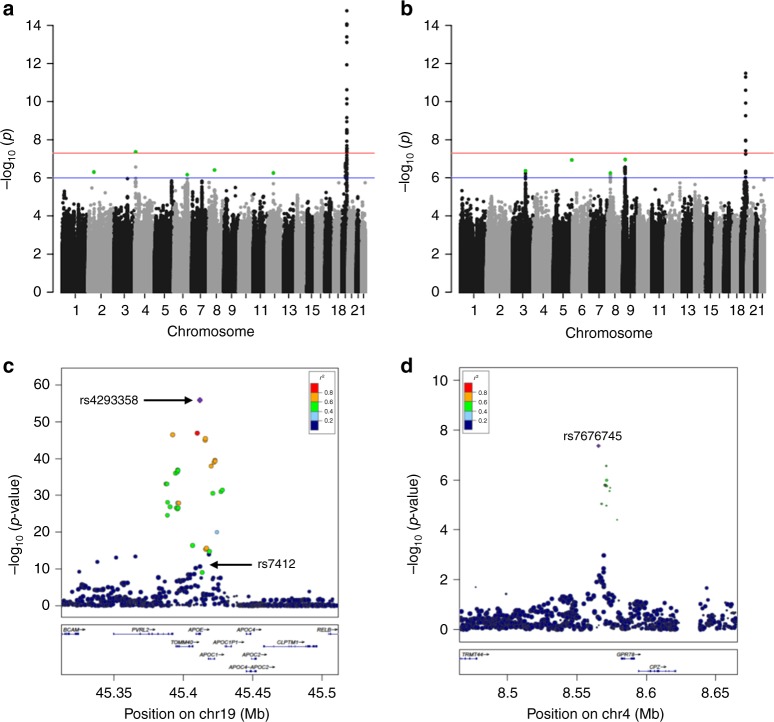
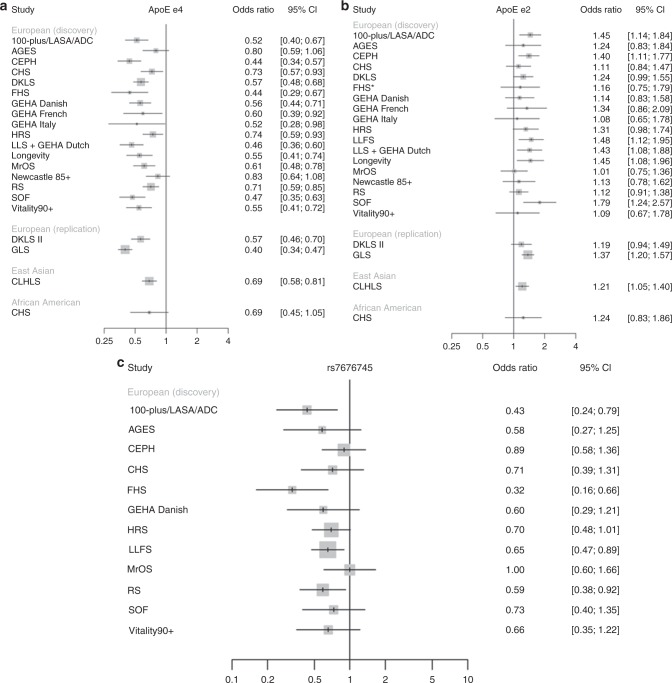
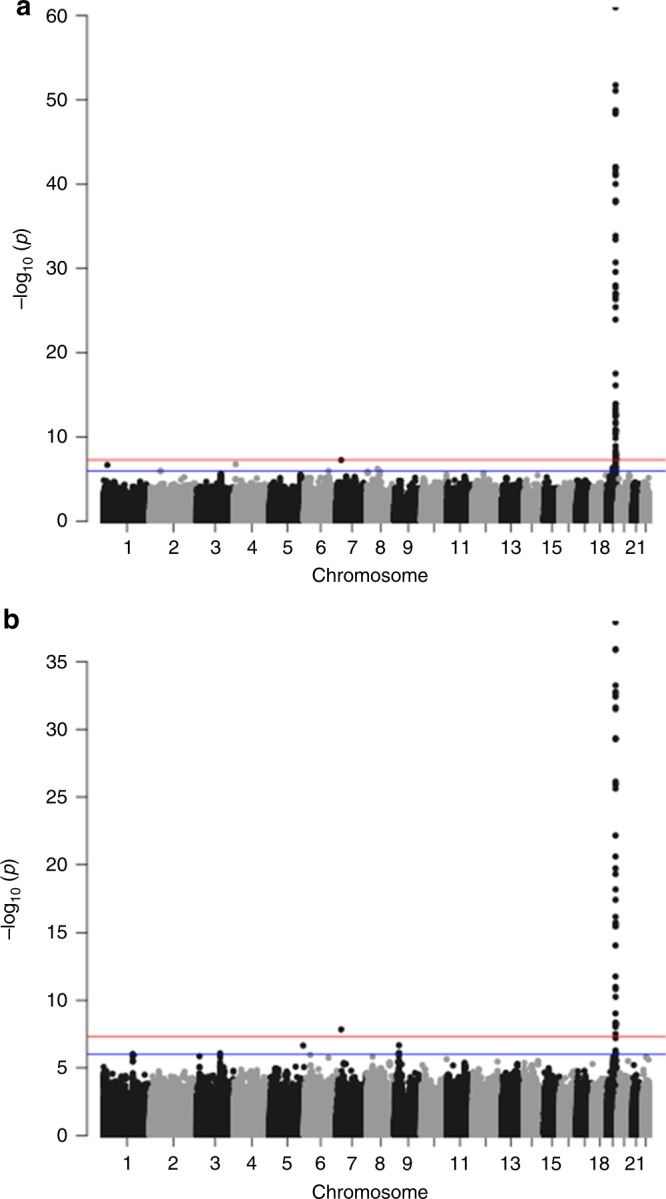
Human longevity is heritable, but genome-wide association (GWA) studies have had limited success. Here, we perform two meta-analyses of GWA studies of a rigorous longevity phenotype definition including 11,262/3484 cases surviving at or beyond the age corresponding to the 90th/99th survival percentile, respectively, and 25,483 controls whose age at death or at last contact was at or below the age corresponding to the 60th survival percentile. Consistent with previous reports, rs429358 (apolipoprotein E (ApoE) ε4) is associated with lower odds of surviving to the 90th and 99th percentile age, while rs7412 (ApoE ε2) shows the opposite. Moreover, rs7676745, located near GPR78 , associates with lower odds of surviving to the 90th percentile age. Gene-level association analysis reveals a role for tissue-specific expression of multiple genes in longevity. Finally, genetic correlation of the longevity GWA results with that of several disease-related phenotypes points to a shared genetic architecture between health and longevity.
Overview
The claims and statistics of this paper haven’t been checked yet.
Run the check — free, no account needed. It reads the open-access text and checks the sources it cites.
Integrity signals
Registry
Cites
Statistics
Figures
Verification
Claims the paper makes
The claims and statistics of this paper haven’t been checked yet.
Run the check — free, no account needed. It reads the open-access text and checks the sources it cites.
Claims other papers make about this one
Each is checked against this paper’s own text: does it say what the citing paper says it does?
The source backs part of the claim, not all of it — or backs it for a different population, condition or comparison.
In the citing paper
“Several studies of large populations of individuals from European ancestry have raised the possibility that APOE is a longevity gene, with the APOEε2 variant associated with longer survival and the APOEε4 with shorter survival in a dose-dependent manner90–94.”
From Multifaceted roles of APOE in Alzheimer disease (2024) · cites this paper as [92]
Experimental — accuracy not yet measuredThe cited source says what the claim attributes to it.
In the citing paper
“In contrast, APOE2 carriers trended towards better survival in patients with low risk of melanoma-associated death (Extended Data Fig. 9c–g), consistent with the known association of APOE2 with enhanced lifespan in the general population24.”
From Common germline variants of the human APOE gene modulate melanoma progression and survival (2020) · cites this paper as [24]
The cited source says what the claim attributes to it.
In the citing paper
“This is aligned with previous findings and reinforces the hypothesis that disease risk reduces lifespan via shared biological pathways45–47.”
From Genetic trade-offs in fertility and longevity explain the maintenance of disease-associated alleles in humans (2026) · cites this paper as [46]
In the citing paper
“Genes that regulate lifespan in animal models6–9 and human studies10–14 as well as multiple experimental paradigms, such as caloric restriction, heterochronic parabiosis and partial epigenetic reprogramming, have demonstrated that it is possible to manipulate ageing biology to ‘rejuvenate’ physiological functioning in complex model organisms15–28.”
From Measuring biological age using omics data (2022) · cites this paper as [12]
Self-check
Percentages, sums and reported differences re-computed from the paper’s own numbers.
The self-check needs the paper’s full text.
Citations
Cites
López-Otín, C., Blasco, M. A., Partridge, L., Serrano, M., & Kroemer, G. (2013) · Cell · doi:10.1016/j.cell.2013.05.039 · Cited by 14,982
Statistical significance for genomewide studies
Storey, J. D., & Tibshirani, R. (2003) · Proceedings of the National Academy of Sciences · doi:10.1073/pnas.1530509100 · Cited by 9,692
LD Score regression distinguishes confounding from polygenicity in genome-wide association studies
Schizophrenia Working Group of the Psychiatric Genomics Consortium, Bulik-Sullivan, B. K., Loh, P.-R., Finucane, H. K., Ripke, S., Yang, J., Patterson, N., Daly, M. J., Price, A. L., & Neale, B. M. (2015) · Nature Genetics · doi:10.1038/ng.3211 · Cited by 5,559
METAL: fast and efficient meta-analysis of genomewide association scans
Willer, C. J., Li, Y., & Abecasis, G. R. (2010) · Bioinformatics · doi:10.1093/bioinformatics/btq340 · Cited by 5,205
Giambartolomei, C., Vukcevic, D., Schadt, E. E., Franke, L., Hingorani, A. D., Wallace, C., & Plagnol, V. (2014) · PLoS Genetics · doi:10.1371/journal.pgen.1004383 · Cited by 4,261
Broken Limits to Life Expectancy
Oeppen, J., & Vaupel, J. W. (2002) · Science · doi:10.1126/science.1069675 · Cited by 2,819
Self-citationThe structure and function of G-protein-coupled receptors
Rosenbaum, D. M., Rasmussen, S. G. F., & Kobilka, B. K. (2009) · Nature · doi:10.1038/nature08144 · Cited by 2,534
Large-scale association analysis identifies 13 new susceptibility loci for coronary artery disease
Cardiogenics, Schunkert, H., the CARDIoGRAM Consortium, König, I. R., Kathiresan, S., Reilly, M. P., Assimes, T. L., Holm, H., Preuss, M., Stewart, A. F. R., et al. (2011) · Nature Genetics · doi:10.1038/ng.784 · Cited by 1,866
Self-citationApolipoprotein E: Far More Than a Lipid Transport Protein
Mahley, R. W., & Rall, S. C. (2000) · Annual Review of Genomics and Human Genetics · doi:10.1146/annurev.genom.1.1.507 · Cited by 1,836
Large-scale association analysis identifies new risk loci for coronary artery disease
The CARDIoGRAMplusC4D Consortium, Deloukas, P., DIAGRAM Consortium, CARDIOGENICS Consortium, MuTHER Consortium, Wellcome Trust Case Control Consortium, Kanoni, S., Willenborg, C., Farrall, M., Assimes, T. L., et al. (2013) · Nature Genetics · doi:10.1038/ng.2480 · Cited by 1,614
Self-citation
Research works printed but not linked: 1
- Oeppen, J. & Vaupel, J. W. Demography. Broken limits life Expect. Sci. 296, 1029–1031 (2002).
Cited by
Sorted by citations
Kronenberg, F., Mora, S., Stroes, E. S. G., Ference, B. A., Arsenault, B. J., Berglund, L., Dweck, M. R., Koschinsky, M., Lambert, G., Mach, F., et al. (2022) · European Heart Journal · doi:10.1093/eurheartj/ehac361 · Cited by 1,449
Measuring biological age using omics data
Rutledge, J., Oh, H., & Wyss-Coray, T. (2022) · Nature Reviews Genetics · doi:10.1038/s41576-022-00511-7 · Cited by 570
Melzer, D. R., Pilling, L. C., & Ferrucci, L. (2019) · Nature Reviews Genetics · doi:10.1038/s41576-019-0183-6 · Cited by 387
AI-powered therapeutic target discovery
Pun, F. W., Ozerov, I. V., & Zhavoronkov, A. (2023) · Trends in Pharmacological Sciences · doi:10.1016/j.tips.2023.06.010 · Cited by 341
Prospective study design and data analysis in UK Biobank
Allen, N. E., Lacey, B., Lawlor, D. A., Pell, J. P., Gallacher, J., Smeeth, L. L., Elliott, P., Matthews, P. M., Lyons, R. A., Whetton, A. D., et al. (2024) · Science Translational Medicine · doi:10.1126/scitranslmed.adf4428 · Cited by 312
“The general consistency of research findings in UK Biobank with those in other studies (36–38)—particularly studies considered to be representative of the underlying population —suggests that many of the exposure-disease associations found in UK Biobank are largely generalizable to other…”
Senescence and Cancer: A Review of Clinical Implications of Senescence and Senotherapies
Wyld, L., Bellantuono, I., Tchkonia, T., Morgan, J., Turner, O., Foss, F., George, J., Danson, S., & Kirkland, J. L. (2020) · Cancers · doi:10.3390/cancers12082134 · Cited by 235
“The rate at which aging occurs is highly variable and depends on both polygenic hereditary factors [9] and a wide range of environmental factors (such as obesity, diet, exercise, and exposure to drugs and chemicals), which is why biological and chronological age are often mis-matched.”
BackgroundCausality-enriched epigenetic age uncouples damage and adaptation
Ying, K., Liu, H., Tarkhov, A. E., Sadler, M. C., Lu, A. T.-H., Moqri, M., Horvath, S., Kutalik, Z., Shen, X., & Gladyshev, V. N. (2024) · Nature Aging · doi:10.1038/s43587-023-00557-0 · Cited by 222
“Longevity 11,262 individuals of European ancestry with a lifespan above the 90th percentile as the case group and 25,483 control individuals whose age at the last visit was below the 60th percentile age 16 .”
Multifaceted roles of APOE in Alzheimer disease
Jackson, R. J., Hyman, B. T., & Serrano-Pozo, A. (2024) · Nature Reviews Neurology · doi:10.1038/s41582-024-00988-2 · Cited by 193
The accelerated aging phenotype: The role of race and social determinants of health on aging
Hooten, N. N., Pacheco, N. L., Smith, J. T., & Evans, M. K. (2021) · Ageing Research Reviews · doi:10.1016/j.arr.2021.101536 · Cited by 199
Self-citationGenetic associations for two biological age measures point to distinct aging phenotypes
Kuo, C., Pilling, L. C., Liu, Z., Atkins, J. L., & Levine, M. E. (2021) · Aging Cell · doi:10.1111/acel.13376 · Cited by 173
“• The rs7412T allele, or APOE e2 determined allele, associated with increased longevity (Deelen et al., 2019), is associated with decreased BioAgeAccel, but increased PhenoAgeAccel.”
BackgroundIdentification of 12 genetic loci associated with human healthspan
Zenin, A., Tsepilov, Y., Sharapov, S., Getmantsev, E., Menshikov, L. I., Fedichev, P. O., & Aulchenko, Y. (2019) · Communications Biology · doi:10.1038/s42003-019-0290-0 · Cited by 170
Johnson, A. A., Shokhirev, M. N., Wyss-Coray, T., & Lehallier, B. (2020) · Ageing Research Reviews · doi:10.1016/j.arr.2020.101070 · Cited by 166
Multivariate genomic scan implicates novel loci and haem metabolism in human ageing
Timmers, P. R. H. J., Wilson, J. F., Joshi, P. K., & Deelen, J. (2020) · Nature Communications · doi:10.1038/s41467-020-17312-3 · Cited by 146
Self-citationLipoprotein(a) and cardiovascular and valvular diseases: A genetic epidemiological perspective
Arsenault, B. J., & Kamstrup, P. R. (2022) · Atherosclerosis · doi:10.1016/j.atherosclerosis.2022.04.015 · Cited by 123
Genome-wide association studies for Alzheimer’s disease: bigger is not always better
Escott-Price, V., & Hardy, J. (2022) · Brain Communications · doi:10.1093/braincomms/fcac125 · Cited by 119
“4,5 This makes age-matching essential for accurate risk assessment.”
BackgroundLongevity defined as top 10% survivors and beyond is transmitted as a quantitative genetic trait
van den Berg, N., Rodríguez‐Girondo, M., van Dijk, I. K., Mourits, R. J., Mandemakers, K., Janssens, A. A. P. O., Beekman, M., Smith, K. R., & Slagboom, P. E. (2018) · Nature Communications · doi:10.1038/s41467-018-07925-0 · Cited by 114
Self-citationCommon germline variants of the human APOE gene modulate melanoma progression and survival
Ostendorf, B. N., Bilanovic, J., Adaku, N., Tafreshian, K. N., Tavora, B., Vaughan, R. D., & Tavazoie, S. F. (2020) · Nature Medicine · doi:10.1038/s41591-020-0879-3 · Cited by 108
Wang, J., Chen, C., Zhou, J., Ye, L., Li, Y., Xu, L., Xu, Z., Li, X., Wei, Y., Liu, J., et al. (2023) · The Lancet Healthy Longevity · doi:10.1016/s2666-7568(23)00140-x · Cited by 106
Common diseases alter the physiological age-related blood microRNA profile
Fehlmann, T., Lehallier, B., Schaum, N., Hahn, O., Kahraman, M., Li, Y., Grammes, N. L., Geffers, L., Backes, C., Balling, R., et al. (2020) · Nature Communications · doi:10.1038/s41467-020-19665-1 · Cited by 104
Ukraintseva, S. V., Arbeev, K. G., Duan, M., Akushevich, I. V., Kulminski, A. M., Stallard, E., & Yashin, A. I. (2020) · Mechanisms of Ageing and Development · doi:10.1016/j.mad.2020.111418 · Cited by 99
Bain, C. C., Gibson, D. A., Steers, N. J., Boufea, K., Louwe, P. A., Doherty, C., González-Huici, V., Gentek, R., Magalhaes-Pinto, M., Shaw, T., et al. (2020) · Science Immunology · doi:10.1126/sciimmunol.abc4466 · Cited by 97
Schooling, C. M., Lopez, P. M., Yang, Z., Zhao, J. V., Au Yeung, S. L., & Huang, J. V. (2021) · Frontiers in Genetics · doi:10.3389/fgene.2020.610852 · Cited by 102
Rosoff, D. B., Mavromatis, L. A., Bell, A. S., Wagner, J., Jung, J., Marioni, R. E., Smith, G. D., Horvath, S., & Lohoff, F. W. (2023) · Nature Aging · doi:10.1038/s43587-023-00455-5 · Cited by 85
Lu, Y.-X., Regan, J. C., Eßer, J., Drews, L. F., Weinseis, T., Stinn, J., Hahn, O., Miller, R. A., Grönke, S., & Partridge, L. (2021) · eLife · doi:10.7554/elife.62233 · Cited by 76
“…genome-wide association studies (GWAS) of populations suggest that the IIS/mTOR network is associated with longevity in humans (Broer et al., 2015; Deelen et al., 2019; Johnson et al., 2015; Passtoors et al., 2013; Suh et al., 2008). mTOR is a serine/threonine protein kinase in the PI3K-related…”
BackgroundBiomarkers selection and mathematical modeling in biological age estimation
Bafei, S. E. C., & Shen, C. (2023) · npj Aging · doi:10.1038/s41514-023-00110-8 · Cited by 87
The genetic architecture of biological age in nine human organ systems
Wen, J., Tian, Y., Skampardoni, I., Yang, Z., Cui, Y., Anagnostakis, F., Mamourian, E., Zhao, B., Toga, A. W., Zalesky, A., et al. (2024) · Nature Aging · doi:10.1038/s43587-024-00662-8 · Cited by 74
“Furthermore, we calculated the genetic correlation between the nine BAGs and longevity 25 and household income 26 .”
Aging Fits the Disease Criteria of the International Classification of Diseases
Khaltourina, D. A., Matveyev, Y., Alekseev, A., Cortese, F., & Ioviţă, A. (2020) · Mechanisms of Ageing and Development · doi:10.1016/j.mad.2020.111230 · Cited by 77
The Medical Genome Reference Bank contains whole genome and phenotype data of 2570 healthy elderly
Pinese, M., Lacaze, P., Rath, E. M., Stone, A., Brion, M.-J., Ameur, A., Nagpal, S., Puttick, C., Husson, S., Degrave, D., et al. (2020) · Nature Communications · doi:10.1038/s41467-019-14079-0 · Cited by 70
The genetic architecture of multimodal human brain age
Wen, J., Zhao, B., Yang, Z., Erus, G., Skampardoni, I., Mamourian, E., Cui, Y., Hwang, G., Bao, J., Boquet-Pujadas, A., et al. (2024) · Nature Communications · doi:10.1038/s41467-024-46796-6 · Cited by 65
“The authors developed PRSs for seven selective brain regions, which explained roughly 1.18 – 3.93% of the phenotypic variance associated with these traits.”
BackgroundInfluentialXu, Q., Wu, C., Zhu, Q. R., Gao, R., Lu, J., Valles‐Colomer, M., Zhu, J., Yin, F., Huang, L., Ding, L., et al. (2022) · Nature Aging · doi:10.1038/s43587-022-00193-0 · Cited by 61
Role of estrogen in women's Alzheimer's disease risk as modified by APOE
Valencia‐Olvera, A. C., Weng, J. M., Christensen, A., LaDu, M. J., & Pike, C. J. (2022) · Journal of Neuroendocrinology · doi:10.1111/jne.13209 · Cited by 71
Hu, X., Cai, M., Xiao, J., Wan, X., Wang, Z., Zhao, H., & Yang, C. (2024) · The American Journal of Human Genetics · doi:10.1016/j.ajhg.2024.06.016 · Cited by 66
Modeling the human aging transcriptome across tissues, health status, and sex
Shokhirev, M. N., & Johnson, A. A. (2020) · Aging Cell · doi:10.1111/acel.13280 · Cited by 65
Widespread genomic influences on phenotype in Dravet syndrome, a ‘monogenic’ condition
Martins Custodio, H., Clayton, L. M., Bellampalli, R., Pagni, S., Silvennoinen, K., Caswell, R., Genomics England Research Consortium, Ambrose, J. C., Arumugam, P., Bevers, R., et al. (2023) · Brain · doi:10.1093/brain/awad111 · Cited by 62
Richardson, T. G., Wang, Q., Sanderson, E. C. M., Mahajan, A., McCarthy, M. I., Frayling, T. M., Ala‐Korpela, M., Sniderman, A. D., Smith, G. D., & Holmes, M. V. (2021) · The Lancet Healthy Longevity · doi:10.1016/s2666-7568(21)00086-6 · Cited by 61
Multi-omic underpinnings of epigenetic aging and human longevity
Mavromatis, L. A., Rosoff, D. B., Bell, A. S., Jung, J., Wagner, J., & Lohoff, F. W. (2023) · Nature Communications · doi:10.1038/s41467-023-37729-w · Cited by 61
Timmers, P. R. H. J., Tiys, E., Sakaue, S., Akiyama, M., Kiiskinen, T., Zhou, W., Hwang, S., Yao, C., Biobank Japan Project, Kamatani, Y., et al. (2022) · Nature Aging · doi:10.1038/s43587-021-00159-8 · Cited by 59
Self-citationvan Oort, S., Beulens, J. W. J., van Ballegooijen, A. J., Burgess, S., & Larsson, S. C. (2020) · Journal of Internal Medicine · doi:10.1111/joim.13196 · Cited by 60
Chen, J., Doyle, M. F., Fang, Y., Mez, J., Crane, P. K., Scollard, P., ADSP Data Harmonization Consortium Cognitive Harmonization Core, Satizabal, C. L., Alosco, M. L., Qiu, W. Q., et al. (2023) · Aging Cell · doi:10.1111/acel.13955 · Cited by 56
“APOE is linked to longevity (Deelen et al., 2019 ), cardiovascular disease, and neurodegenerative disorders including AD and related dementias (Ashford & Mortimer, 2002; Blacker et al., 1997; Kunkle et al., 2019 ).”
Self-citationCognitively healthy centenarians are genetically protected against Alzheimer's disease
Tesi, N., van der Lee, S., Hulsman, M., van Schoor, N. M., Huisman, M., Pijnenburg, Y., van der Flier, W. M., Reinders, M., & Holstege, H. (2024) · Alzheimer's & Dementia · doi:10.1002/alz.13810 · Cited by 52
Self-citationYe, C.-J., Kong, L.-J., Wang, Y.-Y., Dou, C., Zheng, J., Xu, M., Xu, Y., Li, M., Zhao, Z.-Y., Lu, J.-L., et al. (2023) · Nature Human Behaviour · doi:10.1038/s41562-023-01646-1 · Cited by 58
ApoE e2 and aging-related outcomes in 379,000 UK Biobank participants
Kuo, C.-L., Pilling, L. C., Atkins, J. L., Kuchel, G. A., & Melzer, D. (2020) · Aging · doi:10.18632/aging.103405 · Cited by 55
“Also, the e2 determined allele of rs7412 was increasingly associated with extreme longevity [9], which implies the association between e2 and extreme longevity in parents as parents of participants with any”
BackgroundHow Important Are Genes to Achieve Longevity?
Caruso, C., Ligotti, M. E., Accardi, G., Aiello, A., Duro, G., Galimberti, D., & Candore, G. (2022) · International Journal of Molecular Sciences · doi:10.3390/ijms23105635 · Cited by 60
“The APOE ε2 and ε4 variants have previously been associated with a decreased (ε2) or increased (ε4) risk for several agerelated diseases, such as CVDs and Alzheimer’s disease (AD), which could explain the APOE effect on longevity [29,38,39,41,42].”
BackgroundAge-dependent effect of APOE and polygenic component on Alzheimer's disease
Bellou, E., Baker, E. A., Leonenko, G., Bracher‐Smith, M., Daunt, P., Menzies, G. E., Williams, J. H., & Escott‐Price, V. (2020) · Neurobiology of Aging · doi:10.1016/j.neurobiolaging.2020.04.024 · Cited by 51
Lin, J.-R., Sin‐Chan, P., Napolioni, V., Torres, G. G., Mitra, J., Zhang, Q., Jabalameli, M. R., Wang, Z., Nguyen, N., Gao, T., et al. (2021) · Nature Aging · doi:10.1038/s43587-021-00108-5 · Cited by 52
Self-citationGenes and Longevity of Lifespan
Bin-Jumah, M. N., Nadeem, M. S., Gilani, S. J., Al-Abbasi, F. A., Ullah, I., Alzarea, S. I., Ghoneim, M. M., Alshehri, S., Ud-Din, A., Murtaza, B. N., et al. (2022) · International Journal of Molecular Sciences · doi:10.3390/ijms23031499 · Cited by 52
Consistent signatures in the human gut microbiome of longevous populations
Chen, S., Zhang, Z., Liu, S., Chen, T., Lu, Z., Zhao, W., Mou, X., & Liu, S. (2024) · Gut Microbes · doi:10.1080/19490976.2024.2393756 · Cited by 55
The metabolome as a biomarker of aging in Drosophila melanogaster
Zhao, X., Golic, F. T., Harrison, B. R., Manoj, M., Hoffman, E. V., Simon, N., Johnson, R. S., MacCoss, M. J., McIntyre, L. M., & Promislow, D. (2022) · Aging Cell · doi:10.1111/acel.13548 · Cited by 43
Sariaslan, A., Sharpe, M., Larsson, H., Wolf, A., Lichtenstein, P., & Fazel, S. (2022) · PLoS Medicine · doi:10.1371/journal.pmed.1003864 · Cited by 47
“, COPD [14,15], heart disease [16,17], and diabetes [18]), psychiatric disorders [19], and premature mortality (including suicide risk) [20] all aggregate in families.”
BackgroundMeasuring healthy ageing: current and future tools
Silva, N., Rajado, A. T., Esteves, F., Brito, D. V. C., Apolónio, J. D., Roberto, V. P., Binnie, A., Araújo, I. M., Nóbrega, C., Bragança, J., et al. (2023) · Biogerontology · doi:10.1007/s10522-023-10041-2 · Cited by 51
“…(GWAS) have identified only a few loci that are consistently linked with longevity and health-span, such as apolipoprotein E (ApoE), Forkhead Box O3 (FOXO3), LDL Receptor Related Protein 1B (LRP1B) and Cyclin-Dependent Kinase Inhibitor 2A/B (CDKN2A/B) (Deelen et al. 2019; Melzer et al. 2020).”
BackgroundMendelian randomization supports causality between overweight status and accelerated aging
Chen, Z., Chen, Z., & Jin, X. (2023) · Aging Cell · doi:10.1111/acel.13899 · Cited by 44
“Controls were individuals who died at or before the age at the 60th percentile or whose age at the last follow- up visit was at or before the 60th percentile age (Deelen et al., 2019).”
BackgroundPNPLA3 Genotype and Risk of Liver and All‐Cause Mortality
Stender, S., & Loomba, R. S. (2020) · Hepatology · doi:10.1002/hep.31113 · Cited by 43
Yeung, C. H. C., Yeung, S. L. A., Kwok, M. K., Zhao, J. V., & Schooling, C. M. (2023) · European Journal of Epidemiology · doi:10.1007/s10654-023-01015-2 · Cited by 43
Gkioni, L., Nespital, T., Baghdadi, M., Monzó, C., Bali, J., Nassr, T., Cremer, A. L., Beyer, A., Deelen, J., Backes, H., et al. (2025) · Nature Aging · doi:10.1038/s43587-025-00876-4 · Cited by 45
Self-citationLiu, X., Song, Z., Li, Y., Yao, Y., Fang, M., Bai, C., An, P., Chen, H., Chen, Z., Tang, B., et al. (2021) · Aging Cell · doi:10.1111/acel.13323 · Cited by 41
“We investigated these three identified longevity- associated SNPs in the two largest relevant meta- analyses results (Deelen et al., 2019; Timmers et al., 2019; Table S6).”
BackgroundMethodInfluentialSelf-citationDang, Z., Avolio, E., Thomas, A. C., Faulkner, A., Beltrami, A. P., Cervellin, C., Carrizzo, A., Maciag, A. E., Gu, Y., Ciaglia, E., et al. (2020) · European Journal of Heart Failure · doi:10.1002/ejhf.1840 · Cited by 38
Comparative Analysis of Mammal Genomes Unveils Key Genomic Variability for Human Life Span
Farré, X., Molina-Fernández, R., Barteri, F., Timmers, P. R. H. J., Joshi, P. K., Oliva, B., Acosta, S., Esteve‐Altava, B., Navarro, A., & Muntané, G. (2021) · Molecular Biology and Evolution · doi:10.1093/molbev/msab219 · Cited by 38
Liu, X., Zou, L., Nie, C., Qin, Y., Tong, X., Wang, J., Yang, H., Xu, X., Jin, X., Xiao, L., et al. (2023) · Scientific Reports · doi:10.1038/s41598-023-31115-8 · Cited by 44
“We performed bidirectional two-sample MR analyses by leveraging GWAS summary statistics of the gut microbiome from MiBioGen (mainly European populations) 22 , Dutch 35 , and Finnish 36 cohorts, together with the largest meta-analysis of longevity GWAS of European ancestry 37 .”
MethodSelf-citationThe Contextualized Genetics of Human Longevity
Franceschi, C., Garagnani, P., Olivieri, F., Salvioli, S., & Giuliani, C. (2020) · Journal of the American College of Cardiology · doi:10.1016/j.jacc.2019.12.032 · Cited by 37
Self-citationPolygenic Risk Score of Longevity Predicts Longer Survival Across an Age Continuum
Tesi, N., van der Lee, S. J., Hulsman, M., Jansen, I. E., Stringa, N., van Schoor, N. M., Scheltens, P., van der Flier, W. M., Huisman, M. A., Reinders, M. J. T., et al. (2020) · The Journals of Gerontology Series A · doi:10.1093/gerona/glaa289 · Cited by 39
“However, the association of the identified genetic loci has typically a low replication rate across independent studies, with only the APOEε4 allele (variant rs429358) and genetic variants in CDKN2A/B gene consistently associated with reduced life span (11,14,15,17).”
BackgroundMethodSelf-citationCancer mortality in the oldest old: a global overview
Hashim, D., Carioli, G., Malvezzi, M., Bertuccio, P., Waxman, S., Negri, E., La Vecchia, C., & Boffetta, P. (2020) · Aging · doi:10.18632/aging.103503 · Cited by 36
Integrative analysis of clinical and epigenetic biomarkers of mortality
Huan, T., Nguyen, S., Colicino, E., Ochoa‐Rosales, C., Hill, W. D., Brody, J. A., Soerensen, M., Zhang, Y., Baldassari, A., Elhadad, M. A., et al. (2022) · Aging Cell · doi:10.1111/acel.13608 · Cited by 25
“Despite substantial evidence of heritability of human longevity ( h 2 = 10– 30%), genome-wide association studies (GWAS) have reported few loci associated with human longevity (Deelen et al., 2019; Pilling et al., 2017; Timmers et al., 2019; van den Berg et al., 2017 ).”
BackgroundMethodInfluentialSelf-citationPhysical activity and risk of Alzheimer disease
Baumeister, S. E., Karch, A., Bahls, M., Teumer, A., Leitzmann, M. F., & Baurecht, H. (2020) · Neurology · doi:10.1212/wnl.0000000000010013 · Cited by 36
Heritability of intrinsic human life span is about 50% when confounding factors are addressed
Shenhar, B., Pridham, G., Oliveira, T. L. D., Yang, Y., Raz, N., Deelen, J., Hägg, S., & Alon, U. (2026) · Science · doi:10.1126/science.adz1187 · Cited by 43
Self-citationLow‐density lipoprotein cholesterol and lifespan: A Mendelian randomization study
Daghlas, I., & Gill, D. (2021) · British Journal of Clinical Pharmacology · doi:10.1111/bcp.14811 · Cited by 34
“were adjusted for clinical site, family relationships, and principal components (if applicable).(18) The genetic effects from this study are reported as log-odds of survival to the 90th percentile vs.”
BackgroundMethodInfluentialHuang, S.-Y., Yang, Y., Chen, S., Li, H.-Q., Zhang, X.-Q., Kuo, K., Tan, L., Feng, L., Dong, Q., Zhang, C. M., et al. (2021) · BMC Medicine · doi:10.1186/s12916-021-02030-4 · Cited by 33
“All participants provided written informed consent in original GWAS [3].”
BackgroundMethodInfluentialGenetic and phenotypic analysis of the causal relationship between aging and COVID-19
Ying, K., Zhai, R., Pyrkov, T. V., Shindyapina, A. V., Mariotti, M., Fedichev, P. O., Shen, X., & Gladyshev, V. N. (2021) · Communications Medicine · doi:10.1038/s43856-021-00033-z · Cited by 37
Genetics of human longevity: From variants to genes to pathways
Smulders, L., & Deelen, J. (2023) · Journal of Internal Medicine · doi:10.1111/joim.13740 · Cited by 41
Self-citationMolecular inhibition of RAS signalling to target ageing and age-related health
Laskovs, M., Partridge, L., & Slack, C. (2022) · Disease Models & Mechanisms · doi:10.1242/dmm.049627 · Cited by 36
“Moreover, genetic variants of FOXO3 , which encodes a key downstream effector of IIS, are strongly associated with longevity in human population studies, particularly in centenarians and in individuals over 95 years of age (Deelen et al., 2019).”
BackgroundEpigenetic changes during ageing and their underlying mechanisms
Braga, D. L., Mousovich‐Neto, F., Tonon-da-Silva, G., Salgueiro, W. G., & Mori, M. A. (2020) · Biogerontology · doi:10.1007/s10522-020-09874-y · Cited by 33
Effect of longevity genetic variants on the molecular aging rate
Gurinovich, A., Song, Z., Zhang, W., Federico, A. N., Monti, S., Andersen, S. L., Jennings, L. L., Glass, D. J., Barzilai, N., Milman, S., et al. (2021) · GeroScience · doi:10.1007/s11357-021-00376-4 · Cited by 28
“The most significant SNPs in the gene CDKN2B included rs1556515 that was associated with parental longevity in the UK Biobank with consistent effects (less common allele increased the odds for parental longevity) [37] and rs2184061 that also showed a consistent association with parental lifespan in a large metaanalysi…”
BackgroundMethodSelf-citationDietary stress remodels the genetic architecture of lifespan variation in outbred Drosophila
Pallares, L. F., Lea, A. J., Han, C., Filippova, E. V., Andolfatto, P., & Ayroles, J. F. (2022) · Nature Genetics · doi:10.1038/s41588-022-01246-1 · Cited by 35
Genetics of frailty: A longevity perspective
Sathyan, S., & Verghese, J. (2020) · Translational research · doi:10.1016/j.trsl.2020.03.005 · Cited by 32
Target Discovery for Drug Development Using Mendelian Randomization
Evans, D. S. (2022) · Methods in molecular biology · doi:10.1007/978-1-0716-2573-6_1 · Cited by 30
Self-citationMendelian randomization evidence for the causal effect of mental well-being on healthy aging
Ye, C., Liu, D., Chen, M., Kong, L., Dou, C., Wang, Y.-Y., Xu, M., Xu, Y., Li, M., Zhao, Z., et al. (2024) · Nature Human Behaviour · doi:10.1038/s41562-024-01905-9 · Cited by 33
Cai, Z., Iso‐Touru, T., Sanchez, M.-P., Kadri, N. K., Bouwman, A. C., Chitneedi, P., MacLeod, I. M., Jagt, C. J. V., Chamberlain, A. J., Gredler, B., et al. (2024) · Genetics Selection Evolution · doi:10.1186/s12711-024-00920-8 · Cited by 42
Chen, R., Morris, B. J., Donlon, T. A., Masaki, K., Willcox, D. C., Davy, P. M. C., Allsopp, R., & Willcox, B. J. (2020) · Aging · doi:10.18632/aging.202175 · Cited by 28
“This includes genome-wide association study data [7].”
Evolution of natural lifespan variation and molecular strategies of extended lifespan in yeast
Kaya, A., Phua, C. Z. J., Lee, M. B., Wang, L., Tyshkovskiy, A., Ma, S., Barré, B. P., Liu, W., Harrison, B. R., Zhao, X., et al. (2021) · eLife · doi:10.7554/elife.64860 · Cited by 23
“Endophenotype variation across wild isolates While many previous large- scale omics studies on aging have focused on genome- wide association (Stumpferl et al., 2012; Burke et al., 2014; Wilson et al., 2020; Deelen et al., 2019), recent comparative studies on transcriptomics (Fushan et al.”
BackgroundKalmijn, M. (2022) · Social Science & Medicine · doi:10.1016/j.socscimed.2022.114736 · Cited by 27
Identification of prospective aging drug targets via Mendelian randomization analysis
Mao, R., Li, J., & Xiao, W. (2024) · Aging Cell · doi:10.1111/acel.14171 · Cited by 25
“Controls were demarcated as those who passed away on or before the 60th percentile or reached that age at the last follow-up (Deelen et al., 2019).”
BackgroundImmune dysfunction in Alzheimer disease
Butovsky, O., Rosenzweig, N., Kleemann, K. L., Jorfi, M., Kuchroo, V. K., Tanzi, R. E., & Weiner, H. L. (2025) · Nature reviews. Neuroscience · doi:10.1038/s41583-025-00997-0 · Cited by 35
“Moreover, the APOE4 genotype was identified by GWAS as being associated with lower odds of survival to the 90th and 99th percentile ages 144 and with brain senescence 145 .”
Fulton‐Howard, B., Goate, A., Adelson, R. P., Koppel, J. L., Gordon, M. L., Barzilai, N., Atzmon, G., Davies, P., & Freudenberg‐Hua, Y. (2020) · Neurobiology of Aging · doi:10.1016/j.neurobiolaging.2020.09.014 · Cited by 26
Self-citationCentenarians as models of healthy aging: Example of REST
Marcos-Pérez, D., Saenz‐Antoñanzas, A., & Matheu, A. (2021) · Ageing Research Reviews · doi:10.1016/j.arr.2021.101392 · Cited by 26
Refining convergent rate analysis with topology in mammalian longevity and marine transitions
Treaster, S., Daane, J. M., & Harris, M. P. (2021) · Molecular Biology and Evolution · doi:10.1093/molbev/msab226 · Cited by 24
He, D., Liu, L., Zhang, Z., Yang, X., Jia, Y., Wen, Y. F., Cheng, S., Meng, P., Li, C., Zhang, H., et al. (2022) · BMC Microbiology · doi:10.1186/s12866-022-02703-x · Cited by 25
“, 2019 [18] 36,745 Two meta-analyses in individuals of European ancestry Longevity genomics website (https:// www.”
BackgroundMethodInfluentialConvergent genomics of longevity in rockfishes highlights the genetics of human life span variation
Treaster, S. B., Deelen, J., Daane, J. M., Murabito, J. M., Karasik, D., & Harris, M. P. (2023) · Science Advances · doi:10.1126/sciadv.add2743 · Cited by 26
Self-citationEffect of basal metabolic rate on lifespan: a sex-specific Mendelian randomization study
Ng, J. C. M., & Schooling, C. M. (2023) · Scientific Reports · doi:10.1038/s41598-023-34410-6 · Cited by 29
Evolutionary Conservation of Transcription Factors Affecting Longevity
Martínez-Corrales, G., & Alic, N. (2020) · Trends in Genetics · doi:10.1016/j.tig.2020.02.003 · Cited by 24
“This conservation is evident at the level of orthologous TFs such as DAF-16 in worms, FOXO in flies, FOXO3 in humans and even down to Fork Head TFs in yeast [94].”
BackgroundA Genome-Wide Association Study of 2304 Extreme Longevity Cases Identifies Novel Longevity Variants
Bae, H., Gurinovich, A., Karagiannis, T. T., Song, Z.-Y., Leshchyk, A., Li, M., Andersen, S., Arbeev, K., Yashin, A., Zmuda, J., et al. (2022) · International Journal of Molecular Sciences · doi:10.3390/ijms24010116 · Cited by 18
“Many genome-wide association studies (GWASs) of EL have confirmed an association with the APOE locus [6].”
BackgroundSelf-citationThe genetics of neurodegenerative diseases is the genetics of age-related damage clearance failure
Hardy, J., & Escott‐Price, V. (2025) · Molecular Psychiatry · doi:10.1038/s41380-025-02911-7 · Cited by 25
Rozanov, L. F., Ravichandran, M., Grigolon, G., Zanellati, M. C., Mansfeld, J., Zarse, K., Barzilai, N., Atzmon, G., Fischer, F., & Ristow, M. (2020) · Redox Biology · doi:10.1016/j.redox.2020.101448 · Cited by 21
Self-citationExome-Wide Association Study Identifies FN3KRP and PGP as New Candidate Longevity Genes
Torres, G. G., Nygaard, M., Caliebe, A., Blanché, H., Chantalat, S., Galan, P., Lieb, W., Christiansen, L., Deleuze, J., Christensen, K., et al. (2021) · The Journals of Gerontology Series A · doi:10.1093/gerona/glab023 · Cited by 23
“The lack of standardized criteria for the selection of suitable controls, together with varying phenotype definitions of longevity, has been suggested as one cause for discrepant association results (11,40,42).”
BackgroundResultSelf-citationYuan, S., Baron, J. A., Michaëlsson, K., & Larsson, S. C. (2021) · npj Genomic Medicine · doi:10.1038/s41525-021-00250-4 · Cited by 24
New Insights into the Genetics and Epigenetics of Aging Plasticity
Zhang, J., Wang, S., & Liu, B. (2023) · Genes · doi:10.3390/genes14020329 · Cited by 24
Differences in Survival across Monogenic Forms of Parkinson's Disease
Lanore, A., Casse, F., Tesson, C., Courtin, T., Menon, P. J., Sambin, S., Mangone, G., Mariani, L., Lesage, S., Brice, A., et al. (2023) · Annals of Neurology · doi:10.1002/ana.26636 · Cited by 23
The protein inputs of an ultra-predictive aging clock represent viable anti-aging drug targets
Johnson, A. A., Shokhirev, M. N., & Lehallier, B. (2021) · Ageing Research Reviews · doi:10.1016/j.arr.2021.101404 · Cited by 22
Zhang, Y., Murata, S., Schmidt‐Mende, K., Ebeling, M., & Modig, K. (2024) · GeroScience · doi:10.1007/s11357-024-01330-w · Cited by 22
“The APOE ε2 and ε4 variants are associated with a decreased (ε2) or increased (ε4) risk for several age-related diseases and associated with longevity [40, 41].”
Multi-omic underpinnings of heterogeneous aging across multiple organ systems
Xiong, J., Zhu, X., Guo, Y., Tang, H., Dong, C., Wang, B., Liu, M., Li, Z., & Tu, Y. (2025) · Cell Genomics · doi:10.1016/j.xgen.2025.101032 · Cited by 24
Christensen, K., Wojczynski, M. K., Pedersen, J. K., Larsen, L. A., Kløjgaard, S., Skytthe, A., McGue, M. K., Vaupel, J. W., & Province, M. A. (2020) · Aging Cell · doi:10.1111/acel.13228 · Cited by 22
“However, few genetic variants associated with longevity have been identified (Deelen et al., 2019), potentially because of rare variants and “phenocopies,” that is, individuals that live long by chance.”
BackgroundSelf-citationGenetics, leadership position, and well-being: An investigation with a large-scale GWAS
Song, Z., Li, W., Jin, X., Ying, J., Zhang, X., Song, Y., Li, H., & Fan, Q. (2022) · Proceedings of the National Academy of Sciences · doi:10.1073/pnas.2114271119 · Cited by 23
“We used summary statistics from the previously published large-scale GWAS or GWAS results from UKB data, for instance, subjective well-being (76), overall health rating (77), job satisfaction (UKB data field 4537), depressive symptoms (76), neuroticism (78), longevity (79), number of cancer illnesses (UKB data field 3…”
Method
Metadata
- Authors
- Deelen, J., Evans, D. S., Arking, D. E., Tesi, N., Nygaard, M., Liu, X., Wojczynski, M. K., Biggs, M. L., van der Spek, A., Atzmon, G., Ware, E. B., Sarnowski, C., Smith, A. V., Seppälä, I., Cordell, H. J., Dose, J., Amin, N., Arnold, A. M., Ayers, K. L., Barzilai, N., Becker, E. J., Beekman, M., Blanché, H., Christensen, K., Christiansen, L., Collerton, J. C., Cubaynes, S., Cummings, S. R., Davies, K., Debrabant, B., Deleuze, J.-F., Duncan, R., Faul, J. D., Franceschi, C., Galan, P., Gudnason, V., Harris, T. B., Huisman, M., Hurme, M. A., Jagger, C., Jansen, I., Jylhä, M., Kähönen, M., Karasik, D., Kardia, S. L. R., Kingston, A., Kirkwood, T. B. L., Launer, L. J., Lehtimäki, T., Lieb, W., Lyytikäinen, L.-P., Martin-Ruiz, C., Min, J., Nebel, A., Newman, A. B., Nie, C., Nohr, E. A., Orwoll, E. S., Perls, T. T., Province, M. A., Psaty, B. M., Raitakari, O. T., Reinders, M. J. T., Robine, J.-M., Rotter, J. I., Sebastiani, P., Smith, J., Sørensen, T. I. A., Taylor, K. D., Uitterlinden, A. G., van der Flier, W., van der Lee, S. J., van Duijn, C. M., van Heemst, D., Vaupel, J. W., Weir, D., Ye, K., Zeng, Y., Zheng, W., Holstege, H., Kiel, D. P., Lunetta, K. L., Slagboom, P. E., & Murabito, J. M.
- Affiliations
- Leiden University (NL)
- California Pacific Medical Center (US)
- Johns Hopkins University (US)
- University of Southern Denmark (DK)
- BGI Group (China) (CN)
- Washington University in St. Louis (US)
- University of Washington (US)
- Albert Einstein College of Medicine (US)
- University of Michigan (US)
- Boston University (US)
- Tampere University (FI)
- Centre for Life (GB)
- Christian-Albrechts-Universität zu Kiel (DE)
- Erasmus MC (NL)
- Sema4 (United States) (US)
- Fondation Jean Dausset-CEPH (FR)
- Royal Victoria Infirmary (GB)
- Inserm (FR)
- Newcastle University (GB)
- Commissariat à l'Énergie Atomique et aux Énergies Alternatives (FR)
- Istituto delle Scienze Neurologiche di Bologna (IT)
- University of Iceland (IS)
- National Institutes of Health (US)
- Amsterdam Public Health (NL)
- Amsterdam Neuroscience (NL)
- Bar-Ilan University (IL)
- Zhejiang University (CN)
- University of Pittsburgh (US)
- Oregon Health & Science University (US)
- Kaiser Permanente Washington Health Research Institute (US)
- University of Turku (FI)
- Delft University of Technology (NL)
- Centre National de la Recherche Scientifique (FR)
- The Lundquist Institute (US)
- University of Copenhagen (DK)
- University of California, Los Angeles (US)
- Max Planck Institute for Demographic Research (DE)
- Duke University (US)
- Amsterdam UMC Location University of Amsterdam (NL)
- Broad Institute (US)
- Corresponding author
- Deelen, Joris
- Evans, Daniel S.
- Slagboom, P. Eline
- Murabito, Joanne M.
- ORCID
- Deelen, Joris
- Evans, Daniel S.
- Arking, Dan E.
- Tesi, Niccolò
- Nygaard, Marianne
- Liu, Xiaomin
- Wojczynski, Mary K.
- van der Spek, Ashley
- Atzmon, Gil
- Ware, Erin B.
- Sarnowski, Chloé
- Smith, Albert V.
- Seppälä, Ilkka
- Cordell, Heather J.
- Dose, Janina
- Amin, Najaf
- Arnold, Alice M.
- Ayers, Kristin L.
- Barzilai, Nir
- Beekman, Marian
- Blanché, Hélène
- Christensen, Kaare
- Christiansen, Lene
- Cubaynes, Sarah
- Cummings, Steven R.
- Davies, Karen
- Debrabant, Birgit
- Deleuze, Jean-François
- Duncan, Rachel
- Faul, Jessica D.
- Franceschi, Claudio
- Galan, Pilar
- Gudnason, Vilmundur
- Harris, Tamara B.
- Huisman, Martijn
- Hurme, Mikko A.
- Jagger, Carol
- Jansen, Iris
- Jylhä, Marja
- Kähönen, Mika
- Karasik, David
- Kingston, Andrew
- Kirkwood, Thomas B. L.
- Launer, Lenore J.
- Lehtimäki, Terho
- Lieb, Wolfgang
- Lyytikäinen, Leo-Pekka
- Martin-Ruiz, Carmen
- Min, Junxia
- Newman, Anne B.
- Nie, Chao
- Nohr, Ellen A.
- Orwoll, Eric S.
- Perls, Thomas T.
- Province, Michael A.
- Psaty, Bruce M.
- Raitakari, Olli T.
- Reinders, Marcel J. T.
- Robine, Jean-Marie
- Rotter, Jerome I.
- Smith, Jennifer
- Sørensen, Thorkild I. A.
- Taylor, Kent D.
- Uitterlinden, André G.
- van der Lee, Sven J.
- Vaupel, James W.
- Weir, David
- Ye, Kenny
- Zheng, Wanlin
- Holstege, Henne
- Kiel, Douglas P.
- Lunetta, Kathryn L.
- Slagboom, P. Eline
- Murabito, Joanne M.
- Venue
- Nature Communications
- Published
- 2019-08-14
- Volume
- 10
- Issue
- 1
- Pages
- 3669-3669
- ISSN
- 2041-1723 (ISSN-L)
- PMC
- PMC6694136
- OpenAlex
- W2967338832
- Cited by
- 370
- References
- 61
- Citations by year
- 2026: 38 · 2025: 64 · 2024: 56 · 2023: 60 · 2022: 51 · 2021: 53 · 2020: 44 · 2019: 3
- FWCI
- 5.07
- Type
- journal article
- Language
- en
- Update notices
- correction (2021-04-23)
- Open access
- gold
- doi.org
- Locations
- Nature Communications (publishedVersion, cc-by)
- Europe PMC (PubMed Central) (publishedVersion, cc-by)
- PubMed Central (publishedVersion, cc-by)
- PubMed (publishedVersion)
- Pure Amsterdam UMC (publishedVersion, cc-by)
- Research at the University of Copenhagen (University of Copenhagen) (publishedVersion, cc-by)
- VU Research Portal (publishedVersion, other-oa)
- HAL (submittedVersion, cc-by)
- Opin vísindi (Opin vísindi) (submittedVersion, cc-by-nc-sa)
- UTUPub (University of Turku) (submittedVersion)
- UTUPub (University of Turku) (submittedVersion, cc-by)
- Digital Commons@Becker (Washington University School of Medicine) (submittedVersion)
- EUR Research Repository (Erasmus University Rotterdam) (submittedVersion, other-oa)
- RePub (Erasmus University Rotterdam) (submittedVersion, other-oa)
- Data Archiving and Networked Services (DANS) (submittedVersion)
- RePEc: Research Papers in Economics (submittedVersion)
- Leiden Repository (Leiden University) (submittedVersion)
- DOAJ (DOAJ: Directory of Open Access Journals) (submittedVersion)
- DOAJ (DOAJ: Directory of Open Access Journals) (submittedVersion, cc-by-sa)
- eScholarship (California Digital Library) (submittedVersion)
- eScholarship (California Digital Library) (submittedVersion, cc-by)
- Opin vísindi (Opin vísindi) (submittedVersion, cc-by)
- Opin vísindi (Opin vísindi) (submittedVersion, other-oa)
- Amsterdam UMC (VU Amsterdam) - Institutional Repository (submittedVersion, other-oa)
- MPG.PuRe (Max Planck Society) (submittedVersion)
- Bristol Research (University of Bristol) (submittedVersion, cc-by)
- University of Southern Denmark Research Portal (University of Southern Denmark) (submittedVersion, cc-by)
- Tampere University Institutional Repository (Tampere University) (submittedVersion, cc-by)
- Research Repository (Delft University of Technology) (submittedVersion, cc-by)
- Data Archiving and Networked Services (DANS) (submittedVersion, other-oa)
- Newcastle University ePrints (Newcastle Univesity) (cc-by)
- Funders
- Alexander von Humboldt-Stiftung
- Topics
- Life Sciences › Biochemistry, Genetics and Molecular Biology › Genetics › Genetic Associations and Epidemiology
- Life Sciences › Biochemistry, Genetics and Molecular Biology › Aging › Genetics, Aging, and Longevity in Model Organisms
- Life Sciences › Biochemistry, Genetics and Molecular Biology › Genetics › Genetic and phenotypic traits in livestock
- Keywords
- human longevity, longevity genes, apolipoprotein E, APOE ε4, APOE ε2, tissue-specific gene expression, genetic correlation, heritability of longevity, genetic overlap
- MeSH terms
- Endoplasmic Reticulum Chaperone BiP, Heat-Shock Proteins, Humans, Longevity, Apolipoprotein E4, Apolipoprotein E2, Genome-Wide Association Study
About these checks
Registry, retraction, Cites and statistics results are computed, not judged, with one exception: a printed reference that no index lists is read once by a model before it counts as a citation error. Claims are extracted by a model and kept only when their quote appears verbatim in the text; each cited source is then checked, with a model’s help, for whether it says what the claim relies on. Those verdicts can be wrong — read the claim’s quote and the cited source before relying on one.
Statistics and arithmetic are recomputed, not judged.
Confidence bands are shown only for fields calibrated on our annotated test set. None is calibrated yet, so no band is shown.
What counts as a claim ›How we measure confidence ›How we check this ›
Are you an author, or do you see a problem with this page? Request a review
