

In vivo clonal expansion and phenotypes of hypocretin-specific CD4+ T cells in narcolepsy patients and controls
Open accessThe DOI matches its Crossref record; 57 of the 57 references it cites were found in a registry or an index.
Abstract
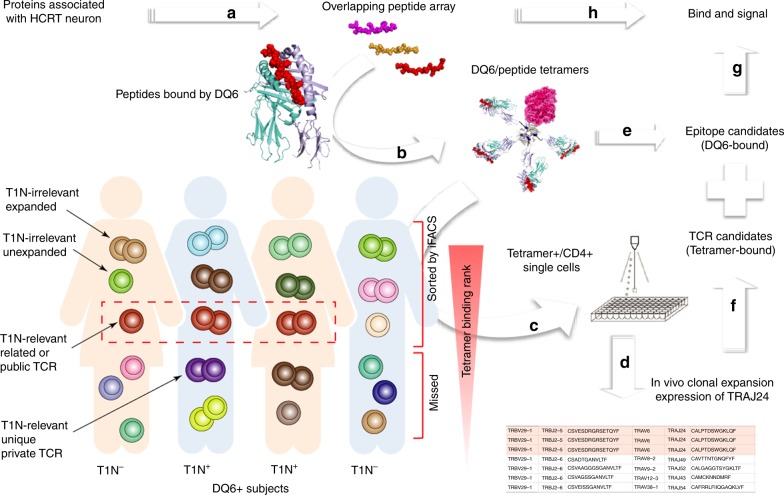
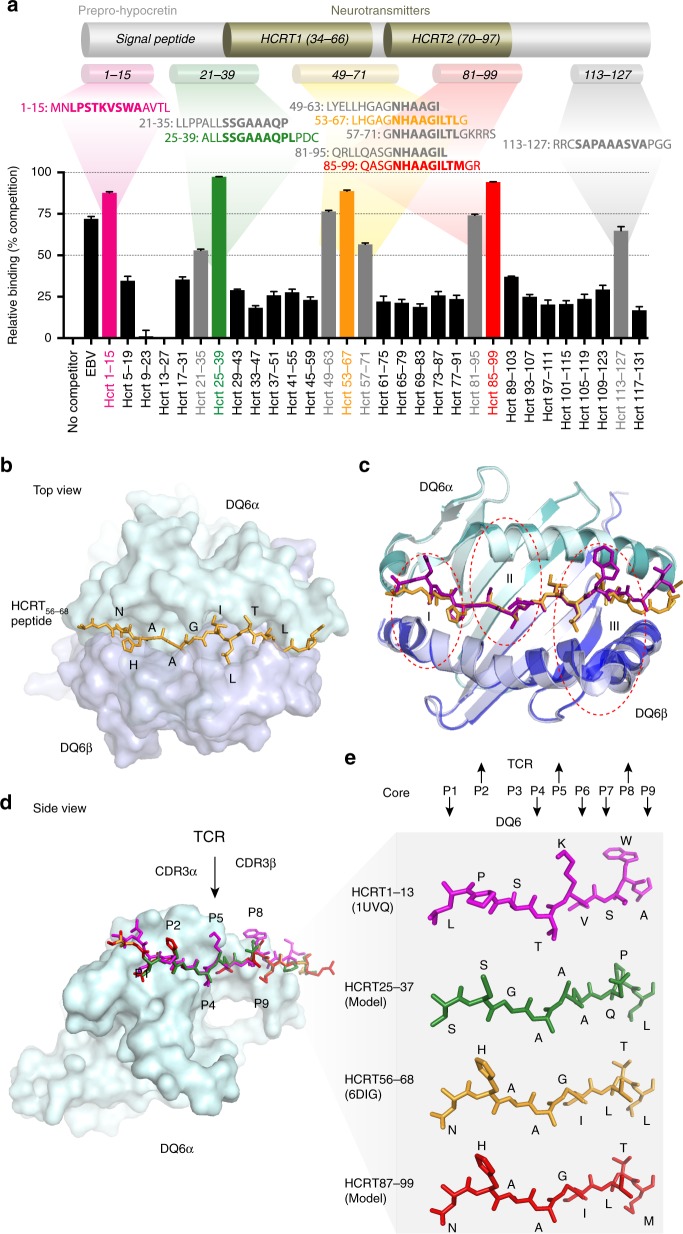
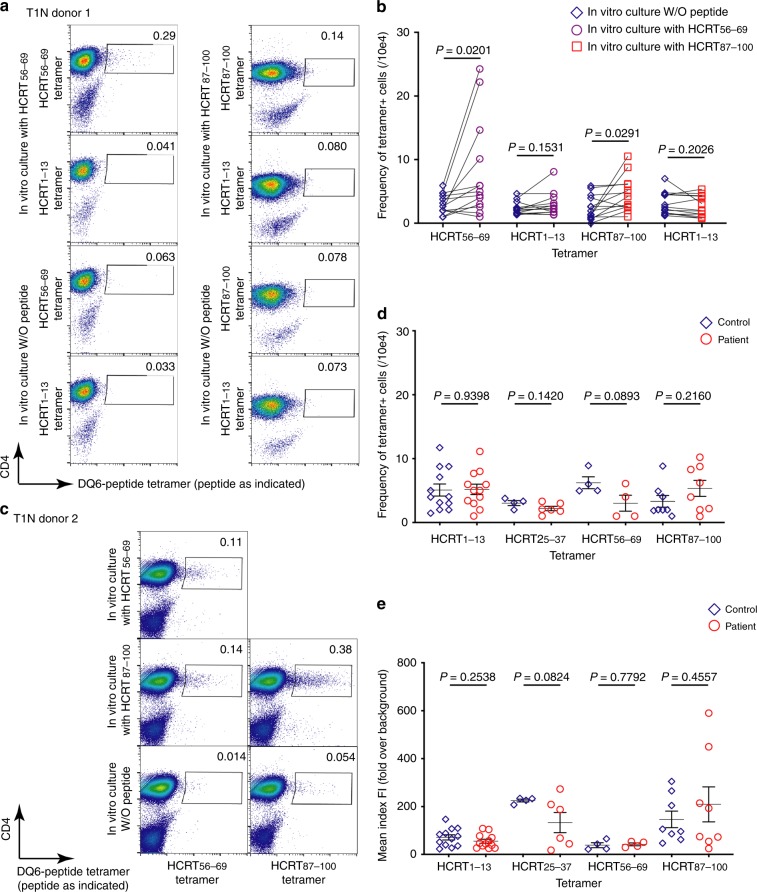
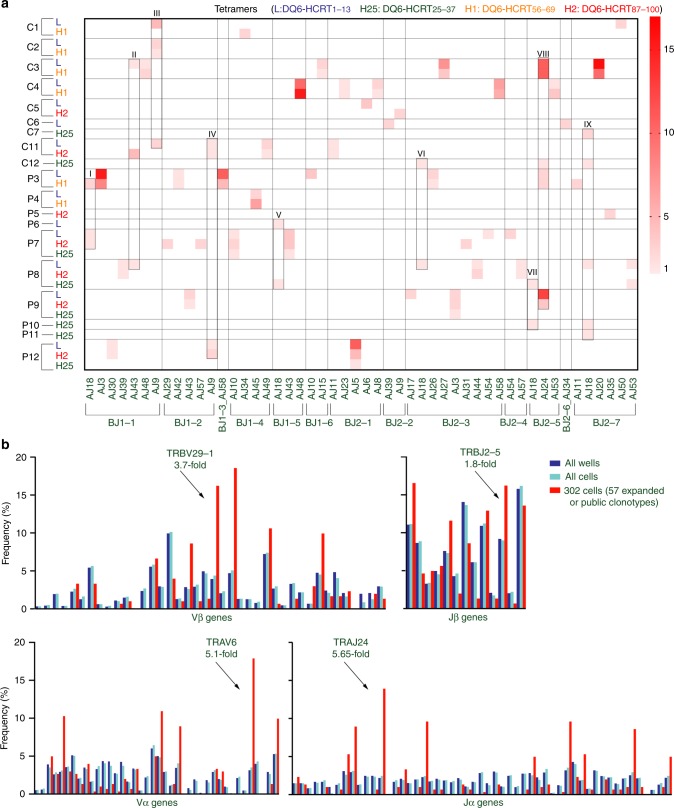
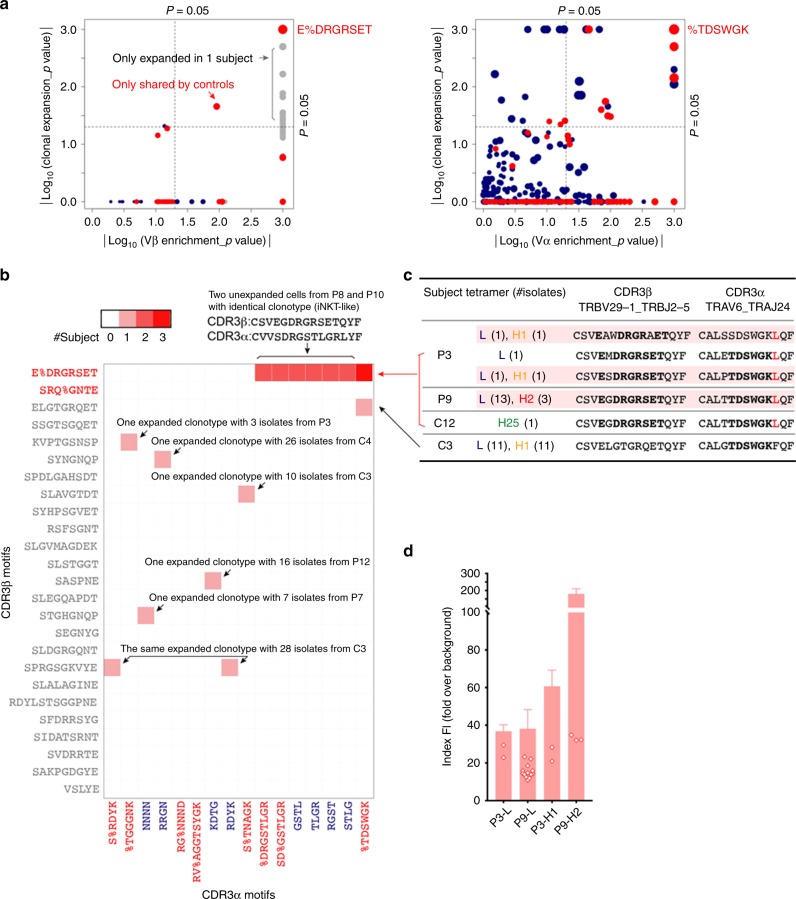
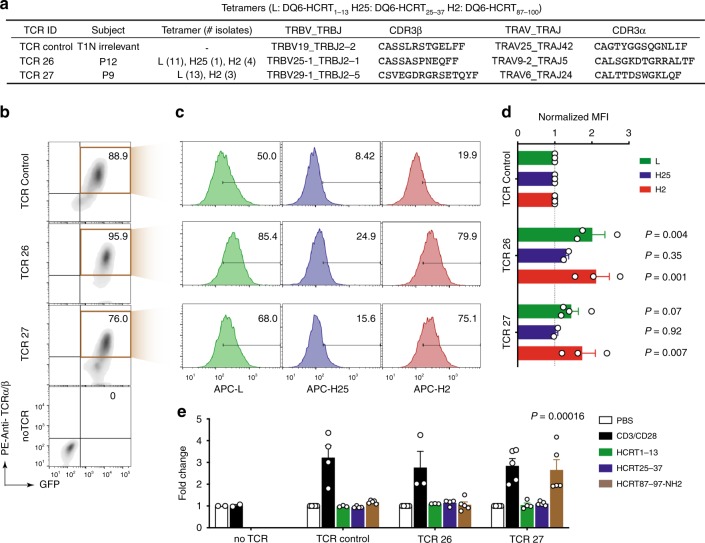
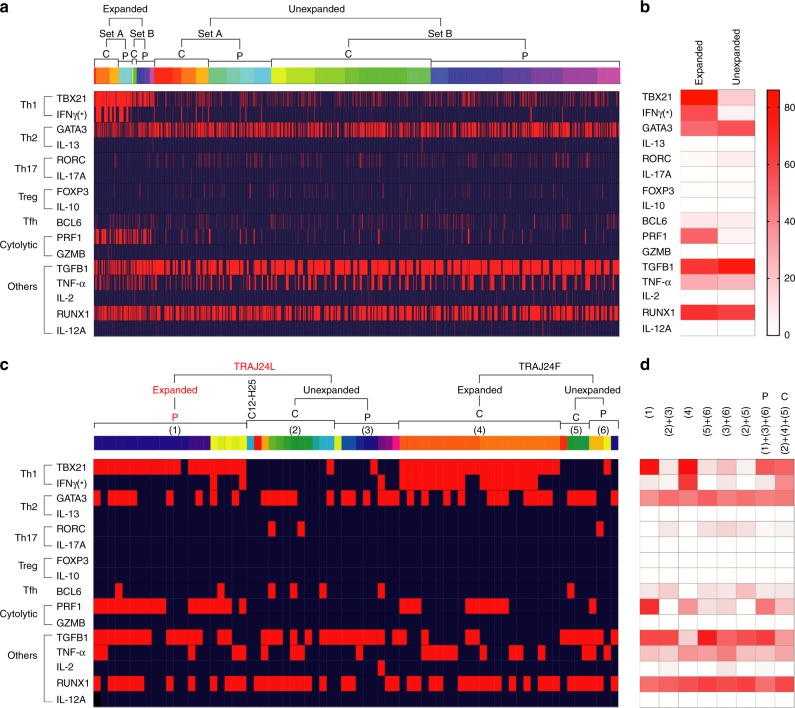
Individuals with narcolepsy suffer from abnormal sleep patterns due to loss of neurons that uniquely supply hypocretin (HCRT). Previous studies found associations of narcolepsy with the human leukocyte antigen (HLA)-DQ6 allele and T-cell receptor α (TRA) J24 gene segment and also suggested that in vitro-stimulated T cells can target HCRT. Here, we present evidence of in vivo expansion of DQ6-HCRT tetramer+/TRAJ24+/CD4+ T cells in DQ6+ individuals with and without narcolepsy. We identify related TRAJ24+ TCRαβ clonotypes encoded by identical α/β gene regions from two patients and two controls. TRAJ24-G allele+ clonotypes only expand in the two patients, whereas a TRAJ24-C allele+ clonotype expands in a control. A representative tetramer+/G-allele+ TCR shows signaling reactivity to the epitope HCRT 87–97. Clonally expanded G-allele+ T cells exhibit an unconventional effector phenotype. Our analysis of in vivo expansion of HCRT-reactive TRAJ24+ cells opens an avenue for further investigation of the autoimmune contribution to narcolepsy development.
Overview
The claims and statistics of this paper haven’t been checked yet.
Free: it reads the open-access text and checks the first 5 claims that cite a source we can check. Create a free account to check every claim.
Integrity signals
Registry
Cites
Statistics
Figures
Verification
Claims the paper makes
The claims and statistics of this paper haven’t been checked yet.
Free: it reads the open-access text and checks the first 5 claims that cite a source we can check. Create a free account to check every claim.
Self-check
Percentages, sums and reported differences re-computed from the paper’s own numbers.
The self-check needs the paper’s full text.
Citations
Cites
Coot : model-building tools for molecular graphics
Emsley, P., & Cowtan, K. (2004) · Acta Crystallographica Section D Biological Crystallography · doi:10.1107/s0907444904019158 · Cited by 30,571
Sakurai, T., Amemiya, A., Ishii, M., Matsuzaki, I., Chemelli, R. M., Tanaka, H., Williams, S. C., Richardson, J. A., Kozlowski, G. P., Wilson, S., et al. (1998) · Cell · doi:10.1016/s0092-8674(00)80949-6 · Cited by 5,501
Scaling and assessment of data quality
Evans, P. (2006) · Acta Crystallographica Section D Biological Crystallography · doi:10.1107/s0907444905036693 · Cited by 4,374
Microglia-mediated neurotoxicity: uncovering the molecular mechanisms
Block, M. L., Zecca, L., & Hong, J.-S. (2007) · Nature Reviews Neuroscience · doi:10.1038/nrn2038 · Cited by 4,110
International Classification of Sleep Disorders-Third Edition
Sateia, M. J. (2014) · Chest · doi:10.1378/chest.14-0970 · Cited by 3,860
iMOSFLM: a new graphical interface for diffraction-image processing with MOSFLM
Battye, T. G. G., Kontogiannis, L., Johnson, O., Powell, H. R., & Leslie, A. G. W. (2011) · Acta Crystallographica Section D Biological Crystallography · doi:10.1107/s0907444910048675 · Cited by 2,860
Peyron, C., Faraco, J., Rogers, W., Ripley, B., Overeem, S., Charnay, Y., Nevsimalova, S., Aldrich, M., Reynolds, D., Albin, R., et al. (2000) · Nature Medicine · doi:10.1038/79690 · Cited by 2,118
Solving structures of protein complexes by molecular replacement with Phaser
McCoy, A. J. (2007) · Acta Crystallographica Section D Biological Crystallography · doi:10.1107/s0907444906045975 · Cited by 1,595
Brochet, X., Lefranc, M.-P., & Giudicelli, V. (2008) · Nucleic Acids Research · doi:10.1093/nar/gkn316 · Cited by 1,216
Collaboration gets the most out of software
Morin, A., Eisenbraun, B., Key, J., Sanschagrin, P. C., Timony, M. A., Ottaviano, M., & Sliz, P. (2013) · eLife · doi:10.7554/elife.01456 · Cited by 1,081
Cited by
“World in motion” – emulsion adjuvants rising to meet the pandemic challenges
O’Hagan, D. T., der Most, R. G. V., Lodaya, R. N., Coccia, M., & Lofano, G. (2021) · npj Vaccines · doi:10.1038/s41541-021-00418-0 · Cited by 131
Guillain-Barré syndrome: expanding the concept of molecular mimicry
Laman, J. D., Huizinga, R., Boons, G., & Jacobs, B. C. (2022) · Trends in Immunology · doi:10.1016/j.it.2022.02.003 · Cited by 124
The immunopathogenesis of narcolepsy type 1
Liblau, R. S., Latorre, D., Kornum, B. R., Dauvilliers, Y., & Mignot, E. J. (2024) · Nature Reviews Immunology · doi:10.1038/s41577-023-00902-9 · Cited by 91
“…NT1 showed that, in the context of DQ0602, self-reactive CD4 + T cells recognize the C-terminal-amidated version of HCRT peptides (HCRT NH2 ) 96,97 — a post-translational modification that is necessary for the biological activity of HCRT 12 — as well as other antigens expressed by…”
Self-citationSaggau, C., Bacher, P., Esser, D., Rasa, M., Meise, S., Mohr, N., Kohlstedt, N., Hutloff, A., Schacht, S.-S., Dargvainiene, J., et al. (2024) · Immunity · doi:10.1016/j.immuni.2024.08.005 · Cited by 79
Epigenetic silencing of selected hypothalamic neuropeptides in narcolepsy with cataplexy
Seifinejad, A., Ramosaj, M., Shan, L., Li, S., Possovre, M.-L., Pfister, C., Fronczek, R., Garrett‐Sinha, L. A., Frieser, D., Honda, M., et al. (2023) · Proceedings of the National Academy of Sciences · doi:10.1073/pnas.2220911120 · Cited by 72
Narcolepsy risk loci outline role of T cell autoimmunity and infectious triggers in narcolepsy
Ollila, H. M., Sharon, E., Lin, L., Sinnott-Armstrong, N., Ambati, A., Yogeshwar, S., Hillary, R. P., Jolanki, O., Faraco, J. H., Einen, M. A., et al. (2023) · Nature Communications · doi:10.1038/s41467-023-36120-z · Cited by 78
Predicting Cross-Reactivity and Antigen Specificity of T Cell Receptors
Lee, C. H., Salio, M., Napolitani, G., Ogg, G., Simmons, A., & Koohy, H. (2020) · Frontiers in Immunology · doi:10.3389/fimmu.2020.565096 · Cited by 62
“Although current algorithms have been applied in multiple biological contexts such as Alzheimer’s disease (197), narcolepsy (198), and PD-1 blockade treatment (199), recent studies reported suboptimality of the algorithms (18) given the limited number of crystal structures concentrated around a few…”
BackgroundVuorela, A., Freitag, T. L., Leskinen, K., Pessa, H. K. J., Härkönen, T., Stracenski, I., Kirjavainen, T., Olsén, P., Saarenpää‐Heikkilä, O., Ilonen, J., et al. (2021) · Nature Communications · doi:10.1038/s41467-021-22637-8 · Cited by 54
Advances in Adjuvanted Influenza Vaccines
Shichinohe, S., & Watanabe, T. (2023) · Vaccines · doi:10.3390/vaccines11081391 · Cited by 40
Narcolepsy: a model interaction between immune system, nervous system, and sleep-wake regulation
Latorre, D., Sallusto, F., Bassetti, C. L., & Kallweit, U. (2022) · Seminars in Immunopathology · doi:10.1007/s00281-022-00933-9 · Cited by 43
Becerra‐Artiles, A., Calvo‐Calle, J. M., Co, M. D. T., Nanaware, P. P., Cruz, J., Weaver, G. C., Lu, L., Forconi, C. S., Finberg, R. W., Moormann, A. M., et al. (2022) · Cell Reports · doi:10.1016/j.celrep.2022.110952 · Cited by 39
“, 2021), as were DQ5-Clip (HLA-DQA*01:01/DQB1*05:01) (Jiang et al., 2019) and peptide-exchange catalyst HLA-DM (Busch et al.”
Self-citationBernard‐Valnet, R., Frieser, D., Nguyen, X., Khajavi, L., Queriault, C., Arthaud, S., Melzi, S., Fusade-Boyer, M., Masson, F., Zytnicki, M., et al. (2022) · Brain · doi:10.1093/brain/awab455 · Cited by 38
Narcolepsy type 1: what have we learned from immunology?
Kornum, B. R. (2020) · SLEEP · doi:10.1093/sleep/zsaa055 · Cited by 32
Self-citationTCR-like antibodies targeting autoantigen-mhc complexes: a mini-review
Li, Y., Jiang, W., & Mellins, E. (2022) · Frontiers in Immunology · doi:10.3389/fimmu.2022.968432 · Cited by 29
“For example, >90% celiac patients carry HLA-DQA1*05:01/HLADQB1*02:01 (6, 7), and >95% narcoleptic patients carry HLADQB1*06:02 (8, 9).”
BackgroundSelf-citationLiu, R., Jiang, W., & Mellins, E. (2021) · Cellular and Molecular Immunology · doi:10.1038/s41423-021-00717-5 · Cited by 25
Self-citationNarcolepsy and H1N1 influenza immunology a decade later: What have we learned?
Buonocore, S. M., & der Most, R. G. V. (2022) · Frontiers in Immunology · doi:10.3389/fimmu.2022.902840 · Cited by 27
“Structural analysis of the crystals synthesized of DQ0602 complexes with HA or HCRT peptides in their binding grooves, revealed similarities that were not obvious from the sequences (64).”
BackgroundMethodClay, S. M., Schoettler, N., Goldstein, A. M., Carbonetto, P. S., Dapas, M., Altman, M. C., Rosasco, M. G., Gern, J. E., Jackson, D. J., Im, H. K., et al. (2022) · Genome Medicine · doi:10.1186/s13073-022-01058-2 · Cited by 25
“Mine KL, Tedesco-Silva H, Mourão TB, Campos EF, Salzedas LA, Aguiar B, et al. Heightened expression of HLA-DQB1 and HLA-DQB2 in pre-implantation biopsies predicts poor late kidney graft function.”
BackgroundMethodInfluentialRahman, E., Rao, P., Ahmed, M., Webb, W. R., & CARRUTHERS, J. D. A. (2025) · Toxins · doi:10.3390/toxins17040182 · Cited by 21
“High-resolution structural models of these alleles were retrieved from the Protein Data Bank when available (PDB: 6DIG, 8TBP, 4D8P) [70–72].”
Reviewing the Clinical Implications of Treating Narcolepsy as an Autoimmune Disorder
Giannoccaro, M. P., Liguori, R., Plazzi, G., & Pizza, F. (2021) · Nature and Science of Sleep · doi:10.2147/nss.s275931 · Cited by 19
“Finally, it has recently been observed that NT1 patients display effector CD4+ T-cells with an unconventional profile which might have cytotoxic activity.(50) Although these evidence point to a T-cell-mediated process associated with narcolepsy, these findings are mainly based on blood sample studies, and the primary…”
BackgroundGarrido‐Suárez, B. B., Garrido-Valdes, M., & Garrido, G. (2022) · Sleep Medicine · doi:10.1016/j.sleep.2022.06.011 · Cited by 18
“Following investigations suggest that the formulation of H1N1 viral nucleoprotein used in Pandemrix, rather than the AS03 adjuvant, likely triggered an autoimmune assault on hypothalamic Oxneurons in some individuals with a genetic vulnerability to developing narcolepsy [82,83].”
Luo, G., Zhang, J., Lin, L., & Mignot, E. J.-M. (2022) · Proceedings of the National Academy of Sciences · doi:10.1073/pnas.2205797119 · Cited by 21
Ancient trans-species polymorphism at the Major Histocompatibility Complex in primates
Fortier, A. L., & Pritchard, J. K. (2025) · eLife · doi:10.7554/elife.103547.3 · Cited by 17
Simakajornboon, N., Mignot, E. J.-M., Maski, K. P., Owens, J. A., ROSEN, C. L., Ibrahim, S., Hassan, F., Chervin, R. D., Perry, G. V., Brooks, L. J., et al. (2022) · SLEEP · doi:10.1093/sleep/zsac137 · Cited by 17
Viste, R., Lie, B. A., Viken, M. K., Rootwelt, T., Knudsen, S., & Kornum, B. R. (2021) · Sleep Medicine · doi:10.1016/j.sleep.2021.07.024 · Cited by 14
Self-citationT cell reactivity to regulatory factor X4 in type 1 narcolepsy
Luo, G., Yogeshwar, S., Lin, L., & Mignot, E. J.-M. (2021) · Scientific Reports · doi:10.1038/s41598-021-87481-8 · Cited by 14
Pre-treatment of blood samples reveal normal blood hypocretin/orexin signal in narcolepsy type 1
Ægidius, H. M., Kruse, L. S., Christensen, G. L., Lorentzen, M. P., Jørgensen, N. R., Moresco, M., Pizza, F., Plazzi, G., Jennum, P., & Kornum, B. R. (2021) · Brain Communications · doi:10.1093/braincomms/fcab050 · Cited by 14
Self-citationNarcolepsy Type I as an autoimmune disorder
Kornum, B. R. (2021) · Handbook of clinical neurology · doi:10.1016/b978-0-12-820683-6.00012-9 · Cited by 17
Self-citationMignot, E. J.-M., & BLACK, S. B. (2020) · Journal of Clinical Sleep Medicine · doi:10.5664/jcsm.8668 · Cited by 16
Huisman, B. D., Balivada, P. A., & Birnbaum, M. E. (2023) · Journal of Biological Chemistry · doi:10.1016/j.jbc.2023.102913 · Cited by 12
“S6B, adapted from Protein Data Bank 6DIG (23)).”
MethodMargolis, D. J., Duke, J. L., Mitra, N., Berna, R., Hoffstad, O., Wasserman, J. R., Dinou, A., Damianos, G., Kotsopoulou, I., Tairis, N. G., et al. (2023) · Frontiers in Genetics · doi:10.3389/fgene.2023.1004138 · Cited by 9
“Binding pocket residues were identified based on published crystal structures for each HLA molecule, whereby the residues that were found to be within a 4Å neighborhood of the presented peptide were included (Stern et al., 1994; Chicz et al., 1997; Henderson et al., 2007; Dai et al., 2010; Tollefsen et al., 2012; Kusa…”
BackgroundNarcolepsy with cataplexy is caused by epigenetic silencing of hypocretin neuronsPreprint
Seifinejad, A., Neiteler, A., Li, S., Pfister, C., Fronczek, R., Shan, L., Garrett‐Sinha, L. A., Frieser, D., Honda, M., Arribat, Y., et al. (2021) · bioRxiv (Cold Spring Harbor Laboratory) · doi:10.1101/2021.09.21.461046 · Cited by 10
Narcolepsy in Children: Sleep disorders in children, A rapidly evolving field seeking consensus
Dye, T. J., & Simakajornboon, N. (2021) · Pediatric Pulmonology · doi:10.1002/ppul.25512 · Cited by 9
Treatment of narcolepsy with natalizumab
Scammell, T. E., Luo, G., Borker, P. V., Sullivan, L., Biddle, K. D., & Mignot, E. J.-M. (2020) · SLEEP · doi:10.1093/sleep/zsaa050 · Cited by 10
CD4-Positive T-Cell Responses to MOG Peptides in MOG Antibody-Associated Disease
Ono, H., Misu, T., Namatame, C., Matsumoto, Y., Takai, Y., Nishiyama, S., Kuroda, H., Takahashi, T., Nakashima, I., Fujihara, K., et al. (2025) · International Journal of Molecular Sciences · doi:10.3390/ijms26083606 · Cited by 7
“The reason why we only observed subtle T-cell responses to MOG peptides can be explained by the fact that extra stimulations, including IL-2 [29] and IL-7 [30], may be necessary for the induction of a strong T-cell response.”
Lind, A., Marzinotto, I., Brigatti, C., Ramelius, A., Piemonti, L., & Lampasona, V. (2021) · Scientific Reports · doi:10.1038/s41598-021-83543-z · Cited by 7
Chasman, D. I., Hyde, C. L., Giulianini, F., Danning, R., Wang, E. Q., Hickling, T. P., Ridker, P. M., & Loomis, A. K. (2022) · Scientific Reports · doi:10.1038/s41598-022-07997-5 · Cited by 6
Investigation of the HLA locus in autopsy-confirmed progressive supranuclear palsy
Wang, J., Forrest, S. L., Dasari, S., Tanaka, H., Rogaeva, E. A., Tartaglia, M. C., Fox, S. H., Lang, A. E., Kalyaanamoorthy, S., & Kovács, G. G. (2025) · Immunobiology · doi:10.1016/j.imbio.2025.152892 · Cited by 5
Freeman, S. A., Ayoub, I., Dauvilliers, Y. A., & Liblau, R. (2025) · Seminars in Immunology · doi:10.1016/j.smim.2025.101962 · Cited by 8
Emerging therapeutic targets for narcolepsy
Vringer, M., & Kornum, B. R. (2021) · Expert Opinion on Therapeutic Targets · doi:10.1080/14728222.2021.1969361 · Cited by 7
“of autoreactive CD4 + T-cells in NT1 [121,122].”
Self-citationAncient trans-species polymorphism at the Major Histocompatibility Complex in primatesPreprint
Fortier, A. L., & Pritchard, J. K. (2025) · eLife · doi:10.7554/elife.103547 · Cited by 19
Increased Numbers of CD4 + T‐Cells in the Hypocretin/Orexin Region of Narcolepsy Type 1
Shan, L., Fonville, M., Hoekstra, M., Fronczek, R., Smolders, J., & Swaab, D. F. (2026) · Annals of Neurology · doi:10.1002/ana.78199 · Cited by 7
Downregulation of hypocretin/orexin after H1N1 Pandemrix vaccination of adolescent mice
Berendtsen, N. T., Pavlovskyi, A., Flores-Téllez, D., Egebjerg, C., Kolmos, M. G., Justinussen, J. L., & Kornum, B. R. (2024) · SLEEP · doi:10.1093/sleep/zsae014 · Cited by 8
Self-citationAutoantibodies, sheep cell agglutinins and anti-albumin antibodies in alcoholic liver disease.
Macgeorge, J., Frazer, I. H., & Cunningham, A. L. (1984) · PubMed · Cited by 6
Ancient Trans-Species Polymorphism at the Major Histocompatibility Complex in PrimatesPreprint
Fortier, A. L., & Pritchard, J. K. (2025) · eLife · doi:10.7554/elife.103547.2 · Cited by 6
Zhang, L., Cai, S., Teng, A., Lin, L., Han, F., Yan, H., Hong, S., Pizza, F., Plazzi, G., Morandi, L., et al. (2025) · Proceedings of the National Academy of Sciences · doi:10.1073/pnas.2513989122 · Cited by 5
Ghayoumian, M., Shamsi, F., Madanchi, H., Ranjbar, M. M., Jalalirad, R., Sarrami‐Forooshani, R., & Mahdavi, M. (2025) · International Immunopharmacology · doi:10.1016/j.intimp.2025.115315 · Cited by 4
Grahadi, R., Fatchiyah, F., & Kurniawan, N. (2022) · Journal of Pharmacy & Pharmacognosy Research · doi:10.56499/jppres22.1469_10.6.1046 · Cited by 4
Ancient Trans-Species Polymorphism at the Major Histocompatibility Complex in PrimatesPreprint
Fortier, A. L., & Pritchard, J. K. (2025) · eLife · doi:10.7554/elife.103547.1 · Cited by 4
The Future of TCR-like Antibodies in Diagnosis and Potential Application Targets
Liu, H., Dass, S. A., Balakrishnan, V., Nordin, F., & Tye, G. J. (2024) · Current Molecular Medicine · doi:10.2174/0115665240297179240514030532 · Cited by 1
RIPPA: Identification of MHC‐II Binding Peptides from Antigen Using a Yeast Display‐Based Approach
Liu, R., Jiang, W., Li, Y., & Mellins, E. (2022) · Current Protocols · doi:10.1002/cpz1.350 · Cited by 2
Self-citationNeurobioloy of sleep and circadian disorders
Kornum, B. R., & Mignot, E. J.-M. (2022) · Elsevier eBooks · doi:10.1016/b978-0-323-85654-6.00020-4 · Cited by 2
Self-citationTCR repertoire of human cytotoxic CD4 T cells responding to betaherpesviruses HHV-6B and HCMV
Becerra‐Artiles, A., Weaver, G. C., Oluoch, P. O., & Stern, L. J. (2025) · Frontiers in Immunology · doi:10.3389/fimmu.2025.1631558 · Cited by 1
Self-citationPathogenesis of hypersomnolence
Darby, C. V., & Guilleminault, C. (2021) · Elsevier eBooks · doi:10.1016/b978-0-12-822963-7.00054-2
Qi, J., Wang, T., Wang, M., He, P., Li, Y., Shang, L., Chen, L., Wang, X., Xu, H., & Ma, C. (2024) · British Journal of Haematology · doi:10.1111/bjh.19899
Structure of Classical MHC Class II (HLA-DP, DQ, DR, and Orthologs)
Maddumage, J. C., Murdolo, L. D., Ahn, Y. M., Chatzileontiadou, D. S. M., & Gras, S. (2024) · Elsevier eBooks · doi:10.1016/b978-0-128-24465-4.00118-6 · Cited by 1
Pathophysiology of narcolepsy: genetics and immune system
Taheri, S. (2025) · Elsevier eBooks · doi:10.1016/b978-0-443-30004-2.00002-x
Vringer, M., Mahfouz, A. E., Huijbers, M. G. M., Lammers, G. J., Berkhout, J. B., Koning, F., Fronczek, R., & Schinkelshoek, M. S. (2026) · Journal of Neuroimmunology · doi:10.1016/j.jneuroim.2026.578936 · Cited by 1
Cytokines in narcolepsy type 1: pathogenic relevance, biomarker potential, and future directions
Gao, J., Jia, L., Qu, Z., & Wang, X. (2026) · Frontiers in Neurology · doi:10.3389/fneur.2026.1904069
Metadata
- Authors
- Jiang, W., Birtley, J. R., Hung, S.-C., Wang, W., Chiou, S.-H., Macaubas, C., Kornum, B., Tian, L., Huang, H., Adler, L., Weaver, G., Lu, L., Ilstad-Minnihan, A., Somasundaram, S., Ayyangar, S., Davis, M. M., Stern, L. J., & Mellins, E. D.
- Affiliations
- Stanford Medicine (US)
- University of Massachusetts Chan Medical School (US)
- Glostrup Hospital (DK)
- Howard Hughes Medical Institute (US)
- Corresponding author
- Jiang, Wei
- Mellins, Elizabeth D.
- ORCID
- Venue
- Nature Communications
- Published
- 2019-11-20
- Volume
- 10
- Issue
- 1
- Pages
- 5247-5247
- ISSN
- 2041-1723 (ISSN-L)
- PMC
- PMC6868281
- OpenAlex
- W2989925705
- Semantic Scholar
- 356b3546a63b04e6a2c40d33ef7fc98d53875f6a
- Cited by
- 58
- References
- 57
- Citations by year
- 2026: 3 · 2025: 12 · 2024: 5 · 2023: 6 · 2022: 13 · 2021: 14 · 2020: 4
- FWCI
- 4.51
- Type
- journal article
- Language
- en
- Update notices
- correction (2020-01-08)
- Open access
- gold
- doi.org
- Licence
- cc-by
- creativecommons.org/licenses/by/4.0 (tdm)
- creativecommons.org/licenses/by/4.0 (vor)
- Locations
- Nature Communications (publishedVersion, cc-by)
- PubMed Central (publishedVersion, cc-by)
- PubMed (publishedVersion)
- Research at the University of Copenhagen (University of Copenhagen) (publishedVersion, cc-by)
- eScholarship@UMassChan (submittedVersion, cc-by)
- OSTI OAI (U.S. Department of Energy Office of Scientific and Technical Information) (submittedVersion)
- Rutgers University Community Repository (Rutgers University) (submittedVersion)
- RePEc: Research Papers in Economics (submittedVersion)
- DOAJ (DOAJ: Directory of Open Access Journals) (submittedVersion)
- DOAJ (DOAJ: Directory of Open Access Journals) (submittedVersion, cc-by-sa)
- Funders
- GlaoSmithKline Biologicals SA
- The Child Health Research Institute, Lucile Packard Foundation for Children’s Health, as well as the Stanford CTSA
- Topics
- Life Sciences › Neuroscience › Cognitive Neuroscience › Sleep and Wakefulness Research
- Life Sciences › Immunology and Microbiology › Immunology › T-cell and B-cell Immunology
- Life Sciences › Biochemistry, Genetics and Molecular Biology › Genetics › Diabetes and associated disorders
- Keywords
- narcolepsy, orexin, CD4+ T cells, clonal expansion, HLA-DQ6, T cell receptor alpha chain, tetramer analysis, autoimmune T cells, hypocretin neurons
- MeSH terms
- Orexins, Animals, Drosophila, HLA-DQ Antigens, Humans, Immunoglobulin Joining Region, Narcolepsy, Phenotype, CD4-Positive T-Lymphocytes, Autoimmunity, Case-Control Studies, Receptors, Antigen, T-Cell, alpha-beta, Crystallography, X-Ray, Cell Proliferation, Peripheral Tolerance
About these checks
Registry, retraction, Cites and statistics results are computed, not judged, with one exception: a printed reference that no index lists is read once by a model before it counts as a citation error. Claims are extracted by a model and kept only when their quote appears verbatim in the text; each cited source is then checked, with a model’s help, for whether it says what the claim relies on. Those verdicts can be wrong — read the claim’s quote and the cited source before relying on one.
Statistics and arithmetic are recomputed, not judged.
Confidence bands are shown only for fields calibrated on our annotated test set. None is calibrated yet, so no band is shown.
What counts as a claim ›How we measure confidence ›How we check this ›
Are you an author, or do you see a problem with this page? Request a review
Data sources
Bibliographic data: Semantic Scholar, OpenAlex, Crossref.
Contains information from the Semantic Scholar Academic Graph Datasets, made available under the ODC Attribution License (ODC-BY 1.0).
Semantic Scholar’s data is described in: Kinney, R., et al. (2023). The Semantic Scholar Open Data Platform. arXiv:2301.10140.
