

In vivo clonal expansion and phenotypes of hypocretin-specific CD4+ T cells in narcolepsy patients and controls
Open accessThe DOI matches its Crossref record; 57 of the 57 references it cites were found in a registry or an index.
Abstract
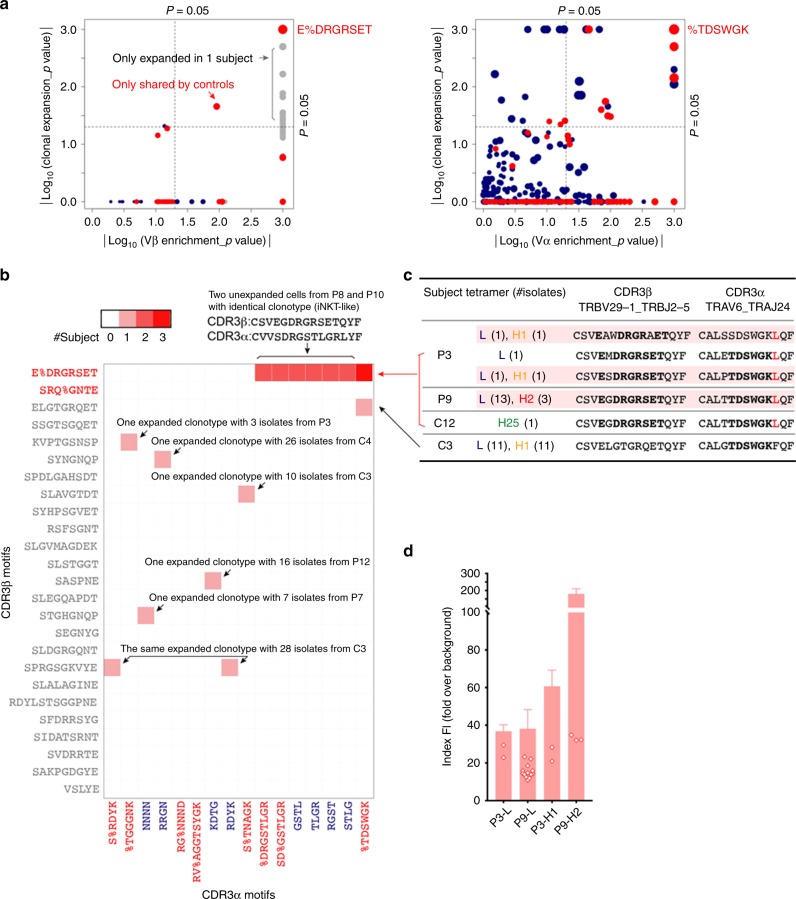
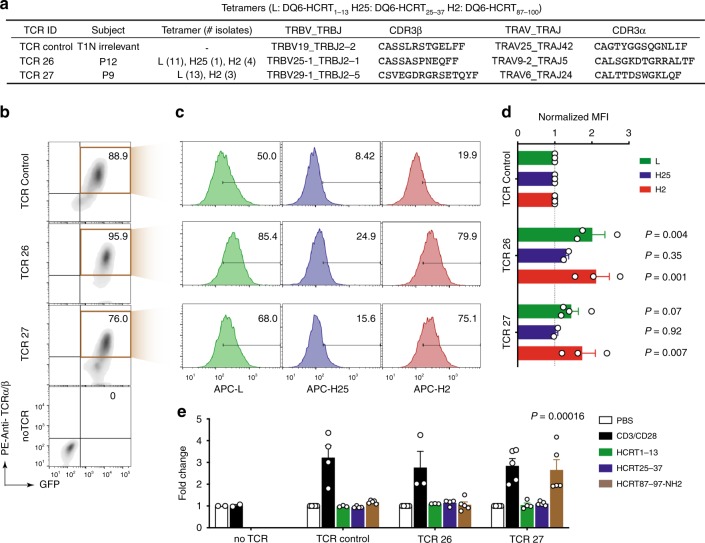
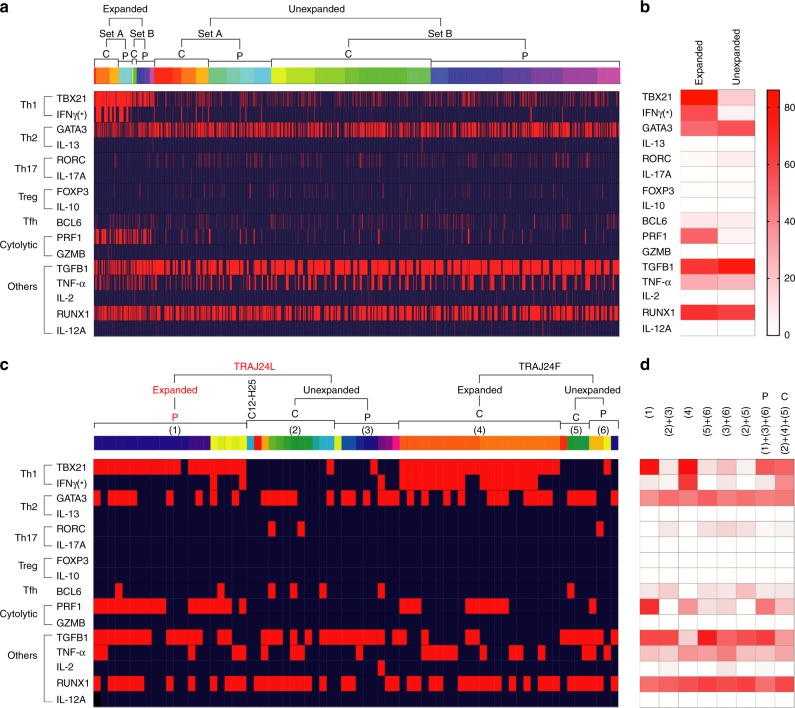
Individuals with narcolepsy suffer from abnormal sleep patterns due to loss of neurons that uniquely supply hypocretin (HCRT). Previous studies found associations of narcolepsy with the human leukocyte antigen (HLA)-DQ6 allele and T-cell receptor α (TRA) J24 gene segment and also suggested that in vitro-stimulated T cells can target HCRT. Here, we present evidence of in vivo expansion of DQ6-HCRT tetramer+/TRAJ24+/CD4+ T cells in DQ6+ individuals with and without narcolepsy. We identify related TRAJ24+ TCRαβ clonotypes encoded by identical α/β gene regions from two patients and two controls. TRAJ24-G allele+ clonotypes only expand in the two patients, whereas a TRAJ24-C allele+ clonotype expands in a control. A representative tetramer+/G-allele+ TCR shows signaling reactivity to the epitope HCRT 87–97. Clonally expanded G-allele+ T cells exhibit an unconventional effector phenotype. Our analysis of in vivo expansion of HCRT-reactive TRAJ24+ cells opens an avenue for further investigation of the autoimmune contribution to narcolepsy development.
Overview
The claims and statistics of this paper haven’t been checked yet.
Free: it reads the open-access text and checks the first 5 claims that cite a source we can check. Create a free account to check every claim.
Integrity signals
Registry
Cites
Statistics
Figures
Verification
Claims the paper makes
The claims and statistics of this paper haven’t been checked yet.
Free: it reads the open-access text and checks the first 5 claims that cite a source we can check. Create a free account to check every claim.
Self-check
Percentages, sums and reported differences re-computed from the paper’s own numbers.
The self-check needs the paper’s full text.
Citations
Cites
Coot : model-building tools for molecular graphics
Emsley, P., & Cowtan, K. (2004) · Acta Crystallographica Section D Biological Crystallography · doi:10.1107/s0907444904019158 · Cited by 30,571
Sakurai, T., Amemiya, A., Ishii, M., Matsuzaki, I., Chemelli, R. M., Tanaka, H., Williams, S. C., Richardson, J. A., Kozlowski, G. P., Wilson, S., et al. (1998) · Cell · doi:10.1016/s0092-8674(00)80949-6 · Cited by 5,501
Scaling and assessment of data quality
Evans, P. (2006) · Acta Crystallographica Section D Biological Crystallography · doi:10.1107/s0907444905036693 · Cited by 4,374
Microglia-mediated neurotoxicity: uncovering the molecular mechanisms
Block, M. L., Zecca, L., & Hong, J.-S. (2007) · Nature Reviews Neuroscience · doi:10.1038/nrn2038 · Cited by 4,110
International Classification of Sleep Disorders-Third Edition
Sateia, M. J. (2014) · Chest · doi:10.1378/chest.14-0970 · Cited by 3,860
iMOSFLM: a new graphical interface for diffraction-image processing with MOSFLM
Battye, T. G. G., Kontogiannis, L., Johnson, O., Powell, H. R., & Leslie, A. G. W. (2011) · Acta Crystallographica Section D Biological Crystallography · doi:10.1107/s0907444910048675 · Cited by 2,860
Peyron, C., Faraco, J., Rogers, W., Ripley, B., Overeem, S., Charnay, Y., Nevsimalova, S., Aldrich, M., Reynolds, D., Albin, R., et al. (2000) · Nature Medicine · doi:10.1038/79690 · Cited by 2,118
Solving structures of protein complexes by molecular replacement with Phaser
McCoy, A. J. (2007) · Acta Crystallographica Section D Biological Crystallography · doi:10.1107/s0907444906045975 · Cited by 1,595
Brochet, X., Lefranc, M.-P., & Giudicelli, V. (2008) · Nucleic Acids Research · doi:10.1093/nar/gkn316 · Cited by 1,216
Collaboration gets the most out of software
Morin, A., Eisenbraun, B., Key, J., Sanschagrin, P. C., Timony, M. A., Ottaviano, M., & Sliz, P. (2013) · eLife · doi:10.7554/elife.01456 · Cited by 1,081
Identifying specificity groups in the T cell receptor repertoire
Glanville, J., Huang, H., Nau, A., Hatton, O., Wagar, L. E., Rubelt, F., Ji, X., Han, A., Krams, S. M., Pettus, C., et al. (2017) · Nature · doi:10.1038/nature22976 · Cited by 1,026
Self-citationTGF-β: A Master of All T Cell Trades
Li, M. O., & Flavell, R. A. (2008) · Cell · doi:10.1016/j.cell.2008.07.025 · Cited by 893
Improved methods for predicting peptide binding affinity to MHC class II molecules
Jensen, K. K., Andreatta, M., Marcatili, P., Buus, S., Greenbaum, J. A., Yan, Z., Sette, A., Peters, B., & Nielsen, M. (2018) · Immunology · doi:10.1111/imm.12889 · Cited by 794
Linking T-cell receptor sequence to functional phenotype at the single-cell level
Han, A., Glanville, J., Hansmann, L., & Davis, M. M. (2014) · Nature Biotechnology · doi:10.1038/nbt.2938 · Cited by 533
Self-citationNarcolepsy onset is seasonal and increased following the 2009 H1N1 pandemic in china
Han, F., Lin, L., Warby, S. C., Faraco, J., Li, J., Dong, S. X., An, P., Zhao, L., Wang, L. H., Li, Q. Y., et al. (2011) · Annals of Neurology · doi:10.1002/ana.22587 · Cited by 512
Narcolepsy is strongly associated with the T-cell receptor alpha locus
Hallmayer, J., Faraco, J., Lin, L., Hesselson, S., Winkelmann, J., Kawashima, M., Mayer, G., Plazzi, G., Nevsimalova, S., Bourgin, P., et al. (2009) · Nature Genetics · doi:10.1038/ng.372 · Cited by 479
The Epidemiology of Narcolepsy
Longstreth, W. T., Koepsell, T. D., Ton, T. G., Hendrickson, A. F., & van Belle, G. (2007) · Sleep · doi:10.1093/sleep/30.1.13 · Cited by 447
Virus-specific CD4(+) memory-phenotype T cells are abundant in unexposed adults
Su, L. F., Kidd, B. A., Han, A., Kotzin, J. J., & Davis, M. M. (2013) · Immunity · doi:10.1016/j.immuni.2012.10.021 · Cited by 429
Self-citationPartinen, M., Saarenpää-Heikkilä, O., Ilveskoski, I., Hublin, C., Linna, M., Olsén, P., Nokelainen, P., Alén, R., Wallden, T., Espo, M., et al. (2012) · PLoS ONE · doi:10.1371/journal.pone.0033723 · Cited by 406
Bentzen, A. K., Marquard, A. M., Lyngaa, R., Saini, S. K., Ramskov, S., Donia, M., Such, L., Furness, A. J. S., McGranahan, N., Rosenthal, R., et al. (2016) · Nature Biotechnology · doi:10.1038/nbt.3662 · Cited by 337
T cells in patients with narcolepsy target self-antigens of hypocretin neurons
Latorre, D., Kallweit, U., Armentani, E., Foglierini, M., Mele, F., Cassotta, A., Jovic, S., Jarrossay, D., Mathis, J., Zellini, F., et al. (2018) · Nature · doi:10.1038/s41586-018-0540-1 · Cited by 332
Sibener, L. V., Fernandes, R. A., Kolawole, E. M., Carbone, C. B., Liu, F., McAffee, D., Birnbaum, M. E., Yang, X., Su, L. F., Yu, W., et al. (2018) · Cell · doi:10.1016/j.cell.2018.06.017 · Cited by 311
Self-citationElevated Tribbles homolog 2–specific antibody levels in narcolepsy patients
Cvetkovic-Lopes, V., Bayer, L., Dorsaz, S., Maret, S., Pradervand, S., Dauvilliers, Y., Lecendreux, M., Lammers, G.-J., Donjacour, C. E. H. M., Du Pasquier, R. A., et al. (2010) · Journal of Clinical Investigation · doi:10.1172/jci41366 · Cited by 307
Newell, E. W., Sigal, N., Nair, N., Kidd, B. A., Greenberg, H. B., & Davis, M. M. (2013) · Nature Biotechnology · doi:10.1038/nbt.2593 · Cited by 302
Self-citationJoint X-ray and neutron refinement with phenix.refine
Afonine, P. V., Mustyakimov, M., Grosse-Kunstleve, R. W., Moriarty, N. W., Langan, P., & Adams, P. D. (2010) · Acta Crystallographica Section D Biological Crystallography · doi:10.1107/s0907444910026582 · Cited by 279
Antigen presentation profiling reveals recognition of lymphoma immunoglobulin neoantigens
Khodadoust, M. S., Olsson, N., Wagar, L. E., Haabeth, O. A. W., Chen, B., Swaminathan, K., Rawson, K., Liu, C. L., Steiner, D., Lund, P., et al. (2017) · Nature · doi:10.1038/nature21433 · Cited by 261
Self-citationImmunoChip Study Implicates Antigen Presentation to T Cells in Narcolepsy
Faraco, J., Lin, L., Kornum, B. R., Kenny, E. E., Trynka, G., Einen, M., Rico, T. J., Lichtner, P., Dauvilliers, Y., Arnulf, I., et al. (2013) · PLoS Genetics · doi:10.1371/journal.pgen.1003270 · Cited by 245
Self-citationCommon variants in P2RY11 are associated with narcolepsy
Kornum, B. R., Kawashima, M., Faraco, J., Lin, L., Rico, T. J., Hesselson, S., Axtell, R. C., Kuipers, H., Weiner, K., Hamacher, A., et al. (2011) · Nature Genetics · doi:10.1038/ng.734 · Cited by 237
Self-citationAntibodies to influenza nucleoprotein cross-react with human hypocretin receptor 2
Ahmed, S. S., Volkmuth, W., Duca, J., Corti, L., Pallaoro, M., Pezzicoli, A., Karle, A., Rigat, F., Rappuoli, R., Narasimhan, V., et al. (2015) · Science Translational Medicine · doi:10.1126/scitranslmed.aab2354 · Cited by 236
Mundt, S., Mrdjen, D., Utz, S. G., Greter, M., Schreiner, B., & Becher, B. (2019) · Science Immunology · doi:10.1126/sciimmunol.aau8380 · Cited by 235
DQB1 Locus Alone Explains Most of the Risk and Protection in Narcolepsy with Cataplexy in Europe
Behalf of the European Narcolepsy Network (EU-NN), Tafti, M., Hor, H., Dauvilliers, Y., Lammers, G. J., Overeem, S., Mayer, G., Javidi, S., Iranzo, A., Santamaria, J., et al. (2014) · Sleep · doi:10.5665/sleep.3300 · Cited by 202
Autoimmunity to hypocretin and molecular mimicry to flu in type 1 narcolepsy
Luo, G., Ambati, A., Lin, L., Bonvalet, M., Partinen, M., Ji, X., Maecker, H. T., & Mignot, E. J.-M. (2018) · Proceedings of the National Academy of Sciences · doi:10.1073/pnas.1818150116 · Cited by 188
Han, F., Faraco, J., Dong, X. S., Ollila, H. M., Lin, L., Li, J., An, P., Wang, S., Jiang, K. W., Gao, Z. C., et al. (2013) · PLoS Genetics · doi:10.1371/journal.pgen.1003880 · Cited by 160
Dissection of T-cell Antigen Specificity in Human Melanoma
Andersen, R. S., Thrue, C. A., Junker, N., Lyngaa, R., Donia, M., Ellebæk, E., Svane, I. M., Schumacher, T. N., thor Straten, P., & Hadrup, S. R. (2012) · Cancer Research · doi:10.1158/0008-5472.can-11-2614 · Cited by 158
Siebold, C., Hansen, B. E., Wyer, J. R., Harlos, K., Esnouf, R. E., Svejgaard, A., Bell, J. I., Strominger, J. L., Jones, E. Y., & Fugger, L. (2004) · Proceedings of the National Academy of Sciences · doi:10.1073/pnas.0308458100 · Cited by 154
DQ (rather than DR) gene marks susceptibility to narcolepsy
Matsuki, K., Grumet, F. C., Lin, X., Gelb, M., Guilleminault, C., Dement, W., & Mignot, E. J.-M. (1992) · The Lancet · doi:10.1016/0140-6736(92)90571-j · Cited by 153
CD8 T cell-mediated killing of orexinergic neurons induces a narcolepsy-like phenotype in mice
Bernard-Valnet, R., Yshii, L., Quériault, C., Nguyen, X.-H., Arthaud, S., Rodrigues, M., Canivet, A., Morel, A.-L., Matthys, A., Bauer, J., et al. (2016) · Proceedings of the National Academy of Sciences · doi:10.1073/pnas.1603325113 · Cited by 143
Pedersen, N. W., Holm, A., Kristensen, N. P., Bjerregaard, A.-M., Bentzen, A. K., Marquard, A. M., Tamhane, T., Burgdorf, K. S., Ullum, H., Jennum, P., et al. (2019) · Nature Communications · doi:10.1038/s41467-019-08774-1 · Cited by 131
Self-citationDisease-driving CD4+ T cell clonotypes persist for decades in celiac disease
Risnes, L. F., Christophersen, A., Dahal-Koirala, S., Neumann, R. S., Sandve, G. K., Sarna, V. K., Lundin, K. E. A., Qiao, S.-W., & Sollid, L. M. (2018) · Journal of Clinical Investigation · doi:10.1172/jci98819 · Cited by 125
High-dimensional single-cell analysis reveals the immune signature of narcolepsy
Hartmann, F. J., Bernard-Valnet, R., Quériault, C., Mrdjen, D., Weber, L. M., Galli, E., Krieg, C., Robinson, M. D., Nguyen, X.-H., Dauvilliers, Y., et al. (2016) · Journal of Experimental Medicine · doi:10.1084/jem.20160897 · Cited by 124
Hua, L., Yao, S., Pham, D., Jiang, L., Wright, J., Sawant, D., Dent, A. L., Braciale, T. J., Kaplan, M. H., & Sun, J. (2013) · Journal of Virology · doi:10.1128/jvi.01461-13 · Cited by 120
Pancreatic islets communicate with lymphoid tissues via exocytosis of insulin peptides
Wan, X., Zinselmeyer, B. H., Zakharov, P. N., Vomund, A. N., Taniguchi, R., Santambrogio, L., Anderson, M. S., Lichti, C. F., & Unanue, E. R. (2018) · Nature · doi:10.1038/s41586-018-0341-6 · Cited by 116
Tanaka, S., >Honda, Y., Inoue, Y., & Honda, M. (2006) · Sleep · doi:10.1093/sleep/29.5.633 · Cited by 89
Rubio‐Godoy, V., Dutoit, V., Rimoldi, D., Líénard, D., Lejeune, F. J., Speiser, D. E., Guillaume, P., Cerottini, J., Romero, P. J., & Valmori, D. (2001) · Proceedings of the National Academy of Sciences · doi:10.1073/pnas.181348898 · Cited by 85
Re-examining the Nature and Function of Self-Reactive T cells
Richards, D. M., Kyewski, B., & Feuerer, M. (2016) · Trends in Immunology · doi:10.1016/j.it.2015.12.005 · Cited by 80
Uchtenhagen, H., Rims, C., Blahnik, G., Chow, I.-T., Kwok, W. W., Buckner, J. H., & James, E. A. (2016) · Nature Communications · doi:10.1038/ncomms12614 · Cited by 71
Newell, E. W., Ely, L. K., Kruse, A. C., Reay, P. A., Rodriguez, S. N., Lin, A. E., Kuhns, M. S., Garcia, K. C., & Davis, M. M. (2011) · The Journal of Immunology · doi:10.4049/jimmunol.1100197 · Cited by 66
Self-citationSaariaho, A.-H., Vuorela, A., Freitag, T. L., Pizza, F., Plazzi, G., Partinen, M., Vaarala, O., & Meri, S. (2015) · Journal of Autoimmunity · doi:10.1016/j.jaut.2015.07.006 · Cited by 57
Atypical natural killer T-cell receptor recognition of CD1d–lipid antigens
Le Nours, J., Praveena, T., Pellicci, D. G., Gherardin, N. A., Ross, F. J., Lim, R. T., Besra, G. S., Keshipeddy, S., Richardson, S. K., Howell, A. R., et al. (2016) · Nature Communications · doi:10.1038/ncomms10570 · Cited by 53
Lecendreux, M., Churlaud, G., Pitoiset, F., Regnault, A., Tran, T. A., Liblau, R., Klatzmann, D., & Rosenzwajg, M. (2017) · PLOS ONE · doi:10.1371/journal.pone.0169836 · Cited by 53
Functionally Impaired HIV-Specific CD8 T Cells Show High Affinity TCR-Ligand Interactions
Ueno, T., Tomiyama, H., Fujiwara, M., Oka, S., & Takiguchi, M. (2004) · The Journal of Immunology · doi:10.4049/jimmunol.173.9.5451 · Cited by 51
CD4+ T-Cell Reactivity to Orexin/Hypocretin in Patients With Narcolepsy Type 1
Ramberger, M., Högl, B., Stefani, A., Mitterling, T., Reindl, M., & Lutterotti, A. (2017) · Sleep · doi:10.1093/sleep/zsw070 · Cited by 39
Demachi‐Okamura, A., Ito, Y., Akatsuka, Y., Tsujimura, K., Morishima, Y., Takahashi, T., & Kuzushima, K. (2008) · Cancer Science · doi:10.1111/j.1349-7006.2008.00852.x · Cited by 35
Absence of anti-hypocretin receptor 2 autoantibodies in post pandemrix narcolepsy cases
Luo, G., Lin, L., Jacob, L., Bonvalet, M., Ambati, A., Plazzi, G., Pizza, F., Leib, R., Adams, C. M., Partinen, M., et al. (2017) · PLOS ONE · doi:10.1371/journal.pone.0187305 · Cited by 31
pH-susceptibility of HLA-DO tunes DO/DM ratios to regulate HLA-DM catalytic activity
Jiang, W., Strohman, M. J., Somasundaram, S., Ayyangar, S., Hou, T., Wang, N., & Mellins, E. (2015) · Scientific Reports · doi:10.1038/srep17333 · Cited by 26
Self-citationT cell immunodominance is dictated by the positively selecting self-peptide
Lo, W., Solomon, B. D., Donermeyer, D. L., Hsieh, C., & Allen, P. M. (2014) · eLife · doi:10.7554/elife.01457 · Cited by 11
Development of a novel cell sorting method that samples population diversity in flow cytometry
Osborne, G. W., Andersen, S. B., & Battye, F. L. (2015) · Cytometry Part A · doi:10.1002/cyto.a.22678 · Cited by 10
Cited by
“World in motion” – emulsion adjuvants rising to meet the pandemic challenges
O’Hagan, D. T., der Most, R. G. V., Lodaya, R. N., Coccia, M., & Lofano, G. (2021) · npj Vaccines · doi:10.1038/s41541-021-00418-0 · Cited by 131
Guillain-Barré syndrome: expanding the concept of molecular mimicry
Laman, J. D., Huizinga, R., Boons, G., & Jacobs, B. C. (2022) · Trends in Immunology · doi:10.1016/j.it.2022.02.003 · Cited by 124
The immunopathogenesis of narcolepsy type 1
Liblau, R. S., Latorre, D., Kornum, B. R., Dauvilliers, Y., & Mignot, E. J. (2024) · Nature Reviews Immunology · doi:10.1038/s41577-023-00902-9 · Cited by 91
“…NT1 showed that, in the context of DQ0602, self-reactive CD4 + T cells recognize the C-terminal-amidated version of HCRT peptides (HCRT NH2 ) 96,97 — a post-translational modification that is necessary for the biological activity of HCRT 12 — as well as other antigens expressed by…”
Self-citationSaggau, C., Bacher, P., Esser, D., Rasa, M., Meise, S., Mohr, N., Kohlstedt, N., Hutloff, A., Schacht, S.-S., Dargvainiene, J., et al. (2024) · Immunity · doi:10.1016/j.immuni.2024.08.005 · Cited by 79
Epigenetic silencing of selected hypothalamic neuropeptides in narcolepsy with cataplexy
Seifinejad, A., Ramosaj, M., Shan, L., Li, S., Possovre, M.-L., Pfister, C., Fronczek, R., Garrett‐Sinha, L. A., Frieser, D., Honda, M., et al. (2023) · Proceedings of the National Academy of Sciences · doi:10.1073/pnas.2220911120 · Cited by 72
Metadata
- Authors
- Jiang, W., Birtley, J. R., Hung, S.-C., Wang, W., Chiou, S.-H., Macaubas, C., Kornum, B., Tian, L., Huang, H., Adler, L., Weaver, G., Lu, L., Ilstad-Minnihan, A., Somasundaram, S., Ayyangar, S., Davis, M. M., Stern, L. J., & Mellins, E. D.
- Affiliations
- Stanford Medicine (US)
- University of Massachusetts Chan Medical School (US)
- Glostrup Hospital (DK)
- Howard Hughes Medical Institute (US)
- Corresponding author
- Jiang, Wei
- Mellins, Elizabeth D.
- ORCID
- Venue
- Nature Communications
- Published
- 2019-11-20
- Volume
- 10
- Issue
- 1
- Pages
- 5247-5247
- ISSN
- 2041-1723 (ISSN-L)
- PMC
- PMC6868281
- OpenAlex
- W2989925705
- Semantic Scholar
- 356b3546a63b04e6a2c40d33ef7fc98d53875f6a
- Cited by
- 58
- References
- 57
- Citations by year
- 2026: 3 · 2025: 12 · 2024: 5 · 2023: 6 · 2022: 13 · 2021: 14 · 2020: 4
- FWCI
- 4.51
- Type
- journal article
- Language
- en
- Update notices
- correction (2020-01-08)
- Open access
- gold
- doi.org
- Licence
- cc-by
- creativecommons.org/licenses/by/4.0 (tdm)
- creativecommons.org/licenses/by/4.0 (vor)
- Locations
- Nature Communications (publishedVersion, cc-by)
- PubMed Central (publishedVersion, cc-by)
- PubMed (publishedVersion)
- Research at the University of Copenhagen (University of Copenhagen) (publishedVersion, cc-by)
- eScholarship@UMassChan (submittedVersion, cc-by)
- OSTI OAI (U.S. Department of Energy Office of Scientific and Technical Information) (submittedVersion)
- Rutgers University Community Repository (Rutgers University) (submittedVersion)
- RePEc: Research Papers in Economics (submittedVersion)
- DOAJ (DOAJ: Directory of Open Access Journals) (submittedVersion)
- DOAJ (DOAJ: Directory of Open Access Journals) (submittedVersion, cc-by-sa)
- Funders
- GlaoSmithKline Biologicals SA
- The Child Health Research Institute, Lucile Packard Foundation for Children’s Health, as well as the Stanford CTSA
- Topics
- Life Sciences › Neuroscience › Cognitive Neuroscience › Sleep and Wakefulness Research
- Life Sciences › Immunology and Microbiology › Immunology › T-cell and B-cell Immunology
- Life Sciences › Biochemistry, Genetics and Molecular Biology › Genetics › Diabetes and associated disorders
- Keywords
- narcolepsy, orexin, CD4+ T cells, clonal expansion, HLA-DQ6, T cell receptor alpha chain, tetramer analysis, autoimmune T cells, hypocretin neurons
- MeSH terms
- Orexins, Animals, Drosophila, HLA-DQ Antigens, Humans, Immunoglobulin Joining Region, Narcolepsy, Phenotype, CD4-Positive T-Lymphocytes, Autoimmunity, Case-Control Studies, Receptors, Antigen, T-Cell, alpha-beta, Crystallography, X-Ray, Cell Proliferation, Peripheral Tolerance
About these checks
Registry, retraction, Cites and statistics results are computed, not judged, with one exception: a printed reference that no index lists is read once by a model before it counts as a citation error. Claims are extracted by a model and kept only when their quote appears verbatim in the text; each cited source is then checked, with a model’s help, for whether it says what the claim relies on. Those verdicts can be wrong — read the claim’s quote and the cited source before relying on one.
Statistics and arithmetic are recomputed, not judged.
Confidence bands are shown only for fields calibrated on our annotated test set. None is calibrated yet, so no band is shown.
What counts as a claim ›How we measure confidence ›How we check this ›
Are you an author, or do you see a problem with this page? Request a review
Data sources
Bibliographic data: Semantic Scholar, OpenAlex, Crossref.
Contains information from the Semantic Scholar Academic Graph Datasets, made available under the ODC Attribution License (ODC-BY 1.0).
Semantic Scholar’s data is described in: Kinney, R., et al. (2023). The Semantic Scholar Open Data Platform. arXiv:2301.10140.
