

REEP5 depletion causes sarco-endoplasmic reticulum vacuolization and cardiac functional defects
Open accessThe DOI matches its Crossref record; 77 of the 77 references it cites were found in a registry or an index.
Abstract
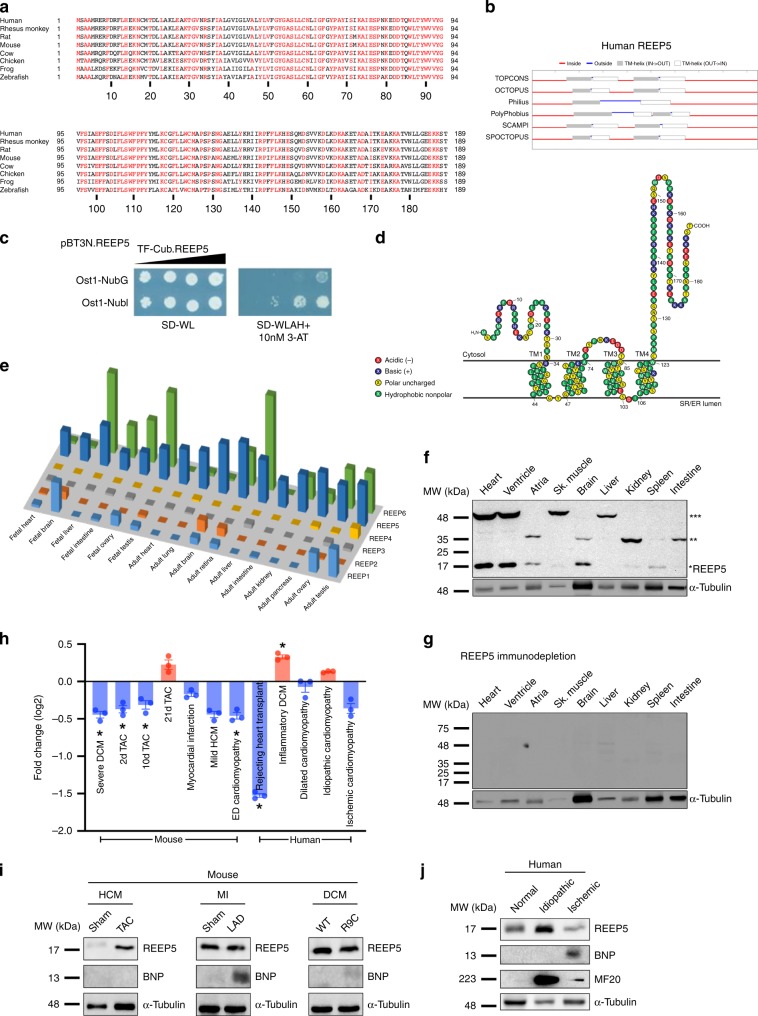
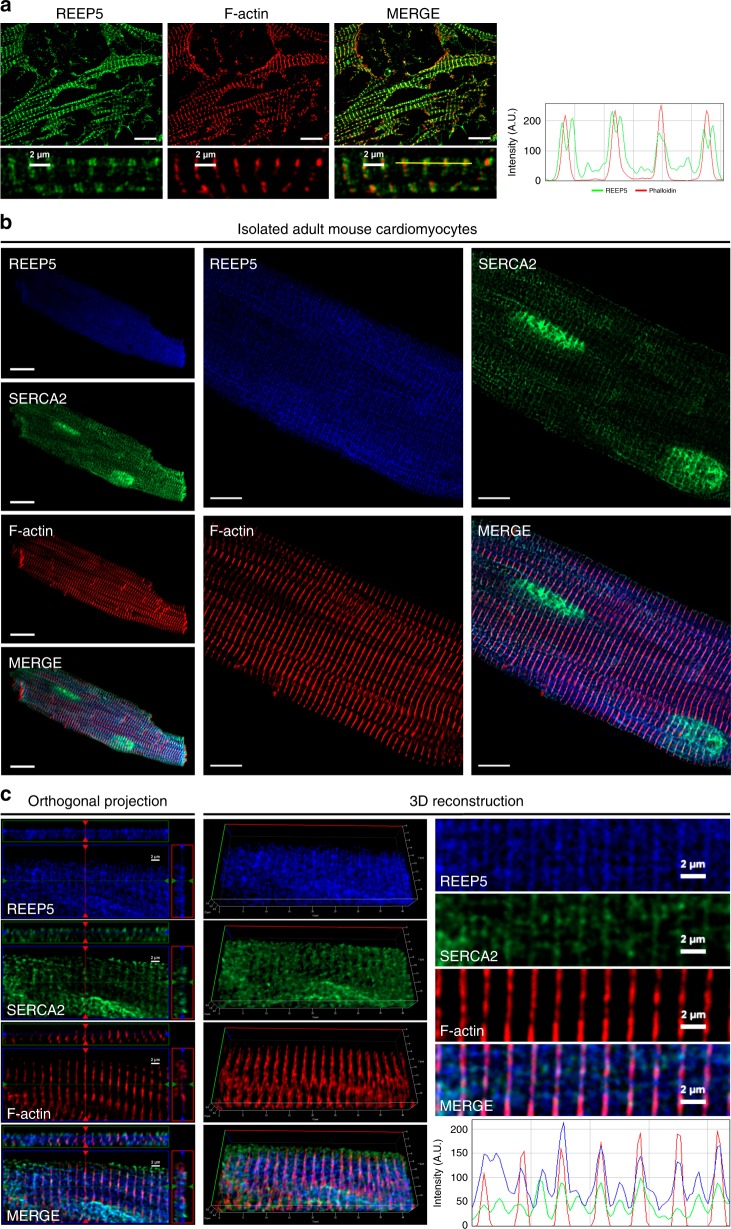
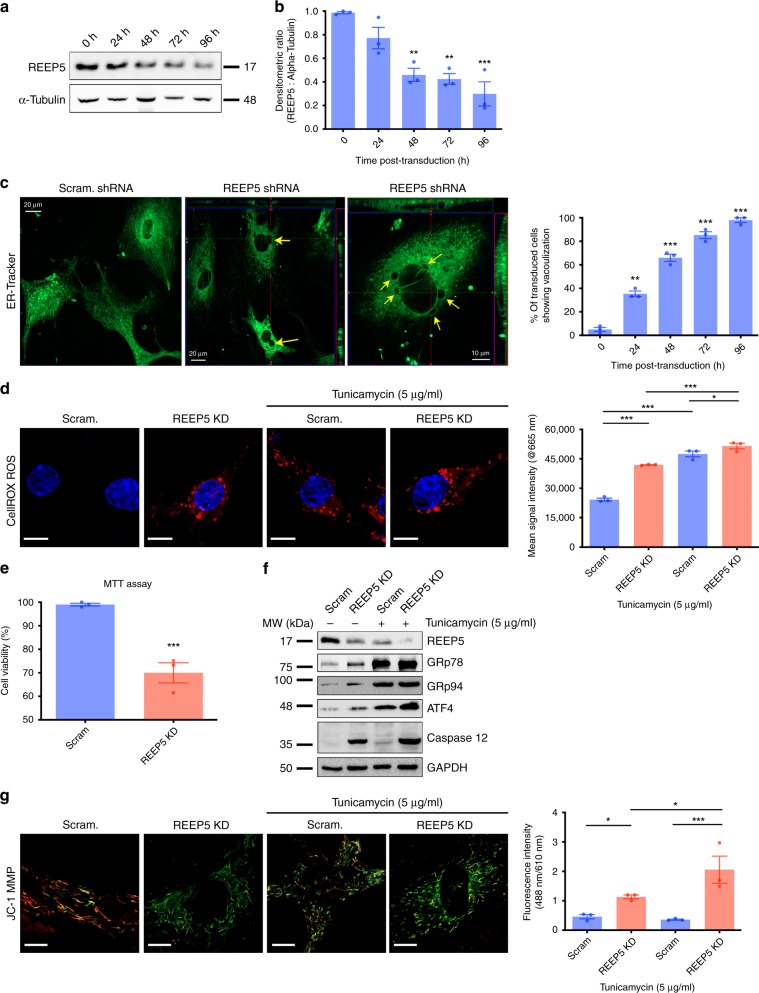
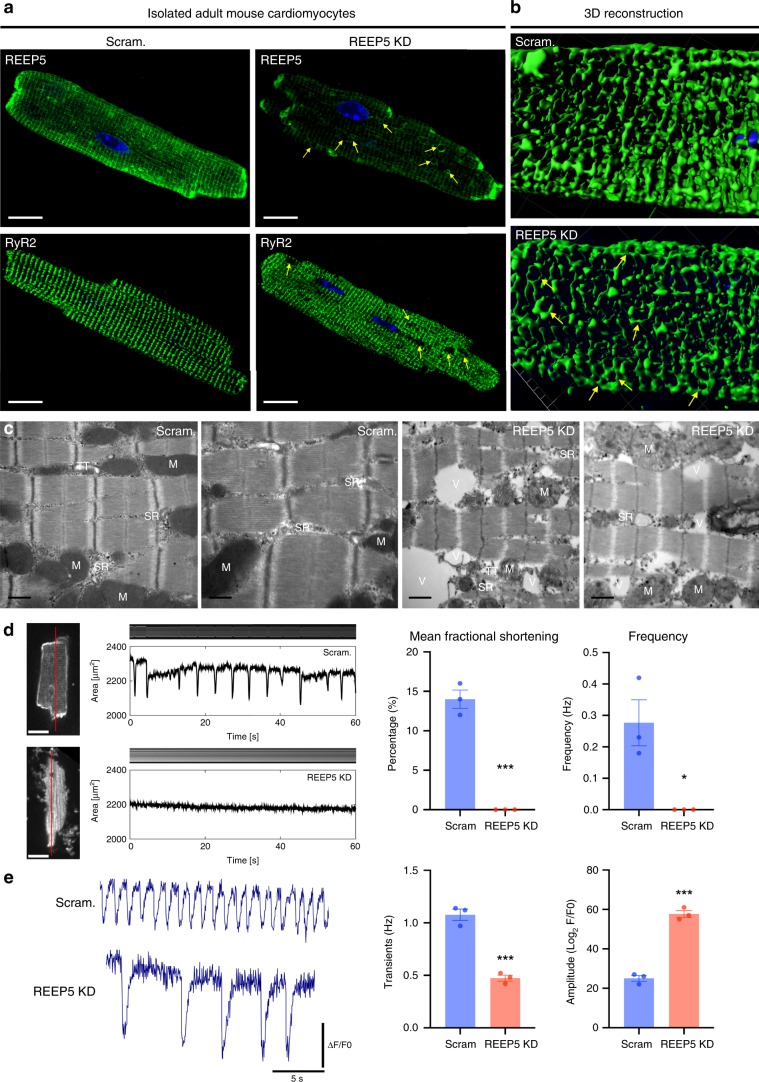
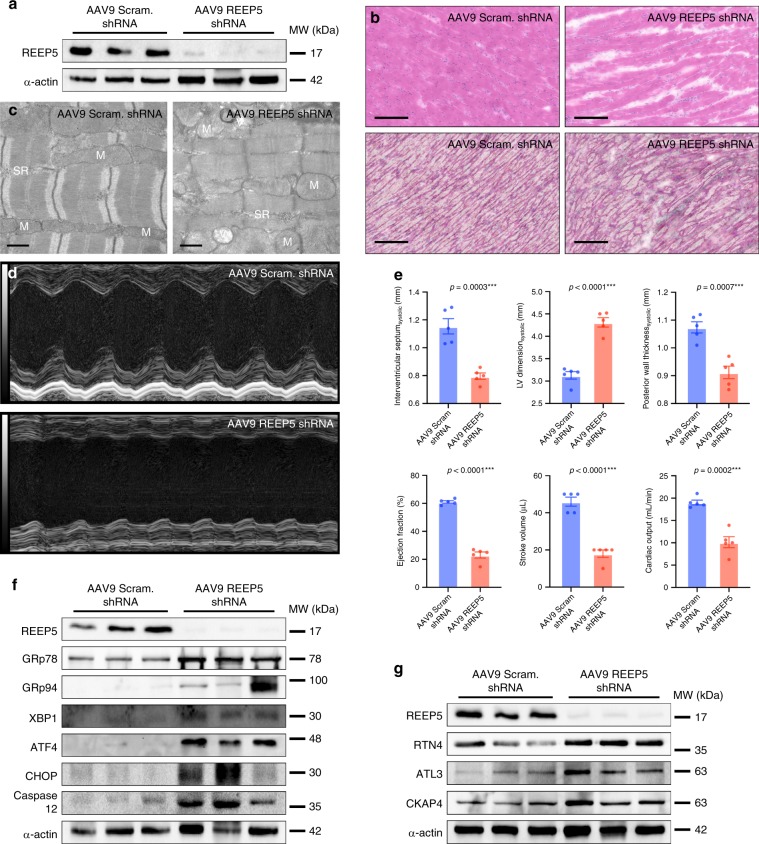
The sarco-endoplasmic reticulum (SR/ER) plays an important role in the development and progression of many heart diseases. However, many aspects of its structural organization remain largely unknown, particularly in cells with a highly differentiated SR/ER network. Here, we report a cardiac enriched, SR/ER membrane protein, REEP5 that is centrally involved in regulating SR/ER organization and cellular stress responses in cardiac myocytes. In vitro REEP5 depletion in mouse cardiac myocytes results in SR/ER membrane destabilization and luminal vacuolization along with decreased myocyte contractility and disrupted Ca 2+ cycling. Further, in vivo CRISPR/Cas9-mediated REEP5 loss-of-function zebrafish mutants show sensitized cardiac dysfunction upon short-term verapamil treatment. Additionally, in vivo adeno-associated viral (AAV9)-induced REEP5 depletion in the mouse demonstrates cardiac dysfunction. These results demonstrate the critical role of REEP5 in SR/ER organization and function as well as normal heart function and development.
Overview
The claims and statistics of this paper haven’t been checked yet.
Free: it reads the open-access text and checks the first 5 claims that cite a source we can check. Create a free account to check every claim.
Integrity signals
Registry
Cites
Statistics
Figures
Verification
Claims the paper makes
The claims and statistics of this paper haven’t been checked yet.
Free: it reads the open-access text and checks the first 5 claims that cite a source we can check. Create a free account to check every claim.
Claims other papers make about this one
Each is checked against this paper’s own text: does it say what the citing paper says it does?
In the citing paper
“Azo was used to broadly solubilized proteins from cardiac tissues including important membrane proteins such as phospholamban [32], receptor expression enhancing protein 5 [33], and every subunit of the ATP synthase complex [34,35].”
From Top-down proteomics: challenges, innovations, and applications in basic and clinical research (2020) · cites this paper as [33]
Self-check
Percentages, sums and reported differences re-computed from the paper’s own numbers.
The self-check needs the paper’s full text.
Citations
Cites
1 retracted
Rockman, H. A., Ross, R. S., Harris, A. N., Knowlton, K. U., Steinhelper, M. E., Field, L. J., Ross, J., & Chien, K. R. (1991) · Proceedings of the National Academy of Sciences · doi:10.1073/pnas.88.18.8277 · Cited by 797
RetractedTissue-based map of the human proteome
Uhlén, M., Fagerberg, L., Hallström, B. M., Lindskog, C., Oksvold, P., Mardinoglu, A., Sivertsson, Å., Kampf, C., Sjöstedt, E., Asplund, A., et al. (2015) · Science · doi:10.1126/science.1260419 · Cited by 15,286
Cox, J., & Mann, M. (2008) · Nature Biotechnology · doi:10.1038/nbt.1511 · Cited by 14,855
Control of inositol 1,4,5-trisphosphate-induced Ca2+ release by cytosolic Ca2+
Bootman, M. D., Missiaen, L., Parys, J. B., De Smedt, H., & Casteels, R. (1995) · Biochemical Journal · doi:10.1042/bj3060445 · Cited by 5,120
Mutation of the mouse klotho gene leads to a syndrome resembling ageing
Kuro-o, M., Matsumura, Y., Aizawa, H., Kawaguchi, H., Suga, T., Utsugi, T., Ohyama, Y., Kurabayashi, M., Kaname, T., Kume, E., et al. (1997) · Nature · doi:10.1038/36285 · Cited by 3,837
Caspase-12 mediates endoplasmic-reticulum-specific apoptosis and cytotoxicity by amyloid-β
Nakagawa, T., Zhu, H., Morishima, N., Li, E., Xu, J., Yankner, B. A., & Yuan, J. (2000) · Nature · doi:10.1038/47513 · Cited by 3,256
A draft map of the human proteome
Kim, M.-S., Pinto, S. M., Getnet, D., Nirujogi, R. S., Manda, S. S., Chaerkady, R., Madugundu, A. K., Kelkar, D. S., Isserlin, R., Jain, S., et al. (2014) · Nature · doi:10.1038/nature13302 · Cited by 2,198
Genetic compensation induced by deleterious mutations but not gene knockdowns
Rossi, A., Kontarakis, Z., Gerri, C., Nolte, H., Hölper, S., Krüger, M., & Stainier, D. Y. R. (2015) · Nature · doi:10.1038/nature14580 · Cited by 1,248
A Class of Membrane Proteins Shaping the Tubular Endoplasmic Reticulum
Voeltz, G. K., Prinz, W. A., Shibata, Y., Rist, J. M., & Rapoport, T. A. (2006) · Cell · doi:10.1016/j.cell.2005.11.047 · Cited by 1,152
Phospholamban: a crucial regulator of cardiac contractility
MacLennan, D. H., & Kranias, E. G. (2003) · Nature Reviews Molecular Cell Biology · doi:10.1038/nrm1151 · Cited by 1,088
Cited by
Zebrafish as an animal model for biomedical research
Choi, T.-Y., Choi, T.-I., Lee, Y.-R., Choe, S.-K., & Kim, C.-H. (2021) · Experimental & Molecular Medicine · doi:10.1038/s12276-021-00571-5 · Cited by 563
Silicon‐Based Lithium Ion Battery Systems: State‐of‐the‐Art from Half and Full Cell Viewpoint
Guo, J., Dong, D., Wang, J., Liu, D., Yu, X., Zheng, Y., Wen, Z., Lei, W., Deng, Y., Wang, J., et al. (2021) · Advanced Functional Materials · doi:10.1002/adfm.202102546 · Cited by 180
Zhang, B., Su, Y., Zhou, J., Zheng, Y., & Zhu, D. (2021) · Advanced Science · doi:10.1002/advs.202100446 · Cited by 174
Top-down proteomics: challenges, innovations, and applications in basic and clinical research
Brown, K. A., Melby, J. A., Roberts, D. S., & Ge, Y. (2020) · Expert Review of Proteomics · doi:10.1080/14789450.2020.1855982 · Cited by 152
“Azo was used to broadly solubilized proteins from cardiac tissues including important membrane proteins such as phospholamban [32], receptor expression enhancing protein 5 [33], and every subunit of the ATP synthase complex [34,35].”
MethodMicrotubules and cardiovascular diseases: insights into pathology and therapeutic strategies
Wu, Q., Wang, Y., Liu, J., Guan, X., Chang, X., Liu, Z., & Liu, R. (2024) · The International Journal of Biochemistry & Cell Biology · doi:10.1016/j.biocel.2024.106650 · Cited by 114
Ercan, E., Lin, Y., Yang, W., & Chen, W. (2021) · Advanced Functional Materials · doi:10.1002/adfm.202107925 · Cited by 83
Wang, S., Li, Y., Dai, S., & Jiang, D. (2020) · Angewandte Chemie International Edition · doi:10.1002/anie.202005931 · Cited by 65
An, J., Zhang, X., Li, H., Wang, D., You, C., & Han, Y. (2023) · New Phytologist · doi:10.1111/nph.18997 · Cited by 52
NLR we there yet? Nucleocytoplasmic coordination of NLR ‐mediated immunity
Lüdke, D., Yan, Q., Rohmann, P. F. W., & Wiermer, M. (2022) · New Phytologist · doi:10.1111/nph.18359 · Cited by 42
The REEP family of proteins: Molecular targets and role in pathophysiology
Fan, S., Liu, H., & Li, L. (2022) · Pharmacological Research · doi:10.1016/j.phrs.2022.106477 · Cited by 43
Dubois, M., Boulghobra, D., Rochebloine, G., Pallot, F., Yehya, M., Bornard, I., Gayrard, S., Coste, F., Walther, G., Meyer, G., et al. (2024) · Redox Biology · doi:10.1016/j.redox.2024.103044 · Cited by 39
“…figure legend, the reader is referred to the Web version of this article.) proteins that were more abundant in the mitochondrial subfraction of HG hearts, some proteins were SR-specific and involved in the regulation of Ca 2 + homeostasis (RyR2, PLN) or in SR tubulation (Reep5Dp1) [35,36] (Fig.”
Hasan, M. N., Asri, M. I. A., Saleh, T., Muthalif, A. G. A., & Ali, M. S. M. (2022) · International Journal of Energy Research · doi:10.1002/er.8283 · Cited by 30
Role of angiotensin II in the development of subcellular remodeling in heart failure
Bhullar, S. K., Shah, A. K., & Dhalla, N. S. (2021) · Exploration of Medicine · doi:10.37349/emed.2021.00054 · Cited by 32
“Accordingly, it has been suggested that the progression of cardiac dysfunction during the development of heart failure is associated with subcellular remodeling in terms of molecular, biochemical and structural alterations in cardiomyocytes as a consequence of various pathological stimuli [14-24].”
BackgroundEnergy Harvesting Untethered Soft Electronic Devices
Kim, K. K., Choi, J., & Ko, S. H. (2021) · Advanced Healthcare Materials · doi:10.1002/adhm.202002286 · Cited by 30
Tubular ER structures shaped by ER-phagy receptors engage in stress-induced Golgi bypass
Song, M. S., Sim, H. J., Eun, S. H., Jung, M. K., Hwang, S. J., Ham, M. H., Kwak, K., Lee, H. J., Kim, J. Y., Jang, D. G., et al. (2025) · Developmental Cell · doi:10.1016/j.devcel.2025.01.011 · Cited by 27
Callaghan, N. I., Lee, S., Hadipour‐Lakmehsari, S., Lee, X., Siraj, M. A., Driouchi, A., Yip, C. M., Husain, M., Simmons, C. A., & Gramolini, A. O. (2020) · Communications Biology · doi:10.1038/s42003-020-0946-9 · Cited by 25
Self-citationChen, R., Zhang, S., Liu, F., Xia, L., Wang, C., Shotorbani, S. S., Xu, H., Chakrabarti, S., Peng, T., & Su, Z. (2022) · Acta Pharmaceutica Sinica B · doi:10.1016/j.apsb.2022.08.016 · Cited by 30
Lee, S., Hadipour‐Lakmehsari, S., Kim, D. H., Paola, M. D., Kuzmanov, U., Shah, S., Lee, J., Kislinger, T., Sharma, P., Oudit, G. Y., et al. (2020) · Scientific Data · doi:10.1038/s41597-020-00762-1 · Cited by 22
Self-citationDynamic interaction of REEP5–MFN1/2 enables mitochondrial hitchhiking on tubular ER
Chen, S., Sun, Y., Qin, Y., Yang, L., Hao, Z., Xu, Z., Björklund, M., Liu, W., & Hong, Z. (2024) · The Journal of Cell Biology · doi:10.1083/jcb.202304031 · Cited by 20
“Ablation of REEP6 was reported to increase the number of mitochondria (Agrawal et al., 2017), while the loss of REEP5 was associated with the accumulation of reactive oxygen species (ROS) and impairment of mitochondrial respiration (Lee et al., 2020).”
The REEP5/TRAM1 complex binds SARS-CoV-2 NSP3 and promotes virus replication
Li, J., Gui, Q., Liang, F., Sall, J., Zhang, Q., Duan, Y., Dhabaria, A., Askenazi, M., Ueberheide, B. M., Stapleford, K. A., et al. (2023) · Journal of Virology · doi:10.1128/jvi.00507-23 · Cited by 16
“Consistent with a previous study (24), we observed the reduction of ER profiles length in REEP5 KO cells, suggesting instability in ER’s structure and function, which could induce unfolded protein response, ER stress, ER-associated degradation (28), and autophagy (29).”
BackgroundResultTriazolyl Dibenzo[a,c]phenazines Stabilize Telomeric G‐quadruplex and Inhibit Telomerase
Pal, S., Fatma, K., Ravichandiran, V., & Dash, J. (2021) · Asian Journal of Organic Chemistry · doi:10.1002/ajoc.202100468 · Cited by 11
A Plasmodium homolog of ER tubule‐forming proteins is required for parasite virulence
Shi, X., Hai, L., Govindasamy, K., Gao, J., Coppens, I., Hu, J., Wang, Q., & Bhanot, P. (2020) · Molecular Microbiology · doi:10.1111/mmi.14526 · Cited by 11
Visualizing ER-phagy and ER architecture in vivo
Sang, Y., Li, B., Su, T., Zhan, H., Xiong, Y., Huang, Z., Chang-jing, W., Cong, X., Du, M., Wu, Y., et al. (2024) · The Journal of Cell Biology · doi:10.1083/jcb.202408061 · Cited by 13
“…of the ER (Chang et al., 2013; Chen et al., 2021; Fan et al., 2022; Fan et al., 2021; Hori et al., 2006; Jung et al., 2020; Lee et al., 2003; Lee et al., 2020b; Lin et al., 2012; Park et al., 2010; Pool, 2009; Schr¨oder et al., 1999; Shibata et al., 2008; Voeltz et al., 2006; Wang et al.,…”
Fatkin, D., Huttner, I. G., Jacoby, A. S., Jacoby, A., Cheng, D., Trivedi, G., Cvetkovska, J., Cvetkovska, J., Chand, R., Currie, P. D., et al. (2023) · Journal of Cardiovascular Development and Disease · doi:10.3390/jcdd10100408 · Cited by 10
“Our findings are in line with studies in zebrafish and mouse models that have described cardiac developmental and functional defects due to ER stress caused by the loss of specific ER resident proteins [51,52].”
ResultYan, X.-M., Wang, J., HongBo, L., Gao, L., Geng, J., Ma, Z., Liu, J., Zhang, J.-S., Xie, P.-G., & Chen, L. (2021) · Animal Bioscience · doi:10.5713/ab.20.0751 · Cited by 9
“Loss of REEP5 leads to defects in cardiac function and vacuolation of the endoplasmic reticulum [39].”
BackgroundBhullar, S. K., Shah, A. K., & Dhalla, N. S. (2022) · Scripta Medica · doi:10.5937/scriptamed53-36256 · Cited by 10
Yang, Q.-H., Fu, Y., Feng, W., Mao, J.-F., Xu, N., Liu, Q., Yan, Q.-J., Yang, H., & Zhang, X. (2025) · European journal of medical research · doi:10.1186/s40001-025-02420-x · Cited by 13
“REEP5, which is mainly distributed in the myocardium, endocrine tissues, kidneys, and proximal digestive tract, is composed of an N-terminal cytoplasmic domain, a C-terminal cytoplasmic domain, and four TMSs [41, 42].”
Wang, X., & Sun, L. (2024) · BMC Cardiovascular Disorders · doi:10.1186/s12872-024-04018-3 · Cited by 9
Klass, A. L., Aliyeva, A. K., Rudenok, M. M., Lysenko, A. V., Игоревич, С. Г., Shadrina, M. I., Slominsky, P. A., & Filatova, E. V. (2024) · Nanobiotechnology Reports · doi:10.1134/s263516762460113x · Cited by 2
Ni, Q., Pan, C., & Han, G. (2024) · ACS Omega · doi:10.1021/acsomega.4c09353 · Cited by 2
Tubulation of membrane sheets by curvature-inducing proteins
Ghazizadeh, E., Zeidi, M., & Stroberg, W. (2025) · Biochimica et Biophysica Acta (BBA) - Biomembranes · doi:10.1016/j.bbamem.2025.184484 · Cited by 2
Mai, J., Zhou, R., Xie, H., Li, Y., Lan, M., Yang, L., & Liu, X. (2025) · Journal of Proteome Research · doi:10.1021/acs.jproteome.5c00724 · Cited by 1
Paola, M. D., Reitz, C. J., Kuzmanov, U., Jia, K., & Gramolini, A. O. (2026) · Molecular & Cellular Proteomics · doi:10.1016/j.mcpro.2026.101527 · Cited by 2
Self-citationYang, Q., Fu, Y., Feng, W., Yu, X., Xu, N., Yang, H., & Zhang, X. (2024) · Research Square · doi:10.21203/rs.3.rs-4200023/v1 · Cited by 1
Verhagen, M. G. (2021) · Utrecht University Repository (Utrecht University) · doi:10.33540/671
Al-Shura, A. N. (2020) · Elsevier eBooks · doi:10.1016/b978-0-12-817578-1.00001-x
He, X., Feng, G., Gao, X., & Liu, J. (2024) · Scientific Reports · doi:10.1038/s41598-024-77631-z
Bentley, R., Roberts, J. A., Saville, E., Alabdullatif, S., Perkins, D., Fogg, P., Keay, L. M., Gent, D. G., Jenkins, R. E., Rainbow, R. D., et al. (2026) · Pharmacological Research - Reports · doi:10.1016/j.prerep.2026.100086
Self-citationIgnatyeva, N., Cheruiyot, C., Saleem, H. N., Wali, R., Plota, D., Zhang, W., Schön, S., Brandenburg, S., Yang, Z., Steyer, A. M., et al. (2026) · Signal Transduction and Targeted Therapy · doi:10.1038/s41392-026-02731-3 · Cited by 1
“42,43 Using high-content protein analyses, we con fi rmed that the ER curvature proteins likely do not make a major contribution to the DCM molecular patho-phenotype.”
Liu, H., Chen, W., Mao, H. Z., Lu, R., 周效思, Ouyang, X., Fan, S., Huang, X., Hu, X., Deng, Y., et al. (2026) · Life Sciences · doi:10.1016/j.lfs.2026.124643
Metadata
- Authors
- Lee, S.-H., Hadipour-Lakmehsari, S., Murthy, H. R., Gibb, N., Miyake, T., Teng, A. C. T., Cosme, J., Yu, J. C., Moon, M., Lim, S., Wong, V., Liu, P., Billia, F., Fernandez-Gonzalez, R., Stagljar, I., Sharma, P., Kislinger, T., Scott, I. C., & Gramolini, A. O.
- Affiliations
- University of Toronto (CA)
- Ottawa Heart Institute (CA)
- University Health Network (CA)
- University of Liverpool (GB)
- Corresponding author
- Gramolini, Anthony O.
- ORCID
- Venue
- Nature Communications
- Published
- 2020-02-19
- Volume
- 11
- Issue
- 1
- Pages
- 965-965
- ISSN
- 2041-1723 (ISSN-L)
- PMC
- PMC7031342
- OpenAlex
- W3008860275
- Semantic Scholar
- 6fcd4d9118ebcc1f696b3b6f195f3dfb75182e90
- Cited by
- 42
- References
- 76
- Citations by year
- 2026: 4 · 2025: 4 · 2024: 11 · 2023: 3 · 2022: 5 · 2021: 9 · 2020: 6
- FWCI
- 3.56
- Type
- journal article
- Language
- en
- Open access
- gold
- doi.org
- Licence
- cc-by
- creativecommons.org/licenses/by/4.0 (tdm)
- creativecommons.org/licenses/by/4.0 (vor)
- Locations
- Nature Communications (publishedVersion, cc-by)
- Europe PMC (PubMed Central) (publishedVersion, cc-by)
- PubMed Central (publishedVersion, cc-by)
- PubMed (publishedVersion)
- RePEc: Research Papers in Economics (submittedVersion)
- DOAJ (DOAJ: Directory of Open Access Journals) (submittedVersion, cc-by-sa)
- Funders
- Gouvernement du Canada | Instituts de Recherche en Santé du Canada | CIHR Skin Research Training Centre (PJT-155921)
- Canadian Network for Research and Innovation in Machining Technology, Natural Sciences and Engineering Research Council of Canada (RGPIN-#05618)
- Topics
- Health Sciences › Medicine › Cardiology and Cardiovascular Medicine › Cardiac electrophysiology and arrhythmias
- Life Sciences › Biochemistry, Genetics and Molecular Biology › Cell Biology › Endoplasmic Reticulum Stress and Disease
- Life Sciences › Biochemistry, Genetics and Molecular Biology › Molecular Biology › Mitochondrial Function and Pathology
- Keywords
- cardiomyocytes, calcium handling, myocyte contractility, cardiac dysfunction, cellular stress response, zebrafish mutants, AAV9 gene delivery
- MeSH terms
- Animals, Calcium, Cells, Cultured, Heart, Heart Diseases, Humans, Intracellular Membranes, Membrane Proteins, Myocardial Contraction, Sarcoplasmic Reticulum, Zebrafish, Gene Silencing, Myocytes, Cardiac, Mice, Gene Knockout Techniques, Endoplasmic Reticulum Stress
About these checks
Registry, retraction, Cites and statistics results are computed, not judged, with one exception: a printed reference that no index lists is read once by a model before it counts as a citation error. Claims are extracted by a model and kept only when their quote appears verbatim in the text; each cited source is then checked, with a model’s help, for whether it says what the claim relies on. Those verdicts can be wrong — read the claim’s quote and the cited source before relying on one.
Statistics and arithmetic are recomputed, not judged.
Confidence bands are shown only for fields calibrated on our annotated test set. None is calibrated yet, so no band is shown.
What counts as a claim ›How we measure confidence ›How we check this ›
Are you an author, or do you see a problem with this page? Request a review
Data sources
Bibliographic data: Semantic Scholar, OpenAlex, Crossref.
Contains information from the Semantic Scholar Academic Graph Datasets, made available under the ODC Attribution License (ODC-BY 1.0).
Semantic Scholar’s data is described in: Kinney, R., et al. (2023). The Semantic Scholar Open Data Platform. arXiv:2301.10140.
