

The place-cell representation of volumetric space in rats
Open accessPublished version of a preprint
The DOI matches its Crossref record; 32 of the 32 references it cites were found in a registry or an index.
Abstract
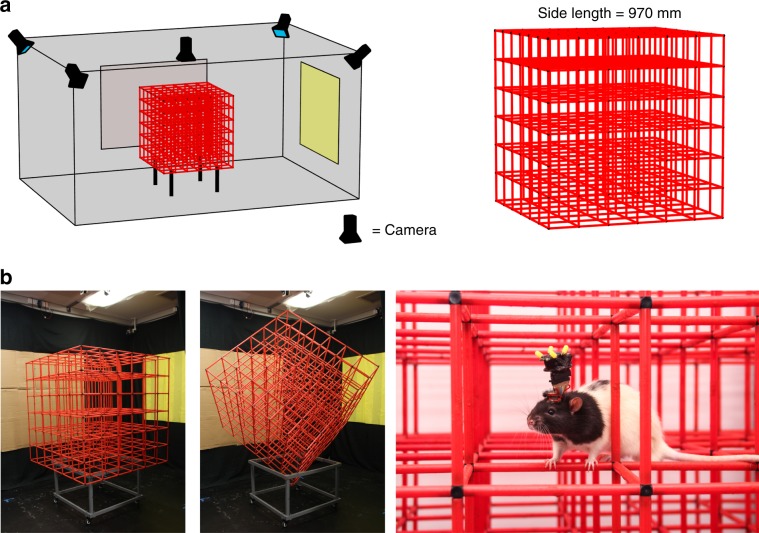
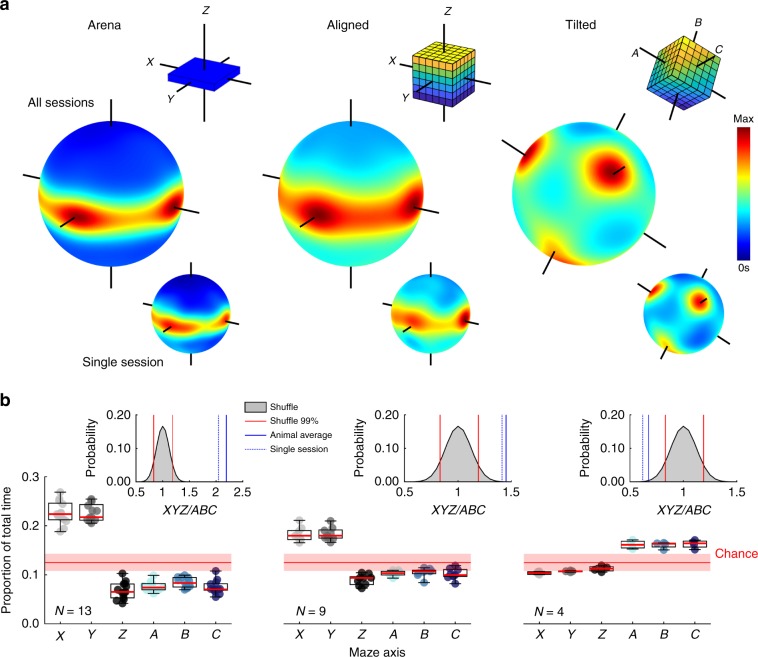
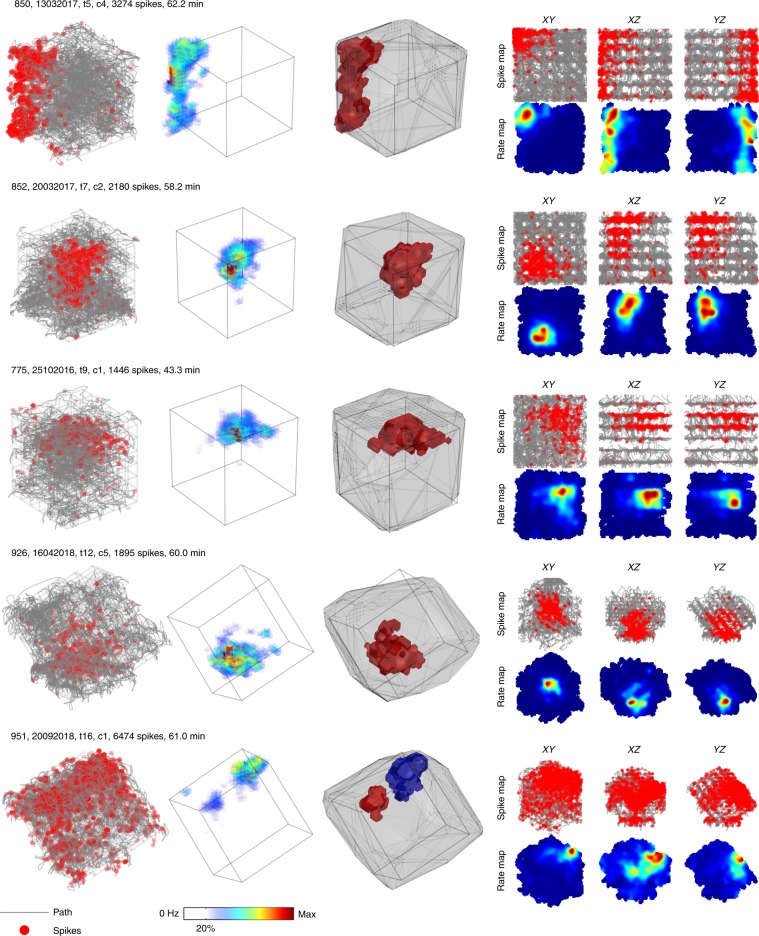
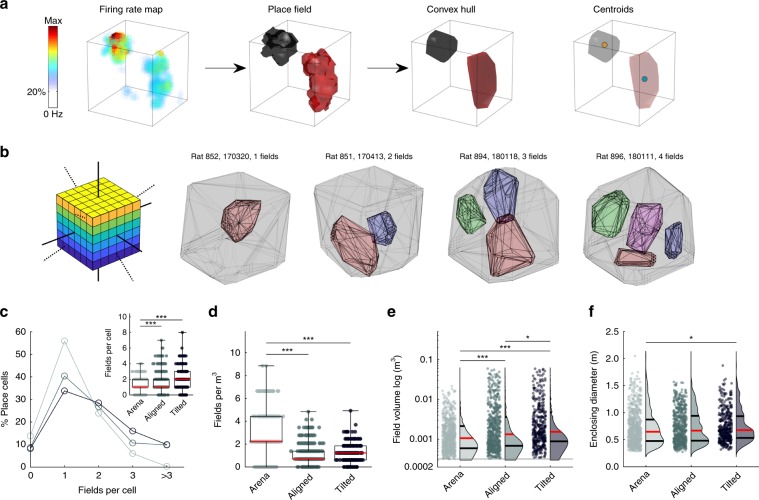
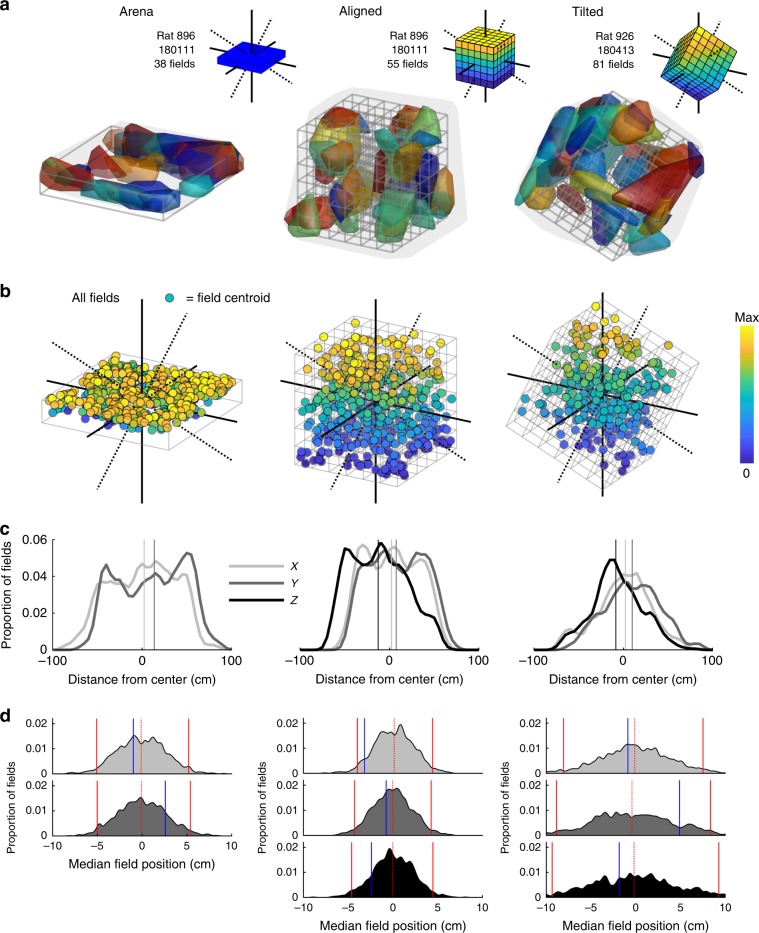
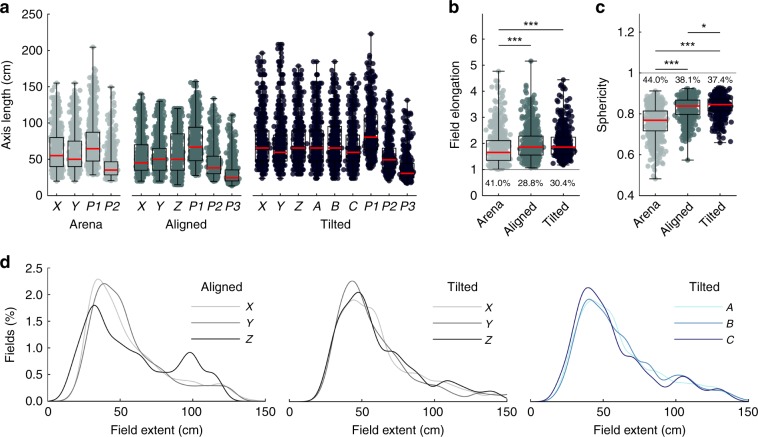
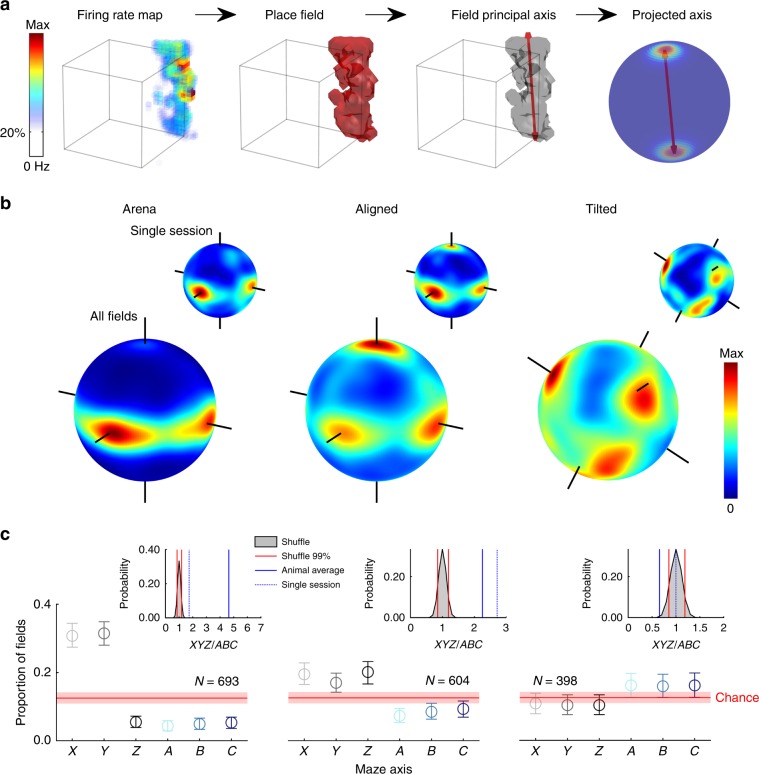
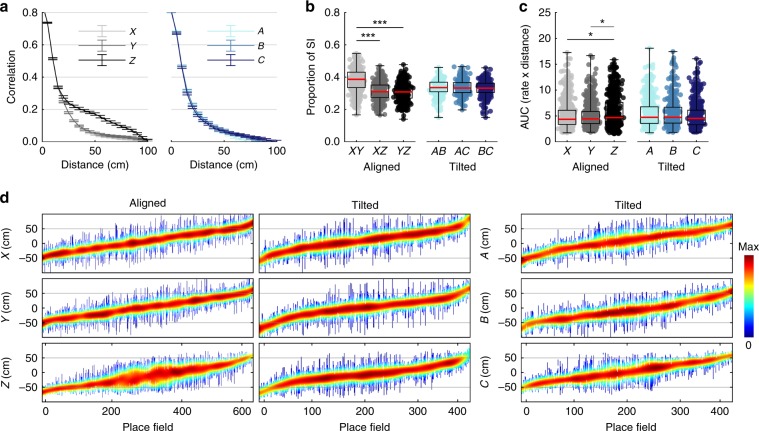
Place cells are spatially modulated neurons found in the hippocampus that underlie spatial memory and navigation: how these neurons represent 3D space is crucial for a full understanding of spatial cognition. We wirelessly recorded place cells in rats as they explored a cubic lattice climbing frame which could be aligned or tilted with respect to gravity. Place cells represented the entire volume of the mazes: their activity tended to be aligned with the maze axes, and when it was more difficult for the animals to move vertically the cells represented space less accurately and less stably. These results demonstrate that even surface-dwelling animals represent 3D space and suggests there is a fundamental relationship between environment structure, gravity, movement and spatial memory.
Overview
The claims and statistics of this paper haven’t been checked yet.
Free: it reads the open-access text and checks the first 5 claims that cite a source we can check. Create a free account to check every claim.
Integrity signals
Registry
Cites
Statistics
Figures
Verification
Claims the paper makes
The claims and statistics of this paper haven’t been checked yet.
Free: it reads the open-access text and checks the first 5 claims that cite a source we can check. Create a free account to check every claim.
Claims other papers make about this one
Each is checked against this paper’s own text: does it say what the citing paper says it does?
The cited source says what the claim attributes to it.
In the citing paper
“Importantly, the neural circuitry for path integration (e.g., head-direction cells, grid cells) has mainly been studied when animals navigate on flat 2D surfaces, except for a few recent studies (Ginosar et al., 2021; Grieves et al., 2020; Ulsaker-Janke et al., 2023).”
From Cognitive Maps for a Non-Euclidean Environment: Path Integration and Spatial Memory on a Sphere (2024) · cites this paper as Grieves et al., 2020
Self-check
Percentages, sums and reported differences re-computed from the paper’s own numbers.
The self-check needs the paper’s full text.
Citations
Cites
(1978) · UA Campus Repository (The University of Arizona) · Cited by 8,010
Cognitive maps in rats and men
Tolman, E. C. (1948) · Psychological Review · doi:10.1037/h0061626 · Cited by 6,641
Representation of Geometric Borders in the Entorhinal Cortex
Solstad, T., Boccara, C. N., Kropff, E., Moser, M.-B., & Moser, E. I. (2008) · Science · doi:10.1126/science.1166466 · Cited by 1,213 · cited 1×
“These have been shown to respond to 321 both walls and edges (15, 16) and are able to “reset” the spatial firing of entorhinal grid cells 322 (17).”
Geometric determinants of the place fields of hippocampal neurons
O'Keefe, J., & Burgess, N. (1996) · Nature · doi:10.1038/381425a0 · Cited by 1,166
Independent Codes for Spatial and Episodic Memory in Hippocampal Neuronal Ensembles
Leutgeb, S., Leutgeb, J. K., Barnes, C. A., Moser, E. I., McNaughton, B. L., & Moser, M.-B. (2005) · Science · doi:10.1126/science.1114037 · Cited by 910 · cited 1×
“Three-dimensional volumetric firing rate maps were constructed using a similar 520 approach to that reported previously (25).”
MethodBoundary Vector Cells in the Subiculum of the Hippocampal Formation
Lever, C., Burton, S., Jeewajee, A., O'Keefe, J., & Burgess, N. (2009) · The Journal of Neuroscience · doi:10.1523/jneurosci.1319-09.2009 · Cited by 753
Experience-dependent, asymmetric expansion of hippocampal place fields
Mehta, M. R., Barnes, C. A., & McNaughton, B. L. (1997) · Proceedings of the National Academy of Sciences · doi:10.1073/pnas.94.16.8918 · Cited by 527
A theory of hippocampal function in memory
Rolls, E. T. (1996) · Hippocampus · doi:10.1002/(sici)1098-1063(1996)6:6<601::aid-hipo5>3.0.co;2-j · Cited by 485
Experience-Dependent Asymmetric Shape of Hippocampal Receptive Fields
Mehta, M. R., Quirk, M. C., & Wilson, M. A. (2000) · Neuron · doi:10.1016/s0896-6273(00)81072-7 · Cited by 481
Representation of Three-Dimensional Space in the Hippocampus of Flying Bats
Yartsev, M. M., & Ulanovsky, N. (2013) · Science · doi:10.1126/science.1235338 · Cited by 417 · cited 1×
“Meanwhile, a study of flying bats found that place fields did not 46 deviate statistically from spherical (9), suggesting a spatial map of equal resolution in all 47 dimensions (isotropic).”
Background
Cited by
Knowledge Across Reference Frames: Cognitive Maps and Image Spaces
Bottini, R., & Doeller, C. F. (2020) · Trends in Cognitive Sciences · doi:10.1016/j.tics.2020.05.008 · Cited by 152
“This may be one of the reasons why image spaces associated with the parietal cortex are often unidimensional ([75] and Box 3), whereas hippocampal cognitive maps seem to combine more than one dimension ([2]; also [89] for evidence of 3D representation in the medial temporal lobe).”
BackgroundSpatial modulation of hippocampal activity in freely moving macaques
Mao, D., Avila, E., Caziot, B., Laurens, J., Dickman, J. D., & Angelaki, D. E. (2021) · Neuron · doi:10.1016/j.neuron.2021.09.032 · Cited by 134
Hippocampal Neurons Construct a Map of an Abstract Value Space
Knudsen, E. B., & Wallis, J. D. (2021) · Cell · doi:10.1016/j.cell.2021.07.010 · Cited by 140
Tracking neural activity from the same cells during the entire adult life of mice
Zhao, S., Tang, X., Tian, W., Partarrieu, S., Liu, R., Shen, H., Lee, J. Y., Guo, S., Lin, Z., & Liu, J. (2023) · Nature Neuroscience · doi:10.1038/s41593-023-01267-x · Cited by 141
Distinct mechanisms shape soil bacterial and fungal co-occurrence networks in a mountain ecosystem
Li, J., Li, C., Kou, Y., Yao, M., He, Z., & Li, X. (2020) · FEMS Microbiology Ecology · doi:10.1093/femsec/fiaa030 · Cited by 127
Dorsal CA1 hippocampal place cells form a multi-scale representation of megaspace
Harland, B. C., Contreras, M., Souder, M., & Fellous, J. (2021) · Current Biology · doi:10.1016/j.cub.2021.03.003 · Cited by 115
Cross-species neuroscience: closing the explanatory gap
Barron, H. C., Mars, R. B., Dupret, D., Lerch, J. P., & Sampaio-Baptista, C. (2021) · Philosophical Transactions of the Royal Society B: Biological Sciences · doi:10.1098/rstb.2019.0633 · Cited by 88
Irregular distribution of grid cell firing fields in rats exploring a 3D volumetric space
Grieves, R. M., Jedidi-Ayoub, S., Mishchanchuk, K., Liu, A., Renaudineau, S., Duvelle, É., & Jeffery, K. J. (2021) · Nature Neuroscience · doi:10.1038/s41593-021-00907-4 · Cited by 88
Self-citationA gravity-based three-dimensional compass in the mouse brain
Angelaki, D. E., Ng, J., Abrego, A. M., Cham, H. X., Asprodini, E. K., Dickman, J. D., & Laurens, J. (2020) · Nature Communications · doi:10.1038/s41467-020-15566-5 · Cited by 76
Are grid cells used for navigation? On local metrics, subjective spaces, and black holes
Ginosar, G., Aljadeff, J., Las, L., Derdikman, D., & Ulanovsky, N. (2023) · Neuron · doi:10.1016/j.neuron.2023.03.027 · Cited by 57
Piza, D. B., Corrigan, B. W., Gulli, R. A., Carmo, S. D., Cuello, A. C., Muller, L., & Martínez-Trujillo, J. (2024) · Nature Communications · doi:10.1038/s41467-024-48374-2 · Cited by 108
“Exploration biases seem to be a challenge when testing animals on volumetric mazes, particularly with regard to spatial sampling along the vertical dimension, as non-fl ying animals tend to use different strategies to travel horizontally than vertically 15,112,113 .”
Angelaki, D. E., & Laurens, J. (2019) · Current Opinion in Neurobiology · doi:10.1016/j.conb.2019.12.002 · Cited by 57
Learning an Efficient Hippocampal Place Map from Entorhinal Inputs Using Non-Negative Sparse Coding
Lian, Y., & Burkitt, A. N. (2021) · eNeuro · doi:10.1523/eneuro.0557-20.2021 · Cited by 43
Efficient and flexible representation of higher-dimensional cognitive variables with grid cells
Klukas, M., Lewis, M., & Fiete, I. (2020) · PLOS Computational Biology · doi:10.1371/journal.pcbi.1007796 · Cited by 39
“A similar situation might hold for the observed localization of fields in 3D, in rats navigating 3D wire mesh cubes [16].”
BackgroundNonlocal spatiotemporal representation in the hippocampus of freely flying bats
Dotson, N. M., & Yartsev, M. M. (2021) · Science · doi:10.1126/science.abg1278 · Cited by 44
Boundary vector cells in the goldfish central telencephalon encode spatial information
Cohen, L., Vinepinsky, E., Donchin, O., & Segev, R. (2023) · PLOS Biology · doi:10.1371/journal.pbio.3001747 · Cited by 37
“This might imply that information about position in space is encoded in the fish brain differently than the locally activated cells shown to exist in 3D environments in bats [20] and rats [21].”
BackgroundCommutative Properties of Head Direction Cells during Locomotion in 3D: Are All Routes Equal?
LaChance, P. A., Dumont, J. R., Ozel, P., Marcroft, J. L., & Taube, J. S. (2020) · Journal of Neuroscience · doi:10.1523/jneurosci.2789-19.2020 · Cited by 37
“…on HD cell responses during locomotion on horizontally and vertically oriented planar surfaces, further experiments will be necessary to elucidate the firing properties of HD cells during movement through volumetric space, as recently investigated in hippocampal place cells (Grieves et al., 2020).”
BackgroundA map of spatial navigation for neuroscience
Parra-Barrero, E., Vijayabaskaran, S., Seabrook, E., Wiskott, L., & Cheng, S. (2023) · Neuroscience & Biobehavioral Reviews · doi:10.1016/j.neubiorev.2023.105200 · Cited by 42
“These regions of space are known as the cells ’ place fields, and they can be defined in two-or three-dimensional space (Yartsev and Ulanovsky, 2013; Grieves et al., 2020).”
BackgroundNeural Correlates of Spatial Navigation in Primate Hippocampus
Mao, D. (2022) · Neuroscience Bulletin · doi:10.1007/s12264-022-00968-w · Cited by 34
“sional properties, that also extend to the bat hippocampus [19, 20].”
BackgroundNeural Oscillations in Aversively Motivated Behavior
Totty, M. S., & Maren, S. (2022) · Frontiers in Behavioral Neuroscience · doi:10.3389/fnbeh.2022.936036 · Cited by 32
Choice of method of place cell classification determines the population of cells identified
Grijseels, D. M., Shaw, K., Barry, C., & Hall, C. N. (2021) · PLoS Computational Biology · doi:10.1371/journal.pcbi.1008835 · Cited by 34
Environment Symmetry Drives a Multidirectional Code in Rat Retrosplenial Cortex
Zhang, N., Grieves, R. M., & Jeffery, K. J. (2022) · Journal of Neuroscience · doi:10.1523/jneurosci.0619-22.2022 · Cited by 24
Self-citationJuxtacellular opto-tagging of hippocampal CA1 neurons in freely moving mice
Ding, L., Balsamo, G., Chen, H., Blanco-Hernández, E., Zouridis, I. S., Naumann, R. K., Preston‐Ferrer, P., & Burgalossi, A. (2022) · eLife · doi:10.7554/elife.71720 · Cited by 22
Convergence of location, direction, and theta in the rat anteroventral thalamic nucleus
Lomi, E., Jeffery, K. J., & Mitchell, A. S. (2023) · iScience · doi:10.1016/j.isci.2023.106993 · Cited by 23
Self-citationVolumetric spatial behaviour in rats reveals the anisotropic organisation of navigation
Jedidi-Ayoub, S., Mishchanchuk, K., Liu, A., Renaudineau, S., Duvelle, É., & Grieves, R. M. (2020) · Animal Cognition · doi:10.1007/s10071-020-01432-w · Cited by 19
Self-citationHow environmental movement constraints shape the neural code for space
Jeffery, K. J. (2021) · Cognitive Processing · doi:10.1007/s10339-021-01045-2 · Cited by 15
“H If rats can move through a volumetric lattice then place fields are also volumetric and tend to be elongated along the “corridors” in the maze (Grieves et al. 2020) whereas grid cells form irregularly distributed blobby firing fields (Grieves et al.”
BackgroundSelf-citationIde, K., & TAKAHASHI, S. Y. (2022) · Micromachines · doi:10.3390/mi13091529 · Cited by 13
“Recently, experiments on conventional mammalian model animals have similarly focused on the hippocampal place cell representations in both 3D [23] and large spaces [24].”
BackgroundAdaptive cognitive maps for curved surfaces in the 3D world
kim, M.-S., & Doeller, C. F. (2022) · Cognition · doi:10.1016/j.cognition.2022.105126 · Cited by 12
Unweaving the Cognitive Map: A Personal History
Jeffery, K. J. (2024) · Hippocampus · doi:10.1002/hipo.23674 · Cited by 11
“Roddy, aided by Sophie Renaudineau and a team of students, began with place cells, and found that they indeed would form globular fields that were distributed evenly throughout the space (Grieves et al. 2020), so the cells could evidently self-localize.”
Self-citationWalking in the cities without ground, how 3d complex network volumetrics improve analysis
Zhang, L., & Chiaradia, A. J. F. (2022) · Environment and Planning B Urban Analytics and City Science · doi:10.1177/23998083211070567 · Cited by 14
“To contribute to this debate meaningfully (Hinterecker, et al., 2018; Grieves, et al., 2020; (Gath-Morad et al., 2021)), the 2D hybrid spatial model (Figure S01: c & d) proposed by Cooper et al. (2019) is implemented in 3D to encode topography, lift, stairway, ramp, or escalator, combining…”
Cognitive Maps for a Non-Euclidean Environment: Path Integration and Spatial Memory on a Sphere
Kim, M., & Doeller, C. F. (2024) · Psychological Science · doi:10.1177/09567976241279291 · Cited by 9
“Importantly, the neural circuitry for path integration (e.g., head-direction cells, grid cells) has mainly been studied when animals navigate on flat 2D surfaces, except for a few recent studies (Ginosar et al., 2021; Grieves et al., 2020; Ulsaker-Janke et al., 2023).”
The time, the path, its length and strenuousness in maze learning
M., K., & Tošković, O. (2021) · Psihologija · doi:10.2298/psi210301005k · Cited by 9
Casto, P., Wiegmann, D. D., Coppola, V. J., Nardi, D., Hebets, E. A., & Bingman, V. P. (2020) · Animal Cognition · doi:10.1007/s10071-020-01420-0 · Cited by 7
Wang, Z., DiTullio, R. W., Rooke, S., & Balasubramanian, V. (2024) · bioRxiv (Cold Spring Harbor Laboratory) · doi:10.1101/2024.08.11.607484 · Cited by 12
“This prediction is indirectly confirmed by Grieves et al. [65], who observed 3D place cells in rodents navigating a lattice maze, a 3D environment that where rodents explore volumetrically.”
Kim, E. J., Park, S., Schuessler, B. P., Boo, H., Cho, J., & Kim, J. J. (2025) · Cell Reports · doi:10.1016/j.celrep.2025.116081 · Cited by 10
“Place cells were evaluated based on criteria established in prior research 18,40,41 .”
BIG: a framework integrating brain-inspired geometry cell for long-range exploration and navigation
Sun, Z., Ma, K., Xia, S., Wu, Q., Xiong, C., Xiang, Y., & Pei, L. (2025) · Satellite Navigation · doi:10.1186/s43020-024-00156-3 · Cited by 10
“Most recently, many neuroscientists have provided more evidences that the 3D place cells exist in freely flying bats (Yartsev and Ulanovsky, 2013; Wohlgemuth et al., 2018), rats (Grieves et al., 2020), and humans (Kim et al., 2017).”
Hand position fields of neurons in the premotor cortex of macaques during natural reaching
Cao, S.-H., Han, X., Zhao, Z.-P., Gu, J., Jiang, T., & Yu, S. (2025) · Nature Communications · doi:10.1038/s41467-025-58786-3 · Cited by 8
“To examinethe fi eld-based tuning of hand position quantitatively, we fi rst identi fi ed the hotspots within the spatial fi ring rate maps (above 50% of the peak fi ring rates) as the position fi elds, similar to the place fi elds in hippocampus cells 35 .”
Stable 3D Head Direction Signals in the Primary Visual CortexPreprint
Guitchounts, G., Lotter, W. E., Dapello, J., & Cox, D. (2020) · bioRxiv (Cold Spring Harbor Laboratory) · doi:10.1101/2020.09.04.283762 · Cited by 5
The inevitability and superfluousness of cell types in spatial cognitionPreprint
Luo, X., Mok, R. M., & Love, B. C. (2024) · bioRxiv (Cold Spring Harbor Laboratory) · doi:10.1101/2024.01.10.575026 · Cited by 8
“…inclination towards identifying cell types based on firing profiles that are subjectively interpreted to be useful for the behavior of interest (Hartley et al., 2014; Moser et al., 2008; Sarel et al., 2017; Tsao et al., 2018; Høydal et al., 2019; Grieves et al., 2020; Ormond and O’Keefe, 2022).”
BackgroundAdapt-A-Maze: An Open Source Adaptable and Automated Rodent Behavior Maze System
Porter, B. S., Olson, J. M., Leppla, C. A., Duvelle, É., Bladon, J. H., van der Meer, M. A. A., & Jadhav, S. P. (2025) · eNeuro · doi:10.1523/eneuro.0138-25.2025 · Cited by 7
“Finally, the current track pieces are incapable of three-dimensional maze designs, so unique mazes (Wilson et al., 2015; Grieves et al., 2020) will still be required to explore three-dimensional navigation.”
On the absence or presence of 3D tuned head direction cells in rats: a review and rebuttal
Taube, J. S., & Shinder, M. E. (2020) · Journal of Neurophysiology · doi:10.1152/jn.00475.2019 · Cited by 8
When humans can fly: Imprecise vertical encoding in human 3D spatial navigation
Du, Y. K., & Mou, W. (2022) · Behavioural Brain Research · doi:10.1016/j.bbr.2022.113835 · Cited by 4
Cammisuli, D. M., Tuena, C., Riva, G., Repetto, C., Axmacher, N., Chandreswaran, V., Isella, V., Pomati, S., Zago, S., Difonzo, T., et al. (2024) · Journal of Personalized Medicine · doi:10.3390/jpm14020192 · Cited by 5
“…in spatial navigation [21], and spatial memories Place cells fire when an animal visits specific regions of the environment, or “place fields” [23]. are thought to be encoded and retrieved in the hippocampus through the activity of place cells [ Specifically, hippocampal CA1 and CA3 place…”
BackgroundZhang, L., & Chiaradia, A. J. F. (2020) · arXiv (Cornell University) · doi:10.48550/arxiv.2012.14419 · Cited by 10
“This is effectively a road center line network linear referencing system used in transport geography (Figure 1a), and a standard data model representing a street network in transport (Garrison & Marble, 1962; Haggett & Chorley, 1969; ISO, 2011; FHWA, 2014; Marshall, 2016).”
MethodFormation of cognitive maps in large-scale environments by sensorimotor integration
Zhao, D., & Si, B. (2025) · Cognitive Neurodynamics · doi:10.1007/s11571-024-10200-2 · Cited by 3
“The results Experimental results have shown that hippocampal place cells represent the volumetric space in which the animals explore (Yartsev and Ulanovsky 2013; Grieves et al. 2020).”
Locomotion-dependent use of geometric and body cues in humans mapping 3D space
Reisner, V., Schäfer, T. A. J., König, L., kim, M.-S., & Doeller, C. F. (2025) · Proceedings of the National Academy of Sciences · doi:10.1073/pnas.2505613122 · Cited by 2
“However, depth perception along the vertical axis can be less accurate due to head tilt ( 24 , 25 ), which may contribute to anisotropic spatial representations observed in both rats ( 26 , 27 ) and humans ( 28 – 30 ) [for diverging findings see ( 31 , 32 )].”
Spatial representability of neuronal activity
Akhtiamov, D., Cohn, A. G., & Dabaghian, Y. A. (2021) · Scientific Reports · doi:10.1038/s41598-021-00281-y · Cited by 6
Gravitational and retinal reference frames shape spatial memory.
Tucciarelli, R., Ferrè, E. R., Amoruso, E., Azañón, E., & Longo, M. R. (2023) · Journal of Experimental Psychology General · doi:10.1037/xge0001441 · Cited by 4
Hippocampal Interneurons Shape Spatial Coding Alterations in Neurological Disorders
Ikebara, J. M., Jorge, R. S., Marinho, L. S. R., Higa, G. S. V., Adhikari, A., Reis, F. M., Borges, F. S., Ulrich, H., Takada, S. H., Pasquale, R. D., et al. (2025) · Molecular Neurobiology · doi:10.1007/s12035-025-05020-2 · Cited by 4
Liu, Y., Zhang, Z., Wang, L., Fu, L., Selezneva, M. S., & Neusypin, K. A. (2026) · Measurement · doi:10.1016/j.measurement.2026.121046 · Cited by 2
Estimating neuronal firing density: A quantitative analysis of firing rate map algorithms
Grieves, R. M. (2023) · PLoS Computational Biology · doi:10.1371/journal.pcbi.1011763 · Cited by 5
Self-citationInayat, S., McAllister, B. B., Whishaw, I. Q., & Mohajerani, M. H. (2022) · bioRxiv (Cold Spring Harbor Laboratory) · doi:10.1101/2022.07.06.498996 · Cited by 2
“rooms of 30 active cells per animal (freely behaving), and (Grieves et al., 2020) used a 3D environment and described 756 place cells from 13 rats (in contrast to 2083 responsive cells from 5 mice in the present experiment).”
MethodWise, T. B., Templer, V. L., & Burwell, R. D. (2024) · bioRxiv (Cold Spring Harbor Laboratory) · doi:10.1101/2024.10.02.616150 · Cited by 2
“Prior research shows that, for rats, direct exploration appears to improve the accuracy and stability of 3D spatial representations (Grieves et al., 2020; Grieves & Jeffery, 2017; Hayman et al., 2011; Jedidi-Ayoub et al., 2021).”
BackgroundEmergence of global receptive fields capturing multipartite quantum correlations
Sotnikov, O., Iakovlev, I. A., Kiktenko, E., Katsnelson, M., Fedorov, A., & Mazurenko, V. (2024) · Physical review B · doi:10.1103/t6sy-r7l5 · Cited by 3
“In this respect the concept of the receptive fields (RF) first introduced in neuroscience [13–15] for describing spatial behavior of animals holds significant importance in developing convolutional neural networks (CNN) [16, 17].”
BackgroundHead direction cells use a head-referenced dual-axis updating rule in 3D space
Williams, M., Street, J. S., Burgess, N., & Jeffery, K. J. (2026) · Communications Biology · doi:10.1038/s42003-026-10086-2 · Cited by 6
“Although place cells pack a volumetric space with globular fi ring fi elds 20,21 , grid cells do not form regular arrays of grid fi elds 22,23 , which suggests that they do not make use of a fully 3D compass.”
Self-citationSpatial maps in the mind: An integrative review of mobility’s role in wayfinding
Chargo, A. N., Fritz, N. E., & Daugherty, A. M. (2025) · Neuropsychologia · doi:10.1016/j.neuropsychologia.2025.109298 · Cited by 2
The Map’s Design: Evolution’s Impact on Navigation and Spatial Cognition
Olynik-McLaughlin, I. S., & Marrone, D. F. (2025) · Animals · doi:10.3390/ani15243628 · Cited by 1
“In experiments by Grieves et al. [110,111], rats navigated a cubic lattice apparatus that could be reoriented to modify the plane of locomotion.”
Distinct neural signatures of hippocampal population dynamics during locomotion-in-place
Inayat, S., McAllister, B. B., Whishaw, I. Q., & Mohajerani, M. H. (2026) · Scientific Reports · doi:10.1038/s41598-026-41049-6 · Cited by 1
“…has shown that hippocampal neurons can fire transiently in relation to specific sensory or behavioral events 19–26 , at fixed times 3,27–32 , fixed distances 27,29,31,33–36 , or in relation to spatial locations in two dimensional 37 , three-dimensional 38 , or even frequency-based environments 39 .”
Distributed neural codes of the 3D position in the marmoset frontal cortex and hippocampus
Wei, C. F., 席建康, Xie, J., Zhu, X., Yan, H., Wang, X. E., Zhao, Z., Liu, C., & Xu, C. (2026) · Nature Communications · doi:10.1038/s41467-026-73263-1 · Cited by 1
“In the 3D space, the encoding features of PCs in rats and bats may be modulated either similarly or differently by the gravity, locomotion patterns and experiences 9,10,12 – 17 .”
Dissociating two aspects of human 3D spatial perception by studying fighter pilots
Ginosar, G., Karpas, E. D., Weitzner, I., & Ulanovsky, N. (2023) · Scientific Reports · doi:10.1038/s41598-023-37759-w · Cited by 1
Meaney, J. S., Panchal, A. K., Wilcox, A. J., diCenzo, G. C., & Karas, B. J. (2024) · Canadian Journal of Microbiology · doi:10.1139/cjm-2023-0232 · Cited by 1
Encoding of 2D Self-Centered Plans and World-Centered Positions in the Rat Frontal Orienting Field
Li, L., Flesch, T., Ma, C., Li, J., Chen, Y., Chen, H. I., & Erlich, J. C. (2024) · Journal of Neuroscience · doi:10.1523/jneurosci.0018-24.2024 · Cited by 1
“In the hippocampus and entorhinal cortex, representations of the trajectories taken by rats are over-represented, even when the trajectories fi ll 3D space (Hayman et al., 2011; Jovalekic et al., 2011; Grieves et al., 2020).”
BackgroundExplaining Social Behaviors Via Cognitive Map
Hu, Y., & Guan, Z. (2022) · Advances in Social Science, Education and Humanities Research/Advances in social science, education and humanities research · doi:10.2991/assehr.k.220504.505 · Cited by 1
Sonntag, A., Sauzet, O., Lihoreau, M., Egelhaaf, M., & Bertrand, O. J. N. (2025) · eLife · doi:10.7554/elife.99140 · Cited by 2
The inevitability and superfluousness of cell types in spatial cognitionPreprint
Luo, X., Mok, R. M., & Love, B. C. (2024) · eLife · doi:10.7554/elife.99047.1 · Cited by 5
The inevitability and superfluousness of cell types in spatial cognitionPreprint
Luo, X., Mok, R. M., & Love, B. C. (2025) · eLife · doi:10.7554/elife.99047 · Cited by 3
Wise, T. B., Templer, V. L., & Burwell, R. D. (2024) · bioRxiv (Cold Spring Harbor Laboratory) · doi:10.1101/2024.10.14.618305 · Cited by 1
“One key for successful discrimination in the VM is allowing rats to explore the entire maze prior to testing in order to map vertical space (Grieves et al., 2020; Wise et al., 2024).”
BackgroundClifton, L., Liu, X., Collister, J. A., Littlejohns, T. J., & Hunter, D. J. (2022) · medRxiv · doi:10.1101/2022.11.25.22282712
Sonntag, A., Sauzet, O., Lihoreau, M., Egelhaaf, M., & Bertrand, O. J. N. (2023) · bioRxiv (Cold Spring Harbor Laboratory) · doi:10.1101/2023.12.21.572344
Modeling hippocampal spatial cells in rodents navigating in 3D environments
Aziz, A., Patil, B. K., Lakshmikanth, K., Sreeharsha, P. S. S., Mukhopadhyay, A., & Chakravarthy, V. S. (2024) · Scientific Reports · doi:10.1038/s41598-024-66755-x
“6A3) similar to the original experiment 8 , where all three axes (X, Y and Z) have firing field orientations expected more than by chance.”
BackgroundMethodResultInfluentialWise, T. B., Templer, V. L., & Burwell, R. D. (2025) · Journal of Neuroscience Methods · doi:10.1016/j.jneumeth.2025.110414
“Other research suggests that direct environmental exploration improves rats ’ accuracy and stability of 3D spatial representations (Grieves et al., 2020; Grieves and Jeffery, 2017; Hayman et al., 2011; Jedidi-Ayoub et al., 2021).”
Sonntag, A., Sauzet, O., Lihoreau, M., Egelhaaf, M., & Bertrand, O. J. N. (2025) · eLife · doi:10.7554/elife.99140.2
Translational differentiation of vertically displaced surfaces by grid cells
LaChance, P. A., Winter, S. S., & Taube, J. S. (2025) · Current Biology · doi:10.1016/j.cub.2025.04.036
The Gallery of Memories (GA-ME): A Novel Virtual Navigation Tool for the Study of Spatial Memory
Ternei, Z., & Nádasdy, Z. (2025) · Information · doi:10.3390/info16060436
Liu, C.-L., Chuang, C.-J., & Lin, H.-C. (2025) · Lecture notes in computer science · doi:10.1007/978-3-031-93845-0_27
Hippocampal Plasticity and Navigational Skills in Blindness
Bleau, M., Chebat, D., Schneider, F., & Ptito, M. (2025) · IntechOpen eBooks · doi:10.5772/intechopen.1011497
Automated behavioral analysis tool for 3D-maze navigation tasks
Plusnin, V. V., Ivanova, A., Ivashkina, O. I., Pospelov, N., Rogov, G. A., Rogozhnikova, O., Toropova, K. A., & Anokhin, K. V. (2025) · International Conference Neurotechnologies and Neurointerfaces (CNN) · doi:10.1109/cnn67635.2025.11177511
“The study of spatial navigation in three-dimensional environments has gained significant development in recent years, since traditional 2D maze paradigms fail to fully replicate naturalistic conditions where animals operate in volumetric space [1-5].”
The inevitability and superfluousness of cell types in spatial cognitionPreprint
Luo, X., Mok, R. M., & Love, B. C. (2025) · eLife · doi:10.7554/elife.99047.2
Improved Accuracy of Robot Localization Using 3-D LiDAR in a Hippocampus-Inspired Model
Gerstenlager, A., Dukenbaev, B., & Minai, A. A. (2025) · International Joint Conference on Neural Networks (IJCNN) · doi:10.1109/ijcnn64981.2025.11228903 · Cited by 1
“…demonstrated that place cells in rats exploring a cubic lattice maze form 3D firing fields that encode the entire volumetric space, albeit with anisotropic characteristics — with vertical encoding less stable compared to horizontal encoding due to the difficulty of vertical locomotion [19], [22].”
Repenser le GPS cérébral : les limites du modèle rongeur pour comprendre l’hippocampe des primates
Wirth, S. (2025) · Revue de primatologie · doi:10.4000/15gw8 · Cited by 1
Nordlund, M. (2022) · theses.fr (ABES) · doi:10.70675/85f2c44az19d3z405bza14azf37b15517fc4
Hippocampal place cells map terrain geometry independently of behavior
Grieves, R. M., Duvelle, É., & Taube, J. S. (2026) · Science Advances · doi:10.1126/sciadv.adz9893 · Cited by 2
“3B; orientation of 0°), an effect reported in previous studies ( 29 , 61 ).”
InfluentialSelf-citation
Metadata
- Authors
- Grieves, R. M., Jedidi-Ayoub, S., Mishchanchuk, K., Liu, A., Renaudineau, S., & Jeffery, K. J.
- Affiliations
- University College London (GB)
- Corresponding author
- Grieves, Roddy M.
- Venue
- Nature Communications
- Published
- 2020-02-07
- Volume
- 11
- Issue
- 1
- Pages
- 789-789
- ISSN
- 2041-1723 (ISSN-L)
- PMC
- PMC7005894
- OpenAlex
- W3005166101
- Semantic Scholar
- 245a553b3015c264af8217fc5dfac95307bd4479
- Cited by
- 83
- References
- 32
- Citations by year
- 2026: 5 · 2025: 20 · 2024: 14 · 2023: 9 · 2022: 12 · 2021: 10 · 2020: 12
- FWCI
- 5.78
- Type
- journal article
- Language
- en
- Open access
- gold
- doi.org
- Licence
- cc-by
- creativecommons.org/licenses/by/4.0 (tdm)
- creativecommons.org/licenses/by/4.0 (vor)
- Locations
- Nature Communications (publishedVersion, cc-by)
- PubMed Central (publishedVersion, cc-by)
- PubMed (publishedVersion)
- ENLIGHTEN (Jurnal Bimbingan dan Konseling Islam) (acceptedVersion, cc-by-sa)
- DOAJ (DOAJ: Directory of Open Access Journals) (submittedVersion)
- DOAJ (DOAJ: Directory of Open Access Journals) (submittedVersion, cc-by-sa)
- Funders
- Wellcome Trust (103896AIA)
- Topics
- Life Sciences › Neuroscience › Cognitive Neuroscience › Memory and Neural Mechanisms
- Social Sciences › Psychology › Experimental and Cognitive Psychology › Spatial Cognition and Navigation
- Life Sciences › Neuroscience › Developmental Neuroscience › Neurogenesis and neuroplasticity mechanisms
- Keywords
- place cells, three-dimensional representation, hippocampus, spatial memory, spatial navigation, gravity, rats, wireless recording
- MeSH terms
- Place Cells, Animals, Gravitation, Space Perception, Telemetry, Maze Learning, Rats, Spatial Memory
About these checks
Registry, retraction, Cites and statistics results are computed, not judged, with one exception: a printed reference that no index lists is read once by a model before it counts as a citation error. Claims are extracted by a model and kept only when their quote appears verbatim in the text; each cited source is then checked, with a model’s help, for whether it says what the claim relies on. Those verdicts can be wrong — read the claim’s quote and the cited source before relying on one.
Statistics and arithmetic are recomputed, not judged.
Confidence bands are shown only for fields calibrated on our annotated test set. None is calibrated yet, so no band is shown.
What counts as a claim ›How we measure confidence ›How we check this ›
Are you an author, or do you see a problem with this page? Request a review
Data sources
Bibliographic data: Semantic Scholar, OpenAlex, Crossref.
Contains information from the Semantic Scholar Academic Graph Datasets, made available under the ODC Attribution License (ODC-BY 1.0).
Semantic Scholar’s data is described in: Kinney, R., et al. (2023). The Semantic Scholar Open Data Platform. arXiv:2301.10140.
