

Different regions of synaptic vesicle membrane regulate VAMP2 conformation for the SNARE assembly
Open accessThe DOI matches its Crossref record; 59 of the 59 references it cites were found in a registry or an index.
Abstract
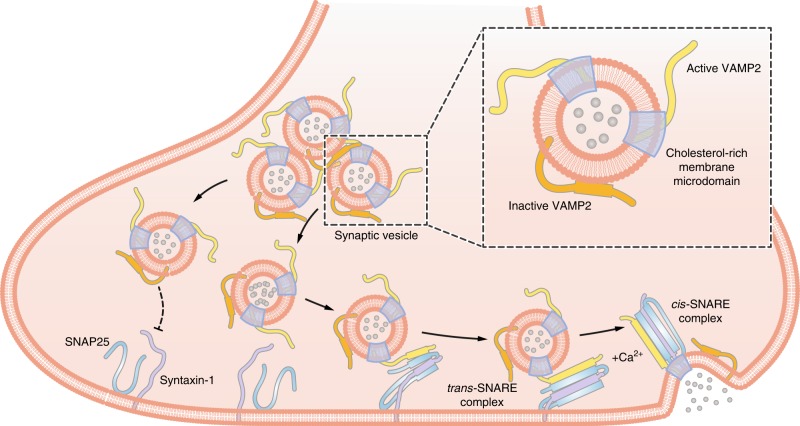
Vesicle associated membrane protein 2 (VAMP2/synaptobrevin2), a core SNARE protein residing on synaptic vesicles (SVs), forms helix bundles with syntaxin-1 and SNAP25 for the SNARE assembly. Prior to the SNARE assembly, the structure of VAMP2 is unclear. Here, by using in-cell NMR spectroscopy, we describe the dynamic membrane association of VAMP2 SNARE motif in mammalian cells, and the structural change of VAMP2 upon the change of intracellular lipid environment. We analyze the lipid compositions of the SV membrane by mass-spectrometry-based lipidomic profiling, and further reveal that VAMP2 forms distinctive conformations in different membrane regions. In contrast to the non-raft region, the membrane region of cholesterol-rich lipid raft markedly weakens the membrane association of VAMP2 SNARE motif, which releases the SNARE motif and facilitates the SNARE assembly. Our work reveals the regulation of different membrane regions on VAMP2 structure and sheds light on the spatial regulation of SNARE assembly.
Overview
The claims and statistics of this paper haven’t been checked yet.
Free: it reads the open-access text and checks the first 5 claims that cite a source we can check. Create a free account to check every claim.
Integrity signals
Registry
Cites
Statistics
Figures
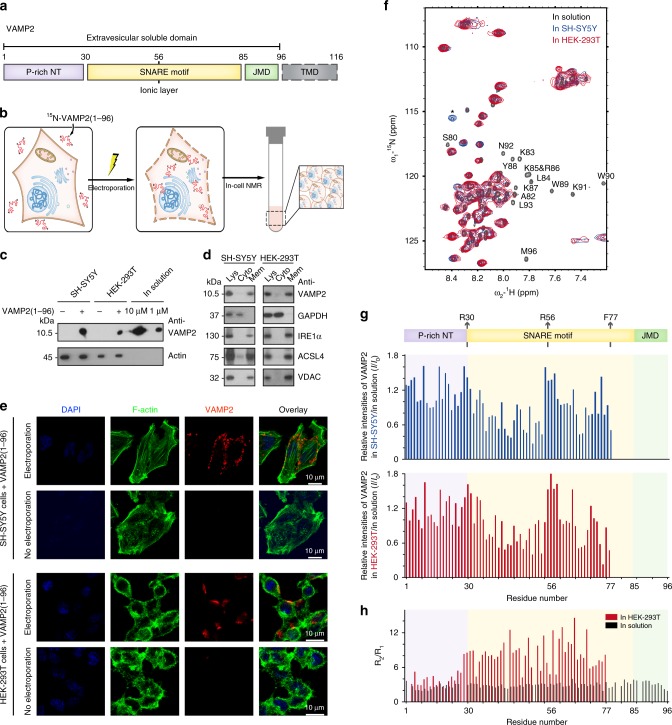
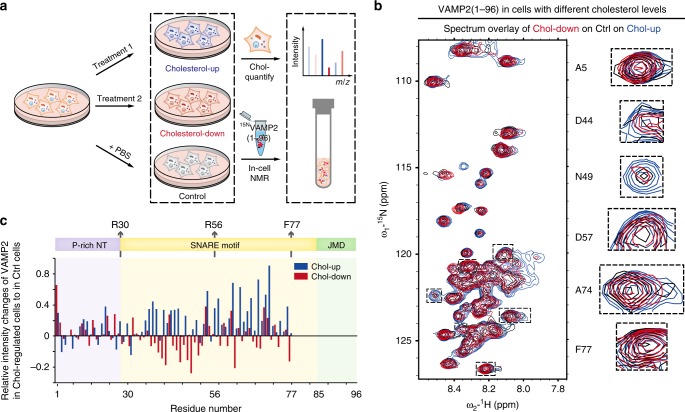
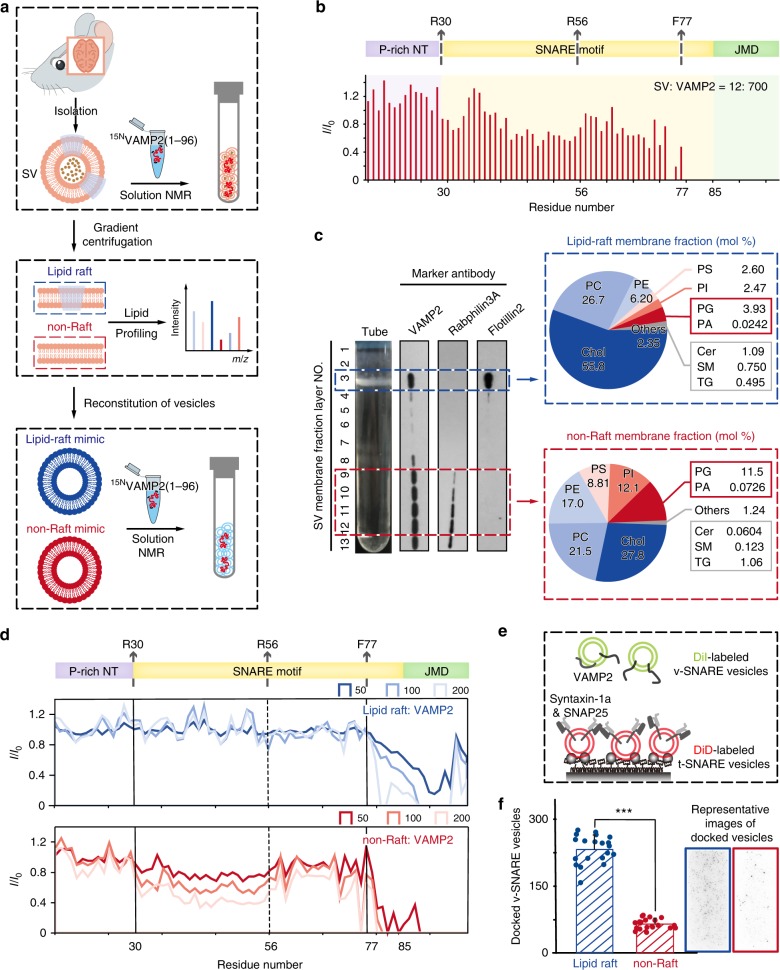
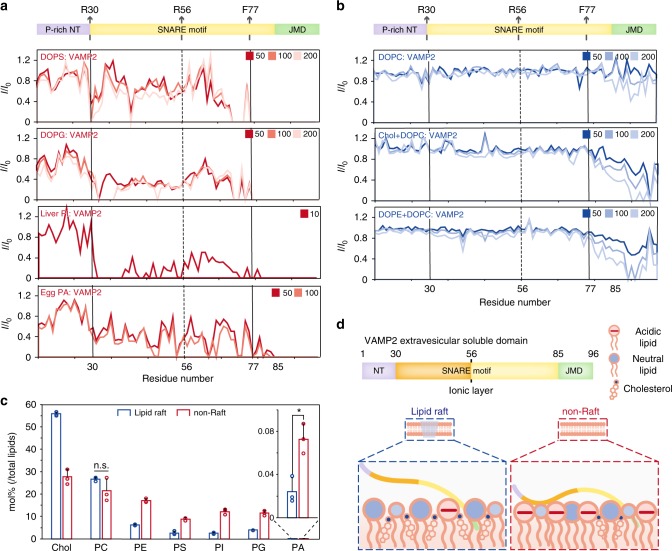
Verification
Claims the paper makes
The claims and statistics of this paper haven’t been checked yet.
Free: it reads the open-access text and checks the first 5 claims that cite a source we can check. Create a free account to check every claim.
Claims other papers make about this one
Each is checked against this paper’s own text: does it say what the citing paper says it does?
The cited source says what the claim attributes to it.
In the citing paper
“Ng is a postsynaptic protein that is important for maintaining synaptic plasticity and regulating calcium ion influxes, while SNAP25 is a presynaptic protein that plays a crucial role in synaptic vesicle fusion and neurotransmitter release, and both these proteins have been shown to play a key role in AD disease pathophysiology, although they may be less clinically relevant for FTD [10,[45][46][47”
In the citing paper
“VAMP2 and synaptosomal associated protein-25 (SNAP25) are presynaptic proteins, part of the soluble N-ethylmaleimide-sensitive-factor Attachment Receptor (SNARE) complex, that play a crucial role in the fusion of synaptic vesicles with the presynaptic plasma membrane to facilitate the release of neurotransmitters [15].”
Self-check
Percentages, sums and reported differences re-computed from the paper’s own numbers.
The self-check needs the paper’s full text.
Citations
Cites
NIH Image to ImageJ: 25 years of image analysis
Schneider, C. A., Rasband, W. S., & Eliceiri, K. W. (2012) · Nature Methods · doi:10.1038/nmeth.2089 · Cited by 64,638
NMRPipe: A multidimensional spectral processing system based on UNIX pipes
Delaglio, F., Grzesiek, S., Vuister, G., Zhu, G., Pfeifer, J., & Bax, A. (1995) · Journal of Biomolecular NMR · doi:10.1007/bf00197809 · Cited by 15,965
Membrane lipids: where they are and how they behave
van Meer, G., Voelker, D. R., & Feigenson, G. W. (2008) · Nature Reviews Molecular Cell Biology · doi:10.1038/nrm2330 · Cited by 7,157
Molecular anatomy of a trafficking organelle
Takamori, S., Holt, M., Stenius, K., Lemke, E. A., Grønborg, M., Riedel, D., Urlaub, H., Schenck, S., Brügger, B., Ringler, P., et al. (2006) · Cell · doi:10.1016/j.cell.2006.10.030 · Cited by 2,373
Farrow, N. A., Muhandiram, R., Singer, A. U., Pascal, S. M., Kay, C. M., Gish, G., Shoelson, S. E., Pawson, T., Forman-Kay, J. D., & Kay, L. E. (1994) · Biochemistry · doi:10.1021/bi00185a040 · Cited by 2,091
Membrane Fusion: Grappling with SNARE and SM Proteins
Südhof, T. C., & Rothman, J. E. (2009) · Science · doi:10.1126/science.1161748 · Cited by 2,027
Munro, S. (2003) · Cell · doi:10.1016/s0092-8674(03)00882-1 · Cited by 1,514
Intrinsic Disorder in Cell-signaling and Cancer-associated Proteins
Iakoucheva, L. M., Brown, C. J., Lawson, J. D., Obradović, Z., & Dunker, A. K. (2002) · Journal of Molecular Biology · doi:10.1016/s0022-2836(02)00969-5 · Cited by 1,214
Cholesterol, lipid rafts, and disease
Simons, K., & Ehehalt, R. (2002) · Journal of Clinical Investigation · doi:10.1172/jci16390 · Cited by 989
LipidBlast in silico tandem mass spectrometry database for lipid identification
Kind, T., Liu, K.-H., Lee, D. Y., DeFelice, B., Meissen, J. K., & Fiehn, O. (2013) · Nature Methods · doi:10.1038/nmeth.2551 · Cited by 981
Cited by
Direct cytosolic delivery of siRNA via cell membrane fusion using cholesterol-enriched exosomes
Zhuo, Y., Luo, Z., Zhu, Z., Wang, J., Li, X., Zhang, Z., Guo, C., Wang, B., Nie, D., Gan, Y., et al. (2024) · Nature Nanotechnology · doi:10.1038/s41565-024-01785-0 · Cited by 191
Self-citationChaperoning SNARE Folding and Assembly
Zhang, Y., & Hughson, F. M. (2021) · Annual Review of Biochemistry · doi:10.1146/annurev-biochem-081820-103615 · Cited by 114
“Individual SNARE motifs are intrinsically disordered (10-13), whereas complementary sets of four SNARE motifs assemble to form parallel four-helix bundles (10, 12-15) (Figure 1b).”
BackgroundThe role of lipid rafts in vesicle formation
Sapoń, K., Mańka, R., Janas, T., & Janas, T. (2023) · Journal of Cell Science · doi:10.1242/jcs.260887 · Cited by 103
Altered Cholesterol Homeostasis in Huntington’s Disease
Kacher, R., Mounier, C., Caboche, J., & Betuing, S. (2022) · Frontiers in Aging Neuroscience · doi:10.3389/fnagi.2022.797220 · Cited by 70
Advanced Techniques for Detecting Protein Misfolding and Aggregation in Cellular Environments
Bai, Y., Zhang, S., Dong, H. Y., Liu, Y., Liu, C., & Zhang, X. (2023) · Chemical Reviews · doi:10.1021/acs.chemrev.3c00494 · Cited by 78
Self-citationVAMP2 chaperones α-synuclein in synaptic vesicle co-condensates
Wang, C., Zhang, K., Cai, B., Haller, J. E., Carnazza, K. E., Hu, J., Zhao, C., Tian, Z., Hu, X. Y., Hall, D., et al. (2024) · Nature Cell Biology · doi:10.1038/s41556-024-01456-1 · Cited by 66
“The juxtamembrane region of VAMP2 interacts with the SV membrane, which may decrease SNARE complex assembly 25,35 .”
Self-citationA gel-like condensation of Cidec generates lipid-permeable plates for lipid droplet fusion
Lyu, X., Wang, J., Wang, J., Yin, Y., Zhu, Y., Li, L., Huang, S., Peng, S., Xue, B., Liao, R., et al. (2020) · Developmental Cell · doi:10.1016/j.devcel.2021.08.015 · Cited by 58
Das, S., Goossens, J., Jacobs, D., Dewit, N., Pijnenburg, Y. A. L., In ‘t Veld, S. G. J. G., Teunissen, C. E., & Vanmechelen, E. (2023) · Alzheimer's Research & Therapy · doi:10.1186/s13195-023-01212-x · Cited by 50
“VAMP2 and synaptosomal associated protein-25 (SNAP25) are presynaptic proteins, part of the soluble N-ethylmaleimide-sensitive-factor Attachment Receptor (SNARE) complex, that play a crucial role in the fusion of synaptic vesicles with the presynaptic plasma membrane to facilitate the release of neurotransmitters [15].”
BackgroundVardar, G., Salazar-Lázaro, A., Zobel, S., Trimbuch, T., & Rosenmund, C. (2022) · eLife · doi:10.7554/elife.78182 · Cited by 44
The function of VAMP2 in mediating membrane fusion: An overview
Yan, C., Jiang, J., Yang, Y., Geng, X., & Dong, W. (2022) · Frontiers in Molecular Neuroscience · doi:10.3389/fnmol.2022.948160 · Cited by 42
Room for Two: The Synaptophysin/Synaptobrevin Complex
White, D. N., & Stowell, M. H. B. (2021) · Frontiers in Synaptic Neuroscience · doi:10.3389/fnsyn.2021.740318 · Cited by 41
TRIM67 regulates exocytic mode and neuronal morphogenesis via SNAP47
Urbina, F., Menon, S., Goldfarb, D., Edwards, R. J., Major, M. B., Brennwald, P., & Gupton, S. L. (2021) · Cell Reports · doi:10.1016/j.celrep.2021.108743 · Cited by 33
“Although lacking the majority of the transmembrane domain, VAMP2(1-96) continues to fractionate and associate with membranes (Caccin et al., 2003; Wang et al., 2020).”
Caputo, M., Gubar, O. S., Tóth, P., Vitale, N., Gasman, S., & Ory, S. (2025) · Journal of Biological Chemistry · doi:10.1016/j.jbc.2025.110441 · Cited by 30
“Cholesterol-rich domains enhance SNARE complex assembly, whereas acidic lipid domains (containing PS, PI, phosphatidylglycerol and PA) inhibit SNARE activity by promoting VAMP2 extravesicular domain binding to synaptic vesicle membrane and reducing its engagement in the SNARE complex (126).”
Zhu, X., Li, T., Hu, E., Duan, L., Zhang, C., Wang, Y., Tang, T., Yang, Z., & Fan, R. (2022) · Frontiers in Pharmacology · doi:10.3389/fphar.2021.791097 · Cited by 28
“Vamp2, a core soluble N-ethylmaleimide-sensitive factor attachment protein receptor (SNARE) protein residing on synaptic vesicles, forms helix bundles with SNAP25 and syntaxin1 for the SNARE assembly (Ramakrishnan et al., 2012; Wang et al., 2020).”
BackgroundSisley, E. K., Hale, O. J., Hughes, J. W., & Cooper, H. J. (2023) · Journal of the American Chemical Society · doi:10.1021/jacs.3c03454 · Cited by 24
Shi, Y. P., Ye, Z., Lu, G. X., Yang, N., Zhang, J., Wang, L., Cui, J., del Pozo, M. Á., Wu, Y., Xia, D., et al. (2021) · Molecular Therapy — Oncolytics · doi:10.1016/j.omto.2021.10.005 · Cited by 22
Santamaria, C., Biegas, K. J., Lim, P. N., Cabral, J., Kim, C. Y., Lee, J. R., Gaidhane, I. V., Papson, C., Gomard-Henshaw, K., Rothchild, A. C., et al. (2025) · Proceedings of the National Academy of Sciences · doi:10.1073/pnas.2423292122 · Cited by 22
“Many SNAREs localize to ordered membrane regions ( 65 ) or, like VAMP2, undergo structural changes that promote complexation ( 66 ).”
Personalized 3D‐Printed Scaffolds with Multiple Bioactivities for Bioroot Regeneration
Huang, Y., Zhang, Z., Bi, F., Tang, H., Chen, J., Huo, F., Chen, J., Lan, T., Qiao, X., Sima, X., et al. (2023) · Advanced Healthcare Materials · doi:10.1002/adhm.202300625 · Cited by 22
Wang, C., Zhao, C., Hu, X., Qiang, J., Liu, Z., Gu, J., Zhang, S., Li, D., Zhang, Y., Burré, J., et al. (2024) · eLife · doi:10.7554/elife.97228.3 · Cited by 21
Self-citationResearch progress on vesicle cycle and neurological disorders
Zhang, C., Zhu, L., & Chen, C. (2021) · Journal of Pharmacy & Pharmaceutical Sciences · doi:10.18433/jpps31458 · Cited by 18
Are There Lipid Membrane-Domain Subtypes in Neurons with Different Roles in Calcium Signaling?
Samhan-Arias, A. K., Poejo, J., Marques‐da‐Silva, D., Martínez-Costa, Ó. H., & Gutiérrez‐Merino, C. (2023) · Molecules · doi:10.3390/molecules28237909 · Cited by 14
“Therefore, this process should not be directly associated with lipid membrane domains [223].”
BackgroundDas, S., van Engelen, M.-P. E., Goossens, J., Jacobs, D., Bongers, B., Fieldhouse, J. L. P., Pijnenburg, Y. A. L., Teunissen, C. E., Vanmechelen, E., & Verberk, I. M. W. (2024) · Alzheimer's Research & Therapy · doi:10.1186/s13195-024-01409-8 · Cited by 12
Li, B., Chen, X., Zhou, Y., Zhao, Y. C., Song, T., Wu, X., & Shi, W. (2023) · Journal of Colloid and Interface Science · doi:10.1016/j.jcis.2023.03.072 · Cited by 12
Gaur, M., Liang, X., Brooks, M. J., Jiang, K., Kumari, A., English, M. A., Cifani, P., Panepinto, M. C., Nellissery, J. K., Fariss, R. N., et al. (2026) · PLoS Genetics · doi:10.1371/journal.pgen.1012100 · Cited by 10
Reduced Retinoic Acid Receptor Beta (Rarβ) Affects Pancreatic β-Cell Physiology
Khalique, A., Mohammed, A. K., Al-khadran, N. M., Gharaibeh, M. F. A., Abu‐Gharbieh, E., El‐Huneidi, W., Sulaiman, N. D., & Taneera, J. (2022) · Biology · doi:10.3390/biology11071072 · Cited by 10
“In addition, several studies have established Snap25 and Vamp2 as important factors in the fusion process of insulin granules and plasma membranes [44,45].”
BackgroundSNARE Proteins in Synaptic Vesicle Fusion
Palfreyman, M. T., West, S. E., & Jørgensen, E. M. (2023) · Advances in neurobiology · doi:10.1007/978-3-031-34229-5_4 · Cited by 11
GEARBOCS: An Adeno Associated Virus Tool for In Vivo Gene Editing in AstrocytesPreprint
Bindu, D. S., Savage, J. T., Brose, N., Bradley, L., Dimond, K., Tan, C. X., & Eroğlu, Ç. (2023) · bioRxiv (Cold Spring Harbor Laboratory) · doi:10.1101/2023.01.17.524433 · Cited by 11
“Calcium-regulated vesicular exocytosis is a key feature of neuronal synapses and is mediated by the molecular machinery of the SNARE complex including Vamp2 (Salpietro et al., 2019; Wang et al., 2020).”
BackgroundLi, Y., Haixia, Y., Yuchen, S., Mingxin, Z., Lu, M., Tian, Y., Aizhen, W., & Han, X. (2022) · Evidence-based Complementary and Alternative Medicine · doi:10.1155/2022/5471586 · Cited by 10
Advances in the labelling and selective manipulation of synapses
Timalsina, B., Lee, S., & Kaang, B. (2024) · Nature reviews. Neuroscience · doi:10.1038/s41583-024-00851-9 · Cited by 12
“Upon synaptic vesicle exocytosis, SynatoZip binds a chemically synthesized and fluorescently tagged peptide, Synbond.”
InfluentialMunc18 modulates syntaxin phase separation to promote exocytosis
Pei, Q., Chen, Q., Tian, Z., Zhu, L., Chen, Y., Gong, J., Wang, S., Xiang, Y., Khamo, J. S., Fan, J., et al. (2025) · Nature Neuroscience · doi:10.1038/s41593-025-02140-9 · Cited by 9
“Lipid molecules form clustering rafts 38 ; therefore, lipid sequestering could be a cofactor accelerating or stabilizing syntaxin clusters through charge interactions 26 .”
Self-citationVesicle-associated membrane protein 2 is a cargo-selective v-SNARE for a subset of GPCRs
Chen, H., Weinberg, Z. Y., Kumar, G. A., & Puthenveedu, M. A. (2023) · The Journal of Cell Biology · doi:10.1083/jcb.202207070 · Cited by 8
“A subsequent conformational change in the SNARE complex provides the force to induce membrane fusion (Kiessling et al., 2018; Wang et al., 2020).”
Meijer, M., Öttl, M., Yang, J., Subkhangulova, A., Kumar, A., Feng, Z., van Voorst, T. W., Groffen, A. J. A., van Weering, J. R. T., Zhang, Y., et al. (2024) · Nature Communications · doi:10.1038/s41467-024-46828-1 · Cited by 7
Alpha-Synuclein in Neurodegeneration: From Shared Biology to Disease-Specific Phenotypes
Su, F., Kim, W. S., Halliday, G. M., & Fu, Y. (2026) · Cells · doi:10.3390/cells15050451 · Cited by 7
“Through its N-terminus-mediated membrane binding and C-terminus interactions with SV-associated proteins such as VAMP2 and CSP α [33], α Syn is proposed to facilitate SV docking and promote SNARE complex assembly at the presynaptic PM [72].”
Guizar, P., Abdalla, A. L., Monette, A., Davis, K., Caballero, R. E., Niu, M., Liu, X., Ajibola, O., Murooka, T. T., Chen, L., et al. (2024) · iScience · doi:10.1016/j.isci.2024.110131 · Cited by 9
Luchini, A., Tidemand, F. G., Johansen, N. T., Sebastiani, F., Corucci, G., Fragneto, G., Cárdenas, M., & Arleth, L. (2022) · Nanoscale Advances · doi:10.1039/d2na00384h · Cited by 7
Let7b-5p inhibits insulin secretion and decreases pancreatic β-cell mass in mice
Ji, H., Fan, L., Shan, A., Wang, W., Ning, G., Cao, Y., & Jiang, X. (2021) · Molecular and Cellular Endocrinology · doi:10.1016/j.mce.2021.111506 · Cited by 7
A novel fluorescent endoplasmic reticulum marker for super‐resolution imaging in live cells
Han, K., Huang, S., Kong, J., Yang, Y., Shi, L., & Ci, Y. (2023) · FEBS Letters · doi:10.1002/1873-3468.14581 · Cited by 7
EHD2 regulates plasma membrane integrity and downstream insulin receptor signaling events
Neuhaus, M., Fryklund, C., Taylor, H., Borreguero‐Muñoz, A., Kopietz, F., Ardalani, H., Rogova, O., Stirrat, L., Bremner, S., Spégel, P., et al. (2023) · Molecular Biology of the Cell · doi:10.1091/mbc.e23-03-0078 · Cited by 6
“As the structure of individual SNARE proteins (Saito et al. , 2012; Fezoua-Boubegtiten et al. , 2019; Lakomek et al. , 2019; Wang et al. , 2020), their localization to specific PM domains (Chamberlain et al. , 2001; Lang et al. , 2001; Salaun et al. , 2005), and the process of SNARE protein complex…”
BackgroundExosomes in Metabolic Diseases: From Molecular Mechanisms to Clinical Applications
Wu, Y., Yang, S., Zhang, Y., & Su, Z. (2025) · MedComm – Future Medicine · doi:10.1002/mef2.70031 · Cited by 5
UBQLN2 links proteotoxicity with lipid metabolism in neurodegeneration
Liu, Y., Huang, Z., hsu, Y.-W., Deme, P., Frankenfield, A. M., Wu, S., Zhao, X., Liu, H., Zhang, T., Alexander, E. J., et al. (2026) · Nature Neuroscience · doi:10.1038/s41593-026-02226-y · Cited by 6
“Immunostaining of synaptic vesicle markers VAMP2 and synaptophysin 41,42 in UBQLN2 mutant iMNs indicated compromised synaptic vesicle integrity, as reflected by reduced fluorescence intensities of these markers after 2 days of GS (Fig.”
NOL Poison Pills: Selectica v. VersataPreprint
Erickson, M., & Heitzman, S. M. (2010) · SSRN Electronic Journal · Cited by 5
Huang, H., Zhou, C., Chen, C., Tang, H., Dong, W., Wan, J., Kang, W., Sun, A., Liu, Y., Jin, C., et al. (2026) · Advanced Science · doi:10.1002/advs.202519874 · Cited by 5
“Our findings are also consistent with the conclusions of Wang et al. [ 37 ], which suggests that in-depth studies on the molecular mechanisms of POCD can be conducted from the novel perspective of cholesterol deficiency, abnormal assembly of the SNARE complex, and abnormal fusion of synaptic…”
Halvaei, S., Salmond, N., & Williams, K. C. (2025) · Nanoscale · doi:10.1039/d4nr02510e · Cited by 3
Meyer, S. D., Alali, S., Laroy, M., Casteele, T. V., Cauwenberge, M. G. A. V., Goossens, J., Rocker, C. D., Vanbrabant, J., Vanmechelen, E., den Stock, J. V., et al. (2025) · Brain Communications · doi:10.1093/braincomms/fcaf207 · Cited by 3
In-cell NMR spectroscopy: A tool to study cellular structure biology
Kumar, V. (2022) · Elsevier eBooks · doi:10.1016/b978-0-323-90264-9.00017-9 · Cited by 2
Wang, C., Zhao, C., Hu, X. Y., Qiang, J., Liu, Z., Gu, J., Zhang, S., Li, D., Zhang, Y., Burré, J., et al. (2024) · eLife · doi:10.7554/elife.97228.1 · Cited by 3
Self-citationHuang, Y., Xi, J., Su, B., Wang, P., Xie, C., Yuan, Y., Yin, X., & Bao, B. (2026) · Biomedical Reports · doi:10.3892/br.2026.2138 · Cited by 1
Heidarpour, N., Singh, A., Caputo, J. M., Barbieri, R., Pampana, V. S., Kamath, V. G., & Kaur, G. (2022) · Cureus · doi:10.7759/cureus.28464 · Cited by 1
“This will inhibit the docking of the vesicle and not allow exocytosis of neurotransmitters and AGRN ligand protein into the synaptic cleft [4,9].”
BackgroundInfluentialGEARBOCS: An Adeno Associated Virus Tool for In Vivo Gene Editing in AstrocytesPreprint
Bindu, D. S., Savage, J. T., Brose, N., Bradley, L., Dimond, K., Tan, C. X., & Eroğlu, Ç. (2024) · eLife · doi:10.7554/elife.103249.1 · Cited by 1
Integrative Methods to Investigate Chaperones in Regulating Protein Phase Separation and Aggregation
Li, D., Zhang, S., & Liu, C. (2023) · Royal Society of Chemistry eBooks · doi:10.1039/bk9781839165986-00319
Self-citationWang, C., Zhao, C., Hu, X. Y., Qiang, J., Liu, Z., Gu, J., Zhang, S., Li, D., Zhang, Y., Burré, J., et al. (2024) · eLife · doi:10.7554/elife.97228.2
Self-citationGEARBOCS: An Adeno Associated Virus Tool for In Vivo Gene Editing in AstrocytesPreprint
Bindu, D. S., Savage, J. T., Brose, N., Bradley, L., Dimond, K., Tan, C. X., & Eroğlu, Ç. (2024) · eLife · doi:10.7554/elife.103249 · Cited by 3
Levesque, I. (2024) · Deep Blue (University of Michigan) · doi:10.7302/25048
Das, S., van Engelen, M.-P. E., Goossens, J., Jacobs, D., Bongers, B., Fieldhouse, J. L. P., Pijnenburg, Y. A. L., Teunissen, C. E., Vanmechelen, E., & Verberk, I. M. W. (2024) · Figshare · doi:10.6084/m9.figshare.25223556
Das, S., van Engelen, M.-P. E., Goossens, J., Jacobs, D., Bongers, B., Fieldhouse, J. L. P., Pijnenburg, Y. A. L., Teunissen, C. E., Vanmechelen, E., & Verberk, I. M. W. (2024) · Figshare · doi:10.6084/m9.figshare.25223869
Das, S., Goossens, J., Jacobs, D., Dewit, N., Pijnenburg, Y. A. L., In ‘t Veld, S. G. J. G., Teunissen, C. E., & Vanmechelen, E. (2023) · Figshare · doi:10.6084/m9.figshare.22619722
Neel, A. I., Lee, E. T., West, A. M., Dawes, M. H., Schlitzer, R. D., Suddaby, R. A., Marrs, G. S., Jones, S. R., & Chen, R. (2026) · Neuropharmacology · doi:10.1016/j.neuropharm.2026.111078
“Further, in reconstituted vesicles, VAMP2 has been demonstrated to adopt conformations that favor SNARE complex assembly in raft-like environments, whereas non-raft environments reduce VAMP2’s availability for assembly (Wang et al., 2020).”
Comparative Evaluation of SNAP25 in Cerebrospinal Fluid and Plasma Across Three CohortsPreprint
Sauer, M., Machado, L. S., Rocker, C., Goossens, J., Grötschel, L., Janelidze, S., Rahmouni, N., Ribaldi, F., Therriault, J., Trudel, L., et al. (2026) · Research Square · doi:10.21203/rs.3.rs-11320091/v1
Metadata
- Authors
- Wang, C., Tu, J., Zhang, S., Cai, B., Liu, Z., Hou, S., Zhong, Q., Hu, X., Liu, W., Li, G., Liu, Z., He, L., Diao, J., Zhu, Z.-J., Li, D., & Liu, C.
- Affiliations
- Chinese Academy of Sciences (CN)
- University of Cincinnati (US)
- Dalian Institute of Chemical Physics (CN)
- Shanghai Jiao Tong University (CN)
- Corresponding author
- Li, Dan
- Liu, Cong
- ORCID
- Venue
- Nature Communications
- Published
- 2020-03-24
- Volume
- 11
- Issue
- 1
- Pages
- 1531-1531
- ISSN
- 2041-1723 (ISSN-L)
- PMC
- PMC7093461
- OpenAlex
- W3013373046
- Cited by
- 55
- References
- 59
- Citations by year
- 2026: 3 · 2025: 7 · 2024: 14 · 2023: 14 · 2022: 9 · 2021: 7
- FWCI
- 3.74
- Type
- journal article
- Language
- en
- Open access
- gold
- doi.org
- Licence
- cc-by
- creativecommons.org/licenses/by/4.0 (tdm)
- creativecommons.org/licenses/by/4.0 (vor)
- Locations
- Nature Communications (publishedVersion, cc-by)
- PubMed Central (publishedVersion, cc-by)
- PubMed (publishedVersion)
- RePEc: Research Papers in Economics (submittedVersion)
- DOAJ (DOAJ: Directory of Open Access Journals) (submittedVersion, cc-by-sa)
- Funders
- Directorate for Biological Sciences
- Topics
- Life Sciences › Biochemistry, Genetics and Molecular Biology › Cell Biology › Cellular transport and secretion
- Life Sciences › Biochemistry, Genetics and Molecular Biology › Molecular Biology › Lipid Membrane Structure and Behavior
- Life Sciences › Neuroscience › Cellular and Molecular Neuroscience › Neuroscience and Neuropharmacology Research
- Keywords
- VAMP2, synaptic vesicle membrane, lipid rafts, cholesterol, membrane association, syntaxin-1, SNAP-25, lipid composition
- MeSH terms
- Intravital Microscopy, Protein Domains, Lipidomics, Cholesterol, Humans, Membrane Fusion, Membrane Lipids, Magnetic Resonance Spectroscopy, Recombinant Proteins, Synaptic Vesicles, Membrane Microdomains, Cell Line, Tumor, Lipid Metabolism, SNARE Proteins, Vesicle-Associated Membrane Protein 2, Protein Multimerization, HEK293 Cells, Spatial Analysis
About these checks
Registry, retraction, Cites and statistics results are computed, not judged, with one exception: a printed reference that no index lists is read once by a model before it counts as a citation error. Claims are extracted by a model and kept only when their quote appears verbatim in the text; each cited source is then checked, with a model’s help, for whether it says what the claim relies on. Those verdicts can be wrong — read the claim’s quote and the cited source before relying on one.
Statistics and arithmetic are recomputed, not judged.
Confidence bands are shown only for fields calibrated on our annotated test set. None is calibrated yet, so no band is shown.
What counts as a claim ›How we measure confidence ›How we check this ›
Are you an author, or do you see a problem with this page? Request a review
Data sources
Bibliographic data: Semantic Scholar, OpenAlex, Crossref.
Contains information from the Semantic Scholar Academic Graph Datasets, made available under the ODC Attribution License (ODC-BY 1.0).
Semantic Scholar’s data is described in: Kinney, R., et al. (2023). The Semantic Scholar Open Data Platform. arXiv:2301.10140.
