

The DOI matches its Crossref record; 73 of the 73 references it cites were found in a registry or an index.
The circadian clock and darkness control natural competence in cyanobacteria
Open accessPublished version of a preprint
Abstract
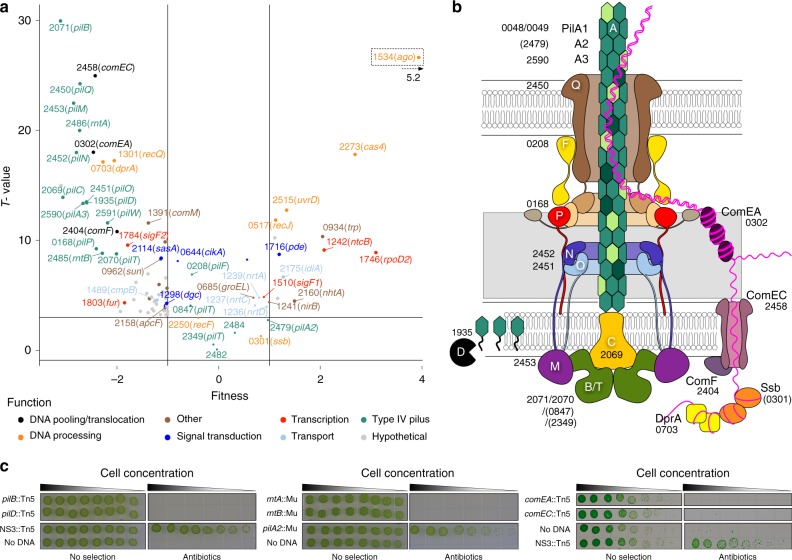
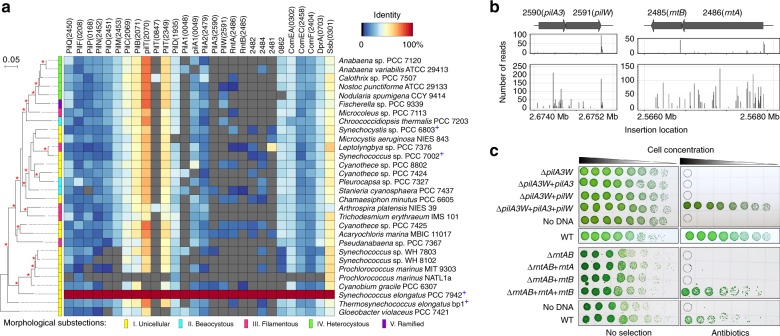
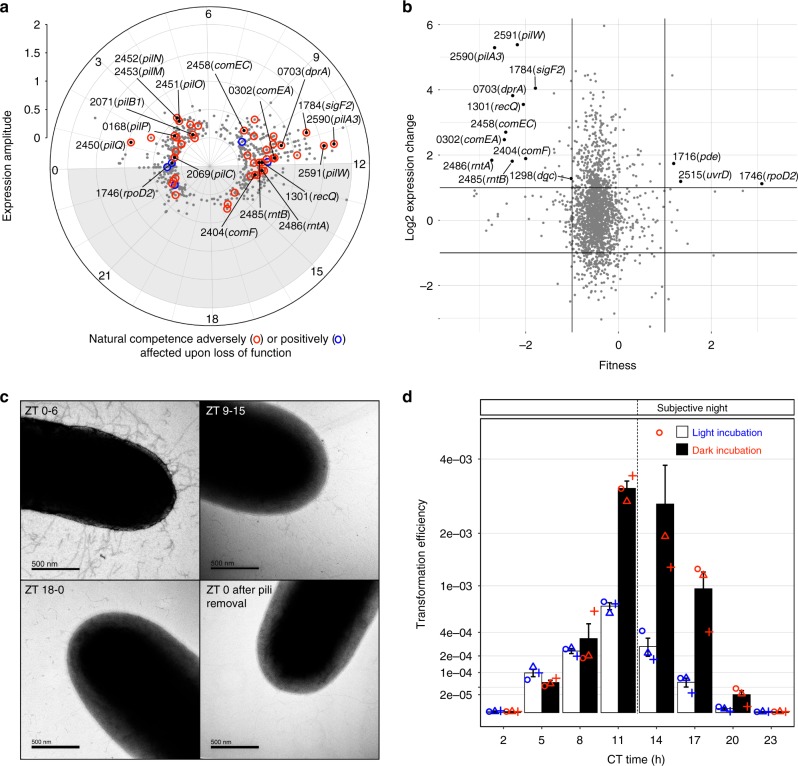
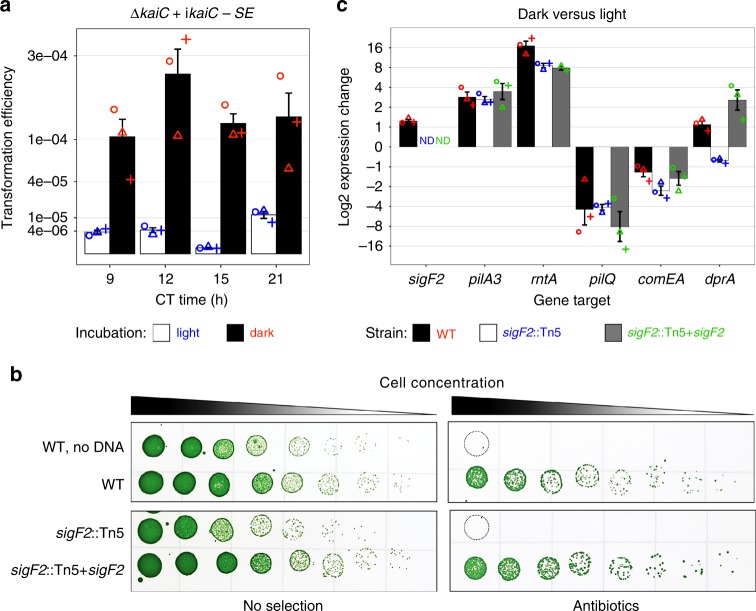
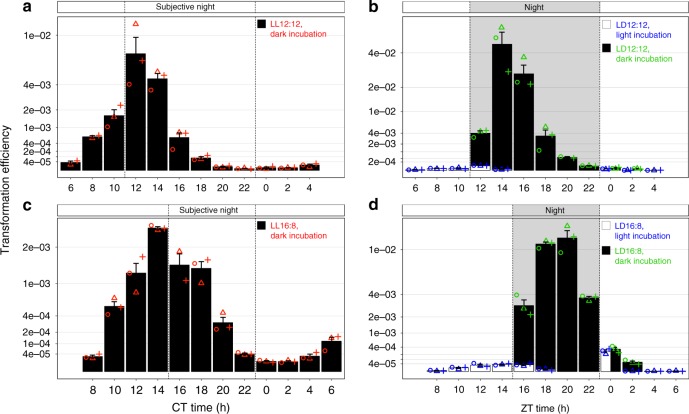
The cyanobacterium Synechococcus elongatus is a model organism for the study of circadian rhythms. It is naturally competent for transformation-that is, it takes up DNA from the environment, but the underlying mechanisms are unclear. Here, we use a genome-wide screen to identify genes required for natural transformation in S. elongatus, including genes encoding a conserved Type IV pilus, genes known to be associated with competence in other bacteria, and others. Pilus biogenesis occurs daily in the morning, while natural transformation is maximal when the onset of darkness coincides with the dusk circadian peak. Thus, the competence state in cyanobacteria is regulated by the circadian clock and can adapt to seasonal changes of day length.
Overview
The claims and statistics of this paper haven’t been checked yet.
Run the check — free, no account needed. It reads the open-access text and checks the sources it cites.
Integrity signals
Registry
Cites
Statistics
Figures
Verification
Claims the paper makes
The claims and statistics of this paper haven’t been checked yet.
Run the check — free, no account needed. It reads the open-access text and checks the sources it cites.
Claims other papers make about this one
Each is checked against this paper’s own text: does it say what the citing paper says it does?
The source backs part of the claim, not all of it — or backs it for a different population, condition or comparison.
In the citing paper
“Like Synechocystis sp. PCC 6803, Synechococcus elongatus PCC 7942 is naturally competent and can undergo natural transformation, whereby extracellular DNA is taken up directly from the surrounding medium. In this strain, DNA can be introduced as replicative plasmids, integrative plasmids, or linear PCR fragments; when the introduced DNA contains regions homologous to the chromosome, it can”
From Cyanobacteria as a Photosynthetic Chassis for Metabolic Pathway Engineering with Heterologous Gene Expression (2026) · cites this paper as [61]
Experimental — accuracy not yet measuredThe check wasn’t confident either way, so it gives no verdict — never disputed.
In the citing paper
“Conjugation from E. coli provides an additional route for delivering transferable or broad-host-range plasmids, while electroporation has been reported for cyanobacteria but is less routinely used for S. elongatus PCC 7942 [61].”
From Cyanobacteria as a Photosynthetic Chassis for Metabolic Pathway Engineering with Heterologous Gene Expression (2026) · cites this paper as [61]
Experimental — accuracy not yet measured
Self-check
Percentages, sums and reported differences re-computed from the paper’s own numbers.
The self-check needs the paper’s full text.
Citations
Cites
Analysis of Relative Gene Expression Data Using Real-Time Quantitative PCR and the 2−ΔΔCT Method
Livak, K. J., & Schmittgen, T. D. (2001) · Methods · doi:10.1006/meth.2001.1262 · Cited by 180,860
Controlling the False Discovery Rate: A Practical and Powerful Approach to Multiple Testing
Benjamini, Y., & Hochberg, Y. (1995) · Journal of the Royal Statistical Society Series B: Statistical Methodology · doi:10.1111/j.2517-6161.1995.tb02031.x · Cited by 109,482
MUSCLE: multiple sequence alignment with high accuracy and high throughput
Edgar, R. C. (2004) · Nucleic Acids Research · doi:10.1093/nar/gkh340 · Cited by 44,662
MEGA7: Molecular Evolutionary Genetics Analysis Version 7.0 for Bigger Datasets
Kumar, S., Stecher, G., & Tamura, K. (2016) · Molecular Biology and Evolution · doi:10.1093/molbev/msw054 · Cited by 44,609
Kimura, M. (1980) · Journal of Molecular Evolution · doi:10.1007/bf01731581 · Cited by 29,778
Generic Assignments, Strain Histories and Properties of Pure Cultures of Cyanobacteria
Rippka, R., Stanier, R. Y., Deruelles, J., Herdman, M., & Waterbury, J. B. (1979) · Microbiology · doi:10.1099/00221287-111-1-1 · Cited by 7,606
Talavera, G., & Castresana, J. (2007) · Systematic Biology · doi:10.1080/10635150701472164 · Cited by 5,725
Huisman, J., Codd, G. A., Paerl, H. W., Ibelings, B. W., Verspagen, J. M. H., & Visser, P. (2018) · Nature Reviews Microbiology · doi:10.1038/s41579-018-0040-1 · Cited by 2,935
Flombaum, P., Gallegos, J. L., Gordillo, R. A., Rincón, J., Zabala, L. L., Jiao, N., Karl, D. M., Li, W. K. W., Lomas, M. W., Veneziano, D., et al. (2013) · Proceedings of the National Academy of Sciences · doi:10.1073/pnas.1307701110 · Cited by 1,487
The Significance of Pneumococcal Types
Griffith, F. (1928) · Journal of Hygiene · doi:10.1017/s0022172400031879 · Cited by 1,346
The arms race between bacteria and their phage foes
Hampton, H. G., Watson, B. N. J., & Fineran, P. C. (2020) · Nature · doi:10.1038/s41586-019-1894-8 · Cited by 923
Bacterial transformation: distribution, shared mechanisms and divergent control
Johnston, C., Martin, B., Fichant, G. A., Polard, P., & Claverys, J. (2014) · Nature Reviews Microbiology · doi:10.1038/nrmicro3199 · Cited by 802
Photoperiodic Flowering: Time Measurement Mechanisms in Leaves
Song, Y. H., Shim, J. S., Kinmonth‐Schultz, H., & Imaizumi, T. (2014) · Annual Review of Plant Biology · doi:10.1146/annurev-arplant-043014-115555 · Cited by 765
Rhythmic growth explained by coincidence between internal and external cues
Nozue, K., Covington, M. F., Duek, P. D., Lorrain, S., Fankhauser, C., Harmer, S. L., & Maloof, J. (2007) · Nature · doi:10.1038/nature05946 · Cited by 667
Mutant phenotypes for thousands of bacterial genes of unknown function
Price, M. N., Wetmore, K. M., Waters, R. J., Callaghan, M., Ray, J., Liu, H., Kuehl, J. V., Melnyk, R. A., Lamson, J. S., Suh, Y., et al. (2018) · Nature · doi:10.1038/s41586-018-0124-0 · Cited by 576
Self-citationWetmore, K. M., Price, M. N., Waters, R. J., Lamson, J. S., He, J., Hoover, C. A., Blow, M. J., Bristow, J. D., Butland, G. P., Arkin, A. P., et al. (2015) · mBio · doi:10.1128/mbio.00306-15 · Cited by 480
Architecture of the type IVa pilus machine
Chang, Y., Rettberg, L. A., Treuner‐Lange, A., Iwasa, J., Søgaard‐Andersen, L., & Jensen, G. J. (2016) · Science · doi:10.1126/science.aad2001 · Cited by 405
Circadian orchestration of gene expression in cyanobacteria.Preprint
Liu, Y., Tsinoremas, N. F., Johnson, C. H., Lebedeva, N. V., Golden, S. S., Ishiura, M., & Kondo, T. (1995) · Genes & Development · doi:10.1101/gad.9.12.1469 · Cited by 373
Self-citationStrengths and Limitations of Period Estimation Methods for Circadian Data
Zieliński, T., Moore, A., Troup, E., Halliday, K., & Millar, A. J. (2014) · PLoS ONE · doi:10.1371/journal.pone.0096462 · Cited by 344
Phylogenetic analyses of cyanobacterial genomes: Quantification of horizontal gene transfer eventsPreprint
Zhaxybayeva, O., Gogarten, J. P., Charlebois, R. L., Doolittle, W. F., & Papke, R. T. (2006) · Genome Research · doi:10.1101/gr.5322306 · Cited by 336
Mori, T., Binder, B. J., & Johnson, C. H. (1996) · Proceedings of the National Academy of Sciences · doi:10.1073/pnas.93.19.10183 · Cited by 332
Circadian Rhythms in Cyanobacteria
Cohen, S., & Golden, S. S. (2015) · Microbiology and Molecular Biology Reviews · doi:10.1128/mmbr.00036-15 · Cited by 290
Self-citationEllison, C. K., Dalia, T. N., Ceballos, A. V., Wang, J. C., Biais, N., Brun, Y. V., & Dalia, A. B. (2018) · Nature Microbiology · doi:10.1038/s41564-018-0174-y · Cited by 263
Light-Driven Changes in Energy Metabolism Directly Entrain the Cyanobacterial Circadian Oscillator
Rust, M. J., Golden, S. S., & O’Shea, E. K. (2011) · Science · doi:10.1126/science.1197243 · Cited by 246
Self-citationEngineering Cyanobacteria To Synthesize and Export Hydrophilic Products
Niederholtmeyer, H., Wolfstädter, B. T., Savage, D. F., Silver, P. A., & Way, J. C. (2010) · Applied and Environmental Microbiology · doi:10.1128/aem.00202-10 · Cited by 243
Mortier‐Barrière, I., Velten, M., Pauline, D., Mirouze, N., Piétrement, O., McGovern, S., Fichant, G. A., Martin, B., Noirot, P. H., Cam, É. L., et al. (2007) · Cell · doi:10.1016/j.cell.2007.07.038 · Cited by 239
Mechanisms of DNA Uptake by Naturally Competent Bacteria
Dubnau, D. A., & Blokesch, M. (2019) · Annual Review of Genetics · doi:10.1146/annurev-genet-112618-043641 · Cited by 220
Role of KaiC phosphorylation in the circadian clock system of Synechococcus elongatus PCC 7942
Nishiwaki, T., Satomi, Y., Nakajima, M., Lee, C., Kiyohara, R., Kageyama, H., Kitayama, Y., 実央子, 手., Yamaguchi, A., Hijikata, A., et al. (2004) · Proceedings of the National Academy of Sciences · doi:10.1073/pnas.0403906101 · Cited by 218
Evidence for genetic transformation in blue-green alga Anacystis nidulans
Shestakov, S. V., & Khyen, N. T. (1970) · Molecular and General Genetics MGG · doi:10.1007/bf00441199 · Cited by 208
Oscillations in supercoiling drive circadian gene expression in cyanobacteria
Vijayan, V., Zuzow, R., & O’Shea, E. K. (2009) · Proceedings of the National Academy of Sciences · doi:10.1073/pnas.0912673106 · Cited by 196
Broad-host-range vector system for synthetic biology and biotechnology in cyanobacteria
Taton, A., Unglaub, F., Wright, N. E., Zeng, W. Y., Paz-Yepes, J., Brahamsha, B., Palenik, B., Peterson, T. C., Haerizadeh, F., Golden, S. S., et al. (2014) · Nucleic Acids Research · doi:10.1093/nar/gku673 · Cited by 186
Self-citationYoshihara, S., Geng, X., Okamoto, S., Yura, K., Murata, T., Gō, M., Ohmori, M., & Ikeuchi, M. (2001) · Plant and Cell Physiology · doi:10.1093/pcp/pce007 · Cited by 186
Circadian Control of Global Gene Expression by the Cyanobacterial Master Regulator RpaA
Markson, J. S., Piechura, J. R., Puszynska, A. M., & O’Shea, E. K. (2013) · Cell · doi:10.1016/j.cell.2013.11.005 · Cited by 183
The essential gene set of a photosynthetic organism
Rubin, B. E., Wetmore, K. M., Price, M. N., Diamond, S., Shultzaberger, R. K., Lowe, L. C., Curtin, G., Arkin, A. P., Deutschbauer, A. M., & Golden, S. S. (2015) · Proceedings of the National Academy of Sciences · doi:10.1073/pnas.1519220112 · Cited by 180
Self-citationOptimal conditions for genetic transformation of the cyanobacterium Anacystis nidulans R2
Golden, S. S., & Sherman, L. A. (1984) · Journal of Bacteriology · doi:10.1128/jb.158.1.36-42.1984 · Cited by 174
Self-citationDraskovic, I., & Dubnau, D. A. (2004) · Molecular Microbiology · doi:10.1111/j.1365-2958.2004.04430.x · Cited by 167
Cyanobacterial metabolic engineering for biofuel and chemical production
Oliver, N. J., Rabinovitch-Deere, C. A., Carroll, A. L., Nozzi, N. E., Case, A. E., & Atsumi, S. (2016) · Current Opinion in Chemical Biology · doi:10.1016/j.cbpa.2016.08.023 · Cited by 166
Smith, R. M., & Williams, S. B. (2006) · Proceedings of the National Academy of Sciences · doi:10.1073/pnas.0508696103 · Cited by 165
Dong, G., Yang, Q., Wang, Q., Kim, Y.-I., Wood, T. L., Osteryoung, K. W., van Oudenaarden, A., & Golden, S. S. (2010) · Cell · doi:10.1016/j.cell.2009.12.042 · Cited by 155
Self-citationSpecialized Techniques for Site-Directed Mutagenesis in Cyanobacteria
Clérico, E. M., Ditty, J. L., & Golden, S. S. (2007) · Methods in molecular biology · doi:10.1007/978-1-59745-257-1_11 · Cited by 154
Self-citationComEA is a DNA receptor for transformation of competent Bacillus subtilis
Provvedi, R., & Dubnau, D. A. (1999) · Molecular Microbiology · doi:10.1046/j.1365-2958.1999.01170.x · Cited by 154
Bhaya, D., Watanabe, N., Ogawa, T., & Grossman, A. R. (1999) · Proceedings of the National Academy of Sciences · doi:10.1073/pnas.96.6.3188 · Cited by 153
Woodfill, C. J. I., Wayne, N. L., Moenter, S. M., & Karsch, F. J. (1994) · Biology of Reproduction · doi:10.1095/biolreprod50.4.965 · Cited by 147
Diamond, S., Jun, D., Rubin, B. E., & Golden, S. S. (2015) · Proceedings of the National Academy of Sciences · doi:10.1073/pnas.1504576112 · Cited by 139
Self-citationBergé, M. A., Mortier‐Barrière, I., Martin, B., & Claverys, J. (2003) · Molecular Microbiology · doi:10.1046/j.1365-2958.2003.03702.x · Cited by 133
Two Antagonistic Clock-Regulated Histidine Kinases Time the Activation of Circadian Gene Expression
Gutu, A., & O’Shea, E. K. (2013) · Molecular Cell · doi:10.1016/j.molcel.2013.02.022 · Cited by 131
Competence in Streptococcus pneumoniae and Close Commensal Relatives: Mechanisms and Implications
Salvadori, G., Junges, R., Morrison, D. A., & Petersen, F. C. (2019) · Frontiers in Cellular and Infection Microbiology · doi:10.3389/fcimb.2019.00094 · Cited by 117
Sigma Factors for Cyanobacterial Transcription
Imamura, S., & Asayama, M. (2009) · Gene Regulation and Systems Biology · doi:10.4137/grsb.s2090 · Cited by 115
A sigma factor that modifies the circadian expression of a subset of genes in cyanobacteria.
Tsinoremas, N. F., Ishiura, M., Kondo, T., Andersson, C. R., Tanaka, K., Takahashi, H., Johnson, C. H., & Golden, S. S. (1996) · The EMBO Journal · doi:10.1002/j.1460-2075.1996.tb00606.x · Cited by 109
Self-citationLi, S., Sun, T., Xu, C., Chen, L., & Zhang, W. (2018) · Metabolic Engineering · doi:10.1016/j.ymben.2018.06.002 · Cited by 108
The KaiA protein of the cyanobacterial circadian oscillator is modulated by a redox-active cofactor
Wood, T. L., Bridwell‐Rabb, J., Kim, Y.-I., Gao, T., Chang, Y.-G., LiWang, A., Barondeau, D. P., & Golden, S. S. (2010) · Proceedings of the National Academy of Sciences · doi:10.1073/pnas.0910141107 · Cited by 88
Self-citationCell size control driven by the circadian clock and environment in cyanobacteria
Martins, B. M. C., Tooke, A. K., Thomas, P., & Locke, J. C. W. (2018) · Proceedings of the National Academy of Sciences · doi:10.1073/pnas.1811309115 · Cited by 82
The DNA-Uptake Process of Naturally Competent Vibrio cholerae
Matthey, N., & Blokesch, M. (2015) · Trends in Microbiology · doi:10.1016/j.tim.2015.10.008 · Cited by 77
Diamond, S., Rubin, B. E., Shultzaberger, R. K., Chen, Y., Barber, C. D., & Golden, S. S. (2017) · Proceedings of the National Academy of Sciences · doi:10.1073/pnas.1613078114 · Cited by 67
Self-citationWelkie, D. G., Rubin, B. E., Chang, Y., Diamond, S., Rifkin, S. A., LiWang, A., & Golden, S. S. (2018) · Proceedings of the National Academy of Sciences · doi:10.1073/pnas.1802940115 · Cited by 67
Self-citationDetection of Rhythmic Bioluminescence From Luciferase Reporters in Cyanobacteria
Mackey, S. R., Ditty, J. L., Clérico, E. M., & Golden, S. S. (2007) · Methods in molecular biology · doi:10.1007/978-1-59745-257-1_8 · Cited by 66
Self-citationBerry, J.-L., Cehovin, A., McDowell, M. A., Lea, S. M., & Pelicic, V. (2013) · PLoS Genetics · doi:10.1371/journal.pgen.1004014 · Cited by 63
Cyanobacterial viruses exhibit diurnal rhythms during infection
Liu, R., Liu, Y., Chen, Y., Zhan, Y., & Zeng, Q. (2019) · Proceedings of the National Academy of Sciences · doi:10.1073/pnas.1819689116 · Cited by 62
Conradi, F. D., Zhou, R.-Q., Oeser, S., Schuergers, N., Wilde, A., & Mullineaux, C. W. (2019) · Journal of Bacteriology · doi:10.1128/jb.00344-19 · Cited by 53
The cyanobacterial circadian clock follows midday in vivo and in vitro
Leypunskiy, E., LIN, J. L.-C., Yoo, H., Lee, U., Dinner, A. R., & Rust, M. J. (2017) · eLife · doi:10.7554/elife.23539 · Cited by 49
Rubin, B. E., Huynh, T. N., Welkie, D. G., Diamond, S., Simkovsky, R., Pierce, E. C., Taton, A., Lowe, L. C., Lee, J. J., Rifkin, S. A., et al. (2018) · PLoS Genetics · doi:10.1371/journal.pgen.1007301 · Cited by 46
Self-citationBioBIKE: A Web-based, programmable, integrated biological knowledge base
Elhai, J., Taton, A., Massar, J. P., Myers, J. K., Travers, M., Casey, J., Slupesky, M., & Shrager, J. (2009) · Nucleic Acids Research · doi:10.1093/nar/gkp354 · Cited by 45
Self-citationGenomics Approaches to Deciphering Natural Transformation in Cyanobacteria
Wendt, K. E., & Pakrasi, H. B. (2019) · Frontiers in Microbiology · doi:10.3389/fmicb.2019.01259 · Cited by 45
Type 4 pili are dispensable for biofilm development in the cyanobacterium Synechococcus elongatus
Nagar, E., Zilberman, S., Sendersky, E., Simkovsky, R., Shimoni, E., Gershtein, D., Herzberg, M., Golden, S. S., & Schwarz, R. (2017) · Environmental Microbiology · doi:10.1111/1462-2920.13814 · Cited by 43
Self-citationPiechura, J. R., Amarnath, K., & O’Shea, E. K. (2017) · eLife · doi:10.7554/elife.32032 · Cited by 41
Fleming, K. E., & O’Shea, E. K. (2018) · Cell Reports · doi:10.1016/j.celrep.2018.11.049 · Cited by 31
The Entrainment of Circadian Oscillations by Skeleton Photoperiods
Pittendrigh, C. S. (1964) · Science · doi:10.1126/science.144.3618.565-b · Cited by 21
Kaufman, A. J. (2014) · Nature Geoscience · doi:10.1038/ngeo2128 · Cited by 18
Functional Analysis of the Synechococcus elongatus PCC 7942 Genome
Chen, Y., Holtman, C. K., Taton, A., & Golden, S. S. (2011) · Advances in photosynthesis and respiration · doi:10.1007/978-94-007-1533-2_5 · Cited by 15
Self-citationShultzaberger, R. K., Boyd, J. S., Katsuki, T., Golden, S. S., & Greenspan, R. J. (2014) · Proceedings of the National Academy of Sciences · doi:10.1073/pnas.1419902111 · Cited by 10
Self-citationWinkler, M. E., & Morrison, D. A. (2019) · Journal of Bacteriology · doi:10.1128/jb.00238-19 · Cited by 8
Welkie, D. G., Rubin, B. E., Chang, Y., et al. (2018) · bioRxiv (Cold Spring Harbor Laboratory) · doi:10.1101/283812 · Cited by 7
Self-citationFundamental Chromosome Structure
Painter, T. S. (1964) · Science · doi:10.1126/science.144.3618.565 · Cited by 4
Cited by
Sorted by citations
Development of spirulina for the manufacture and oral delivery of protein therapeutics
Jester, B. W., Zhao, H., Gewe, M., Adame, T., Perruzza, L., Bolick, D. T., Agosti, J., Khuong, N., Kuestner, R., Gamble, C., et al. (2022) · Nature Biotechnology · doi:10.1038/s41587-022-01249-7 · Cited by 130
Genetic, Genomics, and Responses to Stresses in Cyanobacteria: Biotechnological Implications
Cassier‐Chauvat, C., Blanc-Garin, V., & Chauvat, F. (2021) · Genes · doi:10.3390/genes12040500 · Cited by 50
Liu, H., Al-Dhabi, N. A., Jiang, H., Liu, B., Qing, T., Feng, B., Ma, T., Tang, W., & Zhang, P. (2024) · Water Research · doi:10.1016/j.watres.2024.121624 · Cited by 47
Time of day as a critical variable in biology
Nelson, R. J., Bumgarner, J. R., Liu, J. A., Love, J. A., Meléndez‐Fernández, O. H., Becker‐Krail, D. D., Walker, W. H., Walton, J. C., DeVries, A. C., & Prendergast, B. J. (2022) · BMC Biology · doi:10.1186/s12915-022-01333-z · Cited by 45
Heterologous Expression of Cryptomaldamide in a Cyanobacterial Host
Taton, A., Ecker, A. K., Diaz, B., Moss, N. A., Anderson, B., Reher, R., Leão, T., Simkovsky, R., Dorrestein, P. C., Gerwick, L. G., et al. (2020) · ACS Synthetic Biology · doi:10.1021/acssynbio.0c00431 · Cited by 42
Self-citation
Metadata
- Authors
- Taton, A., Erikson, C., Yang, Y., Rubin, B. E., Rifkin, S. A., Golden, J. W., & Golden, S. S.
- Affiliations
- University of California San Diego (US)
- Chinese Academy of Sciences (CN)
- Corresponding author
- Golden, Susan S.
- ORCID
- Venue
- Nature Communications
- Published
- 2020-04-03
- Volume
- 11
- Issue
- 1
- Pages
- 1688-1688
- ISSN
- 2041-1723 (ISSN-L)
- PMC
- PMC7125226
- OpenAlex
- W3014286189
- Cited by
- 110
- References
- 72
- Citations by year
- 2026: 18 · 2025: 17 · 2024: 13 · 2023: 16 · 2022: 21 · 2021: 14 · 2020: 11
- FWCI
- 7.96
- Type
- journal article
- Language
- en
- Open access
- gold
- doi.org
- Locations
- Nature Communications (publishedVersion, cc-by)
- bioRxiv (Cold Spring Harbor Laboratory) (acceptedVersion, cc-by-nc-nd)
- Europe PMC (PubMed Central) (publishedVersion, cc-by)
- PubMed Central (publishedVersion, cc-by)
- PubMed (publishedVersion)
- RePEc: Research Papers in Economics (submittedVersion)
- DOAJ (DOAJ: Directory of Open Access Journals) (submittedVersion, cc-by-sa)
- eScholarship (California Digital Library) (submittedVersion)
- Institute of Hydrobiology, CAS Institutional Repository (submittedVersion)
- Funders
- NSF | BIO | Division of Integrative Organismal Systems (IOS-1754894)
- U.S. Department of Health & Human Services | NIH | National Institute of General Medical Sciences (R01GM118815, R35GM118290)
- Topics
- Life Sciences › Neuroscience › Endocrine and Autonomic Systems › Circadian rhythm and melatonin
- Life Sciences › Biochemistry, Genetics and Molecular Biology › Genetics › Bacterial Genetics and Biotechnology
- Life Sciences › Agricultural and Biological Sciences › Plant Science › Light effects on plants
- Keywords
- circadian clock, natural competence, natural transformation, Anacystis nidulans, cyanobacteria, type IV pili, pilus biogenesis, darkness, dusk, day length, genome-wide screen, competence regulation
- MeSH terms
- Adaptation, Physiological, Bacterial Proteins, Darkness, DNA Transposable Elements, Models, Biological, Mutation, Fimbriae, Bacterial, Seasons, Transcription Factors, Transformation, Bacterial, Gene Expression Regulation, Bacterial, Gene Transfer, Horizontal, Synechococcus, Circadian Rhythm Signaling Peptides and Proteins, Circadian Clocks
About these checks
Registry, retraction, Cites and statistics results are computed, not judged, with one exception: a printed reference that no index lists is read once by a model before it counts as a citation error. Claims are extracted by a model and kept only when their quote appears verbatim in the text; each cited source is then checked, with a model’s help, for whether it says what the claim relies on. Those verdicts can be wrong — read the claim’s quote and the cited source before relying on one.
Statistics and arithmetic are recomputed, not judged.
Confidence bands are shown only for fields calibrated on our annotated test set. None is calibrated yet, so no band is shown.
What counts as a claim ›How we measure confidence ›How we check this ›
Are you an author, or do you see a problem with this page? Request a review
