

A mechanistic account of serotonin’s impact on mood
Open accessThe DOI matches its Crossref record; 57 of the 59 references it cites were found in a registry or an index.
Abstract
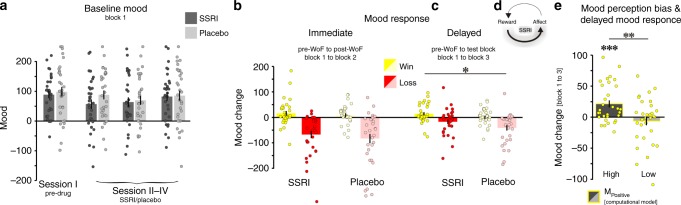
Selective serotonin reuptake inhibitors (SSRIs) constitute a first-line antidepressant intervention, though the precise cognitive and computational mechanisms that explain treatment response remain elusive. Using week-long SSRI treatment in healthy volunteer participants, we show serotonin enhances the impact of experimentally induced positive affect on learning of novel, and reconsolidation of previously learned, reward associations. Computational modelling indicated these effects are best accounted for by a boost in subjective reward perception during learning, following a positive, but not negative, mood induction. Thus, instead of influencing affect or reward sensitivity directly, SSRIs might amplify an interaction between the two, giving rise to a delayed mood response. We suggest this modulation of affect-learning dynamics may explain the evolution of a gradual mood improvement seen with these agents and provides a novel candidate mechanism for the unfolding of serotonin’s antidepressant effects over time.
Overview
The claims and statistics of this paper haven’t been checked yet.
Free: it reads the open-access text and checks the first 5 claims that cite a source we can check. Create a free account to check every claim.
Integrity signals
Registry
Cites
Statistics
Figures
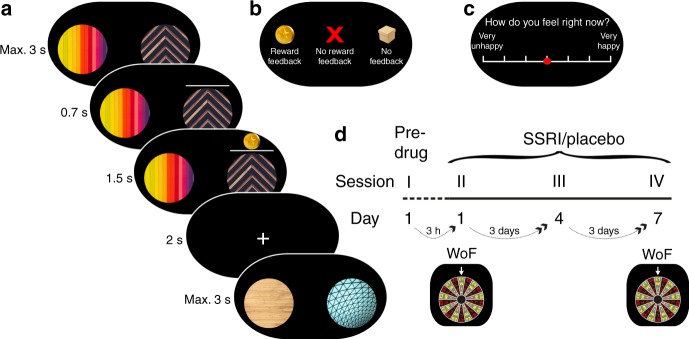
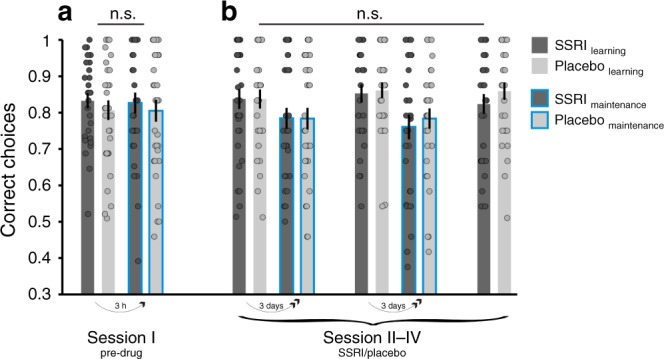
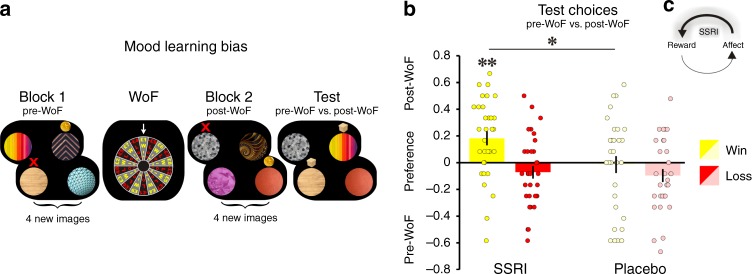
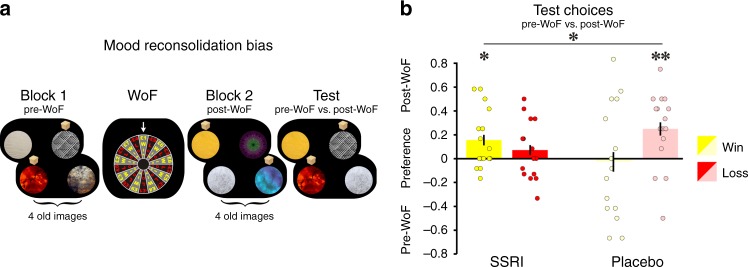
Verification
Claims the paper makes
The claims and statistics of this paper haven’t been checked yet.
Free: it reads the open-access text and checks the first 5 claims that cite a source we can check. Create a free account to check every claim.
Claims other papers make about this one
Each is checked against this paper’s own text: does it say what the citing paper says it does?
The cited source says what the claim attributes to it.
In the citing paper
“Some studies suggest that SSRIs have acute or subacute effects on cognition, e.g., affective processing bias [25–27]”
From Effects of escitalopram on synaptic density in the healthy human brain: a randomized controlled trial (2023) · cites this paper as [27]
Self-check
Percentages, sums and reported differences re-computed from the paper’s own numbers.
The self-check needs the paper’s full text.
Citations
Cites
Prospect Theory: An Analysis of Decision under Risk
Kahneman, D., & Tversky, A. (1979) · Econometrica · doi:10.2307/1914185 · Cited by 48,524
Prospect theory: An analysis of decision under risk
Kahneman, D., & Tversky, A. (1988) · Decision, Probability and Utility · doi:10.1017/cbo9780511609220.014 · Cited by 32,474
Development and validation of brief measures of positive and negative affect: The PANAS scales.
Watson, D., Clark, L. A., & Tellegen, A. (1988) · Journal of Personality and Social Psychology · doi:10.1037/0022-3514.54.6.1063 · Cited by 32,433
Reinforcement Learning: An Introduction
Sutton, R. S., & Barto, A. G. (1998) · IEEE Transactions on Neural Networks · doi:10.1109/tnn.1998.712192 · Cited by 27,225
(1970) · Cited by 24,983
Reinforcement Learning: An Introduction
(2005) · IEEE Transactions on Neural Networks · doi:10.1109/tnn.2004.842673 · Cited by 24,496
Beck, A. T., Steer, R. A., & Brown, G. (2011) · PsycTESTS Dataset · doi:10.1037/t00742-000 · Cited by 7,535
Cipriani, A., Furukawa, T. A., Salanti, G., Chaimani, A., Atkinson, L. Z., Ogawa, Y., Leucht, S., Ruhe, H. G., Turner, E. H., Higgins, J. P. T., et al. (2018) · The Lancet · doi:10.1016/s0140-6736(17)32802-7 · Cited by 3,541
Ferrari, A. J., Charlson, F. J., Norman, R. E., Patten, S. B., Freedman, G., Murray, C. J. L., Vos, T., & Whiteford, H. A. (2013) · PLoS Medicine · doi:10.1371/journal.pmed.1001547 · Cited by 3,115
Pearce, J. M., & Hall, G. (1980) · Psychological Review · doi:10.1037/0033-295x.87.6.532 · Cited by 3,023
Research works printed but not linked: 2
- Frijda, N. H. in Handbook of Emotions (eds Lewis, M. & Haviland, J. M.) 381–403 (Guilford Press, 1993).
- Bishop, C. M. Pattern Recognition and Machine Learning (Springer, 2006).
Cited by
Computational Psychiatry Needs Time and Context
Hitchcock, P. F., Fried, E. I., & Frank, M. J. (2022) · Annual Review of Psychology · doi:10.1146/annurev-psych-021621-124910 · Cited by 131
Smartphones and the Neuroscience of Mental Health
Gillan, C. M., & Rutledge, R. B. (2021) · Annual Review of Neuroscience · doi:10.1146/annurev-neuro-101220-014053 · Cited by 90
“…with this, week-long SSRI treatment in healthy volunteers has recently been shown to enhance the impact of positive mood inductions on subsequent learning, consistent with the proposal that the delayed mood response relates to how SSRIs influence learning in the world (Michely et al. 2020).”
ResultSharma, S., Chawla, S., Kumar, P., Ahmad, R., & Verma, P. K. (2024) · Brain Research · doi:10.1016/j.brainres.2024.149123 · Cited by 111
Emotions as ComputationsPreprint
Emanuel, A., & Eldar, E. (2022) · PsyArXiv (OSF Preprints) · doi:10.1016/j.neubiorev.2022.104977 · Cited by 97
Self-citationWang, K., Khoramjoo, M., Srinivasan, K. K., Gordon, P. M. K., Mandal, R., Jackson, D., Sligl, W., Grant, M. B., Penninger, J. M., Borchers, C. H., et al. (2023) · Cell Reports Medicine · doi:10.1016/j.xcrm.2023.101254 · Cited by 86
“26,27 Downregulation of glycerophospholipids, sphingolipids, phosphatidylcholines, and fatty acids has been demonstrated during the acute SARS-CoV-2 infection, particularly in severe patients.”
BackgroundŻurawek, D., & Turecki, G. (2021) · International Journal of Molecular Sciences · doi:10.3390/ijms222111312 · Cited by 73
“Although drugs which modulate serotonergic and/or noradrenergic neurotransmitter systems show effective antidepressant action [9], a significant proportion of individuals with depressive disorders do not respond to a given antidepressant treatment [10,11].”
BackgroundRoberts, C., Sahakian, B. J., & Robbins, T. W. (2020) · Neuroscience & Biobehavioral Reviews · doi:10.1016/j.neubiorev.2020.09.001 · Cited by 67
Johansen, A., Armand, S., Plavén-Sigray, P., Nasser, A., Ozenne, B., Petersen, I. N., Keller, S. H., Madsen, J., Beliveau, V., Møller, K., et al. (2023) · Molecular Psychiatry · doi:10.1038/s41380-023-02285-8 · Cited by 53
A neurobiological perspective on social influence: Serotonin and social adaptation
Duerler, P., Vollenweider, F. X., & Preller, K. H. (2022) · Journal of Neurochemistry · doi:10.1111/jnc.15607 · Cited by 53
“A recent study found that increasing 5- HT with SSRIs boosts positive affect of subjective value during both, learning of novel, and reconsolidation of previously learned reward associations (Michely et al., 2020).”
BackgroundEscitalopram increases synaptic density in the human brain over weeks: A randomized controlled trial
(2023) · doi:10.21203/rs.3.rs-2989150/v1 · Cited by 53
Mingrone, A., Kaffman, A., & Kaffman, A. (2020) · Frontiers in Neuroscience · doi:10.3389/fnins.2020.618593 · Cited by 52
“However, most drugs that show promise in preclinical studies fail in clinical trials, raising serious concerns about the utility of work in rodents to identify novel pharmacological interventions (Miller, 2010; O’Brien et al., 2014; Kaffman et al., 2019).”
BackgroundComputational models of subjective feelings in psychiatryPreprint
Kao, C.-H., Feng, G., Hur, J. K., Jarvis, H., & Rutledge, R. B. (2022) · PsyArXiv (OSF Preprints) · doi:10.1016/j.neubiorev.2022.105008 · Cited by 47
“Manipulating mood with task-irrelevant stimuli can influence later preferences (Eldar and Niv, 2015; Michely et al., 2020).”
BackgroundSerotonin modulates asymmetric learning from reward and punishment in healthy human volunteers
Michely, J., Eldar, E., Erdman, A., Martin, I. M., & Dolan, R. J. (2022) · Communications Biology · doi:10.1038/s42003-022-03690-5 · Cited by 43
Self-citationPositive affect as a computational mechanism
Eldar, E., Pessiglione, M., & van Dillen, L. F. (2021) · Current Opinion in Behavioral Sciences · doi:10.1016/j.cobeha.2021.01.007 · Cited by 42
Self-citationWaltmann, M., Herzog, N., Horstmann, A., & Deserno, L. (2021) · Neuroscience & Biobehavioral Reviews · doi:10.1016/j.neubiorev.2021.07.016 · Cited by 42
Gut microbiota metabolites: potential therapeutic targets for Alzheimer’s disease?
Zhang, S., Lu, J., Jin, Z., Xu, H., Zhang, D., Chen, J., & Wang, J. (2024) · Frontiers in Pharmacology · doi:10.3389/fphar.2024.1459655 · Cited by 30
“Moreover, selective serotonin reuptake inhibitors (SSRIs), a class of antidepressants, increase extracellular serotonin levels by inhibiting the reuptake of the neurotransmitter serotonin by nerve synapses (Michely et al., 2020).”
BackgroundRumination Derails Reinforcement Learning With Possible Implications for Ineffective Behavior
Hitchcock, P., Forman, E. M., Rothstein, N. J., Zhang, F., Kounios, J., Niv, Y., & Sims, C. R. (2021) · Clinical Psychological Science · doi:10.1177/21677026211051324 · Cited by 32
“Finally, note that the positive-feedback loop we are proposing is in the opposite direction as one recently postulated to lead to virtuous cycles of reward surprise and escalating mood caused by serotonergic agonists (Michely et al., 2020) yet at extremes creates oscillatory mood dynamics that could contribute to the…”
BackgroundHumans perseverate on punishment avoidance goals in multigoal reinforcement learning
Sharp, P. B., Russek, E. M., Huys, Q. J. M., Dolan, R. J., & Eldar, E. (2022) · eLife · doi:10.7554/elife.74402 · Cited by 29
Self-citationZandifar, A., Panahi, M., Badrfam, R., & Qorbani, M. (2024) · BMC Psychiatry · doi:10.1186/s12888-024-05627-0 · Cited by 28
Ethological computational psychiatry: Challenges and opportunities
Monosov, I. E., Zimmermann, J., Frank, M. J., Mathis, M. W., & Baker, J. T. (2024) · Current Opinion in Neurobiology · doi:10.1016/j.conb.2024.102881 · Cited by 24
“For example, human mood fluctuations may have a relationship to accumulating effects of momentum on processing reward prediction errors [10,29] which may explain at least some aspects of bipolar disorder, and could be manipulable with pharmacological interventions of serotonin [78].”
BackgroundMicrobial Metabolomes in Alzheimer’s Disease: From Pathogenesis to Therapeutic Potential
Borrego-Ruiz, A., & Borrego, J. J. (2025) · Current Issues in Molecular Biology · doi:10.3390/cimb47090724 · Cited by 22
“Selective serotonin reuptake inhibitors (SSRIs), which are widely used as antidepressants, elevate extracellular serotonin concentrations by preventing its reuptake at synaptic junctions [212].”
Feng, Y.-Y., Bromberg-Martin, E. S., & Monosov, I. E. (2024) · Cell Reports · doi:10.1016/j.celrep.2024.114341 · Cited by 21
A cognitive-computational account of mood swings in adolescence
Gregorová, K., Eldar, E., Deserno, L., & Reiter, A. M. F. (2024) · Trends in Cognitive Sciences · doi:10.1016/j.tics.2024.02.006 · Cited by 22
Self-citationA single oral dose of citalopram increases interoceptive insight in healthy volunteers
Livermore, J. J. A., Holmes, C. L., Moga, G., Adamatzky, K., Critchley, H., Garfinkel, S. N., & Campbell-Meiklejohn, D. K. (2022) · Psychopharmacology · doi:10.1007/s00213-022-06115-7 · Cited by 20
“By establishing a link between citalopram and interoception, the field has a new grounding for research exploring a common thread between seemingly distinct effects of serotonergic drugs, each of which has been independently linked to both interoception and serotonin, including: incentive processing (Marshall et al. 2…”
BackgroundLan, D. C. L., & Browning, M. D. (2022) · Computational Psychiatry · doi:10.5334/cpsy.83 · Cited by 22
Boosting Serotonin Increases Information Gathering by Reducing Subjective Cognitive Costs
Michely, J., Martin, I. M., Dolan, R. J., & Hauser, T. U. (2023) · Journal of Neuroscience · doi:10.1523/jneurosci.1416-22.2023 · Cited by 13
“Data from different tasks of the same participants were already published elsewhere (Michely et al., 2020a; Michely et al., 2020b).”
BackgroundSelf-citationRigoli, F., Martinelli, C., & Pezzulo, G. (2021) · Clinical Psychological Science · doi:10.1177/2167702621998344 · Cited by 13
“This implies that, once the learning rate is boosted by serotoninergic drugs, new learning is required for change to occur, in line with observations that serotoninergic drugs have delayed action (Michely et al., 2020).”
ResultBari, B. A., Moerke, M. J., Jedema, H. P., Effinger, D. P., Cohen, J. Y., & Bradberry, C. W. (2022) · Behavioral Neuroscience · doi:10.1037/bne0000492 · Cited by 11
Gao, F., Wei, Z., He, J., Xue, Q., & Huang, M. (2025) · BMC Psychology · doi:10.1186/s40359-025-03025-z · Cited by 10
“Biologically, dramatic fluctuations in estrogen and progesterone during menstruation may affect brain chemicals that regulate mood, such as serotonin, ultimately leading to mood changes [24, 25].”
Malamud, J., Lewis, G., Moutoussis, M., Duffy, L., Bone, J. K., Srinivasan, R., Lewis, G., & Huys, Q. J. M. (2024) · Psychological Medicine · doi:10.1017/s0033291724000837 · Cited by 9
“…in keeping with well-supported empirical evidence demonstrating that serotonin modulation impacts learning (Bari et al., 2010; Brigman et al., 2010; Michely et al., 2020; Scholl et al., 2017), and specifically punishment learning (Chamberlain et al., 2006; Cools, Roberts, & Robbins, 2008; Tanaka…”
Grace, A., & Uliana, D. L. (2026) · Molecular Psychiatry · doi:10.1038/s41380-026-03513-7 · Cited by 8
“Our concept is that disruption of serotonin signaling may impact mood [86, 87], but anhedonia and motivation are more in the domain of the dopamine system [88].”
Rigoli, F. (2022) · Journal of Cognitive Psychology · doi:10.1080/20445911.2022.2107650 · Cited by 11
“This view is consistent with the observation that the benefits of serotoninergic drugs on depression are delayed (Michely et al., 2020).”
ResultHierarchical TiO2–Ag/hydrogel coating used for outstanding antifouling detection of serotonin
He, X., Ma, S., Sun, N., Hou, M., Tan, Z., & Cao, R. (2024) · Macromolecular Research · doi:10.1007/s13233-024-00251-z · Cited by 7
Experience-based risk taking is primarily shaped by prior learning rather than by decision-making
Erdman, A., Gouwy, A., Sananes, G., Salman, M., Eizenstien, L., Eliav, S., & Eldar, E. (2025) · Nature Communications · doi:10.1038/s41467-025-61609-0 · Cited by 7
“Indeed, biases in learning from gains and losses have been linked to depression 45 – 47 , bipolar disorder 48 , anxiety 49 , and addiction 50 .”
Self-citationMcKarns, S. C. (2022) · Current Clinical Pharmacology · doi:10.2174/2772432817666220301104118 · Cited by 7
The computational psychopathology of emotion
Erdman, A., & Eldar, E. (2023) · Psychopharmacology · doi:10.1007/s00213-023-06335-5 · Cited by 7
“Thus, happiness makes reward seem higher (Clore 1992; Eldar and Niv 2015; Lerner and Keltner 2000; Vinckier et al. 2018; Michely et al. 2020), irritability makes the consequences of actions seem worse (Goldberg et al. 1999; Quigley and Tedeschi 1996; Tetlock et al. 2002; Keltner et al. 1993), and…”
BackgroundSelf-citationRedina, O. E., Babenko, V. N., Смагин, Д. А., Kovalenko, I. L., Galyamina, A. G., & Kudryavtseva, N. N. (2021) · Genes · doi:10.3390/genes12111811 · Cited by 7
Moningka, H., El‐Deredy, W., Bentall, R. P., & Mason, L. (2024) · Biological Psychiatry Global Open Science · doi:10.1016/j.bpsgos.2024.100330 · Cited by 7
“This model was further corroborated in a subsequent study that probed the mechanisms of action of antidepressant medication (24).”
Value-based decision-making between affective and non-affective memories
Pulcu, E., Guinea, C., Clemens, H., Harmer, C. J., & Murphy, S. E. (2024) · iScience · doi:10.1016/j.isci.2024.109329 · Cited by 6
“19 These studies, along with our ongoing work investigating the cognitive effects of ketamine on memory processes described in this article, will bridge the translational gap between human and rodent work that investigated the affective memory effects of traditional versus rapid antidepressants.”
BackgroundMethodResultInfluentialKoolschijn, R. S., Polner, B., Hoomans, J. M., Cools, R., Vassena, E., & den Ouden, H. E. M. (2024) · Current Opinion in Behavioral Sciences · doi:10.1016/j.cobeha.2024.101453 · Cited by 5
Vilca-Melendez, S., Uthaug, M. V., & Griffin, J. L. (2021) · Frontiers in Psychiatry · doi:10.3389/fpsyt.2021.742856 · Cited by 5
“5-HT is an essential neurotransmitter that has been implicated in mood regulation, learning mechanisms and decision making (61, 62).”
BackgroundExploring Candidate Gene Studies and Alexithymia: A Systematic Review
Hernández‐Díaz, Y., Mendoza, A. D. G., González‐Castro, T. B., Fresán, A., Tovilla‐Zárate, C. A., López‐Narváez, M. L., Juárez‐Rojop, I. E., & Nicolini, H. (2024) · Genes · doi:10.3390/genes15081025 · Cited by 4
Wiśniewska, K., Wolski, J., Anikiej‐Wiczenbach, P., Żabińska, M., Węgrzyn, G., & Pierzynowska, K. (2025) · European Child & Adolescent Psychiatry · doi:10.1007/s00787-025-02661-5 · Cited by 4
“Drugs in the serotonin reuptake inhibitor (SRRI) group are primarily used to treat depression [131].”
Hope for brain health: impacting the life course and society
Dasgupta, J., Furlano, J. A., Bandler, Z., Fittipaldi, S., Canty, A. J., Mohan, A., El-Jaafary, S. I., Ucheagwu, V. A., McGettrick, G., la Cruz-Góngora, V. V. D., et al. (2023) · Frontiers in Psychology · doi:10.3389/fpsyg.2023.1214014 · Cited by 4
Jiang, Y., Zhan, T., Wang, M., Duan, Y., Wu, X., Song, A., Liu, J., Shi, H., Dong, C., & Yan, Z. (2023) · Annals of Translational Medicine · doi:10.21037/atm-23-936 · Cited by 4
Unravelling Repetitive Negative Thinking With Reinforcement LearningPreprint
Bedder, R. L., Hitchcock, P., & Sharp, P. B. (2024) · PsyArXiv (OSF Preprints) · doi:10.31234/osf.io/cu46a · Cited by 4
Klöbl, M., Murgaš, M., Reed, M. B., Silberbauer, L., Hartmann, A. M., Godbersen, G. M., Gryglewski, G., Nics, L., Hahn, A., Rujescu, D., et al. (2025) · Translational Psychiatry · doi:10.1038/s41398-025-03407-2 · Cited by 3
“While SSRIs remain the standard treatment for major depressive disorder (MDD), they affect emotion processing in patients as well as healthy individuals [1 – 3].”
Gauthier, L., Drui, G., Debatisse, J., Saga, Y., Millot, M., Martinez, E., Météreau, É., Portier, K., Tobler, P. N., Tremblay, L., et al. (2025) · Translational Psychiatry · doi:10.1038/s41398-025-03794-6 · Cited by 3
“Conversely, serotonin is hypothesized to primarily contribute to negative valence and aversive processing [17, 21, 22], although fi ndings concerning drugs affecting serotonin signaling have been inconsistent [26, 52, 53].”
Zhang, J., Li, Y., Cai, M., Xiao, J., Liu, Y., Wu, B., Qianrige, Ma, Z., Xiang, H., Feng, X., et al. (2026) · Foods · doi:10.3390/foods15040636 · Cited by 3
Neal, J., Kim, S. H., Katz, B., Kim, I. H., & Lee, T. (2025) · Human Brain Mapping · doi:10.1002/hbm.70419 · Cited by 3
Lau, C., Lyndaker, A., Shah, S., Wakim, P., Mitchell, A. L., Monroe, C. L., Kim, A. J., Cropper, T., Nair, G., Snow, J., et al. (2025) · Annals of Clinical and Translational Neurology · doi:10.1002/acn3.70074 · Cited by 2
Basics of sleep–wake physiology for athletes and sports professionals
Kennedy, K. E. R., Ghani, S. B., Mason, B., Hansen, E. T., & Grandner, M. A. (2024) · Elsevier eBooks · doi:10.1016/b978-0-12-822969-9.00007-9 · Cited by 2
Zhang, M., Zhu, M., Huang, Y., Zheng, H., Kong, W., Yang, Y., & Wang, F. (2025) · International Journal of Environmental Health Research · doi:10.1080/09603123.2025.2555948 · Cited by 2
“Inflammatory factors have been demonstrated to influence human emotional responses and SWB by modulating serotonin levels (Michely et al. 2020; Fan et al. 2023).”
Beta-Endorphin and Serotonin Levels in Individuals with Methamphetamine use Disorder
Talib, N. H., Majeed, M. J., & Hussein, M. M. (2025) · Journal of the Faculty of Medicine Baghdad · doi:10.32007/jfacmedbaghdad3121 · Cited by 1
Crossen, M. J., & Hernandez, L. L. (2026) · Frontiers in Pharmacology · doi:10.3389/fphar.2026.1789010 · Cited by 1
“By preventing reuptake, SSRIs enhance serotonergic neurotransmission (Stahl, 1998), leading to improved mood (Michely et al., 2020), reduced anxiety (Garakani et al., 2020), and the regulation of other functions controlled by 5-HT, such as sleep, appetite, and pain perception (Boschloo et al.,…”
A New Mechanism of Serotonin Transporter Regulation by Simvastatin and the Isoprenylation Pathway
Deveau, C. (2021) · IUScholarWorks (Indiana University) · doi:10.7912/c2/343 · Cited by 1
Zeifman, R. J. (2024) · doi:10.32920/26052859.v1 · Cited by 1
Mason, L., Woelk, S. P., Eldar, E., & Rutledge, R. B. (2024) · bioRxiv (Cold Spring Harbor Laboratory) · doi:10.1101/2024.11.18.624111 · Cited by 1
Self-citationSerotonin system development and adult function are regulated by GDNFPreprint
Garton, D. R., Runneberger, I., Casserly, L., Schorling, T., Montaño-Rodriguez, A., Iivananen, V., Kopra, J. J., Mätlik, K., Fagerström‐Billai, F., Damdimopoulos, A. E., et al. (2024) · bioRxiv (Cold Spring Harbor Laboratory) · doi:10.1101/2024.12.11.627811 · Cited by 1
Malamud, J., Lewis, G., Moutoussis, M., Duffy, L., Bone, J. K., Srinivasan, R., Lewis, G., & Huys, Q. J. M. (2023) · Research Square · doi:10.21203/rs.3.rs-2776498/v1
Malamud, J., Lewis, G., Moutoussis, M., Duffy, L., Bone, J. K., Srinivasan, R., Lewis, G., & Huys, Q. J. M. (2023) · PsyArXiv (OSF Preprints) · doi:10.31234/osf.io/y4uxq
LAS FORMAS DEL APRENDIZAJE A LA LUZ DE LAS REDES NEURONALES ARTIFICIALES
Hernández, C., Garcia, V., & Hernàndez, F. J. (2023) · La Saeta Universitaria Académica y de Investigación · doi:10.56067/saetauniversitaria.v12i2.424
Approches neurocomputationnelles de la prise de décision sociale
Philippe, R. (2021) · theses.fr (ABES) · doi:10.70675/61804b3fza366z4bb4z89e3z33fbdd3f17fe
Barton, D., Puig, A., King, J., & Hickie, I. B. (2025) · The International Journal of Neuropsychopharmacology · doi:10.1093/ijnp/pyae059.031
THE ANTERIOR CINGULATE CORTEX LINKS SEROTONIN TRANSPORTER GENETICS AND EMOTION PROCESSING
Klöbl, M., Murgaš, M., Reed, M. B., Silberbauer, L., Hartmann, A. M., Godbersen, G. M., Hahn, A., Gryglewski, G., Rujescu, D., & Lanzenberger, R. R. (2025) · The International Journal of Neuropsychopharmacology · doi:10.1093/ijnp/pyae059.032
Controllability arbitrates between distinct emotions with opposing effects on behaviorPreprint
Solomyak, L., Hallquist, M. N., Dombrovski, A. Y., & Eldar, E. (2025) · Research Square · doi:10.21203/rs.3.rs-7864842/v1
Self-citationLinking reward-learning and affect in health and depression
Halahakoon, D. C. (2023) · Oxford University Research Archive (ORA) (University of Oxford) · doi:10.5287/ora-4rwgv45d2
Psychotherapy Processes in PTSD Treatment: Trajectories of Positive and Negative Valence Systems
Rosencrans, P. L. (2023) · ResearchWorks at the University of Washington (University of Washington)
Angelescu, I. (2024) · UCL Discovery (University College London)
The effects of iron deficiency and iron repletion on mitochondrial function: An in vivo study
Cabolis, K. (2023) · UCL Discovery (University College London)
The Mouth After Midnight: Nocturnal Wakefulness and Eating Behavior
Kennedy, K. E. R., & Kennedy, K. E. R. (2024) · UA Campus Repository (The University of Arizona)
Computational models of mood: towards applications to psychiatry
Benhamou, M. (2023) · HAL
Karamancı, C. (2025) · UCL Discovery (University College London)
Taira, M. (2022) · Institutional Repositories DataBase (IRDB) · doi:10.15102/1394.00002295
Role of 5-HT and BDNF in Premature Ejaculation With Anxiety or Depression
Wei, Y., Ning, B., Wang, S., Chen, W., Zhang, L., Chen, C., Qiu, J., & Hong, Z. (2026) · Journal of Integrative Neuroscience · doi:10.31083/jin45471
Caractérisation neuro-computationnelle de l'humeur : causes et conséquences
Carrillo, P. (2024) · theses.fr (ABES) · doi:10.70675/181aec0cz429dz4bccz83f0za479cbef52f7
Serotonin reuptake inhibition rapidly enhances affect-reward coupling and improves mood over timePreprint
Mills, R., Durand, A., Croal, M., Rutledge, R. B., & Mason, L. (2026) · bioRxiv (Cold Spring Harbor Laboratory) · doi:10.64898/2026.07.03.736315
“11 Second, our results build on evidence that SSRIs acutely reduce negative affective bias, which studies have previously demonstrated with negative emotional cues (e.g., aversive facial expressions).”
InfluentialAssessing the validity and reliability of computational phenotyping of mood
Carrillo, P., Benhamou, M., Heerema, R., Daunizeau, J., Pessiglione, M., & Vinckier, F. (2026) · PLoS Computational Biology · doi:10.1371/journal.pcbi.1014597 · Cited by 1
Rifai, A., Huriyah, H., Sari, J. F., Shafira, N. D., & Ramadhan, M. N. Z. (2025) · FLIP Foreign Language Instruction Probe · doi:10.54213/flip.v4i2.1007
“Serotonin, in turn, stabilises mood, reduces anxiety, and supports social ease (Michely et al., 2020; Jones et al., 2020).”
Ebneabbasi, A., Warrier, V., Montagnese, M., Romero-García, R., Bethlehem, R. A. I., & Rittman, T. (2026) · medRxiv · doi:10.64898/2026.08.29.26361714
Metadata
- Authors
- Michely, J., Eldar, E., Martin, I. M., & Dolan, R. J.
- Affiliations
- Wellcome Centre for Human Neuroimaging (GB)
- Hebrew University of Jerusalem (IL)
- Corresponding author
- Michely, Jochen
- Venue
- Nature Communications
- Published
- 2020-05-11
- Volume
- 11
- Issue
- 1
- Pages
- 2335-2335
- ISSN
- 2041-1723 (ISSN-L)
- PMC
- PMC7214430
- OpenAlex
- W3023864941
- Cited by
- 72
- References
- 59
- Citations by year
- 2026: 7 · 2025: 8 · 2024: 21 · 2023: 11 · 2022: 10 · 2021: 12 · 2020: 3
- FWCI
- 4.13
- Type
- journal article
- Language
- en
- Open access
- gold
- doi.org
- Licence
- cc-by
- creativecommons.org/licenses/by/4.0 (tdm)
- creativecommons.org/licenses/by/4.0 (vor)
- Locations
- Nature Communications (publishedVersion, cc-by)
- PubMed Central (publishedVersion, cc-by)
- PubMed (publishedVersion)
- RePEc: Research Papers in Economics (submittedVersion)
- DOAJ (DOAJ: Directory of Open Access Journals) (submittedVersion, cc-by-sa)
- UCL Discovery (University College London) (submittedVersion)
- MPG.PuRe (Max Planck Society) (submittedVersion)
- Funders
- Deutsche Forschungsgemeinschaft (MI 2158/1-1)
- Topics
- Life Sciences › Neuroscience › Cellular and Molecular Neuroscience › Neurotransmitter Receptor Influence on Behavior
- Health Sciences › Medicine › Pharmacology (medical) › Treatment of Major Depression
- Life Sciences › Neuroscience › Cognitive Neuroscience › Neural and Behavioral Psychology Studies
- Keywords
- serotonin, mood, selective serotonin reuptake inhibitors, antidepressant mechanism, reward learning, memory reconsolidation, positive affect, computational modelling, mood induction, treatment response
- MeSH terms
- Adult, Affect, Female, Humans, Learning, Male, Reward, Serotonin, Task Performance and Analysis, Selective Serotonin Reuptake Inhibitors, Young Adult
About these checks
Registry, retraction, Cites and statistics results are computed, not judged, with one exception: a printed reference that no index lists is read once by a model before it counts as a citation error. Claims are extracted by a model and kept only when their quote appears verbatim in the text; each cited source is then checked, with a model’s help, for whether it says what the claim relies on. Those verdicts can be wrong — read the claim’s quote and the cited source before relying on one.
Statistics and arithmetic are recomputed, not judged.
Confidence bands are shown only for fields calibrated on our annotated test set. None is calibrated yet, so no band is shown.
What counts as a claim ›How we measure confidence ›How we check this ›
Are you an author, or do you see a problem with this page? Request a review
Data sources
Bibliographic data: Semantic Scholar, OpenAlex, Crossref.
Contains information from the Semantic Scholar Academic Graph Datasets, made available under the ODC Attribution License (ODC-BY 1.0).
Semantic Scholar’s data is described in: Kinney, R., et al. (2023). The Semantic Scholar Open Data Platform. arXiv:2301.10140.
