

The DOI matches its Crossref record; 51 of the 51 references it cites were found in a registry or an index.
Synergistic lipid compositions for albumin receptor mediated delivery of mRNA to the liver
Open accessAbstract
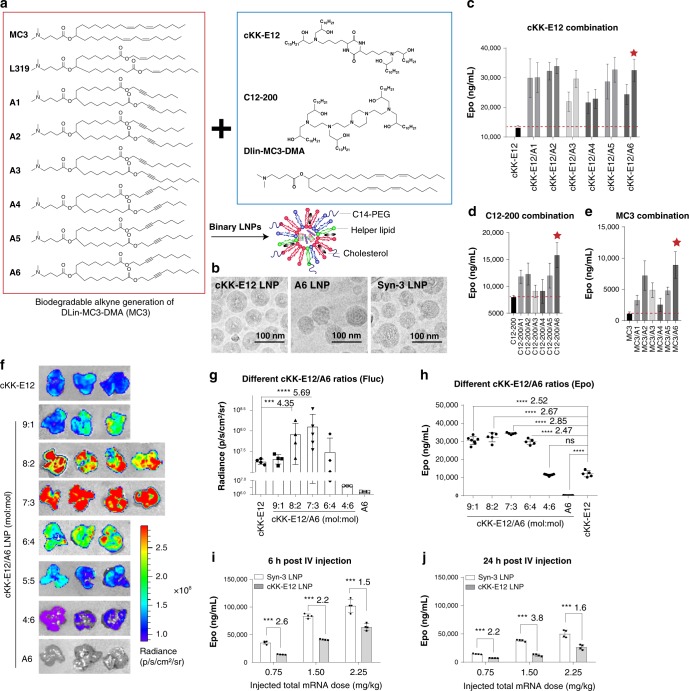
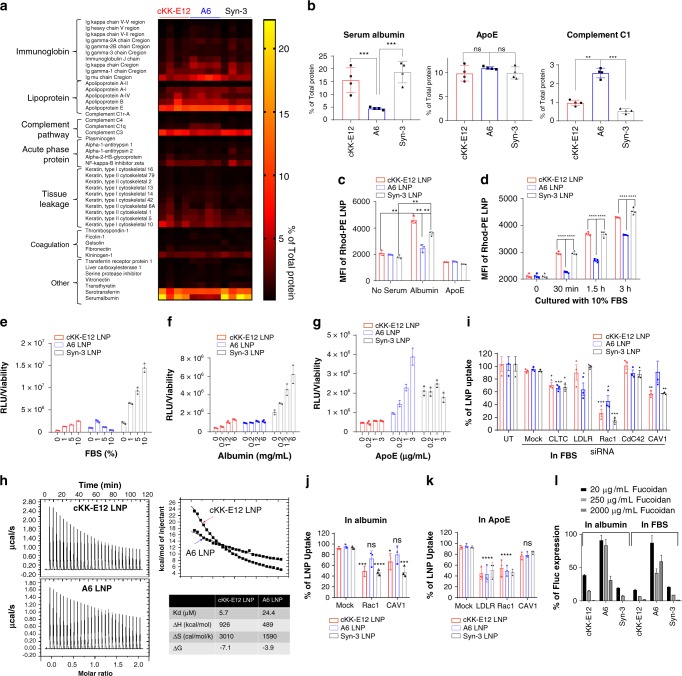
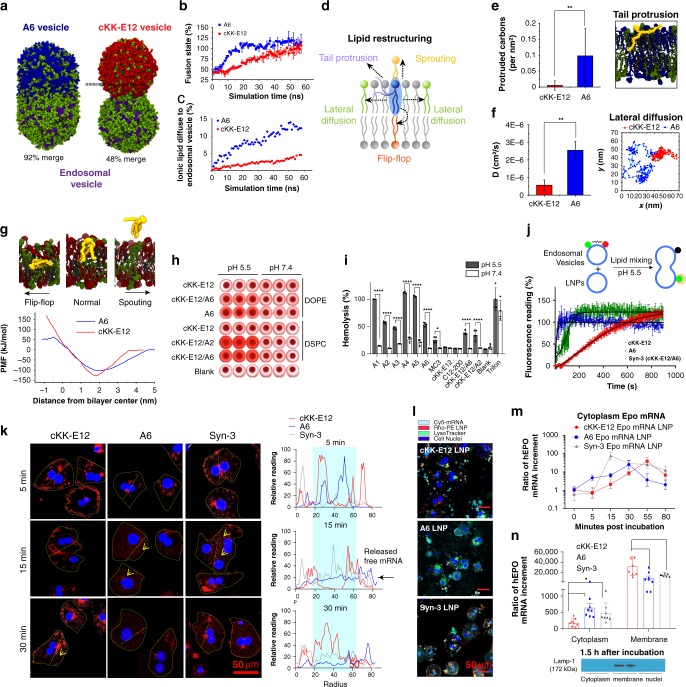
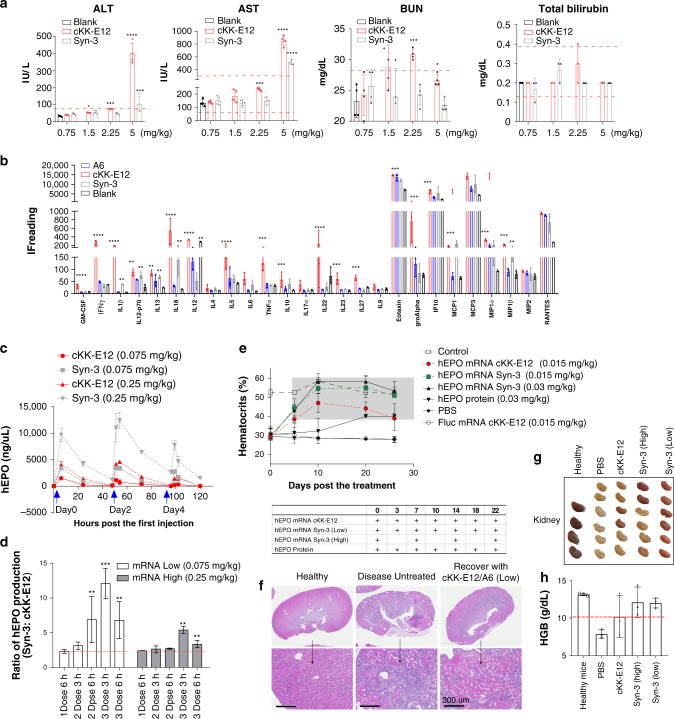
Lipid-like nanoparticles (LNPs) have potential as non-viral delivery systems for mRNA therapies. However, repeated administrations of LNPs may lead to accumulation of delivery materials and associated toxicity. To address this challenge, we have developed biodegradable lipids which improve LNPs clearance and reduce toxicity. We modify the backbone structure of Dlin-MC3-DMA by introducing alkyne and ester groups into the lipid tails. We evaluate the performance of these lipids when co-formulated with other amine containing lipid-like materials. We demonstrate that these formulations synergistically facilitate robust mRNA delivery with improved tolerability after single and repeated administrations. We further identify albumin-associated macropinocytosis and endocytosis as an ApoE-independent LNP cellular uptake pathway in the liver. Separately, the inclusion of alkyne lipids significantly increases membrane fusion to enhance mRNA release, leading to synergistic improvement of mRNA delivery. We believe that the rational design of LNPs with multiple amine-lipids increases the material space for mRNA delivery.
Overview
The claims and statistics of this paper haven’t been checked yet.
Run the check — free, no account needed. It reads the open-access text and checks the sources it cites.
Integrity signals
Registry
Cites
Statistics
Figures
Verification
Claims the paper makes
The claims and statistics of this paper haven’t been checked yet.
Run the check — free, no account needed. It reads the open-access text and checks the sources it cites.
Claims other papers make about this one
Each is checked against this paper’s own text: does it say what the citing paper says it does?
In the citing paper
“Endosomal escape can be increased by optimizing the pKa values of ionizable lipids66,76–78,88,100,140.”
From Lipid nanoparticles for mRNA delivery (2021) · cites this paper as [100]
In the citing paper
“Moreover, the delivery efficacy of mRNA could be improved, for example, by rational design of lipids through modulation of head groups and hydrophobic tails to increase cellular uptake and endosomal escape of lipid nanoparticle–mRNA formulations64,66,76–78,88,97,100,114,140,141.”
From Lipid nanoparticles for mRNA delivery (2021) · cites this paper as [100]
Self-check
Percentages, sums and reported differences re-computed from the paper’s own numbers.
The self-check needs the paper’s full text.
Citations
Cites
Comparison of simple potential functions for simulating liquid water
Jorgensen, W. L., Chandrasekhar, J., Madura, J., Impey, R., & Klein, M. (1983) · The Journal of Chemical Physics · doi:10.1063/1.445869 · Cited by 38,397
GROMACS: Fast, flexible, and free
van der Spoel, D., Lindahl, E. R., Hess, B., Groenhof, G., Mark, A. E., & Berendsen, H. J. C. (2005) · Journal of Computational Chemistry · doi:10.1002/jcc.20291 · Cited by 19,461
Jorgensen, W. L., Maxwell, D. S., & Tirado-Rives, J. (1996) · Journal of the American Chemical Society · doi:10.1021/ja9621760 · Cited by 14,078
Membrane lipids: where they are and how they behave
van Meer, G., Voelker, D. R., & Feigenson, G. W. (2008) · Nature Reviews Molecular Cell Biology · doi:10.1038/nrm2330 · Cited by 7,157
THE weighted histogram analysis method for free‐energy calculations on biomolecules. I. The method
Kumar, S., Rosenberg, J. M., Bouzida, D., Swendsen, R. H., & Kollman, P. A. (1992) · Journal of Computational Chemistry · doi:10.1002/jcc.540130812 · Cited by 6,808
In-gel digestion for mass spectrometric characterization of proteins and proteomes
Shevchenko, A., Tomas, H., Havli, J., Olsen, J. V., & Mann, M. (2006) · Nature Protocols · doi:10.1038/nprot.2006.468 · Cited by 4,947
mRNA vaccines — a new era in vaccinology
Pardi, N., Hogan, M. J., Porter, F. W., & Weissman, D. (2018) · Nature Reviews Drug Discovery · doi:10.1038/nrd.2017.243 · Cited by 4,667
Ross, P. L., Huang, Y. N., Marchese, J. N., Williamson, B., Parker, K., Hattan, S., Khainovski, N., Pillai, S., Dey, S., Daniels, S., et al. (2004) · Molecular & Cellular Proteomics · doi:10.1074/mcp.m400129-mcp200 · Cited by 4,401
Self-citationRapid formation of plasma protein corona critically affects nanoparticle pathophysiology
Tenzer, S., Docter, D., Kuharev, J., Musyanovych, A., Fetz, V., Hecht, R., Schlenk, F., Fischer, D., Kiouptsi, K., Reinhardt, C., et al. (2013) · Nature Nanotechnology · doi:10.1038/nnano.2013.181 · Cited by 2,283
Rational design of cationic lipids for siRNA delivery
Semple, S. C., Akinc, A., Chen, J., Sandhu, A. P., Mui, B. L., Cho, C. K., Sah, D. W. Y., Stebbing, D., Crosley, E. J., Yaworski, E., et al. (2010) · Nature Biotechnology · doi:10.1038/nbt.1602 · Cited by 1,822
Research works printed but not linked: 3
- Kauffman, K. J. et al. Optimization of lipid nanoparticle formulations for mRNA delivery in vivo with fractional factorial and definitive screening designs. Nano Lett. 15, 7300–7306 (2015). · DOI · Paper page
- Jorgensen, W. L. M. D. S. & Tirado-Rives, J. Development and testing of the OPLS all-atom force field on conformational energetics and properties of organic liquids. J. Am. Chem. Soc. 118, 12 (1996).
- Jorgensen, W., Gao, J. & Carlo, M. Simulations of the hydration of ammonium and carboxylate ions. J. Phys. Chem. 47907, 9 (1986).
Cited by
Sorted by citations
Items 101–200 of 343
Jung, O., Jung, H., Thủy, L. T. T., Choi, M., Kim, S., Jeon, H., Yang, J., Kim, S., Kim, T., Lee, E., et al. (2024) · Advanced Healthcare Materials · doi:10.1002/adhm.202303857 · Cited by 47
The dynamic process of mRNA delivery by lipid nanoparticles in vivo
Ma, R., Li, Y., Wei, Y., Zhou, J., Ma, J., Zhang, M., Tu, J., Jiang, J., Xie, S., Tan, W., et al. (2024) · Nano Today · doi:10.1016/j.nantod.2024.102325 · Cited by 46
Lipid nanomaterials-based RNA therapy and cancer treatment
Zhang, X., Hai, L., Gao, Y., Yu, G., & Sun, Y. (2022) · Acta Pharmaceutica Sinica B · doi:10.1016/j.apsb.2022.10.004 · Cited by 46
Endo/Lysosomal-Escapable Lipid Nanoparticle Platforms for Enhancing mRNA Delivery in Cancer Therapy
Wang, J., Chen, R., Xie, Y., Qin, X., Zhou, Y., & Xu, C. (2025) · Pharmaceutics · doi:10.3390/pharmaceutics17070803 · Cited by 53
“Notably, the introduction of alkyne lipids significantly enhanced membrane fusion, thereby enhancing mRNA release and resulting in a synergistic improvement in mRNA delivery efficiency [106].”
Delivery of Oligonucleotides Using a Self-Degradable Lipid-Like Material
Tanaka, H., Takata, N., Sakurai, Y., Yoshida, T., Inoué, T., Tamagawa, S., Nakai, Y., Tange, K., Yoshioka, H., Maeki, M., et al. (2021) · Pharmaceutics · doi:10.3390/pharmaceutics13040544 · Cited by 43
Nanoscale delivery platforms for RNA therapeutics: Challenges and the current state of the art
Rhym, L. H., & Anderson, D. G. (2022) · Med · doi:10.1016/j.medj.2022.02.001 · Cited by 45
Self-citationOu, L., Chen, H., Yuan, B., & Yang, K. (2022) · ACS Nano · doi:10.1021/acsnano.2c04774 · Cited by 42
Delivery of synthetic mRNAs for tissue regeneration
Steinle, H., Weber, M., Stoppelkamp, S., Große‐Berkenbusch, K., Golombek, S., Weber, M., Çanak-Ipek, T., Trenz, S.-M., Schlensak, C., & Avci‐Adali, M. (2021) · Advanced Drug Delivery Reviews · doi:10.1016/j.addr.2021.114007 · Cited by 42
A fluorinated ionizable lipid improves the mRNA delivery efficiency of lipid nanoparticles
Huo, H., Cheng, X., Xu, J., Lin, J., Chen, N., & Lu, X. (2023) · Journal of Materials Chemistry B · doi:10.1039/d3tb00516j · Cited by 39
Self-citationThe potential of mRNA vaccines in cancer nanomedicine and immunotherapy
Pan, S., Fan, R., Han, B. R., Tong, A., & Guo, G. F. (2023) · Trends in Immunology · doi:10.1016/j.it.2023.11.003 · Cited by 39
Deyhimfar, R., Izady, M., Shoghi, M., Kazazi, M. H., Ghazvini, Z. F., Nazari, H., Fekrirad, Z., & Arefian, E. (2024) · Heliyon · doi:10.1016/j.heliyon.2024.e26971 · Cited by 42
“Enhancing endosomal escape remains an important goal in improving protein production efficiency [122,123].”
BackgroundIonizable polymeric micelles (IPMs) for efficient siRNA delivery
Zhou, Z., Yu, F., Jiang, M., Yao, Z., Wang, J., Pan, F., Feng, R., Zhao, C., Ma, Y., Zhou, J., et al. (2025) · Nature Communications · doi:10.1038/s41467-024-55721-w · Cited by 42
“…studies have shown that soluble ApoE adsorbed on the surface of LNP 51,52 in the circulation promotes binding to low-density lipoprotein receptors (LDLr) highly expressed on the sinusoidal surface of hepatocytes 53,54 , leading to LNP internalization and subsequent RNA intracellular delivery 55 .”
Gu, K., Liang, T., Hu, L., Zhao, Y., Ying, W., Zhang, M., Chen, Y., Liang, B., Lin, X., Zhang, Y., et al. (2025) · Nature Communications · doi:10.1038/s41467-025-67674-9 · Cited by 54
Self-citationLi, M., Li, S., Huang, Y., Chen, H., Zhang, S., Zhang, Z., Wu, W., Zeng, X., Zhou, B., & Li, B. (2021) · Advanced Materials · doi:10.1002/adma.202101707 · Cited by 39
Self-citationTowards design of drugs and delivery systems with the Martini coarse-grained model
Kjølbye, L. R., Pereira, G. P., Bartocci, A., Pannuzzo, M., Albani, S., Marchetto, A., Jiménez‐García, B., Martin, J., Rossetti, G., Cecchini, M., et al. (2022) · QRB Discovery · doi:10.1017/qrd.2022.16 · Cited by 42
“Within the drug delivery field, one could imagine correlating predicted structures and organisation of SNs based on CG-MD simulation with fusion and transfection efficacy (Miao et al., 2020) measured experimentally, combined with fluorescence studies (Chen et al.”
MethodMinimizing the ratio of ionizable lipid in lipid nanoparticles for in vivo base editing
Chen, Q., Wang, X., Zhang, Y., Tian, M., Duan, J., Zhang, Y., & Yin, H. (2024) · National Science Review · doi:10.1093/nsr/nwae135 · Cited by 41
“We used Firefly luciferase (Fluc) mRNA to measure the efficiency of in vitro and in vivo delivery [38 ,40 ].”
MethodWu, K., Xu, F., Dai, Y., Jin, S., Zheng, A., Zhang, N., & Xu, Y. (2024) · Journal of Controlled Release · doi:10.1016/j.jconrel.2024.11.007 · Cited by 37
Rational design of lipid nanoparticles for enabling gene therapies
Brimacombe, C. A., Kulkarni, J. A., Cheng, M. H. Y., An, K., Witzigmann, D., & Cullis, P. R. (2025) · Molecular Therapy — Methods & Clinical Development · doi:10.1016/j.omtm.2025.101518 · Cited by 45
“85 The role of other serum proteins within the protein corona has not been studied as extensively; however, it is likely that the protein corona plays a central role in passive tissue/cell type targeting of all LNPs. 79,149,152”
Nanotechnology for immuno-oncology
Grippin, A., Lee, D., Parkes, E. E., Jiang, W., & Kim, B. Y. S. (2025) · Nature Cancer · doi:10.1038/s43018-025-01025-x · Cited by 48
“LNPs then escape the endosome by fusing with the endosome membrane to deliver mRNA to the cytosol, where the mRNA can be translated into peptides and shuttled for presentation on MHC complexes 170–172 .”
Acidic pH-induced changes in lipid nanoparticle membrane packing
Koitabashi, K., Nagumo, H., Nakao, M., Machida, T., Yoshida, K., & Sakai‐Kato, K. (2021) · Biochimica et Biophysica Acta (BBA) - Biomembranes · doi:10.1016/j.bbamem.2021.183627 · Cited by 40
Strategies for targeted gene delivery using lipid nanoparticles and cell-derived nanovesicles
Lee, D. S., Amirthalingam, S., Lee, C., Rajendran, A. K., Ahn, Y.-H., & Hwang, N. S.-Y. (2023) · Nanoscale Advances · doi:10.1039/d3na00198a · Cited by 40
Shan, B., Zhou, Y., Yin, M., Deng, Y., Ge, C., Liu, Z., Zhou, R., Dong, Q., Zhou, X., & Yin, L. (2023) · Small Methods · doi:10.1002/smtd.202300667 · Cited by 38
Medjmedj, A., Loth, A. N., Clémençon, R., Hamáček, J., Pichon, C., & Perche, F. (2022) · Nanomaterials · doi:10.3390/nano12142446 · Cited by 39
“sugge tin this will not affect he capacity of DOPE/βS LNPs to transfect cells [46].”
BackgroundResultMachine learning techniques for lipid nanoparticle formulation
Li, H., Zhao, Y., & Xu, C. (2025) · Nano Convergence · doi:10.1186/s40580-025-00502-4 · Cited by 40
An overview of lipid constituents in lipid nanoparticle mRNA delivery systems
Wu, S., Lin, L., Shi, L., & Liu, S. (2024) · Wiley Interdisciplinary Reviews Nanomedicine and Nanobiotechnology · doi:10.1002/wnan.1978 · Cited by 35
mRNA delivery via non-viral carriers for biomedical applications
Shuai, Q., Zhu, F., Zhao, M., & Yan, Y. (2021) · International Journal of Pharmaceutics · doi:10.1016/j.ijpharm.2021.121020 · Cited by 35
Lian, Z., Zheng, L., Liu, S., Zhang, J., Zhou, J. J., Wu, J., Ouyang, S., Li, J., & Yang, H. (2025) · Journal of the American Chemical Society · doi:10.1021/jacs.5c05367 · Cited by 35
Gallud, A., Munson, M. J., Liu, K., Idström, A., Barriga, H. M. G., Tabaei, S. R., Aliakbarinodehi, N., Ojansivu, M., Lubart, Q., Doutch, J., et al. (2021) · bioRxiv (Cold Spring Harbor Laboratory) · doi:10.1101/2021.08.20.457104 · Cited by 35
Pre-clinical non-viral vectors exploited for in vivo CRISPR/Cas9 gene editing: an overview
Rouatbi, N., McGlynn, T., & Al‐Jamal, K. T. (2022) · Biomaterials Science · doi:10.1039/d1bm01452h · Cited by 33
Lee, S. M., Cheng, Q., Yu, X., Liu, S., Johnson, L. T., & Siegwart, D. J. (2020) · Angewandte Chemie · doi:10.1002/ange.202013927 · Cited by 33
Kinetics of RNA-LNP delivery and protein expression
Müller, J., Schäffler, N. G., Kellerer, T., Schwake, G., Ligon, T. S., & Rädler, J. O. (2024) · European Journal of Pharmaceutics and Biopharmaceutics · doi:10.1016/j.ejpb.2024.114222 · Cited by 35
Li, J., Men, K., Gao, Y., Wu, J., Lei, S., Yang, Y., & Pan, H. (2021) · Molecular Pharmaceutics · doi:10.1021/acs.molpharmaceut.1c00461 · Cited by 30
Cheng, X., Liu, S., Sun, J., Liu, L., Ma, X., Li, J., Fan, B., Chen, Y., Zhao, Y., Liu, S., et al. (2023) · Advanced Materials · doi:10.1002/adma.202310886 · Cited by 30
Self-citationLipid-nanoparticle-enabled nucleic acid therapeutics for liver disorders
Arjunan, P., Kathirvelu, D., Mahalingam, G., Goel, A., Zacharaiah, U. G., Srivastava, A., & Marepally, S. K. (2024) · Acta Pharmaceutica Sinica B · doi:10.1016/j.apsb.2024.04.015 · Cited by 33
“During mRNA release, the nanoparticles also promote membrane fusion, which enhances the delivery of mRNA 140 .”
BackgroundZhao, Y., Wang, Z. M., Song, D., Chen, M., & Xu, Q. (2024) · Current Opinion in Chemical Biology · doi:10.1016/j.cbpa.2024.102499 · Cited by 30
Engineering challenges and translational opportunities in emerging gene delivery platforms
Ma, Y., Dong, S., Wu, A., Jeong, S. D., Lee, A. S., Jiang, W., & Kim, B. Y. S. (2026) · Nature Biomedical Engineering · doi:10.1038/s41551-026-01643-5 · Cited by 36
“Notably, apolipoprotein E serves as a homing device, facilitating hepatic uptake via pathways mediated by low-density lipoprotein receptors 305 .”
Dosta, P., Demos, C., Ramos, V., Kang, D. W., Kumar, S., Jo, H., & Borrós, S. (2021) · Cardiovascular Engineering and Technology · doi:10.1007/s13239-021-00518-x · Cited by 27
Nucleic acid delivery and nanoparticle design for COVID vaccines
Andresen, J. L., & Fenton, O. S. (2021) · MRS Bulletin · doi:10.1557/s43577-021-00169-2 · Cited by 32
Martini 3 Building Blocks for Lipid Nanoparticle Design
Kjølbye, L. R., Valério, M., Paloncýová, M., Borges-Araújo, L., Pestana-Nobles, R., Grünewald, F., Bruininks, B. M. H., Araya‐Osorio, R., Šrejber, M., Mera‐Adasme, R., et al. (2025) · Journal of Chemical Theory and Computation · doi:10.1021/acs.jctc.5c01207 · Cited by 28
Design principles of lipid nanoparticles for RNA delivery
Arral, M. L., & Whitehead, K. A. (2026) · Nature Reviews Bioengineering · doi:10.1038/s44222-026-00401-1 · Cited by 41
“However, the role of caveolin-mediated endocytosis of lipid nanoparticles is not yet established, as studies have reported both a lack of involvement 175 and a contributory role in uptake, albeit to a lesser extent than clathrin-mediated endocytosis 158 .”
mRNA cancer vaccines from bench to bedside: a new era in cancer immunotherapy
Shariati, A., Khani, P., Nasri, F., Afkhami, H., Khezrpour, A., Kamrani, S., Shariati, F. S., Alavimanesh, S., & Modarressi, M. H. (2024) · Biomarker Research · doi:10.1186/s40364-024-00692-9 · Cited by 27
Sato, Y., Nakamura, T., Yamada, Y., & Harashima, H. (2024) · Journal of Controlled Release · doi:10.1016/j.jconrel.2024.05.006 · Cited by 25
Insights into the formulation of lipid nanoparticles for the optimization of mRNA therapeutics
Jiao, X., He, X., Qin, S., Yin, X., Song, T., Duan, X., Shi, H., Jiang, S., Zhang, Y., & Song, X. (2024) · Wiley Interdisciplinary Reviews Nanomedicine and Nanobiotechnology · doi:10.1002/wnan.1992 · Cited by 28
Ge, X., He, Z., Yang, H., Pan, X., Yan, L., Shi, Y., Chen, Y., & Liu, Z. (2025) · Journal of Controlled Release · doi:10.1016/j.jconrel.2025.113906 · Cited by 25
Self-citationSafe and Effective Delivery of mRNA Using Modified PEI-Based Lipopolymers
Wang, H., Liu, X., Ai, X., Remant-Bahadur, K. C., Dick, T. A., Yan, B., Lu, T., Zhou, X., Luo, R., Liu, M., et al. (2023) · Pharmaceutics · doi:10.3390/pharmaceutics15020410 · Cited by 25
Delivering mRNA to a human NK cell line, NK-92 cells, by lipid nanoparticles
Nakamura, T., Nakade, T., Sato, Y., & Harashima, H. (2023) · International Journal of Pharmaceutics · doi:10.1016/j.ijpharm.2023.122810 · Cited by 24
Wu, M., Hau, P. M., Li, L. X., Tsang, C. M., Yang, Y., Taghbalout, A., Chung, G. T., Hui, S. Y., Tang, W. C., Jillette, N., et al. (2024) · Nature Communications · doi:10.1038/s41467-024-48031-8 · Cited by 25
“30,31 .”
Self-citationHarnessing mRNA-lipid nanoparticles as innovative therapies for autoimmune diseases
Razavi, R., Kegel, M., Muscat-Rivera, J., Weissman, D., & Melamed, J. R. (2025) · Molecular Therapy — Methods & Clinical Development · doi:10.1016/j.omtm.2025.101566 · Cited by 28
Akita, H. (2020) · Biological and Pharmaceutical Bulletin · doi:10.1248/bpb.b20-00534 · Cited by 23
Tanaka, H., Sato, Y., Nakabayashi, T., Tanaka, A., Nishio, K., Matsumoto, C., Matsumaru, A., Yamakawa, T., Ishizaki, K., Ueda, K., et al. (2025) · Nano Letters · doi:10.1021/acs.nanolett.4c06643 · Cited by 23
Fluorinated Ionizable Lipids for Efficient Spleen-Targeted mRNA Delivery in Cancer Immunotherapy
Zhang, Y., Shao, B., Jiang, K., Cen, J., Liu, Y., Tan, J., Zhang, L., Li, K., You, C., He, Z., et al. (2025) · Journal of the American Chemical Society · doi:10.1021/jacs.5c13982 · Cited by 24
Advances in the study of LNPs for mRNA delivery and clinical applications
Wang, B., Shen, B., Xiang, W., & Shen, H. (2024) · Virus Genes · doi:10.1007/s11262-024-02102-6 · Cited by 22
“This disruption facilitates the release of mRNA into the cell where it binds to ribosomes responsible for protein production and undergoes translation into viral proteins [52].”
Younis, M. A., Sato, Y., Kimura, S., & Harashima, H. (2025) · RSC Pharmaceutics · doi:10.1039/d5pm00079c · Cited by 24
Recent Advances in Lipid Nanoparticles: Nucleic Acid Therapeutics and Targeting Strategies
Sarmah, S., Baidya, S., & De, M. (2025) · Small · doi:10.1002/smll.202506812 · Cited by 25
The clinical progress and challenges of mRNA vaccines
Yu, M., Wang, N., Zhu, J., & Lin, Y. (2023) · Wiley Interdisciplinary Reviews Nanomedicine and Nanobiotechnology · doi:10.1002/wnan.1894 · Cited by 23
Zhang, H., Gao, X., Sun, Q., Dong, X., Zhu, Z., & Yang, C. (2024) · Acta Biomaterialia · doi:10.1016/j.actbio.2024.02.004 · Cited by 21
Zamora, M. E., Omo‐Lamai, S., Patel, M. N., Wu, J., Arguiri, E., Vr, M., Myerson, J. W., Marcos-Contreras, O. A., & Brenner, J. S. (2024) · Nano Letters · doi:10.1021/acs.nanolett.3c05031 · Cited by 22
Nonviral targeted mRNA delivery: principles, progresses, and challenges
He, X., Li, G., Huang, L., Shi, H., Zhong, S., Zhao, S., Jiao, X., Xin, J., Yin, X., Liu, S., et al. (2025) · MedComm · doi:10.1002/mco2.70035 · Cited by 22
“100 The dissociation constant (p K a ) that determines the surface charge of LNPs at different pH is one of the important factors to consider when designing ionizable lipids.”
Freezing induced incorporation of betaine in lipid nanoparticles enhances mRNA delivery
Cheng, X., Zheng, X., Tao, K., Huo, H., Liu, Z., Lu, X., & Wang, J. (2025) · Nature Communications · doi:10.1038/s41467-025-60040-9 · Cited by 23
Ma, T., Chen, X., & Wang, M. (2023) · ChemBioChem · doi:10.1002/cbic.202200801 · Cited by 21
Wang, W., Deng, S., Lin, J., & Ouyang, D. (2024) · Acta Pharmaceutica Sinica B · doi:10.1016/j.apsb.2024.06.011 · Cited by 21
“However, it should be noted that other types of proteins are also likely to mediate the internalization, and ionizable lipids show sensitivity to the protein type 7 .”
InfluentialSelf-citationLi, J., Hu, J., Jin, D., Huo, H., Chen, N., Lin, J., & Lu, X. (2024) · Journal of Nanobiotechnology · doi:10.1186/s12951-024-02919-1 · Cited by 24
“Anderson et al. demonstrated that incorporating alkyne groups in the lipid tails of ILs significantly enhances the membrane fusion of LNPs and boosts mRNA delivery efficiency [46].”
BackgroundSelf-citationXu, S., Liang, D., Wang, Q., Cheng, Y., Xie, D., Yang, G., Zhang, H., Feng, C., Zhao, F., Ren, W., et al. (2025) · Nature Biomedical Engineering · doi:10.1038/s41551-025-01480-y · Cited by 32
Self-citationSang, X., Gao, T., Liu, X., Shen, Y., Chang, L., Fu, S., Yang, H., Yang, H., Mu, W., Liang, S., et al. (2022) · Advanced Science · doi:10.1002/advs.202201834 · Cited by 19
Current knowledge on the tissue distribution of mRNA nanocarriers for therapeutic protein expression
Zadory, M., Lopez, E., Babity, S., Gravel, S., & Brambilla, D. (2022) · Biomaterials Science · doi:10.1039/d2bm00859a · Cited by 18
Lipid-mRNA nanoparticles landscape for cancer therapy
Li, Y., Fang, H., Zhang, T., Wang, Y., Qi, T., Li, B., & Jiao, H. (2022) · Frontiers in Bioengineering and Biotechnology · doi:10.3389/fbioe.2022.1053197 · Cited by 20
“Further, A6 incorporating alkyne groups into the non-polar tails could facilitate their interaction with the endosome membrane, thus enhancing endosomal escape from aqueous inner core (Miao et al., 2020).”
BackgroundGao, Z., Lin, J., Su, W.-C., Zhang, K., Gruenhagen, J., Zhong, W., Fan, Y., & Bian, J. (2024) · Analytical and Bioanalytical Chemistry · doi:10.1007/s00216-024-05455-x · Cited by 18
“…and the resulting subtle particle structure features enable LNPs to effectively encapsulate and transport a wide range of therapeutic pay-loads, including genetic materials such as oligonucleotides and mRNAs [3, 4], small molecules [5], and biologics [6], with remarkable precision and efficacy [7].”
Self-citationCubic Phase‐Inducible Zwitterionic Phospholipids Improve the Functional Delivery of mRNA
Iwakawa, K., Sato, R., Konaka, M., Yamada, Y., Harashima, H., & Sato, Y. (2025) · Advanced Science · doi:10.1002/advs.202413016 · Cited by 19
Preclinical Assessment of a Gene Editing Approach in a Mouse Model of MNGIE
Parés, M., Fornaguera, C., Vila‐Julià, F., Oh, S., Fan, S. H. Y., Tam, Y. K., Comes, N., Vidal, F., Martí, R., Borrós, S., et al. (2021) · Human Gene Therapy · doi:10.1089/hum.2021.152 · Cited by 18
“49–51 PNPs, by contrast, were not initially designed to target the liver, 27–29 and while the KH formulation was specifically modified to increase hepatic targeting (by the addition of retinol molecules), in murine liver, these particles were designed to preferentially transfect nonparenchymal cells.”
Gu, J., Xu, Z., Liu, Q., Tang, S., Zhang, W., Xie, S., Chen, X., Chen, J., Yong, K., Yang, C., et al. (2023) · Advanced Healthcare Materials · doi:10.1002/adhm.202302409 · Cited by 20
Webster, E. R., Peck, N. E., Echeverri, J. D., Gholizadeh, S., Tang, W.-L., Woo, R. W. L., Sharma, A., Liu, W., Rae, C. S., Sallets, A., et al. (2024) · ACS Nano · doi:10.1021/acsnano.4c05513 · Cited by 20
High‐Throughput Strategies for Streamlining Lipid Nanoparticle Development Pipeline
Lam, L., Watson, S. L., Ramaswamy, Y., & Singh, G. (2025) · Advanced Science · doi:10.1002/advs.202511551 · Cited by 22
Li, S., Wang, W., & Yu, X. (2023) · Chemistry of Materials · doi:10.1021/acs.chemmater.3c00842 · Cited by 17
Tretiakova, D. S., Kobanenko, M. K., Alekseeva, A. S., Boldyrev, I. A., Khaidukov, S. V., Zgoda, V. G., Tikhonova, O. V., Vodovozova, E. L., & Onishchenko, N. R. (2023) · Membranes · doi:10.3390/membranes13070681 · Cited by 17
“Particularly, gp18 and gp30 were identified as receptors that can mediate endocytosis of LNPs of certain compositions through surface-bound albumin [76].”
BackgroundHarisa, G. I., Faris, T. M., Sherif, A. Y., Alzhrani, R. F., Alanazi, S. A., Kohaf, N. A., & Alanazi, F. K. (2023) · International Journal of Biological Macromolecules · doi:10.1016/j.ijbiomac.2023.127055 · Cited by 17
Delivery of mRNA for cancer therapy: progress and prospects
Su, L.-J., Xu, M.-X., Ji, Z.-H., Zhu, J.-Q., Yu, M., Wang, Y., & Lin, Y. (2023) · Nano Today · doi:10.1016/j.nantod.2023.102013 · Cited by 17
Xu, Y., Hu, Y., Xia, H., Zhang, S., Lei, H., Yan, B., Xiao, Z. X., Chen, J., Pang, J., & Zha, G. (2023) · Advanced Healthcare Materials · doi:10.1002/adhm.202302691 · Cited by 18
Intracellular delivery of messenger RNA to macrophages with surfactant-derived lipid nanoparticles
Huang, Y., Yang, M., Wang, N., Li, S., Liu, Z., Li, Z., Ji, Z.-H., & Li, B. (2022) · Materials Today Advances · doi:10.1016/j.mtadv.2022.100295 · Cited by 17
Self-citationNano Plasma Membrane Vesicle‐Lipid Nanoparticle Hybrids for Enhanced Gene Delivery and Expression
Alter, C. L., Lotter, C., Puligilla, R. D., Bolten, J. S., Sędzicki, J., Marchese, J., Schittny, V., Rucci, F., Beverly, M. B., Palivan, C. G., et al. (2024) · Advanced Healthcare Materials · doi:10.1002/adhm.202401888 · Cited by 17
Corosolic acid derivative-based lipid nanoparticles for efficient RNA delivery
Liu, Y., Zhang, R., Yang, Y., Liu, X., & Jiang, Y. (2024) · Journal of Controlled Release · doi:10.1016/j.jconrel.2024.11.073 · Cited by 16
Lipid nanoparticles: A delicate nucleic acid delivery system to be further explored
Ma, R., Li, Y., Su, Y., Chen, P., Xie, S., Tan, W., & Liu, X. (2024) · Nano Today · doi:10.1016/j.nantod.2024.102586 · Cited by 15
Applications of Isothermal Titration Calorimetry in Studying Biomimetic Nanocarriers
Guerrero, M., Braden, C., & Bao, Y. (2025) · Biomolecules · doi:10.3390/biom15101349 · Cited by 15
“Similarly, another ITC study by Miao et al. demonstrated that the interaction between human serum albumin (HSA) and solid lipid nanoparticles was weak but the interactions were dependent on lipid composition [55].”
Siddiqui, H., Deo, N., Rutledge, M. T., Williams, M. J. A., Redpath, G., & McCormick, S. P. A. (2023) · Arteriosclerosis Thrombosis and Vascular Biology · doi:10.1161/atvbaha.123.319344 · Cited by 17
“67,68 Another possibility for the endocytosis of Lp(a) based on our results is by phagocytosis since the PI3K inhibitor we used also inhibits phagocytosis, and there is some evidence that annexin A2 and S100A10 are involved in phagocytosis.”
BackgroundKimura, N., Tanaka, Y., Yamanishi, Y., Takahashi, A., & Sakuma, S. (2024) · ACS Nano · doi:10.1021/acsnano.3c07461 · Cited by 16
Recent progress on nanosystems for nucleic acid delivery
Walia, S., & Mehta, M. J. (2024) · RSC Pharmaceutics · doi:10.1039/d4pm00009a · Cited by 20
One‐Component Ionizable Amphiphilic Janus Dendrimers for Targeted mRNA Delivery
Zhu, P., Li, Y., & Zhang, D. (2025) · Angewandte Chemie International Edition · doi:10.1002/anie.202505304 · Cited by 15
Meerasa, S. S., Ahmad, A., Khan, A. A., Haque, S., & Saleem, I. Y. (2025) · International Journal of Pharmaceutics · doi:10.1016/j.ijpharm.2025.126263 · Cited by 14
Lipid-Based Colloidal Nanocarriers for Site-Specific Drug Delivery
Shameli, K., Kalali, B. N., Moeini, H., & Kartouzian, A. (2026) · Colloids and Interfaces · doi:10.3390/colloids10010007 · Cited by 14
“…and editor mRNAs), siRNAs, and other therapeutic oligonucleotides [56] Dlin-MC3-DMA Used in albumin receptor-mediated delivery of mRNA to the liver [57] OF-02 Enhanced hepatic delivery of nucleic acids, including mRNA, siRNA, and other therapeutic oligonucleotides, enabling efficient gene…”
Recent Advances in Messenger Ribonucleic Acid (mRNA) Vaccines and Their Delivery Systems: A Review
Belay, W. Y., Nibret, G., & Aschale, Y. (2023) · Clinical Pharmacology Advances and Applications · doi:10.2147/cpaa.s418314 · Cited by 16
Gregersen, C. H., Mearraoui, R., Søgaard, P. P., Clergeaud, G., Petersson, K., Urquhart, A. J., & Simonsen, J. B. (2024) · European Journal of Pharmaceutics and Biopharmaceutics · doi:10.1016/j.ejpb.2024.114219 · Cited by 14
Mesenchymal stromal cells-extracellular vesicles: protein corona as a camouflage mechanism?
Ragni, E., & Taiana, M. M. (2024) · Extracellular Vesicles and Circulating Nucleic Acids · doi:10.20517/evcna.2024.78 · Cited by 14
Koyra, N., Yu, H., Drummond, C. J., Zhai, J., & Dyett, B. (2025) · Expert Opinion on Drug Delivery · doi:10.1080/17425247.2025.2518225 · Cited by 15
“…incorporating cKK-E12 ionizable lipid and lipid A6 (an ionizable cationic and biodegradable alkyne lipid) at various ratios was designed to reduce toxicity and enhance fusion with the endosomal membrane, with the 7:3 mol: mol cKK-E12: lipid A6 mixture demonstrating superior performance [96].”
Saini, A., Li, S., Wang, Z., Plebanski, M., & Ju, Y. (2026) · ACS Nano · doi:10.1021/acsnano.6c00334 · Cited by 15
Guo, Z., Jing, Q., Xu, Z., Zhang, D., Zheng, W., & Ren, F. (2023) · International Journal of Pharmaceutics · doi:10.1016/j.ijpharm.2023.122914 · Cited by 13
Wang, S., Guo, B., Wang, H., & Yang, F. (2024) · Journal of Drug Delivery Science and Technology · doi:10.1016/j.jddst.2024.105547 · Cited by 14
siRNA nanoparticle targeting Usp20 lowers lipid levels and ameliorates metabolic syndrome in mice
Ding, Y., Chen, Q., Xu, H., Adi, D., Ding, Y., Luo, W., Zhu, W.-Z., Xu, J.-C., Zhao, X., Shi, X., et al. (2024) · Journal of Lipid Research · doi:10.1016/j.jlr.2024.100626 · Cited by 14
“S1A) (33).”
Multiple tail ionizable lipids improve in vivo mRNA delivery efficiency with biosafety
Liu, C., Jiang, Y., Xue, W., Liu, J., Wang, Z., & Li, X. (2024) · International Journal of Pharmaceutics · doi:10.1016/j.ijpharm.2024.124868 · Cited by 14
Nucleic acid vaccines: innovations, efficacy, and applications in at-risk populations
Konopka, E., Edgerton, A. O., & Kutzler, M. A. (2025) · Frontiers in Immunology · doi:10.3389/fimmu.2025.1584876 · Cited by 14
The development of highly dense highly protected surfactant ionizable lipid RNA loaded nanoparticles
González-Rioja, R., Salazar, V. A., Bastús, N. G., & Puntes, V. (2023) · Frontiers in Immunology · doi:10.3389/fimmu.2023.1129296 · Cited by 13
Chatterjee, S., Bhattacharya, M., Lee, S., & Chakraborty, C. (2023) · Current Research in Biotechnology · doi:10.1016/j.crbiot.2023.100150 · Cited by 12
Metadata
- Authors
- Miao, L., Lin, J., Huang, Y., Li, L., Delcassian, D., Ge, Y., Shi, Y., & Anderson, D. G.
- Affiliations
- Koch Institute for Integrative Cancer Research At MIT (US)
- Karolinska Institutet (SE)
- Boston Children's Hospital (US)
- Harvard University (US)
- Corresponding author
- Anderson, Daniel G.
- ORCID
- Venue
- Nature Communications
- Published
- 2020-05-15
- Volume
- 11
- Issue
- 1
- Pages
- 2424-2424
- ISSN
- 2041-1723 (ISSN-L)
- PMC
- PMC7229004
- OpenAlex
- W3024523552
- Cited by
- 343
- References
- 51
- Citations by year
- 2026: 39 · 2025: 76 · 2024: 77 · 2023: 60 · 2022: 52 · 2021: 31 · 2020: 8
- FWCI
- 12.24
- Type
- journal article
- Language
- en
- Open access
- gold
- doi.org
- Locations
- Nature Communications (publishedVersion, cc-by)
- PubMed Central (publishedVersion, cc-by)
- PubMed (publishedVersion)
- DSpace@MIT (Massachusetts Institute of Technology) (submittedVersion, cc-by)
- RePEc: Research Papers in Economics (submittedVersion)
- DOAJ (DOAJ: Directory of Open Access Journals) (submittedVersion, cc-by-sa)
- Funders
- Juvenile Diabetes Research Foundation (17-2007-1063, 3-PDF-2015-91-A-N)
- Topics
- Life Sciences › Biochemistry, Genetics and Molecular Biology › Molecular Biology › RNA Interference and Gene Delivery
- Physical Sciences › Materials Science › Biomaterials › Nanoparticle-Based Drug Delivery
- Life Sciences › Pharmacology, Toxicology and Pharmaceutics › Pharmaceutical Science › Advancements in Transdermal Drug Delivery
- Keywords
- mRNA delivery, liver targeting, albumin receptor, biodegradable lipids, macropinocytosis, endocytosis, membrane fusion, mRNA release
- MeSH terms
- Alkynes, Amines, Animals, Apolipoproteins E, Biocompatible Materials, Erythrocytes, Erythropoietin, Esters, Humans, Lipids, Liver, Male, Mice, Inbred C57BL, Endosomes, RNA, Messenger, Drug Delivery Systems, Receptors, Albumin, Hepatocytes, RNA, Small Interfering, Mice, Nanoparticles, Molecular Dynamics Simulation
About these checks
Registry, retraction, Cites and statistics results are computed, not judged, with one exception: a printed reference that no index lists is read once by a model before it counts as a citation error. Claims are extracted by a model and kept only when their quote appears verbatim in the text; each cited source is then checked, with a model’s help, for whether it says what the claim relies on. Those verdicts can be wrong — read the claim’s quote and the cited source before relying on one.
Statistics and arithmetic are recomputed, not judged.
Confidence bands are shown only for fields calibrated on our annotated test set. None is calibrated yet, so no band is shown.
What counts as a claim ›How we measure confidence ›How we check this ›
Are you an author, or do you see a problem with this page? Request a review
