

Multiplexed single-cell transcriptional response profiling to define cancer vulnerabilities and therapeutic mechanism of action
Open accessPublished version of a preprint
The DOI matches its Crossref record; 77 of the 77 references it cites were found in a registry or an index.
Abstract
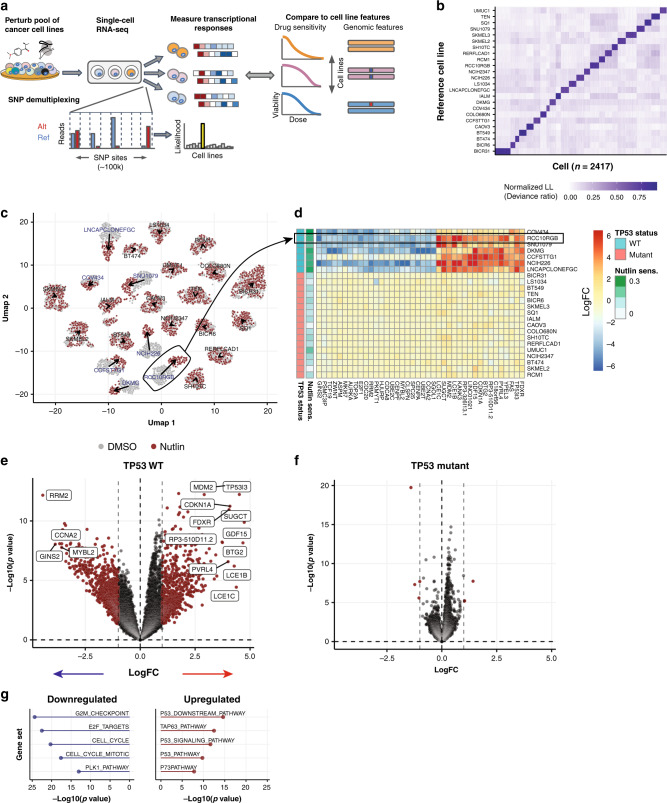
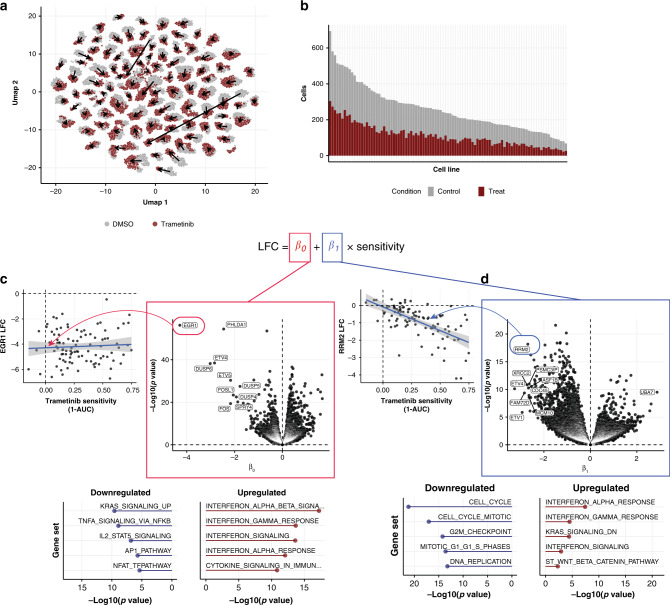
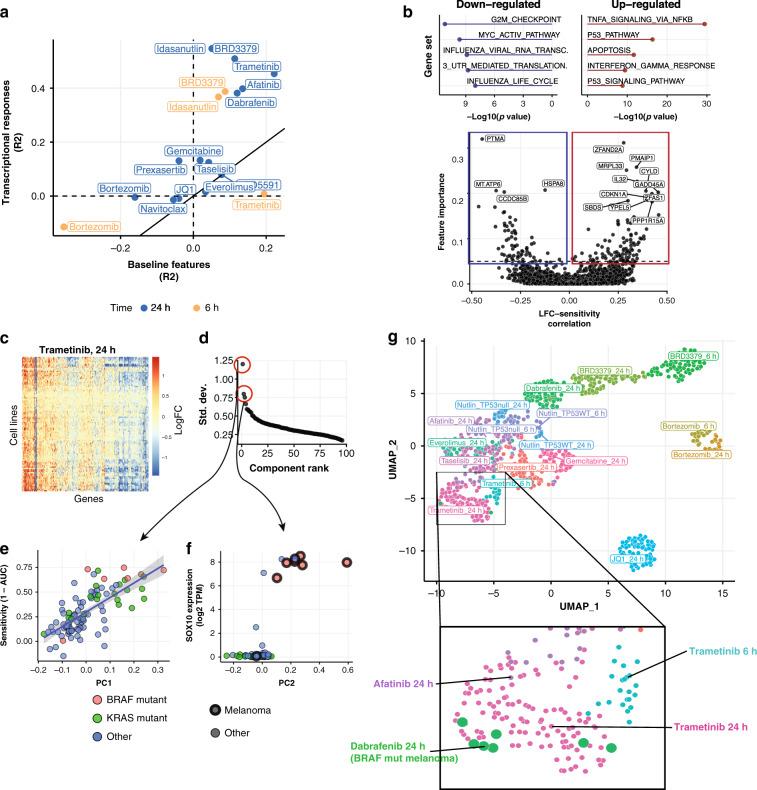
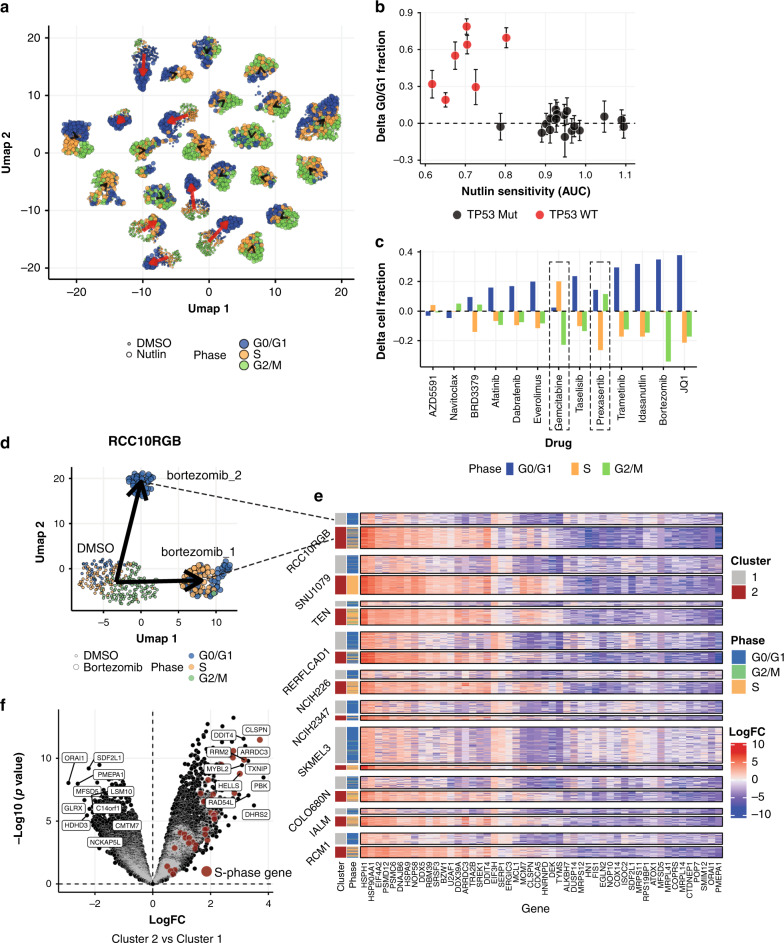
Assays to study cancer cell responses to pharmacologic or genetic perturbations are typically restricted to using simple phenotypic readouts such as proliferation rate. Information-rich assays, such as gene-expression profiling, have generally not permitted efficient profiling of a given perturbation across multiple cellular contexts. Here, we develop MIX-Seq, a method for multiplexed transcriptional profiling of post-perturbation responses across a mixture of samples with single-cell resolution, using SNP-based computational demultiplexing of single-cell RNA-sequencing data. We show that MIX-Seq can be used to profile responses to chemical or genetic perturbations across pools of 100 or more cancer cell lines. We combine it with Cell Hashing to further multiplex additional experimental conditions, such as post-treatment time points or drug doses. Analyzing the high-content readout of scRNA-seq reveals both shared and context-specific transcriptional response components that can identify drug mechanism of action and enable prediction of long-term cell viability from short-term transcriptional responses to treatment.
Overview
The claims and statistics of this paper haven’t been checked yet.
Free: it reads the open-access text and checks the first 5 claims that cite a source we can check. Create a free account to check every claim.
Integrity signals
Registry
Cites
Statistics
Figures
Verification
Claims the paper makes
The claims and statistics of this paper haven’t been checked yet.
Free: it reads the open-access text and checks the first 5 claims that cite a source we can check. Create a free account to check every claim.
Claims other papers make about this one
Each is checked against this paper’s own text: does it say what the citing paper says it does?
The cited source says what the claim attributes to it.
In the citing paper
“It has been shown that compounds eliciting similar transcriptional signatures tend to share mechanisms of action.170,207−209”
From Advancing Targeted Protein Degradation via Multiomics Profiling and Artificial Intelligence (2023) · cites this paper as [208]
In the citing paper
“MIX-seq[11] is another noteworthy technology that enables the study of perturbation responses to compounds or genetic interventions from various cell groups and the disentanglement of cell identity based on single-nucleotide polymorphism (SNP) profiles.”
From A mini-review on perturbation modelling across single-cell omic modalities (2024) · cites this paper as [11]
Self-check
Percentages, sums and reported differences re-computed from the paper’s own numbers.
The self-check needs the paper’s full text.
Citations
Cites
Controlling the False Discovery Rate: A Practical and Powerful Approach to Multiple Testing
Benjamini, Y., & Hochberg, Y. (1995) · Journal of the Royal Statistical Society Series B: Statistical Methodology · doi:10.1111/j.2517-6161.1995.tb02031.x · Cited by 109,482
Robinson, M. D., McCarthy, D. J., & Smyth, G. K. (2010) · Bioinformatics · doi:10.1093/bioinformatics/btp616 · Cited by 41,364
limma powers differential expression analyses for RNA-sequencing and microarray studies
Ritchie, M. E., Phipson, B., Wu, D., Hu, Y., Law, C. W., Shi, W., & Smyth, G. K. (2015) · Nucleic Acids Research · doi:10.1093/nar/gkv007 · Cited by 40,458
Regularization and Variable Selection Via the Elastic Net
Zou, H., & Hastie, T. (2005) · Journal of the Royal Statistical Society Series B: Statistical Methodology · doi:10.1111/j.1467-9868.2005.00503.x · Cited by 20,957
Regularization Paths for Generalized Linear Models via Coordinate Descent
Friedman, J., Hastie, T., & Tibshirani, R. (2010) · Journal of Statistical Software · doi:10.18637/jss.v033.i01 · Cited by 19,927
Integrating single-cell transcriptomic data across different conditions, technologies, and species
Butler, A., Hoffman, P., Smibert, P., Papalexi, E., & Satija, R. (2018) · Nature Biotechnology · doi:10.1038/nbt.4096 · Cited by 13,174
UMAP: Uniform Manifold Approximation and Projection
McInnes, L., Healy, J., Saul, N., & Großberger, L. (2018) · Journal of Open Source Software · doi:10.21105/joss.00861 · Cited by 9,826
The Cancer Cell Line Encyclopedia enables predictive modelling of anticancer drug sensitivity
Barretina, J., Caponigro, G., Stransky, N., Venkatesan, K., Margolin, A. A., Kim, S., Wilson, C. J., Lehár, J., Kryukov, G. V., Sonkin, D., et al. (2012) · Nature · doi:10.1038/nature11003 · Cited by 7,950
Self-citationMassively parallel digital transcriptional profiling of single cells
Zheng, G. X. Y., Terry, J. M., Belgrader, P., Ryvkin, P., Bent, Z. W., Wilson, R., Ziraldo, S. B., Wheeler, T. D., McDermott, G. P., Zhu, J., et al. (2017) · Nature Communications · doi:10.1038/ncomms14049 · Cited by 7,353
Molecular signatures database (MSigDB) 3.0
Liberzon, A., Subramanian, A., Pinchback, R., Thorvaldsdóttir, H., Tamayo, P., & Mesirov, J. P. (2011) · Bioinformatics · doi:10.1093/bioinformatics/btr260 · Cited by 7,111
Cited by
RNA sequencing: new technologies and applications in cancer research
Hong, M., Tao, S., Zhang, L., Diao, L.-T., Huang, X., Huang, S., Xie, S.-J., Xiao, Z.-D., & Zhang, H. (2020) · Journal of Hematology & Oncology · doi:10.1186/s13045-020-01005-x · Cited by 596
Cycling cancer persister cells arise from lineages with distinct programs
Oren, Y., Tsabar, M., Cuoco, M. S., Amir-Zilberstein, L., Cabanos, H. F., Hütter, J.-C., Hu, B., Thakore, P. I., Tabaka, M., Fulco, C. P., et al. (2021) · Nature · doi:10.1038/s41586-021-03796-6 · Cited by 502
Self-citationPan-cancer single-cell RNA-seq identifies recurring programs of cellular heterogeneity
Kinker, G. S., Greenwald, A. C., Tal, R., Orlova, Z., Cuoco, M. S., McFarland, J. M., Warren, A., Rodman, C., Roth, J. A., Bender, S. A., et al. (2020) · Nature Genetics · doi:10.1038/s41588-020-00726-6 · Cited by 445
Self-citationApplications of single-cell RNA sequencing in drug discovery and development
Van de Sande, B., Lee, J. S., Mutasa-Gottgens, E., Naughton, B., Bacon, W., Manning, J., Wang, Y., Pollard, J., Mendez, M., Hill, J., et al. (2023) · Nature Reviews Drug Discovery · doi:10.1038/s41573-023-00688-4 · Cited by 437
Richards, L. M., Whitley, O. K. N., MacLeod, G., Cavalli, F. M. G., Coutinho, F. J., Jaramillo, J. E., Svergun, N., Riverin, M., Croucher, D. C., Kushida, M., et al. (2021) · Nature Cancer · doi:10.1038/s43018-020-00154-9 · Cited by 308
Datlinger, P., Rendeiro, A. F., Boenke, T., Senekowitsch, M., Krausgruber, T., Barreca, D., & Bock, C. (2021) · Nature Methods · doi:10.1038/s41592-021-01153-z · Cited by 269
Impact of the Human Cell Atlas on medicine
Rood, J. E., Maartens, A., Hupalowska, A., Teichmann, S. A., & Regev, A. (2022) · Nature Medicine · doi:10.1038/s41591-022-02104-7 · Cited by 222
Self-citationscPerturb: harmonized single-cell perturbation data
Peidli, S., Green, T. D., Shen, C., Gross, T., Min, J., Garda, S., Yuan, B., Schumacher, L. J., Taylor-King, J. P., Marks, D. S., et al. (2024) · Nature Methods · doi:10.1038/s41592-023-02144-y · Cited by 194
Morphology and gene expression profiling provide complementary information for mapping cell state
Way, G. P., Natoli, T. E., Adeboye, A., Litichevskiy, L., Yang, A. X., Lü, X., Caicedo, J. C., Cimini, B. A., Karhohs, K. W., Logan, D. J., et al. (2022) · Cell Systems · doi:10.1016/j.cels.2022.10.001 · Cited by 181
Zhang, J., Ubas, A. A., de Borja, R., Svensson, V., Thomas, N., Thakar, N., Lai, I., Winters, A., Khan, U., Jones, M. G., et al. (2025) · bioRxiv (Cold Spring Harbor Laboratory) · doi:10.1101/2025.02.20.639398 · Cited by 106
“By constructing “cell villages” (Mitchell et al. 2020; C. Yu et al. 2016; McFarland et al. 2020) of tens to hundreds of distinct cell models in each experiment followed by genetic demultiplexing, the platform substantially reduces batch effects while scaling to an increasingly larger number of…”
Rood, J. E., Hupalowska, A., & Regev, A. (2024) · Cell · doi:10.1016/j.cell.2024.07.035 · Cited by 139
Self-citationMachine learning for perturbational single-cell omics
Ji, Y., Lotfollahi, M., Wolf, F. A., & Theis, F. J. (2021) · Cell Systems · doi:10.1016/j.cels.2021.05.016 · Cited by 137
Chari, T., Weissbourd, B., Gehring, J., Ferraioli, A., Leclère, L., Herl, M., Gao, F., Chevalier, S., Copley, R. R., Houliston, E., et al. (2021) · Science Advances · doi:10.1126/sciadv.abh1683 · Cited by 131
Expanding the human proteome with microproteins and peptideins
Deutsch, E. W., Kok, L. W., Mudge, J. M., Valls, C., Jungreis, I., Ruiz‐Orera, J., Sun, Z., Kusebauch, U., Fierro-Monti, I., Abelin, J. G., et al. (2026) · Nature · doi:10.1038/s41586-026-10459-x · Cited by 125
“To generalize these findings, we performed multiplexed single-cell RNA-seq (scRNA-seq) analysis after c10riboseqorf92 knockout 32 , in which we determined scRNA-seq profiles for 12 different cell lines after knockout.”
Self-citationPertpy: an end-to-end framework for perturbation analysis
Heumos, L., Ji, Y., May, L. T., Green, T. D., Peidli, S., Zhang, X., Wu, X., Ostner, J., Schumacher, A., Hrovatin, K., et al. (2025) · Nature Methods · doi:10.1038/s41592-025-02909-7 · Cited by 112
“Pertpy significantly streamlines the replication and extension of the original analyses by McFarland et al. 17 .”
InfluentialSeninge, L., Anastopoulos, I., Ding, H., & Stuart, J. (2021) · Nature Communications · doi:10.1038/s41467-021-26017-0 · Cited by 107
Multiplexed live-cell profiling with Raman probes
Chen, C., Zhao, Z., Qian, N., Wei, S., Hu, F., & Min, W. (2021) · Nature Communications · doi:10.1038/s41467-021-23700-0 · Cited by 105
Massively parallel phenotyping of coding variants in cancer with Perturb-seq
Ursu, O., Neal, J. T., Shea, E., Thakore, P. I., Jerby-Arnon, L., Nguyen, L., Dionne, D., Diaz, C., Bauman, J., Mosaad, M. M., et al. (2022) · Nature Biotechnology · doi:10.1038/s41587-021-01160-7 · Cited by 96
Self-citationKe, M. S., Elshenawy, B., Sheldon, H., Arora, A., & Buffa, F. M. (2022) · BioEssays · doi:10.1002/bies.202200084 · Cited by 90
Bondeson, D. P., Paolella, B. R., Asfaw, A., Rothberg, M. V., Skipper, T. A., Langan, C., Mesa, G., Gonzalez, A., Surface, L. E., Ito, K., et al. (2022) · Nature Cancer · doi:10.1038/s43018-022-00360-7 · Cited by 71
Self-citationAlam, K., Hao, J., Zhang, Y., & Li, A. (2021) · Biotechnology Advances · doi:10.1016/j.biotechadv.2021.107759 · Cited by 76
Leveraging Single-Cell Approaches in Cancer Precision Medicine
Nath, A., & Bild, A. (2021) · Trends in cancer · doi:10.1016/j.trecan.2021.01.007 · Cited by 72
“These principles were adapted in a study to perform a scRNA-seq analysis of CRISPR and drug perturbations on a mixed population of 24 to 99 cell lines [69].”
MethodStepwise-edited, human melanoma models reveal mutations’ effect on tumor and microenvironment
Hodis, E., Triglia, E. T., Kwon, J., Biancalani, T., Zakka, L. R., Parkar, S., Hütter, J.-C., Buffoni, L., Delorey, T. M., Phillips, D., et al. (2022) · Science · doi:10.1126/science.abi8175 · Cited by 70
“Cells grown in vitro were processed with 10x Genomics Single Cell 3′ v3, with hashing generated as described previously (82).”
MethodSelf-citationIsolating salient variations of interest in single-cell data with contrastiveVI
Weinberger, E., Lin, C., & Lee, S.-I. (2023) · Nature Methods · doi:10.1038/s41592-023-01955-3 · Cited by 66
“With the development of new technologies for measuring cellular responses to large numbers of perturbations in parallel, such as Perturb-Seq [3], MIX-Seq [2], and MULTI-Seq [1] among others, tools for a refined understanding of variations unique to target vs. background cells will be increasingly critical.”
BackgroundMethodInfluentialBharath, G., Rambabu, K., Hai, A., Ponpandian, N., Schmidt, J. E., Dionysiou, D. D., Haija, M. A., & BANAT, F. A. (2021) · Applied Catalysis B: Environmental · doi:10.1016/j.apcatb.2021.120520 · Cited by 64
Mapping genetic effects on cellular phenotypes with “cell villages”
Mitchell, J. M., Nemesh, J., Ghosh, S., Handsaker, R. E., Mello, C. J., Meyer, D., Raghunathan, K., de Rivera, H., Tegtmeyer, M., Hawes, D., et al. (2020) · doi:10.1101/2020.06.29.174383 · Cited by 63
High-content phenotypic and pathway profiling to advance drug discovery in diseases of unmet need
Hughes, R. E., Elliott, R. J. R., Dawson, J. C., & Carragher, N. O. (2021) · Cell Chemical Biology · doi:10.1016/j.chembiol.2021.02.015 · Cited by 62
Cheng, J., Liao, J., Shao, X., Lu, X., & Fan, X. (2021) · Advanced Science · doi:10.1002/advs.202101229 · Cited by 62
Transcriptional census of epithelial-mesenchymal plasticity in cancer
Cook, D. P., & Vanderhyden, B. C. (2022) · Science Advances · doi:10.1126/sciadv.abi7640 · Cited by 58
Comprehensive review on single-cell RNA sequencing: A new frontier in Alzheimer's disease research
Jin, W., Pei, J., Roy, J. R., Jayaraman, S., Ahalliya, R. M., Kanniappan, G. V., Mironescu, M., & Palanisamy, C. P. (2024) · Ageing Research Reviews · doi:10.1016/j.arr.2024.102454 · Cited by 64
scDrug: From single-cell RNA-seq to drug response prediction
Hsieh, C.-Y., Wen, J.-H., Lin, S.-M., Tseng, T.-Y., Huang, J., Huang, H., & Juan, H. (2022) · Computational and Structural Biotechnology Journal · doi:10.1016/j.csbj.2022.11.055 · Cited by 59
“cell lines treated with idasanutlin for 24 h [32].”
Rapid Radiation and Rampant Reticulation: Phylogenomics of South AmericanLiolaemusLizards
Esquerré, D., Keogh, J. S., Demangel, D., Morando, M. M., Ávila, L. J., Sites, J. W., Ferri‐Yáñez, F., & Leaché, A. D. (2021) · Systematic Biology · doi:10.1093/sysbio/syab058 · Cited by 62
siVAE: interpretable deep generative models for single-cell transcriptomes
Choi, Y., Li, R., & Quon, G. (2023) · Genome biology · doi:10.1186/s13059-023-02850-y · Cited by 58
“Individual embedding dimensions capture distinct groups of correlated input features and are often also correlated with biological factors such as case-control status [9], gender [10], and others [11].”
BackgroundScalable co-sequencing of RNA and DNA from individual nuclei
Olsen, T. R., Talla, P., Sagatelian, R., Furnari, J. L., Bruce, J. N., Canoll, P., Zha, S., & Sims, P. A. (2025) · Nature Methods · doi:10.1038/s41592-024-02579-x · Cited by 57
“We could readily scale this to ~40,000 nuclei per sample given the eight-lane capacity of a standard chip and potentially >100,000 nuclei per flow cell with super-loading and demultiplexing with either SNP genotypes 38,39 or nuclear hashtag antibodies 40 .”
A mini-review on perturbation modelling across single-cell omic modalities
Gavriilidis, G. I., Vasileiou, V., Orfanou, A., Ishaque, N., & Psomopoulos, F. (2024) · Computational and Structural Biotechnology Journal · doi:10.1016/j.csbj.2024.04.058 · Cited by 54
“MIX-seq [11] is another noteworthy technology that enables the study of perturbation responses to compounds or genetic interventions from various cell groups and the disentanglement of cell identity based on single-nucleotide polymorphism (SNP) profiles. sci-Plex [12] , on the other hand, is a…”
BackgroundGraph contextualized attention network for predicting synthetic lethality in human cancers
Long, Y., Wu, M., Liu, Y., Zheng, J., Kwoh, C. K., Luo, J., & Li, X. (2021) · Bioinformatics · doi:10.1093/bioinformatics/btab110 · Cited by 53
Advancing Targeted Protein Degradation via Multiomics Profiling and Artificial Intelligence
Duran-Frigola, M., Cigler, M., & Winter, G. E. (2023) · Journal of the American Chemical Society · doi:10.1021/jacs.2c11098 · Cited by 50
Predicting drug response from single-cell expression profiles of tumours
Pellecchia, S., Viscido, G., Franchini, M., & Gambardella, G. (2023) · BMC Medicine · doi:10.1186/s12916-023-03182-1 · Cited by 50
“…them at the cell line level by computing the median enrichment score of nutlin estimated by DREEP across individual cells within each respective cell line and then correlated these scores with the experimentally observed nutlin response from McFarland et al. [69] (see the “Methods” section).”
MethodResultUse of DNA methylation profiling in translational oncology
Ortiz-Barahona, V., Joshi, R. S., & Esteller, M. (2020) · Seminars in Cancer Biology · doi:10.1016/j.semcancer.2020.12.011 · Cited by 50
Benchmarking foundation cell models for post-perturbation RNA-seq prediction
Csendes, G., Sanz, G., Szalay, K. Z., & Szalai, B. (2025) · BMC Genomics · doi:10.1186/s12864-025-11600-2 · Cited by 47
“Data-sets such as LINCS-L1000 [23], which feature a larger number of cell lines and perturbations, or Mix-Seq [24], could serve as valuable resources for addressing both PEX and CEX setups and improving future benchmarks.”
Generative modeling of single-cell gene expression for dose-dependent chemical perturbations
Kana, O., Nault, R., Filipovic, D., Marri, D., Zacharewski, T., & Bhattacharya, S. (2023) · Patterns · doi:10.1016/j.patter.2023.100817 · Cited by 44
“16 Recently developed resources like scPerturb 17 and the multiplexed interrogation of gene expression through single-cell RNA sequencing (MIX-seq) protocol 18 cover a meaningful but relatively small portion of this space.”
BackgroundA multiplex single-cell RNA-Seq pharmacotranscriptomics pipeline for drug discovery
Dini, A., Barker, H. R., Piki, E., Sharma, S., Raivola, J., Murumägi, A., & Ungureanu, D. (2024) · Nature Chemical Biology · doi:10.1038/s41589-024-01761-8 · Cited by 44
“Recent methods using single-cell RNA sequencing (scRNA-Seq) with combinatorial barcoding have enabled the efficient study of transcriptional signatures after pharmacological perturbation of cell lines 1,10–14 .”
High-throughput microfluidic droplets in biomolecular analytical system: A review
Zhang, L., Parvin, R., Chen, M., Hu, D., Fan, Q., & Ye, F. (2023) · Biosensors and Bioelectronics · doi:10.1016/j.bios.2023.115213 · Cited by 43
Benchmarking algorithms for generalizable single-cell perturbation response prediction
Wei, Z., Wang, Y., Gao, Y., Wang, S., Li, P., Si, D., Gao, Y., Wu, S., Li, D., Dong, K., et al. (2026) · Nature Methods · doi:10.1038/s41592-025-02980-0 · Cited by 42
“For the cellular context generalization scenario, we curated 12 datasets categorized on the basis of the cellular context 1,32–37 (Fig.”
Xu, H., Yu, H., Liu, L., Wu, H., Zhang, C., Cai, W., Hong, X., Liu, D. J., Tang, D., & Dai, Y. (2021) · Frontiers in Immunology · doi:10.3389/fimmu.2021.760381 · Cited by 42
Cell Trafficking at the Intersection of the Tumor–Immune Compartments
Du, W., Nair, P. R., Johnston, A. C., Wu, P., & Wirtz, D. (2022) · Annual Review of Biomedical Engineering · doi:10.1146/annurev-bioeng-110320-110749 · Cited by 41
“Single-cell transcriptional profiling methods are widely applied to depict molecular portraits of collective responses of heterogeneous cell populations to external stimuli (68-70).”
BackgroundARTS-DB: a database for antibiotic resistant targets
Mungan, M. D., Blin, K., & Ziemert, N. (2021) · Nucleic Acids Research · doi:10.1093/nar/gkab940 · Cited by 39
deMULTIplex2: robust sample demultiplexing for scRNA-seq
Zhu, Q., Conrad, D. N., & Gartner, Z. J. (2024) · Genome biology · doi:10.1186/s13059-024-03177-y · Cited by 39
Weber, L. M., Hippen, A. A., Hickey, P. F., Berrett, K. C., Gertz, J., Doherty, J. A., Greene, C. S., & Hicks, S. C. (2021) · GigaScience · doi:10.1093/gigascience/giab062 · Cited by 37
Interpretation, extrapolation and perturbation of single cells
Dimitrov, D., Schrod, S., Rohbeck, M., & Stegle, O. (2026) · Nature Reviews Genetics · doi:10.1038/s41576-025-00920-4 · Cited by 39
Kabza, M., Ritter, A. J., Byrne, A., Sereti, K., Le, D. X., Stephenson, W., & Sterne-Weiler, T. (2024) · Nature Communications · doi:10.1038/s41467-024-51584-3 · Cited by 35
Adapting systems biology to address the complexity of human disease in the single-cell era
Fischer, D. S., Villanueva, M. A., Winter, P. S., & Shalek, A. K. (2025) · Nature Reviews Genetics · doi:10.1038/s41576-025-00821-6 · Cited by 35
“For example, transcriptomic readouts of the action of small molecules on molecular targets vary across cell lines because they are confounded by cellular context 36 .”
Kalla, J., Pfneissl, J., Mair, T., Tran, L., & Egger, G. (2024) · Cellular Oncology · doi:10.1007/s13402-024-00960-8 · Cited by 34
“However, as it is more complex to isolate specific cell types for downstream analysis, single cell read outs or optical techniques are required to efficiently analyze cell-cell dependencies or their crosstalk [187, 190, 194, 195].”
Single-cell omics reveal the mechanisms of traditional Chinese medicines
Jiang, B., Si, J., Luo, H., & Le, L. (2025) · Phytomedicine · doi:10.1016/j.phymed.2025.157204 · Cited by 34
Bucher, E., Collins, J., King, A., Vickers, J., & Kirkcaldie, M. (2021) · Brain Structure and Function · doi:10.1007/s00429-021-02327-3 · Cited by 24
Computational estimation of quality and clinical relevance of cancer cell lines
Trastulla, L., Noorbakhsh, J., Vazquez, F., McFarland, J., & Iorio, F. (2022) · Molecular Systems Biology · doi:10.15252/msb.202211017 · Cited by 31
Self-citationLeaché, A. D., Davis, H. R., Singhal, S., Fujita, M. K., Lahti, M. E., & Zamudio, K. R. (2021) · Frontiers in Ecology and Evolution · doi:10.3389/fevo.2021.678110 · Cited by 31
Pooled genetic screens with image‐based profiling
Walton, R. T., Singh, A. K., & Blainey, P. C. (2022) · Molecular Systems Biology · doi:10.15252/msb.202110768 · Cited by 31
“…profiling has enabled unbiased investigations of drug mechanisms (Barretina et al , 2012; Stransky et al , 2015; Iorio et al , 2016; Yu et al , 2016; Subramanian et al , 2017; Tsherniak et al , 2017; Ghandi et al , 2019; Corsello et al , 2020; McFarland et al , 2020; Srivatsan et al , 2020).”
BackgroundMarini, M., Pedrosa‐Gerasmio, I. R., Santos, M. D., Shibuno, T., Daryani, A., Romana-Eguia, M. R. R., & Wibowo, A. (2021) · Global Ecology and Conservation · doi:10.1016/j.gecco.2021.e01493 · Cited by 31
Mathur, L., Szalai, B., Du, N. H., Utharala, R., Ballinger, M., Landry, J. J. M., Ryckelynck, M., Beneš, V., Sáez-Rodríguez, J., & Merten, C. A. (2022) · Nature Communications · doi:10.1038/s41467-022-32197-0 · Cited by 31
Optimal distance metrics for single-cell RNA-seq populations
Ji, Y., Green, T. D., Peidli, S., Bahrami, M., Liu, M., Zappia, L., Hrovatin, K., Sander, C., & Theis, F. J. (2023) · bioRxiv (Cold Spring Harbor Laboratory) · doi:10.1101/2023.12.26.572833 · Cited by 18
CCPE: cell cycle pseudotime estimation for single cell RNA-seq data
Liu, J., Yang, M., Zhao, W., & Zhou, X. (2021) · Nucleic Acids Research · doi:10.1093/nar/gkab1236 · Cited by 29
PAUSE: principled feature attribution for unsupervised gene expression analysis
Janizek, J. D., Spiro, A. E., Çelik, S., Blue, B. W., RUSSELL, J. C., Lee, T.-I., Kaeberlin, M., & Lee, S. (2023) · Genome biology · doi:10.1186/s13059-023-02901-4 · Cited by 29
“[68], contains the transcriptional response of cells”
Validating Small Molecule Chemical Probes for Biological Discovery
Vu, V., Szewczyk, M. M., Nie, D. Y., Arrowsmith, C. H., & Baršytė-Lovejoy, D. (2022) · Annual Review of Biochemistry · doi:10.1146/annurev-biochem-032620-105344 · Cited by 29
Paul, S., Xie, S., Yao, X., & Dey, A. (2022) · Cells · doi:10.3390/cells11142225 · Cited by 28
“Follow-up studies have applied these technologies to study the compound response in different cancer cell lines [92,93].”
BackgroundGeiger-Schuller, K., Eraslan, B., Kuksenko, O., Dey, K. K., Jagadeesh, K. A., Thakore, P. I., Karayel, Ö., Yung, A. R., Rajagopalan, A. R., Meireles, A. M., et al. (2023) · bioRxiv (Cold Spring Harbor Laboratory) · doi:10.1101/2023.01.23.525198 · Cited by 27
Self-citationSzalai, B., & Veres, D. V. (2023) · Frontiers in Systems Biology · doi:10.3389/fsysb.2023.1126044 · Cited by 27
“Other methods, like MIX-Seq (McFarland et al., 2020), use a smaller number of chemical perturbations (anti-cancer drugs), but measure gene expression pro fi les in a large number of cell lines, with the help of SNP-based computational demultiplexing.”
BackgroundMethodInfluentialNew horizons in the stormy sea of multimodal single-cell data integration
Jackson, C. A., & Vogel, C. (2022) · Molecular Cell · doi:10.1016/j.molcel.2021.12.012 · Cited by 26
Houser, A. E., Kazmi, A., Nair, A., & Ji, A. L. (2023) · JID Innovations · doi:10.1016/j.xjidi.2023.100198 · Cited by 26
“These techniques are indeed being applied in large-scale therapeutic testing of compounds in cancer cell lines (McFarland et al., 2020).”
BackgroundContrastive latent variable modeling with application to case-control sequencing experiments
Jones, A., Townes, F. W., Li, D., & Engelhardt, B. E. (2022) · The Annals of Applied Statistics · doi:10.1214/21-aoas1534 · Cited by 24
“Furthermore, idasanutlin has been shown to elicit a selective transcriptional and death response in cells that have wild-type TP53, while cells with a mutated copy of this gene do not respond (McFarland et al., 2020).”
BackgroundMethodResultInfluentialSelf-citationMachine learning to dissect perturbations in complex cellular systems
Monfort‐Lanzas, P., Rungger, K., Madersbacher, L., & Hackl, H. (2025) · Computational and Structural Biotechnology Journal · doi:10.1016/j.csbj.2025.02.028 · Cited by 24
Li, Z., Jin, K., Chen, H., Zhang, L., Zhang, G., Jiang, Y., Zou, H., Wang, W., Qi, G., & Qu, X. (2022) · Nanoscale · doi:10.1039/d1nr07452k · Cited by 24
Advancing single-cell omics and cell-based therapeutics with quantum computing
Bose, A., Rhrissorrakrai, K., Utro, F., Parida, L., Basu, S., Born, J., Capponi, S., Chalkia, D., Chan, T. A.-T., Doğa, H., et al. (2026) · Nature Reviews Molecular Cell Biology · doi:10.1038/s41580-025-00918-0 · Cited by 23
Cerca, J., Rivera‐Colón, A. G., Ferreira, M. S., Ravinet, M., Nowak, M. D., Catchen, J., & Struck, T. H. (2021) · PeerJ · doi:10.7717/peerj.10896 · Cited by 22
Tahoe-100M: Mapping drug-induced molecular phenotypes at single-cell resolution
Zhang, J. M., Ubas, A. A., Svensson, V., Thomas, N., Subramanyam, V., Carpenter, C., Winters, A. F., de Borja, R., Teyssier, N., Thakar, N., et al. (2026) · Cell · doi:10.1016/j.cell.2026.08.035 · Cited by 24
Myers, E. A. (2021) · Molecular Phylogenetics and Evolution · doi:10.1016/j.ympev.2021.107313 · Cited by 21
Lue, H.-W., Derrick, D. S., Rao, S. A. M., Gaest, A. V., Cheng, L. C., Podolak, J., Lawson, S., Xue, C., Garg, D., White, R. E., et al. (2021) · Cell Reports Medicine · doi:10.1016/j.xcrm.2021.100267 · Cited by 19
“These can be captured by RNA-seq profiling, in addition to more specific treatment-related changes, and inform on mechanisms of action.(41) Cabozantinib treatment caused the differential expression of 4,026 (2,248 up + 1,178 down) genes compared to vehicle treatment.”
Supervised capacity preserving mapping: a clustering guided visualization method for scRNA-seq data
Zhai, Z., Lei, Y. L., Wang, R., & Xie, Y. (2022) · Bioinformatics · doi:10.1093/bioinformatics/btac131 · Cited by 19
Combinatorial perturbation sequencing on single cells using microwell-based droplet random pairing
Xie, R., Liu, Y., Wang, S., Shi, X., Zhao, Z., Liu, Y., Li, Z., & Li, Z. (2022) · Biosensors and Bioelectronics · doi:10.1016/j.bios.2022.114913 · Cited by 19
Lin, X., Chen, Y., Lin, L., Yin, K., Cheng, R., Lin, X., Wang, X., Guo, Y., Wu, Z., Zhang, Y., et al. (2023) · Proceedings of the National Academy of Sciences · doi:10.1073/pnas.2307722120 · Cited by 17
“48 It is encouraging to note that the demultiplexing of scRNA-seq data can also be achieved by 49 analyzing the natural genomic variants with(9, 10) or without(11-13) the use of whole genome 50 sequencing (WGS) or whole exome sequencing (WES) as references.”
BackgroundAlsulami, R., Lehmann, R., Khan, S. A., Lagani, V., Maillo, A., Gómez-Cabrero, D., Kiani, N. A., & Tegner, J. N. (2026) · Nature Machine Intelligence · doi:10.1038/s42256-026-01202-2 · Cited by 16
High-Dimensional Single-Cell Transcriptomics in Melanoma and Cancer Immunotherapy
Quek, C. Y. J., Bai, X., Long, G. V., Scolyer, R. A., & Wilmott, J. S. (2021) · Genes · doi:10.3390/genes12101629 · Cited by 16
Technological and computational advances driving high-throughput oncology
Kolmar, L., Autour, A., Ma, X., Vergier, B., Eduati, F., & Merten, C. A. (2022) · Trends in Cell Biology · doi:10.1016/j.tcb.2022.04.008 · Cited by 16
Manen-Freixa, L., & Antolín, A. A. (2024) · Expert Opinion on Drug Discovery · doi:10.1080/17460441.2024.2376643 · Cited by 15
“Another method termed MIX-Seq has also been developed to profile responses to chemical or genetic perturbations across pools of 100 or more cancer cell lines, although initially only 13 drugs were tested [178].”
Membrane-coated 3D architectures for bottom-up synthetic biology
Eto, H., Franquelim, H. G., Heymann, M., & Schwille, P. (2021) · Soft Matter · doi:10.1039/d1sm00112d · Cited by 16
A Scd1-mediated metabolic alteration participates in liver responses to low-dose bavachin
Shen, P., Bai, Z., Zhou, L., Wang, N., Ni, Z., Sun, D., Huang, C., Hu, Y.-Y., Xiao, C., Zhou, W., et al. (2023) · Journal of Pharmaceutical Analysis · doi:10.1016/j.jpha.2023.03.010 · Cited by 16
Epithelial-Macrophage Crosstalk Initiates Sterile Inflammation in Embryonic Skin
Bhattacharjee, O., Ayyangar, U., Kurbet, A. S., Lakshmanan, V., Palakodeti, D., Ginhoux, F., & Raghavan, S. (2021) · Frontiers in Immunology · doi:10.3389/fimmu.2021.718005 · Cited by 14
BaCaDI: Bayesian Causal Discovery with Unknown Interventions
Hägele, A., Rothfuss, J., Lorch, L., Somnath, V. R., Schölkopf, B., & Krause, A. (2022) · Repository for Publications and Research Data (ETH Zurich) · doi:10.3929/ethz-b-000651922 · Cited by 14
A single-cell gene expression language modelPreprint
Connell, W., Khan, U., & Keiser, M. J. (2022) · arXiv (Cornell University) · doi:10.48550/arxiv.2210.14330 · Cited by 15
“As in the original study, we matched drug response (quantified by area under the dose-response curve) from the Genomics of Drug Sensitivity in Cancer Project (GDSC) screen to MIX-Seq transcriptional pro-files [7, 11].”
Functional Precision Oncology: The Next Frontier to Improve Glioblastoma Outcome?
Panovska, D., & Smet, F. D. (2022) · International Journal of Molecular Sciences · doi:10.3390/ijms23158637 · Cited by 13
“All these large drug-screening resources are invaluable for exploring and understanding the mechanisms of various classes of compounds, drug repurposing and matching (combinations of) genomic mutations with functional responses over time [38].”
BackgroundscDrug+: predicting drug-responses using single-cell transcriptomics and molecular structure
Sun, Y.-Y., Hsieh, C.-Y., Wen, J.-H., Tseng, T.-Y., Huang, J., Oyang, Y.-J., Huang, H.-C., & Juan, H. (2024) · Biomedicine & Pharmacotherapy · doi:10.1016/j.biopha.2024.117070 · Cited by 13
Xu, M., Liu, W., Zou, K., Wei, S., Zhang, X., Li, E., & Wang, Q. (2021) · Micromachines · doi:10.3390/mi12010049 · Cited by 12
Qin, Z., & Bäck, M. (2025) · Cardiovascular Research · doi:10.1093/cvr/cvaf255 · Cited by 11
Yu, J. X., Suh, J. M., Popova, K. D., Garcia, K., Joshi, T. V., Culbertson, B., Spinelli, J. B., Subramanyam, V., Lou, K., Charbonneau, T., et al. (2026) · Nature Cancer · doi:10.1038/s43018-026-01130-5 · Cited by 11
Uncovering Pharmacological Opportunities for Cancer Stem Cells—A Systems Biology View
Correia, C., Weisskittel, T., Ung, C. Y., Villasboas, J. C., Billadeau, D. D., Kaufmann, S. H., & Li, H. (2022) · Frontiers in Cell and Developmental Biology · doi:10.3389/fcell.2022.752326 · Cited by 11
“MIXSeq, a more recent approach, provides the ability to pool hundreds of cancer cell lines and co-treat them with one or more perturbations, simultaneously profile the cells’ readout using scRNAseq, and resolve the identity of each cell based on single-nucleotide polymorphism (SNP) profiles (McFarland et al., 2020).”
BackgroundCarraro, C., Bonaguro, L., Schulte-Schrepping, J., Horne, A., Oestreich, M., Warnat‐Herresthal, S., Helbing, T., Franco, M. D., Händler, K., Mukherjee, S., et al. (2022) · eLife · doi:10.7554/elife.78012 · Cited by 12
“refined strategies to handle the high- dimensional information of omics data are continuously investigated to expedite their routine use in preclinical drug development (Kagohara et al., 2020; Li et al., 2014; Li et al., 2021; McFarland et al., 2020; Rendeiro et al., 2020; Shaheen et al., 2018; Srivatsan et al., 2020;…”
VCBench: Benchmarking virtual cell models for in-the-wild perturbation response
Mao, X., Zhang, S., Wen, Q., Wen, X., Jin, K., Xu, S., Wu, H., Yu, L., Li, Y., Bai, L., et al. (2026) · arXiv
“We used McFarland2020 [36], a multiplexed drug-response dataset covering many cancer cell lines, and Kang2018_CD4Tcells [37], which measures cytokine stimulation responses across multiple donors.”
Chen, H., Lu, Y., Dai, Z., Yang, Y., Li, Q., & Rao, Y. (2024) · Briefings in Bioinformatics · doi:10.1093/bib/bbae314 · Cited by 10
“For this purpose, we utilized MIX-Seq data [42] and trained a model for each drug treatment.”
MethodPanchy, N. L., Watanabe, K., & Hong, T. (2021) · Frontiers in Genetics · doi:10.3389/fgene.2021.719099 · Cited by 10
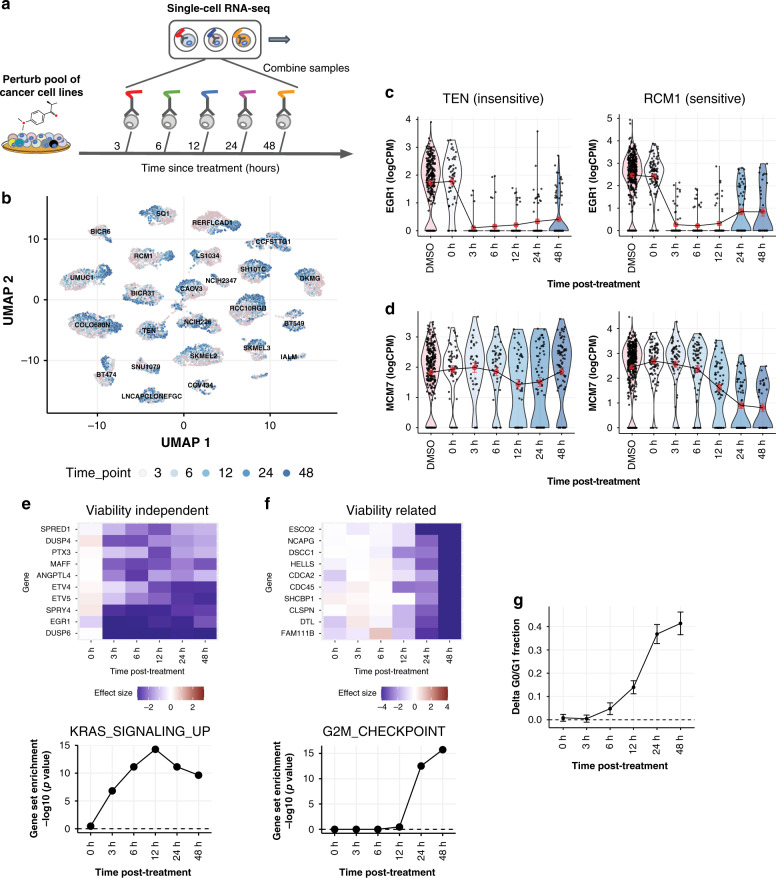
“(16) which is composed of 7245 cells with heterogeneous origins treated with trametinib for 3, 6, 12, 24,or 48 hours as well as an untreated control (0 hours).”
BackgroundMethodIntegrating single-cell genomics pipelines to discover mechanisms of stem cell differentiation
Shen, S., Sun, Y., Matsumoto, M., Shim, W. J., Sinniah, E., Wilson, S. B., Werner, T., Wu, Z., Bradford, S. T., Hudson, J. E., et al. (2021) · Trends in Molecular Medicine · doi:10.1016/j.molmed.2021.09.006 · Cited by 9
Metadata
- Authors
- McFarland, J. M., Paolella, B. R., Warren, A., Geiger-Schuller, K., Shibue, T., Rothberg, M., Kuksenko, O., Colgan, W. N., Jones, A., Chambers, E., Dionne, D., Bender, S., Wolpin, B. M., Ghandi, M., Tirosh, I., Rozenblatt-Rosen, O., Roth, J. A., Golub, T. R., Regev, A., Aguirre, A. J., Vazquez, F., & Tsherniak, A.
- Affiliations
- Broad Institute (US)
- Brigham and Women's Hospital (US)
- Corresponding author
- Aguirre, Andrew J.
- Tsherniak, Aviad
- ORCID
- Venue
- Nature Communications
- Published
- 2020-08-27
- Volume
- 11
- Issue
- 1
- Pages
- 4296-4296
- ISSN
- 2041-1723 (ISSN-L)
- PMC
- PMC7453022
- OpenAlex
- W3080295962
- Semantic Scholar
- a41a1f308adba0c79c229b1c7aec447a0fd765c3
- Cited by
- 173
- References
- 73
- Citations by year
- 2026: 23 · 2025: 29 · 2024: 26 · 2023: 24 · 2022: 28 · 2021: 35 · 2020: 8
- FWCI
- 7.70
- Type
- journal article
- Language
- en
- Open access
- gold
- doi.org
- Licence
- cc-by
- creativecommons.org/licenses/by/4.0 (tdm)
- creativecommons.org/licenses/by/4.0 (vor)
- Locations
- Nature Communications (publishedVersion, cc-by)
- bioRxiv (Cold Spring Harbor Laboratory) (acceptedVersion, cc-by)
- PubMed Central (publishedVersion, cc-by)
- PubMed (publishedVersion)
- RePEc: Research Papers in Economics (submittedVersion)
- DOAJ (DOAJ: Directory of Open Access Journals) (submittedVersion, cc-by-sa)
- DSpace@MIT (Massachusetts Institute of Technology) (submittedVersion, cc-by-nc)
- Funders
- Howard Hughes Medical Institute
- Doris Duke Charitable Foundation
- Pancreatic Cancer Action Network
- Scheme for Promotion of Academic and Research Collaboration
- National Institutes of Health (K08 CA21842002)
- National Cancer Institute (P50CA127003, U01CA224146, CA224146, CA218420-02, U01CA250549, K08CA218420)
- Topics
- Life Sciences › Biochemistry, Genetics and Molecular Biology › Molecular Biology › Single-cell and spatial transcriptomics
- Life Sciences › Biochemistry, Genetics and Molecular Biology › Molecular Biology › Gene expression and cancer classification
- Life Sciences › Biochemistry, Genetics and Molecular Biology › Molecular Biology › Gene Regulatory Network Analysis
- Keywords
- single-cell RNA sequencing, cancer cell lines, drug response, gene perturbation, cell hashing, mechanism of action, cancer vulnerability, drug dose-response
- MeSH terms
- Antineoplastic Agents, Base Sequence, Cell Survival, Humans, Neoplasms, Pyridones, Pyrimidinones, Models, Statistical, Gene Expression Regulation, Neoplastic, Polymorphism, Single Nucleotide, Gene Expression Profiling, Cell Line, Tumor, Single-Cell Analysis
About these checks
Registry, retraction, Cites and statistics results are computed, not judged, with one exception: a printed reference that no index lists is read once by a model before it counts as a citation error. Claims are extracted by a model and kept only when their quote appears verbatim in the text; each cited source is then checked, with a model’s help, for whether it says what the claim relies on. Those verdicts can be wrong — read the claim’s quote and the cited source before relying on one.
Statistics and arithmetic are recomputed, not judged.
Confidence bands are shown only for fields calibrated on our annotated test set. None is calibrated yet, so no band is shown.
What counts as a claim ›How we measure confidence ›How we check this ›
Are you an author, or do you see a problem with this page? Request a review
Data sources
Bibliographic data: Semantic Scholar, OpenAlex, Crossref.
Contains information from the Semantic Scholar Academic Graph Datasets, made available under the ODC Attribution License (ODC-BY 1.0).
Semantic Scholar’s data is described in: Kinney, R., et al. (2023). The Semantic Scholar Open Data Platform. arXiv:2301.10140.
