

CRISPR-Cas9 cytidine and adenosine base editing of splice-sites mediates highly-efficient disruption of proteins in primary and immortalized cells
Open accessPublished version of a preprint
The DOI matches its Crossref record; 86 of the 86 references it cites were found in a registry or an index.
Abstract
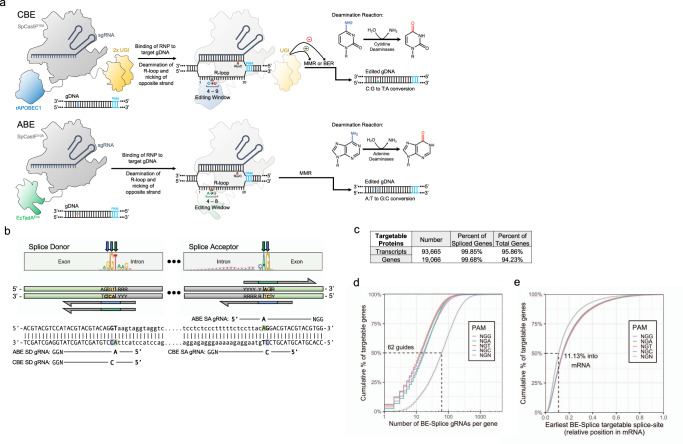
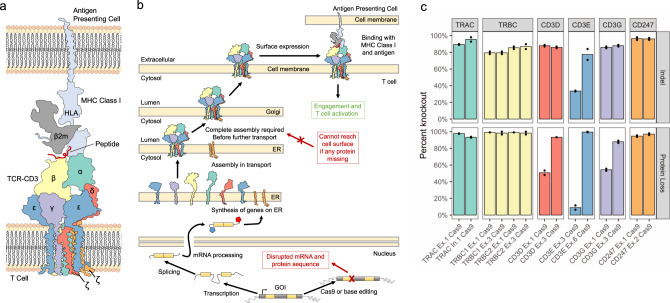
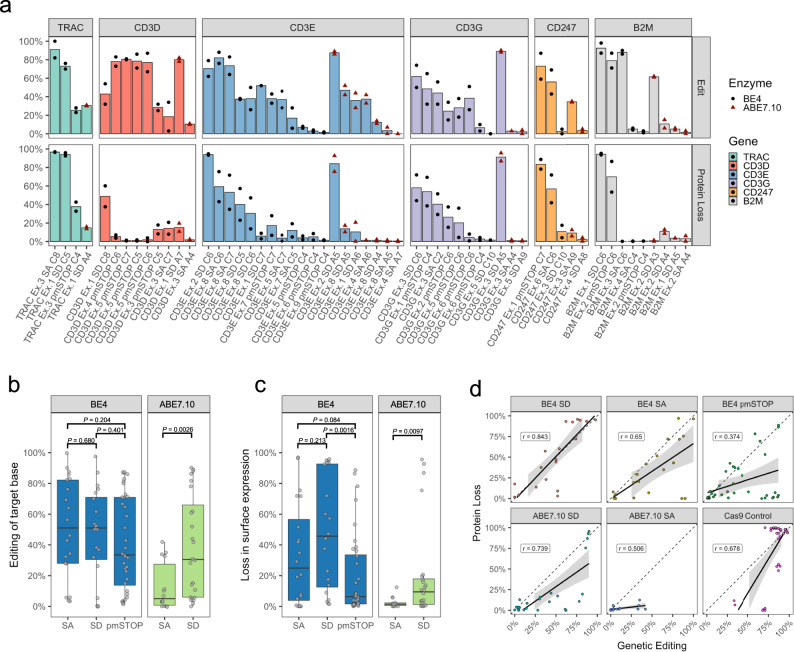
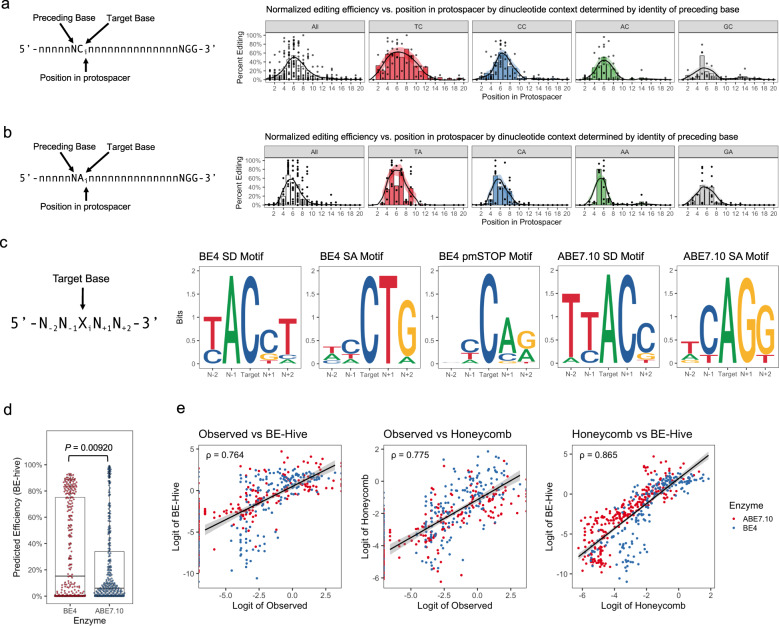
CRISPR-Cas9 cytidine and adenosine base editors (CBEs and ABEs) can disrupt genes without introducing double-stranded breaks by inactivating splice sites (BE-splice) or by introducing premature stop (pmSTOP) codons. However, no in-depth comparison of these methods or a modular tool for designing BE-splice sgRNAs exists. To address these needs, we develop SpliceR ( http://z.umn.edu/spliceR ) to design and rank BE-splice sgRNAs for any Ensembl annotated genome, and compared disruption approaches in T cells using a screen against the TCR-CD3 MHC Class I immune synapse. Among the targeted genes, we find that targeting splice-donors is the most reliable disruption method, followed by targeting splice-acceptors, and introducing pmSTOPs. Further, the CBE BE4 is more effective for disruption than the ABE ABE7.10, however this disparity is eliminated by employing ABE8e. Collectively, we demonstrate a robust method for gene disruption, accompanied by a modular design tool that is of use to basic and translational researchers alike.
Overview
The claims and statistics of this paper haven’t been checked yet.
Free: it reads the open-access text and checks the first 5 claims that cite a source we can check. Create a free account to check every claim.
Integrity signals
Registry
Cites
Statistics
Figures
Verification
Claims the paper makes
The claims and statistics of this paper haven’t been checked yet.
Free: it reads the open-access text and checks the first 5 claims that cite a source we can check. Create a free account to check every claim.
Claims other papers make about this one
Each is checked against this paper’s own text: does it say what the citing paper says it does?
The cited source says what the claim attributes to it.
In the citing paper
“This work found that splice donors were generally more effective than splice acceptors.”
From Adenine base editor for knockout of proteins: A practical guide from design to analysis with updated MultiEditRbatch (2026) · cites this paper as [31]
The cited source says what the claim attributes to it.
In the citing paper
“SpliceR (https://moriaritylab.shinyapps.io/splicer/) is a program developed by our group that identifies and scores potential gRNA sequences for gene knockout by splice site disruption.31”
From Adenine base editor for knockout of proteins: A practical guide from design to analysis with updated MultiEditRbatch (2026) · cites this paper as [31]
The check wasn’t confident either way, so it gives no verdict — never disputed.
In the citing paper
“The 14 validated guides use NGG base editors, which may have slightly stronger binding to the genomic DNA that could be the reason for the advantage over their NG counterparts as shown by the Granzyme A candidate gRNAs (Table S1).18,31”
From Adenine base editor for knockout of proteins: A practical guide from design to analysis with updated MultiEditRbatch (2026) · cites this paper as [31]
Experimental — accuracy not yet measured
Self-check
Percentages, sums and reported differences re-computed from the paper’s own numbers.
The self-check needs the paper’s full text.
Citations
Cites
A Programmable Dual-RNA–Guided DNA Endonuclease in Adaptive Bacterial Immunity
Jinek, M., Chylinski, K., Fonfara, I., Hauer, M., Doudna, J. A., & Charpentier, E. (2012) · Science · doi:10.1126/science.1225829 · Cited by 17,116
Multiplex Genome Engineering Using CRISPR/Cas Systems
Cong, L., Ran, F. A., Cox, D., Lin, S., Barretto, R., Habib, N., Hsu, P. D., Wu, X., Jiang, W., Marraffini, L. A., et al. (2013) · Science · doi:10.1126/science.1231143 · Cited by 15,339 · cited 4×
“splice acceptors, and (3) disrupting splicing with BE-splice vs.”
BackgroundMethodResultInfluentialGenome engineering using the CRISPR-Cas9 system
Ran, F. A., Hsu, P. D., Wright, J., Agarwala, V., Scott, D. A., & Zhang, F. (2013) · Nature Protocols · doi:10.1038/nprot.2013.143 · Cited by 11,133
RNA-Guided Human Genome Engineering via Cas9
Mali, P., Yang, L., Esvelt, K. M., Aach, J., Guell, M., DiCarlo, J. E., Norville, J. E., & Church, G. M. (2013) · Science · doi:10.1126/science.1232033 · Cited by 9,210 · cited 7×
“Despite the array of reports demonstrating the various ways base editors can be used to disrupt genes and modulate splicing, here we address three main gaps in the field, namely (1) a modular tool for designing both CBE and ABE sgRNAs to target both splice donor (SD) and splice acceptor (SA) sites, (2) a head-to-head…”
MethodResultInfluentialProgrammable editing of a target base in genomic DNA without double-stranded DNA cleavage
Komor, A. C., Kim, Y. B., Packer, M. S., Zuris, J. A., & Liu, D. R. (2016) · Nature · doi:10.1038/nature17946 · Cited by 5,437
Search-and-replace genome editing without double-strand breaks or donor DNA
Anzalone, A. V., Randolph, P. B., Davis, J. R., Sousa, A. A., Koblan, L. W., Levy, J. M., Chen, P. J., Wilson, C., Newby, G. A., Raguram, A., et al. (2019) · Nature · doi:10.1038/s41586-019-1711-4 · Cited by 4,767
Optimized sgRNA design to maximize activity and minimize off-target effects of CRISPR-Cas9
Doench, J. G., Fusi, N., Sullender, M., Hegde, M., Vaimberg, E. W., Donovan, K. F., Smith, I., Tothova, Z., Wilen, C., Orchard, R., et al. (2016) · Nature Biotechnology · doi:10.1038/nbt.3437 · Cited by 4,637
Programmable base editing of A•T to G•C in genomic DNA without DNA cleavage
Gaudelli, N. M., Komor, A. C., Rees, H. A., Packer, M. S., Badran, A. H., Bryson, D. I., & Liu, D. R. (2017) · Nature · doi:10.1038/nature24644 · Cited by 4,184
RNA-programmed genome editing in human cells
Jinek, M., East, A., Cheng, A., Lin, S., Ma, E., & Doudna, J. (2013) · eLife · doi:10.7554/elife.00471 · Cited by 2,098
Kosicki, M., Tomberg, K., & Bradley, A. (2018) · Nature Biotechnology · doi:10.1038/nbt.4192 · Cited by 1,883
Cited by
In vivo adenine base editing of PCSK9 in macaques reduces LDL cholesterol levels
Rothgangl, T., Dennis, M. K., Lin, P. J. C., Oka, R., Witzigmann, D., Villiger, L., Qi, W., Hruzova, M., Kissling, L., Lenggenhager, D., et al. (2021) · Nature Biotechnology · doi:10.1038/s41587-021-00933-4 · Cited by 378
Massively parallel assessment of human variants with base editor screens
Hanna, R. E., Hegde, M., Fagre, C. R., DeWeirdt, P. C., Sangree, A. K., Szegletes, Z., Griffith, A., Feeley, M. N., Sanson, K. R., Baidi, Y., et al. (2021) · Cell · doi:10.1016/j.cell.2021.01.012 · Cited by 316
CRISPR-based genome editing through the lens of DNA repair
Nambiar, T. S., Baudrier, L., Billon, P., & Ciccia, A. (2022) · Molecular Cell · doi:10.1016/j.molcel.2021.12.026 · Cited by 208
Discovery of target genes and pathways at GWAS loci by pooled single-cell CRISPR screens
Morris, J. A., Caragine, C., Daniloski, Z., Domingo, J., Barry, T., Lu, L., Davis, K., Ziosi, M., Glinos, D. A., Hao, S., et al. (2023) · Science · doi:10.1126/science.adh7699 · Cited by 208
Davis, J. R., Wang, X., Witte, I. P., Huang, T. P., Levy, J. M., Raguram, A., Banskota, S., Seidah, N. G., Musunuru, K., & Liu, D. R. (2022) · Nature Biomedical Engineering · doi:10.1038/s41551-022-00911-4 · Cited by 192
RNA editing: Expanding the potential of RNA therapeutics
Booth, B. J., Nourreddine, S., Katrekar, D., Savva, Y., Bose, D., Long, T. J., Huss, D. J., & Mali, P. (2023) · Molecular Therapy · doi:10.1016/j.ymthe.2023.01.005 · Cited by 171
Massively parallel base editing to map variant effects in human hematopoiesis
Martin-Rufino, J. D., Castano, N., Pang, M., Grody, E. I., Joubran, S., Caulier, A., Wahlster, L., Li, T., Qiu, X., Riera-Escandell, A. M., et al. (2023) · Cell · doi:10.1016/j.cell.2023.03.035 · Cited by 126
“43 To test whether we could perform functional screens using base editors in primary HSPCs, we performed a systematic mutagenesis screen of splice sites in CD33.”
BackgroundMethodSelf-citationCRISPR/Cas9: Principle, Applications, and Delivery through Extracellular Vesicles
Horodecka, K., & Düchler, M. (2021) · International Journal of Molecular Sciences · doi:10.3390/ijms22116072 · Cited by 121
“Along with the basic CRISPR/Cas9 mechanism to knockout specific genes, BE-mediated disruption (CBEs and ABEs) of splice donor and acceptor sites can yield similar results with excellent efficiency [46].”
ResultNeumann, E. N., Bertozzi, T. M., Wu, E., Serack, F. E., Harvey, J. W., Brauer, P. P., Pirtle, C. P., Coffey, A. A., Howard, M., Kamath, N., et al. (2024) · Science · doi:10.1126/science.ado7082 · Cited by 137
CRISPR engineering in organoids for gene repair and disease modelling
Geurts, M. H., & Clevers, H. (2023) · Nature Reviews Bioengineering · doi:10.1038/s44222-022-00013-5 · Cited by 103
CRISPR/Cas9 ribonucleoprotein-mediated genome and epigenome editing in mammalian cells
Bloomer, H., Khirallah, J., Li, Y., & Xu, Q. (2021) · Advanced Drug Delivery Reviews · doi:10.1016/j.addr.2021.114087 · Cited by 78
Novel WRN Helicase Inhibitors Selectively Target Microsatellite-Unstable Cancer Cells
Picco, G., Rao, Y., Saedi, A. A., Lee, Y., Vieira, S. F., Bhosle, S. G., May, K., Herranz, C., Walker, S. J., Shenje≠, R., et al. (2024) · Cancer Discovery · doi:10.1158/2159-8290.cd-24-0052 · Cited by 82
“To develop control gRNAs for base editing, we employed SpliceR (51), selecting the top three gRNAs using a unique metric: the product of the cDNA disruption score and the sum of ABEscore and CBEscore.”
Glaser, V., Flugel, C., Kath, J., Du, W., Drosdek, V., Franke, C., Stein, M., Pruß, A., Schmueck-Henneresse, M., Volk, H.-D., et al. (2023) · Genome biology · doi:10.1186/s13059-023-02928-7 · Cited by 65
“This can be used to introduce stop codons or edit splice sites and consequently disrupt gene expression in T cells [26, 27].”
Base editing screens define the genetic landscape of cancer drug resistance mechanisms
Coelho, M. A., Strauß, M. E., Watterson, A., Cooper, S., Bhosle, S. G., Illuzzi, G., Karakoç, E., Dinçer, C., Vieira, S. F., Sharma, M., et al. (2024) · Nature Genetics · doi:10.1038/s41588-024-01948-8 · Cited by 75
“To generate base editing gRNA controls we used SpliceR 21 and ranked the top three gRNAs using the following metric [cDNA disruption score × (ABEscore + CBEscore)].”
Improvement of base editors and prime editors advances precision genome engineering in plants
Hua, K., Han, P., & Zhu, J. (2021) · PLANT PHYSIOLOGY · doi:10.1093/plphys/kiab591 · Cited by 66
In the business of base editors: Evolution from bench to bedside
Porto, E. M., & Komor, A. C. (2023) · PLoS Biology · doi:10.1371/journal.pbio.3002071 · Cited by 57
“Following A•T to G•C point mutation introduction, intron 1 is retained in the mature mRNA transcript, resulting in a premature stop codon and degradation of the mRNA through nonsense-mediated decay [28,76,77].”
BackgroundMEF2C regulates NK cell effector functions through control of lipid metabolism
Li, J. H., Zhou, A., Lee, C. D., Shah, S. N., Ji, J. H., Senthilkumar, V., Padilla, E. T., Ball, A. B., Feng, Q., Bustillos, C. G., et al. (2024) · Nature Immunology · doi:10.1038/s41590-024-01811-2 · Cited by 59
Wang, M., Krueger, J. B., Gilkey, A. K., Stelljes, E. M., Kluesner, M. G., Pomeroy, E. J., Skeate, J. G., Slipek, N. J., Lahr, W. S., Claudio Vázquez, P. N., et al. (2025) · Journal for ImmunoTherapy of Cancer · doi:10.1136/jitc-2024-009560 · Cited by 45
“38 Each sgRNA was co-transfected with ABE8e mRNA into feeder-stimulated peripheral blood (PB) NK cells isolated from healthy donors by electroporation.”
Self-citationBase Editors for Citrus Gene Editing
Huang, X., Wang, Y., & Wang, N. (2022) · Frontiers in Genome Editing · doi:10.3389/fgeed.2022.852867 · Cited by 54
“They can also be utilized to mutate start codon ATG to interrupt protein translation (Kluesner et al., 2021; Molla et al., 2021).”
BackgroundMapping variant effects on anti-tumor hallmarks of primary human T cells with base-editing screens
Walsh, Z. H., Shah, P., Kothapalli, N., Shah, S. B., Nikolényi, G., Brodtman, D. Z., Leuzzi, G., Rogava, M., Mu, M., Ho, P., et al. (2024) · Nature Biotechnology · doi:10.1038/s41587-024-02235-x · Cited by 45
Base editor screens for in situ mutational scanning at scale
Lue, N. Z., & Liau, B. B. (2023) · Molecular Cell · doi:10.1016/j.molcel.2023.06.009 · Cited by 38
Ilahibaks, N. F., Kluiver, T. A., de Jong, O. G., de Jager, S. C. A., Schiffelers, R. M., Vader, P., Peng, W. C., Lei, Z., & Sluijter, J. P. G. (2024) · Journal of Extracellular Vesicles · doi:10.1002/jev2.12389 · Cited by 45
mRNA-mediated delivery of gene editing tools to human primary muscle stem cells
Stadelmann, C., Francescantonio, S. D., Marg, A., Müthel, S., Spuler, S., & Escobar, H. (2022) · Molecular Therapy — Nucleic Acids · doi:10.1016/j.omtn.2022.02.016 · Cited by 43
“ABE-mediated disruption of splice donors has been shown to correlate well with protein loss.(25) Skipping of NCAM1 exon 7 from the mRNA should induce a frameshift with the subsequent introduction of a premature stop codon and nonsense-mediated mRNA decay.”
MethodA split and inducible adenine base editor for precise in vivo base editing
Zeng, H., Yuan, Q., Peng, F., Ma, D., Lingineni, A., Chee, K., Gilberd, P., Osikpa, E. C., Sun, Z., & Gao, X. (2023) · Nature Communications · doi:10.1038/s41467-023-41331-5 · Cited by 40
“…tested in animal models 3 – 9 and primary human cells 4,8 – 11 with various applications, including site-directed mutagenesis 12 , gene silencing 13 , gene knockout 10 , gene isoform discovery 14 , functional screens of epigenetic markers 15 or pathogenic mutations 16 , and molecularrecording 17 .”
Unlocking the potential of cultivated meat through cell line engineering
Riquelme‐Guzmán, C., Stout, A. J., Kaplan, D. L., & Flack, J. E. (2024) · iScience · doi:10.1016/j.isci.2024.110877 · Cited by 41
Engel, N. W., Steinfeld, I., Ryan, D., Anupindi, K., Kim, S., Wellhausen, N., Chen, L., Wilkins, K., Baker, D. J., Rommel, P. C., et al. (2025) · Proceedings of the National Academy of Sciences · doi:10.1073/pnas.2427216122 · Cited by 39
“Due to the specific guide RNA (gRNA) design requirements of adenine base editing (25, 31), effective KO of TRAC was not feasible.”
Beusch, I., Rao, B., Studer, M. K., Luhovska, T., Šukytė, V., Lei, S., Osés-Prieto, J. A., SeGraves, E., Burlingame, A. L., Jonas, S., et al. (2023) · Molecular Cell · doi:10.1016/j.molcel.2023.06.003 · Cited by 43
Targeting and tracking mRNA lipid nanoparticles at the particle, transcript and protein level
Kang, D. D., Marks, A. R., Morlà‐Folch, J., Dong, Y., Brown, B. D., & Teunissen, A. J. P. (2025) · Nature Biomedical Engineering · doi:10.1038/s41551-025-01511-8 · Cited by 53
“199).”
Distinct regulatory functions and biological roles of lncRNA splice variants
Khan, M. R., Avino, M., Wellinger, R. J., & Laurent, B. (2023) · Molecular Therapy — Nucleic Acids · doi:10.1016/j.omtn.2023.03.004 · Cited by 38
Base editors: development and applications in biomedicine
Liang, Y., Chen, F., Wang, K., & Lai, L. (2023) · Frontiers of Medicine · doi:10.1007/s11684-023-1013-y · Cited by 36
Efficient, specific, and combinatorial control of endogenous exon splicing with dCasRx-RBM25
Li, J. D., Taipale, M., & Blencowe, B. J. (2024) · Molecular Cell · doi:10.1016/j.molcel.2024.05.028 · Cited by 31
Advances in CRISPR/Cas9 Genome Editing for the Treatment of Muscular Dystrophies
Fatehi, S., Marks, R. M., Rok, M. J., Perillat, L., Ivakine, E. A., & Cohn, R. D. (2023) · Human Gene Therapy · doi:10.1089/hum.2023.059 · Cited by 31
“27,28 The disruption results in the exclusion of the exon from the final transcript, restoring the ORF and expressing a truncated gene product.”
Singh, C., Kumar, R., Sehgal, H., Bhati, S., Singhal, T., Gayacharan, Nimmy, M. S., Yadav, R., Gupta, S. K., Abdallah, N. A., et al. (2023) · Frontiers in Genetics · doi:10.3389/fgene.2023.1085024 · Cited by 33
“which are highly conserved in coding regions of genes for thwarting undesired mutations in the genome, synthesis of aberrant proteins, (Billon et al., 2017; Kluesner et al., 2021; Ren et al., 2021).”
BackgroundGenome-scale exon perturbation screens uncover exons critical for cell fitness
Xiao, M., Damodaran, A. P., Kumari, B., Dickson, E., Xing, K., On, T. A., Parab, N., King, H. E., Perez, A. R., Guiblet, W. M., et al. (2024) · Molecular Cell · doi:10.1016/j.molcel.2024.05.024 · Cited by 26
Increasing the Targeting Scope of CRISPR Base Editing System Beyond NGG
Yu, S.-Y., Birkenshaw, A., Thomson, T., Carlaw, T., Zhang, L., & Ross, C. J. (2022) · The CRISPR Journal · doi:10.1089/crispr.2021.0109 · Cited by 25
In vivo base editing of Angptl3 via lipid nanoparticles to treat cardiovascular disease
Khirallah, J., Bloomer, H., Wich, D., Huang, C., Workman, J. N., Li, Y., Newby, G. A., Liu, D. R., & Xu, Q. (2025) · Molecular Therapy — Nucleic Acids · doi:10.1016/j.omtn.2025.102486 · Cited by 30
“26 We thus ratio-nalized that using CRISPR BEs could represent a safer approach to knockout Angptl3 .”
CRISPR-Cas9 base editors and their current role in human therapeutics
Lahr, W. S., Sipe, C. J., Skeate, J. G., Webber, B. R., & Moriarity, B. S. (2023) · Cytotherapy · doi:10.1016/j.jcyt.2022.11.013 · Cited by 26
Self-citationSimon, S., Bugos, G., Prins, R., Rajan, A., Palani, A., Heyer, K., Stevens, A., Zeng, L., Thompson, K. A., Atilla, P. A., et al. (2025) · Nature Cancer · doi:10.1038/s43018-025-00927-0 · Cited by 24
“T cells (1 × 10 6 ) were resuspended in P3 buffer (Lonza, V4XP-3032), mixed with 1 μg concentration of RNA guide and 1.5 μg of CBE BE4max mRNA (Addgene, plasmid 112093) (Aldevron) and electropo-rated using the Lonza 4D device (Lonza) 68 .”
InfluentialSelf-citationRobust genome editing via modRNA-based Cas9 or base editor in human pluripotent stem cells
Haideri, T., Howells, A. R., Jiang, Y., Yang, J., Bao, X., & Lian, X. L. (2022) · Cell Reports Methods · doi:10.1016/j.crmeth.2022.100290 · Cited by 22
“Using the SpliceR program (Kluesner et al., 2021), we chose the most efficient sgRNA for B2M KO using the ABE8e system.”
BackgroundMethodMikkelsen, N. S., Ravendran, S., Broksø, A. D., Skjelbostad, S. F., Pedersen, M. G., Fang, H., Terkelsen, T., Thomsen, M. K., & Bak, R. O. (2025) · Molecular Therapy · doi:10.1016/j.ymthe.2025.08.032 · Cited by 20
Doll, R. M., Boutros, M., & Port, F. (2023) · Science Advances · doi:10.1126/sciadv.adj1568 · Cited by 18
“…that dCBE evoCDA1 not only mediates phenotypes with remarkably high penetrance and robustness, but also highlights that the outcome of splice acceptor disruption is not always predictable (e.g. can lead to both intron retention or exon skipping), as has also previously been observed ( 16 , 17 ).”
InfluentialPorreca, I., Blassberg, R. A., Harbottle, J. A., Joubert, B. C., Mielczarek, O., Stombaugh, J., Hemphill, K., Sumner, J., Pazeraitis, D., Touza, J. L., et al. (2024) · Molecular Therapy · doi:10.1016/j.ymthe.2024.06.033 · Cited by 19
“…been employed to facilitate gene disruption via generation of a premature termination codon (PTC) 14,15 or by mutation of splice acceptor (SA) or splice donor (SD) sites 16,17 with high precision and ef fi ciency while generating minimal undesired editing outcomes compared with standard nucleases.”
QBEmax is a sequence-permuted and internally protected base editor
Hu, J., Guo, M., Gao, Q., Jia, H., He, M., Wang, Z., Guo, L., Liu, G., Gao, Q., & Zhao, K. T. (2025) · Nature Biotechnology · doi:10.1038/s41587-025-02641-9 · Cited by 22
“Lastly, we included one additional target for CISH , PD-1 and TRAC, which disrupts a splice site to perform gene knockout as reported previously 21,22 (Fig.”
Correction of Fanconi Anemia Mutations Using Digital Genome Engineering
Sipe, C. J., Kluesner, M. G., Bingea, S. P., Lahr, W. S., Andrew, A. A., Wang, M., DeFeo, A. P., Hinkel, T., Laoharawee, K., Wagner, J. E., et al. (2022) · International Journal of Molecular Sciences · doi:10.3390/ijms23158416 · Cited by 18
“Notably, previous reports indicate that positions 5, 6, and 7 are subject to the highest rates of deamination with CBE [22,32].”
BackgroundSelf-citationThe next innovations in chimeric antigen receptor T cell immunotherapies for cancer
Anupindi, K., Malachowski, J., Hodson, I., Zhu, D., June, C. H., & Levine, B. L. (2025) · Cytotherapy · doi:10.1016/j.jcyt.2025.05.010 · Cited by 14
Kath, J., Du, W., Martini, S., Elsallab, M., Franke, C., Hartmann, L. M., Drosdek, V., Glaser, V., Stein, M., Schmueck‐Henneresse, M., et al. (2023) · Blood Advances · doi:10.1182/bloodadvances.2022009397 · Cited by 12
Current trends in gene therapy to treat inherited disorders of the brain
Matuszek, Ż., Brown, B. L., Yrigollen, C. M., Keiser, M. S., & Davidson, B. L. (2025) · Molecular Therapy · doi:10.1016/j.ymthe.2025.03.057 · Cited by 14
Base editing of Ptbp1 in neurons alleviates symptoms in a mouse model of Parkinson’s disease
Böck, D., Wilhelm, M., Mumenthaler, J., Carpanese, D. F., Kulcsár, P. I., d‘Aquin, S., Cremonesi, A., Rassi, A., Häberle, J., Patriarchi, T., et al. (2024) · eLife · doi:10.7554/elife.97180.3 · Cited by 11
Elucidating the coordination of RNA processing using short-read and long-read RNA-sequencing methods
Alfonso-Gonzalez, C., & Hilgers, V. (2025) · Nature Reviews Molecular Cell Biology · doi:10.1038/s41580-025-00895-4 · Cited by 16
Rong, L., Chen, D., Huang, X., & Sun, L. (2022) · Biochemical and Biophysical Research Communications · doi:10.1016/j.bbrc.2022.08.076 · Cited by 11
CRISPR/Cas-based Human T cell Engineering: Basic Research and Clinical Application
Bernard, B. E., Landmann, E., Jeker, L. T., & Schumann, K. (2022) · Immunology Letters · doi:10.1016/j.imlet.2022.03.005 · Cited by 13
RNA base editors: The emerging approach of RNA therapeutics
Song, J., Luo, N., Dong, L., Peng, J., & Yi, C. (2024) · Wiley Interdisciplinary Reviews - RNA · doi:10.1002/wrna.1844 · Cited by 10
“This has implications for both fundamental research and therapeutic applications (Boiziau et al., 1991; García-Tuñ (cid:1) on et al., 2019; Kluesner et al., 2021; Liang et al., 2017; Marsollier et al., 2018; Vickers et al., 2001; Wang, 2011).”
BackgroundSPLICER: a highly efficient base editing toolbox that enables in vivo therapeutic exon skipping
Miskalis, A., Shirguppe, S., Winter, J., Elias, G., Swami, D., Nambiar, A., Stilger, M., Woods, W. S., Gosstola, N. C., Gapinske, M., et al. (2024) · Nature Communications · doi:10.1038/s41467-024-54529-y · Cited by 14
Precisely defining disease variant effects in CRISPR-edited single cells
Baglaenko, Y., Mu, Z., Curtis, M. L., Mire, H. M., Jayanthi, V., Suqri, M. A., Liu, C.-J., Agnew, R., Nathan, A., Mah-Som, A. Y., et al. (2025) · Nature · doi:10.1038/s41586-025-09313-3 · Cited by 26
Multiplex-edited mice recapitulate woolly mammoth hair phenotypesPreprint
Chen, R., Coquelin, M. L., Srirattana, K., Sampaio, R. V., Weston, J. D., Ganji, R., Wilson, R. A., Beebe, J. L., Ledesma, A. V., Sullivan, J., et al. (2025) · bioRxiv (Cold Spring Harbor Laboratory) · doi:10.1101/2025.03.03.641227 · Cited by 15
Gustafsson, O., Krishna, S., Borate, S., Ghaeidamini, M., Liang, X., Saher, O., Cuellar, R., Birdsong, B. K., Roudi, S., Estupiñan, H. Y., et al. (2025) · Journal of Controlled Release · doi:10.1016/j.jconrel.2025.114038 · Cited by 11
VEXAS anemia is a mosaic erythroblastopenia
Rodrigues, F., Hardouin, G., Hoss, S. E., Ghoul, A., Gautier, E., Dussiot, M., Lizarralde-Iragorri, M. A., Santini, A., Peltier, S., Amireault, P., et al. (2025) · Blood · doi:10.1182/blood.2025029081 · Cited by 10
Efficient multitool/multiplex gene engineering with TALE-BE
Boyne, A. R., Yang, M., Pulicani, S., Feola, M., Tkach, D., Hong, R., Duclert, A., Duchateau, P. N., & Juillerat, A. (2022) · Frontiers in Bioengineering and Biotechnology · doi:10.3389/fbioe.2022.1033669 · Cited by 11
“, 2020), splice sites (Kluesner et al., 2021), branch points (Yuan et al.”
BackgroundBase Editor Scanning Reveals Activating Mutations of DNMT3A
Garcia, E. M., Lue, N. Z., Liang, J. K., Lieberman, W. K., Hwang, D. D., Woods, J. C., & Liau, B. B. (2023) · ACS Chemical Biology · doi:10.1021/acschembio.3c00257 · Cited by 10
Next-generation multiplex-edited CAR-NK cells: more edits, more power?
Bexte, T., & Wagner, D. L. (2025) · Journal for ImmunoTherapy of Cancer · doi:10.1136/jitc-2025-012841 · Cited by 11
“Leveraging the authors’ prior work, 7 the authors performed single-gene knockouts (KOs) by targeting splice sites of several NK cell specific immunomodulatory genes, including AHR (aryl hydrocarbon receptor) and CISH (cytokine-inducible SH2-containing protein), a known negative regulator of IL-15…”
Strategies for programmable manipulation of alternative splicing
Schmok, J. C., & Yeo, G. W.-M. (2024) · Current Opinion in Genetics & Development · doi:10.1016/j.gde.2024.102272 · Cited by 9
“Since this discovery, specific genome editing strategies have evolved, such as using base editors to disrupt exon–intron junctions [23,31] and signals bound by trans-acting SFs [2,3,43].”
Ji, J. H., Armstrong, W. R., Li, J. H., Lalani, A., Lee, C. D., Bharadwaj, V. S., Ho, K., Liang, J., Muir, A., & O’Sullivan, T. E. (2026) · Immunity · doi:10.1016/j.immuni.2026.01.017 · Cited by 11
Tools and tactics for studying alternative splicing
Sousa‐Luís, R., & Carmo‐Fonseca, M. (2026) · Nature Reviews Genetics · doi:10.1038/s41576-026-00952-4 · Cited by 11
“Base editor-based exon perturbation screens have enabled mechanistic dissection of splicing regulation, including studies showing that AS of exon 8 of the TAF5 gene, which encodes a protein involved in transcription initiation, directly influences transcriptional outputs 131 .”
Base editing reveals an essential role for NANOG in human embryogenesis
Bower, O. J., Orsi, A. E. R., McMahon, R., Staneva, D. P., Blagrove, J. R., Singh, K., Simon, C. S., McCarthy, A., Garcia, P., Shaikly, V., et al. (2026) · Nature · doi:10.1038/s41586-026-10792-1 · Cited by 10
The use of base editing technology to characterize single nucleotide variants
McDaniel, S., Komor, A. C., & Goren, A. (2022) · Computational and Structural Biotechnology Journal · doi:10.1016/j.csbj.2022.03.031 · Cited by 11
“Base editing has been implemented to generate gene knockouts by introducing premature stop codons [9,50] or disrupting splice sites [43].”
MethodZhang, G., Song, Z., Huang, S., Wang, Y., Sun, J., Qiao, L., Li, G., Feng, Y., Han, W., Tang, J., et al. (2024) · Advanced Science · doi:10.1002/advs.202405426 · Cited by 11
Immunotherapy to get on point with base editing
Harbottle, J. A. (2021) · Drug Discovery Today · doi:10.1016/j.drudis.2021.04.003 · Cited by 8
A Pan-RNase Inhibitor Enabling CRISPR-mRNA Platforms for Engineering of Primary Human Monocytes
Laoharawee, K., Johnson, M. J., Lahr, W. S., Sipe, C. J., Kleinboehl, E., Peterson, J. J., Lonetree, C.-L., Bell, J. B., Slipek, N. J., Crane, A. T., et al. (2022) · International Journal of Molecular Sciences · doi:10.3390/ijms23179749 · Cited by 7
“As PD-1 protein is not commonly expressed in monocytes [54], we did not measure percent reduction of expression of this protein.”
BackgroundMethodSelf-citationNon-viral intron knock-ins for targeted gene integration into human T cells and for T-cell selection
Roth, T. L., Lu, J., McClellan, A. K., Kernick, C., Takacsi-Nagy, O., & Satpathy, A. T. (2025) · Nature Biomedical Engineering · doi:10.1038/s41551-025-01372-1 · Cited by 10
“Methods to integrate synthetic DNA elements into intronic sequences have previously been used for diverse applications, from gene-trap mutagenesis 22 , to gene knockouts by disrupting splice sites 34–36 , to gene therapy, and to model and commercial organism engineering.”
Becklin, K. L., Draper, G. M., Madden, R. A., Kluesner, M. G., Koga, T., Huang, M., Weiss, W. A., Spector, L. G., Largaespada, D. A., Moriarity, B. S., et al. (2022) · The CRISPR Journal · doi:10.1089/crispr.2022.0032 · Cited by 8
Self-citationSokirniy, I., Inam, H., Tomaszkiewicz, M., Reynolds, J., McCandlish, D. M., & Pritchard, J. R. (2025) · Nucleic Acids Research · doi:10.1093/nar/gkaf738 · Cited by 6
Thevendran, R., & Solayappan, M. (2023) · Biotechnology Journal · doi:10.1002/biot.202300077 · Cited by 7
In vivo CRISPR base editing for treatment of Huntington’s disease
Shirguppe, S., Gapinske, M., Swami, D., Shenouda, K., Miskalis, A., Gosstola, N. C., Siller, D. D. B., Guerra, I., Acharya, P., Joulani, D., et al. (2026) · Nature Biomedical Engineering · doi:10.1038/s41551-026-01747-y · Cited by 11
Jiang, G., Yuan, L., Liu, X., Wu, H., Yu, H., Zhang, W., Zhang, S., & Huang, Y. (2024) · Ageing and Neurodegenerative Diseases · doi:10.20517/and.2024.15 · Cited by 9
Precision genome editing with DNA base editors
Mawson, S. J., Dunne-Dombrink, K., Pollak, B. R., & Komor, A. C. (2026) · Nature Reviews Methods Primers · doi:10.1038/s43586-026-00478-3 · Cited by 9
Unveiling RNA Editing by ADAR and APOBEC Protein Gene Families
Modestov, A., Buzdin, A. A., & Suntsova, M. (2025) · Frontiers in Bioscience-Landmark · doi:10.31083/fbl26298 · Cited by 7
Adenine base editor–mediated splicing remodeling activates noncanonical splice sites
Liu, Y., Li, Q., Yan, T., Chen, H., Wang, J., Wang, Y., Yang, Y., Xiang, L., Chi, Z., Ren, K., et al. (2023) · Journal of Biological Chemistry · doi:10.1016/j.jbc.2023.105442 · Cited by 6
“As ABE can convert an A (cid:1) T base pair into a G (cid:1) C pair, accordingly, it may potentially disrupt the SA of “ AG ” to “ GG ” (20), which may recapitulate human genetic disease in cellular models or animal models (9, 21).”
BackgroundRNA Transcript Diversity in Neuromuscular Research
Lim, W. F., & Rinaldi, C. (2023) · Journal of Neuromuscular Diseases · doi:10.3233/jnd-221601 · Cited by 8
“controlling gene splicing and gene expression [121].”
Zeng, J., Diao, L., Xie, S., & Xiao, Z. (2025) · Cell investigation. · doi:10.1016/j.clnves.2025.100047 · Cited by 4
Streamlined Generation of CRISPR/Cas9-Mediated Single-Cell Knockout Clones in Murine Cell Lines
Hub, T., Cornean, A., Round, K., Fleming, T., Freichel, M., & Medert, R. (2024) · ACS Pharmacology & Translational Science · doi:10.1021/acsptsci.3c00338 · Cited by 5
A singular base-editing platform for polyfunctional multiplex engineering of immune cells
Skeate, J. G., Slipek, N. J., Lahr, W. S., Roy, S., Wick, B. J., Kar, B., Chang, J.-W., Stelljes, E. M., Gilkey, A. K., Thenge, P. P., et al. (2026) · Molecular Therapy · doi:10.1016/j.ymthe.2026.07.033 · Cited by 3
Self-citationDefining the function of disease variants with CRISPR editing and multimodal single cell sequencingPreprint
Baglaenko, Y., Curtis, M. L., Suqri, M. A., Agnew, R., Nathan, A., Mire, H. M., Mah-Som, A. Y., Liu, D. R., Newby, G. A., & Raychaudhuri, S. (2024) · bioRxiv (Cold Spring Harbor Laboratory) · doi:10.1101/2024.03.28.587175 · Cited by 3
Eaton, E. J., Wick, B. J., Chacón, J. S., Wang, A. J., Kluesner, M., Barnes, J. T., Kar, B., Wang, M., Johnson, M. J., Skeate, J. G., et al. (2026) · Molecular Therapy Nucleic Acids · doi:10.1016/j.omtn.2026.102908 · Cited by 2
“31 The ABE/CBE score uses data from BE-Hive, including the context specificity of enzymes listed in the base editor class dropdown and relative editing efficiency at positions within the editing window.”
InfluentialSelf-citationCAR-adapted PIK3CD base editing enhances T cell anti-tumor potency
Bucher, P., Brückner, N., Kortendieck, J., Grimm, M., Schleicher, J., Bartels, K., Hardy, S., Rausch, M., Wurzer, H., Thiemann, M., et al. (2026) · Nature Cancer · doi:10.1038/s43018-025-01099-7 · Cited by 6
“An RASA2 -targeting sgRNA served as a positive control given its role as a signaling checkpoint whose ablation enhances 1928z CAR T cell activity 37,38 .”
Wang, Z.-Y., Zhang, W., Zhang, N., Wu, P.-M., Su, Q., Ma, C., Wang, W., & Chen, M. (2026) · Journal of Experimental Botany · doi:10.1093/jxb/erag052 · Cited by 2
Glaser, V., Jo, B. L., Fuster‐García, C., Aird, E. J., Huth, L., Nitulescu, A.-M., Pu, Y., Kassing, I., Hartmann, L. M., Flugel, C., et al. (2026) · Molecular Therapy · doi:10.1016/j.ymthe.2026.07.034 · Cited by 5
Genome Editing of Pluripotent Stem Cells for Adoptive and Regenerative Cell Therapies
Blassberg, R. A. (2022) · GEN Biotechnology · doi:10.1089/genbio.2021.0010 · Cited by 3
Chitosan Hydrogel-Delivered ABE8e Corrects PAX9 Mutant in Dental Pulp Stem Cells
Liu, B., Zhang, C., Zhao, H., Gao, J. J., & Hu, J. (2023) · Gels · doi:10.3390/gels9060436 · Cited by 3
“It was recently reported that gene-editing tools could mediate efficient base editing in primary and immortalized cells [49], so it was tried in immortalized stem cells.”
BackgroundVereecke, E., LAERE, K. V., & Ruttink, T. (2023) · Springer eBooks · doi:10.1007/978-3-031-46150-7_5 · Cited by 2
Comprehensive analysis of the editing window of C-to-T TALE base editors
Feola, M., Pulicani, S., Tkach, D., Boyne, A. R., Hong, R., Mayer, L., Duclert, A., Duchateau, P. N., & Juillerat, A. (2024) · Scientific Reports · doi:10.1038/s41598-024-63203-8 · Cited by 2
Species-specific serine metabolism differentially controls natural killer cell functions
Li, J. H., Feng, Q., Ball, A. B., Lee, C. D., Wallerius, M. L., Bormin, J. G., Kapelczak, E. D., Armstrong, W. R., Hermans, L., Krall, A. S., et al. (2025) · Nature Metabolism · doi:10.1038/s42255-025-01348-0 · Cited by 9
Chang, J.-F., Wellhausen, N., Engel, N. W., Landmann, J. H., Hopkins, C. R., Salas-McKee, J., Bear, A. S., Selli, M. E., Agarwal, S., Jadlowsky, J. K., et al. (2024) · Cancer Immunology Research · doi:10.1158/2326-6066.cir-24-0251 · Cited by 3
Glaser, V., Becker, L. J., Fuster‐García, C., Huth, L., Nitulescu, A.-M., Pu, Y., Kassing, I., Hartmann, L. M., Flugel, C. L., Kārkliņš, R., et al. (2025) · bioRxiv (Cold Spring Harbor Laboratory) · doi:10.1101/2025.09.15.676172 · Cited by 2
The CRISPR/Cas9-mediated base editing design of HBV specific gRNA: A computational approach
Yuliawuri, H., Christian, J. E., & Suherman, E. A. (2024) · AIP conference proceedings · doi:10.1063/5.0199141 · Cited by 1
CRISPR-Enabled functional genomics in hPSCs-derived neural models for autism spectrum disorder
Gopukumar, S. T., Saha, M., Soni, T. K., Alatwi, E. S., Khan, G. A., Asad, M. R., Shamshad, S., Tadakod, S., Sharma, A., & Das, U. (2026) · Metabolic Brain Disease · doi:10.1007/s11011-026-01968-9 · Cited by 3
“Base editors mediate single-nucleotide conversions (C→T or A→G) using a Cas9 nickase fused to a deaminase enzyme, and are effective for modeling missense or nonsense muta - tions, including disruption of splice sites (Kluesner et al. 2021), though constrained by sequence context and editing windows.”
Translating base editors: a decade of progress from the bench to the clinic
Gaudelli, N. M., & Komor, A. C. (2026) · Nature Reviews Drug Discovery · doi:10.1038/s41573-026-01548-7 · Cited by 1
Genome Engineering Human ESCs or iPSCs with Cytosine and Adenine Base Editors
Pavani, G., Klein, J. G., French, D. L., & Gadue, P. J. (2022) · Methods in molecular biology · doi:10.1007/7651_2022_461 · Cited by 1
Yi, C., Huang, Q., Luo, N., Zhuang, Y., & Peng, J. (2024) · Scientia Sinica Vitae · doi:10.1360/ssv-2023-0312
Development and testing of a versatile genome editing application reporter (V-GEAR) system
Kleinboehl, E. W., Laoharawee, K., Lahr, W. S., Jensen, J. D., Peterson, J. J., Bell, J. B., Webber, B. R., & Moriarity, B. S. (2024) · Molecular Therapy — Methods & Clinical Development · doi:10.1016/j.omtm.2024.101253 · Cited by 1
Self-citation
Metadata
- Authors
- Kluesner, M. G., Lahr, W. S., Lonetree, C.-L., Smeester, B. A., Qiu, X., Slipek, N. J., Claudio Vázquez, P. N., Pitzen, S. P., Pomeroy, E. J., Vignes, M. J., Lee, S. C., Bingea, S. P., Andrew, A. A., Webber, B. R., & Moriarity, B. S.
- Affiliations
- University of Minnesota (US)
- Corresponding author
- Webber, Beau R.
- Moriarity, Branden S.
- ORCID
- Venue
- Nature Communications
- Published
- 2021-04-23
- Volume
- 12
- Issue
- 1
- Pages
- 2437-2437
- ISSN
- 2041-1723 (ISSN-L)
- PMC
- PMC8065034
- OpenAlex
- W3156773862
- Cited by
- 121
- References
- 83
- Citations by year
- 2026: 21 · 2025: 25 · 2024: 26 · 2023: 25 · 2022: 18 · 2021: 6
- FWCI
- 5.96
- Type
- journal article
- Language
- en
- Open access
- gold
- doi.org
- Licence
- cc-by
- creativecommons.org/licenses/by/4.0 (tdm)
- creativecommons.org/licenses/by/4.0 (vor)
- Locations
- Nature Communications (publishedVersion, cc-by)
- bioRxiv (Cold Spring Harbor Laboratory) (acceptedVersion, cc-by-nc-nd)
- PubMed Central (publishedVersion, cc-by)
- PubMed (publishedVersion)
- RePEc: Research Papers in Economics (submittedVersion)
- DOAJ (DOAJ: Directory of Open Access Journals) (submittedVersion, cc-by-sa)
- Funders
- Children’s Cancer Research Fund
- Topics
- Life Sciences › Biochemistry, Genetics and Molecular Biology › Molecular Biology › CRISPR and Genetic Engineering
- Life Sciences › Biochemistry, Genetics and Molecular Biology › Molecular Biology › RNA regulation and disease
- Health Sciences › Medicine › Oncology › CAR-T cell therapy research
- Keywords
- CRISPR/Cas9 base editing, premature stop codon, Splicer, sgRNA design, T cells, ABE8e
- MeSH terms
- Gene Editing, Adenosine, Base Sequence, Cells, Cultured, Cytidine, Humans, T-Lymphocytes, Reproducibility of Results, Computational Biology, K562 Cells, Internet, CRISPR-Cas Systems
About these checks
Registry, retraction, Cites and statistics results are computed, not judged, with one exception: a printed reference that no index lists is read once by a model before it counts as a citation error. Claims are extracted by a model and kept only when their quote appears verbatim in the text; each cited source is then checked, with a model’s help, for whether it says what the claim relies on. Those verdicts can be wrong — read the claim’s quote and the cited source before relying on one.
Statistics and arithmetic are recomputed, not judged.
Confidence bands are shown only for fields calibrated on our annotated test set. None is calibrated yet, so no band is shown.
What counts as a claim ›How we measure confidence ›How we check this ›
Are you an author, or do you see a problem with this page? Request a review
Data sources
Bibliographic data: Semantic Scholar, OpenAlex, Crossref.
Contains information from the Semantic Scholar Academic Graph Datasets, made available under the ODC Attribution License (ODC-BY 1.0).
Semantic Scholar’s data is described in: Kinney, R., et al. (2023). The Semantic Scholar Open Data Platform. arXiv:2301.10140.
