

Androgen signaling uses a writer and a reader of ADP-ribosylation to regulate protein complex assembly
Open accessThe DOI matches its Crossref record; 60 of the 60 references it cites were found in a registry or an index.
Abstract
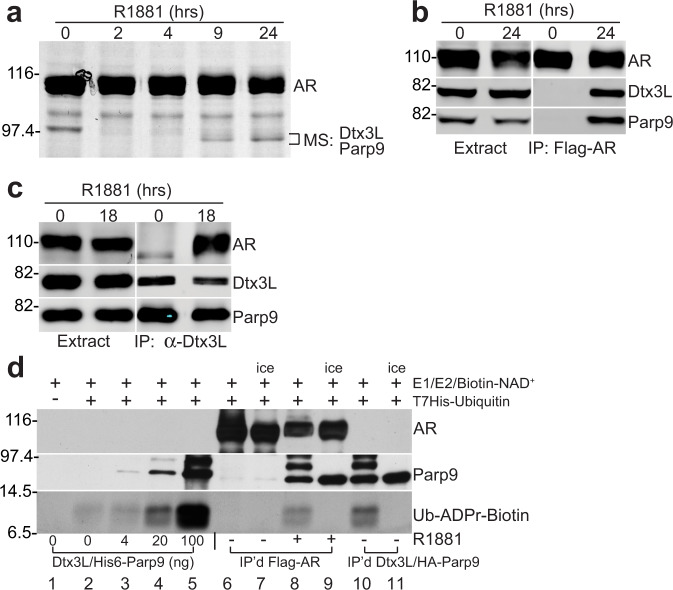
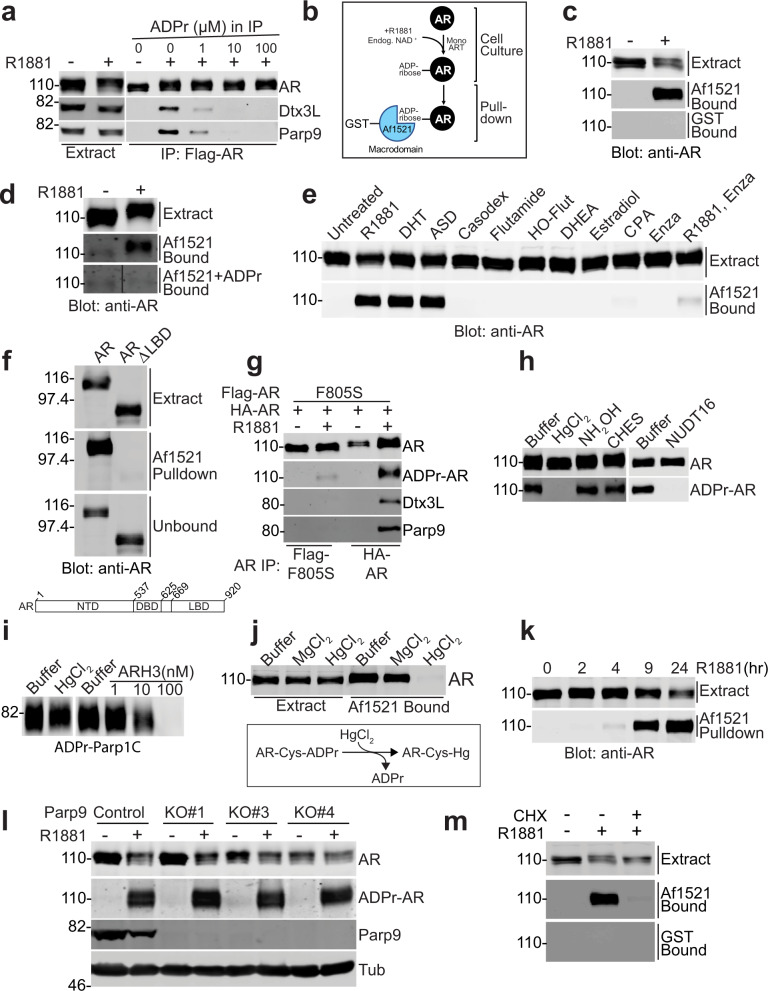
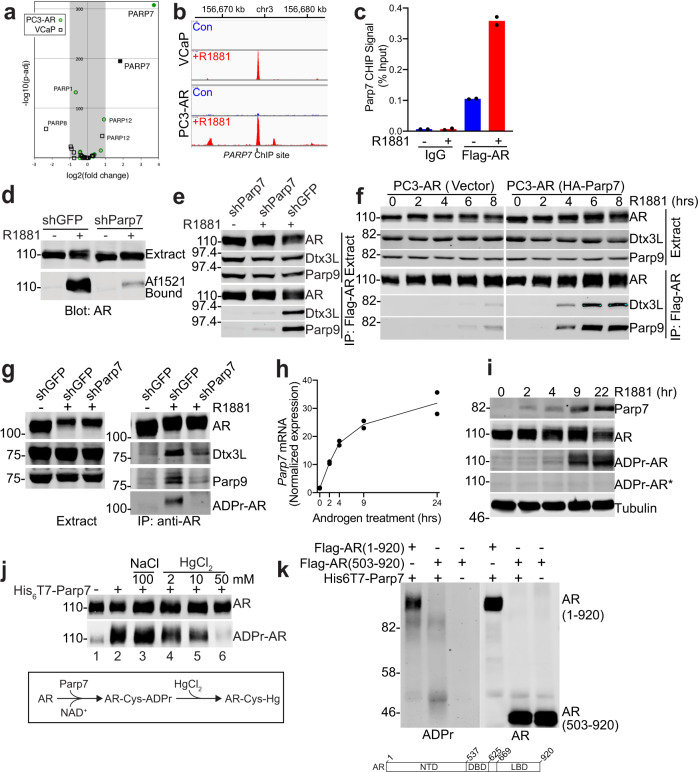
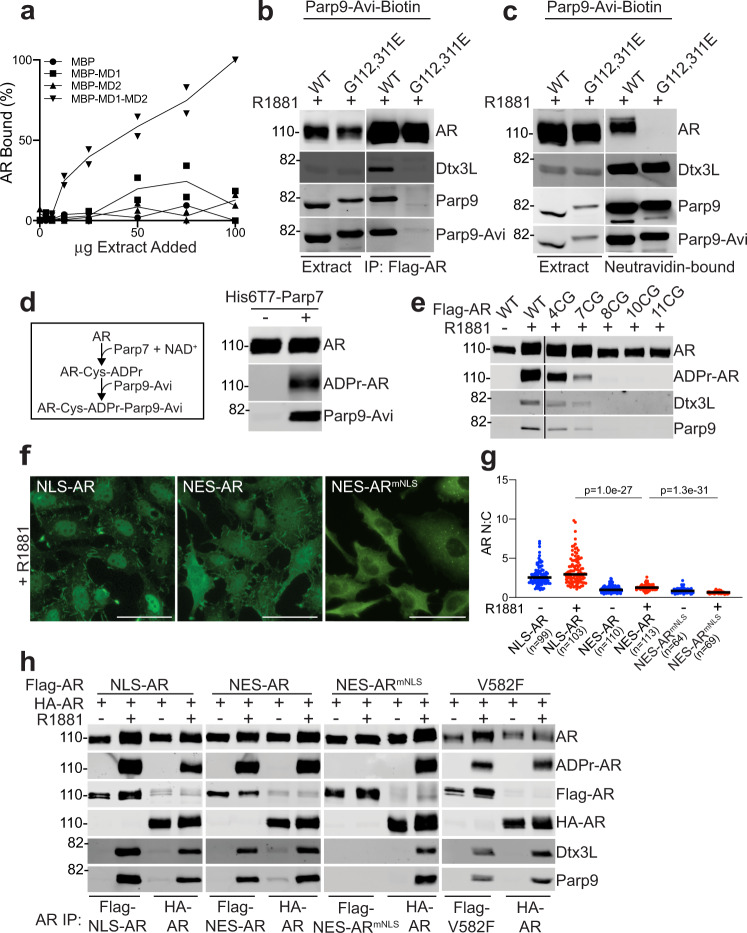
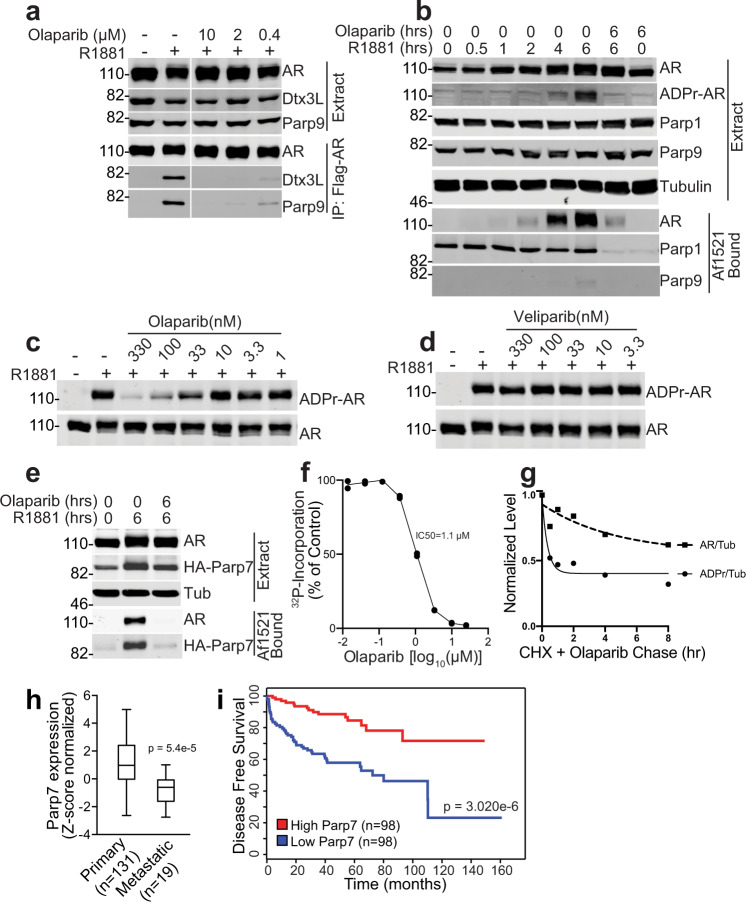
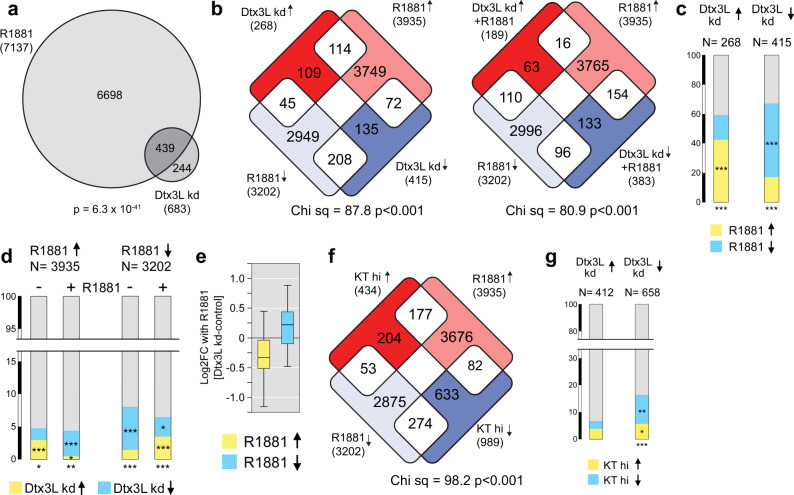
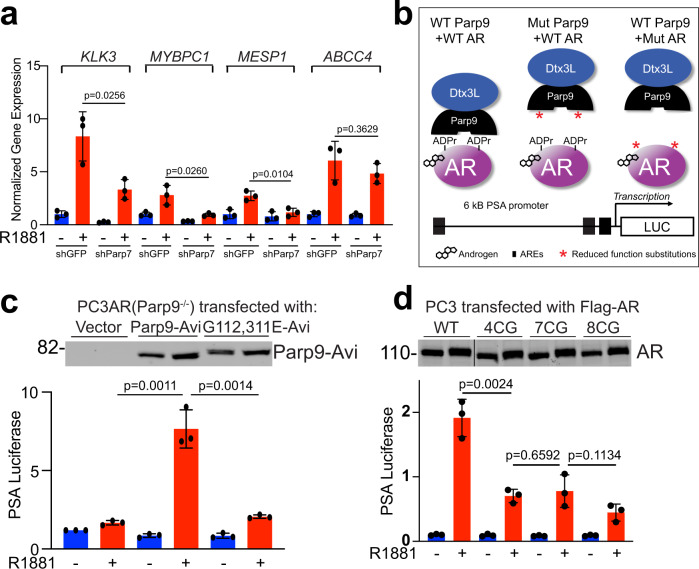
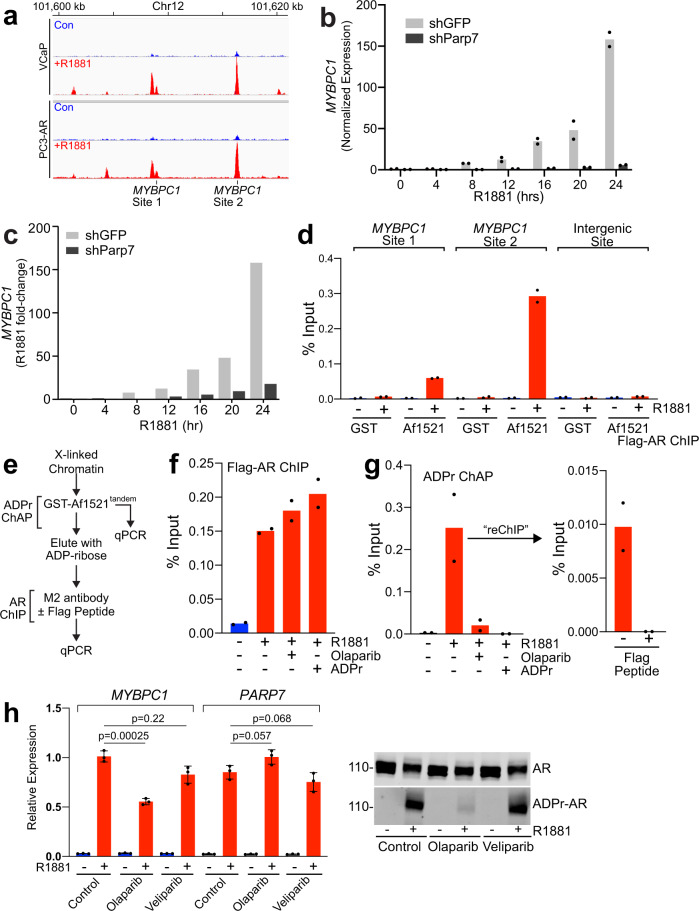
Androgen signaling through the androgen receptor (AR) directs gene expression in both normal and prostate cancer cells. Androgen regulates multiple aspects of the AR life cycle, including its localization and post-translational modification, but understanding how modifications are read and integrated with AR activity has been difficult. Here, we show that ADP-ribosylation regulates AR through a nuclear pathway mediated by Parp7. We show that Parp7 mono-ADP-ribosylates agonist-bound AR, and that ADP-ribosyl-cysteines within the N-terminal domain mediate recruitment of the E3 ligase Dtx3L/Parp9. Molecular recognition of ADP-ribosyl-cysteine is provided by tandem macrodomains in Parp9, and Dtx3L/Parp9 modulates expression of a subset of AR-regulated genes. Parp7, ADP-ribosylation of AR, and AR-Dtx3L/Parp9 complex assembly are inhibited by Olaparib, a compound used clinically to inhibit poly-ADP-ribosyltransferases Parp1/2. Our study reveals the components of an androgen signaling axis that uses a writer and reader of ADP-ribosylation to regulate protein-protein interactions and AR activity.
Overview
The claims and statistics of this paper haven’t been checked yet.
Free: it reads the open-access text and checks the first 5 claims that cite a source we can check. Create a free account to check every claim.
Integrity signals
Registry
Cites
Statistics
Figures
Verification
Claims the paper makes
The claims and statistics of this paper haven’t been checked yet.
Free: it reads the open-access text and checks the first 5 claims that cite a source we can check. Create a free account to check every claim.
Self-check
Percentages, sums and reported differences re-computed from the paper’s own numbers.
The self-check needs the paper’s full text.
Citations
Cites
Moderated estimation of fold change and dispersion for RNA-seq data with DESeq2
Love, M. I., Huber, W., & Anders, S. (2014) · Genome Biology · doi:10.1186/s13059-014-0550-8 · Cited by 95,106
Cerami, E., Gao, J., Dogrusoz, U., Gross, B. E., Sumer, S. O., Aksoy, B. A., Jacobsen, A., Byrne, C. J., Heuer, M. L., Larsson, E., et al. (2012) · Cancer Discovery · doi:10.1158/2159-8290.cd-12-0095 · Cited by 17,455
Integrative Analysis of Complex Cancer Genomics and Clinical Profiles Using the cBioPortal
Gao, J., Aksoy, B. A., Dogrusoz, U., Dresdner, G., Gross, B., Sumer, S. O., Sun, Y., Jacobsen, A., Sinha, R., Larsson, E., et al. (2013) · Science Signaling · doi:10.1126/scisignal.2004088 · Cited by 15,160
Salmon provides fast and bias-aware quantification of transcript expression
Patro, R., Duggal, G., Love, M. I., Irizarry, R. A., & Kingsford, C. (2017) · Nature Methods · doi:10.1038/nmeth.4197 · Cited by 12,700
Targeting the DNA repair defect in BRCA mutant cells as a therapeutic strategy
Farmer, H., McCabe, N., Lord, C. J., Tutt, A. N. J., Johnson, D. A., Richardson, T. B., Santarosa, M., Dillon, K. J., Hickson, I., Knights, C., et al. (2005) · Nature · doi:10.1038/nature03445 · Cited by 6,683
Specific killing of BRCA2-deficient tumours with inhibitors of poly(ADP-ribose) polymerase
Bryant, H. E., Schultz, N., Thomas, H. D., Parker, K. M., Flower, D., Lopez, E., Kyle, S., Meuth, M., Curtin, N. J., & Helleday, T. (2005) · Nature · doi:10.1038/nature03443 · Cited by 5,198
Integrative Genomic Profiling of Human Prostate Cancer
Taylor, B. S., Schultz, N., Hieronymus, H., Gopalan, A., Xiao, Y., Carver, B. S., Arora, V. K., Kaushik, P., Cerami, E., Reva, B., et al. (2010) · Cancer Cell · doi:10.1016/j.ccr.2010.05.026 · Cited by 3,701
Emerging mechanisms of resistance to androgen receptor inhibitors in prostate cancer
Watson, P. A., Arora, V. K., & Sawyers, C. L. (2015) · Nature Reviews Cancer · doi:10.1038/nrc4016 · Cited by 1,536
The androgen receptor fuels prostate cancer by regulating central metabolism and biosynthesis
Massie, C. E., Lynch, A., Ramos‐Montoya, A., Boren, J., Stark, R., Fazli, L., Warren, A., Scott, H., Madhu, B., Sharma, N., et al. (2011) · The EMBO Journal · doi:10.1038/emboj.2011.158 · Cited by 624
Chemistry and Structural Biology of Androgen Receptor
Gao, W., Bohl, C. E., & Dalton, J. T. (2005) · Chemical Reviews · doi:10.1021/cr020456u · Cited by 528
The macro domain is an ADP‐ribose binding module
Karras, G. I., Kustatscher, G., Buhecha, H. R., Allen, M. D., Pugieux, C., Sait, F., Bycroft, M., & Ladurner, A. G. (2005) · The EMBO Journal · doi:10.1038/sj.emboj.7600664 · Cited by 505
Thomsen, M. C. F., & Nielsen, M. (2012) · Nucleic Acids Research · doi:10.1093/nar/gks469 · Cited by 431
Synthetic lethal therapies for cancer: what’s next after PARP inhibitors?
Ashworth, A., & Lord, C. J. (2018) · Nature Reviews Clinical Oncology · doi:10.1038/s41571-018-0055-6 · Cited by 420
He, B., Kemppainen, J. A., Voegel, J. J., Gronemeyer, H., & Wilson, E. M. (1999) · Journal of Biological Chemistry · doi:10.1074/jbc.274.52.37219 · Cited by 372
Thorsell, A.-G., Ekblad, T., Karlberg, T., Löw, M., Pinto, A. F., Trésaugues, L., Moche, M., Cohen, M. S., & Schüler, H. (2017) · Journal of Medicinal Chemistry · doi:10.1021/acs.jmedchem.6b00990 · Cited by 358
Site-specific characterization of the Asp- and Glu-ADP-ribosylated proteome
Zhang, Y., Wang, J., Ding, M., & Yu, Y. (2013) · Nature Methods · doi:10.1038/nmeth.2603 · Cited by 352
A genome-wide association study identifies susceptibility loci for ovarian cancer at 2q31 and 8q24
The Wellcome Trust Case-Control Consortium, Goode, E. L., Cancer), T. A. C. S. (., The Australian Ovarian Cancer Study Group, the Ovarian Cancer Association Consortium (OCAC), Chenevix-Trench, G., Song, H., Ramus, S. J., Notaridou, M., Lawrenson, K., et al. (2010) · Nature Genetics · doi:10.1038/ng.668 · Cited by 344
Mechanisms of androgen receptor activation and function
Brinkmann, A. O., Blok, L. J., de Ruiter, P. E., Doesburg, P., Steketee, K., Berrevoets, C. A., & Trapman, J. (1999) · The Journal of Steroid Biochemistry and Molecular Biology · doi:10.1016/s0960-0760(99)00049-7 · Cited by 308
He, B., Gampe, R. T., Kole, A. J., Hnat, A. T., Stanley, T. B., An, G., Stewart, E. L., Kalman, R. I., Minges, J. T., & Wilson, E. M. (2004) · Molecular Cell · doi:10.1016/j.molcel.2004.09.036 · Cited by 295
Li, L., Karanika, S., Yang, G., Wang, J., Park, S., Broom, B. M., Manyam, G. C., Wu, W., Luo, Y., Basourakos, S., et al. (2017) · Science Signaling · doi:10.1126/scisignal.aam7479 · Cited by 295
Yamada, T., Horimoto, H., Kameyama, T., Hayakawa, S., Yamato, H., Dazai, M., Takada, A., Kida, H., Bott, D., Zhou, A. C., et al. (2016) · Nature Immunology · doi:10.1038/ni.3422 · Cited by 251
Serine ADP-ribosylation reversal by the hydrolase ARH3
Fontana, P., Bonfiglio, J. J., Palazzo, L., Bartlett, E., Matic, I., & Ahel, I. (2017) · eLife · doi:10.7554/elife.28533 · Cited by 231
Nuclear ADP-Ribosylation and Its Role in Chromatin Plasticity, Cell Differentiation, and Epigenetics
Hottiger, M. O. (2015) · Annual Review of Biochemistry · doi:10.1146/annurev-biochem-060614-034506 · Cited by 229
Zhang, Y., Mao, D., Roswit, W. T., Jin, X., Patel, A. C., Patel, D. A., Agapov, E., Wang, Z., Tidwell, R. M., Atkinson, J. J., et al. (2015) · Nature Immunology · doi:10.1038/ni.3279 · Cited by 221
Macrodomains: Structure, Function, Evolution, and Catalytic Activities
Rack, J. G. M., Perina, D., & Ahel, I. (2016) · Annual Review of Biochemistry · doi:10.1146/annurev-biochem-060815-014935 · Cited by 217
Ubiquitin Modification by the E3 Ligase/ADP-Ribosyltransferase Dtx3L/Parp9
Yang, C.-S., Jividen, K., Spencer, A., Dworak, N., Ni, L., Oostdyk, L. T., Chatterjee, M., Kuśmider, B., Reon, B., Parlak, M., et al. (2017) · Molecular Cell · doi:10.1016/j.molcel.2017.04.028 · Cited by 211
Self-citationDoesburg, P., Kuil, C. W., Berrevoets, C. A., Steketee, K., Faber, P. W., Mulder, E., Brinkmann, A. O., & Trapman, J. (1997) · Biochemistry · doi:10.1021/bi961775g · Cited by 209
PARPs and ADP-Ribosylation: 50 Years … and Counting
Kraus, W. L. (2015) · Molecular Cell · doi:10.1016/j.molcel.2015.06.006 · Cited by 189
Larsen, S. C., Hendriks, I. A., Lyon, D., Jensen, L. J., & Nielsen, M. L. (2018) · Cell Reports · doi:10.1016/j.celrep.2018.07.083 · Cited by 178
BBAP Monoubiquitylates Histone H4 at Lysine 91 and Selectively Modulates the DNA Damage Response
Yan, Q., Dutt, S., Xu, R., Graves, K., Juszczynski, P., Manis, J. P., & Shipp, M. A. (2009) · Molecular Cell · doi:10.1016/j.molcel.2009.08.019 · Cited by 164
Post-translational modification of the androgen receptor
Gioeli, D. G., & Paschal, B. M. (2011) · Molecular and Cellular Endocrinology · doi:10.1016/j.mce.2011.07.004 · Cited by 164
Self-citationTakeyama, K., Aguiar, R. C. T., Gu, L., He, C., Freeman, G. J., Kutok, J. L., Aster, J. C., & Shipp, M. A. (2003) · Journal of Biological Chemistry · doi:10.1074/jbc.m301157200 · Cited by 152
Juszczyński, P., Kutok, J. L., Li, C., Mitra, J., Aguiar, R. C. T., & Shipp, M. A. (2006) · Molecular and Cellular Biology · doi:10.1128/mcb.02351-05 · Cited by 144
Recognition of Mono-ADP-Ribosylated ARTD10 Substrates by ARTD8 Macrodomains
Forst, A. H., Karlberg, T., Herzog, N., Thorsell, A. G., Groß, A., Feijs, K. L. H., Verheugd, P., Kursula, P., Nijmeijer, B., Kremmer, E., et al. (2013) · Structure · doi:10.1016/j.str.2012.12.019 · Cited by 138
BAL is a novel risk-related gene in diffuse large B-cell lymphomas that enhances cellular migration
Aguiar, R. C. T., Yakushijin, Y., Kharbanda, S., Salgia, R., Fletcher, J. A., & Shipp, M. A. (2000) · Blood · doi:10.1182/blood.v96.13.4328 · Cited by 136
Regulation of the androgen receptor by post-translational modifications
Coffey, K., & Robson, C. N. (2012) · Journal of Endocrinology · doi:10.1530/joe-12-0238 · Cited by 135
Nuclear PARPs and genome integrity
Azarm, K., & Smith, S. H. (2020) · Genes & Development · doi:10.1101/gad.334730.119 · Cited by 124
Yan, Q., Xu, R., Zhu, L., Cheng, X., Wang, Z., Manis, J., & Shipp, M. A. (2013) · Molecular and Cellular Biology · doi:10.1128/mcb.00990-12 · Cited by 122
Fluorescence-based quantification of nucleocytoplasmic transport
Kelley, J. B., & Paschal, B. M. (2018) · Methods · doi:10.1016/j.ymeth.2018.11.002 · Cited by 111
Self-citationBachmann, S. B., Frommel, S. C., Camicia, R., Winkler, H. C., Santoro, R., & Hassa, P. O. (2014) · Molecular Cancer · doi:10.1186/1476-4598-13-125 · Cited by 109
PARP Inhibitors for Cancer Therapy
Lin, K. Y., & Kraus, W. L. (2017) · Cell · doi:10.1016/j.cell.2017.03.034 · Cited by 101
A Chain of Events: Regulating Target Proteins by SUMO Polymers
Jansen, N. S., & Vertegaal, A. C. O. (2020) · Trends in Biochemical Sciences · doi:10.1016/j.tibs.2020.09.002 · Cited by 101
Intranuclear organization and function of the androgen receptor
Black, B. E., & Paschal, B. M. (2004) · Trends in Endocrinology and Metabolism · doi:10.1016/j.tem.2004.09.006 · Cited by 87
Self-citationCharacterization of TCDD-inducible poly-ADP-ribose polymerase (TIPARP/ARTD14) catalytic activity
Gomez, A. V., Bindesbøll, C., Satheesh, S. V., Grimaldi, G., Hutin, D., MacPherson, L., Ahmed, S., Tamblyn, L., Cho, T., Nebb, H. I., et al. (2018) · Biochemical Journal · doi:10.1042/bcj20180347 · Cited by 80
Ahmed, S., Bott, D., Gomez, A., Tamblyn, L., Rasheed, A., Cho, T., MacPherson, L., Sugamori, K. S., Yang, Y., Grant, D. M., et al. (2015) · Journal of Biological Chemistry · doi:10.1074/jbc.m115.660100 · Cited by 78
Sutinen, P., Malinen, M., Heikkinen, S., & Palvimo, J. J. (2014) · Nucleic Acids Research · doi:10.1093/nar/gku543 · Cited by 78
Genomic analysis of DNA repair genes and androgen signaling in prostate cancer
Jividen, K., Kedzierska, K., Yang, C., Szlachta, K. A., Ratan, A., & Paschal, B. M. (2018) · BMC Cancer · doi:10.1186/s12885-018-4848-x · Cited by 71
Self-citationCamicia, R., Bachmann, S. B., Winkler, H. C., Beer, M., Tinguely, M., Haralambieva, E., & Hassa, P. O. (2013) · Journal of Cell Science · doi:10.1242/jcs.118174 · Cited by 67
A 12-Gene Expression Signature Is Associated with Aggressive Histological in Prostate Cancer
Agell, L., Hernandez, S. F., Nonell, L., Lorenzo, M., Puigdecanet, E., de Muga, S., Juanpere-Rodero, N., Bermudo, R., Fernández, P. L., Lorente, J. A., et al. (2012) · American Journal Of Pathology · doi:10.1016/j.ajpath.2012.08.005 · Cited by 64
Bindesbøll, C., Tan, S., Bott, D., Cho, T., Tamblyn, L., MacPherson, L., Grønning-Wang, L. M., Nebb, H. I., & Matthews, J. B. (2016) · Biochemical Journal · doi:10.1042/bj20151077 · Cited by 64
Two DNA-binding and Nick Recognition Modules in Human DNA Ligase III
Cotner-Gohara, E., Kim, I.-K., Tomkinson, A. E., & Ellenberger, T. (2008) · Journal of Biological Chemistry · doi:10.1074/jbc.m708175200 · Cited by 62
Self-citationNeuwirt, H., Puhr, M., Cavarretta, I. T. R., Mitterberger, M., Hobisch, A., & Čulig, Z. (2007) · Endocrine Related Cancer · doi:10.1677/erc-07-0172 · Cited by 55
Yang, C.-S., Xin, H.-W., Kelley, J. B., Spencer, A., Brautigan, D. L., & Paschal, B. M. (2007) · Molecular and Cellular Biology · doi:10.1128/mcb.02411-06 · Cited by 55
Self-citationAnalysis of Chromatin ADP-Ribosylation at the Genome-wide Level and at Specific Loci by ADPr-ChAP
Bartolomei, G., Leutert, M., Manzo, M., Baubec, T., & Hottiger, M. O. (2016) · Molecular Cell · doi:10.1016/j.molcel.2015.12.025 · Cited by 55
Myt1 and Myt1l transcription factors limit proliferation in GBM cells by repressing YAP1 expression
Melhuish, T. A., Kowalczyk, I., Manukyan, A., Zhang, Y., Shah, A., Abounader, R., & Wotton, D. (2018) · Biochimica et Biophysica Acta (BBA) - Gene Regulatory Mechanisms · doi:10.1016/j.bbagrm.2018.10.005 · Cited by 37
Self-citation[25] Preparation of low molecular weight model conjugates for ADP-ribose linkages to protein
Cervantes-Laurean, D., Jacobson, E. L., & Jacobson, M. K. (1997) · Methods in enzymology on CD-ROM/Methods in enzymology · doi:10.1016/s0076-6879(97)80119-x · Cited by 28
ADP-Ribosylated Peptide Enrichment and Site Identification: The Phosphodiesterase-Based Method
Daniels, C. M., Ong, S., & Leung, A. K. L. (2017) · Methods in molecular biology · doi:10.1007/978-1-4939-6993-7_7 · Cited by 23
Poly(ADP-ribose) polymerase inhibitor therapeutic effect: are we just scratching the surface?
Hottiger, M. O. (2015) · Expert Opinion on Therapeutic Targets · doi:10.1517/14728222.2015.1073262 · Cited by 20
Kamata, T., Yang, C., Jividen, K., Spencer, A., Dworak, N. M., Oostdyk, L. T., & Paschal, B. M. (2019) · Methods in molecular biology · doi:10.1007/978-1-4939-9195-2_9 · Cited by 10
Self-citationWang, S., Xu, H., AN, W., ZHU, D., & Li, D. (2016) · Experimental and Therapeutic Medicine · doi:10.3892/etm.2016.3234 · Cited by 8
Cited by
ADP-ribosylation from molecular mechanisms to therapeutic implications
Suskiewicz, M. J., Prokhorova, E., Rack, J. G. M., & Ahel, I. (2023) · Cell · doi:10.1016/j.cell.2023.08.030 · Cited by 189
PARPs and ADP-ribosylation: Deciphering the complexity with molecular tools
Dasovich, M., & Leung, A. K. L. (2023) · Molecular Cell · doi:10.1016/j.molcel.2023.04.009 · Cited by 79
PARP14 and PARP9/DTX3L regulate interferon-induced ADP-ribosylation
Kar, P., Chatrin, C., Đukić, N., Suyari, O., Schuller, M., Zhu, K., Prokhorova, E. A., Bigot, N., Baretić, D., Ahel, J., et al. (2024) · The EMBO Journal · doi:10.1038/s44318-024-00126-0 · Cited by 71
“However, the macrodomains of PARP9 were also proposed as Cys-ADPr readers (Yang et al, 2021) and a viral dsRNA sensor (Xing et al, 2021).”
PARP14 is regulated by the PARP9/DTX3L complex and promotes interferon γ-induced ADP-ribosylation
Ribeiro, V. C., Russo, L. C., & Hoch, N. C. (2024) · The EMBO Journal · doi:10.1038/s44318-024-00125-1 · Cited by 44
“…currently unclear, although PARP9 and DTX3L have been shown to regulate DNA damage signalling (Yan et al, 2013), proteasomal degradation of viral proteins (Zhang et al, 2015) and activation of the androgen receptor (Yang et al, 2021), among other functions (Vela-Rodríguez and Lehtiö, 2022).”
BackgroundPARP7 mono-ADP-ribosylates the agonist conformation of the androgen receptor in the nucleus
Kamata, T., Yang, C., & Paschal, B. M. (2021) · Biochemical Journal · doi:10.1042/bcj20210378 · Cited by 36
Self-citation
Metadata
- Authors
- Yang, C.-S., Jividen, K., Kamata, T., Dworak, N., Oostdyk, L., Remlein, B., Pourfarjam, Y., Kim, I.-K., Du, K.-P., Abbas, T., Sherman, N. E., Wotton, D., & Paschal, B. M.
- Affiliations
- University of Virginia (US)
- University of Cincinnati (US)
- Corresponding author
- Paschal, Bryce M.
- ORCID
- Venue
- Nature Communications
- Published
- 2021-05-11
- Volume
- 12
- Issue
- 1
- Pages
- 2705-2705
- ISSN
- 2041-1723 (ISSN-L)
- PMC
- PMC8113490
- OpenAlex
- W3161788674
- Cited by
- 44
- References
- 60
- Citations by year
- 2026: 6 · 2025: 12 · 2024: 12 · 2023: 8 · 2022: 4 · 2021: 2
- FWCI
- 4.69
- Type
- journal article
- Language
- en
- Open access
- gold
- doi.org
- Licence
- cc-by
- creativecommons.org/licenses/by/4.0 (tdm)
- creativecommons.org/licenses/by/4.0 (vor)
- Locations
- Nature Communications (publishedVersion, cc-by)
- PubMed Central (publishedVersion, cc-by)
- PubMed (publishedVersion)
- RePEc: Research Papers in Economics (submittedVersion)
- DOAJ (DOAJ: Directory of Open Access Journals) (submittedVersion, cc-by-sa)
- Funders
- Johns Hopkins University
- National Institutes of Health
- National Cancer Institute (R01CA214872, T32CA009109)
- National Institute of General Medical Sciences (R01GM135376)
- Topics
- Life Sciences › Biochemistry, Genetics and Molecular Biology › Cancer Research › Prostate Cancer Treatment and Research
- Health Sciences › Medicine › Oncology › PARP inhibition in cancer therapy
- Life Sciences › Biochemistry, Genetics and Molecular Biology › Endocrinology › Estrogen and related hormone effects
- Keywords
- androgen receptor, ADP-ribosylation, PARP7, PARP9, DTX3L, mono-ADP-ribosylation, E3 ubiquitin ligase, protein complex formation, androgen signaling, prostate cancer, olaparib, post-translational modification
- MeSH terms
- Poly(ADP-ribose) Polymerase Inhibitors, Poly (ADP-Ribose) Polymerase-1, ADP-Ribosylation, Adenocarcinoma, Antineoplastic Agents, Humans, Male, Neoplasm Proteins, Phthalazines, Piperazines, Poly(ADP-ribose) Polymerases, Prostatic Neoplasms, Protein Processing, Post-Translational, Receptors, Androgen, Signal Transduction, Metribolone, Gene Expression Regulation, Neoplastic, Survival Analysis, Protein Isoforms, Cell Line, Tumor
About these checks
Registry, retraction, Cites and statistics results are computed, not judged, with one exception: a printed reference that no index lists is read once by a model before it counts as a citation error. Claims are extracted by a model and kept only when their quote appears verbatim in the text; each cited source is then checked, with a model’s help, for whether it says what the claim relies on. Those verdicts can be wrong — read the claim’s quote and the cited source before relying on one.
Statistics and arithmetic are recomputed, not judged.
Confidence bands are shown only for fields calibrated on our annotated test set. None is calibrated yet, so no band is shown.
What counts as a claim ›How we measure confidence ›How we check this ›
Are you an author, or do you see a problem with this page? Request a review
Data sources
Bibliographic data: Semantic Scholar, OpenAlex, Crossref.
Contains information from the Semantic Scholar Academic Graph Datasets, made available under the ODC Attribution License (ODC-BY 1.0).
Semantic Scholar’s data is described in: Kinney, R., et al. (2023). The Semantic Scholar Open Data Platform. arXiv:2301.10140.
