

Generative modeling of single-cell time series with PRESCIENT enables prediction of cell trajectories with interventions
Open accessThe DOI matches its Crossref record; 55 of the 55 references it cites were found in a registry or an index.
Abstract
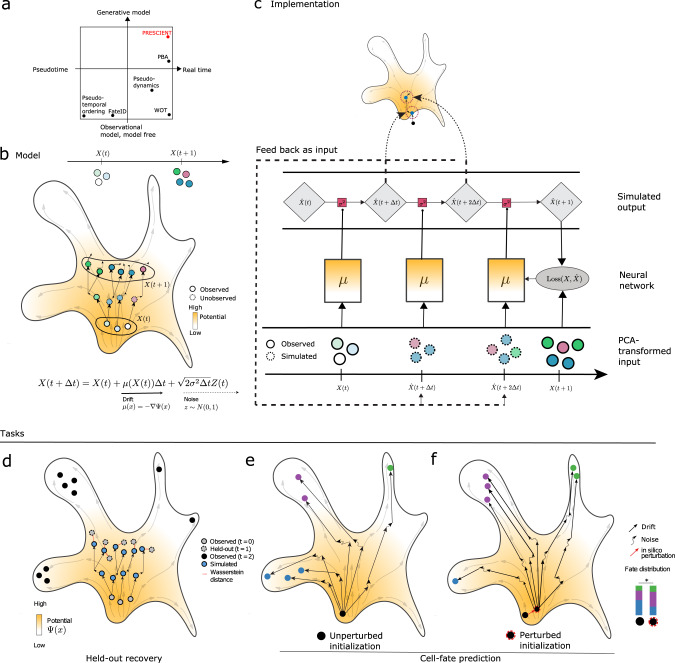
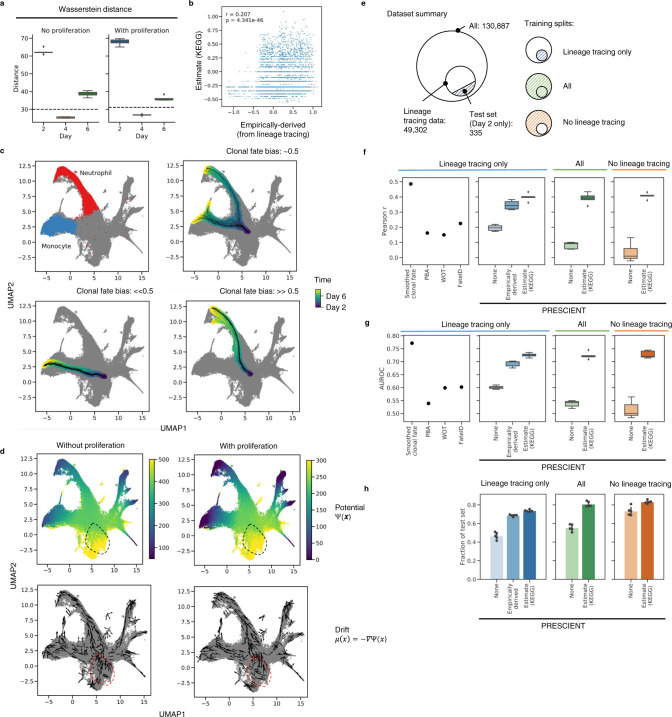
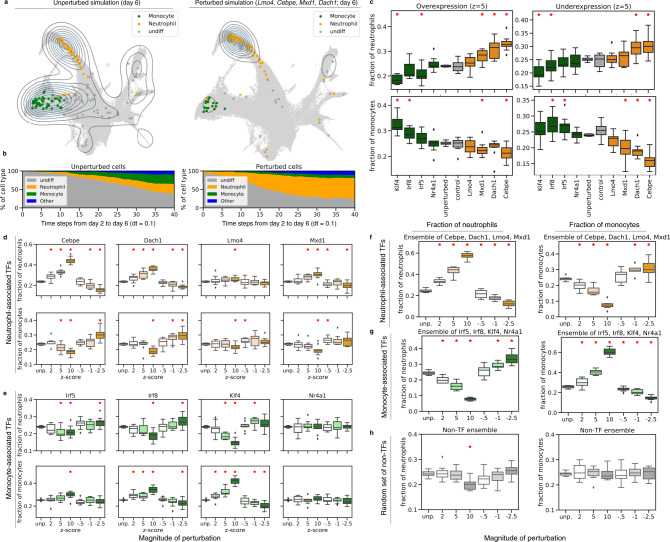
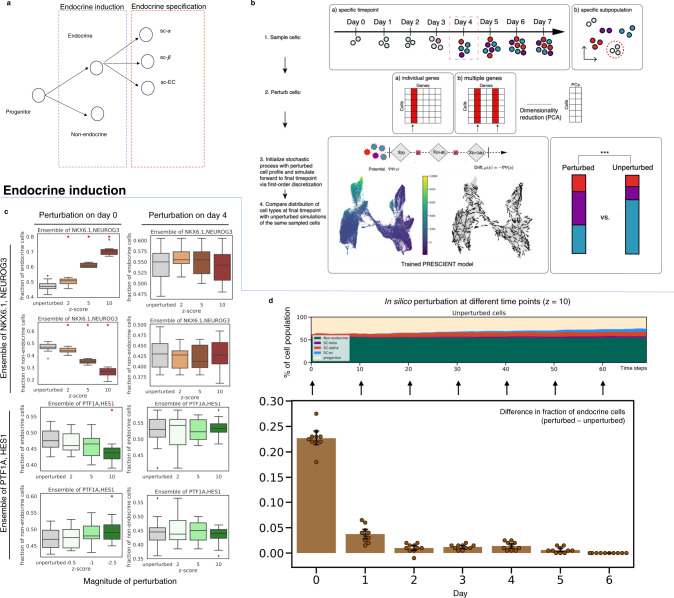
Existing computational methods that use single-cell RNA-sequencing (scRNA-seq) for cell fate prediction do not model how cells evolve stochastically and in physical time, nor can they predict how differentiation trajectories are altered by proposed interventions. We introduce PRESCIENT (Potential eneRgy undErlying Single Cell gradIENTs), a generative modeling framework that learns an underlying differentiation landscape from time-series scRNA-seq data. We validate PRESCIENT on an experimental lineage tracing dataset, where we show that PRESCIENT is able to predict the fate biases of progenitor cells in hematopoiesis when accounting for cell proliferation, improving upon the best-performing existing method. We demonstrate how PRESCIENT can simulate trajectories for perturbed cells, recovering the expected effects of known modulators of cell fate in hematopoiesis and pancreatic β cell differentiation. PRESCIENT is able to accommodate complex perturbations of multiple genes, at different time points and from different starting cell populations, and is available at https://github.com/gifford-lab/prescient .
Overview
The claims and statistics of this paper haven’t been checked yet.
Free: it reads the open-access text and checks the first 5 claims that cite a source we can check. Create a free account to check every claim.
Integrity signals
Registry
Cites
Statistics
Figures
Verification
Claims the paper makes
The claims and statistics of this paper haven’t been checked yet.
Free: it reads the open-access text and checks the first 5 claims that cite a source we can check. Create a free account to check every claim.
Claims other papers make about this one
Each is checked against this paper’s own text: does it say what the citing paper says it does?
The source backs part of the claim, not all of it — or backs it for a different population, condition or comparison.
In the citing paper
“Furthermore, PRESCIENT is apt for reconstructing potential cell fate trajectories after simulating digital KOs (singular or combinatorial) of crucial TFs.”
From A mini-review on perturbation modelling across single-cell omic modalities (2024) · cites this paper as [62]
Experimental — accuracy not yet measuredIn the citing paper
“In contrast to other approaches, like scGen, PRESCIENT models decipher time-driven cellular changes, generate cell distributions, and explicitly model cellular differentiation.”
From A mini-review on perturbation modelling across single-cell omic modalities (2024) · cites this paper as [62]
Self-check
Percentages, sums and reported differences re-computed from the paper’s own numbers.
The self-check needs the paper’s full text.
Citations
Cites
Comprehensive Integration of Single-Cell Data
Stuart, T., Butler, A., Hoffman, P., Hafemeister, C., Papalexi, E., Mauck, W. M., Hao, Y., Stoeckius, M., Smibert, P., & Satija, R. (2019) · Cell · doi:10.1016/j.cell.2019.05.031 · Cited by 15,453
Integrating single-cell transcriptomic data across different conditions, technologies, and species
Butler, A., Hoffman, P., Smibert, P., Papalexi, E., & Satija, R. (2018) · Nature Biotechnology · doi:10.1038/nbt.4096 · Cited by 13,174
Trapnell, C., Roberts, A., Goff, L., Pertea, G., Kim, D., Kelley, D. R., Pimentel, H., Salzberg, S. L., Rinn, J. L., & Pachter, L. (2012) · Nature Protocols · doi:10.1038/nprot.2012.016 · Cited by 12,116
Fast, sensitive and accurate integration of single-cell data with Harmony
Korsunsky, I., Millard, N., Fan, J., Slowikowski, K., Zhang, F., Wei, K., Baglaenko, Y., Brenner, M., Loh, P.-R., & Raychaudhuri, S. (2019) · Nature Methods · doi:10.1038/s41592-019-0619-0 · Cited by 10,488 · cited 1×
“To enable the modeling framework to operate on large scRNA-seq datasets, we fi t models on PCA projections of the scaled gene expression data, which has been successfully used in down-stream scRNA-seq analysis methods such as clustering and cross-dataset integration 14 – 16 .”
MethodLa Manno, G., Soldatov, R., Zeisel, A., Braun, E., Hochgerner, H., Petukhov, V., Lidschreiber, K., Kastriti, M. E., Lönnerberg, P., Furlan, A., et al. (2018) · Nature · doi:10.1038/s41586-018-0414-6 · Cited by 4,118
Generalizing RNA velocity to transient cell states through dynamical modeling
Bergen, V., Lange, M., Peidli, S., Wolf, F. A., & Theis, F. J. (2020) · Nature Biotechnology · doi:10.1038/s41587-020-0591-3 · Cited by 2,951
Batch effects in single-cell RNA-sequencing data are corrected by matching mutual nearest neighbors
Haghverdi, L., Lun, A. T. L., Morgan, M. D., & Marioni, J. C. (2018) · Nature Biotechnology · doi:10.1038/nbt.4091 · Cited by 2,416 · cited 1×
“To enable the modeling framework to operate on large scRNA-seq datasets, we fi t models on PCA projections of the scaled gene expression data, which has been successfully used in down-stream scRNA-seq analysis methods such as clustering and cross-dataset integration 14 – 16 .”
MethodA comparison of single-cell trajectory inference methods
Saelens, W., Cannoodt, R., Todorov, H., & Saeys, Y. (2019) · Nature Biotechnology · doi:10.1038/s41587-019-0071-9 · Cited by 1,670
Baron, M., Veres, A., Wolock, S. L., Faust, A. L., Gaujoux, R., Vetere, A., Ryu, J. H., Wagner, B. K., Shen-Orr, S. S., Klein, A. M., et al. (2016) · Cell Systems · doi:10.1016/j.cels.2016.08.011 · Cited by 1,508 · cited 1×
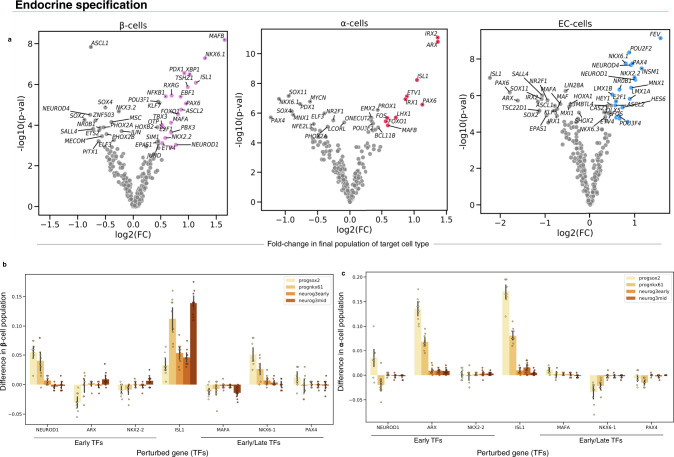
“This includes several known fate-speci fi c factors, such as ARX and IRX2 for α -cells 30,32 and NKX2.”
Backgroundneurogenin3 is required for the development of the four endocrine cell lineages of the pancreas
Gradwohl, G., Dierich, A., LeMeur, M., & Guillemot, F. (2000) · Proceedings of the National Academy of Sciences · doi:10.1073/pnas.97.4.1607 · Cited by 1,439
Cited by
Items 101–125 of 125
Okochi, Y., Sawazaki, Y., Kondo, Y., & Naoki, H. (2026) · bioRxiv (Cold Spring Harbor Laboratory) · doi:10.64898/2026.04.14.718485
Meng, Y., Sultan, R., Jiang, P., Wang, Q., Tan, D., Wang, J., Li, P., & Chen, L. (2026) · Physical review. E · doi:10.1103/xwt5-rmjk
Fernandez, M. L., Gajardo-Escobar, F., Sjöberg-Herrera, M. K., Romagnoli, P. A., & Ceschin, D. G. (2026) · Annual Review of Biomedical Data Science · doi:10.1146/annurev-biodatasci-092724-061209 · Cited by 1
FLUX: Geometry-Aware Longitudinal Flow Matching with Mixture of ExpertsPreprint
Caro, J. O., Zhang, Y., Batchelor, H. M., He, S., Cardin, J. A., & Saxena, S. (2026) · arXiv (Cornell University) · doi:10.48550/arxiv.2605.08648
“Other generative models for time-series single-cell data include PRESCIENT and scNODE, which learn continuous or stochastic dynamics from population snapshots but do not decompose the learned velocity field into regimes [Yeo et al., 2021, Zhang et al., 2024].”
The development and application of deep learning for stem cell research
Li, Z., Zhang, W., Wu, Y., Ye, Y., Chen, Y., Wu, J., & Chen, D. (2026) · Journal of genetics and genomics/Journal of Genetics and Genomics · doi:10.1016/j.jgg.2026.05.008
scMTG reconstructs single-cell temporal dynamics with Markov transition generatorsPreprint
Cui, X., Wang, H., Gao, Z., Jiang, R., Wong, W. H., & Liu, Q. (2026) · bioRxiv (Cold Spring Harbor Laboratory) · doi:10.64898/2026.06.04.730241
“Therefore, establishing transition relationships between cells at different time points, identifying key regulatory genes and constructing temporal gene regulatory networks (GRNs) that drive dynamic biological processes, remain both highly challenging and critically important in the analysis of…”
InfluentialInferring Cell Fate Trajectories in Time-Resolved Metabolic RNA Labeling dataPreprint
Audit, A., Peyré, G., & Cantini, L. (2026) · bioRxiv (Cold Spring Harbor Laboratory) · doi:10.64898/2026.06.11.731638
“Existing approaches 17,18 using potentials compare predicted and observed distributions using the Sinkhorn divergence 25 (see online methods); however, this formulation does not incorporate information from newly synthesized RNA.”
InfluentialModelling stem cell differentiation related processes—A practical overview for biologists
Zeegelaar, R. A., Yan, X., Klomp, L. J., Schivo, S., & Post, J. N. (2026) · FEBS Letters · doi:10.1002/1873-3468.70395
“Using PRESCIENT, a neural ODE-based method, it is additionally possible to learn continuous differentiation dynamics and predict the temporal evolution of cell populations [59].”
The projection basis determines the information ceiling for perturbation predictionPreprint
Bianco, S. (2026) · bioRxiv (Cold Spring Harbor Laboratory) · doi:10.64898/2026.07.07.737004
What Makes a Virtual Cell a World Model? Three Gaps, Three Experiments, and a RoadmapPreprint
YU, C., Zhou, J., Tan, C., Li, S. Z., Liu, X., Zhang, X., Zhang, Z., Lei, Z., & Wang, Z. (2026) · Research Square · doi:10.21203/rs.3.rs-10404367/v1
Reconstructing lineage-constrained gene-program dynamics with PhyloFMPreprint
Wang, Z., Zhang, Z., Yang, X., Tang, C., & Zhou, P. (2026) · bioRxiv (Cold Spring Harbor Laboratory) · doi:10.64898/2026.07.29.741462 · Cited by 2
“S9d), in line with the regulator-to-fate associations 54,80 .”
Sensitivity analysis of cell fate trajectories from single-cell transcriptomics
Noman, A. A., & Sashittal, P. (2026) · Bioinformatics · doi:10.1093/bioinformatics/btag473
“More recently, generative and dynamical modeling approaches have been proposed to learn transition operators that predict future cellular states from current states (Yeo et al .”
Liu, Y., Gao, H., & Tian, T. (2026) · Briefings in Bioinformatics · doi:10.1093/bib/bbag469
“We compare Gene-Chronos with three categories of methods: (i) Trajectory inference methods: CellRank 2 [ 17] and PRESCIENT [ 18]; (ii) supervised regression methods: Psupertime [ 5] and Calderon22 [ 19]; (ii) deep learning method: TemporalVAE [ 6] and fine-tuned foundation models: Nicheformer [ 20]…”
DisKO: Deep Koopman Learning in Distribution Space from Unpaired SnapshotsPreprint
Ma, H., Liu, X., Lu, W., Wang, Y., Lin, W., & Zhu, Q. (2026) · arXiv (Cornell University) · doi:10.48550/arxiv.2609.34629
Dubois, O. A., Loughnan, O., Jiang, Y., Petraello, B., Douglas, A. M., McLachlan, T., Findlay, I. J., Vo, T., Savary, C., & Dun, M. D. (2026) · Journal of Neuro-Oncology · doi:10.1007/s11060-026-05817-8
Yao, J., Zhang, Y., Xu, Y., Ma, J., & Wu, S. (2026) · Bioinformatics · doi:10.1093/bioinformatics/btag772
“MIOFlow failed to recover part of the upper branch, whereas PRESCIENT distorted the local topology.”
LineageFlow: growth-corrected state dynamics for probabilistic cell-fate predictionPreprint
Yang, L., Liu, Q., Wang, W., Liu, J., Wang, Y., & Zhang, W. (2026) · bioRxiv (Cold Spring Harbor Laboratory) · doi:10.64898/2026.10.17.759846
“We therefore compared LineageFlow with several predictor classes under a matched early-only information boundary: an empirical prior, a direct conditional mixture flow, a capacity-matched time-softmax predictor, continuous transport and the growth-aware population model PRESCIENT [17].”
InfluentialVirtual lineages: in silico lineage tracing from single-cell and spatial transcriptomesPreprint
Lin, Y., & Lin, Y. (2026) · bioRxiv (Cold Spring Harbor Laboratory) · doi:10.64898/2026.10.19.760045
LoCoFlow: Local-Context Flow Matching for Single-Cell Dynamics and Fate InferencePreprint
Liu, C., Guan, Z., & Lan, X. (2026) · bioRxiv (Cold Spring Harbor Laboratory) · doi:10.64898/2026.10.15.758594
BLOOM: Biologically Informed Flow Matching for Transcriptomic Virtual Embryo ModelingPreprint
Liang, Z., Li, S., Li, B., Huang, Y., & Yu, L. (2026) · bioRxiv (Cold Spring Harbor Laboratory) · doi:10.64898/2026.10.26.761895
LOTUS: lineage-aware optimal transport reconstructs continuous clonal fate dynamicsPreprint
Lu, J., Hou, H., Zhang, Z., Lin, Y., Lin, Y., & Zhou, P. (2026) · bioRxiv (Cold Spring Harbor Laboratory) · doi:10.64898/2026.10.28.762359
Zhang, Y., Xu, F., & Yan, J. (2026) · Agriculture Communications · doi:10.1016/j.agrcom.2026.100173
Zuo, Z., Ma, X., Shi, W., & Sun, Y. (2026) · ACS Synthetic Biology · doi:10.1021/acssynbio.6c00191
Redd, D. M., Green, S. G., & Terooatea, T. W. (2026) · bioRxiv (Cold Spring Harbor Laboratory) · doi:10.64898/2026.11.05.764643
PerturbNet predicts single-cell responses to unseen chemical and genetic perturbations
Yu, H., & Welch, J. D. (2022) · doi:10.1101/2022.07.20.500854 · Cited by 57
“(2021) proposed a generative model using a diffusion process over 67 a potential energy landscape to learn the underlying differentiation landscape from time-series 68 scRNA-seq data and to predict cellular trajectories under perturbations [17].”
Background
Metadata
- Authors
- Yeo, G. H. T., Saksena, S. D., & Gifford, D. K.
- Affiliations
- MIT Computer Science and Artificial Intelligence Laboratory (US)
- Corresponding author
- Gifford, David K.
- Venue
- Nature Communications
- Published
- 2021-05-28
- Volume
- 12
- Issue
- 1
- Pages
- 3222-3222
- ISSN
- 2041-1723 (ISSN-L)
- PMC
- PMC8163769
- OpenAlex
- W3164448939
- Semantic Scholar
- 9448b5233a64bfa6aafa55ef7aed959ee49c40af
- Cited by
- 103
- References
- 55
- Citations by year
- 2026: 31 · 2025: 25 · 2024: 26 · 2023: 14 · 2022: 6 · 2021: 1
- FWCI
- 3.69
- Type
- journal article
- Language
- en
- Open access
- gold
- doi.org
- Licence
- cc-by
- creativecommons.org/licenses/by/4.0 (tdm)
- creativecommons.org/licenses/by/4.0 (vor)
- Locations
- Nature Communications (publishedVersion, cc-by)
- PubMed Central (publishedVersion, cc-by)
- PubMed (publishedVersion)
- RePEc: Research Papers in Economics (submittedVersion)
- DOAJ (DOAJ: Directory of Open Access Journals) (submittedVersion, cc-by-sa)
- DSpace@MIT (Massachusetts Institute of Technology) (submittedVersion, cc-by-nc)
- Funders
- U.S. Department of Health & Human Services | National Institutes of Health (5 R01 NS109217, 5 R01 HG008363)
- Topics
- Life Sciences › Biochemistry, Genetics and Molecular Biology › Molecular Biology › Single-cell and spatial transcriptomics
- Life Sciences › Biochemistry, Genetics and Molecular Biology › Molecular Biology › Gene Regulatory Network Analysis
- Life Sciences › Biochemistry, Genetics and Molecular Biology › Molecular Biology › Developmental Biology and Gene Regulation
- Keywords
- generative models, cell fate prediction, cell differentiation trajectories, lineage tracing, hematopoiesis, pancreatic beta cell differentiation, cell proliferation, perturbation prediction, single-cell RNA sequencing
- MeSH terms
- Deep Learning, RNA-Seq, Animals, Cell Differentiation, Cells, Cultured, Computer Simulation, Hematopoiesis, Humans, Models, Genetic, Software, Stem Cells, Stochastic Processes, Cell Proliferation, Insulin-Secreting Cells, Mice, Single-Cell Analysis, Datasets as Topic
About these checks
Registry, retraction, Cites and statistics results are computed, not judged, with one exception: a printed reference that no index lists is read once by a model before it counts as a citation error. Claims are extracted by a model and kept only when their quote appears verbatim in the text; each cited source is then checked, with a model’s help, for whether it says what the claim relies on. Those verdicts can be wrong — read the claim’s quote and the cited source before relying on one.
Statistics and arithmetic are recomputed, not judged.
Confidence bands are shown only for fields calibrated on our annotated test set. None is calibrated yet, so no band is shown.
What counts as a claim ›How we measure confidence ›How we check this ›
Are you an author, or do you see a problem with this page? Request a review
Data sources
Bibliographic data: Semantic Scholar, OpenAlex, Crossref.
Contains information from the Semantic Scholar Academic Graph Datasets, made available under the ODC Attribution License (ODC-BY 1.0).
Semantic Scholar’s data is described in: Kinney, R., et al. (2023). The Semantic Scholar Open Data Platform. arXiv:2301.10140.
