

Generative modeling of single-cell time series with PRESCIENT enables prediction of cell trajectories with interventions
Open accessThe DOI matches its Crossref record; 55 of the 55 references it cites were found in a registry or an index.
Abstract
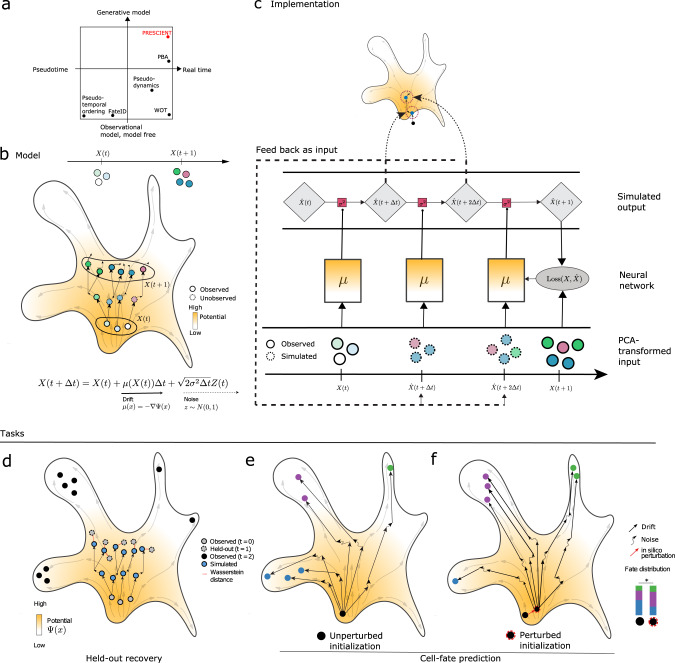
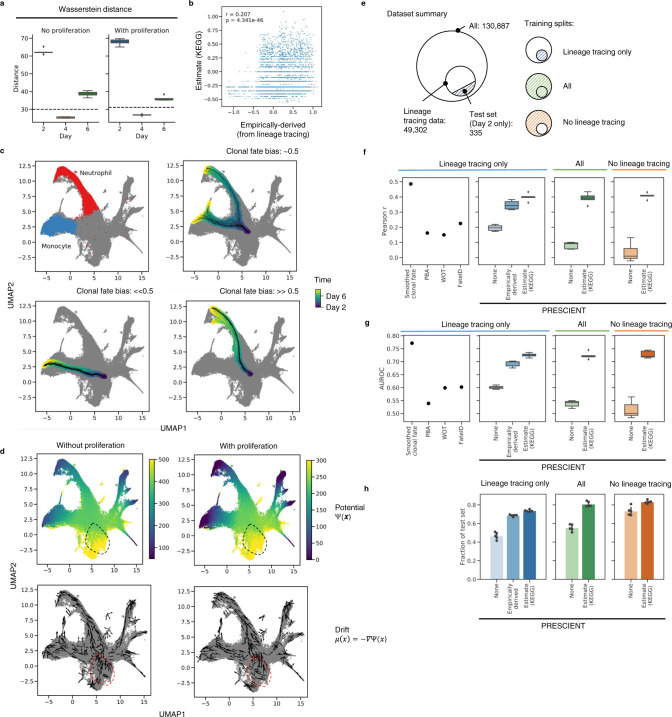
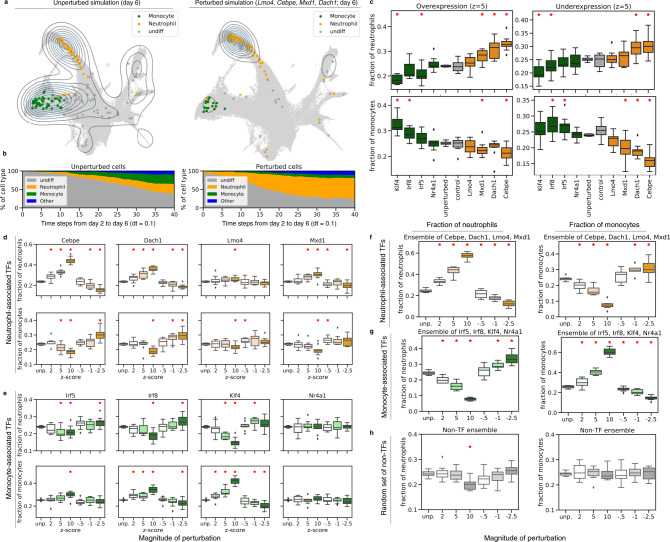
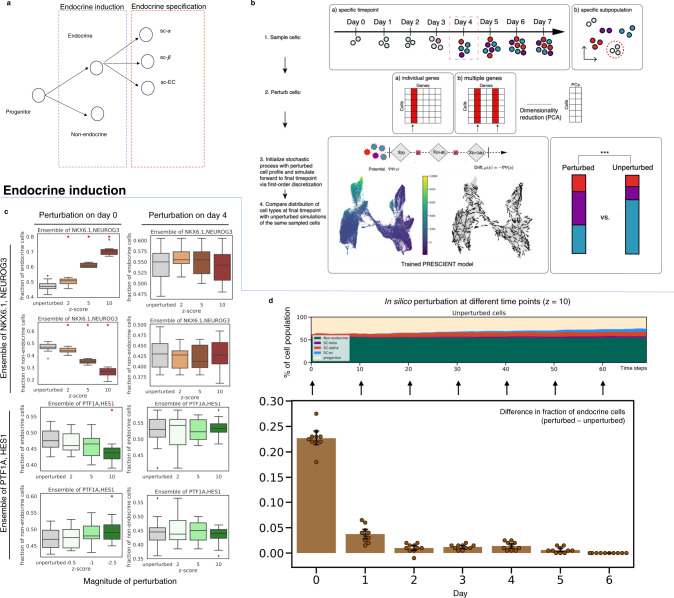
Existing computational methods that use single-cell RNA-sequencing (scRNA-seq) for cell fate prediction do not model how cells evolve stochastically and in physical time, nor can they predict how differentiation trajectories are altered by proposed interventions. We introduce PRESCIENT (Potential eneRgy undErlying Single Cell gradIENTs), a generative modeling framework that learns an underlying differentiation landscape from time-series scRNA-seq data. We validate PRESCIENT on an experimental lineage tracing dataset, where we show that PRESCIENT is able to predict the fate biases of progenitor cells in hematopoiesis when accounting for cell proliferation, improving upon the best-performing existing method. We demonstrate how PRESCIENT can simulate trajectories for perturbed cells, recovering the expected effects of known modulators of cell fate in hematopoiesis and pancreatic β cell differentiation. PRESCIENT is able to accommodate complex perturbations of multiple genes, at different time points and from different starting cell populations, and is available at https://github.com/gifford-lab/prescient .
Overview
The claims and statistics of this paper haven’t been checked yet.
Free: it reads the open-access text and checks the first 5 claims that cite a source we can check. Create a free account to check every claim.
Integrity signals
Registry
Cites
Statistics
Figures
Verification
Claims the paper makes
The claims and statistics of this paper haven’t been checked yet.
Free: it reads the open-access text and checks the first 5 claims that cite a source we can check. Create a free account to check every claim.
Claims other papers make about this one
Each is checked against this paper’s own text: does it say what the citing paper says it does?
The source backs part of the claim, not all of it — or backs it for a different population, condition or comparison.
In the citing paper
“Furthermore, PRESCIENT is apt for reconstructing potential cell fate trajectories after simulating digital KOs (singular or combinatorial) of crucial TFs.”
From A mini-review on perturbation modelling across single-cell omic modalities (2024) · cites this paper as [62]
Experimental — accuracy not yet measuredIn the citing paper
“In contrast to other approaches, like scGen, PRESCIENT models decipher time-driven cellular changes, generate cell distributions, and explicitly model cellular differentiation.”
From A mini-review on perturbation modelling across single-cell omic modalities (2024) · cites this paper as [62]
Self-check
Percentages, sums and reported differences re-computed from the paper’s own numbers.
The self-check needs the paper’s full text.
Citations
Cites
Comprehensive Integration of Single-Cell Data
Stuart, T., Butler, A., Hoffman, P., Hafemeister, C., Papalexi, E., Mauck, W. M., Hao, Y., Stoeckius, M., Smibert, P., & Satija, R. (2019) · Cell · doi:10.1016/j.cell.2019.05.031 · Cited by 15,453
Integrating single-cell transcriptomic data across different conditions, technologies, and species
Butler, A., Hoffman, P., Smibert, P., Papalexi, E., & Satija, R. (2018) · Nature Biotechnology · doi:10.1038/nbt.4096 · Cited by 13,174
Trapnell, C., Roberts, A., Goff, L., Pertea, G., Kim, D., Kelley, D. R., Pimentel, H., Salzberg, S. L., Rinn, J. L., & Pachter, L. (2012) · Nature Protocols · doi:10.1038/nprot.2012.016 · Cited by 12,116
Fast, sensitive and accurate integration of single-cell data with Harmony
Korsunsky, I., Millard, N., Fan, J., Slowikowski, K., Zhang, F., Wei, K., Baglaenko, Y., Brenner, M., Loh, P.-R., & Raychaudhuri, S. (2019) · Nature Methods · doi:10.1038/s41592-019-0619-0 · Cited by 10,488 · cited 1×
“To enable the modeling framework to operate on large scRNA-seq datasets, we fi t models on PCA projections of the scaled gene expression data, which has been successfully used in down-stream scRNA-seq analysis methods such as clustering and cross-dataset integration 14 – 16 .”
MethodLa Manno, G., Soldatov, R., Zeisel, A., Braun, E., Hochgerner, H., Petukhov, V., Lidschreiber, K., Kastriti, M. E., Lönnerberg, P., Furlan, A., et al. (2018) · Nature · doi:10.1038/s41586-018-0414-6 · Cited by 4,118
Generalizing RNA velocity to transient cell states through dynamical modeling
Bergen, V., Lange, M., Peidli, S., Wolf, F. A., & Theis, F. J. (2020) · Nature Biotechnology · doi:10.1038/s41587-020-0591-3 · Cited by 2,951
Batch effects in single-cell RNA-sequencing data are corrected by matching mutual nearest neighbors
Haghverdi, L., Lun, A. T. L., Morgan, M. D., & Marioni, J. C. (2018) · Nature Biotechnology · doi:10.1038/nbt.4091 · Cited by 2,416 · cited 1×
“To enable the modeling framework to operate on large scRNA-seq datasets, we fi t models on PCA projections of the scaled gene expression data, which has been successfully used in down-stream scRNA-seq analysis methods such as clustering and cross-dataset integration 14 – 16 .”
MethodA comparison of single-cell trajectory inference methods
Saelens, W., Cannoodt, R., Todorov, H., & Saeys, Y. (2019) · Nature Biotechnology · doi:10.1038/s41587-019-0071-9 · Cited by 1,670
Baron, M., Veres, A., Wolock, S. L., Faust, A. L., Gaujoux, R., Vetere, A., Ryu, J. H., Wagner, B. K., Shen-Orr, S. S., Klein, A. M., et al. (2016) · Cell Systems · doi:10.1016/j.cels.2016.08.011 · Cited by 1,508 · cited 1×
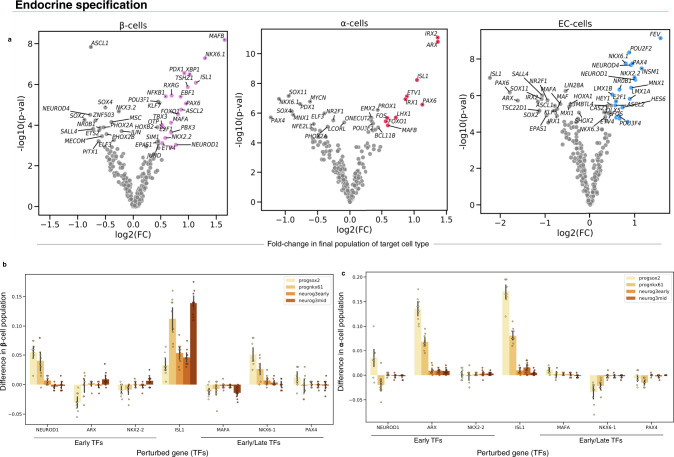
“This includes several known fate-speci fi c factors, such as ARX and IRX2 for α -cells 30,32 and NKX2.”
Backgroundneurogenin3 is required for the development of the four endocrine cell lineages of the pancreas
Gradwohl, G., Dierich, A., LeMeur, M., & Guillemot, F. (2000) · Proceedings of the National Academy of Sciences · doi:10.1073/pnas.97.4.1607 · Cited by 1,439
Control of endodermal endocrine development by Hes-1
Jensen, J., Pedersen, E. E., Galante, P., Hald, J., Heller, R. S., Ishibashi, M., Kageyama, R., Guillemot, F., Serup, P., & Madsen, O. D. (2000) · Nature Genetics · doi:10.1038/71657 · Cited by 1,155
Schiebinger, G., Shu, J., Tabaka, M., Cleary, B., Subramanian, V., Solomon, A., Gould, J., Liu, S., Lin, S., Berube, P., et al. (2019) · Cell · doi:10.1016/j.cell.2019.01.006 · Cited by 829 · cited 8×
“More recent fate prediction methods either summarize observations of the emergent process or suffer from modeling limitations (see Introduction) 8,10 .”
InfluentialScaling single-cell genomics from phenomenology to mechanism
Tanay, A., & Regev, A. (2017) · Nature · doi:10.1038/nature21350 · Cited by 792 · cited 1×
“The predominant approach is pseudo-temporal inference, which orders cells along an arbitrary one-dimensional measurement representing ‘ differentiation time ’ , and hence cannot model differentiation dynamics with respect to real, physical time 5 – 7 .”
BackgroundPax6 is required for differentiation of glucagon-producing α-cells in mouse pancreas
St-Onge, L., Sosa-Pineda, B., Chowdhury, K., Mansouri, A., & Gruss, P. (1997) · Nature · doi:10.1038/387406a0 · Cited by 791
Lineage tracing on transcriptional landscapes links state to fate during differentiation
Weinreb, C., Rodriguez-Fraticelli, A., Camargo, F. D., & Klein, A. M. (2020) · Science · doi:10.1126/science.aaw3381 · Cited by 759 · cited 1×
“We validate our model on a recently published lineage tracing dataset by Weinreb et al. which used DNA barcodes to track clonal trajectories during mouse hematopoiesis 3 .”
MethodscGen predicts single-cell perturbation responses
Lotfollahi, M., Wolf, F. A., & Theis, F. J. (2019) · Nature Methods · doi:10.1038/s41592-019-0494-8 · Cited by 661 · cited 2×
“This can be addressed by methods that have proposed ways to directly generate gene expression counts from latent cell states 45 , or by approaches that model perturbation pro fi les in the original gene expression space 13,46 .”
MethodResultLineage tracing meets single-cell omics: opportunities and challenges
Wagner, D. E., & Klein, A. M. (2020) · Nature Reviews Genetics · doi:10.1038/s41576-020-0223-2 · Cited by 646 · cited 1×
“Recently, experimental lineage tracing methods that couple various barcoding strategies with scRNA-seq have been described that identify lineage relationships 2 – 4 .”
BackgroundHanna, R. N., Carlin, L. M., Hubbeling, H. G., Nackiewicz, D., Green, A. M., Punt, J. A., Geissmann, F., & Hedrick, C. C. (2011) · Nature Immunology · doi:10.1038/ni.2063 · Cited by 639
Opposing actions of Arx and Pax4 in endocrine pancreas development
Collombat, P., Mansouri, A., Hecksher-Sørensen, J., Serup, P., Krull, J., Gradwohl, G., & Gruss, P. (2003) · Genes & Development · doi:10.1101/gad.269003 · Cited by 600 · cited 1×
“This includes several known fate-speci fi c factors, such as ARX and IRX2 for α -cells 30,32 and NKX2.”
BackgroundSander, M., Neubüser, A., Kalamaras, J., Ee, H. C., Martin, G. R., & German, M. S. (1997) · Genes & Development · doi:10.1101/gad.11.13.1662 · Cited by 587 · cited 1×
“PAX6 has previously been reported to be associated with both α and β -cell fate, but Pax6 mutant mice show a more signi fi cant decrease in α -cells, which we also observed 38,39 .”
BackgroundCharting cellular identity during human in vitro β-cell differentiation
Veres, A., Faust, A. L., Bushnell, H. L., Engquist, E. N., Kenty, J. H.-R., Harb, G., Poh, Y.-C., Sintov, E., Gürtler, M., Pagliuca, F. W., et al. (2019) · Nature · doi:10.1038/s41586-019-1168-5 · Cited by 552 · cited 3×
“To show that TF expression at static timepoints is not necessarily indicative of fate bias, a control analysis was completed on the Veres et al. 2019 dataset by computing the log-fold change of each TF between cell types of interest at day 7 and plotted against the log-fold change in cell fraction…”
BackgroundMethodInfluentialSingle-cell mapping of lineage and identity in direct reprogramming
Biddy, B. A., Kong, W., Kamimoto, K., Guo, C., Waye, S. E., Sun, T., & Morris, S. A. (2018) · Nature · doi:10.1038/s41586-018-0744-4 · Cited by 392 · cited 1×
“Recently, experimental lineage tracing methods that couple various barcoding strategies with scRNA-seq have been described that identify lineage relationships 2 – 4 .”
BackgroundBistability, Bifurcations, and Waddington's Epigenetic Landscape
Ferrell, J. E. (2012) · Current Biology · doi:10.1016/j.cub.2012.03.045 · Cited by 387
Yamanaka, R., Barlow, C., Lekstrom-Himes, J., Castilla, L. H., Liu, P. P., Eckhaus, M., Decker, T., Wynshaw-Boris, A., & Xanthopoulos, K. G. (1997) · Proceedings of the National Academy of Sciences · doi:10.1073/pnas.94.24.13187 · Cited by 383
Giladi, A., Paul, F., Herzog, Y., Lubling, Y., Weiner, A., Yofe, I., Jaitin, D., Cabezas-Wallscheid, N., Dress, R., Ginhoux, F., et al. (2018) · Nature Cell Biology · doi:10.1038/s41556-018-0121-4 · Cited by 366 · cited 1×
“…on a set of TFs previously identi fi ed to be potentially antagonistically correlated with either monocyte and neutrophil fate in progenitor cells by MetaCell analyses and CRISPR-seq experiments of a haematopoietic stem cell dataset 17 , many of which are supported by existing literature 18 – 21 .”
BackgroundFateID infers cell fate bias in multipotent progenitors from single-cell RNA-seq data
Herman, J. S., Sagar, & Grün, D. (2018) · Nature Methods · doi:10.1038/nmeth.4662 · Cited by 363
Fundamental limits on dynamic inference from single-cell snapshots
Weinreb, C., Wolock, S., Tusi, B. K., Socolovsky, M., & Klein, A. M. (2018) · Proceedings of the National Academy of Sciences · doi:10.1073/pnas.1714723115 · Cited by 341 · cited 2×
“More recent fate prediction methods either summarize observations of the emergent process or suffer from modeling limitations (see Introduction) 8,10 .”
BackgroundThe Kruppel‐like factor KLF4 is a critical regulator of monocyte differentiation
Feinberg, M. W., Wara, A. K., Cao, Z., Lebedeva, M. A., Rosenbauer, F., Iwasaki, H., Hirai, H., Katz, J. P., Haspel, R. L., Gray, S., et al. (2007) · The EMBO Journal · doi:10.1038/sj.emboj.7601824 · Cited by 337 · cited 2×
“…on a set of TFs previously identi fi ed to be potentially antagonistically correlated with either monocyte and neutrophil fate in progenitor cells by MetaCell analyses and CRISPR-seq experiments of a haematopoietic stem cell dataset 17 , many of which are supported by existing literature 18 – 21 .”
BackgroundInfluentialTrajectoryNet: A Dynamic Optimal Transport Network for Modeling Cellular Dynamics
Tong, A., Huang, J., Wolf, G., van Dijk, D., & Krishnaswamy, S. (2020) · PubMed · doi:10.48550/arxiv.2002.04461 · Cited by 336 · cited 1×
“…fi rst-principle approaches to modeling dynamics such as RNA velocity are complementary approaches that are non-generative but can be used to constrain PRESCIENT models, e.g. RNA velocity has been proposed for constraining fl ows across timepoints to local velocities within time points 47 – 49 .”
MethodJohansson, K. A., Dursun, U., Jordan, N., Gu, G., Beermann, F., Gradwohl, G., & Grapin-Botton, A. (2007) · Developmental Cell · doi:10.1016/j.devcel.2007.02.010 · Cited by 335
Schaffer, A. E., Freude, K. K., Nelson, S. B., & Sander, M. (2010) · Developmental Cell · doi:10.1016/j.devcel.2010.05.015 · Cited by 279
MafA and MafB Regulate Genes Critical to β-Cells in a Unique Temporal Manner
Artner, I., Hang, Y., Mazur, M., Yamamoto, T., Guo, M., Lindner, J., Magnuson, M. A., & Stein, R. (2010) · Diabetes · doi:10.2337/db10-0190 · Cited by 243 · cited 2×
“1 , PAX4 , PDX1 , and MAFA for β -cells 33 – 37 .”
BackgroundSchaffer, A. E., Taylor, B. L., Benthuysen, J. R., Liu, J., Thorel, F., Yuan, W., Jiao, Y., Kaestner, K. H., Herrera, P. L., Magnuson, M. A., et al. (2013) · PLoS Genetics · doi:10.1371/journal.pgen.1003274 · Cited by 240
Collombat, P., Hecksher-Sørensen, J., Broccoli, V., Krull, J., Ponte, I., Mundiger, T., Smith, J., Gruss, P., Serup, P., & Mansouri, A. (2005) · Development · doi:10.1242/dev.01870 · Cited by 227 · cited 1×
“We next simulated the effects of TFs involved in the speci fi cation of cell types post-endocrine induction, where ARX and PAX4 have previously been shown to have an antagonistic effect on the speci fi cation of endocrine precursors to α and β -cell fate, respectively 24,29 – 31 .”
MethodCRISPR Activation Screens Systematically Identify Factors that Drive Neuronal Fate and Reprogramming
Liu, Y., Yu, C., Daley, T. P., Wang, F., Cao, W. S., Bhate, S., Lin, X., Still, C., Liu, H., Zhao, D., et al. (2018) · Cell Stem Cell · doi:10.1016/j.stem.2018.09.003 · Cited by 207
MafA and MafB activity in pancreatic β cells
Hang, Y., & Stein, R. (2011) · Trends in Endocrinology & Metabolism · doi:10.1016/j.tem.2011.05.003 · Cited by 205 · cited 1×
“Similarly, MAFA and MAFB are known to continue to modulate fate late into endocrine induction 37,41 , and we show that perturbations to both MAFA and MAFB result in increases in β -cell proportion when introduced to both early pancreatic progenitors and cells in late endocrine induction.”
BackgroundNkx2.2 repressor complex regulates islet β-cell specification and prevents β-to-α-cell reprogramming
Papizan, J. B., Singer, R. A., Tschen, S.-I., Dhawan, S., Friel, J. M., Hipkens, S. B., Magnuson, M. A., Bhushan, A., & Sussel, L. (2011) · Genes & Development · doi:10.1101/gad.173039.111 · Cited by 197 · cited 1×
“1 , PAX4 , PDX1 , and MAFA for β -cells 33 – 37 .”
Context-specific α-to-β-cell reprogramming by forced Pdx1 expression
Yang, Y.-P., Thorel, F., Boyer, D. F., Herrera, P. L., & Wright, C. V. E. (2011) · Genes & Development · doi:10.1101/gad.16875711 · Cited by 197 · cited 1×
“In contrast, PDX1 has been shown to continue to promote β -cell neogenesis late into the endocrine induction pathway 40 .”
BackgroundWnt/Beta-Catenin Signaling Regulation and a Role for Biomolecular Condensates
Schaefer, K. N., & Peifer, M. (2019) · Developmental Cell · doi:10.1016/j.devcel.2019.01.025 · Cited by 194 · cited 1×
“Previous work has shown that NEUROG3 and NKX6 activation is associated with the endocrine lineage, while PTF1A and HES1 is associated with the exocrine lineage 23 – 28 .”
BackgroundGannon, M., Tweedie Ables, E., Crawford, L., Lowe, D., Offield, M. F., Magnuson, M. A., & Wright, C. V. E. (2008) · Developmental Biology · doi:10.1016/j.ydbio.2007.10.038 · Cited by 186
Role of transcription factors in the transdifferentiation of pancreatic islet cells
van der Meulen, T., & Huising, M. O. (2015) · Journal of Molecular Endocrinology · doi:10.1530/jme-14-0290 · Cited by 127 · cited 2×
“1 , PAX4 , and ARX are found early in endocrine speci fi cation and are often the fi rst signal of the production of speci fi c terminal endocrine cell fates 23 .”
BackgroundYuan, B., Shen, C., Luna, A., Korkut, A., Marks, D. S., Ingraham, J., & Sander, C. (2021) · Cell Systems · doi:10.1016/j.cels.2020.11.013 · Cited by 125
Inferring population dynamics from single-cell RNA-sequencing time series data
Fischer, D. S., Fiedler, A. K., Kernfeld, E. M., Genga, R. M. J., Bastidas-Ponce, A., Bakhti, M., Lickert, H., Hasenauer, J., Maehr, R., & Theis, F. J. (2019) · Nature Biotechnology · doi:10.1038/s41587-019-0088-0 · Cited by 123
Interpolating between Optimal Transport and MMD using Sinkhorn Divergences
Feydy, J., Séjourné, T., Vialard, F., Амари, Ш.-И., Trouvé, A., & Gabriel Peyré, A. (2018) · arXiv (Cornell University) · doi:10.48550/arxiv.1810.08278 · Cited by 110 · cited 3×
“Using notation from Feydy et al. 51 computing the Wasserstein distance involves solving the optimization problem min < π ; C > ∑ i ; j π i ; j C i ; j s : t : 8 i ; j ; where π i ; j is an optimal transport plan mapping points from the source measure to the target measure, C i ; j ¼ jj x i (cid:2) y j jj 2 is the squa…”
MethodInfluentialLearning Population-Level Diffusions with Generative RNNs
Hashimoto, T., Gifford, D. K., & Jaakkola, T. (2016) · International Conference on Machine Learning · Cited by 100
Self-citationTranscription factor regulation of pancreatic organogenesis, differentiation and maturation
Dassaye, R., Naidoo, S., & Cerf, M. E. (2015) · Islets · doi:10.1080/19382014.2015.1075687 · Cited by 95 · cited 1×
“We next simulated the effects of TFs involved in the speci fi cation of cell types post-endocrine induction, where ARX and PAX4 have previously been shown to have an antagonistic effect on the speci fi cation of endocrine precursors to α and β -cell fate, respectively 24,29 – 31 .”
MethodJacobson, M., & Liebman, B. (1996) · American Journal of Clinical Nutrition · doi:10.1093/ajcn/63.1.138 · Cited by 80
Large deviations and gradient flows
Adams, S., Dirr, N., Peletier, M., & Zimmer, J. (2013) · Philosophical Transactions of the Royal Society A Mathematical Physical and Engineering Sciences · doi:10.1098/rsta.2012.0341 · Cited by 62
2 Large deviations and gradient flows
Adams, S., Adams, S., Dirr, N., Peletier, M. A., & Zimmer, J. (2012) · The University of Bath Online Publications Store (The University of Bath) · Cited by 49
Serwas, N. K., Huemer, J., Dieckmann, R., Mejstříková, E., Garncarz, W., Litzman, J., Hoeger, B., Zapletal, O., Janda, A., Bennett, K. L., et al. (2018) · Frontiers in Immunology · doi:10.3389/fimmu.2018.00588 · Cited by 38 · cited 1×
“…on a set of TFs previously identi fi ed to be potentially antagonistically correlated with either monocyte and neutrophil fate in progenitor cells by MetaCell analyses and CRISPR-seq experiments of a haematopoietic stem cell dataset 17 , many of which are supported by existing literature 18 – 21 .”
BackgroundYeo, G. H. T., Lin, L., Qi, C. Y., Cha, M., Gifford, D. K., & Sherwood, R. I. (2020) · Cell stem cell · doi:10.1016/j.stem.2020.04.020 · Cited by 28 · cited 1×
“PRESCIENT can be used to identify targets for genetic-and small molecule-based screens and aid the design and fi ne-tuning of new directed differentiation and reprogramming protocols 42 – 44 .”
MethodSelf-citationXu, Y., Wang, Y., Song, Y., Deng, J., Chen, M., Ouyang, H., Lai, L., & Li, Z. (2018) · G3 Genes Genomes Genetics · doi:10.1534/g3.118.300448 · Cited by 20 · cited 1×
“We next simulated the effects of TFs involved in the speci fi cation of cell types post-endocrine induction, where ARX and PAX4 have previously been shown to have an antagonistic effect on the speci fi cation of endocrine precursors to α and β -cell fate, respectively 24,29 – 31 .”
MethodDecoding Neuronal Diversification by Multiplexed Single-cell RNA-Seq
Luginbühl, J., Kouno, T., Nakano, R., Chater, T. E., Sivaraman, D. M., Kishima, M., Roudnicky, F., Carninci, P., Plessy, C., & Shin, J. W. (2021) · Stem Cell Reports · doi:10.1016/j.stemcr.2021.02.006 · Cited by 19
Reconstructing probabilistic trees of cellular differentiation from single-cell RNA-seq dataPreprint
Shiffman, M., Stephenson, W. T., Schiebinger, G. R., Huggins, J. H., Campbell, T., Regev, A., & Broderick, T. (2018) · arXiv (Cornell University) · doi:10.48550/arxiv.1811.11790 · Cited by 3
gifford-lab/prescient: Initial dev release of PRESCIENT.
Saksena, S. D., & Yeo, G. H. T. (2021) · Zenodo (CERN European Organization for Nuclear Research) · doi:10.5281/zenodo.4683407 · Cited by 1
Self-citation
Cited by
Artificial intelligence: A powerful paradigm for scientific research
Xu, Y., Liu, X., Cao, X., Huang, C., Liu, E., Qian, S., Liu, X., Wu, Y., Dong, F., Qiu, C.-W., et al. (2021) · The Innovation · doi:10.1016/j.xinn.2021.100179 · Cited by 1,726
Reconstructing growth and dynamic trajectories from single-cell transcriptomics data
Sha, Y., Qiu, Y., Zhou, P., & Nie, Q. H. (2023) · Nature Machine Intelligence · doi:10.1038/s42256-023-00763-w · Cited by 170
“PRESCIENT learns differentiation landscapes by modelling cell differentiation as diffusion 18 .”
Discovery of drug-omics associations in type 2 diabetes with generative deep-learning models
Allesøe, R. L., Lundgaard, A. T., Hernández Medina, R., Aguayo-Orozco, A., Johansen, J., Nissen, J. N., Brorsson, C., Mazzoni, G., Niu, L., Biel, J. H., et al. (2023) · Nature Biotechnology · doi:10.1038/s41587-022-01520-x · Cited by 111
Toward a mathematical theory of trajectory inference
Lavenant, H., Zhang, S. X., Kim, Y., & Schiebinger, G. R. (2024) · The Annals of Applied Probability · doi:10.1214/23-aap1969 · Cited by 142
A time- and single-cell-resolved model of murine bone marrow hematopoiesis
Kuciński, I., Campos, J., Barile, M., Severi, F., Bohin, N., Moreira, P. N., Allen, L., Lawson, H., Haltalli, M. L. R., Kinston, S., et al. (2024) · Cell stem cell · doi:10.1016/j.stem.2023.12.001 · Cited by 93
Metadata
- Authors
- Yeo, G. H. T., Saksena, S. D., & Gifford, D. K.
- Affiliations
- MIT Computer Science and Artificial Intelligence Laboratory (US)
- Corresponding author
- Gifford, David K.
- Venue
- Nature Communications
- Published
- 2021-05-28
- Volume
- 12
- Issue
- 1
- Pages
- 3222-3222
- ISSN
- 2041-1723 (ISSN-L)
- PMC
- PMC8163769
- OpenAlex
- W3164448939
- Cited by
- 103
- References
- 55
- Citations by year
- 2026: 31 · 2025: 25 · 2024: 26 · 2023: 14 · 2022: 6 · 2021: 1
- FWCI
- 3.69
- Type
- journal article
- Language
- en
- Open access
- gold
- doi.org
- Licence
- cc-by
- creativecommons.org/licenses/by/4.0 (tdm)
- creativecommons.org/licenses/by/4.0 (vor)
- Locations
- Nature Communications (publishedVersion, cc-by)
- PubMed Central (publishedVersion, cc-by)
- PubMed (publishedVersion)
- RePEc: Research Papers in Economics (submittedVersion)
- DOAJ (DOAJ: Directory of Open Access Journals) (submittedVersion, cc-by-sa)
- DSpace@MIT (Massachusetts Institute of Technology) (submittedVersion, cc-by-nc)
- Funders
- U.S. Department of Health & Human Services | National Institutes of Health (5 R01 NS109217, 5 R01 HG008363)
- Topics
- Life Sciences › Biochemistry, Genetics and Molecular Biology › Molecular Biology › Single-cell and spatial transcriptomics
- Life Sciences › Biochemistry, Genetics and Molecular Biology › Molecular Biology › Gene Regulatory Network Analysis
- Life Sciences › Biochemistry, Genetics and Molecular Biology › Molecular Biology › Developmental Biology and Gene Regulation
- Keywords
- generative models, cell fate prediction, cell differentiation trajectories, lineage tracing, hematopoiesis, pancreatic beta cell differentiation, cell proliferation, perturbation prediction, single-cell RNA sequencing
- MeSH terms
- Deep Learning, RNA-Seq, Animals, Cell Differentiation, Cells, Cultured, Computer Simulation, Hematopoiesis, Humans, Models, Genetic, Software, Stem Cells, Stochastic Processes, Cell Proliferation, Insulin-Secreting Cells, Mice, Single-Cell Analysis, Datasets as Topic
About these checks
Registry, retraction, Cites and statistics results are computed, not judged, with one exception: a printed reference that no index lists is read once by a model before it counts as a citation error. Claims are extracted by a model and kept only when their quote appears verbatim in the text; each cited source is then checked, with a model’s help, for whether it says what the claim relies on. Those verdicts can be wrong — read the claim’s quote and the cited source before relying on one.
Statistics and arithmetic are recomputed, not judged.
Confidence bands are shown only for fields calibrated on our annotated test set. None is calibrated yet, so no band is shown.
What counts as a claim ›How we measure confidence ›How we check this ›
Are you an author, or do you see a problem with this page? Request a review
Data sources
Bibliographic data: Semantic Scholar, OpenAlex, Crossref.
Contains information from the Semantic Scholar Academic Graph Datasets, made available under the ODC Attribution License (ODC-BY 1.0).
Semantic Scholar’s data is described in: Kinney, R., et al. (2023). The Semantic Scholar Open Data Platform. arXiv:2301.10140.
