

ERRγ enhances cardiac maturation with T-tubule formation in human iPSC-derived cardiomyocytes
Open accessThe DOI matches its Crossref record; 36 of the 36 references it cites were found in a registry or an index.
Abstract
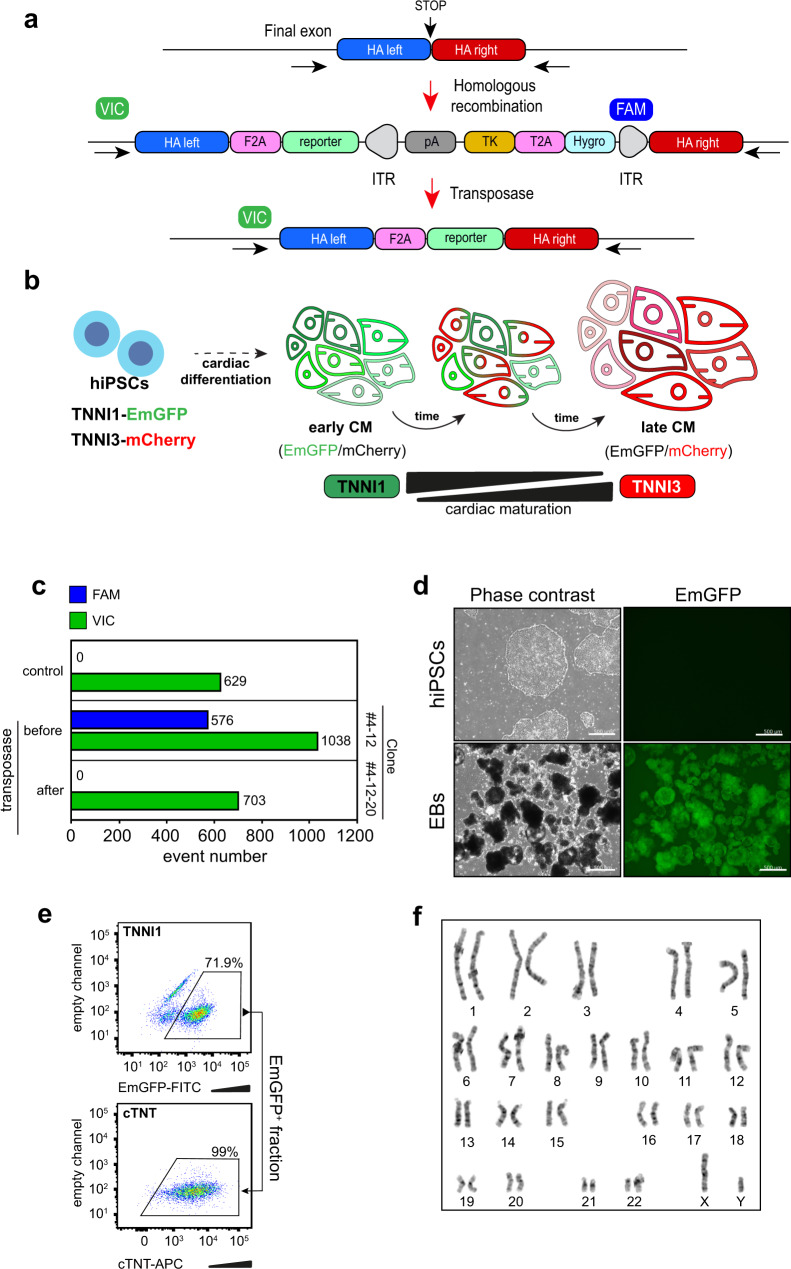
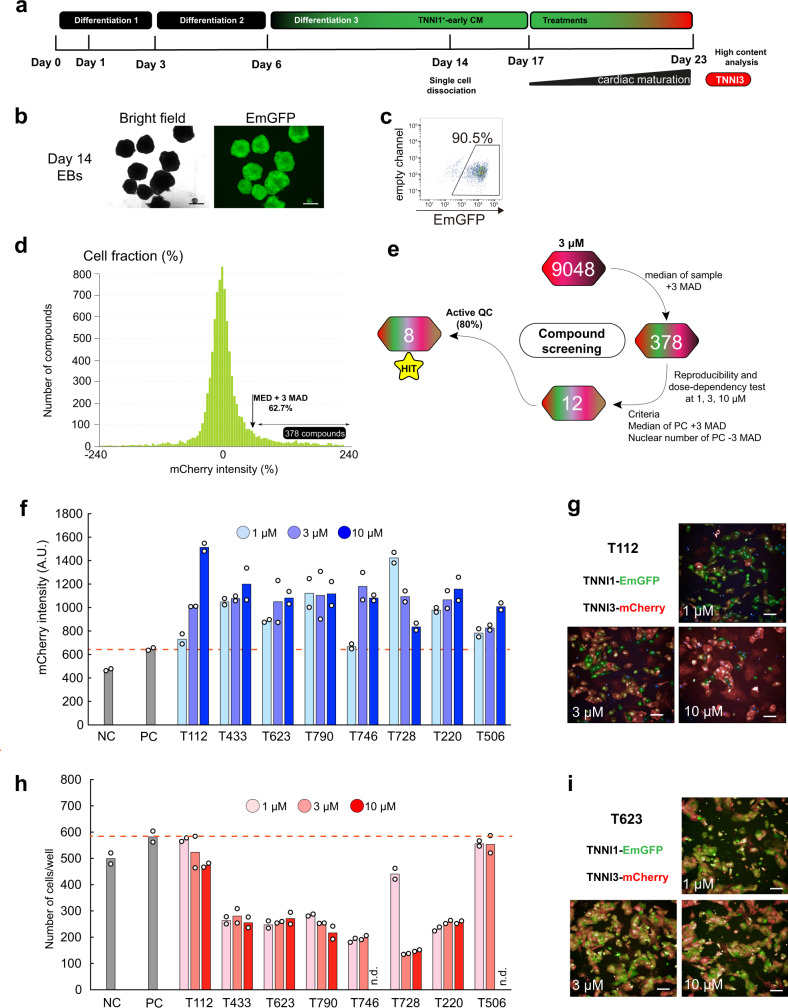
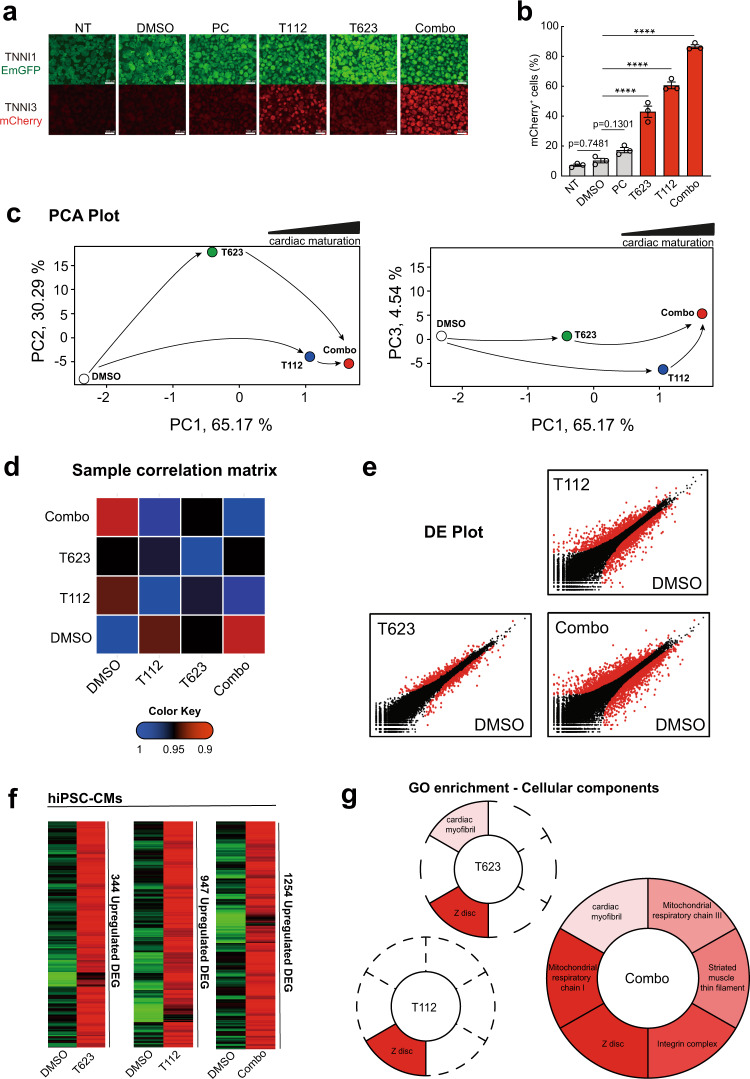
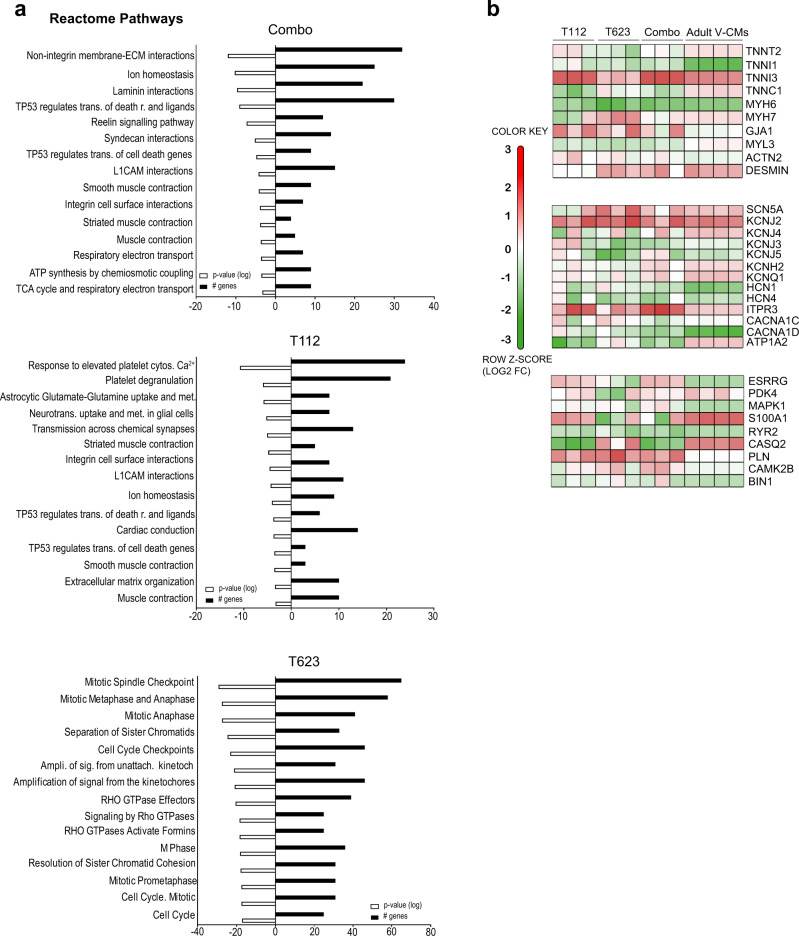
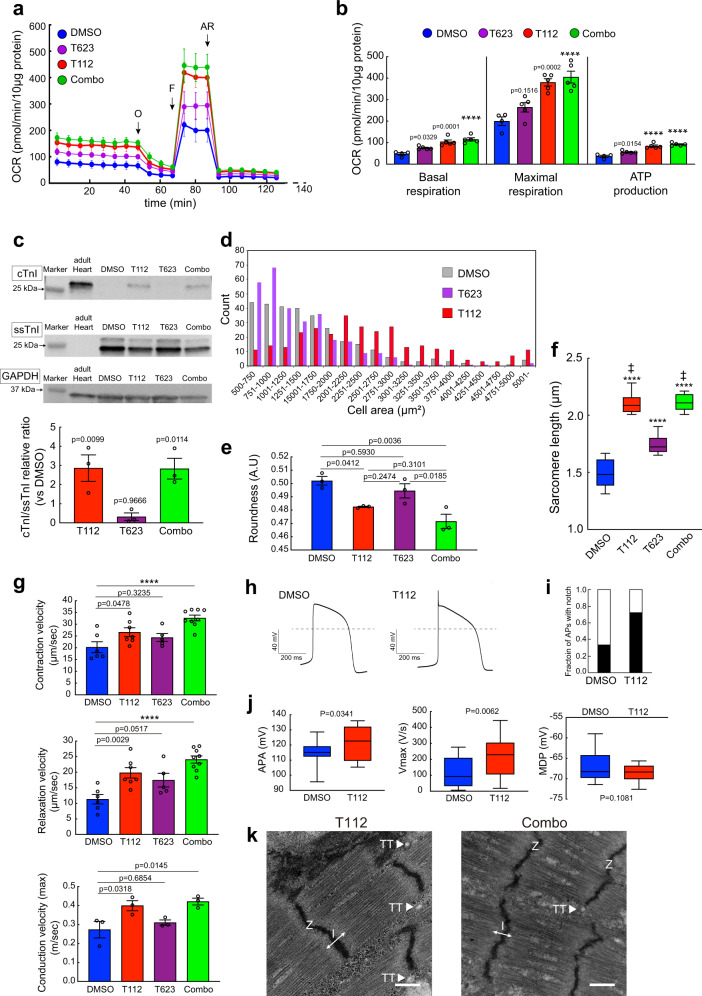
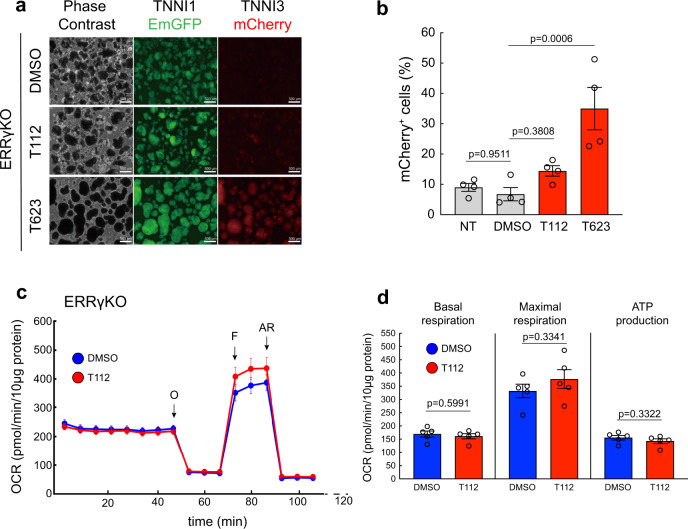
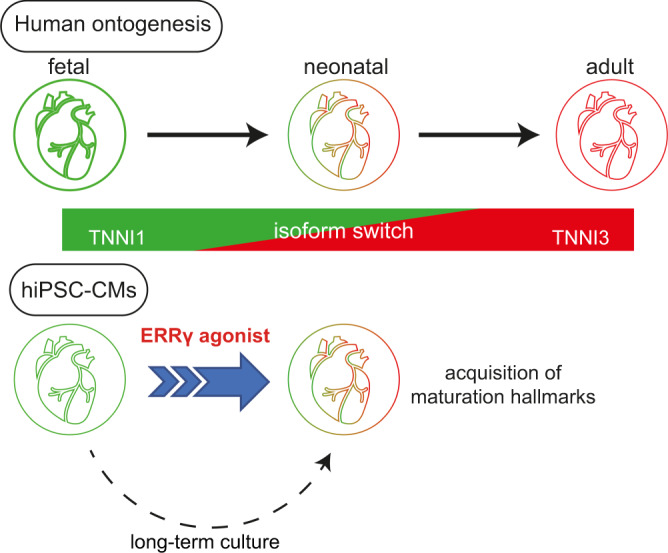
Abstract One of the earliest maturation steps in cardiomyocytes (CMs) is the sarcomere protein isoform switch between TNNI1 and TNNI3 (fetal and neonatal/adult troponin I). Here, we generate human induced pluripotent stem cells (hiPSCs) carrying a TNNI1EmGFP and TNNI3mCherry double reporter to monitor and isolate mature sub-populations during cardiac differentiation. Extensive drug screening identifies two compounds, an estrogen-related receptor gamma (ERRγ) agonist and an S-phase kinase-associated protein 2 inhibitor, that enhances cardiac maturation and a significant change to TNNI3 expression. Expression, morphological, functional, and molecular analyses indicate that hiPSC-CMs treated with the ERRγ agonist show a larger cell size, longer sarcomere length, the presence of transverse tubules, and enhanced metabolic function and contractile and electrical properties. Here, we show that ERRγ-treated hiPSC-CMs have a mature cellular property consistent with neonatal CMs and are useful for disease modeling and regenerative medicine.
Overview
The claims and statistics of this paper haven’t been checked yet.
Free: it reads the open-access text and checks the first 5 claims that cite a source we can check. Create a free account to check every claim.
Integrity signals
Registry
Cites
Statistics
Figures
Verification
Claims the paper makes
The claims and statistics of this paper haven’t been checked yet.
Free: it reads the open-access text and checks the first 5 claims that cite a source we can check. Create a free account to check every claim.
Claims other papers make about this one
Each is checked against this paper’s own text: does it say what the citing paper says it does?
The cited source says what the claim attributes to it.
In the citing paper
“Miki et al., 2021 identified two compounds, ERRγ agonist and SKP2 inhibitor, that play a role in enhancing CM maturation [24].”
From Utility of iPSC-Derived Cells for Disease Modeling, Drug Development, and Cell Therapy (2022) · cites this paper as [24]
The cited source says what the claim attributes to it.
In the citing paper
“This platform was essential in identifying potential targets to generate mature hiPSC-CMs in order to compensate for the lack of maturity commonly seen in many current hiPSC-CM models [24].”
From Utility of iPSC-Derived Cells for Disease Modeling, Drug Development, and Cell Therapy (2022) · cites this paper as [24]
The cited source says what the claim attributes to it.
In the citing paper
“Manifestation of the TNNI1 to TNNI3 transition, indicating maturation of cardiomyocytes, was confirmed following the treatment with the two compounds.”
From Utility of iPSC-Derived Cells for Disease Modeling, Drug Development, and Cell Therapy (2022) · cites this paper as [24]
Self-check
Percentages, sums and reported differences re-computed from the paper’s own numbers.
The self-check needs the paper’s full text.
Citations
Cites
Moderated estimation of fold change and dispersion for RNA-seq data with DESeq2
Love, M. I., Huber, W., & Anders, S. (2014) · Genome Biology · doi:10.1186/s13059-014-0550-8 · Cited by 95,106
Induction of Pluripotent Stem Cells from Adult Human Fibroblasts by Defined Factors
Takahashi, K., Tanabe, K., Ohnuki, M., Narita, M., Ichisaka, T., Tomoda, K., & Yamanaka, S. (2007) · Cell · doi:10.1016/j.cell.2007.11.019 · Cited by 20,221
Self-citationAnalysis of off-target effects of CRISPR/Cas-derived RNA-guided endonucleases and nickases
Cho, S. W., Kim, S., Kim, Y., Kweon, J., Kim, H. S., Bae, S., & Kim, J.-S. (2014) · Genome Research · doi:10.1101/gr.162339.113 · Cited by 1,356
Kim, J. H., Lee, S.-R., Li, L.-H., Park, H.-J., Park, J.-H., Lee, K. Y., Kim, M.-K., Shin, B. A., & Choi, S.-Y. (2011) · PLoS ONE · doi:10.1371/journal.pone.0018556 · Cited by 1,338
Advanced maturation of human cardiac tissue grown from pluripotent stem cells
Ronaldson-Bouchard, K., Ma, S. P., Yeager, K., Chen, T., Song, L., Sirabella, D., Morikawa, K., Teles, D., Yazawa, M., & Vunjak-Novakovic, G. (2018) · Nature · doi:10.1038/s41586-018-0016-3 · Cited by 1,272
Engineering Adolescence: Maturation of Human Pluripotent Stem Cell–Derived Cardiomyocytes
Yang, X., Pabon, L., & Murry, C. E. (2014) · Circulation Research · doi:10.1161/circresaha.114.300558 · Cited by 939
Nakagawa, M., Taniguchi, Y., Senda, S., Takizawa, N., Ichisaka, T., Asano, K., Morizane, A., Doi, D., Takahashi, J., Nishizawa, M., et al. (2014) · Scientific Reports · doi:10.1038/srep03594 · Cited by 673
Self-citationBurridge, P. W., Keller, G., Gold, J. D., & Wu, J. C. (2012) · Cell Stem Cell · doi:10.1016/j.stem.2011.12.013 · Cited by 670
Tiburcy, M., Hudson, J. E., Balfanz, P., Schlick, S., Meyer, T., Chang Liao, M.-L., Levent, E., Raad, F., Zeidler, S., Wingender, E., et al. (2017) · Circulation · doi:10.1161/circulationaha.116.024145 · Cited by 645
Giacomelli, E., Meraviglia, V., Campostrini, G., Cochrane, A., Cao, X., van Helden, R. W. J., Krotenberg Garcia, A., Mircea, M., Kostidis, S., Davis, R. P., et al. (2020) · Cell Stem Cell · doi:10.1016/j.stem.2020.05.004 · Cited by 622
Cited by
Yoh, K., Ikeda, K., Horie, K., & Inoue, S. (2023) · International Journal of Molecular Sciences · doi:10.3390/ijms24031853 · Cited by 174
Min, S., Kim, S., Sim, W., Choi, Y. S., Joo, H., Park, J.-H., Lee, S.-J., Kim, H., Lee, M. J., Jeong, I., et al. (2024) · Nature Communications · doi:10.1038/s41467-024-46928-y · Cited by 125
Generation of human iPSCs derived heart organoids structurally and functionally similar to heart
Lee, S.-G., Kim, Y.-J., Son, M.-Y., Oh, M.-S., Kim, J., Ryu, B., Kang, K.-R., Baek, J., Chung, G., Woo, D. H., et al. (2022) · Biomaterials · doi:10.1016/j.biomaterials.2022.121860 · Cited by 80
Human Engineered Heart Tissue Models for Disease Modeling and Drug Discovery
Tani, H., & Tohyama, S. (2022) · Frontiers in Cell and Developmental Biology · doi:10.3389/fcell.2022.855763 · Cited by 83
“…and coculture with non-CMs (Chan et al., 2013; Chun et al., 2015; Herron et al., 2016; Hu et al., 2018; Kroll et al., 2017; Lundy et al., 2013; Miki et al., 2021; Murphy et al., 2021; Parikh et al., 2017; Rog-Zielinska et al., 2015; Yang et al., 2014; Yang et al., 2019; Yoshida et al., 2018)…”
Vuckovic, S., Dinani, R., Nollet, E. E., Kuster, D. W. D., Buikema, J. W., Houtkooper, R. H., Nabben, M., van der Velden, J., & Goversen, B. (2022) · Stem Cell Research & Therapy · doi:10.1186/s13287-022-03021-9 · Cited by 85
“Eleven out of 23 studies provide evidence that this is indeed the case-different maturation strategies have been successful in stimulating ATP production, such as prolonged culture [4], 3D culture [13, 26, 87], hormonal supplementation [57] and fatty acid supplementation [14, 21, 24, 35, 95, 96].”
BackgroundXu, W., Billon, C., Li, H., Wilderman, A. S., Qi, L., Graves, A., Rideb, J. R. D. C., Zhao, Y., Hayes, M. E., Yu, K., et al. (2023) · Circulation · doi:10.1161/circulationaha.123.066542 · Cited by 75
“Although chemical library screening has led to identification of agonists for ERR α , 17,18 ERR γ , 19,93 and ERR β / γ , 20 no study has demonstrated the bioavailability of these compounds for in vivo use.”
BackgroundUtility of iPSC-Derived Cells for Disease Modeling, Drug Development, and Cell Therapy
Nicholson, M. W., Ting, C.-Y., Chan, D. Z. H., Cheng, Y.-C., Lee, Y.-C., Hsu, C.-C., Huang, C.-Y., & Hsieh, P. C. H. (2022) · Cells · doi:10.3390/cells11111853 · Cited by 65
“, 2021 identified two compounds, ERRγ agonist and SKP2 inhibitor, that play a role in enhancing CM maturation [24].”
BackgroundInfluentialDIAPH1-MFN2 interaction regulates mitochondria-SR/ER contact and modulates ischemic/hypoxic stress
Yepuri, G., Ramirez, L. M., Theophall, G. G., Reverdatto, S., Quadri, N., Hasan, S. N., Bu, L., Thiagarajan, D., Wilson, R. A., López‐Díez, R., et al. (2023) · Nature Communications · doi:10.1038/s41467-023-42521-x · Cited by 64
“After 25 days of differentiation, HiPSC-CMs were >90% double positiveforbothTNT2andTNNI3(adult),whicharemarkersofmature CMs 29 – 32 , as determined by fl ow cytometry (Supplementary Fig.”
Sarcomere maturation: function acquisition, molecular mechanism, and interplay with other organelles
Ahmed, R. E., Tokuyama, T., Anzai, T., Chanthra, N., & Uosaki, H. (2022) · Philosophical Transactions of the Royal Society B Biological Sciences · doi:10.1098/rstb.2021.0325 · Cited by 63
Yang, H., Yang, Y., Kiskin, F. N., Shen, M., & Zhang, J. Z. (2023) · Stem Cell Research & Therapy · doi:10.1186/s13287-023-03470-w · Cited by 58
Sakamoto, T., Batmanov, K., Wan, S., Guo, Y., Lai, L., Vega, R. B., & Kelly, D. P. (2022) · Nature Communications · doi:10.1038/s41467-022-29733-3 · Cited by 50
Sakamoto, T., & Kelly, D. P. (2023) · Journal of Molecular and Cellular Cardiology · doi:10.1016/j.yjmcc.2023.12.008 · Cited by 54
Ewoldt, J. K., DePalma, S. J., Jewett, M. E., Karakan, M. Ç., Lin, Y.-M., Hashemian, P. M., Gao, X., Lou, L., McLellan, M. A., Tabares, J., et al. (2024) · Nature Methods · doi:10.1038/s41592-024-02480-7 · Cited by 70
“A structural feature that is associated with high levels of maturation of hiPSC-CMs is the presence and orientation of t-tubules, which has been confirmed in numerous recent studies 31,52,53,78,95,116,125–135 .”
Recent progress of iPSC technology in cardiac diseases
Funakoshi, S., & Yoshida, Y. (2021) · Archives of Toxicology · doi:10.1007/s00204-021-03172-3 · Cited by 52
Self-citationSuh, T. C., Twiddy, J. S., Mahmood, N., Ali, K. M., Lubna, M. M., Bradford, P. D., Daniele, M. A.-A., & Gluck, J. M. (2022) · ACS Omega · doi:10.1021/acsomega.2c01807 · Cited by 40
Maturing differentiated human pluripotent stem cells in vitro: methods and challenges
Ottaviani, D., ter Huurne, M., Elliott, D. A., Bellin, M., & Mummery, C. L. (2023) · Development · doi:10.1242/dev.201103 · Cited by 38
Deogharia, M., Venegas-Zamora, L., Agrawal, A., Shi, M., Jain, A. K., McHugh, K. J., Altamirano, F. J., Marian, A. J., & Gurha, P. (2024) · Cardiovascular Research · doi:10.1093/cvr/cvae014 · Cited by 37
“…it has been demonstrated that ESRRA functions as a regulator of gene expression related to sarcomere organization, FAO, and OXPHOS in CMs. 36,48,49 The RNA sequencing data showed a significant upregulation of ESRRA gene expression following the inhibition of KDM5. qPCR analysis indicated a…”
BackgroundNew approach methodologies for drug discovery
Liu, W., Pang, P. D., Wu, C. A., Tagle, D. A., & Wu, J. C. (2026) · Cell · doi:10.1016/j.cell.2026.02.012 · Cited by 49
Han, X., Qu, L., Yu, M., Ye, L., Shi, L., Ye, G., Yang, J., Wang, Y., Fan, H., Wang, Y., et al. (2024) · Signal Transduction and Targeted Therapy · doi:10.1038/s41392-024-01791-7 · Cited by 35
Ohya, T., Ohtomo, H., Kikuchi, T., Sasaki, D., Kawamura, Y., Matsuura, K., Shimizu, T., Fukuda, K., Someya, T., & Umezu, S. (2021) · Lab on a Chip · doi:10.1039/d1lc00411e · Cited by 29
Zhang, F., Qiu, H., Dong, X., Zhang, X., Wang, C., Li, X., Zhang, X., Na, J., Zhou, J., & Wang, C. (2022) · Life Medicine · doi:10.1093/lifemedi/lnac002 · Cited by 25
Hamledari, H., Asghari, P., Jayousi, F., Aguirre, A., Maaref, Y., Barszczewski, T., Ser, T., Moore, E., Wasserman, W. W., Geltink, R. I. K., et al. (2022) · Frontiers in Cardiovascular Medicine · doi:10.3389/fcvm.2022.967659 · Cited by 22
“Notable to this study, T-Tubule formation, a major hallmark of CM maturation, was observed in ERRγ agonist treated hiPSC-CMs in the absence of other maturation enhancing strategies (79).”
BackgroundKannan, S., Miyamoto, M., Zhu, R., Lynott, M. R., Guo, J., Chen, E. Z., Colas, A. R., Lin, B. L., & Kwon, C. (2023) · Cell Reports · doi:10.1016/j.celrep.2023.112330 · Cited by 24
Progress of organoid platform in cardiovascular research
Du, X., Jia, H., Chang, Y., Zhao, Y., & Song, J. (2024) · Bioactive Materials · doi:10.1016/j.bioactmat.2024.05.043 · Cited by 29
“ERR γ treatment has been shown to stimulate the maturation of iPSC-CMs [62].”
BackgroundiPS cell therapy 2.0: Preparing for next‐generation regenerative medicine
Hui, K. K., & Yamanaka, S. (2024) · BioEssays · doi:10.1002/bies.202400072 · Cited by 24
Adkins-Threats, M., Arimura, S., Huang, Y., Divenko, M., To, S., Mao, H., Zeng, Y., Hwang, J. Y., Burclaff, J., Jain, S., et al. (2024) · Cell stem cell · doi:10.1016/j.stem.2024.04.016 · Cited by 22
iPSC-cardiomyocytes in the preclinical prediction of candidate pharmaceutical toxicity
Lee, T. Y. T., Coles, J. G., & Maynes, J. T. (2024) · Frontiers in Pharmacology · doi:10.3389/fphar.2024.1308217 · Cited by 21
Sheng, Y., Wang, Y., Yuan, C., Ye, D., Wu, L., Kang, H., Zhang, X., Cheng, X. J., Li, B., Zhu, D., et al. (2023) · Journal of Advanced Research · doi:10.1016/j.jare.2023.09.012 · Cited by 22
Fan, X., Yang, G., Duru, F., Grilli, M., Akin, I., Zhou, X., Saguner, A. M., & EI-Battrawy, I. (2023) · Stem Cell Reviews and Reports · doi:10.1007/s12015-023-10615-0 · Cited by 16
Exploring the impact of estrogen-related receptor gamma on metabolism and disease
Sadasivam, N., Park, W., Choi, B., Jung, Y. S., Choi, H., & Kim, D. (2024) · Steroids · doi:10.1016/j.steroids.2024.109500 · Cited by 16
Fujiwara, Y., Miki, K., Deguchi, K., Naka, Y., Sasaki, M., Sakoda, A., Narita, M., Imaichi, S., Sugo, T., Funakoshi, S., et al. (2023) · Stem Cell Reports · doi:10.1016/j.stemcr.2023.09.003 · Cited by 15
Self-citationHuman induced pluripotent stem cell-derived closed-loop cardiac tissue for drug assessment
Li, J., Hua, Y., Liu, Y., Qu, X., Zhang, J., Ishida, M., Yoshida, N., Tabata, A., Miyoshi, H., Shiba, M., et al. (2024) · iScience · doi:10.1016/j.isci.2024.108992 · Cited by 16
Sun, Y. X., Chen, L., Zhao, B., & Wang, R. (2024) · Journal of Molecular Modeling · doi:10.1007/s00894-024-05926-z · Cited by 13
“…hERRγ activity may lead to uncontrolled cell proliferation or abnormal cell differentiation, closely associated with diseases such as obesity and cancer [10]. hERRγ mainly including ligand independent activation function 1 (AF-1), DNA binding domain (DBD), and ligand binding domain (LBD) [11].”
Josvai, M. B., Lawson, J., Kanade, H., Kalluri, M., Anderson, C. L., Zhang, J., Stempien, A., Eckhardt, L. L., Kamp, T. J., & Crone, W. C. (2025) · Frontiers in Bioengineering and Biotechnology · doi:10.3389/fbioe.2025.1546483 · Cited by 13
CRaTER enrichment for on-target gene editing enables generation of variant libraries in hiPSCs
Friedman, C. E., Fayer, S., Pendyala, S., Chien, W., Loiben, A. M., Tran, L. N., Chao, L. S., Mckinstry, A., Ahmed, D., Karbassi, E., et al. (2023) · Journal of Molecular and Cellular Cardiology · doi:10.1016/j.yjmcc.2023.03.017 · Cited by 12
“5 the Neon Transfection System with optimized parameters (26) for the 100 μL tip (1200 V, 20 ms, 2 pulses) to transfect 2 x 10(6) CLYBL hiPSCs with 5 μL of each 30 nM synthetic sgRNA (Synthego) targeting MYH7 intron 21 and 24, 5 μL of 20 μM SpCas9 2NLS protein (Synthego), 3 μg of pJet-MYH7-eGFP-PGK-PuroR (WT MYH7) pla…”
MethodGalow, A.-M., Brenmoehl, J., & Hoeflich, A. (2023) · Cellular and Molecular Life Sciences · doi:10.1007/s00018-023-04894-6 · Cited by 15
Tian, Y., Lucena-Cacace, A., Tani, K., Elvandari, A. P., Osorio, R. S. A., Narita, M., Matsumura, Y., Paixao, I. C., Miyoshi, Y., Inagaki, A., et al. (2025) · Nature Communications · doi:10.1038/s41467-025-60934-8 · Cited by 10
Self-citationBarndt, R. J., Liu, Q., Tang, Y. M., Haugh, M. P., Cui, J., Chan, S. Y., & Wu, H. (2022) · Biomolecules · doi:10.3390/biom13010069 · Cited by 13
Maturation of Human iPSC‐Derived Cardiac Microfiber with Electrical Stimulation Device
Masuda, A., Kurashina, Y., Tani, H., Soma, Y., Muramatsu, J., Itai, S., Tohyama, S., & Onoe, H. (2024) · Advanced Healthcare Materials · doi:10.1002/adhm.202303477 · Cited by 13
Hasegawa, M., Miki, K., Kawamura, T., Sasozaki, I. T., Higashiyama, Y., Tsuchida, M., Kashino, K., Taira, M., Ito, E., Takeda, M., et al. (2024) · Development Growth & Differentiation · doi:10.1111/dgd.12909 · Cited by 9
“…of iPSC-derived cardiomyocytes (iPSC-CMs) (Bedada et al., 2014). iPSC-CMs exhibit an immature cardiac phenotype similar to fetal cardiomyocytes, but as they mature, various functional maturations have been observed along with increased TNNI3 expression (Fujiwara et al., 2023; Miki et al., 2021).”
BackgroundSelf-citationLee, S.-G., Rhee, J., Seok, J., Kim, J. H., Kim, M. W., Song, G.-E., Park, S., Jeong, K. S., Lee, S., Lee, Y. H., et al. (2024) · Stem Cells Translational Medicine · doi:10.1093/stcltm/szae029 · Cited by 11
Human induced pluripotent stem cell-derived cardiomyocytes for disease modeling and drug discovery
Moriwaki, T., Tani, H., & Tohyama, S. (2025) · Frontiers in Bioengineering and Biotechnology · doi:10.3389/fbioe.2025.1687840 · Cited by 9
Molecular Regulation of Cardiomyocyte Maturation
Shewale, B., Ebrahim, T. A. M., Samal, A., & Dubois, N. C. (2025) · Current Cardiology Reports · doi:10.1007/s11886-024-02189-1 · Cited by 11
“Structural features of mature myofilaments include regular sarcomere spacing, the establishment of Z-lines, M-lines, H-zones, I-bands and A-bands, along with proper filament alignment and anchoring at the intercalated disc.”
Lee, H., Im, J. S., Choi, D. B., An, J., Kim, S.-B., Yeon, S., Yoon, S., & Woo, D. (2022) · Organoid · doi:10.51335/organoid.2022.2.e14 · Cited by 10
Koakutsu, M., Miki, K., Naka, Y., Sasaki, M., Wakimizu, T., Napier, S. C., Okubo, C., Narita, M., Nishikawa, M., Hata, R., et al. (2024) · Communications Biology · doi:10.1038/s42003-024-05809-2 · Cited by 8
“Differentiated cells were used for analyses on days 20 – 23.”
InfluentialSelf-citationKumar, A., He, S., & Mali, P. (2023) · APL Bioengineering · doi:10.1063/5.0137458 · Cited by 8
Wilson, M. C., Josvai, M. B., Walters, J. K., Lawson, J., Rossler, K. J., Gao, Z., Zhu, Y., Kamp, T. J., Crone, W. C., Eckhardt, L. L., et al. (2025) · Journal of Proteome Research · doi:10.1021/acs.jproteome.5c00505 · Cited by 7
Piven, O. O., Vaičiulevičiūtė, R., Bernotienė, E., & Dobrzyń, P. (2025) · Acta Physiologica · doi:10.1111/apha.14271 · Cited by 7
Kant, R. J., Dwyer, K. D., Lee, J.-H., Polucha, C., Kobayashi, M., Pyon, S., Soepriatna, A. H., Lee, J., & Coulombe, K. L. K. (2023) · Cells · doi:10.3390/cells12131698 · Cited by 8
The road to physiological maturation of stem cell-derived cardiac muscle runs through the sarcomere
Metzger, J. M. (2022) · Journal of Molecular and Cellular Cardiology · doi:10.1016/j.yjmcc.2022.06.005 · Cited by 6
Kargaran, P. K., Garmany, A., Garmany, R., Stutzman, M. J., Sadeghian, M., Ackerman, M. J., Pérez-Terzic, C. M., Terzic, A., & Behfar, A. (2025) · Scientific Reports · doi:10.1038/s41598-025-97676-y · Cited by 5
Hata, R., Funakoshi, S., Makiyama, T., Kato, T., Narita, M., Matsumura, Y., Hirohata, R., Naka, Y., Ida, K., Ito, H., et al. (2025) · JACC Basic to Translational Science · doi:10.1016/j.jacbts.2025.101363 · Cited by 6
Self-citationHou, Y., Cao, C. Q., Guo, J., Du, P., Li, D., Yuan, P., Wu, Y., Su, M., Kong, T., Cui, X., et al. (2025) · Advanced Healthcare Materials · doi:10.1002/adhm.202502698 · Cited by 5
Dong, S., Guo, K., Zhao, N., & Xu, Y. (2025) · Tissue Engineering and Regenerative Medicine · doi:10.1007/s13770-025-00724-x · Cited by 4
Luo, H., Anderson, C. W., Li, X., Lu, Y., Hoareau, M., Xing, Q., Fooladi, S., Liu, Y., Xu, Z., Park, J., et al. (2025) · Acta Biomaterialia · doi:10.1016/j.actbio.2025.06.055 · Cited by 5
Short‐Term Electrical Stimulation Impacts Cardiac Cell Structure and Function
Allen, K., Pachter, N., Bandl, A., Qamar, H., Ropars, A., & Hookway, T. A. (2025) · Journal of Tissue Engineering and Regenerative Medicine · doi:10.1155/term/3748093 · Cited by 3
“Extending the ES protocol in stages would also allow for identifcation of the time point at which cells experience t-tubule formation, which would be captured by an increase in beat frequency and through transmission electron microscopy [19, 39, 42].”
Tissue engineering applications
Chattopadhyay, D., & Das, B. (2024) · Elsevier eBooks · doi:10.1016/b978-0-323-96114-1.00009-4 · Cited by 3
Molecular Mechanisms of Cardiomyocyte AgingPreprint
Yücel, D., Trembley, M. A., Ke, Q., Wu, Z., Kang, P. M., & Pu, W. T. (2025) · bioRxiv (Cold Spring Harbor Laboratory) · doi:10.1101/2025.07.29.666777 · Cited by 1
Metabolism in Human Pluripotent Stem Cells and Cardiomyocytes for Regenerative Therapy
Umei, T. C., & Tohyama, S. (2022) · The Keio Journal of Medicine · doi:10.2302/kjm.2021-0015-ir
Recent Advances in In Vitro Generation of Mature Cardiomyocytes
Ramesh, S., Govarthanan, K., Richard, A. S., Chabattula, S. C., & Haider, K. H. (2023) · Springer eBooks · doi:10.1007/978-981-99-0722-9_1
Drug Development Using Human iPSC-Derived Cardiomyocytes and Future Perspectives
Kawagishi, H., Yanagida, S., & Kanda, Y. (2024) · Elsevier eBooks · doi:10.1016/b978-0-323-95488-4.00078-4
Tomaskova, Z. S., & Macková, K. (2025) · Frontiers in Physiology · doi:10.3389/fphys.2025.1576133
Hamledari, H., Jayousi, F., Shafaattalab, S., Dababneh, S., Geltink, R. I. K., Lange, P. F., Prondzynski, M., Tibbits, G. F., & Teves, S. S. (2025) · bioRxiv (Cold Spring Harbor Laboratory) · doi:10.1101/2025.09.14.676131
“In particular, metabolic maturation approaches that alter substrate availability and hormonal signaling, such as fatty acid supplementation, low glucose, thyroid hormone, glucocorticoids, and growth factor modulation, have been used to promote metabolic remodeling in hiPSC-CMs 9–13 .”
Kugo, Y., Kawamura, T., Harada, A., Tominaga, Y., Miki, K., Ishida, H., Ueno, T., & Miyagawa, S. (2025) · ESC Heart Failure · doi:10.1002/ehf2.15430
“Emerging tools, such as engineered heart tissue models derived from patient-speci fi c iPS cells for cardiomyopathy 32 – 34 or DCM model mice developed via genetic modi fi cation 35 will offer promising platforms for such investigations.”
Self-citationShi, X., Zhong, J., Liu, X., Guo, S., Li, W., Zhang, J., Ning, X., Liu, Y., Zhang, C., Zhong, Q., et al. (2025) · Advanced Healthcare Materials · doi:10.1002/adhm.202503799 · Cited by 1
Staudt, D., Tran, P., Floyd, B. J., Dunn, K. E., Han, D., Carhuamaca, X., Serrano, R., Hnatiuk, A. P., Bang, S., Parikh, V. N., et al. (2026) · Nature Cardiovascular Research · doi:10.64898/2025.12.13.691658 · Cited by 2
Vuckovic, S., Dinani, R., Nollet, E. E., Kuster, D. W. D., Buikema, J. W., Houtkooper, R. H., Nabben, M., van der Velden, J., & Goversen, B. (2022) · Figshare · doi:10.6084/m9.figshare.20375983
Chanthra, N., Murphy, S. A., Miyamoto, M., Masuyama, N., Yachie, N., Kwon, C., & Uosaki, H. (2026) · Frontiers in Bioengineering and Biotechnology · doi:10.3389/fbioe.2026.1717996
Direct Cardiac Reprogramming in the Omics Era: Advances, Mechanisms, and Applications
Li, C., & Qian, L. (2026) · Cellular Reprogramming · doi:10.1177/21524971261427184
“In addition to the GLA – RXR axis, the core signaling network driving CM metabolic maturation in vitro includes PPAR a (Lopez et al., 2021), PGC-1 a (Murphy et al., 2021), AMPK (Li et al., 2023), and ERR c (Miki et al., 2021; Piven et al., 2025).”
Hosny, N., Cohen, H., Bauer, J., Schreifels, J., Lin, R., Thompson, B. R., & Metzger, J. M. (2026) · Cells · doi:10.3390/cells15111019 · Cited by 1
“Directed genetic and transcriptional programming drives maturation by promoting adult sarcomeric isoforms (as noted above with MYH and TNNI isoforms) and suppressing fetal gene programs [7,26,50,59,68,105,106].”
Tang, W., Sun, H., Duan, C., Chang, J., Wang, Y., Zhao, M., Zhao, H., Lu, S., Yang, Y., & Huo, D. (2026) · BMEMat · doi:10.1002/bmm2.70111
Kowalski, K., Haß, B., Montag, J., Meißner, J. D., Teske, J., Zweigerdt, R., & Kraft, T. (2026) · Scientific Reports · doi:10.1038/s41598-026-59927-4
Xie, R., Zhao, H., Lei, Y., & Wang, X. (2026) · Bioengineering & Translational Medicine · doi:10.1002/btm2.70167
“92,95 Specifically, in cardiac MPS, the developmental transition from slow skeletal troponin I (TNNI1) to cardiac troponin I (TNNI3) is widely regarded as a maturation-associated molecular signature consistent with progression toward a more advanced contractile phenotype; this process is often…”
Wang, X., Ling, G., Wei, Y., Li, W., Yi, Z., Yin, Z., Wei, K., Chen, Q., Dong, L., Chen, Y., et al. (2026) · Circulation Research · doi:10.1161/circresaha.126.329042
scASprofiler: profiling single-cell RNA splicing with a deep convolutional generative network
Hu, P., Song, P., Dai, B., Long, C., Li, H., Zuo, Y., & Xing, Y. (2026) · Briefings in Bioinformatics · doi:10.1093/bib/bbag497
“A splice junction in TNNI3 [ 83] is detectable in both raw and imputed data.”
Feeney, A. K., Simmons, A. D., Bayne, E. F., Zhu, Y., Park, C., Peplinski, C. J., Shabnam, F., Zhang, X., Zhang, J., Pergande, M. R., et al. (2026) · Journal of Molecular and Cellular Cardiology · doi:10.1016/j.yjmcc.2026.10.001
Metadata
- Authors
- Miki, K., Deguchi, K., Nakanishi-Koakutsu, M., Lucena-Cacace, A., Kondo, S., Fujiwara, Y., Hatani, T., Sasaki, M., Naka, Y., Okubo, C., Narita, M., Takei, I., Napier, S. C., Sugo, T., Imaichi, S., Monjo, T., Ando, T., Tamura, N., Imahashi, K., Nishimoto, T., & Yoshida, Y.
- Affiliations
- Kyoto University (JP)
- Takeda (Japan) (JP)
- Corresponding author
- Nishimoto, Tomoyuki
- Yoshida, Yoshinori
- ORCID
- Venue
- Nature Communications
- Published
- 2021-06-21
- Volume
- 12
- Issue
- 1
- Pages
- 3596-3596
- ISSN
- 2041-1723 (ISSN-L)
- PMC
- PMC8217550
- OpenAlex
- W3175941182
- Semantic Scholar
- 842257e468ef34745968606beda8eedbcdaee8c6
- Cited by
- 76
- References
- 36
- Citations by year
- 2026: 10 · 2025: 18 · 2024: 17 · 2023: 15 · 2022: 14 · 2021: 2
- FWCI
- 3.76
- Type
- journal article
- Language
- en
- Open access
- gold
- doi.org
- Licence
- cc-by
- creativecommons.org/licenses/by/4.0 (tdm)
- creativecommons.org/licenses/by/4.0 (vor)
- Locations
- Nature Communications (publishedVersion, cc-by)
- PubMed Central (publishedVersion, cc-by)
- PubMed (publishedVersion)
- Institutional Repositories DataBase (IRDB) (submittedVersion)
- Kyoto University Research Information Repository (Kyoto University) (submittedVersion, cc-by)
- RePEc: Research Papers in Economics (submittedVersion)
- DOAJ (DOAJ: Directory of Open Access Journals) (submittedVersion, cc-by-sa)
- Funders
- MEXT | Japan Society for the Promotion of Science (18K15120, 18KK0461, 17H04176)
- Japan Agency for Medical Research and Development (19bm0104001h0007, 19bm0204003h0107, 19bm0804008h0103, 20bm0804022h0001, 19bk0104095h0001)
- Fondation Leducq (18CVD05)
- a grant from Takeda Pharmaceutical Company Limited SECOM Science and Technology Foundation
- Topics
- Life Sciences › Biochemistry, Genetics and Molecular Biology › Molecular Biology › Pluripotent Stem Cells Research
- Life Sciences › Biochemistry, Genetics and Molecular Biology › Molecular Biology › Congenital heart defects research
- Health Sciences › Medicine › Cardiology and Cardiovascular Medicine › Cardiac electrophysiology and arrhythmias
- Keywords
- estrogen-related receptor gamma, cardiac maturation, TNNI3, iPSC-derived cardiomyocytes, sarcomere length, cardiac differentiation, cardiomyocyte contractility, cardiomyocyte electrophysiology, metabolic function, disease modeling, regenerative medicine
- MeSH terms
- Cell Differentiation, Gene Expression Regulation, Humans, Models, Biological, Receptors, Estrogen, Sarcolemma, Sarcomeres, Genes, Reporter, Troponin I, Myocytes, Cardiac, S-Phase Kinase-Associated Proteins, Induced Pluripotent Stem Cells, Transcriptome
About these checks
Registry, retraction, Cites and statistics results are computed, not judged, with one exception: a printed reference that no index lists is read once by a model before it counts as a citation error. Claims are extracted by a model and kept only when their quote appears verbatim in the text; each cited source is then checked, with a model’s help, for whether it says what the claim relies on. Those verdicts can be wrong — read the claim’s quote and the cited source before relying on one.
Statistics and arithmetic are recomputed, not judged.
Confidence bands are shown only for fields calibrated on our annotated test set. None is calibrated yet, so no band is shown.
What counts as a claim ›How we measure confidence ›How we check this ›
Are you an author, or do you see a problem with this page? Request a review
Data sources
Bibliographic data: Semantic Scholar, OpenAlex, Crossref.
Contains information from the Semantic Scholar Academic Graph Datasets, made available under the ODC Attribution License (ODC-BY 1.0).
Semantic Scholar’s data is described in: Kinney, R., et al. (2023). The Semantic Scholar Open Data Platform. arXiv:2301.10140.
